CN114098973A - Surgical robot and its driving control device - Google Patents
Surgical robot and its driving control deviceDownload PDFInfo
- Publication number
- CN114098973A CN114098973ACN202010894091.3ACN202010894091ACN114098973ACN 114098973 ACN114098973 ACN 114098973ACN 202010894091 ACN202010894091 ACN 202010894091ACN 114098973 ACN114098973 ACN 114098973A
- Authority
- CN
- China
- Prior art keywords
- mount
- cable
- surgical
- surgical robot
- instrument
- Prior art date
- Legal status (The legal status is an assumption and is not a legal conclusion. Google has not performed a legal analysis and makes no representation as to the accuracy of the status listed.)
- Pending
Links
Images





Classifications
- A—HUMAN NECESSITIES
- A61—MEDICAL OR VETERINARY SCIENCE; HYGIENE
- A61B—DIAGNOSIS; SURGERY; IDENTIFICATION
- A61B34/00—Computer-aided surgery; Manipulators or robots specially adapted for use in surgery
- A61B34/30—Surgical robots
- A—HUMAN NECESSITIES
- A61—MEDICAL OR VETERINARY SCIENCE; HYGIENE
- A61B—DIAGNOSIS; SURGERY; IDENTIFICATION
- A61B34/00—Computer-aided surgery; Manipulators or robots specially adapted for use in surgery
- A61B34/70—Manipulators specially adapted for use in surgery
- A61B34/71—Manipulators operated by drive cable mechanisms
- H—ELECTRICITY
- H02—GENERATION; CONVERSION OR DISTRIBUTION OF ELECTRIC POWER
- H02K—DYNAMO-ELECTRIC MACHINES
- H02K7/00—Arrangements for handling mechanical energy structurally associated with dynamo-electric machines, e.g. structural association with mechanical driving motors or auxiliary dynamo-electric machines
- H02K7/10—Structural association with clutches, brakes, gears, pulleys or mechanical starters
- H02K7/116—Structural association with clutches, brakes, gears, pulleys or mechanical starters with gears
- H02K7/1163—Structural association with clutches, brakes, gears, pulleys or mechanical starters with gears where at least two gears have non-parallel axes without having orbital motion
- H02K7/1166—Structural association with clutches, brakes, gears, pulleys or mechanical starters with gears where at least two gears have non-parallel axes without having orbital motion comprising worm and worm-wheel
Landscapes
- Health & Medical Sciences (AREA)
- Engineering & Computer Science (AREA)
- Surgery (AREA)
- Life Sciences & Earth Sciences (AREA)
- Medical Informatics (AREA)
- Robotics (AREA)
- Biomedical Technology (AREA)
- Heart & Thoracic Surgery (AREA)
- Nuclear Medicine, Radiotherapy & Molecular Imaging (AREA)
- Molecular Biology (AREA)
- Animal Behavior & Ethology (AREA)
- General Health & Medical Sciences (AREA)
- Public Health (AREA)
- Veterinary Medicine (AREA)
- Power Engineering (AREA)
- Manipulator (AREA)
- Surgical Instruments (AREA)
Abstract
Description
Technical Field
The invention relates to a medical instrument, in particular to a surgical robot and a driving control device thereof.
Background
Surgical robots for delicate surgical operations, such as minimally invasive surgery, require a manipulator arm with sufficient strength, rigidity and a certain flexibility to use different surgical instruments and to adapt to different surgical requirements. The invention provides an improved surgical robot and a driving control device thereof, which can adjust the integral rigidity of a surgical operation device according to requirements, and realize the accurate positioning of surgical instruments and the flexible adjustment of the poses of the surgical instruments.
Disclosure of Invention
The surgical robot according to the present invention includes a surgical operation device and a driving device for driving the surgical operation device. The operation operating device comprises a supporting arm, an instrument mounting seat and connecting arms which are respectively connected between the supporting arm and the instrument mounting seat in a relatively displaceable manner. The front end of the instrument mounting seat is connected with a surgical instrument. The driving device comprises a transmission component and a power component detachably connected to the transmission component. The plurality of power units of the power assembly are distributed to the plurality of transmission units of the driving transmission assembly, and then the operation device is driven to realize the operation with a plurality of freedom degrees of movement.
According to one embodiment, the present invention provides a surgical robot including an actuator frame, a support arm, a mount, a first mount cable, and a second mount cable. The support arm is connected to the actuator frame. The mount is pivotally connected to the support arm. The first mounting seat cable and the second mounting seat cable are connected to the mounting seat. Wherein the second mount cable applies a restoring torque to the mount to urge the mount in a direction of the home position. The first mount cable applies a drive torque to the mount, the drive torque being opposite in direction to the restoring torque, the mount being displaced from the home position to a displaced position when the drive torque is greater than the restoring torque.
Preferably, the first and second mount cables have an actuating end and a control end opposite to the actuating end, respectively. The execution end of the first installation seat cable is connected to the first connecting portion of the installation seat, and the execution end of the second installation seat cable is connected to the second connecting portion of the installation seat. The second connecting portion is arranged opposite to the first connecting portion with respect to a central axis of the mount.
Preferably, the surgical robot of the present invention further comprises a first support arm sleeve connected between the mount and the actuator frame and a first mount drive movably connected to the actuator frame. The first installation seat cable penetrates through the first support arm sleeve, and the control end of the first installation seat cable is connected to the first installation seat driving part. Wherein movement of the first mount drive member relative to the transmission housing from the first initial position to the first displaced position pulls the first mount cable, which pulls the mount from the original position to the offset position.
Preferably, the surgical robot of the present invention further includes a surgical instrument pivotably connected to the mount, a first elastic member, a first instrument cable, and a first instrument cannula (141). The driver frame comprises a first main frame and a first auxiliary frame. The first instrument sleeve is fixedly connected between the mounting seat and the first auxiliary frame. The first elastic piece is connected between the first auxiliary frame and the first main frame, and the first elastic piece is in a compressed elastic deformation state so as to apply pushing force towards the mounting seat to the first instrument sleeve through the first auxiliary frame.
Preferably, the surgical robot of the present invention further includes a second elastic member connected between the second mount cable and the transmission frame, the second elastic member being elastically deformable between an initial shape and a maximum elastic deformation shape. When the mount is in the home position, the second resilient member is in a preset shape between the home shape and the maximum resiliently deformed shape to apply a restoring torque to the mount through the second mount cable.
Preferably, the surgical robot of the present invention further comprises a second driving member movably connected to the driver frame, and the second elastic member is connected between the second mount cable and the second driving member. During displacement of the mounting block to the offset position, the second drive element rests against the transmission housing. The displacement of the mounting seat to the offset position increases the elastic deformation of the second elastic member through the second mounting seat cable, thereby increasing the restoring torque and the driving torque.
Preferably, the surgical robot of the present invention further comprises a second driving member movably connected to the driver frame, and the second elastic member is connected between the second mount cable and the second driving member. During the displacement of the mounting seat to the offset position, the second driving member is displaced relative to the second transmission frame to maintain the preset shape of the second elastic member.
Preferably, the surgical robot of the present invention further includes a second driving member movably connected to the actuator frame, and the second elastic member is connected between the second support arm cable and the second driving member. During displacement of the mount to the offset position, the second drive member is displaced relative to the driver chassis to vary the elastic deformation of the second resilient member, thereby varying the restoring torque.
Preferably, during displacement of the mounting base to the offset position, the second driving member is displaced relative to the transmission housing in a direction towards the mounting base to reduce elastic deformation of the second elastic member, thereby reducing the restoring moment.
Alternatively, during the displacement of the mounting seat to the offset position, the second driving piece is displaced relative to the driver frame in a direction away from the mounting seat so as to increase the elastic deformation of the second elastic piece, thereby increasing the restoring moment.
Preferably, the surgical robot of the present invention further includes a slide carriage translatably connected to the actuator frame, and the support arm is connected to the slide carriage, and translation of the slide carriage relative to the actuator frame translates the support arm relative to the actuator frame.
Preferably, the surgical robot of the present invention further includes a link rotatably connected to the slide, the support arm is connected to the slide through the link, and rotation of the link relative to the slide causes the support arm to rotate relative to the actuator frame.
Brief description of the drawings
The accompanying drawings, which are incorporated in and constitute a part of this specification, illustrate embodiments and together with the detailed description, serve to explain aspects, features, implementations and advantages of the embodiments.
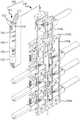
FIG. 1 is a perspective view of a surgical robot and drive manipulator assembly according to one embodiment of the present invention;
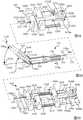
FIG. 2A is a partially exploded perspective view of FIG. 1;
FIG. 2B is an enlarged exploded perspective view of the surgical operating device shown in FIG. 2A
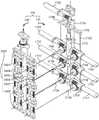
FIG. 3 is a perspective view of the drive control apparatus of FIG. 2 from another perspective;
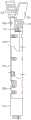
fig. 4 to 1 are enlarged perspective views of a surgical operation device of the surgical robot;
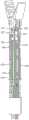
FIG. 5 is a partial cutaway perspective view of FIG. 4;
FIG. 6 is a perspective view, partially in section, of the manipulator arm of the surgical device of FIG. 4;
FIG. 7 is a perspective view, partially in section, of the instrument mount and surgical instrument of the surgical operating device illustrated in FIG. 4;
FIG. 8 is a bottom perspective view of the instrument attachment base of the surgical device of FIG. 4;
FIG. 9 is a perspective view of the drive control transmission unit of FIG. 2 from another perspective;
FIG. 10 is an exploded perspective view of a drive unit and corresponding transmission unit of one example of the drive control device of FIG. 2;
fig. 11 is a perspective view of a first transmission unit of the drive manipulation device of fig. 9;
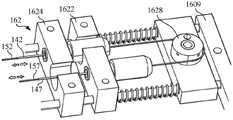
fig. 12 is a perspective view of a second transmission unit of the drive manipulation device of fig. 9;
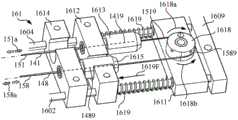
FIG. 13 is a perspective view, partially in section, of the surgical device of FIG. 4 corresponding to the first drive unit of FIG. 11 and the second drive unit of FIG. 12;
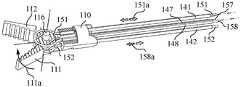
FIG. 14 is a perspective view of the surgical operating device illustrated in FIG. 4 with the surgical clamp open;
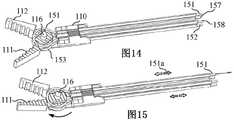
FIG. 15 is a perspective view of one jaw of the surgical clip of the surgical device illustrated in FIG. 14 after being repositioned;
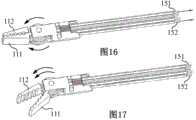
FIG. 16 is a perspective view of the surgical operating device illustrated in FIG. 14, with the surgical clamp jaws in a closed position;
FIG. 17 is a perspective view of the surgical clip of the surgical device illustrated in FIG. 14 with the jaws of the clip displaced;
FIG. 18 is a perspective view of a third transmission unit of the drive control device of FIG. 9;
FIG. 19 is a perspective view of a fourth transmission unit of the drive control device of FIG. 9;
FIG. 20 is a perspective view, partially in section, of the support arm of the surgical device illustrated in FIG. 4, corresponding to the third drive unit of FIG. 18 and the fourth drive unit of FIG. 19;
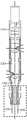
FIG. 21 is a front view, partially in section, of the surgical device illustrated in FIG. 4 with the instrument connection hub in a home position;
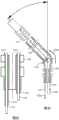
FIG. 22 is a front view, partially in section, of the surgical device illustrated in FIG. 4 with the instrument connection hub in a first deflected position;
FIG. 23 is an enlarged view of the dashed box portion of FIG. 22 showing the connection of fifth and sixth spigots to the second arm segment;
FIG. 24 is a perspective view of a fifth transmission unit of the drive control device of FIG. 9;
FIG. 25 is a perspective view of a sixth transmission unit of the drive control device of FIG. 9;
FIG. 26 is a perspective view, partially in section, of the support arm of the surgical device illustrated in FIG. 4, corresponding to the fifth drive unit of FIG. 24 and the sixth drive unit of FIG. 25;
FIG. 27 is a front view, partially in section, of the surgical device of FIG. 4 with the instrument connection block and the first arm segment in the home position;
FIG. 28 is a front view, partially in section, of the surgical device illustrated in FIG. 4 with the instrument connection hub first arm segment in a second deflected position;
FIG. 29 is an enlarged view of the dashed box portion of FIG. 27 showing the connection of seventh and eighth spigots to the second arm segment;
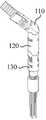
FIG. 30 is a perspective view of the support arm of the surgical device of FIG. 1 in a home position;
FIG. 31 is a perspective view of the support arm of the surgical device illustrated in FIG. 30 with the instrument connection hub in a first directionally deflected position;
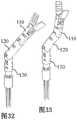
FIG. 32 is a perspective view of the support arm of the surgical device illustrated in FIG. 30, with the instrument connection hub and the first arm segment in a second, directionally deflected position;
FIG. 33 is a perspective view of the support arm of the surgical device illustrated in FIG. 30, with the instrument connection hub in a first directionally deflected position and the first arm segment in a second directionally deflected position;
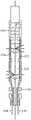
FIG. 34 is a front schematic view of FIG. 30;
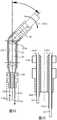
FIG. 35 is a front schematic view of FIG. 31;
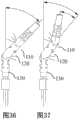
FIG. 36 is a front schematic view of FIG. 32;
FIG. 37 is a front view of FIG. 33;
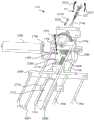
fig. 38 is a perspective view of seventh and eighth power units and a transmission unit of the surgical robot driving control apparatus shown in fig. 1.
Detailed description of the invention
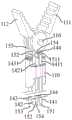
As shown in fig. 1 to 3, according to one embodiment, thesurgical robot 100 of the present invention includes an actuator and adriving device 106 for driving the actuator. The effector may be asurgical operating device 101 with a surgical instrument, such as a forceps, mounted thereto. Thesurgical device 101 includes asupport arm 135, aninstrument mount 110, and connecting arms respectively connected between thesupport arm 135 and theinstrument mount 110 in a relatively displaceable manner. The connecting arm may have one or more arm segments, such as afirst arm segment 120 and asecond arm segment 130. A surgical instrument, such as a surgical forceps including afirst jaw 111 and asecond jaw 112, is connected to the front end of theinstrument mounting base 110. Thefirst jaw 111 and thesecond jaw 112 are rotatably connected to theinstrument mount 110 by apin 116.
The rear end of theinstrument mount 110 and the front end of thefirst limb segment 120 have complementarily-shaped outer and innerarcuate surfaces 1109 and 1201, respectively, with the outer and innerarcuate surfaces 1109 and 1201 constituting thefirst pivot 110c in the mutually abutting position.Instrument mount 110 may rotate relative tofirst arm segment 120 aboutfirst pivot 110 c. The rear end of thefirst limb segment 120 and the front end of thesecond limb segment 130 have complementarily shaped outer and innerarcuate surfaces 1209 and 1301, respectively, the outer and innerarcuate surfaces 1209 and 1301 constituting thesecond pivot 120c in the mutually abutting position. Thefirst arm segment 120 may be rotatable with respect to thesecond arm segment 130 about asecond pivot 120 c.
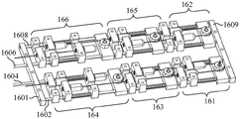
Thedriving device 106 includes atransmission assembly 160 and apower assembly 170 detachably connected to thetransmission assembly 160. Thepower assembly 170 includes afirst beam 1701, asecond beam 1709 arranged in parallel and spaced apart, andlinks first beam 1701 and thesecond beam 1709 and arranged perpendicular to thefirst beam 1701 and thesecond beam 1709 and spaced apart.
Thetransmission assembly 160 includes atransmission housing 1600. Theactuator frame 1600 includes afirst beam 1601 arranged in a spaced apart arrangement, asecond beam 1609, andguide rails second beams second beams transmission assembly 160 includes a plurality of transmission units coupled to thetransmission housing 1600 that can transmit independent power and independent degrees of freedom of movement.Power assembly 170 includes a corresponding plurality of power cells mounted tolinks
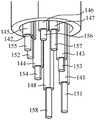
As shown in fig. 4 to 8, thesurgical robot 100 includes first toeighth cables eighth sleeves cables First cable 151 andeighth cable 158 can function as a pair of first and second instrument cables for driving and controlling the movement offirst jaw 111.Second cable 152 andseventh cable 157 may serve as another pair of first and second instrument cables for driving and controlling the movement ofsecond jaw 112.Third cable 153 andfourth cable 154 may act as a pair of first and second mount cables for driving and controlling deflection ofinstrument mount 110 relative tofirst arm segment 120.Fifth cable 155 andsixth cable 156 may serve as another pair of first and second mount cables for driving and controlling deflection offirst arm segment 120 relative tosecond arm segment 130. The first to eighth cables may be cables having a predetermined tensile strength, capable of transmitting power and displacement in tension, and having a negligible elastic deformation in the length direction under tension, but allowing flexible flexural deformation, such as cables made of nitinol, alloy cables, wires or the like. The first through eighth bushings may be bushings having a predetermined structural strength and rigidity, capable of carrying power in the form of tensile force, compressive force, bending moment, torque, or a combination thereof, providing support to components connected to the respective bushings, and having a negligible elastic deformation in the length direction while allowing flexible flexural deformation.
Each cable has a first end, for example, connected to an implement end of thesurgical device 101 and a second end, for example, connected to a control end of thedrive device 106. The actuating ends 1511, 1581 of thefirst cable 151 and theeighth cable 152 are respectively connected to the jaw connecting portions of thefirst jaw 111 located at the two sides of thepin 116. The actuating ends 1531 and 1571 of thesecond cable 152 and theseventh cable 157 are respectively connected to the jaw connecting portions of thesecond jaw 112 at two sides of thepin 116.
Each cannula has a first end, such as an implement end, coupled to thesurgical device 101 and a second end, such as a control end, coupled to thedriver housing 1600. Theactuating end 1411 of thefirst sleeve 141 sleeved on thefirst cable 151, the actuating end 1481 of theeighth sleeve 148 sleeved on theeighth cable 158, theactuating end 1421 of thesecond sleeve 142 sleeved on thesecond cable 152, and the actuating end 1471 of theseventh sleeve 147 sleeved on theseventh cable 157 sequentially pass through thesupport arm 135, thesecond arm segment 130, and thefirst arm segment 120, and are fixedly connected to theinstrument mounting base 110.
The control ends of thefirst wire 151 and theeighth wire 158, thesecond wire 152 and theseventh wire 157, and the third tosixth wires surgical operation device 101 with multiple degrees of freedom through one or two cables respectively connected thereto, so as to implement the surgical operation.
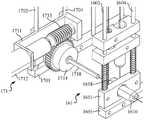
Each drive unit has similar structure and function. Taking thefirst driving unit 171 as an example, as shown in fig. 9 and 10, thefirst driving unit 171 of the plurality of driving units includes afirst motor mount 1711 connected to thelinks first motor 1712 mounted to thefirst motor mount 1711, afirst worm 1713 connected to a rotation shaft of the first motor, afirst worm gear 1714 engaged with the first worm, and afirst output shaft 1718 fixed to the first worm gear. The first motor drives thefirst output shaft 1718 to rotate via thefirst worm 1713 and thefirst worm gear 1714.
As shown in fig. 10, 11, 12 and 13,first transmission unit 161 corresponding tofirst driving unit 171 includesfirst holder 1611 connected to guiderails first spool clamp 1610 andfirst spool 1618. Thefirst spool clamp 1610 and thefirst spool 1618 are rotatably connected to thefirst support 1611. Theoutput shaft 1718 penetrates through the central holes of the firstrotating shaft chuck 1610 and thefirst reel 1618 and is fixed to the firstrotating shaft chuck 1610, so that the rotation of theoutput shaft 1718 can drive thefirst reel 1618 to rotate through the firstrotating shaft chuck 1610, and the driving and the control of thesurgical operation device 101 through thefirst transmission unit 161 are realized.
Thefirst transmission unit 161 further includes a firstmain support 1612, a firstmain jaw 1613 fixed to the firstmain support 1612, a first sub-support 1614, a first sub-jaw 1615 fixed to the first sub-support 1614, and a pair offirst springs 1619. The firstmain bracket 1612 and the first sub-bracket 1614 are sleeved on theguide rails main bracket 1612 is located between thefirst mount 1611 and thefirst sub-bracket 1614. A pair offirst springs 1619 are respectively sleeved on theguide rails main support 1612 and thefirst support 1611.
The drivingend 1519 of thefirst cable 151 sequentially passes through the first sub-bracket 1614, the firstmain bracket 1612 and the firstmain clamp 1613, and is fixed to one side of thefirst reel 1618. The drivingend 1419 of thefirst sleeve 141 sequentially passes through the first sub-bracket 1614 and the firstmain bracket 1612 and is fixed to the firstmain clamp 1613. The firstmain support 1612 may translate along therails
The drivingend 1589 of theeighth cable 158 passes through the first sub-bracket 1614, thefirst sub-clip 1615 and the firstmain bracket 1612 in sequence, and is fixed to the other side of thefirst reel 1618. The driving end 1481 of theeighth sleeve 148 passes through thefirst subframe 1614 and is secured to thefirst subframe 1615.
Thefirst spool 1618 can rotate in aforward direction 1618a or areverse direction 1618b as driven by thefirst output shaft 1718 of thefirst drive unit 171. Rotation of thefirst spool 1618 in theforward direction 1618a causes thefirst cable 151 to displace relative to thefirst sleeve 141 in the pull-updirection 151 a. Since thefirst sleeve 141 is fixedly coupled between theinstrument mount 110 and the firstmain support 1612, and thefirst sleeve 141 has a property of negligible elastic deformation in a length direction, a distance between theinstrument mount 110 and the firstmain support 1612 is relatively fixed. Thefirst jaw 111 is rotatable in aclosing direction 111a relative to theinstrument mount 110 under tension from thefirst cable 151.
Rotation offirst jaw 111 in closingdirection 111a pullseighth cable 158 while rotation offirst reel 1618 inforward direction 1618a unwindseighth cable 158 such thateighth cable 158 is displaced indirection 158a offirst jaw 111. Coordinated displacement offirst cable 151 andeighth cable 158 effects control of the movement offirst jaw 111 and translates the tension offirst cable 151 into a clamping force offirst jaw 111.
A pair offirst springs 1619 are in a compressed state between the firstmain support 1612 and thefirst support 1611, and therefore, the pair offirst springs 1619 apply a pushingforce 1619F to the firstmain support 1612 in a direction toward theinstrument mount 110. The pushingforce 1619F applied to thefirst sleeve 141 by the firstmain support 1612 can reduce or eliminate the axial gap between thefirst sleeve 141 and thefirst cable 151, thereby improving the accuracy of the displacement driving and controlling of thefirst jaw 111 by thefirst cable 151 and theeighth cable 158. At the same time, the firstmain frame 1612, supported by a pair offirst springs 1619, may translate along therails first cannula 141, providing a flexible support for axial displacement of theinstrument mount 110.
Corresponding to the structure and operation of thefirst transmission unit 161, thesecond transmission unit 162 includes asecond cable 152 and aseventh cable 157 fixed to thesecond reel 1628, and asecond sleeve 142 and aseventh sleeve 147 fixed to the secondauxiliary support 1624 and the secondmain support 1622, respectively. Independently of thefirst transmission unit 161 controlling the closing or opening operation of thefirst jaw 111, thesecond transmission unit 162 controls the closing or opening operation of thesecond jaw 112 by rotation of thesecond reel 1628 in a forward direction 1628a or a reverse direction 1628b, respectively. Thefirst reel 1618 and thesecond reel 1628 cooperate to control the displacement of thefirst jaw 111 and thesecond jaw 112, for example, from the position shown in fig. 14 where thefirst jaw 111 and thesecond jaw 112 are both open to the position shown in fig. 15 where only thefirst jaw 111 is closed, the position shown in fig. 16 where thefirst jaw 111 and thesecond jaw 112 are both closed, or the position shown in fig. 17 where thefirst jaw 111 and thesecond jaw 112 are integrally rotated to a predetermined angle.
As shown in fig. 18, 19, 20, 21, 22 and 23, thethird transmission unit 163 and thefourth transmission unit 164 operate thesurgical operation device 101 through thethird sleeve 143, thefourth sleeve 144, thethird cable 153 and thefourth cable 154 respectively connected thereto, so as to realize bending deflection displacement of theinstrument mounting base 110 of thesurgical operation device 101 relative to thefirst arm segment 120, thesecond arm segment 130 and thesupport arm 135.
Thethird transmission unit 163 includes athird support 1631 fixed to theguide rails third reel 1638 rotatably connected to thethird support 1631, a thirdmain support 1632, a thirdmain clamp 1633 fixed to the thirdmain support 1632, a third sub-support 1634, a third sub-clamp 1635 fixed to the third sub-support 1634, and a pair ofthird springs 1639. The thirdmain bracket 1632 and the third sub-bracket 1634 are sleeved and connected to theguide rails main support 1632 is located betweenthird support 1631 and thirdsecondary support 1634. A pair ofthird springs 1639 are respectively sleeved on theguide rails main support 1632 and thethird support 1631.
A thirdauxiliary cable 1533 is fixedly connected between the thirdmain clamp head 1633 and thethird spool 1638. Thirdauxiliary cable 1533 is provided and adjusted to a suitable length such thatthird spring 1639 between thirdmain support 1632 andthird support 1631 is in a compressed, elastically deformed state. Under the reaction force of thethird spring 1639, the thirdmain support 1632 tends to displace in a direction away from thethird support 1631, thereby applying anauxiliary pulling force 1533F to thethird reel 1638 via the thirdauxiliary cable 1533, providing a torque to thethird reel 1638 in apositive direction 1638 a. When thethird spool 1638 tends to rotate in theopposite direction 1638b under thereaction pulling force 153F of thethird cable 153, the torque generated by theauxiliary pulling force 1533F counteracts the torque generated by thereaction pulling force 153F, maintaining thethird spool 1638 in a stably controlled state to prevent thethird cable 153 from being loosened.
Thecontrol end 1539 of thethird cable 153 passes through the third sub-bracket 1634, the third sub-collet 1635 and the thirdmain bracket 1632 in sequence, and is fixed to one side of thethird roller 1638. Anexecution end 1531 of thethird cable 153 passes through thesupport arm 135, thesecond arm segment 130, and thefirst arm segment 120 of thesurgical device 101 in that order, and is secured to thefirst connection 1131 on thefirst side 1106 of theinstrument mount 110 about itslongitudinal centerline 1105.
Thecontrol end 1439 of thethird sleeve 143 passes through the thirdsecondary support 1634 and is fixed to the thirdsecondary collet 1635. Anexecution end 1431 of thethird sleeve 143 passes through thesupport arm 135, thesecond arm segment 130, and thefirst arm segment 120 in that order, and is secured to thefirst side 1106 of theinstrument mount 110.
Thefourth transmission unit 164 includes afourth holder 1641 fixed to theguide rails fourth reel 1648 rotatably coupled to thefourth holder 1641, a fourthmain bracket 1642, a fourthmain clip 1643 fixed to the fourthmain bracket 1642, a fourth sub-bracket 1644, afourth sub-clip 1645 fixed to the fourth sub-bracket 1644, a fourth sub-bracket 1646, afourth sub-clip 1647 fixed to the fourth sub-bracket 1646, and a pair offourth springs 1649. The fourthmain bracket 1642, the fourth sub-bracket 1644 and the fourth sub-bracket 1646 are sleeved on theguide rails secondary bracket 1644 is fixed to theguide rails main bracket 1642 and the fourth sub-bracket 1646 are translatable along theguide rails fourth holder 1641. The fourthprimary support 1642 is positioned between thefourth mount 1641 and the thirdsecondary support 1634. The fourth sub-bracket 1646 is positioned between the fourthmain bracket 1642 and thefourth holder 1641. A pair offourth springs 1649 are respectively sleeved on theguide rails main bracket 1642 and the fourthauxiliary bracket 1646.
The fourthauxiliary cable 1544 is fixedly connected between the fourthmain clip 1643 and thefourth spool 1648. Thecontrol end 1549 of thefourth cable 154 sequentially passes through the fourth sub-bracket 1644, thefourth sub-clip 1645, the fourthmain bracket 1642, and the fourth sub-bracket 1646, and is fixed to thefourth sub-clip 1647. An executingend 1541 of thefourth cable 154 passes through thesupport arm 135, thesecond arm segment 130, and thefirst arm segment 120 of thesurgical device 101 in sequence, and is secured to a second connecting portion 1141 of asecond side 1107 of theinstrument mount 110 opposite thefirst side 1106 about thelongitudinal centerline 1105. .
Thecontrol end 1449 of thefourth sleeve 144 passes through the fourth sub-bracket 1644 and is fixed to thefourth sub-collet 1645. Anactuating end 1441 offourth sleeve 144 passes sequentially throughsupport arm 135,second arm segment 130, andfirst arm segment 120 ofsurgical device 101 and is secured to a second connection 1141 on asecond side 1107 ofinstrument mount 110 oppositefirst side 1106 aboutcenterline 1105.
Thesupport arm 135, thesecond arm segment 130 and thefirst arm segment 120 are connected to thedriver chassis 1600 by thethird sleeve 143 and thefourth sleeve 144. Thus, thesupport arm 135, thesecond arm segment 130 and thefirst arm segment 120 are fixed in relative distance from theactuator frame 1600 in the direction of the longitudinal axis of thesupport arm 135 by the support effect of thethird sleeve 143 and thefourth sleeve 144.
Thethird reel 1638 rotates in apositive direction 1638a to displace thethird cable 153 in the tighteningdirection 153a under the driving of thethird output shaft 1738 of the third driving unit 173. Supported bythird sleeve 143 and thirdsecondary support 1634,second arm segment 130 andsupport arm 135 are stationary with respect tothird support 1631 and with respect toactuator frame 1600. In a state where theouter arc surface 1209 of the rear end of thefirst limb segment 120 and the inner arc surface 1301 of the front end of thesecond limb segment 130 abut against each other, the longitudinal displacement of thefirst limb segment 120 relative to thesecond limb segment 130 is prevented. Thus, tension ofthird cable 153 intensioning direction 153a produces a driving torque that drivesinstrument mount 110 to deflect aboutfirst pivot 110 c. The displacement of thethird cable 153 in the tighteningdirection 153a causes theinstrument mounting base 110 connected to thethird cable 153 to rotate about thefirst pivot 110c in adirection 110a away from the longitudinal axis line 1305 of thesupport arm 130, so as to change the posture of theinstrument mounting base 110 relative to thesupport arm 130, and adjust the surgical instrument, such as a clamp, connected to theinstrument mounting base 110 to any angular displacement position between the longitudinal axis line 1305 of thesupport arm 130 and thelongitudinal axis line 1105 of theinstrument mounting base 110 in thedirection 110a according to the surgical requirements.
Thefourth reel 1648 may be rotated in aforward direction 1648a or areverse direction 1648b by the driving of afourth output shaft 1748 of the fourth driving unit 174. Rotation of thefourth spool 1648 in thepositive direction 1648a causes the fourthauxiliary cable 1564 to displace in adirection 1564a of thefourth spool 1648. The displacement of the fourthauxiliary cable 1564 in thedirection 1564a of thefourth reel 1648 drives the fourthmain support 1642 in the direction of thefourth reel 1648 through the fourthmain clip 1643, translates along theguide rails auxiliary support 1646 in the direction of thefourth reel 1648 in the translation along theguide rails fourth springs 1649. Through thefourth sub-clip 1647, the fourth sub-bracket 1646 moves thefourth sub-clip 1645 and the fourth sub-bracket 1644 in a translational motion along theguide rails fourth reel 1648, and tightens thefourth cable 154.
With thethird cable 153 having theactuating end 1531 attached to thefirst side 1106 in a tensioned state by rotation of thethird reel 1638 in theforward direction 1638a, rotation of theinstrument mount 110 about the axis ofrotation 110c in adirection 110b toward the longitudinal axis 101a of thesurgical device 101 is prevented by thethird cable 153. Accordingly, translation of thefourth sub-mount 1646 of thefourth transmission unit 164 towards thefourth reel 1648 is also prevented, i.e. the fourth sub-mount 1646 is stationary with respect to theguide rails main support 1642, which is driven by thefourth reel 1648 to rotate in thenormal direction 1648a and translates in the direction of thefourth reel 1648 by the fourthauxiliary cable 1544, applies a pressure to the pair offourth springs 1649, so that the pair offourth springs 1649 are compressed between the fourthauxiliary support 1646 and the fourthmain support 1642 and assume a predetermined elastically deformed state. The pair offourth springs 1649 apply a reaction force to the fourth sub-bracket 1646 and the fourthmain bracket 1642 by being compressed. This reaction force is converted into a pullingforce 154F acting on thefourth cable 154. The pullingforce 154F is transmitted to theinstrument mount 110 via thefourth cable 154. Asinstrument mount 110 is rotated by the pulling force ofthird cable 153 in adirection 110a away from the longitudinal axis 1305 ofsupport arm 130,fourth cable 154 applies a force toinstrument mount 110 in a direction toward the longitudinal axis 1305 ofsupport arm 130, such that any position ofinstrument mount 110 during rotation remains in a loose and gapless engagement withfirst arm segment 120 due to the cooperation ofthird cable 153 andfourth cable 154.
Since the pulling force of thethird cable 153 is directly from thethird reel 1638 of thethird transmission unit 163, and the pulling force of thefourth cable 154 is indirectly from thefourth reel 1648 of thefourth transmission unit 164 through thefourth spring 1649, the pulling force of thethird cable 153 causes thefourth spring 1649 to deform under the driving of thethird reel 1638 of thethird transmission unit 163, so as to overcome the pulling force of thefourth cable 154, thereby deflecting theinstrument mount 110 to a predetermined angle. During deflection of theinstrument mount 110, thefourth spool 1648 of thefourth drive unit 164 may remain stationary, rotate in theforward direction 1648a, or rotate in thereverse direction 1648b to vary the degree of compressive deformation of thefourth spring 1649, thereby varying the resistive torque applied to theinstrument mount 110 by thefourth cable 156 opposite the direction of deflection. This increase in the resistive torque will cause a corresponding increase in the driving force torque required to effect deflection of theinstrument mount 110, i.e., the pulling force exerted by thethird cable 153 required to generate the driving force torque. The simultaneous increase in tension and resistance increases the resistance to deflection ofinstrument mount 110 relative tofirst arm segment 120, thereby increasing the overall stiffness of the surgical instrument support arm formed byinstrument mount 110,first arm segment 120, andsecond arm segment 130 to support precise positioning of the surgical instrument.
Accordingly, this reduction in resistance will result in a corresponding reduction in the driving force to effect deflection ofinstrument mount 110, i.e., the pulling force exerted bythird cable 153. The simultaneous reduction of the tensile force and the resistance force reduces the deflection resistance of theinstrument mounting base 110 relative to thefirst arm section 120 and thesecond arm section 130, and the overall rigidity of the surgical instrument support arm formed by theinstrument mounting base 110, thefirst arm section 120 and thesecond arm section 130 is reduced, thereby supporting the flexible adjustment of the position and the posture of the surgical instrument.
As shown in fig. 24, 25, 26, 27 and 28, thefifth transmission unit 165 and thesixth transmission unit 166 operate thesurgical device 101 through thefifth cable 155 and thesixth cable 156 connected thereto, respectively, so as to implement the deflection displacement of theinstrument mount 110 and thefirst arm segment 120 of thesurgical device 101 relative to thesecond arm segment 130.
Thefifth transmission unit 165 includes afifth bracket 1651 fixed to theguide rails fifth reel 1658 rotatably connected to thefifth bracket 1651, a fifthmain bracket 1652, a fifthmain clamp 1653 fixed to the fifthmain bracket 1652, a fifth sub-bracket 1654, a fifth sub-clamp 1655 fixed to the fifth sub-bracket 1654, and a pair offifth springs 1659. The fifthmain bracket 1652 and thefifth sub bracket 1654 are sleeved and connected to theguide rails main bracket 1652 is located between thefifth mount 1651 and thefifth sub-bracket 1654. A pair offifth springs 1639 are respectively sleeved on theguide rails main support 1632 and thefirst support 1631.
A fifth auxiliary cable 1555 is fixedly coupled between the fifthmain clamp 1653 and thefifth spool 1658. The fifth auxiliary cable 1555 is provided and adjusted to a proper length such that thefifth spring 1659 between the fifthmain bracket 1652 and thefifth bracket 1651 is in a compressed elastic deformation state. Under the reaction force of thefifth spring 1659, the fifthmain bracket 1652 has a tendency to displace in a direction away from thefifth support 1651, thereby applying an auxiliary pulling force 1555F to thefifth spool 1658 via the fifth auxiliary cable 1555 to provide a rotational moment in aforward direction 1658a to thefifth spool 1658. When thefifth spool 1658 has a tendency to rotate in thereverse direction 1658b due to the reaction tension 155F of thefifth cable 155, the torque generated by the auxiliary tension 1555F resists the torque generated by the reaction tension 155F and maintains thefifth spool 1658 in a stably controlled condition to prevent thefifth cable 155 from slackening. .
Acontrol end 1559 of thefifth cable 155 passes through thefifth sub bracket 1654, thefifth sub clip 1655, and the fifthmain bracket 1652 in this order, and is fixed to one side of thefifth reel 1658. Anactuating end 1551 of thefifth cable 155 passes through thesupport arm 135 and thesecond arm segment 130 of thesurgical device 101 in sequence and is secured to thefirst connection 1251 of thefirst arm segment 120 about thefirst side 1206 of itslongitudinal centerline 1105.
Thesixth transmission unit 166 includes asixth housing 1661 fixed to theguide rails sixth reel 1668 rotatably connected to thesixth housing 1661, a sixthmain support 1662, a sixthmain collet 1663 fixed to the sixthmain support 1662, a sixth sub-support 1664, a sixth sub-collet 1665 fixed to the sixth sub-support 1664, a sixth sub-support 1666, a sixth sub-collet 1667 fixed to the sixth sub-support 1666, and a pair ofsixth springs 1669. Theguide rails main bracket 1662, a sixthauxiliary bracket 1664, and a sixthauxiliary bracket 1666.Sixth subframe 1664 is fixed torails main support 1662 and the sixthauxiliary support 1666 are translatable along therails sixth support 1661. The sixthmain bracket 1662 is located between thesixth mount 1661 and thesixth sub-bracket 1664. The sixthsecondary support 1666 is located between the sixthmain support 1662 and thesixth mount 1661. A pair ofsixth springs 1669 are respectively sleeved on theguide rails main bracket 1662 and the sixthauxiliary bracket 1666.
The sixthauxiliary cable 1564 is fixedly connected between the sixthmain chuck 1663 and thesixth spool 1668. Thecontrol end 1569 of thesixth cable 156 passes through the sixthsecondary support 1664, the sixthsecondary clip 1665, the sixthmain support 1662, and the sixthsecondary support 1666 in that order, and is secured to the sixthsecondary clip 1667. Theexecution end 1561 of thesixth cable 156 passes through thesupport arm 135, thesecond arm segment 130, and thefirst arm segment 120 of thesurgical device 101 in that order, and is secured to thesecond connection portion 1261 of thesecond side 1207 of thefirst arm segment 120 opposite thesecond side 1106 about thelongitudinal centerline 1105.
Thecontrol end 1469 of thesixth sleeve 146 passes through the sixthsecondary support 1664 and is secured to the sixthsecondary collet 1665. Theexecution end 1461 of thesixth sleeve 146 passes through and is fixed to thesecond arm section 130.
Thesupport arm 135 is connected to theactuator frame 1600 by thefifth sleeve 145 and thesixth sleeve 146. Thus, thesupport arm 135 is fixed in relative distance from theactuator frame 1600 along the longitudinal axis of thesupport arm 135 by the support of thefifth sleeve 145 and thesixth sleeve 146.
Driven by thefifth output shaft 1758 of the fifth drive unit 175, thefifth spool 1658 rotates in apositive direction 1658a to displace thefifth cable 155 in the take-updirection 155 a. Supported byfifth bushing 145 andfifth subframe 1654,second arm segment 130 is stationary relative tofifth mount 1651. Accordingly, displacement offifth cable 155 intensioning direction 155a causesfirst arm segment 120 andinstrument mount 110 connected tofifth cable 155 to pivot aboutsecond pivot 120c in adirection 120a away from a longitudinal axis centerline 1305 ofsupport arm 130, thereby effecting a change in the attitude ofinstrument mount 110 andfirst arm segment 120 relative tosecond arm segment 130 andsupport arm 135, and adjusting a surgical instrument, such as a clamp, connected toinstrument mount 110 to any angular position of angular displacement oflongitudinal axis 120a between longitudinal axis centerline 1305 ofsupport arm 130 andlongitudinal axis centerline 1105 ofinstrument mount 110 opposite todirection 110a, as desired.
Thesixth spool 1668 can rotate in aforward direction 1668a or areverse direction 1668b under the drive of asixth output shaft 1768 of the sixth drive unit 176. Rotation of thesixth spool 1668 in thepositive direction 1668a causes the sixthauxiliary cable 1564 to be displaced in thedirection 1564a of thesixth spool 1668. Displacement of the sixthauxiliary cable 1564 in thedirection 1564a of thesixth spool 1668 translates the sixthmain support 1662 along therails sixth spool 1668 by the sixthmain collet 1663, and translates the sixthauxiliary support 1666 along therails sixth spool 1668 by a pair ofsixth springs 1669. With the sixthsecondary collet 1667, the sixthsecondary bracket 1666 translates the sixthsecondary collet 1665 and the sixthsecondary bracket 1664 along therails sixth spool 1668 and tightens thesixth cable 156.
With thefifth cable 155, having theactuation end 1551 attached to thefirst side 1206, tensioned by rotation of thefifth spool 1658 in theforward direction 1658a, rotation of theinstrument mount 110 andfirst arm segment 120 about the axis ofrotation 120c in thedirection 120b toward the longitudinal axis 101a of thesurgical device 101 is prevented by thefifth cable 155. Accordingly, the translation of the sixthauxiliary support 1666 of thesixth transmission unit 166 towards thesixth reel 1668 is also prevented, i.e. the sixthauxiliary support 1666 is stationary with respect to theguide rails main support 1662, which is driven by the rotation of thesixth reel 1668 in theforward direction 1668a to translate in the direction of thesixth reel 1668 by the sixthauxiliary cable 1564, applies a pressure to the pair ofsixth springs 1669, so that the pair ofsixth springs 1669 are compressed and elastically deformed between the sixthauxiliary support 1666 and the sixthmain support 1662. The pair ofsixth springs 1669 apply a reaction force to the sixthsecondary support 1666 and the sixthmain support 1662 against being compressed. This reaction force is converted into a pullingforce 156F acting on thesixth cable 156.Tension 156F is transmitted tofirst arm segment 120 viasixth cable 156. When thefirst arm segment 120 is rotated by the pulling force of thefifth cable 155 in adirection 120a away from the longitudinal axis centerline 1305 of thesupport arm 130, thesixth cable 156 applies a force to thefirst arm segment 120 in a direction toward thelongitudinal axis centerline 1355 of thesupport arm 135, so that thefirst arm segment 120 maintains a loose and gapless fit with thesecond arm segment 130 at any position during the rotation due to the cooperation of thefifth cable 155 and thesixth cable 156.
Since the tension of thefifth cable 155 is directly from thefifth reel 1658 of thefifth drive unit 165 and the tension of thesixth cable 156 is indirectly from thesixth reel 1668 of thesixth transmission unit 166 via thesixth spring 1669, the tension of thefifth cable 155 deforms thesixth spring 1669 under the drive of thefifth reel 1658 of thefifth transmission unit 165, thereby overcoming the tension of thesixth cable 156 to deflect theinstrument mount 110 and thefirst arm segment 120 to a predetermined angle. During deflection of theinstrument mount 110 and thefirst arm segment 120, thesixth spool 1668 of thesixth drive unit 166 may remain stationary, rotating in theforward direction 1668a or thereverse direction 1668b to vary the degree of compressive deformation of thesixth spring 1669, thereby varying the resistive torque applied to thefirst arm segment 120 by thesixth cable 156 that is opposite the direction of deflection. This increase in resistance torque will cause a corresponding increase in the driving force torque required to effect deflection ofinstrument mount 110 andfirst arm segment 120, i.e., the pulling force exerted byfifth cable 155 required to generate the driving force torque. The simultaneous increase in tension and resistance will increase the resistance to deflection offirst arm segment 120 relative tosecond arm segment 130, thereby increasing the overall stiffness of the surgical instrument support arm formed byfirst arm segment 120 andsecond arm segment 130 to support precise positioning of the surgical instrument.
Accordingly, this reduction in resistance will result in a corresponding reduction in the driving force to effect deflection ofinstrument mount 110 andfirst arm segment 120, i.e., the pulling force exerted byfifth cable 155. The simultaneous reduction of the tensile force and the resistance force reduces the deflection resistance of thefirst arm segment 120 relative to thesecond arm segment 130, so that the overall rigidity of the surgical instrument support arm formed by thefirst arm segment 120 and thesecond arm segment 130 is reduced, and the flexible adjustment of the pose of the surgical instrument is supported.
Coordinated driving of thethird gear 163, thefourth gear 164, thefifth gear 165 and thesixth gear 166, the support arm 123 of thesurgical manipulation device 101 comprised of theinstrument mount 110, thefirst arm segment 120 and thesecond arm segment 130 can be deflected in stages, for example from the initial state shown in figures 30 and 34, to deflection ofinstrument mount 110 relative tofirst arm segment 120 in a first direction as shown in figures 31 and 35, or to deflection ofinstrument mount 110 withfirst arm segment 120 relative tosecond arm segment 130 in a second direction opposite to the first direction as shown in figures 32 and 36, or to a deflection ofinstrument mount 110 relative tofirst arm segment 120 in a first direction as shown in figures 33 and 37, and deflection ofinstrument mount 110 along withfirst arm segment 120 relative tosecond arm segment 130 in a second direction opposite the first direction. During one or more of the above-described deflection operations, or after the deflection operations are completed, the overall stiffness of the support arm 123 can be adjusted by the coordinated driving between thethird actuator 163 and thefourth actuator 164, and/or between thefifth actuator 165 and thesixth actuator 166, respectively, to meet the requirements of various surgical operations.
As shown in fig. 38, thesurgical robot 100 further includes aseventh motor mount 1770 fixed to thelinks seventh motor 1772 mounted to theseventh motor mount 1770, alead screw 1774 connected to the 7th motor 1772, aneighth motor mount 1780 translatably connected to thelinks eighth motor 1782 mounted to theeighth motor mount 1780, and aneighth worm 1786 connected to theeighth motor 1782. Ascrew nut 1784 is arranged on theeighth motor seat 1780. Thelead screw 1774 passes through theeighth motor mount 1780 and is in screw fit connection with thelead screw nut 1784.
Thesurgical robot 100 further includes aworm gear support 1790 translatably connected to the slide rails 1604, 1606, aneighth worm gear 1796 rotatably connected to theworm gear support 1790, and a connectingshaft 1798 connected to the eighth worm gear. Thecoupling shaft 1798 is fixedly coupled to thesupport arm 135 of thesurgical operating device 101. A connectingrod collet 1795 is disposed on theworm gear mount 1790. The connectingrod collet 1795 is connected to a connectingrod 1785 provided on theeighth motor mount 1780 such that theeighth worm wheel 1796 is engaged with theeighth worm 1786.
Rotation of theeighth motor 1782 rotates theeighth worm 1786, which rotates the eighth worm gear, thereby rotating thesurgical device 101 as a whole about the longitudinal axis of thesurgical device 101, e.g., in afirst direction 1016, or in a second,opposite direction 1017, thereby effecting rotation of thesurgical device 101 as a whole. Independently or simultaneously with the rotation ofeighth motor 1782, rotation ofseventh motor 1772 drives rotation oflead screw 1774, which, in cooperation withlead screw nut 1784, translateseighth motor mount 1780 alonglinks worm gear mount 1790 alongslide rails seventh motor 1772 translates thesurgical device 101 coupled to the worm-gear coupling shaft 1798 in a direction parallel to the longitudinal axis of thesurgical device 101, such as in aforward direction 1018, or in arearward direction 1019, thereby translating thesurgical device 101 generally along the longitudinal axis.
All possible substitutions and/or combinations of the various specific technical features based on the basic technical solution of the invention in the embodiments described above should be understood to be covered by the content and scope of the description. The foregoing examples illustrate several embodiments of the present invention, and the specific and detailed description thereof is not intended to be construed as limiting the scope of the claims. Various modifications, substitutions, rearrangements, additions, deletions, and the like of the various embodiments and features therein within the spirit, scope, and features of the application will be apparent to those skilled in the art, and are to be construed as falling within the scope of the application as defined in the appended claims.
Claims (12)
1. A surgical robot, characterized in that the surgical robot comprises:
a driver frame;
a support arm connected to the actuator frame;
a mount pivotably connected to the support arm;
a first mount cable and a second mount cable connected to the mount, wherein the second mount cable applies a restoring torque to the mount to urge the mount in a home position direction,
the first mount cable applies a drive torque to the mount (110) opposite in direction to the restoring torque, the mount being displaced from the home position to a displaced position when the drive torque is greater than the restoring torque.
2. A surgical robot as claimed in claim 1, wherein:
the first mounting seat cable and the second mounting seat cable are respectively provided with an execution end and a control end opposite to the execution end;
the execution end of the first mounting seat cable is connected to a first connecting part of the mounting seat;
the actuating end of the second mount cable is connected to a second connecting portion of the mount, the second connecting portion being disposed opposite the first connecting portion about a central axis of the mount.
3. A surgical robot as claimed in claim 2, further comprising a first support arm sleeve connected between the mount and the actuator frame and a first mount drive movably connected to the actuator frame, the first mount cable being disposed through the first support arm sleeve, a control end of the first mount cable being connected to the first mount drive, wherein movement of the first mount drive relative to the actuator frame from a first initial position to a first displaced position pulls the first mount cable, which pulls the mount from the initial position to the offset position.
4. A surgical robot as claimed in claim 3, further comprising a surgical instrument pivotably connected to the mounting block, a first elastic member, a first instrument cable and a first instrument sleeve, wherein the actuator frame comprises a first main frame (and a first auxiliary frame, the first instrument sleeve is fixedly connected between the mounting block and the first auxiliary frame, the first elastic member is connected between the first auxiliary frame and the first main frame, and the first elastic member is in a compressed elastic deformation state so as to apply an urging force to the first instrument sleeve toward the mounting block through the first auxiliary frame.
5. A surgical robot as claimed in claim 1, further comprising a second resilient member connected between the second mount cable and the actuator frame, the second resilient member being resiliently deformable between an initial shape and a maximum resiliently deformable shape, the second resilient member being in a preset shape between the initial shape and the maximum resiliently deformable shape when the mount is in the home position to apply the restoring moment to the mount through the second mount cable.
6. A surgical robot as claimed in claim 5, further comprising a second drive member movably connected to the actuator frame, the second resilient member being connected between the second mount cable and the second drive member, the second drive member being stationary relative to the actuator frame during displacement of the mount to the deflected position, the displacement of the mount to the deflected position increasing the resilient deformation of the second resilient member via the second mount cable, thereby increasing the restoring torque and the driving torque.
7. A surgical robot as claimed in claim 5, further comprising a second drive member movably connected to the actuator frame, the second resilient member being connected between the second mount cable and the second drive member, the second drive member being displaced relative to the second actuator frame during displacement of the mount to the offset position to maintain the predetermined shape of the second resilient member.
8. A surgical robot as claimed in claim 5, further comprising a second drive member movably connected to the actuator frame, the second resilient member being connected between the second support arm cable and the second drive member, the second drive member being displaced relative to the actuator frame during displacement of the mount to the offset position to vary the resilient deformation of the second resilient member and thereby vary the restoring moment.
9. A surgical robot as claimed in claim 8, wherein during displacement of the mount to the displaced position, the second drive member is displaced relative to the driver chassis in a direction towards the mount to reduce the elastic deformation of the second resilient member and thereby reduce the restoring moment.
10. A surgical robot as claimed in claim 8, wherein during displacement of the mount to the displaced position, the second drive member is displaced relative to the driver chassis in a direction away from the mount to increase the elastic deformation of the second resilient member to increase the restoring moment.
11. A surgical robot as claimed in claim 1, further comprising a carriage translatably connected to the actuator frame, the support arm being connected to the carriage, translation of the carriage relative to the actuator frame causing translation of the support arm relative to the actuator frame.
12. A surgical robot as claimed in claim 11, further comprising a link rotatably connected to the carriage, the support arm being connected to the carriage by the link, rotation of the link relative to the carriage causing rotation of the support arm relative to the actuator frame.
Priority Applications (1)
| Application Number | Priority Date | Filing Date | Title |
|---|---|---|---|
| CN202010894091.3ACN114098973A (en) | 2020-08-31 | 2020-08-31 | Surgical robot and its driving control device |
Applications Claiming Priority (1)
| Application Number | Priority Date | Filing Date | Title |
|---|---|---|---|
| CN202010894091.3ACN114098973A (en) | 2020-08-31 | 2020-08-31 | Surgical robot and its driving control device |
Publications (1)
| Publication Number | Publication Date |
|---|---|
| CN114098973Atrue CN114098973A (en) | 2022-03-01 |
Family
ID=80359883
Family Applications (1)
| Application Number | Title | Priority Date | Filing Date |
|---|---|---|---|
| CN202010894091.3APendingCN114098973A (en) | 2020-08-31 | 2020-08-31 | Surgical robot and its driving control device |
Country Status (1)
| Country | Link |
|---|---|
| CN (1) | CN114098973A (en) |
Citations (5)
| Publication number | Priority date | Publication date | Assignee | Title |
|---|---|---|---|---|
| US20100331820A1 (en)* | 2009-06-30 | 2010-12-30 | Intuitive Surgical, Inc. | Compliant surgical device |
| US20110184459A1 (en)* | 2008-08-04 | 2011-07-28 | Malkowski Jaroslaw T | Articulating Surgical Device |
| WO2017188851A1 (en)* | 2016-04-29 | 2017-11-02 | Общество С Ограниченной Ответственностью "Мроботикс" | End effector with an articulated joint and actuator of an endoscopic surgical device |
| CN110353808A (en)* | 2018-04-10 | 2019-10-22 | 苏州迈澜医疗科技有限公司 | Manipulator |
| CN110662506A (en)* | 2017-11-10 | 2020-01-07 | 直观外科手术操作公司 | Tension Control in Actuation of Combined Instruments |
- 2020
- 2020-08-31CNCN202010894091.3Apatent/CN114098973A/enactivePending
Patent Citations (5)
| Publication number | Priority date | Publication date | Assignee | Title |
|---|---|---|---|---|
| US20110184459A1 (en)* | 2008-08-04 | 2011-07-28 | Malkowski Jaroslaw T | Articulating Surgical Device |
| US20100331820A1 (en)* | 2009-06-30 | 2010-12-30 | Intuitive Surgical, Inc. | Compliant surgical device |
| WO2017188851A1 (en)* | 2016-04-29 | 2017-11-02 | Общество С Ограниченной Ответственностью "Мроботикс" | End effector with an articulated joint and actuator of an endoscopic surgical device |
| CN110662506A (en)* | 2017-11-10 | 2020-01-07 | 直观外科手术操作公司 | Tension Control in Actuation of Combined Instruments |
| CN110353808A (en)* | 2018-04-10 | 2019-10-22 | 苏州迈澜医疗科技有限公司 | Manipulator |
Similar Documents
| Publication | Publication Date | Title |
|---|---|---|
| US20220192764A1 (en) | Cable length conserving medical instrument | |
| KR101536117B1 (en) | Robot hand and finger mechanism | |
| EP1574302B1 (en) | Manipulator with an umbilical-member managing system | |
| KR20170139606A (en) | Tensioners for operating elements, their associated remote actuating devices, systems and methods | |
| JP2020026019A (en) | Instruments for surgery support robots | |
| KR101798060B1 (en) | surgical device | |
| WO2018174226A1 (en) | Tension adjustment mechanism, interface, and drive mechanism | |
| CN112890955A (en) | Operation arm system of transluminal surgical robot, robot and method | |
| JP5521674B2 (en) | robot | |
| JP2009233790A (en) | Robot joint structure, robot finger, and robot hand | |
| CN113197671B (en) | Wrist rotating mechanism and surgical robot | |
| CN113712670A (en) | Multifunctional channel device and minimally invasive surgery robot | |
| US12303155B2 (en) | Surgical tool, surgery support system, and surgical operating unit | |
| CN114098973A (en) | Surgical robot and its driving control device | |
| CN219614021U (en) | Wrist rotating mechanism and surgical robot | |
| EP4183534B1 (en) | Joint function unit | |
| CN118139599B (en) | Transmission systems for surgical instruments used in robotic surgery | |
| US12426975B2 (en) | Instrument drive apparatus | |
| KR102466617B1 (en) | Operation apparutus having tension compensating mechanism of wire for steering end effector | |
| JP6791516B1 (en) | Surgical robot surgical tools | |
| JP5875832B2 (en) | Multi-axis robot arm | |
| CN112971987A (en) | Variable rigidity and flexible robot control device | |
| JP2005271183A (en) | Articulated drive | |
| CN120284344A (en) | Device drive | |
| WO2022044096A1 (en) | Treatment instrument |
Legal Events
| Date | Code | Title | Description |
|---|---|---|---|
| PB01 | Publication | ||
| PB01 | Publication | ||
| SE01 | Entry into force of request for substantive examination | ||
| SE01 | Entry into force of request for substantive examination |