CN113916228A - A method for monitoring regional activity in young children - Google Patents
A method for monitoring regional activity in young childrenDownload PDFInfo
- Publication number
- CN113916228A CN113916228ACN202111176437.7ACN202111176437ACN113916228ACN 113916228 ACN113916228 ACN 113916228ACN 202111176437 ACN202111176437 ACN 202111176437ACN 113916228 ACN113916228 ACN 113916228A
- Authority
- CN
- China
- Prior art keywords
- child
- subspace
- visual
- time
- infant
- Prior art date
- Legal status (The legal status is an assumption and is not a legal conclusion. Google has not performed a legal analysis and makes no representation as to the accuracy of the status listed.)
- Pending
Links
Images
Classifications
- G—PHYSICS
- G01—MEASURING; TESTING
- G01C—MEASURING DISTANCES, LEVELS OR BEARINGS; SURVEYING; NAVIGATION; GYROSCOPIC INSTRUMENTS; PHOTOGRAMMETRY OR VIDEOGRAMMETRY
- G01C21/00—Navigation; Navigational instruments not provided for in groups G01C1/00 - G01C19/00
- G01C21/10—Navigation; Navigational instruments not provided for in groups G01C1/00 - G01C19/00 by using measurements of speed or acceleration
- G01C21/12—Navigation; Navigational instruments not provided for in groups G01C1/00 - G01C19/00 by using measurements of speed or acceleration executed aboard the object being navigated; Dead reckoning
- G01C21/16—Navigation; Navigational instruments not provided for in groups G01C1/00 - G01C19/00 by using measurements of speed or acceleration executed aboard the object being navigated; Dead reckoning by integrating acceleration or speed, i.e. inertial navigation
- G01C21/165—Navigation; Navigational instruments not provided for in groups G01C1/00 - G01C19/00 by using measurements of speed or acceleration executed aboard the object being navigated; Dead reckoning by integrating acceleration or speed, i.e. inertial navigation combined with non-inertial navigation instruments
- G01C21/1656—Navigation; Navigational instruments not provided for in groups G01C1/00 - G01C19/00 by using measurements of speed or acceleration executed aboard the object being navigated; Dead reckoning by integrating acceleration or speed, i.e. inertial navigation combined with non-inertial navigation instruments with passive imaging devices, e.g. cameras
- G—PHYSICS
- G01—MEASURING; TESTING
- G01C—MEASURING DISTANCES, LEVELS OR BEARINGS; SURVEYING; NAVIGATION; GYROSCOPIC INSTRUMENTS; PHOTOGRAMMETRY OR VIDEOGRAMMETRY
- G01C21/00—Navigation; Navigational instruments not provided for in groups G01C1/00 - G01C19/00
- G01C21/20—Instruments for performing navigational calculations
- G—PHYSICS
- G06—COMPUTING OR CALCULATING; COUNTING
- G06T—IMAGE DATA PROCESSING OR GENERATION, IN GENERAL
- G06T7/00—Image analysis
- G06T7/20—Analysis of motion
- G06T7/246—Analysis of motion using feature-based methods, e.g. the tracking of corners or segments
- G06T7/251—Analysis of motion using feature-based methods, e.g. the tracking of corners or segments involving models
- G—PHYSICS
- G06—COMPUTING OR CALCULATING; COUNTING
- G06T—IMAGE DATA PROCESSING OR GENERATION, IN GENERAL
- G06T7/00—Image analysis
- G06T7/70—Determining position or orientation of objects or cameras
- G06T7/73—Determining position or orientation of objects or cameras using feature-based methods
- G06T7/75—Determining position or orientation of objects or cameras using feature-based methods involving models
- H—ELECTRICITY
- H04—ELECTRIC COMMUNICATION TECHNIQUE
- H04N—PICTORIAL COMMUNICATION, e.g. TELEVISION
- H04N7/00—Television systems
- H04N7/18—Closed-circuit television [CCTV] systems, i.e. systems in which the video signal is not broadcast
- H04N7/181—Closed-circuit television [CCTV] systems, i.e. systems in which the video signal is not broadcast for receiving images from a plurality of remote sources
- G—PHYSICS
- G06—COMPUTING OR CALCULATING; COUNTING
- G06T—IMAGE DATA PROCESSING OR GENERATION, IN GENERAL
- G06T2207/00—Indexing scheme for image analysis or image enhancement
- G06T2207/30—Subject of image; Context of image processing
- G06T2207/30196—Human being; Person
- G—PHYSICS
- G06—COMPUTING OR CALCULATING; COUNTING
- G06T—IMAGE DATA PROCESSING OR GENERATION, IN GENERAL
- G06T2207/00—Indexing scheme for image analysis or image enhancement
- G06T2207/30—Subject of image; Context of image processing
- G06T2207/30241—Trajectory
Landscapes
- Engineering & Computer Science (AREA)
- Radar, Positioning & Navigation (AREA)
- Remote Sensing (AREA)
- Physics & Mathematics (AREA)
- General Physics & Mathematics (AREA)
- Multimedia (AREA)
- Computer Vision & Pattern Recognition (AREA)
- Theoretical Computer Science (AREA)
- Automation & Control Theory (AREA)
- Signal Processing (AREA)
- Measurement Of The Respiration, Hearing Ability, Form, And Blood Characteristics Of Living Organisms (AREA)
Abstract
Description
Technical Field
The invention belongs to the technical field of infant education, and relates to a method for monitoring regional activities of infants.
Background
The education by using the computer is an important teaching method and principle, and requires a teacher to give proper guidance according to the interests and learning abilities of students. The infant period is the key period of intelligence development and health, and has very good plasticity. If the teacher can give targeted and appropriate guidance according to the daily activity data of the infant, the overall development and the individual development of the infant can be greatly promoted. However, in the current preschool education scene, most of the infant's subjective manifestations, such as concentration, interest, hobbies, or other intrinsic characteristics, are determined by the teacher's subjective opinion. Because of the current big environmental factors in China, most students in a class are about three or forty, and teachers have two or three appearances, the attention of one teacher is very limited, the practical performance of each infant cannot be concerned, and accurate teaching of the infant is difficult to achieve through manual judgment.
In view of the above problems, the existing chinese patent literature discloses a method and system for recommending interest and hobbies of infants [ application number: CN201810653666.5, in a manner of analyzing image data, determining user behavior information through image data of a child in a classroom, and generating a first interest and preference report according to the user behavior information and sending the first interest and preference report to a guardian of the child, thereby achieving the purpose of improving data analysis capability. Although the technical effect of determining the interests and hobbies of children can be achieved, the method mainly analyzes limb actions and voice behaviors of image data in a classroom, for example, the students can be judged to have high class concentration by answering question leap in class, and correct sitting posture and head posture in class, but the personality of the children before school age is not formed, the judgment is only carried out by the limb actions and the voice behaviors, the determination of the interests and hobbies of the children is not accurate, and the judgment and analysis process is complex.
Disclosure of Invention
The invention aims to provide a method for monitoring regional activity of an infant, aiming at the problems in the prior art, and the technical problems to be solved are as follows: how to accurately help teachers and parents to understand infants more deeply.
The purpose of the invention can be realized by the following technical scheme: a method of monitoring regional activity of a child, comprising the steps of:
A. the method comprises the steps that image data of activities of infants in a regional activity room are collected through camera equipment, and motion data of each infant are collected through inertial navigation equipment worn on each infant;
B. collecting image data collected by camera equipment through a PC (personal computer) and analyzing and processing the image data to obtain a plurality of visual motion tracks, and collecting motion data collected by each inertial navigation equipment through the PC and analyzing and processing the motion data to obtain an inertial motion track of each infant;
C. matching the inertial motion trail of each infant with a plurality of visual motion trails according to the trail correlation, and enabling the visual motion trail matched with the inertial motion trail to be used as the visual-inertial motion trail of the infant; splicing the unmatched visual motion trail and inertial motion trail to obtain the visual-inertial motion trail of the infant;
D. extracting characteristic values from the visual-inertial motion trail of the children, and evaluating the character preference of the children according to the characteristic values to generate a character preference report of each child, wherein the characteristic values comprise time values of the children entering and exiting the subspaces of the activity room of the area and the acceleration of the activity in the subspaces.
The working principle of the method for monitoring the regional activities of the infants is as follows: when the infants move indoors, the camera shooting equipment shoots the regional activity rooms in real time and transmits image data to the PC, the image data comprises image data distributed in each subspace and image data of activities of the infants in the regional activity rooms, and the inertial navigation equipment worn by each infant also collects the motion data of each infant in real time and transmits the motion data to the PC; the PC collects image data collected by the camera equipment, the collected image data are images collected at different time, the images collected at different time are analyzed and processed, the image data of the same infant are extracted from each image data and recombined to obtain the visual motion track of the infant, the PC collects the motion data of each infant, namely the motion data collected by each infant at different time are collected, the PC analyzes and processes the motion data collected by each infant at different time to obtain the inertial motion track of each infant, then the inertial motion track of each infant is compared with the visual motion tracks of a plurality of infants, the inertial motion track and the visual motion tracks are combined according to the correlation to form the visual-inertial motion track, and the judgment of the correlation can be carried out through the similarity of the tracks, the scheme combines the inertia motion trail and the visual motion trail, can realize the complementation of the two motion trails, obtains a more accurate motion trail of the infant, and can improve the accuracy of judging the personality and preference of the infant. And finally, extracting corresponding characteristic values from the visual-inertial motion track of each infant to evaluate the personality and the like of each infant, and by the method, teachers and parents can be accurately helped to know the infant deeply, and a targeted scheme can be formulated to promote personalized development and comprehensive development of the infant.
In the foregoing method for monitoring activity of an infant area, in the step B, the operation of obtaining a plurality of visual motion trajectories includes:
identifying boundary geographical labels and access geographical labels of regional activity rooms according to the collected image data, and establishing a geographical label space model which consists of a plurality of subspaces and comprises coordinate nodes;
identifying the infants in the regional activity room and the subspaces of the infants according to the acquired image data, and further calculating the coordinate points of the infants in the geographic label space model;
and connecting a plurality of coordinate points of the same infant according to the sequence of the time nodes so as to form the visual motion trail of the infant.
The method comprises the steps that a plurality of subspaces arranged in regional activity rooms can be identified according to identified boundary geographical labels and entrance/exit geographical labels, because the included angle between adjacent walls of a classroom is known to be 90 degrees, the heights of all boundary geographical labels are basically consistent, the azimuth angles of all boundary geographical labels can be estimated, in addition, the distance between nodes of the adjacent boundary geographical labels is known, and the coordinates of each node can be estimated by combining the previous azimuth angle, so that a geographical label space model containing coordinate nodes is established; the coordinate points of the recognized infants in the geographic label space model can be known, and the coordinates of the infants moving in the regional activity room can be reflected in the geographic label space model in a real-time one-to-one correspondence manner, so that the visual motion tracks of a plurality of different infants can be formed in a connected manner.
In the foregoing method for monitoring activity of an infant area, in the step B, the operation of calculating a coordinate point of an infant in a geo-tag spatial model includes:
extracting the infants in the image data by using an SIFT algorithm, judging the subspace of each identified infant, comparing the infants with boundary geographical label nodes in the subspaces when the infants are in the subspaces, and calculating coordinate points of the infants in a geographical label space model;
when the child is located near the boundary of the plurality of subspaces, judging which subspace the child is located in according to the previous visual motion trail of the child, and calculating the coordinates of the child; when the child cannot be judged to be in which subspace through the previous visual motion trail of the child, comparing the child with boundary geographical label nodes in each subspace, calculating coordinates once, and averaging a plurality of coordinate results to obtain a coordinate point of the child in a geographical label spatial model. SIFT is scale invariant feature transform, and the SIFT algorithm has good stability and invariance. The infant in the image data can be accurately extracted through the SIFT algorithm, and then the coordinate point of the infant is calculated.
In the baby area activity monitoring method, in the step B, the operation of obtaining the inertial motion trajectory of each baby includes:
the acquired motion data are calculated through a PDR algorithm so as to obtain the position of each step of the activity of the infant in the regional activity room, the positions of each step are connected so as to form the inertial motion track of each infant, and the position of each step is obtained through the following formula:

wherein, (x'0,y′0) Is the initial position of the child, d is the step length of the child, theta is the course angle, (x'k,y′k) The position of the child at step k.
The step length of the infant can be judged to be obtained according to the height of the infant and the acceleration collected by an accelerometer in the inertial navigation equipment; the course angle judges which direction the infant takes to according to a gyroscope and a magnetometer in the inertial navigation equipment; the PC can also determine when the child takes one step by receiving the acceleration collected by the accelerometer.
In the foregoing method for monitoring activity of an infant area, in the step C, the operation of stitching the unmatched visual motion trajectory and inertial motion trajectory to obtain the visual-inertial motion trajectory of the infant includes:
extracting the time t of each step of the inertia motion tracki;
At the judgment tiPosition (x ″) of the visual motion trajectory at the momenti,y″i) If present, the position (x) of the visual-inertial motion trajectory is determinedi,yi)=(x″i,y″i);
At the judgment ti+1Position (x ″) of the visual motion trajectory at the momenti+1,y″i+1) When the inertial motion track does not exist, the position (x ') of the corresponding time step of the inertial motion track is taken'k,y′k) And with tiTime t andi+n+1the position coordinate point where the time visual motion trail exists is corrected and calculated to obtain a corrected position (x ″)'k,y″′k) And assigning the position of the corresponding moment of the visual-inertial motion track, and calculating the correction calculation by the following formula:

wherein, (x'k,y″′k) After being corrected for the inertia motion trackThe location of the step; (x ″)i,y″i) Is tiPosition coordinate point of moment visual motion trail, (x ″)i+n+1,y″i+n+1) Is ti+n+1Position coordinate points of moment visual motion trail, (x'i+1,y′i+1) Is ti+1Coordinates of steps of the moment inertial motion trajectory; (x'k,y′k) Coordinates of corresponding time steps of the inertia motion track are obtained; (x'i+n+1,y′i+n+1) Is ti+n+1Coordinates of steps of the moment inertial motion trajectory. The inertial motion trail and the visual motion trail are combined to form a visual-inertial motion trail, the visual-inertial motion trail effectively overcomes the defects of the inertial motion trail and the visual motion trail, and the two motion trails are combined to realize complementation, so that the obtained infant motion trail has higher accuracy.
In the foregoing method for monitoring baby area activity, in step D, the operation of evaluating the personality preference of the baby according to the feature value to generate a personality preference report for each baby includes:
evaluating the concentration degree of the infant according to the characteristic value;
evaluating the liveness of the infant according to the characteristic value;
evaluating the preference of the infant to each subspace according to the characteristic values;
evaluating the attraction of each subspace according to the characteristic value;
and summarizing the concentration degree, the activity degree, the preference degree of each subspace and the attraction of each subspace of the infant into a personality preference report.
The infant activity management system collects the concentration degree, the activity degree, the preference degree of each subspace and the attraction of each subspace of an infant into a personality preference report, can accurately feed back the regional activity condition of the infant to each parent, and is convenient for the parents to know the personality preference of the child.
In the baby area activity monitoring method, in the step D, the operation of evaluating the concentration of the baby according to the feature value includes:
extracting time values of the infants entering or leaving the entrance and exit of the subspace from the visual-inertial motion trail according to the coordinate point information of the entrance and exit of each subspace;
subtracting the time values of the entrance and the exit of the subspace to calculate the staying time T of the infant in each subspaceKid;
Will stay for a time period TKidRecording the name, the name and the date of the subspace, the time value for entering the subspace and the stay time into a table established by the name, the name and the date of the subspace of the infant;
all stay time lengths T of the same infant in the tableKidComparing, and recording the maximum value as the maximum single stay time T of the infantKidMaxAnd further according to the dwell time TKidMaxTo determine the concentration of the child.
The judgment of good or bad attention can be made by the length T of the stay timeKidMaxThe length of time of being absorbed in that should reach with this age bracket infant compares and judges, and the infant is absorbed in the definite ability and can help teacher and the head of a family more comprehensive and more timely discovery problem to the infant is absorbed in the degree to make and guide the correction.
In the baby area activity monitoring method described above, in the step D, the operation of evaluating the liveness of the baby according to the feature value includes:
extracting time values of the infants entering or leaving the entrance and exit of the subspace from the visual-inertial motion trail according to the coordinate point information of the entrance and exit of each subspace;
segmenting an acceleration array consisting of time parameters and acceleration values acquired and recorded by an accelerometer in inertial navigation equipment according to time values of entering and leaving a certain subspace, extracting the acceleration array of the infant in the certain subspace, and averaging the acceleration values in the acceleration array of the certain subspace to obtain an average value of the single-region acceleration of the infant;
and carrying out weighted average on the infant single-region acceleration average values of different subspaces to obtain an infant acceleration average value, and further determining the activity of the infant according to the infant acceleration average value.
Can reflect which infant is better moving according to the infant acceleration average value of difference, which infant is more happy and quiet, can help new teacher to know the infant fast, also can know the liveness of same infant in different periods through infant acceleration average value moreover, can reflect whether the infant is uncomfortable or not the mood is not good, and help the teacher to know the infant better.
In the foregoing method for monitoring baby area activity, in the step D, the operation of evaluating the preference of the baby for each subspace according to the feature value includes:
extracting time values of the infants entering or leaving the entrance and exit of each subspace from the visual-inertial motion trail according to the coordinate point information of the entrance and exit of each subspace;
subtracting the time values of the entrance and the exit of the subspace to calculate the staying time T of the infant in each subspaceKid;
The stay time T of the same child in the same subspaceKidAccumulating to obtain the accumulated stay time T of the single area of the infantKidArea;
Accumulating the stay time T of the infant single areas in different subspacesKidAreaThe comparison is made to confirm the child's preference for each subspace.
The evaluation of the preference of the infant can help teachers and parents to better understand the infant, and can make a targeted scheme to promote personalized development and comprehensive development of the infant.
In the baby area activity monitoring method, in the step D, the operation of evaluating the attraction of each subspace according to the feature value includes:
extracting time values of the children entering or leaving the entrance and the exit of each subspace from the visual-inertial motion trail according to the coordinate point information of the entrance and the exit of each subspace;
subtracting the time values of the entrance and the exit of the subspace to obtain the staying time T of each infant in each subspaceKid;
The stay time T of all the infants in the same subspaceKidAdding and calculating to obtain the total residence time T of the whole class list areaClassAreaSum;
Accumulating the stay time T of the whole class list areaClassAreaSumDividing the total activity duration of the subspace by the upper limit number of people preset in the subspace to obtain the full seat rate of the subspace;
accumulating the stay time T of the whole class list areaClassAreaSumDividing the total number of the infants entering the subspace to obtain the average staying time T of the whole class single regionClassAreaAver;
Judging the subspace with the full rate of less than 90 percent of the subspace as a non-hot area and accumulating the stay time T according to the whole class list areaClassAreasumSorting to obtain an attraction sorting table of a non-hot area;
judging the subspace with the full rate of the subspace being more than or equal to 90 percent as a hot area and according to the average stay time T of the whole class single areaClassAreaAverSorting to obtain an attraction sorting table of the hot area;
and confirming the attraction of each subspace to the infant through the attraction sequencing table of the non-hot area and the attraction sequencing table of the hot area.
The evaluation of the attractiveness of the subspace may help teachers evaluate and adjust the suitability of the regional material difficulty.
Compared with the prior art, the method for monitoring the regional activity of the infant has the following advantages:
1. according to the invention, the activity data of the whole class of infants in the regional activity room can be collected and analyzed in real time without requiring infant operation and facing the screen, and the personality and preference form of each infant can be generated through the evaluation of the infant activity, the evaluation of the infant concentration, the evaluation of the infant preference and the evaluation of the regional attraction.
2. According to the invention, through the evaluation of the liveness of the infant and further through the liveness conditions of the infant in different periods, the mood or the physical health condition of the infant can be known in time, and teachers and parents can be helped to pay attention to the physical and mental health of the infant in time.
Drawings
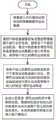
Fig. 1 is a control flow chart of the present invention.
Detailed Description
The following are specific embodiments of the present invention and are further described with reference to the drawings, but the present invention is not limited to these embodiments.
Before evaluating the personality and preference of the infant through the infant regional activity monitoring method and accurately helping teachers and parents to know the infant deeply, a regional activity room is arranged firstly, the regional activity room is composed of a plurality of subspaces, each subspace is provided with only one entrance, boundary geographical labels are pasted on each subspace to form independent spaces, each boundary geographical label is composed of a node and a straight line passing through the node, and the distance between the adjacent boundary geographical label nodes can be set to be 20 cm. And pasting an entrance geographic label near the entrance of the subspace. The entrance and exit geographic label is a two-dimensional code containing the area name, and each subspace is provided with a pair of entrance and exit geographic labels.
And then arranging acquisition equipment, respectively placing one camera equipment at four vertex angles of a classroom, transmitting signals acquired by the camera equipment to a PC (personal computer) through a network cable, carrying an inertial navigation equipment by each infant, wherein the acquired signals are transmitted to the PC through Bluetooth.
After the acquisition equipment is set, the acquisition equipment can be set to start working when the infant starts regional activities and close working after the infant finishes regional activities, so that energy is saved. As shown in fig. 1, after the work is started, image data of the movement of the infant in the regional activity room is acquired by the camera device, wherein the image data of the regional activity room comprises the image data of the regional activity room and the image data of the infant in the regional activity room, the acquisition frequency of the camera device is 60 frames/second, and the movement speed of the infant is less than 6 m/second, so that the distance between two adjacent frames of the infant is generally less than 0.1 m; the inertial navigation equipment worn by each infant collects the motion data of each infant, wherein the motion data comprises acceleration and a course angle, and the inertial navigation equipment can set acceleration sampling frequency, such as sampling frequency of 10 times/second or other numerical values; the camera equipment sends the collected image data to the PC at the image sampling frequency, and the inertial navigation equipment sends the collected motion data and the time of collecting the motion data to the PC at the acceleration sampling frequency, so that the accuracy of data judgment in the later period is ensured;
the PC collects image data collected by each camera device and analyzes the collected image data, firstly, the boundary geographical labels and the entrance geographical labels are identified through an image identification technology, and N pairs of connection lines of the entrance geographical labels and a plurality of boundary geographical label nodes can be obtained, wherein N is the number of the regions. And then connecting the entrance and exit geographic labels with the same name, connecting nodes at two ends of the boundary geographic label with other nearest boundary geographic label nodes or entrance and exit geographic labels, and connecting the unconnected entrance and exit geographic labels with the nearest boundary geographic label nodes. Thus, N closed connecting lines containing the region inlets and outlets can be obtained, the space surrounded by the connecting lines is the range of the corresponding region, the region activity room can be divided into N +1 subspaces, wherein the subspaces comprise N regions and a public space, and different regions are connected with the public space through the inlets and outlets; given that the angle between adjacent walls in a classroom is 90, the elevation of all boundary geotag nodes is substantially uniform, and thus the azimuth of all boundary geotags can be estimated. Additionally, given the 20 cm spacing between adjacent boundary geotag nodes, the coordinates of each node can be estimated in conjunction with the previous azimuth. Therefore, a geographical label space model which consists of N +1 subspaces and comprises coordinate nodes can be established; in addition, the minimum distance between the entrances and the exits of different areas is required to be greater than the measurement accuracy of the visual-inertial positioning system, the distance between the entrances and the exits of different subspaces is set to be greater than or equal to 2 meters, and in the process of establishing the model, if the distance between the entrances and the exits of different areas is less than 2 meters, a warning is given out to require the entrance and the exit of the areas to be rearranged.
After the geographical label space model is established, calculating coordinate points of the infant in the geographical label space model, specifically: extracting the infants in the image data by using an SIFT algorithm, judging the subspace of each identified infant, comparing the infants with boundary geographical label nodes in the subspaces when the infants are in the subspaces, and calculating coordinate points of the infants in a geographical label space model; if the child is located near the boundary of the plurality of subspaces, judging which subspace the child is located in according to the previous visual motion trail of the child, and calculating the coordinates of the child; when the child cannot be judged to be in which subspace through the previous visual motion trail of the child, comparing the child with boundary geographical label nodes in each subspace, calculating a coordinate once, and averaging a plurality of coordinate results to obtain a coordinate point of the child in a geographical label spatial model;
then connecting a plurality of coordinate points of the same infant according to the sequence of the time nodes so as to form the visual motion trail of the infant; the operation of the connection also includes the following situations: if the total movement of a certain 'child' is less than two pixels within 1 minute, the motion track point is removed because the distance between two adjacent frames of the child is less than 0.1 meter, and if the coordinate point of the child cannot be found within 0.1 meter of the next frame by a certain motion track, the coordinate point of the child within the next a/10 meter is searched by frame skipping. Where a is the number of skipped frames and a ≦ 10. If the coordinate point of the infant is found through the frame skipping, the images of the infant before and after the frame skipping are compared. If the similarity is high, the baby is considered to be the same baby, otherwise, the movement track is interrupted.
The motion data collected by each inertial navigation device is collected through a PC and is analyzed and processed, and the method specifically comprises the following steps: the acquired motion data is calculated through a PDR algorithm, the step length, the course angle and the time when the baby takes one step are obtained, and then the position of each step of the baby moving in the regional activity room is obtained according to the following formula:

wherein, (x'0,y′0) Is the initial position of the child, d is the step length of the child, theta is the course angle, (x'k,y′k) The position of the child at step k. Finally, connecting the positions of each step to form the inertial motion track of each infant;
assuming that n infants exist, n continuous inertial motion tracks and a plurality of visual motion tracks can be obtained, then the inertial motion track and the plurality of visual motion tracks of each infant are compared, and m pairs of inertial motion tracks and visual motion tracks with high correlation can be obtained, wherein m is less than or equal to n. If n pairs of inertia motion tracks and vision motion tracks with high correlation are obtained in total, making the inertia-vision motion tracks equal to the vision motion tracks, and correspondingly obtaining the inertia-vision motion tracks of each infant according to the inertia motion tracks;
if m pairs of inertial motion tracks and visual motion tracks with high correlation are obtained in total, and m is smaller than n, splicing the remaining visual motion tracks and the remaining inertial motion tracks until inertial-visual motion tracks of n infants are generated, wherein the specific operation of splicing the visual motion tracks and the inertial motion tracks is as follows:
extracting the time t of each step of the inertia motion tracki;
At the judgment tiPosition (x ″) of the visual motion trajectory at the momenti,y″i) If present, the position (x) of the visual-inertial motion trajectory is determinedi,yi)=(x″i,y″i) (ii) a Sequentially judging the time of each step of the inertia motion track, and judging ti+n+1Position (x ″) of the visual motion trajectory at the momenti+n+1,y″i+n+1) If present, the position (x) of the visual-inertial motion trajectory is determinedi+n+1,yi+n+1)=(x″i+n+1,y″i+n+1) (ii) a In this judgment, t is foundi+1Time to ti+nThe position of the visual motion track does not exist at the moment, the inertial motion track is analyzed, and the inertial motion track t is extractedi+1Time to ti+nStep (x ') corresponding to time'k,y′k) Let a ti+1Step of moment inertial motion track is (x'i+1,y′i+1) Will be ti+1The step of the time being the position (x ″) where the visual movement trace existsi,y″i) Correction calculation is performed to correct the position (x ″) of the step after'i+1,y″′i+1) Assigning a position (x) to the visual-inertial motion trajectoryi+1,yi+1). The correction calculation is calculated by the following formula:

wherein, ti+1Coordinates (x ″ 'of step corrected by moment inertial motion trajectory'i+1,y″′i+1) Then the coordinate is assigned to the visual-inertial motion track ti+1Position of time (x)i+1,yi+1) The above step (1); (x ″)i,y″i) Is tiPosition coordinate point of moment visual motion trail, (x ″)i+n+1,y″i+n+1) Is ti+n+1Position coordinate points of moment visual motion trail, (x'i+1,y′i+1) Is ti+1Coordinates of steps of the moment inertial motion trajectory; (x'i,y′i) Is tiCoordinates of steps of the moment inertial motion trajectory; (x'i+n+1,y′i+n+1) Is ti+n+1Coordinates of steps of the moment inertial motion trajectory. At the judgment ti+1Time to ti+nAnd when the position coordinate point of the visual motion track at the moment does not exist, the step correction corresponding to the inertial motion track is taken by repeating the above mode, and then the coordinate value of the corrected step is assigned to the coordinate point of the visual-inertial motion track at the corresponding moment. Thereby, the visual-inertial motion track of each infant is obtained.
And finally, extracting characteristic values from the visual-inertial motion trail of the infant, wherein the characteristic values comprise time values of the infant entering and exiting each subspace of the activity room of the area and the acceleration of the activity in each subspace of the room. The time value of the infant entering or leaving each area of the regional activity room can be extracted and obtained from the visual-inertial motion trail according to the coordinate point information of the entrance and the exit of each area; and then evaluating the personality preference of the infant according to the characteristic values, wherein the personality preference comprises concentration degree, liveness degree, subspace preference degree, subspace attraction and the like. Wherein, the operation of concentration degree evaluation is as follows:
subtracting the time values of the entrance and the exit of the subspace to calculate the staying time T of the infant in each subspaceKid(ii) a Will stay for a time period TKidRecording the name, the name and the date of the subspace, the time value for entering the subspace and the stay time into a table established by the name, the name and the date of the subspace of the infant; all stay time lengths T of the same infant in the tableKidComparing, and recording the maximum value as the maximum single stay time T of the infantKidMaxAnd further according to the dwell time TKidMaxTo determine the concentration of the child. Such as the length of stay TKidMaxComparing the time with the concentration time of the infant in the age group, and judging the time T of stayKidMaxIf the length of time that the infant should reach is longer than the age, the attentiveness of the infant is good, otherwise, the attentiveness of the infant is poor.
The activity evaluation operation comprises the following steps:
and segmenting an acceleration array consisting of time parameters and acceleration values acquired and recorded by an accelerometer in the inertial navigation equipment according to the time values of entering and leaving a certain subspace, wherein the acceleration array is an array with a first column of time, other columns of acceleration values and subspace names, and the number of rows equal to the sampling frequency multiplied by the sampling time length. Extracting acceleration arrays of the infants in the same subspace, and averaging acceleration values in the acceleration arrays of the same subspace to obtain an average value of the single-region acceleration of the infants;
and carrying out weighted average on the infant single-region acceleration average values of different subspaces to obtain an infant acceleration average value, and further determining the activity of the infant according to the infant acceleration average value. The acceleration average value of each infant is stored in a table, and a teacher can know which infants are better and which infants are more happy and calm according to different infant acceleration average values, so that the method can help a new teacher to quickly know the infants.
The operation of evaluating the preference degree of the children on each subspace comprises the following steps:
subtracting the time values of the entrance and the exit of the subspace to calculate the staying time T of the infant in each subspaceKid(ii) a The stay time T of the same child in the same subspaceKidAccumulating to obtain the accumulated stay time T of the single area of the infantKidArea(ii) a Accumulating the stay time T of the infant single areas in different subspacesKidAreaThe comparison is made to confirm the child's preference for each subspace. Dwell time TKidAreaThe larger the size, the greater the child's preference for that subspace.
The operation of the attraction evaluation of each subspace includes:
subtracting the time values of the entrance and the exit of the subspace to obtain the staying time T of each infant in each subspaceKid(ii) a The stay time T of all the infants in the same subspaceKidAdding and calculating to obtain the total residence time T of the whole class list areaClassAreasum(ii) a Accumulating the stay time T of the whole class list areaClassAreaSumDividing the total activity duration of the subspace by the upper limit number of people preset in the subspace to obtain the full seat rate of the subspace; accumulating the stay time T of the whole class list areaClassAreaSumDividing the total number of the infants entering the subspace to obtain the average staying time T of the whole class single regionClassAreaAver(ii) a Judging the subspace with the full rate of less than 90 percent of the subspace as a non-hot area and accumulating the stay time T according to the whole class list areaClassAreaSumSorting to obtain an attraction sorting table of a non-hot area; judging the subspace with the full rate of the subspace being more than or equal to 90 percent as a hot area and according to the average stay time T of the whole class single areaClassAreaAverSorting to obtain an attraction sorting table of the hot area; and confirming the attraction of each subspace to the infant through the attraction sequencing table of the non-hot area and the attraction sequencing table of the hot area.
Finally, the concentration degree, the liveness degree and the preference degree of the infants are made into a personality and preference report of each infant and are posted in the individual growth file of the infant, so that the regional activity condition of the infant can be accurately fed back to each parent, and the personalized development and the comprehensive development of the infant are promoted.
The specific embodiments described herein are merely illustrative of the spirit of the invention. Various modifications or additions may be made to the described embodiments or alternatives may be employed by those skilled in the art without departing from the spirit or ambit of the invention as defined in the appended claims.
Claims (10)
Translated fromChinese

Priority Applications (1)
| Application Number | Priority Date | Filing Date | Title |
|---|---|---|---|
| CN202111176437.7ACN113916228A (en) | 2021-10-09 | 2021-10-09 | A method for monitoring regional activity in young children |
Applications Claiming Priority (1)
| Application Number | Priority Date | Filing Date | Title |
|---|---|---|---|
| CN202111176437.7ACN113916228A (en) | 2021-10-09 | 2021-10-09 | A method for monitoring regional activity in young children |
Publications (1)
| Publication Number | Publication Date |
|---|---|
| CN113916228Atrue CN113916228A (en) | 2022-01-11 |
Family
ID=79238728
Family Applications (1)
| Application Number | Title | Priority Date | Filing Date |
|---|---|---|---|
| CN202111176437.7APendingCN113916228A (en) | 2021-10-09 | 2021-10-09 | A method for monitoring regional activity in young children |
Country Status (1)
| Country | Link |
|---|---|
| CN (1) | CN113916228A (en) |
Cited By (1)
| Publication number | Priority date | Publication date | Assignee | Title |
|---|---|---|---|---|
| CN118051727A (en)* | 2024-02-27 | 2024-05-17 | 日照市规划设计研究院集团有限公司 | Method for identifying special members in parent and friend tour |
Citations (11)
| Publication number | Priority date | Publication date | Assignee | Title |
|---|---|---|---|---|
| US20050250458A1 (en)* | 2004-01-16 | 2005-11-10 | Bones In Motion, Inc. | Wireless device, program products and methods of using a wireless device to deliver services |
| US20070016109A1 (en)* | 2003-10-31 | 2007-01-18 | Tokyo University Of Agriculture And Technology Tlo | Infant movement analysis system and infant movement analysis method |
| KR20110089677A (en)* | 2010-02-01 | 2011-08-09 | 박은경 | How to Operate Kids Cafe Using Infant's Behavioral Pattern Analysis |
| WO2012116857A1 (en)* | 2011-03-02 | 2012-09-07 | Robert Bosch Gmbh | Movement monitor and method for monitoring the movement of a patient |
| US20140085465A1 (en)* | 2011-05-04 | 2014-03-27 | Deutsches Zentrum für Luft- und Raumfahrt e.V. | Method and system for locating a person |
| KR20160072361A (en)* | 2014-12-12 | 2016-06-23 | 주식회사 감동공장 | The method and device for protecting infant and evaluating bevavior of infant and The method and device for tracking infant based on network |
| CN107850436A (en)* | 2015-05-23 | 2018-03-27 | 深圳市大疆创新科技有限公司 | Merged using the sensor of inertial sensor and imaging sensor |
| CN108627153A (en)* | 2018-05-11 | 2018-10-09 | 南京大学 | A kind of rigid motion tracing system and its working method based on inertial sensor |
| CN110095116A (en)* | 2019-04-29 | 2019-08-06 | 桂林电子科技大学 | A kind of localization method of vision positioning and inertial navigation combination based on LIFT |
| CN111640048A (en)* | 2020-05-20 | 2020-09-08 | 合肥巴灵瑞教育科技有限公司 | Social ability evaluation system based on infant behavior track analysis |
| WO2020260731A1 (en)* | 2019-06-28 | 2020-12-30 | Cubelizer S.L. | Method for analysing the behaviour of people in physical spaces and system for said method |
- 2021
- 2021-10-09CNCN202111176437.7Apatent/CN113916228A/enactivePending
Patent Citations (11)
| Publication number | Priority date | Publication date | Assignee | Title |
|---|---|---|---|---|
| US20070016109A1 (en)* | 2003-10-31 | 2007-01-18 | Tokyo University Of Agriculture And Technology Tlo | Infant movement analysis system and infant movement analysis method |
| US20050250458A1 (en)* | 2004-01-16 | 2005-11-10 | Bones In Motion, Inc. | Wireless device, program products and methods of using a wireless device to deliver services |
| KR20110089677A (en)* | 2010-02-01 | 2011-08-09 | 박은경 | How to Operate Kids Cafe Using Infant's Behavioral Pattern Analysis |
| WO2012116857A1 (en)* | 2011-03-02 | 2012-09-07 | Robert Bosch Gmbh | Movement monitor and method for monitoring the movement of a patient |
| US20140085465A1 (en)* | 2011-05-04 | 2014-03-27 | Deutsches Zentrum für Luft- und Raumfahrt e.V. | Method and system for locating a person |
| KR20160072361A (en)* | 2014-12-12 | 2016-06-23 | 주식회사 감동공장 | The method and device for protecting infant and evaluating bevavior of infant and The method and device for tracking infant based on network |
| CN107850436A (en)* | 2015-05-23 | 2018-03-27 | 深圳市大疆创新科技有限公司 | Merged using the sensor of inertial sensor and imaging sensor |
| CN108627153A (en)* | 2018-05-11 | 2018-10-09 | 南京大学 | A kind of rigid motion tracing system and its working method based on inertial sensor |
| CN110095116A (en)* | 2019-04-29 | 2019-08-06 | 桂林电子科技大学 | A kind of localization method of vision positioning and inertial navigation combination based on LIFT |
| WO2020260731A1 (en)* | 2019-06-28 | 2020-12-30 | Cubelizer S.L. | Method for analysing the behaviour of people in physical spaces and system for said method |
| CN111640048A (en)* | 2020-05-20 | 2020-09-08 | 合肥巴灵瑞教育科技有限公司 | Social ability evaluation system based on infant behavior track analysis |
Cited By (1)
| Publication number | Priority date | Publication date | Assignee | Title |
|---|---|---|---|---|
| CN118051727A (en)* | 2024-02-27 | 2024-05-17 | 日照市规划设计研究院集团有限公司 | Method for identifying special members in parent and friend tour |
Similar Documents
| Publication | Publication Date | Title |
|---|---|---|
| KR102536425B1 (en) | Health care device, system and method | |
| CN108399376B (en) | Method and system for intelligent analysis of students' interest in classroom learning | |
| Kalka et al. | Ijb–s: Iarpa janus surveillance video benchmark | |
| Bidwell et al. | Classroom analytics: Measuring student engagement with automated gaze tracking | |
| Indi et al. | Detection of malpractice in e-exams by head pose and gaze estimation | |
| CN108875606A (en) | A kind of classroom teaching appraisal method and system based on Expression Recognition | |
| JP7321437B2 (en) | Information processing device, information processing method, and program | |
| WO2019116658A1 (en) | Information processing device, information processing method, and program | |
| CN113869415B (en) | Problem behavior detection and early warning system | |
| CN114783043B (en) | Child behavior track positioning method and system | |
| CN111707375B (en) | Electronic class card with intelligent temperature measurement attendance and abnormal behavior detection functions | |
| Zhang et al. | WKNN indoor positioning method based on spatial feature partition and basketball motion capture | |
| CN118071552A (en) | A sports examination system and sports examination scoring method based on artificial intelligence | |
| CN113916228A (en) | A method for monitoring regional activity in young children | |
| KR20200022065A (en) | Method and system for providing information of child-rearing analysing both patent and child | |
| CN116271773A (en) | Intelligent playground training system and method based on AI technology | |
| CN108921069B (en) | Infant interest and hobby recommendation method and system | |
| CN113269079A (en) | Children autism early evaluation device and system based on video layering comparison analysis and grade behavior paradigm | |
| CN116168346B (en) | Remote accompanying-reading monitoring system based on student behavior capturing | |
| CN118570871A (en) | Convolutional neural network-based infant fitness action standard identification and evaluation method | |
| CN112634096A (en) | Classroom management method and system based on intelligent blackboard | |
| KR20210001147A (en) | System for analyzing quantitative education activity of child | |
| CN110353703A (en) | Autism based on language paradigm behavioural analysis of repeating the words of others like a parrot assesses apparatus and system | |
| KR20240086017A (en) | Concentration measurement system and method through posture and movement recognition | |
| Yue et al. | Application of data mining for young children education using emotion information |
Legal Events
| Date | Code | Title | Description |
|---|---|---|---|
| PB01 | Publication | ||
| PB01 | Publication | ||
| SE01 | Entry into force of request for substantive examination | ||
| SE01 | Entry into force of request for substantive examination | ||
| RJ01 | Rejection of invention patent application after publication | Application publication date:20220111 | |
| RJ01 | Rejection of invention patent application after publication |