CN113871017A - Method and device for estimating corresponding information of ablation consumables and focus - Google Patents
Method and device for estimating corresponding information of ablation consumables and focusDownload PDFInfo
- Publication number
- CN113871017A CN113871017ACN202111156654.XACN202111156654ACN113871017ACN 113871017 ACN113871017 ACN 113871017ACN 202111156654 ACN202111156654 ACN 202111156654ACN 113871017 ACN113871017 ACN 113871017A
- Authority
- CN
- China
- Prior art keywords
- lesion
- ablation
- information
- consumables
- size
- Prior art date
- Legal status (The legal status is an assumption and is not a legal conclusion. Google has not performed a legal analysis and makes no representation as to the accuracy of the status listed.)
- Pending
Links
Images
Classifications
- G—PHYSICS
- G16—INFORMATION AND COMMUNICATION TECHNOLOGY [ICT] SPECIALLY ADAPTED FOR SPECIFIC APPLICATION FIELDS
- G16H—HEALTHCARE INFORMATICS, i.e. INFORMATION AND COMMUNICATION TECHNOLOGY [ICT] SPECIALLY ADAPTED FOR THE HANDLING OR PROCESSING OF MEDICAL OR HEALTHCARE DATA
- G16H50/00—ICT specially adapted for medical diagnosis, medical simulation or medical data mining; ICT specially adapted for detecting, monitoring or modelling epidemics or pandemics
- G16H50/50—ICT specially adapted for medical diagnosis, medical simulation or medical data mining; ICT specially adapted for detecting, monitoring or modelling epidemics or pandemics for simulation or modelling of medical disorders
- G—PHYSICS
- G16—INFORMATION AND COMMUNICATION TECHNOLOGY [ICT] SPECIALLY ADAPTED FOR SPECIFIC APPLICATION FIELDS
- G16H—HEALTHCARE INFORMATICS, i.e. INFORMATION AND COMMUNICATION TECHNOLOGY [ICT] SPECIALLY ADAPTED FOR THE HANDLING OR PROCESSING OF MEDICAL OR HEALTHCARE DATA
- G16H20/00—ICT specially adapted for therapies or health-improving plans, e.g. for handling prescriptions, for steering therapy or for monitoring patient compliance
- G16H20/40—ICT specially adapted for therapies or health-improving plans, e.g. for handling prescriptions, for steering therapy or for monitoring patient compliance relating to mechanical, radiation or invasive therapies, e.g. surgery, laser therapy, dialysis or acupuncture
- G—PHYSICS
- G16—INFORMATION AND COMMUNICATION TECHNOLOGY [ICT] SPECIALLY ADAPTED FOR SPECIFIC APPLICATION FIELDS
- G16H—HEALTHCARE INFORMATICS, i.e. INFORMATION AND COMMUNICATION TECHNOLOGY [ICT] SPECIALLY ADAPTED FOR THE HANDLING OR PROCESSING OF MEDICAL OR HEALTHCARE DATA
- G16H40/00—ICT specially adapted for the management or administration of healthcare resources or facilities; ICT specially adapted for the management or operation of medical equipment or devices
- G16H40/20—ICT specially adapted for the management or administration of healthcare resources or facilities; ICT specially adapted for the management or operation of medical equipment or devices for the management or administration of healthcare resources or facilities, e.g. managing hospital staff or surgery rooms
Landscapes
- Health & Medical Sciences (AREA)
- Engineering & Computer Science (AREA)
- Medical Informatics (AREA)
- Public Health (AREA)
- Primary Health Care (AREA)
- Epidemiology (AREA)
- General Health & Medical Sciences (AREA)
- Biomedical Technology (AREA)
- Business, Economics & Management (AREA)
- General Business, Economics & Management (AREA)
- Data Mining & Analysis (AREA)
- Databases & Information Systems (AREA)
- Pathology (AREA)
- Nuclear Medicine, Radiotherapy & Molecular Imaging (AREA)
- Surgery (AREA)
- Urology & Nephrology (AREA)
- Laser Surgery Devices (AREA)
Abstract
Translated fromChinese
Description
Technical Field
The application relates to the field of medical software, in particular to a method and a device for estimating corresponding information of ablation consumables and focuses.
Background
Mrgltt is laser interstitial hyperthermia guided by magnetic resonance imaging that utilizes the heat released by the laser to selectively ablate lesions or structures. Laser ablation is performed under real-time magnetic resonance imaging guidance to treat several intracranial lesions.
When the laser irradiates the tumor, the tumor tissue interacts by absorbing laser photons, which are then converted into heat energy inside the tumor tissue. Can cause tumor tissue necrosis. Thus, for therapeutic purposes, intraoperative monitoring software can generate a thermal map to visualize thermal changes and monitor tumor necrosis while ablating in this manner.
Therefore, monitoring the thermal changes of the lesion during ablation is critical to ensure that the lesion is completely ablated. During the ablation, the patient needs to be laser ablated inside the magnetic resonance room, and the physician needs to be monitored in real time outside the magnetic resonance room by MRI imaging.
Laser ablation requires support from the device and also requires a complex procedure. Therefore, the cost is relatively high. It is of interest to the patient if an estimate of the cost can be obtained before the operation. However, currently all involve the expense of being associated with treatment.
Disclosure of Invention
The embodiment of the application provides a method and a device for estimating corresponding information of an ablation consumable and a focus, so as to at least solve the problem that the cost caused by the focus to be ablated and the consumable cannot be estimated.
According to one aspect of the application, a method for estimating corresponding information of ablation consumables and lesions is provided, which is characterized by comprising the following steps: estimating a focus to be ablated to obtain focus information corresponding to the focus, wherein the focus information comprises: the size of the lesion, the number of lesions, and the location of the lesion; an ablation strategy determined from the lesion information; determining consumables consumed in performing the ablation strategy according to the ablation strategy, wherein the consumables include at least an optical fiber; and determining an estimated cost corresponding to the ablation of the focus according to at least the focus information and the consumable.
Further, determining consumable items consumed in performing the ablation strategy according to the ablation strategy comprises: determining a type of optical fiber and a number of optical fibers consumed in the ablation strategy from the ablation strategy; and/or determining the type and number of consumed optical fibers, optical fiber jumpers and the number of cranial nails according to the ablation strategy, wherein the number of cranial nails is determined according to the number of used optical fibers.
Further, determining a cost corresponding to ablating the lesion based at least on the lesion information and the consumable comprises: determining the number of optical fibers and the light-emitting time and power of each optical fiber according to the number of the focuses and the corresponding size of each focus; and determining the pre-estimated cost corresponding to the ablation of the focus according to the type and the number of the optical fibers and the light-emitting time and the power of each optical fiber.
Further, after performing the ablation, the method further comprises: acquiring the size of an actually ablated focus and information of an actually used optical fiber; the actual cost is determined based at least on the size of the lesion actually ablated and information on the optical fiber actually used.
Further, determining the actual cost based on at least the size of the lesion actually ablated and information of the optical fiber actually used comprises: and determining the actual cost according to the size of the actually ablated focus, the information of the actually used optical fiber and the light-emitting time and power of each optical fiber.
According to another aspect of the present application, there is provided an apparatus for estimating corresponding information of ablation consumables and lesions, comprising: the estimation module is used for estimating a focus to be ablated to obtain focus information corresponding to the focus, wherein the focus information comprises: the size of the lesion, the number of lesions, and the location of the lesion; a first determination module for determining an ablation strategy based on the lesion information; a second determination module for determining consumables consumed in performing the ablation strategy according to the ablation strategy, wherein the consumables comprise at least an optical fiber; and the third determining module is used for determining the estimated cost corresponding to the ablation of the focus according to at least the focus information and the consumable.
Further, the second determination module is configured to: determining a type of optical fiber and a number of optical fibers consumed in the ablation strategy from the ablation strategy; and/or determining the number and type of consumed optical fibers, optical fiber jumpers and the number of cranial nails according to the ablation strategy, wherein the number of cranial nails is determined according to the number of used optical fibers.
Further, the third determining module is configured to: determining the number of optical fibers and the light-emitting time and power of each optical fiber according to the number of the focuses and the corresponding size of each focus; and determining the pre-estimated cost corresponding to the ablation of the focus according to the number and the type of the optical fibers and the light-emitting time and the power of each optical fiber.
Further, after the ablating, the method further comprises: the acquisition module is used for acquiring the size of an actually ablated focus and information of an actually used optical fiber; and the fourth determination module is used for determining the actual cost at least according to the size of the focus which is actually ablated and the information of the optical fiber which is actually used.
Further, the fourth determining module is configured to: and determining the actual cost according to the size of the actually ablated focus, the information of the actually used optical fiber and the light-emitting time and power of each optical fiber.
In the embodiment of the present application, a lesion to be ablated is estimated to obtain lesion information corresponding to the lesion, where the lesion information includes: the size of the lesion, the number of lesions, and the location of the lesion; an ablation strategy determined from the lesion information; determining consumables consumed in performing the ablation strategy according to the ablation strategy, wherein the consumables include at least an optical fiber; and determining an estimated cost corresponding to the ablation of the focus according to at least the focus information and the consumable. The problem that the cost caused by the focus to be ablated and the consumable material cannot be estimated is solved through the method and the device, so that the cost can be estimated according to the estimation of the focus and the consumable material.
Drawings
The accompanying drawings, which are incorporated in and constitute a part of this application, illustrate embodiments of the application and, together with the description, serve to explain the application and are not intended to limit the application. In the drawings:
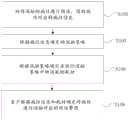
fig. 1 is a flowchart of estimating ablation consumables and lesion correspondence information according to an embodiment of the present disclosure.
Detailed Description
It should be noted that the embodiments and features of the embodiments in the present application may be combined with each other without conflict. The present application will be described in detail below with reference to the embodiments with reference to the attached drawings.
It should be noted that the steps illustrated in the flowcharts of the figures may be performed in a computer system such as a set of computer-executable instructions and that, although a logical order is illustrated in the flowcharts, in some cases, the steps illustrated or described may be performed in an order different than presented herein.
In this embodiment, a method for predicting corresponding information of ablation consumables and lesions is provided, fig. 1 is a flowchart of predicting corresponding information of ablation consumables and lesions according to an embodiment of the present disclosure, as shown in fig. 1, the flowchart includes the following steps:
step S102, pre-estimating a focus to be ablated to obtain focus information corresponding to the focus, wherein the focus information comprises: the size of the lesion, the number of lesions and the location of the lesion;
step S104, determining an ablation strategy according to the focus information;
step S106, determining consumable materials consumed in executing the ablation strategy according to the ablation strategy, wherein the consumable materials at least comprise optical fibers;
and S108, determining the estimated cost corresponding to the ablation of the focus according to at least the focus information and the consumable.
Through the steps, the lesion information and consumables in the ablation strategy are estimated, so that the problem that the lesion to be ablated cannot be estimated and the cost caused by the consumables cannot be estimated is solved, and the cost can be estimated according to the estimation of the lesion and the consumables.
The relatively high cost of the consumable is the optical fiber, which is typically used individually for each patient, and therefore the price of the optical fiber represents a relatively large portion of the total cost. In an alternative embodiment, the type of optical fiber and the number of optical fibers consumed in the ablation strategy can be determined according to the ablation strategy. In addition to this, the price of the fiber jumpers and skull pegs may be considered, i.e. the number and type of fibers consumed, the number of fiber jumpers and skull pegs may be determined according to the ablation strategy, wherein the number of skull pegs is determined according to the number of used fibers.
In another embodiment, the time of treatment may also be used as a basis for a cost estimate. The treatment time can be objectively evaluated by using the light emitting time of the laser, and considering that the use of laser equipment is also required to be costly, in an optional embodiment, the number of the optical fibers and the light emitting time and power of each optical fiber can be determined according to the number of the focuses and the corresponding size of each focus; and determining the pre-estimated cost corresponding to the ablation of the focus according to the number and the type of the optical fibers and the light-emitting time and the power of each optical fiber. In this alternative embodiment, the use of the laser is also taken into account in the cost estimate, so that a more accurate estimate can be made.
The size of the lesion is also a factor that can be considered for estimating the cost, because the size of the lesion and the location information of the lesion depend on the difficulty of the operation, and even if the optical fiber is the same, if the location of the lesion is different, the difficulty of the operation is increased. Optionally, as another optional implementation, a weight may be determined according to the size and position information of the lesion, where the weight is greater than or equal to 1 and less than or equal to 2. Then, the estimated cost is multiplied by the weight to obtain the cost corrected by the weight.
The estimated cost and the actual cost may be different, and thus the actual ablation lesion and the actual consumable used may be obtained after the surgery to obtain a substantial cost. For example, the actual cost may be determined based at least on the size of the lesion actually ablated and information of the optical fiber actually used. As an alternative embodiment, the above-mentioned weight may be determined according to the position information of the lesion, and the corrected cost may be obtained by multiplying the actual cost by the weight.
When acquiring the actual cost, the using condition of the laser can be considered, namely, the actual cost is determined according to the size of the focus to be actually ablated, the information of the actually used optical fiber and the light-emitting time and power of each optical fiber. It should be noted that the size of the lesion may be used to calculate the actual cost, and the location information of the lesion may be used as the basis for determining the weight. Alternatively, the actual cost may be determined based only on information of the fibers used and/or the light extraction time and power of each fiber, and then the size of the lesion and/or the location information of the lesion may be used to determine a weight that may be used to modify the actual cost.
As another alternative, the difference between the actual cost and the estimated cost may be obtained, if the difference is greater than the threshold, the estimated ablation strategy and the actually performed ablation strategy are saved, and the difference between the two ablation strategies is obtained and displayed by comparison. Therefore, cases with large differences can be found and executed through the cost difference, the cases are used as data to be stored, and the cases can be used as the basis of the estimation strategy of the subsequent adjustment software.
There are various ways of prediction, for example, two selectable prediction modes are provided in the present embodiment.
Stage one: pre-estimating the ablation area before operation and pre-estimating parameters:
the method comprises the following steps of firstly, estimating a simulation energy diffusion model, specifically:
the estimation module establishes a simulation energy diffusion model, confirms the tissue types of the required ablation region, carries out three-dimensional modeling on the ablation region and the peripheral region and adds material attributes, wherein the tissue types comprise one or more than two; the simulated energy diffusion model comprises a Monte Carlo simulation model and a Maxwell simulation model; the tissue region temperature real-time change simulation is carried out by combining the tissue material characteristics including specific heat capacity and thermal diffusion coefficient and the blood flow perfusion rate factor of the tissue region;
ablation simulation is performed on the tissue by using a thermal ablation computation model based on simulation of real-time temperature change of the tissue region, wherein the thermal ablation computation model comprises an Arrhenius equation and/or a CEM43(Sapareto-Dewey model) model, and dynamic thermal ablation simulation evaluation is performed by combining activation energy and Arrhenius constants of the tissue.
Carrying out photon diffusion simulation according to the material properties including anisotropy, tissue absorption rate, reflectivity and refractive index by the Monte Carlo simulation model, and setting energy distribution, namely the size of an ablation region according to the photon diffusion simulation result;
it can be seen that the material properties need to be used in the model, and information such as the type and the number of used optical fibers can be obtained.
Wherein, the Maxwell simulation model carries out energy diffusion simulation or electromagnetic and thermal combined energy diffusion simulation, and sets energy distribution, namely the size of an ablation area, according to the energy diffusion simulation result;
the size of the ablation region may be defined as the size of the lesion, or the size of the lesion may be defined as a ratio of the size of the ablation region to the size of the lesion, which may be defined as 90% to 110% of the size of the lesion.
Setting simulation conditions through material parameters including blood perfusion, tissue heat transfer, a heat conduction model and specific heat, and performing physical field coupling calculation by using a pre-estimation module through a simulation platform including ANSYS, Abaqus and MATLAB to obtain a dynamic temperature distribution result;
the Aloneius equation model reflects an empirical formula of the relationship between the chemical reaction rate coefficient and the temperature change, and specifically comprises the following steps:

wherein, the arrhenius equation model is used for real-time ablation feedback in the art, and R: is a universal gas constant of 8.314J/(mol. K), T: is temperature (k), A: is the rate constant (Alinuss constant) in s-1And E (a): is activation energy, c (0): initial concentration of cells, c (t): cell concentration at time t.
By clicking on a point where ablation has been completed, the ablation percentage can be read in real time.
Among them, the CEM43 model is a simplified Allnius equation, which is a cumulative equivalent to the equivalent minutes of a tissue at 43 ℃.
And a second scheme is to estimate the fitting function, and specifically comprises the following steps:
the pre-estimation module performs dynamic ablation area change fitting based on experimental data, obtains a large number of simulation results of magnetic resonance temperature imaging real-time ablation through a large number of ablation experiments, performs ablation time and ablation area fitting under the condition of different laser output powers to obtain a fitting function, performs path planning by using the fitting function, performs pre-estimation ablation area modeling, calculates rough ablation time, times, ablation power and cooling rate, and realizes ablation pre-estimation;
based on a large amount of actual measurement data, under certain light-emitting power, the fitting function of the ablation area of the normal center section of the optical fiber and time is linear in the early stage, then under the combined action of blood perfusion and cooling system factors, the fitting function tends to converge, due to the physical characteristic limitation of 980nm or 1064nm laser, the limitation of the maximum ablation area exists, the limitation of the maximum ablation area forms the boundary of the fitting function, the fitting function is represented as a three-section piecewise function, the 1 st section is a linear increase stage of the ablation area, the 2 nd section is a temperature convergence stage under the same power, the 3 rd section is the maximum ablation area under the limitation of the physical characteristic, and the following steps are shown:

wherein, area (t) is a piecewise function for representing the ablation area at the ablation time t; d0Is a first constant, D1Is a second constant, wherein D0、D1Is a constant acquired in advance; t is the ablation time; dmaxThe maximum ablation area; y is the time at which the fitting function linearly increases the end point; z is the time at which the maximum ablation area is achieved.
Based on area (t) as a piecewise function, the creators of the invention use dispersive optical fibers to perform a large number of ablation experiments on pork livers under the conditions that the laser power is 6W, the laser wavelength is 980nm and continuous light emission is performed, and record experimental data such as tissue types, tissue characteristics, ablation time, ablation areas and the like in real time, and summarize the data as follows:

wherein area (t) is a piecewise function representing an ablation area/mm at an ablation time t2(square millimeters); t is ablation time/s (seconds).
In consideration of the cost, the fee may be based on the ablation area, for example, the fee may be based on square millimeters, and in the above formula, area (t) results in the area of ablation, which is in square millimeters.
Stage two, real-time ablation monitoring in the operation,
the monitoring module carries out three-dimensional delineation on the ablation region and the peripheral region, adds corresponding material attributes, stores a tissue material attribute list, and carries out fine segmentation if two or more tissues exist in the ablation region so as to enable ablation parameters to change at a tissue junction; if the tumor exists in the ablation area, the area outside the tumor is defaulted to be the same tissue, or the designated ablation area is generated by respectively drawing, when the temperature of the magnetic resonance temperature imager is measured, three or more layers of scanning planes which are perpendicular or parallel to each other are selected, on the corresponding view angle slice, the corresponding two-dimensional ablation area can be extracted to be used as the basis of ablation analysis, pre-estimation is carried out by using pre-operation ablation estimation software, and corresponding ablation parameters are obtained, wherein the ablation parameters comprise cooling rate, laser power and light extraction time.
The ablation probe is inserted into a corresponding position, scanning parameters including the FOV (field of view) of magnetic resonance scanning of the magnetic resonance temperature imager are set, the magnetic resonance temperature imager can be compatible with pixel points of various sizes, the monitoring module can automatically identify and judge the size of each pixel point, and each pixel point is used as an ablation unit for calculation.
Under the condition of magnetic resonance noninvasive measurement by using a magnetic resonance temperature imager, the ablation prediction is carried out by using an Arrhenius model and a CEM43 model in combination with the segmentation and assignment of a predicted ablation region before an operation, namely ablation parameters and material attributes.
If the actual ablation area is larger than the predicted ablation area, the monitoring module automatically provides a bullet box to prompt whether ablation is stopped, and if the ablation coverage area exceeds 110%, the monitoring module automatically cuts off energy output.
After the actual ablation, the size of the actual ablated lesion, i.e. the size of the actual ablated area, can be obtained. Or may also be referred to as the size of the lesion actually ablated. At this time, parameters such as the light emitting time and the light emitting power of the actually used optical fiber and the used laser can be obtained. These can be used as a basis for calculating the actual cost.
And a third stage: post-operative ablation image assessment
The evaluation module carries out three-dimensional virtual modeling on the estimated ablation region, automatically fits the estimated ablation region to form an approximate ablation region, or realizes registration of a preoperative structural phase (or other multi-modal images) and postoperative same sequence images, highlights the changed region by using a contrast difference method, or reconstructs the postoperative ablation region by using a three-dimensional rapid delineation method, and compares the postoperative ablation region with the preoperative estimated ablation region, and if the percentage of ablation is calculated to exceed 110%, the ablation is considered to be excessive; if less than 90% ablation is considered insufficient, the range where the intended ablation region is overlapped and the range outside the intended ablation region need to be considered.
The assessment module may not only observe the size of the ablation region. Meanwhile, whether the ablation area generates shrinkage or expansion and edema can be observed, so that a doctor can reasonably judge whether tissue suction or other operations are needed.
As another alternative, the ablation condition may be determined after the evaluation of the postoperative influence, and if there is over-ablation or under-ablation, the cost actually incurred at this time may be discounted, for example, a second weight value is generated according to the over-ablation and under-ablation conditions, and the value of the weight value ranges from 0.5 to 1. And multiplying the weight by the actually generated measuring expense to obtain the expense which is actually required to be paid by the patient.
In this embodiment, an electronic device is provided, comprising a memory in which a computer program is stored and a processor configured to run the computer program to perform the method in the above embodiments.
The programs described above may be run on a processor or may also be stored in memory (or referred to as computer-readable media), which includes both non-transitory and non-transitory, removable and non-removable media, that implement information storage by any method or technology. The information may be computer readable instructions, data structures, modules of a program, or other data. Examples of computer storage media include, but are not limited to, phase change memory (PRAM), Static Random Access Memory (SRAM), Dynamic Random Access Memory (DRAM), other types of Random Access Memory (RAM), Read Only Memory (ROM), Electrically Erasable Programmable Read Only Memory (EEPROM), flash memory or other memory technology, compact disc read only memory (CD-ROM), Digital Versatile Discs (DVD) or other optical storage, magnetic cassettes, magnetic tape magnetic disk storage or other magnetic storage devices, or any other non-transmission medium that can be used to store information that can be accessed by a computing device. As defined herein, a computer readable medium does not include a transitory computer readable medium such as a modulated data signal and a carrier wave.
These computer programs may also be loaded onto a computer or other programmable data processing apparatus to cause a series of operational steps to be performed on the computer or other programmable apparatus to produce a computer implemented process such that the instructions which execute on the computer or other programmable apparatus provide steps for implementing the functions specified in the flowchart flow or flows and/or block diagram block or blocks, and corresponding steps may be implemented by different modules. In this embodiment, there is provided an apparatus, which may be referred to as an apparatus for estimating corresponding information of ablation consumables and lesions, the apparatus comprising: the estimation module is used for estimating a focus to be ablated to obtain focus information corresponding to the focus, wherein the focus information comprises: the size of the lesion, the number of lesions and the location of the lesion; the first determination module is used for determining an ablation strategy according to the focus information; a second determination module for determining consumables consumed in performing the ablation strategy according to the ablation strategy, wherein the consumables comprise at least optical fiber; and the third determining module is used for determining the estimated cost corresponding to the ablation of the focus according to at least the focus information and the consumable.
The modules in the apparatus correspond to the steps in the above method embodiments, which have already been described, and are not described herein again. For example, the second determination module is to: determining the type of optical fiber and the number of optical fibers consumed in the ablation strategy according to the ablation strategy; and/or determining the number and type of the consumed optical fibers, the number of optical fiber jumpers and the number of skull nails according to the ablation strategy, wherein the number of skull nails is determined according to the number of used optical fibers.
Or, the third determining module is configured to: determining the number of optical fibers and the light-emitting time and power of each optical fiber according to the number of focuses and the corresponding size of each focus; and determining the pre-estimated cost corresponding to the ablation of the focus according to the number and the type of the optical fibers and the light-emitting time and the power of each optical fiber.
For another example, after performing ablation, the method further comprises: the acquisition module is used for acquiring the size of an actually ablated focus and information of an actually used optical fiber; and the fourth determination module is used for determining the actual cost at least according to the size of the focus which is actually ablated and the information of the optical fiber which is actually used. Or, the fourth determining module is configured to: the actual cost is determined based on the size of the lesion actually ablated, information about the actual fiber used, and the light extraction time and power of each fiber.
Through this embodiment, predict focus information and the consumptive material in the ablation strategy to solved and can't predict the focus of treating to ablate and the problem that the expense that the consumptive material leads to can't predict, can carry out the prediction of expense according to the prediction to focus and consumptive material through above-mentioned step.
The above are merely examples of the present application and are not intended to limit the present application. Various modifications and changes may occur to those skilled in the art. Any modification, equivalent replacement, improvement, etc. made within the spirit and principle of the present application should be included in the scope of the claims of the present application.
Claims (10)
Translated fromChinesePriority Applications (1)
| Application Number | Priority Date | Filing Date | Title |
|---|---|---|---|
| CN202111156654.XACN113871017A (en) | 2021-09-30 | 2021-09-30 | Method and device for estimating corresponding information of ablation consumables and focus |
Applications Claiming Priority (1)
| Application Number | Priority Date | Filing Date | Title |
|---|---|---|---|
| CN202111156654.XACN113871017A (en) | 2021-09-30 | 2021-09-30 | Method and device for estimating corresponding information of ablation consumables and focus |
Publications (1)
| Publication Number | Publication Date |
|---|---|
| CN113871017Atrue CN113871017A (en) | 2021-12-31 |
Family
ID=79001058
Family Applications (1)
| Application Number | Title | Priority Date | Filing Date |
|---|---|---|---|
| CN202111156654.XAPendingCN113871017A (en) | 2021-09-30 | 2021-09-30 | Method and device for estimating corresponding information of ablation consumables and focus |
Country Status (1)
| Country | Link |
|---|---|
| CN (1) | CN113871017A (en) |
Cited By (2)
| Publication number | Priority date | Publication date | Assignee | Title |
|---|---|---|---|---|
| CN115356139A (en)* | 2022-08-16 | 2022-11-18 | 上海颖特微络医疗科技有限公司 | Safety testing method and device for consumables for ablation therapy |
| CN116831718A (en)* | 2023-07-17 | 2023-10-03 | 海汛医疗科技(苏州)有限公司 | Control method, device and medium for prostate steam ablation |
Citations (5)
| Publication number | Priority date | Publication date | Assignee | Title |
|---|---|---|---|---|
| US20090221999A1 (en)* | 2008-02-29 | 2009-09-03 | Ramin Shahidi | Thermal Ablation Design and Planning Methods |
| CN204468258U (en)* | 2014-11-17 | 2015-07-15 | 珠海和佳医疗设备股份有限公司 | In conjunction with the RF ablation device of electrical impedance imaging |
| CN111714202A (en)* | 2019-03-18 | 2020-09-29 | 刘珈 | Tumor ablation monitoring components, devices and systems |
| CN113012817A (en)* | 2021-05-07 | 2021-06-22 | 四川大学华西医院 | Liver failure prediction system and method |
| CN113409286A (en)* | 2021-06-28 | 2021-09-17 | 杭州佳量医疗科技有限公司 | Laser ablation evaluation system based on magnetic resonance guidance |
- 2021
- 2021-09-30CNCN202111156654.XApatent/CN113871017A/enactivePending
Patent Citations (5)
| Publication number | Priority date | Publication date | Assignee | Title |
|---|---|---|---|---|
| US20090221999A1 (en)* | 2008-02-29 | 2009-09-03 | Ramin Shahidi | Thermal Ablation Design and Planning Methods |
| CN204468258U (en)* | 2014-11-17 | 2015-07-15 | 珠海和佳医疗设备股份有限公司 | In conjunction with the RF ablation device of electrical impedance imaging |
| CN111714202A (en)* | 2019-03-18 | 2020-09-29 | 刘珈 | Tumor ablation monitoring components, devices and systems |
| CN113012817A (en)* | 2021-05-07 | 2021-06-22 | 四川大学华西医院 | Liver failure prediction system and method |
| CN113409286A (en)* | 2021-06-28 | 2021-09-17 | 杭州佳量医疗科技有限公司 | Laser ablation evaluation system based on magnetic resonance guidance |
Cited By (2)
| Publication number | Priority date | Publication date | Assignee | Title |
|---|---|---|---|---|
| CN115356139A (en)* | 2022-08-16 | 2022-11-18 | 上海颖特微络医疗科技有限公司 | Safety testing method and device for consumables for ablation therapy |
| CN116831718A (en)* | 2023-07-17 | 2023-10-03 | 海汛医疗科技(苏州)有限公司 | Control method, device and medium for prostate steam ablation |
Similar Documents
| Publication | Publication Date | Title |
|---|---|---|
| CN102892368B (en) | Temperature distribution determination device | |
| CN113409286A (en) | Laser ablation evaluation system based on magnetic resonance guidance | |
| CN104812324B (en) | temperature distribution determining device | |
| US8155416B2 (en) | Methods and apparatuses for planning, performing, monitoring and assessing thermal ablation | |
| CN113871017A (en) | Method and device for estimating corresponding information of ablation consumables and focus | |
| Linte et al. | Lesion modeling, characterization, and visualization for image-guided cardiac ablation therapy monitoring | |
| CN113545844B (en) | Simulation methods and equipment for laser interstitial hyperthermia | |
| US20130144194A1 (en) | Method and apparatus for making ultrasonic irradiation plan based on anatomical features | |
| JP6984042B2 (en) | Planning device for determining ablation probe parameters for one ablation probe or for multiple ablation probes | |
| JP7506068B2 (en) | System for assisting in providing template treatment parameters for ablation treatment - Patents.com | |
| CN114983559B (en) | Radiofrequency ablation data processing method, device, system, equipment and storage medium | |
| Deshazer et al. | Computational modeling of 915 MHz microwave ablation: Comparative assessment of temperature‐dependent tissue dielectric models | |
| Schulmann et al. | Model-based thermometry for laser ablation procedure using Kalman filters and sparse temperature measurements | |
| KR20140008103A (en) | A method and apparatus for generating a treatment plan to be provided to a focused ultrasound therapy apparatus | |
| CN114980828B (en) | Thermal distribution model database for planning thermal ablation | |
| Duan et al. | Probabilistic finite element method for large tumor radiofrequency ablation simulation and planning | |
| Linte et al. | Toward online modeling for lesion visualization and monitoring in cardiac ablation therapy | |
| JP7008163B2 (en) | Ablation treatment planning system | |
| Handler et al. | Simulation and evaluation of freeze-thaw cryoablation scenarios for the treatment of cardiac arrhythmias | |
| Hsiao et al. | Characterization of lesion formation and bubble activities during high-intensity focused ultrasound ablation using temperature-derived parameters | |
| Dasgupta et al. | HIFU lesion volume as a function of sonication time, as determined by MRI, histology, and computations | |
| CN113855229B (en) | One-stop vertebral tumor microwave ablation surgery simulation method and device | |
| JP7486498B2 (en) | Apparatus for determining temperature probe position during planning for an ablation procedure - Patents.com | |
| Klingenberg et al. | Multifibre application in laser-induced interstitial thermotherapy under on-line MR control | |
| Purdie et al. | Dynamic contrast enhanced CT measurement of blood flowduring interstitial laser photocoagulation: comparison with anArrhenius damage model |
Legal Events
| Date | Code | Title | Description |
|---|---|---|---|
| PB01 | Publication | ||
| PB01 | Publication | ||
| SE01 | Entry into force of request for substantive examination | ||
| SE01 | Entry into force of request for substantive examination |