CN113646659A - FMCW Lidar with Wavelength Diversity - Google Patents
FMCW Lidar with Wavelength DiversityDownload PDFInfo
- Publication number
- CN113646659A CN113646659ACN201980089719.8ACN201980089719ACN113646659ACN 113646659 ACN113646659 ACN 113646659ACN 201980089719 ACN201980089719 ACN 201980089719ACN 113646659 ACN113646659 ACN 113646659A
- Authority
- CN
- China
- Prior art keywords
- laser
- optical signal
- wavelength
- lidar system
- modulated optical
- Prior art date
- Legal status (The legal status is an assumption and is not a legal conclusion. Google has not performed a legal analysis and makes no representation as to the accuracy of the status listed.)
- Granted
Links
- 230000003287optical effectEffects0.000claimsabstractdescription294
- 239000000382optic materialSubstances0.000claimsabstractdescription27
- 238000002347injectionMethods0.000claimsabstractdescription14
- 239000007924injectionSubstances0.000claimsabstractdescription14
- 238000000034methodMethods0.000claimsdescription21
- 238000012545processingMethods0.000claimsdescription12
- 238000002156mixingMethods0.000claimsdescription3
- 238000005516engineering processMethods0.000abstractdescription5
- 230000035559beat frequencyEffects0.000description9
- 238000010586diagramMethods0.000description9
- 230000006870functionEffects0.000description9
- 230000008859changeEffects0.000description6
- 238000001514detection methodMethods0.000description6
- 230000007613environmental effectEffects0.000description6
- 239000013598vectorSubstances0.000description5
- 238000004891communicationMethods0.000description4
- 230000015556catabolic processEffects0.000description3
- 238000006731degradation reactionMethods0.000description3
- 230000033001locomotionEffects0.000description3
- 230000004048modificationEffects0.000description3
- 238000012986modificationMethods0.000description3
- 230000009471actionEffects0.000description2
- 230000004075alterationEffects0.000description2
- 230000005540biological transmissionEffects0.000description2
- 230000001627detrimental effectEffects0.000description2
- 230000000694effectsEffects0.000description2
- 239000000835fiberSubstances0.000description2
- 238000005286illuminationMethods0.000description2
- 239000000463materialSubstances0.000description2
- 238000005259measurementMethods0.000description2
- 239000000203mixtureSubstances0.000description2
- 238000012544monitoring processMethods0.000description2
- 230000010363phase shiftEffects0.000description2
- 238000001228spectrumMethods0.000description2
- WSMQKESQZFQMFW-UHFFFAOYSA-N5-methyl-pyrazole-3-carboxylic acidChemical compoundCC1=CC(C(O)=O)=NN1WSMQKESQZFQMFW-UHFFFAOYSA-N0.000description1
- 229910052581Si3N4Inorganic materials0.000description1
- 238000010521absorption reactionMethods0.000description1
- 239000000654additiveSubstances0.000description1
- 230000000996additive effectEffects0.000description1
- 238000003491arrayMethods0.000description1
- 238000000576coating methodMethods0.000description1
- 238000002485combustion reactionMethods0.000description1
- 238000004590computer programMethods0.000description1
- 230000003247decreasing effectEffects0.000description1
- 230000003292diminished effectEffects0.000description1
- 238000001914filtrationMethods0.000description1
- 230000001788irregularEffects0.000description1
- GQYHUHYESMUTHG-UHFFFAOYSA-Nlithium niobateChemical compound[Li+].[O-][Nb](=O)=OGQYHUHYESMUTHG-UHFFFAOYSA-N0.000description1
- 230000007246mechanismEffects0.000description1
- 230000000116mitigating effectEffects0.000description1
- 239000002245particleSubstances0.000description1
- 230000010287polarizationEffects0.000description1
- 230000008569processEffects0.000description1
- 230000000644propagated effectEffects0.000description1
- 239000004065semiconductorSubstances0.000description1
- 238000000926separation methodMethods0.000description1
- HQVNEWCFYHHQES-UHFFFAOYSA-Nsilicon nitrideChemical compoundN12[Si]34N5[Si]62N3[Si]51N64HQVNEWCFYHHQES-UHFFFAOYSA-N0.000description1
- 230000003595spectral effectEffects0.000description1
- 238000012546transferMethods0.000description1
- XLYOFNOQVPJJNP-UHFFFAOYSA-NwaterSubstancesOXLYOFNOQVPJJNP-UHFFFAOYSA-N0.000description1
Images



Classifications
- G—PHYSICS
- G01—MEASURING; TESTING
- G01S—RADIO DIRECTION-FINDING; RADIO NAVIGATION; DETERMINING DISTANCE OR VELOCITY BY USE OF RADIO WAVES; LOCATING OR PRESENCE-DETECTING BY USE OF THE REFLECTION OR RERADIATION OF RADIO WAVES; ANALOGOUS ARRANGEMENTS USING OTHER WAVES
- G01S7/00—Details of systems according to groups G01S13/00, G01S15/00, G01S17/00
- G01S7/48—Details of systems according to groups G01S13/00, G01S15/00, G01S17/00 of systems according to group G01S17/00
- G01S7/491—Details of non-pulse systems
- G01S7/4911—Transmitters
- G—PHYSICS
- G01—MEASURING; TESTING
- G01S—RADIO DIRECTION-FINDING; RADIO NAVIGATION; DETERMINING DISTANCE OR VELOCITY BY USE OF RADIO WAVES; LOCATING OR PRESENCE-DETECTING BY USE OF THE REFLECTION OR RERADIATION OF RADIO WAVES; ANALOGOUS ARRANGEMENTS USING OTHER WAVES
- G01S7/00—Details of systems according to groups G01S13/00, G01S15/00, G01S17/00
- G01S7/48—Details of systems according to groups G01S13/00, G01S15/00, G01S17/00 of systems according to group G01S17/00
- G01S7/481—Constructional features, e.g. arrangements of optical elements
- G01S7/4814—Constructional features, e.g. arrangements of optical elements of transmitters alone
- G01S7/4815—Constructional features, e.g. arrangements of optical elements of transmitters alone using multiple transmitters
- G—PHYSICS
- G01—MEASURING; TESTING
- G01S—RADIO DIRECTION-FINDING; RADIO NAVIGATION; DETERMINING DISTANCE OR VELOCITY BY USE OF RADIO WAVES; LOCATING OR PRESENCE-DETECTING BY USE OF THE REFLECTION OR RERADIATION OF RADIO WAVES; ANALOGOUS ARRANGEMENTS USING OTHER WAVES
- G01S17/00—Systems using the reflection or reradiation of electromagnetic waves other than radio waves, e.g. lidar systems
- G01S17/02—Systems using the reflection of electromagnetic waves other than radio waves
- G01S17/06—Systems determining position data of a target
- G01S17/08—Systems determining position data of a target for measuring distance only
- G01S17/10—Systems determining position data of a target for measuring distance only using transmission of interrupted, pulse-modulated waves
- G01S17/26—Systems determining position data of a target for measuring distance only using transmission of interrupted, pulse-modulated waves wherein the transmitted pulses use a frequency-modulated or phase-modulated carrier wave, e.g. for pulse compression of received signals
- G—PHYSICS
- G01—MEASURING; TESTING
- G01S—RADIO DIRECTION-FINDING; RADIO NAVIGATION; DETERMINING DISTANCE OR VELOCITY BY USE OF RADIO WAVES; LOCATING OR PRESENCE-DETECTING BY USE OF THE REFLECTION OR RERADIATION OF RADIO WAVES; ANALOGOUS ARRANGEMENTS USING OTHER WAVES
- G01S17/00—Systems using the reflection or reradiation of electromagnetic waves other than radio waves, e.g. lidar systems
- G01S17/02—Systems using the reflection of electromagnetic waves other than radio waves
- G01S17/06—Systems determining position data of a target
- G01S17/08—Systems determining position data of a target for measuring distance only
- G01S17/32—Systems determining position data of a target for measuring distance only using transmission of continuous waves, whether amplitude-, frequency-, or phase-modulated, or unmodulated
- G01S17/34—Systems determining position data of a target for measuring distance only using transmission of continuous waves, whether amplitude-, frequency-, or phase-modulated, or unmodulated using transmission of continuous, frequency-modulated waves while heterodyning the received signal, or a signal derived therefrom, with a locally-generated signal related to the contemporaneously transmitted signal
- G—PHYSICS
- G01—MEASURING; TESTING
- G01S—RADIO DIRECTION-FINDING; RADIO NAVIGATION; DETERMINING DISTANCE OR VELOCITY BY USE OF RADIO WAVES; LOCATING OR PRESENCE-DETECTING BY USE OF THE REFLECTION OR RERADIATION OF RADIO WAVES; ANALOGOUS ARRANGEMENTS USING OTHER WAVES
- G01S17/00—Systems using the reflection or reradiation of electromagnetic waves other than radio waves, e.g. lidar systems
- G01S17/02—Systems using the reflection of electromagnetic waves other than radio waves
- G01S17/50—Systems of measurement based on relative movement of target
- G01S17/58—Velocity or trajectory determination systems; Sense-of-movement determination systems
- G—PHYSICS
- G02—OPTICS
- G02F—OPTICAL DEVICES OR ARRANGEMENTS FOR THE CONTROL OF LIGHT BY MODIFICATION OF THE OPTICAL PROPERTIES OF THE MEDIA OF THE ELEMENTS INVOLVED THEREIN; NON-LINEAR OPTICS; FREQUENCY-CHANGING OF LIGHT; OPTICAL LOGIC ELEMENTS; OPTICAL ANALOGUE/DIGITAL CONVERTERS
- G02F2203/00—Function characteristic
- G02F2203/54—Optical pulse train (comb) synthesizer
Landscapes
- Physics & Mathematics (AREA)
- Engineering & Computer Science (AREA)
- Electromagnetism (AREA)
- Computer Networks & Wireless Communication (AREA)
- General Physics & Mathematics (AREA)
- Radar, Positioning & Navigation (AREA)
- Remote Sensing (AREA)
- Optical Radar Systems And Details Thereof (AREA)
Abstract
Description
Background
A light detection and ranging (lidar) system is a measurement system that measures the distance to a target in the environment by illuminating the target with laser light and measuring the reflected light (lidar return). Differences in laser return times can be used to generate a three-dimensional (3D) representation of the target. Lidar systems may also be used to measure the velocity of a target relative to an observer. Therefore, lidar systems may be used in a variety of ground, air, and mobile applications; for example, lidar systems may be used in autonomous or semi-autonomous vehicles, drones, robots, and other applications that utilize laser scanning functionality.
One type of lidar system is a direct time-of-flight (TOF) lidar system. Direct TOF lidar systems emit an optical signal comprising a short pulse of light such that the light pulse may be reflected from a target in the environment (assuming the target is located at the position in the environment where the light pulse is directed). The direct TOF lidar system may receive reflected pulses (e.g., light pulses reflected from a target, if any). The delay between transmission and reception may be used to determine the distance between the direct TOF lidar system and the target. Direct TOF lidar systems can also determine the velocity of the target by comparing two data frames; assuming that the target is identified in two frames captured at different times, the change in position of the target over time can be used to determine the velocity of the target.
Another type of lidar system is a Frequency Modulated Continuous Wavelength (FMCW) lidar system. An FMCW lidar system may include a laser source that generates a frequency modulated optical signal comprising a series of successive optical chirps, wherein the frequency within each chirp varies over time. An FMCW lidar system may transmit optical chirps across the environment. Further, a receiver of the FMCW lidar system may receive a reflected optical signal (e.g., an optical chirp, if any, reflected from a target located in the environment). The measurement of the frequency and/or phase shift of each reflected optical chirp relative to the reference optical chirp may provide a measure of the range and/or velocity of the target relative to the FMCW lidar system.
In many lidar systems, such as those used in autonomous vehicles, the optical signal is scanned in space to encompass a desired field of view. For example, various scanning mechanisms, such as rotating mirrors or rotating lasers, may be used to scan the optical signals of the lidar system.
It is generally desirable to increase the signal-to-noise ratio (SNR) of a lidar system. The SNR of a lidar system may be increased by increasing a power level of a signal received by the lidar system, decreasing noise received by the lidar system, or a combination thereof. For example, the performance of a lidar system may be limited by the power level of the signal detected by the lidar system and/or the noise received by the lidar system. Furthermore, the SNR of a lidar system may be particularly degraded as the range of the lidar system increases or when operating in various weather conditions (e.g., rain, snow, fog). For example, absorption and scattering of atmospheric particles (such as rain, snow, and fog) can cause signal degradation (e.g., SNR degradation). In addition, the noise received by a lidar system typically includes speckle associated with the coherence of the laser light. Speckle is a fine-scale, high-contrast granular pattern that occurs when an optical signal reflects from a surface with roughness of the same scale (or greater) as the wavelength of the optical signal from the laser of the lidar system. The speckle pattern produces noise intensity fluctuations that are detrimental to the SNR of conventional lidar systems.
Disclosure of Invention
The following is a brief summary of subject matter described in more detail herein. This summary is not intended to limit the scope of the claims.
Described herein are various technologies pertaining to multi-laser single optical resonator lidar systems. A lidar system includes a plurality of lasers and a single optical resonator, where the plurality of lasers are each optically coupled to the optical resonator. Thus, the lidar system includes at least a first laser and a second laser, wherein the optical resonator is optically coupled to both the first laser and the second laser. The optical resonator is formed of an electro-optic material. Further, the first laser and the second laser are optically injection locked to the optical resonator. The lidar system also includes a modulator configured to apply a time-varying voltage to the optical resonator. The time-varying voltage may control modulation of an optical property (e.g., refractive index) of the electro-optic material to cause the first laser to generate a first frequency modulated optical signal comprising a first series of optical chirps and/or to cause the second laser to generate a second frequency modulated optical signal comprising a second series of optical chirps. Further, the lidar system may include front-end optics configured to emit at least a portion of the first and/or second frequency modulated optical signals from the lidar system into an environment.
The lidar system may further include a beam splitter configured to split the frequency modulated optical signal into a portion of the frequency modulated optical signal to be transmitted into the environment and a local oscillator portion of the frequency modulated optical signal. The lidar system may also include a sensor and processing circuitry. According to an example, the front-end optics of the lidar system may be configured to receive a reflected optical signal, wherein the reflected optical signal corresponds to at least a portion of the frequency modulated optical signal emitted from the lidar that is reflected from an object in the environment. The sensor may be configured to mix the reflected optical signal of the frequency modulated optical signal with the local oscillator portion. Further, the processing circuit may be configured to calculate distance and velocity data for the object based on the output of the sensor.
According to various implementations, the first laser and the second laser may be operated simultaneously. Thus, when the modulator applies the time-varying voltage to the optical resonator, the time-varying voltage may control modulation of an optical property of the electro-optic material to cause the first laser to generate the first frequency-modulated optical signal comprising the first series of optical chirps and to cause the second laser to generate the second frequency-modulated optical signal comprising the second series of optical chirps. Since the first and second lasers are optically injection locked to the same optical resonator, the time-varying voltage applied to the optical resonator may impart a common frequency variation to the first and second lasers for optical chirp pulses generated simultaneously by the first and second lasers. In such embodiments, the lidar system may include a beam combiner configured to combine the first frequency modulated optical signal and the second frequency modulated optical signal to form a combined frequency modulated optical signal. Thus, the front-end optics may be configured to emit at least a portion of the combined frequency modulated optical signal from the lidar system into the environment (e.g., a local oscillator portion of the combined frequency modulated optical signal may be provided to the sensor for mixing with the reflected optical signal received by the front-end optics).
Reference is continued to embodiments in which the first laser and the second laser operate simultaneously. The first laser may operate at a first wavelength and the second laser may operate at a second wavelength. According to an example, the first wavelength and the second wavelength may be the same. Following this example, using two (or more) lasers operating simultaneously at a common wavelength may enable an increase in the power of the lidar system (as compared to using a single laser). According to another example, the first wavelength may be different from the second wavelength. The wavelength difference of the lasers operating simultaneously may reduce noise from speckle. Noise caused by speckle may be reduced due to the diminished correlation generated by the wavelength difference.
According to other embodiments, the first laser and/or the second laser may be selectively enabled or disabled. Illustratively, the first laser may be enabled and the second laser may be disabled during a given time period. Pursuant to this illustration, the first laser may be disabled and the second laser may be enabled during different time periods. The lidar system may include a controller configured to selectively control operating states of the first and second lasers such that the first laser is enabled and the second laser is disabled or the first laser is disabled and the second laser is enabled during a particular time period. Similar to the above, the modulator may be configured to apply the time-varying voltage to the optical resonator. The time-varying voltage controls modulation of an optical property of the electro-optic material to cause the first laser to generate the first frequency modulated optical signal when the first laser is enabled or to cause the second laser to generate the second frequency modulated optical signal when the second laser is enabled. Further, the front-end optics may be configured to transmit at least a portion of the first frequency modulated optical signal from the lidar system into the environment when the first laser is enabled, or to transmit at least a portion of the second frequency modulated optical signal from the lidar system into the environment when the second laser is enabled.
Selectively enabling and disabling the first laser and the second laser may allow for changing an operating wavelength of the lidar system. More specifically, the first laser may be configured to operate at a first wavelength and the second laser may be configured to operate at a second wavelength, wherein the second wavelength is different from the first wavelength. According to an illustration, the first wavelength may be one of 905nm, 1550nm, or 3 μm, and the second wavelength may be a different one of 905nm, 1550nm, or 3 μm; however, it is contemplated that other wavelengths are intended to fall within the scope of the claims appended hereto. According to an example, the controller may be configured to selectively control an operating state of the first laser and the second laser based on a desired detection range of the lidar system. According to another example, the controller may be configured to selectively control an operating state of the first laser and the second laser based on a humidity level in the environment.
The foregoing summary presents a simplified summary in order to provide a basic understanding of some aspects of the systems and/or methods discussed herein. This summary is not an extensive overview of the systems and/or methods discussed herein. This summary is not intended to identify key/critical elements or to delineate the scope of such systems and/or methods. Its sole purpose is to present some concepts in a simplified form as a prelude to the more detailed description that is presented later.
Drawings
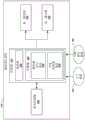
FIG. 1 shows a functional block diagram of an exemplary multi-laser single optical resonator lidar system.
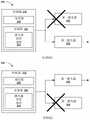
Fig. 2 shows a functional block diagram of an example in which a controller selectively enables a first laser and/or a second laser of a lidar system during different time periods.
Fig. 3 shows a functional block diagram of another example in which a controller selectively enables a first laser and/or a second laser of a lidar system.
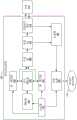
FIG. 4 illustrates a functional block diagram of another exemplary multi-laser single optical resonator lidar system.
Fig. 5 shows a graph illustrating a local oscillator signal derived from a laser of a lidar system and a corresponding reflected optical signal.
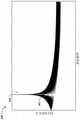
Fig. 6 shows a graph illustrating frequency signals corresponding to a local oscillator signal and a reflected optical signal as depicted in fig. 5.
FIG. 7 illustrates a functional block diagram of a portion of a lidar system in accordance with various aspects.
FIG. 8 illustrates a functional block diagram of another exemplary multi-laser single optical resonator lidar system.
FIG. 9 illustrates a functional block diagram of an exemplary autonomous vehicle.
FIG. 10 is a flow chart illustrating an exemplary method of operating a lidar system.
FIG. 11 is a flow chart illustrating another exemplary method of operating a lidar system.
Fig. 12 illustrates an exemplary computing device.
Detailed Description
Various technologies pertaining to multi-laser single-optical resonator lidar systems are now described with reference to the drawings, wherein like reference numerals are used to refer to like elements throughout. In the following description, for purposes of explanation, numerous specific details are set forth in order to provide a thorough understanding of one or more aspects. It may be evident, however, that such technique may be practiced without these specific details. In other instances, well-known structures and devices are shown in block diagram form in order to facilitate describing one or more aspects. Further, it should be understood that functionality that is described as being performed by certain system components may be performed by multiple components. Similarly, for example, a component may be configured to perform a function described as being performed by multiple components.
Furthermore, the term "or" is intended to mean an inclusive "or" rather than an exclusive "or". That is, unless otherwise specified or clear from context, the phrase "X employs A or B" is intended to mean any of the natural inclusive permutations. That is, the phrase "X employs A or B" satisfies either: x is A; x is B; or X employs both A and B. In addition, the articles "a" and "an" should generally be understood to mean "one or more" in this application and the appended claims unless specified otherwise or clear from context to be directed to a singular form.
As used herein, the terms "component" and "system" are intended to encompass a computer-readable data store configured with computer-executable instructions that, when executed by a processor, cause certain functions to be performed. The computer-executable instructions may include routines, functions, and the like. It should also be understood that the component or system may be located on a single device or distributed across multiple devices. Furthermore, as used herein, the term "exemplary" is intended to mean "serving as an illustration or example of something.
Referring now to the drawings, FIG. 1 illustrates an exemplary multi-laser single opticalresonator lidar system 100.Lidar system 100 is an FMCW lidar system.Lidar system 100 includes two lasers, afirst laser 102 and a second laser 104 (collectively referred to herein aslasers 102 and 104). Thelasers lasers 102 and 104), it should be understood that these examples may be extended to lidar systems that include more than two lasers.
Thefirst laser 102 operates at a first wavelength and thesecond laser 104 operates at a second wavelength. In various embodiments described herein, the first wavelength and the second wavelength may be the same (e.g., thefirst laser 102 and thesecond laser 104 may operate at a common wavelength). In other embodiments described herein, the first wavelength may be different from the second wavelength (e.g., thefirst laser 102 and thesecond laser 104 may operate at different wavelengths). Various wavelength differences are intended to fall within the scope of the claims appended hereto. For example, the difference between the wavelengths may be on the order of nanometers of 10 s; this wavelength diversity may mitigate the contribution of speckle noise by decorrelating the speckle field (e.g.,first laser 102 andsecond laser 104 operating simultaneously). According to another illustration, larger differences between wavelengths may fall within the scope of the claims appended hereto (e.g., when switching betweenlasers
Theoptical resonator 106 may include one or more electrodes to which a voltage may be applied. Applying a voltage to theoptical resonator 106 may change the optical properties of the electro-optic material of theoptical resonator 106. For example, applying a voltage may change the refractive index of the electro-optic material of theoptical resonator 106.
Thefirst laser 102 and thesecond laser 104 are optically injection locked to theoptical resonator 106. Thelasers optical resonator 106. By selecting the same family of modes, e.g., Transverse Electric (TE) or Transverse Magnetic (TM), the optical signals output by thelasers optical resonator 106, the voltage applied to theoptical resonator 106 may impart a common frequency variation on both the laser 102-104.
According to various embodiments, thefirst laser 102 and thesecond laser 104 may be operated simultaneously. In such implementations, when themodulator 108 applies a time-varying voltage to theoptical resonator 106, the time-varying voltage may control the modulation of the optical properties of the electro-optic material to cause thefirst laser 102 to generate the first frequency modulated signal and to cause thesecond laser 104 to generate the second frequency modulated optical signal. As described above, since thefirst laser 102 and thesecond laser 104 are optically injection locked to the sameoptical resonator 106, the time-varying voltage applied to theoptical resonator 106 by themodulator 108 may impose a common frequency variation on both thefirst laser 102 and thesecond laser 104 for optical chirp pulses generated simultaneously by thefirst laser 102 and thesecond laser 104.
In other embodiments, thefirst laser 102 and thesecond laser 104 may be selectively enabled or disabled. According to an illustration, thefirst laser 102 may be enabled during a first time period and thesecond laser 104 may be disabled during the first time period. Pursuant to this illustration, thefirst laser 102 may be disabled during the second time period and thesecond laser 104 may be enabled during the second time period. According to another illustration, bothlasers first laser 102 may be enabled and thesecond laser 104 may be disabled during a different time period. Further, it is contemplated that combinations of the foregoing may be implemented.
Further,lidar system 100 may include front-end optics 114, where front-end optics 114 are configured to transmit at least a portion of the frequency modulated optical signal (e.g., the portion to be transmitted and output by beam splitter 112) fromlidar system 100 into the environment. According to various examples, the front-end optics 114 may include a scanner. The scanner may direct the optical signal onto a field of view in the environment. According to various examples, the scanner may include a two-dimensional (2D) micro-electromechanical system (MEMS) mirror. According to another example, the scanner may comprise a non-MEMS reflective 2D analog scanner, such as a mirror galvanometer; however, claimed subject matter is not so limited.
It is contemplated that thecontroller 110 may control the positioning of the scanner to instruct the scanner to direct the optical signals into the environment according to the scan pattern. According to an example, the scan pattern may be a raster scan pattern. However, it should be understood that thecontroller 110 may alternatively cause the scanner to direct the optical signals into the environment using other scanning patterns, such as Lissajous or irregular forms.
Although not shown, it should be understood thatlidar system 100 may also include various other optical elements, such as one or more lenses, optical isolators, one or more waveguides, optical amplifiers, interferometers, and the like. Such optical elements may enable the generation of optical signals having desired properties, such as collimation, divergence angle, line width, power, and the like. Such optical elements may be assembled discretely, or integrated on a chip, or a combination of both.
Further, thefront end optics 114 may be configured to receive the reflected optical signal. The reflected optical signal may correspond to at least a portion of the frequency modulated optical signal emitted into the environment that is reflected from the object 116 in the environment. According to an example in which the front-end optics 114 comprise a scanner as described above, it is contemplated that the scanner may be configured to receive reflected optical signals.
Various embodiments are now described in whichfirst laser 102 and/orsecond laser 104 oflidar system 100 are selectively enabled or disabled. As described above, thefirst laser 102 operates at a first wavelength and thesecond laser 104 operates at a second wavelength. In some examples where thefirst laser 102 and thesecond laser 104 are selectively enabled or disabled, the first wavelength may be different than the second wavelength. Accordingly, lidar system 100 (e.g., controller 110) may switch betweenlasers first laser 102 and thesecond laser 104 are selectively enabled or disabled, the first wavelength and the second wavelength may be the same. For example, simultaneous operation of two lasers 102-104 at a common wavelength may enable an increase in power of lidar system 100 (as compared to using a single laser). Accordingly, the power oflidar system 100 may be adjusted bycontroller 110 selectively controlling the number oflasers
Turning to fig. 2, an example is shown in which thecontroller 110 selectively enables thefirst laser 102 and/or thesecond laser 104 during different time periods. The example depicted in fig. 2 pertains to the case where the first wavelength is different from the second wavelength. Thus, thecontroller 110 can switch between thelasers
Thecontroller 110 may include aprocessor 200 and a memory 202. The memory 202 includes computer-executable instructions that are executed by theprocessor 200. The memory 202 may include alaser management component 204 configured to selectively control the operating states of thefirst laser 102 and thesecond laser 104. For example, thelaser management component 204 may control the operating states of thefirst laser 102 and thesecond laser 104 such that 1) thefirst laser 102 is enabled and thesecond laser 104 is disabled, or 2) thefirst laser 102 is disabled and thesecond laser 104 is enabled. For example, duringtime period 1, shown at 206 in fig. 2, thelaser management component 204 may control the operating states of thefirst laser 102 and thesecond laser 104 such that thefirst laser 102 is disabled and thesecond laser 104 is enabled. Further, during time period 2, shown at 208 in fig. 2, thelaser management component 204 may control the operating states of thefirst laser 102 and thesecond laser 104 such that thefirst laser 102 is enabled and thesecond laser 104 is disabled.
Reference is again made to fig. 1. As described above, the controller 110 (e.g., the laser management component 204) may selectively control the operating states of thefirst laser 102 and thesecond laser 104 such that thefirst laser 102 is enabled and thesecond laser 104 is disabled, or thefirst laser 102 is disabled and thesecond laser 104 is enabled. Further, pursuant to this example, themodulator 108 may apply a time-varying voltage to theoptical resonator 106, wherein the time-varying voltage controls modulation of an optical property of the electro-optic material to cause thefirst laser 102 to generate a first frequency modulated optical signal comprising a first series of optical chirped pulses when thefirst laser 102 is enabled (and thesecond laser 104 is disabled) or to cause thesecond laser 104 to generate a second frequency modulated optical signal comprising a second series of optical chirped pulses when thesecond laser 104 is enabled (and thefirst laser 102 is disabled). Further, the front-end optics 114 may transmit a portion of the first frequency modulated optical signal (when thefirst laser 102 is enabled and thesecond laser 104 is disabled) or at least a portion of the second frequency modulated optical signal (when thesecond laser 104 is enabled and thefirst laser 102 is disabled). As described above, thebeam splitter 112 may split the first frequency modulated optical signal or the second frequency modulated optical signal into a portion to be emitted into the environment and a local oscillator portion (e.g., provided to thesensor 118 and mixed with the reflected optical signal).
Referring now to fig. 3, another example is shown in whichcontroller 110 selectively enablesfirst laser 102 and/orsecond laser 104 oflidar system 100. It should be understood that fig. 3 depicts only some elements oflidar system 100. In the example set forth in fig. 3, thelaser management component 204 of thecontroller 110 may control the operating states of thefirst laser 102 and thesecond laser 104 based on various factors. According to an example,laser management component 204 may selectively control the operating states offirst laser 102 andsecond laser 104 based on a desired detection range oflaser radar system 100. According to the illustration, thefirst laser 102 may operate at 1550nm and thesecond laser 104 may operate at 905 nm. Pursuant to this illustration,laser management component 204 may selectively enablefirst laser 102 and disablesecond laser 104 when the desired detection range oflaser radar system 100 is greater than a threshold distance (e.g., 1550nm may be more eye-safe at higher power levels for detecting objects at greater distances than 905 nm).
Additionally or alternatively, the controller 110 (e.g., the laser management component 204) may be configured to selectively control the operating states of the first andsecond lasers lidar system 100 may include a humidity sensor 302 configured to detect a humidity level in an environment; pursuant to this example, the humidity sensor 302 can transmit the detected humidity level data to the environmental monitoring component 300 (e.g., the environmental monitor component 300 can determine whether the humidity level exceeds a threshold humidity level). According to another example, the environment monitor component 300 can be configured to receiveweather data 304 indicative of a humidity level in an environment. For example, theweather data 304 may specify that snow or rain is currently underway; accordingly, the humidity level may be identified by the environmental monitoring component 300 based on theweather data 304. According to yet another example, the environment monitor component 300 can receivevehicle operation data 306 that can be used to identify a humidity level in an environment. For example,vehicle operation data 306 may specify a windshield wiper operation of a vehicle in whichlaser radar system 100 is utilized (e.g., when a windshield wiper is turned on as specified invehicle operation data 306, it may be assumed that it is raining or snowing). Accordingly, thecontroller 110 may be configured to selectively control the operating states of the first andsecond lasers
Illustratively, thefirst laser 102 may be configured to operate at a wavelength of 1550nm, and thesecond laser 104 may be configured to operate at a wavelength of 905nm or 3 μm. As illustrated, environment monitor component 300 can determine whether a humidity level in the environment exceeds a threshold humidity level. Thelaser management component 204 may be configured to selectively control the operating states of thefirst laser 102 and thesecond laser 104 such that thefirst laser 102 is enabled and thesecond laser 104 is disabled when the humidity level in the environment is below a threshold humidity level (e.g., with thefirst laser 102 operating at 1550nm when the humidity level in the environment is below a threshold humidity level). Further, thelaser management component 204 may be configured to selectively control the operating states of thefirst laser 102 and thesecond laser 104 such that thefirst laser 102 is disabled and thesecond laser 104 is enabled when the humidity level in the environment is equal to or above a threshold humidity level (e.g., thesecond laser 104 operating at 905nm or 3 μm is enabled when the humidity level in the environment is equal to or above a threshold humidity level).
Wavelength diversity may be employed to manage the weather effects onlidar system 100. Because certain wavelengths, such as 1550nm, are absorbed by water, the performance of such wavelengths to generate a return signal in rain, snow or fog may be poor compared to other wavelengths (e.g., 905nm or 3 μm). However, 905nm may be less than ideal for eye safety reasons. Thus,lidar system 100 may support operation at two wavelengths, where the 1550nm laser may be used for dry weather, while other wavelengths (e.g., 905nm or 3 μm) may be used for wet weather. Furthermore, the presence of moisture can reduce the intensity, thus enabling the 905nm laser to operate at eye-safe levels. Thus, for example, a 1550nm wavelength is safer for the human eye, while shorter wavelengths may produce better SNR in snow, fog and rain.
It should be understood that it is possible for thefirst laser 102 and thesecond laser 104 to be coupled to theoptical resonator 106 for substantially any two wavelengths that fall within a transparent window of the resonator material of theoptical resonator 106. Further, note that if the two wavelengths are far apart, optics transparent to both wavelengths may be utilized. Furthermore, it is contemplated that the use of coatings may be utilized to create dichroism for the optical elements oflidar system 100.
Various embodiments are now described in which thefirst laser 102 and thesecond laser 104 operate simultaneously. As described above, thefirst laser 102 operates at a first wavelength and thesecond laser 104 operates at a second wavelength. In many of the examples set forth below, the first wavelength may be different than the second wavelength (e.g., thefirst laser 102 and thesecond laser 104 may operate at different wavelengths). The various wavelength differences of the simultaneously operatinglasers lasers
Turning now to fig. 4, another exemplary embodiment oflidar system 100 is shown. As shown in fig. 4,lidar system 100 may also include acombiner 400. In the example shown in fig. 4, thefirst laser 102 and thesecond laser 104 operate simultaneously. Thefirst laser 102 and thesecond laser 104 self-injection lock to the sameoptical resonator 106, which can achieve equally high coherence. Further, during a given time period, a common frequency chirp may be generated by thefirst laser 102 and thesecond laser 104.
Themodulator 108 may apply a time-varying voltage to theoptical resonator 106, wherein the time-varying voltage controls modulation of an optical property of the electro-optic material to cause thefirst laser 102 to generate a first frequency modulated optical signal comprising a first series of optical chirps and to cause thesecond laser 104 to generate a second frequency modulated optical signal comprising a second series of optical chirps. Further, thebeam combiner 400 may be configured to combine the first frequency modulated optical signal and the second frequency modulated optical signal to form a combined frequency modulated optical signal. Thebeam splitter 112 may split the combined frequency modulated optical signal into a portion of the combined frequency modulated optical signal portion to be transmitted into the environment (e.g., by the front end optics 114) and a local oscillator portion of the combined frequency modulated optical signal that is provided to thesensor 118.
The front-end optics 114 may be configured to receive a reflected optical signal corresponding to at least a portion of the combined frequency modulated optical signal reflected from an object 116 in the environment. Further, thesensor 118 may mix the reflected optical signal of the combined frequency modulated optical signal with the local oscillator portion.Processing circuitry 120 may further calculate range and velocity data 122 (e.g., a distance betweenlidar system 100 and object 116 and/or a velocity of object 116 relative to lidar system 100) based on the reflected optical signal mixed with the local oscillator portion of the combined frequency modulated optical signal.
According to an example, it should be understood that thecontroller 110 may be configured to selectively control whether thefirst laser 102 is enabled or disabled and whether thesecond laser 104 is enabled or disabled, as described above. Thus, thefirst laser 102 may generate the first frequency modulated optical signal when enabled (e.g., not generate the first frequency modulated optical signal when thefirst laser 102 is disabled). Likewise, thesecond laser 104 may generate the second frequency modulated optical signal when enabled (e.g., not generate the second frequency modulated optical signal when thesecond laser 104 is disabled). When thecontroller 110 simultaneously enables the twolasers beam combiner 400 may combine the first frequency modulated optical signal and the second frequency modulated optical signal. However, it is contemplated that claimed subject matter is not limited to this example.
As described above, the first wavelength of thefirst laser 102 may be different from the second wavelength of thesecond laser 104. According to an example,lidar system 100 may include twolasers
Thelaser optical resonator 106 and amodulator 108. The twolasers lasers 102 and 104) may be introduced to a common detector assembly (e.g., the sensor 118). Thesensor 118 may mix the reflected optical signal with the local oscillator signal originating from both thelasers sensor 118, a beat frequency may be generated due to the mixing of each reflected optical signal field with its corresponding local oscillator signal. Although the wavelength of each local oscillator and associated signal may be different for the twolasers lidar system 100 shown in fig. 4 (e.g., an FMCW lidar system). Speckle noise is a noise source that may be associated with various types of lidar systems, and may represent a significant contributor to the overall noise of conventional lidar systems.
Referring to fig. 5, agraph 500 is shown illustrating alocal oscillator signal 502 originating from thefirst laser 102 and alocal oscillator signal 504 originating from thesecond laser 104.Graph 500 also shows reflectedoptical signal 506 and reflectedoptical signal 508. The reflectedoptical signal 506 corresponds to a portion of a first frequency modulated optical signal generated by thefirst laser 102 that is reflected from an object in the environment, and the reflectedoptical signal 508 corresponds to a portion of a second frequency modulated optical signal generated by thesecond laser 104 that is reflected from the same object in the environment. Insensor 118,local oscillator signal 502 and reflectedoptical signal 506 are mixed to output a beat frequency f, andlocal oscillator signal 504 and reflectedoptical signal 508 are mixed to output the same beat frequency f. The beat frequencies may be added. According to an example, thesensor 118 may output an analog signal representative of the summed beat frequencies, the ADC may convert the analog signal to a digital signal, and theprocessing circuit 120 may perform a Fast Fourier Transform (FFT) on the digital signal to form the frequency signal. Referring briefly to fig. 6, agraph 600 is presented illustrating afrequency signal 602 corresponding to the local oscillator signals 502 and 504 and the reflectedoptical signals peak 604 of thefrequency signal 602 depicted in fig. 6.
Reference is again made to fig. 4. As described herein,laser radar system 100 may mitigate noise due to speckle, which is a fine-scale, high-contrast granular pattern that occurs when an optical signal from a laser is reflected from a surface having a roughness of the same scale (or greater) as the wavelength of the laser. Speckle patterns can also produce noise intensity fluctuations that are detrimental to the SNR of the lidar system.
The distribution of intensity fluctuations in the speckle pattern depends on a number of parameters (illumination and viewing directions), including the wavelength of the incident light. The cross-correlation of the two speckle fields depends on the characteristic function h of the surface height fluctuation, i.e. the function of the scattering point intensity distribution and the scattering vector. The scattering vector can be defined as:

in the foregoing, k is a wave vector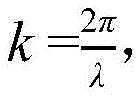 Where λ is the wavelength of the light. The average wave vector in the illuminating beam is kiWhere i denotes the illumination direction and o is the viewing direction. Illuminating (rough) surface in normal direction at two wavelengths and defining
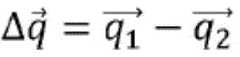 As corresponding to two wavelengths lambda1And λ2In the case of the difference of the scattering vectors of (2), it can be found
 Is zero and the normal component is as follows:


in the foregoing, Δ λ ═ λ1-λ2And is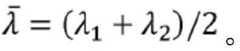

The speckle intensity correlation is reduced to 1/e or less2The value of (d) may occur in the following cases:

σhis the standard deviation of the surface height fluctuation.
Thus, the use of two wavelengths with thelaser
The foregoing may be accomplished by using twoseparate lasers laser radar system 100 usinglasers
As set forth herein, theoptical resonator 106 includes one or more electrodes to which themodulator 108 applies a time-varying voltage, which in turn may change the refractive index of the electro-optic material of theoptical resonator 106. The change in refractive index over time changes the frequency of the mode of thelaser laser optical resonator 106 also changes. Thus, chirping may be achieved at the frequency of the lasers 102-104 without changing the current, temperature, or voltage of the lasers 102-104.
Referring to FIG. 7, an example of alaser 102 optically coupled to an optical resonator (e.g., optical resonator 106) 104 is shown. It should be understood that fig. 7 is presented for purposes of illustration, and that other configurations are intended to fall within the scope of the claims appended hereto. In the example shown in FIG. 7, thelaser WGM resonator 700. Further, in the example shown in FIG. 7, the beam from thefirst laser 102 is optically coupled into theWGM resonator 700 by anoptical coupler 702. In addition, the beam from thesecond laser 102 is optically coupled to theWGM resonator 700 by anoptical coupler 704. According to an example, theoptical couplers
Further, it is contemplated that a collimator or optical mode selector may optionally be interposed between thelasers collimator 706 may be interposed between thefirst laser 102 and theWGM resonator 700 and a second optical mode selector/collimator 708 may be interposed between thesecond laser 102 and the WGM resonator 700).
Reference is again made to fig. 4. The light beams from thefirst laser 102 at the first wavelength and thesecond laser 104 at the second wavelength may be split into two portions (e.g., viaoptical coupler 702 and 704). According to an example, approximately 90% of the light beam may be sent to thebeam combiner 400, while the remaining portion (e.g., approximately 10%) of the light beam may be sent to each mode selected to have the same polarization to provide self-injection locking of the modes of thelaser optical resonator 106. Thus, a common spectral purity (low noise) can be obtained for bothlasers laser optical couplers beam combiner 400. Additionally,beam splitter 112 may split the combined beam so that a portion for transmission from laser radar system 100 (e.g., through front-end optics 114 toward object 116) and a local oscillator portion are sent tosensor 118.
The architecture shown in fig. 4 allows the reflected optical signal from each laser 102-104 to be mixed with the corresponding local oscillator portion of the optical signal generated by the laser 102-104. For example, due to λ reflected by object 116 at distance R1The resulting signal may be mixed with the corresponding local oscillator section to produce a beat that will appear as a peak at frequency f on the fourier spectrum. Due to lambda2The resulting signal will also produce the same beat frequency f from the same object 116 at distance R because the two frequency variations (such as chirps) on the twolasers lasers lasers lasers
In the presence of speckle, the effect of speckle field decorrelation may be to produce a signal strength that is the sum of two signals fromlasers lasers
As described herein, the two wavelengths of thefirst laser 102 and thesecond laser 104 used for speckle decorrelation may be separated by several tens of nanometers. Furthermore, optical elements in the path from the transmitter oflidar system 100 and through the receiver oflidar system 100 may be used by bothlaser
Referring to fig. 8, another exemplary embodiment oflaser radar system 100 is shown. As shown,laser radar system 100 may include a photonic integrated circuit 800. Photonic integrated circuit 800 may be optically coupled to front-end optics 114. Photonic integrated circuit 800 may include various elements described herein as being included in lidar system 800. For example, as shown, thefirst laser 102, thesecond laser 104, and theoptical resonator 106 may be integrated as part of the photonic integrated circuit 800. Further, it is understood that other elements described herein may be similarly integrated as part of photonic integrated circuit 800. Accordingly,lidar system 100 may be implemented on a photonic integrated circuit 800 at a chip level. Further, photonic integrated circuit 800 may be formed from materials such as, for example, silicon nitride, etc. (e.g., which may support the wavelength separation described herein).
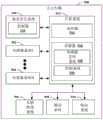
Referring to fig. 9, an exemplaryautonomous vehicle 900 is shown. Theautonomous vehicle 900 may navigate the road without a human driver based on sensor signals output by a sensor system of theautonomous vehicle 900.Autonomous vehicle 900 includeslidar system 100 and one or more other sensor systems, namely sensor system 1902 and sensor system N904, where N may be substantially any integer greater than 1. Sensor system 1902 and sensor system N904 are collectively referred to herein as sensor system 902-904. The sensor systems 902-904 are of different types and are disposed about theautonomous vehicle 900. For example, sensor system 1902 may be a radar sensor system and sensor system N904 may be a camera sensor system. Other exemplary sensor systems included insensor systems
Theautonomous vehicle 900 also includes several mechanical systems for achieving proper movement of theautonomous vehicle 900. For example, the mechanical systems may include, but are not limited to, avehicle propulsion system 906, abraking system 908, and asteering system 910. Thevehicle propulsion system 906 may include an electric engine, an internal combustion engine, or a combination thereof. Thebraking system 908 may include engine brakes, brake pads, actuators, and/or any other suitable components configured to assist in decelerating theautonomous vehicle 900.Steering system 910 includes suitable components configured to control the direction of movement ofautonomous vehicle 900.
Memory 916 ofcomputing system 912 includes a sensor management system 918 that can controllidar system 100 andother sensor systems velocity data 122 generated bylaser radar system 100. Further, according to various examples, sensor management system 918 may controllidar system 100 to selectively enable or disablelaser lidar system 100 indicating a desired detection range oflidar system 100. As another example, sensor management system 918 may determine which wavelength to employ and may send control signals tolidar system 100 to cause appropriate enabling and disabling oflaser lidar system 100 being included inautonomous vehicle 900 selectively enablinglasers 102 and 104 (e.g.,lidar system 100 may operatelasers
The memory 916 may also include acontrol system 920. Thecontrol system 920 is configured to control at least one of the mechanical systems of the autonomous vehicle 900 (e.g., at least one of thevehicle propulsion system 906, thebraking system 908, and/or the steering system 910). For example,control system 920 may controlvehicle propulsion system 906,braking system 908, and/orsteering system 910 based on a motion plan generated forautonomous vehicle 900 based at least in part on distance andspeed data 122 generated bylidar system 100.
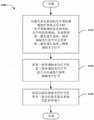
10-11 illustrate exemplary methods associated with operating a multi-laser single-optical resonator lidar system. While the methods are shown and described as a series of acts performed in a sequence, it is to be appreciated and understood that the methods are not limited by the order of the sequence. For example, some acts may occur in a different order than described herein. Further, an action may occur concurrently with another action. Moreover, not all acts may be required to implement a methodology described herein in some cases.
Further, the acts described herein may be computer-executable instructions that may be implemented by one or more processors and/or stored on one or more computer-readable media. Computer-executable instructions may include routines, subroutines, programs, threads of execution, and the like. Further, the results of the method acts may be stored on a computer readable medium, displayed on a display device, and the like.
Fig. 10 illustrates amethod 1000 of operating a lidar system. At 1002, a first laser of a lidar system and a second laser of the lidar system may be selectively enabled or disabled. The first laser may be configured to operate at a first wavelength and the second laser may be configured to operate at a different second wavelength. At 1004, a time-varying voltage may be applied to an optical resonator of the lidar system. The optical resonator may be optically coupled to the first laser and the second laser. The optical resonator may be formed from an electro-optic material. The first laser and the second laser are optically injection locked to the optical resonator.
Furthermore, the time-varying voltage may control the modulation of the optical properties of the electro-optic material. At 1006, a frequency modulated optical signal comprising a series of optical chirps generated by an enabler of the first laser or the second laser may be transmitted from the lidar system into the environment. Modulation of the optical properties of the electro-optic material of the optical resonator may cause an enabler of the first laser or the second laser to generate a frequency modulated optical signal. According to various examples, the first laser and the second laser may be selectively enabled or disabled based on a humidity level in the environment. As another example, the first laser and the second laser may be selectively enabled or disabled based on a desired detection range of the lidar system.
Turning to fig. 11, anothermethod 1100 of operating a lidar system is shown. At 1102, a time-varying voltage may be applied to an optical resonator of a lidar system. The optical resonator may be optically coupled to the first laser of the lidar system and the second laser of the lidar system. The first laser may be configured to operate at a first wavelength and the second laser may be configured to operate at a different second wavelength. The optical resonator may be formed from an electro-optic material. Further, the first laser and the second laser are optically injection locked to the optical resonator. The time-varying voltage controls modulation of an optical property of the electro-optic material to cause the first laser to generate a first frequency modulated optical signal comprising a first series of optical chirps and to cause the second laser to generate a second frequency modulated optical signal comprising a second series of optical chirps. At 1104, the first frequency modulated optical signal and the second frequency modulated optical signal may be combined to form a combined frequency modulated optical signal. At 1106, at least a portion of the combined frequency modulated optical signal may be transmitted from the lidar system into the environment.
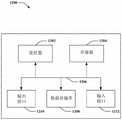
Referring now to FIG. 12, there is illustrated a generalized diagram of anexemplary computing device 1200 that may be used in accordance with the systems and methods disclosed herein. For example,computing device 1200 may be or includecomputing system 912. Thecomputing device 1200 includes at least oneprocessor 1202 that executes instructions stored in amemory 1204. The instructions may be, for example, instructions for implementing the functions described as being performed by one or more of the systems described above or instructions for implementing one or more of the methods described above. Theprocessor 1202 may be a GPU, multiple GPUs, a CPU, multiple CPUs, a multi-core processor, and the like. Theprocessor 1202 may access thememory 1204 via asystem bus 1206. In addition to storing executable instructions, thememory 1204 may also store distance and speed data, weather data, vehicle operation data, and the like.
Further, while shown as a single system, it should be understood that thecomputing device 1200 may be a distributed system. Thus, for example, several devices may communicate over a network connection and may collectively perform tasks described as being performed by thecomputing device 1200.
The functions described herein may be implemented in hardware, software, or any combination thereof. If implemented in software, the functions may be stored on or transmitted over as one or more instructions or code on a computer-readable medium. The computer readable medium includes a computer readable storage medium. Computer readable storage media can be any available storage media that can be accessed by a computer. By way of example, and not limitation, such computer-readable storage media can comprise RAM, ROM, EEPROM, CD-ROM or other optical disk storage, magnetic disk storage or other magnetic storage devices, or any other medium that can be used to store desired program code in the form of instructions or data structures and that can be accessed by a computer. Disk and disc, as used herein, includes Compact Disc (CD), laser disc, optical disc, Digital Versatile Disc (DVD), floppy disk and blu-ray disc where disks usually reproduce data magnetically, and discs reproduce data optically with lasers. Moreover, propagated signals are not included within the scope of computer-readable storage media. Computer-readable media also includes communication media including any medium that facilitates transfer of a computer program from one place to another. For example, the connection may be a communications medium. For example, if the software is transmitted from a website, server, or other remote source using a coaxial cable, fiber optic cable, twisted pair, Digital Subscriber Line (DSL), or wireless technologies such as infrared, radio, and microwave, then the coaxial cable, fiber optic cable, twisted pair, DSL, or wireless technologies such as infrared, radio, and microwave are included in the definition of communication medium. Combinations of the above should also be included within the scope of computer-readable media.
Alternatively or in addition, the functions described herein may be performed, at least in part, by one or more hardware logic components. Illustrative types of hardware logic components that may be used include, for example and without limitation: field Programmable Gate Arrays (FPGAs), Application Specific Integrated Circuits (ASICs), Application Specific Standard Products (ASSPs), systems on a chip (SOCs), Complex Programmable Logic Devices (CPLDs), and the like.
What has been described above includes examples of one or more embodiments. It is, of course, not possible to describe every conceivable modification or alteration of the above-described apparatus or methods for purposes of describing the aforementioned aspects, but one of ordinary skill in the art may recognize that many further modifications and permutations of various aspects are possible. Accordingly, the described aspects are intended to embrace all such alterations, modifications and variations that fall within the scope of the appended claims. Furthermore, to the extent that the term "includes" is used in either the detailed description or the claims, such term is intended to be inclusive in a manner similar to the term "comprising" as "comprising" is interpreted when employed as a transitional word in a claim.
Claims (20)
Translated fromChineseApplications Claiming Priority (3)
| Application Number | Priority Date | Filing Date | Title |
|---|---|---|---|
| US16/236,484US11079480B2 (en) | 2018-12-29 | 2018-12-29 | FMCW lidar with wavelength diversity |
| US16/236,484 | 2018-12-29 | ||
| PCT/US2019/063892WO2020139516A1 (en) | 2018-12-29 | 2019-11-30 | Fmcw lidar with wavelength diversity |
Publications (2)
| Publication Number | Publication Date |
|---|---|
| CN113646659Atrue CN113646659A (en) | 2021-11-12 |
| CN113646659B CN113646659B (en) | 2022-05-10 |
Family
ID=68966084
Family Applications (1)
| Application Number | Title | Priority Date | Filing Date |
|---|---|---|---|
| CN201980089719.8AActiveCN113646659B (en) | 2018-12-29 | 2019-11-30 | FMCW lidar having wavelength diversity |
Country Status (4)
| Country | Link |
|---|---|
| US (1) | US11079480B2 (en) |
| EP (1) | EP3881097B1 (en) |
| CN (1) | CN113646659B (en) |
| WO (1) | WO2020139516A1 (en) |
Cited By (1)
| Publication number | Priority date | Publication date | Assignee | Title |
|---|---|---|---|---|
| WO2024139685A1 (en)* | 2022-12-28 | 2024-07-04 | 武汉万集光电技术有限公司 | Opa laser radar, object detection method and apparatus, medium and product |
Families Citing this family (13)
| Publication number | Priority date | Publication date | Assignee | Title |
|---|---|---|---|---|
| US11536805B2 (en) | 2018-06-25 | 2022-12-27 | Silc Technologies, Inc. | Optical switching for tuning direction of LIDAR output signals |
| US12153135B2 (en)* | 2018-07-18 | 2024-11-26 | Bridger Photonics, Inc. | Methods and apparatuses for range peak pairing and high-accuracy target tracking using FMCW LADAR measurements |
| US11353558B2 (en) | 2018-12-29 | 2022-06-07 | Gm Cruise Holdings Llc | Multiple laser, single resonator lidar |
| US12429569B2 (en) | 2019-05-17 | 2025-09-30 | Silc Technologies, Inc. | Identification of materials illuminated by LIDAR systems |
| US11650317B2 (en) | 2019-06-28 | 2023-05-16 | Silc Technologies, Inc. | Use of frequency offsets in generation of LIDAR data |
| US11385353B2 (en)* | 2019-07-30 | 2022-07-12 | Silc Technologies, Inc. | Use of frequency offsets in generation of lidar data |
| US12306344B1 (en)* | 2020-08-25 | 2025-05-20 | Silc Technologies, Inc. | Reduction of components in LIDAR systems |
| US20220365213A1 (en)* | 2021-05-12 | 2022-11-17 | Velodyne Lidar Usa, Inc. | Linearization of chirp in coherent lidar systems |
| US11768285B2 (en)* | 2021-05-12 | 2023-09-26 | Velodyne Lidar Usa, Inc. | Systems and methods for chirp linearization using external reflector(s) as a reference reflector |
| WO2023034939A1 (en)* | 2021-09-01 | 2023-03-09 | Velodyne Lidar Usa, Inc. | High resolution coherent lidar systems, and related methods and apparatus |
| US12411213B2 (en) | 2021-10-11 | 2025-09-09 | Silc Technologies, Inc. | Separation of light signals in a LIDAR system |
| US12417327B2 (en)* | 2021-11-24 | 2025-09-16 | Gm Cruise Holdings Llc | Techniques for heuristics-based simulation of atmospheric effects in an AV simulation system |
| US12422618B2 (en) | 2022-10-13 | 2025-09-23 | Silc Technologies, Inc. | Buried taper with reflecting surface |
Citations (7)
| Publication number | Priority date | Publication date | Assignee | Title |
|---|---|---|---|---|
| US20020018494A1 (en)* | 2000-08-08 | 2002-02-14 | Vieira Amarildo Jesus Cavalheiro | Multiple laser source, and systems for use thereof |
| US20070215795A1 (en)* | 2006-03-14 | 2007-09-20 | Mitsubishi Electric Corporation | Differential absorption lidar apparatus |
| CN101166947A (en)* | 2005-02-14 | 2008-04-23 | 数字信号公司 | Lidar system and method for providing chirped electromagnetic radiation |
| CN106707291A (en)* | 2016-12-09 | 2017-05-24 | 中国科学技术大学 | Laser radar system |
| CN107567592A (en)* | 2015-04-07 | 2018-01-09 | 闪光股份有限公司 | Small LiDAR System |
| WO2018170478A1 (en)* | 2017-03-16 | 2018-09-20 | Bridger Photonics, Inc. | Fmcw lidar methods and apparatuses including examples having feedback loops |
| US20180351319A1 (en)* | 2017-05-31 | 2018-12-06 | Samsung Electronics Co., Ltd. | Optical dual-comb source apparatuses including optical microresonator |
Family Cites Families (12)
| Publication number | Priority date | Publication date | Assignee | Title |
|---|---|---|---|---|
| US5892575A (en) | 1996-05-10 | 1999-04-06 | Massachusetts Institute Of Technology | Method and apparatus for imaging a scene using a light detector operating in non-linear geiger-mode |
| US7936448B2 (en) | 2006-01-27 | 2011-05-03 | Lightwire Inc. | LIDAR system utilizing SOI-based opto-electronic components |
| JP5485288B2 (en) | 2008-11-25 | 2014-05-07 | テトラビュー, インコーポレイテッド | High resolution 3D imaging system and method |
| CN102769251B (en) | 2011-05-04 | 2015-11-25 | 中国计量科学研究院 | Resonant cavity device and use system and the device of this resonant cavity |
| CN104040808B (en) | 2011-06-30 | 2016-11-16 | Oe电波公司 | Compact optical atomic clock and the application being mixed based on the parametrization nonlinear optics in Whispering-gallery-mode optical resonantor |
| US8908251B2 (en)* | 2013-01-30 | 2014-12-09 | Hrl Laboratories, Llc | Tunable optical metamaterial |
| JP2015053210A (en)* | 2013-09-09 | 2015-03-19 | 日本航空電子工業株式会社 | Photoelectric composite connector |
| US9851433B2 (en) | 2013-12-19 | 2017-12-26 | DSCG Solutions, Inc. | Single laser LIDAR system |
| JP2018520346A (en) | 2015-06-26 | 2018-07-26 | メズメリズ インク. | Beat signal bandwidth compression method, apparatus and application |
| US11187807B2 (en) | 2017-07-24 | 2021-11-30 | Intel Corporation | Precisely controlled chirped diode laser and coherent lidar system |
| JP7074311B2 (en)* | 2017-08-30 | 2022-05-24 | 国立研究開発法人産業技術総合研究所 | Optical distance measuring device and measuring method |
| US20190146091A1 (en)* | 2017-11-16 | 2019-05-16 | Oewaves, Inc. | Underwater lidar |
- 2018
- 2018-12-29USUS16/236,484patent/US11079480B2/enactiveActive
- 2019
- 2019-11-30WOPCT/US2019/063892patent/WO2020139516A1/ennot_activeCeased
- 2019-11-30EPEP19824148.1Apatent/EP3881097B1/enactiveActive
- 2019-11-30CNCN201980089719.8Apatent/CN113646659B/enactiveActive
Patent Citations (8)
| Publication number | Priority date | Publication date | Assignee | Title |
|---|---|---|---|---|
| US20020018494A1 (en)* | 2000-08-08 | 2002-02-14 | Vieira Amarildo Jesus Cavalheiro | Multiple laser source, and systems for use thereof |
| CN101166947A (en)* | 2005-02-14 | 2008-04-23 | 数字信号公司 | Lidar system and method for providing chirped electromagnetic radiation |
| CN101852855A (en)* | 2005-02-14 | 2010-10-06 | 数字信号公司 | Laser radar system and the system and method that is used to provide chirped electromagnetic radiation |
| US20070215795A1 (en)* | 2006-03-14 | 2007-09-20 | Mitsubishi Electric Corporation | Differential absorption lidar apparatus |
| CN107567592A (en)* | 2015-04-07 | 2018-01-09 | 闪光股份有限公司 | Small LiDAR System |
| CN106707291A (en)* | 2016-12-09 | 2017-05-24 | 中国科学技术大学 | Laser radar system |
| WO2018170478A1 (en)* | 2017-03-16 | 2018-09-20 | Bridger Photonics, Inc. | Fmcw lidar methods and apparatuses including examples having feedback loops |
| US20180351319A1 (en)* | 2017-05-31 | 2018-12-06 | Samsung Electronics Co., Ltd. | Optical dual-comb source apparatuses including optical microresonator |
Cited By (1)
| Publication number | Priority date | Publication date | Assignee | Title |
|---|---|---|---|---|
| WO2024139685A1 (en)* | 2022-12-28 | 2024-07-04 | 武汉万集光电技术有限公司 | Opa laser radar, object detection method and apparatus, medium and product |
Also Published As
| Publication number | Publication date |
|---|---|
| US20200209366A1 (en) | 2020-07-02 |
| WO2020139516A1 (en) | 2020-07-02 |
| EP3881097B1 (en) | 2024-01-03 |
| CN113646659B (en) | 2022-05-10 |
| EP3881097A1 (en) | 2021-09-22 |
| US11079480B2 (en) | 2021-08-03 |
Similar Documents
| Publication | Publication Date | Title |
|---|---|---|
| CN113646659B (en) | FMCW lidar having wavelength diversity | |
| US20220113383A1 (en) | Multiple laser, single resonator lidar | |
| US20220163667A1 (en) | Compact lidar system | |
| US10877131B2 (en) | Distributed vehicle lidar system | |
| CN112147636B (en) | Laser radar and detection method thereof | |
| JP7470716B2 (en) | 360° field-scanning LIDAR with no moving parts | |
| CA3141211C (en) | Frequency modulated scanning lidar with 360 degrees field of view | |
| US11592562B2 (en) | Continuous-wave light detection and ranging (LiDAR) system | |
| CN113874756B (en) | Context-aware real-time power adjustment for steerable lidar | |
| US20200025926A1 (en) | Optical Sensor System | |
| US11579294B2 (en) | Lidar system with integrated frequency shifter for true doppler detection | |
| US11906665B2 (en) | Method for scanning a transmitted beam through a 360° field-of-view (FOV) | |
| CN115480263A (en) | Detection method of laser detection device, laser detection device and storage medium | |
| WO2022233238A1 (en) | Detection device, radar, and terminal | |
| RU2775823C2 (en) | Methods and systems for lidar detection |
Legal Events
| Date | Code | Title | Description |
|---|---|---|---|
| PB01 | Publication | ||
| PB01 | Publication | ||
| SE01 | Entry into force of request for substantive examination | ||
| SE01 | Entry into force of request for substantive examination | ||
| GR01 | Patent grant | ||
| GR01 | Patent grant |