CN113558762A - Registering a surgical tool with a reference array tracked by a camera of an augmented reality headset for assisted navigation during surgery - Google Patents
Registering a surgical tool with a reference array tracked by a camera of an augmented reality headset for assisted navigation during surgeryDownload PDFInfo
- Publication number
- CN113558762A CN113558762ACN202110466291.3ACN202110466291ACN113558762ACN 113558762 ACN113558762 ACN 113558762ACN 202110466291 ACN202110466291 ACN 202110466291ACN 113558762 ACN113558762 ACN 113558762A
- Authority
- CN
- China
- Prior art keywords
- headset
- camera
- reference array
- tracking
- surgical
- Prior art date
- Legal status (The legal status is an assumption and is not a legal conclusion. Google has not performed a legal analysis and makes no representation as to the accuracy of the status listed.)
- Granted
Links
Images







Classifications
- A—HUMAN NECESSITIES
- A61—MEDICAL OR VETERINARY SCIENCE; HYGIENE
- A61B—DIAGNOSIS; SURGERY; IDENTIFICATION
- A61B34/00—Computer-aided surgery; Manipulators or robots specially adapted for use in surgery
- A61B34/20—Surgical navigation systems; Devices for tracking or guiding surgical instruments, e.g. for frameless stereotaxis
- A—HUMAN NECESSITIES
- A61—MEDICAL OR VETERINARY SCIENCE; HYGIENE
- A61B—DIAGNOSIS; SURGERY; IDENTIFICATION
- A61B34/00—Computer-aided surgery; Manipulators or robots specially adapted for use in surgery
- A61B34/10—Computer-aided planning, simulation or modelling of surgical operations
- A—HUMAN NECESSITIES
- A61—MEDICAL OR VETERINARY SCIENCE; HYGIENE
- A61B—DIAGNOSIS; SURGERY; IDENTIFICATION
- A61B34/00—Computer-aided surgery; Manipulators or robots specially adapted for use in surgery
- A61B34/25—User interfaces for surgical systems
- A—HUMAN NECESSITIES
- A61—MEDICAL OR VETERINARY SCIENCE; HYGIENE
- A61B—DIAGNOSIS; SURGERY; IDENTIFICATION
- A61B34/00—Computer-aided surgery; Manipulators or robots specially adapted for use in surgery
- A61B34/30—Surgical robots
- A—HUMAN NECESSITIES
- A61—MEDICAL OR VETERINARY SCIENCE; HYGIENE
- A61B—DIAGNOSIS; SURGERY; IDENTIFICATION
- A61B34/00—Computer-aided surgery; Manipulators or robots specially adapted for use in surgery
- A61B34/70—Manipulators specially adapted for use in surgery
- G—PHYSICS
- G06—COMPUTING OR CALCULATING; COUNTING
- G06F—ELECTRIC DIGITAL DATA PROCESSING
- G06F3/00—Input arrangements for transferring data to be processed into a form capable of being handled by the computer; Output arrangements for transferring data from processing unit to output unit, e.g. interface arrangements
- G06F3/01—Input arrangements or combined input and output arrangements for interaction between user and computer
- G06F3/011—Arrangements for interaction with the human body, e.g. for user immersion in virtual reality
- G—PHYSICS
- G06—COMPUTING OR CALCULATING; COUNTING
- G06T—IMAGE DATA PROCESSING OR GENERATION, IN GENERAL
- G06T11/00—2D [Two Dimensional] image generation
- G—PHYSICS
- G06—COMPUTING OR CALCULATING; COUNTING
- G06T—IMAGE DATA PROCESSING OR GENERATION, IN GENERAL
- G06T7/00—Image analysis
- G06T7/20—Analysis of motion
- A—HUMAN NECESSITIES
- A61—MEDICAL OR VETERINARY SCIENCE; HYGIENE
- A61B—DIAGNOSIS; SURGERY; IDENTIFICATION
- A61B17/00—Surgical instruments, devices or methods
- A61B2017/00017—Electrical control of surgical instruments
- A61B2017/00207—Electrical control of surgical instruments with hand gesture control or hand gesture recognition
- A—HUMAN NECESSITIES
- A61—MEDICAL OR VETERINARY SCIENCE; HYGIENE
- A61B—DIAGNOSIS; SURGERY; IDENTIFICATION
- A61B34/00—Computer-aided surgery; Manipulators or robots specially adapted for use in surgery
- A61B34/10—Computer-aided planning, simulation or modelling of surgical operations
- A61B2034/107—Visualisation of planned trajectories or target regions
- A—HUMAN NECESSITIES
- A61—MEDICAL OR VETERINARY SCIENCE; HYGIENE
- A61B—DIAGNOSIS; SURGERY; IDENTIFICATION
- A61B34/00—Computer-aided surgery; Manipulators or robots specially adapted for use in surgery
- A61B34/10—Computer-aided planning, simulation or modelling of surgical operations
- A61B2034/108—Computer aided selection or customisation of medical implants or cutting guides
- A—HUMAN NECESSITIES
- A61—MEDICAL OR VETERINARY SCIENCE; HYGIENE
- A61B—DIAGNOSIS; SURGERY; IDENTIFICATION
- A61B34/00—Computer-aided surgery; Manipulators or robots specially adapted for use in surgery
- A61B34/20—Surgical navigation systems; Devices for tracking or guiding surgical instruments, e.g. for frameless stereotaxis
- A61B2034/2046—Tracking techniques
- A61B2034/2055—Optical tracking systems
- A61B2034/2057—Details of tracking cameras
- A—HUMAN NECESSITIES
- A61—MEDICAL OR VETERINARY SCIENCE; HYGIENE
- A61B—DIAGNOSIS; SURGERY; IDENTIFICATION
- A61B34/00—Computer-aided surgery; Manipulators or robots specially adapted for use in surgery
- A61B34/20—Surgical navigation systems; Devices for tracking or guiding surgical instruments, e.g. for frameless stereotaxis
- A61B2034/2046—Tracking techniques
- A61B2034/2059—Mechanical position encoders
- A—HUMAN NECESSITIES
- A61—MEDICAL OR VETERINARY SCIENCE; HYGIENE
- A61B—DIAGNOSIS; SURGERY; IDENTIFICATION
- A61B34/00—Computer-aided surgery; Manipulators or robots specially adapted for use in surgery
- A61B34/20—Surgical navigation systems; Devices for tracking or guiding surgical instruments, e.g. for frameless stereotaxis
- A61B2034/2046—Tracking techniques
- A61B2034/2065—Tracking using image or pattern recognition
- A—HUMAN NECESSITIES
- A61—MEDICAL OR VETERINARY SCIENCE; HYGIENE
- A61B—DIAGNOSIS; SURGERY; IDENTIFICATION
- A61B34/00—Computer-aided surgery; Manipulators or robots specially adapted for use in surgery
- A61B34/20—Surgical navigation systems; Devices for tracking or guiding surgical instruments, e.g. for frameless stereotaxis
- A61B2034/2072—Reference field transducer attached to an instrument or patient
- A—HUMAN NECESSITIES
- A61—MEDICAL OR VETERINARY SCIENCE; HYGIENE
- A61B—DIAGNOSIS; SURGERY; IDENTIFICATION
- A61B34/00—Computer-aided surgery; Manipulators or robots specially adapted for use in surgery
- A61B34/25—User interfaces for surgical systems
- A61B2034/252—User interfaces for surgical systems indicating steps of a surgical procedure
- A—HUMAN NECESSITIES
- A61—MEDICAL OR VETERINARY SCIENCE; HYGIENE
- A61B—DIAGNOSIS; SURGERY; IDENTIFICATION
- A61B90/00—Instruments, implements or accessories specially adapted for surgery or diagnosis and not covered by any of the groups A61B1/00 - A61B50/00, e.g. for luxation treatment or for protecting wound edges
- A61B90/08—Accessories or related features not otherwise provided for
- A61B2090/0807—Indication means
- A—HUMAN NECESSITIES
- A61—MEDICAL OR VETERINARY SCIENCE; HYGIENE
- A61B—DIAGNOSIS; SURGERY; IDENTIFICATION
- A61B90/00—Instruments, implements or accessories specially adapted for surgery or diagnosis and not covered by any of the groups A61B1/00 - A61B50/00, e.g. for luxation treatment or for protecting wound edges
- A61B90/36—Image-producing devices or illumination devices not otherwise provided for
- A61B2090/363—Use of fiducial points
- A—HUMAN NECESSITIES
- A61—MEDICAL OR VETERINARY SCIENCE; HYGIENE
- A61B—DIAGNOSIS; SURGERY; IDENTIFICATION
- A61B90/00—Instruments, implements or accessories specially adapted for surgery or diagnosis and not covered by any of the groups A61B1/00 - A61B50/00, e.g. for luxation treatment or for protecting wound edges
- A61B90/36—Image-producing devices or illumination devices not otherwise provided for
- A61B2090/364—Correlation of different images or relation of image positions in respect to the body
- A61B2090/365—Correlation of different images or relation of image positions in respect to the body augmented reality, i.e. correlating a live optical image with another image
- A—HUMAN NECESSITIES
- A61—MEDICAL OR VETERINARY SCIENCE; HYGIENE
- A61B—DIAGNOSIS; SURGERY; IDENTIFICATION
- A61B90/00—Instruments, implements or accessories specially adapted for surgery or diagnosis and not covered by any of the groups A61B1/00 - A61B50/00, e.g. for luxation treatment or for protecting wound edges
- A61B90/36—Image-producing devices or illumination devices not otherwise provided for
- A61B90/37—Surgical systems with images on a monitor during operation
- A61B2090/372—Details of monitor hardware
- A—HUMAN NECESSITIES
- A61—MEDICAL OR VETERINARY SCIENCE; HYGIENE
- A61B—DIAGNOSIS; SURGERY; IDENTIFICATION
- A61B90/00—Instruments, implements or accessories specially adapted for surgery or diagnosis and not covered by any of the groups A61B1/00 - A61B50/00, e.g. for luxation treatment or for protecting wound edges
- A61B90/36—Image-producing devices or illumination devices not otherwise provided for
- A61B90/37—Surgical systems with images on a monitor during operation
- A61B2090/376—Surgical systems with images on a monitor during operation using X-rays, e.g. fluoroscopy
- A—HUMAN NECESSITIES
- A61—MEDICAL OR VETERINARY SCIENCE; HYGIENE
- A61B—DIAGNOSIS; SURGERY; IDENTIFICATION
- A61B90/00—Instruments, implements or accessories specially adapted for surgery or diagnosis and not covered by any of the groups A61B1/00 - A61B50/00, e.g. for luxation treatment or for protecting wound edges
- A61B90/36—Image-producing devices or illumination devices not otherwise provided for
- A61B90/37—Surgical systems with images on a monitor during operation
- A61B2090/376—Surgical systems with images on a monitor during operation using X-rays, e.g. fluoroscopy
- A61B2090/3762—Surgical systems with images on a monitor during operation using X-rays, e.g. fluoroscopy using computed tomography systems [CT]
- A—HUMAN NECESSITIES
- A61—MEDICAL OR VETERINARY SCIENCE; HYGIENE
- A61B—DIAGNOSIS; SURGERY; IDENTIFICATION
- A61B90/00—Instruments, implements or accessories specially adapted for surgery or diagnosis and not covered by any of the groups A61B1/00 - A61B50/00, e.g. for luxation treatment or for protecting wound edges
- A61B90/36—Image-producing devices or illumination devices not otherwise provided for
- A61B90/37—Surgical systems with images on a monitor during operation
- A61B2090/376—Surgical systems with images on a monitor during operation using X-rays, e.g. fluoroscopy
- A61B2090/3762—Surgical systems with images on a monitor during operation using X-rays, e.g. fluoroscopy using computed tomography systems [CT]
- A61B2090/3764—Surgical systems with images on a monitor during operation using X-rays, e.g. fluoroscopy using computed tomography systems [CT] with a rotating C-arm having a cone beam emitting source
- A—HUMAN NECESSITIES
- A61—MEDICAL OR VETERINARY SCIENCE; HYGIENE
- A61B—DIAGNOSIS; SURGERY; IDENTIFICATION
- A61B90/00—Instruments, implements or accessories specially adapted for surgery or diagnosis and not covered by any of the groups A61B1/00 - A61B50/00, e.g. for luxation treatment or for protecting wound edges
- A61B90/39—Markers, e.g. radio-opaque or breast lesions markers
- A61B2090/3983—Reference marker arrangements for use with image guided surgery
- A—HUMAN NECESSITIES
- A61—MEDICAL OR VETERINARY SCIENCE; HYGIENE
- A61B—DIAGNOSIS; SURGERY; IDENTIFICATION
- A61B90/00—Instruments, implements or accessories specially adapted for surgery or diagnosis and not covered by any of the groups A61B1/00 - A61B50/00, e.g. for luxation treatment or for protecting wound edges
- A61B90/50—Supports for surgical instruments, e.g. articulated arms
- A61B2090/502—Headgear, e.g. helmet, spectacles
- G—PHYSICS
- G02—OPTICS
- G02B—OPTICAL ELEMENTS, SYSTEMS OR APPARATUS
- G02B27/00—Optical systems or apparatus not provided for by any of the groups G02B1/00 - G02B26/00, G02B30/00
- G02B27/01—Head-up displays
- G02B27/0101—Head-up displays characterised by optical features
- G02B2027/0138—Head-up displays characterised by optical features comprising image capture systems, e.g. camera
- G—PHYSICS
- G02—OPTICS
- G02B—OPTICAL ELEMENTS, SYSTEMS OR APPARATUS
- G02B27/00—Optical systems or apparatus not provided for by any of the groups G02B1/00 - G02B26/00, G02B30/00
- G02B27/01—Head-up displays
- G02B27/017—Head mounted
- G02B27/0172—Head mounted characterised by optical features
- G—PHYSICS
- G06—COMPUTING OR CALCULATING; COUNTING
- G06T—IMAGE DATA PROCESSING OR GENERATION, IN GENERAL
- G06T2200/00—Indexing scheme for image data processing or generation, in general
- G06T2200/24—Indexing scheme for image data processing or generation, in general involving graphical user interfaces [GUIs]
- G—PHYSICS
- G06—COMPUTING OR CALCULATING; COUNTING
- G06T—IMAGE DATA PROCESSING OR GENERATION, IN GENERAL
- G06T2207/00—Indexing scheme for image analysis or image enhancement
- G06T2207/30—Subject of image; Context of image processing
- G06T2207/30244—Camera pose
Landscapes
- Engineering & Computer Science (AREA)
- Health & Medical Sciences (AREA)
- Surgery (AREA)
- Life Sciences & Earth Sciences (AREA)
- Animal Behavior & Ethology (AREA)
- Veterinary Medicine (AREA)
- Biomedical Technology (AREA)
- Heart & Thoracic Surgery (AREA)
- Medical Informatics (AREA)
- Molecular Biology (AREA)
- Nuclear Medicine, Radiotherapy & Molecular Imaging (AREA)
- General Health & Medical Sciences (AREA)
- Public Health (AREA)
- Robotics (AREA)
- Theoretical Computer Science (AREA)
- Physics & Mathematics (AREA)
- General Physics & Mathematics (AREA)
- General Engineering & Computer Science (AREA)
- Human Computer Interaction (AREA)
- Multimedia (AREA)
- Computer Vision & Pattern Recognition (AREA)
- Manipulator (AREA)
Abstract
Translated fromChinese
Description
Technical Field
The present disclosure relates to medical devices and systems, and more particularly, to a camera tracking system for computer-assisted navigation during surgery.
Background
Computer-assisted navigation during surgery may provide a surgeon with a computerized visualization of the current pose of the surgical tool relative to a medical image of the patient's anatomy. Camera tracking systems for computer-assisted navigation typically use a set of cameras to track a set of fiducials attached to a surgical tool, which are located by a surgeon or other user during surgery. A set of fiducials, also known as a dynamic reference array or dynamic reference library (DRB), allows the camera tracking system to determine the pose of the surgical tool relative to the anatomy in the medical image and relative to the patient for display to the surgeon. The surgeon may thus use real-time pose feedback to navigate the surgical tool during the surgical procedure.
An augmented reality (XR) headset is used in conjunction with a camera tracking system to enable a surgeon to view real-time pose feedback in the form of graphical objects overlaid on a patient. There is a continuing need to enable surgeons who wear XR headsets to use multiple types of surgical tools while reducing errors in tool selection and reducing interruptions in surgeon attention during surgical procedures.
Disclosure of Invention
Various embodiments disclosed herein relate to improvements in computer-assisted navigation during surgery. XR headsets are used to assist in registering the characteristics of the surgical tool with a reference array identified by the camera tracking system. A representation of the characteristic may be displayed on the XR headset to enable the user to confirm the correctness of the registration process. The use of XR headsets in the registration process may provide surgeons and other medical personnel (users) with a more intuitive, time-saving, and reliable process to register the surgical tool with the camera tracking system before and/or during the surgical procedure.
In one embodiment, a camera tracking system for computer-assisted navigation during surgery is configured to identify a reference array tracked by a set of tracking cameras attached to an XR headset. The camera tracking system determines whether the reference array is registered as paired with a characteristic of one of a plurality of surgical tools defined in a surgical tool database. Based on the reference array being determined to be unregistered and receiving the user input, the camera tracking system registers the reference array as paired with a characteristic of one of the plurality of surgical tools selected based on the user input. The camera tracking system then provides a representation of the characteristic to a display device of the XR headset for display to the user.
Related computer program products and methods of a camera tracking system are disclosed.
Other camera tracking systems, computer program products, and methods according to embodiments will be or become apparent to one with skill in the art upon review of the following drawings and detailed description. It is intended that all such camera tracking systems, computer program products, and methods be included within this description, be within the scope of the present disclosure, and be protected by the accompanying claims. Further, it is contemplated that all embodiments disclosed herein may be practiced separately or combined in any manner and/or combination.
Drawings
The accompanying drawings, which are included to provide a further understanding of the disclosure and are incorporated in and constitute a part of this application, illustrate certain non-limiting embodiments of the inventive concepts. In the drawings:
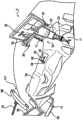
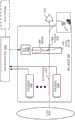
fig. 1 illustrates an embodiment of a surgical system according to some embodiments of the present disclosure;
fig. 2 illustrates a surgical robotic assembly of the surgical system of fig. 1, according to some embodiments of the present disclosure;
fig. 3A illustrates a camera tracking system assembly of the surgical system of fig. 1, according to some embodiments of the present disclosure;
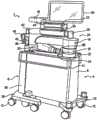
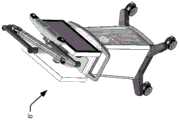
fig. 3B and 3C illustrate front and isometric views of another camera tracking system assembly that may be used with the surgical system of fig. 1, according to some embodiments of the present disclosure;
FIG. 4 illustrates an embodiment of an end effector connectable to a robotic arm and configured in accordance with some embodiments of the present disclosure;
FIG. 5 illustrates a medical procedure in which a surgical robot and camera system are positioned around a patient;
FIG. 6 illustrates a block diagram view of components of the surgical system of FIG. 5 for a medical procedure;
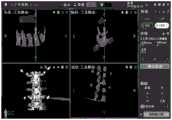
FIG. 7 illustrates various display screens that may be displayed on the displays of FIGS. 5 and 6 while using the navigation functions of the surgical system;
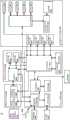
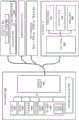
fig. 8 shows a block diagram of some electrical components of a surgical robot, in accordance with some embodiments of the present disclosure;
fig. 9 illustrates a block diagram of components of a surgical system including an imaging device connected to a computer platform that may be operatively connected to a camera tracking system and/or a surgical robot, in accordance with some embodiments of the present disclosure;
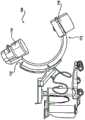
fig. 10 illustrates an embodiment of a C-arm imaging device that may be used in combination with a surgical robot, according to some embodiments of the present disclosure;
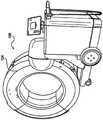
fig. 11 illustrates an embodiment of an O-arm imaging device that may be used in combination with a surgical robot, according to some embodiments of the present disclosure;
fig. 12 illustrates a block diagram view of components of a surgical system including a pair of XR headsets and an auxiliary tracking rod operating according to some embodiments of the present disclosure;
fig. 13 illustrates an XR headset configured in accordance with some embodiments of the present disclosure;
fig. 14 illustrates electrical components of an XR headset that may be operatively connected to a computer platform, one or more imaging devices, and/or a surgical robot, in accordance with some embodiments of the present disclosure;
fig. 15 shows a block diagram illustrating the arrangement of optical components of an XR headset according to some embodiments of the present disclosure;
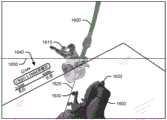
fig. 16 illustrates an example view through a display screen of an XR headset for providing navigation assistance to manipulate a surgical tool during a medical procedure, in accordance with some embodiments of the present disclosure;
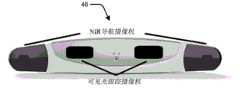
FIG. 17 illustrates an exemplary configuration of an auxiliary tracking bar with two pairs of stereo cameras configured in accordance with some embodiments of the present disclosure;
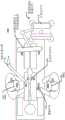
fig. 18 illustrates a block diagram view of components of a surgical system including a tracking camera in a pair of XR headsets and auxiliary tracking rods that cooperate according to some embodiments of the present disclosure;
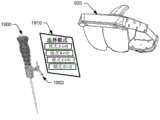
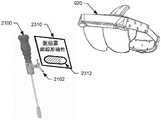
fig. 19 shows a graphical representation of surgical tool characteristics displayed by an XR headset when a reference array is registered to the surgical tool for use in computer-assisted navigation of the surgical tool during surgery, according to some embodiments of the present disclosure;
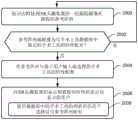
fig. 20 illustrates a flowchart of a registration operation performed by the camera tracking system to provide a graphical representation of the surgical tool characteristics in fig. 19, according to some embodiments of the present disclosure;
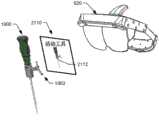
fig. 21 illustrates a graphical representation of a registered actively used surgical tool displayed by an XR headset, in accordance with some embodiments of the present disclosure;
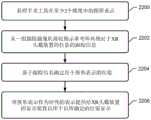
fig. 22 illustrates a flowchart of operations performed by the camera tracking system to provide a graphical representation of the registered actively-used surgical tool of fig. 21, in accordance with some embodiments of the present disclosure;
fig. 23 illustrates a graphical representation of tracking accuracy information for a registered reference array displayed by an XR headset while a user is viewing a surgical tool, according to some embodiments of the present disclosure;
FIG. 24 illustrates a flowchart of operations performed by the camera tracking system to provide the graphical representation of tracking accuracy information in FIG. 23, according to some embodiments of the present disclosure;
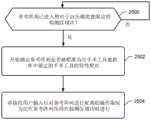
fig. 25 illustrates a flowchart of operations performed by the camera tracking system to selectively allow registration of the reference array by a user depending on whether the reference array is within a detection region defined relative to the XR headset, according to some embodiments of the present disclosure;
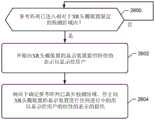
fig. 26 illustrates a flowchart of operations performed by the camera tracking system to selectively display characteristics of a surgical tool registered with the reference array depending on whether the reference array is within a detection region defined relative to the XR headset, according to some embodiments of the present disclosure;
figure 27 illustrates a surgical tool viewed through the XR headset having graphical indicia displayed as an identified pose at least partially overlapping fiducial points of the reference array and graphical indicia displayed as an estimated pose at least partially overlapping missing fiducial points, according to some embodiments of the present disclosure;
FIG. 28 illustrates a flowchart of operations performed by the camera tracking system to display graphical markers relative to identified and missing fiducial points, such as illustrated in FIG. 27, in accordance with some embodiments of the present disclosure;
FIG. 29 illustrates a flowchart of operations performed by the camera tracking system to selectively enable receipt of gesture input based on whether the user's hand is at least partially within a hand-user interface exclusion area determined relative to the reference array, according to some embodiments of the present disclosure; and
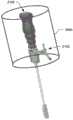
FIG. 30 illustrates a hand-user interface exclusion area determined relative to a reference array according to some embodiments of the present disclosure.
Detailed Description
The inventive concept will now be described more fully hereinafter with reference to the accompanying drawings, in which examples of embodiments of the inventive concept are shown. The inventive concept may be embodied in many different forms and should not be construed as limited to the embodiments set forth herein. Rather, these embodiments are provided so that this disclosure will be thorough and complete, and will fully convey the scope of the various inventive concepts to those skilled in the art. It should also be noted that the embodiments are not mutually exclusive. A component in one embodiment may be present or used in another embodiment by default.
Various embodiments disclosed herein relate to improvements in computer-assisted navigation during surgery. An augmented reality (XR) headset is operably connected to a surgical system and configured to provide an interactive environment through which a surgeon, assistant, and/or other personnel can view and select among patient images, view computer-generated surgical navigation information, and select among and/or control surgical equipment in an operating room. As described below, the XR headset may be configured to augment a real-world scene with computer-generated XR images. The XR headset may be configured to provide an Augmented Real (AR) viewing environment by displaying computer-generated XR images on a see-through display screen that allows light from a real-world scene to pass therethrough for combined viewing by a user. Alternatively, the XR headset may be configured to provide a virtual real-world (VR) viewing environment by preventing, or substantially preventing, light from the real-world scene from being directly viewed by the user when the user views the computer-generated AR image on the display screen. The XR headset may be configured to provide AR and VR viewing environments. In one embodiment, both the AR viewing environment and the VR viewing environment are provided by lateral bands of significantly different opacity disposed between the see-through display screen and the real world scene, such that the VR viewing environment is provided for XR images aligned with high-opacity bands and the AR viewing environment is provided for XR images aligned with low-opacity bands. In another embodiment, both the AR viewing environment and the VR viewing environment are provided by computer adjustable control of an opacity filter that variably limits the amount of light from the real world scene that passes through the see-through display screen to combine with the XR image viewed by the user. Accordingly, the XR headset may also be referred to as an AR headset or a VR headset.
Fig. 1 depicts an embodiment of asurgical system 2 according to some embodiments of the present disclosure. Prior to performing an orthopedic or other surgical procedure, a three-dimensional ("3D") image scan of a planned surgical field of a patient may be performed using, for example, the C-arm imaging device 104 of fig. 10 or the O-arm imaging device 106 of fig. 11, or from another medical imaging device such as a Computed Tomography (CT) image or MRI. Such scans may be performed preoperatively (e.g., most commonly several weeks prior to the procedure) or intraoperatively. However, any known 3D or 2D image scan may be used in accordance with various embodiments of thesurgical system 2. The image scan is sent to a computer platform in communication with thesurgical system 2, such as thecomputer platform 910 of the surgical system 900 (fig. 9), which may contain a cameratracking system component 6, a surgical robot 4 (e.g.,robot 2 in fig. 1), an imaging device (e.g., C-arm 104, O-arm 106, etc.), and an image database 950 for storing image scans of the patient. A surgeon viewing one or more image scans on a display device of computer platform 910 (fig. 9) generates a surgical plan defining target poses of a surgical tool to be used during a surgical procedure on a patient's anatomy. Example surgical tools, also referred to as tools, may include, but are not limited to, drills, screwdrivers, saws, retractors, and implants such as screws, spacers, interbody fusion devices, plates, rods, and the like. In some embodiments, a surgical plan defining a target plane is planned on a 3D image scan displayed on a display device.
As used herein, the term "pose" refers to the position and/or rotation angle of one object (e.g., a dynamic reference array, an end effector, a surgical tool, an anatomical structure, etc.) relative to another object and/or a defined coordinate system. Thus, the pose may be defined based on only the multi-dimensional position of one object relative to the other object and/or the defined coordinate system, only the multi-dimensional rotation angle of the object relative to the other object and/or the defined coordinate system, or a combination of multi-dimensional position and multi-dimensional rotation angle. Thus, the term "pose" is used to refer to a position, a rotation angle, or a combination thereof.
Thesurgical system 2 of fig. 1 may assist a surgeon during a medical procedure by, for example, holding tools, alignment tools, use tools, guidance tools, and/or positioning tools for use. In some embodiments, thesurgical system 2 includes asurgical robot 4 and a cameratracking system assembly 6. The ability to mechanically couple thesurgical robot 4 and the cameratracking system assembly 6 may allow thesurgical system 2 to be manipulated and moved as a single unit, and allow thesurgical system 2 to have a small footprint in the area, allow easier movement through narrow passages and around turns, and allow storage within a smaller area.
The surgical procedure may begin with thesurgical system 2 being moved from the medical storage room to the medical procedure room. Thesurgical system 2 may be operated through doorways, halls, and elevators to reach a medical procedure room. Within the medical procedure room, thesurgical system 2 may be physically separated into two separate and distinct systems (surgical robot 4 and camera tracking system assembly 6). Thesurgical robot 4 may be positioned adjacent to the patient at any suitable location to appropriately assist medical personnel. The cameratracking system assembly 6 may be positioned at the bottom of the patient, at the patient's shoulder, or any other location suitable for tracking the current pose and pose movement of thesurgical robot 4 and the patient's rail portion. Thesurgical robot 4 and cameratracking system assembly 6 may be powered by an onboard power source and/or plugged into a wall socket.
Thesurgical robot 4 may be used to assist the surgeon by holding and/or using tools during the medical procedure. To properly utilize and hold the tool, thesurgical robot 4 may rely on a plurality of motors, computers, and/or actuators to function properly. As shown in fig. 1, therobot body 8 may serve as a structure in which a plurality of motors, computers, and/or actuators may be fixed within thesurgical robot 4. Therobot body 8 may also provide support for a robottelescoping support arm 16. Therobot body 8 may be sized to provide a stable platform to support the attachment assembly and may house, conceal, and protect a plurality of motors, computers, and/or actuators that may operate the attachment assembly.
Therobot base 10 may serve as a lower support for thesurgical robot 4. In some embodiments, therobot base 10 may support therobot body 8 and may attach therobot body 8 to a plurality ofpower wheels 12. Such attachment to the wheels may allow the robotmain body 8 to move efficiently in space. Therobot base 10 may run along the length and width of therobot body 8. Therobot base 10 may be about two inches to about 10 inches high. Therobot base 10 may cover, protect and support thepower wheels 12.
In some embodiments, as shown in fig. 1, at least onepowered wheel 12 may be attached to therobot base 10. Thepower wheels 12 may be attached to therobot base 10 at any location. Eachindividual power wheel 12 can rotate about a vertical axis in any direction. The motor may be positioned above, within or adjacent to thepower wheel 12. Such a motor may allow thesurgical system 2 to be maneuvered to any position and stabilize and/or level thesurgical system 2. A rod located within or adjacent to thepower wheel 12 may be pressed into the surface by a motor. The rod, not shown, may be made of any suitable metal to elevate thesurgical system 2. The lever may lift the power wheel 10 (which may lift the surgical system 2) to any height required to level or otherwise fix the orientation of thesurgical system 2 relative to the patient. The weight of thesurgical system 2 is supported by the small contact area of the rod on each wheel, preventing thesurgical system 2 from moving during the medical procedure. This rigid positioning may prevent objects and/or persons from accidentally moving thesurgical system 2.
Therobotic track 14 may be used to facilitate moving thesurgical system 2. Therobot track 14 provides the person with the ability to move thesurgical system 2 without grasping therobot body 8. As shown in fig. 1, the length of therobot rail 14 may be as long as therobot body 8, shorter than therobot body 8, and/or may be longer than therobot body 8. Therobot rail 14 may further provide protection to therobot body 8, preventing objects and/or medical personnel from contacting, bumping into, or hitting therobot body 8.
Therobot body 8 may provide support for a selectively compliant articulated robot arm, hereinafter referred to as a "SCARA". The use of the SCARA24 within thesurgical system 2 may be advantageous due to the repeatability and compactness of the robotic arms. The compactness of the SCARA may provide additional space within the medical procedure, which may allow a medical professional to perform the medical procedure without excessive clutter and confined areas. SCARA24 may includerobotic telescoping support 16,robotic support arm 18, and/orrobotic arm 20. A robottelescopic support 16 may be arranged along therobot body 8. As shown in fig. 1, therobotic telescoping support 16 may provide support for the SCARA24 and thedisplay 34. In some embodiments, therobotic telescoping support 16 may extend and retract in a vertical direction. The body of therobotic telescoping support 16 may be any width and/or height configured to support the stresses and weight placed thereon.
In some embodiments, medical personnel may move the SCARA24 through commands submitted by the medical personnel. As will be explained in further detail below, the commands may originate from input received on thedisplay 34, the tablet computer, and/or the XR headset (e.g.,headset 920 in fig. 9). The XR headset may eliminate the need for medical personnel to reference any other display such as thedisplay 34 or tablet computer, which enables the SCARA24 to be configured without thedisplay 34 and/or tablet computer. As will be explained in further detail below, the command may be generated by pressing a switch and/or pressing multiple switches, and/or may be generated based on a gesture command and/or a voice command sensed by the XR headset.
As shown in fig. 5, theactivation assembly 60 may include a switch and/or a plurality of switches. Theactivation assembly 60 may be operable to transmit movement commands to the SCARA24, allowing an operator to manually manipulate theSCARA 24. When the switch or switches are pressed, the medical personnel may have the ability to move the SCARA24 by the applied hand movements. Alternatively or additionally, the operator may control movement of the SCARA24 through gesture commands and/or voice commands sensed by the XR headset, as will be explained in further detail below. Additionally, when the SCARA24 does not receive a command to move, the SCARA24 may be locked in place to prevent accidental movement by medical personnel and/or other objects. By locking in place, the SCARA24 provides a stable platform by which theend effector 26 can guide surgical tools during a medical procedure.
Therobotic support arm 18 may be connected to therobotic telescoping support 16 by various mechanisms. In some embodiments, as best seen in fig. 1 and 2, therobotic support arm 18 rotates in any direction relative to therobotic telescoping support 16. Therobotic support arm 18 may rotate three hundred and sixty degrees about therobotic telescoping support 16.Robot arm 20 may be coupled torobot support arm 18 at any suitable location and by various mechanisms that enable rotation in any direction relative torobot support arm 18. In one embodiment,robotic arm 20 may rotate three hundred and sixty degrees relative torobotic support arm 18. This free rotation allows the operator to positionrobotic arm 20 according to the surgical plan.
Theend effector 26 in fig. 4 and 5 may be attached to therobotic arm 20 in any suitable location.End effector 26 is configured to attach to endeffector coupler 22 ofrobotic arm 20 positioned bysurgical robot 4. Theexample end effector 26 includes a tubular guide that guides movement of an insertion surgical tool relative to the anatomy where the surgical procedure is to be performed.
In some embodiments, the dynamic reference array 52 is attached to theend effector 26. The dynamic reference arrays (also referred to herein as "DRAs" and "reference arrays") may be rigid bodies, markers or other markers that may be attached or formed on one or more XR headsets worn by personnel in the operating room, end effectors, surgical robots, surgical tools during navigated surgery, and patient anatomy (e.g., bone). The combination of thecomputer platform 910 and the cameratracking system component 6 or other 3D positioning system is configured to track the pose (e.g., position and rotational orientation) of the DRA in real-time. The DRA may contain fiducials, arranged as shown for the ball. Such tracking of the 3D coordinates of the DRA may allow thesurgical system 2 to determine the pose of the DRA in any multi-dimensional space relative to the target anatomy of the patient 50 in fig. 5.
As shown in fig. 1, alight indicator 28 may be positioned on top of theSCARA 24. Thelight indicator 28 may illuminate as any type of light to indicate a "condition" in which thesurgical system 2 is currently operating. In some embodiments, the light may be generated by LED lights, which may be looped around thelight indicator 28. Thelight indicator 28 may comprise a completely permeable material that may allow light to pass through the entirelight indicator 28.Light indicator 28 may be attached tolower display support 30. As shown in fig. 2,lower display support 30 may allow an operator to manipulatedisplay 34 to any suitable position.Lower display support 30 may be attached tolight indicator 28 by any suitable mechanism. In some embodiments, thelower display support 30 may rotate about thelight indicator 28 or be rigidly attached thereto.Upper display support 32 may be attached tolower display support 30 by any suitable mechanism.
In some embodiments, a tablet computer may be used in conjunction with thedisplay 34 and/or without thedisplay 34. The tablet computer may be positioned on theupper display support 32 in place of thedisplay 34, and may be removable from theupper display support 32 during a medical procedure. Additionally, the tablet computer may be in communication with thedisplay 34. The tablet computer can be connected to thesurgical robot 4 by any suitable wireless and/or wired connection. In some embodiments, the tablet computer is capable of programming and/or controlling thesurgical system 2 during a medical procedure. When thesurgical system 2 is controlled with a tablet computer, all input and output commands can be replicated on thedisplay 34. The use of a tablet computer may allow an operator to manipulate thesurgical robot 4 without having to move around thepatient 50 and/or thesurgical robot 4.
As will be explained below, in some embodiments, the surgeon and/or other personnel may wear an XR headset that may be used in conjunction with thedisplay 34 and/or tablet computer, or one or more XR headsets may eliminate the need to use thedisplay 34 and/or tablet computer.
As shown in fig. 3A and 5, the cameratracking system assembly 6 works in combination with thesurgical robot 4 through a wired or wireless communication network. Referring to fig. 1, 3 and 5, the cameratracking system assembly 6 may contain some components similar to thesurgical robot 4. For example, thecamera body 36 may provide the functions found in therobot body 8. Therobot body 8 may provide an auxiliary tracking post on which thecamera 46 is mounted. Structures within therobot body 8 may also provide support for electronics, communications and power supplies for operating the cameratracking system assembly 6. Thecamera body 36 may be made of the same material as therobot body 8. The cameratracking system component 6 may communicate directly with the XR headset, tablet computer, and/ordisplay 34 over a wireless and/or wired network to enable the XR headset, tablet computer, and/ordisplay 34 to control the functions of the cameratracking system component 6.
Thecamera body 36 is supported by acamera mount 38. Thecamera base 38 may be used as therobot base 10. In the embodiment of fig. 1,camera base 38 may be wider thanrobot base 10. The width of thecamera mount 38 may allow the cameratracking system assembly 6 to be coupled to thesurgical robot 4. As shown in fig. 1, the width of thecamera mount 38 may be large enough to fit outside of therobot mount 10. The additional width of thecamera mount 38 may allow thesurgical system 2 to provide additional maneuverability and support to thesurgical system 2 when the cameratracking system assembly 6 is connected to thesurgical robot 4.
As with therobot base 10, a plurality ofpowered wheels 12 may be attached to thecamera base 38. Similar to the operation of therobot base 10 and thepower wheels 12, thepower wheels 12 may allow the cameratracking system assembly 6 to stabilize and level or set a fixed orientation relative to thepatient 50. Such stabilization may prevent the cameratracking system assembly 6 from moving during a medical procedure, and may prevent thecamera 46 on the auxiliary tracking rod from losing tracking of the DRA connected to the XR headset and/orsurgical robot 4 and/or losing tracking of one or more DRAs 52 connected to the anatomy 54 and/ortool 58 within the designatedarea 56 as shown in fig. 3A and 5. This stability and maintenance of tracking enhances the ability of thesurgical robot 4 to operate effectively with the cameratracking system assembly 6. Additionally, thewide camera mount 38 may provide additional support for the cameratracking system assembly 6. In particular, as shown in fig. 3A and 5, thewide camera mount 38 may prevent the cameratracking system assembly 6 from tipping over when thecamera 46 is positioned over a patient.
Thecamera telescoping support 40 may support acamera 46 on the auxiliary tracking boom. In some embodiments, telescopingsupport 40 may movecamera 46 higher or lower in the vertical direction. The camera handle 48 may be attached to thecamera telescoping support 40 at any suitable location and configured to allow an operator to move the cameratracking system assembly 6 to a planned position prior to a medical procedure. In some embodiments, acamera handle 48 may be used to lower and raise thecamera telescoping support 40. The camera handle 48 may perform the raising and lowering of thecamera telescoping support 40 by pressing a button, switch, lever, and/or any combination thereof.
The lowercamera support arm 42 may be attached to thecamera telescoping support 40 at any suitable location, and in an embodiment, as shown in fig. 1, the lowercamera support arm 42 may rotate three hundred and sixty degrees about thetelescoping support 40. This free rotation may allow the operator to positioncamera 46 in any suitable location. The lowercamera support arm 42 may be connected to thetelescoping support 40 by any suitable mechanism. The lowercamera support arm 42 may be used to provide support for acamera 46. Thecamera 46 may be attached to the lowercamera support arm 42 by any suitable mechanism.Camera 46 may pivot in any direction at the attachment area betweencamera 46 and lowercamera support arm 42. In an embodiment, the curved track 44 may be disposed on the lowercamera support arm 42.
The curved track 44 may be positioned at any suitable location on the lowercamera support arm 42. As shown in fig. 3A, the curved track 44 may be attached to the lowercamera support arm 42 by any suitable mechanism. The curved track 44 may be any suitable shape, which may be crescent-shaped, circular, flat, oval, and/or any combination thereof. Thecamera 46 may be movably disposed along the curved track 44. Thecamera 46 may be attached to the curved track 44 by, for example, rollers, brackets, braces, motors, and/or any combination thereof. Motors and rollers, not shown, may be used to move thecamera 46 along the curved track 44. As shown in fig. 3A, during a medical procedure, if an object preventscamera 46 from viewing the tracked DRA or DRAs, a motor may responsively movecamera 46 along curved track 44. Such motorized movement may allow thecamera 46 to move to a new location that is no longer obstructed by an object without moving the cameratracking system assembly 6. When thecamera 46 is obstructed from viewing the one or more tracked DRAs, the cameratracking system component 6 may send a stop signal to thesurgical robot 4, the XR headset, thedisplay 34, and/or the tablet computer. The stop signal may prevent SCARA24 from moving untilcamera 46 has reacquired the tracked DRA 52 and/or may alert the operator to wear the XR headset and/orview display 34 and/or tablet computer. This SCARA24 may be configured to respond to receipt of the stop signal by stopping further movement of the base and/or endeffector linkage 22 until the camera tracking system can resume tracking of the DRA.
Fig. 3B and 3C illustrate a front view and an isometric view of another camera tracking system assembly 6' that may be used with the surgical system of fig. 1 or may be used independently of a surgical robot. For example, the camera tracking system assembly 6' may be used to provide navigated surgery without the use of robotic guidance. One of the differences between the camera tracking system assembly 6 'of fig. 3B and 3C and the cameratracking system assembly 6 of fig. 3A is that the camera tracking system assembly 6' of fig. 3B and 3C includes a housing for transporting thecomputer platform 910. Thecomputer platform 910 may be configured to: performing a camera tracking operation to track the DRA; performing a navigated surgical operation that provides surgical navigation information to a display device (e.g., an XR headset and/or other display device); and perform other computing operations disclosed herein. Thus, thecomputer platform 910 may include a navigation computer, such as one or more of the navigation computers of FIG. 14.
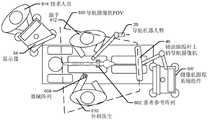
FIG. 6 depicts a block diagram view of components of the surgical system of FIG. 5 for a medical procedure. Referring to fig. 6, the trackingcamera 46 on the auxiliary tracking boom has a navigational view 600 in which the pose (e.g., position and orientation) of thereference array 602 attached to the patient, thereference array 604 attached to the surgical instrument, and therobotic arm 20 are tracked. The trackingcamera 46 may be part of the camera tracking system assembly 6' of fig. 3B and 3C that includes acomputer platform 910 configured to perform the operations described below. The reference array is tracked by reflecting light in a known pattern that is decoded by the tracking subsystem of thesurgical robot 4 to determine the respective pose of the reference array. If the line of sight between thepatient reference array 602 and the trackingcamera 46 on the auxiliary tracking boom is blocked (e.g., by medical personnel, instruments, etc.), then further navigation of the surgical instrument may not be possible, and the responsive notification may temporarily halt further movement of therobotic arm 20 andsurgical robot 4, display a warning on thedisplay 34, and/or provide an audible warning to the medical personnel. Thedisplay 34 is available to thesurgeon 610 andassistant 612, but viewing requires turning the head away from the patient and changing the eye focus to a different distance and position. The navigation software may be controlled by a technician 614 based on voice commands from the surgeon.
Fig. 7 illustrates various display screens that may be displayed by thesurgical robot 4 on thedisplay 34 of fig. 5 and 6 while using the navigation functions of thesurgical system 2. The display screen may include, but is not limited to, a patient radiograph with an overlaid graphical representation of an instrument model positioned in the display screen relative to the anatomy based on the developed surgical plan and/or based on the pose of the tracked reference array, various user selectable menus for controlling different stages of the surgical procedure, as well as size parameters (e.g., length, width, and/or diameter) of the virtually projected implant.
For navigated procedures, various processing components (e.g., computer platform 910) and associated software are provided that enable pre-operative planning of a surgical procedure (e.g., implant placement) and electronic transfer of the plan tocomputer platform 910 to provide navigation information to one or more users during the planned surgical procedure, as described below.
For robotic navigation, the various processing components (e.g., computer platform 910) and associated software described below are provided that enable pre-operative planning of a surgical procedure (e.g., implant placement) and electronic transfer of the plan to thesurgical robot 4.Surgical robot 4 uses the plan to guiderobotic arm 20 and attachedend effector 26 to provide a target pose of the surgical tool relative to the patient anatomy for a step of the planned surgical procedure.
The various embodiments below relate to the use of one or more XR headsets that may be worn by thesurgeon 610,assistant 612, and/or other medical personnel to provide an improved user interface for receiving information from and/or providing control commands to the surgical robot, cameratracking system assembly 6/6', and/or other medical equipment in the operating room.
Fig. 8 illustrates a block diagram of some of the electrical components of thesurgical robot 4, according to some embodiments of the present disclosure. Referring to fig. 8, a load cell (not shown) may be configured to track the force applied to endeffector coupling 22. In some embodiments, the load cell may be in communication with a plurality of motors 850, 851, 852, 853, and/or 854. When the load cell senses a force, information regarding the amount of force applied may be distributed from the switch array and/or multiple switch arrays to thecontroller 846. Thecontroller 846 may acquire force information from the load cells and process it with a switching algorithm. Thecontroller 846 uses a switching algorithm to control the motor driver 842. A motor drive 842 controls the operation of one or more motors 850, 851, 852, 853, and/or 854. The motor driver 842 may direct a particular motor to produce an equivalent amount of force, such as that measured by a load cell through the motor. In some embodiments, the force generated may come from multiple motors, e.g., 850 and 854, as indicated bycontroller 846. Additionally, motor driver 842 may receive input fromcontroller 846. Thecontroller 846 may receive information from the load cells regarding the direction of the force sensed by the load cells. Thecontroller 846 may process this information using a motion controller algorithm. The algorithm may be used to provide information to a particular motor driver 842. To replicate the direction of the force, thecontroller 846 may activate and/or deactivate certain motor drivers 842.Controller 846 may control one or more motors, such as one or more of 850 and 854, to induce movement ofend effector 26 in the direction of the force sensed by the load cell. Such force-controlled movement may allow the operator to move the SCARA24 and theend effector 26 without difficulty and/or with very little resistance. Movement of theend effector 26 may be performed to position theend effector 26 in any suitable pose (i.e., position and angular orientation relative to a defined three-dimensional (3D) orthogonal reference axis) for use by medical personnel.
As best shown in fig. 5,activation assembly 60 may be in the form of a bracelet wrapped aroundend effector coupler 22.Activation assembly 60 may be positioned on any portion of SCARA24, any portion ofend effector coupling 22, may be worn by medical personnel (and communicate wirelessly), and/or any combination thereof. Theactivation assembly 60 may include a primary button and a secondary button.
Pressing the master button may allow the operator to move the SCARA24 and theend effector coupling 22. According to one embodiment, once set in place, the SCARA24 and theend effector coupler 22 may not move until the operator programs thesurgical robot 4 to move the SCARA24 and theend effector coupler 22, or moves using the master button. In some instances, it may be desirable to press at least two non-adjacent master activation switches before SCARA24 andend effector coupling 22 will respond to operator commands. Pressing at least two master activation switches may prevent inadvertent movement of SCARA24 andend effector coupling 22 during a medical procedure.
Activated by the main button, the load cell may measure the magnitude and/or direction of the force exerted by the operator (i.e., medical personnel) on theend effector coupling 22. This information may be communicated to one or more motors within SCARA24, such as one or more of 850 and 854, which may be used to move SCARA24 andend effector coupling 22. Information regarding the magnitude and direction of the force measured by the load cells may cause one or more motors (e.g., one or more of 850 and 854) to move the SCARA24 and theend effector coupling 22 in the same direction as sensed by the load cells. Such force-controlled movement may allow an operator to easily move the SCARA24 and theend effector coupling 22, and may not require a significant amount of effort due to the motors moving the SCARA24 and theend effector coupling 22 while the operator is moving the SCARA24 and theend effector coupling 22.
In some instances, the operator may use the secondary button as a "selection" device. During a medical procedure, thesurgical robot 4 may notify medical personnel of certain conditions via one or more of theXR headset 920, thedisplay 34, and/or thelight indicator 28. The one ormore XR headsets 920 are each configured to display an image on the see-through display screen to form an augmented reality image overlaid on a real-world object viewable through the see-through display screen. Thesurgical robot 4 may prompt medical personnel to select a function, mode, and/or assess the condition of thesurgical system 2. A single press of the secondary button may activate certain functions, modes, and/or confirm information communicated to medical personnel via one or more of theXR headset 920, thedisplay 34, and/or thelight indicator 28. Additionally, pressing the sub-button multiple times in rapid succession may activate additional functions, modes, and/or select information communicated to medical personnel via one or more of theXR headset 920, thedisplay 34, and/or thelight indicator 28.
With further reference to fig. 8, the electrical components of thesurgical robot 4 include aplatform subsystem 802, a computer subsystem 820, amotion control subsystem 840, and atracking subsystem 830.Platform subsystem 802 includes battery 806,power distribution module 804, connector panel 808, and charging station 810. The computer subsystem 820 includes acomputer 822, adisplay 824, andspeakers 826.Motion control subsystem 840 includes drive circuit 842, motors 850, 851, 852, 853, 854,stabilizers controller 846.Tracking subsystem 830 includesposition sensor 832 andcamera transducer 834. Thesurgical robot 4 may also include aremovable foot pedal 880 and aremovable tablet computer 890.
The input power is supplied to thesurgical robot 4 by a power source that may be provided to thepower distribution module 804. Thepower distribution module 804 receives input power and is configured to generate different supply voltages that are provided to other modules, components, and subsystems of thesurgical robot 4. Thepower distribution module 804 may be configured to provide different voltage supplies to the connector panel 808 that may be provided to other components (e.g.,computer 822,display 824,speakers 826, driver 842) to power, for example, the motor 850 and end effector coupler 844, and to thecamera converter 834 and other components for thesurgical robot 4. Thepower distribution module 804 may also be connected to a battery 806, which acts as a temporary power source if thepower distribution module 804 is not receiving power from an input power source. At other times, thepower distribution module 804 may be used to charge the battery 806.
The connector panel 808 may be used to connect different devices and components to thesurgical robot 4 and/or associated components and modules. The connector panel 808 may contain one or more ports that receive lines or connections from different components. For example, the connector panel 808 may have a grounded port to ground thesurgical robot 4 to other equipment, a port to connect to afoot pedal 880, a port to connect to atracking subsystem 830, which may include aposition sensor 832, acamera transducer 834, and aDRA tracking camera 870. The connector panel 808 may also contain other ports to allow USB, ethernet, HDMI communication with other components, such as acomputer 822. According to some embodiments, the connector panel 808 may include a wired and/or wireless interface for operably connecting one ormore XR headsets 920 to thetracking subsystem 830 and/or the computer subsystem 820.
Thecontrol panel 816 may provide various buttons or indicators that control the operation of thesurgical robot 4 and/or provide information from thesurgical robot 4 for viewing by an operator. For example, thecontrol panel 816 may contain buttons for turning thesurgical robot 4 on or off, raising or lowering thevertical column 16, and raising or lowering the stabilizers 855-858, which may be designed to engage thecasters 12 to lock thesurgical robot 4 from physical movement. Other buttons may stop thesurgical robot 4 in the event of an emergency, which may remove all motor power and apply mechanical brakes to stop all motion from occurring. Thecontrol panel 816 may also have indicators (e.g., line power indicators) to inform the operator of certain system conditions or the state of charge of the battery 806. According to some embodiments, the one ormore XR headsets 920 may communicate, for example, through the connector panel 808 to control operation of thesurgical robot 4 and/or to receive and display information generated by thesurgical robot 4 for viewing by a person wearing theXR headset 920.
Thecomputer 822 of the computer subsystem 820 contains an operating system and software for operating the designated functions of thesurgical robot 4.Computer 822 may receive and process information from other components (e.g.,tracking subsystem 830,platform subsystem 802, and/or motion control subsystem 840) to display information to an operator. Further, the computer subsystem 820 may provide output to an operator through aspeaker 826. The speaker may be part of the surgical robot, part of theXR headset 920, or within another component of thesurgical system 2. Thedisplay 824 may correspond to thedisplay 34 shown in fig. 1 and 2.
The functional operations of thetracking subsystem 830 and the computer subsystem 820 may be embodied in acomputer platform 910 that may be transmitted by the camera tracking system assembly 6' of fig. 3A and 3B.Tracking subsystem 830 may be configured to determine poses, such as the position and angular orientation of the tracked DRA. Thecomputer platform 910 may also contain a navigation controller configured to use the determined pose to provide navigation information to the user that guides them to move the tracked tool relative to the positionally registered patient images and/or the tracked anatomy during the planned surgical procedure. Thecomputer platform 910 may display information on the display of fig. 3B and 3C and/or to one ormore XR headsets 920. When used with a surgical robot,computer platform 910 may be configured to communicate with computer subsystem 820 and the other subsystems of fig. 8 to control movement ofend effector 26. For example, as will be explained below, thecomputer platform 910 may generate graphical representations of the patient's anatomy, surgical tool, user's hand, etc., having displayed sizes, shapes, colors, and/or poses that are controlled based on the determined poses of one or more tracked DRAs, and the displayed graphical representations may be dynamically modified to track changes in the determined poses over time.
Fig. 9 illustrates a block diagram of components of a surgical system including an imaging device (e.g., C-arm 104, O-arm 106, etc.) connected to acomputer platform 910 that may be operatively connected to camera tracking system component 6 (fig. 3A) or 6' (fig. 3B, 3C) and/orsurgical robot 4, according to some embodiments of the present disclosure. Alternatively, at least some of the operations disclosed herein as being performed by thecomputer platform 910 may additionally or alternatively be performed by a component of a surgical system.
Referring to fig. 9, acomputer platform 910 includes adisplay 912, at least one processor circuit 914 (also referred to as a processor for brevity), at least one memory circuit 916 (also referred to as a memory for brevity) containing computer-readable program code 918, and at least one network interface 902 (also referred to as a network interface for brevity). Thedisplay 912 may be part of anXR headset 920 according to some embodiments of the present disclosure. Thenetwork interface 902 may be configured to connect to the C-arm imaging device 104 of fig. 10, the O-arm imaging device 106 of fig. 11, another medical imaging device, an image database 950 containing medical images of a patient, components of thesurgical robot 4, and/or other electronic equipment.
When used with thesurgical robot 4, thedisplay 912 may correspond to thedisplay 34 of fig. 2 and/or thetablet computer 890 of fig. 8 and/or theXR headset 920 operatively connected to thesurgical robot 4, thenetwork interface 902 may correspond to the platform network interface 812 of fig. 8, and theprocessor 914 may correspond to thecomputer 822 of fig. 8. Thenetwork interface 902 of theXR headset 920 may be configured to communicate over a wired network (e.g., thin line ethernet) and/or over a wireless RF transceiver link according to one or more wireless communication protocols (e.g., WLAN, 3GPP 4G and/or 5G (new radio) cellular communication standards, etc.).
Theprocessor 914 may include one or more data processing circuits, such as a general purpose and/or special purpose processor, e.g., a microprocessor and/or a digital signal processor. Theprocessor 914 is configured to execute the computerreadable program code 918 in thememory 916 to perform operations that may include some or all of the operations described herein as being performed for surgical planning, navigated surgery, and/or robotic surgery.
Thecomputer platform 910 may be configured to provide surgical planning functionality.Processor 914 can be operative to display an image of the anatomical structure (e.g., vertebrae) received from one ofimaging devices network interface 920 ondisplay device 912 and/orXR headset 920. Theprocessor 914 receives operator definitions of locations on the one or more images where the anatomical structure shown is to undergo a surgical procedure (e.g., screw placement), such as by the operator touching the location on theselection display 912 for the planned surgical procedure or using a mouse-based cursor to define the location for the planned surgical procedure. As will be explained in further detail below, when displaying images in theXR headset 920, the XR headset may be configured to sense gesture-based commands formed by the wearer and/or to sense voice-based commands spoken by the wearer, which may be used to control selection between menu items and/or to control how objects are displayed on theXR headset 920.
Thecomputer platform 910 may be configured to enable anatomical measurements that may be particularly useful for knee surgery, similar to measurements of various angles to determine hip center, angular center, natural landmarks (e.g., femoral condylar line, whitisides line, femoral posterior condylar line, etc.), and the like. Some measurements may be automatic, while some other measurements may involve human input or assistance. Thecomputer platform 910 may be configured to allow the operator to input a selection of the correct implant for the patient, including a selection of size and alignment. Thecomputer platform 910 may be configured to perform automatic or semi-automatic (involving human input) segmentation (image processing) of CT images or other medical images. The patient's surgical plan may be stored in a cloud-based server, which may correspond to database 950, for retrieval by thesurgical robot 4.
For example, during orthopedic surgery, the surgeon may select a site (e.g., posterior femur, proximal tibia, etc.) to cut using a computer screen (e.g., touch screen) or augmented reality (XR) interaction (e.g., gesture-based commands and/or voice-based commands), such as withXR headset 920. Thecomputer platform 910 may generate navigational information that provides visual guidance to the surgeon to perform the surgical procedure. When used withsurgical robot 4,computer platform 910 may provide guidance that allowssurgical robot 4 to automatically moveend effector 26 to a target pose such that a surgical tool is aligned with the target location to perform a surgical procedure on an anatomical structure.
In some embodiments,surgical system 900 may use two DRAs to track patient anatomical locations, such as a DRA attached to a patient's tibia and a DRA attached to a patient's femur. Thesystem 900 can use standard navigated instruments for registration and examination (e.g., a pointer similar to the pointer used to perform spinal surgery in the Globus excelsius gps system).
A particularly challenging task in navigated surgery is how to plan the position of the implant in the spine, knee and other anatomical structures where the surgeon strives to perform the task on a computer screen, which is a 2D representation of the 3D anatomical structure.System 900 may address this problem by displaying three-dimensional (3D) computer-generated representations of the anatomy and candidate implants usingXR headset 920. Under the guidance of thecomputer platform 910, the computer-generated representations are scaled and posed relative to each other on the display screen and can be manipulated by the surgeon while viewing through theXR headset 920. The surgeon may manipulate the displayed computer-generated representation of the anatomy, implant, surgical tool, etc., for example, using gesture-based commands and/or voice-based commands sensed by theXR headset 920.
For example, the surgeon may view a displayed virtual handle on the virtual implant and may manipulate (e.g., grasp and move) the virtual handle to move the virtual implant to a desired pose and adjust the planned implant placement relative to the graphical representation of the anatomy. Thereafter, during surgery, thecomputer platform 910 may display navigation information via theXR headset 920 that aids the surgeon's ability to insert an implant and/or perform another surgical procedure on the anatomy more accurately following the surgical plan. When the surgical procedure involves bone removal, the progress of bone removal (e.g., depth of cut) may be displayed in real-time by theXR headset 920. Other features that may be displayed by theXR headset 920 may include, but are not limited to, gap or ligament balance along the range of joint motion, contact lines on the implant along the range of joint motion, ligament tension and/or slack rendered by color or other graphics, and the like.
In some embodiments, thecomputer platform 910 may allow planning the use of standard surgical tools and/or implants, such as posterior stabilized and cruciate retaining implants, cement-type and non-cement-type implants, revision systems for surgery associated with, for example, total or partial knee and/or hip replacement and/or trauma.
An automated imaging system may be used in conjunction withcomputer platform 910 to acquire pre-operative, intra-operative, post-operative, and/or real-time image data of an anatomical structure. Fig. 10 and 11 illustrate an example automated imaging system. In some embodiments, the automated imaging system is a C-arm 104 (FIG. 10) imaging device or an O-arm 106 (fig. 11). (Medtronic Navigation, Inc., having a place of business in Louisville, Colorado, USA) has an O-arm
 Copyright of (d). It may be desirable to x-ray a patient from many different locations without requiring frequent manual repositioning of the patient, which may be required in x-ray systems. The C-
arm 104 x-ray diagnostic device may solve the problem of frequent manual repositioning and is well known in the medical arts of surgery and other interventional procedures. As shown in fig. 10, the C-arm comprises an elongated C-shaped member terminating in opposite distal ends 112 of the "C". The C-shaped member is attached to anx-ray source 114 and animage receptor 116. The space within the C-arm 104 of the arm provides a substantially undisturbed space for the physician's care of the patient from the x-ray support structure.


The C-arm is mounted so that the arm can move rotationally in two degrees of freedom (i.e. about two perpendicular axes in a spherical motion). The C-arm is slidably mounted to the x-ray support structure, which allows for orbital rotational movement of the C-arm about its center of curvature, which may allow for selective vertical and/or horizontal orientation of thex-ray source 114 and theimage receptor 116. The C-arm may also be laterally rotatable (i.e., in a perpendicular direction relative to the direction of orbital motion to enable selective adjustment of the positioning of thex-ray source 114 andimage receptor 116 relative to the width and length of the patient). The spherical rotational aspect of the C-arm device allows the physician to x-ray the patient at an optimal angle determined relative to the particular anatomical condition being imaged.
O-arm shown in FIG. 11 106 contain a
gantry housing 124 which may enclose an image capture portion, not shown. The image capturing section comprises an x-ray source section and/or an x-ray emitting section and an x-ray receiving section and/or an image receiving section, which sections may be positioned about one hundred and eighty degrees from each other and mounted on a rotor (not shown) with respect to the trajectory of the image capturing section. The image capture portion may be operatively rotated three hundred and sixty degrees during image acquisition. The image capturing portion may be rotated about a central point and/or axis, thereby allowing image data of the patient to be acquired from multiple directions or in multiple planes.

O-arm withgantry housing 124 106 have a central opening for positioning around a subject to be imaged, a radiation source rotatable around the interior of the
gantry housing 124, which may be adapted to project radiation from a plurality of different projection angles. The detector system is adapted to detect radiation at each projection angle to acquire images of the object from a plurality of projection planes in a quasi-simultaneous manner. The gantry may be attached to the support structure O-arm in a cantilevered fashion A support structure such as a wheeled mobile cart with wheels. The positioning unit preferably translates and/or tilts the gantry to a planned position and orientation under the control of a computerized motion control system. The gantry may include a source and a detector positioned opposite each other on the gantry. The source and detector may be affixed to a motorized rotor that can rotate the source and detector in combination with each other around the interior of the gantry. The source may be pulsed in multiple positions and orientations in partial and/or full three hundred and sixty degree rotations to perform multi-planar imaging of a target object positioned inside the gantry. The gantry may further include a track and bearing system for guiding the rotor as it rotates, which may carry the source and detectionA device. O-shaped
arm
106 and/or one of the C-arm 104 may be used as an automated imaging system to scan a patient and send information to thesurgical system 2.


The image captured by the imaging system may be displayed on theXR headset 920 and/or thecomputer platform 910 of thesurgical system 900, thesurgical robot 4, and/or another display device of another component. TheXR headset 920 may be connected, for example, through thecomputer platform 910, to one or more of theimaging devices 104 and/or 106 and/or the image database 950 to display images therefrom. A user may provide control inputs through theXR headset 920, such as gesture and/or voice-based commands to control operation of one or more of theimaging devices 104 and/or 106 and/or the image database 950.
Fig. 12 shows a block diagram view of components of a surgical system including a pair of XR headsets 920 (head mounted display HMD1 and HMD2) that may correspond to theXR headset 920 shown in fig. 13 and operate in accordance with some embodiments of the present disclosure.
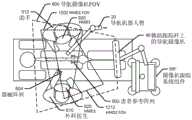
Referring to the example scenario of fig. 12, both theassistant 612 and thesurgeon 610 wear theXR headset 920, respectively. The assistant 612 optionally wears anXR headset 920. As will be described further below, theXR headset 920 is configured to provide the wearer with an interactive environment through which information relating to the surgical procedure may be viewed and interacted with. This interactive XR-based environment may eliminate the need for the technician 614 shown in fig. 6 to be present in the operating room, and may eliminate the need for using thedisplay 34 shown in fig. 6. EachXR headset 920 may include one or more cameras configured to provide additional sources that track the DRA or other reference arrays attached to the surgical tool, the patient's anatomy,end effector 26, and/or other equipment. In the example of fig. 12, theXR headset 920 has a field of view (FOV)1202 for tracking DRA and other objects, theXR headset 920 has aFOV 1212 partially overlapping the FOV 1202 for tracking DRA and other objects, and the trackingcamera 46 has another FOV 600 partially overlapping theFOVs 1202 and 1212 for tracking DRA and other objects.
If one or more cameras are obstructed from viewing a DRA attached to a tracked object (e.g., a surgical tool), but the DRA is in view of one or more other cameras, thetracking subsystem 830 and/or navigation controller 828 may continue to seamlessly track the object without losing navigation. Additionally, if the DRA is partially occluded from the perspective of one camera, but the entire DRA is visible through multiple camera sources, the tracking inputs of the cameras can be merged to continue navigating the DRA. One of the XR headsets and/or trackingcamera 46 may view and track the DRA on the other XR headset to enable computer platform 910 (fig. 9 and 14),tracking subsystem 830, and/or another computing component to determine the pose of the DRA of, for example,XR headset 920, trackingcamera 46, relative to one or more defined coordinate systems, and/or to define another coordinate system for the patient, table, and/or room.
TheXR headset 920 may be operably connected to view video, pictures, and/or other received information and/or provide commands to control various devices in the operating room, including but not limited to nerve monitoring, microscopy, video camera, and anesthesia systems. Data from various devices may be processed and displayed within the headset, such as displaying vital signs of a patient or microscope feeds.
Example XR headset Assembly and integration with navigated surgery, surgical robot, and other devices
Fig. 13 illustrates anXR headset 920 configured according to some embodiments of the present disclosure. The XR headset includes aheadband 1306 configured to secure the XR headset to a wearer's head, anelectronic assembly housing 1304 supported by theheadband 1306, and adisplay screen 1302 extending laterally across and downwardly from theelectronic assembly housing 1304. Thedisplay screen 1302 may be a see-through LCD display device or a semi-reflective lens that reflects an image projected by the display device toward the wearer's eye. A set of DRA reference points 1310 (e.g., dots) are sprayed or attached in a spaced known manner on one or both sides of the headgear. The DRA on the headset enables a tracking camera on the auxiliary tracking boom to track the pose of theheadset 920 and/or enables another XR headset to track the pose of theheadset 920.
Thedisplay screen 1302 operates as a see-through display screen (also referred to as a combiner) that directs light from the display panel of the display device to the eyes of the user for reflection. The display panel may be positioned between the electronics component housing and the user's head and angled to project virtual content toward thedisplay screen 1302 to direct the user's eye reflections. Thedisplay screen 1302 is semi-transparent and semi-reflective, allowing the user to see the reflected virtual content overlaid on the user's view of the real world scene.Display 1302 may have different opacity zones, such as the upper lateral band shown having a higher opacity than the lower lateral band. The opacity of thedisplay screen 1302 may be electrically controlled to adjust the amount of light from the real world scene that passes through to the eyes of the user. The high opacity configuration of thedisplay screen 1302 causes a high contrast virtual image to be overlaid on a dim view of the real world scene. The low opacity configuration of thedisplay screen 1302 may cause a more blurred virtual image to be overlaid on a clearer view of the real-world scene. Opacity may be controlled by applying an opaque material on the surface ofdisplay screen 1302.
According to some embodiments, the surgical system includes anXR headset 920 and an XR headset controller, such ascontroller 1430 in fig. 14. TheXR headset 920 is configured to be worn by a user during a surgical procedure and has a see-throughdisplay screen 1302 configured to display XR images and allow at least a portion of a real-world scene to pass therethrough for viewing by the user. TheXR headset 920 also includes an opacity filter positioned between at least one of the user's eyes and the real world scene when the see-throughdisplay screen 1302 is viewed by the user. The opacity filter is configured to provide opacity to light from a real-world scene. The XR headset controller is configured to communicate with a navigation controller (e.g., one or more of controllers 828A, 828B, and/or 828C in fig. 14) to receive navigation information from the navigation controller that provides guidance to the user during a surgical procedure on an anatomical structure, and is further configured to generate an XR image based on the navigation information for display on the see-throughdisplay screen 1302.
The opacity of thedisplay screen 1302 may be configured to have a gradient of opacity that varies more continuously with distance down from a top portion of thedisplay screen 1302. The darkest point of the gradient may be positioned at a top portion of thedisplay screen 1302 and gradually become less transparent further down thedisplay screen 1302 until the opacity becomes transparent or non-existent. In further example embodiments, the gradient may change from about 90% opacity to completely transparent at approximately the mideye level of thedisplay screen 1302. With the headgear properly calibrated and placed, the mideye level may correspond to the point at which the user will look straight, and the end of the gradient will be positioned at the "horizontal" line of the eye. The darker portion of the gradient will allow clear and definite vision of the virtual content and help block the intrusive brightness of the overhead operating room lights.
Using an opacity filter in this manner enables theXR headset 920 to provide Virtual Real (VR) functionality along an upper portion of thedisplay screen 1302 and AR functionality along a middle or lower portion of thedisplay screen 1302 by substantially or completely blocking light from the real world scene. This allows the user to have a translucent AR where needed and where explicit optics are allowed to be used for the patient anatomy during the procedure. Configuring thedisplay screen 1302 as a gradient rather than a more constant band of opacity may allow the wearer to experience a more natural transition between a more VR type view and a more AR type view without experiencing the brightness of the real world scene and abrupt changes in depth of field that may otherwise fatigue the eyes during faster shifts between top and bottom views.
The display panel anddisplay screen 1302 may be configured to provide a wide-field perspective XR display system. In one exemplary configuration, they provide the user with an 80 ° diagonal field of view (FOV) and a 55 ° vertical coverage for viewing virtual content by the user. Other diagonal FOV angles and vertical coverage angles may be provided by different sized display panels, different curvature lenses, and/or different distances and angular orientations between the display panel and thecurved display screen 1302.
Fig. 14 depicts the electrical components of anXR headset 920 that may be operably connected to acomputer platform 910, one or more of the imaging devices (e.g., C-arm imaging device 104, O-arm imaging device 106), and/or an image database 950 and/or a surgical robot 800, according to some embodiments of the present disclosure.
TheXR headset 920 provides an improved human-machine interface for performing navigated surgical procedures. TheXR headset 920 may be configured to provide functionality, such as through thecomputer platform 910, including, but not limited to, any one or more of the following: a gesture-based command and/or a voice-based command is identified, and an XR graphical object is displayed on display device 1450. Display device 1450 may be a video projector, flat panel display, or the like that projects displayed XR graphical objects ontodisplay screen 1302. The user may view the XR graphical objects as an overlay anchored to a particular real world object viewed through the display screen 1302 (fig. 13). TheXR headset 920 may additionally or alternatively be configured to display video feeds from cameras mounted to one ormore XR headsets 920 and other cameras on the display screen 1450.
The electrical components of theXR headset 920 may include a plurality ofcameras 1440, microphones 1442,gesture sensors 1444, pose sensors (e.g., Inertial Measurement Units (IMUs)) 1446, adisplay module 1448 including a display device 1450, and a wireless/wired communication interface 1452. TheXR headset camera 1440 may be a visible light capture camera, a near infrared capture camera, or a combination of both, as described below.
Thecameras 1440 may be configured to operate asgesture sensors 1444 by capturing user gestures performed within the field of view of one ormore cameras 1440 for identification. Alternatively, thegesture sensor 1444 may be a proximity sensor and/or a touch sensor that senses gestures performed proximate to thegesture sensor 1444 and/or senses physical contact (e.g., tapping the sensor or the housing 1304). The pose sensors 1446 (e.g., IMUs) may include multi-axis accelerometers, tilt sensors, and/or another sensor that may sense rotation and/or acceleration of theXR headset 920 along one or more defined coordinate axes. Some or all of these electrical components may be contained in thecomponent housing 1304 or may be contained in another housing that is configured to be worn elsewhere (e.g., on the hips or shoulders).
As explained above, thesurgical system 2 includes a cameratracking system component 6/6' and atracking subsystem 830, which may be part of thecomputer platform 910. The surgical system may include an imaging device (e.g., C-arm 104, O-arm 106, and/or image database 950) and/or asurgical robot 4.Tracking subsystem 830 is configured to determine the pose of the DRA attached to the anatomy, end effector, surgical tool, etc. The navigation controller 828 is configured to determine a target pose of the surgical tool relative to the anatomy based on a surgical plan defining a location at which a surgical procedure is to be performed on the anatomy using the surgical tool (e.g., in accordance with a surgical planning function performed by thecomputer platform 910 of fig. 9) and based on the pose of the anatomy determined by thetracking subsystem 830. The navigation controller 828 may be further configured to generate steering information based on the target pose of the surgical tool, the pose of the anatomical structure, and the pose of the surgical tool and/or end effector, wherein the steering information indicates where the surgical tool and/or end effector of the surgical robot should be moved to perform the surgical plan.Various cameras 1440 of theXR headset 920 may be connected to the cameratracking system component 6/6 'to track the pose of the DRA, the user's hand, etc.
The electrical components of theXR headset 920 may be operably connected to the electrical components of thecomputer platform 910 through a wired/wireless interface 1452. The electrical components of theXR headset 920 may be operatively connected, for example, through thecomputer platform 910 or directly to the various imaging devices (e.g., C-arm imaging device 104, I/O-arm imaging device 106, image database 950) and/or other medical equipment through the wired/wireless interface 1452.
Thesurgical system 2 further includes at least one XR headset controller 1430 (also referred to as an "XR headset controller" for brevity) which may reside in theXR headset 920, thecomputer platform 910, and/or in another system component connected by wired cables and/or wireless communication links. Software executed byXR headset controller 1430 provides various functions. TheXR headset controller 1430 is configured to receive navigation information from the navigation controller 828 providing guidance to the user during a surgical procedure on the anatomical structure, and to generate an XR image based on the navigation information for display on the display device 1450 for projection on the see-throughdisplay screen 1302.
The configuration of the display device 1450 relative to the display screen (also referred to as a "see-through display screen") 1302 is configured to display XR images in a manner that makes the XR images appear to be in the real world when viewed through thedisplay screen 1302 by a user wearing theXR headset 920. Thedisplay screen 1302 may be positioned in front of the user's eyes by aheadband 1306.
Example XR Headset Assembly optical arrangement
Fig. 15 illustrates a block diagram showing the arrangement of the optical components of anXR headset 920, according to some embodiments of the present disclosure. Referring to fig. 15, display device 1450 is configured to display an XR image generated byXR headset controller 1430, light from which is projected asXR image 1500 ontodisplay screen 1302. Thedisplay screen 1302 is configured to combine light from theXR image 1500 and light from thereal world scene 1502 into a combinedenhanced view 1504 that is directed to the user'seye 1510. Thedisplay 1302 configured in this manner acts as a see-through display. TheXR headset 920 may include any number oftracking cameras 1440. Thecamera 1440 may be a visible light capture camera, a near infrared capture camera, or a combination of both.
Exemplary user View by XR Headset
XR headset operation may display both 2D images and 3D models ondisplay screen 1302. The 2D image may preferably be displayed in a less transparent band (upper band) of thedisplay screen 1302, and the 3D model may more preferably be displayed in a more transparent band (otherwise referred to as the environment region) (bottom band) of thedisplay screen 1302. Below the lower band where thedisplay screen 1302 ends, the wearer can view the operating room unobstructed. Note that the location ondisplay screen 1302 where XR content is displayed may be fluid. The location where the 3D content is displayed may move to the opaque band depending on the positioning of the head mounted device relative to the content, and the location where the 2D content is displayed may be placed in the transparent band and stabilized relative to the real world. Additionally, theentire display screen 1302 may be dimmed under electrical control to convert the headset into virtual reality for surgical planning or completely transparent during a medical procedure. As explained above, theXR headset 920 and associated operations not only support navigated programs, but may be performed in conjunction with robotic assistance programs.
Fig. 16 illustrates an example view of adisplay screen 1302 of anXR headset 920 with navigation assistance for a user manipulating asurgical tool 1602 during a medical procedure according to some embodiments of the present disclosure. Referring to fig. 16, when thesurgical tool 1602 is brought into proximity to the tracked anatomy such that thedynamic reference arrays surgical tool 1602 become within the field of view of the cameras 1440 (fig. 15) and/or 46 (fig. 6), thegraphical representation 1600 of the tool may be displayed in 2D and/or 3D images relative to thegraphical representation 1610 of the anatomy. The user can use the viewed graphical representation to adjust atrajectory 1620 of thesurgical tool 1602, which may be shown as extending from thegraphical representation 2000 of the tool through thegraphical representation 1610 of the anatomical structure. TheXR headset 920 may also display textual information andother objects 1640. A dashedline 1650 extending across the viewed display screen represents an example division between the different levels of opacity upper and lower bands.
Other types of XR images (virtual content) that may be displayed on thedisplay screen 1302 may include, but are not limited to, any one or more of the following:
I) 2D axial, sagittal, and/or coronal views of a patient anatomy;
2) an overlay of planned tool and surgical implant positions versus currently tracked tool and surgical implant positions;
3) a preoperative image library;
4) video feeds or teleconferences from microscopes and other similar systems;
5) options and configuration settings and buttons;
6) a floating 3D model of the patient's anatomy with surgical planning information;
7) real-time tracking of surgical instruments relative to a floating patient anatomy;
8) an enhanced overlay of the patient's anatomy with instructions and guidance; and
9) enhanced coverage of surgical devices.
Exemplary configurations of cameras for tracking System Components
FIG. 17 depicts an exemplary configuration of anauxiliary tracking bar 46 having two pairs of stereo tracking cameras configured in accordance with some embodiments of the present disclosure; theauxiliary tracking bar 46 is part of the camera tracking system assembly of fig. 3A, 3B, and 3C. According to one embodiment, the stereo tracking cameras include one pair of stereo spaced apart visible light capture cameras and another pair of stereo spaced apart near infrared capture cameras. Alternatively, only one pair of visible light capturing cameras or only one pair of near infrared capturing cameras may be used in theauxiliary tracking bar 46. Any number of near infrared and/or visible light cameras may be used.
Pose measuring chain
As explained above, navigating a procedure may include computer vision tracking and determining the pose (e.g., position and orientation in a six degree-of-freedom coordinate system) of a surgical instrument, for example, by determining the pose of an attached DRA that includes spaced apart fiducials, such as discs or balls, arranged in a known manner to a camera tracking system. Computer vision uses spaced tracking cameras, such as stereo cameras, configured to capture near-infrared light and/or visible light. In this scenario, there are three parameters that compete together for optimization: during a surgical procedure, (1) accuracy, (2) stability, and (3) user ergonomics.
Computer operation may combine (link) the measured poses in a manner that may improve optimization of one or more of the three parameters described above by incorporating additional tracking cameras mounted to one or more XR headsets. As illustrated in fig. 17, according to some embodiments of the present disclosure, a pair of stereoscopic visible light tracking cameras and another pair of stereoscopic near-infrared tracking cameras may be attached to an auxiliary tracking rod of a camera tracking system assembly. Operational algorithms are disclosed that analyze the pose of a DRA that is fully or partially observed (e.g., when all fiducials of the DRA are not observable by a pair of stereo cameras) and combine the observed poses or partial poses in a manner that can improve accuracy, robustness, and/or ergonomics during a navigation procedure.
As explained above, the XR headset may be configured to augment a real-world scene with computer-generated XR images. The XR headset may be configured to provide an XR viewing environment by displaying a computer-generated XR image on a see-through display screen that allows light from the real-world scene to pass therethrough for combined viewing by a user. Alternatively, the XR headset may be configured to provide a VR viewing environment by preventing or substantially preventing light from the real world scene from being viewed directly by the user along the viewing path of the displayed XR image. The XR headset may be configured to provide both an AR viewing environment and a VR viewing environment. In one embodiment, both the AR viewing environment and the VR viewing environment are provided by lateral bands of significantly different opacity disposed between the see-through display screen and the real world scene, such that the VR viewing environment is provided for XR images aligned with high-opacity bands and the AR viewing environment is provided for XR images aligned with low-opacity bands. In another embodiment, both the AR viewing environment and the VR viewing environment are provided by computer adjustable control of an opacity filter that variably limits the amount of light from the real world scene that passes through the see-through display screen to combine with the XR image viewed by the user. Accordingly, the XR headset may also be referred to as an AR headset or a VR headset.
As explained above, the XR headset may include a near-infrared tracking camera and/or a visible light tracking camera configured to track fiducials of DRAs connected to the surgical instrument, patient anatomy, one or more other XR headsets, and/or robotic end effectors. The use of near infrared tracking and/or visible light tracking on an XR headset provides additional tracking volume coverage beyond that which a camera on a single auxiliary tracking rod can provide. Adding a near infrared tracking camera to an existing auxiliary tracking wand allows for more robust but less accurate tracking of headset positions than under visible light. Using stereo matching to collectively identify the pose of the DRA fiducial between the visible tracking coordinate system and the near-infrared tracking coordinate system enables mechanical calibration of the visible tracking coordinate system and the near-infrared tracking coordinate system to enable the coordinate systems to be sufficiently aligned to perform 3D DRA fiducial triangulation operations. Using both the visible and near infrared tracking coordinate systems, any one or more of the following may be implemented: (a) identifying tools that cannot be identified using a single coordinate system; (b) the pose tracking accuracy is improved; (c) enabling a wider range of motion without losing track of the surgical instrument, patient anatomy, and/or robotic end effector; and (d) naturally tracking the XR headset in the same coordinate system as the navigated surgical instrument.
Fig. 18 shows a block diagram view of components of a surgical system including a pair of tracking cameras in an XR headset 920 (head mounted display HMD1 and HMD2) and a tracking camera in a camera tracking boom in a camera tracking system assembly 6' housing acomputer platform 910. Thecomputer platform 910 may include atracking subsystem 830, a navigation controller 828, and anXR headset controller 1430, as previously shown in fig. 14.
Referring to the surgical system of fig. 18, the surgeon and assistant both wear an XR headset HMD1920 and HMD2920, respectively, if each XR headset includes a tracking camera that may be configured as shown in fig. 13. The assistant optionally wears an XR headset HMD 2920.
The combination of the XR headset HMD1920 and HMD2920 with the trackingcamera 46 on the auxiliary tracking boom may more robustly track patient reference array (R), robotic end effector (E), and example objects of the surgical tool (T) or instrument when operating with thecomputer platform 910. Overlapping views from different perspectives provided by the XR headset HMD1920 and HMD2920, as well as the trackingcamera 46 on the auxiliary tracking boom, are shown in fig. 12.
Each of the labeled items in fig. 18 represents a unique coordinate system. The description of the coordinate system labels is as follows:
a — the visible light coordinate system of the second head mount HMD 2920;
n3 — the Near Infrared (NIR) coordinate system of the second head mount HMD 2920;
s is the visible light coordinate system of the primary headset HMD 1920;
n2 — the NIR coordinate system of the master headset HMD 1920;
n — NIR coordinate system of theauxiliary navigation stick 46;
v — the visible light coordinate system of theauxiliary navigation bar 46;
r — the NIR coordinate system of the patient referencefiducial array 602;
t — the NIR coordinate system of trackedtool 604;
e — NIR coordinate system of the tracked robotic end effector onrobotic arm 20; and
w is the inertial navigation world coordinate system with a stable gravity vector.
During the manufacturing process, when the device is installed in an operating room, and/or before a surgical procedure is to be performed, the device may be installed in a surgical roomThe spatial relationship (and by extension, the coordinate system) of some of these marker objects is measured and calibrated. In the disclosed system, the following coordinate systems are calibrated: where the term "T" is defined as a six degree of freedom (6DOF) homogeneous transformation between two specified coordinate systems. Thus, for example, an item
 Is a 6DOF homogeneous transformation between the visible light coordinate system of the primary headset HMD1920 and the NIR coordinate system of the primary headset HMD 1920.


In one embodiment, the XR headset HMD1920 and HMD2920 have passive visible fiducial marks, such as the reference arrayfiducial marks 1310 shown in fig. 13, painted or otherwise attached to them (coordinate systems S and a). The tracking cameras are spatially calibrated to these passive reference points (coordinate systems N2 and N3).
As described above, the cameras on the XR head mounted HMD1920 and HMD2920 and the trackingcamera 46 on the auxiliary tracking rod have partially overlapping fields of view. If one or more cameras on the XR headset HMD1920 are blocked from viewing the DRA attached to the tracked object, e.g., the tracked tool (T), but the DRA is within the field of view of a camera on another XR headset HMD2920 and/or the trackingcamera 46 on the auxiliary tracking boom, thecomputer platform 910 may continue to seamlessly track the DRA without losing navigation. Additionally, if the DRA is partially occluded from the perspective of a camera on the XR headset HMD1920, but the entire DRA is visible through a camera on another XR headset HMD2920 and/or a trackingcamera 46 on the auxiliary tracking boom, the tracking inputs of the cameras may be merged to continue navigating the DRA.
More specifically, by independently observing the various camera systems provided by the XR headset HMD1920 and HMD2920 and the trackingcamera 46 on the auxiliary tracking boom, various coordinates may be tethered together. For example, each of the XR headset HMD1920 and HMD2920 may require virtual augmentation of the robot end effector (E). While the trackingcameras 46 on one XR headset HMD1920 (N2) and the auxiliary tracking boom (N) are able to see (E), it is possible that the other XR headset HMD2920 (N3) is not. (E) The position relative to (N3) can still be calculated by one of several different methods of operation. Operation according to one embodiment performs linking of poses from patient references (R). If the patient reference (R) is seen by either of (N3) and (N) or (N2), then the pose of (E) with respect to (N3) can be solved directly by either of the following two equations:


The key to such a pose chain is to infer the relationship between the frames at the end of each chain (circled and passed below). The chain may be of any length and implemented by having more than one stereo camera system (e.g., N, N2, N3).
The camera tracking system may be configured to receive tracking information related to a tracked object from a first tracking camera (e.g., N3) and a second tracking camera (e.g., N2) during a surgical procedure. The camera tracking system may determine a first pose transformation between the first object (e.g., R) coordinate system and the first tracking camera (e.g., N3) coordinate system based on first object tracking information from the first tracking camera (e.g., N3) indicating the pose of the first object (e.g., R), ). The camera tracking system may determine a second pose transformation (e.g., N2) between the first object (e.g., R) coordinate system and the second tracking camera (e.g., N2) coordinate system based on first object tracking information from the second tracking camera (e.g., N2) indicating the pose of the first object (e.g., R)
 )). The camera tracking system may determine a third pose transformation (e.g.,
 )). The camera tracking system may determine a fourth pose transformation between the second object (e.g., E) coordinate system and the first tracking camera (e.g., N3) coordinate system based on combining the first, second, and third pose transformations-e.g.,
 )。
)。


in some other embodiments, the camera system may further determine the pose of the second object (e.g., E) with the first tracking camera system (e.g., N3) coordinate system based on processing the tracking information through the fourth pose transformation.
Due to the overlapping fields of view of the various camera systems, when the first camera is blocked from seeing the second object (e.g., E), the camera tracking system is able to determine the pose of the second object (e.g., E) relative to the first tracking camera (e.g., N3). For example, in some embodiments, the camera tracking system is further configured to determine a fourth pose transformation between the second object (e.g., E) coordinate system and the first tracking camera (e.g., N3) coordinate system (e.g., ) Without using any tracking information from the first tracking camera (e.g., N3) indicating the pose of the second object (e.g., E).

Camera tracking systems can achieve higher tracking accuracy by combining simultaneous images from multiple camera systems. For example, the camera tracking system may determine that a second object (e.g., E) is relative to a first tracking camera by merging synchronized images of the second object (e.g., E) from multiple perspectives (first and second tracking cameras)The pose of a camera (e.g., N3), and may use a weighting that may be determined based on the accuracy specification of the respective camera. More specifically, the camera tracking system may be further configured to determine a fourth pose transformation (e.g., )。
)。

the surgical system may be configured to display an XR image having a pose determined based on the fourth pose transformation on a see-through display screen of the XR headset. The camera tracking system may be further configured to generate an XR image as a graphical representation of a second object (e.g., E) positioned on the see-through display screen based on processing of a fourth pose transformation of the first object tracking information from the first and second tracking cameras and the second object tracking information from the second tracking camera.
As described above, the camera tracking system may include a navigation controller 828 communicatively connected to a first tracking camera (e.g., N3) and a second tracking camera (e.g., N2) to receive tracking information and configured to determine first, second, third, and fourth pose transformations.
Registering surgical tool characteristics to a reference array identified by a camera tracking system
During a surgical procedure, the camera tracking system may simultaneously track the pose of a surgical tool held or supported within the field of view of a set of tracking cameras and may continue to track the surgical tool as it moves from the outside to the inside (e.g., after being picked up again). Many surgical tools require software configuration for proper tracking. Because the camera tracking system tracks the pose of the reference array attached to the surgical tool or to the surgical tool, the camera tracking system should be informed of which surgical tool characteristics are registered to which tracked reference array. The navigation controller 828 (fig. 14) can thus operate with knowledge of the particular characteristics of the surgical tool. For example, registration of surgical tool characteristics from the identified reference array to the distance of the tip of the surgical tool enables the navigation controller 828 to direct the movement of the surgeon's tool tip during the surgical procedure. Similarly, registration of the direction of curvature of the surgical tool relative to the identified reference array enables the navigation controller 828 to display an accurate graphical representation of the surgical tool through theXR headset 920 and accurately pose relative to the tracked anatomy during the surgical procedure.
According to some embodiments, the registration process, also referred to as the pairing process, during which the user fixes the surgical tool with the reference array in the field of view of a set of tracking cameras used to identify the reference array, and the user then defines the characteristics of the surgical tool. The registration process is repeated for each combination of reference array and surgical tool characteristics to be tracked during the surgical procedure, and may be further repeated when the reference array is detached from one type of surgical tool and attached to a different type of surgical tool. It is critical to enable a surgeon or other medical personnel wearing an XR headset to efficiently perform a registration procedure on a set of surgical tools in a timely manner to assist the surgeon in avoiding errors in registering the surgical tool characteristics with the reference array to reduce interruptions in the surgeon's attention before and during the performance of the surgical procedure.
Other embodiments of the present disclosure involve using an XR headset during the registration process to register identified reference arrays to characteristics of the surgical tool and display a representation of those characteristics through the XR headset so that the user can verify the correctness of the registration. The use of XR headsets in the registration process may provide surgeons and other medical personnel (users) with a more intuitive, time-saving, and reliable process to register the surgical tool with the camera tracking system before and/or during the surgical procedure.
The registration process may be automatically initiated in response to the reference array entering the field of view of a set of tracking cameras, and the camera tracking system determines that the identified reference array has not been registered as paired with the characteristic of the surgical tool. Fig. 19 illustrates agraphical representation 1910 of surgical tool characteristics that may be displayed by an XR headset when thereference array 1902 is being registered to characteristics of thesurgical tool 1900 for use in computer-assisted navigation of thesurgical tool 1900 during surgery, according to some embodiments of the present disclosure. Fig. 20 illustrates a flow diagram of a registration operation performed by a camera tracking system (e.g.,system 6 in fig. 18) that may provide a graphical representation of the surgical tool characteristics in fig. 19, according to some embodiments of the present disclosure.
Referring to fig. 19 and 20, an example XR headset includes a set of tracking cameras, which may be included, for example, in theelectronic component housing 1304 of theXR headset 920 as shown in fig. 13. A camera tracking system (e.g.,system 6 in fig. 18) identifies 2000 areference array 1902 that is tracked by a set of tracking cameras, for example, by identifying a reference array in a video stream from the tracking cameras. As described above, the reference arrays may be uniquely identified based on the different orientations between a set of fiducials forming the respective reference arrays. The camera tracking system determines 2002 whether the identifiedreference array 1902 is registered as paired with a characteristic of one of a plurality of surgical tools defined in a surgical tool database. Based on thereference array 1902 being determined 2002 as unregistered and based on receiving user input, the camera tracking system registers thereference array 1902 as afeature pair 2004 with asurgical tool 1900 selected from a plurality of surgical tools based on the user input. The camera tracking system then provides 2006 a representation of the characteristics to a display device of theXR headset 920 for display to the user.
Thus, in the example illustration of fig. 19, the user may begin registration by raising thesurgical tool 1900 into view of a set of tracking cameras attached to theXR headset 920. When the unregistered reference array enters the field of view of the tracking camera, the camera tracking system may cause a visual cue to be displayed by theXR headset 920, which prompts the user to make a registration of the reference array to a characteristic of the associated surgical tool. The camera tracking system receives video from the tracking camera, identifies 2000 a reference array based on the spacing and the relativity, and determines 2002 that the identified reference array has not been registered as paired with any defined characteristic of a surgical tool defined in the surgical tool database. The camera tracking system receives user input identifying characteristics of the surgical tool and registers 2004 the reference array as a pairing with the characteristics of thesurgical tool 1900. A camera tracking system.
Example surgical tool characteristics may include, but are not limited to, the structural and/or operational characteristics of drills, saws, retractors, and implants such as screws, spacers, interbody fusion devices, plates, rods, and the like.
By providing 2008 a list of surgical tools in the database for display by theXR headset 920 for selection by the user for registration with thereference array 1902, the camera tracking system can facilitate user definition of surgical tool characteristics to be registered with the identifiedreference array 1902. For example, based on thereference array 1902 being determined to be 2002 unregistered, the camera tracking system may provide a list of at least some of the plurality of surgical tools defined in the surgical tool database to a display device of theXR headset 920 for the user to select one of the surgical tools to register as paired with thereference array 1902.
Some surgical tools are asymmetric and require additional feature configurations during registration. In the particular example of fig. 19, the tip of thesurgical tool 1900 is bent to one side and the user is required to select one of the four modes displayed aslist 1910 during registration based on the direction in which the tool tip is bent relative to thereference array 1902. The four modes include mode a corresponding to + X curvature, mode B corresponding to + Z curvature, mode C corresponding to-X curvature, and mode D corresponding to-Z curvature. The use of theXR headset 920 during such surgical tool registration can intuitively aid the user in registering the surgical tool characteristics and provide safeguards to ensure that the correct characteristics are registered to thecorrect reference array 1902.
The camera tracking system may be configured to track movement of a user's hand and identify gestures as user input during a tool registration process. For example, in the example of fig. 19, the user may be able to virtually touch select one of the modes (modes a-D) displayed in virtual space to cause the surgical tool characteristics that have been defined for the selected mode to become registered toreference array 1902. More specifically, the camera tracking system may be configured to determine a selection of a user in the displayedlist 1910 based on tracking information from a set of tracking cameras indicating a pose of the user's hand in XR space relative to the displayedlist 1910.
The camera tracking system may display characteristics and other information such that when the surgeon views through theXR headset 920, the characteristics and other information appear near thesurgical tool 1900, such as shown in alist 1910 that is graphically displayed near thesurgical tool 1900 when the surgeon views through theXR headset 920. In one embodiment, the camera tracking system receives tracking information from a set of tracking cameras that indicates the pose of thereference array 1902 with respect to theXR headset 920, and determines a pose for how to display a representation of a characteristic (e.g., tool information) with respect to the reference array based on the tracking information. The camera tracking system then controls theXR headset 920 to display a representation of the characteristic at the determined pose relative to thereference array 1902.
Once thesurgical tool 1900 has been registered to thereference array 1902, the camera tracking system may display visual feedback of the registration characteristics to enable the surgeon to verify the accuracy of the registration. Displaying the information description about the registeredsurgical tool 1900 provides a level of verification to ensure that the correct surgical tool has been registered. Another level of verification may include displaying a 2D or 3D graphical representation of the surgical tool characteristics that have been or are being registered toreference array 1902.
Fig. 21 illustrates agraphical representation 2112 of a registered actively usedsurgical tool 1900 displayed by anXR headset 920, according to some embodiments of the present disclosure. Fig. 22 illustrates a flowchart of operations performed by the camera tracking system to provide agraphical representation 2112 of the registered actively-usedsurgical tool 1900 of fig. 21, according to some embodiments of the present disclosure.
Referring to fig. 21 and 22, the camera tracking system obtains 2200 agraphical representation 2112 of thesurgical tool 1900 in at least 2 dimensions (i.e., a 2D model or a 3D model), and receives 2202 tracking information from a set of tracking cameras that indicates the pose of thereference array 1902 with respect to theXR headset 920. The camera tracking system determines 2204 a pose for thegraphical representation 2112 based on the tracking information and provides 2206 thegraphical representation 2112 as a characteristic representation to a display device of theXR headset 920 for display at the determined pose.
In the example shown in fig. 21, the camera tracking system has obtained a3D representation 2112 of the registeredsurgical tool 1900 and displayed the3D representation 2112 in afeedback window 2110 adjacent to thesurgical tool 1900 and having a pose matching the current pose of thesurgical tool 1900. Thus, the surgeon holding thesurgical tool 1900 in front of theXR headset 920 is shown, with one particular surgical tool's characteristics already registered to thereference array 1902, which enables the surgeon to visually compare the displayed3D representation 2112 with the actualsurgical tool 1900 to verify the correctness of the registration. These operations may, for example, enable the surgeon to confirm that the correct mode was selected in the list 1910 (fig. 19) by comparing the tool tip bending direction shown in thegraphical representation 2112 with the tip bending direction of the actualsurgical tool 1900.
When a set of tracking cameras identifies a reference array connected to a surgical tool, the camera tracking system can determine how accurately the tracking cameras are tracking the reference array, i.e., a measure of tracking accuracy (also referred to as tracking quality). Tracking accuracy may be reduced when the tracking camera is not properly positioned relative to thesurgical tool 2100, when the position of one or more fiducials has been moved by deformation of the fiducial support structure, and/or when the fiducials are damaged and/or have been covered by bodily fluids or other materials. Therefore, it is important to enable the surgeon to observe the accuracy of the tracking while viewing thesurgical tool 2100 through theXR headset 920.
Fig. 23 illustrates agraphical representation 2312 of tracking accuracy information for a registeredreference array 2102 displayed by anXR headset 920 while a user is viewing asurgical tool 2100, according to some embodiments of the present disclosure. FIG. 24 illustrates a flowchart of operations performed by the camera tracking system to provide thegraphical representation 2312 of tracking accuracy information in FIG. 23, according to some embodiments of the present disclosure.
Referring to fig. 23 and 24, the camera tracking system obtains 2400 tracking accuracy information characterizing the accuracy of a set of tracking cameras currently tracking the pose of thereference array 2102. The camera tracking system then provides 2402 an indication of trackingaccuracy information 2312 to a display device of the XR headset for display to the user. In the illustrative example of fig. 23, the camera tracking system has displayed tracking accuracy in the form of a graphical sliding scale within the trackingquality window 2310 viewable through theXR headset 920, but may display other graphical indications, textual descriptions (e.g., poor tracking, good tracking, full tracking), and/or colored graphical indicia.
Tracking accuracy may be determined based on how closely the measured locations of the fiducial points forming thereference array 2102 match the locations of fiducial points that have been previously defined for the reference array 2102 (e.g., the model defined for the identified reference array 2101) and/or based on how well the shape of the fiducial points identified in the video from the tracking camera fit the defined shape of the fiducial points (e.g., the defined elliptical shape). Alternatively or additionally, tracking accuracy may be determined based on comparing the pose of thereference array 2102 to an expected pose when a defined position (e.g., tip) of the surgical tool touches a known position (e.g., calibration point of another registered reference array). A graphical representation of the tracking accuracy is generated to visually indicate the certainty or accuracy of tracking the cameratracking reference array 2102.
The camera tracking system may be configured to display other information associated with thesurgical tool 2100. To ensure that the surgical tool is able to function properly during the surgical procedure, it may be periodically inspected, for example, by not having a structural bend or having an appropriate range of extension and/or angular movement. For example, it may be determined whether the surgical tool has a curved tip by positioning the tool tip at a known location (e.g., a known calibration point) of the camera tracking system to confirm that the tracked reference array has the expected pose when the tool tip is at the known location. The results of this verification process may be stored in a surgical database and displayed in the vicinity of the surgical tool to ensure that the user is informed whether the surgical tool should not be used during the surgical process and/or whether sufficient time has passed since the last verification so that the surgical tool should be re-verified prior to use. The camera tracking system may be configured to obtain a last verification date indicating when thesurgical tool 2100 was last verified to have no structural deformation, and provide an indication of the last verification date to the display device of theXR headset 920 for display to the user.
Such graphical characteristics of the surgical tool may be selectively displayed depending on whether the surgical tool is within a defined detection region relative to theXR headset 920 location. For example, when the surgeon fixates the surgical tool so that it is over the surgeon's chest or neck within the defined detection area, the camera tracking system may respond by displaying the registration characteristics of the surgical tool. In contrast, when the surgeon fixes the surgical tool below the detection region, the camera tracking system may prevent the registration characteristics of the surgical tool from being displayed. This enables the surgeon to quickly check for display characteristics that have been registered with a particular surgical tool by fixing it within the detection region, and then having those display characteristics disappear from view as the surgical tool moves outside the detection region, for example, to avoid interfering with the surgeon's view of the surgical site during use of the tool in a surgical procedure.
The camera tracking system may compare the shape of a portion of the tool (e.g., the shape of the axis of the tool 2100) to a defined template shape of thetool 2100. Differences in the compared shapes that exceed a defined threshold may cause a notification to be displayed by theXR headset 920. For example, a graphical highlight may be displayed that overlaps a portion of the axis of thetool 2100 that appears as an off-set defined template shape in order to intuitively inform the user of a potential problem that may require an axis and/ortool 2100 replacement.
Fig. 26 illustrates a flowchart of operations performed by the camera tracking system to selectively display characteristics of a surgical tool registered with the reference array depending on whether the reference array is within a detection region defined relative to the XR headset according to some embodiments of the present disclosure.
Referring to fig. 26, the camera tracking system is configured to determine 2600 when the reference array enters within a detection area defined relative to the position of the XR headset. In response to determining that the reference array has entered the detection area, the camera tracking system begins 2602 providing a representation of the characteristic to a display device of the XR headset for display to the user. In contrast, in response to determining that the reference array has left the detection area, the camera tracking system ceases 2604 from any ongoing provision of the representation of the characteristic to the display device of the XR headset for display to the user.
The detection region may be similarly defined to selectively enable a registration process to be performed on the surgical tool. Fig. 25 illustrates a flowchart of operations performed by the camera tracking system to selectively allow a user to register a reference array according to whether the reference array is within a defined detection region relative to the XR headset according to some embodiments of the present disclosure.
Referring to fig. 25, the camera tracking system is configured to determine 2500 when the reference array enters within a defined detection area relative to the position of the XR headset. In response to determining that the reference array has entered the detection zone, the camera tracking system begins 2502 determining whether the reference array is registered as paired with a characteristic of one of the plurality of surgical tools defined in the surgical tool database. In contrast, the camera tracking system is configured to limit 2504 the operations of receiving user input to register the reference array as paired with a characteristic of one of the plurality of surgical tools defined in the surgical tool database to only occur when the reference array remains within the detection area.
During a surgical procedure, one or more fiducials arranged to form a reference array may become obscured or otherwise not viewed by a set of tracking cameras because, for example, they have been damaged during the surgical procedure and/or have become covered by bodily fluids or other materials. Some embodiments relate to displaying information showing which fiducials in a reference array are tracked by a tracking camera. For example, when tracking fails due to one or more fiducial points being occluded, the remaining fiducial points may be reported as stray. In this case, the camera tracking system may identify the pose (e.g., position) of some fiducial points, but not enough information to match the identified fiducial points with one of a plurality of predefined reference arrays. However, the pose of the stray fiducials may still be used to inform the surgeon as to which fiducials are being tracked. The virtual representation of each tracked fiducial may be displayed by the XR headset in its pose (e.g., position) in the real world as seen by the XR headset. In this way, the surgeon will know which fiducial points are occluded or need to be adjusted or replaced.
Referring to the example embodiment of fig. 27, asurgical tool 2100 having five fiducials forming areference array 2102 is viewed through anXR headset 920 havinggraphical markers reference array 2102 and anothergraphical marker 2710 displayed to at least partially overlap the estimated poses of the missing fiducials, in accordance with some embodiments of the present disclosure.
Fig. 28 illustrates a flowchart of operations performed by a camera tracking system to display graphical markers relative to identified and missing fiducial points, such as illustrated in fig. 27, according to some embodiments of the present disclosure.
Referring to fig. 27 and 28, the camera tracking system is further configured to identify 2800 the pose of a plurality of fiducials in thereference array 2102. For each of the plurality of fiducials in thereference array 2102 having the identified pose, the camera tracking system provides 2802 graphical markers (e.g., 2700, 2702, 2704, and 2706) for display by the display device of theXR headset 920 to overlap at least partially with the identified pose of the fiducials. The camera tracking system may be further configured to respond when one of the fiducial points in thereference array 2102 is a missing fiducial point that does not have an identifiable pose by estimating 2804 a pose of the missing fiducial point relative to the plurality of fiducial points having the identified pose and providing 2804 anothergraphical marker 2710 displayed by a display device of theXR headset 920 as at least partially overlapping the estimated pose of the missing fiducial point. The process of estimating 2804 the pose of the missing fiducial may be performed based on a comparison of the current identified pose of fiducial 2700 and 2706 with the relative pose of the identified fiducial ofreference array 2102 to estimate the current pose of the missing fiducial. In this way, the surgeon can visually identify which fiducials are correctly tracked by the tracking camera, and can also identify which fiducials (if any) are not correctly tracked. For example, when missing fiducials are excessively occluded by bodily fluids or other materials, the surgeon may remedy the situation to achieve accurate tracking of thereference array 2102.
Some further embodiments are directed to avoiding interpreting the movement of the user's hand while holding the surgical tool, as the user attempts to provide input to the hand tracking input interface. This may be particularly important when the surgeon is holding the surgical tool, as the tracking camera may not be able to maintain a sufficient view of the hand during movement of the surgical tool, and this may result in inaccurate tracking of the hand and cause accidental interaction with the user interface. According to these further embodiments, the hand-user interface exclusion area is defined relative to the reference array. Although it is determined that the user's hand is at least partially within the hand-user interface exclusion area, the hand tracking information is not used as an input from the user to the user interface.
Fig. 29 illustrates a flow diagram of operations performed by the camera tracking system to selectively enable receipt of gesture input based on whether the user's hand is at least partially within a hand-user interface exclusion region determined relative to the reference array, according to some embodiments of the present disclosure. Fig. 30 illustrates a hand-userinterface exclusion area 3000 determined relative to areference array 2102 connected to asurgical tool 2100, according to some embodiments of the present disclosure.
Referring to fig. 29, the camera tracking system is configured to receive 2900 tracking information from a set of tracking cameras indicating the pose of thereference array 2102 relative to the XR headset and the pose of the user's hand. The camera tracking system determines 2902 the hand-userinterface exclusion area 3000 based on the pose of the tracking information relative to thereference array 2102. Upon determining that the user's hand is completely outside of the hand-userinterface exclusion area 3000, the camera tracking system allows 2904 to receive gesture input from the user based on the tracked pose of the hand indicated by the tracking information. In contrast, when it is determined that the user's hand is at least partially within the hand-userinterface exclusion area 3000, the camera tracking system inhibits 2906 from receiving gesture input from the user based on the tracked pose of the hand indicated by the tracking information. Thus, when the user's hand is outside of theexclusion zone 3000, the camera tracking system may interpret the movement of the user's hand as the provided gesture input to select, for example, in the displayedlist 1910 displayed as the pattern shown in virtual space adjacent to thesurgical tool 1900 in fig. 19. In contrast, when the user's hand is at least partially within theexclusion zone 3000, such as when holding thesurgical tool 2100, the camera tracking system may prevent the movement of the user's hand from being interpreted as a gesture input to the system, and would thus, for example, disable the user from selecting in the displayedlist 1910 of modes using gestures.
While various embodiments have been described in the context of using a set of tracking cameras and an XR headset, these and other embodiments may be used with any form of tracking camera, such as a set of tracking cameras on an auxiliary tracking bar and/or on another XR headset. Thus, in some embodiments, when the camera tracking system is receiving tracking information from a set of tracking cameras, the set of tracking cameras is separate and spaced apart from the XR headset. Various operations for pose linking disclosed herein may be used to track the pose of the reference array and/or the user's hand.
Other definitions and examples:
in the above description of various embodiments of the inventive concept, it is to be understood that the terminology used herein is for the purpose of describing particular embodiments only and is not intended to be limiting of the inventive concept. Unless otherwise defined, all terms (including technical and scientific terms) used herein have the same meaning as commonly understood by one of ordinary skill in the art to which this inventive concept belongs. It will be further understood that terms, such as those defined in commonly used dictionaries, should be interpreted as having a meaning that is consistent with their meaning in the context of this specification and the relevant art and will not be interpreted in an idealized or overly formal sense expressly so defined herein.
When an element is referred to as being "connected" or "coupled" or "responsive" to another element or variant thereof, it can be directly connected, coupled, or responsive to the other element or intervening elements may be present. In contrast, when an element is referred to as being "directly connected," "directly coupled," "directly responsive" to another element or variants thereof, there are no intervening elements present. Like numbers refer to like elements throughout. Further, "coupled," "connected," "responsive," or variations thereof as used herein may encompass wirelessly coupled, connected, or responsive. As used herein, the singular forms "a", "an" and "the" are intended to include the plural forms as well, unless the context clearly indicates otherwise. Well-known functions or constructions may not be described in detail for brevity and/or clarity. The term "and/or" includes any and all combinations of one or more of the associated listed items.
It will be understood that, although the terms first, second, third, etc. may be used herein to describe various elements/operations, these elements/operations should not be limited by these terms. These terms are only used to distinguish one element/operation from another element/operation. Thus, a first element/act in some embodiments may be termed a second element/act in other embodiments without departing from the teachings of the present inventive concept. Throughout this specification, the same reference numerals or the same reference indicators denote the same or similar elements.
As used herein, the terms "comprises/comprising", "includes/having", "has/having", or variants thereof, are open-ended and include one or more stated features, integers, elements, steps, components or functions, but do not preclude the presence or addition of one or more other features, integers, elements, steps, components, functions or groups thereof. Further, as used herein, the common abbreviation derived from the latin phrase "exempli gratia" such as "may be used to introduce or specify one or more general examples of previously mentioned items, and is not intended to limit such items. The general abbreviation "i.e.," derived from the latin phrase "id est" may be used to specify a particular item from the more general statement.
Example embodiments are described herein with reference to block diagrams and/or flowchart illustrations of computer-implemented methods, apparatus (systems and/or devices) and/or computer program products. It will be understood that blocks of the block diagrams and/or flowchart illustration, and combinations of blocks in the block diagrams and/or flowchart illustration, can be implemented by computer program instructions executed by one or more computer circuits. These computer program instructions may be provided to a processor circuit of a general purpose computer circuit, special purpose computer circuit, and/or other programmable data processing circuit to produce a machine, such that the instructions, which execute via the processor of the computer and/or other programmable data processing apparatus, transform and control transistors, values stored in memory locations, and other hardware components within such circuitry to implement the functions/acts specified in the block diagrams and/or flowchart block or blocks, and thereby create means (functions) and/or structures for implementing the functions/acts specified in the block diagrams and/or flowchart block or blocks.
These tangible computer program instructions may also be stored in a computer-readable medium that can direct a computer or other programmable data processing apparatus to function in a particular manner, such that the instructions stored in the computer-readable medium produce an article of manufacture including instructions which implement the function/act specified in the block diagrams and/or flowchart block or blocks. Accordingly, embodiments of the present inventive concept may be embodied in hardware and/or in software (including firmware, resident software, micro-code, etc.) that runs on a processor such as a digital signal processor, which may be collectively referred to as "circuitry," "a module," or variants thereof.
It should also be noted that, in some alternative implementations, the functions/acts noted in the blocks may occur out of the order noted in the flowcharts. For example, two blocks shown in succession may, in fact, be executed substantially concurrently, or the blocks may sometimes be executed in the reverse order, depending upon the functionality/acts involved. Furthermore, the functionality of a given block of the flowchart and/or block diagrams may be separated into multiple blocks, and/or the functionality of two or more blocks of the flowchart and/or block diagrams may be at least partially integrated. Finally, other blocks may be added/inserted between the blocks shown and/or blocks/operations may be omitted without departing from the scope of the inventive concept. Further, although some of the figures contain arrows on communication paths to show a primary direction of communication, it is to be understood that communication may occur in the opposite direction to the depicted arrows.
Many variations and modifications may be made to the embodiments without substantially departing from the principles of the present inventive concept. All such variations and modifications are intended to be included herein within the scope of the present inventive concept. Accordingly, the above-disclosed subject matter is to be considered illustrative, and not restrictive, and the appended examples are intended to cover all such modifications, enhancements, and other embodiments, which fall within the spirit and scope of the present inventive concept. Thus, to the maximum extent allowed by law, the scope of the present inventive concept is to be determined by the broadest permissible interpretation of the present disclosure, which interpretation includes examples of the following embodiments and their equivalents, and shall not be restricted or limited by the foregoing detailed description.
Claims (10)
1. A camera tracking system for computer-assisted navigation during surgery, the camera tracking system configured to:
identifying a reference array tracked by a set of tracking cameras attached to an augmented reality (XR) headset;
determining whether the reference array is registered as paired with a characteristic of one of a plurality of surgical tools defined in a surgical tool database;
based on the reference array being determined to be unregistered and receiving user input, registering the reference array as paired with a characteristic of one of the plurality of surgical tools selected based on the user input; and
providing a representation of the characteristic to a display device of the XR headset for display to a user.
2. The camera tracking system of claim 1, further configured to:
based on the reference array being determined to be unregistered, providing a list of at least some of the plurality of the surgical tools defined in the surgical tool database to the display device for the user to select the one of the surgical tools to register as paired with the reference array.
3. The camera tracking system of claim 2, further configured to:
determining a selection of the user in the displayed list based on tracking information from the set of tracking cameras indicating a pose of the user's hand in XR space relative to the displayed list of the one of the surgical tools to be registered as paired with the reference array.
4. The camera tracking system of claim 1, further configured to:
receiving tracking information from the set of tracking cameras indicative of a pose of the reference array with respect to the XR headset;
determining, based on the tracking information, a pose for a location at which the representation of the characteristic is to be displayed relative to the reference array; and
controlling the XR headset to display the representation of the characteristic at the determined pose relative to the reference array.
5. The camera tracking system of claim 1, further configured to:
obtaining tracking accuracy information characterizing an accuracy of the set of tracking cameras currently tracking the pose of the reference array; and
providing, to the display device of the XR headset, an indication of the tracking accuracy information for display to the user.
6. The camera tracking system of claim 1, further configured to:
obtaining a graphical representation of the one of the plurality of surgical tools in at least 2 dimensions;
receiving tracking information from the set of tracking cameras indicative of a pose of the reference array with respect to the XR headset;
determining a pose for the graphical representation based on the tracking information; and
providing the graphical representation as the representation of the characteristic to the display device of the XR headset for display at the determined pose.
7. The camera tracking system of claim 1, further configured to:
obtaining a last verification date indicating a time at which the one of the surgical tools was last verified to have no structural deformation; and
providing, to the display device of the XR headset, an indication of the last verification date for display to the user.
8. The camera tracking system of claim 1, further configured to:
determining when the reference array has entered a detection area defined relative to a position of the XR headset;
in response to determining that the reference array has entered the detection area, initiating the determining whether the reference array is registered as a characteristic pair with one of the plurality of surgical tools defined in the surgical tool database; and
limiting the operation of receiving user input to register the reference array as paired with a characteristic of one of the plurality of surgical tools defined in the surgical tool database to only occur when the reference array remains within the detection area.
9. The camera tracking system of claim 1, further configured to:
determining when the reference array has entered a detection area defined relative to a position of the XR headset;
in response to determining that the reference array has entered the detection area, initiating the providing of the representation of the characteristic to the display device of the XR headset for display to the user; and
in response to determining that the reference array has left the detection area, ceasing any ongoing provision of the representation of the characteristic to display to the user to the display device of the XR headset.
10. The camera tracking system of claim 1, further configured to:
identifying poses of a plurality of fiducial points in the reference array; and
for each of the plurality of fiducials in the reference array having an identified pose, providing a graphical marker for display by the display device to at least partially overlap with the identified pose of the fiducial.
Applications Claiming Priority (2)
| Application Number | Priority Date | Filing Date | Title |
|---|---|---|---|
| US16/861,741 | 2020-04-29 | ||
| US16/861,741US11607277B2 (en) | 2020-04-29 | 2020-04-29 | Registration of surgical tool with reference array tracked by cameras of an extended reality headset for assisted navigation during surgery |
Publications (2)
| Publication Number | Publication Date |
|---|---|
| CN113558762Atrue CN113558762A (en) | 2021-10-29 |
| CN113558762B CN113558762B (en) | 2024-12-17 |
Family
ID=75728722
Family Applications (1)
| Application Number | Title | Priority Date | Filing Date |
|---|---|---|---|
| CN202110466291.3AActiveCN113558762B (en) | 2020-04-29 | 2021-04-28 | Registering a surgical tool with a reference array tracked by a camera of an augmented reality headset for assisted navigation during surgery |
Country Status (4)
| Country | Link |
|---|---|
| US (2) | US11607277B2 (en) |
| EP (1) | EP3903714B1 (en) |
| JP (1) | JP7216764B2 (en) |
| CN (1) | CN113558762B (en) |
Cited By (1)
| Publication number | Priority date | Publication date | Assignee | Title |
|---|---|---|---|---|
| CN114569250A (en)* | 2022-02-21 | 2022-06-03 | 北京唯迈医疗设备有限公司 | Intervention robot main end control system adopting gesture operation |
Families Citing this family (21)
| Publication number | Priority date | Publication date | Assignee | Title |
|---|---|---|---|---|
| FR2955481B1 (en) | 2010-01-27 | 2013-06-14 | Tornier Sa | DEVICE AND METHOD FOR GLENOIDAL CHARACTERIZATION OF PROSTHETIC OR RESURFACING OMOPLATE |
| EP3057524B1 (en) | 2013-10-10 | 2019-11-20 | Imascap | Method for designing and producing a shoulder surgery guide |
| GB2536650A (en) | 2015-03-24 | 2016-09-28 | Augmedics Ltd | Method and system for combining video-based and optic-based augmented reality in a near eye display |
| US11980507B2 (en) | 2018-05-02 | 2024-05-14 | Augmedics Ltd. | Registration of a fiducial marker for an augmented reality system |
| WO2019245865A1 (en) | 2018-06-19 | 2019-12-26 | Tornier, Inc. | Mixed reality indication of points at which 3d bone and implant models collide |
| US11766296B2 (en) | 2018-11-26 | 2023-09-26 | Augmedics Ltd. | Tracking system for image-guided surgery |
| WO2020197422A2 (en)* | 2019-03-22 | 2020-10-01 | Hamad Medical Corporation | System and methods for tele-collaboration in minimally invasive surgeries |
| US12178666B2 (en) | 2019-07-29 | 2024-12-31 | Augmedics Ltd. | Fiducial marker |
| US11382712B2 (en) | 2019-12-22 | 2022-07-12 | Augmedics Ltd. | Mirroring in image guided surgery |
| US11389252B2 (en) | 2020-06-15 | 2022-07-19 | Augmedics Ltd. | Rotating marker for image guided surgery |
| US20220001538A1 (en)* | 2020-07-04 | 2022-01-06 | Sarcos Corp. | Augmented Reality System and Method for Conveying To a Human Operator Information Associated With Human-Imperceptible Indicia within an Operating Environment of a Robot |
| WO2022035910A1 (en)* | 2020-08-10 | 2022-02-17 | Orcana Inc. | Method and platform for portable remote support during medical device implantation using augmented reality devices |
| US20220068506A1 (en)* | 2020-08-27 | 2022-03-03 | Asensus Surgical Us, Inc. | Tele-collaboration during robotic surgical procedures |
| US12239385B2 (en) | 2020-09-09 | 2025-03-04 | Augmedics Ltd. | Universal tool adapter |
| WO2022159301A1 (en)* | 2021-01-19 | 2022-07-28 | Covidien Lp | System and method for transparent overlay in surgical robotic system |
| US12251167B2 (en)* | 2021-05-24 | 2025-03-18 | Biosense Webster (Israel) Ltd. | Gesture based selection of portion of catheter |
| CA3226288A1 (en)* | 2021-07-13 | 2023-01-19 | Proprio, Inc. | Methods and systems for displaying preoperative and intraoperative image data of a scene |
| WO2023021448A1 (en) | 2021-08-18 | 2023-02-23 | Augmedics Ltd. | Augmented-reality surgical system using depth sensing |
| CA3182762A1 (en)* | 2021-11-24 | 2023-05-24 | Chimeraxr Incorporated | Systems, methods and apparatus for universal tracking and sensing for use in digitally simulated environments |
| EP4511809A1 (en) | 2022-04-21 | 2025-02-26 | Augmedics Ltd. | Systems and methods for medical image visualization |
| TWI790181B (en)* | 2022-08-03 | 2023-01-11 | 國立陽明交通大學 | Surgical robot system |
Citations (14)
| Publication number | Priority date | Publication date | Assignee | Title |
|---|---|---|---|---|
| US20050267354A1 (en)* | 2003-02-04 | 2005-12-01 | Joel Marquart | System and method for providing computer assistance with spinal fixation procedures |
| US20140276937A1 (en)* | 2013-03-15 | 2014-09-18 | Hansen Medical, Inc. | Systems and methods for tracking robotically controlled medical instruments |
| CN104146767A (en)* | 2014-04-24 | 2014-11-19 | 薛青 | Intraoperative navigation method and system for assisting in surgery |
| EP3025665A1 (en)* | 2014-11-26 | 2016-06-01 | MASMEC S.p.A. | Computer-assisted system for guiding a surgical/diagnostic instrument in the body of a patient |
| WO2017003453A1 (en)* | 2015-06-30 | 2017-01-05 | Canon U.S.A., Inc. | Fiducial markers, systems, and methods of registration |
| CN106999247A (en)* | 2014-09-24 | 2017-08-01 | 7D外科有限公司 | For performing the trace labelling supporting structure of navigation surgical procedures and using its surface registration method |
| US20190008595A1 (en)* | 2015-12-29 | 2019-01-10 | Koninklijke Philips N.V. | System, controller and method using virtual reality device for robotic surgery |
| US20190029765A1 (en)* | 2012-06-21 | 2019-01-31 | Globus Medical, Inc. | Surgical robotic systems providing transfer of registration and related methods and computer program products |
| US20190046232A1 (en)* | 2017-08-11 | 2019-02-14 | Canon U.S.A., Inc. | Registration and motion compensation for patient-mounted needle guide |
| US20190046276A1 (en)* | 2016-02-26 | 2019-02-14 | Trophy | Guided surgery apparatus and method |
| US20190175059A1 (en)* | 2017-12-07 | 2019-06-13 | Medtronic Xomed, Inc. | System and Method for Assisting Visualization During a Procedure |
| US20190192230A1 (en)* | 2017-12-12 | 2019-06-27 | Holo Surgical Inc. | Method for patient registration, calibration, and real-time augmented reality image display during surgery |
| US20190251551A1 (en)* | 2018-02-14 | 2019-08-15 | Blockchain Goose Inc. | Systems, apparatuses, and methods for assessing, managing, presenting and indicating the value of a set of digital assets |
| US20190369717A1 (en)* | 2017-03-10 | 2019-12-05 | Brainlab Ag | Medical augmented reality navigation |
Family Cites Families (330)
| Publication number | Priority date | Publication date | Assignee | Title |
|---|---|---|---|---|
| US4722056A (en) | 1986-02-18 | 1988-01-26 | Trustees Of Dartmouth College | Reference display systems for superimposing a tomagraphic image onto the focal plane of an operating microscope |
| US5417210A (en) | 1992-05-27 | 1995-05-23 | International Business Machines Corporation | System and method for augmentation of endoscopic surgery |
| WO1994024631A1 (en) | 1993-04-20 | 1994-10-27 | General Electric Company | Computer graphic and live video system for enhancing visualisation of body structures during surgery |
| US5961456A (en) | 1993-05-12 | 1999-10-05 | Gildenberg; Philip L. | System and method for displaying concurrent video and reconstructed surgical views |
| US5526812A (en) | 1993-06-21 | 1996-06-18 | General Electric Company | Display system for enhancing visualization of body structures during medical procedures |
| US6226548B1 (en) | 1997-09-24 | 2001-05-01 | Surgical Navigation Technologies, Inc. | Percutaneous registration apparatus and method for use in computer-assisted surgical navigation |
| CA2307877C (en) | 1997-10-30 | 2005-08-30 | The Microoptical Corporation | Eyeglass interface system |
| US6470207B1 (en) | 1999-03-23 | 2002-10-22 | Surgical Navigation Technologies, Inc. | Navigational guidance via computer-assisted fluoroscopic imaging |
| US6301495B1 (en) | 1999-04-27 | 2001-10-09 | International Business Machines Corporation | System and method for intra-operative, image-based, interactive verification of a pre-operative surgical plan |
| US6503195B1 (en) | 1999-05-24 | 2003-01-07 | University Of North Carolina At Chapel Hill | Methods and systems for real-time structured light depth extraction and endoscope using real-time structured light depth extraction |
| US6139544A (en) | 1999-05-26 | 2000-10-31 | Endocare, Inc. | Computer guided cryosurgery |
| US6379302B1 (en) | 1999-10-28 | 2002-04-30 | Surgical Navigation Technologies Inc. | Navigation information overlay onto ultrasound imagery |
| US6725080B2 (en) | 2000-03-01 | 2004-04-20 | Surgical Navigation Technologies, Inc. | Multiple cannula image guided tool for image guided procedures |
| US6535756B1 (en) | 2000-04-07 | 2003-03-18 | Surgical Navigation Technologies, Inc. | Trajectory storage apparatus and method for surgical navigation system |
| US6614453B1 (en) | 2000-05-05 | 2003-09-02 | Koninklijke Philips Electronics, N.V. | Method and apparatus for medical image display for surgical tool planning and navigation in clinical environments |
| WO2002034152A1 (en) | 2000-10-23 | 2002-05-02 | Deutsches Krebsforschungszentrum Stiftung des öffentlichen Rechts | Method, device and navigation aid for navigation during medical interventions |
| US6856324B2 (en) | 2001-03-27 | 2005-02-15 | Siemens Corporate Research, Inc. | Augmented reality guided instrument positioning with guiding graphics |
| US7176936B2 (en) | 2001-03-27 | 2007-02-13 | Siemens Corporate Research, Inc. | Augmented reality guided instrument positioning with modulated guiding graphics |
| US7605826B2 (en) | 2001-03-27 | 2009-10-20 | Siemens Corporate Research, Inc. | Augmented reality guided instrument positioning with depth determining graphics |
| US6919867B2 (en) | 2001-03-29 | 2005-07-19 | Siemens Corporate Research, Inc. | Method and apparatus for augmented reality visualization |
| US20040254454A1 (en) | 2001-06-13 | 2004-12-16 | Kockro Ralf Alfons | Guide system and a probe therefor |
| ES2292593T3 (en) | 2001-06-13 | 2008-03-16 | Volume Interactions Pte. Ltd. | GUIDING SYSTEM |
| EP1321105B1 (en) | 2001-12-18 | 2003-08-20 | BrainLAB AG | Superposition of patient X-ray or scanning imaging data and superficial video images |
| US20030210812A1 (en) | 2002-02-26 | 2003-11-13 | Ali Khamene | Apparatus and method for surgical navigation |
| US6947786B2 (en) | 2002-02-28 | 2005-09-20 | Surgical Navigation Technologies, Inc. | Method and apparatus for perspective inversion |
| US20030179308A1 (en) | 2002-03-19 | 2003-09-25 | Lucia Zamorano | Augmented tracking using video, computed data and/or sensing technologies |
| US6867753B2 (en) | 2002-10-28 | 2005-03-15 | University Of Washington | Virtual image registration in augmented display field |
| US7599730B2 (en) | 2002-11-19 | 2009-10-06 | Medtronic Navigation, Inc. | Navigation system for cardiac therapies |
| US7542791B2 (en) | 2003-01-30 | 2009-06-02 | Medtronic Navigation, Inc. | Method and apparatus for preplanning a surgical procedure |
| US7570791B2 (en) | 2003-04-25 | 2009-08-04 | Medtronic Navigation, Inc. | Method and apparatus for performing 2D to 3D registration |
| AU2004203173A1 (en) | 2003-07-14 | 2005-02-03 | Sunnybrook And Women's College And Health Sciences Centre | Optical image-based position tracking for magnetic resonance imaging |
| US7835778B2 (en) | 2003-10-16 | 2010-11-16 | Medtronic Navigation, Inc. | Method and apparatus for surgical navigation of a multiple piece construct for implantation |
| US7774044B2 (en) | 2004-02-17 | 2010-08-10 | Siemens Medical Solutions Usa, Inc. | System and method for augmented reality navigation in a medical intervention procedure |
| JP2007529007A (en) | 2004-03-12 | 2007-10-18 | ブラッコ イメージング ソチエタ ペル アチオニ | Overlay error measurement method and measurement system in augmented reality system |
| US9681925B2 (en) | 2004-04-21 | 2017-06-20 | Siemens Medical Solutions Usa, Inc. | Method for augmented reality instrument placement using an image based navigation system |
| US7831294B2 (en) | 2004-10-07 | 2010-11-09 | Stereotaxis, Inc. | System and method of surgical imagining with anatomical overlay for navigation of surgical devices |
| WO2006075331A2 (en) | 2005-01-13 | 2006-07-20 | Mazor Surgical Technologies Ltd. | Image-guided robotic system for keyhole neurosurgery |
| WO2006086223A2 (en) | 2005-02-08 | 2006-08-17 | Blue Belt Technologies, Inc. | Augmented reality device and method |
| EP1854303A1 (en) | 2005-02-17 | 2007-11-14 | Koninklijke Philips Electronics N.V. | Autostereoscopic display |
| CA2600731A1 (en) | 2005-03-11 | 2006-09-14 | Bracco Imaging S.P.A. | Methods and apparati for surgical navigation and visualization with microscope |
| US7480402B2 (en) | 2005-04-20 | 2009-01-20 | Visionsense Ltd. | System and method for producing an augmented image of an organ of a patient |
| JP4999012B2 (en) | 2005-06-06 | 2012-08-15 | インチュイティブ サージカル,インコーポレイテッド | Laparoscopic ultrasonic robotic surgical system |
| US9289267B2 (en) | 2005-06-14 | 2016-03-22 | Siemens Medical Solutions Usa, Inc. | Method and apparatus for minimally invasive surgery using endoscopes |
| US20070167702A1 (en) | 2005-12-30 | 2007-07-19 | Intuitive Surgical Inc. | Medical robotic system providing three-dimensional telestration |
| EP1966767A2 (en) | 2005-12-31 | 2008-09-10 | BRACCO IMAGING S.p.A. | Systems and methods for collaborative interactive visualization of 3d data sets over a network ("dextronet") |
| US20070238981A1 (en) | 2006-03-13 | 2007-10-11 | Bracco Imaging Spa | Methods and apparatuses for recording and reviewing surgical navigation processes |
| US20070236514A1 (en) | 2006-03-29 | 2007-10-11 | Bracco Imaging Spa | Methods and Apparatuses for Stereoscopic Image Guided Surgical Navigation |
| EP2046224A2 (en) | 2006-04-12 | 2009-04-15 | NAVAB, Nassir | Virtual penetrating mirror device for visualizing of virtual objects within an augmented reality environment |
| DE602007012852D1 (en) | 2006-05-04 | 2011-04-14 | Navab Nassir | Interactive virtual mirror device for visualizing virtual objects in endoscopic applications |
| US8532741B2 (en) | 2006-09-08 | 2013-09-10 | Medtronic, Inc. | Method and apparatus to optimize electrode placement for neurological stimulation |
| US20080123910A1 (en) | 2006-09-19 | 2008-05-29 | Bracco Imaging Spa | Method and system for providing accuracy evaluation of image guided surgery |
| US8660635B2 (en) | 2006-09-29 | 2014-02-25 | Medtronic, Inc. | Method and apparatus for optimizing a computer assisted surgical procedure |
| EP2081494B1 (en) | 2006-11-16 | 2018-07-11 | Vanderbilt University | System and method of compensating for organ deformation |
| US7987001B2 (en) | 2007-01-25 | 2011-07-26 | Warsaw Orthopedic, Inc. | Surgical navigational and neuromonitoring instrument |
| US20080183068A1 (en) | 2007-01-25 | 2008-07-31 | Warsaw Orthopedic, Inc. | Integrated Visualization of Surgical Navigational and Neural Monitoring Information |
| US8374673B2 (en) | 2007-01-25 | 2013-02-12 | Warsaw Orthopedic, Inc. | Integrated surgical navigational and neuromonitoring system having automated surgical assistance and control |
| US20080183188A1 (en) | 2007-01-25 | 2008-07-31 | Warsaw Orthopedic, Inc. | Integrated Surgical Navigational and Neuromonitoring System |
| US20080183074A1 (en) | 2007-01-25 | 2008-07-31 | Warsaw Orthopedic, Inc. | Method and apparatus for coordinated display of anatomical and neuromonitoring information |
| US8672836B2 (en) | 2007-01-31 | 2014-03-18 | The Penn State Research Foundation | Method and apparatus for continuous guidance of endoscopy |
| WO2008103383A1 (en) | 2007-02-20 | 2008-08-28 | Gildenberg Philip L | Videotactic and audiotactic assisted surgical methods and procedures |
| FR2917598B1 (en) | 2007-06-19 | 2010-04-02 | Medtech | MULTI-APPLICATIVE ROBOTIC PLATFORM FOR NEUROSURGERY AND METHOD OF RECALING |
| GB0712690D0 (en) | 2007-06-29 | 2007-08-08 | Imp Innovations Ltd | Imagee processing |
| US8532734B2 (en) | 2008-04-18 | 2013-09-10 | Regents Of The University Of Minnesota | Method and apparatus for mapping a structure |
| US8169468B2 (en) | 2008-04-26 | 2012-05-01 | Intuitive Surgical Operations, Inc. | Augmented stereoscopic visualization for a surgical robot |
| US20100030061A1 (en) | 2008-07-31 | 2010-02-04 | Canfield Monte R | Navigation system for cardiac therapies using gating |
| WO2010048160A2 (en) | 2008-10-20 | 2010-04-29 | The Johns Hopkins University | Environment property estimation and graphical display |
| CN102341042B (en) | 2009-03-06 | 2016-02-03 | 皇家飞利浦电子股份有限公司 | The Medical viewing system of the area-of-interest on display of medical image |
| CN107510506A (en) | 2009-03-24 | 2017-12-26 | 伊顿株式会社 | Utilize the surgical robot system and its control method of augmented reality |
| WO2010136922A1 (en) | 2009-05-28 | 2010-12-02 | Koninklijke Philips Electronics N.V. | Re-calibration of pre-recorded images during interventions using a needle device |
| DE102009025077A1 (en) | 2009-06-10 | 2010-12-16 | Karl Storz Gmbh & Co. Kg | System for orientation support and representation of an instrument in the interior of an examination object, in particular in the human body |
| US8504136B1 (en) | 2009-10-06 | 2013-08-06 | University Of South Florida | See-through abdomen display for minimally invasive surgery |
| US8784443B2 (en) | 2009-10-20 | 2014-07-22 | Truevision Systems, Inc. | Real-time surgical reference indicium apparatus and methods for astigmatism correction |
| US20120059378A1 (en) | 2009-11-25 | 2012-03-08 | James David Farrell | Efficient Sculpting System |
| US8938301B2 (en) | 2010-01-06 | 2015-01-20 | Evoke Neuroscience, Inc. | Headgear with displaceable sensors for electrophysiology measurement and training |
| CN102711650B (en) | 2010-01-13 | 2015-04-01 | 皇家飞利浦电子股份有限公司 | Image integration based registration and navigation for endoscopic surgery |
| WO2011127379A2 (en) | 2010-04-09 | 2011-10-13 | University Of Florida Research Foundation Inc. | Interactive mixed reality system and uses thereof |
| CA2797302C (en) | 2010-04-28 | 2019-01-15 | Ryerson University | System and methods for intraoperative guidance feedback |
| US8842893B2 (en) | 2010-04-30 | 2014-09-23 | Medtronic Navigation, Inc. | Method and apparatus for image-based navigation |
| US8945140B2 (en) | 2010-06-18 | 2015-02-03 | Vantage Surgical Systems, Inc. | Surgical procedures using instrument to boundary spacing information extracted from real-time diagnostic scan data |
| US10456209B2 (en) | 2010-10-13 | 2019-10-29 | Gholam A. Peyman | Remote laser treatment system with dynamic imaging |
| US8325873B2 (en) | 2010-10-20 | 2012-12-04 | Medtronic Navigation, Inc. | Selected image acquisition technique to optimize patient model construction |
| EP2452649A1 (en) | 2010-11-12 | 2012-05-16 | Deutsches Krebsforschungszentrum Stiftung des Öffentlichen Rechts | Visualization of anatomical data by augmented reality |
| WO2012078989A1 (en) | 2010-12-10 | 2012-06-14 | Wayne State University | Intelligent autonomous camera control for robotics with medical, military, and space applications |
| WO2012106310A1 (en) | 2011-02-04 | 2012-08-09 | The Penn State Research Foundation | Method and device for determining the location of an endoscope |
| US9295435B2 (en) | 2011-02-07 | 2016-03-29 | Koninklijke Philips N.V. | Image representation supporting the accurate positioning of an intervention device in vessel intervention procedures |
| WO2012112907A2 (en) | 2011-02-17 | 2012-08-23 | Dartmouth College | System and method for providing registration between breast shapes before and during surgery |
| WO2012149548A2 (en) | 2011-04-29 | 2012-11-01 | The Johns Hopkins University | System and method for tracking and navigation |
| US9265468B2 (en) | 2011-05-11 | 2016-02-23 | Broncus Medical, Inc. | Fluoroscopy-based surgical device tracking method |
| DE102011079561B4 (en) | 2011-07-21 | 2018-10-18 | Siemens Healthcare Gmbh | Method and X-ray device for timely presentation of a moving section of a body, computer program and data carrier |
| US20140206994A1 (en) | 2011-07-29 | 2014-07-24 | Koninklijke Philips N.V. | Accurate visualization of soft tissue motion on x-ray |
| US9554866B2 (en) | 2011-08-09 | 2017-01-31 | Covidien Lp | Apparatus and method for using a remote control system in surgical procedures |
| US9123155B2 (en) | 2011-08-09 | 2015-09-01 | Covidien Lp | Apparatus and method for using augmented reality vision system in surgical procedures |
| WO2013027202A2 (en) | 2011-08-21 | 2013-02-28 | M.S.T. Medical Surgery Technologies Ltd. | Device and method for asissting laparoscopic surgery - rule based approach |
| US9795282B2 (en) | 2011-09-20 | 2017-10-24 | M.S.T. Medical Surgery Technologies Ltd | Device and method for maneuvering endoscope |
| US8938283B2 (en) | 2011-12-01 | 2015-01-20 | Neochord, Inc. | Surgical navigation for repair of heart valve leaflets |
| CN104010560A (en) | 2011-12-21 | 2014-08-27 | 皇家飞利浦有限公司 | Overlay and motion compensation of structures from volumetric modalities onto video of uncalibrated endoscope |
| US8891847B2 (en) | 2012-01-23 | 2014-11-18 | Medtronic Navigation, Inc. | Automatic implant detection from image artifacts |
| US20130211232A1 (en) | 2012-02-01 | 2013-08-15 | The Johns Hopkins University | Arthroscopic Surgical Planning and Execution with 3D Imaging |
| US9451915B1 (en) | 2012-02-29 | 2016-09-27 | Google Inc. | Performance of a diagnostic procedure using a wearable computing device |
| WO2013134782A1 (en) | 2012-03-09 | 2013-09-12 | The Johns Hopkins University | Photoacoustic tracking and registration in interventional ultrasound |
| US20130267838A1 (en) | 2012-04-09 | 2013-10-10 | Board Of Regents, The University Of Texas System | Augmented Reality System for Use in Medical Procedures |
| US20130274596A1 (en) | 2012-04-16 | 2013-10-17 | Children's National Medical Center | Dual-mode stereo imaging system for tracking and control in surgical and interventional procedures |
| CN104244800B (en) | 2012-04-19 | 2017-05-17 | 皇家飞利浦有限公司 | Guidance tools to manually steer endoscope using pre-operative and intra-operative 3d images |
| EP2660776A1 (en)* | 2012-05-01 | 2013-11-06 | Universität Bern | Image distortion correction and robust phantom detection |
| KR101711358B1 (en) | 2012-05-02 | 2017-02-28 | 엠파이어 테크놀로지 디벨롭먼트 엘엘씨 | Four dimensional image registration using dynamical model for augmented reality in medical applications |
| US11871901B2 (en) | 2012-05-20 | 2024-01-16 | Cilag Gmbh International | Method for situational awareness for surgical network or surgical network connected device capable of adjusting function based on a sensed situation or usage |
| KR101427730B1 (en) | 2012-05-25 | 2014-09-23 | 주식회사 고영테크놀러지 | Camera registration method for augmented reality of surgical navigation system |
| CN104428818A (en) | 2012-06-28 | 2015-03-18 | 皇家飞利浦有限公司 | Overlay and registration of preoperative data on live video using portable devices |
| JP6382802B2 (en) | 2012-06-28 | 2018-08-29 | コーニンクレッカ フィリップス エヌ ヴェKoninklijke Philips N.V. | Improving blood vessel visualization using a robot-operated endoscope |
| CN104470458B (en) | 2012-07-17 | 2017-06-16 | 皇家飞利浦有限公司 | Augmented reality imaging system for surgical instrument guidance |
| US20140022283A1 (en) | 2012-07-20 | 2014-01-23 | University Health Network | Augmented reality apparatus |
| US20120302875A1 (en) | 2012-08-08 | 2012-11-29 | Gregory Allen Kohring | System and method for inserting intracranial catheters |
| BR112015004353A2 (en) | 2012-08-27 | 2017-07-04 | Univ Houston | robotic device and software, system hardware and methods of use for robot-guided and image-guided surgery |
| US20140081659A1 (en) | 2012-09-17 | 2014-03-20 | Depuy Orthopaedics, Inc. | Systems and methods for surgical and interventional planning, support, post-operative follow-up, and functional recovery tracking |
| US9563266B2 (en) | 2012-09-27 | 2017-02-07 | Immersivetouch, Inc. | Haptic augmented and virtual reality system for simulation of surgical procedures |
| US20150238276A1 (en) | 2012-09-30 | 2015-08-27 | M.S.T. Medical Surgery Technologies Ltd. | Device and method for assisting laparoscopic surgery - directing and maneuvering articulating tool |
| EP2732761A1 (en) | 2012-11-14 | 2014-05-21 | Hill-Rom Services, Inc. | Augmented reality system in the patient care environment |
| US8948935B1 (en) | 2013-01-02 | 2015-02-03 | Google Inc. | Providing a medical support device via an unmanned aerial vehicle |
| JP6348130B2 (en) | 2013-03-11 | 2018-06-27 | アンスティテュ・オスピタロ−ユニベルシテール・ドゥ・シルルジー・ミニ−アンバシブ・ギデ・パル・リマージュ | Re-identifying anatomical locations using dual data synchronization |
| KR20140112207A (en) | 2013-03-13 | 2014-09-23 | 삼성전자주식회사 | Augmented reality imaging display system and surgical robot system comprising the same |
| EP2981205A4 (en) | 2013-04-04 | 2017-02-15 | Children's National Medical Center | Device and method for generating composite images for endoscopic surgery of moving and deformable anatomy |
| US20150084990A1 (en) | 2013-04-07 | 2015-03-26 | Laor Consulting Llc | Augmented reality medical procedure aid |
| KR102171873B1 (en) | 2013-05-08 | 2020-10-29 | 삼성전자주식회사 | Haptic glove and Surgical robot system |
| US10228242B2 (en) | 2013-07-12 | 2019-03-12 | Magic Leap, Inc. | Method and system for determining user input based on gesture |
| JP6252004B2 (en) | 2013-07-16 | 2017-12-27 | セイコーエプソン株式会社 | Information processing apparatus, information processing method, and information processing system |
| KR101536115B1 (en) | 2013-08-26 | 2015-07-14 | 재단법인대구경북과학기술원 | Method for operating surgical navigational system and surgical navigational system |
| US10073515B2 (en) | 2013-09-18 | 2018-09-11 | Nanophthalmos, Llc | Surgical navigation system and method |
| EP3062876A1 (en) | 2013-10-31 | 2016-09-07 | Boston Scientific Neuromodulation Corporation | System to incorporate lead information from image |
| US9949637B1 (en) | 2013-11-25 | 2018-04-24 | Verily Life Sciences Llc | Fluorescent imaging on a head-mountable device |
| US10595816B2 (en) | 2013-12-20 | 2020-03-24 | Kononklijke Philips N.V. | System and method for tracking a penetrating instrument |
| US20160019715A1 (en) | 2014-07-15 | 2016-01-21 | Osterhout Group, Inc. | Content presentation in head worn computing |
| US11103122B2 (en) | 2014-07-15 | 2021-08-31 | Mentor Acquisition One, Llc | Content presentation in head worn computing |
| WO2015110859A1 (en) | 2014-01-21 | 2015-07-30 | Trophy | Method for implant surgery using augmented visualization |
| US10772684B2 (en) | 2014-02-11 | 2020-09-15 | Koninklijke Philips N.V. | Spatial visualization of internal mammary artery during minimally invasive bypass surgery |
| DE102014203097A1 (en) | 2014-02-20 | 2015-08-20 | Siemens Aktiengesellschaft | A method of assisting navigation of an endoscopic device |
| CN106029000A (en) | 2014-02-21 | 2016-10-12 | 阿克伦大学 | Imaging and display systems for guiding medical interventions |
| JP6264087B2 (en) | 2014-02-21 | 2018-01-24 | ソニー株式会社 | Display control device, display device, and display control system |
| WO2015127464A1 (en) | 2014-02-24 | 2015-08-27 | H. Lee Moffitt Cancer Center And Research Institute, Inc. | Methods and systems for performing segmentation and registration of images using neutrosophic similarity scores |
| US9280825B2 (en) | 2014-03-10 | 2016-03-08 | Sony Corporation | Image processing system with registration mechanism and method of operation thereof |
| DE102014204702A1 (en) | 2014-03-13 | 2015-09-17 | Siemens Aktiengesellschaft | A navigation aid for introducing an elongated medical penetration element into a patient |
| EP3116432B1 (en) | 2014-03-14 | 2020-07-22 | Brainlab AG | Improved overlay of anatomical information in a microscope image |
| EP3125759B1 (en) | 2014-03-27 | 2021-01-06 | Bresmedical Pty Limited | Computer aided surgical navigation and planning in implantology |
| US10197803B2 (en) | 2014-03-28 | 2019-02-05 | Alma Mater Studiorum—Universita' di Bologna | Augmented reality glasses for medical applications and corresponding augmented reality system |
| DE102014206004A1 (en) | 2014-03-31 | 2015-10-01 | Siemens Aktiengesellschaft | Triangulation-based depth and surface visualization |
| US11547499B2 (en) | 2014-04-04 | 2023-01-10 | Surgical Theater, Inc. | Dynamic and interactive navigation in a surgical environment |
| KR101570857B1 (en) | 2014-04-29 | 2015-11-24 | 큐렉소 주식회사 | Apparatus for adjusting robot surgery plans |
| JP2017514608A (en) | 2014-05-05 | 2017-06-08 | バイカリアス サージカル インク. | Virtual reality surgical device |
| KR102375662B1 (en) | 2014-05-09 | 2022-03-16 | 엑스-바이오메디칼 | Portable surgical methods, systems, and apparatus |
| GB201408582D0 (en) | 2014-05-14 | 2014-06-25 | Ucl Business Plc | A system and method for computer-assisted planning of a trajectory for a surgical insertion into a skull |
| US9835862B1 (en) | 2014-05-15 | 2017-12-05 | Google Llc | Graphic interface for real-time vision enhancement |
| WO2015179446A1 (en) | 2014-05-20 | 2015-11-26 | BROWND, Samuel, R. | Systems and methods for mediated-reality surgical visualization |
| US20170202624A1 (en) | 2014-06-08 | 2017-07-20 | M.S.T. Medical Surgery Technologies Ltd | Device and method for assisting laparoscopic surgery utilizing a touch screen |
| US20150366628A1 (en) | 2014-06-18 | 2015-12-24 | Covidien Lp | Augmented surgical reality environment system |
| WO2016005988A1 (en) | 2014-07-10 | 2016-01-14 | M.S.T. Medical Surgery Technologies Ltd. | Improved interface for laparoscopic surgeries - movement gestures |
| US20160015469A1 (en) | 2014-07-17 | 2016-01-21 | Kyphon Sarl | Surgical tissue recognition and navigation apparatus and method |
| WO2016014385A2 (en) | 2014-07-25 | 2016-01-28 | Covidien Lp | An augmented surgical reality environment for a robotic surgical system |
| CN112862775A (en) | 2014-07-25 | 2021-05-28 | 柯惠Lp公司 | Augmenting surgical reality environment |
| US9707400B2 (en) | 2014-08-15 | 2017-07-18 | Medtronic, Inc. | Systems, methods, and interfaces for configuring cardiac therapy |
| US9547940B1 (en) | 2014-09-12 | 2017-01-17 | University Of South Florida | Systems and methods for providing augmented reality in minimally invasive surgery |
| JP6574939B2 (en) | 2014-09-16 | 2019-09-18 | ソニー株式会社 | Display control device, display control method, display control system, and head-mounted display |
| US20160086380A1 (en) | 2014-09-22 | 2016-03-24 | Invuity, Inc | Hyperspectral imager |
| JP6480694B2 (en) | 2014-09-30 | 2019-03-13 | 京セラ株式会社 | Surgery support device and program |
| US9486128B1 (en) | 2014-10-03 | 2016-11-08 | Verily Life Sciences Llc | Sensing and avoiding surgical equipment |
| US9833254B1 (en) | 2014-10-03 | 2017-12-05 | Verily Life Sciences Llc | Controlled dissection of biological tissue |
| EP3009097A1 (en) | 2014-10-17 | 2016-04-20 | Imactis | Method for navigating a surgical instrument |
| CA3000759A1 (en) | 2014-10-23 | 2016-04-28 | Orpyx Medical Technologies Inc. | Foot gesture-based control device |
| US10499992B2 (en) | 2014-10-30 | 2019-12-10 | Edda Technology, Inc. | Method and system for estimating a deflated lung shape for video assisted thoracic surgery in augmented and mixed reality |
| GB201501157D0 (en) | 2015-01-23 | 2015-03-11 | Scopis Gmbh | Instrument guidance system for sinus surgery |
| JP2018503416A (en) | 2014-11-18 | 2018-02-08 | コーニンクレッカ フィリップス エヌ ヴェKoninklijke Philips N.V. | User guidance system and method, use of augmented reality device |
| US10383654B2 (en) | 2014-11-20 | 2019-08-20 | Ohio State Innovation Foundation | Methods and systems for performing navigation-assisted medical procedures |
| US9839365B1 (en) | 2014-11-24 | 2017-12-12 | Verily Life Sciences Llc | Applications of vasculature mapping using laser speckle imaging |
| US9298884B1 (en) | 2014-12-17 | 2016-03-29 | Vitaax Llc | Remote instruction and monitoring of health care |
| US9645379B2 (en) | 2014-12-29 | 2017-05-09 | Novartis Ag | Magnification in ophthalmic procedures and associated devices, systems, and methods |
| US10154239B2 (en) | 2014-12-30 | 2018-12-11 | Onpoint Medical, Inc. | Image-guided surgery with surface reconstruction and augmented reality visualization |
| US9538962B1 (en) | 2014-12-31 | 2017-01-10 | Verily Life Sciences Llc | Heads-up displays for augmented reality network in a medical environment |
| US9931040B2 (en) | 2015-01-14 | 2018-04-03 | Verily Life Sciences Llc | Applications of hyperspectral laser speckle imaging |
| US10013808B2 (en) | 2015-02-03 | 2018-07-03 | Globus Medical, Inc. | Surgeon head-mounted display apparatuses |
| JP6336929B2 (en) | 2015-02-16 | 2018-06-06 | 富士フイルム株式会社 | Virtual object display device, method, program, and system |
| CN107249497B (en) | 2015-02-20 | 2021-03-16 | 柯惠Lp公司 | Operating Room and Surgical Site Awareness |
| JP2018516718A (en) | 2015-03-01 | 2018-06-28 | アリス エムディー, インコーポレイテッドARIS MD, Inc. | Morphological diagnosis of extended reality |
| EP3265009B1 (en) | 2015-03-05 | 2023-03-29 | Atracsys Sàrl | Redundant reciprocal tracking system |
| KR101734094B1 (en) | 2015-03-09 | 2017-05-11 | 국립암센터 | Augmented Reality Image Projection System |
| US20160324580A1 (en) | 2015-03-23 | 2016-11-10 | Justin Esterberg | Systems and methods for assisted surgical navigation |
| GB2536650A (en) | 2015-03-24 | 2016-09-28 | Augmedics Ltd | Method and system for combining video-based and optic-based augmented reality in a near eye display |
| US20180168730A1 (en) | 2015-03-25 | 2018-06-21 | Zaxis Labs | System and method for medical procedure planning |
| US10499996B2 (en) | 2015-03-26 | 2019-12-10 | Universidade De Coimbra | Methods and systems for computer-aided surgery using intra-operative video acquired by a free moving camera |
| US20160287337A1 (en) | 2015-03-31 | 2016-10-06 | Luke J. Aram | Orthopaedic surgical system and method for patient-specific surgical procedure |
| US20180140362A1 (en) | 2015-04-07 | 2018-05-24 | King Abdullah University Of Science And Technology | Method, apparatus, and system for utilizing augmented reality to improve surgery |
| US9436993B1 (en) | 2015-04-17 | 2016-09-06 | Clear Guide Medical, Inc | System and method for fused image based navigation with late marker placement |
| US9788756B2 (en) | 2015-04-20 | 2017-10-17 | Medtronic, Inc. | Systems, devices, methods, and computer-readable storage facilitating locating an implantable medical device within a body |
| GB201506842D0 (en) | 2015-04-22 | 2015-06-03 | Ucl Business Plc And Schooling Steven | Locally rigid vessel based registration for laparoscopic liver surgery |
| US10235737B2 (en) | 2015-05-11 | 2019-03-19 | Elwha Llc | Interactive surgical drape, system, and related methods |
| US10197816B2 (en) | 2015-05-26 | 2019-02-05 | Lumenis Ltd. | Laser safety glasses with an improved imaging system |
| US9970955B1 (en) | 2015-05-26 | 2018-05-15 | Verily Life Sciences Llc | Methods for depth estimation in laser speckle imaging |
| CA2984438A1 (en) | 2015-06-26 | 2016-12-29 | Li-Cor, Inc. | Fluorescence biopsy specimen imager and methods |
| CA2987058C (en) | 2015-07-13 | 2019-03-19 | Synaptive Medical (Barbados) Inc. | System and method for providing a contour video with a 3d surface in a medical navigation system |
| US10176642B2 (en) | 2015-07-17 | 2019-01-08 | Bao Tran | Systems and methods for computer assisted operation |
| WO2017015738A1 (en) | 2015-07-27 | 2017-02-02 | Synaptive Medical (Barbados) Inc. | Navigational feedback for intraoperative waypoint |
| DE102015215587A1 (en) | 2015-08-14 | 2017-02-16 | Nt-Trading Gmbh & Co. Kg | Method for producing a bone replacement piece |
| WO2017028916A1 (en) | 2015-08-19 | 2017-02-23 | Brainlab Ag | Reference array holder |
| US10105187B2 (en) | 2015-08-27 | 2018-10-23 | Medtronic, Inc. | Systems, apparatus, methods and computer-readable storage media facilitating surgical procedures utilizing augmented reality |
| WO2017044965A1 (en) | 2015-09-10 | 2017-03-16 | Duke University | Systems and methods for arbitrary viewpoint robotic manipulation and robotic surgical assistance |
| US10092361B2 (en) | 2015-09-11 | 2018-10-09 | AOD Holdings, LLC | Intraoperative systems and methods for determining and providing for display a virtual image overlaid onto a visual image of a bone |
| WO2017049381A1 (en) | 2015-09-24 | 2017-03-30 | Synaptive Medical (Barbados) Inc. | Motorized full field adaptive microscope |
| DK178899B1 (en) | 2015-10-09 | 2017-05-08 | 3Dintegrated Aps | A depiction system |
| CN107613897B (en) | 2015-10-14 | 2021-12-17 | 外科手术室公司 | Augmented reality surgical navigation |
| JP6712453B2 (en) | 2015-10-16 | 2020-06-24 | 富士フイルム株式会社 | Augmented reality providing system and method, information processing device, and program |
| EP3878396A1 (en) | 2015-10-23 | 2021-09-15 | Covidien LP | Surgical system for detecting gradual changes in perfusion |
| US10195076B2 (en) | 2015-10-23 | 2019-02-05 | Eye Labs, LLC | Head-mounted device providing diagnosis and treatment and multisensory experience |
| US20170119474A1 (en) | 2015-10-28 | 2017-05-04 | Endochoice, Inc. | Device and Method for Tracking the Position of an Endoscope within a Patient's Body |
| JP6636629B2 (en) | 2015-10-29 | 2020-01-29 | コーニンクレッカ フィリップス エヌ ヴェKoninklijke Philips N.V. | Remote assistance workstation, method, and system with user interface for remotely assisting spatial placement tasks via augmented reality glasses |
| GB2559090B (en) | 2015-11-03 | 2020-10-07 | Synaptive Medical Barbados Inc | Dual zoom and dual field-of-view microscope |
| AU2016102387A4 (en) | 2015-11-04 | 2019-05-02 | Illusio, Inc. | Augmented reality imaging system for cosmetic surgical procedures |
| US20180310875A1 (en) | 2015-11-05 | 2018-11-01 | Covidien Lp | System and method for detecting subsurface blood |
| WO2017079732A1 (en) | 2015-11-07 | 2017-05-11 | Ji-Xin Cheng | An intraoperative optoacoustic guide apparatus and method |
| DE102015222782A1 (en) | 2015-11-18 | 2017-05-18 | Sirona Dental Systems Gmbh | Method for visualizing a dental situation |
| ITUB20155830A1 (en) | 2015-11-23 | 2017-05-23 | R A W Srl | "NAVIGATION, TRACKING AND GUIDE SYSTEM FOR THE POSITIONING OF OPERATOR INSTRUMENTS" |
| US10052170B2 (en) | 2015-12-18 | 2018-08-21 | MediLux Capitol Holdings, S.A.R.L. | Mixed reality imaging system, apparatus and surgical suite |
| DE102015226669B4 (en) | 2015-12-23 | 2022-07-28 | Siemens Healthcare Gmbh | Method and system for outputting augmented reality information |
| WO2017114828A1 (en) | 2015-12-29 | 2017-07-06 | Koninklijke Philips N.V. | Registration of a surgical image acquisition device using contour signatures |
| US20190000564A1 (en) | 2015-12-30 | 2019-01-03 | The Johns Hopkins University | System and method for medical imaging |
| US10426339B2 (en) | 2016-01-13 | 2019-10-01 | Novartis Ag | Apparatuses and methods for parameter adjustment in surgical procedures |
| US9925013B2 (en) | 2016-01-14 | 2018-03-27 | Synaptive Medical (Barbados) Inc. | System and method for configuring positions in a surgical positioning system |
| US20170238996A1 (en) | 2016-02-24 | 2017-08-24 | General Electric Company | Medical tracking sensor assembly |
| AU2017224228B2 (en) | 2016-02-26 | 2022-03-24 | Think Surgical, Inc. | Method and system for guiding user positioning of a robot |
| US20190090955A1 (en) | 2016-03-01 | 2019-03-28 | Mirus Llc | Systems and methods for position and orientation tracking of anatomy and surgical instruments |
| AU2017227708A1 (en) | 2016-03-01 | 2018-10-18 | ARIS MD, Inc. | Systems and methods for rendering immersive environments |
| US10788672B2 (en) | 2016-03-01 | 2020-09-29 | Mirus Llc | Augmented visualization during surgery |
| US20170256095A1 (en) | 2016-03-02 | 2017-09-07 | Siemens Medical Solutions Usa, Inc. | Blocking screen in Augmented Reality |
| WO2017151999A1 (en) | 2016-03-04 | 2017-09-08 | Covidien Lp | Virtual and/or augmented reality to provide physical interaction training with a surgical robot |
| CN111329553B (en) | 2016-03-12 | 2021-05-04 | P·K·朗 | Devices and methods for surgery |
| CA3017983A1 (en) | 2016-03-14 | 2017-09-21 | Mohamed R. Mahfouz | Ultra-wideband positioning for wireless ultrasound tracking and communication |
| CN114903591A (en) | 2016-03-21 | 2022-08-16 | 华盛顿大学 | Virtual reality or augmented reality visualization of 3D medical images |
| US10510268B2 (en) | 2016-04-05 | 2019-12-17 | Synaptive Medical (Barbados) Inc. | Multi-metric surgery simulator and methods |
| JP6698824B2 (en) | 2016-04-11 | 2020-05-27 | 富士フイルム株式会社 | Image display control device, method and program |
| US20170296292A1 (en) | 2016-04-16 | 2017-10-19 | Eitezaz MAHMOOD | Systems and Methods for Surgical Imaging |
| RU2740259C2 (en) | 2016-04-19 | 2021-01-12 | Конинклейке Филипс Н.В. | Ultrasonic imaging sensor positioning |
| US10194990B2 (en) | 2016-04-27 | 2019-02-05 | Arthrology Consulting, Llc | Method for augmenting a surgical field with virtual guidance content |
| US10191615B2 (en) | 2016-04-28 | 2019-01-29 | Medtronic Navigation, Inc. | Method and apparatus for image-based navigation |
| US10163252B2 (en) | 2016-05-03 | 2018-12-25 | Affera, Inc. | Anatomical model displaying |
| US10578852B2 (en) | 2016-05-05 | 2020-03-03 | Robert D. Watson | Surgical stereoscopic visualization system with movable head mounted display |
| US10433915B2 (en) | 2016-05-16 | 2019-10-08 | TrackX Technology, LLC | System and method for image localization of effecters during a medical procedure |
| CN106296805B (en) | 2016-06-06 | 2019-02-26 | 厦门铭微科技有限公司 | A kind of augmented reality human body positioning navigation method and device based on Real-time Feedback |
| WO2017220165A1 (en) | 2016-06-24 | 2017-12-28 | Rwe International Se | Augmented reality system |
| KR20180001292A (en)* | 2016-06-27 | 2018-01-04 | 에스프린팅솔루션 주식회사 | Method and system for registering plurality of devices |
| US10375799B2 (en)* | 2016-07-08 | 2019-08-06 | Ana Catarina da Silva Carvalho | Lighting commanding method and an assymetrical gesture decoding device to command a lighting apparatus |
| CN109416841B (en) | 2016-07-11 | 2023-03-31 | 台湾骨王生技股份有限公司 | Method for enhancing image fidelity and application thereof method for surgical guidance on wearable glasses |
| US10610318B2 (en) | 2016-07-25 | 2020-04-07 | General Electric Company | Augmented reality catheter interface |
| US10398514B2 (en) | 2016-08-16 | 2019-09-03 | Insight Medical Systems, Inc. | Systems and methods for sensory augmentation in medical procedures |
| WO2018032083A1 (en) | 2016-08-17 | 2018-02-22 | Synaptive Medical (Barbados) Inc. | Methods and systems for registration of virtual space with real space in an augmented reality system |
| DE202017104953U1 (en) | 2016-08-18 | 2017-12-04 | Google Inc. | Processing fundus images using machine learning models |
| US11666407B2 (en) | 2016-09-07 | 2023-06-06 | Intellijoint Surgical Inc. | Systems and methods for surgical navigation, including image-guided navigation of a patient's head |
| US11839433B2 (en) | 2016-09-22 | 2023-12-12 | Medtronic Navigation, Inc. | System for guided procedures |
| KR101687821B1 (en) | 2016-09-22 | 2016-12-20 | 장원석 | Method for dental surgery using augmented reality |
| KR102265060B1 (en) | 2016-10-03 | 2021-06-16 | 버브 서지컬 인크. | Immersive 3D display for robotic surgery |
| US20180092698A1 (en) | 2016-10-04 | 2018-04-05 | WortheeMed, Inc. | Enhanced Reality Medical Guidance Systems and Methods of Use |
| US20180116732A1 (en) | 2016-10-18 | 2018-05-03 | The Board Of Trustees Of The Leland Stanford Junior University | Real-time Three Dimensional Display of Flexible Needles Using Augmented Reality |
| KR101837301B1 (en) | 2016-10-28 | 2018-03-12 | 경북대학교 산학협력단 | Surgical navigation system |
| US10231784B2 (en) | 2016-10-28 | 2019-03-19 | Medtronic Ardian Luxembourg S.A.R.L. | Methods and systems for optimizing perivascular neuromodulation therapy using computational fluid dynamics |
| US10275927B2 (en) | 2016-11-16 | 2019-04-30 | Terarecon, Inc. | System and method for three-dimensional printing, holographic and virtual reality rendering from medical image processing |
| US10918445B2 (en) | 2016-12-19 | 2021-02-16 | Ethicon Llc | Surgical system with augmented reality display |
| US10499997B2 (en) | 2017-01-03 | 2019-12-10 | Mako Surgical Corp. | Systems and methods for surgical navigation |
| US10412377B2 (en) | 2017-01-11 | 2019-09-10 | Koninklijke Philips N.V. | Augmented display device for use in a medical imaging laboratory |
| EP4050403A1 (en) | 2017-01-30 | 2022-08-31 | Alcon Inc. | Systems and method for augmented reality ophthalmic surgical microscope projection |
| US10643360B2 (en) | 2017-02-10 | 2020-05-05 | Arizona Board Of Regents On Behalf Of Arizona State University | Real-time medical image visualization systems and related methods |
| CA2958163C (en) | 2017-02-15 | 2019-02-12 | Synaptive Medical (Barbados) Inc. | Digitally enhanced surgical instruments |
| US11158415B2 (en) | 2017-02-16 | 2021-10-26 | Mako Surgical Corporation | Surgical procedure planning system with multiple feedback loops |
| US10010379B1 (en) | 2017-02-21 | 2018-07-03 | Novarad Corporation | Augmented reality viewing and tagging for medical procedures |
| KR101891704B1 (en) | 2017-02-28 | 2018-08-24 | 메디컬아이피 주식회사 | Method and apparatus for controlling 3D medical image |
| CN110603002A (en) | 2017-03-10 | 2019-12-20 | 拜欧米特制造有限责任公司 | Augmented reality supported knee surgery |
| US20180263727A1 (en) | 2017-03-15 | 2018-09-20 | Coredent Advancements, LLC | Surgical Guide and Associated Process for Dental Implants |
| TWI634870B (en) | 2017-03-20 | 2018-09-11 | 承鋆生醫股份有限公司 | Image registration and augmented reality system and method augmented reality thereof |
| US9892564B1 (en) | 2017-03-30 | 2018-02-13 | Novarad Corporation | Augmenting real-time views of a patient with three-dimensional data |
| WO2018187626A1 (en) | 2017-04-05 | 2018-10-11 | Sensus Healthcare, Inc. | Augmented reality glasses to help doctors visualize radiation patterns and overall tumor shape/size |
| EP3609424A1 (en) | 2017-04-14 | 2020-02-19 | Stryker Corporation | Surgical systems and methods for facilitating ad-hoc intraoperative planning of surgical procedures |
| DE102017108235A1 (en) | 2017-04-18 | 2018-10-18 | Bredent Medical Gmbh & Co. Kg | Glasses with at least a partially transparent screen and method of operating glasses |
| EP3612127A1 (en) | 2017-04-20 | 2020-02-26 | The Cleveland Clinic Foundation | System and method for holographic image-guided percutaneous endovascular percutaneous procedures |
| US10716643B2 (en) | 2017-05-05 | 2020-07-21 | OrbisMV LLC | Surgical projection system and method |
| US10667869B2 (en) | 2017-05-17 | 2020-06-02 | General Electric Company | Guidance system for needle procedures |
| US10874327B2 (en) | 2017-05-19 | 2020-12-29 | Covidien Lp | Systems and methods for tracking and imaging a treatment probe having an integrated sensor |
| US10432913B2 (en) | 2017-05-31 | 2019-10-01 | Proximie, Inc. | Systems and methods for determining three dimensional measurements in telemedicine application |
| US10610179B2 (en) | 2017-06-05 | 2020-04-07 | Biosense Webster (Israel) Ltd. | Augmented reality goggles having X-ray protection |
| EP3412242A1 (en) | 2017-06-09 | 2018-12-12 | Siemens Healthcare GmbH | Dispensing of position information relating to a medical instrument |
| US10242292B2 (en) | 2017-06-13 | 2019-03-26 | Digital Surgery Limited | Surgical simulation for training detection and classification neural networks |
| US10390891B2 (en) | 2017-06-13 | 2019-08-27 | Biosense Webster (Israel) Ltd. | Hologram lens for positioning an orthopedic implant |
| US20180360655A1 (en) | 2017-06-16 | 2018-12-20 | Michael S. Berlin | Methods and systems for oct guided glaucoma surgery |
| US11229496B2 (en) | 2017-06-22 | 2022-01-25 | Navlab Holdings Ii, Llc | Systems and methods of providing assistance to a surgeon for minimizing errors during a surgical procedure |
| US11589933B2 (en) | 2017-06-29 | 2023-02-28 | Ix Innovation Llc | Guiding a robotic surgical system to perform a surgical procedure |
| US11071593B2 (en) | 2017-07-14 | 2021-07-27 | Synaptive Medical Inc. | Methods and systems for providing visuospatial information |
| US11166764B2 (en) | 2017-07-27 | 2021-11-09 | Carlsmed, Inc. | Systems and methods for assisting and augmenting surgical procedures |
| EP3658233A4 (en) | 2017-07-28 | 2021-01-20 | Edda Technology, Inc. | Method and system for surgical planning in a mixed reality environment |
| US11432877B2 (en) | 2017-08-02 | 2022-09-06 | Medtech S.A. | Surgical field camera system that only uses images from cameras with an unobstructed sight line for tracking |
| JP6967906B2 (en) | 2017-08-04 | 2021-11-17 | Hoya株式会社 | Endoscope shape display device and endoscope system |
| EP3443923B1 (en) | 2017-08-15 | 2023-04-19 | Holo Surgical Inc. | Surgical navigation system for providing an augmented reality image during operation |
| EP3445048B1 (en) | 2017-08-15 | 2025-09-17 | Holo Surgical Inc. | A graphical user interface for a surgical navigation system for providing an augmented reality image during operation |
| EP3336848B1 (en) | 2017-08-15 | 2023-09-27 | Siemens Healthcare GmbH | Method for operating a medical imaging device and medical imaging device |
| US11432879B2 (en) | 2017-08-18 | 2022-09-06 | Siemens Healthcare Gmbh | Method and apparatus for wide area multi-body 6D pose tracking system |
| US10987016B2 (en) | 2017-08-23 | 2021-04-27 | The Boeing Company | Visualization system for deep brain stimulation |
| US10607420B2 (en) | 2017-08-30 | 2020-03-31 | Dermagenesis, Llc | Methods of using an imaging apparatus in augmented reality, in medical imaging and nonmedical imaging |
| EP3449830B1 (en) | 2017-08-31 | 2020-01-29 | Siemens Healthcare GmbH | Control of a medical imaging device |
| US10861236B2 (en) | 2017-09-08 | 2020-12-08 | Surgical Theater, Inc. | Dual mode augmented reality surgical system and method |
| US10265138B2 (en) | 2017-09-18 | 2019-04-23 | MediVis, Inc. | Methods and systems for generating and using 3D images in surgical settings |
| US10874460B2 (en) | 2017-09-29 | 2020-12-29 | K2M, Inc. | Systems and methods for modeling spines and treating spines based on spine models |
| US10610310B2 (en) | 2017-10-02 | 2020-04-07 | Robin Elizabeth McKenzie TODD | User interface system and methods for overlaying surgical video output |
| US10806525B2 (en) | 2017-10-02 | 2020-10-20 | Mcginley Engineered Solutions, Llc | Surgical instrument with real time navigation assistance |
| EP3467785A1 (en) | 2017-10-06 | 2019-04-10 | Thomson Licensing | A method and apparatus for encoding a point cloud representing three-dimensional objects |
| US11801098B2 (en) | 2017-10-30 | 2023-10-31 | Cilag Gmbh International | Method of hub communication with surgical instrument systems |
| US11911045B2 (en) | 2017-10-30 | 2024-02-27 | Cllag GmbH International | Method for operating a powered articulating multi-clip applier |
| US11272985B2 (en) | 2017-11-14 | 2022-03-15 | Stryker Corporation | Patient-specific preoperative planning simulation techniques |
| US11103314B2 (en) | 2017-11-24 | 2021-08-31 | Synaptive Medical Inc. | Methods and devices for tracking objects by surgical navigation systems |
| WO2019104329A1 (en) | 2017-11-27 | 2019-05-31 | Optecks, Llc | Medical three-dimensional (3d) scanning and mapping system |
| WO2019113088A1 (en) | 2017-12-04 | 2019-06-13 | Bard Access Systems, Inc. | Systems and methods for visualizing anatomy, locating medical devices, or placing medical devices |
| US11179200B2 (en) | 2017-12-15 | 2021-11-23 | Medtronic, Inc. | Augmented reality solution to disrupt, transform and enhance cardiovascular surgical and/or procedural mapping navigation and diagnostics |
| US10413363B2 (en) | 2017-12-15 | 2019-09-17 | Medtronic, Inc. | Augmented reality solution to optimize the directional approach and therapy delivery of interventional cardiology tools |
| US11058497B2 (en) | 2017-12-26 | 2021-07-13 | Biosense Webster (Israel) Ltd. | Use of augmented reality to assist navigation during medical procedures |
| US11857152B2 (en) | 2017-12-28 | 2024-01-02 | Cilag Gmbh International | Surgical hub spatial awareness to determine devices in operating theater |
| US11998193B2 (en) | 2017-12-28 | 2024-06-04 | Cilag Gmbh International | Method for usage of the shroud as an aspect of sensing or controlling a powered surgical device, and a control algorithm to adjust its default operation |
| US11896443B2 (en) | 2017-12-28 | 2024-02-13 | Cilag Gmbh International | Control of a surgical system through a surgical barrier |
| US11937769B2 (en) | 2017-12-28 | 2024-03-26 | Cilag Gmbh International | Method of hub communication, processing, storage and display |
| US11424027B2 (en) | 2017-12-28 | 2022-08-23 | Cilag Gmbh International | Method for operating surgical instrument systems |
| US10621733B2 (en) | 2017-12-31 | 2020-04-14 | Google Llc | Enhanced visualization of breathing or heartbeat of an infant or other monitored subject |
| EP3509013A1 (en) | 2018-01-04 | 2019-07-10 | Holo Surgical Inc. | Identification of a predefined object in a set of images from a medical image scanner during a surgical procedure |
| US10535427B2 (en) | 2018-01-10 | 2020-01-14 | Medtronic, Inc. | System for planning implantation of a cranially mounted medical device |
| US11547481B2 (en) | 2018-01-11 | 2023-01-10 | Covidien Lp | Systems and methods for laparoscopic planning and navigation |
| WO2019145788A1 (en) | 2018-01-25 | 2019-08-01 | NeuroSteer Ltd. | Systems and methods for analyzing brain activity and applications pertaining to augmented reality |
| US20190239850A1 (en) | 2018-02-06 | 2019-08-08 | Steven Philip Dalvin | Augmented/mixed reality system and method for the guidance of a medical exam |
| US20190254753A1 (en) | 2018-02-19 | 2019-08-22 | Globus Medical, Inc. | Augmented reality navigation systems for use with robotic surgical systems and methods of their use |
| EP3540494B1 (en) | 2018-03-16 | 2022-11-23 | Leica Instruments (Singapore) Pte. Ltd. | Augmented reality surgical microscope and microscopy method |
| EP3773232A1 (en) | 2018-04-06 | 2021-02-17 | Medtronic, Inc. | Image-based navigation system and method of using same |
| US20220110685A1 (en)* | 2019-02-05 | 2022-04-14 | Smith & Nephew, Inc. | Methods for improving robotic surgical systems and devices thereof |
- 2020
- 2020-04-29USUS16/861,741patent/US11607277B2/enactiveActive
- 2021
- 2021-04-27JPJP2021074796Apatent/JP7216764B2/enactiveActive
- 2021-04-28EPEP21170961.3Apatent/EP3903714B1/enactiveActive
- 2021-04-28CNCN202110466291.3Apatent/CN113558762B/enactiveActive
- 2023
- 2023-02-21USUS18/171,731patent/US20230200917A1/enactivePending
Patent Citations (14)
| Publication number | Priority date | Publication date | Assignee | Title |
|---|---|---|---|---|
| US20050267354A1 (en)* | 2003-02-04 | 2005-12-01 | Joel Marquart | System and method for providing computer assistance with spinal fixation procedures |
| US20190029765A1 (en)* | 2012-06-21 | 2019-01-31 | Globus Medical, Inc. | Surgical robotic systems providing transfer of registration and related methods and computer program products |
| US20140276937A1 (en)* | 2013-03-15 | 2014-09-18 | Hansen Medical, Inc. | Systems and methods for tracking robotically controlled medical instruments |
| CN104146767A (en)* | 2014-04-24 | 2014-11-19 | 薛青 | Intraoperative navigation method and system for assisting in surgery |
| CN106999247A (en)* | 2014-09-24 | 2017-08-01 | 7D外科有限公司 | For performing the trace labelling supporting structure of navigation surgical procedures and using its surface registration method |
| EP3025665A1 (en)* | 2014-11-26 | 2016-06-01 | MASMEC S.p.A. | Computer-assisted system for guiding a surgical/diagnostic instrument in the body of a patient |
| WO2017003453A1 (en)* | 2015-06-30 | 2017-01-05 | Canon U.S.A., Inc. | Fiducial markers, systems, and methods of registration |
| US20190008595A1 (en)* | 2015-12-29 | 2019-01-10 | Koninklijke Philips N.V. | System, controller and method using virtual reality device for robotic surgery |
| US20190046276A1 (en)* | 2016-02-26 | 2019-02-14 | Trophy | Guided surgery apparatus and method |
| US20190369717A1 (en)* | 2017-03-10 | 2019-12-05 | Brainlab Ag | Medical augmented reality navigation |
| US20190046232A1 (en)* | 2017-08-11 | 2019-02-14 | Canon U.S.A., Inc. | Registration and motion compensation for patient-mounted needle guide |
| US20190175059A1 (en)* | 2017-12-07 | 2019-06-13 | Medtronic Xomed, Inc. | System and Method for Assisting Visualization During a Procedure |
| US20190192230A1 (en)* | 2017-12-12 | 2019-06-27 | Holo Surgical Inc. | Method for patient registration, calibration, and real-time augmented reality image display during surgery |
| US20190251551A1 (en)* | 2018-02-14 | 2019-08-15 | Blockchain Goose Inc. | Systems, apparatuses, and methods for assessing, managing, presenting and indicating the value of a set of digital assets |
Cited By (2)
| Publication number | Priority date | Publication date | Assignee | Title |
|---|---|---|---|---|
| CN114569250A (en)* | 2022-02-21 | 2022-06-03 | 北京唯迈医疗设备有限公司 | Intervention robot main end control system adopting gesture operation |
| CN114569250B (en)* | 2022-02-21 | 2023-11-17 | 北京唯迈医疗设备有限公司 | Main end control system of interventional robot operated by gestures |
Also Published As
| Publication number | Publication date |
|---|---|
| CN113558762B (en) | 2024-12-17 |
| JP2021171657A (en) | 2021-11-01 |
| US20210338337A1 (en) | 2021-11-04 |
| US20230200917A1 (en) | 2023-06-29 |
| US11607277B2 (en) | 2023-03-21 |
| EP3903714A1 (en) | 2021-11-03 |
| EP3903714B1 (en) | 2024-02-21 |
| JP7216764B2 (en) | 2023-02-01 |
Similar Documents
| Publication | Publication Date | Title |
|---|---|---|
| CN113558762B (en) | Registering a surgical tool with a reference array tracked by a camera of an augmented reality headset for assisted navigation during surgery | |
| US12349987B2 (en) | Extended reality headset tool tracking and control | |
| CN113243990B (en) | Surgical system | |
| CN113259584B (en) | Camera tracking system | |
| US20250169894A1 (en) | Extended reality instrument interaction zone for navigated robotic surgery | |
| US12295798B2 (en) | Displaying a virtual model of a planned instrument attachment to ensure correct selection of physical instrument attachment | |
| EP3907986A1 (en) | Leveraging two-dimensional digital imaging and communication in medicine imagery in three-dimensional extended reality applications | |
| CN113768620A (en) | Camera Tracking Bar for Camera Tracking System for Computer Aided Navigation During Surgery | |
| EP3861956A1 (en) | Extended reality instrument interaction zone for navigated robotic surgery | |
| HK40053541B (en) | Registration of surgical tool with reference array tracked by cameras of an extended reality headset for assisted navigation during surgery | |
| HK40053541A (en) | Registration of surgical tool with reference array tracked by cameras of an extended reality headset for assisted navigation during surgery | |
| HK40049857A (en) | Pose measurement chaining for extended reality surgical navigation in visible and near infrared spectrums | |
| HK40049289A (en) | Displaying a virtual model of a planned instrument attachment to ensure correct selection of physical instrument attachment | |
| HK40049294A (en) | Extended reality instrument interaction zone for navigated robotic surgery | |
| HK40053176A (en) | Leveraging two-dimensional digital imaging and communication in medicine imagery in three-dimensional extended reality applications |
Legal Events
| Date | Code | Title | Description |
|---|---|---|---|
| PB01 | Publication | ||
| PB01 | Publication | ||
| SE01 | Entry into force of request for substantive examination | ||
| SE01 | Entry into force of request for substantive examination | ||
| GR01 | Patent grant | ||
| GR01 | Patent grant |