CN113543832A - Active catheter - Google Patents
Active catheterDownload PDFInfo
- Publication number
- CN113543832A CN113543832ACN202080016125.7ACN202080016125ACN113543832ACN 113543832 ACN113543832 ACN 113543832ACN 202080016125 ACN202080016125 ACN 202080016125ACN 113543832 ACN113543832 ACN 113543832A
- Authority
- CN
- China
- Prior art keywords
- hose
- wire
- distal end
- wires
- catheter
- Prior art date
- Legal status (The legal status is an assumption and is not a legal conclusion. Google has not performed a legal analysis and makes no representation as to the accuracy of the status listed.)
- Granted
Links
Images





Classifications
- A—HUMAN NECESSITIES
- A61—MEDICAL OR VETERINARY SCIENCE; HYGIENE
- A61M—DEVICES FOR INTRODUCING MEDIA INTO, OR ONTO, THE BODY; DEVICES FOR TRANSDUCING BODY MEDIA OR FOR TAKING MEDIA FROM THE BODY; DEVICES FOR PRODUCING OR ENDING SLEEP OR STUPOR
- A61M25/00—Catheters; Hollow probes
- A61M25/01—Introducing, guiding, advancing, emplacing or holding catheters
- A61M25/0105—Steering means as part of the catheter or advancing means; Markers for positioning
- A61M25/0133—Tip steering devices
- A61M25/0147—Tip steering devices with movable mechanical means, e.g. pull wires
- A—HUMAN NECESSITIES
- A61—MEDICAL OR VETERINARY SCIENCE; HYGIENE
- A61M—DEVICES FOR INTRODUCING MEDIA INTO, OR ONTO, THE BODY; DEVICES FOR TRANSDUCING BODY MEDIA OR FOR TAKING MEDIA FROM THE BODY; DEVICES FOR PRODUCING OR ENDING SLEEP OR STUPOR
- A61M25/00—Catheters; Hollow probes
- A61M25/0021—Catheters; Hollow probes characterised by the form of the tubing
- A61M25/0023—Catheters; Hollow probes characterised by the form of the tubing by the form of the lumen, e.g. cross-section, variable diameter
- A61M25/0026—Multi-lumen catheters with stationary elements
- A—HUMAN NECESSITIES
- A61—MEDICAL OR VETERINARY SCIENCE; HYGIENE
- A61M—DEVICES FOR INTRODUCING MEDIA INTO, OR ONTO, THE BODY; DEVICES FOR TRANSDUCING BODY MEDIA OR FOR TAKING MEDIA FROM THE BODY; DEVICES FOR PRODUCING OR ENDING SLEEP OR STUPOR
- A61M25/00—Catheters; Hollow probes
- A61M25/0067—Catheters; Hollow probes characterised by the distal end, e.g. tips
- A61M25/0074—Dynamic characteristics of the catheter tip, e.g. openable, closable, expandable or deformable
- A—HUMAN NECESSITIES
- A61—MEDICAL OR VETERINARY SCIENCE; HYGIENE
- A61M—DEVICES FOR INTRODUCING MEDIA INTO, OR ONTO, THE BODY; DEVICES FOR TRANSDUCING BODY MEDIA OR FOR TAKING MEDIA FROM THE BODY; DEVICES FOR PRODUCING OR ENDING SLEEP OR STUPOR
- A61M25/00—Catheters; Hollow probes
- A61M25/0067—Catheters; Hollow probes characterised by the distal end, e.g. tips
- A61M25/008—Strength or flexibility characteristics of the catheter tip
- A—HUMAN NECESSITIES
- A61—MEDICAL OR VETERINARY SCIENCE; HYGIENE
- A61M—DEVICES FOR INTRODUCING MEDIA INTO, OR ONTO, THE BODY; DEVICES FOR TRANSDUCING BODY MEDIA OR FOR TAKING MEDIA FROM THE BODY; DEVICES FOR PRODUCING OR ENDING SLEEP OR STUPOR
- A61M25/00—Catheters; Hollow probes
- A61M25/01—Introducing, guiding, advancing, emplacing or holding catheters
- A61M25/0105—Steering means as part of the catheter or advancing means; Markers for positioning
- A61M25/0133—Tip steering devices
- A61M25/0136—Handles therefor
- A—HUMAN NECESSITIES
- A61—MEDICAL OR VETERINARY SCIENCE; HYGIENE
- A61M—DEVICES FOR INTRODUCING MEDIA INTO, OR ONTO, THE BODY; DEVICES FOR TRANSDUCING BODY MEDIA OR FOR TAKING MEDIA FROM THE BODY; DEVICES FOR PRODUCING OR ENDING SLEEP OR STUPOR
- A61M25/00—Catheters; Hollow probes
- A61M25/01—Introducing, guiding, advancing, emplacing or holding catheters
- A61M25/0105—Steering means as part of the catheter or advancing means; Markers for positioning
- A61M25/0133—Tip steering devices
- A61M25/0147—Tip steering devices with movable mechanical means, e.g. pull wires
- A61M2025/015—Details of the distal fixation of the movable mechanical means
Landscapes
- Health & Medical Sciences (AREA)
- Life Sciences & Earth Sciences (AREA)
- Engineering & Computer Science (AREA)
- Biomedical Technology (AREA)
- Pulmonology (AREA)
- Anesthesiology (AREA)
- Biophysics (AREA)
- Heart & Thoracic Surgery (AREA)
- Hematology (AREA)
- Animal Behavior & Ethology (AREA)
- General Health & Medical Sciences (AREA)
- Public Health (AREA)
- Veterinary Medicine (AREA)
- Mechanical Engineering (AREA)
- Media Introduction/Drainage Providing Device (AREA)
Abstract
Translated fromChinese
Description
Technical Field
The present invention relates to a Catheter as a medical treatment instrument for performing various treatments, examinations, and the like, and particularly to a movable Catheter (Steerable Catheter) capable of freely deflecting a distal end portion and the like.
Background
As a medical treatment instrument (including, for example, a contrast medium injection catheter, an electrode catheter, an ablation catheter, and a catheter sheath) to be inserted into a target tissue such as various organs (for example, a bile duct and a heart) through a body cavity, a lumen, a blood vessel, and the like, there is known a movable catheter in which a distal end (distal end) of a catheter inserted into a body can be deflected by operating an operation portion provided on a proximal end (proximal end) side of the catheter disposed outside the body in order to facilitate insertion or access to the target tissue (for example, see patent documents 1 and 2).
The catheter described in patent document 1 is an endoscopic catheter for injecting an X-ray contrast agent or the like into a bile duct for examination of the biliary tract, and after the catheter is inserted into the duodenum via an endoscope, the distal end portion can be easily deflected (bent) by operating (pushing out or pulling up) a control wire from the outside of the body so that the distal end portion can be easily inserted from the duodenum side to the duodenal papilla and reach the biliary tract. The catheter described in patent document 1 has a lumen into which a control wire for deflecting the distal end portion is inserted, which is different from a large-diameter lumen for injecting a contrast medium or the like, and the control wire is joined to a distal end head provided at the distal end portion of the catheter by plasma welding or the like, so that the distal end portion of the catheter can be deflected by pulling the control wire outside the body.
The distal end movable catheter described inpatent document 2 is a catheter for guiding an ablation catheter to a site to be treated of the heart or the like in order to perform catheter ablation treatment on the heart, and in order to easily guide the distal end of the ablation catheter to a desired position of the heart, the distal end portion of the ablation catheter can be deflected (bent) by operating an operation portion from the outside of the body. The guide tube (catheter tube) constituting the catheter described inpatent document 2 has a main lumen into which various therapeutic instruments are inserted, and a pair of wire lumens at positions opposed to each other at 180 ° in the tube wall. The portion of the distal end portion of the guide hose to be deflected is set so that, for example, the rigidity thereof gradually decreases as the distal end portion approaches, the distal ends of a pair of wires inserted into the respective wire lumens are connected to a ring (pull ring) integrally attached to the distal end portions thereof by a method such as laser welding, and the proximal ends of the pair of wires are connected to the operation portion. Then, by operating the operation portion to pull one of the wires and slacken the other wire, the direction of the distal end of the hose can be controlled.
However, in such a movable catheter, the movable portion (deflecting portion) needs to have flexibility to such an extent that it can be easily and freely deflected (bent) by the operation wire. However, if a soft (soft) structure is adopted in consideration of operability, the structure may be bent or buckled when the structure is broken (penetrated) through a narrowed portion in a lumen such as a bile duct, and the insertion property may be lowered. Conversely, when a hard (hard) constitution is adopted in consideration of workability, there is a possibility that the workability is sacrificed.
Documents of the prior art
Patent document
Patent document 1: japanese patent laid-open publication No. 2002-272675;
patent document 2: japanese patent laid-open No. 2014-188039.
Disclosure of Invention
Problems to be solved by the invention
The present invention has been made in view of such circumstances, and an object thereof is to provide a movable duct capable of improving both operability and insertability.
Means for solving the problems
In order to achieve the above object, the present invention relates to a flexible catheter having a flexible tube having a distal end inserted into the body and a proximal end disposed outside the body,
the hose has: a first hose portion having flexibility that does not substantially change even if a compressive force is applied in an axial direction; and a second hose section composed of a porous hose which is joined to the distal end of the first hose section so as to be continuous thereto, the porous hose being compressed to be hard in accordance with the degree of a compressive force acting in the axial direction and being soft by releasing the compressive force from its original state,
the movable duct has an operation unit that is capable of acting in a releasable manner on a compression force for compressing the second hose portion in the axial direction and a deflection force for deflecting the second hose portion.
According to the movable duct of the present invention, the operation unit is appropriately operated, and the deflecting force is applied to the second hose portion while the soft state is maintained without applying the compression force to the second hose portion as much as possible, so that the second hose portion can be deflected. On the other hand, when the operation means is appropriately operated to cause a compressive force to act on the second tube portion to be in a hard state in the case of piercing (penetrating) a narrowed portion in an intra-body lumen such as a bile duct, for example, the occurrence of bending or buckling can be suppressed, and the insertion property can be improved. Therefore, a movable duct capable of improving both operability and insertability can be provided.
In the movable catheter according to the present invention, the tube has at least three wire lumens arranged in a tube wall of the tube so as to be separated from each other from a proximal end portion to a distal end portion of the tube, the operation unit has at least two wires, a substantially half portion of one end portion side of the wire is inserted into one of the wire lumens, a middle portion of the wire is folded back at the distal end portion of the second tube portion, a substantially half portion of the other end portion side of the wire is inserted into the other wire lumen, and one end portion and the other end portion of the wire reach a proximal end of the first tube portion. The second hose portion can be made rigid by pulling both end portions (one end portion and the other end portion) of all the wires (or an appropriate portion of the wires corresponding to the arrangement of the wire lumens) with the same pulling force between the wires so that a compressive force acts on the second hose portion. Further, the tension is applied by making a difference in tension between the wires (or by applying tension to only a part of the wires) so that a deflecting force acts on the second hose portion, and the second hose portion can be deflected in accordance with the difference in tension.
In the movable catheter according to the present invention, the flexible tube has at least three wire lumens arranged in a wall of the flexible tube so as to be separated from each other from a proximal end portion to a distal end portion of the flexible tube, the operation unit has at least three wires, the distal end of the wire is connected to the distal end portion of the second flexible tube, the wire is inserted into one of the wire lumens, and the proximal end of the wire reaches the proximal end of the first flexible tube. By pulling the proximal ends of all the wires (or an appropriate portion of the wires corresponding to the arrangement of the wire lumens) together with the same pulling force between the wires, a compressive force is applied to the second hose portion, and the second hose portion can be made rigid. Further, the tension is applied by making a difference in tension between the wires (or by applying tension to only a part of the wires) so that a deflecting force acts on the second hose portion, and the second hose portion can be deflected in accordance with the difference in tension.
Drawings
Fig. 1 is a diagram showing an external configuration of a movable duct according to an embodiment of the present invention.
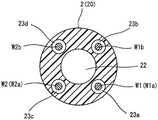
FIG. 2A is a sectional view taken along line IIa-IIa of FIG. 1.
Fig. 2B is a perspective view showing a main portion of the movable duct of fig. 1 in an enlarged manner.
Fig. 2C is a cross-sectional view of the distal end portion of the movable catheter of fig. 2B cut by a plane passing through the axial centers of the pair of lumen for filament.
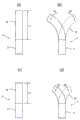
Fig. 3 is an enlarged view of the distal end portion of the movable duct of fig. 1, and is a view for explaining the operation of the deflecting portion.
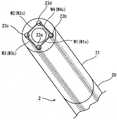
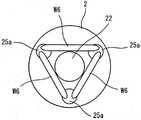
Fig. 4A is a perspective view showing a case where the number of wires inserted into the wire lumen of the movable catheter of fig. 2B is increased.
Fig. 4B is a sectional view of the distal end portion of the movable duct of fig. 4A cut along a plane orthogonal to the axial center thereof.
Fig. 4C is a sectional view of the distal end portion of the movable catheter of fig. 4A cut along a plane passing through the axial centers of the pair of lumen for filament.
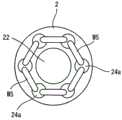
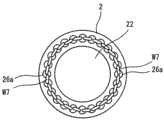
Fig. 5A is a view showing a modification of the movable duct of fig. 4A.
Fig. 5B is a view showing another modification of the movable duct of fig. 4A.
Fig. 5C is a view showing still another modification of the movable duct of fig. 4A.
Detailed Description
Hereinafter, embodiments of the present invention will be specifically described with reference to the drawings. The catheter sheath (movable sheath) as the movable catheter of the present embodiment is a catheter into which an electrode catheter for detecting electrocardiography, an ablation catheter for cauterizing an affected part, and the like are inserted and guided before the electrode catheter or the ablation catheter and the like are used, for example, in performing catheter ablation. Hereinafter, the catheter sheath will be described as an example of the movable catheter to which the present invention is applied, but the present invention can also be applied to an electrode catheter, an ablation catheter, a movable endoscope catheter for injecting an X-ray contrast agent or the like into a bile duct for examination of the bile duct, and other movable catheters.
Catheter ablation is a treatment method for treating cardiac arrhythmia, in which an ablation catheter having a high-frequency electrode at its tip is inserted through a blood vessel into a cardiac tissue that causes cardiac arrhythmia in the heart, and the cardiac tissue or its vicinity is cauterized at about 60 to 70 ℃ to cause coagulation necrosis, thereby blocking the cardiac arrhythmia circuit.
First, fig. 1 and fig. 2A to 2C are referred to. The catheter sheath (movable catheter) 1 is configured to roughly include a sheath (tube) 2, an operation unit 3, a grip portion 4, and a pair of wires (operation means) W1, W2.
Thesheath 2 is composed of a flexible hollow hose having a distal end inserted into the body and a proximal end disposed outside the body, and includes a sheath main body portion (first hose portion) 20 disposed on the proximal side and a deflecting portion (second hose portion) 21 disposed on the distal side. The sheathmain body portion 20 is configured to have high rigidity so that flexibility does not substantially change even if a compressive force is applied in a direction along the axial center (axial center direction). As the sheathmain body portion 20, a multi-layer hose including a braided layer made of, for example, a mesh-like stainless steel and a plurality of resin layers is used.
The proximal end ofdeflection portion 21 is integrally joined in continuous fashion to the distal end ofsheath body portion 20. The lumen of the deflectingportion 21 and the lumen of the sheathmain body portion 20 are continuously connected to each other, thereby constituting amain lumen 22. The deflectingportion 21 is formed of a porous hose which is compressed to be hard in accordance with the degree of a compressive force acting in the axial direction and is made soft by releasing the compressive force to return to its original shape. The flexibility of the porous hose can be controlled by adjusting the compressive force acting in the axial direction.
The material of thesheath body 20 is not particularly limited as long as it is flexible, and a thermoplastic resin or a thermoplastic elastomer is preferable, and for example, a polyamide elastomer such as a polyether block amide copolymer, a polyamide, a polyimide, a polyamideimide, polyethylene terephthalate, polyethylene, polypropylene, polyurethane, an ethylene-vinyl acetate copolymer, polyvinyl chloride, polytetrafluoroethylene, a tetrafluoroethylene-hexafluoropropylene copolymer, a tetrafluoroethylene-perfluoroalkyl vinyl ether copolymer, or the like is used.
The material of the porous hose constituting thedeflection unit 21 is not limited, and PTFE (polytetrafluoroethylene) is preferably used because of its excellent heat resistance, chemical resistance, weather resistance, water repellency, and the like. As the porous hose, a porous hose produced by subjecting a hose obtained by extrusion molding of PTFE to a stretching process in the axial direction can be used. By making PTFE porous, it is possible to obtain desired water resistance while maintaining air permeability. Further, by appropriately adjusting the stretching ratio (degree of stretching) at the time of stretching, the porosity can be adjusted, and the change in flexibility at the time of compression can be appropriately adjusted (controlled). Further, the air permeability can be changed by adjusting the porosity.
The operation portion 3 and the grip portion 4 attached to the proximal end side of thesheath 2 are formed with insertion holes through which portions of thesheath 2 on the proximal end side are inserted, and a sheath hub (sheath) 41a is attached to the proximal end of the grip portion 4.
Thesheath hub 41a has a lumen, and thesheath 2 in the grip portion 4 is attached to the proximal end side of thesheath hub 41a so that the lumen of thesheath hub 41a communicates with themain lumen 22 of thesheath 2. Further, a catheter insertion port having a hemostatic valve is formed on the distal end side of thesheath hub 41 a. When the catheter sheath 1 is used (at the time of treatment), the electrode catheter and the ablation catheter are inserted from the catheter insertion port of thesheath hub 41a and are guided to themain lumen 22 of thesheath 2, and the distal end portions thereof are guided to the myocardial tissue to be treated. A side syringe is formed on the side of thesheath hub 41a, and a three-way valve 41c is attached to the side syringe via ahose 41 b. For example, a syringe or the like is attached to the three-way valve 41c, and blood in the body can be sucked or a drug solution can be delivered into the body.
A distal end (the distal end of the deflection portion 21) of thesheath 2 is provided with a substantially cylindrical distalend protection member 29 made of resin and having a hemispherical distal end side. The distalend protection member 29 has an inner cavity having a diameter substantially the same as that of themain lumen 22 of thesheath 2, and is integrally joined (fixed) to the distal end portion of thesheath 2 by thermal welding or the like. However, the tipend protecting member 29 may be omitted.
In the tube wall of the sheath 2 (the sheathmain body portion 20 and the deflecting portion 21), 4 wire lumens (sub-lumens) 23a to 23d substantially parallel to themain lumen 22 are formed so as to surround themain lumen 22. Thewire lumens 23a to 23d are formed from the proximal end portion of the sheath 2 (proximal end portion of the sheath main body portion 20) to the distal end portion (distal end portion of the deflection portion 21). The lumen forfilament 23a to 23d are formed so as to be separated from each other at angular intervals (angular intervals) of substantially 90 ° outside themain lumen 22, with the central axis of thesheath 2 as the center.
A single wire W1 is inserted into thewire lumen 23a and thewire lumen 23b, and a single wire W2 is inserted into thewire lumen 23c and thewire lumen 23 d. In the present embodiment, the wires W1, W2 are formed of metal such as stainless steel, but the wires W1, W2 may be formed of other materials such as resin.
The wire W1 is disposed such that a substantially half portion W1a on one end side thereof is inserted into thewire lumen 23a, an intermediate portion W1c thereof is folded back on the distal end surface of the distalend protection member 29 of thesheath 2, a substantially half portion W1b on the other end side thereof is inserted into thewire lumen 23b, and both end portions (one end portion and the other end portion) thereof are positioned in the operation portion 3 on the proximal end side of thesheath 2. Similarly, the wire W2 is disposed such that a substantially half portion W2a on one end side thereof is inserted into thewire lumen 23c, the middle portion W2c is folded back on the distal end surface of the distalend protection member 29 of thesheath 2, a substantially half portion W2b on the other end side thereof is inserted into thewire lumen 23d, and both end portions (one end portion and the other end portion) thereof are positioned in the operation portion 3 on the proximal end side of thesheath 2.
Both ends of the wire W1 and both ends of the wire W2 are led out from the side hole provided in thesheath 2 inside the operation unit 3 provided on the proximal end side of thesheath 2, and are connected to the operation unit 3 (the rotary operation member 31), respectively. The operation portion 3 has a pair of projectinggripping portions rotational operation member 31, and is held by a holdingportion 42 provided on the distal end (distal end) side of the grip portion 4 via a screw-in knob member 5.
Therotational operation member 31 is held by the holdingportion 42 in such a manner that both the pair ofgripping portions rotational operation member 31 is urged by an urging means, not shown, to return to the original position.
In the neutral state shown in fig. 1, both the wires W1 and W2 are in a substantially tensionless state, and thedeflection portion 21 at the distal end of thesheath 2 is in a linearly extending state as shown in fig. 1 and 3 (a). At this time, since no compression force acts on the deflectingportion 21 in the axial direction, the deflectingportion 21 is not compressed, the dimension of the deflectingportion 21 in the axial direction is L1, and the deflectingportion 21 is in a relatively soft state depending on the properties of the porous hose constituting the deflectingportion 21.
When thegrip portions rotational operation member 31 are operated from the neutral state to rotate therotational operation member 31 in the direction of the arrow a1 in fig. 1, the wire W1 is pulled along with the rotation to loosen the wire W2, and thedeflection portion 21 at the tip end is deflected as shown by the arrow A3 in fig. 1 and fig. 3 (b).
In contrast, when thegrip portions rotational operation member 31 are operated to rotate therotational operation member 31 in the direction of arrow a2 in fig. 1, the wire W1 is loosened, the wire W2 is tightened, and thedeflection portion 21 at the tip deflects as indicated by arrow a4 in fig. 1 and 3 (b).
When the shape of thedeflection unit 21 is to be fixed in a state where thedeflection unit 21 is deflected, the knob member 5 is rotated clockwise and locked, and therotational operation member 31 is pressed by the holdingportion 42 to fix therotational operation member 31 at the current position, whereby the shape of thedeflection unit 21 is fixed. In a case where the fixation of the shape of the deflectingunit 21 is to be released (a case where the deflected state is to be adjusted), the knob member 5 is rotated counterclockwise and loosened, so that therotation operation member 31 is loosely pressed by the holdingunit 42, and therotation operation member 31 is rotatable. As a result, the shape of the deflectingunit 21 is released, and therotation operation member 31 is rotated by thegrip holding unit 32, whereby the deflecting state of the deflectingunit 21 can be adjusted.
Then, when both thegrip portions rotational operation member 31 slides toward the proximal end side by a predetermined amount. In this state, both the wires W1, W2 are stretched and tensioned substantially equally to the proximal side (at the same tension), and as a result, the force generated by the tensioned wires W1, W2 acts on the distal end of thedeflection portion 21. That is, since the proximal end of the deflectingunit 21 is substantially restricted (does not move to the proximal end side) by the distal end of thesheath body 20, a compressive force acts on the deflectingunit 21 in the axial direction by a force generated by the wires W1 and W2 and tightened to the proximal end side. Due to this compressive force, thedeflector 21 is compressed (shortened) in the direction along the axial center, and as shown in fig. 3 (c), the dimension of thedeflector 21 in the axial center direction becomes L2 smaller than L1, and thedeflector 21 becomes relatively hard depending on the properties of the porous hose constituting thedeflector 21.
When the pressing force on thegripping portions rotary operation member 31 can slide to the original position (neutral position) on the distal end side by the biasing force of the biasing means (not shown), and return to a relatively soft state. When the state is to be maintained in a state in which the deflectingunit 21 is made relatively hard, the knob member 5 is rotated clockwise and locked, and therotary operation member 31 is pressed by the holdingunit 42, whereby therotary operation member 31 is fixed at the current position. In a case where it is desired to cancel this state (in a case where it is desired to make the state soft or in a case where it is desired to adjust the deflected state), the knob member 5 is rotated counterclockwise and loosened, so that therotation operation member 31 is loosely pressed by the holdingportion 42, and therotation operation member 31 can return to the original position (neutral position).
If necessary, therotation operation member 31 is rotated in a state where therotation operation member 31 is slid toward the proximal end side to make the deflectingportion 21 hard, so that the deflecting portion can be deflected even in a compressed state as shown in fig. 3 (d). Further, after therotary operation member 31 is rotated at the neutral position (i.e., the deflectingunit 21 is in a soft state) to appropriately deflect the deflectingunit 21, therotary operation member 31 is slid toward the proximal end side, whereby the compression can be performed and the compression can be made hard as shown in fig. 3 (d). Further, if necessary, the flexibility of the deflectingunit 21 can be controlled and changed by appropriately adjusting the amount of sliding of therotational operation member 31 when sliding it from the neutral position to the proximal end side.
In the above-described embodiment, thesheath 2 is configured by the deflectingportion 21 including the sheathmain body portion 20 whose flexibility does not substantially change even if a compressive force is applied in the axial direction and the deflectingportion 21 continuously joined to the distal end of the sheathmain body portion 20, and the deflectingportion 21 is configured by a porous hose which is compressed to be hard in accordance with the degree of the compressive force acting in the axial direction and which is made soft by being restored to the original state by releasing the compressive force. Then, the compression force that compresses thedeflection unit 21 in the axial direction and the deflection force that deflects thedeflection unit 21 are made to act so as to be able to be released by the wires W1, W2 inserted into the plurality ofwire lumens 23a to 23d of thesheath 2.
Accordingly, when the wires W1 and W2 are set to the neutral state and the soft state is maintained without applying a compression force to thedeflection unit 21, thedeflection unit 21 can be deflected by pulling one of the wires W1 and W2 to the proximal end side, and thedeflection unit 21 is in the soft state at this time, so that excellent operability can be achieved. On the other hand, when the narrowed portion in the body lumen such as a bile duct is to be broken (penetrated), thedeflectable portion 21 may be bent or buckled in a soft state, and may be difficult to insert. In this case, by pulling both the wires W1 and W2 to the proximal end side with the same pulling force, the compression force can be applied to thedeflection unit 21 and the wire can be made hard. Therefore, the occurrence of bending or buckling in thedeflection portion 21 can be reduced, and the insertion property of the catheter can be improved.
In the above-described embodiment, since both the deflecting force for deflecting the deflectingunit 21 and the compression force for compressing the deflectingunit 21 are exerted by the pair of wires W1 and W2, the configuration can be simplified as compared with a case where, for example, a wire for exerting the deflecting force and a wire for exerting the compression force are separately provided by using different means. However, it is of course also possible to use different units for realizing the arrangement of the individual wires. For example, as means for applying the compressive force, a compression hose having an outer diameter slightly smaller than the inner diameter of themain lumen 22 may be slidably inserted into the inner lumen (main lumen 22) of the sheath 2 (sheathmain body portion 20 and deflecting portion 21), the distal end of the compression hose may be connected to the distal end of the deflectingportion 21, and the compression hose may be pulled toward the proximal end side with respect to thesheath 2 to apply the compressive force to the deflectingportion 21. In this case, the inner cavity of the compression hose functions as a main lumen.
In the above embodiment, substantially a half W1a of the wire W1 on the one end side is inserted into thewire lumen 23a, substantially a half W1b on the other end side is inserted into thewire lumen 23b, substantially a half W2a of the wire W2 on the one end side is inserted into thewire lumen 23c, and substantially a half W2b on the other end side is inserted into thewire lumen 23 d. Since the wires W1, W2 are folded back at the distal end portion of thedeflection portion 21, respectively, it is not necessary to provide a member for fixing the wires such as a distal end head or a pull ring, and the number of components can be reduced, and it is not necessary to perform an attaching operation of attaching the member for fixing the wires to the guide hose or a connecting operation of the wires and the member, and therefore, the number of operation steps at the time of manufacturing the same can be reduced. Further, since it is not necessary to secure a region where a member for fixing a wire is provided within the structure of the catheter sheath 1, the structural restriction of the catheter sheath 1 can be reduced, and for example, the opening area of the distal end (tip) of the sheath 2 (main lumen 22) can be increased.
Further, by tightening both the substantially half portion W1a of the wire W1 inserted into thewire lumen 23a and the substantially half portion W1b inserted into thewire lumen 23b, a deflecting force for deflecting the deflectingunit 21 can be exerted. Therefore, the force can be applied in a wide range in the circumferential direction of thesheath 2 in accordance with the interval (angular interval) between the lumen forwire 23a and the lumen forwire 23 b. The same applies to the wire W2. As a result, the force applied to the wire becomes smaller as compared with the case where the deflecting operation is performed by pulling up one wire inserted in a single lumen without being folded back, and therefore the possibility of breakage of the wire accompanying the deflecting operation becomes smaller. Further, the wobbling of the distal end portion when deflecting the deflectingportion 21 can be reduced, and stable deflection can be achieved. For the same reason, the compressive force can be stably applied to the deflectingunit 21.
However, it is needless to say that the following structure may be adopted: thefilament lumens 23a to 23d are respectively inserted with 1 filament, that is, four filaments are provided, and the distal ends of the filaments are respectively connected to the distal ends of thedeflection units 21. In this case, the number of the lumen for the wire and the number of the wire may be three, or five or more, respectively.
In the above-described embodiment, two wires, i.e., the wire W1 inserted into thewire lumen 23a and thewire lumen 23b and the wire W2 inserted into the wire lumen 23C and thewire lumen 23d, are used, but as shown in fig. 4A to 4C, a configuration may be adopted in which four wires are used by adding the wires W3 and the wires W4.
That is, in the wire W3, a substantially half portion W3a on one end side thereof is inserted into thewire lumen 23a, an intermediate portion W3c thereof is folded back on the distal end surface of the distalend protection member 29 of thesheath 2, and a substantially half portion W3b on the other end side thereof is inserted into thewire lumen 23 c. In the wire W4, a substantially half portion W4a on one end side thereof is inserted into thewire lumen 23b, an intermediate portion W4c thereof is folded back on the distal end surface of the distalend protection member 29 of thesheath 2, and a substantially half portion W4b on the other end side thereof is inserted into thewire lumen 23 d. With such a configuration, one wire among the wires W1 to W4 can be appropriately selected and tensioned, and can be deflected in 4 directions. Further, by appropriately selecting a combination of 2 adjacent wires from the wires W1 to W4, the balance of the forces for pulling the wires is adjusted, and thedeflection unit 21 can be deflected in any direction of 360 °. Further, thedeflection portion 21 can be made hard by uniformly (with the same tension) pulling all the wires W1 to W4, or the wires W1 and W2 or the wires W3 and W4. Further, the configuration of the operation unit 3 needs to be changed as appropriate in accordance with the increase in the wires W3 and W4, and for example, a rotary operation member similar to therotary operation member 31 needs to be added to the operation unit 3.
In the example shown in fig. 4A to 4C, the case where fourwire lumens 23a to 23d are provided and four wires W1 to W4 are provided has been described, but for example, as shown in fig. 5A to 5C, the number of wire lumens can be increased or decreased, and accordingly, the number of wires can be increased or decreased.
That is, in fig. 5A, sixwire lumens 24a are provided at angular intervals of 60 °, and six wires W5 are provided. Accordingly, when the yarns W5 are pulled tight one by one, thedeflection unit 21 can be deflected in six directions, and thedeflection unit 21 can be deflected in any direction of 360 ° by adjusting the balance of the forces pulling the yarns by appropriately selecting the combination of two adjacent yarns W5. In fig. 5B, threewire lumens 25a are provided at angular intervals of 120 °, and three wires W6 are provided. Accordingly, when the yarns W6 are pulled tight one by one, thedeflection unit 21 can be deflected in three directions, and thedeflection unit 21 can be deflected in any direction of 360 ° by adjusting the balance of the forces pulling the yarns by appropriately selecting the combination of two adjacent yarns W6. In fig. 5C, 24wire lumens 26a are provided at an angular interval of 15 °, and 24 wires W7 are provided. Thus, when the wires W7 are pulled one by one, thedeflection unit 21 can be deflected in 24 directions. These are examples as long as the number of lumen for the wire is three or more, and the number of the wire is two or more.
In the example shown in fig. 5A to 5C, the number of lumens for wires coincides with the number of wires, but they may be different, for example, the number of wires may be made smaller than the number of lumens for wires. In the example shown in fig. 5A to 5C, both end portions of the filament are inserted into a pair of adjacent filament lumens, but for example, a pair of filament lumens may be intermittently selected and both end portions of the filament may be inserted into the filament lumens.
The embodiments described above are described to facilitate understanding of the present invention, and are not described to limit the present invention. Therefore, each element disclosed in the above embodiments is intended to include all design changes and equivalents within the technical scope of the present invention.
Description of the reference numerals
1: conduit sheath (Movable conduit)
2: sheath (Flexible pipe)
20: sheath main body part (first hose part)
21: deflection part (second hose part)
22: main lumen
23a to 23 d: lumen for silk thread
29: tip protection member
3: operation part
31: rotary operating member
32: gripping part
4: handle part
42: holding part
5: knob component
W1-W7: silk thread (operation unit)
Claims (3)
1. A movable catheter having a flexible tube with a distal end for insertion into the body and a proximal end for deployment outside the body,
the hose has: a first hose portion having flexibility that does not substantially change even if a compressive force is applied in an axial direction; and a second hose section composed of a porous hose which is joined to the distal end of the first hose section so as to be continuous thereto, the porous hose being compressed to be hard in accordance with the degree of a compressive force acting in the axial direction and being soft by releasing the compressive force from its original state,
the movable duct has an operation unit that is capable of acting in a releasable manner on a compression force for compressing the second hose portion in the axial direction and a deflection force for deflecting the second hose portion.
2. The movable duct of claim 1,
the tube has at least three wire lumens provided in a wall of the tube so as to be separated from each other from a proximal end portion to a distal end portion of the tube,
the operation unit includes at least two wires, a substantially half portion of one end portion side of the wire is inserted into one wire lumen, a middle portion of the wire is folded back at a distal end portion of the second hose portion, a substantially half portion of the other end portion side of the wire is inserted into the other wire lumen, and one end portion and the other end portion of the wire reach a proximal end of the first hose portion.
3. The movable duct of claim 1,
the tube has at least three wire lumens provided in a wall of the tube so as to be separated from each other from a proximal end portion to a distal end portion of the tube,
the operation unit has at least three wires, the distal ends of which are connected to the distal end portion of the second hose portion, the wires are inserted into one of the wire lumens, and the proximal ends of the wires reach the proximal end of the first hose portion.
Priority Applications (1)
| Application Number | Priority Date | Filing Date | Title |
|---|---|---|---|
| CN202310978521.3ACN116785567A (en) | 2019-03-22 | 2020-03-02 | Movable catheter |
Applications Claiming Priority (3)
| Application Number | Priority Date | Filing Date | Title |
|---|---|---|---|
| JP2019-055397 | 2019-03-22 | ||
| JP2019055397 | 2019-03-22 | ||
| PCT/JP2020/008720WO2020195582A1 (en) | 2019-03-22 | 2020-03-02 | Steerable catheter |
Related Child Applications (1)
| Application Number | Title | Priority Date | Filing Date |
|---|---|---|---|
| CN202310978521.3ADivisionCN116785567A (en) | 2019-03-22 | 2020-03-02 | Movable catheter |
Publications (2)
| Publication Number | Publication Date |
|---|---|
| CN113543832Atrue CN113543832A (en) | 2021-10-22 |
| CN113543832B CN113543832B (en) | 2023-08-22 |
Family
ID=72608605
Family Applications (2)
| Application Number | Title | Priority Date | Filing Date |
|---|---|---|---|
| CN202310978521.3APendingCN116785567A (en) | 2019-03-22 | 2020-03-02 | Movable catheter |
| CN202080016125.7AActiveCN113543832B (en) | 2019-03-22 | 2020-03-02 | Movable catheter |
Family Applications Before (1)
| Application Number | Title | Priority Date | Filing Date |
|---|---|---|---|
| CN202310978521.3APendingCN116785567A (en) | 2019-03-22 | 2020-03-02 | Movable catheter |
Country Status (6)
| Country | Link |
|---|---|
| US (1) | US20220152357A1 (en) |
| EP (2) | EP3943139B1 (en) |
| JP (2) | JP7523074B2 (en) |
| KR (1) | KR20210143760A (en) |
| CN (2) | CN116785567A (en) |
| WO (1) | WO2020195582A1 (en) |
Families Citing this family (3)
| Publication number | Priority date | Publication date | Assignee | Title |
|---|---|---|---|---|
| US12194251B2 (en)* | 2018-05-01 | 2025-01-14 | Magellan Biomedical Inc. | System and method for device steering, tracking, and navigation of devices for interventional procedures |
| JP2021036171A (en)* | 2019-08-23 | 2021-03-04 | 日星電気株式会社 | tube |
| WO2024203788A1 (en)* | 2023-03-31 | 2024-10-03 | 日本ゼオン株式会社 | Stent delivery device |
Citations (5)
| Publication number | Priority date | Publication date | Assignee | Title |
|---|---|---|---|---|
| US4280500A (en)* | 1978-03-31 | 1981-07-28 | Kazuaki Ono | Tubular flexible medical instrument |
| US20100280449A1 (en)* | 2009-04-29 | 2010-11-04 | Hansen Medical, Inc. | Flexible and steerable elongate instruments with shape control and support elements |
| WO2012098788A1 (en)* | 2011-01-19 | 2012-07-26 | 日本ライフライン株式会社 | Catheter with bendable leading end |
| CN107148289A (en)* | 2014-09-15 | 2017-09-08 | 业聚医疗股份有限公司 | Vascular Re-entry Catheter |
| WO2017158069A1 (en)* | 2016-03-17 | 2017-09-21 | RAMSTEDT, Madeleine | A catheter assembly |
Family Cites Families (15)
| Publication number | Priority date | Publication date | Assignee | Title |
|---|---|---|---|---|
| US4998916A (en)* | 1989-01-09 | 1991-03-12 | Hammerslag Julius G | Steerable medical device |
| JP3061461B2 (en)* | 1991-10-25 | 2000-07-10 | オリンパス光学工業株式会社 | Tubular insert |
| JP3845147B2 (en)* | 1996-07-25 | 2006-11-15 | オリンパス株式会社 | Flexible tube |
| US20050010095A1 (en)* | 1999-04-05 | 2005-01-13 | Medtronic, Inc. | Multi-purpose catheter apparatus and method of use |
| US6756094B1 (en)* | 2000-02-28 | 2004-06-29 | Scimed Life Systems, Inc. | Balloon structure with PTFE component |
| JP2002272675A (en) | 2001-03-16 | 2002-09-24 | Olympus Optical Co Ltd | Catheter |
| US7623899B2 (en)* | 2005-09-16 | 2009-11-24 | Biosense Webster, Inc. | Catheter with flexible pre-shaped tip section |
| US9572953B2 (en)* | 2010-12-30 | 2017-02-21 | St. Jude Medical, Atrial Fibrillation Division, Inc. | Device having an electroformed pleated region and method of its manufacture |
| US9028444B2 (en)* | 2011-04-15 | 2015-05-12 | W. L. Gore & Associates, Inc. | Pivoting ring seal |
| EP2903569B1 (en)* | 2012-10-01 | 2020-12-16 | QMax, LLC | Helical balloon catheter |
| JP2014188039A (en) | 2013-03-26 | 2014-10-06 | Nippon Zeon Co Ltd | Steerable catheter |
| US10376673B2 (en)* | 2015-06-19 | 2019-08-13 | Evalve, Inc. | Catheter guiding system and methods |
| EP3181176A1 (en)* | 2015-12-14 | 2017-06-21 | Aeon Scientific AG | Magnetically guided medical device |
| US11826524B2 (en)* | 2017-02-07 | 2023-11-28 | Qmax, Llc | Deflectable catheter with compound curve articulation and materials for the same |
| KR101906945B1 (en)* | 2017-03-21 | 2018-10-11 | 계명대학교 산학협력단 | An end-angle-controlled catheter device using four guide lines in four directions of up and down and left and right directions and a method of using the same |
- 2020
- 2020-03-02EPEP20779139.3Apatent/EP3943139B1/enactiveActive
- 2020-03-02EPEP24171078.9Apatent/EP4378515B1/enactiveActive
- 2020-03-02JPJP2021508885Apatent/JP7523074B2/enactiveActive
- 2020-03-02WOPCT/JP2020/008720patent/WO2020195582A1/ennot_activeCeased
- 2020-03-02CNCN202310978521.3Apatent/CN116785567A/enactivePending
- 2020-03-02CNCN202080016125.7Apatent/CN113543832B/enactiveActive
- 2020-03-02USUS17/593,619patent/US20220152357A1/enactivePending
- 2020-03-02KRKR1020217029649Apatent/KR20210143760A/enactivePending
- 2024
- 2024-07-04JPJP2024108115Apatent/JP2024121015A/enactivePending
Patent Citations (5)
| Publication number | Priority date | Publication date | Assignee | Title |
|---|---|---|---|---|
| US4280500A (en)* | 1978-03-31 | 1981-07-28 | Kazuaki Ono | Tubular flexible medical instrument |
| US20100280449A1 (en)* | 2009-04-29 | 2010-11-04 | Hansen Medical, Inc. | Flexible and steerable elongate instruments with shape control and support elements |
| WO2012098788A1 (en)* | 2011-01-19 | 2012-07-26 | 日本ライフライン株式会社 | Catheter with bendable leading end |
| CN107148289A (en)* | 2014-09-15 | 2017-09-08 | 业聚医疗股份有限公司 | Vascular Re-entry Catheter |
| WO2017158069A1 (en)* | 2016-03-17 | 2017-09-21 | RAMSTEDT, Madeleine | A catheter assembly |
Also Published As
| Publication number | Publication date |
|---|---|
| JPWO2020195582A1 (en) | 2020-10-01 |
| CN116785567A (en) | 2023-09-22 |
| EP3943139B1 (en) | 2024-05-08 |
| EP4378515B1 (en) | 2025-07-02 |
| EP3943139A4 (en) | 2022-12-28 |
| KR20210143760A (en) | 2021-11-29 |
| EP4378515A3 (en) | 2024-08-14 |
| JP2024121015A (en) | 2024-09-05 |
| WO2020195582A1 (en) | 2020-10-01 |
| CN113543832B (en) | 2023-08-22 |
| EP3943139A1 (en) | 2022-01-26 |
| JP7523074B2 (en) | 2024-07-26 |
| EP4378515A2 (en) | 2024-06-05 |
| US20220152357A1 (en) | 2022-05-19 |
Similar Documents
| Publication | Publication Date | Title |
|---|---|---|
| JP7664578B2 (en) | Steerable Catheter | |
| JP4121518B2 (en) | Medical equipment | |
| EP3120750B1 (en) | Direct drive endoscopy systems and methods | |
| JP5318783B2 (en) | Endoscope device | |
| US6451014B1 (en) | Electrode device for microwave operation | |
| JP2024121015A (en) | Steerable Catheter | |
| US7963963B2 (en) | Electrosurgical hemostat | |
| JP4964660B2 (en) | Triple-bending sphincterotome | |
| US20210015349A1 (en) | Medical device | |
| JP6316427B2 (en) | Guide catheter with stabilization mechanism and method for inserting guide catheter | |
| JP7523073B2 (en) | Steerable Catheter | |
| JP7663113B2 (en) | Nodal ring structure and steerable catheter | |
| US20230029648A1 (en) | Planar end effector with irrigation | |
| CN116764068B (en) | Adjustable curved catheter for interventional type | |
| JP2020124394A (en) | Tip movable sheath | |
| US20240358432A1 (en) | Medical devices and related methods for delivering energy and/or fluid | |
| JP2018166953A (en) | Medical tube parts and manufacturing method thereof | |
| WO2023007324A1 (en) | Planar end effector with irrigation | |
| CN111466857A (en) | Tubes and endoscopes for endoscopes |
Legal Events
| Date | Code | Title | Description |
|---|---|---|---|
| PB01 | Publication | ||
| PB01 | Publication | ||
| SE01 | Entry into force of request for substantive examination | ||
| SE01 | Entry into force of request for substantive examination | ||
| GR01 | Patent grant | ||
| GR01 | Patent grant |