CN113015545A - Stents for implantable medical devices and methods of use thereof - Google Patents
Stents for implantable medical devices and methods of use thereofDownload PDFInfo
- Publication number
- CN113015545A CN113015545ACN201980074670.9ACN201980074670ACN113015545ACN 113015545 ACN113015545 ACN 113015545ACN 201980074670 ACN201980074670 ACN 201980074670ACN 113015545 ACN113015545 ACN 113015545A
- Authority
- CN
- China
- Prior art keywords
- scaffold
- construct
- implant
- stent
- poly
- Prior art date
- Legal status (The legal status is an assumption and is not a legal conclusion. Google has not performed a legal analysis and makes no representation as to the accuracy of the status listed.)
- Pending
Links
Images




Classifications
- A—HUMAN NECESSITIES
- A61—MEDICAL OR VETERINARY SCIENCE; HYGIENE
- A61L—METHODS OR APPARATUS FOR STERILISING MATERIALS OR OBJECTS IN GENERAL; DISINFECTION, STERILISATION OR DEODORISATION OF AIR; CHEMICAL ASPECTS OF BANDAGES, DRESSINGS, ABSORBENT PADS OR SURGICAL ARTICLES; MATERIALS FOR BANDAGES, DRESSINGS, ABSORBENT PADS OR SURGICAL ARTICLES
- A61L27/00—Materials for grafts or prostheses or for coating grafts or prostheses
- A61L27/50—Materials characterised by their function or physical properties, e.g. injectable or lubricating compositions, shape-memory materials, surface modified materials
- A61L27/56—Porous materials, e.g. foams or sponges
- A—HUMAN NECESSITIES
- A61—MEDICAL OR VETERINARY SCIENCE; HYGIENE
- A61F—FILTERS IMPLANTABLE INTO BLOOD VESSELS; PROSTHESES; DEVICES PROVIDING PATENCY TO, OR PREVENTING COLLAPSING OF, TUBULAR STRUCTURES OF THE BODY, e.g. STENTS; ORTHOPAEDIC, NURSING OR CONTRACEPTIVE DEVICES; FOMENTATION; TREATMENT OR PROTECTION OF EYES OR EARS; BANDAGES, DRESSINGS OR ABSORBENT PADS; FIRST-AID KITS
- A61F2/00—Filters implantable into blood vessels; Prostheses, i.e. artificial substitutes or replacements for parts of the body; Appliances for connecting them with the body; Devices providing patency to, or preventing collapsing of, tubular structures of the body, e.g. stents
- A61F2/0059—Cosmetic or alloplastic implants
- A—HUMAN NECESSITIES
- A61—MEDICAL OR VETERINARY SCIENCE; HYGIENE
- A61F—FILTERS IMPLANTABLE INTO BLOOD VESSELS; PROSTHESES; DEVICES PROVIDING PATENCY TO, OR PREVENTING COLLAPSING OF, TUBULAR STRUCTURES OF THE BODY, e.g. STENTS; ORTHOPAEDIC, NURSING OR CONTRACEPTIVE DEVICES; FOMENTATION; TREATMENT OR PROTECTION OF EYES OR EARS; BANDAGES, DRESSINGS OR ABSORBENT PADS; FIRST-AID KITS
- A61F2/00—Filters implantable into blood vessels; Prostheses, i.e. artificial substitutes or replacements for parts of the body; Appliances for connecting them with the body; Devices providing patency to, or preventing collapsing of, tubular structures of the body, e.g. stents
- A61F2/0077—Special surfaces of prostheses, e.g. for improving ingrowth
- A—HUMAN NECESSITIES
- A61—MEDICAL OR VETERINARY SCIENCE; HYGIENE
- A61F—FILTERS IMPLANTABLE INTO BLOOD VESSELS; PROSTHESES; DEVICES PROVIDING PATENCY TO, OR PREVENTING COLLAPSING OF, TUBULAR STRUCTURES OF THE BODY, e.g. STENTS; ORTHOPAEDIC, NURSING OR CONTRACEPTIVE DEVICES; FOMENTATION; TREATMENT OR PROTECTION OF EYES OR EARS; BANDAGES, DRESSINGS OR ABSORBENT PADS; FIRST-AID KITS
- A61F2/00—Filters implantable into blood vessels; Prostheses, i.e. artificial substitutes or replacements for parts of the body; Appliances for connecting them with the body; Devices providing patency to, or preventing collapsing of, tubular structures of the body, e.g. stents
- A61F2/02—Prostheses implantable into the body
- A61F2/12—Mammary prostheses
- A—HUMAN NECESSITIES
- A61—MEDICAL OR VETERINARY SCIENCE; HYGIENE
- A61L—METHODS OR APPARATUS FOR STERILISING MATERIALS OR OBJECTS IN GENERAL; DISINFECTION, STERILISATION OR DEODORISATION OF AIR; CHEMICAL ASPECTS OF BANDAGES, DRESSINGS, ABSORBENT PADS OR SURGICAL ARTICLES; MATERIALS FOR BANDAGES, DRESSINGS, ABSORBENT PADS OR SURGICAL ARTICLES
- A61L27/00—Materials for grafts or prostheses or for coating grafts or prostheses
- A61L27/14—Macromolecular materials
- A61L27/18—Macromolecular materials obtained otherwise than by reactions only involving carbon-to-carbon unsaturated bonds
- A—HUMAN NECESSITIES
- A61—MEDICAL OR VETERINARY SCIENCE; HYGIENE
- A61L—METHODS OR APPARATUS FOR STERILISING MATERIALS OR OBJECTS IN GENERAL; DISINFECTION, STERILISATION OR DEODORISATION OF AIR; CHEMICAL ASPECTS OF BANDAGES, DRESSINGS, ABSORBENT PADS OR SURGICAL ARTICLES; MATERIALS FOR BANDAGES, DRESSINGS, ABSORBENT PADS OR SURGICAL ARTICLES
- A61L27/00—Materials for grafts or prostheses or for coating grafts or prostheses
- A61L27/14—Macromolecular materials
- A61L27/20—Polysaccharides
- A—HUMAN NECESSITIES
- A61—MEDICAL OR VETERINARY SCIENCE; HYGIENE
- A61L—METHODS OR APPARATUS FOR STERILISING MATERIALS OR OBJECTS IN GENERAL; DISINFECTION, STERILISATION OR DEODORISATION OF AIR; CHEMICAL ASPECTS OF BANDAGES, DRESSINGS, ABSORBENT PADS OR SURGICAL ARTICLES; MATERIALS FOR BANDAGES, DRESSINGS, ABSORBENT PADS OR SURGICAL ARTICLES
- A61L27/00—Materials for grafts or prostheses or for coating grafts or prostheses
- A61L27/14—Macromolecular materials
- A61L27/22—Polypeptides or derivatives thereof, e.g. degradation products
- A61L27/222—Gelatin
- A—HUMAN NECESSITIES
- A61—MEDICAL OR VETERINARY SCIENCE; HYGIENE
- A61L—METHODS OR APPARATUS FOR STERILISING MATERIALS OR OBJECTS IN GENERAL; DISINFECTION, STERILISATION OR DEODORISATION OF AIR; CHEMICAL ASPECTS OF BANDAGES, DRESSINGS, ABSORBENT PADS OR SURGICAL ARTICLES; MATERIALS FOR BANDAGES, DRESSINGS, ABSORBENT PADS OR SURGICAL ARTICLES
- A61L27/00—Materials for grafts or prostheses or for coating grafts or prostheses
- A61L27/14—Macromolecular materials
- A61L27/22—Polypeptides or derivatives thereof, e.g. degradation products
- A61L27/225—Fibrin; Fibrinogen
- A—HUMAN NECESSITIES
- A61—MEDICAL OR VETERINARY SCIENCE; HYGIENE
- A61L—METHODS OR APPARATUS FOR STERILISING MATERIALS OR OBJECTS IN GENERAL; DISINFECTION, STERILISATION OR DEODORISATION OF AIR; CHEMICAL ASPECTS OF BANDAGES, DRESSINGS, ABSORBENT PADS OR SURGICAL ARTICLES; MATERIALS FOR BANDAGES, DRESSINGS, ABSORBENT PADS OR SURGICAL ARTICLES
- A61L27/00—Materials for grafts or prostheses or for coating grafts or prostheses
- A61L27/14—Macromolecular materials
- A61L27/22—Polypeptides or derivatives thereof, e.g. degradation products
- A61L27/24—Collagen
- A—HUMAN NECESSITIES
- A61—MEDICAL OR VETERINARY SCIENCE; HYGIENE
- A61L—METHODS OR APPARATUS FOR STERILISING MATERIALS OR OBJECTS IN GENERAL; DISINFECTION, STERILISATION OR DEODORISATION OF AIR; CHEMICAL ASPECTS OF BANDAGES, DRESSINGS, ABSORBENT PADS OR SURGICAL ARTICLES; MATERIALS FOR BANDAGES, DRESSINGS, ABSORBENT PADS OR SURGICAL ARTICLES
- A61L27/00—Materials for grafts or prostheses or for coating grafts or prostheses
- A61L27/36—Materials for grafts or prostheses or for coating grafts or prostheses containing ingredients of undetermined constitution or reaction products thereof, e.g. transplant tissue, natural bone, extracellular matrix
- A61L27/3604—Materials for grafts or prostheses or for coating grafts or prostheses containing ingredients of undetermined constitution or reaction products thereof, e.g. transplant tissue, natural bone, extracellular matrix characterised by the human or animal origin of the biological material, e.g. hair, fascia, fish scales, silk, shellac, pericardium, pleura, renal tissue, amniotic membrane, parenchymal tissue, fetal tissue, muscle tissue, fat tissue, enamel
- A—HUMAN NECESSITIES
- A61—MEDICAL OR VETERINARY SCIENCE; HYGIENE
- A61L—METHODS OR APPARATUS FOR STERILISING MATERIALS OR OBJECTS IN GENERAL; DISINFECTION, STERILISATION OR DEODORISATION OF AIR; CHEMICAL ASPECTS OF BANDAGES, DRESSINGS, ABSORBENT PADS OR SURGICAL ARTICLES; MATERIALS FOR BANDAGES, DRESSINGS, ABSORBENT PADS OR SURGICAL ARTICLES
- A61L27/00—Materials for grafts or prostheses or for coating grafts or prostheses
- A61L27/50—Materials characterised by their function or physical properties, e.g. injectable or lubricating compositions, shape-memory materials, surface modified materials
- A61L27/52—Hydrogels or hydrocolloids
- A—HUMAN NECESSITIES
- A61—MEDICAL OR VETERINARY SCIENCE; HYGIENE
- A61L—METHODS OR APPARATUS FOR STERILISING MATERIALS OR OBJECTS IN GENERAL; DISINFECTION, STERILISATION OR DEODORISATION OF AIR; CHEMICAL ASPECTS OF BANDAGES, DRESSINGS, ABSORBENT PADS OR SURGICAL ARTICLES; MATERIALS FOR BANDAGES, DRESSINGS, ABSORBENT PADS OR SURGICAL ARTICLES
- A61L27/00—Materials for grafts or prostheses or for coating grafts or prostheses
- A61L27/50—Materials characterised by their function or physical properties, e.g. injectable or lubricating compositions, shape-memory materials, surface modified materials
- A61L27/58—Materials at least partially resorbable by the body
- B—PERFORMING OPERATIONS; TRANSPORTING
- B33—ADDITIVE MANUFACTURING TECHNOLOGY
- B33Y—ADDITIVE MANUFACTURING, i.e. MANUFACTURING OF THREE-DIMENSIONAL [3-D] OBJECTS BY ADDITIVE DEPOSITION, ADDITIVE AGGLOMERATION OR ADDITIVE LAYERING, e.g. BY 3-D PRINTING, STEREOLITHOGRAPHY OR SELECTIVE LASER SINTERING
- B33Y80/00—Products made by additive manufacturing
- C—CHEMISTRY; METALLURGY
- C08—ORGANIC MACROMOLECULAR COMPOUNDS; THEIR PREPARATION OR CHEMICAL WORKING-UP; COMPOSITIONS BASED THEREON
- C08L—COMPOSITIONS OF MACROMOLECULAR COMPOUNDS
- C08L5/00—Compositions of polysaccharides or of their derivatives not provided for in groups C08L1/00 or C08L3/00
- C08L5/04—Alginic acid; Derivatives thereof
- C—CHEMISTRY; METALLURGY
- C08—ORGANIC MACROMOLECULAR COMPOUNDS; THEIR PREPARATION OR CHEMICAL WORKING-UP; COMPOSITIONS BASED THEREON
- C08L—COMPOSITIONS OF MACROMOLECULAR COMPOUNDS
- C08L5/00—Compositions of polysaccharides or of their derivatives not provided for in groups C08L1/00 or C08L3/00
- C08L5/08—Chitin; Chondroitin sulfate; Hyaluronic acid; Derivatives thereof
- C—CHEMISTRY; METALLURGY
- C08—ORGANIC MACROMOLECULAR COMPOUNDS; THEIR PREPARATION OR CHEMICAL WORKING-UP; COMPOSITIONS BASED THEREON
- C08L—COMPOSITIONS OF MACROMOLECULAR COMPOUNDS
- C08L67/00—Compositions of polyesters obtained by reactions forming a carboxylic ester link in the main chain; Compositions of derivatives of such polymers
- C08L67/04—Polyesters derived from hydroxycarboxylic acids, e.g. lactones
- C—CHEMISTRY; METALLURGY
- C08—ORGANIC MACROMOLECULAR COMPOUNDS; THEIR PREPARATION OR CHEMICAL WORKING-UP; COMPOSITIONS BASED THEREON
- C08L—COMPOSITIONS OF MACROMOLECULAR COMPOUNDS
- C08L75/00—Compositions of polyureas or polyurethanes; Compositions of derivatives of such polymers
- C08L75/04—Polyurethanes
- A—HUMAN NECESSITIES
- A61—MEDICAL OR VETERINARY SCIENCE; HYGIENE
- A61F—FILTERS IMPLANTABLE INTO BLOOD VESSELS; PROSTHESES; DEVICES PROVIDING PATENCY TO, OR PREVENTING COLLAPSING OF, TUBULAR STRUCTURES OF THE BODY, e.g. STENTS; ORTHOPAEDIC, NURSING OR CONTRACEPTIVE DEVICES; FOMENTATION; TREATMENT OR PROTECTION OF EYES OR EARS; BANDAGES, DRESSINGS OR ABSORBENT PADS; FIRST-AID KITS
- A61F2210/00—Particular material properties of prostheses classified in groups A61F2/00 - A61F2/26 or A61F2/82 or A61F9/00 or A61F11/00 or subgroups thereof
- A61F2210/0004—Particular material properties of prostheses classified in groups A61F2/00 - A61F2/26 or A61F2/82 or A61F9/00 or A61F11/00 or subgroups thereof bioabsorbable
- A—HUMAN NECESSITIES
- A61—MEDICAL OR VETERINARY SCIENCE; HYGIENE
- A61F—FILTERS IMPLANTABLE INTO BLOOD VESSELS; PROSTHESES; DEVICES PROVIDING PATENCY TO, OR PREVENTING COLLAPSING OF, TUBULAR STRUCTURES OF THE BODY, e.g. STENTS; ORTHOPAEDIC, NURSING OR CONTRACEPTIVE DEVICES; FOMENTATION; TREATMENT OR PROTECTION OF EYES OR EARS; BANDAGES, DRESSINGS OR ABSORBENT PADS; FIRST-AID KITS
- A61F2210/00—Particular material properties of prostheses classified in groups A61F2/00 - A61F2/26 or A61F2/82 or A61F9/00 or A61F11/00 or subgroups thereof
- A61F2210/0076—Particular material properties of prostheses classified in groups A61F2/00 - A61F2/26 or A61F2/82 or A61F9/00 or A61F11/00 or subgroups thereof multilayered, e.g. laminated structures
- A—HUMAN NECESSITIES
- A61—MEDICAL OR VETERINARY SCIENCE; HYGIENE
- A61F—FILTERS IMPLANTABLE INTO BLOOD VESSELS; PROSTHESES; DEVICES PROVIDING PATENCY TO, OR PREVENTING COLLAPSING OF, TUBULAR STRUCTURES OF THE BODY, e.g. STENTS; ORTHOPAEDIC, NURSING OR CONTRACEPTIVE DEVICES; FOMENTATION; TREATMENT OR PROTECTION OF EYES OR EARS; BANDAGES, DRESSINGS OR ABSORBENT PADS; FIRST-AID KITS
- A61F2210/00—Particular material properties of prostheses classified in groups A61F2/00 - A61F2/26 or A61F2/82 or A61F9/00 or A61F11/00 or subgroups thereof
- A61F2210/009—Particular material properties of prostheses classified in groups A61F2/00 - A61F2/26 or A61F2/82 or A61F9/00 or A61F11/00 or subgroups thereof magnetic
- A—HUMAN NECESSITIES
- A61—MEDICAL OR VETERINARY SCIENCE; HYGIENE
- A61F—FILTERS IMPLANTABLE INTO BLOOD VESSELS; PROSTHESES; DEVICES PROVIDING PATENCY TO, OR PREVENTING COLLAPSING OF, TUBULAR STRUCTURES OF THE BODY, e.g. STENTS; ORTHOPAEDIC, NURSING OR CONTRACEPTIVE DEVICES; FOMENTATION; TREATMENT OR PROTECTION OF EYES OR EARS; BANDAGES, DRESSINGS OR ABSORBENT PADS; FIRST-AID KITS
- A61F2220/00—Fixations or connections for prostheses classified in groups A61F2/00 - A61F2/26 or A61F2/82 or A61F9/00 or A61F11/00 or subgroups thereof
- A61F2220/0025—Connections or couplings between prosthetic parts, e.g. between modular parts; Connecting elements
- A61F2220/005—Connections or couplings between prosthetic parts, e.g. between modular parts; Connecting elements using adhesives
- A—HUMAN NECESSITIES
- A61—MEDICAL OR VETERINARY SCIENCE; HYGIENE
- A61F—FILTERS IMPLANTABLE INTO BLOOD VESSELS; PROSTHESES; DEVICES PROVIDING PATENCY TO, OR PREVENTING COLLAPSING OF, TUBULAR STRUCTURES OF THE BODY, e.g. STENTS; ORTHOPAEDIC, NURSING OR CONTRACEPTIVE DEVICES; FOMENTATION; TREATMENT OR PROTECTION OF EYES OR EARS; BANDAGES, DRESSINGS OR ABSORBENT PADS; FIRST-AID KITS
- A61F2220/00—Fixations or connections for prostheses classified in groups A61F2/00 - A61F2/26 or A61F2/82 or A61F9/00 or A61F11/00 or subgroups thereof
- A61F2220/0025—Connections or couplings between prosthetic parts, e.g. between modular parts; Connecting elements
- A61F2220/0075—Connections or couplings between prosthetic parts, e.g. between modular parts; Connecting elements sutured, ligatured or stitched, retained or tied with a rope, string, thread, wire or cable
- A—HUMAN NECESSITIES
- A61—MEDICAL OR VETERINARY SCIENCE; HYGIENE
- A61F—FILTERS IMPLANTABLE INTO BLOOD VESSELS; PROSTHESES; DEVICES PROVIDING PATENCY TO, OR PREVENTING COLLAPSING OF, TUBULAR STRUCTURES OF THE BODY, e.g. STENTS; ORTHOPAEDIC, NURSING OR CONTRACEPTIVE DEVICES; FOMENTATION; TREATMENT OR PROTECTION OF EYES OR EARS; BANDAGES, DRESSINGS OR ABSORBENT PADS; FIRST-AID KITS
- A61F2240/00—Manufacturing or designing of prostheses classified in groups A61F2/00 - A61F2/26 or A61F2/82 or A61F9/00 or A61F11/00 or subgroups thereof
- A61F2240/001—Designing or manufacturing processes
- A—HUMAN NECESSITIES
- A61—MEDICAL OR VETERINARY SCIENCE; HYGIENE
- A61F—FILTERS IMPLANTABLE INTO BLOOD VESSELS; PROSTHESES; DEVICES PROVIDING PATENCY TO, OR PREVENTING COLLAPSING OF, TUBULAR STRUCTURES OF THE BODY, e.g. STENTS; ORTHOPAEDIC, NURSING OR CONTRACEPTIVE DEVICES; FOMENTATION; TREATMENT OR PROTECTION OF EYES OR EARS; BANDAGES, DRESSINGS OR ABSORBENT PADS; FIRST-AID KITS
- A61F2250/00—Special features of prostheses classified in groups A61F2/00 - A61F2/26 or A61F2/82 or A61F9/00 or A61F11/00 or subgroups thereof
- A61F2250/0014—Special features of prostheses classified in groups A61F2/00 - A61F2/26 or A61F2/82 or A61F9/00 or A61F11/00 or subgroups thereof having different values of a given property or geometrical feature, e.g. mechanical property or material property, at different locations within the same prosthesis
- A61F2250/0026—Special features of prostheses classified in groups A61F2/00 - A61F2/26 or A61F2/82 or A61F9/00 or A61F11/00 or subgroups thereof having different values of a given property or geometrical feature, e.g. mechanical property or material property, at different locations within the same prosthesis differing in surface structures
- A—HUMAN NECESSITIES
- A61—MEDICAL OR VETERINARY SCIENCE; HYGIENE
- A61F—FILTERS IMPLANTABLE INTO BLOOD VESSELS; PROSTHESES; DEVICES PROVIDING PATENCY TO, OR PREVENTING COLLAPSING OF, TUBULAR STRUCTURES OF THE BODY, e.g. STENTS; ORTHOPAEDIC, NURSING OR CONTRACEPTIVE DEVICES; FOMENTATION; TREATMENT OR PROTECTION OF EYES OR EARS; BANDAGES, DRESSINGS OR ABSORBENT PADS; FIRST-AID KITS
- A61F2250/00—Special features of prostheses classified in groups A61F2/00 - A61F2/26 or A61F2/82 or A61F9/00 or A61F11/00 or subgroups thereof
- A61F2250/0014—Special features of prostheses classified in groups A61F2/00 - A61F2/26 or A61F2/82 or A61F9/00 or A61F11/00 or subgroups thereof having different values of a given property or geometrical feature, e.g. mechanical property or material property, at different locations within the same prosthesis
- A61F2250/0036—Special features of prostheses classified in groups A61F2/00 - A61F2/26 or A61F2/82 or A61F9/00 or A61F11/00 or subgroups thereof having different values of a given property or geometrical feature, e.g. mechanical property or material property, at different locations within the same prosthesis differing in thickness
- A—HUMAN NECESSITIES
- A61—MEDICAL OR VETERINARY SCIENCE; HYGIENE
- A61L—METHODS OR APPARATUS FOR STERILISING MATERIALS OR OBJECTS IN GENERAL; DISINFECTION, STERILISATION OR DEODORISATION OF AIR; CHEMICAL ASPECTS OF BANDAGES, DRESSINGS, ABSORBENT PADS OR SURGICAL ARTICLES; MATERIALS FOR BANDAGES, DRESSINGS, ABSORBENT PADS OR SURGICAL ARTICLES
- A61L2400/00—Materials characterised by their function or physical properties
- A61L2400/06—Flowable or injectable implant compositions
- A—HUMAN NECESSITIES
- A61—MEDICAL OR VETERINARY SCIENCE; HYGIENE
- A61L—METHODS OR APPARATUS FOR STERILISING MATERIALS OR OBJECTS IN GENERAL; DISINFECTION, STERILISATION OR DEODORISATION OF AIR; CHEMICAL ASPECTS OF BANDAGES, DRESSINGS, ABSORBENT PADS OR SURGICAL ARTICLES; MATERIALS FOR BANDAGES, DRESSINGS, ABSORBENT PADS OR SURGICAL ARTICLES
- A61L2430/00—Materials or treatment for tissue regeneration
- A61L2430/04—Materials or treatment for tissue regeneration for mammary reconstruction
Landscapes
- Health & Medical Sciences (AREA)
- Chemical & Material Sciences (AREA)
- Life Sciences & Earth Sciences (AREA)
- General Health & Medical Sciences (AREA)
- Veterinary Medicine (AREA)
- Oral & Maxillofacial Surgery (AREA)
- Transplantation (AREA)
- Public Health (AREA)
- Animal Behavior & Ethology (AREA)
- Medicinal Chemistry (AREA)
- Epidemiology (AREA)
- Dermatology (AREA)
- Engineering & Computer Science (AREA)
- Biomedical Technology (AREA)
- Vascular Medicine (AREA)
- Cardiology (AREA)
- Heart & Thoracic Surgery (AREA)
- Chemical Kinetics & Catalysis (AREA)
- Dispersion Chemistry (AREA)
- Manufacturing & Machinery (AREA)
- Materials Engineering (AREA)
- Polymers & Plastics (AREA)
- Organic Chemistry (AREA)
- Biophysics (AREA)
- Molecular Biology (AREA)
- Urology & Nephrology (AREA)
- Zoology (AREA)
- Botany (AREA)
- Materials For Medical Uses (AREA)
- Prostheses (AREA)
Abstract
Translated fromChineseDescription
Cross Reference to Related Applications
The present disclosure claims priority from united states provisional application No. 62/740,518 filed on 3/10/2018, the entire contents of which are incorporated herein by reference.
Technical Field
The present invention generally relates to stents for implantable medical devices and methods of use thereof.
Background
Implantable medical devices may be implanted in a patient for a variety of reasons, including, for example, to improve the patient's clinical condition, to replace natural patient tissue, or for cosmetic purposes. In many cases, implantable medical devices are implanted in patients with severe, complex, or chronic diseases. Breast implants are one of the largest implantable medical devices in the human body today. For example, breast implants may be used in reconstructive procedures following mastectomy (e.g., following cancer diagnosis, surgical removal of breast tissue, radiation therapy, and/or chemotherapy). Due to their volume, mass and surface area, these implants may exhibit unique physiological interfacial effects in the surrounding tissue. These effects may include migration of the implant within the thoracic pouch after implantation and discomfort of the surrounding tissue. For example, breast implants with smooth outer surfaces may slide within the thoracic pouch and cause discomfort and/or surgical complications to the patient. Furthermore, during breast reconstruction surgery, it can be difficult to reconstruct the proper shape of the thoracic pouch and to provide adequate tissue coverage over the implant.
Disclosure of Invention
The present invention includes biocompatible stents that can be used in medical procedures. The scaffold materials herein may optionally be used with medical implants, including implants used in cosmetic and reconstructive surgery, and/or may be used in conjunction with injectable materials such as filler materials (e.g., hydrogels, hyaluronic acid, fats, etc.). The present invention includes devices and compositions comprising materials suitable for use in such devices, as well as methods of inserting these devices into the human body.
Although portions of the following discussion refer to breast implants, the methods and materials disclosed herein may also be used in other parts of the body and with other medical implants, such as, for example, tissue expanders, orthopedic implants, and other implantable medical devices, among others.
The invention includes, for example, a scaffold construct comprising a biocompatible material; wherein the scaffold construct is porous and at least partially bioresorbable; and wherein the scaffold construct defines a lumen for securing a medical implant therein. The scaffold construct may comprise a polymer or copolymer such as polyurethane, polyurethane/urea, poly (glycolic acid), poly (lactic-co-glycolic acid), polycaprolactone, or mixtures thereof. Further, for example, the scaffold construct may be formed from a hydrogel, such as, for example, comprising agarose, alginate, chitosan, collagen, fibrin, gelatin, hyaluronic acid, gelatin methacryloyl, polyethylene glycol, or mixtures thereof. According to some examples herein, the scaffold construct comprises a secondary material, which may be an injectable material. Exemplary secondary materials include, for example, fat (heterologous or autologous fat relative to the patient receiving the scaffold construct), natural fillers, synthetic fillers, hyaluronic acid, collagen, or combinations thereof. A secondary material may be disposed within the lumen and/or embedded within the pores of the stent construct. According to some aspects herein, the scaffold construct has an average pore size in the range of about 10pm to about 200pm, such as in the range of about 150pm to about 200 pm. Additionally or alternatively, the thickness of the scaffold construct may be in the range of about 1mm to about 50 mm. The thickness of the scaffold construct may be uniform or may vary, for example, between different regions of the scaffold construct. In at least one example, the thickness of the perimeter of the scaffold construct is greater than the thickness of the central portion of the scaffold construct, for example, to support a suture or other adhesive or attachment mechanism. The stent construct may additionally or alternatively include a bioabsorbable adhesive, sutures, or both, wherein the adhesive and/or sutures attach the edges of the stent construct together to form the lumen.
The volume of the cavity of the scaffold constructs herein may be sufficient to completely encompass an implant (such as a breast implant), or the volume of the cavity may not encompass the entire implant (such as a breast implant). The cavity of the scaffolding construct may comprise at least a portion of the breast implant, wherein a portion of an outer surface of the breast implant is not covered by the scaffolding construct. The uncovered outer surface of the breast implant and/or the entire outer surface of the breast implant may have a surface texture, for example to promote biocompatibility with surrounding tissue.
The invention also includes a method of treating a patient by implanting into the patient a scaffold construct as described above and/or elsewhere herein. For example, the method may include implanting the stent construct into a patient (e.g., a tissue pocket or other desired target site). The scaffold construct may have a suitable resorption time in the patient. For example, the resorption time may range from about 6 months to about 24 months. The scaffold construct may facilitate the formation of a soft tissue capsule at an implantation site in a patient. The methods of making the scaffold constructs herein may include molding or bioprinting the biocompatible material.
The invention also includes a scaffold construct comprising a biocompatible material; wherein the scaffold construct is porous and at least partially bioresorbable; wherein the scaffold construct has a mean pore size in the range of about 10pm to about 200 pm; and wherein the scaffold construct defines a lumen comprising an implant, an injectable material, or both. The scaffold construct may include, for example, polyurethane/urea, poly (glycolic acid), poly (lactic-co-glycolic acid), polycaprolactone, or mixtures thereof. Additionally or alternatively, the scaffold construct may comprise agarose, alginate, chitosan, collagen, fibrin, gelatin, hyaluronic acid, gelatin methacryloyl, polyethylene glycol, or a mixture thereof. According to some examples herein, the scaffold construct may be formed from a hydrogel.
According to some aspects, the thickness of the scaffold construct may range from about 1mm to about 50mm, which may be uniform or may vary. In some examples, the scaffold construct comprises an injectable material selected from fat (e.g., heterologous or autologous fat with respect to the patient to be treated), natural fillers, synthetic fillers, hyaluronic acid, collagen, or combinations thereof. The scaffold construct may include an implant, such as a breast implant (e.g., the scaffold construct and implant together may be considered a medical device). In such cases, at least a portion of the outer surface of the breast implant is not covered by the scaffolding construct, wherein the uncovered outer surface of the breast implant has a surface texture.
The invention also includes a medical device comprising an implant and a stent construct at least partially covering an outer surface of the implant. The scaffold construct may be porous, may be formed from a biocompatible material, and may be at least partially bioresorbable. In some examples, the implant is a breast implant. The biocompatible material may comprise a polymer or copolymer selected from, for example, polyurethane/urea, poly (glycolic acid), poly (lactic-co-glycolic acid), polycaprolactone, or mixtures thereof. Additionally or alternatively, the biocompatible material may comprise or be formed from a hydrogel comprising agarose, alginate, chitosan, collagen, fibrin, gelatin, hyaluronic acid, gelatin methacryloyl, polyethylene glycol or mixtures thereof. In at least one example, the scaffold construct defines a cavity containing the implant, wherein the cavity cannot encompass the entire implant. Further, for example, a portion of the outer surface of the implant not covered by the scaffolding construct has a surface texture. In some examples, the entire outer surface of the implant has a surface texture. The medical device optionally may include a secondary material embedded within the pores of the scaffold construct, the secondary material comprising fat (heterologous or autologous to the patient to be treated), a natural filler, a synthetic filler, hyaluronic acid, collagen, or a combination thereof.
The invention also includes a method of treating a patient, the method comprising implanting a scaffold construct comprising a biocompatible material into the patient; wherein the scaffold construct is porous and at least partially bioresorbable; wherein the scaffold construct defines a cavity comprising an implant, an injectable material, or both; and wherein the scaffold construct facilitates formation of a soft tissue capsule at an implantation site in a patient. In some examples, the biocompatible material comprises polyurethane, polyurethane/urea, poly (glycolic acid), poly (lactic-co-glycolic acid), polycaprolactone, agarose, alginate, chitosan, collagen, fibrin, gelatin, hyaluronic acid, gelatin methacryloyl, polyethylene glycol, or a mixture thereof. The scaffold construct may have a desired resorption time in the patient. For example, the resorption time may range from about 6 months to about 24 months. The injectable material may include fats (heterologous or autologous to the patient to be treated), natural fillers, synthetic fillers, hyaluronic acid, collagen, or combinations thereof. For example, the injectable material may comprise fat autologous to the patient. The lumen of the scaffold construct may contain a breast implant.
The invention also includes a method of making a scaffold construct, wherein the method comprises molding or bioprinting a biocompatible material to form a three-dimensional shaped scaffold construct, the biocompatible material comprising polyurethane, polyurethane/urea, poly (glycolic acid), poly (lactic-co-glycolic acid), polycaprolactone, agarose, alginate, chitosan, collagen, fibrin, gelatin, hyaluronic acid, gelatin methacryloyl, polyethylene glycol, or mixtures thereof; wherein the scaffold construct is porous and at least partially bioresorbable; and wherein the scaffold construct has an average pore size in the range of about 10pm to about 200pm and/or a thickness in the range of about 1mm to about 50 mm. For example, the method may include bioprinting a hydrogel comprising agarose, alginate, chitosan, collagen, fibrin, gelatin, hyaluronic acid, gelatin methacryloyl, polyethylene glycol, or a mixture thereof. In some examples, the method of manufacturing includes attaching edges of the scaffold construct together to form the cavity and/or adding a secondary material to the scaffold construct. The secondary material may include, for example, fat, natural fillers, synthetic fillers, hyaluronic acid, collagen, or combinations thereof.
It is to be understood that both the foregoing general description and the following detailed description are exemplary and explanatory only and that the claimed embodiments are not limited in this respect.
Drawings
The accompanying drawings, which are incorporated in and constitute a part of this specification, illustrate various examples of the invention and together with the description, serve to explain the principles of the invention. Any feature (e.g., apparatus, method, etc.) of the embodiments or examples described herein may be combined with any other embodiment or example and is encompassed by the invention.
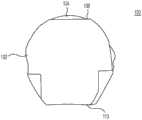
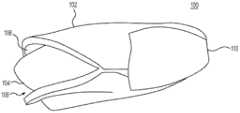
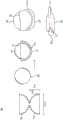
Fig. 1A and 1B illustrate top and side views of an exemplary stent into which an implant is inserted according to some aspects of the present invention.
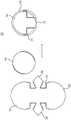
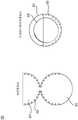
Fig. 2-7 illustrate exemplary stents according to some aspects of the present invention.
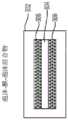
Fig. 8A-8B illustrate schematic diagrams of exemplary compositions of stent materials according to some aspects of the present invention.
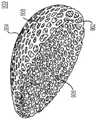
Fig. 9A-9C illustrate exemplary stents formed by 3D bioprinting according to some aspects of the present invention.
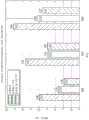
Fig. 10 shows the test results described in example 1.
Detailed Description
Even when used in conjunction with a detailed description of certain specific examples of the invention, the terminology herein should be interpreted in its broadest reasonable manner. Both the foregoing general description and the following detailed description are exemplary and explanatory only and the claimed features are not limited in this respect.
In the present invention, the term "based on" means "based at least in part on". The singular forms "a", "an" and "the" include plural referents unless the context clearly dictates otherwise. The term "exemplary" is used in the sense of "exemplary" rather than "ideal". The terms "comprises/comprising/including" or any other variation thereof, are intended to cover a non-exclusive inclusion, such that a process, method or article that comprises a list of elements does not include only those elements but may include other elements not expressly listed or inherent to such process, method, article or apparatus. The terms "about" and "approximately" should be understood to include ± 5% of the stated amount or value.
Stents (stents) disclosed herein (also referred to herein as stents (stents) or stent constructs) may be used to stabilize an implant, e.g., inhibit or otherwise prevent movement of the implant relative to the surrounding tissue of a patient. The scaffold material may allow for improved structure of the post-operative implantation site, and/or improved positioning and/or anchoring of the implant within the implantation site. Additionally or alternatively, the scaffold and its material may help promote new tissue growth and/or remodel tissue surrounding the implant. For example, in the case of a breast implant, the scaffold materials herein may contribute to the remodeling of the breast due to the lack or insufficiency of breast tissue. The stent material can be formed into any desired shape or combination of shapes.
Additionally or alternatively, the scaffold constructs herein may comprise one or more injectable secondary materials. Exemplary secondary materials include, but are not limited to, fats (such as allogenic or autologous fats), natural fillers, synthetic fillers, hyaluronic acid, collagen, and combinations thereof. The secondary material may be any suitable biocompatible material for injection, implantation or otherwise supplementation at the implantation site, optionally with an implant. For example, a stent material with a fat graft may provide a more natural result at the post-operative implantation site and/or make the stent material and/or implant better accepted by the patient's body (biocompatible). Further, for example, the combination of injectable or other secondary materials with the stent material may allow for customization, for example to accommodate different types, sizes and shapes of implant sites.
According to some aspects of the invention, the scaffold construct may be configured to at least partially or completely cover the implant and/or enclose, contain or support a secondary material, such as an injectable material. For example, the scaffolding construct may form a pocket, envelope, or cavity into which an implant (such as a tissue expander or breast implant, among other types of implantable medical devices) may be inserted such that a portion of the outer surface or the entire outer surface of the implant may be covered by the scaffolding material. In a similar manner, the scaffold may serve as a container and/or support structure for a secondary material (e.g., an injectable material).
The scaffold construct may be configured to at least partially cover, hold (e.g., maintain its position), and/or stabilize an implant, such as a tissue expander, a breast implant, and/or an injectable material such as fat. For example, the scaffold construct can help secure the implant within a tissue pocket (e.g., a surgical pocket created prior to or at the time of surgery). In an exemplary procedure, a lumen-defining scaffold construct may first be placed into a tissue pocket of breast tissue of a patient. The breast implant may then be introduced into the lumen of the scaffold construct. Optionally, an injectable or other secondary material may be introduced into the lumen of the scaffold construct before, after, or during insertion of the breast implant into the lumen.
The scaffold constructs herein can be used in cosmetic surgery as well as non-cosmetic surgery (including, for example, augmentation procedures, reduction procedures, reconstruction procedures, rehabilitation procedures, etc.). According to one non-limiting exemplary embodiment, the scaffold constructs herein may prevent or otherwise inhibit movement of a breast implant, tissue expander, or filling material (e.g., fat) within a thoracic pouch.
The scaffold material may promote tissue ingrowth from the surrounding patient tissue into and through the scaffold, thereby forming a stable "capsule" around the implant, wherein the capsule may be soft and/or supple. For example, the scaffold may reduce, prevent, or minimize the hard "capsule" feel of the implant, thereby improving patient comfort.
The scaffold constructs herein may be suitable for use with implants having a surface texture as disclosed in WO 2015/121686, WO 2017/093528, and/or WO 2017/196973, each of which is incorporated herein by reference. For example, the implant may have a combination of surface characteristics (e.g., roughness, kurtosis, skewness, peak height, valley depth, density of contact points, etc.) that may improve biocompatibility compared to an implant lacking or having no surface texture or compared to an implant having uncontrolled surface properties. For example, the surface texture of the implant can reduce or eliminate adverse physiological reactions caused by patient tissue surrounding the implant. In some examples, the stent may be configured to expose one or more surfaces of the implant, wherein the exposed surface of the implant has a surface texture as disclosed in WO 2015/121686, WO 2017/093528, or WO 2017/196973, each of which is incorporated herein by reference.
In some examples, the implant may have a surface texture, and one or more portions of the implant may be covered by the scaffold, while another portion or other portions may be uncovered, such that the surface texture of the implant may be in contact with the surrounding tissue of the patient. The stent may help stabilize the implant by inhibiting or preventing movement of the implant relative to the surrounding tissue of the patient after implantation. Additionally or alternatively, when a secondary material is used, the stent may prevent the secondary (e.g., injectable) material from becoming dispersed and help position the secondary material at the intended target site. Thus, for example, the scaffold materials and scaffold constructs herein may simultaneously penetrate the scaffold material and/or promote tissue growth around the implant or secondary/injectable material.
The scaffold constructs herein may comprise one or more biocompatible, bioresorbable materials suitable for implantation in the body. Such materials may promote tissue growth and vasculature from surrounding tissue into the scaffold and around the implant/injectant. Over time, the scaffold material may be broken down and absorbed by the patient tissue, leaving new tissue around the implant or otherwise at the target site. The remaining tissue may include collagen (e.g., growth of general collagen) and/or may include a particular type of tissue that is guided by the type of material used for the scaffold and/or the secondary material used with the scaffold. Such tissue may help hold the implant and/or auxiliary material (e.g., injectable material) in place, stabilize the implant within the patient after the scaffolding material has been absorbed, and create a volume of living tissue.
The stents disclosed herein may include bioresorbable materials or a combination of bioresorbable materials. Exemplary scaffold materials include, but are not limited to, biodegradable polymers and copolymers such as polyurethanes, polyurethane/ureas, poly (glycolic acid), poly (lactic-co-glycolic acid), polycaprolactone, and mixtures thereof. In some examples, the scaffold material may include a thermoset material, such as a polyurethane/urea copolymer. Further, for example, the scaffold may comprise or be formed from a hydrogel comprising, for example, agarose, alginate, chitosan, collagen, fibrin, gelatin, hyaluronic acid, gelatin methacryloyl (GelMa), poly (ethylene glycol), Matrigel basedTM、 F-127 and any combination thereof.

The hydrogel or other biocompatible material used in the scaffold constructs herein optionally may be embedded with one or more growth factors, such as, for example, Vascular Endothelial Growth Factor (VEGF), Fibroblast Growth Factor (FGF), and/or Epidermal Growth Factor (EGF), among other types of growth factors, peptides, such as, for example, arginyl glycyl aspartic acid (RGD), and cells, such as, for example, mesenchymal stem cells, and any combinations thereof. In addition, a combination of synthetic polymers and hydrogels can be used to construct the scaffold.
According to some aspects of the invention, the stent may be removed during and/or after the implantation procedure. For example, the stent material may include one or more magnetic materials, wherein magnetic forces may be used to remove the stent material during and/or after the implantation procedure.
According to non-limiting exemplary embodiments, the stent may comprise a bioresorbable polyurethane polymer or polyurethane/urea copolymer. The polymer or copolymer may be porous (e.g., prepared by foaming the polymer or polymer mixture to form a porous structure, or by varying the pore size width and spacing of the fabric in the case of threads using synthetic polymers) to provide a scaffold in vivo with interstices through which tissue and vasculature can be formed after implantation of the scaffold.
In some examples, the type of stent material, the thickness of the stent, and/or the pore size of the stent may provide a resorption time in the range of about 6 months to about 24 months, e.g., about 12 months to about 18 months, about 6 months to about 12 months, about 12 months to about 24 months, or about 18 months to about 24 months after implantation. This period of time may allow new tissue and vasculature to form around the implant to help maintain proper positioning of the implant.
According to some aspects of the invention, sutures (e.g., bioresorbable sutures) may be used to assist in holding the stent construct in place relative to the implant during implantation. The scaffolding construct may be held in place by friction between the scaffolding construct and the implant. In addition, sutures (e.g., bioresorbable sutures) may be used to attach the stent to the surrounding tissue to maintain the position of the stent construct and implant relative to the surrounding tissue. Additionally or alternatively, friction between the scaffold and surrounding tissue may be used to maintain the position of the scaffold construct and implant relative to the surrounding tissue.
The thickness of the stent may affect the time for which the stent material is resorbed. Stents with greater thicknesses can generally provide a more robust construct to manipulate and support the implant. In addition, thicker stents may provide for thicker tissue formation, which is soft and vascularized. The thickness of the stent material may be selected to achieve a desired resorption time and/or to provide a desired support around the implant.
The thickness of the stent may be uniform, or the stent may have one or more portions or regions with a thickness greater or less than the thickness of one or more other portions or regions of the stent. In some examples, the thickness of the scaffold may be in the range of about 1mm to about 90mm, such as about 5mm to about 50mm, about 3mm to about 8mm, about 10mm to about 20mm, about 10mm to about 90mm, about 50mm to about 75mm, about 25mm to about 35mm, about 15mm to about 30mm, or about 18mm to about 32 mm. For example, the thickness may be between about 1mm and about 10mm, e.g., between about 2mm and about 5mm, or between about 2mm and about 4 mm. In some embodiments, the thickness of the scaffold construct can be uniform and have a thickness of at least about 1mm, 2mm, 3mm, 4mm, or greater. Further, for example, the uniform thickness of the scaffold construct can be up to about 4mm, 3mm, 2mm, 1mm, or less.
As described above, in some cases, the thickness of the scaffold may vary depending on considerations such as the configuration of the scaffold, the number and/or type of patient tissue to be supported, the shape of the implant, the size of the implant, and/or the type of implant. For example, one or more portions of the stent may have a greater thickness to provide more support around certain areas of the implant. For example, in the case of a breast implant, the scaffolding construct may have a greater thickness below the implant, for example to better support the weight of the tissue and/or implant due to gravity when the patient is standing. Additionally or alternatively, one or more portions of the stent may have a greater thickness to facilitate suturing the portions of the stent together, to the implant, and/or to the surrounding tissue. For example, the perimeter of the scaffold construct may have a greater thickness than other portions of the scaffold in order to receive and support sutures at or near the perimeter of the scaffold. Further, for example, multiple pieces of stents may be sewn together to form various shapes, and the area of the stent intended to be joined may be thicker to provide additional support for the suture. In some examples, the maximum thickness of the stent may be 4mm or less, e.g., about 1mm to 4mm or about 2mm to about 3 mm. In at least one example, the scaffold may be formed in a three-dimensional (3D) shape and have a uniform thickness.
In addition to having the exemplary thicknesses described above, the scaffold can have an average pore size in the range of about 150pm to about 200pm, such as about 170 pm. Thus, for example, the mean pore size can be at least 10pm, 20pm, 30pm, 40pm, 50pm, 100pm, 110pm, 120pm, 130pm, 140pm, 150pm, or greater, and/or at most 200pm, 180pm, 160pm, 150pm, 100pm, 90pm, 80pm, 70pm, 60pm, or less. In some examples, the mean pore size of the scaffold can range from about 10pm to about 200pm, from about 20pm to about 50pm, from about 10pm to about 30pm, from about 75pm to about 125pm, from about 120pm to about 150pm, from about 80pm to about 110pm, or from about 40pm to about 90 pm.
The stent may be configured to cover at least a portion or all of the implant. According to non-limiting examples, the geometry/shape of the scaffold construct may optionally form, together with a secondary material (e.g., an injectable material such as fat), an envelope (e.g., a pocket or sleeve) configured to accommodate a generally circular, elliptical, or tear-drop shaped implant (e.g., a breast implant or tissue expander).
As described above, the shape of a scaffold construct can be defined by attaching different portions (e.g., two or more edges) of a piece of scaffold material together and/or by attaching multiple pieces of scaffold material together to form the construct. While certain scaffold constructs may be configured to completely surround (e.g., encapsulate) an implant, such as a breast implant, the scaffold may be any shape suitable to help stabilize and/or maintain the position of the implant or a portion of the implant. The shape of the stent may be any other shape suitable for receiving an implant. In some embodiments, the stent may have the same or similar shape as the implant. Further, for example, the stent may include asymmetric sleeves and/or discrete patches of stent material that are intended to cover different areas of the implant while leaving other areas exposed. This type of configuration may be used to cause the scaffold material to induce targeted growth of tissue in an identified region or area of the implant, for example to aid in stabilization. In addition to stents designed to cover different areas of the implant, the stent size may also be adjusted to allow placement of a secondary material (e.g., injectable material) in an area next to the implant.
Fig. 1A and 1B depict an exemplary scaffold construct 102 according to some aspects of the invention. As shown, thestent construct 102 defines a lumen with animplant 104 disposed within the lumen, such as a breast implant. For example, theimplant 104 may be a circular, oval, or tear-drop shaped breast implant. The stent construct 102 as shown includes anopen end 108 and aclosed end 110 and has a generally circular shape. The stent construct 102 may act as a sleeve or envelope covering a substantial portion of theimplant 104. Optionally, an injectable material, such as a filler material (such as a fat), may be introduced into the cavity, for example, between theimplant 104 and thescaffold construct 102, and/or the injectable material may be incorporated into the scaffold material.
Fig. 2 shows a piece ofscaffold material 200 that may be assembled into the scaffold construct 102 depicted in fig. 1A-1B. A piece ofstent material 200 may have twosemicircular regions side regions indicia 210 indicate areas of attachment, such as by a biocompatible/biodegradable adhesive, biodegradable suture, or other attachment mechanism, such that an edge of one portion of the piece ofstent material 200 is bonded to an edge of another portion of the piece ofstent material 200. Folding the piece ofscaffold material 200 and assembling along themarker 210 may result in the scaffold construct 102 depicted in fig. 1A-1B. The piece ofstent material 200 may form a continuous thickness of thestent 102 for surrounding theimplant 104. The configuration shown in fig. 2 may provide additional support to the implant and allow the implant to fit securely within the stent construct, for example, to avoid gaps forming between the stent construct and the implant surface.
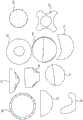
Fig. 3 depicts additional exemplary scaffold constructs having different shapes. Any of the constructs shown may be used in conjunction with an implant having the surface texture described above. For example, the scaffold construct 302 has a perforated annular shape. This shape may provide support to the implant around the periphery of the implant while exposing the central portions of the anterior and posterior portions of the implant (thus allowing the implant to contact the surrounding tissue). The scaffold construct 304 has an asymmetric shape, for example, can provide support to the implant and expose a large surface area of the implant to surrounding tissue when implanted. The scaffolding construct 306 has a more symmetrical shape and can provide support to the implant while allowing a greater surface area of the implant to contact the surrounding tissue.
With further reference to fig. 3, thescaffold construct 308 is generally annular, thinner than the construct 302, wherein thescaffold construct 308 has a suture around the circumference to enclose the implant. The scaffolding construct 310 has a semi-circular shape, for example, such that half of the circular implant is exposed to surrounding tissue when implanted. The scaffolding construct 312 may provide support similar to the scaffolding construct 306 while allowing a larger surface area of the implant to be exposed to the surrounding tissue when implanted. The scaffolding construct 314 has a generally circular shape on one side and a semi-circular shape on the other side to provide complete support on one side of the implant and to expose half of the other side of the implant to surrounding tissue when implanted. The scaffolding construct 316 can provide support to the implant while securing the implant through a suture in the center of the implant and exposing at least a portion of the periphery of the implant to surrounding tissue when implanted. The scaffolding construct 318 can provide support in a manner similar to the scaffolding construct 310, while leaving a smaller surface area of the implant exposed to the surrounding tissue when implanted. Similar to thescaffold construct 308, the scaffold construct 320 may be circular, with sutures around the circumference and at or near the center, such that the implant may be completely surrounded and secured in the scaffold construct 320. The scaffolding construct 322 can provide support to the implant around the periphery of the implant while exposing at least a portion of the periphery of the implant and the anterior and posterior portions of the implant to the surrounding tissue upon implantation.
As previously discussed, attachment mechanisms (e.g., adhesives, sutures, etc.) may be used to maintain the position of the stent relative to the implant during implantation. In the following examples (shown in fig. 4-6), a biocompatible adhesive may be used, and/or a suture or other attachment mechanism may be used. In some examples, the scaffold construct may be formed using, for example, ultrasonic welding or thermal welding with a suitable adhesive.
Fig. 4 shows an exemplary stent construct 409 adapted to surround theentire implant 405, e.g., using biocompatible adhesives and/or sutures indicated by markings around the perimeter of a piece ofstent material 400 used to assemble theconstruct 409. The piece ofstent material 400 has an end-to-end envelope shape with tworounded portions markings 406 indicate areas of suture or other attachment mechanism (e.g., biocompatible/biodegradable adhesive) such that an edge of oneportion 402 of the piece ofscaffold material 400 is bonded to an edge of anotherportion 404 of the piece ofscaffold material 400. After folding a piece ofstent material 400 to assemble theconstruct 409, the stent construct 409 may be generally circular, having anopen end 408 and aclosed end 410. As shown in fig. 4, in at least one example, the diameter of the circle can be about 11cm, although this is not limiting and other dimensions are contemplated herein. Theimplant 405 may be disposed within the lumen formed by thestent 409.
Fig. 5 shows another non-limiting example for forming a stent construct suitable for receiving a portion of an implant, for example, using a biocompatible adhesive (indicated by markings around the perimeter). A piece of stent material (having an end-to-end envelope shape) 500 may include two rounded (e.g., semi-circular)portions more markers 506 may indicate the area of suture/attachment by a biocompatible and/or bioresorbable adhesive such that an edge of one portion of the piece ofscaffold material 500 is bonded to an edge of another portion of the piece ofscaffold material 500. As shown in fig. 5, the one ormore markings 506 may cover only a portion of the circumference of eachcircular portion stent material 500 and suturing themarkers 506, the stent construct 510 may be semi-circular, having anopen end 512 and aclosed end 514. An exemplary diameter of the semi-circle may be 11cm, as shown in fig. 5, but this is not limiting and other dimensions are contemplated herein. Theimplant 508 may be disposed within the lumen formed by thestent construct 510.
Fig. 6 shows a symmetrical stent that is adapted to receive a portion of an implant, for example, using a biocompatible adhesive (indicated by markings around the perimeter). A piece of stent material (having an end-to-end envelope shape) 600 may includerounded portions more markers 606 may indicate the area of suture/attachment by a biocompatible/bioresorbable adhesive such that an edge of one portion of the piece ofscaffold material 600 is bonded to an edge of another portion of the piece ofscaffold material 600. As shown in fig. 6, one ormore indicia 606 may cover aportion 604 of the periphery and half of the periphery ofportion 602. After folding a piece of thestent material 600 and suturing one ormore markers 606, the stent construct 610 may be generally circular in shape, with one side completely covering theimplant 608 and the other side exposing approximately half of theimplant 608. Theimplant 608 may be disposed within the lumen formed by thestent construct 610.
The scaffold constructs shown in fig. 5 and/or 6 may be advantageously used in conjunction with a textured breast implant, wherein the scaffold may provide direct support to the breast tissue region of the implant experiencing the greatest weight (e.g., when the patient is standing) while allowing more contact of the implant with the surrounding tissue. The textured breast implant may have a surface texture as disclosed in WO 2015/121686, WO 2017/093528 or WO 2017/196973, which are incorporated herein by reference.
Fig. 7 shows an exemplary stent having a shape corresponding to an exemplary breast implant or tissue expander. As shown in fig. 7, animplant 702 can be placed in a lumen of ascaffolding construct 704 prior to implantation. Theimplant 702 may have a generally circular shape, for example, a diameter in the range of about 8cm to about 10 cm. The scaffolding construct 704 may have a generally semi-circular shape with a radius of about 10 cm. Optionally, the scaffold construct 704 can have one ormore target regions 706 with increased mechanical strength (e.g., the periphery of the scaffold). The scaffold construct 704 can accommodate theimplant 702 and a desired amount of a secondary material, such as an injectable material. During surgery, the scaffold construct 704 containing the implant (optionally together with injectable material) may be implanted into a tissue pocket of a patient, optionally using an insertion tool such as an insertion cannula. The scaffolding construct 704 may be placed in any suitable position and orientation in breast tissue, including, for example, the lower portion of the breast, the upper portion of the breast, or the middle portion of the breast. The implant may have a surface texture as disclosed in WO 2015/121686, WO 2017/093528 or WO 2017/196973, which are incorporated herein by reference.
According to some aspects of the invention, the scaffold construct or material thereof may include additional or alternative support structures (e.g., biodegradable films and/or foams). For example, the scaffold may include a biodegradable membrane between two pieces of porous scaffold material (see fig. 8A). Additionally or alternatively, the scaffold construct may comprise a membrane at least partially covering a surface of the scaffold material (e.g., an outer or inner surface of the scaffold). The membrane may provide enhanced structure to the scaffold construct to increase support, integrity, and/or mechanical strength, for example, to allow the scaffold material to receive sutures without tearing, while also allowing tissue ingrowth and resorption, as described above. The membrane may be biodegradable and may include a bioresorbable material (e.g., poly (L-lactic acid) or poly (p-dioxanone)) that is the same as or similar to the porous (e.g., foamed) portion of the scaffold. Thus, for example, the increased support provided by the membrane may allow tissue and blood vessels to grow inward into the porous scaffold and around the implant.
Fig. 8A-8B depict additional or alternative exemplary support structures that may be incorporated into the scaffold constructs herein. For example, fig. 8A shows a partial cross-sectional view of a stent construct comprising a biodegradable membrane. As shown in fig. 8A, the scaffold construct 802 can include amembrane 804 disposed within aporous scaffold material 806. Themembrane 804 may be bioresorbable, and may include the same or similar material as the scaffold material 806 (e.g., a bioresorbable polymer or copolymer, or hydrogel). Fig. 8B shows a partial cross-sectional view of a stent with bioresorbable fibers. As shown in fig. 8B, thescaffold 808 may include one ormore fibers 810 disposed in aporous scaffold material 812. Theporous scaffold material 812 may include one ormore fibers 810 embedded therein, for example, to form a fabric or mesh of fibers to reinforce theporous scaffold material 812. Thesefibers 810 may be bioresorbable, and may include the same or similar materials as the porous scaffold material and/or the membrane 804 (e.g., bioresorbable polymer or copolymer). Additionally, as shown in fig. 7, the stent may have atarget area 706 with increased mechanical strength. Thefibers 810 may be provided throughout theporous scaffold material 812 of the scaffold 808 (including, for example, scaffolds having a foam-film-foam configuration as described above), or thefibers 810 may be provided in one ormore target areas 706 of the porous scaffold material to increase mechanical strength, as shown in fig. 7.
In some examples, the stent may be soft, resilient, and flexible so as to fit tightly over the implant, e.g., to inhibit relative movement between the stent and the implant. Thus, when the stent and implant are implanted in a patient, the stent may help to hold the implant in place in a desired area (e.g., a breast implant within a thoracic pouch).
The stent may be formed by different manufacturing processes including casting (e.g., die casting), coating (e.g., laser engraving), molding (e.g., injection molding), molding (e.g., shearing), machining (e.g., milling), joining (e.g., welding), or additive manufacturing (e.g., 3D printing). According to a non-limiting exemplary embodiment, the stent may include a bioresorbable hydrogel formulation. The hydrogel can be assembled into a desired shape using 3D bioprinting techniques and methods. The hydrogel material may be printed in a simple plate/sheet form and then used in a manner similar to a conventional acellular dermal matrix (thickness in the range of 100 μm to 6 cm). FRESH (free form reversible intercalation of suspended hydrogels) methods can also be used to shape hydrogel materials into complex shapes. In this case, the hydrogel scaffold formed from the hydrogel material may have features with a resolution of about 200 μm with a gradient in pore size, thickness and material. Furthermore, the absorption time of the hydrogel scaffold can vary, which can be adjusted from a few hours to about 20 days by modifying the crosslink density of the hydrogel material. The hydrogel scaffold may also be reinforced with synthetic polymers. Synthetic polymers may include inorganic polymers (e.g., polysiloxanes) or organic polymers (e.g., low density polyethylene, polystyrene).
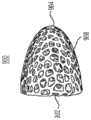
Fig. 9A-9C depict perspective, top, and side views of an exemplary hydrogel stent. As shown in fig. 9A-10C, thehydrogel stent 900 may include anopen end 902 and aclosed end 904. In the top view of fig. 9B, thehydrogel stent 900 may be generally semi-circular in shape. Thehydrogel scaffold 900 may act as a sleeve covering the implant. The implant may be disposed within thecavity 906 formed by thehydrogel scaffold 900. Thehydrogel stent 900 may include one ormore holes 908 such that a large surface area of the implant is exposed to the surrounding tissue when implanted. In some embodiments, an injectable such as a fat may be added with or replace the space of the implant in thecavity 906 of thehydrogel scaffold 900. The thickness of the hydrogel scaffold may vary depending on the size of the implant. In some embodiments, a thicker hydrogel scaffold may be used so that the size of the non-resorbable implant may be reduced.
The hydrogel scaffold as described above may be manufactured by 3D bioprinting. 3D bioprinting may refer to the sequential addition of layers of biological material or the joining of layers (or portions of layers) of biological material in a controlled manner to form a 3D structure. The controlled manner may include automatic control. In a 3D bioprinting process, the deposited biological material may be converted to subsequently harden and form at least a portion of the 3D object. The 3D bioprinting may include layered manufacturing. Biomaterials (or bio-inks) for 3D bioprinting may include natural and synthetic structural proteins such as fibrinogen, albumin, fibronectin, collagen, decellularized ECM or hyaluronic acid; polymers such as pluronic or urethane; living biological components such as undifferentiated stem cells, partially differentiated stem cells, terminally differentiated cells, microvascular fragments or organelles; a macromolecule; and/or a drug.
The stents and stent materials disclosed herein may provide one or more of the following effects or benefits: 1) in combination with biocompatibility, to improve stability of the implant/injectate, 2) to promote healthy tissue growth in patients (including, for example, patients with thin or relatively thin dermal layers) through the construct and around the implant/injectate, 3) to promote formation of tissue (such as adipose tissue) around a particular type of implant, and/or 4) to reduce the cost of the scaffold.
The following examples are intended to illustrate the invention, but are not limiting in nature. It is to be understood that the invention encompasses additional embodiments consistent with the foregoing description and the following examples.
Examples of the invention
Example 1
The strength of the polyurethane/urea scaffold material was tested under various conditions. In this test, scaffold materials having thicknesses of 2mm, 3mm and 4mm were tested for breaking point at a strain rate of 500 mm/min. The materials were tested under three conditions: (1) the "out-of-box" condition is used as a reference, where the scaffold material comes directly from the package; (2) "Bituo iodine for 2 minutes" condition, wherein the scaffold material is soaked in disinfectant Bituo iodine; (3) the "saline bath 18 hours 37" condition, which simulates the physiological environment of the human body. The results are shown in fig. 10, where thicker stents correspond to greater strength. In addition, the scaffold had the highest breaking point under the "out of the box" condition, the second highest breaking point under the "barbituric iodine 2 min" condition, and the lowest breaking point under the "saline bath 18 h 37 ℃".
The polyurethane/urea scaffold material was also tested in vivo with the textured breast implant to analyze the biological response to the scaffold material. In vivo tests were performed in both mouse and pig models. In vivo testing of pigs was performed on two pigs, the scaffold material was placed adjacent to the Motiva breaker implant for 72 days, and subsequently the explanted samples were histologically (Massons Trichromes and H & E staining) and SEM imaged. In vivo testing of mice was performed on 30 mice, which were divided into two groups of 15 mice each. One group was treated by implanting the scaffold material alone and the other group was treated by implanting a tiny breast implant using the same scaffold material. Each of these two groups was evaluated at 3 weeks, 6 weeks, and 12 weeks.
It should be understood that the examples shown and described herein are examples of other embodiments encompassed herein, and are non-limiting. The present invention is not limited to the exemplary shapes, sizes, and/or materials discussed herein. One of ordinary skill in the art will recognize that additional shapes, sizes, and/or materials may be used to achieve the same or similar effects or benefits as discussed above, as discussed herein. Further, the stent may include one or more shapes disclosed herein, or may be any shape known to one of ordinary skill in the art consistent with the guidance and principles disclosed herein.
Claims (40)
Translated fromChineseApplications Claiming Priority (3)
| Application Number | Priority Date | Filing Date | Title |
|---|---|---|---|
| US201862740518P | 2018-10-03 | 2018-10-03 | |
| US62/740,518 | 2018-10-03 | ||
| PCT/IB2019/058439WO2020070694A1 (en) | 2018-10-03 | 2019-10-03 | Scaffolding for implantable medical devices and methods of use thereof |
Publications (1)
| Publication Number | Publication Date |
|---|---|
| CN113015545Atrue CN113015545A (en) | 2021-06-22 |
Family
ID=68242791
Family Applications (1)
| Application Number | Title | Priority Date | Filing Date |
|---|---|---|---|
| CN201980074670.9APendingCN113015545A (en) | 2018-10-03 | 2019-10-03 | Stents for implantable medical devices and methods of use thereof |
Country Status (8)
| Country | Link |
|---|---|
| US (1) | US20210353831A1 (en) |
| EP (1) | EP3860668A1 (en) |
| KR (1) | KR20210073543A (en) |
| CN (1) | CN113015545A (en) |
| BR (1) | BR112021006348A2 (en) |
| CA (1) | CA3115057A1 (en) |
| IL (2) | IL281898B2 (en) |
| WO (1) | WO2020070694A1 (en) |
Cited By (2)
| Publication number | Priority date | Publication date | Assignee | Title |
|---|---|---|---|---|
| CN115998956A (en)* | 2023-01-17 | 2023-04-25 | 上海交通大学医学院附属第九人民医院 | Tissue regeneration method combining foaming hydrogel and cell microspheres |
| CN118662275A (en)* | 2023-07-06 | 2024-09-20 | 浙江省人民医院 | Breast prosthesis with functions of treating breast cancer recurrence, preventing and treating breast cancer, and breast reconstruction, and its manufacturing method |
Families Citing this family (15)
| Publication number | Priority date | Publication date | Assignee | Title |
|---|---|---|---|---|
| ES2684949T3 (en) | 2011-03-09 | 2018-10-05 | Tepha, Inc. | Mastopexy systems |
| EP3019206B1 (en) | 2013-07-11 | 2019-12-04 | Tepha, Inc. | Absorbable implants for plastic surgery |
| USD836778S1 (en) | 2015-10-09 | 2018-12-25 | Tepha, Inc. | Three dimensional mastopexy implant |
| GB201711360D0 (en) | 2017-07-14 | 2017-08-30 | Raft Entpr Ltd | Tissue scaffold |
| AU2018351314A1 (en) | 2017-10-19 | 2020-03-19 | Lifecell Corporation | Flowable acellular tissue matrix products and methods of production |
| ES2953544T3 (en) | 2018-02-09 | 2023-11-14 | Tepha Inc | Full contour breast implant |
| USD889654S1 (en) | 2018-02-09 | 2020-07-07 | Tepha, Inc. | Three dimensional mastopexy implant |
| USD892329S1 (en) | 2018-07-03 | 2020-08-04 | Tepha, Inc. | Three dimensional mastopexy implant |
| US11779455B2 (en) | 2018-10-02 | 2023-10-10 | Tepha, Inc. | Medical devices to limit movement of breast implants |
| EP3976127B1 (en)* | 2019-05-30 | 2025-09-24 | LifeCell Corporation | Biologic breast implant |
| BR112022010124A2 (en) | 2019-11-25 | 2022-09-06 | Tepha Inc | BREAST IMPLANT WRAPS TO LIMIT BREAST IMPLANT MOVEMENT AND RELATED METHODS |
| US20210220522A1 (en)* | 2020-01-16 | 2021-07-22 | Hologic, Inc. | Hydrogel-based implantable device and related methods |
| KR102206018B1 (en)* | 2020-07-17 | 2021-01-21 | 한스바이오메드 주식회사 | Breast implant having waviness |
| DE102021214856A1 (en) | 2021-12-22 | 2023-06-22 | Karl Leibinger Medizintechnik Gmbh & Co. Kg | Implant system and method for producing an implant system |
| KR102755043B1 (en)* | 2022-04-15 | 2025-01-21 | 주식회사 티앤알바이오팹 | Scaffold for breast reconstruction |
Citations (7)
| Publication number | Priority date | Publication date | Assignee | Title |
|---|---|---|---|---|
| EP1537883A2 (en)* | 2003-12-05 | 2005-06-08 | DePuy Mitek, Inc. | Implants comprising viable tissue for repairing a tissue injury or defect |
| US20070276507A1 (en)* | 2006-02-10 | 2007-11-29 | Bertram Timothy A | Scaffolds for organ reconstruction and augmentation |
| WO2010111458A2 (en)* | 2009-03-27 | 2010-09-30 | Allergan, Inc. | Bioerodible matrix for tissue involvement |
| US20110081397A1 (en)* | 2009-10-01 | 2011-04-07 | Tyco Healthcare Group Lp | Mesh Implant |
| CN102083412A (en)* | 2008-04-25 | 2011-06-01 | 杰伊·N·沙皮拉 | Programmed release of nanostructured bioconstructs for cell implantation for stimulating tissue regeneration |
| CN102470189A (en)* | 2009-07-06 | 2012-05-23 | 科洛普拉斯特公司 | Biodegradable scaffold for soft tissue regeneration and use thereof |
| CN103491989A (en)* | 2011-02-14 | 2014-01-01 | 拜欧米特制造有限责任公司 | Non-resorbable polymer-ceramic composite implant materials |
Family Cites Families (6)
| Publication number | Priority date | Publication date | Assignee | Title |
|---|---|---|---|---|
| EP1937183B1 (en)* | 2005-09-12 | 2018-11-28 | Proxy Biomedical Limited | Soft tissue implants |
| GB201402804D0 (en) | 2014-02-17 | 2014-04-02 | Univ Manchester | Implants |
| GB201521474D0 (en) | 2015-12-04 | 2016-01-20 | Univ Manchester | Textured surfaces for implants |
| US11045307B2 (en) | 2016-05-11 | 2021-06-29 | Establishment Labs S.A. | Medical implants and methods of preparation thereof |
| CA3086253C (en)* | 2017-12-22 | 2022-06-14 | Polynovo Biomaterials Pty Limited | Soft tissue implant pocket |
| US11779455B2 (en)* | 2018-10-02 | 2023-10-10 | Tepha, Inc. | Medical devices to limit movement of breast implants |
- 2019
- 2019-10-03EPEP19787455.5Apatent/EP3860668A1/enactivePending
- 2019-10-03ILIL281898Apatent/IL281898B2/enunknown
- 2019-10-03CNCN201980074670.9Apatent/CN113015545A/enactivePending
- 2019-10-03USUS17/282,160patent/US20210353831A1/enactivePending
- 2019-10-03KRKR1020217012801Apatent/KR20210073543A/ennot_activeCeased
- 2019-10-03BRBR112021006348Apatent/BR112021006348A2/ennot_activeApplication Discontinuation
- 2019-10-03CACA3115057Apatent/CA3115057A1/enactivePending
- 2019-10-03ILIL312320Apatent/IL312320A/enunknown
- 2019-10-03WOPCT/IB2019/058439patent/WO2020070694A1/ennot_activeCeased
Patent Citations (7)
| Publication number | Priority date | Publication date | Assignee | Title |
|---|---|---|---|---|
| EP1537883A2 (en)* | 2003-12-05 | 2005-06-08 | DePuy Mitek, Inc. | Implants comprising viable tissue for repairing a tissue injury or defect |
| US20070276507A1 (en)* | 2006-02-10 | 2007-11-29 | Bertram Timothy A | Scaffolds for organ reconstruction and augmentation |
| CN102083412A (en)* | 2008-04-25 | 2011-06-01 | 杰伊·N·沙皮拉 | Programmed release of nanostructured bioconstructs for cell implantation for stimulating tissue regeneration |
| WO2010111458A2 (en)* | 2009-03-27 | 2010-09-30 | Allergan, Inc. | Bioerodible matrix for tissue involvement |
| CN102470189A (en)* | 2009-07-06 | 2012-05-23 | 科洛普拉斯特公司 | Biodegradable scaffold for soft tissue regeneration and use thereof |
| US20110081397A1 (en)* | 2009-10-01 | 2011-04-07 | Tyco Healthcare Group Lp | Mesh Implant |
| CN103491989A (en)* | 2011-02-14 | 2014-01-01 | 拜欧米特制造有限责任公司 | Non-resorbable polymer-ceramic composite implant materials |
Non-Patent Citations (1)
| Title |
|---|
| 骆国防等, 上海交通大学出版社* |
Cited By (3)
| Publication number | Priority date | Publication date | Assignee | Title |
|---|---|---|---|---|
| CN115998956A (en)* | 2023-01-17 | 2023-04-25 | 上海交通大学医学院附属第九人民医院 | Tissue regeneration method combining foaming hydrogel and cell microspheres |
| CN115998956B (en)* | 2023-01-17 | 2025-04-25 | 上海交通大学医学院附属第九人民医院 | A method for tissue regeneration combining foaming hydrogel and cell microspheres |
| CN118662275A (en)* | 2023-07-06 | 2024-09-20 | 浙江省人民医院 | Breast prosthesis with functions of treating breast cancer recurrence, preventing and treating breast cancer, and breast reconstruction, and its manufacturing method |
Also Published As
| Publication number | Publication date |
|---|---|
| CA3115057A1 (en) | 2020-04-09 |
| BR112021006348A2 (en) | 2021-07-06 |
| KR20210073543A (en) | 2021-06-18 |
| IL281898B2 (en) | 2024-09-01 |
| WO2020070694A1 (en) | 2020-04-09 |
| IL281898A (en) | 2021-05-31 |
| EP3860668A1 (en) | 2021-08-11 |
| US20210353831A1 (en) | 2021-11-18 |
| IL281898B1 (en) | 2024-05-01 |
| IL312320A (en) | 2024-06-01 |
Similar Documents
| Publication | Publication Date | Title |
|---|---|---|
| CN113015545A (en) | Stents for implantable medical devices and methods of use thereof | |
| US12285325B2 (en) | Absorbable implants for plastic surgery | |
| US20250127608A1 (en) | Breast prostheses, methods of manufacturing breast prostheses, and methods of treatment using breast prostheses | |
| US10722345B2 (en) | Absorbable implants for plastic surgery | |
| CN107073175B (en) | Medical/Surgical Implants | |
| US8353967B2 (en) | Self-supporting collagen tunnel for guided tissue regeneration and method of using same | |
| CA2876658C (en) | Implantable prosthesis having acellular tissue attachments | |
| US20090069904A1 (en) | Biomaterial including micropores | |
| US9095438B1 (en) | Surgical implant for ostectomy procedures | |
| EA028683B1 (en) | Material for implantation (embodiments), dental implant, vascular implant and tissue implant for a soft tissue replacement plasty | |
| AU2016252274A1 (en) | Absorbable implants for plastic surgery | |
| MX2023010639A (en) | Breast reconstruction implant. | |
| US20240390553A1 (en) | Meshed dermal tissue matrix products | |
| HK40056319A (en) | Scaffolding for implantable medical devices and methods of use thereof | |
| KR102756412B1 (en) | Nuclear-mesh multi-cell dual system ocular implant | |
| KR20250052743A (en) | A breast implant wrapper | |
| Rohner et al. | Reconstruction of Craniofacial Defects with Bone-Marrow-Coated Polycaprolactone Scaffolds—An Animal Study in the Yorkshire Pig | |
| JPWO2019083350A5 (en) |
Legal Events
| Date | Code | Title | Description |
|---|---|---|---|
| PB01 | Publication | ||
| PB01 | Publication | ||
| SE01 | Entry into force of request for substantive examination | ||
| SE01 | Entry into force of request for substantive examination | ||
| REG | Reference to a national code | Ref country code:HK Ref legal event code:DE Ref document number:40056319 Country of ref document:HK |