CN112766034A - Intelligent monitoring system for workshop operation safety - Google Patents
Intelligent monitoring system for workshop operation safetyDownload PDFInfo
- Publication number
- CN112766034A CN112766034ACN202011361477.4ACN202011361477ACN112766034ACN 112766034 ACN112766034 ACN 112766034ACN 202011361477 ACN202011361477 ACN 202011361477ACN 112766034 ACN112766034 ACN 112766034A
- Authority
- CN
- China
- Prior art keywords
- module
- workshop
- monitoring system
- intelligent monitoring
- involved
- Prior art date
- Legal status (The legal status is an assumption and is not a legal conclusion. Google has not performed a legal analysis and makes no representation as to the accuracy of the status listed.)
- Pending
Links
Images
Classifications
- G—PHYSICS
- G06—COMPUTING OR CALCULATING; COUNTING
- G06V—IMAGE OR VIDEO RECOGNITION OR UNDERSTANDING
- G06V40/00—Recognition of biometric, human-related or animal-related patterns in image or video data
- G06V40/10—Human or animal bodies, e.g. vehicle occupants or pedestrians; Body parts, e.g. hands
- G—PHYSICS
- G06—COMPUTING OR CALCULATING; COUNTING
- G06F—ELECTRIC DIGITAL DATA PROCESSING
- G06F18/00—Pattern recognition
- G06F18/20—Analysing
- G06F18/22—Matching criteria, e.g. proximity measures
- G—PHYSICS
- G06—COMPUTING OR CALCULATING; COUNTING
- G06N—COMPUTING ARRANGEMENTS BASED ON SPECIFIC COMPUTATIONAL MODELS
- G06N3/00—Computing arrangements based on biological models
- G06N3/02—Neural networks
- G06N3/04—Architecture, e.g. interconnection topology
- G06N3/045—Combinations of networks
- G—PHYSICS
- G06—COMPUTING OR CALCULATING; COUNTING
- G06V—IMAGE OR VIDEO RECOGNITION OR UNDERSTANDING
- G06V10/00—Arrangements for image or video recognition or understanding
- G06V10/40—Extraction of image or video features
- G06V10/44—Local feature extraction by analysis of parts of the pattern, e.g. by detecting edges, contours, loops, corners, strokes or intersections; Connectivity analysis, e.g. of connected components
Landscapes
- Engineering & Computer Science (AREA)
- Theoretical Computer Science (AREA)
- Physics & Mathematics (AREA)
- General Physics & Mathematics (AREA)
- Data Mining & Analysis (AREA)
- Multimedia (AREA)
- Life Sciences & Earth Sciences (AREA)
- Artificial Intelligence (AREA)
- Computer Vision & Pattern Recognition (AREA)
- Evolutionary Computation (AREA)
- General Engineering & Computer Science (AREA)
- Computing Systems (AREA)
- Bioinformatics & Cheminformatics (AREA)
- General Health & Medical Sciences (AREA)
- Computational Linguistics (AREA)
- Mathematical Physics (AREA)
- Software Systems (AREA)
- Biophysics (AREA)
- Molecular Biology (AREA)
- Bioinformatics & Computational Biology (AREA)
- Biomedical Technology (AREA)
- Evolutionary Biology (AREA)
- Health & Medical Sciences (AREA)
- Human Computer Interaction (AREA)
- Helmets And Other Head Coverings (AREA)
Abstract
Translated fromChinese
Description
Technical Field
The invention relates to an intelligent monitoring system for workshop operation safety, and belongs to the field of machine learning, deep learning, image processing and system integration.
Background
With the progress of automation development and intelligent transformation and upgrade of manufacturing industry, more and more automation devices and industrial intelligent robots participate in workshop production operation, gradually replace the work of part of workshop workers, and play an increasingly important role in modern production. Although the number of workshop workers is in fact relatively reduced, this does not mean that the robot can largely or even completely replace the human role in workshop operations in the short term.
At present, most types of automated robots can only perform work according to pre-programmed instructions, such as palletizing robots, welding robots, etc. The robots generally have the requirements or characteristics of large scale, monotonicity, mechanicity and repeatability, and can be used as personnel substitutes for high-strength operation or high-risk severe environment operation; some intelligent robots obtain certain sensing and judging capabilities through technologies such as integration of multi-source sensors and embedded intelligent algorithms, for example, the intelligent robots are used for intelligent sorting robots and cooperative assembly robots in automatic flexible production assembly lines, but the operation intelligentization and flexibility degrees of the robots are still far away from human beings, and high-quality work cannot be finished in some manufacturing occasions such as complex process flows and high requirements on refinement degrees.
The production assembly workshop of automobile products is one of the manufacturing workshops with the highest degree of automation in the current industrial field, the classical production mode of an automatic assembly line comes from the automobile manufacturing industry, and the conditions of standardization and modularization of accessories, advanced evolution of assembly process and the like greatly promote the automation level of the production assembly workshop. However, even if the assembly work still exceeds 20% of the assembly work, the robot still can not reach the quality level of manual work in a short period, and the work which can only be completed by the human (such as debugging of the assembly module and the like) is often the core process link in the production process. In a production workshop of initiating explosive devices, most of the process operations need to be directly contacted with materials such as gunpowder, so that complex electric equipment required by robot operation is a great potential safety hazard, and the initiating explosive device industry is mainly operated manually so far. Therefore, even though the current industrial intelligence level has developed to a considerable height, human beings still remain the highest-level intelligent unit bodies at present, and still dominate most of workshop production operations at the present stage, and especially in some product production lines or assembly lines with discrete process flows, complex process flows, high refinement degrees, high automation cost or high process requirements, manual operations cannot be replaced.
When the robot works within the capacity range, the production output with fixed quality can be realized even if the robot works continuously with high intensity. Compared with the prior art, human workers have physiological defects which cannot be avoided, so that the conditions of distraction, physical and mental fatigue, emotional fluctuation and the like are easy to occur after long-time work, and the working behaviors of the workers become various and uncontrollable. Although the worker is required to strictly comply with the established production behavior specification, the worker may not be able to operate according to the standard in the actual operation process due to the subjective or objective factors, which may cause the problem of non-specification of the operation behavior. The importance of the worker in the production operation is obvious whether the behavior is standard or not: on the one hand, the irregular operation behavior may cause the quality of the product to be reduced to a great extent, even unqualified; on the other hand, in some high-risk workshops, such as the above mentioned initiating explosive device workshops, the non-standardization of the action of the worker is also a potential safety hazard, and high-risk accidents such as blasting and the like may be caused.
To summarize, see: on one hand, in the core production process or procedure links of most industries, the effect of manual operation cannot be replaced; on the other hand, the inherent disadvantages of human beings may cause the body behaviors or the behavior flow to be irregular during the operation process, thereby causing quality or safety problems. In view of this, it can be concluded that: the research on the normative of the manual operation behaviors in the production workshop is necessary, and the research is one of the important research directions of the production management science. The safety helmet as an effective head protection tool is widely applied to production workshops, so that the safety helmet can monitor whether the safety helmet is worn or not and whether workers enter a dangerous area or not so as to improve the operation safety guarantee. In order to realize the purpose, open position is adopted to detect the skeleton of the human body, then the position of the safety helmet is detected by using a YOLOv3 algorithm, and the position of the human body is matched to judge whether the worker wears the safety helmet or not; and finally, judging whether the worker enters a dangerous area or not.
Disclosure of Invention
The invention aims to solve the technical problem that the existing workshop operation safety monitoring system aims at single action, and two operation specification scenes are considered.
In order to solve the technical problem, the technical scheme of the invention is to provide an intelligent monitoring system for workshop operation safety, which is characterized by comprising the following modules:
module 1): a human body key point detection module based on lightweight openposition;
module 2): a helmet detection module based on YOLOv 3;
module 3): a person and safety helmet matching module based on the intersection ratio;
module 4): and a person and danger area matching module based on joint and area positions.
Preferably, said module 1) replaces the 7 × 7 convolution kernel with three successive convolution kernels of size 1 × 1, 3 × 3, 7 × 7 and uses a hole convolution where the 3 × 3 convolution kernel is; the module 1) adopts Mobile net as a skeleton network; the module 1) employs a depth separable operation.
Preferably, the module 2) is implemented by using a YOLOv3 network; the YOLOv3 network related to the module 2) adopts multi-scale features for target prediction.
Preferably, the module 3) firstly detects the operator by the light open position, and secondly matches the detection result of the safety helmet with a boundary frame formed by key points of the head of the operator; the module 3) takes an intersection ratio (IOU) as an index for matching the operator with the safety helmet; the IOU referred to by the module 3) is given by the following formula:

preferably, the IOU threshold referred to by said module 3) is set to 0.2.
Preferably, the joint involved in the module 4) is a foot joint; the module 4) relates to a matching mode of judging whether the foot joints are in a dangerous area; the module 4) relates to matching criteria for warning as dangerous behavior when one or both of the foot joints are in a dangerous area.
Wearing safety helmets and keeping away from dangerous areas are two major keys of workshop operation safety. Compared with the prior art, the invention adopting the technical scheme has the following technical effects:
the invention simultaneously considers two working conditions of whether the safety helmet is worn or not and whether workers enter a dangerous area or not;
the light open position is adopted in the aspect of human skeleton recognition to enhance the real-time property;
in the detection of whether the safety helmet is worn or not, firstly, YOLOv3 is adopted to detect the light weight of the safety helmet, and then the intersection of a boundary frame formed by head key points detected by open position and a safety helmet area detected by YOLOv3 is compared as a basis for judging whether the safety helmet is worn or not;
in the monitoring of the danger zone, whether one or two of the foot joints are in the danger zone is taken as a lightweight matching criterion.
Drawings
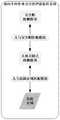
Fig. 1 is a structural diagram of an intelligent monitoring system for workshop operation safety provided by the invention.
Detailed Description
In order to make the invention more comprehensible, preferred embodiments are described in detail below with reference to the accompanying drawings.
Examples
An intelligent monitoring system for workshop operation safety is shown in figure 1 and comprises the following modules:
module 1): a human body key point detection module based on lightweight openposition;
module 2): a helmet detection module based on YOLOv 3;
module 3): a person and safety helmet matching module based on the intersection ratio;
module 4): and a person and danger area matching module based on joint and area positions.
Wherein, module 1) uses three consecutive convolution kernels of size 1 x 1, 3 x 3, 7 x 7 instead of the 7 x 7 convolution kernel and uses a hole convolution at the place of the 3 x 3 convolution kernel; the module 1) adopts Mobile net as a skeleton network; module 1) employs a depth separable operation.
Module 2) is implemented by using a YOLOv3 network; the YOLOv3 network related to the module 2) adopts multi-scale features for target prediction.
The module 3) firstly detects the operator by the light open position, and secondly matches the detection result of the safety helmet with a boundary frame formed by key points of the head of the operator; the module 3) takes the intersection ratio (IOU) as an index matched with the safety helmet by an operator; the IOU referred to by module 3) is given by the following equation:

module 3) involves setting the IOU threshold to 0.2.
The joint related to the module 4) is a foot joint; the module 4) relates to a matching mode that whether the foot joints are in a dangerous area is judged; module 4) relates to matching criteria that both warn as dangerous behavior when one or both of the foot joints are within a dangerous area.
Claims (5)
Translated fromChinese
Priority Applications (1)
| Application Number | Priority Date | Filing Date | Title |
|---|---|---|---|
| CN202011361477.4ACN112766034A (en) | 2020-11-27 | 2020-11-27 | Intelligent monitoring system for workshop operation safety |
Applications Claiming Priority (1)
| Application Number | Priority Date | Filing Date | Title |
|---|---|---|---|
| CN202011361477.4ACN112766034A (en) | 2020-11-27 | 2020-11-27 | Intelligent monitoring system for workshop operation safety |
Publications (1)
| Publication Number | Publication Date |
|---|---|
| CN112766034Atrue CN112766034A (en) | 2021-05-07 |
Family
ID=75693331
Family Applications (1)
| Application Number | Title | Priority Date | Filing Date |
|---|---|---|---|
| CN202011361477.4APendingCN112766034A (en) | 2020-11-27 | 2020-11-27 | Intelligent monitoring system for workshop operation safety |
Country Status (1)
| Country | Link |
|---|---|
| CN (1) | CN112766034A (en) |
Citations (4)
| Publication number | Priority date | Publication date | Assignee | Title |
|---|---|---|---|---|
| CN110502965A (en)* | 2019-06-26 | 2019-11-26 | 哈尔滨工业大学 | A Construction Helmet Wearing Monitoring Method Based on Computer Vision Human Pose Estimation |
| CN110956652A (en)* | 2019-11-20 | 2020-04-03 | 国网浙江省电力有限公司电力科学研究院 | Early warning method for transformer substation personnel crossing line |
| CN110991315A (en)* | 2019-11-28 | 2020-04-10 | 江苏电力信息技术有限公司 | Method for detecting wearing state of safety helmet in real time based on deep learning |
| CN111815898A (en)* | 2019-04-12 | 2020-10-23 | 易程(苏州)电子科技股份有限公司 | Infant behavior monitoring and alarming system and method |
- 2020
- 2020-11-27CNCN202011361477.4Apatent/CN112766034A/enactivePending
Patent Citations (4)
| Publication number | Priority date | Publication date | Assignee | Title |
|---|---|---|---|---|
| CN111815898A (en)* | 2019-04-12 | 2020-10-23 | 易程(苏州)电子科技股份有限公司 | Infant behavior monitoring and alarming system and method |
| CN110502965A (en)* | 2019-06-26 | 2019-11-26 | 哈尔滨工业大学 | A Construction Helmet Wearing Monitoring Method Based on Computer Vision Human Pose Estimation |
| CN110956652A (en)* | 2019-11-20 | 2020-04-03 | 国网浙江省电力有限公司电力科学研究院 | Early warning method for transformer substation personnel crossing line |
| CN110991315A (en)* | 2019-11-28 | 2020-04-10 | 江苏电力信息技术有限公司 | Method for detecting wearing state of safety helmet in real time based on deep learning |
Non-Patent Citations (2)
| Title |
|---|
| 张志超: "安全帽佩戴检测方法研究", 《中国优秀博硕士学位论文全文数据库(硕士) 工程科技Ⅰ辑》* |
| 郑恬: "基于视频的人体检测、跟踪和三维重建", 《中国优秀博硕士学位论文全文数据库(硕士) 信息科技辑》* |
Similar Documents
| Publication | Publication Date | Title |
|---|---|---|
| JP3223826U (en) | Industrial robot | |
| US9427871B2 (en) | Human safety provision in mobile automation environments | |
| Intisar et al. | Computer Vision Based Robotic Arm Controlled Using Interactive GUI. | |
| JP5370127B2 (en) | Robot interference avoidance device | |
| CN110524581A (en) | A kind of flexible welding robot system and its welding method | |
| CN205614678U (en) | Regional speed reduction protection system of singular point and industrial robot | |
| CN104400788A (en) | Visual identity robot system for dismantling waste lead battery | |
| DE202012013087U1 (en) | Welder hood configuration with real-time alert capability for welding vapor contact | |
| CN114757293A (en) | Man-machine co-fusion risk early warning method and system based on action recognition and man-machine distance | |
| Makhataeva et al. | Safety aura visualization for variable impedance actuated robots | |
| CN112598651A (en) | Intelligent robot processing production detecting system | |
| Ganesh et al. | Process time reduction in fettling and grinding process using Mitsubishi robot | |
| WO2022035820A1 (en) | Monitoring system employing smart gloves to analyze operator fabrication activities | |
| Derlukiewicz et al. | Proactive failure prevention by human-machine interface in remote-controlled demolition robots | |
| CN112766034A (en) | Intelligent monitoring system for workshop operation safety | |
| EP3471927A1 (en) | Monitoring a plant equipped with at least one robot | |
| Shetye et al. | Computer vision for industrial safety and productivity | |
| KR102486112B1 (en) | Method for detecting damage on driving part of mobile robot | |
| Li et al. | Welding robotic co-worker using brain computer interface | |
| KR101713195B1 (en) | Joint angle calculation system of robot and method thereof | |
| Ismara et al. | Safety education management in welding robotic laboratory | |
| CN212308199U (en) | Intelligent welding helmet | |
| CN213054860U (en) | Power distribution live working device based on data gloves | |
| Saadah et al. | Kuka KR5 arc welding industrial manipulator workspace modelling based on kinematics study | |
| CN119388391B (en) | A robotic arm system |
Legal Events
| Date | Code | Title | Description |
|---|---|---|---|
| PB01 | Publication | ||
| PB01 | Publication | ||
| SE01 | Entry into force of request for substantive examination | ||
| SE01 | Entry into force of request for substantive examination | ||
| RJ01 | Rejection of invention patent application after publication | Application publication date:20210507 | |
| RJ01 | Rejection of invention patent application after publication |