CN112654983A - Information processing apparatus, user authentication network system, and user authentication method - Google Patents
Information processing apparatus, user authentication network system, and user authentication methodDownload PDFInfo
- Publication number
- CN112654983A CN112654983ACN201880097254.6ACN201880097254ACN112654983ACN 112654983 ACN112654983 ACN 112654983ACN 201880097254 ACN201880097254 ACN 201880097254ACN 112654983 ACN112654983 ACN 112654983A
- Authority
- CN
- China
- Prior art keywords
- voice
- user
- feature
- password
- authentication
- Prior art date
- Legal status (The legal status is an assumption and is not a legal conclusion. Google has not performed a legal analysis and makes no representation as to the accuracy of the status listed.)
- Pending
Links
Images

Classifications
- G—PHYSICS
- G06—COMPUTING OR CALCULATING; COUNTING
- G06F—ELECTRIC DIGITAL DATA PROCESSING
- G06F21/00—Security arrangements for protecting computers, components thereof, programs or data against unauthorised activity
- G06F21/30—Authentication, i.e. establishing the identity or authorisation of security principals
- G06F21/31—User authentication
- G06F21/32—User authentication using biometric data, e.g. fingerprints, iris scans or voiceprints
- G—PHYSICS
- G10—MUSICAL INSTRUMENTS; ACOUSTICS
- G10L—SPEECH ANALYSIS TECHNIQUES OR SPEECH SYNTHESIS; SPEECH RECOGNITION; SPEECH OR VOICE PROCESSING TECHNIQUES; SPEECH OR AUDIO CODING OR DECODING
- G10L17/00—Speaker identification or verification techniques
- G10L17/22—Interactive procedures; Man-machine interfaces
- G10L17/24—Interactive procedures; Man-machine interfaces the user being prompted to utter a password or a predefined phrase
- G—PHYSICS
- G06—COMPUTING OR CALCULATING; COUNTING
- G06F—ELECTRIC DIGITAL DATA PROCESSING
- G06F3/00—Input arrangements for transferring data to be processed into a form capable of being handled by the computer; Output arrangements for transferring data from processing unit to output unit, e.g. interface arrangements
- G06F3/16—Sound input; Sound output
- G—PHYSICS
- G06—COMPUTING OR CALCULATING; COUNTING
- G06F—ELECTRIC DIGITAL DATA PROCESSING
- G06F3/00—Input arrangements for transferring data to be processed into a form capable of being handled by the computer; Output arrangements for transferring data from processing unit to output unit, e.g. interface arrangements
- G06F3/16—Sound input; Sound output
- G06F3/167—Audio in a user interface, e.g. using voice commands for navigating, audio feedback
- G—PHYSICS
- G10—MUSICAL INSTRUMENTS; ACOUSTICS
- G10L—SPEECH ANALYSIS TECHNIQUES OR SPEECH SYNTHESIS; SPEECH RECOGNITION; SPEECH OR VOICE PROCESSING TECHNIQUES; SPEECH OR AUDIO CODING OR DECODING
- G10L17/00—Speaker identification or verification techniques
- G10L17/04—Training, enrolment or model building
- G—PHYSICS
- G10—MUSICAL INSTRUMENTS; ACOUSTICS
- G10L—SPEECH ANALYSIS TECHNIQUES OR SPEECH SYNTHESIS; SPEECH RECOGNITION; SPEECH OR VOICE PROCESSING TECHNIQUES; SPEECH OR AUDIO CODING OR DECODING
- G10L17/00—Speaker identification or verification techniques
- G10L17/06—Decision making techniques; Pattern matching strategies
- G—PHYSICS
- G10—MUSICAL INSTRUMENTS; ACOUSTICS
- G10L—SPEECH ANALYSIS TECHNIQUES OR SPEECH SYNTHESIS; SPEECH RECOGNITION; SPEECH OR VOICE PROCESSING TECHNIQUES; SPEECH OR AUDIO CODING OR DECODING
- G10L25/00—Speech or voice analysis techniques not restricted to a single one of groups G10L15/00 - G10L21/00
- G10L25/78—Detection of presence or absence of voice signals
- G—PHYSICS
- G10—MUSICAL INSTRUMENTS; ACOUSTICS
- G10L—SPEECH ANALYSIS TECHNIQUES OR SPEECH SYNTHESIS; SPEECH RECOGNITION; SPEECH OR VOICE PROCESSING TECHNIQUES; SPEECH OR AUDIO CODING OR DECODING
- G10L25/00—Speech or voice analysis techniques not restricted to a single one of groups G10L15/00 - G10L21/00
- G10L25/48—Speech or voice analysis techniques not restricted to a single one of groups G10L15/00 - G10L21/00 specially adapted for particular use
- G10L25/51—Speech or voice analysis techniques not restricted to a single one of groups G10L15/00 - G10L21/00 specially adapted for particular use for comparison or discrimination
Landscapes
- Engineering & Computer Science (AREA)
- Physics & Mathematics (AREA)
- Theoretical Computer Science (AREA)
- Health & Medical Sciences (AREA)
- Audiology, Speech & Language Pathology (AREA)
- Human Computer Interaction (AREA)
- Multimedia (AREA)
- Acoustics & Sound (AREA)
- Computer Security & Cryptography (AREA)
- General Engineering & Computer Science (AREA)
- General Physics & Mathematics (AREA)
- Computational Linguistics (AREA)
- Signal Processing (AREA)
- Computer Hardware Design (AREA)
- General Health & Medical Sciences (AREA)
- Software Systems (AREA)
- Computer Vision & Pattern Recognition (AREA)
- Game Theory and Decision Science (AREA)
- Business, Economics & Management (AREA)
- Telephonic Communication Services (AREA)
- Telephone Function (AREA)
Abstract
Translated fromChinese
Description
Technical Field
The invention relates to an information processing apparatus, a user authentication network system, and a user authentication method.
Background
In an information processing apparatus, a network system, or the like, user authentication is performed by voice input. In user authentication using voice input, a password voice is registered in advance. If the registered password voice matches the password voice input by the person who wants to receive authentication, the person is authenticated as the registered person.
For example,patent document 1 discloses the following identity authentication method: a sentence in which a password voice and a key as the password voice are registered in advance are combined, the sentence as the key is presented to a user at the time of authentication, and the utterance of the password voice corresponding to the sentence as the key is requested. This makes it difficult for others to disguise and accept authentication.
Documents of the prior art
Patent document
Patent document 1: japanese laid-open patent publication No. 10-173644
Disclosure of Invention
However, in the method disclosed inpatent document 1, the user must accurately memorize the registered password voice and utter it at the time of authentication, which is a large burden on the user. Further, when the user forgets the password voice, the user cannot receive authentication, and cannot use the information processing apparatus or the like.
Therefore, an object of the present invention is to provide an information processing apparatus, a user authentication network system, and a user authentication method that enable user authentication with high security and that are easy to use by voice input.
The outline of a representative one of the inventions disclosed in the present application will be briefly described below.
An information processing device according to a representative embodiment of the present invention includes a voice input processing unit, a memory, and a controller. In a user registration process for registering a user in an information processing apparatus, a voice input processing unit takes in a registration voice uttered by a registration target user and converts the registration voice into a 1 st voice signal. The controller extracts the 1 st speech feature from the 1 st speech signal, and compares the 1 st speech feature with the speech features of the registered user already stored in the memory. In the case where the 1 st voice feature and the voice feature of the registered user do not coincide, the controller performs the following processing: the 1 st voice feature is associated with the user to be registered and stored in a memory, a voice password is generated from the 1 st voice feature, and the voice password is stored in the memory. The controller performs user authentication processing of the user to be authenticated by using the voice password stored in the memory through the user registration processing.
The effects obtained by typical inventions among the inventions disclosed in the present application will be briefly described below.
That is, according to the exemplary embodiment of the present invention, user authentication using voice input can be performed with high security and ease of use.
Drawings
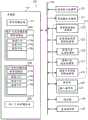
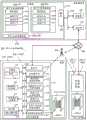
Fig. 1 is a block diagram showing an example of the configuration of an information processing apparatus according toembodiment 1 of the present invention.
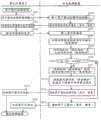
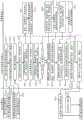
Fig. 2 is a diagram showing an example of an operation sequence of the user registration process according toembodiment 1 of the present invention.
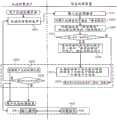
Fig. 3 is a diagram showing an example of an operation sequence of the user authentication process according toembodiment 1 of the present invention.
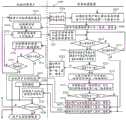
Fig. 4 is a diagram showing an example of an operation sequence of the user authentication process according toembodiment 1 of the present invention.
Fig. 5 is a block diagram showing an example of the configuration of a user authentication network system according to embodiment 2 of the present invention.
Fig. 6 is a diagram showing an example of an operation sequence of the user registration processing in embodiment 2 of the present invention.
Fig. 7 is a diagram showing an example of an operation sequence of the user authentication process according to embodiment 2 of the present invention.
(symbol description)
100. 400: an information processing device; 101: a controller; 114: a memory; 120: a voice input processing unit; 424: a memory; 430: a server device; 440: an external network; 450: a user authentication network system.
Detailed Description
Preferred embodiments for carrying out the present invention will be described in detail below with reference to the accompanying drawings. In the drawings for describing preferred embodiments of the present invention, the same reference numerals are given to the components having the same functions, and redundant description thereof will be omitted.
(embodiment mode 1)
Fig. 1 is a block diagram showing an example of the configuration of an information processing apparatus according toembodiment 1 of the present invention. As shown in fig. 1, theinformation processing apparatus 100 includes acontroller 101, amemory 114, a voiceinput processing unit 120, a voiceoutput processing unit 121, adisplay unit 128, acommunication unit 129, and a basestation communication unit 130. These components constituting theinformation processing apparatus 100 are connected to each other via abus 140.
Thememory 114 is a functional block for holding various information handled by theinformation processing apparatus 100. Thememory 114 includes a nonvolatile memory such as a flash memory, and stores various programs executed by thecontroller 101, and various information such as voice characteristics and a voice password of each registered user. Thememory 114 includes aprogram storage area 113 and a user information storage area 106 (e.g., 106a to 106 c).
Theprogram storage area 113 is a storage area for storing various programs such as an OS (Operating System) and an application for controlling an operation. These programs are executed by thecontroller 101.
The userinformation storage area 106a is a storage area that stores user information of the user a, which is a registered user, for example. The userinformation storage area 106a includes a voice feature storage area 102a for storing voice features of the user a, a voice password storage area (e.g., 103a to 105a) for storing a voice password of the user a, and the like. The voicepassword storage areas 103a to 105a store voice passwords for user authentication of different users a. The number of the voice password storage areas may be smaller or larger than this.
The user information storage area 106B is a storage area that stores user information of the user B, which is a registered user, for example. The user information storage area 106B includes a voice feature storage area 102B for storing the voice feature of the user B, a voice password storage area (for example, 103B to 105B) for storing the voice password of the user B, and the like. The voice password storage areas 103B to 105B store voice passwords for user authentication of different users B. In addition, the number of the voice password storage areas in the userinformation storage area 106b may be smaller or larger than this.
The user information storage area 106C is a storage area that stores user information of the user C, which is a registered user, for example. The user information storage area 106C includes a voice feature storage area 102C (not shown) for storing the voice feature of the user C, a voice password storage area (e.g., 103C to 105C, not shown) for storing the voice password of the user C, and the like. The voice password storage areas 103C to 105C store voice passwords for user authentication of different users C. In the userinformation storage area 106c, the number of voice password storage areas may be smaller or larger than this.
The voiceinput processing unit 120 includes a microphone for voice input and the like. The voiceinput processing unit 120 takes in an external voice through a microphone and converts the taken-in voice into a voice signal. The voiceinput processing unit 120 outputs the voice signal to thememory 114 and thecontroller 101. Thememory 114 may store the voice signal output from the voiceinput processing unit 120.
The voiceoutput processing unit 121 includes a speaker for voice output and the like. The voiceoutput processing unit 121 plays the voice based on the voice signal to the outside through the speaker.
Thecontroller 101 is a functional block that controls each part constituting theinformation processing apparatus 100. Thecontroller 101 includes a CPU (Central Processing Unit), a RAM (Random Access Memory), and the like. Thecontroller 101 reads various programs such as an OS and an operation control application from theprogram storage area 113 of thememory 114 and develops the programs in the RAM. Then, thecontroller 101 executes the program developed in the RAM by the CPU, thereby implementing each function block such as the voice featureextraction processing unit 122, the voice feature matchingdetermination processing unit 123, the voice passwordgeneration processing unit 124, the voice passwordextraction processing unit 125, and the voice password matchingdetermination processing unit 126 shown in fig. 1 in the CPU. Thecontroller 101 controls the operation of theinformation processing apparatus 100 by these functional blocks. Further, each functional block in thecontroller 101 may be implemented by only software, or may be implemented by software and hardware.
The voice featureextraction processing unit 122 extracts the voice feature of the person who uttered the voice from the voice signal output from the voiceinput processing unit 120. Note that the processing for extracting the speech feature may be performed by a known technique generally used in a so-called speech recognition process. Specifically, a speech signal is subjected to frequency analysis in a section of several tens of ms, so that frequency information (sound spectrum) of the speech is acquired in time series, and the sound spectrum is extracted as a speech feature.
The voice feature matching anddetermination processing unit 123 compares and compares the voice feature extracted by the voice featureextraction processing unit 122 with the voice features of the registered users stored in the voice feature storage areas (e.g., 102a to 102c) of thememory 114, and determines whether or not the two match.
The voice passwordgeneration processing unit 124 generates a plurality of voice passwords from the voice characteristics stored in the voice characteristic storage area. The voice passwordgeneration processing unit 124 generates a plurality of voice passwords for the user a based on the voice characteristics stored in the voice characteristic storage area 102a, for example. Similarly, the voice passwordgeneration processing unit 124 generates a plurality of voice passwords by the user B, C, based on the voice characteristics stored in the voicecharacteristic storage areas 102b and 102c, for example.
In addition, in the use of theinformation processing apparatus 100, the voice characteristics of the registered user are updated at any time. Therefore, the voice passwordgeneration processing unit 124 may generate a new voice password from the updated voice feature. The voice passwordgeneration processing unit 124 stores the generated voice password in the voice password storage area of the corresponding registered user.
In the user authentication process, the voice passwordextraction processing unit 125 extracts a voice password from a voice uttered by the authentication target user.
The voice password matchingdetermination processing unit 126 compares the voice password extracted by the voice passwordextraction processing unit 125 with the voice password stored in the user information storage area of thememory 114, and determines whether or not the two are identical.
Thedisplay unit 128 includes a display panel such as a liquid crystal panel, and displays various information notified to the user. For example, in the user authentication process, thedisplay unit 128 displays information such as a text of a voice password to be uttered by the authentication target user. Thedisplay unit 128 is provided with aninput operation unit 127. Theinput operation unit 127 is an input device such as a keyboard or a mouse, and inputs various kinds of information by a user operation.
Note that the display panel may be configured by a touch panel of a capacitance type or the like, and may be used as theinput operation unit 127. In this case, the user inputs various information by bringing a finger, a touch pen, or the like close to the touch panel or by a contact operation.
Thecommunication unit 129 is a communication interface that is connected to an external network via, for example, a wireless LAN or a wired LAN, and transmits and receives information to and from a device connected to the external network.
The basestation communication unit 130 is a communication interface for performing long-distance wireless communication such as W-CDMA (Wideband Code Division Multiple Access) and GSM (registered trademark) (Global System for Mobile communications). The basestation communication unit 130 transmits and receives information to and from a device connected for long-distance wireless communication via a transmission/reception antenna.
In addition, in the voice feature extraction process, when connection to an external database is required, theinformation processing apparatus 100 accesses the external database via thecommunication unit 129 and the basestation communication unit 130, and transmits and receives various kinds of information to and from the external database.
< user registration processing >
Next, the user registration process of the present embodiment will be described. Fig. 2 is a diagram showing an example of an operation sequence of the user registration process according toembodiment 1 of the present invention. In fig. 2, the left side shows the operation of the registration target user, and the right side shows the operation of theinformation processing apparatus 100. The user registration process is a process for registering a user with theinformation processing apparatus 100. In the user registration process, the following processes of steps S201 to S215 are performed.
First, in step S201, the registration target user performs an input operation from theinput operation unit 127 to start the user registration process. For example, the registration target user performs an operation of a registration start button, a touch operation of a registration start button displayed on the display panel, an input operation of a provisional password, or the like.
Theinformation processing apparatus 100 receives a registration start input from the input operation unit 127 (S202), and requests the registration target user to utter a certain registration voice (S203). Specifically, theinformation processing unit 100 makes a request to the registration target user by displaying the request for the speech utterance on thedisplay unit 128 or by transmitting the request for the speech utterance by voice from the speechoutput processing unit 121 via a speaker.
When recognizing a request for speech utterance of the information processing apparatus 100 (S204), the registration target user utters a certain type of registration speech toward the information processing apparatus 100 (S205).
When a registration voice is uttered from the registration target user, the voiceinput processing unit 120 takes in the registration voice, converts the registration voice into a voice signal (1 st voice signal), and outputs the voice signal to thecontroller 101 via the bus 140 (S206).
The voice featureextraction processing unit 122 extracts the voice feature (1 st voice feature) of the registration target user from the voice signal output from the voice input processing unit 120 (S207). Then, the voice feature matching anddetermination processing unit 123 compares and compares the voice feature of the registration target user with the voice features of the registered users already stored in the voice feature storage areas (e.g., 102a to 102c) of the memory 114 (S208), and determines whether or not the voice feature of the registration target user is already stored in the voice feature storage areas (e.g., 102a to 102c) (S209).
When determining that the voice feature of the registration target user does not match the voice feature of the registered user stored in the voice feature storage area (e.g., 102a to 102c) (no), thecontroller 101 determines that the registration target user is an unregistered new registration user, and stores the voice feature of the registration target user in thememory 114 in association with the registration target user (S210). Specifically, thecontroller 101 newly allocates the user information storage area 106 for the registration target user, and stores the voice feature of the registration target user in the voice feature storage area 102 of the newly allocated user information storage area 106 (S210).
Then, the voice passwordgeneration processing unit 124 generates a plurality of voice passwords of the user to be registered based on the voice characteristics of the user to be registered, and stores the generated plurality of voice passwords in the voice password storage area (for example, 103 to 105) of the newly allocated user information storage area 106 (S211).
Thecontroller 101 notifies the registration target user of the completion of the user registration processing by displaying on thedisplay unit 128 and playing from the voice output processing unit 121 (step S212). Further, thecontroller 101 may notify the registration target user of the completion of the user registration processing by using both the display on thedisplay unit 128 and the playback from thevoice output display 121.
The registration target user recognizes that the user registration process is completed based on the notification from the information processing apparatus 100 (S213). This completes a series of processing related to the user registration processing.
On the other hand, in step S209, when the voice feature of the registration target user matches the voice feature stored in a certain voice feature storage area (e.g., 102a to 102c) (yes), thecontroller 101 determines that the registration target user is a registered user who has already been registered, and notifies the registration target user that the registration target user has already been registered by displaying on thedisplay unit 128 and playing from the voice output processing unit 121 (step S214). In this case, thecontroller 101 may use both the display on thedisplay unit 128 and the playback from theaudio output display 121.
Further, the user recognizes that the user has registered himself or herself based on the notification from the information processing apparatus 100 (S213). This also ends a series of processing related to user registration.
Theinformation processing apparatus 100 performs these user registration processes each time if there is a request from a registration target user.
< user authentication processing >
Next, a user authentication process in the present embodiment will be described. Fig. 3 to 4 are diagrams showing an example of an operation sequence of the user authentication process according toembodiment 1 of the present invention. In fig. 3 to 4, the operation of the authentication target user is also shown on the left side, and the operation of theinformation processing apparatus 100 is shown on the right side. Fig. 4 shows a detailed processing content of the main sequence S350 in fig. 3. In the main sequence S350 of fig. 3, only the steps representing the main sequence and the connection relationship outside the main sequence are simply shown.
First, in step S301, the authentication target user issues a certain authentication voice to theinformation processing apparatus 100 in order to start the user authentication process.
The voiceinput processing unit 121 takes in the authentication voice uttered by the authentication target user, converts the authentication voice into a voice signal (2 nd voice signal), and outputs the voice signal to thecontroller 101 via the bus 140 (S302).
The voice characteristics (2 nd voice characteristics) of the authentication target user are extracted from the voice signal output from the voice input processing unit 120 (S303). Then, the voice feature comparison anddetermination processing unit 123 compares and compares the voice feature of the user to be authenticated with the voice features of the registered users already stored in the voice feature storage area (e.g., 102a to 102c) of the memory 114 (S304), and determines whether or not the voice feature of the user to be authenticated is already stored in the voice feature storage area (e.g., 102a to 102c) (S305).
When the voice feature of the authentication target user does not match the voice feature of the registered user stored in the voice feature storage area (102a to 102c, …) (no), thecontroller 101 determines that the authentication target user is not registered but is not the registered user, and notifies the authentication target user that the user authentication processing cannot be performed by displaying the voice feature to thedisplay unit 128 and playing the voice feature from the voice output processing unit 121 (S324).
When the authentication target user recognizes that the user authentication process cannot be performed based on the notification issued from the information processing apparatus 100 (S325), it is determined whether or not the user authentication process is performed again (S326). Then, when the authentication target user determines that the user authentication process is to be performed again (yes), the authentication voice is emitted again in step S301 again. When the authentication target user determines that the user authentication process is not to be performed again (no), the user authentication process is terminated.
On the other hand, in step S305, when the voice feature matchingdetermination processing unit 123 determines that the voice feature of the authentication target user matches the voice feature stored in a certain voice feature storage area (for example, 102a) (yes), thecontroller 101 locks the registered user (for example, user a) corresponding to the voice feature matching the voice feature of the authentication target user as the specific user to be authenticated by the voice password (S306).
When a specific user (for example, user a) is locked, thecontroller 101 randomly selects 1 voice password from a plurality of voice passwords stored in the voice password storage area (for example, 103a to 105a) of the user information storage area (for example, 106a) corresponding to the specific user (S307). Then, thecontroller 101 presents the selected voice password to the authentication target user by displaying on thedisplay unit 128 and playing from the voiceoutput processing unit 121, and prompts the authentication target user to speak the presented voice password (S308).
When the authentication target user recognizes the voice password notified from the information processing apparatus 100 (S309), the user speaks the recognized voice password (S310).
After presenting the voice password to the authentication target user, the voiceinput processing unit 120 takes in the voice of the voice password uttered by the authentication target user, converts the voice of the voice password into a voice signal (3 rd voice signal), and outputs the voice signal to thecontroller 101 via thebus 140. Then, the voice passwordextraction processing unit 125 extracts the voice password issued by the authentication target user from the acquired voice signal (S311).
In parallel with these processes, thecontroller 101 notifies the authentication target user of the voice password, and then determines whether or not the voice of the voice password issued by the authentication target user has been taken (S312). Further, thecontroller 101 measures the presentation time elapsed since the voice password was notified to the authentication target user, and determines whether or not the presentation time has elapsed by a preset timeout time (S313).
For example, when it is determined in step S312 that the voice of the voice password uttered by the authentication target user is not taken (no) and it is determined in step S313 that the presentation time has not elapsed (no), thecontroller 101 performs the process of step S312 again. That is, in this case, theinformation processing apparatus 100 continues to stand by to take in the voice of the voice password uttered by the authentication target user.
For example, when it is determined in step S312 that the voice of the voice password issued by the authentication target user is not taken (no) and it is determined in step S313 that the presentation time has elapsed after the time-out time (yes), thecontroller 101 stops the user authentication process because the time has elapsed (time-out). Then, thecontroller 101 notifies the authentication target user that the user authentication processing is stopped due to a timeout by the display on thedisplay unit 128 and the playback from the voice output processing unit 121 (S327).
The authentication target user recognizes that the user authentication process is stopped due to the timeout (S328), and determines whether or not to perform the user authentication process again (S326). Since step S326 has already been described, the following processing will not be described.
On the other hand, in step S312, when thecontroller 101 determines that the voice uttered by the authentication target user has been captured (yes), that is, when it determines that the voice password has been captured within the time-out period, the voice password collationdecision processing section 126 compares the voice password presented to the authentication target user with the voice password extracted from the voice signal (3 rd voice signal) of the authentication target user (S314), and determines whether or not these voice passwords match (S315).
In step S315, when the voice password collationdecision processing unit 126 decides that the voice passwords do not match (no), thecontroller 101 notifies the authentication target user of the match of the voice passwords by displaying the voice passwords on thedisplay unit 128 and playing the voice passwords from the voice output processing unit 121 (S329).
The authentication target user recognizes that these voice passwords do not match based on a notification from theinformation processing apparatus 100. That is, the authentication target user recognizes that the presented voice password does not match the voice password issued by the user (S330), and determines whether or not to issue the voice password again (S331).
In step S331, if the authentication target user determines that the speech password is not to be uttered again (no), the process of step S326 is performed. Step S326 has already been described, and therefore, the description is omitted.
On the other hand, if the authentication target user determines in step S331 that the voice password is to be re-uttered (yes), it is determined whether or not a re-notification of the voice password is requested to the information processing apparatus 100 (S332). If the authentication target user determines in step S332 that a re-notification of the voice password is not requested (no), the process returns to step S310, and the same voice password as that of the previous notification is issued again.
On the other hand, if the authentication target user determines in step S332 that a re-notification of the voice password is requested (yes), a re-notification of the voice password is requested to theinformation processing apparatus 100 by a voice or input operation (S333).
Then, theinformation processing apparatus 100 takes in a re-notification request from the authentication target user (S334), and performs the processing of steps S307 to S308 again, thereby notifying the authentication target user of another voice password of the specific user.
However, if the voice password matchingdetermination processing unit 126 determines in step S315 that the voice password of the specific user presented to the authentication target user matches the voice password extracted from the voice signal (3 rd voice signal) of the authentication target user (yes), the voice featureextraction processing unit 122 extracts the voice feature (3 rd voice feature) from the voice signal of the voice password uttered by the authentication target user acquired in step S311 (S316). Then, the speech feature matchingdiscrimination processing unit 123 compares and matches the extracted speech feature with the speech feature of the specific user (for example, user a) (S317), and determines whether or not the speech features of both match (S318).
When the voice feature matchingdetermination processing unit 123 determines that the voice features do not match (no), thecontroller 101 notifies the authentication target user that the user authentication is not possible (S324).
On the other hand, when the voice feature matchingdetermination processing unit 123 determines that the voice features match (yes), thecontroller 101 determines that the authentication target user is a specific user (for example, user a), and completes the user authentication processing. Then, thecontroller 101 notifies the user to be authenticated of the completion of the user authentication process by display on thedisplay unit 128 and playback from the voice output processing unit 121 (S319). The authentication target user recognizes that the user is authenticated as a registered user based on the notification from theinformation processing apparatus 100, and the user authentication process is completed (S320). This completes the user authentication process.
< after completion of user authentication processing >
The registered user (specific user, for example, user a) who performs authentication can utilize various functions of the information processing apparatus 100 (S340). Specifically, the authenticated registered user can operate the wireless communication function, the telephone function, and the like of theinformation processing apparatus 100 by performing an input operation to the information processing apparatus 100 (S341) (S342).
When the authenticated registered user performs an input operation such as a click operation of an icon in step S341,information processing apparatus 100 executes the corresponding application and realizes various functions in step S342.
The voiceinput processing unit 120 takes in a voice (post-authentication voice) uttered by a registered user who has been authenticated by a call, voice operation, or the like, and converts the voice into a voice signal (4 th voice signal). Then, thecontroller 101 extracts the voice feature (4 th voice feature) of the registered user who has passed the authentication from the voice signal, and updates the voice feature of the registered user stored in thememory 114 based on the extracted voice feature.
Then, the voice passwordgeneration processing unit 123 generates a new voice password from the updated voice feature, and stores the new voice password in thememory 114. In this way, theinformation processing apparatus 100 can generate a more complicated voice password by continuously updating the voice feature for each registered user.
Further, theinformation processing apparatus 100 may issue an instruction by screen display or voice output so as to request more sentences for the registered user in use. For example, theinformation processing apparatus 100 makes a conversation with a registered user, or instructs a registered user with a low frequency of use, or a registered user with a low frequency of input operation by voice to utter voice. Thus, theinformation processing apparatus 100 can collect more voices of the registered users, update voice characteristics as needed, and generate a more complicated voice password. This improves the security of theinformation processing apparatus 100.
< scope of use of information processing apparatus >
Theinformation processing apparatus 100 according to the present embodiment is mounted on, for example, a Head Mounted Display (HMD), and performs user registration processing and user authentication processing for a user of the HDM. Theinformation processing apparatus 100 may be, for example, a mobile phone, a smartphone, a tablet terminal, an AI speaker, or the like.
< effects and the like >
According to the present embodiment, thecontroller 101 generates a voice password of a registration target user based on the voice characteristics stored in the registration in the user registration process, and causes the authentication target user to issue the voice password in the user authentication process.
According to this configuration, since the registered user does not need to associate and memorize the voice password, it is possible to perform user authentication with high security and with easy use by using voice input.
In addition, according to the present embodiment, thecontroller 101 generates a plurality of voice passwords for each registered user, and presents a voice password randomly selected from the plurality of voice passwords to the authentication target user.
According to this configuration, since the voice password is automatically generated, it is not necessary to perform a password registration operation by a registered user, and usability can be further improved. Further, according to this configuration, the voice password presented to the user to be authenticated can be a one-time voice password only at that time, and therefore, it is possible to prevent unauthorized authentication by a third person through eavesdropping or eavesdropping.
Further, according to the present embodiment, thecontroller 101 stops the user authentication process when determining that the timeout period has elapsed since the voice password was presented to the authentication target user.
It takes a considerable time for a third person to obtain a one-time voice password by eavesdropping or eavesdropping. Therefore, according to this configuration, it is possible to further prevent unauthorized authentication of a third person who uses a one-time voice password.
In the present embodiment, when determining that the voice password presented to the authentication target user and the voice password uttered by the authentication target user match, thecontroller 101 performs processing for extracting a voice feature (voice feature 3) from the voice password uttered by the authentication target user and determining whether or not the voice feature matches the voice feature of the specific user. However, the present invention is not limited to such a sequence, and thecontroller 101 may determine that the user to be authenticated is a specific user and end the user authentication process when determining that the voice password presented to the user to be authenticated matches the voice password issued by the user to be authenticated.
With this configuration, the time required for user authentication is shortened, and usability can be further improved while ensuring the security of the user authentication process.
In the present embodiment, when a voice for authentication is captured (S303) and a voice password is captured (S311), voice features are extracted 2 times and compared with voice features stored for registration (S314 to S315). In this case, the threshold for the matching determination of the feature amount of the voice feature may be set to be wide to the extent that the registered user whose feature amount is the closest to the feature amount is locked to the specific user in step S303, and the threshold for the matching determination of the feature amount of the voice feature may be set to be narrow in step S311, and only when the matching degree of the voice features is high, it may be determined that the authentication target user is the specific user.
In the present embodiment, the voice passwordgeneration processing unit 124 may appropriately change the complexity of the voice password by the word, the length of the sentence, the number of voice passwords, and the like. With this configuration, it is possible to take necessary security level and use situation into consideration, and to ensure safety and convenience in a well-balanced manner.
In the present embodiment, the voice password may be changed periodically, or the voice password that has been used once may be avoided from being reused. This can further prevent unauthorized authentication by a third person, and can further improve security.
The voice characteristics of the registered user sometimes vary depending on the time period. Therefore, theinformation processing apparatus 100 can register and hold the voice feature for each time slot also for each registered user. Further, thecontroller 101 may also perform the user authentication process by using a voice password of a voice feature that matches the time period. According to this configuration, since the user authentication process using a more suitable voice feature is performed, the accuracy of user authentication can be improved.
Further, since there is a possibility that the voice of the voice password of the authentication target user in the user authentication process may be intercepted by a third person outdoors, the voice password used outdoors may be used indoors only.
In the present embodiment, the case where the voice passwordgeneration processing unit 124 automatically generates the voice password has been described, but the voice uttered by the registered user may be registered as the voice password.
In the present embodiment, the case where a randomly selected voice password is presented to the user has been described, but a plurality of voice passwords may be presented and the user to be authenticated may select a voice password to be uttered from among the plurality of voice passwords.
When the user authentication process is started, the authentication target user may be assumed to emit a certain authentication voice, but a voice registered in advance by a registered user may be emitted as the authentication voice.
(embodiment mode 2)
Next, embodiment 2 will be explained. In this embodiment, a user authentication network system that performs user authentication with a server device via a network will be described. In the following, descriptions overlapping with those of the above embodiments are appropriately omitted.
Fig. 5 is a block diagram showing an example of the configuration of a user authentication network system according to embodiment 2 of the present invention. The user authentication network system 450 shown in fig. 5 includes the information processing apparatuses 400 (e.g., 400-1 and 400-2), theserver apparatus 430, and theexternal network 440. Theexternal network 440 connects theinformation processing apparatus 400 and theserver apparatus 430.
The information processing apparatuses 400 (e.g., 400-1, 400-2) are respectively included in facilities 420 (e.g., 420-1 to 420-2). The facilities 420 (for example, 420-1 to 420-2) are respectively provided with, for example, information processing devices 400 (for example, 400-1 to 400-2) and entry gates 410 (for example, 410-1 to 410-2).
Theentry gateway 410 is disposed near the entrance of thefacility 420, for example. Theinformation processing apparatus 400 is disposed near theentry portal 410, and performs user authentication processing for a user who wants to pass through theentry portal 410 as an authentication target. The user to be authenticated after the user authentication is permitted to pass through theentry portal 410, and can enter thefacility 420.
Since the facility 420-2 has the same structure as the facility 420-1, the facility 420-1 will be described as an example. The information processing apparatus 400-1 is similar in structure to theinformation processing apparatus 100 ofembodiment 1. The information processing apparatus 400-1 is different from theinformation processing apparatus 100 in that: thememory 114 is not provided with the user information storage area 106, and is additionally provided with a functionaloperation control unit 401.
The functionoperation control unit 401 is a function block that controls the open/close state of the corresponding entry gate 410-1. When the user authentication process is completed in the information processing apparatus 400-1, the functionoperation control section 401 transmits an entry gate control signal for switching theentry gate 410 from the closed state to the open state. Thus, the authenticated user can pass through the entry gateway 410-1.
Theserver device 430 is a device for managing information of registered users permitted to enter thefacility 420. As shown in fig. 4, theserver apparatus 430 includes acontroller 421, amemory 424, acommunication unit 429, and the like. Each unit constituting theserver 430 is connected to each other via abus 428.
Thememory 424 is a functional block that stores various information related to theserver apparatus 430. Thememory 424 stores various information such as various programs used in thecontroller 421, voice characteristics of each registered user, and a voice password. Thememory 424 includes aprogram storage area 423 and a plurality of userinformation storage areas 426. The userinformation storage area 426 corresponds to the user information storage area 106 of fig. 1. In fig. 4, user information storage areas 426E to 426G corresponding to users E to G as registered users are shown.
Theprogram storage area 423 is a storage area for storing various programs such as an OS and an operation control application. These programs are developed and executed by thecontroller 421.
The user information storage area 426E is a storage area for storing user information of the user E. The user information storage area 426E includes, for example, a speech feature storage area 422E for storing speech features of the user E, speech password storage areas 423E to 425E for storing speech passwords of the user E, and the like. Voice passwords different from each other are stored in voicepassword storage areas 423e to 425 e. Similarly toinformation processing apparatus 100, the number of voice password storage areas may be smaller or larger.
The user information storage area 426F is a storage area for storing user information of the user F. The user information storage area 426F includes, for example, a speech feature storage area 422F for storing speech features of the user F, speech password storage areas 423F to 425F for storing speech passwords of the user F, and the like.
The user information storage area 426G is a storage area for storing user information of the user G. Although not shown, the user information storage area 426G also includes a voice feature storage area for storing voice features of the user G, a plurality of voice password storage areas for storing voice passwords of the user G, and the like.
Thecommunication unit 429 is a communication interface connected to theexternal network 440, and transmits and receives information to and from theinformation processing apparatus 400 via theexternal network 440. Specifically, thecommunication unit 129 of theinformation processing apparatus 400 is connected to thecommunication unit 429 of theserver 430 via theexternal network 440, and information is transmitted and received between the communication units.
In the user registration process, thecontroller 421 receives the voice feature and the voice password of the registration target user transmitted from theinformation processing apparatus 400 via thecommunication unit 429, and stores the voice feature and the voice password in thememory 424. In the user authentication process, thecontroller 421 transmits the voice feature and the voice password stored in thememory 424 to theinformation processing apparatus 400 via thecommunication unit 429.
< user registration processing >
Next, a user registration process in the user authentication network system 450 will be described. In the following, the user registration process will be described by taking the process between the information processing apparatus 400-1 (facility 420-1) and theserver apparatus 430 as an example, but the same process is performed between the otherinformation processing apparatus 400 and theserver apparatus 430.
Fig. 6 is a diagram showing an example of an operation sequence of the user registration processing in embodiment 2 of the present invention. In fig. 6, the operation of the registration target user is shown on the left side, the operation of the information processing apparatus 400-1 is shown in the center, and the operation of theserver apparatus 430 is shown on the right side. In fig. 6, steps for performing the same processing as in fig. 2 are denoted by the same reference numerals, and detailed description of the corresponding steps is appropriately omitted.
In the user registration process of the present embodiment, the processes of steps S201 to S207, S212 to S215, and the following steps S501 to S514 are performed. First, the respective processes from the input operation (S201) for starting the user registration process by the registration target user to the extraction process (S207) for extracting the voice feature by the information processing apparatus 400-1 will not be described.
After performing the voice feature extraction process (1 st voice feature), the information processing apparatus 400-1 transmits a voice feature transmission request to the server apparatus 403 so that the voice features of all the registered users stored in theserver apparatus 430 are transmitted to the information processing apparatus 400-1 (S501).
Upon receiving the transmission request of the voice characteristics of the registered user transmitted from the information processing apparatus 400-1 (S502), the server apparatus 403 transmits the voice characteristics of all the registered users stored in thememory 424 to the information processing apparatus 400-1 (S503). When managing the registered user for each information processing apparatus 400 (facility 420),server apparatus 430 transmits only the voice feature of the registered user of the information processing apparatus (for example, 400-1) that has requested the transmission of the voice feature.
When the information processing apparatus 400-1 receives the voice feature transmitted from the server apparatus 403 (S504), the voice feature matchingdetermination processing unit 123 compares and matches the voice feature extracted in step S207 with the received voice feature of the registered user (S505), and determines whether or not the extracted voice feature is already registered (S506). When determining that the extracted voice feature does not match the voice feature of any of the registered users (no), thecontroller 101 determines that the registration target user is an unregistered new registered user, and transmits the extracted voice feature to the server device 430 (S507).
Upon receiving the voice feature transmitted from the information processing apparatus 400-1, theserver apparatus 430 registers the received voice feature in the userinformation storage area 426 of unregistered user information in the memory 424 (S508). Specifically, thecontroller 421 newly allocates the userinformation storage area 426 for the registration target user, and stores the voice characteristics of the registration target user in the voice characteristic storage area of the newly allocated userinformation storage area 426. Then, theserver apparatus 430 transmits a save completion notification for notifying completion of registration save of the received voice feature to the information processing apparatus 400-1 (S509).
Upon receiving the transmitted notification of completion of registration of the voice feature (S510), the information processing apparatus 400-1 generates a plurality of voice passwords in response to the registered voice feature and transmits the generated voice passwords to the server apparatus 403 (S511).
The voice passwordgeneration processing unit 124 generates voice passwords of a plurality of newly registered users based on the registered voice characteristics. Then, information processing apparatus 400-1 transmits the plurality of generated voice passwords to server apparatus 430 (S511).
Upon receiving the plurality of voice passwords transmitted from the information processing apparatus 400-1, theserver apparatus 430 stores the received voice passwords in the voice password storage area of the userinformation storage area 426 corresponding to the newly registered user (S512), and transmits a registration completion notification indicating completion of the storage of the registered voice passwords to the information processing apparatus 400-1 (S513).
After the information processing apparatus 400-1 receives the registration completion notification of the voice password (S514), the user registration process is completed. Thecontroller 101 of the information processing apparatus 400-1 notifies the registration target user (newly registered user) of the completion of the user registration by the playback from the voiceoutput processing section 121 on the display of the display section 128 (step S212).
On the other hand, in step S506, when the extracted voice feature of the registration target user matches any of the voice features transmitted from the server 430 (yes), thecontroller 101 determines that the registration target user is a registered user who has already been registered, and notifies the registration target user that registration has been performed by displaying on thedisplay unit 128 and playing from the voice output processing unit 121 (step S214). Further, detailed description of steps S212 to S215 is omitted.
< user authentication processing >
Next, a user authentication process in the present embodiment will be described. In the following, the user authentication process will be described by taking the process between the information processing apparatus 400-1 (facility 420-1) and theserver apparatus 430 as an example, but the same process will be performed between the other information processing apparatus 400 (facility 420) and theserver apparatus 430.
Fig. 7 is a diagram showing an example of an operation sequence of the user authentication process according to embodiment 2 of the present invention. In fig. 7, the operation of the authentication target user is shown on the left side, the operation of the information processing apparatus 400-1 is shown in the center, and the operation of theserver apparatus 430 is shown on the right side. In fig. 7, steps for performing the same processing as in fig. 3 to 4 are denoted by the same reference numerals, and detailed description of the corresponding steps is appropriately omitted. In addition, the main sequence S350 in fig. 7 is the same as that in fig. 4, and only the steps showing the main sequence and the connection relationship outside the main sequence are simply shown.
First, the steps S301 to S303 from the generation of the authentication voice from the authentication target user (S301) to the extraction of the voice feature of the authentication target user from the voice signal of the authentication voice by the information processing apparatus 400 (S303) when the user authentication process is started will be omitted from the description.
After extracting the voice feature of the authentication target user, the information processing apparatus 400-1 transmits a request for transmitting the voice feature to theserver apparatus 430 so that the voice feature registered in theserver apparatus 430 is transmitted to the information processing apparatus 400-1 (S601).
Upon receiving the transmission request of the voice feature from the information processing apparatus 400 (S602), theserver apparatus 430 transmits the voice feature registered in thememory 424 to the information processing apparatus 400-1 (S603).
Upon receiving the voice feature transmitted from the server apparatus 403, the information processing apparatus 400-1 temporarily stores the received voice feature in, for example, the RAM or thememory 114 in the controller 101 (S604).
The voice feature matching anddetermination processing unit 123 compares and matches the voice feature extracted in step S303 with the voice feature of the registered user received from the server apparatus 430 (S304), and determines whether or not the extracted voice feature is already registered (S305).
When the voice feature matching anddetermination processing unit 123 determines that the extracted voice feature of the authentication target user matches any one of the voice features received from the server device 430 (yes), thecontroller 101 locks a registered user (for example, the user E) corresponding to the voice feature matching the voice feature of the authentication target user as a specific user to be authenticated using the voice password (S306). After locking a specific user (for example, user E), information processing apparatus 400-1 transmits a transmission request of a voice password of the specific user to server apparatus 430 (S605).
Whenserver apparatus 430 receives a request for transmitting a voice password from information processing apparatus 400-1 (S606),controller 421 reads all the voice passwords from the plurality of voice password storage areas (423E to 425E) corresponding to user E, and transmits the read voice passwords to information processing apparatus 400-1 via communication unit 429 (S607).
Upon receiving the voice password transmitted fromserver apparatus 430, information processing apparatus 400-1 temporarily stores the received voice password in, for example, RAM ormemory 114 in controller 101 (S608).
Then, thecontroller 101 randomly selects 1 voice password from the received voice passwords of the specific user (user E) (S307).
On the other hand, in step S305, when the voice feature matching anddetermination processing unit 123 determines that the extracted voice feature does not match any of the voice features received from the server device 430 (no), thecontroller 101 notifies the user to be authenticated that the user cannot be authenticated by displaying the extracted voice feature on thedisplay unit 128 and playing the extracted voice feature from the voice output processing unit 121 (S324).
After steps S307 and S324, the processes included in the main sequence S350 in fig. 4 are performed. In step S320, the authentication target user may touch, for example, a confirmation button displayed on thedisplay unit 128, and notify the information processing apparatus 400-1 that the user authentication process is completed.
When the authentication target user recognizes that the user authentication process is completed, the functionoperation control unit 401 transmits an entry gateway control signal for switching the entry gateway 410-1 from the closed state to the open state. Thus, the entrance gateway 410-1 opens the door, and the user who is the authentication target of the user can enter the facility 420-1 through the entrance gateway 410-1 (S610).
In step S319, the process of step S610 may be performed after a predetermined standby time has elapsed since the user authentication completion is notified.
< effects and the like >
According to the present embodiment, the following effects are obtained in addition to the effects ofembodiment 1 described above. According to the present embodiment, the voice feature and the voice password of the registered user are stored inserver apparatus 430 installed at a location away frominformation processing apparatus 400, andinformation processing apparatus 400 receives the voice feature and the voice password fromserver apparatus 430 viaexternal network 440. With this configuration, it is possible to receive the voice feature and the voice password stored inserver apparatus 430 frominformation processing apparatuses 400 of allfacilities 420 connected toexternal network 440 and perform the user authentication process. In addition, management of various information of the registered user is unified.
In the present embodiment, a cloud server may be used as the server device. With this configuration, the capacity of theserver 430 increases, and more information of registered users can be stored. In addition, the construction and utilization of the database of registered users can be realized.
In addition, in the present embodiment, theinformation processing apparatus 400 may capture the voice uttered by the registered user after the user authentication process, update the voice characteristics as needed, and generate a new voice password from the updated voice characteristics. The updated speech characteristics and the new speech password are transmitted toserver apparatus 430 and stored inmemory 424.
In addition,information processing apparatus 400 may store the generated voice password in itsown memory 114, taking into consideration the capacity ofserver apparatus 430, the communication status withserver apparatus 430, and the like.
In the present embodiment, the door opening control of theentry gateway 410 is exemplified as the user authentication network system, but the present invention is not limited thereto, and the user authentication network system can be used in a place where a login process by a personal computer or the like, entry management for a plurality of rooms, or the like is performed.
In the examples shown in fig. 1 and 4, the voice uttered by the registration target user and the authentication target user is used when the user registration processing and the user authentication processing are started, but data information such as a user id (identification) for identifying the user may be input instead of the voice.
In this case, at the time of the user registration processing, theinformation processing apparatus 400 checks and determines whether or not the registration target user is a registered user based on the input data information, and if it is determined that the registration target user is not a registered user, notifies the registration target user so that a certain voice (may be a predetermined voice password) is uttered. Theinformation processing apparatus 400 may take in a voice uttered by a user, extract a voice feature from the voice, generate a voice password, and perform user registration with the registration target user together with the voice feature and the voice password.
In the user authentication process, theinformation processing apparatus 400 may judge whether or not the authentication target user is a registered user by comparing the input data information, and if it is judged that the authentication target user is a registered user, may randomly select a voice password of the registered user and present the voice password to the authentication target user.
The voiceinput processing unit 120 shown in fig. 1 and 4 is configured to capture a spoken voice with a microphone, but as a method of capturing a user's voice, there is a method of using bone conduction or the like. Bone conduction is based on air conduction sound that is transmitted to the auditory nerve by conducting vibration of the tympanic membrane in the air, that is, bone conduction sound that is transmitted directly to the auditory nerve by transmitting vibration of a sound collection voice vocal cord from the ear to the skull. For example, in a head-mounted display in which a display is attached to the head, not only the air-guide sound but also the bone-conduction sound based on bone conduction can be taken in with respect to the voice signal uttered from the user by attaching the display to the head, and in this case, the user registration processing and the user authentication processing are also performed in the same manner as in the embodiments shown in fig. 1 and 4.
The present invention is not limited to the above embodiment, and includes various modifications. The above-described embodiments are examples explained in detail to explain the present invention easily and understandably, and are not necessarily limited to all the configurations explained.
Further, a part of the structure of one embodiment may be replaced with the structure of another embodiment, and the structure of another embodiment may be added to the structure of one embodiment. Further, addition, deletion, and replacement of another configuration can be performed with respect to a part of the configurations of the respective embodiments. In addition, the relative sizes of the members shown in the drawings are simplified and idealized for the purpose of easily understanding the present invention, and the members may have a more complicated shape in mounting.
Claims (22)
1. An information processing apparatus includes:
a voice input processing unit, a memory, and a controller,
in the user registration process for registering a user with the information processing apparatus,
the voice input processing unit takes in a voice for registration uttered by a user to be registered, converts the voice for registration into a 1 st voice signal,
the controller performs the following processing:
extracting a 1 st speech feature from the 1 st speech signal, comparing the 1 st speech feature with speech features of registered users already stored in the memory, and if the 1 st speech feature does not match the speech features of the registered users, storing the 1 st speech feature in the memory in association with the registration target user, generating a speech password from the 1 st speech feature, and storing the speech password in the memory,
and performing user authentication processing of the user to be authenticated by using the voice password saved in the memory by the user registration processing.
2. The information processing apparatus according to claim 1,
in the user authentication process,
the voice input processing unit takes in a voice for authentication issued by a user to be authenticated, converts the voice for authentication into a 2 nd voice signal,
the controller extracts a 2 nd voice feature from the 2 nd voice signal, compares the 2 nd voice feature with the voice features of the registered users already stored in the memory, locks the registered user corresponding to the voice feature matching the 2 nd voice feature as a specific user when the 2 nd voice feature matches the voice features of the registered users, and presents a voice password of the specific user to the authentication target user,
the voice input processing unit takes in a voice of a voice password uttered by the authentication target user, converts the voice of the voice password uttered by the authentication target user into a 3 rd voice signal,
the controller extracts the voice password issued by the authentication target user from the 3 rd voice signal, compares the voice password of the specific user presented to the authentication target user with the voice password extracted from the 3 rd voice signal, and determines that the authentication target user is the specific user when the voice passwords match.
3. The information processing apparatus according to claim 2,
when the voice password of the specific user presented to the authentication target user matches the voice password extracted from the 3 rd voice signal, the controller extracts a 3 rd voice feature from the 3 rd voice signal, compares the 3 rd voice feature with the voice feature of the specific user, and determines that the authentication target user is the specific user when the 3 rd voice feature matches the voice feature of the specific user.
4. The information processing apparatus according to claim 2,
in the user registration process, the controller generates a plurality of voice passwords in accordance with the 1 st voice feature, and in the user authentication process, the controller presents the voice password selected at random from the plurality of voice passwords to the authentication target user.
5. The information processing apparatus according to claim 2,
in the user authentication process, the controller, after prompting the authentication target user for the voice password of the specific user,
determining whether or not the voice of the voice password issued by the authentication target user has been taken in,
measuring a presentation time elapsed since the voice password of the specific user is presented to the authentication target user, determining whether or not a timeout time has elapsed since the presentation time,
and stopping the user authentication processing when the presentation time has elapsed without taking in the voice of the voice password issued by the authentication target user.
6. The information processing apparatus according to claim 1,
after the user authentication processing is completed, the voice input processing unit takes in an authenticated voice uttered by the authenticated user to convert the authenticated voice into a 4 th voice signal,
the controller extracts a 4 th voice feature from the 4 th voice signal, updates the voice feature of the authenticated user to be stored in the memory based on the 4 th voice feature, generates a new voice password based on the updated voice feature, and stores the new voice password in the memory in association with the authenticated user to be authenticated.
7. A user authentication network system is provided with:
an information processing device provided with a voice input processing unit and a controller;
a server device provided with a memory; and
an external network connecting the information processing apparatus and the server apparatus, wherein,
in a user registration process for registering a user with the user authentication network system,
the voice input processing unit takes in a voice for registration uttered by a user to be registered, converts the voice for registration into a 1 st voice signal,
the controller extracts a 1 st speech feature from the 1 st speech signal,
the information processing apparatus transmits a transmission request of a voice feature of the registered user that has been saved in the memory to the server apparatus,
the server device transmits the voice feature of the registered user stored in the memory to the information processing device when receiving a transmission request of the voice feature of the registered user,
when the information processing apparatus receives the voice feature of the registered user, the controller compares the 1 st voice feature with the received voice feature of the registered user, and in the case of inconsistency,
the information processing apparatus transmits the 1 st speech feature to the server apparatus,
the server apparatus stores the received 1 st speech feature in the memory in association with the registration target user, and transmits a registration completion notification of the 1 st speech feature to the information processing apparatus,
when the information processing apparatus receives the registration completion notification, the controller generates a voice password based on the 1 st voice feature, transmits the generated voice password to the server apparatus,
the server device saves the received voice password to the memory when receiving the voice password,
the controller performs a user authentication process for authenticating a target user using the voice password saved in the memory by the user registration process.
8. The user authentication network system according to claim 7,
in the user authentication process,
the voice input processing unit takes in a voice for authentication issued by a user to be authenticated, converts the voice for authentication into a 2 nd voice signal,
the controller extracts a 2 nd speech feature from the 2 nd speech signal,
the information processing apparatus transmits a transmission request of a voice feature of the registered user to the server apparatus,
the server device transmits the voice feature of the registered user stored in the memory to the information processing device when receiving a transmission request of the voice feature of the registered user,
when the information processing apparatus receives the voice feature of the registered user, the controller compares the 2 nd voice feature with the received voice feature of the registered user, and in the case of coincidence, locks the registered user corresponding to the voice feature coincident with the 2 nd voice feature as a specific user,
the information processing apparatus transmits a transmission request of the voice password of the specific user to the server apparatus,
the server apparatus transmits the voice password of the specific user to the information processing apparatus upon receiving a transmission request of the voice password of the specific user,
the information processing apparatus prompts the authentication target user for the received voice password of the specific user,
the voice input processing unit takes in a voice of a voice password uttered by the user to be authenticated, converts the voice of the voice password uttered by the user to a 3 rd voice signal,
the controller extracts the voice password issued by the authentication target user from the 3 rd voice signal, compares the voice password of the specific user presented to the authentication target user with the voice password extracted from the 3 rd voice signal, and determines that the authentication target user is the specific user when the voice passwords match.
9. The user authentication network system according to claim 8,
when the voice password of the specific user presented to the authentication target user matches the voice password extracted from the 3 rd voice signal, the controller extracts a 3 rd voice feature from the 3 rd voice signal, compares the 3 rd voice feature with the voice feature of the specific user, and determines that the authentication target user is the specific user when the 3 rd voice feature matches the voice feature of the specific user.
10. The user authentication network system according to claim 8,
in the user registration process, the controller generates a plurality of voice passwords in accordance with the 1 st voice feature, and in the user authentication process, the controller presents the voice password selected at random from the plurality of voice passwords to the authentication target user.
11. The user authentication network system according to claim 8,
in the user authentication process, the controller, after prompting the authentication target user for the voice password of the specific user,
determining whether or not the voice of the voice password issued by the authentication target user has been taken in,
measuring a presentation time elapsed since the voice password of the specific user is presented to the authentication target user, determining whether or not a timeout time has elapsed since the presentation time,
and stopping the user authentication processing when the presentation time has elapsed without taking in the voice of the voice password issued by the authentication target user.
12. The user authentication network system according to claim 7,
after the user authentication processing is completed, the voice input processing unit takes in an authenticated voice uttered by the authenticated user to convert the authenticated voice into a 4 th voice signal,
the controller extracts a 4 th voice feature from the 4 th voice signal, updates the voice feature of the authenticated user stored in the memory based on the 4 th voice feature, generates a new voice password based on the updated voice feature,
the information processing apparatus transmits the updated voice feature and the new voice password to the server apparatus,
when receiving the updated voice feature and the new voice password, the server device stores the received updated voice feature and the new voice password in the memory in association with the authenticated user.
13. A user authentication method in an information processing device including a voice input processing unit, a memory, and a controller,
in a user registration process for registering a user with the information processing apparatus, the information processing apparatus includes:
a step in which the voice input processing unit takes in a voice for registration uttered by a registration target user and converts the voice for registration into a 1 st voice signal;
a step in which the controller extracts a 1 st speech feature from the 1 st speech signal;
a step in which the controller compares the 1 st voice feature with the voice features of the registered users already stored in the memory; and
a step in which the controller stores the 1 st voice feature in association with the user to be registered in the memory, generates a voice password from the 1 st voice feature, and stores the voice password in the memory, when the 1 st voice feature does not match the voice feature of the registered user,
the user authentication method includes: and a step in which the controller performs a user authentication process for authenticating a target user using the voice password saved in the memory by the user registration process.
14. The user authentication method according to claim 13,
the user authentication process includes:
a step in which the voice input processing unit takes in a voice for authentication issued by a user to be authenticated, and converts the voice for authentication into a 2 nd voice signal;
a step in which the controller extracts a 2 nd speech feature from the 2 nd speech signal;
a step in which the controller compares the 2 nd voice feature, the voice feature of the registered user that has been saved in the memory, and the 2 nd voice feature;
a step in which, when the voice feature of the registered user matches the 2 nd voice feature, the controller locks the registered user corresponding to the voice feature matching the 2 nd voice feature as a specific user, and presents a voice password of the specific user to the authentication target user;
a step in which the voice input processing unit takes in the voice of the voice password uttered by the authentication target user and converts the voice of the voice password uttered by the authentication target user into a 3 rd voice signal;
extracting, by the controller, the voice password issued by the authentication target user from the 3 rd voice signal;
comparing, by the controller, the voice password of the specific user presented to the authentication target user with the voice password extracted from the 3 rd voice signal; and
and a step in which the controller determines that the user to be authenticated is the specific user when the voice password of the specific user presented to the user to be authenticated matches the voice password extracted from the 3 rd voice signal.
15. The user authentication method according to claim 14, wherein the user authentication method has:
extracting, by the controller, a 3 rd speech feature from the 3 rd speech signal when the speech password of the specific user presented to the authentication target user matches the speech password extracted from the 3 rd speech signal;
a step in which the controller compares the 3 rd speech feature with the speech feature of the specific user; and
and a step in which the controller determines that the authentication target user is the specific user when the 3 rd speech feature matches the speech feature of the specific user.
16. The user authentication method according to claim 14,
in the user authentication process,
after the step of the controller prompting the authentication object user for the voice password of the specific user, the method comprises the following steps:
a step in which the controller determines whether or not the voice of the voice password issued by the authentication target user has been taken in;
a step in which the controller measures a presentation time elapsed since the voice password of the specific user is presented to the authentication target user;
the controller judges whether the prompt time passes overtime or not; and
and a step in which the controller stops the user authentication process when the presentation time has elapsed without taking in the voice of the voice password issued by the authentication target user.
17. The user authentication method according to claim 13,
after the user authentication processing is completed, the method includes:
a step in which the voice input processing unit takes in an authenticated voice uttered by the authenticated user to convert the authenticated voice into a 4 th voice signal;
a step in which the controller extracts a 4 th speech feature from the 4 th speech signal; and
and a step in which the controller updates the voice feature of the authenticated user to be stored in the memory according to the 4 th voice feature, generates a new voice password according to the updated voice feature, and stores the new voice password in the memory in association with the authenticated user to be authenticated.
18. A user authentication method in a user authentication network system, the user authentication network system comprising:
an information processing device provided with a voice input processing unit and a controller;
a server device provided with a memory; and
an external network connecting the information processing apparatus and the server apparatus,
wherein,
in a user registration process for registering a user with the user authentication network system, the method includes:
a step in which the voice input processing unit takes in a voice for registration uttered by a registration target user and converts the voice for registration into a 1 st voice signal;
a step in which the controller extracts a 1 st speech feature from the 1 st speech signal;
a step in which the information processing apparatus transmits a transmission request of a voice feature of a registered user, which has been stored in the memory, to the server apparatus;
a step in which the server apparatus transmits the voice feature of the registered user stored in the memory to the information processing apparatus when receiving a transmission request of the voice feature of the registered user;
a step in which, when the information processing apparatus receives a voice feature of the registered user, the controller compares the 1 st voice feature with the received voice feature of the registered user;
a step in which the information processing apparatus transmits the 1 st voice feature to the server apparatus when the 1 st voice feature does not coincide with the voice feature of the registered user;
a step in which the server apparatus stores the received 1 st speech feature in the memory in association with the registration target user, and transmits a registration completion notification of the 1 st speech feature to the information processing apparatus;
a step in which, when the information processing apparatus receives the registration completion notification, the controller generates a voice password based on the 1 st voice feature, and transmits the generated voice password to the server apparatus; and
a step in which the server device saves the received voice password in the memory when receiving the voice password,
the user authentication method includes: and a step in which the controller performs a user authentication process for authenticating a target user using the voice password saved in the memory by the user registration process.
19. The user authentication method of claim 18,
the user authentication process includes:
a step in which the voice input processing unit takes in a voice for authentication issued by a user to be authenticated, and converts the voice for authentication into a 2 nd voice signal;
a step in which the controller extracts a 2 nd speech feature from the 2 nd speech signal;
a step in which the information processing apparatus transmits a transmission request of the voice feature of the registered user to the server apparatus;
a step in which the server apparatus transmits the voice feature of the registered user stored in the memory to the information processing apparatus when receiving a transmission request of the voice feature of the registered user;
a step in which, when the information processing apparatus receives the voice feature of the registered user, the controller compares the 2 nd voice feature with the received voice feature of the registered user;
a step in which the controller locks a registered user corresponding to the voice feature of the registered user that coincides with the 2 nd voice feature as a specific user, when the voice feature of the registered user coincides with the 2 nd voice feature;
a step in which the information processing device transmits a request for transmitting the voice password of the specific user to the server device;
a step in which the server apparatus transmits the voice password of the specific user to the information processing apparatus when receiving a transmission request of the voice password of the specific user;
a step in which the information processing device presents the received voice password of the specific user to the authentication target user;
a step in which the voice input processing unit takes in the voice of the voice password uttered by the authentication target user and converts the voice of the voice password uttered by the authentication target user into a 3 rd voice signal;
extracting, by the controller, the voice password issued by the authentication target user from the 3 rd voice signal;
comparing, by the controller, the voice password of the specific user presented to the authentication target user with the voice password extracted from the 3 rd voice signal; and
and a step in which the controller determines that the user to be authenticated is the specific user when the voice password of the specific user presented to the user to be authenticated matches the voice password extracted from the 3 rd voice signal.
20. The user authentication method according to claim 19, wherein there are:
extracting, by the controller, a 3 rd speech feature from the 3 rd speech signal when the speech password of the specific user presented to the authentication target user matches the speech password extracted from the 3 rd speech signal;
a step in which the controller compares the 3 rd speech feature with the speech feature of the specific user; and
and a step in which the controller determines that the authentication target user is the specific user when the 3 rd speech feature matches the speech feature of the specific user.
21. The user authentication method of claim 19,
in the user authentication process,
after the step of the controller prompting the authentication object user for the voice password of the specific user, the method comprises the following steps:
a step in which the controller determines whether or not the voice of the voice password issued by the authentication target user has been taken in;
a step in which the controller measures a presentation time elapsed since the voice password of the specific user is presented to the authentication target user;
the controller judges whether the prompt time passes overtime or not; and
and a step in which the controller stops the user authentication process when the presentation time has elapsed without taking in the voice of the voice password issued by the authentication target user.
22. The user authentication method of claim 18,
after the user authentication processing is completed, the method includes:
a step in which the voice input processing unit takes in an authenticated voice uttered by the authenticated user to convert the authenticated voice into a 4 th voice signal;
a step in which the controller extracts a 4 th speech feature from the 4 th speech signal;
updating, by the controller, the voice feature of the authenticated user to be authenticated, which is stored in the memory, according to the 4 th voice feature, and generating a new voice password according to the updated voice feature;
a step in which the information processing device transmits the updated voice feature and the new voice password to the server device; and
and a step in which, when the server device receives the updated voice feature and the new voice password, the server device stores the received updated voice feature and the new voice password in the memory in association with the authenticated user.
Applications Claiming Priority (1)
| Application Number | Priority Date | Filing Date | Title |
|---|---|---|---|
| PCT/JP2018/033885WO2020054002A1 (en) | 2018-09-12 | 2018-09-12 | Information processing device, user authentication network system, and user authentication method |
Publications (1)
| Publication Number | Publication Date |
|---|---|
| CN112654983Atrue CN112654983A (en) | 2021-04-13 |
Family
ID=69776989
Family Applications (1)
| Application Number | Title | Priority Date | Filing Date |
|---|---|---|---|
| CN201880097254.6APendingCN112654983A (en) | 2018-09-12 | 2018-09-12 | Information processing apparatus, user authentication network system, and user authentication method |
Country Status (5)
| Country | Link |
|---|---|
| US (1) | US12306917B2 (en) |
| EP (1) | EP3851985A4 (en) |
| JP (1) | JP7078740B2 (en) |
| CN (1) | CN112654983A (en) |
| WO (1) | WO2020054002A1 (en) |
Families Citing this family (3)
| Publication number | Priority date | Publication date | Assignee | Title |
|---|---|---|---|---|
| JP7266448B2 (en)* | 2019-04-12 | 2023-04-28 | パナソニック インテレクチュアル プロパティ コーポレーション オブ アメリカ | Speaker recognition method, speaker recognition device, and speaker recognition program |
| JP7626039B2 (en) | 2021-11-24 | 2025-02-04 | トヨタ自動車株式会社 | User Authentication System |
| WO2024018429A1 (en)* | 2022-07-22 | 2024-01-25 | Samsung Electronics Co., Ltd. | Audio signal processing method, audio signal processing apparatus, computer device and storage medium |
Family Cites Families (25)
| Publication number | Priority date | Publication date | Assignee | Title |
|---|---|---|---|---|
| JPH1020883A (en)* | 1996-07-02 | 1998-01-23 | Fujitsu Ltd | User authentication device |
| JPH10173644A (en) | 1996-12-11 | 1998-06-26 | Nippon Telegr & Teleph Corp <Ntt> | Authentication method |
| JP2001318692A (en) | 2000-05-11 | 2001-11-16 | Yasutaka Sakamoto | Individual identification system by speech recognition |
| US8812319B2 (en)* | 2001-01-31 | 2014-08-19 | Ibiometrics, Inc. | Dynamic pass phrase security system (DPSS) |
| US6941269B1 (en)* | 2001-02-23 | 2005-09-06 | At&T Corporation | Method and system for providing automated audible backchannel responses |
| JP2003066985A (en) | 2001-08-22 | 2003-03-05 | Nec Corp | System for authenticating user of portable communication equipment |
| JP4218932B2 (en) | 2002-05-22 | 2009-02-04 | 株式会社東芝 | Authentication device and authentication system |
| JP4463526B2 (en)* | 2003-10-24 | 2010-05-19 | 株式会社ユニバーサルエンターテインメント | Voiceprint authentication system |
| US7979718B2 (en)* | 2005-03-31 | 2011-07-12 | Pioneer Corporation | Operator recognition device, operator recognition method and operator recognition program |
| CN1963918A (en)* | 2005-11-11 | 2007-05-16 | 株式会社东芝 | Compress of speaker cyclostyle, combination apparatus and method and authentication of speaker |
| CN101197131B (en)* | 2006-12-07 | 2011-03-30 | 积体数位股份有限公司 | Random voiceprint cipher verification system, random voiceprint cipher lock and generation method thereof |
| JP2009093256A (en) | 2007-10-04 | 2009-04-30 | Panasonic Corp | Authentication device |
| US8499342B1 (en)* | 2008-09-09 | 2013-07-30 | At&T Intellectual Property I, L.P. | Systems and methods for using voiceprints to generate passwords on mobile devices |
| US8369495B1 (en)* | 2009-09-16 | 2013-02-05 | Intuit Inc. | Intelligent interactive voice response system |
| US20140343943A1 (en)* | 2013-05-14 | 2014-11-20 | Saudi Arabian Oil Company | Systems, Computer Medium and Computer-Implemented Methods for Authenticating Users Using Voice Streams |
| CA2932273C (en)* | 2013-12-06 | 2022-08-30 | Adt Us Holdings, Inc. | Voice activated application for mobile devices |
| WO2015164260A1 (en)* | 2014-04-21 | 2015-10-29 | Acevedo William Carl | Method and apparatus for providing state identification |
| KR102339657B1 (en)* | 2014-07-29 | 2021-12-16 | 삼성전자주식회사 | Electronic device and control method thereof |
| CN104468522B (en)* | 2014-11-07 | 2017-10-03 | 百度在线网络技术(北京)有限公司 | A kind of voice print verification method and apparatus |
| JP6561345B2 (en) | 2015-01-23 | 2019-08-21 | 株式会社日本総合研究所 | Authentication server, voiceprint authentication system, and voiceprint authentication method |
| JP6084654B2 (en)* | 2015-06-04 | 2017-02-22 | シャープ株式会社 | Speech recognition apparatus, speech recognition system, terminal used in the speech recognition system, and method for generating a speaker identification model |
| GB2555661A (en)* | 2016-11-07 | 2018-05-09 | Cirrus Logic Int Semiconductor Ltd | Methods and apparatus for biometric authentication in an electronic device |
| US11089060B2 (en)* | 2016-12-29 | 2021-08-10 | Maxlinear, Inc. | Establishment of network connections |
| US10255923B2 (en)* | 2017-07-26 | 2019-04-09 | Nice Ltd. | Seamless text-dependent enrollment |
| CN108806700A (en)* | 2018-06-08 | 2018-11-13 | 英业达科技有限公司 | The system and method for status is judged by vocal print and speech cipher |
- 2018
- 2018-09-12WOPCT/JP2018/033885patent/WO2020054002A1/ennot_activeCeased
- 2018-09-12EPEP18932980.8Apatent/EP3851985A4/enactivePending
- 2018-09-12JPJP2020546610Apatent/JP7078740B2/enactiveActive
- 2018-09-12USUS17/275,076patent/US12306917B2/enactiveActive
- 2018-09-12CNCN201880097254.6Apatent/CN112654983A/enactivePending
Also Published As
| Publication number | Publication date |
|---|---|
| US12306917B2 (en) | 2025-05-20 |
| WO2020054002A1 (en) | 2020-03-19 |
| US20210256104A1 (en) | 2021-08-19 |
| JPWO2020054002A1 (en) | 2021-09-24 |
| EP3851985A4 (en) | 2022-04-20 |
| EP3851985A1 (en) | 2021-07-21 |
| JP7078740B2 (en) | 2022-05-31 |
Similar Documents
| Publication | Publication Date | Title |
|---|---|---|
| US11922950B2 (en) | Audio-based access control | |
| WO2016110002A1 (en) | Screen interface unlocking method and screen interface unlocking device | |
| WO2019143022A1 (en) | Method and electronic device for authenticating user by using voice command | |
| JP5538701B2 (en) | Method, system, determination device, terminal device, server device, program, and recording medium for identity authentication | |
| WO2006109515A1 (en) | Operator recognition device, operator recognition method, and operator recognition program | |
| CN104104664A (en) | Method, server, client and system for verifying verification code | |
| US20240193378A1 (en) | Bidirectional call translation in controlled environment | |
| CN112654983A (en) | Information processing apparatus, user authentication network system, and user authentication method | |
| JP7553652B2 (en) | User authentication method | |
| US12213047B2 (en) | Safety confirmation system and safety confirmation method | |
| CN112863495A (en) | Information processing method and device and electronic equipment | |
| KR101181060B1 (en) | Voice recognition system and method for speaker recognition using thereof | |
| WO2020189432A1 (en) | Authentication system and authentication method | |
| KR102460516B1 (en) | Method for Assessing Language Learning | |
| KR20200006204A (en) | Method for user authentication using data extracting | |
| CN112085506A (en) | Transaction method and device, terminal and readable storage medium | |
| JP2018055022A (en) | Voice recognition system, information processor, and program | |
| JP3592415B2 (en) | Speaker recognition system | |
| KR20150013927A (en) | User authentication device and method thereof | |
| KR20200039210A (en) | Computer program | |
| JP7437927B2 (en) | Electronic money remittance system, program, sender terminal, server device, and electronic money remittance method | |
| JP2023155890A (en) | Program, information processing device and method | |
| WO2022233239A1 (en) | Upgrading method and apparatus, and electronic device | |
| JP2002023883A (en) | Security information processor by ic card type speech recognizing mechanism | |
| JP2005303877A (en) | Mobile communication terminal device, location management system, location management information transmitting method and location management method |
Legal Events
| Date | Code | Title | Description |
|---|---|---|---|
| PB01 | Publication | ||
| PB01 | Publication | ||
| SE01 | Entry into force of request for substantive examination | ||
| SE01 | Entry into force of request for substantive examination | ||
| CB02 | Change of applicant information | ||
| CB02 | Change of applicant information | Address after:Kyoto, Japan Applicant after:MAXELL, Ltd. Address before:Kyoto, Japan Applicant before:MAXELL HOLDINGS, Ltd. | |
| TA01 | Transfer of patent application right | ||
| TA01 | Transfer of patent application right | Effective date of registration:20211111 Address after:Kyoto, Japan Applicant after:MAXELL HOLDINGS, Ltd. Address before:Kyoto, Japan Applicant before:MAXELL, Ltd. |