CN112529555A - A virtual reality all-in-one digital payment system - Google Patents
A virtual reality all-in-one digital payment systemDownload PDFInfo
- Publication number
- CN112529555A CN112529555ACN202011582568.0ACN202011582568ACN112529555ACN 112529555 ACN112529555 ACN 112529555ACN 202011582568 ACN202011582568 ACN 202011582568ACN 112529555 ACN112529555 ACN 112529555A
- Authority
- CN
- China
- Prior art keywords
- payment
- user
- machine
- digital
- module
- Prior art date
- Legal status (The legal status is an assumption and is not a legal conclusion. Google has not performed a legal analysis and makes no representation as to the accuracy of the status listed.)
- Pending
Links
Images
Classifications
- G—PHYSICS
- G06—COMPUTING OR CALCULATING; COUNTING
- G06Q—INFORMATION AND COMMUNICATION TECHNOLOGY [ICT] SPECIALLY ADAPTED FOR ADMINISTRATIVE, COMMERCIAL, FINANCIAL, MANAGERIAL OR SUPERVISORY PURPOSES; SYSTEMS OR METHODS SPECIALLY ADAPTED FOR ADMINISTRATIVE, COMMERCIAL, FINANCIAL, MANAGERIAL OR SUPERVISORY PURPOSES, NOT OTHERWISE PROVIDED FOR
- G06Q20/00—Payment architectures, schemes or protocols
- G06Q20/08—Payment architectures
- G06Q20/085—Payment architectures involving remote charge determination or related payment systems
- G06Q20/0855—Payment architectures involving remote charge determination or related payment systems involving a third party
- G—PHYSICS
- G06—COMPUTING OR CALCULATING; COUNTING
- G06Q—INFORMATION AND COMMUNICATION TECHNOLOGY [ICT] SPECIALLY ADAPTED FOR ADMINISTRATIVE, COMMERCIAL, FINANCIAL, MANAGERIAL OR SUPERVISORY PURPOSES; SYSTEMS OR METHODS SPECIALLY ADAPTED FOR ADMINISTRATIVE, COMMERCIAL, FINANCIAL, MANAGERIAL OR SUPERVISORY PURPOSES, NOT OTHERWISE PROVIDED FOR
- G06Q20/00—Payment architectures, schemes or protocols
- G06Q20/08—Payment architectures
- G06Q20/10—Payment architectures specially adapted for electronic funds transfer [EFT] systems; specially adapted for home banking systems
- G06Q20/102—Bill distribution or payments
- G—PHYSICS
- G06—COMPUTING OR CALCULATING; COUNTING
- G06Q—INFORMATION AND COMMUNICATION TECHNOLOGY [ICT] SPECIALLY ADAPTED FOR ADMINISTRATIVE, COMMERCIAL, FINANCIAL, MANAGERIAL OR SUPERVISORY PURPOSES; SYSTEMS OR METHODS SPECIALLY ADAPTED FOR ADMINISTRATIVE, COMMERCIAL, FINANCIAL, MANAGERIAL OR SUPERVISORY PURPOSES, NOT OTHERWISE PROVIDED FOR
- G06Q20/00—Payment architectures, schemes or protocols
- G06Q20/08—Payment architectures
- G06Q20/18—Payment architectures involving self-service terminals [SST], vending machines, kiosks or multimedia terminals
- G—PHYSICS
- G06—COMPUTING OR CALCULATING; COUNTING
- G06Q—INFORMATION AND COMMUNICATION TECHNOLOGY [ICT] SPECIALLY ADAPTED FOR ADMINISTRATIVE, COMMERCIAL, FINANCIAL, MANAGERIAL OR SUPERVISORY PURPOSES; SYSTEMS OR METHODS SPECIALLY ADAPTED FOR ADMINISTRATIVE, COMMERCIAL, FINANCIAL, MANAGERIAL OR SUPERVISORY PURPOSES, NOT OTHERWISE PROVIDED FOR
- G06Q20/00—Payment architectures, schemes or protocols
- G06Q20/30—Payment architectures, schemes or protocols characterised by the use of specific devices or networks
- G06Q20/32—Payment architectures, schemes or protocols characterised by the use of specific devices or networks using wireless devices
- G06Q20/325—Payment architectures, schemes or protocols characterised by the use of specific devices or networks using wireless devices using wireless networks
- G—PHYSICS
- G06—COMPUTING OR CALCULATING; COUNTING
- G06Q—INFORMATION AND COMMUNICATION TECHNOLOGY [ICT] SPECIALLY ADAPTED FOR ADMINISTRATIVE, COMMERCIAL, FINANCIAL, MANAGERIAL OR SUPERVISORY PURPOSES; SYSTEMS OR METHODS SPECIALLY ADAPTED FOR ADMINISTRATIVE, COMMERCIAL, FINANCIAL, MANAGERIAL OR SUPERVISORY PURPOSES, NOT OTHERWISE PROVIDED FOR
- G06Q20/00—Payment architectures, schemes or protocols
- G06Q20/38—Payment protocols; Details thereof
- G06Q20/40—Authorisation, e.g. identification of payer or payee, verification of customer or shop credentials; Review and approval of payers, e.g. check credit lines or negative lists
- G06Q20/401—Transaction verification
- G06Q20/4014—Identity check for transactions
Landscapes
- Business, Economics & Management (AREA)
- Accounting & Taxation (AREA)
- Engineering & Computer Science (AREA)
- Finance (AREA)
- Physics & Mathematics (AREA)
- Strategic Management (AREA)
- General Business, Economics & Management (AREA)
- General Physics & Mathematics (AREA)
- Theoretical Computer Science (AREA)
- Economics (AREA)
- Development Economics (AREA)
- Computer Security & Cryptography (AREA)
- Computer Networks & Wireless Communication (AREA)
- Management, Administration, Business Operations System, And Electronic Commerce (AREA)
Abstract
Translated fromChinese
Description
Technical Field
The invention belongs to the field of internet digital payment, and relates to a digital payment system of a virtual reality all-in-one machine.
Background
In recent two years, the virtual reality technology has been developed rapidly, the virtual reality technology is a computer simulation system capable of creating and experiencing a virtual world, is a system simulation of an interactive three-dimensional dynamic scene and entity behaviors of multi-source information fusion, and can generate a simulation environment to immerse a user in the environment. The user only needs to wear a helmet or glasses supporting the virtual reality technology, and can really immerse the virtual environment.
The technology of a cross-terminal on-line digital payment system exists in the market at present, but the technology is designed aiming at cross-terminal scenes such as mobile phones, PCs and the like, and is not suitable for being directly applied to virtual reality all-in-one machine equipment. Compared with traditional terminal platforms such as mobile phones and PCs which already have a large number of third-party digital payment schemes, a mature online digital payment scheme does not exist on the virtual reality all-in-one machine terminal, and particularly, a scheme blank exists in aspects of payment flow construction, user credit extension and the like, so that the sales settlement service is difficult to implement in the virtual reality all-in-one machine equipment.
Disclosure of Invention
In order to solve the technical problems in the prior art, the invention provides a digital payment system of a virtual-reality all-in-one machine, which has the following specific technical scheme.
A digital payment system of a virtual reality all-in-one machine comprises a payment system record module, a third party payment aggregation module and a payment safety module;
the payment system filing module is used for managing whether a current user can implement the digital payment system in the virtual reality all-in-one machine terminal;
the third-party payment aggregation module is used for managing and setting a current available third-party payment channel of the user;
and the payment security module is used for executing user permission verification before executing the digital payment deduction action in the virtual reality all-in-one machine.
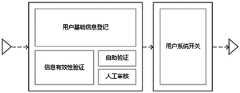
Further, the payment system registration module comprises a user basic information registration tool, a user information validity verification tool and a user system switch,
the user basic information registration tool is used for recording user basic information using the payment system, such as a mobile phone number registered by a user in real name;
the user information validity verification tool is used for verifying the authenticity of the user basic information, such as a self-service verification mode of a mobile phone number verification code and the like, a manual verification mode and the like;
and the user system switch is used for manually managing whether the all-in-one machine payment function is started or not by a user.
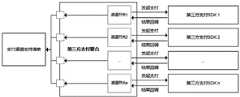
Further, the third-party payment aggregation module integrates the SDK cluster of the third-party payment channel in the system, gets through the payment capability of the third-party payment tool, and initiates the third-party payment channel deduction and the deduction result obtaining callback in the payment process.
Further, the system enables or disables the specified third-party payment SDK function, and the user selects a required channel from the enabled third-party payment channels to continue the payment operation.
Furthermore, the payment security module comprises a cross-terminal verification module and a user credit authorization verification module.
Furthermore, when the cross-terminal verification module is used, a credit granting terminal supporting web access is preset outside the currently used virtual reality all-in-one machine terminal.
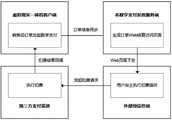
Further, when the sales order payment is initiated at the virtual reality all-in-one machine terminal, the system automatically uploads order payment information to the server, the server issues a web page containing the order information to a credit granting terminal preset by a user, a third party payment channel is directly notified in the credit granting terminal to complete fee deduction operation, and then the third party payment channel actively notifies a fee deduction result to a client side in the virtual reality all-in-one machine terminal.
Further, when the user credit authorization module is used, the digital payment system is authorized to carry out proxy notification fee deduction in a designated third-party payment channel, and a payment password is preset in the digital payment system.
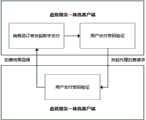
Further, when the sales order payment is initiated at the virtual reality all-in-one machine terminal, the payment password is input in the virtual reality all-in-one machine terminal to complete the identity verification, the digital payment system server side notifies the appointed third party payment channel to initiate the fee deduction request in an agent mode, and the third party payment channel is waited to actively notify the fee deduction result to the client side in the virtual reality all-in-one machine terminal
The invention has the advantages that:
1. the method increases the recording process of the payment system, defines the correlation attribute of the digital payment system and a third party payment channel, and strengthens the system risk control capability of the user payment behavior.
2. And the Web interface is used as a node for cross-terminal user verification, so that the trust of the external equipment without limiting the terminal type is realized.
3. The embodiment of the application additionally supports the user to give credit to the digital payment system agent to carry out fee deduction notification of a third party payment channel, adopts a mode of payment password verification in the virtual reality all-in-one machine terminal, can also realize payment operation in the virtual reality all-in-one machine without cross-terminal credit giving, is convenient for the product use of the user to a great extent, and improves the user experience.
Drawings
FIG. 1 is a functional block diagram of a payment system docketing module of the present invention;
FIG. 2 is a functional block diagram of a third party payment aggregation module of the present invention;
FIG. 3 is a functional block diagram of a cross-terminal authentication module of the present invention;
FIG. 4 is a functional block diagram of a user trust validation module of the present invention.
Detailed Description
In order to make the objects, technical solutions and technical effects of the present invention more clearly apparent, the present invention is further described in detail below with reference to the accompanying drawings and examples.
A digital payment system of a virtual reality all-in-one machine comprises a payment system record module, a third party payment aggregation module and a payment safety module;
the payment system filing module is used for managing whether a current user can implement the digital payment system in the virtual reality all-in-one machine terminal, ensuring that the user can carry out digital payment under the condition of credibility of the system, and normally using the system only after the approval of the payment system filing module;
the third-party payment aggregation module is used for managing and setting a current available third-party payment channel of the user;
and the payment security module is used for executing user permission verification before executing the digital payment deduction action in the virtual reality all-in-one machine.
The virtual reality head-mounted device used in the embodiment of the invention comprises: the full-anzhi VR9 or higher performance SoC comprises basic hardware such as an electronic compass, a gyroscope, a WiFi module, a display and the like.
As shown in fig. 1, the payment system registration module includes a user basic information registration tool: the system is used for recording basic information of a user using the payment system, and comprises a mobile phone number registered by the user in real name and the like; user information validity verification tool: the method is used for verifying the authenticity of the basic information of the user, and comprises a self-service verification mode adopting a mobile phone number verification code and the like, a manual verification mode and the like; and the user system switch is used for manually managing whether the all-in-one machine payment function is started or not by a user.
As shown in fig. 2, the third-party payment aggregation module integrates the SDK cluster of the third-party payment channel in the system, so as to achieve the purpose of getting through the payment capability of the third-party payment tool in the payment getting through, and initiate the third-party channel deduction and obtain the deduction result callback in the payment process. The system may be enabled or disabled for specified third party payment SDK functions; the user may select a desired channel among the enabled third party payment channels to continue the payment operation.
The payment security module comprises a cross-terminal verification module and a user credit authorization verification module, and the user can select one of the two verification modes.
As shown in fig. 3, the cross-terminal verification module requires that a user presets a trust terminal capable of supporting web access outside a currently used virtual-reality all-in-one machine terminal; when a user initiates sales order payment at the virtual reality all-in-one machine terminal, the system automatically uploads order payment information to the server, the server issues a web page containing the order information to a credit granting terminal preset by the user, the user directly informs a third party payment channel in the credit granting terminal to complete fee deduction operation, and the third party payment channel actively informs a client side in the virtual reality all-in-one machine terminal of a fee deduction result.
As shown in fig. 4, the user credit authorization module authorizes the digital payment system to perform proxy notification fee deduction in a designated third-party payment channel, and needs to set a payment password in the digital payment system in advance. When a user initiates sales order payment at the virtual reality all-in-one machine terminal, the user can directly input a payment password in the virtual reality all-in-one machine terminal to complete identity authentication, and the digital payment system server side notifies a designated third party payment channel to initiate a fee deduction request in an agent mode, and waits for the third party payment channel to actively notify a fee deduction result to a client side in the virtual reality all-in-one machine terminal.
Claims (9)
1. A digital payment system of a virtual-reality all-in-one machine is characterized by comprising a payment system record module, a third-party payment aggregation module and a payment safety module;
the payment system filing module is used for managing whether a current user can implement the digital payment system in the virtual reality all-in-one machine terminal;
the third-party payment aggregation module is used for managing and setting a current available third-party payment channel of the user;
and the payment security module is used for executing user permission verification before executing the digital payment deduction action in the virtual reality all-in-one machine.
2. The virtual reality all-in-one machine digital payment system of claim 1, wherein the payment system registration module comprises a user basic information registration tool, a user information validity verification tool and a user system switch,
the user basic information registration tool is used for recording user basic information using the payment system, such as a mobile phone number registered by a user in real name;
the user information validity verification tool is used for verifying the authenticity of the user basic information, such as a self-service verification mode of a mobile phone number verification code and the like, a manual verification mode and the like;
and the user system switch is used for manually managing whether the all-in-one machine payment function is started or not by a user.
3. The digital payment system of claim 1, wherein the third party payment aggregation module integrates the SDK cluster of the third party payment channel in the system, gets through the payment capability of the third party payment tool, initiates the deduction of the third party payment channel in the payment process, and obtains the deduction result call back.
4. The virtual reality all-in-one machine digital payment system of claim 3, wherein the system enables or disables the designated third party payment SDK function, and the user selects a required channel from the enabled third party payment channels to continue the payment operation.
5. The digital payment system of the virtual-reality all-in-one machine as claimed in claim 1, wherein the payment security module comprises a cross-terminal verification module and a user credit authorization verification module.
6. The digital payment system of the virtual-reality all-in-one machine as claimed in claim 5, wherein when the cross-terminal verification module is used, a credit granting terminal supporting web access is preset outside the currently used virtual-reality all-in-one machine terminal.
7. The digital payment system of the virtual-reality all-in-one machine as claimed in claim 6, wherein when the virtual-reality all-in-one machine terminal initiates the order payment of the sales product, the system automatically uploads the order payment information to the server, the server issues a web page containing the order information to the credit granting terminal preset by the user, and directly informs a third party payment channel in the credit granting terminal to complete the fee deduction operation, and then the third party payment channel actively informs the fee deduction result to the client side in the virtual-reality all-in-one machine terminal.
8. The digital payment system of claim 5, wherein when the user credit authorization module is used, the digital payment system is authorized to perform proxy notification fee deduction in a designated third-party payment channel, and a payment password is preset in the digital payment system.
9. The digital payment system of claim 8, wherein when the payment of the sales order is initiated at the terminal of the virtual-reality all-in-one machine, the payment password is input into the terminal of the virtual-reality all-in-one machine to complete the authentication, and the server of the digital payment system notifies the designated third party payment channel to initiate the fee deduction request by proxy, and waits for the third party payment channel to actively notify the fee deduction result to the client in the terminal of the virtual-reality all-in-one machine.
Priority Applications (1)
| Application Number | Priority Date | Filing Date | Title |
|---|---|---|---|
| CN202011582568.0ACN112529555A (en) | 2020-12-28 | 2020-12-28 | A virtual reality all-in-one digital payment system |
Applications Claiming Priority (1)
| Application Number | Priority Date | Filing Date | Title |
|---|---|---|---|
| CN202011582568.0ACN112529555A (en) | 2020-12-28 | 2020-12-28 | A virtual reality all-in-one digital payment system |
Publications (1)
| Publication Number | Publication Date |
|---|---|
| CN112529555Atrue CN112529555A (en) | 2021-03-19 |
Family
ID=74976846
Family Applications (1)
| Application Number | Title | Priority Date | Filing Date |
|---|---|---|---|
| CN202011582568.0APendingCN112529555A (en) | 2020-12-28 | 2020-12-28 | A virtual reality all-in-one digital payment system |
Country Status (1)
| Country | Link |
|---|---|
| CN (1) | CN112529555A (en) |
Cited By (1)
| Publication number | Priority date | Publication date | Assignee | Title |
|---|---|---|---|---|
| CN116188006A (en)* | 2022-12-30 | 2023-05-30 | 北京云思智学科技有限公司 | Payment system applied to combination purchase and method for realizing customized payment service |
Citations (12)
| Publication number | Priority date | Publication date | Assignee | Title |
|---|---|---|---|---|
| CN102117455A (en)* | 2011-03-21 | 2011-07-06 | 广州市动景计算机科技有限公司 | Mobile terminal browser-based secure payment method and system |
| CN102831734A (en)* | 2011-06-15 | 2012-12-19 | 上海博路信息技术有限公司 | Payment method of mobile terminal client |
| CN102982448A (en)* | 2011-09-06 | 2013-03-20 | 上海博路信息技术有限公司 | Code scanning payment method of mobile terminal |
| CN103093340A (en)* | 2011-11-07 | 2013-05-08 | 深圳一卡通新技术有限公司 | Dynamic payment system and method based on asynchronous communication technique |
| CN103152468A (en)* | 2011-12-07 | 2013-06-12 | 国民技术股份有限公司 | Mobile terminal and mobile payment implement method |
| KR20140023098A (en)* | 2012-08-17 | 2014-02-26 | 에스케이플래닛 주식회사 | System and method for managing secure application module of payment service |
| CN106504001A (en)* | 2016-10-25 | 2017-03-15 | 珠海市魅族科技有限公司 | Method of payment and device in a kind of VR environment |
| CN107369009A (en)* | 2017-06-26 | 2017-11-21 | 中国人民银行数字货币研究所 | The method of payment and payment system of digital cash |
| CN107480064A (en)* | 2017-08-11 | 2017-12-15 | 珠海金山网络游戏科技有限公司 | A kind of the virtual of e-voucher center system supplements test system and method with money |
| CN107862527A (en)* | 2017-10-27 | 2018-03-30 | 深圳市金立通信设备有限公司 | A kind of method of payment, terminal and server |
| CN109299932A (en)* | 2018-06-06 | 2019-02-01 | 苏州炫网信息科技有限公司 | It is a kind of to apply interior payment system and method |
| CN111061577A (en)* | 2019-12-11 | 2020-04-24 | 万表名匠(广州)科技有限公司 | Third party payment processing system and method |
- 2020
- 2020-12-28CNCN202011582568.0Apatent/CN112529555A/enactivePending
Patent Citations (12)
| Publication number | Priority date | Publication date | Assignee | Title |
|---|---|---|---|---|
| CN102117455A (en)* | 2011-03-21 | 2011-07-06 | 广州市动景计算机科技有限公司 | Mobile terminal browser-based secure payment method and system |
| CN102831734A (en)* | 2011-06-15 | 2012-12-19 | 上海博路信息技术有限公司 | Payment method of mobile terminal client |
| CN102982448A (en)* | 2011-09-06 | 2013-03-20 | 上海博路信息技术有限公司 | Code scanning payment method of mobile terminal |
| CN103093340A (en)* | 2011-11-07 | 2013-05-08 | 深圳一卡通新技术有限公司 | Dynamic payment system and method based on asynchronous communication technique |
| CN103152468A (en)* | 2011-12-07 | 2013-06-12 | 国民技术股份有限公司 | Mobile terminal and mobile payment implement method |
| KR20140023098A (en)* | 2012-08-17 | 2014-02-26 | 에스케이플래닛 주식회사 | System and method for managing secure application module of payment service |
| CN106504001A (en)* | 2016-10-25 | 2017-03-15 | 珠海市魅族科技有限公司 | Method of payment and device in a kind of VR environment |
| CN107369009A (en)* | 2017-06-26 | 2017-11-21 | 中国人民银行数字货币研究所 | The method of payment and payment system of digital cash |
| CN107480064A (en)* | 2017-08-11 | 2017-12-15 | 珠海金山网络游戏科技有限公司 | A kind of the virtual of e-voucher center system supplements test system and method with money |
| CN107862527A (en)* | 2017-10-27 | 2018-03-30 | 深圳市金立通信设备有限公司 | A kind of method of payment, terminal and server |
| CN109299932A (en)* | 2018-06-06 | 2019-02-01 | 苏州炫网信息科技有限公司 | It is a kind of to apply interior payment system and method |
| CN111061577A (en)* | 2019-12-11 | 2020-04-24 | 万表名匠(广州)科技有限公司 | Third party payment processing system and method |
Cited By (1)
| Publication number | Priority date | Publication date | Assignee | Title |
|---|---|---|---|---|
| CN116188006A (en)* | 2022-12-30 | 2023-05-30 | 北京云思智学科技有限公司 | Payment system applied to combination purchase and method for realizing customized payment service |
Similar Documents
| Publication | Publication Date | Title |
|---|---|---|
| US12137091B2 (en) | Single sign-on enabled with OAuth token | |
| CN109510849B (en) | Account authentication method and device for cloud storage | |
| US10735196B2 (en) | Password-less authentication for access management | |
| US10708053B2 (en) | Coordinating access authorization across multiple systems at different mutual trust levels | |
| KR102141836B1 (en) | Two factor authentication | |
| US10861000B2 (en) | Method, system, and apparatus for application loading | |
| US20170118223A1 (en) | Techniques for authentication level step-down | |
| CN108351933A (en) | End-user-initiated access server authenticity checks | |
| CN105659558A (en) | Multiple resource servers with single, flexible, pluggable OAuth server and OAuth-protected RESTful OAuth consent management service, and mobile application single sign on OAuth service | |
| CN111770088A (en) | Data authentication method, apparatus, electronic device and computer-readable storage medium | |
| CN106341234A (en) | Authorization method and device | |
| WO2015101036A1 (en) | Methods and systems for verifying a transaction | |
| TW202134913A (en) | Query system, method and non-transitory machine-readable medium to determine authentication capabilities | |
| WO2021143280A1 (en) | Method, device, and system for login authentication | |
| TWI684149B (en) | Interactive information processing method, device and system | |
| CN103001982B (en) | Real-time sharing method, real-time sharing device and real-time sharing system | |
| JP2018512106A (en) | Method and system for anti-phishing using smart images | |
| CN112769856A (en) | Application account sharing method and device and electronic equipment | |
| CN112529555A (en) | A virtual reality all-in-one digital payment system | |
| CN114374560A (en) | Data processing method, device and storage medium | |
| KR102357163B1 (en) | Cloud computing system using postpaid billing and methods of providing cloud service | |
| WO2017000340A1 (en) | Encryption method and apparatus | |
| CN117375986A (en) | Application access method, device and server | |
| US11989739B2 (en) | System and method for identity verification | |
| CN110942289A (en) | Payment method and computer storage medium |
Legal Events
| Date | Code | Title | Description |
|---|---|---|---|
| PB01 | Publication | ||
| PB01 | Publication | ||
| SE01 | Entry into force of request for substantive examination | ||
| SE01 | Entry into force of request for substantive examination | ||
| RJ01 | Rejection of invention patent application after publication | ||
| RJ01 | Rejection of invention patent application after publication | Application publication date:20210319 |