CN111815023A - A soft-start method for campus electric heating based on improved grey wolf optimization algorithm - Google Patents
A soft-start method for campus electric heating based on improved grey wolf optimization algorithmDownload PDFInfo
- Publication number
- CN111815023A CN111815023ACN202010505147.1ACN202010505147ACN111815023ACN 111815023 ACN111815023 ACN 111815023ACN 202010505147 ACN202010505147 ACN 202010505147ACN 111815023 ACN111815023 ACN 111815023A
- Authority
- CN
- China
- Prior art keywords
- electric heating
- power
- optimization algorithm
- improved
- load
- Prior art date
- Legal status (The legal status is an assumption and is not a legal conclusion. Google has not performed a legal analysis and makes no representation as to the accuracy of the status listed.)
- Pending
Links
Images


Classifications
- G—PHYSICS
- G06—COMPUTING OR CALCULATING; COUNTING
- G06Q—INFORMATION AND COMMUNICATION TECHNOLOGY [ICT] SPECIALLY ADAPTED FOR ADMINISTRATIVE, COMMERCIAL, FINANCIAL, MANAGERIAL OR SUPERVISORY PURPOSES; SYSTEMS OR METHODS SPECIALLY ADAPTED FOR ADMINISTRATIVE, COMMERCIAL, FINANCIAL, MANAGERIAL OR SUPERVISORY PURPOSES, NOT OTHERWISE PROVIDED FOR
- G06Q10/00—Administration; Management
- G06Q10/04—Forecasting or optimisation specially adapted for administrative or management purposes, e.g. linear programming or "cutting stock problem"
- G—PHYSICS
- G06—COMPUTING OR CALCULATING; COUNTING
- G06N—COMPUTING ARRANGEMENTS BASED ON SPECIFIC COMPUTATIONAL MODELS
- G06N3/00—Computing arrangements based on biological models
- G06N3/004—Artificial life, i.e. computing arrangements simulating life
- G06N3/006—Artificial life, i.e. computing arrangements simulating life based on simulated virtual individual or collective life forms, e.g. social simulations or particle swarm optimisation [PSO]
- G—PHYSICS
- G06—COMPUTING OR CALCULATING; COUNTING
- G06Q—INFORMATION AND COMMUNICATION TECHNOLOGY [ICT] SPECIALLY ADAPTED FOR ADMINISTRATIVE, COMMERCIAL, FINANCIAL, MANAGERIAL OR SUPERVISORY PURPOSES; SYSTEMS OR METHODS SPECIALLY ADAPTED FOR ADMINISTRATIVE, COMMERCIAL, FINANCIAL, MANAGERIAL OR SUPERVISORY PURPOSES, NOT OTHERWISE PROVIDED FOR
- G06Q10/00—Administration; Management
- G06Q10/06—Resources, workflows, human or project management; Enterprise or organisation planning; Enterprise or organisation modelling
- G06Q10/067—Enterprise or organisation modelling
- G—PHYSICS
- G06—COMPUTING OR CALCULATING; COUNTING
- G06Q—INFORMATION AND COMMUNICATION TECHNOLOGY [ICT] SPECIALLY ADAPTED FOR ADMINISTRATIVE, COMMERCIAL, FINANCIAL, MANAGERIAL OR SUPERVISORY PURPOSES; SYSTEMS OR METHODS SPECIALLY ADAPTED FOR ADMINISTRATIVE, COMMERCIAL, FINANCIAL, MANAGERIAL OR SUPERVISORY PURPOSES, NOT OTHERWISE PROVIDED FOR
- G06Q50/00—Information and communication technology [ICT] specially adapted for implementation of business processes of specific business sectors, e.g. utilities or tourism
- G06Q50/06—Energy or water supply
- G—PHYSICS
- G06—COMPUTING OR CALCULATING; COUNTING
- G06Q—INFORMATION AND COMMUNICATION TECHNOLOGY [ICT] SPECIALLY ADAPTED FOR ADMINISTRATIVE, COMMERCIAL, FINANCIAL, MANAGERIAL OR SUPERVISORY PURPOSES; SYSTEMS OR METHODS SPECIALLY ADAPTED FOR ADMINISTRATIVE, COMMERCIAL, FINANCIAL, MANAGERIAL OR SUPERVISORY PURPOSES, NOT OTHERWISE PROVIDED FOR
- G06Q50/00—Information and communication technology [ICT] specially adapted for implementation of business processes of specific business sectors, e.g. utilities or tourism
- G06Q50/10—Services
- G06Q50/20—Education
Landscapes
- Business, Economics & Management (AREA)
- Engineering & Computer Science (AREA)
- Strategic Management (AREA)
- Economics (AREA)
- Human Resources & Organizations (AREA)
- Physics & Mathematics (AREA)
- Theoretical Computer Science (AREA)
- General Physics & Mathematics (AREA)
- Tourism & Hospitality (AREA)
- Marketing (AREA)
- Health & Medical Sciences (AREA)
- General Business, Economics & Management (AREA)
- General Health & Medical Sciences (AREA)
- Entrepreneurship & Innovation (AREA)
- Game Theory and Decision Science (AREA)
- Quality & Reliability (AREA)
- Development Economics (AREA)
- Primary Health Care (AREA)
- Educational Administration (AREA)
- Operations Research (AREA)
- Biomedical Technology (AREA)
- Computational Linguistics (AREA)
- Water Supply & Treatment (AREA)
- Life Sciences & Earth Sciences (AREA)
- Artificial Intelligence (AREA)
- Educational Technology (AREA)
- Biophysics (AREA)
- Public Health (AREA)
- Data Mining & Analysis (AREA)
- Evolutionary Computation (AREA)
- Molecular Biology (AREA)
- Computing Systems (AREA)
- General Engineering & Computer Science (AREA)
- Mathematical Physics (AREA)
- Software Systems (AREA)
- Air Conditioning Control Device (AREA)
Abstract
Description
Translated fromChinese技术领域technical field
本发明涉及用群智能优化算法以及电采暖的软启动领域,具体是基于改进灰狼优化算法的电采暖软启动控制策略。The invention relates to a swarm intelligent optimization algorithm and the field of soft start of electric heating, in particular to a soft start control strategy of electric heating based on an improved gray wolf optimization algorithm.
背景技术Background technique
我国东北和华北地区校园严寒且干燥,为了改善室内的温度环境,在冬季普遍采用集中供暖,在国外,自上世纪70年代初,电采暖技术就进入了全自动控制时期,国内对电采暖的研究起步较晚,但理论研究并没有落后。总体上我国在电热材料、电暖气以及储热技术方面已经达到领先水平,但是控制技术和普及范围程度有限,在我国北部地区,部分校园配备了电采暖集散控制系统,并且以节能减排为目的取代传统供暖方式。但是就校园建筑采暖而言,各供暖房间的功能性差异,使用时间不一致,需要的供暖时间和温度也有差异,比如办公楼、礼堂、实验室、教室、图书馆等供暖需求是不一样的,有些不需要24 小时供暖,传统的供暖设备并没有自动化温度调节装置,而电采暖作为以电力来提供能源的采暖方式,需要在启动过程中考虑变压器免增容问题,所以在启动时必然需要注意避免启动电流过大,为了达到启动过程中的功率最优,同时兼顾分级升温的软启动特点,本文旨在针对校园电采暖集散控制系统,探寻一种新的软启动策略,在各种影响因素当中寻求平衡,并结合影响因素设计合适的适应度函数,并用改进过后的灰狼优化算法进行迭代寻优。Campuses in Northeast my country and North China are cold and dry. In order to improve the indoor temperature environment, central heating is generally used in winter. In foreign countries, since the early 1970s, electric heating technology has entered the period of automatic control. Research started late, but theoretical research is not behind. In general, my country has reached a leading level in terms of electric heating materials, electric heating and heat storage technology, but the control technology and the scope of popularization are limited. In the northern part of our country, some campuses are equipped with electric heating distribution control systems, and the purpose is to save energy and reduce emissions. Replace traditional heating methods. However, as far as campus building heating is concerned, the functional differences of heating rooms, the inconsistent use time, and the required heating time and temperature are also different. For example, the heating needs of office buildings, auditoriums, laboratories, classrooms, and libraries are different. Some do not require 24-hour heating. Traditional heating equipment does not have automatic temperature adjustment devices. Electric heating, as a heating method that uses electricity to provide energy, needs to consider the problem of transformer capacity increase during startup, so it is necessary to pay attention to it when starting. To avoid excessive starting current, in order to achieve the optimal power during the starting process, and at the same time take into account the soft start characteristics of graded heating, this paper aims to explore a new soft start strategy for the campus electric heating distributed control system. A balance is sought, and an appropriate fitness function is designed in combination with the influencing factors, and the improved gray wolf optimization algorithm is used for iterative optimization.
发明内容SUMMARY OF THE INVENTION
本发明的目的在于克服现有技术的不足,提供一种基于改进灰狼优化算法的校园电采暖软启动方法,改善校园电采暖的启动方式,优化输入功率,同时避免启动过程中的变压器增容问题。通过实测校园电采暖集散控制系统的温升来优化输入功率的调度以降低启动电流,节约了变压器增容的成本。The purpose of the present invention is to overcome the deficiencies of the prior art, to provide a soft-start method for campus electric heating based on an improved gray wolf optimization algorithm, to improve the startup mode of campus electric heating, to optimize the input power, and to avoid the transformer capacity increase during the startup process. question. Through the actual measurement of the temperature rise of the campus electric heating distributed control system, the scheduling of the input power is optimized to reduce the starting current and save the cost of the transformer capacity increase.
为了实现上述目的,本发明采用的技术方案为:一种基于改进灰狼优化算法的校园电采暖软启动方法,包括如下步骤:In order to achieve the above purpose, the technical solution adopted in the present invention is: a soft-start method for campus electric heating based on an improved gray wolf optimization algorithm, comprising the following steps:
步骤1:对校园内各类房间进行等级分类;Step 1: Classify various rooms on campus;
步骤2:对每个分类等级对应的负荷输入功率分为多个功率输入;Step 2: Divide the load input power corresponding to each classification level into multiple power inputs;
步骤3:获取单位时间内的温升数据与加热功率的关系;Step 3: Obtain the relationship between the temperature rise data per unit time and the heating power;
步骤4:建立适度函数模型;Step 4: Establish a moderate function model;
步骤5:通过改进的改进灰狼优化算法对模型进行搜索,输出每个分类等级的最优功率输入,根据功率对不同分类等级的房间进行电采暖的功率控制。Step 5: Search the model through the improved improved gray wolf optimization algorithm, output the optimal power input of each classification level, and perform electric heating power control for rooms of different classification levels according to the power.
在步骤1中,根据不同房间的供需要求以及重要程度,将房间负荷分为5 类,最重要的房间记为1级负荷房间。In step 1, according to the supply, demand and importance of different rooms, the room load is divided into 5 categories, and the most important room is recorded as a class 1 load room.
在步骤2中,把1-5级负荷的输入功率u1-u5对应的每一级负荷分为10个输入,即u1=[u10 u11 u12 … u19]、…u5=[u50 u51 u52 … u59]。In
在步骤3中,通过实验获取各个房间在不同输入功率下的实际温度变化情况并通过对实验数据进行插值建模处理。In step 3, the actual temperature changes of each room under different input powers are obtained through experiments, and the experimental data are interpolated and modeled.
适度函数的模型定义为:The model of the moderation function is defined as:
F=∫K1Δ1+K2Δ2+K3Δ3K4Δ4+K5Δ5+K(Δu1+Δu2+Δu3+Δu4+Δu5)dtF=∫K1 Δ1 +K2 Δ2 +K3 Δ3 K4 Δ4 +K5 Δ5 +K(Δu1 +Δu2 +Δu3 +Δu4 +Δu5 )dt
式中Δ1-Δ5分别为在t时刻不同负载等级的房间实际温度与期望温度之差; K1-K5为不同等级的权重系数,该系数越大,则升温过程中重要性越大,升温越快,消耗的能量越多,其中K与K1-K5设为非同一个重量级的数值;Δu1-Δu5分别为1-5等级负荷房间输入功率的瞬时值,代表消耗的能量;Δu1+Δu2+Δu3+Δu4+Δu5为瞬时总功率。In the formula, Δ1 -Δ5 are the difference between the actual temperature and the expected temperature of the room at different load levels at time t; K1 -K5 are the weight coefficients of different levels, the larger the coefficient, the greater the importance in the heating process. , the faster the temperature rises, the more energy is consumed, where K and K1 -K5 are set to different values of the same weight; Δu1 -Δu5 are the instantaneous values of the input power of the 1-5 class load rooms, representing the consumption energy; Δu1 +Δu2 +Δu3 +Δu4 +Δu5 is the instantaneous total power.
改进的灰狼算法为采用非线性收敛因子和反向学习策略的改进灰狼优化算法。The improved gray wolf algorithm is an improved gray wolf optimization algorithm using nonlinear convergence factor and reverse learning strategy.
本发明将提出了适用于校园电采暖的一种软启动控制方案,对校园内的各类房间特性描述并分类,以供需统一、用户舒适度、分级节能为优化目标,同时考虑了总负荷的大小,建立了分级升温、免增容的校园电采暖软启动适应度函数模型;采用本发明提出的一种改进的灰狼优化算法对模型仿真验证其有效性。The present invention will propose a soft-start control scheme suitable for campus electric heating, describe and classify the characteristics of various rooms in the campus, take the unification of supply and demand, user comfort, and graded energy conservation as the optimization goals, and consider the total load at the same time. A soft-start fitness function model of campus electric heating with graded temperature increase and no capacity increase is established; an improved gray wolf optimization algorithm proposed by the present invention is used to simulate the validity of the model.
本发明的技术效果在于:(1)根据不同房间的供需要求以及重要程度,将房间负荷分为5类,最重要的房间记为1级负荷房间,以此类推至5级负荷房间,以达到分级升温的效果。(2)根据不同功率下设备运行时的温升一分钟采一次样,记录从室温到用户舒适度的温度最高值的温升数据表,为适应度函数模型提供数据。(3)对灰狼算法进行有针对性的改进,采用非线性收敛因子,提高了算法的优化速度、采用反向学习策略避免了局部最优结果。对模型的求解达到了预期,并提供一组最适合软启动的输入功率。The technical effects of the present invention are: (1) According to the supply, demand and importance of different rooms, the room load is divided into 5 categories, the most important room is recorded as the 1st class load room, and so on to the 5th class load room, so as to achieve The effect of graded warming. (2) According to the temperature rise when the equipment is running under different powers, take a sample once a minute, record the temperature rise data table from room temperature to the maximum temperature of the user's comfort level, and provide data for the fitness function model. (3) The gray wolf algorithm is improved in a targeted manner, and the nonlinear convergence factor is used to improve the optimization speed of the algorithm, and the reverse learning strategy is used to avoid local optimal results. The model is solved as expected and provides a set of input powers that are best suited for soft start.
附图说明Description of drawings
下面对本发明说明书各幅附图表达的内容及图中的标记作简要说明:Below is a brief description of the content expressed in each of the drawings in the description of the present invention and the labels in the drawings:
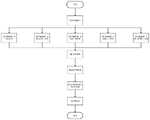
图1为校园电采暖软启动方案流程图;Figure 1 is the flow chart of the campus electric heating soft start scheme;
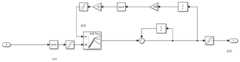
图2为适应度函数模型;Fig. 2 is the fitness function model;
图3为Δi的Simulink模型;Fig. 3 is the Simulink model of Δi ;
图4为算例的仿真图。Figure 4 is a simulation diagram of the example.
其中图4中的曲线分别代表1、2、3、4、5级负荷房间的温升曲线。The curves in Figure 4 represent the temperature rise curves of load rooms of
具体实施方式Detailed ways
下面对照附图,通过对最优实施例的描述,对本发明的具体实施方式作进一步详细的说明。The specific embodiments of the present invention will be described in further detail below with reference to the accompanying drawings and through the description of the preferred embodiments.
一种基于改进灰狼优化算法的校园电采暖软启动控制策略;提出了适用于校园电采暖的一种软启动控制方案,对校园内的各类房间特性描述并分类,以供需统一、用户舒适度、分级节能为优化目标,同时考虑了总负荷的大小,建立了分级升温、免增容的校园电采暖软启动适应度函数模型;采用本发明提出的一种改进的灰狼优化算法对模型仿真验证其有效性。2.本发明的技术效果在于:根据不同房间所需负荷以及用户对温度的舒适度的不同,综合房间的重要程度以及用户量等诸多因素将房间负荷分为5类,对供需的考虑详细全面,综合各种影响因素;将分级升温的思想运用至校园电采暖,针对房间重要性、用户舒适性以及变压器稳定性的问题,搭建校园电采暖适应度函数模型;对基本的灰狼优化算法进行改进,采用一种非线性收敛因子替换原收敛因子,提高了算法前期的全局搜索能力、增加了后期的局部开采能力;采用了一种改良的反向学习策略,使得算法不易陷入局部最优。3.对模型的求解达到了预期,并提供一组最优输入功率。4.基于权利要求1提出的一种基于改进灰狼算法的校园电采暖软启动控制策略,它的具体实施步骤如下:1.对校园房间进行负荷分类,通常校园内的房间以及用户类型是多样的,不同类型的用户以及房间对负荷的需求不同;根据用户的工作习惯与负荷需求大致将房间按重要性从高到低分为领导办公型、教室型、阅览室型、体育馆和仓库型;2.记录温升数据,可以根据不同功率下设备运行时的温升一分钟采一次样,记录从室温到用户舒适度的温度最高值的温升数据表。3.建立适应度函数模型,以供需统一、用户舒适度、分级节能为优化目标,同时考虑了总负荷的大小,建立了分级升温、免增容的校园电采暖软启动适应度函数模型;4.算法的改进,采用非线性收敛因子和反向学习策略的改进灰狼优化算法;5.模型的仿真,通过算例的仿真,验证了其有效性。A soft-start control strategy for campus electric heating based on the improved gray wolf optimization algorithm; a soft-start control scheme suitable for campus electric heating is proposed, which describes and classifies the characteristics of various rooms in the campus, so as to unify supply and demand and make users comfortable In addition, considering the size of the total load, a soft-start fitness function model of campus electric heating with graded temperature increase and no capacity increase is established; an improved gray wolf optimization algorithm proposed by the present invention is used to adjust the model. Simulations verify its effectiveness. 2. The technical effect of the present invention is that the room load is divided into 5 categories according to the required load of different rooms and the comfort of the user to the temperature, the importance of the room and the number of users and other factors, and the consideration of supply and demand is detailed and comprehensive. , synthesizing various influencing factors; applying the idea of graded heating to campus electric heating, and building a campus electric heating fitness function model for the problems of room importance, user comfort and transformer stability; Improvement, a nonlinear convergence factor is used to replace the original convergence factor, which improves the global search ability in the early stage of the algorithm and increases the local mining ability in the later stage; an improved reverse learning strategy is adopted, so that the algorithm is not easy to fall into local optimum. 3. The solution to the model meets expectations and provides a set of optimal input powers. 4. Based on a kind of campus electric heating soft-start control strategy based on improved gray wolf algorithm proposed in claim 1, its specific implementation steps are as follows: 1. Carry out load classification for campus rooms, usually the rooms and user types in the campus are diverse Different types of users and rooms have different load demands; rooms are roughly classified into leadership office type, classroom type, reading room type, gymnasium and warehouse type in descending order of importance according to the user's work habits and load demand; 2. Record the temperature rise data, you can take a sample once a minute according to the temperature rise when the equipment is running under different powers, and record the temperature rise data table from the room temperature to the maximum temperature of the user's comfort level. 3. Establish a fitness function model, taking the unification of supply and demand, user comfort, and graded energy conservation as the optimization goals, and at the same time considering the size of the total load, establish a graded heating, no capacity-increasing soft-start fitness function model for campus electric heating; 4 .The improvement of the algorithm, using the nonlinear convergence factor and the reverse learning strategy to improve the gray wolf optimization algorithm;
本发明的主要目的是针对目前国内的校园电采暖系统,提供了一种多目标场景下,以重要性为指导进行同时升温、差异性控温,并综合考虑总耗能的控温策略。该方法能够根据重点区域升温效果、非重点区域升温效果以及总耗能之间的相对重要性来在耗能与升温之间寻求平衡。使得供暖系统能够在保证学校不同区域不同时刻以及不同升温目标的前提下实现能耗最优。本发明的具体方法是:The main purpose of the present invention is to provide a temperature control strategy for simultaneous heating, differential temperature control and comprehensive consideration of total energy consumption under a multi-objective scenario for the current domestic campus electric heating system. This method can seek a balance between energy consumption and temperature increase according to the relative importance between the heating effect of key regions, the heating effect of non-key regions, and the total energy consumption. The heating system can achieve the optimal energy consumption under the premise of ensuring different time and different heating targets in different areas of the school. The concrete method of the present invention is:
1:按重要等级分类。将非连续工作区分为5个负荷,会议室、领导办公室为1级负荷,教室为2级负荷,以此类推,负荷代表重要程度,1级为最重要房间,2级为次要房间,以此类推。非连续工作区时间设为8.00-17.00。1: Classification by importance level. The non-continuous work area is divided into 5 loads, the conference room and the leadership office are the first-level load, the classroom is the second-level load, and so on, the load represents the degree of importance, the first-level room is the most important room, and the second-level room is the secondary room. And so on. The non-continuous workspace time is set to 8.00-17.00.
2:输入功率的改进。把1-5级负荷的输入功率u1-u5每一级负荷分为10个输入,即u1=[u10 u11 u12 … u19]、…u5=[u50 u51 u52 … u59],其作用是为了在同一输入的不同阶段对温度进行控制,大大提高了控制系统的精度。2: Improvement of input power. Divide the input power u1 -u5 of the 1-5 level load into 10 inputs, namely u1 = [u10 u11 u12 ... u19 ], ... u5 = [u50 u51 u52 … u59 ], its function is to control the temperature at different stages of the same input, which greatly improves the precision of the control system.
3:获取单位时间内的温升数据与加热功率的关系。经实验分析,单位时间内的温度上升量与初始温度和加热功率均有关系。为获得在所需温度区间和功率区间的单位时间温升数据,除多次实验外,还需对实验数据进行插值建模处理。获取温升数据的具体步骤为:3: Obtain the relationship between the temperature rise data per unit time and the heating power. The experimental analysis shows that the temperature rise per unit time is related to the initial temperature and heating power. In order to obtain the temperature rise data per unit time in the required temperature range and power range, in addition to multiple experiments, it is necessary to perform interpolation modeling on the experimental data. The specific steps to obtain temperature rise data are:
(1)实验测温。此步骤的主要目的为获取各个房间在不同输入功率下的实际温度变化情况。步骤为:(1) Experimental temperature measurement. The main purpose of this step is to obtain the actual temperature change of each room under different input power. The steps are:
①将输入功率设定为1000W;①Set the input power to 1000W;
②整个加热过程维持输入功率不变并从5℃开始每一分钟记录一次当前温度值,直到温度达到饱和25℃;②The input power is kept constant throughout the heating process and the current temperature value is recorded every minute from 5°C until the temperature reaches a saturation of 25°C;
③计算在当前功率下的单位时间温升;③ Calculate the temperature rise per unit time under the current power;
④将加热功率加大400W;④Increase the heating power by 400W;
⑤重复②-④直至功率达到上限2200W。⑤Repeat ②-④ until the power reaches the upper limit of 2200W.
(2)插值处理。为了使功率的控制更为精细,需要对3.1中得到的实验数据进行丰富扩充。通过数学方法,对表中的数据进行插值,得到在以1W为功率最小变化单位下的单位时间温升表。步骤如下:(2) Interpolation processing. In order to make the power control more refined, the experimental data obtained in 3.1 need to be enriched and expanded. Through mathematical methods, the data in the table is interpolated to obtain the temperature rise table per unit time with 1W as the minimum change unit of power. Proceed as follows:
①在1000W、1400W、1800W、2200W功率下每隔一分钟记录一次温度值记录到单独表格,行表示时间,列表示功率;①Record the temperature value every one minute under the power of 1000W, 1400W, 1800W and 2200W and record it in a separate table, the row represents the time, and the column represents the power;
②将4个单独表格分别进行如下操作:行变时间为此刻温度,表中内容为一分钟内的温升;② Perform the following operations on the 4 separate tables: the row change time is the temperature at the moment, and the content in the table is the temperature rise in one minute;
③对4个表分别进行插值处理,使5℃到25℃之间插入2000个值,每摄氏度之间插入100个值;③ Interpolate the four tables respectively, so that 2000 values are inserted between 5°C and 25°C, and 100 values are inserted between each degree Celsius;
④4个表格合并,在1000W-2200W之间插入1200个值,使其变换单位为1W。制作成温升表格。④The 4 tables are merged, and 1200 values are inserted between 1000W-2200W, so that the conversion unit is 1W. Make a temperature rise table.
4:适应度函数的设计。为了确保热量供需的统一,降低能耗,结合两种特点所适应度函数定义为:4: Design of fitness function. In order to ensure the unification of heat supply and demand and reduce energy consumption, the fitness function combined with the two characteristics is defined as:

式(1)中Δ1-Δ5分别为在t时刻不同负载等级的房间实际温度与期望温度之差;K1-K5为不同等级的权重系数,该系数越大,则升温过程中重要性越大,升温越快,消耗的能量越多,其中K与K1-K5设为非同一个重量级的数值;Δu1-Δu5分别为1-5等级负荷房间输入功率的瞬时值,代表消耗的能量;Δu1+Δu2+Δu3+Δu4+Δu5为瞬时总功率。In formula (1), Δ1 -Δ5 are the difference between the actual temperature and the expected temperature of the room at different load levels at time t; K1 -K5 are the weight coefficients of different levels. The larger the coefficient, the more important it is in the heating process. The greater the resistance, the faster the temperaturerises , and the more energy is consumed, in which K and K1 -K5 are set to different values; , represents the consumed energy; Δu1 +Δu2 +Δu3 +Δu4 +Δu5 is the instantaneous total power.
步骤5:GWO算法的改进。Step 5: Improvement of GWO algorithm.
灰狼种群有着非常严格的等级制度,在整个狩猎团队中可分为以下几种狼:首要领头狼,也可记为α狼,处在第一阶级,是整个狼群在狩猎过程中的首脑;处于第二阶级的次要领头狼种为β狼,用来辅佐α狼完成围捕,第三阶级的第三重要领头狼狼群记为δ狼,听从于前面两个阶级层次的狼群并指挥底层狼群θ。一般情况下,前三个阶级每个阶级只有一个狼,并且在优化算法中,α、β、δ狼首先估算猎物位置,不断靠近猎物,θ狼群跟随前三只领头狼进行对猎物的包围捕杀,从而完成整个狩猎过程。The gray wolf population has a very strict hierarchy, and can be divided into the following types of wolves in the entire hunting team: the primary leader wolf, also known as the alpha wolf, is in the first rank and is the leader of the entire wolf group in the hunting process. ; The secondary leader wolf species in the second level is the β wolf, which is used to assist the α wolf to complete the roundup, and the third important leader wolf group of the third level is recorded as the δ wolf, which obeys the wolves of the previous two levels and Command the bottom wolf pack θ. In general, there is only one wolf in each of the first three classes, and in the optimization algorithm, the α, β, and delta wolves first estimate the position of the prey and keep approaching the prey, and the θ wolves follow the first three leading wolves to surround the prey. hunt and kill to complete the entire hunting process.
灰狼在锁定、靠近目标猎物前是需要进行搜索的,而搜索猎物的具体描述如下:Gray wolves need to search before locking on and approaching the target prey, and the specific description of the search prey is as follows:
D=|C·XPi(t)-X(t)| (2)D=|C·XPi (t)-X(t)| (2)
X(t+1)=XPi(t)-H·D (3)X(t+1)=XPi (t)-H·D (3)
其中t代表迭代次数;i=1,2,3,…,n,n是维度;XPi(t)代表当前迭代次数的猎物位置;X(t)代表当前狼群的位置;H和C为控制参数和摇摆因子,定义如下:where t represents the number of iterations; i=1, 2, 3, ..., n, n is the dimension; XPi (t) represents the position of the prey at the current iteration number; X (t) represents the position of the current wolf pack; H and C are Control parameters and sway factors, defined as follows:
H=a(2ρ1-1) (4)H=a(2ρ1 -1) (4)
C=2ρ2 (5)C=2ρ2 (5)
其中ρ1、ρ2均为[0,1]的随机变量;a为收敛因子,定义如下:Among them, ρ1 and ρ2 are both random variables in [0,1]; a is the convergence factor, which is defined as follows:
a=2(1-t/tmax) (6)a=2(1-t/tmax ) (6)
其中tmax为最大迭代次数。a随着迭代次数的增加有2线性降低到0。wheretmax is the maximum number of iterations. a decreases linearly by 2 to 0 as the number of iterations increases.
大自然中的灰狼会在确定猎物位置后进行包围捕杀猎物。然而在灰狼优化算法中,猎物(即最优值)是不确定的,其位置主要是由α、β、δ来探索的,在每一次更新迭代后选用最靠近猎物的三头狼作为最好的解,并引导其他狼靠近猎物,在狼群捕获猎物的动态数学模型如下:Gray wolves in nature will surround and kill the prey after determining the location of the prey. However, in the gray wolf optimization algorithm, the prey (that is, the optimal value) is uncertain, and its position is mainly explored by α, β, and δ. After each update iteration, the three wolves closest to the prey are selected as the most A good solution, and guide other wolves to approach their prey, the dynamic mathematical model for capturing prey in a wolf pack is as follows:
Dα=|C1·Xα(t)-X(t)| (7)Dα =|C1 ·Xα (t)-X(t)| (7)
Dβ=|C2·Xβ(t)-X(t)| (8)Dβ =|C2 ·Xβ (t)-X(t)| (8)
Dδ=|C3·Xδ(t)-X(t)| (9)Dδ =|C3 ·Xδ (t)-X(t)| (9)
X1=Xα(t)-H1·Dα (10 )X1 =Xα (t)-H1 ·Dα (10 )
X2=Xβ(t)-H2·Dβ (11 )X2 =Xβ (t)-H2 ·Dβ (11 )
X3=Xδ(t)-H3·Dδ (12 )X3 =Xδ (t)-H3 ·Dδ (12 )
X(t+1)=(X1+X2+X3)/3 (13 )X(t+1)=(X1 +X2 +X3 )/3 (13 )
其中Xα为最优解的位置;Xβ为次优解的位置;Xδ为第三优解的位置,分别代表α、β、δ三头狼;Ci、Hi(i=1、2、3)为随机产生的系数;头领狼更新后的位置用Xi(i=1、2、3)表示。Xα is the position of the optimal solution; Xβ is the position of the second optimal solution; Xδ is the position of the third optimal solution, representing the three-headed wolves α, β and δ respectively; Ci , Hi (i=1, 2, 3) are randomly generated coefficients; the updated position of the leader wolf is represented by Xi (i=1, 2, 3).
GWO的收敛能力和全局搜索能力的不足,而针对这两个不足点,提出一种改良的灰狼优化算法。In view of the shortcomings of GWO's convergence ability and global search ability, an improved gray wolf optimization algorithm is proposed for these two shortcomings.
在GWO算法中,|H|>1时,狼群进行全局搜索,扩大勘探范围的同时增强其全局性;|H|<1时狼群进行局部搜索,在确定猎物的大概位置后进行围捕,缩小了搜索范围提高了效率。由式(6)可知a在狼群搜索的两个重要阶段全局搜索以及局部搜索的整个过程中是线性递减的,而理想的目标应该是前期a的递减应是缓慢的,以增加全局搜索能力,尽可能的扩大搜索范围;后期a呈快速下降趋势,保证快速围捕猎物,增加其局部搜索效率。所以a应为凸函数,基于此,引入了指数函数用来改变其收敛性,具体公式如下:In the GWO algorithm, when |H| > 1, the wolves conduct a global search to expand the exploration range and enhance their globality; when |H| The search has been narrowed down to improve efficiency. It can be seen from equation (6) that a decreases linearly in the whole process of global search and local search in the two important stages of wolf pack search, and the ideal goal should be that the decrease of a should be slow in the early stage to increase the global search ability. , to expand the search range as much as possible; in the later period, a showed a rapid decline trend, which ensured fast hunting of prey and increased its local search efficiency. Therefore, a should be a convex function. Based on this, an exponential function is introduced to change its convergence. The specific formula is as follows:

其中afin为参数终值,取2;aini为参数初始值,取0;t为当前迭代次数。where afin is the final value of the parameter, taking 2; aini is the initial value of the parameter, taking 0; t is the current number of iterations.
在GWO算法的初始阶段,狼群能够多样性的随机分配在搜索空间内,此时种群多样性较好,能够提升算法的全局搜索能力。随着迭代的不断增加,θ不断地逼近领头狼所引导的最优解区域,此时如果α为局部最优解,那么迭代到最后很容易陷入局部最优,因为迭代到后期,所有狼群均在一个狭小的区域内搜索,致使多样性降低,为了增强后期的全局搜索能力,引入反向学习概念。In the initial stage of the GWO algorithm, the wolves can be randomly distributed in the search space with diversity, and the population diversity is better at this time, which can improve the global search ability of the algorithm. As the iteration continues to increase, θ continues to approach the optimal solution area guided by the leader wolf. At this time, if α is the local optimal solution, it is easy to fall into the local optimal solution at the end of the iteration, because in the later stage of the iteration, all wolves will fall into the local optimal solution. They are all searched in a small area, which reduces the diversity. In order to enhance the global search ability in the later stage, the concept of reverse learning is introduced.
反向学习(Opposition-based learning,OBL)作为计算智能中的新概念,已经被证实是一种提高随机搜索能力的高效方法,合理的利用反向学习能够有助于算法在迭代过程中的多样性提高,使其跳出局部最优解。定义如下:Opposition-based learning (OBL), as a new concept in computational intelligence, has been proven to be an efficient method to improve random search capabilities. Reasonable use of reverse learning can help the algorithm to diversify in the iterative process. Improve the performance, so that it can jump out of the local optimal solution. Defined as follows:
定义1一维空间内,实数x在区间[a,b]内,其反向点x'可定义为:Definition 1 In one-dimensional space, the real number x is in the interval [a, b], and its reverse point x' can be defined as:
x′=a+b-x (15)x′=a+b-x (15)
对于高维空间的向量,定义如下:For a vector in a high-dimensional space, it is defined as follows:
定义2若N=(x1,x2,x3,…,xn)是n维空间内的一个向量,其中xi(i=1,2,3,…n) ∈R并且其取值范围为[ai,bi]
xi′=ai+bi-xi(16)xi ′=ai +bi-xi (16)
对于式(15)可理解为一个区间内实数x与其反向数x′关于区间中心对称,此时的反向数相较于原来只是多了一个“对称数”,而在灰狼优化算法的迭代过程中,反向学习只会增加多样性并不能有效增加算法的全局性,故改进如下:For formula (15), it can be understood that the real number x and its inverse number x' in an interval are symmetrical about the center of the interval, and the inverse number at this time is only one more "symmetric number" than the original one, and in the gray wolf optimization algorithm In the iterative process, reverse learning will only increase the diversity and cannot effectively increase the globality of the algorithm, so the improvements are as follows:
xi′=ai+bi-α+(α-xi)·z (17)xi ′=ai +bi -α+(α-xi )·z (17)
g=a-2 (18)g=a-2 (18)
式(17)中引入α的适应度值,其中z为在区间[0,1]均匀分布的随机数,改进后的反向向量由最接近最优解的α狼的适应度值来引导,同时增加了随机性、多样性和全局性,记维度为dim,具体实施步骤如下:The fitness value of α is introduced in formula (17), where z is a random number uniformly distributed in the interval [0, 1], and the improved reverse vector is guided by the fitness value of the α wolf closest to the optimal solution, At the same time, randomness, diversity and globality are added, and the dimension is dim. The specific implementation steps are as follows:
1:判断z与g的大小,若前者大于后者,则计算式(17),比较大小的目的是为了从算法开始就进行反向学习,增加多样性;1: Determine the size of z and g. If the former is greater than the latter, then formula (17) is calculated. The purpose of comparing the size is to perform reverse learning from the beginning of the algorithm to increase diversity;
2:对此时的适应度值的位置与反向值进行合并处理,生成2dim×dim的矩阵,计算每一行的适应度值,生成1×2dim的适应度值矩阵;2: Combine the position and the reverse value of the fitness value at this time, generate a 2dim×dim matrix, calculate the fitness value of each row, and generate a 1×2dim fitness value matrix;
3:对生成的适应度值矩阵里的适应度值进行从小到大升序排列组成新矩阵,取前dim个优质适应度值的位置代替原来的位置信息。3: Arrange the fitness values in the generated fitness value matrix in ascending order from small to large to form a new matrix, and take the positions of the first dim high-quality fitness values to replace the original position information.
步骤5:模型的求解。求解过程如下:Step 5: Solving the model. The solution process is as follows:
1:初始化狼群参数,包括灰狼种群N,最大迭代次数tmax,空间维度dim,搜索空间的上下限ub和lb,权重系数K与K1-K5,期望温度Tref。1: Initialize the wolf pack parameters, including the gray wolf population N, the maximum number of iterations tmax , the space dimension dim, the upper and lower limits of the search space ub and lb, the weight coefficients K and K1 -K5 , and the desired temperature Tref.
2:根据式(14)更新收敛因子α,根据电采暖适应度函数式(1)计算狼群个体适应度值并确定α、β、δ。2: Update the convergence factor α according to formula (14), calculate the individual fitness value of wolves according to the electric heating fitness function formula (1), and determine α, β, and δ.
3:通过式(4),(5)更新参数H,C。3: Update parameters H and C by formulas (4) and (5).
4:根据(7)至(12)更新狼群位置,通过式(13)更新猎物位置。4: Update the position of the wolf pack according to (7) to (12), and update the position of the prey by formula (13).
5:计算适应度值进行反向学习,通过式(17)计算反向数,然后合并比较,通过升序筛选出新适应度值。5: Calculate the fitness value for reverse learning, calculate the reverse number by formula (17), then merge and compare, and filter out the new fitness value by ascending order.
6:跳到步骤2直到满足终止条件,即计算到最大迭代次数tmax。6: Skip to step 2 until the termination condition is satisfied, that is, the maximum number of iterations tmax is calculated.
7:输出u1-u5。7: Output u1 -u5 .
步骤6:算例仿真。实验对象是选取长春某高校30万平米的电采暖DCS集散控制系统,按照实验步骤进行测温,插值处理,数学建模。设置参数:狼群数量为50,最大迭代次数为30,维度为50,K1-K5分别为100000,60000,20000, 8000,4000,K=1,5种等级负荷房间的期望温度设为Tref=25。其适应度函数模型如图2,图3所示。Step 6: Example simulation. The experimental object is to select a 300,000-square-meter electric heating DCS distributed control system in a college in Changchun, and to perform temperature measurement, interpolation processing, and mathematical modeling according to the experimental steps. Setting parameters: the number of wolves is 50, the maximum number of iterations is 30, the dimension is 50, K1 -K5 are 100,000, 60,000, 20,000, 8,000, 4,000 respectively, K=1, and the expected temperature of the room with five levels of load is set to Tref=25. Its fitness function model is shown in Figure 2 and Figure 3.
图4可以看出,1级和2级负荷房间在温升的整个过程一直保持温度以及优先级别最高,而3、4、5级负荷房间在9分钟时温度相同,而在之后的温升过程优先级别达到了理想的效果。It can be seen from Figure 4 that the temperature of the rooms with
显然本发明具体实现并不受上述方式的限制,只要采用了本发明的方法构思和技术方案进行的各种非实质性的改进,均在本发明的保护范围之内。Obviously, the specific implementation of the present invention is not limited by the above-mentioned manner, as long as various insubstantial improvements made by adopting the method concept and technical solution of the present invention are all within the protection scope of the present invention.
Claims (6)

Priority Applications (1)
| Application Number | Priority Date | Filing Date | Title |
|---|---|---|---|
| CN202010505147.1ACN111815023A (en) | 2020-06-05 | 2020-06-05 | A soft-start method for campus electric heating based on improved grey wolf optimization algorithm |
Applications Claiming Priority (1)
| Application Number | Priority Date | Filing Date | Title |
|---|---|---|---|
| CN202010505147.1ACN111815023A (en) | 2020-06-05 | 2020-06-05 | A soft-start method for campus electric heating based on improved grey wolf optimization algorithm |
Publications (1)
| Publication Number | Publication Date |
|---|---|
| CN111815023Atrue CN111815023A (en) | 2020-10-23 |
Family
ID=72844670
Family Applications (1)
| Application Number | Title | Priority Date | Filing Date |
|---|---|---|---|
| CN202010505147.1APendingCN111815023A (en) | 2020-06-05 | 2020-06-05 | A soft-start method for campus electric heating based on improved grey wolf optimization algorithm |
Country Status (1)
| Country | Link |
|---|---|
| CN (1) | CN111815023A (en) |
Cited By (2)
| Publication number | Priority date | Publication date | Assignee | Title |
|---|---|---|---|---|
| CN114992808A (en)* | 2022-06-15 | 2022-09-02 | 山东大学 | Heat pump air conditioner heat management control method and system based on combined intelligent algorithm |
| CN116662802A (en)* | 2023-05-09 | 2023-08-29 | 贵州大学 | Method and System for GIS Equipment PD Type Determination Based on North Goshawk Algorithm Optimizing SVM |
Citations (4)
| Publication number | Priority date | Publication date | Assignee | Title |
|---|---|---|---|---|
| CN107909141A (en)* | 2017-11-27 | 2018-04-13 | 温州大学 | A kind of data analysing method and device based on grey wolf optimization algorithm |
| CN109737491A (en)* | 2019-01-10 | 2019-05-10 | 吉林建筑大学城建学院 | A kind of given value optimization method in campus electric heating DCS control system |
| CN109861297A (en)* | 2019-04-11 | 2019-06-07 | 上海电机学院 | A black-start method for power system based on grey wolf optimization algorithm |
| CN110729939A (en)* | 2019-11-08 | 2020-01-24 | 江苏科技大学 | A method for parameter setting of permanent magnet synchronous motor speed loop active disturbance rejection controller |
- 2020
- 2020-06-05CNCN202010505147.1Apatent/CN111815023A/enactivePending
Patent Citations (4)
| Publication number | Priority date | Publication date | Assignee | Title |
|---|---|---|---|---|
| CN107909141A (en)* | 2017-11-27 | 2018-04-13 | 温州大学 | A kind of data analysing method and device based on grey wolf optimization algorithm |
| CN109737491A (en)* | 2019-01-10 | 2019-05-10 | 吉林建筑大学城建学院 | A kind of given value optimization method in campus electric heating DCS control system |
| CN109861297A (en)* | 2019-04-11 | 2019-06-07 | 上海电机学院 | A black-start method for power system based on grey wolf optimization algorithm |
| CN110729939A (en)* | 2019-11-08 | 2020-01-24 | 江苏科技大学 | A method for parameter setting of permanent magnet synchronous motor speed loop active disturbance rejection controller |
Non-Patent Citations (1)
| Title |
|---|
| 王正通: "改进非线性收敛因子灰狼优化算法", 《长春工业大学学报》* |
Cited By (3)
| Publication number | Priority date | Publication date | Assignee | Title |
|---|---|---|---|---|
| CN114992808A (en)* | 2022-06-15 | 2022-09-02 | 山东大学 | Heat pump air conditioner heat management control method and system based on combined intelligent algorithm |
| CN114992808B (en)* | 2022-06-15 | 2023-06-02 | 山东大学 | Heat pump air conditioner heat management control method and system based on combined intelligent algorithm |
| CN116662802A (en)* | 2023-05-09 | 2023-08-29 | 贵州大学 | Method and System for GIS Equipment PD Type Determination Based on North Goshawk Algorithm Optimizing SVM |
Similar Documents
| Publication | Publication Date | Title |
|---|---|---|
| Yong et al. | Multi-objective optimization of building energy performance using a particle swarm optimizer with less control parameters | |
| Wang et al. | A three-stage optimization methodology for envelope design of passive house considering energy demand, thermal comfort and cost | |
| CN105352108B (en) | A load optimization control method based on air-conditioning power consumption mode | |
| Ardakani et al. | A novel approach for optimal chiller loading using particle swarm optimization | |
| CN103049612B (en) | Building indoor environment optimization method based on model order reduction technology | |
| CN112784484B (en) | Multi-objective optimization method and optimization system for regional comprehensive energy system | |
| Dong et al. | Scenario prediction and decoupling analysis of carbon emission in Jiangsu Province, China | |
| CN112733236B (en) | In-building temperature control load optimization method and system for comprehensive comfort | |
| CN114623569B (en) | Cluster air conditioner load differential regulation and control method based on deep reinforcement learning | |
| CN108321793A (en) | The active distribution network of integrated intelligent building flexible load models and Optimization Scheduling | |
| CN116734424A (en) | Control method of indoor thermal environment based on RC model and deep reinforcement learning | |
| CN108710970B (en) | A Parallel Dimensionality Reduction Method for Multi-objective Scheduling of Giant Cascade Hydropower Systems | |
| CN115978726B (en) | A predictive optimization control algorithm and device for a constant temperature and humidity air conditioning system | |
| CN111815023A (en) | A soft-start method for campus electric heating based on improved grey wolf optimization algorithm | |
| CN108448659B (en) | A Method for Solving Reactive Power Optimization of Power System Based on HACS Algorithm | |
| CN114066264A (en) | Comprehensive energy system operation optimization method and system considering comprehensive demand response | |
| CN112949177B (en) | A multi-optimization objective empowerment method and system in the construction of integrated energy systems | |
| CN109670655A (en) | A kind of electric system multi-objective particle swarm optimization dispatching method | |
| CN116415728B (en) | Carbon emission prediction method, system, electronic equipment and storage medium | |
| CN115275978A (en) | An optimized operation method of micro-energy grid based on improved particle swarm optimization | |
| Kurte et al. | Comparative analysis of model-free and model-based HVAC control for residential demand response | |
| CN115289518A (en) | Heating system thermal and hydraulic balance control method and system | |
| Mason et al. | Building hvac control via neural networks and natural evolution strategies | |
| CN113569380B (en) | Method and device for correcting the regulating capacity of comprehensive energy consumption of buildings | |
| Kurte et al. | Deep Reinforcement Learning based HVAC Control for Reducing Carbon Footprint of Buildings |
Legal Events
| Date | Code | Title | Description |
|---|---|---|---|
| PB01 | Publication | ||
| PB01 | Publication | ||
| SE01 | Entry into force of request for substantive examination | ||
| SE01 | Entry into force of request for substantive examination | ||
| RJ01 | Rejection of invention patent application after publication | Application publication date:20201023 | |
| RJ01 | Rejection of invention patent application after publication |