CN111714755A - self-expanding cannula - Google Patents
self-expanding cannulaDownload PDFInfo
- Publication number
- CN111714755A CN111714755ACN202010618755.3ACN202010618755ACN111714755ACN 111714755 ACN111714755 ACN 111714755ACN 202010618755 ACN202010618755 ACN 202010618755ACN 111714755 ACN111714755 ACN 111714755A
- Authority
- CN
- China
- Prior art keywords
- cannula
- wire frame
- distal
- patient
- blood
- Prior art date
- Legal status (The legal status is an assumption and is not a legal conclusion. Google has not performed a legal analysis and makes no representation as to the accuracy of the status listed.)
- Granted
Links
Images







Classifications
- A—HUMAN NECESSITIES
- A61—MEDICAL OR VETERINARY SCIENCE; HYGIENE
- A61M—DEVICES FOR INTRODUCING MEDIA INTO, OR ONTO, THE BODY; DEVICES FOR TRANSDUCING BODY MEDIA OR FOR TAKING MEDIA FROM THE BODY; DEVICES FOR PRODUCING OR ENDING SLEEP OR STUPOR
- A61M25/00—Catheters; Hollow probes
- A61M25/0021—Catheters; Hollow probes characterised by the form of the tubing
- A61M25/0023—Catheters; Hollow probes characterised by the form of the tubing by the form of the lumen, e.g. cross-section, variable diameter
- A61M25/0026—Multi-lumen catheters with stationary elements
- A61M25/003—Multi-lumen catheters with stationary elements characterized by features relating to least one lumen located at the distal part of the catheter, e.g. filters, plugs or valves
- A—HUMAN NECESSITIES
- A61—MEDICAL OR VETERINARY SCIENCE; HYGIENE
- A61M—DEVICES FOR INTRODUCING MEDIA INTO, OR ONTO, THE BODY; DEVICES FOR TRANSDUCING BODY MEDIA OR FOR TAKING MEDIA FROM THE BODY; DEVICES FOR PRODUCING OR ENDING SLEEP OR STUPOR
- A61M1/00—Suction or pumping devices for medical purposes; Devices for carrying-off, for treatment of, or for carrying-over, body-liquids; Drainage systems
- A61M1/36—Other treatment of blood in a by-pass of the natural circulatory system, e.g. temperature adaptation, irradiation ; Extra-corporeal blood circuits
- A61M1/3621—Extra-corporeal blood circuits
- A61M1/3653—Interfaces between patient blood circulation and extra-corporal blood circuit
- A61M1/3659—Cannulae pertaining to extracorporeal circulation
- A—HUMAN NECESSITIES
- A61—MEDICAL OR VETERINARY SCIENCE; HYGIENE
- A61M—DEVICES FOR INTRODUCING MEDIA INTO, OR ONTO, THE BODY; DEVICES FOR TRANSDUCING BODY MEDIA OR FOR TAKING MEDIA FROM THE BODY; DEVICES FOR PRODUCING OR ENDING SLEEP OR STUPOR
- A61M25/00—Catheters; Hollow probes
- A61M25/0021—Catheters; Hollow probes characterised by the form of the tubing
- A61M25/0023—Catheters; Hollow probes characterised by the form of the tubing by the form of the lumen, e.g. cross-section, variable diameter
- A61M2025/0024—Expandable catheters or sheaths
- A—HUMAN NECESSITIES
- A61—MEDICAL OR VETERINARY SCIENCE; HYGIENE
- A61M—DEVICES FOR INTRODUCING MEDIA INTO, OR ONTO, THE BODY; DEVICES FOR TRANSDUCING BODY MEDIA OR FOR TAKING MEDIA FROM THE BODY; DEVICES FOR PRODUCING OR ENDING SLEEP OR STUPOR
- A61M25/00—Catheters; Hollow probes
- A61M25/0021—Catheters; Hollow probes characterised by the form of the tubing
- A61M25/0023—Catheters; Hollow probes characterised by the form of the tubing by the form of the lumen, e.g. cross-section, variable diameter
- A61M25/0026—Multi-lumen catheters with stationary elements
- A61M25/003—Multi-lumen catheters with stationary elements characterized by features relating to least one lumen located at the distal part of the catheter, e.g. filters, plugs or valves
- A61M2025/0031—Multi-lumen catheters with stationary elements characterized by features relating to least one lumen located at the distal part of the catheter, e.g. filters, plugs or valves characterized by lumina for withdrawing or delivering, i.e. used for extracorporeal circuit treatment
- A—HUMAN NECESSITIES
- A61—MEDICAL OR VETERINARY SCIENCE; HYGIENE
- A61M—DEVICES FOR INTRODUCING MEDIA INTO, OR ONTO, THE BODY; DEVICES FOR TRANSDUCING BODY MEDIA OR FOR TAKING MEDIA FROM THE BODY; DEVICES FOR PRODUCING OR ENDING SLEEP OR STUPOR
- A61M25/00—Catheters; Hollow probes
- A61M25/0021—Catheters; Hollow probes characterised by the form of the tubing
- A61M25/0023—Catheters; Hollow probes characterised by the form of the tubing by the form of the lumen, e.g. cross-section, variable diameter
- A61M25/0026—Multi-lumen catheters with stationary elements
- A61M2025/0035—Multi-lumen catheters with stationary elements characterized by a variable lumen cross-section by means of a resilient flexible septum or outer wall
- A—HUMAN NECESSITIES
- A61—MEDICAL OR VETERINARY SCIENCE; HYGIENE
- A61M—DEVICES FOR INTRODUCING MEDIA INTO, OR ONTO, THE BODY; DEVICES FOR TRANSDUCING BODY MEDIA OR FOR TAKING MEDIA FROM THE BODY; DEVICES FOR PRODUCING OR ENDING SLEEP OR STUPOR
- A61M25/00—Catheters; Hollow probes
- A61M25/0021—Catheters; Hollow probes characterised by the form of the tubing
- A61M25/0023—Catheters; Hollow probes characterised by the form of the tubing by the form of the lumen, e.g. cross-section, variable diameter
- A61M25/0026—Multi-lumen catheters with stationary elements
- A61M2025/0039—Multi-lumen catheters with stationary elements characterized by lumina being arranged coaxially
- A—HUMAN NECESSITIES
- A61—MEDICAL OR VETERINARY SCIENCE; HYGIENE
- A61M—DEVICES FOR INTRODUCING MEDIA INTO, OR ONTO, THE BODY; DEVICES FOR TRANSDUCING BODY MEDIA OR FOR TAKING MEDIA FROM THE BODY; DEVICES FOR PRODUCING OR ENDING SLEEP OR STUPOR
- A61M25/00—Catheters; Hollow probes
- A61M25/0043—Catheters; Hollow probes characterised by structural features
- A61M2025/0059—Catheters; Hollow probes characterised by structural features having means for preventing the catheter, sheath or lumens from collapsing due to outer forces, e.g. compressing forces, or caused by twisting or kinking
- A—HUMAN NECESSITIES
- A61—MEDICAL OR VETERINARY SCIENCE; HYGIENE
- A61M—DEVICES FOR INTRODUCING MEDIA INTO, OR ONTO, THE BODY; DEVICES FOR TRANSDUCING BODY MEDIA OR FOR TAKING MEDIA FROM THE BODY; DEVICES FOR PRODUCING OR ENDING SLEEP OR STUPOR
- A61M2205/00—General characteristics of the apparatus
- A61M2205/02—General characteristics of the apparatus characterised by a particular materials
- A61M2205/0266—Shape memory materials
- A—HUMAN NECESSITIES
- A61—MEDICAL OR VETERINARY SCIENCE; HYGIENE
- A61M—DEVICES FOR INTRODUCING MEDIA INTO, OR ONTO, THE BODY; DEVICES FOR TRANSDUCING BODY MEDIA OR FOR TAKING MEDIA FROM THE BODY; DEVICES FOR PRODUCING OR ENDING SLEEP OR STUPOR
- A61M25/00—Catheters; Hollow probes
- A61M25/0043—Catheters; Hollow probes characterised by structural features
- A61M25/005—Catheters; Hollow probes characterised by structural features with embedded materials for reinforcement, e.g. wires, coils, braids
- A—HUMAN NECESSITIES
- A61—MEDICAL OR VETERINARY SCIENCE; HYGIENE
- A61M—DEVICES FOR INTRODUCING MEDIA INTO, OR ONTO, THE BODY; DEVICES FOR TRANSDUCING BODY MEDIA OR FOR TAKING MEDIA FROM THE BODY; DEVICES FOR PRODUCING OR ENDING SLEEP OR STUPOR
- A61M25/00—Catheters; Hollow probes
- A61M25/01—Introducing, guiding, advancing, emplacing or holding catheters
- A61M25/02—Holding devices, e.g. on the body
- A61M25/04—Holding devices, e.g. on the body in the body, e.g. expansible
Landscapes
- Health & Medical Sciences (AREA)
- Heart & Thoracic Surgery (AREA)
- Life Sciences & Earth Sciences (AREA)
- Hematology (AREA)
- Engineering & Computer Science (AREA)
- Anesthesiology (AREA)
- Biomedical Technology (AREA)
- Animal Behavior & Ethology (AREA)
- General Health & Medical Sciences (AREA)
- Public Health (AREA)
- Veterinary Medicine (AREA)
- Vascular Medicine (AREA)
- Pulmonology (AREA)
- Biophysics (AREA)
- Cardiology (AREA)
- External Artificial Organs (AREA)
Abstract
Description
Translated fromChinese本申请是:申请号为2014800408235、申请日为2014年7月17日、发明名称为“自扩张插管”申请的分案申请。This application is a divisional application with the application number of 2014800408235, the application date of July 17, 2014, and the name of the invention as "self-expanding cannula".
相关申请的交叉引用CROSS-REFERENCE TO RELATED APPLICATIONS
本申请基于本发明人作出的于2013年7月18日提交美国专利商标局的题为“自扩张插管”的共同待决美国临时专利申请号61/847,638,并要求其优先权,其申请文件通过参引纳入本文。This application is based on, and claims priority to, co-pending US Provisional Patent Application No. 61/847,638, entitled "Self-Expanding Cannula", filed with the US Patent and Trademark Office on July 18, 2013, by the present inventors The documents are incorporated herein by reference.
技术领域technical field
本发明总体涉及医疗装置,尤其涉及插管、使用插管的系统以及它们的使用方法。The present invention relates generally to medical devices, and more particularly to cannulas, systems for using cannulas, and methods of their use.
背景技术Background technique
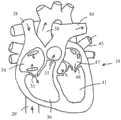
作为序言性的背景技术部分,在此对人体心脏中的血液循环进行说明以便更好地理解本文所呈现的本发明实施例的一些方面。在此,图1是心脏10和心脏内循环流的视图。血液从身体上部经上腔静脉(SVC)28并从身体下部经下腔静脉(IVC)29流至右心房34,从而进入心脏。被称作腔静脉瓣(未示出)的单向瓣膜阻止血液从右心房流回至IVC。右心房收缩从而迫使血液通过三尖瓣35并进入右心室36,右心室36继而收缩迫使血液通过肺动脉瓣37进入肺动脉30。肺动脉30将血液引导至肺,血液在肺中被氧合。As an introductory background section, blood circulation in the human heart is described herein in order to provide a better understanding of some aspects of the embodiments of the invention presented herein. Here, FIG. 1 is a view of a
血液在肺中氧合之后经肺静脉43返回至心脏并进入左心房47。左心房47收缩迫使血液通过二尖瓣48进入左心室41。左心室41然后将血液泵送至主动脉38,主动脉38然后将血液分配至更大的动脉以输送至身体的其他部分。After oxygenation in the lungs, the blood returns to the heart via the
人体内的血流,尤其是在流经其身体时人的血液所携带的氧,将会受到心脏衰竭和肺病的不利影响,这两种疾病均是普遍的致死疾病。The blood flow in the human body, especially the oxygen carried by the human blood as it flows through the body, will be adversely affected by heart failure and lung disease, both of which are commonly fatal diseases.
当心脏不能泵送足够的血液以满足身体的需要时即发生心脏衰竭。心脏衰竭在美国影响570万病患,并且在2008年造成几乎28万人死亡(参见Roger等人,Circulation,2012;125(l):e2:-220)。这种病症给医疗服务提供者造成了很大的负担并且治疗费用高昂。2010年美国心脏衰竭的直接和间接花费估计达到392亿美元(参见疾病预防控制中心2010年心脏衰竭情况报告)。尽管在医疗护理领域取得了进步,然而对心脏衰竭病患的预后仍然不理想,尤其是对晚期病患。晚期心脏衰竭病患通常需要心室辅助装置(VAD)支持或者心脏移植才能存活。当然,心脏移植会受到有限的捐献器官供应的限制。另一方面,VAD是设计用于增强或替代衰竭心脏的一个或多个腔室的功能的机械泵,并且可用于心脏移植不可行或不合适的场合。尽管VAD的使用在不断增加,但因需要重大手术干预而仍然受到限制。Heart failure occurs when the heart cannot pump enough blood to meet the body's needs. Heart failure affects 5.7 million patients in the United States and caused almost 280,000 deaths in 2008 (see Roger et al., Circulation, 2012; 125(l):e2:-220). This condition places a significant burden on healthcare providers and is expensive to treat. The direct and indirect cost of heart failure in the United States was estimated at $39.2 billion in 2010 (see CDC 2010 Heart Failure Situation Report). Despite advances in medical care, the prognosis for patients with heart failure remains suboptimal, especially for terminally ill patients. Patients with advanced heart failure often require ventricular assist device (VAD) support or a heart transplant to survive. Of course, heart transplants are limited by the limited supply of donated organs. VADs, on the other hand, are mechanical pumps designed to augment or replace the function of one or more chambers of a failing heart, and may be used where heart transplantation is not feasible or appropriate. Although the use of VAD is increasing, it is still limited by the need for major surgical intervention.
类似地,肺病是美国的第三号杀手,六例死亡中就有一例死于肺病(美国肺脏协会)。尽管对肺病投入了1540亿美元的支出,每年仍有40万人死于肺病(参见Sanovas,“肺病”)。慢性阻塞性肺病(COPD)是最常见的肺病之一,并且在美国主要致死疾病中居前四。另外,成人呼吸窘迫综合症(ARDS)通常每年会影响19万人,并且平均存活率仅为30%至50%。如果病患的肺脏无法正常工作(例如由于COPD或ARDS),那么血氧合作用就会不充分。为了补偿这种缺氧,可以采用体外膜氧合(ECMO)。Similarly, lung disease is the number three killer in the United States, accounting for one in six deaths (American Lung Association). Despite $154 billion in spending on lung disease, 400,000 people die each year from lung disease (see Sanovas, "Lung disease"). Chronic obstructive pulmonary disease (COPD) is one of the most common lung diseases and ranks among the top four leading causes of death in the United States. Additionally, Adult Respiratory Distress Syndrome (ARDS) typically affects 190,000 people each year and has an average survival rate of only 30% to 50%. If the patient's lungs are not working properly (for example, due to COPD or ARDS), then the oxygenation of the blood will be insufficient. To compensate for this hypoxia, extracorporeal membrane oxygenation (ECMO) can be employed.
在临床实践中,使用VAD和ECMO均需要大创口性外科手术,以通过一组插管植入所述装置。插管是这样的医用管,即其被插入身体以便排出和/或输注流体,在VAD和ECMO的情况下排出和/或输注血液。由于这些装置的植入过程的大创口性,仅有有限的一部分病患接受这种基于装置的治疗方法。可用于ECMO的插管(如Wang等人的美国专利号7,473,239所描述的插管,其申请文件全文通过参引纳入本文)的主要问题有:(1)大直径插管的多次引管和插入会对病患造成过大的创伤;(2)血液再循环会导致不充足的体外氧合;以及(3)排流腔的放置会造成不充分的静脉血排出。类似地,VAD中使用的引管技术也至少将导致对病患造成过大创伤的问题。In clinical practice, the use of both VAD and ECMO requires invasive surgery to implant the device through a set of cannulas. A cannula is a medical tube that is inserted into the body to drain and/or infuse fluid, in the case of VAD and ECMO, to drain and/or infuse blood. Due to the invasive nature of the implantation of these devices, only a limited subset of patients receive this device-based therapy. The main problems with cannulas that can be used for ECMO (such as the cannula described in US Pat. No. 7,473,239 to Wang et al., the entirety of which is incorporated herein by reference) are: (1) multiple introductions of large diameter cannulas and Insertion can be excessively traumatic to the patient; (2) blood recirculation can lead to insufficient extracorporeal oxygenation; and (3) drainage lumen placement can lead to insufficient venous drainage. Similarly, the catheter technique used in VAD will at least lead to the problem of excessive trauma to the patient.
因此,本领域需要这样的装置、系统和方法,其能减轻与使用VAD和ECMO有关的创伤,能使血液再循环的风险降至最低,能保证充分的静脉血排流,特别是能提供微创、有效且简便的用于VAD和ECMO术的经皮插管系统。Accordingly, there is a need in the art for devices, systems and methods that reduce the trauma associated with the use of VAD and ECMO, minimize the risk of blood recirculation, ensure adequate venous blood drainage, and especially provide microscopic Invasive, effective and simple percutaneous intubation system for VAD and ECMO procedures.
发明内容SUMMARY OF THE INVENTION
本文所公开的新颖的自扩张插管、使用这种插管的系统及其使用方法。插管可以包括单腔插管(SLC)构造和双腔插管(DLC)构造。插管包括至少第一插管和附接于第一插管的自扩张线材框架。自扩张线材框架可以例如是温度响应性的,从而响应于线材框架的升温,例如因病患自身体温产生的升温,而从压缩状态(当其通过病患的身体移动至所要部署的位置时呈现减小的插管直径)扩张至扩张状态(插管的直径增大至正常使用所预期的直径)。或者,线材框架可以具有足够的柔性从而允许其径向压缩(例如通过将线材网和该线材网所附接的插管插入用于初步插入病患血管的可撕开外套中)并在消除该径向压缩后恢复至其扩张的正常直径。扩张的线材框架提供径向支承以防止当流体从病患排出时排放管道(病患的血管或插入病患血管中或病患身体的其他部分中的系统的一部分)塌陷。Disclosed herein are novel self-expanding cannulas, systems using such cannulas, and methods of use. Cannulas may include single lumen cannula (SLC) configurations and dual lumen cannula (DLC) configurations. The cannula includes at least a first cannula and a self-expanding wire frame attached to the first cannula. The self-expanding wire frame may, for example, be temperature responsive, such that in response to an increase in the wire frame, such as that due to the patient's own body temperature, from a compressed state (present as it moves through the patient's body to the location to be deployed) The reduced diameter of the cannula) is expanded to an expanded state (the diameter of the cannula increases to the diameter expected in normal use). Alternatively, the wire frame may be flexible enough to allow it to compress radially (eg, by inserting the wire mesh and the cannula to which the wire mesh is attached into a tear-off jacket for initial insertion into the patient's blood vessel) and eliminate the Return to its expanded normal diameter after radial compression. The expanded wire frame provides radial support to prevent collapse of the drain conduit (part of the patient's blood vessel or system inserted into the patient's blood vessel or in other parts of the patient's body) when fluid is drained from the patient.
关于本发明的一些方面(DLC构造),第一插管可以包括排流插管,其中线材框架从排流插管的远端向外延伸。口部位于排流插管的侧壁中,该口部接收第二插管。第二插管是输注插管,其延伸通过第一插管的远端,并通过线材框架的远端延伸至该线材框架的远端之外,并且能够在第一插管和线材框架内部径向移动。With respect to some aspects of the invention (DLC configuration), the first cannula may comprise a drainage cannula with the wire frame extending outwardly from the distal end of the drainage cannula. A mouth is located in the sidewall of the drainage cannula, the mouth receiving the second cannula. The second cannula is an infusion cannula that extends through the distal end of the first cannula and beyond the distal end of the wire frame through the distal end of the wire frame and can be inside the first cannula and the wire frame radial movement.
关于本发明的另一些方面(SLC构造),第一插管可以包括排流插管,其中线材框架从排流插管的远端向外延伸,但是没有位于排流插管的侧壁中的口部并且没有第二插管。With regard to other aspects of the invention (SLC configurations), the first cannula may comprise a drainage cannula, wherein the wire frame extends outwardly from the distal end of the drainage cannula, but does not have any in the sidewall of the drainage cannula Oral and no second cannula.
关于本发明的另一些方面(其他DLC构造),第一插管可以包括排流插管,其具有嵌入该排流插管的远端内(即嵌入排流插管的位于其远端的圆周壁内)的线材框架。第二插管是输注插管并且包括位于该输注插管的侧壁中的口部,该口部接收第一排流插管。第一排流插管延伸通过第二输注插管的远端并且能够在第二输注插管内径向移动。With regard to other aspects of the invention (other DLC configurations), the first cannula may comprise a drainage cannula having a circumference embedded within the distal end of the drainage cannula (ie, embedded in the circumference of the drainage cannula at its distal end) wall) wire frame. The second cannula is an infusion cannula and includes a mouth in a sidewall of the infusion cannula, the mouth receiving the first drainage cannula. The first drainage cannula extends through the distal end of the second infusion cannula and is radially movable within the second infusion cannula.
关于本发明的另外一些方面,上述构造可以包括用于病患血液的流体处理系统的部件以及用于将插管放置于病患体内的递送机构,该流体处理系统尤其用于对病患的血液进行吸收、氧合和输送。With regard to further aspects of the invention, the above-described constructions may include components of a fluid treatment system for a patient's blood, particularly for treatment of a patient's blood, and a delivery mechanism for placing a cannula in a patient. Absorb, oxygenate, and transport.
利用本发明的方面的SLC可以被预包装或组装在小的外套中,并且包括自扩张线材框架,该自扩张线材框架在被布置于病患体内后扩张至预设定的期望的尺寸,进而对SLC和其所位于的血管提供径向支承。SLC可以用作静脉或动脉插管。SLCs utilizing aspects of the present invention may be prepackaged or assembled in a small casing and include a self-expanding wire frame that expands to a pre-set desired size after deployment in a patient, thereby Provides radial support to the SLC and the vessel in which it resides. SLC can be used as a venous or arterial cannula.
类似地,利用本发明的方面的DLC包括形成排流腔的排流插管和形成输注腔的输注插管。DLC可以用于针对Veno-PA ECMO、Veno-RV ECMO以及用于LV-Aortic模式的LVAD支持的经皮插管。对于Veno-PA模式,大静脉(SVC或IVC)本身被DLC用作形成排流腔的一部分,并且通过自扩张线材框架支承,该自扩张线材框架防止当在血管插入位置处抽取静脉血时静脉塌陷。静脉血通过血液泵从排放插管中抽出并且被输送至氧合器用于氧合。DLC的输注插管是薄壁的、优选聚氨酯管,其将氧合的血液直接输送回PA。输注插管优选地具有线材加强的末端,并且具有比排流插管小的直径使得其可被放置于排流腔的内部并且在该排流腔内移动。Veno-RV模式与Veno-PA模式类似,除了氧合的血液将回到右心室而不是回到PA。对于Veno-RV模式和Veno-PA模式,DLC可以从颈静脉、锁骨下静脉、或股静脉插入。对于LV-Aortic模式LVAD支持,DLC可以通过微创手术从升主动脉插入。DLC的线材加强排流腔能从左心室中排出血液,并且其输注腔能使血液返回至升主动脉。DLC的排流腔具有比输注腔小的直径使得其能够被放置于输注腔的内部并且在该输注腔内移动。Similarly, a DLC utilizing aspects of the present invention includes a drainage cannula forming a drainage lumen and an infusion cannula forming an infusion lumen. DLC can be used for percutaneous intubation for Veno-PA ECMO, Veno-RV ECMO, and LVAD support for LV-Aortic mode. For the Veno-PA mode, the large vein (SVC or IVC) itself is used by the DLC as part of forming the drainage lumen, and is supported by a self-expanding wire frame that prevents the vein when venous blood is drawn at the site of vascular insertion collapse. Venous blood is drawn from the drain cannula by a blood pump and delivered to an oxygenator for oxygenation. The infusion cannula of the DLC is a thin walled, preferably polyurethane tube, which delivers oxygenated blood directly back to the PA. The infusion cannula preferably has a wire reinforced tip and has a smaller diameter than the drainage cannula so that it can be placed inside and moved within the drainage lumen. Veno-RV mode is similar to Veno-PA mode, except that oxygenated blood will be returned to the right ventricle instead of the PA. For Veno-RV mode and Veno-PA mode, the DLC can be inserted from the jugular, subclavian, or femoral veins. For LV-Aortic mode LVAD support, the DLC can be inserted from the ascending aorta by a minimally invasive procedure. The DLC's wire-reinforced drainage lumen drains blood from the left ventricle, and its infusion lumen allows blood to return to the ascending aorta. The drainage lumen of the DLC has a smaller diameter than the infusion lumen so that it can be placed inside and moved within the infusion lumen.
本文对SLC组件、DLC组件及其各自的递送系统进行了说明。另外,还对用于将SLC和DLC组件递送至血管的过程进行了说明。The SLC assembly, the DLC assembly, and their respective delivery systems are described herein. Additionally, procedures for delivering SLC and DLC assemblies to blood vessels are described.
附图说明Description of drawings
本发明的各种优点可以通过参考附图而被本领域技术人员更好地理解,其中:The various advantages of the present invention may be better understood by those skilled in the art by referencing the accompanying drawings, wherein:
图1是心脏和反映了血液经由心脏的循环路径的示意图。Figure 1 is a schematic diagram of the heart and reflects the circulation path of blood through the heart.
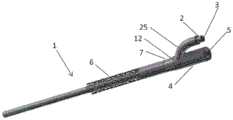
图1A是根据本发明的方案的DLC组件的立体图。1A is a perspective view of a DLC assembly in accordance with aspects of the present invention.
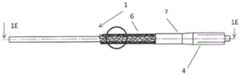
图1B是图1A的DLC组件的俯视图。FIG. 1B is a top view of the DLC assembly of FIG. 1A .
图1C是图1B的线材框架和输注插管的局部放大视图。Figure 1C is an enlarged fragmentary view of the wire frame and infusion cannula of Figure IB.
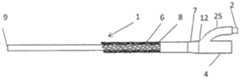
图1D是图1A的DLC组件的侧视图。1D is a side view of the DLC assembly of FIG. 1A.
图1E是图1B的DLC组件的剖视图。Figure 1E is a cross-sectional view of the DLC assembly of Figure IB.
图2A是根据本发明某些方面并且以扩张构型示出的线材框架的中间平面剖视图。2A is a mid-plane cross-sectional view of a wire frame shown in an expanded configuration in accordance with certain aspects of the present invention.
图2B是处于扩张构型的图2A的线材框架的横截面图。2B is a cross-sectional view of the wire frame of FIG. 2A in an expanded configuration.
图2C是处于压缩构型的图2A的线材框架的中间平面剖视图。2C is a mid-plane cross-sectional view of the wire frame of FIG. 2A in a compressed configuration.
图2D是处于压缩构型的图2A的线材框架的横截面图。2D is a cross-sectional view of the wire frame of FIG. 2A in a compressed configuration.
图2E是处于扩张构型并且包括连接部的图2A的线材框架的中间平面剖视图。2E is a mid-plane cross-sectional view of the wire frame of FIG. 2A in an expanded configuration and including connections.
图2F是处于扩张构型并且包括替代的连接部的图2A的线材框架的中间平面剖视图。2F is a mid-plane cross-sectional view of the wire frame of FIG. 2A in an expanded configuration and including an alternate connection.
图2G是在热处理中用于固定镍钛诺的心轴的立体图。Figure 2G is a perspective view of a mandrel used to hold Nitinol during heat treatment.
图2H是图2G的心轴的局部放大视图。Figure 2H is an enlarged partial view of the mandrel of Figure 2G.
图3A是包括递送系统的图1A的DLC组件的侧视图。3A is a side view of the DLC assembly of FIG. 1A including a delivery system.
图3B是图3A的DLC组件及其递送系统的剖视图。3B is a cross-sectional view of the DLC assembly of FIG. 3A and its delivery system.
图4A是根据本发明某些方面的SLC组件的侧视图。4A is a side view of an SLC assembly in accordance with certain aspects of the present invention.
图4B是包括递送系统的图4A的SLC组件的侧视图。Figure 4B is a side view of the SLC assembly of Figure 4A including a delivery system.
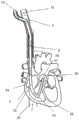
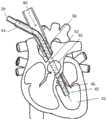
图5A是图1A的DLC组件以及其中布置有DLC组件用于Veno-PA ECMO的病患心脏的示意图。5A is a schematic illustration of the DLC assembly of FIG. 1A and a patient's heart with the DLC assembly disposed therein for Veno-PA ECMO.
图5B是图1A的DLC组件以及其中布置有DLC组件用于Veno-RV ECMO的病患心脏的示意图。5B is a schematic illustration of the DLC assembly of FIG. 1A and a patient's heart in which the DLC assembly is deployed for Veno-RV ECMO.
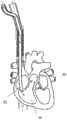
图5C是根据本发明的另一方面的DLC组件以及其中布置有DLC组件用于LV-Aortic模式的LVAD支持的病患心脏的示意图。5C is a schematic illustration of a DLC assembly and a patient's heart in which the DLC assembly is deployed for LVAD support in LV-Aortic mode, according to another aspect of the present invention.
具体实施方式Detailed ways
上文概述的本发明通过参考以下描述、权利要求书和附图将得到更好的理解。下文给出的使人能够实施本发明的实施例描述,并非意在限制本发明的优选实施例,而是用作优选实施例的特别示例。本领域技术人员应理解,他们能容易地使用所公开的概念和特定实施例,作为用于更改或者设计出其它方法和系统以实现与本发明相同的目的的基础。本领域技术人员还应意识到,这些等同的组件并不背离最广义形式的本发明的精神和范围。The invention outlined above will be better understood by reference to the following description, claims and drawings. The descriptions of embodiments that enable one to practice the invention are given below and are not intended to limit the preferred embodiments of the invention, but rather serve as specific examples of preferred embodiments. Those skilled in the art should appreciate that they can readily use the conception and specific embodiment disclosed as a basis for modifying or designing other methods and systems for carrying out the same purposes of the present invention. Those skilled in the art should also realize that such equivalent components do not depart from the spirit and scope of the invention in its broadest form.
根据本发明实施例的某些方面,图1A至图1E示出了DLC组件,其中同样的标记表示同样的部件。图1A是DLC组件1的立体图,图1B是DLC组件1的俯视图,图1C是DLC组件1的线材框架体6和输注插管2的局部放大图,图1D是DLC组件1的侧视图,图1E是DLC组件1的剖视图。DLC组件1包括排流插管4及其线材框架体6、中空的输注口部25和具有圆形实体的输注插管2,该圆形实体通过输注近端延伸至排流插管4的远端。输注插管2形成输注腔3。同样地,排流插管4形成排流腔5。输注口部25穿过排流腔5的壁12开通至排流腔5中。输注插管2被定尺寸和构造成能在输注口部25内移动,使得输注插管2远端处的开口9的位置能够(相对于排流插管4)改变,如将在下文详细说明的。自扩张线材框架6附接于排流插管4的远端。自扩张线材支架6优选由形状记忆合金形成,该形状记忆合金当在病患的血管中使用时可压缩至小于其期望直径的直径,并且当因病患自身的体温而升温至其转变温度时恢复至其期望直径。在本发明的实施例中,线材框架6尤其由镍钛诺形成,其通常由大约55%至56%重量的镍和44%至45%重量的钛形成。或者,自扩张线材框架6具有充足的柔性从而允许其被径向压缩(例如通过将线材网及其所附接的插管插入用于初步插入至病患血管的可撕开护套中,如下文进一步说明的)并在该径向压缩解除后恢复至其正常的扩张直径。另外,除了镍,自扩张线材框架6还可由不锈钢或形状记忆聚合物形成,只要这种构型能被压缩并在压缩力消除时能恢复至其原始直径或形状。1A-1E illustrate a DLC assembly in which like numerals refer to like components, according to certain aspects of embodiments of the present invention. 1A is a perspective view of the
排流插管4的远端可形成为具有渐缩的壁部7,线材框架6的端部可嵌入排流插管4的所述渐缩端部7。或者,排流插管4的远端可形成为直径比排流插管4的近端更小的圆筒形通道,其中渐缩壁部7位于近端和远端之间。在各种情况下,线材框架6均优选通过模制到排流插管4的塑性材料(例如聚氨酯或任何生物相容性塑料)的壁中而结合至排流插管4的远端。The distal end of the
本文所使用的术语“远”和“近”是指与将插管插入病患的人员的相应距离。因此,例如在图1D的视图中,开口9是输注插管2的远侧开口。The terms "distal" and "proximal" as used herein refer to the corresponding distance from the person inserting the cannula into the patient. Thus, for example in the view of FIG. 1D , the
图1E是DLC组件1的剖视图。当DLC组件1插入至上腔静脉(SVC)时,来自SVC和下腔静脉(IVC)的静脉血从排流插管4的开口8排出。通常,排出静脉血时要施加负压。在现有技术系统中,排出血液的静脉经常会由于静脉外部和内部之间的压差而塌陷。根据本发明的有利方面,线材框架6支承静脉以防止其塌陷。排出后,血液经受处理并最终通过输注腔3经开口9回到病患的身体。FIG. 1E is a cross-sectional view of the
如上文简略提到(并将在下文中讨论)的,输注插管2能在输注口部35、排流插管4和线材框架6内纵向移动。另外,输注插管2应具有足够的长度使得输注插管2的开口9可布置在与线材框架6远端的距离足够远处,从而当线材框架6的远端位于病患的SVC或IVC内并且相反的输注插管2近端仍然从输注口部25伸出时,开口9至少可到达病患的右心室,且优选可到达病患的肺动脉。输注插管4的开口9与线材框架6远端的纵向分离有助于使已通过输注插管2返回至病患的新鲜含氧血经由排流插管4的再循环降至最低。As briefly mentioned above (and will be discussed below), the
如上文所述,在特别优选的实施例中,线材框架6可以由镍钛诺形成,镍钛诺是镍与钛的合金。镍钛诺具有超弹性的性能,这是指在较低温度发生变形后在一定温度(即其转变温度)以上恢复至其初始形状的能力。可以利用被称为形状设定的过程使得镍钛诺记住期望的形状。通常,该过程包括根据所使用的特定镍钛诺的不同(由不同生产商提供的不同镍钛诺材料),在450-550℃的温度下将材料在心轴上紧密束缚成希望的形状达10至80分钟,实施镍钛诺材料的形状设定的方法对于本领域技术人员来说是已知的。在至少一个实施例中,适合在本发明使用并且横截面直径为0.01英寸的镍钛诺线材(容易商购自宾夕法尼亚州西切斯特市的Johnson Matthey Inc.公司)的热处理的优选条件为在500℃温度下持续70分钟,这能够使其转变温度优选地等于至少27℃。在另一实施例中,镍钛诺线材可以被加热使得转变温度可以介于30℃至37℃之间(即正常人的体温)。在转变温度以下,材料不稳定并且其形状可以容易地改变。As mentioned above, in a particularly preferred embodiment, the
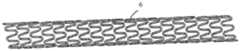
图2A提供了处于扩张构型的镍钛诺线材框架6的中间平面剖视图。线材框架6的形状优选为之字形与螺旋的组合。线材框架6在径向方向上具有较高的强度以支承插管或静脉,但在轴向方向上保持柔性以容易地适应其所在的血管的弯曲。线材框架6优选具有与排流插管4的远端匹配的最大(即扩张)直径,并且特别具有比病患的SVC的直径略小、优选小1至2mm的直径。因此,文中所述系统可设置成具有一系列尺寸以用于不同病患(即从儿童到成人体型的病患)。图2B是处于扩张构型的线材框架6的横截面视图。该视图中的轮廓为圆形,但也可以实现其他轮廓,比如多边形轮廓,而不脱离本发明的精神和范围。图2C示出了处于压缩构型的同一线材框架6。该压缩构型可通过在图2A线材框架的周面上施力实现。当使用诸如镍钛诺的超弹性材料时,该压缩优选地在低于线材框架6转变温度的温度下实施。图2D是处于压缩构型的线材框架6的横截面图。处于压缩构型的线材框架6的直径可以是处于扩张构型的线材框架6的直径的1/3至2/3,且优选是1/2至2/3。Figure 2A provides a mid-plane cross-sectional view of the
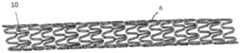
图2E和图2F是处于扩张构型的线材框架6的中间平面剖视图,其示出了附加的可选特征。这些线材框架被构造成与图2A的线材框架类似,除了多出线材框架6的相邻部段之间的连接部(图2E中的10和图2F中的11)。这些连接部10和11也可以由镍钛诺形成,并且可以例如通过激光焊接连接至线材框架6的相邻部段。这些连接部10和11可以提供沿轴向的附加的强度,但仍使线材框架6保持一定程度的柔性。2E and 2F are mid-plane cross-sectional views of
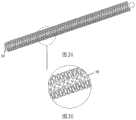
在由诸如镍钛诺的超弹性材料构成时,线材框架6可通过将圆形线材紧密束缚在心轴50(图2G)上并进行如上文所述的热处理而形成。图2H是图2G的心轴50的局部放大图。线材框架还可以通过对镍钛诺管进行激光切割生成,比如通过使用例如在SOLID WORKS中生成的3D模型。When constructed of a superelastic material such as Nitinol, the
图3A是被包封在其递送系统中的DLC组件1的侧视图。递送系统包括可撕开外套20和导引器21。可撕开外套20由外套体19和附接于外套体19的头部18组成。翼部13可以设置在头部18的相反侧上。可撕开外套20可通过沿两相反方向拉动翼部13而被沿其中线14(可被设置成弱线或弱段,例如通过穿孔)撕成两部分。外套体19是渐缩的,在外套体19的远端22处较小。Figure 3A is a side view of the
图3B是DLC组件及其递送系统的剖视图。导引器21包括本体15、圆形把手16和渐缩末端17。在一些实施例中,导引器本体15是圆柱形的。在另外的实施例中,导引器本体15是圆锥形的。导引器21具有无创伤性的柔性本体,其具有纵向延伸通过导引器的小腔,该小腔可用于例如供引导线穿过。导引器21可放置于输注插管2中并构造成在输注插管2中容易地滑动。因为导引器21的圆形把手16的直径大于输注腔3的内直径,因此当把手16到达输注插管2的近端26时导引器21停止。由于上文描述的线材框架6的自扩张特性,DLC组件1的线材框架6能被径向挤压,并且可定位在可撕开外套20的内部并位于该可撕开外套20的内部与输注插管2的外部之间,保持其压缩形状。在线材框架6由诸如镍钛诺的超弹性材料形成的某些实施例中,线材框架6可在低于其转变温度的一定温度下(例如在一个实施例中为11℃)被径向挤压。3B is a cross-sectional view of a DLC assembly and its delivery system. The
输注插管2的能保持从输注口部25向近侧延伸出的部分23的长度可以根据DLC组件1的功能而改变。对于一些应用场合来说,部分23的长度可以介于3至5cm之间。在优选的实施例中,这会造成输注插管2的远端从线材框架6的远端向外优选伸出10至15cm。本领域技术人员将会意识到输注插管2的长度可根据不同体型的病患(例如儿童与成人患者)改变,只要系统的尺寸能实现上述功能即可。The length of the
输注插管从输注口部25进入排流腔5。如图3B所示,随着输注插管2从输注口部25向排流插管4的远端过渡,其在输注插管2的部分24处弯曲。可选地,该部分24可以通过线材框架(图3B未示出)加强。The infusion cannula enters the
输注口部25和排流插管4可形成为单一部分,例如,作为非限制性例子,通过使用具有80A邵氏硬度的医用聚氨酯来注射成型或铸造尿烷。排流插管4的厚度优选为1至2mm。输注插管2还可由医用聚氨酯或硅胶形成。作为非限制性例子,输注插管2可通过浸渍成型或挤出产生,其方法对于本领域技术人员而言是已知的。排流腔5的尺寸优选为18至34Fr并且其长度优选为10至30cm,并且更优选为20至30cm。输注腔3的尺寸优选为10至20Fr并且其长度优选为40至45cm。输注插管2的远侧末端27(图3B)优选不透射线使得其能通过X射线或者荧光成像看到,X射线或者荧光成像可用来在插入期间对插管进行准确地定位。具有可压缩的线材框架6且已插入导引器21的DLC组件1可被置于更小直径的可撕开外套20中。然后DLC组件1及其递送系统即可使用。The
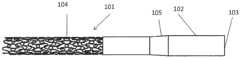
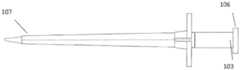
图4A是根据本发明某些方面的SLC组件101的侧视图。它的结构类似于图1D所示的DLC组件1,除了其仅具有单个腔103。SLC 101包括具有渐缩远端105和形成腔103的插管102。自扩张线材框架104的端部(依上述方式构造)优选嵌入插管102的渐缩端部105中。图4B示出SLC组件101及其递送系统。与DLC组件1及其递送系统类似,SLC组件101及其递送系统包括渐缩的可撕开外套107和无创伤性的导引器106。导引器插入插管102内的腔103中。当SLC组件101被置于其递送系统内时,线材框架104因其搁置在外套107内而被压缩。当插管102及其递送系统被置于血管中时,外套107被撕开(方式与上述外套20相同),线材框架扩张以支承血管。插管102可用作静脉排流插管。4A is a side view of an
在使用中,用于Veno-PA ECMO的DLC组件1及其递送系统从内颈静脉插入至病患。首先,气囊导管(例如气囊漂浮(Swan-Ganz)导管)可从内颈静脉插入。在位于末端的已充胀气囊的帮助下,气囊导管穿过右心房和右心室并到达肺动脉。在导管到达肺动脉后,引导线可穿过气囊导管的腔到达肺动脉,此后气囊导管可被取出。接着,DLC组件1及其递送系统在荧光检测下沿引导线插入,直到输注插管2的不透射线的远侧末端27到达右心室。此时,输注腔2沿引导线材进一步前移至肺动脉,同时DLC组件1及其递送系统的其余部分保持在原位。一旦输注腔2处于肺动脉中,撕开并取出可撕开外套20,同时露出自扩张线材框架6。在线材框架6由镍钛诺构成的实施例中,由于其超弹性特性,压缩的镍钛诺线材框架6径向扩张(响应于因病患体温而升温至其转变温度)至线材框架的预设形状,并随后在排放血液期间防止SVC塌陷。或者,线材框架可具有足够的柔性以允许被外套20径向压缩并且在外套20移除时自动恢复至其正常的未压缩直径。在此使用的线材框架6应是生物相容的,从而极大降低形成血栓的可能性。然后,抽出导引器21,并且止血密封(图中未示出)可被放置在输注插管2与输注口部25之间的位置以完成插入过程。In use, the
与现有技术DLC构型相比,本发明的具有自扩张特征的DLC在能够保持与现有技术DLC构造相同的流速的同时对血管的创伤更小,因为在插入过程中其径向尺寸更小。Compared to prior art DLC configurations, the DLC with self-expanding characteristics of the present invention can maintain the same flow rate as prior art DLC configurations while being less invasive to the blood vessel due to its greater radial dimension during insertion Small.
根据具体手术程序的不同,DLC组件1及其递送系统可以替代地从锁骨下静脉或股骨下静脉插入。Depending on the specific surgical procedure, the
图5A示出了体现本发明某些方面的DLC组件1的示意图,以及布置有DLC组件1以进行Veno-PA ECMO的病患心脏。在此情况下,SVC将用作排流腔的一部分。DLC在插入位置的上游和下游都能排出血液,从而避免SVC被长时间堵塞,否则会导致血栓形成。静脉血从SVC28和IVC29中排出并且从排流腔5的出口32离开病患身体。此后,静脉血(贫氧血)流过血液泵、氧合器和其他相关装置(图中未示出)并变成含氧血(富氧血)。用于体外血液氧化的设备和方法是本领域技术人员已知的,因此不再讨论。在氧合之后,含氧血通过输注腔3的入口33流回肺动脉30。在人体中,血液从右心房34通过三尖瓣35流至右心室36,并随后通过肺动脉瓣37流至肺动脉30。三尖瓣35和肺动脉瓣37的功能均是防止回流。将输注腔2直接置于肺动脉30中在很大程度上降低了血液再循环。Figure 5A shows a schematic diagram of a
镍钛诺线材框架6的预设直径应稍小于SVC 28的直径。当在排流腔5上施加负压时,SVC 28随着其壁部向内塌陷而收缩,并且被线材框架6支承。当负压消除时,SVC 28将恢复至其初始直径。此时,在线材框架6与SVC 28之间存在足够的空间使得DLC系统1能够从SVC中抽出。The default diameter of the
可以将另一线材框架31布置在输注插管2中(例如通过将线材框架31模制到输注插管2的壁内),该线材框架31优选也由镍钛诺形成,并且其结构可以与线材框架6类似,或者可以为螺旋状。位于右心室内的部段可以被预设为如图5A所示的弯曲形状。该附加的线材框架31可用于防止输注插管2在右心室中的弯曲部分形成扭结。Another
图5B是本发明DLC组件和病患心脏的示意图,其中布置有DLC组件以用于Veno-RVECMO。这一应用与根据图5A描述的应用类似。然而一项区别在于输注腔被放置在右心室36中而不是位于肺动脉30中。另一区别在于该DLC不需要图5A的输注插管2中的镍钛诺线材框架31。由于有三尖瓣35,血液再循环非常微弱。Figure 5B is a schematic illustration of a DLC assembly of the present invention and a patient's heart with the DLC assembly deployed for Veno-RVECMO. This application is similar to that described according to Figure 5A. One difference however is that the infusion lumen is placed in the
图5C是本发明DLC组件和布置有DLC组件以用于LV-Aortic模式LVAD的心脏的示意图。DLC组件通过微创手术从升主动脉38或者降主动脉(未示出)插入。与前述情况不同,排流腔39具有比输注腔40小的直径。排流腔39的远端45的位置可以通过使其在排流口部44中移动而调整。在此情况下,排流插管应具有足够的长度使得当输注腔40的远端位于升主动脉38中时排流腔39的远端45可以位于病患的左心室41中。左心室41中的动脉血通过血液泵(图中未示出)经由排流腔39抽出并通过输注腔40返回至升主动脉38。如图5C所示,插管和自扩张线材框架(如镍钛诺线材框架)位于升主动脉38中且在肺动脉30后方的部分42以虚线示出。在该构造中,线材框架完全嵌入排流插管壁的内部,当血液经排流腔39抽出时该线材框架给排流插管提供径向支承。在所述构造中线材框架46的形状优选为螺旋形,但也可以呈与图5A中线材框架6类似的形状。Figure 5C is a schematic illustration of a DLC assembly of the present invention and a heart with the DLC assembly deployed for use in an LV-Aortic mode LVAD. The DLC assembly is inserted by minimally invasive surgery from the ascending
对于传统的LVAD而言,血液通过泵从左心室41经由插管排出并且经由另一插管流回主动脉,这需要多次引管。图5C所示利用本发明某些方面的应用避免了多次引管并减小了创伤和手术难度。With conventional LVADs, blood is pumped from the
利用本发明某些方面的自扩张插管系统提供了相对于现有技术的显著优点,这些优点在各应用中可包括下列中的一个或多个:(i)避免多次引管;(ii)实施微创性插入并在置于病患体内时自扩张;(iii)减少失血和血管创伤;(iv)降低血栓形成的可能性;(v)避免重大创伤手术;和(vi)最低程度的血液再循环。Self-expanding cannula systems utilizing certain aspects of the present invention provide significant advantages over the prior art, which in each application may include one or more of the following: (i) avoid multiple cannulae; (ii) ) perform minimally invasive insertion and self-expand when placed in the patient; (iii) reduce blood loss and vascular trauma; (iv) reduce the likelihood of thrombosis; (v) avoid major invasive procedures; and (vi) minimally blood recirculation.
虽然目前已经完整给出了本发明所暗含理念的优选实施例和某些改型,但本领域技术人员在熟习了所述暗含理念之后将能显而易见地得出各种其他实施例以及本文所示出和所描述实施例的各种变型和改型。因此应理解,本发明可以以不同于本文具体给出的方式实施。While the preferred embodiments and certain modifications of the underlying concepts of this invention have now been fully presented, various other embodiments and those shown herein will be apparent to those skilled in the art upon familiarity with the underlying concepts. Various modifications and adaptations of the described and described embodiments are provided. It is therefore to be understood that the present invention may be practiced otherwise than as specifically set forth herein.
工业实用性Industrial Applicability
本发明适用于医疗装置,并且尤其适用于插管、使用插管的系统及它们的使用方法。该装置可以工业生产并在医疗装置领域使用。The present invention is applicable to medical devices, and in particular to cannulas, systems using cannulas, and methods of their use. The device can be produced industrially and used in the field of medical devices.
Claims (23)
Priority Applications (1)
| Application Number | Priority Date | Filing Date | Title |
|---|---|---|---|
| CN202010618755.3ACN111714755B (en) | 2013-07-18 | 2014-07-17 | self-expanding cannula |
Applications Claiming Priority (5)
| Application Number | Priority Date | Filing Date | Title |
|---|---|---|---|
| US201361847638P | 2013-07-18 | 2013-07-18 | |
| US61/847638 | 2013-07-18 | ||
| CN202010618755.3ACN111714755B (en) | 2013-07-18 | 2014-07-17 | self-expanding cannula |
| CN201480040823.5ACN105592882B (en) | 2013-07-18 | 2014-07-17 | Self-expanding cannula |
| PCT/US2014/046978WO2015009904A1 (en) | 2013-07-18 | 2014-07-17 | Self-expanding cannula |
Related Parent Applications (1)
| Application Number | Title | Priority Date | Filing Date |
|---|---|---|---|
| CN201480040823.5ADivisionCN105592882B (en) | 2013-07-18 | 2014-07-17 | Self-expanding cannula |
Publications (2)
| Publication Number | Publication Date |
|---|---|
| CN111714755Atrue CN111714755A (en) | 2020-09-29 |
| CN111714755B CN111714755B (en) | 2023-05-23 |
Family
ID=52346713
Family Applications (2)
| Application Number | Title | Priority Date | Filing Date |
|---|---|---|---|
| CN201480040823.5AActiveCN105592882B (en) | 2013-07-18 | 2014-07-17 | Self-expanding cannula |
| CN202010618755.3AActiveCN111714755B (en) | 2013-07-18 | 2014-07-17 | self-expanding cannula |
Family Applications Before (1)
| Application Number | Title | Priority Date | Filing Date |
|---|---|---|---|
| CN201480040823.5AActiveCN105592882B (en) | 2013-07-18 | 2014-07-17 | Self-expanding cannula |
Country Status (7)
| Country | Link |
|---|---|
| US (2) | US10912920B2 (en) |
| EP (2) | EP4180082A1 (en) |
| CN (2) | CN105592882B (en) |
| AU (1) | AU2014290028B2 (en) |
| DK (1) | DK3021928T3 (en) |
| ES (1) | ES2933053T3 (en) |
| WO (1) | WO2015009904A1 (en) |
Families Citing this family (12)
| Publication number | Priority date | Publication date | Assignee | Title |
|---|---|---|---|---|
| FR3034676B1 (en) | 2015-04-09 | 2021-08-27 | Centre Chirurgical Marie Lannelongue | CANNULA DEVICE FOR BLOOD CIRCULATION IN AN ARTIFICIAL LUNG, ARTIFICIAL LUNG CONTAINING ITS CANNULA DEVICE |
| US11020582B2 (en)* | 2018-04-20 | 2021-06-01 | Cardiovascular Systems, Inc. | Intravascular pump with expandable region |
| US12097345B2 (en)* | 2018-06-01 | 2024-09-24 | Penumbra, Inc. | Infusion catheter and methods of use |
| WO2020081835A1 (en)* | 2018-10-17 | 2020-04-23 | University Of Kentucky Research Foundation | Percutaneous pulmonary artery drainage device |
| DE102020202401A1 (en)* | 2020-02-25 | 2021-08-26 | Free Life Medical Gmbh | System for supplying and withdrawing blood and assembly process |
| US11331421B2 (en)* | 2020-04-03 | 2022-05-17 | Tufts Medical Center, Inc. | Expandable ECMO extension cannula system |
| US11547786B2 (en) | 2020-04-03 | 2023-01-10 | Tufts Medical Center, Inc. | Expandable ECMO extension cannula system |
| US11738131B2 (en) | 2020-04-03 | 2023-08-29 | Tufts Medical Center, Inc. | Expandable ECMO extension cannula system |
| EP3892314A1 (en) | 2020-04-06 | 2021-10-13 | BIOTRONIK SE & Co. KG | Inflow cannula |
| CN114849026A (en)* | 2022-04-11 | 2022-08-05 | 北京泰杰伟业科技有限公司 | Brain tissue path sheath tube system with balloon dilatation |
| WO2025038641A2 (en)* | 2023-08-14 | 2025-02-20 | The Regents Of The University Of California | Stabilized intravascular cannula |
| CN116870340B (en)* | 2023-08-28 | 2024-01-30 | 江苏赛腾医疗科技有限公司 | Double-cavity cannula |
Citations (22)
| Publication number | Priority date | Publication date | Assignee | Title |
|---|---|---|---|---|
| US4921478A (en)* | 1988-02-23 | 1990-05-01 | C. R. Bard, Inc. | Cerebral balloon angioplasty system |
| US5158545A (en)* | 1991-05-02 | 1992-10-27 | Brigham And Women's Hospital | Diameter expansion cannula |
| US5674240A (en)* | 1993-02-04 | 1997-10-07 | Peter M. Bonutti | Expandable cannula |
| US5833650A (en)* | 1995-06-05 | 1998-11-10 | Percusurge, Inc. | Catheter apparatus and method for treating occluded vessels |
| US6042597A (en)* | 1998-10-23 | 2000-03-28 | Scimed Life Systems, Inc. | Helical stent design |
| CN1253838A (en)* | 1998-11-11 | 2000-05-24 | 小川发条制作所股份公司 | Stante fixed mould, production method of said stante fixed mould and its retaining method |
| US20010044598A1 (en)* | 1998-03-13 | 2001-11-22 | Nicola A. Pisano | Apparatus and methods for reducing embolization during treatment of carotid artery disease |
| US6673042B1 (en)* | 1999-11-22 | 2004-01-06 | Wilfred J. Samson | Expandable venous cannula and method of use |
| US20040215142A1 (en)* | 2002-12-23 | 2004-10-28 | Georg Matheis | Appliance for cannulation of a blood vessel |
| US20060276880A1 (en)* | 2000-05-22 | 2006-12-07 | Malte Neuss | Radially expandable vessel support |
| US20070078438A1 (en)* | 2005-07-05 | 2007-04-05 | Okid Corporation | Catheter assembly and sheath tear assistant tool |
| US20070233041A1 (en)* | 2006-03-30 | 2007-10-04 | Levitronix Llc | Self-expanding cannula and a method for applying and positioning a self-expanding cannula |
| US20100114017A1 (en)* | 2002-07-23 | 2010-05-06 | Reverse Medical Corporation | Systems and methods for removing obstructive matter from body lumens and treating vascular defects |
| US20100312189A1 (en)* | 2009-06-05 | 2010-12-09 | Ethicon Endo-Surgery, Inc. | Flexible cannula devices and methods |
| CN101972510A (en)* | 2004-04-22 | 2011-02-16 | 安乔斯里德公司 | Catheter with balloon |
| US20110054519A1 (en)* | 2008-03-26 | 2011-03-03 | Malte Neuss | Device for closing defects in the vascular system |
| CN102149340A (en)* | 2008-07-09 | 2011-08-10 | 科拉弗洛有限公司 | Vena cava dilation method, device and system for venous drainage |
| US20110282195A1 (en)* | 2006-01-25 | 2011-11-17 | Solar Ronald J | Variable length catheter for drug delivery |
| US20110319816A1 (en)* | 2003-07-07 | 2011-12-29 | Coraflo Ltd. | High Performance Cannulas |
| WO2012097287A1 (en)* | 2011-01-13 | 2012-07-19 | Innovia Llc | Endoluminal drug applicator and method of treating diseased vessels of the body |
| CN102772246A (en)* | 2010-10-20 | 2012-11-14 | 美敦力阿迪安卢森堡有限责任公司 | Catheter apparatuses having expandable mesh structures for renal neuromodulation and associated systems and methods |
| CN103209660A (en)* | 2010-11-16 | 2013-07-17 | W.L.戈尔及同仁股份有限公司 | Sleeves for Expandable Medical Devices |
Family Cites Families (12)
| Publication number | Priority date | Publication date | Assignee | Title |
|---|---|---|---|---|
| US4581017B1 (en)* | 1983-03-07 | 1994-05-17 | Bard Inc C R | Catheter systems |
| US4830023A (en)* | 1987-11-27 | 1989-05-16 | Medi-Tech, Incorporated | Medical guidewire |
| US4909252A (en)* | 1988-05-26 | 1990-03-20 | The Regents Of The Univ. Of California | Perfusion balloon catheter |
| US6428563B1 (en)* | 2000-01-21 | 2002-08-06 | Radiant Medical, Inc. | Heat exchange catheter with improved insulated region |
| US6969379B1 (en)* | 1998-08-27 | 2005-11-29 | A-Med Systems, Inc. | Intravascular cannulation apparatus and methods of use |
| US7063714B2 (en)* | 2001-08-22 | 2006-06-20 | Gore Enterprise Holdings, Inc. | Apparatus and methods for treating stroke and controlling cerebral flow characteristics |
| US6849062B2 (en)* | 2002-08-23 | 2005-02-01 | Medtronic Vascular, Inc. | Catheter having a low-friction guidewire lumen and method of manufacture |
| US7473239B2 (en) | 2003-08-25 | 2009-01-06 | The University Of Texas System | Single expandable double lumen cannula assembly for veno-venous ECMO |
| US20070250148A1 (en)* | 2005-09-26 | 2007-10-25 | Perry Kenneth E Jr | Systems, apparatus and methods related to helical, non-helical or removable stents with rectilinear ends |
| CN201631880U (en)* | 2010-01-29 | 2010-11-17 | 谢新正 | Core bipolar femoral vein spile for thoracoscopic cardiac surgery |
| CA2788391A1 (en)* | 2010-02-02 | 2011-08-11 | Barry N. Gellman | Expandable and collapsible medical device |
| US20110218609A1 (en)* | 2010-02-10 | 2011-09-08 | Trivascular, Inc. | Fill tube manifold and delivery methods for endovascular graft |
- 2014
- 2014-07-17WOPCT/US2014/046978patent/WO2015009904A1/enactiveApplication Filing
- 2014-07-17USUS14/905,073patent/US10912920B2/enactiveActive
- 2014-07-17EPEP22202075.2Apatent/EP4180082A1/enactivePending
- 2014-07-17AUAU2014290028Apatent/AU2014290028B2/enactiveActive
- 2014-07-17EPEP14827002.8Apatent/EP3021928B1/enactiveActive
- 2014-07-17DKDK14827002.8Tpatent/DK3021928T3/enactive
- 2014-07-17ESES14827002Tpatent/ES2933053T3/enactiveActive
- 2014-07-17CNCN201480040823.5Apatent/CN105592882B/enactiveActive
- 2014-07-17CNCN202010618755.3Apatent/CN111714755B/enactiveActive
- 2021
- 2021-01-06USUS17/142,375patent/US20210121659A1/enactivePending
Patent Citations (23)
| Publication number | Priority date | Publication date | Assignee | Title |
|---|---|---|---|---|
| US4921478A (en)* | 1988-02-23 | 1990-05-01 | C. R. Bard, Inc. | Cerebral balloon angioplasty system |
| US5158545A (en)* | 1991-05-02 | 1992-10-27 | Brigham And Women's Hospital | Diameter expansion cannula |
| US5674240A (en)* | 1993-02-04 | 1997-10-07 | Peter M. Bonutti | Expandable cannula |
| US5833650A (en)* | 1995-06-05 | 1998-11-10 | Percusurge, Inc. | Catheter apparatus and method for treating occluded vessels |
| US20010044598A1 (en)* | 1998-03-13 | 2001-11-22 | Nicola A. Pisano | Apparatus and methods for reducing embolization during treatment of carotid artery disease |
| EP1757249A1 (en)* | 1998-10-23 | 2007-02-28 | Boston Scientific Limited | Helical stent design |
| US6042597A (en)* | 1998-10-23 | 2000-03-28 | Scimed Life Systems, Inc. | Helical stent design |
| CN1253838A (en)* | 1998-11-11 | 2000-05-24 | 小川发条制作所股份公司 | Stante fixed mould, production method of said stante fixed mould and its retaining method |
| US6673042B1 (en)* | 1999-11-22 | 2004-01-06 | Wilfred J. Samson | Expandable venous cannula and method of use |
| US20060276880A1 (en)* | 2000-05-22 | 2006-12-07 | Malte Neuss | Radially expandable vessel support |
| US20100114017A1 (en)* | 2002-07-23 | 2010-05-06 | Reverse Medical Corporation | Systems and methods for removing obstructive matter from body lumens and treating vascular defects |
| US20040215142A1 (en)* | 2002-12-23 | 2004-10-28 | Georg Matheis | Appliance for cannulation of a blood vessel |
| US20110319816A1 (en)* | 2003-07-07 | 2011-12-29 | Coraflo Ltd. | High Performance Cannulas |
| CN101972510A (en)* | 2004-04-22 | 2011-02-16 | 安乔斯里德公司 | Catheter with balloon |
| US20070078438A1 (en)* | 2005-07-05 | 2007-04-05 | Okid Corporation | Catheter assembly and sheath tear assistant tool |
| US20110282195A1 (en)* | 2006-01-25 | 2011-11-17 | Solar Ronald J | Variable length catheter for drug delivery |
| US20070233041A1 (en)* | 2006-03-30 | 2007-10-04 | Levitronix Llc | Self-expanding cannula and a method for applying and positioning a self-expanding cannula |
| US20110054519A1 (en)* | 2008-03-26 | 2011-03-03 | Malte Neuss | Device for closing defects in the vascular system |
| CN102149340A (en)* | 2008-07-09 | 2011-08-10 | 科拉弗洛有限公司 | Vena cava dilation method, device and system for venous drainage |
| US20100312189A1 (en)* | 2009-06-05 | 2010-12-09 | Ethicon Endo-Surgery, Inc. | Flexible cannula devices and methods |
| CN102772246A (en)* | 2010-10-20 | 2012-11-14 | 美敦力阿迪安卢森堡有限责任公司 | Catheter apparatuses having expandable mesh structures for renal neuromodulation and associated systems and methods |
| CN103209660A (en)* | 2010-11-16 | 2013-07-17 | W.L.戈尔及同仁股份有限公司 | Sleeves for Expandable Medical Devices |
| WO2012097287A1 (en)* | 2011-01-13 | 2012-07-19 | Innovia Llc | Endoluminal drug applicator and method of treating diseased vessels of the body |
Non-Patent Citations (1)
| Title |
|---|
| 朱玉琨等: "脐静脉插管在肝癌病人的应用(初步报道)", 《陕西医学杂志》* |
Also Published As
| Publication number | Publication date |
|---|---|
| AU2014290028B2 (en) | 2019-04-18 |
| EP3021928A1 (en) | 2016-05-25 |
| AU2014290028A1 (en) | 2016-02-04 |
| EP3021928B1 (en) | 2022-10-19 |
| WO2015009904A1 (en) | 2015-01-22 |
| EP3021928A4 (en) | 2017-03-01 |
| CN111714755B (en) | 2023-05-23 |
| US20160158489A1 (en) | 2016-06-09 |
| US10912920B2 (en) | 2021-02-09 |
| US20210121659A1 (en) | 2021-04-29 |
| CN105592882A (en) | 2016-05-18 |
| ES2933053T3 (en) | 2023-01-31 |
| DK3021928T3 (en) | 2023-01-09 |
| EP4180082A1 (en) | 2023-05-17 |
| CN105592882B (en) | 2020-07-21 |
Similar Documents
| Publication | Publication Date | Title |
|---|---|---|
| CN105592882B (en) | Self-expanding cannula | |
| JP6674585B2 (en) | Extracorporeal life support system | |
| JP7211630B2 (en) | self sealing cannula | |
| EP2195043B1 (en) | Intraatrial ventricular assist device | |
| JP4022372B2 (en) | Non-thoracotomy aortic balloon type ventricular assist device | |
| CN106714861B (en) | Catheter tube | |
| US20230102060A1 (en) | Methods for managing blood flow | |
| CN102665785A (en) | Heart failure treatment methods and devices | |
| JP2002515301A (en) | Pulmonary and systemic blood flow support devices and methods for cardiac surgical procedures | |
| CN115515661A (en) | Expandable ECMO extension sleeve system | |
| US8500689B2 (en) | Device for cannulation of a hollow organ | |
| JP2001523529A (en) | Cardiac assist system with cannula pump | |
| US20220305250A1 (en) | Cannula System Comprising Two Cannulas and Corresponding Method | |
| CN113631213B (en) | Injection Cannula, ECMO System | |
| TWI656890B (en) | Extracorporeal life support system | |
| WO2022146366A1 (en) | A double lumen, multiple-outflow, multiple-inflow veno venous ecmo (extracorporeal membrane oxygenation) cannula |
Legal Events
| Date | Code | Title | Description |
|---|---|---|---|
| PB01 | Publication | ||
| PB01 | Publication | ||
| SE01 | Entry into force of request for substantive examination | ||
| SE01 | Entry into force of request for substantive examination | ||
| GR01 | Patent grant | ||
| GR01 | Patent grant |