CN111690382A - Transmission type radiation refrigeration inorganic material - Google Patents
Transmission type radiation refrigeration inorganic materialDownload PDFInfo
- Publication number
- CN111690382A CN111690382ACN202010557676.6ACN202010557676ACN111690382ACN 111690382 ACN111690382 ACN 111690382ACN 202010557676 ACN202010557676 ACN 202010557676ACN 111690382 ACN111690382 ACN 111690382A
- Authority
- CN
- China
- Prior art keywords
- radiation refrigeration
- micro
- inorganic material
- silica
- nano structure
- Prior art date
- Legal status (The legal status is an assumption and is not a legal conclusion. Google has not performed a legal analysis and makes no representation as to the accuracy of the status listed.)
- Granted
Links
- 230000005855radiationEffects0.000titleclaimsabstractdescription39
- 238000005057refrigerationMethods0.000titleclaimsabstractdescription32
- 239000011147inorganic materialSubstances0.000titleclaimsabstractdescription23
- 229910010272inorganic materialInorganic materials0.000titleclaimsabstractdescription22
- 230000005540biological transmissionEffects0.000titleclaimsdescription3
- VYPSYNLAJGMNEJ-UHFFFAOYSA-NSilicium dioxideChemical compoundO=[Si]=OVYPSYNLAJGMNEJ-UHFFFAOYSA-N0.000claimsabstractdescription103
- 239000000377silicon dioxideSubstances0.000claimsabstractdescription50
- 239000000463materialSubstances0.000claimsabstractdescription49
- 238000001816coolingMethods0.000claimsabstractdescription22
- 239000002086nanomaterialSubstances0.000claimsabstractdescription21
- 239000000758substrateSubstances0.000claimsabstractdescription21
- 238000010521absorption reactionMethods0.000claimsabstractdescription20
- 230000000694effectsEffects0.000claimsabstractdescription17
- 238000002834transmittanceMethods0.000claimsabstractdescription9
- 238000005457optimizationMethods0.000claimsdescription3
- 235000012239silicon dioxideNutrition0.000abstractdescription23
- 230000007547defectEffects0.000abstractdescription2
- 230000002708enhancing effectEffects0.000abstractdescription2
- 239000010410layerSubstances0.000abstract3
- 239000011521glassSubstances0.000abstract1
- 239000000203mixtureSubstances0.000abstract1
- 239000002356single layerSubstances0.000abstract1
- 238000010586diagramMethods0.000description6
- 238000012545processingMethods0.000description4
- 238000013461designMethods0.000description3
- 238000005516engineering processMethods0.000description3
- 230000001965increasing effectEffects0.000description3
- 238000000034methodMethods0.000description3
- 230000000737periodic effectEffects0.000description3
- 238000004088simulationMethods0.000description3
- 230000002068genetic effectEffects0.000description2
- 239000011159matrix materialSubstances0.000description2
- 239000011368organic materialSubstances0.000description2
- 239000002861polymer materialSubstances0.000description2
- 238000012546transferMethods0.000description2
- XUIMIQQOPSSXEZ-UHFFFAOYSA-NSiliconChemical compound[Si]XUIMIQQOPSSXEZ-UHFFFAOYSA-N0.000description1
- 229920002600TPX™Polymers0.000description1
- 230000009286beneficial effectEffects0.000description1
- 230000015556catabolic processEffects0.000description1
- 238000006731degradation reactionMethods0.000description1
- 238000012938design processMethods0.000description1
- 239000004205dimethyl polysiloxaneSubstances0.000description1
- 235000013870dimethyl polysiloxaneNutrition0.000description1
- 230000005611electricityEffects0.000description1
- 238000005265energy consumptionMethods0.000description1
- 239000002184metalSubstances0.000description1
- CXQXSVUQTKDNFP-UHFFFAOYSA-NoctamethyltrisiloxaneChemical compoundC[Si](C)(C)O[Si](C)(C)O[Si](C)(C)CCXQXSVUQTKDNFP-UHFFFAOYSA-N0.000description1
- 229920000620organic polymerPolymers0.000description1
- 238000004987plasma desorption mass spectroscopyMethods0.000description1
- 229920000435poly(dimethylsiloxane)Polymers0.000description1
- 229920003229poly(methyl methacrylate)Polymers0.000description1
- 239000004926polymethyl methacrylateSubstances0.000description1
- 238000002310reflectometryMethods0.000description1
- 238000011160researchMethods0.000description1
- 229910052710siliconInorganic materials0.000description1
- 239000010703siliconSubstances0.000description1
- 230000003595spectral effectEffects0.000description1
- 230000009466transformationEffects0.000description1
Images

Classifications
- C—CHEMISTRY; METALLURGY
- C09—DYES; PAINTS; POLISHES; NATURAL RESINS; ADHESIVES; COMPOSITIONS NOT OTHERWISE PROVIDED FOR; APPLICATIONS OF MATERIALS NOT OTHERWISE PROVIDED FOR
- C09K—MATERIALS FOR MISCELLANEOUS APPLICATIONS, NOT PROVIDED FOR ELSEWHERE
- C09K5/00—Heat-transfer, heat-exchange or heat-storage materials, e.g. refrigerants; Materials for the production of heat or cold by chemical reactions other than by combustion
- C09K5/08—Materials not undergoing a change of physical state when used
- C09K5/14—Solid materials, e.g. powdery or granular
Landscapes
- Chemical & Material Sciences (AREA)
- Engineering & Computer Science (AREA)
- Physics & Mathematics (AREA)
- Chemical Kinetics & Catalysis (AREA)
- Combustion & Propulsion (AREA)
- Thermal Sciences (AREA)
- Materials Engineering (AREA)
- Organic Chemistry (AREA)
- Joining Of Glass To Other Materials (AREA)
Abstract
Translated fromChinese
Description
Translated fromChinese技术领域technical field
本发明涉及辐射致冷的技术领域,特别涉及一种透射式辐射制冷无机材料。The present invention relates to the technical field of radiation refrigeration, in particular to a transmissive radiation refrigeration inorganic material.
背景技术Background technique
辐射制冷是一种被动式制冷,通过提高材料在8-13微米波段的发射率,该技术可实现利用大气窗口向宇宙这个冷源发射热辐射,以达到降温的效果。辐射制冷与传统制冷方式的不同点在于其不需要消耗电力资源,能够极大程度的减少能源的消耗,是一种节能减排、绿色环保的制冷方式。辐射制冷技术在近几年取得了非常不错的成就,大量的研究表明,利用一种金属与无机或有机材料的组成结构材料,能够实现不错的辐射制冷效果。Radiation cooling is a passive cooling. By increasing the emissivity of materials in the 8-13 micron band, this technology can use the atmospheric window to emit thermal radiation to the cold source of the universe to achieve the effect of cooling. The difference between radiant refrigeration and traditional refrigeration is that it does not need to consume electricity resources, and can greatly reduce energy consumption. Radiation cooling technology has achieved very good achievements in recent years. A large number of studies have shown that a good radiative cooling effect can be achieved by using a structural material composed of a metal and inorganic or organic materials.
为达到较好的辐射制冷效果,现有的研究偏向于采用有机聚合物材料实现辐射制冷。依赖于聚合物材料(如PMMA、TPX、PDMS等)的可见高透明以及红外高吸收的特性,该类辐射制冷材料可表现出较好的辐射制冷效果。然而,有机材料一般容易降解,在室外的应用中比较受限。大部分基于无机材料的辐射制冷材料则存在加工复杂,耗材昂贵、所需材料种类多等问题。且上述材料均为反射式结构,没有考虑室内的采光需求。In order to achieve better radiative cooling effect, the existing research tends to use organic polymer materials to achieve radiative cooling. Relying on the characteristics of high visible transparency and high infrared absorption of polymer materials (such as PMMA, TPX, PDMS, etc.), such radiative refrigeration materials can exhibit better radiative refrigeration effects. However, organic materials are generally prone to degradation and are limited in outdoor applications. Most of the radiation refrigeration materials based on inorganic materials have problems such as complex processing, expensive consumables, and many types of materials required. And the above materials are all reflective structures, without considering the indoor lighting needs.
因此,制冷效果突出、性能稳定,且能够保持高效的室内采光的辐射制冷材料将在未来的辐射制冷市场中确立明显的优势。Therefore, radiation cooling materials with outstanding cooling effect, stable performance, and efficient indoor lighting will establish obvious advantages in the future radiation cooling market.
发明内容SUMMARY OF THE INVENTION
为了实现以上功能,本发明提出了一种基于等效介质理论的新型透射式辐射制冷材料的设计方法,得到了一种结构稳定、成本低廉且能够满足采光需求的辐射制冷材料。通过改变特定层二氧化硅微纳结构相对于周期结构的占空比,能够实现该层等效介质的电磁特性的调节。经过合理的调节等效介质的电磁特性,能够弥补二氧化硅基底材料在9-10微米波段由于阻抗失配导致的吸收率降低的缺陷,极大的增强材料在8-13微米波段的红外吸收率(发射率),从而实现高效的辐射制冷功能。而二氧化硅材料本身在可见光波段具有极高的透明度,从而能够在辐射制冷的同时保持极好的采光效果。In order to realize the above functions, the present invention proposes a design method of a novel transmissive radiation refrigeration material based on the equivalent medium theory, and obtains a radiation refrigeration material with stable structure, low cost and meeting the lighting requirements. By changing the duty ratio of a specific layer of silicon dioxide micro-nano structure relative to the periodic structure, the electromagnetic properties of the equivalent medium of the layer can be adjusted. After reasonable adjustment of the electromagnetic properties of the equivalent medium, it can make up for the defect of the reduced absorption rate of the silica base material in the 9-10 micron band due to impedance mismatch, and greatly enhance the infrared absorption of the material in the 8-13 micron band. rate (emissivity), thereby achieving efficient radiative cooling. The silica material itself has extremely high transparency in the visible light band, so that it can maintain an excellent lighting effect while radiating cooling.
本发明解决其技术问题所采用的技术方案为:提出了一种透射式辐射制冷无机材料,所述材料包括二氧化硅基底和N层二氧化硅微纳结构。其中,N层微纳结构通过增强材料的阻抗匹配效果,实现材料在中红外波段吸收率的提升;整体材料在可见光波段具备极高的透射率,能够在实现辐射制冷的同时保持极好的采光效果。材料的结构参数由遗传算法结合传输矩阵算法优化得出。The technical solution adopted by the present invention to solve the technical problem is as follows: a transmissive radiation refrigeration inorganic material is proposed, and the material includes a silica substrate and an N-layer silica micro-nano structure. Among them, the N-layer micro-nano structure improves the material's absorption rate in the mid-infrared band by enhancing the impedance matching effect of the material; the overall material has a very high transmittance in the visible light band, which can achieve radiative cooling while maintaining excellent lighting. Effect. The structural parameters of the material are optimized by genetic algorithm combined with transfer matrix algorithm.
其中,所述二氧化硅基底的厚度H小于等于2mm。Wherein, the thickness H of the silicon dioxide substrate is less than or equal to 2 mm.
其中,所述二氧化硅圆柱的占空比以及圆柱高度为主要优化参数。Among them, the duty cycle of the silica cylinder and the height of the cylinder are the main optimization parameters.
其中,所述基底厚度H远大于微纳结构厚度t_total,H/t_total>50。Wherein, the thickness H of the substrate is much larger than the thickness t_total of the micro-nano structure, and H/t_total>50.
其中,所述第i层二氧化硅结构材料的占空比小于i-1二氧化硅圆柱的占空比,其中1<i≤N。Wherein, the duty ratio of the i-th layer of silicon dioxide structural material is smaller than the duty ratio of i-1 silicon dioxide cylinder, where 1<i≦N.
其中,所述辐射制冷材料的结构周期p满足1μm<p<8μm。Wherein, the structural period p of the radiation refrigeration material satisfies 1 μm<p<8 μm.
其中,所述二氧化硅圆柱直接在二氧化硅基底材料上,整体材料为一体化结构。Wherein, the silica cylinder is directly on the silica base material, and the overall material is an integrated structure.
本发明的有益效果在于:The beneficial effects of the present invention are:
本发明采用了二氧化硅材料作为基础材料,具备成本低廉的优势;二氧化硅上加工结构速度快,加工面积能够达到数十厘米量级,便于快速大面积加工;由于采用材料为无机材料,具有更高的稳定性和更广阔的实用性。并且该材料在实现极高的中红外辐射能力的同时,能够保持极高的可见透过率,非常适用于有采光需求的辐射制冷应用场景。The invention adopts silica material as the basic material, which has the advantage of low cost; the processing speed of the structure on the silica is fast, and the processing area can reach the order of tens of centimeters, which is convenient for rapid and large-area processing; It has higher stability and wider practicability. In addition, the material can maintain a very high visible transmittance while achieving extremely high mid-infrared radiation capability, which is very suitable for radiative cooling application scenarios that require lighting.
附图说明Description of drawings
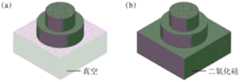
图1为本发明的单元结构示意图,其中,图1(a)为实施例1中的微纳结构示意图,图1(b)为实施例2中的整体结构示意图;1 is a schematic diagram of a unit structure of the present invention, wherein FIG. 1(a) is a schematic diagram of a micro-nano structure in Example 1, and FIG. 1(b) is a schematic diagram of an overall structure in Example 2;
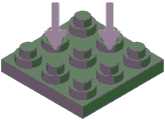
图2为本发明的周期性结构示意图;Fig. 2 is the periodic structure schematic diagram of the present invention;
图3为本发明实施例1经过算法估算与CST软件电磁仿真验算在9-10μm的吸收提升效果;Fig. 3 is the absorption enhancement effect at 9-10 μm of
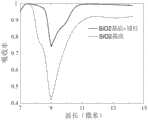
图4为二氧化硅基底上有无二氧化硅圆柱时在中红外波段的吸收率;Fig. 4 is the absorption rate in the mid-infrared band when there is or not a silica cylinder on the silica substrate;
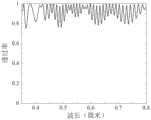
图5为本发明实施例2的整体结构在可见光波段的透射率。FIG. 5 is the transmittance of the overall structure of the second embodiment of the present invention in the visible light band.
具体实施方式Detailed ways
下面结合附图及具体实施方式对本发明进行详细说明,但本发明的保护范围并不仅限于下面实施例,应包括权利要求书中的全部内容。而且本领域技术人员从以下的一个实施例即可实现权利要求中的全部内容。The present invention will be described in detail below with reference to the accompanying drawings and specific embodiments, but the protection scope of the present invention is not limited to the following examples, and should include all the contents in the claims. Moreover, those skilled in the art can realize all the contents in the claims from the following embodiment.
具体实现过程如下:The specific implementation process is as follows:
如图1所示为透射式辐射制冷无机材料的单元结构示意图;所述透射式辐射制冷无机材料包括二氧化硅基底和位于基底之上的N层(N=2)二氧化硅微纳结构(圆柱)。本发明中,二氧化硅基底的周期为p,厚度为ts;第一层二氧化硅圆柱的占空比为f1,半径为r1=0.5*f1*p,厚度为t1,第二层二氧化硅圆柱的占空比为f2,半径为r2=0.5*f2*f1*p,厚度为t2。Figure 1 is a schematic diagram of the unit structure of the transmissive radiation refrigeration inorganic material; the transmissive radiation refrigeration inorganic material includes a silica substrate and an N-layer (N=2) silica micro-nano structure (N=2) on the substrate. cylinder). In the present invention, the period of the silicon dioxide substrate is p, the thickness is ts; the duty cycle of the first layer of silicon dioxide cylinder is f1, the radius is r1=0.5*f1*p, the thickness is t1, and the second layer of silicon dioxide The duty cycle of the silicon cylinder is f2, the radius is r2=0.5*f2*f1*p, and the thickness is t2.
如图2所示为透射式辐射制冷无机材料的整体结构示意图,所述周期性结构的周期数可以根据不同的需求调节。Figure 2 is a schematic diagram of the overall structure of the transmissive radiation refrigeration inorganic material, and the number of periods of the periodic structure can be adjusted according to different requirements.
本发明中,针对二氧化硅基底在9-10μm存在的阻抗失配导致的高反射,利用了等效介质理论,对二氧化硅基底进行了阻抗匹配的增强,使得其在9-10μm波段的反射率得到降低,从而提高了其在该波段的吸收率,进而提高了材料的辐射制冷能力。下面将结合等效介质理论和具体实施来介绍本发明。In the present invention, in view of the high reflection caused by the impedance mismatch of the silicon dioxide substrate at 9-10 μm, the equivalent medium theory is used to enhance the impedance matching of the silicon dioxide substrate, so that the impedance matching of the silicon dioxide substrate in the 9-10 μm band is enhanced. The reflectivity is reduced, thereby increasing its absorption in this wavelength band, which in turn increases the radiative cooling capability of the material. The present invention will be described below in conjunction with the equivalent medium theory and specific implementation.
首先,对于介电常数为ε0的均匀介质V0中存在介电常数为ε1的其他结构V1的亚波长模型,材料V1的占空比为f时,整体结构的等效介电常数ε可表示为:First, fora subwavelength model in which other structures V1 witha dielectric constant of ε1 exist in a homogeneous mediumV0 with a dielectric constant of ε0, when the duty cycleof the material V1 isf , the equivalent dielectric of the overall structure is The constant ε can be expressed as:

通过公式(1)计算出每层二氧化硅微纳结构的等效介电常数后,可将整体结构材料等效为具有不同介电常数的N+1层多层膜结构。利用传输矩阵模型,可以对等效转化后的该结构的光谱特性进行计算,然后结合遗传算法,便可以对实际结构的结构参数进行优化。优化后的结构材料能够表现出8-13μm波段的极高吸收特性,而在可见光波段具备极高的透射特性。下面,将结合具体实施例来进一步介绍本发明。After calculating the equivalent dielectric constant of each layer of silicon dioxide micro-nano structure by formula (1), the overall structural material can be equivalent to an N+1-layer multilayer film structure with different dielectric constants. Using the transfer matrix model, the spectral characteristics of the structure after equivalent transformation can be calculated, and then combined with the genetic algorithm, the structural parameters of the actual structure can be optimized. The optimized structural material can exhibit extremely high absorption properties in the 8-13 μm band, and extremely high transmission properties in the visible light band. Below, the present invention will be further described with reference to specific embodiments.
实施例1Example 1
本实施例利用二氧化硅材料,针对8-13μm波段设计了如图1(a)所示的2层圆柱结构的二氧化硅阻抗匹配材料。通过基于所述等效介质理论的算法优化后,得到不包含基底的N层(N=2)二氧化硅圆柱结构的结构参数,所述结构的周期p=4μm,第一层二氧化硅圆柱占空比为0.9,半径为1.8μm,厚度为0.8μm;所述第二层二氧化硅圆柱占空比为0.5,半径为1μm,厚度为1.1μm。如图3所示,对于不包含基底的两层二氧化硅圆柱结构,经过CST电磁仿真软件验证,理论设计的估算结果与电磁仿真结果大致相符,证实了该2层二氧化硅圆柱能够有效的提高二氧化硅材料在9-10μm波段的吸收率。In this embodiment, silicon dioxide material is used to design a silicon dioxide impedance matching material with a 2-layer cylindrical structure as shown in FIG. 1( a ) for the 8-13 μm waveband. After optimization by the algorithm based on the equivalent medium theory, the structural parameters of the N-layer (N=2) silicon dioxide cylindrical structure without the substrate are obtained, the period of the structure is p=4 μm, and the first layer of silicon dioxide cylinder The duty ratio is 0.9, the radius is 1.8 μm, and the thickness is 0.8 μm; the duty ratio of the second layer of silicon dioxide cylinder is 0.5, the radius is 1 μm, and the thickness is 1.1 μm. As shown in Figure 3, for the two-layer silica cylinder structure without the substrate, verified by the CST electromagnetic simulation software, the estimated results of the theoretical design are roughly consistent with the electromagnetic simulation results, confirming that the two-layer silica cylinder can effectively Improve the absorption rate of silica material in the 9-10μm band.
实施例2Example 2
本实施例针对8-13μm波段,设计了超高吸收二氧化硅结构材料,用以实现透射式辐射制冷无机材料的功能。所述的二氧化硅基底厚度H=400μm,周期p=4μm。所述第一层二氧化硅圆柱占空比为0.9,半径为1.8μm,厚度为0.8μm;所述第二层二氧化硅圆柱占空比为0.5,半径为1μm,厚度为1.1μm。所述结构材料在8-13μm波段得到了极高的吸收率。如图4所示对比没有圆柱结构的二氧化硅基底,所述二氧化硅结构材料在9μm附近的吸收率从0.4提升到了0.75左右,8-13μm波段的整体吸收率得到了显著的提升。证明了通过在二氧化硅基底上设计二氧化硅圆柱结构,能够有效的提升其中红外吸收率,即提高其热辐射能力,从而实现高效的辐射制冷功能。此外,如图5所示,所述超高吸收二氧化硅结构材料具备极高的可见透射率,能够保证极好的采光效果,这说明该材料在实现辐射制冷的同时保持极好的采光效果,可以满足很多特定应用环境的需求。In this embodiment, ultra-high absorption silicon dioxide structural material is designed for the 8-13 μm waveband, so as to realize the function of the transmissive radiation refrigeration inorganic material. The thickness of the silicon dioxide substrate is H=400 μm, and the period p=4 μm. The first layer of silicon dioxide cylinders have a duty ratio of 0.9, a radius of 1.8 μm and a thickness of 0.8 μm; the second layer of silicon dioxide cylinders have a duty ratio of 0.5, a radius of 1 μm and a thickness of 1.1 μm. The structural material obtains a very high absorption rate in the 8-13 μm waveband. As shown in Figure 4, compared with the silica substrate without the cylindrical structure, the absorption rate of the silica structure material near 9 μm is increased from 0.4 to about 0.75, and the overall absorption rate of the 8-13 μm band has been significantly improved. It is proved that by designing a silica cylindrical structure on a silica substrate, the mid-infrared absorption rate can be effectively improved, that is, its thermal radiation capability can be improved, thereby realizing an efficient radiative cooling function. In addition, as shown in Fig. 5, the ultra-high absorption silica structure material has extremely high visible transmittance and can ensure an excellent lighting effect, which shows that the material maintains an excellent lighting effect while achieving radiation cooling. , which can meet the needs of many specific application environments.
以上设计过程、实施例及仿真结果很好地验证了本发明。The above design process, examples and simulation results have well verified the present invention.
因此,上面结合附图对本发明的实施例进行了描述,但是本发明并不局限于上述的具体实施方式,上述的实施方式仅仅是示意性的,而不是限制性的。本发明未详细阐述部分属于本领域技术人员的公知技术。Therefore, the embodiments of the present invention are described above with reference to the accompanying drawings, but the present invention is not limited to the above-mentioned specific implementation manners, which are merely illustrative rather than restrictive. Parts not described in detail in the present invention belong to the well-known technologies of those skilled in the art.
Claims (10)
Translated fromChinesePriority Applications (1)
| Application Number | Priority Date | Filing Date | Title |
|---|---|---|---|
| CN202010557676.6ACN111690382B (en) | 2020-06-18 | 2020-06-18 | Transmission type radiation refrigeration inorganic material |
Applications Claiming Priority (1)
| Application Number | Priority Date | Filing Date | Title |
|---|---|---|---|
| CN202010557676.6ACN111690382B (en) | 2020-06-18 | 2020-06-18 | Transmission type radiation refrigeration inorganic material |
Publications (2)
| Publication Number | Publication Date |
|---|---|
| CN111690382Atrue CN111690382A (en) | 2020-09-22 |
| CN111690382B CN111690382B (en) | 2021-11-19 |
Family
ID=72481956
Family Applications (1)
| Application Number | Title | Priority Date | Filing Date |
|---|---|---|---|
| CN202010557676.6AActiveCN111690382B (en) | 2020-06-18 | 2020-06-18 | Transmission type radiation refrigeration inorganic material |
Country Status (1)
| Country | Link |
|---|---|
| CN (1) | CN111690382B (en) |
Cited By (3)
| Publication number | Priority date | Publication date | Assignee | Title |
|---|---|---|---|---|
| CN113416521A (en)* | 2021-07-29 | 2021-09-21 | 佛山纳诺特科技有限公司 | Daytime radiation refrigeration material and preparation method thereof |
| CN114114485A (en)* | 2021-11-24 | 2022-03-01 | 厦门大学 | Novel radiation refrigeration device based on super-structure surface broadband absorber |
| WO2025039496A1 (en)* | 2023-08-24 | 2025-02-27 | 中国科学院长春光学精密机械与物理研究所 | Directional radiation device and use |
Citations (12)
| Publication number | Priority date | Publication date | Assignee | Title |
|---|---|---|---|---|
| CN103513316A (en)* | 2013-09-29 | 2014-01-15 | 苏州大学 | Selective absorption filtering structure |
| WO2015178982A9 (en)* | 2014-02-25 | 2016-01-14 | Massachusetts Institute Of Technology | Methods and apparatus for broadband angular selectivity of electromagnetic waves |
| US20160363396A1 (en)* | 2015-06-15 | 2016-12-15 | Palo Alto Research Center Incorporated | Metamaterials-Enhanced Passive Radiative Cooling Panel |
| CN106524358A (en)* | 2016-12-07 | 2017-03-22 | 中国科学技术大学 | Solar photovoltaic power generation and radiation refrigeration comprehensive device |
| CN107170869A (en)* | 2017-05-26 | 2017-09-15 | 中国科学院宁波材料技术与工程研究所 | A kind of semiconductor devices for taking into account photo-thermal coordinated management |
| US10088251B2 (en)* | 2014-05-21 | 2018-10-02 | The Board Of Trustees Of The Leland Stanford Junior University | Radiative cooling with solar spectrum reflection |
| CN109161241A (en)* | 2018-08-21 | 2019-01-08 | 哈尔滨工业大学(威海) | A kind of radiative cooling coating and preparation method thereof with self-cleaning function |
| US20190152410A1 (en)* | 2017-11-20 | 2019-05-23 | Toyota Motor Engineering & Manufacturing North America, Inc. | Transparent radiative cooling films and structures comprising the same |
| CN110444898A (en)* | 2019-07-31 | 2019-11-12 | 天津大学 | A kind of broadband transmission enhancing device and control method |
| CN110452668A (en)* | 2019-08-30 | 2019-11-15 | 哈尔滨工业大学 | A kind of transmissive radiation refrigeration material, thin film, preparation method and application |
| CN110774673A (en)* | 2019-11-06 | 2020-02-11 | 宁波瑞凌新能源科技有限公司 | Radiation refrigeration transmission film |
| CN110873909A (en)* | 2019-12-02 | 2020-03-10 | 华东交通大学 | An ultra-broadband polarization-insensitive absorber in all ultraviolet-mid-infrared bands |
- 2020
- 2020-06-18CNCN202010557676.6Apatent/CN111690382B/enactiveActive
Patent Citations (12)
| Publication number | Priority date | Publication date | Assignee | Title |
|---|---|---|---|---|
| CN103513316A (en)* | 2013-09-29 | 2014-01-15 | 苏州大学 | Selective absorption filtering structure |
| WO2015178982A9 (en)* | 2014-02-25 | 2016-01-14 | Massachusetts Institute Of Technology | Methods and apparatus for broadband angular selectivity of electromagnetic waves |
| US10088251B2 (en)* | 2014-05-21 | 2018-10-02 | The Board Of Trustees Of The Leland Stanford Junior University | Radiative cooling with solar spectrum reflection |
| US20160363396A1 (en)* | 2015-06-15 | 2016-12-15 | Palo Alto Research Center Incorporated | Metamaterials-Enhanced Passive Radiative Cooling Panel |
| CN106524358A (en)* | 2016-12-07 | 2017-03-22 | 中国科学技术大学 | Solar photovoltaic power generation and radiation refrigeration comprehensive device |
| CN107170869A (en)* | 2017-05-26 | 2017-09-15 | 中国科学院宁波材料技术与工程研究所 | A kind of semiconductor devices for taking into account photo-thermal coordinated management |
| US20190152410A1 (en)* | 2017-11-20 | 2019-05-23 | Toyota Motor Engineering & Manufacturing North America, Inc. | Transparent radiative cooling films and structures comprising the same |
| CN109161241A (en)* | 2018-08-21 | 2019-01-08 | 哈尔滨工业大学(威海) | A kind of radiative cooling coating and preparation method thereof with self-cleaning function |
| CN110444898A (en)* | 2019-07-31 | 2019-11-12 | 天津大学 | A kind of broadband transmission enhancing device and control method |
| CN110452668A (en)* | 2019-08-30 | 2019-11-15 | 哈尔滨工业大学 | A kind of transmissive radiation refrigeration material, thin film, preparation method and application |
| CN110774673A (en)* | 2019-11-06 | 2020-02-11 | 宁波瑞凌新能源科技有限公司 | Radiation refrigeration transmission film |
| CN110873909A (en)* | 2019-12-02 | 2020-03-10 | 华东交通大学 | An ultra-broadband polarization-insensitive absorber in all ultraviolet-mid-infrared bands |
Non-Patent Citations (4)
| Title |
|---|
| HONGCHEN MA等: ""Multilayered SiO2/Si3N4 photonic emitter to achieve high-performance all-day radiative cooling"", 《SOLAR ENERGYMATERIALS&SOLARCELLS》* |
| MD MUNTASIR HOSSAIN等: ""A Metamaterial Emitter for Highly Efficient Radiative Cooling"", 《ADVANCED OPTICAL METAERIALS》* |
| MING ZHANG等: ""Large-Area and Low-Cost Nanoslit-Based Flexible Metasurfaces for Multispectral Electromagnetic Wave Manipulation"", 《ADVANCED OPTICAL MATERIALS》* |
| YIJIA HUANG等: ""Ultra-broadband large-scale infrared perfect absorber with optical transparency"", 《APPLIED PHYSICS EXPRESS》* |
Cited By (3)
| Publication number | Priority date | Publication date | Assignee | Title |
|---|---|---|---|---|
| CN113416521A (en)* | 2021-07-29 | 2021-09-21 | 佛山纳诺特科技有限公司 | Daytime radiation refrigeration material and preparation method thereof |
| CN114114485A (en)* | 2021-11-24 | 2022-03-01 | 厦门大学 | Novel radiation refrigeration device based on super-structure surface broadband absorber |
| WO2025039496A1 (en)* | 2023-08-24 | 2025-02-27 | 中国科学院长春光学精密机械与物理研究所 | Directional radiation device and use |
Also Published As
| Publication number | Publication date |
|---|---|
| CN111690382B (en) | 2021-11-19 |
Similar Documents
| Publication | Publication Date | Title |
|---|---|---|
| Kong et al. | Ultra-broadband all-dielectric metamaterial thermal emitter for passive radiative cooling | |
| Cui et al. | Progress of passive daytime radiative cooling technologies towards commercial applications | |
| CN111690382A (en) | Transmission type radiation refrigeration inorganic material | |
| CN110274326B (en) | Daytime radiation refrigerator and preparation method thereof | |
| CN110030744B (en) | A spectrally adaptive coating material for daytime solar heat collection and nighttime radiative cooling | |
| CN112460836A (en) | Passive radiation cooling composite material film | |
| Liu et al. | Ultra-broadband infrared metamaterial absorber for passive radiative cooling | |
| CN109341137A (en) | Passive refrigeration structure based on photonic crystal | |
| Wang et al. | Switchable daytime radiative cooling and nighttime radiative warming by VO2 | |
| Zhan et al. | Enhanced performance of diurnal radiative cooling for solar cells based on a grating-textured PDMS photonic structure | |
| Li et al. | Ultra-broadband thermal radiator for daytime passive radiative cooling based on single dielectric SiO2 on metal Ag | |
| Yang et al. | Temperature-adaptive metasurface radiative cooling device with excellent emittance and low solar absorptance for dynamic thermal regulation | |
| Hu et al. | A membrane reflector, polymer hybrid infrared emitter for better radiative cooling performance | |
| Ryu et al. | Angular selective broadband radiative cooling based on Berreman mode | |
| CN116774332B (en) | Application of directional radiation device in radiation refrigeration | |
| CN118757939A (en) | An anti-aging radiation refrigeration transparent film and its preparation method and application | |
| US11754352B2 (en) | Visible light-transparent and radiative-cooling multilayer film | |
| Zhou et al. | Enhancing radiative cooling performance for bifacial photovoltaic module using two kinds of polycarbonate films | |
| CN117021700B (en) | Inorganic radiation refrigeration visual window with excellent spectrum selectivity | |
| Wang et al. | Example of metal-multi-dielectric-metal cooling metamaterial use in engineering thermal radiation | |
| Wei et al. | Capped MIM metamaterial for ultra-broadband perfect absorbing and its application in radiative cooling | |
| Pian et al. | Stretchable metal–dielectric–metal metasurface for dynamic radiation management | |
| Wang et al. | Design of asymmetric-structured metasurfaces for smart windows | |
| CN116184694B (en) | A stretchable smart window based on elastic substrate and light transmittance adjustment method thereof | |
| CN114114485A (en) | Novel radiation refrigeration device based on super-structure surface broadband absorber |
Legal Events
| Date | Code | Title | Description |
|---|---|---|---|
| PB01 | Publication | ||
| PB01 | Publication | ||
| SE01 | Entry into force of request for substantive examination | ||
| SE01 | Entry into force of request for substantive examination | ||
| GR01 | Patent grant | ||
| GR01 | Patent grant |