CN111610910A - Method and device for hiding vehicle brush, computer equipment and storage medium - Google Patents
Method and device for hiding vehicle brush, computer equipment and storage mediumDownload PDFInfo
- Publication number
- CN111610910A CN111610910ACN202010323195.9ACN202010323195ACN111610910ACN 111610910 ACN111610910 ACN 111610910ACN 202010323195 ACN202010323195 ACN 202010323195ACN 111610910 ACN111610910 ACN 111610910A
- Authority
- CN
- China
- Prior art keywords
- code
- vehicle
- target
- byte
- vag
- Prior art date
- Legal status (The legal status is an assumption and is not a legal conclusion. Google has not performed a legal analysis and makes no representation as to the accuracy of the status listed.)
- Granted
Links
Images







Classifications
- G—PHYSICS
- G06—COMPUTING OR CALCULATING; COUNTING
- G06F—ELECTRIC DIGITAL DATA PROCESSING
- G06F3/00—Input arrangements for transferring data to be processed into a form capable of being handled by the computer; Output arrangements for transferring data from processing unit to output unit, e.g. interface arrangements
- G06F3/01—Input arrangements or combined input and output arrangements for interaction between user and computer
- G06F3/048—Interaction techniques based on graphical user interfaces [GUI]
- G06F3/0484—Interaction techniques based on graphical user interfaces [GUI] for the control of specific functions or operations, e.g. selecting or manipulating an object, an image or a displayed text element, setting a parameter value or selecting a range
- G06F3/04847—Interaction techniques to control parameter settings, e.g. interaction with sliders or dials
- G—PHYSICS
- G06—COMPUTING OR CALCULATING; COUNTING
- G06F—ELECTRIC DIGITAL DATA PROCESSING
- G06F3/00—Input arrangements for transferring data to be processed into a form capable of being handled by the computer; Output arrangements for transferring data from processing unit to output unit, e.g. interface arrangements
- G06F3/01—Input arrangements or combined input and output arrangements for interaction between user and computer
- G06F3/048—Interaction techniques based on graphical user interfaces [GUI]
- G06F3/0481—Interaction techniques based on graphical user interfaces [GUI] based on specific properties of the displayed interaction object or a metaphor-based environment, e.g. interaction with desktop elements like windows or icons, or assisted by a cursor's changing behaviour or appearance
- G06F3/0482—Interaction with lists of selectable items, e.g. menus
- G—PHYSICS
- G06—COMPUTING OR CALCULATING; COUNTING
- G06F—ELECTRIC DIGITAL DATA PROCESSING
- G06F8/00—Arrangements for software engineering
- G06F8/70—Software maintenance or management
- G—PHYSICS
- G06—COMPUTING OR CALCULATING; COUNTING
- G06F—ELECTRIC DIGITAL DATA PROCESSING
- G06F9/00—Arrangements for program control, e.g. control units
- G06F9/06—Arrangements for program control, e.g. control units using stored programs, i.e. using an internal store of processing equipment to receive or retain programs
- G06F9/44—Arrangements for executing specific programs
- G06F9/445—Program loading or initiating
- G06F9/44505—Configuring for program initiating, e.g. using registry, configuration files
Landscapes
- Engineering & Computer Science (AREA)
- Theoretical Computer Science (AREA)
- General Engineering & Computer Science (AREA)
- Software Systems (AREA)
- Physics & Mathematics (AREA)
- General Physics & Mathematics (AREA)
- Human Computer Interaction (AREA)
- Stored Programmes (AREA)
Abstract
Description
Technical Field
The invention relates to the technical field of vehicles, in particular to a method and a device for hiding a vehicle brush, computer equipment and a storage medium.
Background
Many vehicles with low vehicle allocation types on the market are often hidden with partial high-allocation functions when leaving the factory, the hidden functions are released to bring convenience to vehicle owners and also be an important income of maintenance factories, and therefore the vehicle brush hiding requirements are increasing. However, brush hiding often involves professional knowledge such as programming and code setting of different vehicle types, and most vehicle owners are difficult to finish brush hiding of vehicles by themselves, and even many vehicle repair personnel are easy to cause brush hiding errors and failures.
Therefore, finding a simple and efficient method for hiding the vehicle brush becomes an urgent problem to be solved by those skilled in the art.
Disclosure of Invention
The embodiment of the invention provides a method and a device for hiding a vehicle brush, computer equipment and a storage medium, and aims to solve the problems that the existing vehicle brush hiding is easy to fail and low in efficiency.
A method of vehicle brush hiding functionality, comprising:
determining the vehicle model of the target vehicle;
acquiring target VAG codes corresponding to all ECUs in the target vehicle according to the vehicle model;
acquiring a preset software coding rule corresponding to the target VAG code;
generating a custom code according to the retrieved software coding rule, and acquiring each vehicle function corresponding to each coding byte in the custom code;
displaying the custom code and each vehicle function corresponding to each code byte on the custom code on a designated interface;
and acquiring a modified value of the selected coding byte on the designated interface, and updating the custom code according to the modified value.
An apparatus for a vehicle brush hiding function, comprising:
the vehicle model determining module is used for determining the vehicle model of the target vehicle;
the code acquisition module is used for acquiring target VAG codes corresponding to all ECUs in the target vehicle according to the vehicle model;
the encoding rule acquisition module is used for acquiring a preset software encoding rule corresponding to the target VAG code;
the code generation module is used for generating custom codes according to the retrieved software coding rules and acquiring various vehicle functions corresponding to each code byte in the custom codes;
the coding function display module is used for displaying the custom code and various vehicle functions corresponding to various coding bytes on the custom code on a designated interface;
and the code modification module is used for acquiring a modified value of the selected code byte on the designated interface and updating the custom code according to the modified value.
A computer device comprising a memory, a processor and a computer program stored in the memory and executable on the processor, the processor implementing the steps of the above-described method of vehicle brush hiding when executing the computer program.
A computer-readable storage medium, in which a computer program is stored which, when being executed by a processor, carries out the above-mentioned steps of the method of vehicle brush hiding function.
According to the method, the device, the computer equipment and the storage medium for the vehicle brush hiding function, firstly, the vehicle model of a target vehicle is determined; then, acquiring target VAG codes corresponding to all ECUs in the target vehicle according to the vehicle model; then, acquiring a preset software coding rule corresponding to the target VAG code; generating a custom code according to the retrieved software coding rule, and acquiring each vehicle function corresponding to each coding byte in the custom code; then, displaying the self-defined code and each vehicle function corresponding to each code byte on the self-defined code on a designated interface; and finally, acquiring a modified value of the selected coding byte on the designated interface, and updating the custom code according to the modified value. Therefore, the method and the device can automatically acquire the VAG code of the vehicle according to the vehicle model, acquire the corresponding software coding rule through the VAG code to generate the custom code, analyze the vehicle function corresponding to each coding byte on the custom code, and display the custom code, so that a user can visually check the meaning (namely the corresponding vehicle function) represented by each coding byte, and can pertinently modify the selected coding byte, update the custom code and finish the wiping and hiding operation when wiping and hiding. The brush hiding method and the brush hiding device for the vehicle enable brush hiding of the vehicle to be visual and efficient, do not require a user to have professional knowledge such as programming and code setting of a vehicle type, and improve accuracy and efficiency of a vehicle brush hiding function.
Drawings
In order to more clearly illustrate the technical solutions of the embodiments of the present invention, the drawings needed to be used in the description of the embodiments of the present invention will be briefly introduced below, and it is obvious that the drawings in the following description are only some embodiments of the present invention, and it is obvious for those skilled in the art that other drawings can be obtained according to these drawings without inventive labor.
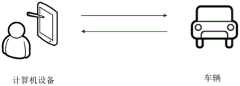
FIG. 1 is a schematic diagram of an application environment of a method for vehicle brush hiding according to an embodiment of the present invention;
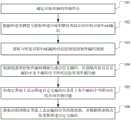
FIG. 2 is a flow chart of a method of hiding a vehicle brush in accordance with an embodiment of the present invention;
FIG. 3 is a flowchart illustrating amethod step 101 of a vehicle brush hiding function in an application scenario according to an embodiment of the present invention;
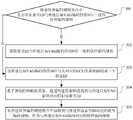
FIG. 4 is a flowchart illustrating amethod step 103 of the vehicle brush hiding function in an application scenario according to an embodiment of the present invention;
FIG. 5 is a schematic view of a Volkswagen, Audi, and Scotta series of automotive VAG code constructions;
FIG. 6 is a schematic view of a display interface of a method for hiding a vehicle brush in a specific application scenario according to an embodiment of the present invention;
FIG. 7 is a flowchart illustrating a first manner of inputting a modification value according to a method for hiding a vehicle brush according to an embodiment of the invention;
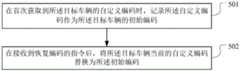
FIG. 8 is a flowchart illustrating a method for recovering an initial code in an application scenario according to an embodiment of the present invention;
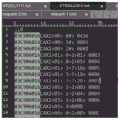
FIG. 9 is a diagram illustrating the contents of a software coding rule set file according to an embodiment of the present invention;
FIG. 10 is a diagram illustrating a portion of a software coding rule set file according to another embodiment of the present invention;
FIG. 11 is a diagram illustrating binary values of a coded byte in custom coding according to an embodiment of the present invention;
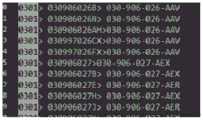
FIG. 12 is a diagram illustrating a lookup result of an ID transformation relationship in an application scenario of the present invention;
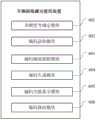
FIG. 13 is a schematic view of the structure of a device for hiding a brush of a vehicle according to an embodiment of the present invention;
FIG. 14 is a schematic diagram of a computer device in an embodiment of the invention.
Detailed Description
The technical solutions in the embodiments of the present invention will be clearly and completely described below with reference to the drawings in the embodiments of the present invention, and it is obvious that the described embodiments are some, not all, embodiments of the present invention. All other embodiments, which can be derived by a person skilled in the art from the embodiments given herein without making any creative effort, shall fall within the protection scope of the present invention.
The method for hiding the vehicle brush provided by the application can be applied to an application environment as shown in fig. 1, wherein a computer device is communicated with a vehicle. Wherein the computer device may be, but is not limited to, various personal computers, laptops, smartphones, tablets, and portable wearable devices.
In one embodiment, as shown in fig. 2, a method for hiding a vehicle brush is provided, which is described by taking the computer device in fig. 1 as an example, and includes the following steps:
101. determining the vehicle model of the target vehicle;
in this embodiment, in order to extract the VAG code of the target vehicle, it is first necessary to determine the vehicle model of the target vehicle. This is because vehicles of different models have different ECU systems, and thus their VAG codes are different from each other, and even if vehicles of the same brand are used, the configurations of different vehicle models are different from each other, and thus vehicles each have different VAG codes. Specifically, as shown in fig. 3,step 101 may include:
201. reading the VIN code of the target vehicle;
202. if the VIN code is read successfully, determining the vehicle model of the target vehicle according to the VIN code;
203. and if the reading fails, acquiring the vehicle model manually selected by the user as the vehicle model of the target vehicle.
With respect tostep
102. Acquiring target VAG codes corresponding to all ECUs in the target vehicle according to the vehicle model;
it will be appreciated that each vehicle model on the market discloses its own ECU, each ECU having a corresponding VAG code. Therefore, in the case where the vehicle model of the target vehicle is known, the computer device can quickly determine each ECU included in the target vehicle and the VAG codes corresponding to the ECUs. In the present embodiment, the VAG codes corresponding to the respective ECUs in the target vehicle are referred to as target VAG codes. In a specific use process, a user can selectively view a target VAG code corresponding to any ECU on a display interface of the computer device.
103. Acquiring a preset software coding rule corresponding to the target VAG code;
in this embodiment, the computer device may store software coding rules in advance, and the software coding rules may be stored in a software coding rule set in a unified manner, for example, the set is stored in a txt file. These software coding rules each preset a correspondence with the VAG code, and may be associated with the VAG code by, for example, a correspondence between the index ID and the VAG code. Accordingly, the computer device may obtain a preset software coding rule corresponding to the target VAG code.
It should be noted that the software coding rules may also be stored in other places, such as a cloud space, a background server, and the like, and when necessary, the computer device may obtain the required software coding rules from these places through a network.
Further, in order to improve the retrieval efficiency and accuracy of the software coding rule, in this embodiment, the first N bits of the VAG code are retrieved first, and if the retrieval is unsuccessful, the index ID is found through code conversion for retrieval, and the two-level retrieval not only improves the retrieval accuracy, but also improves the overall retrieval efficiency. Specifically, as shown in fig. 4, step 103 may include: .
301. Searching whether a software coding rule with the index ID consistent with the first N bits of the target VAG code exists in a software coding rule set, if so, executing astep 302, otherwise, executing astep 303, wherein N is more than or equal to 9;
302. reading a software coding rule that an index ID is consistent with the first N bits of the target VAG code;
303. taking the first M bits of the target VAG code and the system ID of the corresponding ECU to form a retrieval ID;
304. based on a preset ID conversion relation, searching a target index ID corresponding to the target VAG code through the retrieval ID;
305. and reading a software coding rule corresponding to the target index ID from the software coding rule set as a software coding rule corresponding to the target VAG code.
With respect to step 301 and step 302, it is understood that each software coding rule in the set of software coding rules has an index ID corresponding to a VAG code, as shown in fig. 9, the set file "xtool 0303. txt" contains many software coding rules, where the first column of each software coding rule is its index ID, as in fig. 9, 03C906016CAX2 is the index ID of the software coding rules in rows 2-14. Assuming that the target VAG code is 03C906016CAX2, the software coding rules of lines 2-14 can be retrieved as the software coding rules of the target VAG code in the xtool0303.txt file by the full code of "03C 906016CAX 2" (corresponding to taking the first 13 bits of the VAG code). Meanwhile, considering that most of the software coding rules are consistent under the condition that the first N bits (such as the first 9 bits) of the target VAG are consistent, the value of N can be reduced. This is because the encoding rules of most vehicle models on the market today are similar, and the first N byte bits are usually used for distinguishing vehicle model, category and part number. For the example of the popular, audi and scodad series of automobiles, the encoding rules of the parts are shown in fig. 5, the 1 st, 2 nd and 3 rd bytes of the VAG code represent the main group of the vehicle model or the unit code, the 4 th, 5 th and 6 th bytes represent the sub-group of the large or small class, and the 7 th, 8 th and 9 th bytes represent the part number. It can be seen that in the series of automobile codes, the accurate positioning of the ID can be indexed by taking the first 9 codes, and the first 9 codes are not changed usually. Thus, the computer device may read the software coding rule of the set of software coding rules whose index ID coincides with the first N bits of the target VAG code.
Forstep 303, in some cases, the corresponding index ID is not retrieved in the software coding rule set by the first N bits of the target VAG code. At this time, the first M bits of the target VAG code and the system ID of the ECU corresponding thereto may be taken to constitute a search ID. Specifically, the first 2 bits of the targeted VAG code may be combined with the system ID of its corresponding ECU, for example, assuming that the complete VAG code is 030906026B and its corresponding ECU system ID is 01, a search ID of 0301 is formed.
Forsteps row 0 is "030906026B", which is the same as the VAG code, and the computer device takes the value of the third column in the result ofrow 0, which is "030906026 AAV", as the target index ID. Then, the computer device reads the software coding rule corresponding to the target index ID from the software coding rule set, and determines the read software coding rule as the software coding rule corresponding to the target VAG code.
104. Generating a custom code according to the retrieved software coding rule, and acquiring each vehicle function corresponding to each coding byte in the custom code;
in this embodiment, the computer device may generate the custom code according to the software coding rules, for example, the custom code having 30 16 bytes may be generated, and in addition, each vehicle function corresponding to each coding byte in the custom code may be obtained according to the software coding rules.
Therefore, after the computer device obtains the software coding rules, the computer device can generate the custom codes according to the software coding rules, and obtain each vehicle function corresponding to each coding byte in the custom codes.
Specifically, thestep 103 of obtaining each vehicle function corresponding to each code byte in the custom code may specifically include: acquiring a preset code file corresponding to the bit of each code byte in the custom code, wherein the preset code file records the vehicle function represented by the corresponding bit; and determining the vehicle functions recorded by the preset coding file corresponding to all bits under each coding byte in the custom code as the vehicle functions corresponding to each coding byte. For the sake of understanding, please refer to fig. 10, assuming that the target VAG is encoded as "03L 906012 CKR", the retrieved software coding rule portions are shown inlines
105. Displaying the custom code and each vehicle function corresponding to each code byte on the custom code on a designated interface;
in order to allow the user to intuitively know the meaning of each code byte on the custom code, in this embodiment, the computer device displays the custom code and each vehicle function corresponding to each code byte on the custom code on the designated interface, so that the user can see which vehicle function the code byte represents from the designated interface. As shown in fig. 6, in an application scenario, when the value of the 8 th bit code byte in the custom code of the central electrical system is "5B", the corresponding vehicle functions include "LIN line control light switch", "front fog light switch", "rear fog light switch", "auxiliary driving light switch", "position light switch", and "humidity sensor".
106. And acquiring a modified value of the selected coding byte on the designated interface, and updating the custom code according to the modified value.
When needed, the user can modify the code bytes of the custom code on the designated interface of the computer equipment so as to modify the custom code and achieve the aim of refreshing and hiding. Specifically, the user may first select a code byte of the custom code that is desired to be modified, and then output a modified value of the selected code byte, so that the computer device may obtain the modified value of the selected code byte on the designated interface, and update the custom code according to the modified value.
In the embodiment, the user can select the encoding byte on the designated interface in various modes and input the modified value, so that the convenience of the user in using the method and the corresponding equipment is improved. For ease of understanding, two ways of inputting the modification value are mainly described below, one way being to input the modification value by means of an option, and the other way being to manually input the modification value by the user. As shown in fig. 7, the first method may specifically include:
401. displaying each vehicle function corresponding to the current selected coding byte and the hidden state thereof;
402. when an adjusting instruction of the hidden state of the vehicle function is received, determining each bit corresponding to each vehicle function with the hidden state change according to the adjusting instruction;
403. and changing the value of each determined bit to obtain a modified value of the selected coding byte after the change.
Forstep 401, in order to facilitate the user to view the vehicle functions corresponding to the coded bytes and the hidden states of the functions, the computer device may display the vehicle functions corresponding to the currently selected coded bytes and the hidden states thereof. The hidden state is a state in which a vehicle function is activated or hidden, and the vehicle function can be recognized and utilized by the central control system in the activated state, for example, functions configured for vehicles of one type when the vehicles leave a factory are all in the activated state. Otherwise, the function which can be used only by being hidden is in a hidden state when the product leaves the factory. Therefore, the hidden state of each vehicle function is displayed, the user can know which vehicle functions can be used after the brush hiding operation is needed, and accurately find the vehicle functions, and the accuracy of the brush hiding operation is greatly improved.
Forstep 402, in a specific application scenario, a user may input an adjustment instruction to a computer device in a plurality of ways, for example, the adjustment instruction may be generated by a way of voice recognition input, options of each vehicle function may be displayed on a display interface by the computer device, and the user selects the adjustment instruction according to will, and generates a corresponding adjustment instruction after selecting the adjustment instruction, and so on. For example, a selected coded byte has A, B, C, D four vehicle functions, wherein the hidden state of A, B function is "enabled" and the hidden state of C, D function is "hidden", the user can click the hidden state of C, D function on the interface and select it as "enabled", then determine the selection, and the system of the computer device can automatically generate an adjustment instruction, the content of which determines the bit corresponding to the vehicle function with the hidden state change, so as to change the value of the bit in thesubsequent step 403.
Instep 403, taking the above example as a support, after determining the bits corresponding to the vehicle functions with the hidden state change, the computer device may change the values of the determined bits. It can be understood that the value on the bit is only 0 or 1, and changing the value on the bit is to modify the bit with the original value of 0 to 1, or modify the bit with the original value of 1 to 0. It is understood that the value of the bits is modified, and accordingly, the value of the selected code byte composed of the bits is also modified, so that the modified value can be obtained.
The second way of inputting the modified value may include: firstly, determining the current selected coding byte; the input value is then obtained as a modified value of the selected encoded byte. That is, the user may select the encoded byte on the designated interface, and then input a specific numerical value as a modified value of the selected encoded byte, and it can be known that the second modified value inputting manner is mainly provided for professionals who have a certain knowledge about the VAG encoding and the custom encoding, such as a car repair technician, and the like, and the second manner can improve the processing efficiency of those with a certain encoding knowledge, compared with the first manner. It should be noted that in some cases, such as the case where only the lower two bits are involved in part of the selected code byte, the modified value cannot be input in the first manner, and the modified value can be input in the second manner.
Further, in order to facilitate the user to restore the vehicle function to the factory setting after the user hides the vehicle, the method in this embodiment may further reserve the initial code in advance, so as to restore the initial code when necessary later, and complete factory setting restoration of the custom code. Specifically, as shown in fig. 8, the method may further include:
501. when the user-defined code of the target vehicle is obtained for the first time, recording the user-defined code as the initial code of the target vehicle;
502. and replacing the current custom code of the target vehicle with the initial code after receiving the command of recovering the code.
Forstep
In the embodiment of the application, firstly, the vehicle model of a target vehicle is determined; then, acquiring target VAG codes corresponding to all ECUs in the target vehicle according to the vehicle model; then, acquiring a preset software coding rule corresponding to the target VAG code; generating a custom code according to the retrieved software coding rule, and acquiring each vehicle function corresponding to each coding byte in the custom code; then, displaying the self-defined code and each vehicle function corresponding to each code byte on the self-defined code on a designated interface; and finally, acquiring a modified value of the selected coding byte on the designated interface, and updating the custom code according to the modified value. Therefore, the method and the device can automatically acquire the VAG code of the vehicle according to the vehicle model, acquire the corresponding software coding rule through the VAG code to generate the custom code, analyze the vehicle function corresponding to each coding byte on the custom code, and display the custom code, so that a user can visually check the meaning (namely the corresponding vehicle function) represented by each coding byte, and can pertinently modify the selected coding byte, update the custom code and finish the wiping and hiding operation when wiping and hiding. The brush hiding method and the brush hiding device for the vehicle enable brush hiding of the vehicle to be visual and efficient, do not require a user to have professional knowledge such as programming and code setting of a vehicle type, and improve accuracy and efficiency of a vehicle brush hiding function.
It should be understood that, the sequence numbers of the steps in the foregoing embodiments do not imply an execution sequence, and the execution sequence of each process should be determined by its function and inherent logic, and should not constitute any limitation to the implementation process of the embodiments of the present invention.
In order to facilitate understanding of the method of the vehicle brush hiding function, a brush hiding operation flow in a specific application scenario is described in detail below. In the application scene, the computer equipment is a handheld brush hidden instrument (instrument for short), and the instrument is provided with a touch screen and a connecting wire and is connected with a vehicle bus through the connecting wire.
Firstly, a user connects a connecting line of an instrument to a vehicle, the instrument automatically reads the model of the vehicle, and VAG codes of all systems in the vehicle are obtained. The user can see the vehicle model and the various systems from the interface of the instrument. By touch selection of one of the systems, assuming "09-center electrical system" is selected, the user can directly view the custom code, i.e., the current code, generated from the software coding rules retrieved from the system's VAG code, as well as the individual code bytes, see FIG. 6. Any byte is selected, the vehicle function corresponding to the byte can be displayed, and the vehicle function can be listed in an entry mode. As shown in FIG. 6, the user has selected the 8 th byte "5B", which has a binary value "01011011" inside the instrument, as shown in FIG. 11. In the software coding rule, the sequence number of the coding byte starts from "0", and the value "07" in the second column in fig. 10 represents the rule corresponding to the 8 th byte. As can be seen from fig. 10, the 2 nd to 7 th bits of the byte have corresponding vehicle functions, and by reading the preset code files "0025", "000F", "0019", "0025", "000F", and "0019" corresponding to the 2 nd to 7 th bits (in this application scenario, one preset code file records one piece of vehicle function information), the corresponding vehicle functions can be obtained and combined
Displaying the vehicle function corresponding to the byte comprises: the LIN line control light switch, the front fog light switch, the rear fog light switch, the auxiliary driving light switch, the position light switch and the humidity sensor, wherein the right sides of the front fog light switch, the rear fog light switch and the position light switch are marked with the square root, which indicates that the 3 vehicle functions are in an enabled state, and the other 3 functions are not marked with the square root, which indicates that the vehicle functions are in a hidden state. At this time, if the user wishes to activate the "LIN line control light switch", he just needs to check the right side of the item, and then clicks the "write" button below the interface, the instrument can change the value "1" of the 2 nd bit of the encoded byte to "0", so that the modified value of the encoded byte becomes "01011001", and the displayed 16-ary value thereof is changed from the original "5B" to "59" (including the value of the "current code" incolumn 1 and the value of the encoded byte incolumn 2 "please select the corresponding byte for code configuration"), thereby completing the update of the custom code according to the modified value. After updating, the brush hiding operation is completed, and the LIN line of the vehicle controls the light switch to be used.
Alternatively, as shown in fig. 6, the user may select the 8 th byte "5B", directly and manually modify "5B" to "59", and then click the "write" button, which may also complete the update of the custom code and activate the "LIN line control light switch" of the vehicle.
In one embodiment, a device for hiding a vehicle brush is provided, and the device for hiding the vehicle brush corresponds to the method for hiding the vehicle brush in the above embodiment one to one. As shown in fig. 13, the apparatus of the vehicle brush hiding function includes a vehiclemodel determining module 601, acode obtaining module 602, a coderule obtaining module 603, acode generating module 604, a codefunction displaying module 605, and acode modifying module 606.
The functional modules are explained in detail as follows:
a vehiclemodel determination module 601, configured to determine a vehicle model of a target vehicle;
acode obtaining module 602, configured to obtain, according to the vehicle model, a target VAG code corresponding to each ECU in the target vehicle;
a codingrule obtaining module 603, configured to obtain a preset software coding rule corresponding to the target VAG code;
thecode generating module 604 is configured to generate a custom code according to the retrieved software coding rule, and obtain each vehicle function corresponding to each code byte in the custom code;
the codingfunction display module 605 is configured to display the custom code and each vehicle function corresponding to each code byte on the custom code on a designated interface;
and thecode modification module 606 is configured to obtain a modification value of the selected code byte on the designated interface, and update the custom code according to the modification value.
Further, the vehicle model determination module may include:
a reading unit for reading the VIN code of the target vehicle;
the model determining unit is used for determining the vehicle model of the target vehicle according to the VIN code if the reading is successful;
and the model selection unit is used for acquiring the vehicle model manually selected by the user as the vehicle model of the target vehicle if the reading fails.
Further, the encoding rule obtaining module may include:
the rule retrieval unit is used for retrieving whether a software coding rule with the index ID consistent with the first N bits of the target VAG code exists in the software coding rule set, wherein N is more than or equal to 9;
a first rule reading unit, configured to read a software coding rule whose index ID is consistent with the first N bits of the target VAG code if a retrieval result of the rule retrieving unit is yes;
an ID forming unit, configured to form a search ID by taking the first M bits of the target VAG code and the system ID of the corresponding ECU if the search result of the rule search unit is negative;
the index ID searching unit is used for searching a target index ID corresponding to the target VAG code through the search ID based on a preset ID conversion relation;
and a second rule reading unit, configured to read, from the software coding rule set, a software coding rule corresponding to the target index ID as a software coding rule corresponding to the target VAG code.
Further, the code generation module may include:
the code file acquisition unit is used for acquiring a preset code file corresponding to the bit of each code byte in the custom code, and the preset code file records the vehicle function represented by the corresponding bit;
and the function determining unit is used for determining the vehicle functions recorded by the preset coding files corresponding to all bits under each coding byte in the custom code as the vehicle functions corresponding to each coding byte.
Further, the encoding modification module may include:
the display unit is used for displaying each vehicle function corresponding to the current selected coding byte and the hidden state of the vehicle function;
the device comprises a bit position determining unit, a control unit and a display unit, wherein the bit position determining unit determines each bit position corresponding to each vehicle function with hidden state change according to an adjusting instruction when the adjusting instruction of the hidden state of the vehicle function is received;
and the bit value changing unit is used for changing the value of each determined bit to obtain the modified value of the selected coding byte after the modification.
Further, the encoding modification module may further include:
a byte determination unit for determining a currently selected coded byte;
and the value acquisition unit is used for acquiring the input value as the modified value of the selected coding byte.
Further, the apparatus for a brush hiding function of a vehicle may further include:
the initial code recording module is used for recording the custom code as the initial code of the target vehicle when the custom code of the target vehicle is obtained for the first time;
and the code replacing module is used for replacing the current custom code of the target vehicle with the initial code after receiving the command of recovering the code.
Specific limitations of the device related to the vehicle brush hiding function can be referred to the above limitations of the method related to the vehicle brush hiding function, and will not be described herein again. The modules in the device for hiding the vehicle brush can be wholly or partially realized by software, hardware and a combination thereof. The modules can be embedded in a hardware form or independent from a processor in the computer device, and can also be stored in a memory in the computer device in a software form, so that the processor can call and execute operations corresponding to the modules.
In one embodiment, a computer device is provided, which may be a terminal, and its internal structure diagram may be as shown in fig. 14. The computer device includes a processor, a memory, an interface, a display screen, and an input device connected by a system bus. Wherein the processor of the computer device is configured to provide computing and control capabilities. The memory of the computer device comprises a nonvolatile storage medium and an internal memory. The non-volatile storage medium stores an operating system and a computer program. The internal memory provides an environment for the operation of an operating system and computer programs in the non-volatile storage medium. The interface of the computer device is used for wireless or wired connection communication with the vehicle system. The computer program is executed by a processor to implement a method of vehicle brush hiding functionality.
In one embodiment, a computer device is provided, which includes a memory, a processor, and a computer program stored on the memory and executable on the processor, and when the processor executes the computer program, the steps of the method for hiding the vehicle brush in the above embodiments are implemented, for example, steps 101 to 105 shown in fig. 2. Alternatively, the processor, when executing the computer program, implements the functions of the modules/units of the apparatus for vehicle brush hiding function in the above-described embodiment, for example, the functions of themodules 601 to 605 shown in fig. 13. To avoid repetition, further description is omitted here.
In one embodiment, a computer readable storage medium is provided, on which a computer program is stored, which when executed by a processor implements the steps of the method of the vehicle brush hiding function in the above embodiments, such assteps 101 to 105 shown in fig. 2. Alternatively, the computer program is executed by the processor to implement the functions of the modules/units of the apparatus for vehicle brush hiding function in the above-described embodiment, for example, the functions of themodules 601 to 605 shown in fig. 13. To avoid repetition, further description is omitted here.
It will be understood by those skilled in the art that all or part of the processes of the methods of the embodiments described above can be implemented by hardware instructions of a computer program, which can be stored in a non-volatile computer-readable storage medium, and when executed, can include the processes of the embodiments of the methods described above. Any reference to memory, storage, database, or other medium used in the embodiments provided herein may include non-volatile and/or volatile memory, among others. Non-volatile memory can include read-only memory (ROM), Programmable ROM (PROM), Electrically Programmable ROM (EPROM), Electrically Erasable Programmable ROM (EEPROM), or flash memory. Volatile memory can include Random Access Memory (RAM) or external cache memory. By way of illustration and not limitation, RAM is available in a variety of forms such as Static RAM (SRAM), Dynamic RAM (DRAM), Synchronous DRAM (SDRAM), Double Data Rate SDRAM (DDRSDRAM), Enhanced SDRAM (ESDRAM), Synchronous Link DRAM (SLDRAM), Rambus Direct RAM (RDRAM), direct bus dynamic RAM (DRDRAM), and memory bus dynamic RAM (RDRAM).
It will be apparent to those skilled in the art that, for convenience and brevity of description, only the above-mentioned division of the functional units and modules is illustrated, and in practical applications, the above-mentioned function distribution may be performed by different functional units and modules according to needs, that is, the internal structure of the apparatus is divided into different functional units or modules to perform all or part of the above-mentioned functions.
The above-mentioned embodiments are only used for illustrating the technical solutions of the present invention, and not for limiting the same; although the present invention has been described in detail with reference to the foregoing embodiments, it will be understood by those of ordinary skill in the art that: the technical solutions described in the foregoing embodiments may still be modified, or some technical features may be equivalently replaced; such modifications and substitutions do not substantially depart from the spirit and scope of the embodiments of the present invention, and are intended to be included within the scope of the present invention.
Claims (10)
1. A method of vehicle brush hiding, comprising:
determining the vehicle model of the target vehicle;
acquiring target VAG codes corresponding to all ECUs in the target vehicle according to the vehicle model;
acquiring a preset software coding rule corresponding to the target VAG code;
generating a custom code according to the retrieved software coding rule, and acquiring each vehicle function corresponding to each coding byte in the custom code;
displaying the custom code and each vehicle function corresponding to each code byte on the custom code on a designated interface;
and acquiring a modified value of the selected coding byte on the designated interface, and updating the custom code according to the modified value.
2. The method of vehicle brush hiding according to claim 1, wherein said determining a vehicle model of a target vehicle comprises:
reading the VIN code of the target vehicle;
if the VIN code is read successfully, determining the vehicle model of the target vehicle according to the VIN code;
and if the reading fails, acquiring the vehicle model manually selected by the user as the vehicle model of the target vehicle.
3. The method of claim 1, wherein the obtaining of the preset software coding rule corresponding to the target VAG code comprises:
searching whether a software coding rule with the index ID consistent with the first N bits of the target VAG code exists in a software coding rule set, wherein N is more than or equal to 9;
if so, reading a software coding rule with the index ID consistent with the first N bits of the target VAG code;
if the target VAG code does not exist, the first M bits of the target VAG code and the system ID of the corresponding ECU are taken to form a retrieval ID;
based on a preset ID conversion relation, searching a target index ID corresponding to the target VAG code through the retrieval ID;
and reading a software coding rule corresponding to the target index ID from the software coding rule set as a software coding rule corresponding to the target VAG code.
4. The method of claim 1, wherein the obtaining of the vehicle functions corresponding to the code bytes in the custom code comprises:
acquiring a preset code file corresponding to the bit of each code byte in the custom code, wherein the preset code file records the vehicle function represented by the corresponding bit;
and determining the vehicle functions recorded by the preset coding file corresponding to all bits under each coding byte in the custom code as the vehicle functions corresponding to each coding byte.
5. The method of claim 4, wherein obtaining the modified value for the selected coded byte on the designated interface comprises:
displaying each vehicle function corresponding to the current selected coding byte and the hidden state thereof;
when an adjusting instruction of the hidden state of the vehicle function is received, determining each bit corresponding to each vehicle function with the hidden state change according to the adjusting instruction;
and changing the value of each determined bit to obtain a modified value of the selected coding byte after the change.
6. The method of claim 1, wherein obtaining a modified value for a selected coded byte on the designated interface comprises:
determining a current selected coded byte;
and acquiring an input value as a modified value of the selected coding byte.
7. The method of vehicle brush hiding according to any of claims 1 to 6, further comprising:
when the user-defined code of the target vehicle is obtained for the first time, recording the user-defined code as the initial code of the target vehicle;
and replacing the current custom code of the target vehicle with the initial code after receiving the command of recovering the code.
8. An apparatus for a vehicle brush hiding function, comprising:
the vehicle model determining module is used for determining the vehicle model of the target vehicle;
the code acquisition module is used for acquiring target VAG codes corresponding to all ECUs in the target vehicle according to the vehicle model;
the encoding rule acquisition module is used for acquiring a preset software encoding rule corresponding to the target VAG code;
the code generation module is used for generating custom codes according to the retrieved software coding rules and acquiring various vehicle functions corresponding to each code byte in the custom codes;
the coding function display module is used for displaying the custom code and various vehicle functions corresponding to various coding bytes on the custom code on a designated interface;
and the code modification module is used for acquiring a modified value of the selected code byte on the designated interface and updating the custom code according to the modified value.
9. A computer device comprising a memory, a processor and a computer program stored in the memory and executable on the processor, characterized in that the processor, when executing the computer program, implements a method of vehicle brush hiding as claimed in any one of claims 1 to 7.
10. A computer-readable storage medium, in which a computer program is stored which, when being executed by a processor, carries out a method of vehicle brush hiding as claimed in any one of claims 1 to 7.
Priority Applications (1)
| Application Number | Priority Date | Filing Date | Title |
|---|---|---|---|
| CN202010323195.9ACN111610910B (en) | 2020-04-22 | 2020-04-22 | Method and device for hiding vehicle brush, computer equipment and storage medium |
Applications Claiming Priority (1)
| Application Number | Priority Date | Filing Date | Title |
|---|---|---|---|
| CN202010323195.9ACN111610910B (en) | 2020-04-22 | 2020-04-22 | Method and device for hiding vehicle brush, computer equipment and storage medium |
Publications (2)
| Publication Number | Publication Date |
|---|---|
| CN111610910Atrue CN111610910A (en) | 2020-09-01 |
| CN111610910B CN111610910B (en) | 2022-04-26 |
Family
ID=72201865
Family Applications (1)
| Application Number | Title | Priority Date | Filing Date |
|---|---|---|---|
| CN202010323195.9AActiveCN111610910B (en) | 2020-04-22 | 2020-04-22 | Method and device for hiding vehicle brush, computer equipment and storage medium |
Country Status (1)
| Country | Link |
|---|---|
| CN (1) | CN111610910B (en) |
Cited By (2)
| Publication number | Priority date | Publication date | Assignee | Title |
|---|---|---|---|---|
| CN112153578A (en)* | 2020-11-30 | 2020-12-29 | 广州汽车集团股份有限公司 | Vehicle configuration code self-checking method and vehicle |
| CN119228368A (en)* | 2024-12-04 | 2024-12-31 | 深圳市超越科技开发有限公司 | A method, system and diagnostic device for repairing vehicle functional fault coding |
Citations (8)
| Publication number | Priority date | Publication date | Assignee | Title |
|---|---|---|---|---|
| US20030186662A1 (en)* | 2002-03-28 | 2003-10-02 | International Business Machines Corporation | Receiver control using vehicle state conditions |
| US7143404B2 (en)* | 2003-03-31 | 2006-11-28 | Intel Corporation | Profile-guided data layout |
| CN104572153A (en)* | 2013-10-23 | 2015-04-29 | 上海汽车集团股份有限公司 | Update data conversion method for vehicle updating |
| CN106406292A (en)* | 2016-11-21 | 2017-02-15 | 深圳市元征科技股份有限公司 | Method and device for simultaneously writing of a plurality of electronic control units |
| CN107728080A (en)* | 2017-09-30 | 2018-02-23 | 海鹰企业集团有限责任公司 | The detection circuit detected to the voltage of multiple power supplies module output |
| WO2019124894A1 (en)* | 2017-12-18 | 2019-06-27 | 삼성전자 주식회사 | Unmanned aerial vehicle and method for operating same, and automated guided vehicle for controlling movement of unmanned aerial vehicle |
| CN110176990A (en)* | 2019-05-15 | 2019-08-27 | 百度在线网络技术(北京)有限公司 | Vehicle assembly replaces recognition methods, device, computer equipment and storage medium |
| CN110928868A (en)* | 2018-09-03 | 2020-03-27 | 浙江宇视科技有限公司 | Vehicle data retrieval method, device, and computer-readable storage medium |
- 2020
- 2020-04-22CNCN202010323195.9Apatent/CN111610910B/enactiveActive
Patent Citations (8)
| Publication number | Priority date | Publication date | Assignee | Title |
|---|---|---|---|---|
| US20030186662A1 (en)* | 2002-03-28 | 2003-10-02 | International Business Machines Corporation | Receiver control using vehicle state conditions |
| US7143404B2 (en)* | 2003-03-31 | 2006-11-28 | Intel Corporation | Profile-guided data layout |
| CN104572153A (en)* | 2013-10-23 | 2015-04-29 | 上海汽车集团股份有限公司 | Update data conversion method for vehicle updating |
| CN106406292A (en)* | 2016-11-21 | 2017-02-15 | 深圳市元征科技股份有限公司 | Method and device for simultaneously writing of a plurality of electronic control units |
| CN107728080A (en)* | 2017-09-30 | 2018-02-23 | 海鹰企业集团有限责任公司 | The detection circuit detected to the voltage of multiple power supplies module output |
| WO2019124894A1 (en)* | 2017-12-18 | 2019-06-27 | 삼성전자 주식회사 | Unmanned aerial vehicle and method for operating same, and automated guided vehicle for controlling movement of unmanned aerial vehicle |
| CN110928868A (en)* | 2018-09-03 | 2020-03-27 | 浙江宇视科技有限公司 | Vehicle data retrieval method, device, and computer-readable storage medium |
| CN110176990A (en)* | 2019-05-15 | 2019-08-27 | 百度在线网络技术(北京)有限公司 | Vehicle assembly replaces recognition methods, device, computer equipment and storage medium |
Non-Patent Citations (2)
| Title |
|---|
| JSUN2: "【图】{申精}手把手教你更换大屏以及自己刷隐藏,超详细教程!", 《个人图书馆(HTTP://WWW.360DOC.COM/CONTENT/18/0829/14/25866454_782121916.SHTML)》* |
| M4浪的飞起BIU: "【手把手教你刷隐藏】超详细的5053刷隐藏教程(你想要的都在这)", 《汽车之家(HTTPS://CLUB.AUTOHOME.COM.CN/BBS/THREAD/CF83698D7892F748/71713177-1.HTML?IVK_SA=1023345P)》* |
Cited By (3)
| Publication number | Priority date | Publication date | Assignee | Title |
|---|---|---|---|---|
| CN112153578A (en)* | 2020-11-30 | 2020-12-29 | 广州汽车集团股份有限公司 | Vehicle configuration code self-checking method and vehicle |
| CN112153578B (en)* | 2020-11-30 | 2021-03-02 | 广州汽车集团股份有限公司 | Vehicle configuration code self-checking method and vehicle |
| CN119228368A (en)* | 2024-12-04 | 2024-12-31 | 深圳市超越科技开发有限公司 | A method, system and diagnostic device for repairing vehicle functional fault coding |
Also Published As
| Publication number | Publication date |
|---|---|
| CN111610910B (en) | 2022-04-26 |
Similar Documents
| Publication | Publication Date | Title |
|---|---|---|
| US11158143B2 (en) | Vehicle diagnostic method and device, and computer readable storage medium | |
| CN111610910B (en) | Method and device for hiding vehicle brush, computer equipment and storage medium | |
| US20200302712A1 (en) | Vehicle detection method, apparatus and vehicle diagnostic device | |
| CN107870827B (en) | Data quality control method and device based on verification | |
| CN111225285A (en) | Bluetooth device display name modification and display method, device, equipment and medium | |
| CN117971874A (en) | Configuration word generation method and device, electronic equipment and storage medium | |
| CN112052032B (en) | Flashing method and device for electronic control unit | |
| CN113778889A (en) | A dynamic parameter setting method and system for automated testing | |
| RU2682005C1 (en) | Identification of contacts with the use of speech recognition | |
| CN110597874B (en) | Data analysis model creation method and device, computer equipment and storage medium | |
| CN110717315B (en) | System data batch modification method and device, storage medium and electronic equipment | |
| CN111783388B (en) | Information display method, electronic device and storage medium | |
| CN114036171A (en) | Application data management method and device, computer equipment and storage medium | |
| CN110874612B (en) | Time interval prediction method and device, computer equipment and storage medium | |
| CN112835494A (en) | Voice recognition result error correction method and device | |
| US20120046773A1 (en) | Mold design system and method | |
| CN111708957A (en) | Method, device and computer equipment for updating front-end page based on index and value index | |
| CN117744624A (en) | A2L file processing method and device, electronic equipment and storage medium | |
| CN103870291A (en) | Upgrade system and upgrade method for electronic device | |
| CN114328283B (en) | Counting address acquisition method, counting method, device, equipment and storage medium | |
| CN116644032A (en) | Database file generation method, device, computer equipment and storage medium | |
| CN106020918B (en) | Television software compiling method and system | |
| CN106959830B (en) | Equipment initialization method and device and printing equipment | |
| CN113806385A (en) | Vehicle identification code flashing method, device, equipment and storage medium | |
| CN113741410A (en) | Distributed control system debugging data refreshing method and system |
Legal Events
| Date | Code | Title | Description |
|---|---|---|---|
| PB01 | Publication | ||
| PB01 | Publication | ||
| SE01 | Entry into force of request for substantive examination | ||
| SE01 | Entry into force of request for substantive examination | ||
| GR01 | Patent grant | ||
| GR01 | Patent grant |