CN111204476B - Vision-touch fusion fine operation method based on reinforcement learning - Google Patents
Vision-touch fusion fine operation method based on reinforcement learningDownload PDFInfo
- Publication number
- CN111204476B CN111204476BCN201911357369.7ACN201911357369ACN111204476BCN 111204476 BCN111204476 BCN 111204476BCN 201911357369 ACN201911357369 ACN 201911357369ACN 111204476 BCN111204476 BCN 111204476B
- Authority
- CN
- China
- Prior art keywords
- network
- visual
- sequence
- value
- touch
- Prior art date
- Legal status (The legal status is an assumption and is not a legal conclusion. Google has not performed a legal analysis and makes no representation as to the accuracy of the status listed.)
- Active
Links
Images
Classifications
- B—PERFORMING OPERATIONS; TRANSPORTING
- B64—AIRCRAFT; AVIATION; COSMONAUTICS
- B64G—COSMONAUTICS; VEHICLES OR EQUIPMENT THEREFOR
- B64G1/00—Cosmonautic vehicles
- B64G1/22—Parts of, or equipment specially adapted for fitting in or to, cosmonautic vehicles
- B64G1/24—Guiding or controlling apparatus, e.g. for attitude control
- B64G1/242—Orbits and trajectories
- G—PHYSICS
- G06—COMPUTING OR CALCULATING; COUNTING
- G06F—ELECTRIC DIGITAL DATA PROCESSING
- G06F18/00—Pattern recognition
- G06F18/20—Analysing
- G06F18/25—Fusion techniques
- G06F18/253—Fusion techniques of extracted features
- G—PHYSICS
- G06—COMPUTING OR CALCULATING; COUNTING
- G06N—COMPUTING ARRANGEMENTS BASED ON SPECIFIC COMPUTATIONAL MODELS
- G06N20/00—Machine learning
- G—PHYSICS
- G06—COMPUTING OR CALCULATING; COUNTING
- G06N—COMPUTING ARRANGEMENTS BASED ON SPECIFIC COMPUTATIONAL MODELS
- G06N3/00—Computing arrangements based on biological models
- G06N3/02—Neural networks
- G06N3/04—Architecture, e.g. interconnection topology
- G06N3/045—Combinations of networks
- G—PHYSICS
- G06—COMPUTING OR CALCULATING; COUNTING
- G06N—COMPUTING ARRANGEMENTS BASED ON SPECIFIC COMPUTATIONAL MODELS
- G06N3/00—Computing arrangements based on biological models
- G06N3/02—Neural networks
- G06N3/08—Learning methods
Landscapes
- Engineering & Computer Science (AREA)
- Theoretical Computer Science (AREA)
- Physics & Mathematics (AREA)
- Data Mining & Analysis (AREA)
- Artificial Intelligence (AREA)
- Software Systems (AREA)
- Evolutionary Computation (AREA)
- General Engineering & Computer Science (AREA)
- General Physics & Mathematics (AREA)
- Life Sciences & Earth Sciences (AREA)
- Mathematical Physics (AREA)
- Computing Systems (AREA)
- Biomedical Technology (AREA)
- Health & Medical Sciences (AREA)
- Remote Sensing (AREA)
- Biophysics (AREA)
- Computational Linguistics (AREA)
- General Health & Medical Sciences (AREA)
- Molecular Biology (AREA)
- Computer Vision & Pattern Recognition (AREA)
- Bioinformatics & Cheminformatics (AREA)
- Bioinformatics & Computational Biology (AREA)
- Medical Informatics (AREA)
- Chemical & Material Sciences (AREA)
- Combustion & Propulsion (AREA)
- Radar, Positioning & Navigation (AREA)
- Evolutionary Biology (AREA)
- Aviation & Aerospace Engineering (AREA)
- Image Analysis (AREA)
Abstract
Description
Technical Field
The invention relates to a spacecraft orbit control method, in particular to a visual-touch fusion fine operation method based on reinforcement learning.
Background
The traditional on-orbit fine operation is based on a visual signal of a hand-eye camera and a pressure signal of a pressure sensor to realize fine operations such as inserting, pulling and cutting of an operation part, the separation of the visual signal and tactile information causes the incompleteness of the information, meanwhile, the fine control of a terminal manipulator is difficult to deal with space operation tasks of scene changes such as the size and the shape of the operation part, the execution efficiency is low, the robustness is poor, and the precision is insufficient.
Therefore, it is necessary to provide a visual-touch fusion fine operation method based on reinforcement learning for the on-orbit operation task of the failure target, so as to solve the visual-touch fusion and the reinforcement learning-based fine operation problems.
Disclosure of Invention
The invention aims to provide a visual-touch fusion fine operation method based on reinforcement learning, which is characterized by comprising the steps of representing signals of different modes such as visual signals and touch signals, realizing visual-touch information fusion, developing reinforcement learning-based fine operation technical research based on visual-touch fusion information, establishing a mapping relation of state-action pairs, searching and obtaining an optimal action sequence of a control target, improving the control precision and flexibility of on-orbit control, enabling a control platform to have certain autonomous operation capability and realizing fine operation on the target.
A visual-touch fusion fine operation method based on reinforcement learning comprises the following steps:
s1, processing the visual signals through a convolutional neural network to obtain characteristic vectors of visual representation;
s2, obtaining a characteristic vector of the tactile representation through segmentation, characteristic extraction and clustering processing of the tactile sequence;
s3, obtaining visual-touch fusion information based on the characteristic vector of the visual representation and the characteristic vector of the tactile representation by using joint kernel sparse coding;
s4, based on the visual-touch fusion information, adopting a DDPG algorithm and a training strategy network to generate a next motion track, and training a value network to evaluate the quality of the current motion track; and acquiring a control strategy of a specified task through contact interaction with the space robot operating system environment, and realizing optimization of an action sequence.
Preferably, the step S2 further includes:
the convolutional neural network takes original image data as input and adopts structural parameters in an AlexNet network model, and comprises a convolutional layer, a pooling layer and a full-connection layer;
the convolution layer carries out feature extraction on the input layer through convolution kernel, the convolution kernel scans the input layer of the convolution neural network, and for each position, the input layer and corresponding elements of the convolution kernel carry out dot product operation to obtain local features of the region, wherein once the convolution kernel finishes scanning the input layer, one convolution operation is finished to obtain one feature map, the feature maps obtained by each convolution operation are sequentially arranged by a plurality of convolution kernels, one three-dimensional convolution feature map is output, and finally feature representation of the visual image is obtained.
Preferably, the step S2 further includes:
the segmentation of the touch sense sequence refers to that on the basis of obtaining dynamic data of the touch sense serialization, the overall modeling is carried out on the dynamic data, the touch sense sequence is segmented and modeled in the time dimension, and the touch sense sequence is divided into a series of sub-touch sense sequences.
Preferably, the feature extraction of the haptic sequence further comprises:
and (3) extracting the characteristics of each group of sub-tactile sequences based on a linear dynamic system method, wherein the expression of the linear dynamic system is as follows:
x(t+1)=Ax(t)+Bv(t)
y(t)=Cx(t)+w(t)
wherein x (t) e RpA hidden state sequence at time t; y (t) is the actual output value of the system at the time t; a is an element of Rn×nA hidden state dynamic matrix; c is belonged to Rp×nOutputting a matrix for the hidden state of the system; w (t) -N (0, R) represent estimated values, and are subject to normal distribution with a mean value of 0 and a variance of R; bv (t) -N (0, Q) represent state noise and obey normal distribution with the mean value of 0 and the variance of Q; the observation matrix tuples (A, C) respectively depict the dynamic and space forms of the system, the observation matrix tuples are used as feature descriptors for inputting the tactile sequence, and Martin is used after the feature descriptors are obtainedThe distance is used as a metric to calculate the distance between the dynamic features (a, C).
Preferably, the clustering process of the haptic sequence further comprises:
after solving the feature descriptors, calculating the distance between dynamic features (A and C) by using a Martin distance as a measure, clustering by using a K-Medoid algorithm, calculating the minimum distance between the feature descriptors and respective clustering centers, grouping on the basis, constructing a plurality of clustering centers and groups into a codebook, wherein each group of feature descriptors (A and C) is called a code word;
using a codebook to represent the tactile sequence to obtain a system model, counting the distribution characteristics of code words in the codebook by a characteristic word frequency algorithm, and forming a characteristic vector;
assume that in the ith group haptic sequence, the number of occurrences of the jth group codeword is cijSecondly, there are:

wherein m is the number of touch sequences; k is the number of the clustering central points; h isijRepresenting the frequency of occurrence of the jth group of codewords in the ith group of haptic sequence; h isi=[hi1 hi2 ... him]Is the feature vector of the ith set of haptic sequences.
Preferably, the step S3 further includes:
the depth sparse coding method is used for mining potential subspace description forms of different modes, establishing combined kernel sparse coding to perform combined modeling on multi-mode information, fusing compatible parts of the information of the different modes and removing incompatible parts;
the kernel sparse coding is used for capturing a nonlinear structure of a signal from a dictionary by establishing a high-dimensional feature space to replace the original space, and the method is as follows:
suppose that the encoding is preceded by M pieces of modal information, NmIs the number of training samples, MmRepresents the characteristic description of the mth modal data, wherein M is 1,2, … M;
by mapping functionsMapping the training samples to a higher dimensional space, and mapping phim(·):Mm→HmAs slave MmMapping to high-dimensional space HmIs implicitly non-linear mapping of (phi)m(Om) A dictionary called a high dimensional space, wherem"·" in (-) denotes any training sample; by adopting group joint kernel sparse coding, the method does not need the same sparse vectors, and the data are paired through groups instead of samples, so that the elements corresponding to the same group are required to be activated simultaneously.
Preferably, the DDPG algorithm in step S4 includes a policy network and a value network, the policy network includes a policy estimation network and a policy reality network, the policy estimation network is used for outputting real-time actions for the policy reality network to use, and the policy reality network is used for updating the value network;
the value network comprises a value estimation network and a value reality network, and is used for outputting the value of the current state, and the input of the value estimation network is the current strategy applying action;
the strategy estimation network and the value estimation network are used for generating a training data set, and the strategy reality network and the value reality network are used for training optimization network parameters.
Compared with the prior art, the invention has the beneficial effects that: the invention utilizes redundancy and complementarity between multi-mode information of touch and vision to enable the robot to obtain more comprehensive external information, and carries out fine operation training of a flexible dexterous hand based on reinforcement learning, thereby improving the information perception and fine operation precision of the robot, the accuracy of task decision and the like, and providing technical support for operation tasks of on-orbit module replacement, sailboard auxiliary deployment and the like of failure targets.
Drawings
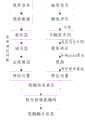
FIG. 1 is a view-touch fusion state perception flowchart of the present invention;
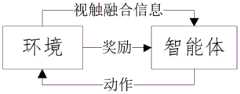
FIG. 2 is a flow chart of the fine operation task based on reinforcement learning of the present invention.
Detailed Description
In order to make the objects, technical solutions and advantages of the embodiments of the present invention clearer, the technical solutions in the embodiments of the present invention will be clearly and completely described below with reference to the drawings in the embodiments of the present invention, and it is obvious that the described embodiments are only a part of the embodiments of the present invention, and not all of the embodiments. All other embodiments, which can be derived by a person skilled in the art from the embodiments given herein without making any creative effort, shall fall within the protection scope of the present invention.
As shown in fig. 1-2, the present invention provides a visual-touch fusion fine operation method based on reinforcement learning, which mainly includes visual-touch fusion and visual-touch fusion fine operation based on reinforcement learning, and includes the following steps:
and S1, processing the visual signals through the convolutional neural network to obtain the characteristic vector of the visual representation.
In step S1, the convolutional neural network includes a convolutional layer, a pooling layer, and a full link layer. Illustratively, the structure of the convolutional neural network adopts structural parameters in an AlexNet network model, and comprises five convolutional layers, three pooling layers and two full-connection layers.
Specifically, the convolution layer performs feature extraction on the input layer through convolution kernel, the convolution kernel scans the input layer of the neural network, and for each position, the input layer and the corresponding element of the convolution kernel perform dot product operation to obtain the local feature of the region. Performing convolution check on the input layer to complete one convolution operation once when the input layer completes one scanning, so as to obtain a characteristic map; and for a plurality of convolution kernels, sequentially arranging the feature maps obtained by each convolution operation, and outputting a three-dimensional convolution feature map. Adding a maximum value pooling layer with the step length of 2 after the 1 st, 2 nd and 5 th convolution layers respectively, and abstracting an input signal to gradually reduce the signal scale, reduce the parameter number, accelerate the operation speed and avoid the over-fitting phenomenon on the premise of not losing useful signals; and finally, connecting two full-connection layers and an output layer after the fifth convolutional layer, wherein the full-connection layers are the same as the common neural network, and each neuron is connected with each neuron of the input layer. It can be seen from the above that, the convolutional neural network takes the original image and radar data as input, obtains the local features of each input layer by using the convolutional kernel, then abstracts the features of the original information layer by layer, and finally can automatically learn to obtain the feature representation of the visual image.
And S2, obtaining a characteristic vector of the tactile representation through segmentation, characteristic extraction and clustering processing of the tactile sequence.
In step S2, the haptic information is collected through the multi-array electronic skin, so that haptic data of various objects with different materials and shapes can be obtained, and the haptic data is serialized dynamic data, which needs to be modeled as a whole rather than a single haptic frame. Meanwhile, the touch sequence has various characteristics in the spatial dimension due to the difference of the surface material, the shape, the grabbing posture and the like of the object. The method provided by the invention is used for segmenting and modeling the touch sequence in the time dimension, dividing the touch sequence into a series of sub-touch sequences, and extracting the characteristics of each sub-touch sequence based on a linear dynamic system method. The expression for a linear dynamic system is as follows:
x(t+1)=Ax(t)+Bv(t)
y(t)=Cx(t)+w(t)
wherein x (t) e RpA hidden state sequence at time t; y (t) is the actual output value of the system at the time t; a is an element of Rn×nA hidden state dynamic matrix; c is belonged to Rp×nOutputting a matrix for the hidden state of the system; w (t) -N (0, R) represent estimated values, and are subject to normal distribution with a mean value of 0 and a variance of R; bv (t) -N (0, Q) represent state noise and obey normal distribution with the mean value of 0 and the variance of Q; the observation matrix tuples (a, C) characterize the dynamic and spatial aspects of the system, respectively, and thus serve as a feature descriptor for the input haptic sequence. After the characteristic descriptors are obtained, the Martin distance is used as a measure to calculate the distance between the dynamic characteristics (A, C), the K-Medoid algorithm is used for clustering, the minimum distance between the characteristic descriptors and the respective clustering centers is calculated, grouping is carried out on the basis, a plurality of clustering centers and the grouping are constructed into a code book, and each group of characteristic descriptors (A, C) is called a code word. Finally, the codebook is used for representing the tactile sequence to obtain a systematic system model, and the systematic system model is calculated by The Frequency (TF) of the characteristic wordsThe method counts the distribution characteristics of the code words in the code book and forms a characteristic vector.
Assume that in the ith group haptic sequence, the number of occurrences of the jth group codeword is cijSecondly, there are:

wherein m is the number of touch sequences; k is the number of the clustering central points; h isijIndicating the frequency of occurrence of the jth group of codewords in the ith haptic sequence, hi=[hi1 hi2 ... him]Is the feature vector of the ith set of haptic sequences.
From the above, the modeling method based on the linear dynamic system can effectively extract the characteristics of the haptic space-time sequence, realize the clustering of the characteristics by measuring the Martin distance between the characteristics through the K-Medoid algorithm, and calculate the haptic characteristic vector by combining the characteristic word frequency algorithm.
S3, obtaining visual-touch fusion information through joint kernel sparse coding, as shown in figure 1.
The step S3 further includes: potential subspace description forms of different modes are mined by adopting a depth sparse coding method, combined kernel sparse coding is established to carry out combined modeling on multi-mode information, compatible parts of the information of the different modes are effectively fused, and incompatible parts are removed. The kernel sparse coding replaces the original space by establishing a high-dimensional feature space so as to more effectively capture the nonlinear structure of the signal from the dictionary.
Suppose that the encoding is preceded by M pieces of modal information, NmIs the number of training samples, MmRepresents the characteristic description of the mth modal data, and M is 1,2, … M. The correct mapping function is used to map the training samples to a higher dimensional space, and hence to map phi tom(·):Mm→HmAs slave MmMapping to high-dimensional space HmIs implicitly non-linear mapping of (phi)m(Om) A dictionary called a high dimensional space, wherem"·" in (-) denotes any training sample; using group associative kernelsSparse coding is adopted, sparse vectors are not required to be the same, data are paired through groups instead of samples, only elements corresponding to the same group are required to be activated at the same time, and the requirement of joint kernel sparse coding on the samples is reduced.
S4, based on the visual-touch fusion information of the space robot, a DDPG (deep Deterministic Policy gradient) algorithm is adopted, a strategy network is trained to generate a next motion track, and a value function network is trained to evaluate the quality of the current track. And acquiring a control strategy of a specified task through contact interaction with the environment, and realizing optimization of an action sequence, as shown in FIG. 2.
The step S4 further includes:
the DDPG algorithm comprises a strategy network and a value network: the policy network includes a policy estimation network and a policy reality network, wherein the policy estimation network is used to output real-time actions for use by the policy reality network, and the policy reality network is used to update the value network system. The value network comprises a value estimation network and a value reality network, and the value of the current state is output, but the input of the value estimation network is a current strategy application action. The strategy estimation network and the value estimation network are mainly used for generating a training data set, and the strategy reality network and the value reality network are mainly used for training and optimizing network parameters.
The DDPG algorithm flow is as follows:
1) separately initializing policy estimation network parameters θμAnd a value estimation network parameter thetaQ;
2) Respectively estimating the network parameters theta by the strategiesμAnd a value estimation network parameter thetaQCopied to the corresponding policy reality network parameter thetaμ' and value reality network parameter θQ′:
θμ′←θμ,θQ′←θQ
3) Initializing an experience playback database R;
4) for each training round, the following tasks are performed:
(1) an oenstein-ulrenbeck (OU) random process is initialized, which is expressed as a mean regression in the presence of random noise.
(2) For each time step, the following tasks are performed:
the strategy network fuses the state s according to the current visual contacttSelecting an action a based on the noise generated by the estimation strategy mu and the OU random proceduret,at=μ(st|θμ)+NtA is performed by a space robot operating systemtReturn prize gammatAnd a new visual-touch fusion state st+1;
② repeating the procedure to obtain multiple groups of data(s)t,at,γt,st+1) And storing them in R as the data set of training network;
randomly selecting N groups of data in R as minimum batch of training data of strategy estimation network and value estimation network, and using(s)i,ai,γi,si+1) (i ═ 1,2 … N) represents a single set of data in the smallest lot;
determining loss function of value network by mean square error Wherein y isi=ri+γQ′(si+1,μ′(si+1|θμ′)|θQ′) Computing the gradient of a value estimation network based on a back propagation method


Using Adam (gradient descent method) optimizer to update value estimation network thetaQ;
Sixthly, calculating the strategy gradient of the strategy network and expressing as

Seventhly, estimating the network theta by adopting an Adam optimizer updating strategyμ;
Updating strategy reality network thetaμ′And value reality network thetaQ′:

Wherein τ is 0.001.
Ninthly, when the time step length is smaller than the maximum step length T, turning to (i), otherwise, exiting the loop, and ending the training round.
(3) And (4) when the number of the training rounds is less than the maximum number of the training rounds N, turning to (1), otherwise, exiting the loop, and ending the training process.
Based on the DDPG method, the action sequence suitable for operating the target object is learned in real time in the input visual-touch fusion information, and the fine operation tasks such as module replacement, sailboard auxiliary unfolding and the like are realized.
In summary, the visual-touch fusion fine operation method based on reinforcement learning of the present invention is to obtain visual information and tactile information respectively based on a hand-eye camera and a tactile sensor of a terminal operation tool, obtain visual-touch fusion information by combining sparse coding, and realize terminal fine operation based on visual-touch fusion information and reinforcement learning method.
While the present invention has been described in detail with reference to the preferred embodiments, it should be understood that the above description should not be taken as limiting the invention. Various modifications and alterations to this invention will become apparent to those skilled in the art upon reading the foregoing description. Accordingly, the scope of the invention should be determined from the following claims.
Claims (3)
1. A visual-touch fusion fine operation method based on reinforcement learning is characterized by comprising the following steps:
s1, processing the visual signals through a convolutional neural network to obtain characteristic vectors of visual representation;
s2, obtaining a characteristic vector of the tactile representation through segmentation, characteristic extraction and clustering processing of the tactile sequence;
s3, obtaining visual-touch fusion information based on the characteristic vector of the visual representation and the characteristic vector of the tactile representation by using joint kernel sparse coding;
s4, based on the visual-touch fusion information, adopting a DDPG algorithm and a training strategy network to generate a next motion track, and training a value network to evaluate the quality of the current motion track; acquiring a control strategy of a designated task through contact interaction with the space robot operating system environment, and realizing optimization of an action sequence;
the step S2 includes:
the segmentation of the touch sense sequence refers to that on the basis of obtaining dynamic data of the touch sense serialization, the overall modeling is carried out on the dynamic data, the touch sense sequence is segmented and modeled in the time dimension, and the touch sense sequence is divided into a series of sub-touch sense sequences;
feature extraction of the haptic sequence comprises:
and (3) extracting the characteristics of each group of sub-tactile sequences based on a linear dynamic system method, wherein the expression of the linear dynamic system is as follows:
x(t+1)=Ax(t)+Bv(t)
y(t)=Cx(t)+w(t)
wherein x (t) e RpA hidden state sequence at time t; y (t) is the actual output value of the system at the time t; a is an element of Rn×nFor hidden state dynamic matrix, C ∈ Rp×nA hidden state output matrix of the system is provided, w (t) -N (0, R) represent estimated values, and the normal distribution with the mean value of 0 and the variance of R is obeyed; bv (t) -N (0, Q) represent state noise and obey normal distribution with the mean value of 0 and the variance of Q; observing the dynamic and space forms of the matrix tuples (A, C) respectively describing the system, taking the dynamic and space forms as a feature descriptor of an input tactile sequence, and calculating the distance between the dynamic features (A, C) by taking the Martin distance as measurement after the feature descriptor is obtained;
the clustering process of the haptic sequence comprises:
after solving the feature descriptors, calculating the distance between dynamic features (A and C) by using a Martin distance as a measure, clustering by using a K-Medoid algorithm, calculating the minimum distance between the feature descriptors and respective clustering centers, grouping on the basis, constructing a plurality of clustering centers and groups into a codebook, wherein each group of feature descriptors (A and C) is called a code word;
using a codebook to represent the tactile sequence to obtain a system model, counting the distribution characteristics of code words in the codebook by a characteristic word frequency algorithm, and forming a characteristic vector;
assume that the number of occurrences of the jth group code word in the ith group haptic sequence is cijSecondly, there are:

wherein m is the number of touch sequences; k is the number of the clustering central points; h isijRepresenting the frequency of occurrence of the jth group of codewords in the ith group of haptic sequence; h isi=[hi1 hi2...him]Feature vectors for the ith set of haptic sequences;
the step S3 includes:
the depth sparse coding method is used for mining potential subspace description forms of different modes, establishing combined kernel sparse coding to perform combined modeling on multi-mode information, fusing compatible parts of the information of the different modes and removing incompatible parts;
the kernel sparse coding is used for capturing a nonlinear structure of a signal from a dictionary by establishing a high-dimensional feature space to replace the original space, and the method is as follows:
suppose that the encoding is preceded by M pieces of modal information, NmIs the number of training samples, MmRepresents the characteristic description of the mth modal data, wherein M is 1,2, … M;
mapping the training samples to a higher dimensional space using a mapping functionm(·):Mm→HmAs slave MmMapping to high-dimensional space HmIs implicitly non-linear mapping of (phi)m(Om) A dictionary called a high dimensional space, wherem"·" in (-) denotes any training sample; by adopting group joint kernel sparse coding, the method does not need the same sparse vectors, and data passes through groupsPairing, rather than sample pairing, requires that elements corresponding to the same group be activated simultaneously.
2. The visual-contact fusion fine operation method based on reinforcement learning of claim 1,
the step S2 further includes:
the convolutional neural network takes original image data as input and adopts structural parameters in an AlexNet network model, and comprises a convolutional layer, a pooling layer and a full-connection layer;
the convolution layer carries out feature extraction on the input layer through convolution kernel, the convolution kernel scans the input layer of the convolution neural network, and for each position, the input layer and corresponding elements of the convolution kernel carry out dot product operation to obtain local features of the region, wherein once the convolution kernel finishes scanning the input layer, one convolution operation is finished to obtain one feature map, the feature maps obtained by each convolution operation are sequentially arranged by a plurality of convolution kernels, one three-dimensional convolution feature map is output, and finally feature representation of the visual image is obtained.
3. The visual-contact fusion fine operation method based on reinforcement learning of claim 1,
the DDPG algorithm in the step S4 includes a policy network and a value network, where the policy network includes a policy estimation network and a policy reality network, the policy estimation network is used to output real-time actions for the policy reality network to use, and the policy reality network is used to update the value network;
the value network comprises a value estimation network and a value reality network, and is used for outputting the value of the current state, and the input of the value estimation network is the current strategy applying action;
the strategy estimation network and the value estimation network are used for generating a training data set, and the strategy reality network and the value reality network are used for training optimization network parameters.
Priority Applications (1)
| Application Number | Priority Date | Filing Date | Title |
|---|---|---|---|
| CN201911357369.7ACN111204476B (en) | 2019-12-25 | 2019-12-25 | Vision-touch fusion fine operation method based on reinforcement learning |
Applications Claiming Priority (1)
| Application Number | Priority Date | Filing Date | Title |
|---|---|---|---|
| CN201911357369.7ACN111204476B (en) | 2019-12-25 | 2019-12-25 | Vision-touch fusion fine operation method based on reinforcement learning |
Publications (2)
| Publication Number | Publication Date |
|---|---|
| CN111204476A CN111204476A (en) | 2020-05-29 |
| CN111204476Btrue CN111204476B (en) | 2021-10-29 |
Family
ID=70784312
Family Applications (1)
| Application Number | Title | Priority Date | Filing Date |
|---|---|---|---|
| CN201911357369.7AActiveCN111204476B (en) | 2019-12-25 | 2019-12-25 | Vision-touch fusion fine operation method based on reinforcement learning |
Country Status (1)
| Country | Link |
|---|---|
| CN (1) | CN111204476B (en) |
Families Citing this family (10)
| Publication number | Priority date | Publication date | Assignee | Title |
|---|---|---|---|---|
| CN111844034B (en)* | 2020-07-17 | 2022-03-04 | 北京控制工程研究所 | End-to-end on-orbit autonomous filling control system and method based on deep reinforcement learning |
| CN113537335B (en)* | 2021-07-09 | 2024-02-23 | 北京航空航天大学 | Method and system for analyzing hand assembly skills |
| CN113894779B (en)* | 2021-09-10 | 2023-10-17 | 人工智能与数字经济广东省实验室(广州) | Multi-mode data processing method applied to robot interaction |
| CN113780460A (en)* | 2021-09-18 | 2021-12-10 | 广东人工智能与先进计算研究院 | Material identification method and device, robot, electronic equipment and storage medium |
| CN114660934B (en)* | 2022-03-03 | 2024-03-01 | 西北工业大学 | Mechanical arm autonomous operation strategy learning method based on vision-touch fusion |
| CN114610037B (en)* | 2022-03-15 | 2025-05-23 | 上海交通大学 | Robot integrated network architecture optimization method and system based on reinforcement learning |
| CN114841098B (en)* | 2022-04-13 | 2023-04-18 | 广东工业大学 | Deep reinforcement learning Beidou navigation chip design method based on sparse representation drive |
| CN116911079B (en)* | 2023-09-13 | 2024-02-09 | 江苏云幕智造科技有限公司 | Self-evolution modeling method and system for incomplete model |
| CN119847010A (en)* | 2024-11-28 | 2025-04-18 | 北京精密机电控制设备研究所 | Autonomous operation training system and method for smart hands of humanoid robot |
| CN120440311A (en)* | 2025-07-09 | 2025-08-08 | 中国人民解放军军事科学院国防科技创新研究院 | Spacecraft morphology control method and system based on evolutionary algorithm and reinforcement learning |
Citations (6)
| Publication number | Priority date | Publication date | Assignee | Title |
|---|---|---|---|---|
| US7646917B2 (en)* | 2004-11-26 | 2010-01-12 | Samsung Electronics Co., Ltd. | Method and apparatus for detecting corner |
| CN105956351A (en)* | 2016-07-05 | 2016-09-21 | 上海航天控制技术研究所 | Touch information classified computing and modelling method based on machine learning |
| CN109215015A (en)* | 2018-07-24 | 2019-01-15 | 北京工业大学 | A kind of online visible detection method of silk cocoon based on convolutional neural networks |
| CN109459043A (en)* | 2018-12-12 | 2019-03-12 | 上海航天控制技术研究所 | A kind of spacecraft Relative Navigation based on production reconstructed image |
| CN109760852A (en)* | 2018-12-11 | 2019-05-17 | 上海航天控制技术研究所 | A kind of extensive aircraft and application method of the in-orbit autonomous assembling of microsatellite cluster |
| CN110428465A (en)* | 2019-07-12 | 2019-11-08 | 中国科学院自动化研究所 | View-based access control model and the mechanical arm grasping means of tactile, system, device |
- 2019
- 2019-12-25CNCN201911357369.7Apatent/CN111204476B/enactiveActive
Patent Citations (6)
| Publication number | Priority date | Publication date | Assignee | Title |
|---|---|---|---|---|
| US7646917B2 (en)* | 2004-11-26 | 2010-01-12 | Samsung Electronics Co., Ltd. | Method and apparatus for detecting corner |
| CN105956351A (en)* | 2016-07-05 | 2016-09-21 | 上海航天控制技术研究所 | Touch information classified computing and modelling method based on machine learning |
| CN109215015A (en)* | 2018-07-24 | 2019-01-15 | 北京工业大学 | A kind of online visible detection method of silk cocoon based on convolutional neural networks |
| CN109760852A (en)* | 2018-12-11 | 2019-05-17 | 上海航天控制技术研究所 | A kind of extensive aircraft and application method of the in-orbit autonomous assembling of microsatellite cluster |
| CN109459043A (en)* | 2018-12-12 | 2019-03-12 | 上海航天控制技术研究所 | A kind of spacecraft Relative Navigation based on production reconstructed image |
| CN110428465A (en)* | 2019-07-12 | 2019-11-08 | 中国科学院自动化研究所 | View-based access control model and the mechanical arm grasping means of tactile, system, device |
Non-Patent Citations (1)
| Title |
|---|
| 触觉信息表征技术与分类感知试验;侯月阳等;《上海航天》;20191023;第36卷(第5期);第83-86页* |
Also Published As
| Publication number | Publication date |
|---|---|
| CN111204476A (en) | 2020-05-29 |
Similar Documents
| Publication | Publication Date | Title |
|---|---|---|
| CN111204476B (en) | Vision-touch fusion fine operation method based on reinforcement learning | |
| CN111639679B (en) | A Few-Sample Learning Method Based on Multi-scale Metric Learning | |
| JP3560670B2 (en) | Adaptive recognition system | |
| CN109919245B (en) | Deep learning model training method and device, training equipment and storage medium | |
| Yan et al. | A factorization-based approach for articulated nonrigid shape, motion and kinematic chain recovery from video | |
| CN111783772A (en) | A Grab Detection Method Based on RP-ResNet Network | |
| CN113239897B (en) | Human body action evaluation method based on space-time characteristic combination regression | |
| CN105184767B (en) | A kind of movement human posture method for measuring similarity | |
| EP4339826A2 (en) | Machine-learning for topologically-aware cad retrieval | |
| CN113888697A (en) | A three-dimensional reconstruction method in the state of two-hand interaction | |
| CN116580084B (en) | Industrial part rapid pose estimation method based on deep learning and point cloud | |
| CN109934183A (en) | Image processing method and device, detection device and storage medium | |
| Zhai et al. | Tcrnet: Transparent object depth completion with cascade refinements | |
| CN117392745A (en) | Online learning scene-oriented learner behavior recognition method and related device | |
| Ding et al. | Adaptive visual–tactile fusion recognition for robotic operation of multi-material system | |
| US20240087293A1 (en) | Extracting features from sensor data | |
| CN111158476A (en) | Key identification method, system, equipment and storage medium of virtual keyboard | |
| CN116911079B (en) | Self-evolution modeling method and system for incomplete model | |
| CN113065321A (en) | User behavior prediction method and system based on LSTM model and hypergraph | |
| US20240051124A1 (en) | Simulation of robotics devices using a neural network systems and methods | |
| CN117315292A (en) | Auxiliary key point labeling method, device, equipment and storage medium | |
| Saghour et al. | Dual-arm shaping of soft objects in 3D based on visual servoing and online FEM simulations | |
| CN112507940A (en) | Skeleton action recognition method based on difference guidance representation learning network | |
| CN112597959A (en) | Train safety monitoring method and device based on artificial intelligence and computer vision | |
| CN111062996A (en) | Rendering method of construction drawing |
Legal Events
| Date | Code | Title | Description |
|---|---|---|---|
| PB01 | Publication | ||
| PB01 | Publication | ||
| SE01 | Entry into force of request for substantive examination | ||
| SE01 | Entry into force of request for substantive examination | ||
| GR01 | Patent grant | ||
| GR01 | Patent grant |