CN111110977B - Method and system for delivering gas to a patient - Google Patents
Method and system for delivering gas to a patientDownload PDFInfo
- Publication number
- CN111110977B CN111110977BCN201911341594.1ACN201911341594ACN111110977BCN 111110977 BCN111110977 BCN 111110977BCN 201911341594 ACN201911341594 ACN 201911341594ACN 111110977 BCN111110977 BCN 111110977B
- Authority
- CN
- China
- Prior art keywords
- heater
- gas
- temperature
- controller
- medical procedure
- Prior art date
- Legal status (The legal status is an assumption and is not a legal conclusion. Google has not performed a legal analysis and makes no representation as to the accuracy of the status listed.)
- Active
Links
Images




Classifications
- A—HUMAN NECESSITIES
- A61—MEDICAL OR VETERINARY SCIENCE; HYGIENE
- A61M—DEVICES FOR INTRODUCING MEDIA INTO, OR ONTO, THE BODY; DEVICES FOR TRANSDUCING BODY MEDIA OR FOR TAKING MEDIA FROM THE BODY; DEVICES FOR PRODUCING OR ENDING SLEEP OR STUPOR
- A61M16/00—Devices for influencing the respiratory system of patients by gas treatment, e.g. ventilators; Tracheal tubes
- A61M16/10—Preparation of respiratory gases or vapours
- A61M16/14—Preparation of respiratory gases or vapours by mixing different fluids, one of them being in a liquid phase
- A61M16/16—Devices to humidify the respiration air
- A—HUMAN NECESSITIES
- A61—MEDICAL OR VETERINARY SCIENCE; HYGIENE
- A61B—DIAGNOSIS; SURGERY; IDENTIFICATION
- A61B17/00—Surgical instruments, devices or methods
- A61B17/34—Trocars; Puncturing needles
- A—HUMAN NECESSITIES
- A61—MEDICAL OR VETERINARY SCIENCE; HYGIENE
- A61M—DEVICES FOR INTRODUCING MEDIA INTO, OR ONTO, THE BODY; DEVICES FOR TRANSDUCING BODY MEDIA OR FOR TAKING MEDIA FROM THE BODY; DEVICES FOR PRODUCING OR ENDING SLEEP OR STUPOR
- A61M13/00—Insufflators for therapeutic or disinfectant purposes, i.e. devices for blowing a gas, powder or vapour into the body
- A—HUMAN NECESSITIES
- A61—MEDICAL OR VETERINARY SCIENCE; HYGIENE
- A61M—DEVICES FOR INTRODUCING MEDIA INTO, OR ONTO, THE BODY; DEVICES FOR TRANSDUCING BODY MEDIA OR FOR TAKING MEDIA FROM THE BODY; DEVICES FOR PRODUCING OR ENDING SLEEP OR STUPOR
- A61M13/00—Insufflators for therapeutic or disinfectant purposes, i.e. devices for blowing a gas, powder or vapour into the body
- A61M13/003—Blowing gases other than for carrying powders, e.g. for inflating, dilating or rinsing
- A—HUMAN NECESSITIES
- A61—MEDICAL OR VETERINARY SCIENCE; HYGIENE
- A61M—DEVICES FOR INTRODUCING MEDIA INTO, OR ONTO, THE BODY; DEVICES FOR TRANSDUCING BODY MEDIA OR FOR TAKING MEDIA FROM THE BODY; DEVICES FOR PRODUCING OR ENDING SLEEP OR STUPOR
- A61M16/00—Devices for influencing the respiratory system of patients by gas treatment, e.g. ventilators; Tracheal tubes
- A61M16/0051—Devices for influencing the respiratory system of patients by gas treatment, e.g. ventilators; Tracheal tubes with alarm devices
- A—HUMAN NECESSITIES
- A61—MEDICAL OR VETERINARY SCIENCE; HYGIENE
- A61M—DEVICES FOR INTRODUCING MEDIA INTO, OR ONTO, THE BODY; DEVICES FOR TRANSDUCING BODY MEDIA OR FOR TAKING MEDIA FROM THE BODY; DEVICES FOR PRODUCING OR ENDING SLEEP OR STUPOR
- A61M16/00—Devices for influencing the respiratory system of patients by gas treatment, e.g. ventilators; Tracheal tubes
- A61M16/021—Devices for influencing the respiratory system of patients by gas treatment, e.g. ventilators; Tracheal tubes operated by electrical means
- A61M16/022—Control means therefor
- A—HUMAN NECESSITIES
- A61—MEDICAL OR VETERINARY SCIENCE; HYGIENE
- A61M—DEVICES FOR INTRODUCING MEDIA INTO, OR ONTO, THE BODY; DEVICES FOR TRANSDUCING BODY MEDIA OR FOR TAKING MEDIA FROM THE BODY; DEVICES FOR PRODUCING OR ENDING SLEEP OR STUPOR
- A61M16/00—Devices for influencing the respiratory system of patients by gas treatment, e.g. ventilators; Tracheal tubes
- A61M16/10—Preparation of respiratory gases or vapours
- A—HUMAN NECESSITIES
- A61—MEDICAL OR VETERINARY SCIENCE; HYGIENE
- A61M—DEVICES FOR INTRODUCING MEDIA INTO, OR ONTO, THE BODY; DEVICES FOR TRANSDUCING BODY MEDIA OR FOR TAKING MEDIA FROM THE BODY; DEVICES FOR PRODUCING OR ENDING SLEEP OR STUPOR
- A61M16/00—Devices for influencing the respiratory system of patients by gas treatment, e.g. ventilators; Tracheal tubes
- A61M16/10—Preparation of respiratory gases or vapours
- A61M16/1075—Preparation of respiratory gases or vapours by influencing the temperature
- A—HUMAN NECESSITIES
- A61—MEDICAL OR VETERINARY SCIENCE; HYGIENE
- A61M—DEVICES FOR INTRODUCING MEDIA INTO, OR ONTO, THE BODY; DEVICES FOR TRANSDUCING BODY MEDIA OR FOR TAKING MEDIA FROM THE BODY; DEVICES FOR PRODUCING OR ENDING SLEEP OR STUPOR
- A61M16/00—Devices for influencing the respiratory system of patients by gas treatment, e.g. ventilators; Tracheal tubes
- A61M16/10—Preparation of respiratory gases or vapours
- A61M16/1075—Preparation of respiratory gases or vapours by influencing the temperature
- A61M16/109—Preparation of respiratory gases or vapours by influencing the temperature the humidifying liquid or the beneficial agent
- A—HUMAN NECESSITIES
- A61—MEDICAL OR VETERINARY SCIENCE; HYGIENE
- A61M—DEVICES FOR INTRODUCING MEDIA INTO, OR ONTO, THE BODY; DEVICES FOR TRANSDUCING BODY MEDIA OR FOR TAKING MEDIA FROM THE BODY; DEVICES FOR PRODUCING OR ENDING SLEEP OR STUPOR
- A61M16/00—Devices for influencing the respiratory system of patients by gas treatment, e.g. ventilators; Tracheal tubes
- A61M16/10—Preparation of respiratory gases or vapours
- A61M16/14—Preparation of respiratory gases or vapours by mixing different fluids, one of them being in a liquid phase
- A61M16/16—Devices to humidify the respiration air
- A61M16/162—Water-reservoir filling system, e.g. automatic
- A—HUMAN NECESSITIES
- A61—MEDICAL OR VETERINARY SCIENCE; HYGIENE
- A61M—DEVICES FOR INTRODUCING MEDIA INTO, OR ONTO, THE BODY; DEVICES FOR TRANSDUCING BODY MEDIA OR FOR TAKING MEDIA FROM THE BODY; DEVICES FOR PRODUCING OR ENDING SLEEP OR STUPOR
- A61M2205/00—General characteristics of the apparatus
- A61M2205/14—Detection of the presence or absence of a tube, a connector or a container in an apparatus
- A—HUMAN NECESSITIES
- A61—MEDICAL OR VETERINARY SCIENCE; HYGIENE
- A61M—DEVICES FOR INTRODUCING MEDIA INTO, OR ONTO, THE BODY; DEVICES FOR TRANSDUCING BODY MEDIA OR FOR TAKING MEDIA FROM THE BODY; DEVICES FOR PRODUCING OR ENDING SLEEP OR STUPOR
- A61M2205/00—General characteristics of the apparatus
- A61M2205/33—Controlling, regulating or measuring
- A61M2205/3317—Electromagnetic, inductive or dielectric measuring means
- A—HUMAN NECESSITIES
- A61—MEDICAL OR VETERINARY SCIENCE; HYGIENE
- A61M—DEVICES FOR INTRODUCING MEDIA INTO, OR ONTO, THE BODY; DEVICES FOR TRANSDUCING BODY MEDIA OR FOR TAKING MEDIA FROM THE BODY; DEVICES FOR PRODUCING OR ENDING SLEEP OR STUPOR
- A61M2205/00—General characteristics of the apparatus
- A61M2205/33—Controlling, regulating or measuring
- A61M2205/3331—Pressure; Flow
- A61M2205/3334—Measuring or controlling the flow rate
- A—HUMAN NECESSITIES
- A61—MEDICAL OR VETERINARY SCIENCE; HYGIENE
- A61M—DEVICES FOR INTRODUCING MEDIA INTO, OR ONTO, THE BODY; DEVICES FOR TRANSDUCING BODY MEDIA OR FOR TAKING MEDIA FROM THE BODY; DEVICES FOR PRODUCING OR ENDING SLEEP OR STUPOR
- A61M2205/00—General characteristics of the apparatus
- A61M2205/33—Controlling, regulating or measuring
- A61M2205/3368—Temperature
- A—HUMAN NECESSITIES
- A61—MEDICAL OR VETERINARY SCIENCE; HYGIENE
- A61M—DEVICES FOR INTRODUCING MEDIA INTO, OR ONTO, THE BODY; DEVICES FOR TRANSDUCING BODY MEDIA OR FOR TAKING MEDIA FROM THE BODY; DEVICES FOR PRODUCING OR ENDING SLEEP OR STUPOR
- A61M2205/00—General characteristics of the apparatus
- A61M2205/33—Controlling, regulating or measuring
- A61M2205/3379—Masses, volumes, levels of fluids in reservoirs, flow rates
- A—HUMAN NECESSITIES
- A61—MEDICAL OR VETERINARY SCIENCE; HYGIENE
- A61M—DEVICES FOR INTRODUCING MEDIA INTO, OR ONTO, THE BODY; DEVICES FOR TRANSDUCING BODY MEDIA OR FOR TAKING MEDIA FROM THE BODY; DEVICES FOR PRODUCING OR ENDING SLEEP OR STUPOR
- A61M2205/00—General characteristics of the apparatus
- A61M2205/33—Controlling, regulating or measuring
- A61M2205/3379—Masses, volumes, levels of fluids in reservoirs, flow rates
- A61M2205/3386—Low level detectors
- A—HUMAN NECESSITIES
- A61—MEDICAL OR VETERINARY SCIENCE; HYGIENE
- A61M—DEVICES FOR INTRODUCING MEDIA INTO, OR ONTO, THE BODY; DEVICES FOR TRANSDUCING BODY MEDIA OR FOR TAKING MEDIA FROM THE BODY; DEVICES FOR PRODUCING OR ENDING SLEEP OR STUPOR
- A61M2205/00—General characteristics of the apparatus
- A61M2205/70—General characteristics of the apparatus with testing or calibration facilities
- A61M2205/702—General characteristics of the apparatus with testing or calibration facilities automatically during use
Landscapes
- Health & Medical Sciences (AREA)
- Life Sciences & Earth Sciences (AREA)
- Engineering & Computer Science (AREA)
- Biomedical Technology (AREA)
- Heart & Thoracic Surgery (AREA)
- Animal Behavior & Ethology (AREA)
- General Health & Medical Sciences (AREA)
- Public Health (AREA)
- Veterinary Medicine (AREA)
- Anesthesiology (AREA)
- Hematology (AREA)
- Pulmonology (AREA)
- Emergency Medicine (AREA)
- Surgery (AREA)
- Pathology (AREA)
- Nuclear Medicine, Radiotherapy & Molecular Imaging (AREA)
- Medical Informatics (AREA)
- Molecular Biology (AREA)
- Air Humidification (AREA)
- Surgical Instruments (AREA)
- Measuring Volume Flow (AREA)
- Endoscopes (AREA)
- Infusion, Injection, And Reservoir Apparatuses (AREA)
- Media Introduction/Drainage Providing Device (AREA)
Abstract
Description
The present application is a divisional application of the invention patent application entitled "method and system for delivering gas to a patient",international application date 2015, 4 months, 16 days, international application number PCT/NZ2015/050045, national application number 201580027339.3.
Disclosure field of the invention
The present disclosure relates to methods, systems, and devices for delivering humidified gases to a patient.
Background
A variety of medical procedures require the provision of gas, typically carbon dioxide, to a patient during the medical procedure. For example, two general types of medical procedures that typically require the supply of gas to a patient include closed medical procedures and open medical procedures.
In closed medical procedures, an insufflator is arranged to deliver gas to a patient's body cavity during the medical procedure to inflate the cavity or to prevent collapse of the cavity. Examples of such medical procedures include laparoscopy and endoscopy, but any other type of medical procedure may use an insufflator, as desired. Endoscopic procedures enable a practitioner to visualize a body cavity by inserting an endoscope or the like through a natural opening or small puncture to produce an image of the body cavity. In laparoscopic procedures, a medical practitioner typically inserts surgical instruments through a natural opening or small puncture to perform a surgical procedure in a body cavity. In some cases, an initial endoscopic procedure may be performed to evaluate a body cavity, and a subsequent laparoscopy is then performed to operate on the body cavity. These procedures are widely used, for example, on the peritoneal cavity or during thoracoscopy, colonoscopy, gastroscopy or bronchoscopy.
In open medical procedures, such as open surgery, gas is used to fill a surgical cavity, wherein excess gas escapes from the opening. The gas may also be used to provide a layer of gas over the exposed interior body portion without a discernable cavity. For these procedures, the gas may be used to prevent or reduce dehydration and infection by covering the exposed body parts with a layer of heated, humidified, sterile gas, rather than to inflate the cavity.
A system for delivering gas during such medical procedures may include an adjustable pressure regulator and a gas flow controller. The system typically includes or is connected to a gas source, which may be a remote pressurized gas source, a gas canister, or the like, and is operable to control the pressure and/or flow of gas from the gas source to a level suitable for delivery into the body cavity (typically via a cannula or needle inserted into the body cavity, or via a diffuser arranged to diffuse gas over and within the wound or surgical cavity).
The in vivo temperature is typically about 37 degrees celsius and it may be desirable for the temperature of the gas delivered from the system to closely match the normal body temperature. Also, the gas provided by the gas source may be relatively dry, which may cause damage to the body cavity (including cell death and/or adhesion), so it may be desirable to increase the humidity level of the gas. Thus, a humidifier may be positioned in the gas flow path for heating and humidifying the gas before it enters the body cavity.
U.S. patent No. 8,206,337 (Fisher & Paykel Healthcare Limited), the entire contents of which are incorporated herein by reference), to Fisher park healthcare, discloses a system including an insufflator arranged for connection to a remote pressurized gas source as may be provided via a gas supply system in a hospital, for example. The insufflator delivers gas via a tube to a humidifier that includes a liquid container and a heater for heating the liquid to produce a vapor. The humidified gas is delivered to the patient via another tube which may also be heated. In one example, the insufflator and humidifier are located in separate housings that are connected together via suitable tubing and/or electrical connections. In another example, the insufflator and humidifier are located in a common housing arranged for connection to a remote gas supply via a suitable tube.
Furthermore, the same system may be used to deliver heated and/or humidified breathing gas to a patient by generally via a gas delivery conduit connected to a patient interface in order to provide respiratory assistance. The patient interface may include, for example, a mask or nasal cannula, etc. Such systems typically include or are arranged to be connected to a humidifier that humidifies the gas before it is delivered to the patient.
Disclosure of Invention
While the same device, including, for example, an insufflator and humidifier, may be used for closed medical procedures, open medical procedures, and respiratory assistance, there may be a wide variety of operations for such devices for each type of use. The present disclosure provides the following systems and methods: for controlling a gas supply and humidification system to automatically determine which type of use the system is being used for and to adjust its operation to meet the different requirements of each type of use. This operation serves to prevent user error or inadvertent injury to the patient.
For example, when the gas supply and humidification system is used in open surgery, a relatively high flow rate of gas is required, wherein a corresponding relatively high volume of liquid is consumed to maintain a desired moisture content in order to sufficiently humidify the gas.
When used in closed surgery, a lower flow rate of gas and/or a more intermittent supply of gas and a corresponding lower volume of liquid is required.
To enable the gas supply and humidification system to control the gas flow rate and humidity for each procedure or type of use, external sensing probes, typically temperature probes and flow probes, may be used. The output of these probes can be used by the gas supply system to control the gas flow rate and humidity to match the medical procedure or type of use. However, providing such probes can be expensive and it is difficult for medical personnel to accurately connect the probes for proper operation. External probes also reduce the overall usability of the system and add additional external components that may be lost or destroyed and require sterilization between uses.
In addition, other conditions may occur that may significantly affect the operation of the gas supply and humidification system. For example, if the gas flow is restricted or stopped, this may cause problems for the rest of the system. This may occur, for example, in systems supplied with a separate gas source (e.g., a depleted gas bottle or canister). Also, if the humidifier associated with the system is depleted of liquid, for example if the humidified liquid has evaporated entirely, the system may be significantly affected.
The present disclosure provides control methods and systems for delivering gas to a patient that overcome or at least ameliorate one or more of these disadvantages.
In an embodiment, a system for delivering gas to a patient during a medical procedure is described. The system comprises or is arranged to be equipped with a heater configured for heating at least one of the gas and the humidification liquid contained in the humidification chamber. The system is operable according to a first mode in which the medical procedure is a first medical procedure in which the system delivers a first flow rate of gas and according to a second mode in which the medical procedure is a second medical procedure in which the system delivers a second, different flow rate of gas. The system is configured to monitor an electrical characteristic of the heater and subsequently select the first mode or the second mode in response to the monitored electrical characteristic.
The first medical procedure may be an open medical procedure during which the system delivers a relatively high flow rate of gas in a first mode.
The second medical procedure may be a closed medical procedure during which the system delivers a relatively low flow rate of gas and/or intermittent gas flow in the second mode.
The gas flow rate in the or each mode may be a constant gas flow rate, a varying gas flow rate, or an intermittent gas flow rate. The desired gas flow rate may be achieved by controlling the blower or pump and/or by controlling the control valve and/or regulator.
The electrical characteristic monitored is the power drawn by the heater. For example, the monitored electrical characteristic may be the power duty cycle of the heater. The power duty cycle may be calculated, for example, as a proportion of the time during which the heater draws power. In an embodiment, the monitored characteristic may be the current drawn by the heater.
The electrical characteristic of the heater may be monitored over a predetermined period of time and an average of the electrical characteristic of the heater over the period of time calculated. In an embodiment, the system may determine the operating mode by comparing the calculated average value of the electrical characteristic of the heater to a predetermined threshold.
In an embodiment, in an initial step, the heater is turned on and allowed to warm up over a warm up period. For example, the heater may be turned on and allowed to warm up before monitoring the electrical characteristics of the heater.
In an embodiment, a method for controlling components of a gas supply and humidification system is described. The method includes monitoring a power duty cycle of the heater and subsequently determining a lack of humidification liquid in the humidification chamber by analyzing the monitored power duty cycle of the heater.
The power duty cycle and/or current draw of the heater may be monitored over a predetermined period of time and one or more averages calculated over the predetermined period of time. The one or more averages are used to determine the lack of humidification liquid in the humidification chamber.
A short term average duty cycle and/or current draw of the heater over a first predetermined period of time may be calculated, and a long term average duty cycle and/or current draw of the heater over a longer predetermined period of time may be calculated. For example, in an embodiment, the long-term average is calculated over a time window that is two to ten times longer than the time window of the short-term average. Of course, other relative differences in window sizes may be used. The difference between the long term average and the short term average may be used to determine the lack of humidification liquid in the humidification chamber. In an embodiment, if the long-term average is at least a first positive threshold amount greater than the short-term average, it is determined that the content of humidification liquid in the humidification chamber is low.
The difference between the long-term average and the short-term average of the power duty cycle and/or current draw of the heater may alternatively or additionally be used to determine that humidification liquid has been added to the humidification chamber. In an embodiment, if the short term average is at least a second positive threshold amount greater than the long term average, it is determined that humidification liquid has been added to the humidification chamber.
If it is determined that humidification liquid has been added to the humidification chamber, further monitoring of the power duty cycle and/or current of the heater may be delayed until the stabilization period has elapsed. This allows the system to stabilize.
The system may activate an indicator if it is determined that there is little humidification liquid in the humidification chamber.
In an embodiment, the system may determine whether the content of humidification liquid in the humidification chamber is small or empty at the beginning of the program, before monitoring the heater power duty cycle. This may be accomplished by comparing at least one characteristic of the humidification system with at least one predetermined characteristic of the following humidification system: in the humidification system, a predetermined sufficient amount of humidification liquid is present in the humidification chamber. The compared characteristic may be, for example, an output value of a temperature sensor associated with the heater. In another embodiment, the compared characteristic is the heater power duty cycle.
In an embodiment, the system detects whether gas is flowing through the system before entering the normal operation mode.
In an embodiment, a humidifier for providing humidified gas to a patient is described. The humidifier may include a humidification chamber and a heater for heating the humidification liquid in the humidification chamber to produce a vapor to humidify the gas to be delivered to the patient. The humidifier may include a controller arranged to monitor the power duty cycle of the heater (i.e. the proportion of time the heater draws power), and to subsequently determine the absence or absence of humidification liquid in the humidification chamber in response to the monitored power duty cycle of the heater.
In an embodiment, an electrical characteristic of the heater is monitored. It is determined whether gas is flowing through the system based on the monitored electrical characteristics. In an embodiment, the electrical characteristic may be the current drawn by the heater. In an embodiment, the electrical characteristic is the heater power duty cycle. The electrical characteristic may be monitored over a predetermined period of time and an average of the electrical characteristic over the predetermined period of time is calculated. The average value of the electrical characteristic may be used to determine whether gas is flowing through the system.
In an embodiment, a short term average of the electrical characteristic over a first predetermined period of time is calculated and a long term average of the electrical characteristic over a second longer predetermined period of time is calculated. The difference between the long term average and the short term average of the electrical characteristic may be used to determine whether the gas is flowing.
If the long-term average of the electrical characteristic is at least a first positive threshold amount greater than the short-term average, it is determined that the gas flow rate has fallen below a normal operating range. The system may activate an indicator if it is determined that the gas flow rate has decreased.
If the short term average is at least a second positive threshold amount greater than the long term average, then it is determined that the gas flow rate has increased.
In an embodiment, calibration may be performed at a location where an electrical characteristic of the heater is monitored, and a calibrated average of the electrical characteristic over a predetermined period of time is calculated. The calibrated average of the electrical characteristic may be used as a reference value that allows the resistance of the heater to change.
In an embodiment, the heater is turned on and allowed to warm up before monitoring the electrical characteristics of the heater. The warming process may be performed at a calculated rate over a predetermined period of time to avoid accumulation of condensate in the system.
In an embodiment, the system determines whether a gas supply has been provided prior to monitoring the electrical characteristics of the heater. If no gas supply is detected, the system may activate an indicator.
Further objects of the disclosed methods, systems, and apparatus will become apparent from the accompanying drawings.
Brief description of the drawings
Several embodiments of the disclosed methods, systems, and apparatus will now be described, by way of example, with reference to the following figures.
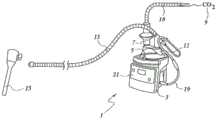
Fig. 1-2 are schematic diagrams of exemplary embodiments of a medical gas delivery system.
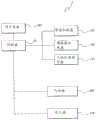
Fig. 3 is a schematic diagram of an exemplary embodiment of a medical gas delivery system.
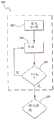
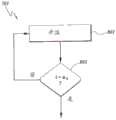
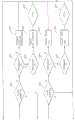
Fig. 4 is a flow chart of an exemplary embodiment of a method for controlling a medical gas delivery system.
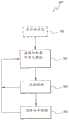
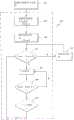
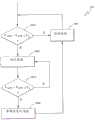
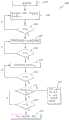
Fig. 5-10 show more details of the flow chart of fig. 4.
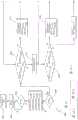
Fig. 11 is a flow chart of an exemplary embodiment of a method for determining whether the medical gas delivery system is for an open or closed medical procedure.
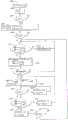
Fig. 12-1 and 12-2 are flowcharts of an exemplary embodiment of a method for controlling a medical gas delivery system in an open mode.
Fig. 13 is a flow chart of an exemplary embodiment of a method for controlling a medical gas delivery system in an open mode.
FIG. 14 is a chart showing exemplary values of heating plate set point temperature, measured heating plate temperature, and heating plate duty cycle during an embodiment of a warm-up period.
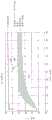
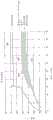
Fig. 15-16 are graphs showing a comparison of potential condensation during different embodiments of the warming period.
Detailed Description
Fig. 1 and 2 are schematic diagrams of exemplary embodiments of a humidification andgas delivery apparatus 1. Theapparatus 1 comprises abase unit 3 and ahumidification chamber 5 removably mounted on thebase unit 3. Thehumidification chamber 5 comprises agas inlet 7 arranged to be connected to a gas source 9 via aninlet conduit 10 for delivering a gas, such as carbon dioxide, into thechamber 5. Thechamber 5 further comprises agas outlet 11 arranged to be connected to agas delivery conduit 13 for delivering humidified gas to a patient. A filter 12 (shown in fig. 2) may be provided between the gas source 9 and thechamber 5 to filter the incoming gas.
In the embodiment of fig. 1, one end of thegas delivery conduit 13 comprises atrocar 15 arranged to be connected to a patient for use in closed medical procedures such as endoscopy and laparoscopy. In the embodiment of fig. 2, one end of thegas delivery conduit 13 comprises adiffuser 17 arranged for diffusing humidified gas into a patient's wound during an open medical procedure, such as an open surgical procedure.
Thedevice 1 comprises for example a heater. The heater may comprise, for example, a heating plate on thebase unit 3. The heater is configured to heat the humidified liquid in thechamber 5 to produce a vapour. The moisturizing liquid is typically, but not necessarily, water. Gas from the gas source 9 flows into thechamber 5 and passes through the heated humidification liquid, thereby absorbing the vapour and increasing the humidity level prior to delivery to the patient via thegas delivery conduit 13. Thechamber 5 may alternatively or additionally comprise an integral heater or a heater located inside thechamber 5.
Thegas delivery conduit 13 may also include or be equipped with a heater. The heater of thegas delivery conduit 13 may ensure that the gas temperature is maintained at a desired level along theconduit 13 and that condensate formation is minimized or eliminated. The heater of thegas delivery conduit 13 may have a resistive wire provided on or attached to theconduit 13, or an electrical wire or other heater element provided inside theconduit 13. The heater of thegas delivery conduit 13 may be electrically connected to thebase unit 3 or thechamber 5, for example by means of acable 19 powering the heater. Additionally or alternatively, theconduit 13 may be thermally insulated.
Thedevice 1 comprises acontroller 21 arranged for controlling thedevice 1 and in particular the flow rate, temperature and humidity of the gas delivered to the patient to be adapted to the type of medical procedure for which the device is used. Thecontroller 21 thus controls, inter alia, the heater for thehumidification chamber 5 and/or the heater for thegas delivery conduit 13, if provided. Thecontroller 21 may also control a regulator for regulating the flow rate of gas through thedevice 1. The regulator may include a flow initiator and/or inhibitor, such as a motorized fan. Valves and/or air holes may additionally or alternatively be used to control the flow rate. Thecontroller 21 may comprise an electronic controller, which may be microprocessor based, for example. The system may include a memory and any electronic components capable of performing calculations, as will be appreciated by those skilled in the art.
Fig. 3 is a schematic diagram of an embodiment of thedevice 1. Theapparatus 1 may include, for example, auser interface 301, acontroller 21, aconduit heater 313, achamber heater 315, and agas flow regulator 317. Auser interface 301 may be used to operate thecontroller 21. Thecontroller 21 provides electrical control signals to theduct heater 313, thechamber heater 315, and in some embodiments to thegas flow regulator 317 to control the operation of these devices, as described elsewhere herein. Thecontroller 21 may also control thegas source 309 and/or theinsufflator 319. In some embodiments, the insufflator controls the flow and thedevice 1 reacts to the flow action. In some embodiments, the gas bottle may provide a flow that may be controlled by a gas flow regulator or valve system.
Thedevice 1 is controlled to operate in at least two modes.
In a first mode, for example for use in an open medical procedure (such as in an open surgery), thecontroller 21 is configured to control the flow rate of gas through thedevice 1 to be relatively high. Therefore, thecontroller 21 controls theapparatus 1 to produce a relatively large volume of vapour to ensure that a relatively high volumetric flow rate of gas is sufficiently humidified.
In a second mode, for example for use in a closed medical procedure, such as an endoscopic or laparoscopic procedure, thecontroller 21 is arranged to control the flow rate of gas through thedevice 1 to be relatively low. Therefore, thecontroller 21 controls theapparatus 1 to produce a relatively small volume of vapour to ensure that the relatively small volumetric flow rate of gas is not excessively humidified.
Thecontroller 21 is configured to at least (1) monitor one or more electrical characteristics of the one or more heaters in use, (2) generate an output for controlling an operational mode of theapparatus 1, (3) detect a flow of gas through theapparatus 1, and/or (4) detect a water depletion condition in thehumidification chamber 5. The water-depleted state occurs when no humidification liquid is present or absent in thehumidification chamber 5.
In an embodiment, thecontroller 21 is arranged to monitor an electrical characteristic of the one or more heaters (e.g. power drawn, current drawn, or power duty cycle) to determine the type of medical procedure for which thedevice 1 is used and then to control thedevice 1 according to the first or second mode.
In an embodiment, thecontroller 21 is configured to monitor an electrical characteristic (e.g., power drawn, current drawn, resistance, or power duty cycle) of the one or more heaters. One or more of these electrical characteristics are used to determine the absence of flow or flow of gas through thedevice 1 and then activate an indicator that the gas flow rate is low or zero.
In an embodiment, thecontroller 21 is configured to monitor an electrical characteristic of the one or more heaters (e.g., power drawn, current drawn, or power duty cycle) to determine the absence or absence of humidification liquid in thechamber 5. If the absence or absence of humidification liquid is detected, thecontroller 21 activates an indicator that the humidification liquid content is low or absent. In an embodiment, under such conditions, thecontroller 21 may deactivate at least a portion of thedevice 1. For example, thecontroller 21 may deactivate thechamber heater 315, theconduit heater 313, and/or the flow initiator orregulator 317.
As described above, thedevice 1 may be used in a first mode suitable for open medical procedures, such as open surgery. In this first mode, the flow rate of gas supplied to the patient is relatively high and may be a substantially constant flow rate of around 10L/min in one example. The flow rate may be automatically or manually adjustable. The constant flow rate may be determined automatically or manually. The constant flow rate may be set according to the requirements of a particular patient. The flow rate may be controlled to increase from a lower initial level before reaching a desired constant level.
Thedevice 1 may also be used in a second mode suitable for closed medical procedures such as endoscopy or laparoscopy. In this second mode, a lower flow rate of gas is typically supplied to the patient and may be supplied as a relatively low pulsed flow rate rather than a constant low flow rate in one example. In addition, there may be periods of time when the supplied flow is very small or no.
In each mode, the humidity of the supplied gas is controlled and can be controlled to reach a minimum threshold. In one example, this minimum threshold is around 30mg of humidification liquid per liter of gas.
Prior to entering either mode, the controller may control thedevice 1 according to a temperature increasing program arranged to preheat one or more heaters of thedevice 1 for a given period of time.
For purposes of the following description, reference to a heater refers to a chamber heater 315 (as shown in FIG. 3). It should be noted, however, that this heater may alternatively or additionally refer to theduct heater 313, if provided.
Fig. 4 is a flow chart of an embodiment of a method used by thecontroller 21 to determine an operational mode. The system is powered on and allows for warming during warming 401. Thewarming process 401 includes, for example, powering the heater until it reaches a predetermined threshold temperature. After the warm-upprocess 401, the system moves to amode detection process 403. Themode detection process 403 determines the type of medical procedure that thedevice 1 is being used for. Themode detection process 403 may be used as part of a subsequent control process or to begin a subsequent control process (including, for example, aclosed mode process 405 and an open mode process 407).
Thewarming process 401 is shown in more detail in fig. 5. At 501, the system is powered on. At 503, power is supplied to the heater during the warming process. The system then determines if a sufficient warm-up period has elapsed 505. If not, the system continues the warm-up process of 503. If a predetermined temperature-rising period n has elapsed1 The process proceeds to amode detection process 403.
Themode detection process 403 determines the type of medical procedure that thedevice 1 is being used for. The gas flow requirements for open medical procedures, such as open surgery, are relatively high and the temperature of the humidification chamber heater and/or the gas delivery conduit heater temperature therefore also need to be higher to maintain the desired humidity level for this relatively high gas flow rate. One or more heaters may be controlled to a set point temperature sufficient to supply gas at a desired humidity level. One or more temperature sensors may be provided to measure the temperature of one or more of the heaters. This measurement is used by thecontroller 21 to maintain the desired set point temperature.
As illustrated in more detail in fig. 6, themode detection process 403 determines whether an open medical procedure, such as open surgery, is being performed by monitoring an electrical characteristic of the heater (e.g., the power drawn by the heater). A relatively high gas flow rate, such as used during an open medical procedure, requires more power for the heater than a lower gas flow rate, such as used during a closed medical procedure.
In an embodiment, at 601, thepattern detection process 403 monitors one or more electrical characteristics of the heater, such as the power duty cycle of the heater, i.e., the proportion of time the heater draws power. Monitoring the one or more electrical characteristics for a predetermined period of time n as determined at 6032 . In an embodiment, the one or more electrical characteristics are averaged over the period of time. One or more electrical characteristics are then added at 605, or during the period n2 The one or more electrical characteristics of the upper average are compared to a particular threshold. If the one or more electrical characteristics, or the averaged one or more electrical characteristics, exceeds the threshold, thecontroller 21 determines that thedevice 1 is being used in an open medical procedure, such as open surgery, and controls thedevice 1 according to anopen mode procedure 407.
If the one or more electrical characteristics, or the averaged one or more electrical characteristics, is below the threshold, thepattern detection process 403 continues to monitor the one or more electrical characteristics for an extended period of time n3 As determined at 607. For an extended period of time n3 The one or more electrical characteristics, or the averaged one or more electrical characteristics, are then again compared to the threshold value and if still below the threshold value, thecontroller 21 controls thedevice 1 according to theclosed mode process 405. During thisclosed mode process 405, the gas flow rate may be controlled to a relatively low constant flow rate or intermittent or pulsed flow rate.
Fig. 7 illustrates an embodiment of anopen mode process 407. Theopen mode process 407 may include an additional warm-upprocess 701. Theadditional warming process 701 as illustrated in fig. 8 includes applying additional power to the heater at 801 for a predetermined period of time n4 Until the additional warming period has elapsed.
Once theadditional warming process 701 ends, the system continues to monitor the one or more electrical characteristics for a predetermined period of time at 703. In an embodiment, the predetermined period of time is 40 minutes. The one or more electrical characteristics at 703 may include, for example, a duty cycle of the heater and/or a current drawn. The system then performs aflow detection process 705 and/or a liquidcontent detection process 707, as described in more detail herein.
The voltage supplied to the heater is fixed by the power supply of thedevice 1 and therefore the current drawn by the heater will vary depending on how much heat the heater is required to generate to maintain the heater temperature at the set point temperature determined by thecontroller 21. The heater temperature is measured by the heater temperature sensor.
In an embodiment, theflow detection process 705 and the liquidcontent detection process 707 are performed only as part of theopen mode process 407. However, theflow detection process 705 and/or the liquidcontent detection process 707 may also or alternatively be performed as part of theclosed mode process 405.
In an embodiment, a flow sensor and/or a temperature sensor may be incorporated into any component of thedevice 1 in order to provide further data. For example, a temperature sensor may be used to determine the temperature of the humidification liquid in thehumidification chamber 5.
In an embodiment, the power or current drawn by the heater may be used to determine and/or monitor environmental conditions and calibrate thedevice 1.
Fig. 9 shows additional details of theflow detection process 705. In an embodiment, the electrical characteristics of the heater (e.g., power duty cycle and current drawn) are continuously averaged over two different time periods. These time periods include a short time period and a long time period. At 901, a long term average L is determinedAVE And at 903, a short term average S of the same electrical characteristic is determinedAVE . Long-term and short-term averages may be determined for all of the one or more electrical characteristics, including, for example, heater power duty cycle and current drawn. Thus, forFor each electrical characteristic of the heater, thecontroller 21 calculates a short term average and a long term average. In embodiments, these features may be monitored during thewarming procedure 701 and/or after thewarming procedure 701 is completed.
In an embodiment, theflow detection process 705 is activated after the warm-upprocedure 701 is completed (as shown in fig. 7), i.e., after the heater power duty cycle and the current drawn have been averaged over the predetermined period of time. Alternatively, as described above, the heater power duty cycle and the current drawn may be averaged over a predetermined period of time after the warm-up process is completed as part of theflow detection process 705.
Theflow detection process 705 determines whether gas is flowing by comparing the difference between the long term average and the short term average of the drawn heater current to a threshold. While the described embodiment includes one particular type of difference comparison, namely subtracting the short-term average from the long-term average and comparing the result to a threshold, other types of difference comparisons may be used; for example, the long-term average may be subtracted from the short-term average and compared to the negative of the threshold. When comparing similar data using different types of measurements, those skilled in the art will appreciate that the decision steps in the described embodiments will be correspondingly altered. Accordingly, this embodiment, as well as all embodiments described herein, is provided by way of example and is not intended to be limiting.
If the difference is not greater than or equal to the threshold τ at 9051 Theflow detection process 705 proceeds to a liquidcontent detection process 707. If at 905, the difference is greater than or equal to the threshold percentage τ1 Then at 907 theflow detection process 705 determines that the gas flow is low or absent and may activate an indicator of low gas flow. This is because it is undesirable for the gas flow to be too low or stopped, as this may adversely affect the performance of the medical procedure and may create excessive humidity. Excessive humidity may affect the visual clarity of the body cavity by the practitioner.
If the difference between the long-term average and the short-term average calculated at 905 is close to zero, this is an indication that the gas flow is constant. However, if the difference is not near zero, this may be an indication that the gas flow has been reduced and/or stopped, or has been increased, depending on whether the difference is positive or negative. Theflow detection process 705 is further operative to determine if the gas flow is increasing, for example, when theapparatus 1 is initially connected to a gas source or to a new or replacement gas source. At 909, the determination also determines the difference between the calculated long-term average and short-term average of the drawn heater current. If the difference (calculated by subtracting the short term average from the long term average) is negative, i.e. less than zero, theflow detection process 705 determines that a gas flow has been added and adjusts the settings of theapparatus 1 accordingly. The system then waits a predetermined period of time to validate the settings ofdevice 1 and then returns to 905 to monitor the long-term average and short-term average. If the difference is not negative, the process returns to 907 to monitor for air flow exhaustion.
In an embodiment, the power drawn by the heater may be used to detect gas flow by using the heater power duty cycle instead of the heater current drawn.
In an embodiment, an alternative procedure for detecting gas flow may be used that requires only a single average of the heater current drawn. This alternative method uses the following steps: first calibrating thedevice 1 to determine a threshold above which no gas flow is provided; measuring the resistance of the heater; and then uses a look-up table to determine the voltage corresponding to the measured resistance of the heating wire.
In an embodiment, thedevice 1 may be used to detect whether there is no or only a low gas flow as a start, for example by calibrating the heater. Thus, once thedevice 1 is warmed up, a threshold or critical value may be used to detect whether there is no flow.
The liquidcontent detection process 707 helps ensure that dry gas is not provided to the patient. An embodiment of the operation ofprocess 707 is shown in fig. 10.
Once the commoninitial warming procedure 701 is completed, or after theflow detection process 705 has determined that a gas flow is present, or independent of either condition, the liquidcontent detection process 707 may be activated.
The liquidcontent detection process 707 is performed by averaging the long term average L of the electrical characteristic of the heater (e.g., the heater power duty cycle)AVE And short term average SAVE The difference between them is compared to determine if there is humidification liquid in the humidifier chamber. If atstep 1010, the difference between the long-term average and the short-term average is greater than or equal to the threshold τ2 Then atstep 1012 the liquidcontent detection process 707 determines that no or only a low content of humidification liquid is present in thechamber 5 and may activate a water depletion indicator. The above description of the use of a plurality of difference comparison types can also be applied here.
The liquidcontent detection process 707 may also be configured to determine whether the difference, also calculated as the long term average of the heater current minus the short term average, is less than a predetermined threshold τ atstep 10143 . If the difference is below the threshold value, it is an indication that a humidified fluid is present in thechamber 5. If it is determined that humidification liquid is present in the humidification chamber, further monitoring of the power duty cycle and/or current drawn by the heater may be delayed atstep 1016 until a stabilization period has elapsed. This allows the system to stabilize. The liquidcontent detection process 707 can also use this method to detect whether humidification liquid has been added. As discussed above, other types of calculations may be performed using similar data and the presently described embodiments are not intended to be limiting.
The use of long-term and short-term averages of heater power duty cycle and/or drawn heater current helps to minimize any variation that may occur under different environmental conditions. This may include, for example, the use of different types of humidification or heating panels, power fluctuations, and/or ambient temperature changes. The use of long-term and short-term averages also allows the system to be calibrated.
Thecontroller 21 may be configured to detect whether thechamber 5 is empty by obtaining a predetermined profile of the electrical characteristics of the system with respect to the content of humidification liquid in thechamber 5 at the beginning of a medical procedure. The profile can be determined, for example, experimentally or using pre-stored data. Thecontroller 21 may thus perform the following initial monitoring steps: the electrical characteristics of the system are monitored in use. Thecontroller 21 may compare the monitoring of the heater current drawn in use to a predetermined profile of the drawn heater current relative to the content of humidification liquid in thechamber 5 to determine if thechamber 5 is empty. If thechamber 5 is empty, the heater temperature may be too high or unstable.
Thecontroller 21 may be further configured to detect the flow of gas into the device, as excessive humidity in the system may affect the optical clarity of the practitioner, as stated above. Thus, the controller may be arranged to initially control the production of humidification vapour in dependence on the detected gas flow.
The liquid content detection may alternatively or additionally be performed using optical sensing, capacitance, or other methods.
Alternate embodiments may include any additional components as desired.
The above process is described in relation to a medical gas delivery device for use in medical or surgical procedures, such as open or closed surgical procedures, or closed medical procedures, such as endoscopic or laparoscopic procedures. However, it should be appreciated that theflow detection process 705 and liquidcontent detection process 707 described may equally be used in any other type of gas delivery device designed to deliver heated and/or humidified gas to a patient. For example, the system may alternatively comprise a breathing assistance device arranged for delivering breathing gas to the patient for assisting breathing.
Fig. 11 illustrates another embodiment of a process for determining whether an open (high flow) or closed (low flow) procedure is performed with the gas supply device.Process 1100 begins at 1101, where the Heating Plate (HP) power is turned on at time zero (0)And (5) dredging. At 1103, the heating plate is warmed to a variable temperature set point n based on the amount of time that has elapsed since the warming process began1 . This gives the heating plate an effect of heating up at a predetermined rate so that the system does not heat up too fast. As explained below with reference to fig. 14-16, heating the system too quickly results in increased condensate in the system. It would therefore be advantageous to provide a warming process that reduces condensate while achieving a desired temperature set point without undue delay. In an embodiment, the temperature increase process is continued for a predetermined period of time T1 As checked at 1105. In an embodiment, thetime period T 1 15 minutes. The warm-up period may also be skipped based on the initial temperature and the ambient temperature and/or humidity level determined in the system.
Once the initial warm-up period has ended, the process proceeds to 1107 and 1109 where the process checks to determine if the heater plate temperature is at the predetermined period T2 Is equal to the predetermined laparoscopic set point temperature. In an embodiment, the predetermined period oftime T 2 21 minutes. The process then proceeds to 1111 and 1113 where the process monitors the heater plate duty cycle average. Determining that in the third time period T3 Average value of heating plates. In an embodiment,T 3 25 minutes. At 1115, the process then checks to determine if the last determined heater plate duty cycle is greater than a predetermined duty cycle n2 . In an embodiment, n2 Equal to 5. If the average duty cycle is not greater than n2 Then at 1119 the system checks to determine if it has been in period T4 The duty cycle is monitored. If not, the process continues to monitor the average duty cycle. In an embodiment, T4 37 minutes. If at 1119, the time is greater than T4 The process proceeds to 1121 where the process determines that the respiratory assistance system is in a laparoscopic mode. If at 1115, the average duty cycle is greater than n2 The process proceeds to 1117 where the process determines that the breathing assistance system is in an open (or high flow) mode. At this point, the system proceeds to the open mode procedure depicted in FIG. 12。
Fig. 12 illustrates an embodiment of an open (or high flow) process. This process shows that the history of certain electrical characteristics of the system is an important factor in determining the process and the current state of the breathing assistance device. Thus, the open mode process of fig. 12 includes the use of "integration", which is the dynamic summation over time of certain electrical characteristics that remain in certain states.
For example, instep 905 of fig. 9 (and its associated description), the difference between the long-term average and the short-term average of the electrical characteristic of the system (e.g., the drawn heater current) is used to determine the air flow and/or water depletion state, or air flow and/or water addition state.
The open mode process of fig. 12 includes an alternative more robust comparison of the difference over time using an integral or dynamic summation of the difference between the long-term average and the short-term average.
Integral=Integral+(LAVE -SAVE )Equation 1
This more robust comparison may help reduce random fluctuations that may occur in the system. This may be used for water depletion detection or air flow depletion detection.Equation 1 is used, for example, instep 1231 shown in fig. 12-1. If (L)AVE -SAVE ) If the value falls within the specified range, the Integral is set to zero. Once the Integral falls outside the specified range, information about the state of air flow and/or water depletion, or the state of air flow and/or water addition, may be given. The system may also be able to turn off the heater wire in the event that no water is detected in the chamber, in order to prevent delivery of hot drying gas.
Another alternative formula for difference comparison utilizes both upper and lower values.
If: ((L)AVE -SAVE )<a) And ((L)AVE -SAVE )>b)
Then: integral=0
Otherwise: intemal = intemal+ (LAVE -SAVE )Equation 2
The values of variables a and b are determined experimentally. Once the value of the Integral reaches its set upper or lower value, it has been determined that air flow or water depletion/addition is detected.
The process described with reference to fig. 12 (divided into fig. 12-1 and 12-2), once the breathing assistance system is determined to be in the open mode, the process begins at 1201. At 1203, the process begins a separate open mode warm-up process. The warming process continues until a predetermined warming period T is determined at 12051 Has been in the past. In an embodiment, T1 For 5 minutes. The process then proceeds to 1207 where a plurality of different electrical characteristics are monitored. These features may include the features described above with reference to fig. 7-9 and may also include the resistance of the heater wire. In the embodiment of fig. 12, short-term and long-term averages of the heater wire resistance were calculated in addition to the short-term and long-term averages of the heater plate duty cycle. At 1209, at time period T2 These features are monitored above. In some embodiments,T 2 10 minutes. The process then proceeds to 1211 where the difference in long-term and short-term heater wire resistances is analyzed to determine if the difference falls within a specified range, such as between-0.085 and 0.35. In alternative embodiments, the specified range may be between-0.05 and 2.0. If the difference in the long-term and short-term heater wire resistance averages falls within this range, the process proceeds to 1227, where heater wire integration is set to zero. If the difference in the long-term and short-term heater wire resistance averages falls outside of the ranges described above, the process proceeds to 1213 where the heater wire Integral is updated to the difference between the previous (or initial) heater wire Integral plus the long-term and short-term heater wire resistance averages. This process allows the system to be monitored over a period of time such that small anomalies or inconsistencies in the monitored data do not unnecessarily trigger alarm events. After 1213, the process proceeds to 1215 where the updated heater wire Integral is analyzed to determine if it falls within some predetermined range, such as between-500 and 200. If the updated heater wire integration falls within this range, the process proceeds to 1229, described below. If the heating wire is Integ ral does not fall within this range, then if the heater wire integration is less than a threshold value, e.g., -500, 1217, then an air flow exhaustion alarm is activated 1219 and the process returns to 1211. If the heater wire integration is greater than a threshold value, e.g., 200, 1221, the process turns off the power-onairflow alert 1223 and waits a predetermined time T before returning to 12113 For example 30 minutes.
Returning to the discussion ofstep 1227, once the heater wire integration has been zeroed, the process proceeds to step 1229 where the difference between the long-term average and the short-term average of the heater plate duty cycle is analyzed to determine if these averages fall within a predetermined range. This range is for example between-3.5 and 2.5. If the difference between the short term average and the long term average of the heater plate duty cycle falls within this range, the heater plate Integral is set equal to zero at 1230 and the process returns to step 1211. If the difference between the short term average and the long term average of the heater plate duty cycle does not fall within the above range, the process proceeds to 1231 where the heater plate Integral is updated to be equal to the current heater plate Integral value plus the difference of the short term and long term heater plate duty cycle averages. The process then proceeds to 1233 where the updated hotplate Integral is analyzed to determine if it falls within a second range, such as-200 and 1000. If the heater plate integration falls within this range, the process returns to step 1211. If the heater plate integration does not fall within this range at 1233, the process proceeds to step 1235, where if the heater plate integration is greater than a predetermined threshold, e.g., 1000, the process determines that the water is exhausted and indicates an alarm at 1237. The process then returns to step 1211. If the heater plate integrity is less than a threshold value, such as-200, at 1237, the process determines that there is a water addition back at 1241 and the water depletion alarm is turned off. The system then waits for a predetermined period of time T before returning to step 12114 For example 30 minutes.
Fig. 13 illustrates another embodiment of an open mode process including a faster water addition back determination. Once it is determined that the respiratory assistance system is in the open mode, the ventilation systemThe process begins at 1301. At 1303, the process begins a separate open mode warm-up process. The warming process continues until a predetermined warming period T is determined at 13051 In the past, T in the embodiment1 For 5 minutes. The process then advances to 1307 where a plurality of different electrical characteristics are monitored. These characteristics may include, for example, short term average and long term average of the heater plate duty cycle. Alternatively or additionally, any of these features are described above with reference to fig. 7-9. At 1309, at a time period T2 These features are monitored above. In some embodiments,T 2 10 minutes. The process then advances to 1311 where the difference in the long-term and short-term heater plate duty cycles is analyzed to determine if the difference falls within a specified range or is greater than a threshold. As shown in FIG. 13, if the long term average minus the short term average of the heater plate duty cycle is not greater than or equal to the specified threshold X2 The process proceeds to step 1313 where the heater plate Integral is set equal to zero at 1313 and the process returns to step 1311. Threshold value X2 May be a nominal positive value selected to avoid hysteresis.Steps step 1317 to determine if power usage has dropped by some accumulated amount. At 1317, the updated heater plate Integral is performed to determine if it falls within a second range. For example, if at 1317 the Integral is not greater than the threshold X3 The process returns to normal operation at 1311. If at 1317 the Integral is greater than or equal to X3 The process returns to step 1311. Atstep 1319, the process determines whether the short term average heater plate duty cycle calculated immediately before is approximately equal to the latest short term average heater plate duty cycle. If so, the system activates water and/or air flow depletion status indicationAnd (3) a device. This may be an LED that is turned on or lit. Then at 1321, the process waits for a period of time T3 While the indicator is activated at 1323. Once time T3 The process proceeds to 1325 where the process continues to activate the water and/or air flow depletion indicator until the process determines that water and/or air flow has been added back to the system. At 1325, the process determines the latest short-term average heater plate duty cycle and subtracts the immediately previous short-term average duty cycle. At 1327, if the result is greater than or equal to the threshold X4 The process determines that no water and/or air flow is added and continues to activate the indicator. If at 1325, the result is greater than or equal to the threshold X4 The process proceeds to 1329 where the system turns off the indicator because it has been determined that water and/or air flow has been added back thereto. At 1331, the system then waits for a period of time T4 In order to allow the system to stabilize before returning to the normal operating mode at 1311.
As will be appreciated by those skilled in the art, the time periods and thresholds in the embodiments described above may be selected according to different criteria in order to provide a system that exhibits a number of different advantages and disadvantages. For example, shorter waiting periods and tighter thresholds may speed up these different processes and systems, but may sacrifice reliability. Accordingly, the above examples are provided by way of example and not limitation.
Fig. 14 is a graph illustrating an embodiment of heater plate temperature control as a means of providing controlled humidity delivery during a first run time period. This process may be implemented with reference to any and/or all of the warming processes described in this disclosure. Fig. 14 shows a heaterplate set point 1403, aheater plate temperature 1405, and a heaterplate duty cycle 1407. This controlled humidity delivery process can be used to improve the optical clarity of the surgeon. By controlling the delivered humidity level, the cooler surgical device has the opportunity to warm to the same temperature as the gas, thereby reducing condensate formation on the device. In some embodiments, the set point temperature of the heating plate may be adjusted based on the initial set point temperature using a linear equation.
The equation is:
set point temperature = gradient time + initial setpoint temperature equation 3
In the embodiment illustrated in fig. 14, the initial set point temperature is 21 degrees celsius and the gradient is 1/60 such that the set point temperature increases at a rate of 1 degree celsius per minute over a time value in seconds.
If the starting heater plate temperature (i.e., the heater plate temperature when the system is first turned on) is below the initial set point temperature, the system will continuously power the heater plate to reach the initial set point temperature as soon as possible and then continue as defined byequation 3. If the initial heater plate temperature is higher than the initial set point temperature, the system will not power the heater plate until the set point temperature is equal to the heater plate temperature. The process continues for a fixed amount of time, for example 15 minutes. For example, if the initial heater plate temperature is 30 degrees celsius, the heater plate will not begin heating the liquid until time = 9 minutes, but will then continue according toequation 3. Depending on the starting heater plate temperature, the system will start powering the heater plate only with the time and gradient indicated byequation 3, so that the heater plate temperature reaches the desired temperature at the end of the warm-up period.
After a specified warm-up period, the heater plate temperature will reach the following temperatures: an optimal humidity output is ensured for the type of program being executed. In an embodiment, the desired temperature for laparoscopy is 43 degrees celsius or the desired temperature for open surgery is 53 degrees celsius.
Fig. 15 and 16 illustrate a comparative example of condensate reduction using the process described in the present disclosure. Fig. 15 shows the effect of condensation in a system in which the warming process is not controlled, but rather the heating plate is typically warmed as quickly as possible as is typical for prior art humidification systems. As shown in fig. 15, theheater plate temperature 1505 is rapidly brought to its operating temperature around 43 degrees celsius, thewater chamber temperature 1507 increases rapidly with the heater plate temperature, but the in-cannula temperature 1511 significantly lags the heater plate and the chamber. Thus, the likelihood of condensation (as indicated by thedifference region 1503 between the chamber temperature and the cannula temperature) is significant. Fig. 16, on the other hand, illustrates the use of the temperature ramp up procedure described in the present disclosure to reduce potential condensation. Fig. 16 also shows theheating plate temperature 1605, but in this example, the heating plate temperature rise during this warming is specifically controlled to rise at a slower rate before reaching its operating temperature of around 43 degrees celsius. This results in the room temperature also increasing, but in a controlled manner. Due to this controlled warming process, the difference between theintra-cannula temperature 1611 and theroom temperature 1607 is much smaller during this warming period. This results in alower condensation probability 1603.
From the foregoing, it will be seen that the medical gas delivery apparatus and method provided can control, at least to some extent, the mode of operation of the apparatus, activate an indicator of zero or reduced gas flow and/or an indicator of zero or low humidification liquid content. This is accomplished by analyzing the electrical characteristics of the humidifier heater and/or the delivery gas conduit heater without the use of external temperature or flow sensor probes. That is, the response or response variation exhibited by one or more of the heaters is used to determine the occurrence of a particular event and/or to control the device accordingly.
Throughout the description, unless the context clearly requires otherwise, the words "comprise", "comprising", and the like are to be construed in an inclusive sense rather than an exclusive or exhaustive sense, i.e. to be construed in a sense of "including but not limited to".
While the disclosed apparatus and method have been described by way of example and with reference to possible embodiments thereof, it will be appreciated that modifications or improvements may be made to the disclosure without departing from the scope of the invention. The disclosed apparatus and methods may also be considered to be generally present in any or all combinations of two or more of the individually or collectively mentioned or indicated in the specification of the present application. Additionally, if reference has been made to specific components or integers of the disclosed apparatus and method having known equivalents, then such equivalents are herein incorporated as if individually set forth.
Any discussion of the prior art throughout the specification should in no way be considered as an admission that such prior art is widely known or forms part of common general knowledge in the field.
Claims (19)
1. An apparatus for delivering gas to a patient during a medical procedure, the apparatus comprising:
a humidifier, the humidifier comprising:
a humidification liquid chamber;
a heater for heating the humidification liquid in the humidification liquid chamber to produce a vapor to humidify a gas to be delivered to a patient; and
a controller for performing an initial heater warming process in which the heater is allowed to warm up;
wherein during the initial heater warming, the controller is further configured to control the temperature of the heater to rise at a slower rate before reaching an operating temperature, thereby causing a difference between a temperature of a surgical device inserted into a cannula within a body cavity of a patient and a temperature of the humidification fluid chamber to be smaller during the initial heater warming; and
wherein the controller is further configured to select one operating mode from a plurality of operating modes including at least a first mode associated with an open medical procedure and a second mode associated with a closed medical procedure.
2. The apparatus of claim 1, wherein the controller is further configured to perform the initial heater warming process for a given/predetermined period of time.
3. The apparatus of claim 2, wherein the predetermined period of time is 5, 10, or 15 minutes.
4. The apparatus of claim 1, wherein the controller is further configured to perform the initial heater warming process at the calculated rate for a predetermined period of time to avoid accumulation of condensate in the apparatus.
5. The apparatus of any one of claims 1 to 4, wherein performing the initial heater warming process comprises: the heater is powered until it reaches a predetermined threshold temperature and/or a predetermined period of time expires.
6. The apparatus of any one of claims 1 to 4, wherein performing the initial heater warming process comprises: the heater is heated at about 1 degree per minute.
7. The apparatus of any one of claims 1 to 4, wherein the apparatus determines whether a predetermined warm-up period has elapsed or whether a predetermined temperature has been reached, and starts a mode detection process when the determination is affirmative, and otherwise continues the initial heater warm-up process.
8. The apparatus of claim 7, wherein the pattern detection process causes a subsequent control process to be initiated.
9. The apparatus of claim 8, wherein the subsequent control process comprises a flow detection process and/or a liquid level detection process.
10. The apparatus of any one of claims 1 to 4, wherein the controller is further configured to monitor an electrical characteristic of the heater during the initial heater warm-up.
11. The apparatus of any one of claims 1 to 4, wherein the controller is further configured to determine whether the temperature of the heater is equal to a predetermined temperature over a second predetermined period of time when the initial heater warming process is completed.
12. The apparatus of claim 11, wherein the second predetermined period of time is 21 minutes.
13. The apparatus of any one of claims 1 to 4, wherein the controller is further configured to perform a further warming process comprising: additional power is applied to the heater for a predetermined period of time.
14. The apparatus of any one of claims 1 to 4, wherein the controller is further configured to perform the initial heater warming process to reduce condensate while achieving a desired temperature set point.
15. The apparatus of any one of claims 1 to 4, wherein the controller is further configured to switch on the heater and allow the heater to warm up prior to monitoring an electrical characteristic of the heater.
16. The apparatus of any one of claims 1 to 4, wherein the apparatus is for delivering humidified gas during an open medical procedure or a closed medical procedure, the closed medical procedure being an endoscopic or laparoscopic medical procedure using surgical equipment.
17. The apparatus of any one of claims 1 to 4, wherein the controller is further configured to select an operational mode by monitoring an electrical characteristic of the heater and to select the operational mode in response to the monitored electrical characteristic.
18. A system for controlling gas for delivery to a patient during a medical procedure, the system comprising the apparatus of any one of claims 1-17.
19. A method for controlling a system for delivering gas to a patient, the method comprising:
performing an initial heater warming process in which a heater is allowed to warm up;
Heating at least one of the gas or humidified liquid;
wherein during the initial heater warming, the temperature of the heater is controlled to rise at a slower rate before reaching an operating temperature, resulting in a smaller difference between the intra-cannula temperature of the cannula inserted into the patient's body cavity and the room temperature of the humidification liquid chamber during the initial heater warming; and
wherein the controller is further configured to select one operating mode from a plurality of operating modes, the plurality of operating modes including at least a first mode associated with an open medical procedure and a second mode associated with a closed medical procedure.
Priority Applications (1)
| Application Number | Priority Date | Filing Date | Title |
|---|---|---|---|
| CN201911341594.1ACN111110977B (en) | 2014-04-16 | 2015-04-16 | Method and system for delivering gas to a patient |
Applications Claiming Priority (7)
| Application Number | Priority Date | Filing Date | Title |
|---|---|---|---|
| US201461980442P | 2014-04-16 | 2014-04-16 | |
| US61/980,442 | 2014-04-16 | ||
| US201462066254P | 2014-10-20 | 2014-10-20 | |
| US62/066,254 | 2014-10-20 | ||
| CN201580027339.3ACN106456929B (en) | 2014-04-16 | 2015-04-16 | Method and system for delivering gas to a patient |
| PCT/NZ2015/050045WO2015160268A1 (en) | 2014-04-16 | 2015-04-16 | Methods and systems for delivering gas to a patient |
| CN201911341594.1ACN111110977B (en) | 2014-04-16 | 2015-04-16 | Method and system for delivering gas to a patient |
Related Parent Applications (1)
| Application Number | Title | Priority Date | Filing Date |
|---|---|---|---|
| CN201580027339.3ADivisionCN106456929B (en) | 2014-04-16 | 2015-04-16 | Method and system for delivering gas to a patient |
Publications (2)
| Publication Number | Publication Date |
|---|---|
| CN111110977A CN111110977A (en) | 2020-05-08 |
| CN111110977Btrue CN111110977B (en) | 2023-05-09 |
Family
ID=54324348
Family Applications (3)
| Application Number | Title | Priority Date | Filing Date |
|---|---|---|---|
| CN201911341594.1AActiveCN111110977B (en) | 2014-04-16 | 2015-04-16 | Method and system for delivering gas to a patient |
| CN202310085026.XAPendingCN116440376A (en) | 2014-04-16 | 2015-04-16 | Method and system for delivering gas to a patient |
| CN201580027339.3AActiveCN106456929B (en) | 2014-04-16 | 2015-04-16 | Method and system for delivering gas to a patient |
Family Applications After (2)
| Application Number | Title | Priority Date | Filing Date |
|---|---|---|---|
| CN202310085026.XAPendingCN116440376A (en) | 2014-04-16 | 2015-04-16 | Method and system for delivering gas to a patient |
| CN201580027339.3AActiveCN106456929B (en) | 2014-04-16 | 2015-04-16 | Method and system for delivering gas to a patient |
Country Status (8)
| Country | Link |
|---|---|
| US (3) | US11679226B2 (en) |
| EP (3) | EP3131612B1 (en) |
| JP (4) | JP6629233B2 (en) |
| CN (3) | CN111110977B (en) |
| AU (4) | AU2015246709B2 (en) |
| CA (1) | CA2945749A1 (en) |
| GB (4) | GB2586183B (en) |
| WO (1) | WO2015160268A1 (en) |
Families Citing this family (25)
| Publication number | Priority date | Publication date | Assignee | Title |
|---|---|---|---|---|
| US11147934B2 (en) | 2010-09-20 | 2021-10-19 | Conmed Corporation | System and method for launching usage mode in a multimodal surgical gas delivery system |
| EP3738638A1 (en) | 2012-03-15 | 2020-11-18 | Fisher & Paykel Healthcare Limited | Respiratory gas humidification system |
| GB2575894A (en) | 2012-04-27 | 2020-01-29 | Fisher & Paykel Healthcare Ltd | Usability features for respiratory humidification system |
| GB2584026B (en) | 2013-09-13 | 2021-03-17 | Fisher & Paykel Healthcare Ltd | A heater base for supplying humidified gases to a patient |
| JP6663850B2 (en) | 2013-09-13 | 2020-03-13 | フィッシャー アンド ペイケル ヘルスケア リミテッド | Humidification system connection |
| CN106029147B (en) | 2013-12-20 | 2020-01-21 | 费雪派克医疗保健有限公司 | Humidification system connection |
| US10449319B2 (en) | 2014-02-07 | 2019-10-22 | Fisher & Paykel Healthcare Limited | Respiratory humidification system |
| CN111110977B (en)* | 2014-04-16 | 2023-05-09 | 费雪派克医疗保健有限公司 | Method and system for delivering gas to a patient |
| US11173272B2 (en) | 2014-05-02 | 2021-11-16 | Fisher & Paykel Healthcare Limited | Gas humidification arrangement |
| CN110124174A (en) | 2014-05-13 | 2019-08-16 | 费雪派克医疗保健有限公司 | Availability aspect for breathing humidification system |
| CN106535971B (en) | 2014-06-03 | 2020-12-04 | 费雪派克医疗保健有限公司 | Flow mixers for respiratory therapy systems |
| WO2016080847A1 (en) | 2014-11-17 | 2016-05-26 | Fisher & Paykel Healthcare Limited | Humidification of respiratory gases |
| DE102016003172A1 (en)* | 2016-03-16 | 2017-09-21 | W. O. M. World of Medicine GmbH | Insufflation tube for laparoscopy with heating element, humectant and device for determining the moisture content |
| SG10202100532PA (en)* | 2016-07-19 | 2021-02-25 | Fisher and paykel healthcare ltd | Water out alarm determination |
| EP3551978B1 (en) | 2016-12-07 | 2022-01-26 | Fisher&Paykel Healthcare Limited | Sensing arrangements for medical devices |
| WO2019002431A1 (en)* | 2017-06-30 | 2019-01-03 | Koninklijke Philips N.V. | Systems for concurrent airway stabilization and pulmonary stretch receptor activation |
| EP3691725B1 (en)* | 2017-10-06 | 2025-04-09 | Fisher & Paykel Healthcare Limited | Systems and methods for hypoxic gas delivery for altitude training and athletic conditioning |
| US20190201651A1 (en)* | 2017-12-29 | 2019-07-04 | Koninklijke Philips N.V. | Humidifier start-up method and system employing same |
| WO2019195253A1 (en)* | 2018-04-06 | 2019-10-10 | Conmed Corporation | System and method for launching usage mode in a multimodal surgical gas delivery system |
| TWI842732B (en)* | 2018-08-17 | 2024-05-21 | 紐西蘭商費雪派克保健有限公司 | Heated surgical cannula and surgical system for providing gases to a patient |
| WO2020036498A1 (en)* | 2018-08-17 | 2020-02-20 | Fisher & Paykel Healthcare Limited | Directed gas flow surgical cannula for providing gases to a patient |
| TWI865458B (en)* | 2018-08-17 | 2024-12-11 | 紐西蘭商費雪派克保健有限公司 | Venting surgical cannula and system for providing gases to a patient |
| CN118079173A (en)* | 2020-07-07 | 2024-05-28 | 费雪派克医疗保健有限公司 | Respiratory support equipment with hyperthermia mode |
| WO2023038886A1 (en)* | 2021-09-08 | 2023-03-16 | Baxter International Inc. | Inline heater overheating system and method |
| CN116672556A (en)* | 2023-07-25 | 2023-09-01 | 湖南比扬医疗科技有限公司 | Control method and device for output power of breathing machine, breathing machine and storage medium |
Citations (1)
| Publication number | Priority date | Publication date | Assignee | Title |
|---|---|---|---|---|
| CN102740918A (en)* | 2009-12-23 | 2012-10-17 | 费雪派克医疗保健有限公司 | Humidified gas delivery device and control method thereof |
Family Cites Families (38)
| Publication number | Priority date | Publication date | Assignee | Title |
|---|---|---|---|---|
| CA2443306C (en)* | 1997-06-17 | 2005-11-22 | Fisher & Paykel Limited | Respiratory humidification system |
| US20050107767A1 (en)* | 1998-05-19 | 2005-05-19 | Ott Douglas E. | Method and apparatus for delivering an agent to the abdomen |
| AU3508799A (en) | 1998-06-19 | 2000-01-06 | Fisher & Paykel Healthcare Limited | Humidified sleep apnea treatment apparatus |
| DK1185329T3 (en) | 1999-05-18 | 2013-11-25 | Lexion Medical Llc | Method and apparatus for treating gas for feeding to an animal |
| KR100500761B1 (en) | 1999-08-23 | 2005-07-12 | 피셔 앤 페이켈 핼스케어 리미티드 | Humidity controller |
| AU2002211121B2 (en)* | 2000-10-16 | 2005-11-03 | Fisher & Paykel Healthcare Limited | Improvements to apparatus used for the humidification of gases in medical procedures |
| US6895803B2 (en) | 2000-10-20 | 2005-05-24 | Fisher & Paykel Healthcare Limited | Humidity sensor |
| US7140367B2 (en) | 2002-02-20 | 2006-11-28 | Fisher & Paykel Healtcare Limited | Conduit overheating detection system |
| JP4038492B2 (en)* | 2004-05-28 | 2008-01-23 | 三井金属鉱業株式会社 | Liquid type identification method and liquid type identification device |
| FR2875138B1 (en)* | 2004-09-15 | 2008-07-11 | Mallinckrodt Dev France Sa | CONTROL METHOD FOR A HEATING HUMIDIFIER |
| JP4699133B2 (en) | 2005-08-11 | 2011-06-08 | オリンパスメディカルシステムズ株式会社 | Air supply device |
| US8739780B2 (en) | 2005-08-15 | 2014-06-03 | Resmed Limited | Low cost CPAP flow generator and humidifier assembly |
| WO2007148298A1 (en)* | 2006-06-22 | 2007-12-27 | Koninklijke Philips Electronics N.V. | Drive circuit for driving a load with pulsed current |
| DE102006054320A1 (en)* | 2006-11-17 | 2008-05-21 | Robert Bosch Gmbh | Method and device for detecting precipitation by means of radar |
| US7945442B2 (en)* | 2006-12-15 | 2011-05-17 | Fortemedia, Inc. | Internet communication device and method for controlling noise thereof |
| US20090187183A1 (en)* | 2007-03-13 | 2009-07-23 | Gordon Epstein | Temperature responsive ablation rf driving for moderating return electrode temperature |
| US7983542B2 (en) | 2007-10-29 | 2011-07-19 | Smiths Medical Asd, Inc. | PID coefficient adjustment for respiratory heater closed loop control |
| JP5149018B2 (en) | 2008-01-11 | 2013-02-20 | 国立大学法人名古屋大学 | Flow sensor |
| US9533110B2 (en)* | 2008-01-23 | 2017-01-03 | Lexion | Hydration system |
| US8269638B2 (en)* | 2008-01-23 | 2012-09-18 | Lexion Medical Llc | Hydration alert |
| CN101276211B (en)* | 2008-04-18 | 2011-12-28 | 晶辉科技(深圳)有限公司 | Heating control method of electric water heater |
| AU2009251939B2 (en) | 2008-05-27 | 2015-08-06 | Fisher & Paykel Healthcare Limited | Control of humidifier chamber temperature for accurate humidity control |
| CN102209569B (en)* | 2008-09-10 | 2015-06-03 | 瑞思迈有限公司 | Improved Power Management in Respiratory Therapy Devices |
| AU2009298834B2 (en)* | 2008-10-01 | 2015-07-16 | Regal Beloit America, Inc. | Controller for a motor and a method of controlling the motor |
| JP5362472B2 (en)* | 2009-07-22 | 2013-12-11 | 一般財団法人電力中央研究所 | Isolated operation detection method and detection apparatus |
| BR112012015601B1 (en) | 2009-12-23 | 2020-07-14 | Fisher & Paykel Healthcare Limited | DISCHARGE ARM FOR SURGICAL SMOKE EVACUATION SYSTEM, SURGICAL SMOKE EVACUATION SYSTEM, APPLIANCE FOR WATER CONDITION DETERMINATION INSIDE A HUMIDIFICATION CHAMBER AND INSUFLATION SYSTEM |
| DE112011101484T5 (en)* | 2010-04-27 | 2013-07-11 | Fisher & Paykel Healthcare Ltd. | Water depletion alarm |
| EP2613836B1 (en) | 2010-09-10 | 2023-03-08 | Fisher & Paykel Healthcare Limited | A component for conveying gases |
| KR101023435B1 (en)* | 2010-11-01 | 2011-03-24 | 김일부 | Intelligent Auto Drain System in Compressed Air Tanks for Pneumatic Equipment |
| US8800970B2 (en) | 2010-11-15 | 2014-08-12 | GRÜNDLER GmbH | Methods and devices in the field of treatment with medical gases |
| FR2985113B1 (en)* | 2011-12-21 | 2014-01-24 | Michelin Soc Tech | PILOT INVERTER WITH ABNORMAL TORQUE DETECTION DETECTOR |
| US8587464B2 (en)* | 2012-01-09 | 2013-11-19 | International Business Machines Corporation | Off-line gain calibration in a time-interleaved analog-to-digital converter |
| CA3207604A1 (en)* | 2012-04-05 | 2013-10-10 | Fisher & Paykel Healthcare Limited | Breathing assistance apparatus with serviceability features |
| TW201350440A (en)* | 2012-06-14 | 2013-12-16 | Wei-Ping Li | Sewage treatment apparatus by electrodialysis and treatment method thereof |
| US9878123B2 (en)* | 2012-09-11 | 2018-01-30 | Fisher & Paykel Healthcare Limited | Surgical humidifier control |
| CA3126584A1 (en)* | 2012-09-12 | 2014-03-12 | Fisher & Paykel Healthcare Limited | Surgical humidifier control |
| CN103334255B (en)* | 2013-06-09 | 2015-08-05 | 松下家电研究开发(杭州)有限公司 | A kind of intelligent dehydration controlling method of washing machine |
| CN111110977B (en)* | 2014-04-16 | 2023-05-09 | 费雪派克医疗保健有限公司 | Method and system for delivering gas to a patient |
- 2015
- 2015-04-16CNCN201911341594.1Apatent/CN111110977B/enactiveActive
- 2015-04-16GBGB2011075.5Apatent/GB2586183B/enactiveActive
- 2015-04-16EPEP15780325.5Apatent/EP3131612B1/enactiveActive
- 2015-04-16CNCN202310085026.XApatent/CN116440376A/enactivePending
- 2015-04-16GBGB1617769.3Apatent/GB2541565B/enactiveActive
- 2015-04-16USUS15/303,728patent/US11679226B2/enactiveActive
- 2015-04-16EPEP23181816.2Apatent/EP4235145A3/enactivePending
- 2015-04-16AUAU2015246709Apatent/AU2015246709B2/enactiveActive
- 2015-04-16CNCN201580027339.3Apatent/CN106456929B/enactiveActive
- 2015-04-16EPEP20186340.4Apatent/EP3791914B1/enactiveActive
- 2015-04-16JPJP2016562982Apatent/JP6629233B2/enactiveActive
- 2015-04-16GBGB2011079.7Apatent/GB2585142B/enactiveActive
- 2015-04-16GBGB2011086.2Apatent/GB2586538B/enactiveActive
- 2015-04-16CACA2945749Apatent/CA2945749A1/enactivePending
- 2015-04-16WOPCT/NZ2015/050045patent/WO2015160268A1/enactiveApplication Filing
- 2019
- 2019-11-25JPJP2019212410Apatent/JP7043475B2/enactiveActive
- 2020
- 2020-03-16AUAU2020201886Apatent/AU2020201886B2/enactiveActive
- 2021
- 2021-09-29AUAU2021240174Apatent/AU2021240174B2/enactiveActive
- 2021-11-29JPJP2021193379Apatent/JP7401509B2/enactiveActive
- 2023
- 2023-05-04USUS18/312,527patent/US12324881B2/enactiveActive
- 2023-12-06JPJP2023205820Apatent/JP7719845B2/enactiveActive
- 2024
- 2024-02-27AUAU2024201308Apatent/AU2024201308A1/enactivePending
- 2025
- 2025-01-16USUS19/026,062patent/US20250152905A1/enactivePending
Patent Citations (1)
| Publication number | Priority date | Publication date | Assignee | Title |
|---|---|---|---|---|
| CN102740918A (en)* | 2009-12-23 | 2012-10-17 | 费雪派克医疗保健有限公司 | Humidified gas delivery device and control method thereof |
Also Published As
Similar Documents
| Publication | Publication Date | Title |
|---|---|---|
| CN111110977B (en) | Method and system for delivering gas to a patient | |
| JP2024014921A (en) | Device that supplies gas to the patient | |
| CA2797509C (en) | Water out alarm | |
| AU2024200492A1 (en) | Water out alarm | |
| JP2025157536A (en) | Method and system for delivering gas to a patient |
Legal Events
| Date | Code | Title | Description |
|---|---|---|---|
| PB01 | Publication | ||
| PB01 | Publication | ||
| SE01 | Entry into force of request for substantive examination | ||
| SE01 | Entry into force of request for substantive examination | ||
| GR01 | Patent grant | ||
| GR01 | Patent grant |