CN111094892A - Data collection task queue for a surveying instrument - Google Patents
Data collection task queue for a surveying instrumentDownload PDFInfo
- Publication number
- CN111094892A CN111094892ACN201780094931.4ACN201780094931ACN111094892ACN 111094892 ACN111094892 ACN 111094892ACN 201780094931 ACN201780094931 ACN 201780094931ACN 111094892 ACN111094892 ACN 111094892A
- Authority
- CN
- China
- Prior art keywords
- data collection
- queue
- collection tasks
- tasks
- survey instrument
- Prior art date
- Legal status (The legal status is an assumption and is not a legal conclusion. Google has not performed a legal analysis and makes no representation as to the accuracy of the status listed.)
- Granted
Links
- 238000013480data collectionMethods0.000titleclaimsabstractdescription293
- 238000000034methodMethods0.000claimsabstractdescription76
- 238000004590computer programMethods0.000claimsabstractdescription6
- 238000005259measurementMethods0.000claimsdescription102
- 230000008685targetingEffects0.000claimsdescription5
- 230000004044responseEffects0.000claimsdescription2
- 230000003287optical effectEffects0.000description9
- 238000010586diagramMethods0.000description5
- 230000008901benefitEffects0.000description4
- 230000001934delayEffects0.000description2
- 230000001419dependent effectEffects0.000description2
- 230000004048modificationEffects0.000description2
- 238000012986modificationMethods0.000description2
- 230000008569processEffects0.000description2
- 230000000007visual effectEffects0.000description2
- 230000008859changeEffects0.000description1
- 238000004891communicationMethods0.000description1
- 230000007613environmental effectEffects0.000description1
- 230000006870functionEffects0.000description1
- 230000000977initiatory effectEffects0.000description1
- 238000000691measurement methodMethods0.000description1
- 238000012800visualizationMethods0.000description1
Images



Classifications
- G—PHYSICS
- G01—MEASURING; TESTING
- G01C—MEASURING DISTANCES, LEVELS OR BEARINGS; SURVEYING; NAVIGATION; GYROSCOPIC INSTRUMENTS; PHOTOGRAMMETRY OR VIDEOGRAMMETRY
- G01C15/00—Surveying instruments or accessories not provided for in groups G01C1/00 - G01C13/00
- G01C15/002—Active optical surveying means
- G—PHYSICS
- G01—MEASURING; TESTING
- G01C—MEASURING DISTANCES, LEVELS OR BEARINGS; SURVEYING; NAVIGATION; GYROSCOPIC INSTRUMENTS; PHOTOGRAMMETRY OR VIDEOGRAMMETRY
- G01C1/00—Measuring angles
- G01C1/02—Theodolites
- G—PHYSICS
- G01—MEASURING; TESTING
- G01C—MEASURING DISTANCES, LEVELS OR BEARINGS; SURVEYING; NAVIGATION; GYROSCOPIC INSTRUMENTS; PHOTOGRAMMETRY OR VIDEOGRAMMETRY
- G01C15/00—Surveying instruments or accessories not provided for in groups G01C1/00 - G01C13/00
- G—PHYSICS
- G01—MEASURING; TESTING
- G01B—MEASURING LENGTH, THICKNESS OR SIMILAR LINEAR DIMENSIONS; MEASURING ANGLES; MEASURING AREAS; MEASURING IRREGULARITIES OF SURFACES OR CONTOURS
- G01B11/00—Measuring arrangements characterised by the use of optical techniques
- G01B11/002—Measuring arrangements characterised by the use of optical techniques for measuring two or more coordinates
- G—PHYSICS
- G01—MEASURING; TESTING
- G01C—MEASURING DISTANCES, LEVELS OR BEARINGS; SURVEYING; NAVIGATION; GYROSCOPIC INSTRUMENTS; PHOTOGRAMMETRY OR VIDEOGRAMMETRY
- G01C1/00—Measuring angles
- G01C1/02—Theodolites
- G01C1/04—Theodolites combined with cameras
- G—PHYSICS
- G01—MEASURING; TESTING
- G01C—MEASURING DISTANCES, LEVELS OR BEARINGS; SURVEYING; NAVIGATION; GYROSCOPIC INSTRUMENTS; PHOTOGRAMMETRY OR VIDEOGRAMMETRY
- G01C11/00—Photogrammetry or videogrammetry, e.g. stereogrammetry; Photographic surveying
- G01C11/04—Interpretation of pictures
- G—PHYSICS
- G01—MEASURING; TESTING
- G01C—MEASURING DISTANCES, LEVELS OR BEARINGS; SURVEYING; NAVIGATION; GYROSCOPIC INSTRUMENTS; PHOTOGRAMMETRY OR VIDEOGRAMMETRY
- G01C21/00—Navigation; Navigational instruments not provided for in groups G01C1/00 - G01C19/00
- G01C21/10—Navigation; Navigational instruments not provided for in groups G01C1/00 - G01C19/00 by using measurements of speed or acceleration
- G01C21/12—Navigation; Navigational instruments not provided for in groups G01C1/00 - G01C19/00 by using measurements of speed or acceleration executed aboard the object being navigated; Dead reckoning
- G01C21/16—Navigation; Navigational instruments not provided for in groups G01C1/00 - G01C19/00 by using measurements of speed or acceleration executed aboard the object being navigated; Dead reckoning by integrating acceleration or speed, i.e. inertial navigation
- G01C21/165—Navigation; Navigational instruments not provided for in groups G01C1/00 - G01C19/00 by using measurements of speed or acceleration executed aboard the object being navigated; Dead reckoning by integrating acceleration or speed, i.e. inertial navigation combined with non-inertial navigation instruments
Landscapes
- Physics & Mathematics (AREA)
- Engineering & Computer Science (AREA)
- General Physics & Mathematics (AREA)
- Radar, Positioning & Navigation (AREA)
- Remote Sensing (AREA)
- Optical Radar Systems And Details Thereof (AREA)
- Length Measuring Devices By Optical Means (AREA)
Abstract
Description
Technical Field
The present disclosure relates generally to the field of surveying. In particular, the present disclosure relates to methods and apparatus for controlling a survey instrument.
Background
The field of surveying includes the use of distance and angle measurements to determine position, surface or volume. Such measurements may be performed using Electronic Distance Measurement (EDM) equipment integrated in a surveying instrument such as a geodetic scanner or a total station. It is generally desirable to use such surveying instruments as efficiently as possible without affecting the accuracy of the measurement.
For example, US2005/0125770 discloses a system and method for surveying and modeling a site. The system may be used to loft sites based on their plans or CAD files. The system may queue the different objects/features for lofting in the most efficient order or an order predetermined by the operator. This may be managed by an integrated module of the CAD module that manages the queued objects and determines the order and timing of the various loft tasks sent to the survey measurement devices using the two-way communication link. The ability to queue objects/features for lofting in the most efficient order allows the system to perform measurements more efficiently.
However, it is desirable to provide further methods and controllers to improve the utilization of the survey instrument.
Disclosure of Invention
Accordingly, it is an object of the present disclosure to address at least one of the above-mentioned problems. To this end, a method of controlling a surveying instrument, a controller for controlling a surveying instrument, and a corresponding computer program product are provided. Further embodiments are defined in the dependent claims.
According to a first aspect, a method of controlling a surveying instrument is provided. The survey instrument is operable to perform different types of data collection tasks. At least one of these different types of data collection tasks includes measuring distance and/or direction to a target (e.g., via the use of an electronic distance measuring device). The method comprises the following steps: the survey instrument is controlled to perform one or more data collection tasks according to the queue of one or more data collection tasks. The queue includes data collection tasks of at least one of the different types of data collection tasks. The method comprises the following steps: during an ongoing data collection task or during an ongoing sequence of data collection tasks as defined by the queue, instructions are received indicating additional data collection tasks to be performed by the survey instrument in addition to one or more data collection tasks already in the queue. The method comprises the following steps: the survey instrument is controlled to perform data collection tasks in an order determined based on the queue and the received instructions.
It may take a considerable amount of time for the survey instrument to perform some type of data collection task. Rather than having to wait for the survey instrument to complete an ongoing data collection task (in other words, a data collection task currently being performed), instructions may be entered indicating additional data collection tasks to be performed to take advantage of the time during which the ongoing data collection task is being performed. This allows for more efficient utilization of the survey instrument and/or allows a user of the survey instrument to save time. Similarly, rather than having to wait for the survey instrument to complete an ongoing data collection task sequence, instructions may be entered indicating additional data collection tasks to be performed to take advantage of the time during which the ongoing data collection task sequence is being performed. This allows for more efficient utilization of the survey instrument and/or allows a user of the survey instrument to save time.
The use of a queue may, for example, allow the survey instrument to begin a new data collection task (such as the next data collection task in the queue) once it has completed a data collection task, rather than leaving the survey instrument idle (or unused) until the user instructs it to perform a new data collection task.
The ongoing data collection task may be, for example, a data collection task from the queue. For example, the data collection tasks in the queue may be removed from the queue when the survey instrument initiates a task or when the survey instrument completes a task.
If the ongoing data collection task is to be completed before the additional data collection task is performed, the additional data collection task may be added (or inserted) into a queue, for example.
If the ongoing data collection task is to be interrupted to support additional data collection tasks, the remainder of the ongoing data collection task may be placed (or reinserted) in a queue, for example, so that it can continue after the additional data collection tasks have been completed.
The surveying instrument may for example be a geodetic scanner or a total station.
The received instruction may, for example, explicitly indicate the additional data collection task, such as the instruction itself including the additional data collection task.
The received instructions may, for example, implicitly indicate additional data collection tasks. The instruction may be received, for example, in the form of a signal caused by the user pressing a certain button, which may be interpreted as an instruction to perform an additional data collection task.
The queue of one or more data collection tasks may be stored, for example, at the survey instrument or at a remote location.
Different types of data collection tasks may for example include using different types of sensors (such as electronic distance measurement sensors and cameras), using measurements of different accuracy, and/or different numbers of measurements (such as one or several measurements and a large number of measurements, for example comprising at least 10, 20 or 30 measurements).
It will be appreciated that a data collection task (such as an ongoing data collection task during which additional data collection tasks may be received) may for example comprise a plurality of sub-tasks or measurements, such as distance measurements in a scanning operation. Between such subtasks or measurements, for example, there may be a brief pause or delay during which the survey instrument may, for example, rotate, perform self-calibration, self-check for possible errors, or adjust its own settings. Such pauses during the data collection task are typically short relative to the total duration of the data collection task.
It should also be appreciated that the ongoing sequence of data collection tasks as defined by the queue may, for example, include delays between respective tasks. For example, instructions indicative of additional data collection tasks to be performed by the survey instrument may be received during a task of the ongoing sequence or during a delay of the ongoing sequence.
According to some embodiments, controlling the surveying instrument to perform data collection tasks in an order determined based on the queue and the received instructions may include: controlling (or causing) the surveying instrument to interrupt the ongoing data collection task; controlling the surveying instrument to perform an additional data collection task indicated by the received instructions; and controlling the surveying instrument to continue the interrupted data collection task after the additional data collection task has been completed. While the survey instrument is performing the additional data collection tasks, the remainder of the interrupted data collection task may be placed (or reinserted) in the queue, for example.
It may take a considerable amount of time for the survey instrument to perform some type of data collection task. During this time, an opportunity may arise that the user wants to perform a different data collection task. The ability to interrupt (or temporarily suspend) an ongoing data collection task enables the survey instrument to take advantage of this opportunity by performing a new data collection task before the ongoing task is completed. This allows for more efficient use of the surveying instrument.
For example, the user may have moved (e.g., walked) to a location of interest where a point measurement is to be performed (e.g., via a reflection in a prism held by the user at the point of interest). The ability to interrupt an ongoing data collection task enables the survey instrument to perform point measurements when the user arrives at the location of interest without having to wait for the ongoing task to complete before performing the point measurements. Thereby, the waiting time of the user can be reduced, especially in case point measurements are to be performed at a plurality of different locations.
According to some embodiments, controlling the surveying instrument to perform data collection tasks in an order determined based on the queue and the received instructions may include: modifying the queue by including at least the additional data collection task indicated by the received instruction in the queue; and controlling the surveying instrument to perform a data collection task in accordance with the modified queue.
For example, an additional data collection task may be included first in the queue such that the additional data collection task is the first data collection task performed by the survey instrument after the survey instrument has completed an ongoing (or current) data collection task.
Additional data collection tasks may be included, for example, in other locations in the queue than the first bit of the queue.
According to some embodiments, the additional data collection tasks indicated by the received instructions may include measuring distance, measuring and direction, capturing a picture via a camera, or tracking a target (such as a prism). The distance and/or direction (or angle) to the target may be measured, for example, via the use of an electronic distance measuring device, which may be arranged, for example, in a surveying instrument.
According to some embodiments, the ongoing data collection task may be one that takes longer to complete (or execute) than the additional data collection task indicated by the received instruction.
The ability to interrupt an ongoing data collection task to support additional data collection tasks may be particularly desirable where the ongoing data collection task is of a type that takes a long time to perform. In this case, interrupting the ongoing data collection task may save a significant amount of time.
According to some embodiments, the ongoing data collection task may include a scanning operation that includes a plurality of measurements (e.g., electronic distance measurements) corresponding to respective different aiming directions of the surveying instrument. The additional data collection tasks indicated by the received instructions may include measurements (e.g., electronic distance measurements) of higher accuracy than the measurements of the scanning operation.
Higher accuracy measurements may for example comprise measurements via reflection at a reflecting element arranged at the target, e.g. a prism such as a corner cube, and/or forming an average of multiple measurements towards the same target.
For example, measurements corresponding to different aiming directions of the surveying instrument may be performed by rotating a scan head or a central unit of the surveying instrument and/or by rotating a prism or a mirror of the surveying instrument.
If the measurement is to be performed via light reflection at a prism arranged at the target, the prism (or target) may be moved/repositioned to different positions according to different aiming directions.
According to some embodiments, the additional data collection tasks indicated by the received instructions may include measuring a distance and/or direction (or angle) to a target located at a known location (e.g., via use of an electronic distance measurement device). The method may further comprise: based on data collected at additional data collection tasks indicated by the received instructions, an orientation and/or position of the surveying instrument is calculated.
The calculated position and/or orientation of the surveying instrument may for example be used for geo-referencing, i.e. for determining the position of the surveying instrument relative to a number of known positions located at the site in question (e.g. positions to which the operator has walked with the targets/prisms). The geo-reference is used to associate all measurements, such as individual measurements, photographs and/or scans of the surrounding environment of the surveying instrument, with a common coordinate system.
The target located at a known position may be, for example, a prism (such as a corner cube), which may be held at the known position by a user, for example. For example, the location of the target may be known via use of a Global Navigation Satellite System (GNSS) receiver (e.g., using the global positioning system GPS), or may be a known location marked on the ground.
It will be appreciated that the orientation and/or position of the surveying instrument may be calculated, for example, based on measurements of distance and angle (or direction) to targets located at two different positions. For example, the same target may be used for the two different locations. The user may, for example, move (e.g., by walking or driving) to a first location, place the target at the location, and instruct the surveying instrument to make a first measurement of distance and angle. The user may then move (e.g., by walking or driving) to a second location, place the target at that location, and instruct the survey instrument to make a second measurement of distance and angle. The ability to interrupt ongoing data collection tasks to support such measurements may reduce the time it takes for a user to wait at various locations.
At the same time, controlling the survey instrument through the queue allows the survey instrument to be used while, for example, an operator walks from one known location to another for geo-referencing. Accordingly, embodiments described herein reduce downtime of the survey instrument, i.e., improve utilization of the survey instrument.
It will also be appreciated that the orientation and/or position of the surveying instrument may be calculated without measuring the distance to targets located at known positions, for example as long as the angle (or direction) to the targets located at a sufficient number of known positions is measured.
According to some embodiments, the method may further comprise: during the ongoing data collection task or during an ongoing sequence of data collection tasks as defined by the queue, a user interface is provided for defining additional data collection tasks indicated by the received instructions based on data previously collected by the survey instrument.
Some prior art surveying instruments allow a user to view the surroundings of the surveying instrument in real time using the camera of the surveying instrument, thereby defining in which direction a measurement is performed. However, when a surveying instrument is busy performing an ongoing data collection task, such as a scan of the surrounding environment, which involves rotation of the surveying instrument, the camera of such surveying instrument cannot be used to define new measurements. Thus, the user must wait until the survey instrument is idle before defining a new data collection task. Further, the ability to define tasks to be performed after an ongoing data collection task while the survey instrument is performing the (ongoing) data collection task also increases the utilization of the survey instrument, as the defined tasks may begin immediately after the ongoing task is completed during the ongoing data collection task.
The inventors have recognized that if an appropriate user interface is provided, the user may define additional data collection tasks using data previously collected by the survey instrument even when the survey instrument is busy performing an ongoing data collection task. This allows for more efficient use of the surveying instrument.
The data previously collected by the survey instrument may be, for example, data collected during a data collection task performed prior to an ongoing data collection task, and/or data collected during an ongoing data collection task.
According to some embodiments, the user interface may be provided for defining one or more aiming directions of the surveying instrument for which sensor signals are acquired as part of the additional data collection task based on data previously collected by the surveying instrument.
For example, one or more targeting directions may be defined by a user (or operator) based on the targeting direction used to collect data previously collected by the survey instrument.
The sensor signal to be acquired as part of the additional data collection task may for example be an electronic distance measurement signal or a camera signal (such as an image signal, e.g. a digital image signal).
According to some embodiments, providing the user interface may include controlling a display to visualize data previously collected by the survey instrument. The user may, for example, use the visualization to define additional data collection tasks indicated by the received instructions.
According to some embodiments, the ongoing data collection task may include acquiring a series of sensor signals corresponding to respective different aiming directions of the surveying instrument. These sensor signals may, for example, include distance measurement signals (e.g., obtained via scanning the surroundings of the surveying instrument), angle measurement signals (e.g., obtained via scanning the surroundings of the surveying instrument), or image signals captured by the camera (e.g., obtained via capturing a panoramic view of the surroundings of the surveying instrument). The sensor signal may for example comprise an electronic distance measurement signal.
According to some embodiments, controlling the survey instrument to perform one or more data collection tasks according to the queue may include controlling the survey instrument to perform the one or more data collection tasks in an order defined by the queue.
According to some embodiments, the method may further comprise: based on the queue and the received instructions, an order in which the survey instrument performs data collection tasks is determined. The received instructions may, for example, indicate whether to interrupt the ongoing data collection task (such that the additional data collection task may be performed before the ongoing task is completed), or whether to complete the ongoing data collection task before the additional data collection task is performed.
According to some embodiments, the method may comprise: the second instruction is received during an ongoing data collection task or during an ongoing sequence of data collection tasks as defined by the queue. The method can comprise the following steps: in response to the second instruction, the queue is modified by at least modifying the data collection task in the queue or deleting the data collection task from the queue. The method may include controlling the surveying instrument to perform a data collection task in accordance with the modified queue.
The modification of the data collection tasks in the queue may include, for example: changing a targeting direction of the surveying instrument for which the sensor signal is obtained; changing a resolution of the scan of the surroundings of the surveying instrument; or change the zoom level of the camera from which the image is taken.
According to a second aspect, a computer program product is provided. The computer program product comprises a computer readable medium having instructions for performing the method of any of the above embodiments. The computer readable medium may be, for example, a non-transitory computer readable medium.
According to a third aspect, a controller (or control unit) for controlling a surveying instrument is provided. The survey instrument is operable to perform different types of data collection tasks. At least one of these types of data collection tasks includes measuring distance and/or direction to a target (e.g., via the use of an electronic distance measuring device). The controller is configured to: the survey instrument is controlled to perform one or more data collection tasks according to the queue of one or more data collection tasks. The queue includes data collection tasks of at least one of these types of data collection tasks. The controller is configured to: during an ongoing data collection task or during an ongoing sequence of data collection tasks as defined by the queue, instructions are received indicating additional data collection tasks to be performed by the survey instrument in addition to the data collection tasks already in the queue. The controller is configured to: the survey instrument is controlled to perform data collection tasks in an order determined based on the queue and the received instructions.
The controller may for example be configured to perform the method of any of the embodiments described above in connection with the first aspect.
The controller may, for example, comprise a first interface for receiving instructions. The first interface may for example be a human machine interface. The first interface may for example be a data interface.
The controller may for example comprise a second interface for controlling the surveying instrument. The second interface may be, for example, a wired interface or a wireless interface.
The controller may, for example, include a memory for storing a queue of one or more data collection tasks.
The queue may be stored, for example, at a location remote from the controller. The controller may, for example, comprise a third interface for accessing the queue. The third interface may be, for example, a wired interface or a wireless interface.
According to a fourth aspect, a surveying instrument is provided. The survey instrument includes one or more sensors for performing different types of data collection tasks. At least one of these types of data collection tasks includes measuring distance and/or direction (angle) to a target. The surveying instrument comprises a controller as defined in any of the embodiments described above in connection with the third aspect.
The one or more sensors may, for example, include a camera and/or an electronic distance measuring device.
It should be understood that the controller may for example be arranged as a separate unit, which may be located remotely from the rest of the surveying instrument.
According to some embodiments, the surveying instrument may comprise a scanning head rotatable about an axis. The surveying instrument may be arranged to perform measurements (e.g. electronic distance measurements) in different directions via the use of a scanning head.
According to some embodiments, the surveying instrument may comprise a base, an alidade mounted on the base for rotation about a first axis, and a central unit mounted on the alidade for rotation about a second axis. The surveying instrument may be arranged to perform measurements (e.g. electronic distance measurements) in different directions via the use of a central unit.
According to a fifth aspect, a method of controlling a surveying instrument is provided. The survey instrument may be operable to perform different types of data collection tasks. At least one of these different types of data collection tasks may include measuring distance and/or direction to a target (e.g., via use of an electronic distance measuring device). Embodiments of the method according to the fifth aspect may be similar to embodiments of the method according to the first aspect described above, except that the following steps may be optional: during an ongoing data collection task or during an ongoing sequence of data collection tasks as defined by the queue, instructions are received indicating additional data collection tasks to be performed by the survey instrument in addition to one or more data collection tasks already in the queue. Rather, a method according to an embodiment of the fifth aspect may comprise the steps of: during an ongoing data collection task, a user interface is provided for defining additional data collection tasks to be performed by the survey instrument in addition to one or more data collection tasks already in the queue based on data previously collected by the survey instrument.
In other words, a method according to embodiments of the fifth aspect may comprise:
controlling the survey instrument to perform one or more data collection tasks according to a queue of one or more data collection tasks, the queue including data collection tasks of at least one of the different types of data collection tasks;
providing a user interface for defining, during an ongoing data collection task or during an ongoing sequence of data collection tasks, additional data collection tasks to be performed by the survey instrument in addition to one or more data collection tasks already in the queue based on data previously collected by the survey instrument; and
the survey instrument is controlled to perform data collection tasks in an order determined based on the queue and based on instructions indicating additional data collection tasks to be performed by the survey instrument. The instructions may be received, for example, during ongoing data collection tasks, or during pauses or delays between data collection tasks.
It should be appreciated that the method according to an embodiment of the fifth aspect may comprise any of the features described above in connection with the first aspect.
It should be noted that embodiments of the invention relate to all possible combinations of features recited in the claims. Further, it is to be understood that the various embodiments described for the method according to the first aspect may be combined with embodiments of the controller according to the third aspect, the surveying instrument of the fourth aspect and the method of the fifth aspect, and vice versa.
Drawings
Exemplary embodiments will be described hereinafter with reference to the accompanying drawings, in which:
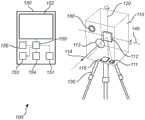
figures 1 and 2 illustrate a survey instrument according to some embodiments;
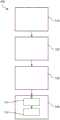
FIG. 3 is a flow diagram of a method for controlling a survey instrument according to an embodiment;
FIG. 4 illustrates an example of a data collection task queue employed by the method shown in FIG. 3;
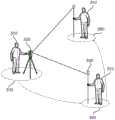
FIG. 5 illustrates how an operator may move between points of interest to perform geo-referenced measurements;
FIG. 6 is a flow diagram of a method for controlling a survey instrument to interrupt an ongoing data collection task in order to perform a geo-reference measurement, according to an embodiment;
FIG. 7 is a flow diagram of a method for controlling a survey instrument, wherein a user interface for defining additional data collection tasks is provided, according to an embodiment; and
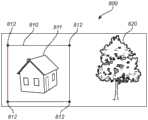
FIG. 8 illustrates an example user interface for defining additional data collection tasks to be performed by the survey instrument.
All the figures are schematic and generally only show parts which are necessary in order to elucidate the respective embodiments in general, while other parts may be omitted or merely suggested.
Detailed Description
FIG. 1 illustrates asurvey instrument 100 according to an embodiment. The surveyinginstrument 100 in this embodiment is aearth scanner 100 comprising ascanning head 110 rotatable about afirst axis 120. Thescanner 100 is arranged to perform measurements in different directions via the use of thescanning head 110. The measurements performed by thescanner 100 include distances and/or directions (or angles) to objects in the surroundings of thescanner 100. The different directions in which measurements may be performed may be referred to as the aiming directions of thescanner 100. Thescanner 100 may be mounted on atripod 130, for example. Thescanner 100 may, for example, include an electronic distance measuring device (EDM) for performing measurements.
Thescanning head 110 comprises alight source 111 for emitting light and anoptical element 112, such as a prism or a mirror, for directing the light through an opening (or objective) 113 of thescanning head 110. Depending on the orientation (rotation) of prism ormirror 112 and the orientation ofscan head 110, different aiming directions can be obtained.Light 114 exiting thescan head 110 through theopening 113 may be reflected on an object in the ambient environment of the scanner 100 (such as a target equipped with a prism or other reflective element and held by an operator), and may then be returned to thescan head 110 via theopening 113. Theoptical sensor 115 may receive the reflected light. Light received into thescan head 110 through theopening 113 may reach theoptical sensor 115, for example, via reflection off of theoptical element 112.
For example, the measurement may be performed using light in the form of laser pulses. Thelight source 111 may be, for example, a laser diode. The distance to objects in the environment may be calculated, for example, by a processor (not shown in fig. 1) disposed in thescanner 100. The distance to an object in the environment may be calculated based on time-of-flight measurements (i.e., based on the time that the laser pulse travels back and forth between thescanning head 110 and the object in the environment). Alternatively, the distance to objects in the environment may be calculated based on a phase modulation measurement method.
Further, although in the present embodiment a passive target is referred to in the sense that the target is provided with a reflective element (e.g. a prism) for reflecting the laser pulses, it should be understood that for some data collection tasks, such as e.g. tracking, the target may be an active target in the sense that the target is provided with a laser diode and may emit laser pulses itself, which may be detected by a surveying instrument.
Theoptical element 112 is rotatable about asecond axis 140, which may preferably be orthogonal to thefirst axis 120.First axis 120 is generally a vertical axis such thatscan head 110 may rotate in a horizontal plane. Thesecond axis 140 is a generally horizontal axis so that the elevation of the light 114 exiting thescan head 110 can be controlled. Rotation about these twoaxes beam 114 to exit thescan head 110 to scan the environment to obtain a 3D cloud of measurement points.
The measurement may include a distance to the target, but may also include a direction to the target. The direction may be defined via the angular position ofscanning head 110 in the horizontal plane (in other words, the angular position about vertical axis 120) and the elevation angle of light 114 exitingscanning head 110 via mirror 112 (in other words, the angular position about horizontal axis 140).Scanner 100 may, for example, include an angle sensor (not shown in fig. 1) for measuring the angular position ofscanning head 110 in a horizontal plane and the elevation angle provided byoptical element 112.
Thescanner 100 includes a controller 150 (or a control unit) for controlling thescanner 100. Thecontroller 150 may, for example, be provided as a separate device that is freely movable relative to the rest of thescanner 100, or may be an integral part of thescanner 100. Thecontroller 150 may be provided, for example, in the form of a handheld device, such as a mobile phone or tablet computer, which runs some software (such as a specially designed application) for controlling thescanner 100. Thecontroller 150 includes aninterface 151 for communicating with thescanner 100. Theinterface 151 may be, for example, a wired or wireless interface.
Thecontroller 150 may, for example, include ascreen 152 ordisplay 152 for displaying data collected by thescanner 100. Thecontroller 150 may, for example, include input means for receiving instructions, such as atouch screen 152, a pointing device, and/or one ormore buttons 153.Controller 150 may, for example, include adata interface 154 for receiving instructions from another device, such as a remote computer. The data interface 154 may be, for example, a wired or wireless interface. Thecontroller 150 may, for example, include aprocessor 156 connected to respective components of thecontroller 150.
Thescanner 100 may, for example, include acamera 160 for capturing images of its surroundings. Thecamera 160 may be arranged at thescanning head 110. As thescan head 110 rotates about thevertical axis 120, thecamera 160 may be configured to capture snapshots and/or may be able to capture panoramic views of its surroundings.
Fig. 2 illustrates a surveyinginstrument 200 according to an embodiment. The surveyinginstrument 200 in this embodiment is atotal station 200 comprising abase 210, analidade 220 mounted on thebase 210 for rotation about afirst axis 230, and a central unit 240 mounted on thealidade 220 for rotation about asecond axis 250. Thetotal station 200 is arranged to perform measurements in different directions (also referred to as aiming directions) via the use of a central unit 240.Total station 200 may be mounted ontripod 260, for example.Total station 200 may, for example, comprise an electronic distance measuring device (EDM) for performing measurements.
The central unit 240 may include a light source (not shown in fig. 2) for emitting light.Light 270 exiting central unit 240 may be reflected at target 1 (such as a prism held by operator 2). The reflected light 280 may return to the central unit 240 where it is received by an optical sensor (not shown in fig. 2). For example, the measurement may be performed using light in the form of laser pulses. The distance to target 1 may be calculated, for example, by a processor (not shown in fig. 2) arranged intotal station 200. The distance to objects in the environment can be calculated based on, for example, the time of flight of the laser pulse back and forth between the central unit 240 and the target 1 (seerays
The measurements may include distance, but may also include direction to the target. The direction may be defined via the angular position ofalidade 220 in the horizontal plane (in other words, the angular position about vertical axis 230) and the elevation angle of the light leaving central unit 240 (in other words, the angular position of central unit 240 about horizontal axis 250).Total station 200 may, for example, comprise an angle sensor (not shown in fig. 2) for measuring the angular position ofalidade 220 in the horizontal plane and the elevation angle provided by central unit 240.
Although measurements can be performed quickly in a large number of directions using scanner 100 (described above with reference to fig. 1), single point measurements can also be performed with greater accuracy using total station 200 (described with reference to fig. 2). One factor that can improve accuracy is the use of aspecial target 1, such as a corner cube, to reflect light rather than relying on reflection on an unknown surface of an unknown material. This may improve the signal-to-noise ratio.
Thetotal station 200 may, for example, comprise acontroller 150 of the same type as thecontroller 150 of thescanner 100 described above with reference to fig. 1.
It should be understood that in addition to performing a scan of the environment, thescanner 100 may also be configured, for example, to perform point measurements via reflection of a target equipped with, for example, a prism. It should also be understood thattotal station 200 may for example be configured to perform a scan of the environment, in addition to performing point measurements via reflection of a prism equipped target.
Fig. 3 is a flow diagram of amethod 300 for controlling a survey instrument according to an embodiment. The survey instrument is operable to perform different types of data collection tasks. At least one of the different types of data collection tasks includes measuring distance and/or angle (or direction). As described above with reference to fig. 1 and 2, the surveying instrument may be, for example, ascanner 100 or atotal station 200. Themethod 300 may be performed, for example, by the controller 150 (or by theprocessor 156 of the controller 150) described above with reference to fig. 1 and 2.
Themethod 300 includes: the survey instrument is controlled 310 to perform the one or more data collection tasks according to the queue of the one or more data collection tasks.
Fig. 4 illustrates an example of such a datacollection task queue 400. The data collection tasks in thequeue 400 may be of different types. The data collection tasks inqueue 400 may include, for example: ascanning operation 410 comprising measurements performed in a plurality of directions (the measurements for each direction may, for example, comprise a measured distance and an associated angle); point measurement using target 1 (such as a prism) 420; tracking 430 of target 1 (such as a prism or any other reflective target or an active target that itself emits laser pulses); apanoramic view 440 captured by cameras (such ascameras 160 and 290); or asnapshot 450 captured by a camera, such ascamera queue 400 also includes asecond scan operation 460. Thequeue 400 defines the order in which data collection tasks are to be performed by the survey instrument. Thequeue 400 may have been preprogrammed by an operator and/or may be edited by an operator while the survey instrument is performing data collection tasks. It should be understood that theparticular queue 400 shown in FIG. 4 is for example only. Thequeue 400 may include any number of data collection tasks that may be performed by the survey instrument, and the tasks in the queue may be arranged in any order.
Themethod 300 includes: during an ongoing data collection task or during an ongoing sequence of data collection tasks as defined by the queue, instructions are received 320 indicating additional data collection tasks to be performed by the survey instrument in addition to the data collection tasks already in the queue. An ongoing data collection task refers to a data collection task that is currently being performed by the survey instrument. The ongoing data collection sequence may for example comprise a delay. The instruction may be received, for example, during such a delay. The instruction may be received, for example, via thetouch screen 152, thebutton 153, or via thedata interface 154.
Themethod 300 includes the steps of: the survey instrument is controlled 330 to perform data collection tasks in an order determined based on the queue and the received instructions. In this embodiment, the controllingstep 330 includes: thecontrol 331 of the survey instrument interrupts the ongoing data collection task; controlling 332 the survey instrument to perform additional data collection tasks indicated by the received instructions; and after the additional data collection tasks have been completed, thecontrol 333 continues the interrupted data collection task with the survey instrument. In other words, the ongoing (or currently executing) data collection task is interrupted (or suspended or paused) when the instruction is received, and the indicated additional data collection task is executed before the interrupted task continues to execute. A more detailed example implementation of themethod 300 will be described below with reference to fig. 5 and 6.
A queue of data collection tasks, such as theexample queue 400 described above with reference to fig. 4, may be stored, for example, in thecontroller 150 of the survey instrument (e.g., in thememory 155 of the controller), or may be stored at a remote location, such as in a server or cloud. The queue may be dynamic in the sense that it can be modified during operation of the survey instrument. Data collection tasks may be added to, deleted from, or replaced within the queue, for example, by an operator viacontroller 150. Further, while the surveying instrument performs data collection tasks according to the task queue, the data collection tasks in the queue may be modified, for example, by changing the area to be covered by the scan, changing the density/resolution of the scan, changing the point at which point measurements are to be performed, or changing the zoom level of the image to be captured.
Once a survey instrument is placed in a certain position, reference measurements are typically performed to determine the position and orientation of the instrument. This position and orientation is then used to interpret the data from subsequent data collection tasks so that the data can be correctly placed in the common coordinate system. This is commonly referred to as a geographic reference. Fig. 5 illustrates how anoperator 510 may move between different locations (e.g., by walking or driving) to perform geo-referenced measurements. The distance and angle (or direction) measured for two different known positions is sufficient to calculate the position and orientation of the surveying instrument. Traditionally, theoperator 510 sets theinstrument 520 inposition 530 and then moves theobject 550, equipped with an optical reflecting element such as a prism, to afirst position 540. For example, the coordinates of thefirst location 540 may be determined via the use of a Global Navigation Satellite System (GNSS) receiver disposed at the target 550 (e.g., using the global positioning system GPS). A first measurement is then performed via reflection of thetarget 550 at thefirst location 540. Theoperator 510 then moves to thesecond position 560 and performs another measurement using thetarget 550. Once these georeferenced measurements (including distances and angles to these two known locations) have been performed, the position and orientation of the surveyinginstrument 520 may be calculated, and other data collection tasks may then be performed.
It may take some time for theoperator 510 to move between thedifferent locations
FIG. 6 is a flow diagram of amethod 600 for controlling asurvey instrument 520 to interrupt an ongoing data collection task in order to perform a geo-reference measurement, under an embodiment. Themethod 600 may be viewed as an example implementation of themethod 300 described above with reference to fig. 3.
Theoperator 510 positions (or sets) 610 thesurvey instrument 520 in anappropriate location 530. This may include adjusting the orientation of thesurvey instrument 520 so that thesurvey instrument 520 is properly aligned with respect to the horizontal plane.
Once thesurvey instrument 520 has been properly positioned, the survey instrument can be controlled 620 to perform data collection tasks according to the queue of data collection tasks. For example, this may include initiating a relatively time consuming task, such as an environmental scan, in which EDM measurements are performed to obtain a 3D cloud of measurement points. Another example of a relatively time consuming task may be using a camera mounted on thesurvey instrument 520 to capture a panoramic view of the environment. Step 620 ofmethod 600 may correspond to step 310 inmethod 300 described above with reference to fig. 3.
While thesurvey instrument 520 is performing data collection tasks, theoperator 510 moves, for example by walking, to thefirst location 540. When the operator reaches thefirst location 540, theoperator 510 may indicate to the survey instrument 520 (e.g., via the controller 150) that a geo-reference measurement is now to be performed. For example, the instructions may be given by pressing abutton 153 of thecontroller 150 of thesurvey instrument 520 or entering commands via thecontroller 150. Thus, thecontroller 150 receives 630 an instruction during an ongoing task (such as scanning) indicating that a point measurement is to be performed. Thisstep 630 corresponds to step 320 ofmethod 300 described above with reference to fig. 3.
The ongoing data collection task is then interrupted 641, the point measurement is performed 642, and then the interrupted data collection task is continued 643. Thesesteps 641 to 643 may correspond tosteps 331 to 333 of themethod 300 described above with reference to fig. 3. The ability to interrupt an ongoing data collection task is particularly useful in situations where the ongoing task is very time consuming (e.g., scanning a large area in detail). By interrupting the scan when theoperator 510 has reached thefirst location 540, theoperator 510 does not have to wait a long time for the time consuming task to be completed. Instead, more or less spot measurements can be performed immediately. Further, by starting the scanning immediately after the surveying instrument has been installed, the utilization of the surveying instrument may be increased, since the data collection task may be performed more or less in parallel or simultaneously with the process for georeferencing, even though the scanning may have to be (temporarily) interrupted to perform some single point measurements at a certain number of known locations.
Theoperator 510 then moves to thesecond location 560 while thesurvey instrument 520 continues the ongoing data collection task. When the operator reaches thesecond position 560, the same process as thefirst position 540 is repeated. Theoperator 510 inputs that the geo-referenced measurement is now being performed. Thus, thecontroller 150 receives 650 an instruction during an ongoing task (such as scanning) indicating that a point measurement is to be performed. The ongoing data collection task is then interrupted 661, the 662 point measurement is performed, and then the interrupted data collection task is continued 663.
Once point measurements for thefirst location 540 and thesecond location 560 are obtained, the position and orientation of thesurvey instrument 510 may be calculated 670. In this manner, geo-referencing of data collected by thesurvey instrument 520 may be performed in a retrospective manner. Further point measurements may be performed for more accurate positioning.
Themethod 600 allows thesurvey instrument 520 to perform measurements (and/or capture images) while theoperator 510 is moving between different locations. Thus, the surveyinginstrument 520 may be used more efficiently and time may be saved.
It should be understood that the scan and panoramic views are merely examples of data collection tasks that may be performed whileoperator 520 moves betweenlocations survey instrument 510 while theoperator 510 is moving. It should also be understood that the operator may move between different locations by other means than walking, such as by driving a vehicle. The operator may be, for example, a human or a robot.
Fig. 7 is a flow chart of amethod 700 for controlling a surveying instrument such as thescanner 100 or thetotal station 200 described above with reference to fig. 1 and 2.Method 700 is similar tomethod 300 described above with reference to FIG. 3, but rather than interrupting an ongoing task to launch a new task, the new task is placed in a queue of data collection tasks. Themethod 700 may be performed, for example, by the control portion 150 (or theprocessor 156 of the controller 150) described above with reference to fig. 1 and 2.
Themethod 700 comprises: the survey instrument is controlled 710 to perform the one or more data collection tasks according to the queue of one or more data collection tasks. This may correspond to step 310 ofmethod 300 described above with reference to fig. 3.
Themethod 700 comprises: during an ongoing data collection task or during an ongoing sequence of data collection tasks, instructions are received 730 indicating additional data collection tasks to be performed by the survey instrument in addition to one or more data collection tasks already in the queue. This may correspond to step 320 ofmethod 300 described above with reference to fig. 3.
Themethod 700 comprises: the survey instrument is controlled 740 to perform data collection tasks in an order determined based on the queue and the received instructions. In contrast to step 330 of method 300 (where the ongoing task is interrupted) described above with reference to fig. 3,step 740 comprises: modifying 741 the queue by including in the queue an additional data collection task indicated by the received instruction; and controlling 742 the survey instrument to perform data collection tasks according to the modified queue. For example, an additional data collection task may be placed first in the queue so that it is executed immediately upon completion of the ongoing task. Alternatively, the additional task may be placed in the last bit of the data collection task queue.
Conventionally, a data collection task such as scanning of a specific area may be defined by an operator while observing the surroundings of a surveying instrument in real time by a camera mounted on the surveying instrument. However, since the camera is mounted on the surveying instrument, the surveying instrument cannot be used for such purposes while it is performing other data collection tasks, such as scanning, in which case the surveying instrument (and thus the rotating camera) is being rotated.
The inventors have recognized that while the surveying instrument is performing a data collection task, data collected by the surveying instrument (such as an image captured by a camera or a 3D cloud measured from a scanned point) may be employed to define a new data collection task. Thus, inmethod 700, a user interface may be provided 720 during an ongoing data collection task. In this embodiment, the user interface allows the operator to define additional data collection tasks based on data previously collected by the survey instrument. When the operator defines the additional data collection task via the user interface, thecontroller 150 may receive 730 an instruction indicating that the additional data collection task is to be performed.
Embodiments are contemplated in which a user interface for defining additional data collection tasks is provided 720 during an ongoing data collection task, and instructions indicating that additional data collection tasks are to be performed may actually be received 730 by thecontroller 150 after the ongoing data collection task has been completed. For example, instructions may be received during a delay between tasks in an ongoing data collection task sequence, where the task sequence is defined by a queue.
FIG. 8 illustrates anexample user interface 800 for defining additional data collection tasks to be performed by a survey instrument. In this example, the initial image or panoramic view obtained by the survey instrument includes a region ofinterest 810 that includes abuilding 811. Thetree 820 is also visible, but outside the region ofinterest 810. Such previously collected data may be used to define additional data collection tasks to be performed. The operator may wish to obtain a close-up photograph of building 811 or a detailed scan of building 811. A visual display, such as thedisplay 152 of thecontroller 150 described above with reference to fig. 1, may be controlled to visualize data previously collected by the survey instrument. The operator may then define where to perform the measurement or capture the image on the display. For example, the operator may use a mouse pointer and/or buttons to indicate on the display where to take measurements or take photographs. Alternatively, the display may be a touch screen display on which the user may indicate a region of interest to be covered by a detailed scan or to be covered by a close-up photograph. In other words, theuser interface 800 allows a user to define a targeting direction of a surveying instrument for which sensor signals (e.g., EDM signals or camera signals) are acquired as part of additional data collection tasks. Theuser interface 800 may, for example, be capable of visualizing a 3D cloud of point measurements so that an operator may define additional data collection tasks based on such previously collected point measurements. For example, the operator may indicate thearea 810 to scan by indicating acorner 812 of thearea 810 on a visual display. For example, theuser interface 800 described with reference to FIG. 8 may be provided 720 during an ongoing data collection task, as instep 720 ofmethod 700.
In an example scenario, the operator may first set up the survey instrument and then have the survey instrument capture a fast panoramic view at a relatively low resolution using a wide-angle camera. The operator may then cause the surveying instrument to scan the environment. During scanning, an operator may use theinterface 800 to define points at which high precision camera images are to be captured. Points may be defined based on data from the panorama and/or the scan in progress. The task of collecting these high precision images can be performed either immediately via an interrupt or it can be put into a queue for the data collection task to be performed after the ongoing scan is completed.
Theuser interface 800 may be used, for example, to:
using data from a previous scan to define a more detailed scan of an already scanned region;
using data from the initial scan to define a point measurement for the point of interest, the point measurement having a higher accuracy than at the initial scan; or
Using data from previous scans or panoramic views to define a high precision image to be captured by the camera.
A user sitting at a remote office may for example analyze the data collected by the surveying instrument, may define new data collection tasks to be performed by the surveying instrument (in real time), and may also add these tasks to the queue. The remote user may communicate with the survey instrument, for example, via a wired or wireless data connection.
A user analyzing data collected by a survey instrument may, for example, detect a need to adjust a setting of the survey instrument or a need to recalibrate the survey instrument. The user may then interrupt the ongoing data collection task to adjust settings or perform calibration.
The person skilled in the art realizes that the present invention by no means is limited to the preferred embodiments described above. On the contrary, many modifications and variations are possible within the scope of the appended claims. For example, thescanner 100 andtotal station 200 described above with reference to fig. 1 and 2 are only used as examples of surveying instruments. It should be understood that the methods disclosed herein may also be used with other types of survey instruments configured to perform different types of data collection tasks. It should also be understood that the specific data collection tasks mentioned herein are merely examples. For example, more or less any type of data collection task performed by the survey instrument may be interrupted so that another task may be performed by the survey instrument.
In addition, variations to the disclosed embodiments can be understood and effected by those skilled in the art in practicing the claimed invention, from a study of the drawings, the disclosure, and the appended claims. In the claims, the word "comprising" does not exclude other elements or steps, and the indefinite article "a" or "an" does not exclude a plurality. The division of tasks between functional units referred to in this disclosure does not necessarily correspond to the division into a plurality of physical units; rather, one physical component may have multiple functions, and one task may be performed in a distributed manner by several physical components cooperating. A computer program may be stored/distributed on a suitable medium, such as an optical storage medium or a solid-state medium supplied together with or as part of other hardware, but may also be distributed in other forms, such as via the internet or other wired or wireless telecommunication systems. The mere fact that certain measures are recited in mutually different dependent claims does not indicate that a combination of these measures cannot be used to advantage. Any reference signs in the claims shall not be construed as limiting the scope.
Claims (20)
1. A method (300, 600, 700) of controlling a surveying instrument (100, 200) operable to perform different types of data collection tasks, wherein at least one of the different types of data collection tasks comprises measuring a distance and/or a direction to a target, the method comprising:
controlling (310) the surveying instrument to perform one or more data collection tasks according to a queue (400) of one or more data collection tasks, the queue including data collection tasks (410) of at least one of the different types of data collection tasks;
receiving (320), during an ongoing data collection task or during an ongoing sequence of data collection tasks as defined by the queue, instructions indicative of additional data collection tasks to be performed by the survey instrument in addition to one or more data collection tasks already in the queue; and
the survey instrument is controlled (330) to perform data collection tasks in an order determined based on the queue and the received instructions.
2. The method of claim 1, wherein controlling the survey instrument to perform data collection tasks in an order determined based on the queue and the received instructions comprises:
controlling (331) the surveying instrument to interrupt the ongoing data collection task;
controlling (332) the surveying instrument to perform additional data collection tasks indicated by the received instructions; and
after the additional data collection tasks have been completed, the survey instrument is controlled (333) to continue with the interrupted data collection tasks.
3. The method of claim 1, wherein controlling the survey instrument to perform data collection tasks in an order determined based on the queue and the received instructions comprises:
modifying (741) the queue by including at least an additional data collection task indicated by the received instruction in the queue; and
the survey instrument is controlled (742) to perform data collection tasks according to the modified queue.
4. The method of any of the preceding claims, wherein the additional data collection task indicated by the received instruction comprises:
measuring a distance to the target;
measuring a direction to a target;
capturing a picture via a camera (160, 290); or
The target (1, 550) is tracked.
5. The method of any of the preceding claims, wherein the ongoing data collection task is one that takes longer to complete than additional data collection tasks indicated by the received instructions.
6. The method of any of the preceding claims, wherein the ongoing data collection task comprises a scanning operation comprising a plurality of measurements corresponding to respective different aiming directions of the surveying instrument, and wherein the additional data collection task indicated by the received instruction comprises a measurement of higher precision than the measurement of the scanning operation.
7. The method of any of the preceding claims, wherein the additional data collection task indicated by the received instruction comprises measuring a distance and/or a direction to a target (1, 550) located at a known position, and wherein the method further comprises:
based on data collected at additional data collection tasks indicated by the received instructions, an orientation and/or position of the survey instrument is calculated (670).
8. The method of any of the preceding claims, further comprising:
during the ongoing data collection task or during an ongoing sequence of data collection tasks, a user interface (800) is provided (720) for defining additional data collection tasks indicated by the received instructions based on data previously collected by the survey instrument.
9. The method of claim 8, wherein the user interface is provided for defining one or more targeting directions of the survey instrument for which sensor signals are acquired as part of the additional data collection task based on data previously collected by the survey instrument.
10. The method of any one of claims 8-9, wherein providing the user interface includes controlling a display (152) to visualize the data previously collected by the survey instrument.
11. The method of any one of the preceding claims, wherein the ongoing data collection task comprises acquiring a series of sensor signals corresponding to respective different aiming directions of the surveying instrument.
12. The method of claim 11, wherein the sensor signals comprise:
a distance measurement signal;
an angle measurement signal; or
An image signal captured by a camera (160, 290).
13. The method of any one of the preceding claims, wherein controlling the surveying instrument to perform one or more data collection tasks according to the queue comprises:
the survey instrument is controlled to perform one or more data collection tasks in an order defined by the queue.
14. The method of any of the preceding claims, further comprising:
based on the queue and the received instructions, an order in which the survey instrument performs data collection tasks is determined.
15. The method of any one of the preceding claims, comprising:
receiving a second instruction during an ongoing data collection task or during an ongoing sequence of data collection tasks as defined by the queue;
modifying the queue by modifying at least a data collection task in the queue or deleting a data collection task from the queue in response to the second instruction; and
the survey instrument is controlled to perform data collection tasks according to the modified queue.
16. A computer program product comprising a computer readable medium having instructions for performing any of the methods recited in claims 1-15.
17. A controller (150) for controlling a surveying instrument (100, 200) operable to perform different types of data collection tasks, wherein at least one of the types of data collection tasks comprises measuring a distance and/or direction to a target, the controller being configured to:
controlling the surveying instrument to perform one or more data collection tasks according to a queue (400) of one or more data collection tasks, the queue comprising data collection tasks (410) of at least one of the types of data collection tasks;
receiving instructions indicative of additional data collection tasks to be performed by the survey instrument in addition to the data collection tasks already in the queue, during an ongoing data collection task or during an ongoing sequence of data collection tasks as defined by the queue; and
the survey instrument is controlled to perform data collection tasks in an order determined based on the queue and the received instructions.
18. A surveying instrument (100, 200) comprising:
one or more sensors (115, 160, 290) for performing different types of data collection tasks, wherein at least one of these types of data collection tasks comprises measuring a distance and/or direction to a target; and
a controller as defined in claim 17.
19. The surveying instrument of claim 18, comprising:
a scan head (110) rotatable about an axis (120),
wherein the surveying instrument is arranged to perform measurements in different directions via use of the scanning head.
20. The surveying instrument of claim 18, comprising:
a base (210);
an alidade (220) mounted on the base for rotation about a first axis (230); and a central unit (240) mounted on the alidade to rotate about a second axis (250), wherein the surveying instrument is arranged to perform measurements in different directions via use of the central unit.
Applications Claiming Priority (1)
| Application Number | Priority Date | Filing Date | Title |
|---|---|---|---|
| PCT/EP2017/074403WO2019063065A1 (en) | 2017-09-26 | 2017-09-26 | Queue of data collection tasks for surveying instrument |
Publications (2)
| Publication Number | Publication Date |
|---|---|
| CN111094892Atrue CN111094892A (en) | 2020-05-01 |
| CN111094892B CN111094892B (en) | 2022-06-24 |
Family
ID=60022069
Family Applications (1)
| Application Number | Title | Priority Date | Filing Date |
|---|---|---|---|
| CN201780094931.4AActiveCN111094892B (en) | 2017-09-26 | 2017-09-26 | Data collection task queue for a surveying instrument |
Country Status (4)
| Country | Link |
|---|---|
| US (1) | US20200217661A1 (en) |
| EP (1) | EP3688410B1 (en) |
| CN (1) | CN111094892B (en) |
| WO (1) | WO2019063065A1 (en) |
Citations (30)
| Publication number | Priority date | Publication date | Assignee | Title |
|---|---|---|---|---|
| JPH08178652A (en)* | 1994-12-26 | 1996-07-12 | Furuno Electric Co Ltd | Surveying device |
| US5940612A (en)* | 1995-09-27 | 1999-08-17 | International Business Machines Corporation | System and method for queuing of tasks in a multiprocessing system |
| US6493650B1 (en)* | 2000-01-27 | 2002-12-10 | Optimus Corporation | Device for automatic documentation of crash scenes |
| WO2003027610A1 (en)* | 2001-08-29 | 2003-04-03 | Robert Bosch Gmbh | Manual appliance for contactless distance measurement |
| US20030121673A1 (en)* | 1999-07-14 | 2003-07-03 | Kacyra Ben K. | Advanced applications for 3-D autoscanning LIDAR system |
| CN1461403A (en)* | 2000-09-23 | 2003-12-10 | Sht株式会社 | Level and/or verticality indicator using laser beams |
| US20050125770A1 (en)* | 2003-11-13 | 2005-06-09 | Arsenault Stephane M. | Method and system for surveying and modeling a site |
| CN1808931A (en)* | 2005-01-18 | 2006-07-26 | 中兴通讯股份有限公司 | Multi-point data acquisition and transmission apparatus and method for intelligent antenna system |
| CN1829899A (en)* | 2003-07-28 | 2006-09-06 | 莱卡地球系统公开股份有限公司 | Method for checking or calibrating angle-dependent alignment of high-precision test pieces |
| CN101061393A (en)* | 2004-11-19 | 2007-10-24 | 莱卡地球系统公开股份有限公司 | Method for determining the orientation of an orientation indicator |
| CN200982861Y (en)* | 2006-05-18 | 2007-11-28 | 天津欧波精密仪器股份有限公司 | Direct storage type electronic theodolite |
| CN101595365A (en)* | 2007-01-25 | 2009-12-02 | 特林布尔公司 | The prediction algorithm that is used for sweep object |
| WO2010040007A2 (en)* | 2008-10-01 | 2010-04-08 | A-Tech Corporation | Method and apparatus for precision azimuth measurement |
| US20100205031A1 (en)* | 2009-02-10 | 2010-08-12 | Certusview Technologies, Llc | Methods, apparatus, and systems for exchanging information between excavators and other entities associated with underground facility locate and marking operations |
| CN201575809U (en)* | 2009-12-11 | 2010-09-08 | 北京师范大学 | A remote sensing imaging system |
| CN101932906A (en)* | 2008-02-12 | 2010-12-29 | 特林布尔公司 | Localization of a surveying instrument in relation to a ground mark |
| CN101960256A (en)* | 2008-02-29 | 2011-01-26 | 特林布尔公司 | Automatic Calibration of Measuring Instruments |
| US20110067250A1 (en)* | 2009-09-18 | 2011-03-24 | Trimble Jena Gmbh | Surveying instrument and a method therefor |
| CN102341671A (en)* | 2009-03-06 | 2012-02-01 | 莱卡地球系统公开股份有限公司 | Geodesic measurement system and method for identifying a target unit having a geodesic measurement device |
| CN102362481A (en)* | 2009-02-23 | 2012-02-22 | 特拉内国际有限公司 | Log collection data harvester for use in building automation system |
| CN102620710A (en)* | 2012-04-18 | 2012-08-01 | 赵广超 | Method and system for measuring and calculating data |
| CN103162663A (en)* | 2011-12-19 | 2013-06-19 | 株式会社拓普康 | Rotation angle detecting apparatus and surveying instrument |
| US20130268199A1 (en)* | 2009-08-11 | 2013-10-10 | Certusview Technologies, Llc | Locating equipment communicatively coupled to or equipped with a mobile/portable device |
| CN103592943A (en)* | 2005-03-14 | 2014-02-19 | 天宝导航有限公司 | Method and apparatus for machine element control |
| CN103608646A (en)* | 2011-06-20 | 2014-02-26 | 索尤若驱动有限及两合公司 | Method and device for the cyclic digital transmission of a position value of a moving object with inertial mass |
| CN103733024A (en)* | 2011-08-11 | 2014-04-16 | 莱卡地球系统公开股份有限公司 | Surveying appliance and method having a targeting functionality which is based on the orientation of a remote control unit and is scalable |
| CN104061862A (en)* | 2014-06-12 | 2014-09-24 | 北京航天发射技术研究所 | Remote displacement measurement system based on position sensor |
| CN104913763A (en)* | 2014-03-14 | 2015-09-16 | 莱卡地球系统公开股份有限公司 | Method for generating a spatial model and handheld distance measuring device |
| CN105452895A (en)* | 2013-06-13 | 2016-03-30 | 巴斯夫欧洲公司 | Detector for optically detecting at least one object |
| CN105606076A (en)* | 2014-11-14 | 2016-05-25 | 莱卡地球系统公开股份有限公司 | Geodetic surveying system |
Family Cites Families (4)
| Publication number | Priority date | Publication date | Assignee | Title |
|---|---|---|---|---|
| GB0519981D0 (en)* | 2005-09-30 | 2005-11-09 | Ignios Ltd | Scheduling in a multicore architecture |
| US20130066944A1 (en)* | 2011-09-13 | 2013-03-14 | International Business Machines Corporation | Social gathering of distributed knowledge |
| CN104065431B (en)* | 2014-04-18 | 2016-08-31 | 西华大学 | Task execution and monitoring method for radio monitoring unattended system |
| US9903950B2 (en)* | 2014-08-27 | 2018-02-27 | Leica Geosystems Ag | Multi-camera laser scanner |
- 2017
- 2017-09-26EPEP17780350.9Apatent/EP3688410B1/enactiveActive
- 2017-09-26WOPCT/EP2017/074403patent/WO2019063065A1/ennot_activeCeased
- 2017-09-26CNCN201780094931.4Apatent/CN111094892B/enactiveActive
- 2020
- 2020-03-16USUS16/820,272patent/US20200217661A1/enactivePending
Patent Citations (30)
| Publication number | Priority date | Publication date | Assignee | Title |
|---|---|---|---|---|
| JPH08178652A (en)* | 1994-12-26 | 1996-07-12 | Furuno Electric Co Ltd | Surveying device |
| US5940612A (en)* | 1995-09-27 | 1999-08-17 | International Business Machines Corporation | System and method for queuing of tasks in a multiprocessing system |
| US20030121673A1 (en)* | 1999-07-14 | 2003-07-03 | Kacyra Ben K. | Advanced applications for 3-D autoscanning LIDAR system |
| US6493650B1 (en)* | 2000-01-27 | 2002-12-10 | Optimus Corporation | Device for automatic documentation of crash scenes |
| CN1461403A (en)* | 2000-09-23 | 2003-12-10 | Sht株式会社 | Level and/or verticality indicator using laser beams |
| WO2003027610A1 (en)* | 2001-08-29 | 2003-04-03 | Robert Bosch Gmbh | Manual appliance for contactless distance measurement |
| CN1829899A (en)* | 2003-07-28 | 2006-09-06 | 莱卡地球系统公开股份有限公司 | Method for checking or calibrating angle-dependent alignment of high-precision test pieces |
| US20050125770A1 (en)* | 2003-11-13 | 2005-06-09 | Arsenault Stephane M. | Method and system for surveying and modeling a site |
| CN101061393A (en)* | 2004-11-19 | 2007-10-24 | 莱卡地球系统公开股份有限公司 | Method for determining the orientation of an orientation indicator |
| CN1808931A (en)* | 2005-01-18 | 2006-07-26 | 中兴通讯股份有限公司 | Multi-point data acquisition and transmission apparatus and method for intelligent antenna system |
| CN103592943A (en)* | 2005-03-14 | 2014-02-19 | 天宝导航有限公司 | Method and apparatus for machine element control |
| CN200982861Y (en)* | 2006-05-18 | 2007-11-28 | 天津欧波精密仪器股份有限公司 | Direct storage type electronic theodolite |
| CN101595365A (en)* | 2007-01-25 | 2009-12-02 | 特林布尔公司 | The prediction algorithm that is used for sweep object |
| CN101932906A (en)* | 2008-02-12 | 2010-12-29 | 特林布尔公司 | Localization of a surveying instrument in relation to a ground mark |
| CN101960256A (en)* | 2008-02-29 | 2011-01-26 | 特林布尔公司 | Automatic Calibration of Measuring Instruments |
| WO2010040007A2 (en)* | 2008-10-01 | 2010-04-08 | A-Tech Corporation | Method and apparatus for precision azimuth measurement |
| US20100205031A1 (en)* | 2009-02-10 | 2010-08-12 | Certusview Technologies, Llc | Methods, apparatus, and systems for exchanging information between excavators and other entities associated with underground facility locate and marking operations |
| CN102362481A (en)* | 2009-02-23 | 2012-02-22 | 特拉内国际有限公司 | Log collection data harvester for use in building automation system |
| CN102341671A (en)* | 2009-03-06 | 2012-02-01 | 莱卡地球系统公开股份有限公司 | Geodesic measurement system and method for identifying a target unit having a geodesic measurement device |
| US20130268199A1 (en)* | 2009-08-11 | 2013-10-10 | Certusview Technologies, Llc | Locating equipment communicatively coupled to or equipped with a mobile/portable device |
| US20110067250A1 (en)* | 2009-09-18 | 2011-03-24 | Trimble Jena Gmbh | Surveying instrument and a method therefor |
| CN201575809U (en)* | 2009-12-11 | 2010-09-08 | 北京师范大学 | A remote sensing imaging system |
| CN103608646A (en)* | 2011-06-20 | 2014-02-26 | 索尤若驱动有限及两合公司 | Method and device for the cyclic digital transmission of a position value of a moving object with inertial mass |
| CN103733024A (en)* | 2011-08-11 | 2014-04-16 | 莱卡地球系统公开股份有限公司 | Surveying appliance and method having a targeting functionality which is based on the orientation of a remote control unit and is scalable |
| CN103162663A (en)* | 2011-12-19 | 2013-06-19 | 株式会社拓普康 | Rotation angle detecting apparatus and surveying instrument |
| CN102620710A (en)* | 2012-04-18 | 2012-08-01 | 赵广超 | Method and system for measuring and calculating data |
| CN105452895A (en)* | 2013-06-13 | 2016-03-30 | 巴斯夫欧洲公司 | Detector for optically detecting at least one object |
| CN104913763A (en)* | 2014-03-14 | 2015-09-16 | 莱卡地球系统公开股份有限公司 | Method for generating a spatial model and handheld distance measuring device |
| CN104061862A (en)* | 2014-06-12 | 2014-09-24 | 北京航天发射技术研究所 | Remote displacement measurement system based on position sensor |
| CN105606076A (en)* | 2014-11-14 | 2016-05-25 | 莱卡地球系统公开股份有限公司 | Geodetic surveying system |
Non-Patent Citations (1)
| Title |
|---|
| 黄钊等: "数字化测图在地理信息系统数据获取的应用", 《广西师范学院学报(自然科学版)》* |
Also Published As
| Publication number | Publication date |
|---|---|
| EP3688410B1 (en) | 2021-12-29 |
| US20200217661A1 (en) | 2020-07-09 |
| CN111094892B (en) | 2022-06-24 |
| WO2019063065A1 (en) | 2019-04-04 |
| EP3688410A1 (en) | 2020-08-05 |
Similar Documents
| Publication | Publication Date | Title |
|---|---|---|
| CN105606077B (en) | Geodetic Measuring System | |
| US8699005B2 (en) | Indoor surveying apparatus | |
| US8085387B2 (en) | Optical instrument and method for obtaining distance and image information | |
| CN101636632B (en) | Optical instrument and method for obtaining distance and image information | |
| CN104515514B (en) | Measuring Method And Measuring Instrument | |
| JP2006520891A (en) | Method and apparatus for image processing in surveying instrument | |
| CN104613946A (en) | Three-dimensional measuring method and surveying system | |
| JP2008527360A (en) | At least one target surveying method and geodetic apparatus | |
| JP6823482B2 (en) | 3D position measurement system, 3D position measurement method, and measurement module | |
| EP3353492B1 (en) | Device and method to locate a measurement point with an image capture device | |
| JP2022023592A (en) | Surveying system, surveying method and surveying program | |
| JP4077385B2 (en) | Global coordinate acquisition device using image processing | |
| JP7565822B2 (en) | Three-dimensional position measuring system, measuring method, and measuring program | |
| JP7161298B2 (en) | target device, surveying system | |
| JP2018146524A (en) | Survey system | |
| CN113906481A (en) | Imaging display method, remote control terminal, device, system and storage medium | |
| CN115808161A (en) | Measurement data processing device, measurement data processing method, and measurement data processing program | |
| CN111094892B (en) | Data collection task queue for a surveying instrument | |
| US12117564B2 (en) | Scanning surveying system | |
| CN112672134B (en) | Three-dimensional information acquisition control equipment and method based on mobile terminal | |
| JP7699008B2 (en) | Survey data processing device, survey data processing method, and survey data processing program | |
| JP7169757B2 (en) | surveying equipment, surveying method | |
| JP2024110640A (en) | OPTICAL DATA PROCESSING APPARATUS, OPTICAL DATA PROCESSING METHOD, AND OPTICAL DATA PROCESSING PROGRAM | |
| JP2025154654A (en) | 3D data measurement system using measurement modules | |
| WO2024084873A1 (en) | Photographing method and image processing method |
Legal Events
| Date | Code | Title | Description |
|---|---|---|---|
| PB01 | Publication | ||
| PB01 | Publication | ||
| SE01 | Entry into force of request for substantive examination | ||
| SE01 | Entry into force of request for substantive examination | ||
| GR01 | Patent grant | ||
| GR01 | Patent grant |