CN111027420A - System and method for imitating a preceding vehicle - Google Patents
System and method for imitating a preceding vehicleDownload PDFInfo
- Publication number
- CN111027420A CN111027420ACN201911163613.6ACN201911163613ACN111027420ACN 111027420 ACN111027420 ACN 111027420ACN 201911163613 ACN201911163613 ACN 201911163613ACN 111027420 ACN111027420 ACN 111027420A
- Authority
- CN
- China
- Prior art keywords
- vehicle
- lane
- processing unit
- images
- image capture
- Prior art date
- Legal status (The legal status is an assumption and is not a legal conclusion. Google has not performed a legal analysis and makes no representation as to the accuracy of the status listed.)
- Granted
Links
Images















Classifications
- B—PERFORMING OPERATIONS; TRANSPORTING
- B60—VEHICLES IN GENERAL
- B60W—CONJOINT CONTROL OF VEHICLE SUB-UNITS OF DIFFERENT TYPE OR DIFFERENT FUNCTION; CONTROL SYSTEMS SPECIALLY ADAPTED FOR HYBRID VEHICLES; ROAD VEHICLE DRIVE CONTROL SYSTEMS FOR PURPOSES NOT RELATED TO THE CONTROL OF A PARTICULAR SUB-UNIT
- B60W30/00—Purposes of road vehicle drive control systems not related to the control of a particular sub-unit, e.g. of systems using conjoint control of vehicle sub-units
- B60W30/18—Propelling the vehicle
- B60W30/18009—Propelling the vehicle related to particular drive situations
- B60W30/18163—Lane change; Overtaking manoeuvres
- B—PERFORMING OPERATIONS; TRANSPORTING
- B60—VEHICLES IN GENERAL
- B60K—ARRANGEMENT OR MOUNTING OF PROPULSION UNITS OR OF TRANSMISSIONS IN VEHICLES; ARRANGEMENT OR MOUNTING OF PLURAL DIVERSE PRIME-MOVERS IN VEHICLES; AUXILIARY DRIVES FOR VEHICLES; INSTRUMENTATION OR DASHBOARDS FOR VEHICLES; ARRANGEMENTS IN CONNECTION WITH COOLING, AIR INTAKE, GAS EXHAUST OR FUEL SUPPLY OF PROPULSION UNITS IN VEHICLES
- B60K31/00—Vehicle fittings, acting on a single sub-unit only, for automatically controlling vehicle speed, i.e. preventing speed from exceeding an arbitrarily established velocity or maintaining speed at a particular velocity, as selected by the vehicle operator
- B60K31/0066—Vehicle fittings, acting on a single sub-unit only, for automatically controlling vehicle speed, i.e. preventing speed from exceeding an arbitrarily established velocity or maintaining speed at a particular velocity, as selected by the vehicle operator responsive to vehicle path curvature
- B—PERFORMING OPERATIONS; TRANSPORTING
- B60—VEHICLES IN GENERAL
- B60T—VEHICLE BRAKE CONTROL SYSTEMS OR PARTS THEREOF; BRAKE CONTROL SYSTEMS OR PARTS THEREOF, IN GENERAL; ARRANGEMENT OF BRAKING ELEMENTS ON VEHICLES IN GENERAL; PORTABLE DEVICES FOR PREVENTING UNWANTED MOVEMENT OF VEHICLES; VEHICLE MODIFICATIONS TO FACILITATE COOLING OF BRAKES
- B60T13/00—Transmitting braking action from initiating means to ultimate brake actuator with power assistance or drive; Brake systems incorporating such transmitting means, e.g. air-pressure brake systems
- B60T13/10—Transmitting braking action from initiating means to ultimate brake actuator with power assistance or drive; Brake systems incorporating such transmitting means, e.g. air-pressure brake systems with fluid assistance, drive, or release
- B60T13/66—Electrical control in fluid-pressure brake systems
- B60T13/662—Electrical control in fluid-pressure brake systems characterised by specified functions of the control system components
- B—PERFORMING OPERATIONS; TRANSPORTING
- B60—VEHICLES IN GENERAL
- B60T—VEHICLE BRAKE CONTROL SYSTEMS OR PARTS THEREOF; BRAKE CONTROL SYSTEMS OR PARTS THEREOF, IN GENERAL; ARRANGEMENT OF BRAKING ELEMENTS ON VEHICLES IN GENERAL; PORTABLE DEVICES FOR PREVENTING UNWANTED MOVEMENT OF VEHICLES; VEHICLE MODIFICATIONS TO FACILITATE COOLING OF BRAKES
- B60T7/00—Brake-action initiating means
- B60T7/12—Brake-action initiating means for automatic initiation; for initiation not subject to will of driver or passenger
- B—PERFORMING OPERATIONS; TRANSPORTING
- B60—VEHICLES IN GENERAL
- B60T—VEHICLE BRAKE CONTROL SYSTEMS OR PARTS THEREOF; BRAKE CONTROL SYSTEMS OR PARTS THEREOF, IN GENERAL; ARRANGEMENT OF BRAKING ELEMENTS ON VEHICLES IN GENERAL; PORTABLE DEVICES FOR PREVENTING UNWANTED MOVEMENT OF VEHICLES; VEHICLE MODIFICATIONS TO FACILITATE COOLING OF BRAKES
- B60T7/00—Brake-action initiating means
- B60T7/12—Brake-action initiating means for automatic initiation; for initiation not subject to will of driver or passenger
- B60T7/22—Brake-action initiating means for automatic initiation; for initiation not subject to will of driver or passenger initiated by contact of vehicle, e.g. bumper, with an external object, e.g. another vehicle, or by means of contactless obstacle detectors mounted on the vehicle
- B—PERFORMING OPERATIONS; TRANSPORTING
- B60—VEHICLES IN GENERAL
- B60T—VEHICLE BRAKE CONTROL SYSTEMS OR PARTS THEREOF; BRAKE CONTROL SYSTEMS OR PARTS THEREOF, IN GENERAL; ARRANGEMENT OF BRAKING ELEMENTS ON VEHICLES IN GENERAL; PORTABLE DEVICES FOR PREVENTING UNWANTED MOVEMENT OF VEHICLES; VEHICLE MODIFICATIONS TO FACILITATE COOLING OF BRAKES
- B60T8/00—Arrangements for adjusting wheel-braking force to meet varying vehicular or ground-surface conditions, e.g. limiting or varying distribution of braking force
- B60T8/32—Arrangements for adjusting wheel-braking force to meet varying vehicular or ground-surface conditions, e.g. limiting or varying distribution of braking force responsive to a speed condition, e.g. acceleration or deceleration
- B—PERFORMING OPERATIONS; TRANSPORTING
- B60—VEHICLES IN GENERAL
- B60T—VEHICLE BRAKE CONTROL SYSTEMS OR PARTS THEREOF; BRAKE CONTROL SYSTEMS OR PARTS THEREOF, IN GENERAL; ARRANGEMENT OF BRAKING ELEMENTS ON VEHICLES IN GENERAL; PORTABLE DEVICES FOR PREVENTING UNWANTED MOVEMENT OF VEHICLES; VEHICLE MODIFICATIONS TO FACILITATE COOLING OF BRAKES
- B60T8/00—Arrangements for adjusting wheel-braking force to meet varying vehicular or ground-surface conditions, e.g. limiting or varying distribution of braking force
- B60T8/32—Arrangements for adjusting wheel-braking force to meet varying vehicular or ground-surface conditions, e.g. limiting or varying distribution of braking force responsive to a speed condition, e.g. acceleration or deceleration
- B60T8/321—Arrangements for adjusting wheel-braking force to meet varying vehicular or ground-surface conditions, e.g. limiting or varying distribution of braking force responsive to a speed condition, e.g. acceleration or deceleration deceleration
- B—PERFORMING OPERATIONS; TRANSPORTING
- B60—VEHICLES IN GENERAL
- B60W—CONJOINT CONTROL OF VEHICLE SUB-UNITS OF DIFFERENT TYPE OR DIFFERENT FUNCTION; CONTROL SYSTEMS SPECIALLY ADAPTED FOR HYBRID VEHICLES; ROAD VEHICLE DRIVE CONTROL SYSTEMS FOR PURPOSES NOT RELATED TO THE CONTROL OF A PARTICULAR SUB-UNIT
- B60W10/00—Conjoint control of vehicle sub-units of different type or different function
- B60W10/18—Conjoint control of vehicle sub-units of different type or different function including control of braking systems
- B—PERFORMING OPERATIONS; TRANSPORTING
- B60—VEHICLES IN GENERAL
- B60W—CONJOINT CONTROL OF VEHICLE SUB-UNITS OF DIFFERENT TYPE OR DIFFERENT FUNCTION; CONTROL SYSTEMS SPECIALLY ADAPTED FOR HYBRID VEHICLES; ROAD VEHICLE DRIVE CONTROL SYSTEMS FOR PURPOSES NOT RELATED TO THE CONTROL OF A PARTICULAR SUB-UNIT
- B60W10/00—Conjoint control of vehicle sub-units of different type or different function
- B60W10/20—Conjoint control of vehicle sub-units of different type or different function including control of steering systems
- B—PERFORMING OPERATIONS; TRANSPORTING
- B60—VEHICLES IN GENERAL
- B60W—CONJOINT CONTROL OF VEHICLE SUB-UNITS OF DIFFERENT TYPE OR DIFFERENT FUNCTION; CONTROL SYSTEMS SPECIALLY ADAPTED FOR HYBRID VEHICLES; ROAD VEHICLE DRIVE CONTROL SYSTEMS FOR PURPOSES NOT RELATED TO THE CONTROL OF A PARTICULAR SUB-UNIT
- B60W30/00—Purposes of road vehicle drive control systems not related to the control of a particular sub-unit, e.g. of systems using conjoint control of vehicle sub-units
- B—PERFORMING OPERATIONS; TRANSPORTING
- B60—VEHICLES IN GENERAL
- B60W—CONJOINT CONTROL OF VEHICLE SUB-UNITS OF DIFFERENT TYPE OR DIFFERENT FUNCTION; CONTROL SYSTEMS SPECIALLY ADAPTED FOR HYBRID VEHICLES; ROAD VEHICLE DRIVE CONTROL SYSTEMS FOR PURPOSES NOT RELATED TO THE CONTROL OF A PARTICULAR SUB-UNIT
- B60W30/00—Purposes of road vehicle drive control systems not related to the control of a particular sub-unit, e.g. of systems using conjoint control of vehicle sub-units
- B60W30/08—Active safety systems predicting or avoiding probable or impending collision or attempting to minimise its consequences
- B—PERFORMING OPERATIONS; TRANSPORTING
- B60—VEHICLES IN GENERAL
- B60W—CONJOINT CONTROL OF VEHICLE SUB-UNITS OF DIFFERENT TYPE OR DIFFERENT FUNCTION; CONTROL SYSTEMS SPECIALLY ADAPTED FOR HYBRID VEHICLES; ROAD VEHICLE DRIVE CONTROL SYSTEMS FOR PURPOSES NOT RELATED TO THE CONTROL OF A PARTICULAR SUB-UNIT
- B60W30/00—Purposes of road vehicle drive control systems not related to the control of a particular sub-unit, e.g. of systems using conjoint control of vehicle sub-units
- B60W30/08—Active safety systems predicting or avoiding probable or impending collision or attempting to minimise its consequences
- B60W30/09—Taking automatic action to avoid collision, e.g. braking and steering
- B—PERFORMING OPERATIONS; TRANSPORTING
- B60—VEHICLES IN GENERAL
- B60W—CONJOINT CONTROL OF VEHICLE SUB-UNITS OF DIFFERENT TYPE OR DIFFERENT FUNCTION; CONTROL SYSTEMS SPECIALLY ADAPTED FOR HYBRID VEHICLES; ROAD VEHICLE DRIVE CONTROL SYSTEMS FOR PURPOSES NOT RELATED TO THE CONTROL OF A PARTICULAR SUB-UNIT
- B60W30/00—Purposes of road vehicle drive control systems not related to the control of a particular sub-unit, e.g. of systems using conjoint control of vehicle sub-units
- B60W30/08—Active safety systems predicting or avoiding probable or impending collision or attempting to minimise its consequences
- B60W30/095—Predicting travel path or likelihood of collision
- B60W30/0953—Predicting travel path or likelihood of collision the prediction being responsive to vehicle dynamic parameters
- B—PERFORMING OPERATIONS; TRANSPORTING
- B60—VEHICLES IN GENERAL
- B60W—CONJOINT CONTROL OF VEHICLE SUB-UNITS OF DIFFERENT TYPE OR DIFFERENT FUNCTION; CONTROL SYSTEMS SPECIALLY ADAPTED FOR HYBRID VEHICLES; ROAD VEHICLE DRIVE CONTROL SYSTEMS FOR PURPOSES NOT RELATED TO THE CONTROL OF A PARTICULAR SUB-UNIT
- B60W30/00—Purposes of road vehicle drive control systems not related to the control of a particular sub-unit, e.g. of systems using conjoint control of vehicle sub-units
- B60W30/10—Path keeping
- B60W30/12—Lane keeping
- B—PERFORMING OPERATIONS; TRANSPORTING
- B60—VEHICLES IN GENERAL
- B60W—CONJOINT CONTROL OF VEHICLE SUB-UNITS OF DIFFERENT TYPE OR DIFFERENT FUNCTION; CONTROL SYSTEMS SPECIALLY ADAPTED FOR HYBRID VEHICLES; ROAD VEHICLE DRIVE CONTROL SYSTEMS FOR PURPOSES NOT RELATED TO THE CONTROL OF A PARTICULAR SUB-UNIT
- B60W30/00—Purposes of road vehicle drive control systems not related to the control of a particular sub-unit, e.g. of systems using conjoint control of vehicle sub-units
- B60W30/14—Adaptive cruise control
- B—PERFORMING OPERATIONS; TRANSPORTING
- B60—VEHICLES IN GENERAL
- B60W—CONJOINT CONTROL OF VEHICLE SUB-UNITS OF DIFFERENT TYPE OR DIFFERENT FUNCTION; CONTROL SYSTEMS SPECIALLY ADAPTED FOR HYBRID VEHICLES; ROAD VEHICLE DRIVE CONTROL SYSTEMS FOR PURPOSES NOT RELATED TO THE CONTROL OF A PARTICULAR SUB-UNIT
- B60W30/00—Purposes of road vehicle drive control systems not related to the control of a particular sub-unit, e.g. of systems using conjoint control of vehicle sub-units
- B60W30/14—Adaptive cruise control
- B60W30/143—Speed control
- B—PERFORMING OPERATIONS; TRANSPORTING
- B60—VEHICLES IN GENERAL
- B60W—CONJOINT CONTROL OF VEHICLE SUB-UNITS OF DIFFERENT TYPE OR DIFFERENT FUNCTION; CONTROL SYSTEMS SPECIALLY ADAPTED FOR HYBRID VEHICLES; ROAD VEHICLE DRIVE CONTROL SYSTEMS FOR PURPOSES NOT RELATED TO THE CONTROL OF A PARTICULAR SUB-UNIT
- B60W30/00—Purposes of road vehicle drive control systems not related to the control of a particular sub-unit, e.g. of systems using conjoint control of vehicle sub-units
- B60W30/14—Adaptive cruise control
- B60W30/16—Control of distance between vehicles, e.g. keeping a distance to preceding vehicle
- B60W30/165—Automatically following the path of a preceding lead vehicle, e.g. "electronic tow-bar"
- B—PERFORMING OPERATIONS; TRANSPORTING
- B60—VEHICLES IN GENERAL
- B60W—CONJOINT CONTROL OF VEHICLE SUB-UNITS OF DIFFERENT TYPE OR DIFFERENT FUNCTION; CONTROL SYSTEMS SPECIALLY ADAPTED FOR HYBRID VEHICLES; ROAD VEHICLE DRIVE CONTROL SYSTEMS FOR PURPOSES NOT RELATED TO THE CONTROL OF A PARTICULAR SUB-UNIT
- B60W30/00—Purposes of road vehicle drive control systems not related to the control of a particular sub-unit, e.g. of systems using conjoint control of vehicle sub-units
- B60W30/18—Propelling the vehicle
- B60W30/18009—Propelling the vehicle related to particular drive situations
- B60W30/18154—Approaching an intersection
- B—PERFORMING OPERATIONS; TRANSPORTING
- B60—VEHICLES IN GENERAL
- B60W—CONJOINT CONTROL OF VEHICLE SUB-UNITS OF DIFFERENT TYPE OR DIFFERENT FUNCTION; CONTROL SYSTEMS SPECIALLY ADAPTED FOR HYBRID VEHICLES; ROAD VEHICLE DRIVE CONTROL SYSTEMS FOR PURPOSES NOT RELATED TO THE CONTROL OF A PARTICULAR SUB-UNIT
- B60W40/00—Estimation or calculation of non-directly measurable driving parameters for road vehicle drive control systems not related to the control of a particular sub unit, e.g. by using mathematical models
- B60W40/02—Estimation or calculation of non-directly measurable driving parameters for road vehicle drive control systems not related to the control of a particular sub unit, e.g. by using mathematical models related to ambient conditions
- B60W40/06—Road conditions
- B—PERFORMING OPERATIONS; TRANSPORTING
- B60—VEHICLES IN GENERAL
- B60W—CONJOINT CONTROL OF VEHICLE SUB-UNITS OF DIFFERENT TYPE OR DIFFERENT FUNCTION; CONTROL SYSTEMS SPECIALLY ADAPTED FOR HYBRID VEHICLES; ROAD VEHICLE DRIVE CONTROL SYSTEMS FOR PURPOSES NOT RELATED TO THE CONTROL OF A PARTICULAR SUB-UNIT
- B60W40/00—Estimation or calculation of non-directly measurable driving parameters for road vehicle drive control systems not related to the control of a particular sub unit, e.g. by using mathematical models
- B60W40/02—Estimation or calculation of non-directly measurable driving parameters for road vehicle drive control systems not related to the control of a particular sub unit, e.g. by using mathematical models related to ambient conditions
- B60W40/06—Road conditions
- B60W40/072—Curvature of the road
- B—PERFORMING OPERATIONS; TRANSPORTING
- B60—VEHICLES IN GENERAL
- B60W—CONJOINT CONTROL OF VEHICLE SUB-UNITS OF DIFFERENT TYPE OR DIFFERENT FUNCTION; CONTROL SYSTEMS SPECIALLY ADAPTED FOR HYBRID VEHICLES; ROAD VEHICLE DRIVE CONTROL SYSTEMS FOR PURPOSES NOT RELATED TO THE CONTROL OF A PARTICULAR SUB-UNIT
- B60W40/00—Estimation or calculation of non-directly measurable driving parameters for road vehicle drive control systems not related to the control of a particular sub unit, e.g. by using mathematical models
- B60W40/02—Estimation or calculation of non-directly measurable driving parameters for road vehicle drive control systems not related to the control of a particular sub unit, e.g. by using mathematical models related to ambient conditions
- B60W40/06—Road conditions
- B60W40/076—Slope angle of the road
- B—PERFORMING OPERATIONS; TRANSPORTING
- B60—VEHICLES IN GENERAL
- B60W—CONJOINT CONTROL OF VEHICLE SUB-UNITS OF DIFFERENT TYPE OR DIFFERENT FUNCTION; CONTROL SYSTEMS SPECIALLY ADAPTED FOR HYBRID VEHICLES; ROAD VEHICLE DRIVE CONTROL SYSTEMS FOR PURPOSES NOT RELATED TO THE CONTROL OF A PARTICULAR SUB-UNIT
- B60W50/00—Details of control systems for road vehicle drive control not related to the control of a particular sub-unit, e.g. process diagnostic or vehicle driver interfaces
- B60W50/08—Interaction between the driver and the control system
- B60W50/14—Means for informing the driver, warning the driver or prompting a driver intervention
- B—PERFORMING OPERATIONS; TRANSPORTING
- B60—VEHICLES IN GENERAL
- B60W—CONJOINT CONTROL OF VEHICLE SUB-UNITS OF DIFFERENT TYPE OR DIFFERENT FUNCTION; CONTROL SYSTEMS SPECIALLY ADAPTED FOR HYBRID VEHICLES; ROAD VEHICLE DRIVE CONTROL SYSTEMS FOR PURPOSES NOT RELATED TO THE CONTROL OF A PARTICULAR SUB-UNIT
- B60W60/00—Drive control systems specially adapted for autonomous road vehicles
- B60W60/001—Planning or execution of driving tasks
- B60W60/0027—Planning or execution of driving tasks using trajectory prediction for other traffic participants
- B—PERFORMING OPERATIONS; TRANSPORTING
- B62—LAND VEHICLES FOR TRAVELLING OTHERWISE THAN ON RAILS
- B62D—MOTOR VEHICLES; TRAILERS
- B62D15/00—Steering not otherwise provided for
- B62D15/02—Steering position indicators ; Steering position determination; Steering aids
- B62D15/025—Active steering aids, e.g. helping the driver by actively influencing the steering system after environment evaluation
- B—PERFORMING OPERATIONS; TRANSPORTING
- B62—LAND VEHICLES FOR TRAVELLING OTHERWISE THAN ON RAILS
- B62D—MOTOR VEHICLES; TRAILERS
- B62D15/00—Steering not otherwise provided for
- B62D15/02—Steering position indicators ; Steering position determination; Steering aids
- B62D15/025—Active steering aids, e.g. helping the driver by actively influencing the steering system after environment evaluation
- B62D15/0265—Automatic obstacle avoidance by steering
- G—PHYSICS
- G01—MEASURING; TESTING
- G01C—MEASURING DISTANCES, LEVELS OR BEARINGS; SURVEYING; NAVIGATION; GYROSCOPIC INSTRUMENTS; PHOTOGRAMMETRY OR VIDEOGRAMMETRY
- G01C11/00—Photogrammetry or videogrammetry, e.g. stereogrammetry; Photographic surveying
- G01C11/04—Interpretation of pictures
- G—PHYSICS
- G01—MEASURING; TESTING
- G01C—MEASURING DISTANCES, LEVELS OR BEARINGS; SURVEYING; NAVIGATION; GYROSCOPIC INSTRUMENTS; PHOTOGRAMMETRY OR VIDEOGRAMMETRY
- G01C21/00—Navigation; Navigational instruments not provided for in groups G01C1/00 - G01C19/00
- G01C21/10—Navigation; Navigational instruments not provided for in groups G01C1/00 - G01C19/00 by using measurements of speed or acceleration
- G—PHYSICS
- G01—MEASURING; TESTING
- G01C—MEASURING DISTANCES, LEVELS OR BEARINGS; SURVEYING; NAVIGATION; GYROSCOPIC INSTRUMENTS; PHOTOGRAMMETRY OR VIDEOGRAMMETRY
- G01C21/00—Navigation; Navigational instruments not provided for in groups G01C1/00 - G01C19/00
- G01C21/26—Navigation; Navigational instruments not provided for in groups G01C1/00 - G01C19/00 specially adapted for navigation in a road network
- G—PHYSICS
- G01—MEASURING; TESTING
- G01C—MEASURING DISTANCES, LEVELS OR BEARINGS; SURVEYING; NAVIGATION; GYROSCOPIC INSTRUMENTS; PHOTOGRAMMETRY OR VIDEOGRAMMETRY
- G01C21/00—Navigation; Navigational instruments not provided for in groups G01C1/00 - G01C19/00
- G01C21/26—Navigation; Navigational instruments not provided for in groups G01C1/00 - G01C19/00 specially adapted for navigation in a road network
- G01C21/28—Navigation; Navigational instruments not provided for in groups G01C1/00 - G01C19/00 specially adapted for navigation in a road network with correlation of data from several navigational instruments
- G01C21/30—Map- or contour-matching
- G—PHYSICS
- G05—CONTROLLING; REGULATING
- G05D—SYSTEMS FOR CONTROLLING OR REGULATING NON-ELECTRIC VARIABLES
- G05D1/00—Control of position, course, altitude or attitude of land, water, air or space vehicles, e.g. using automatic pilots
- G05D1/0088—Control of position, course, altitude or attitude of land, water, air or space vehicles, e.g. using automatic pilots characterized by the autonomous decision making process, e.g. artificial intelligence, predefined behaviours
- G—PHYSICS
- G05—CONTROLLING; REGULATING
- G05D—SYSTEMS FOR CONTROLLING OR REGULATING NON-ELECTRIC VARIABLES
- G05D1/00—Control of position, course, altitude or attitude of land, water, air or space vehicles, e.g. using automatic pilots
- G05D1/02—Control of position or course in two dimensions
- G05D1/021—Control of position or course in two dimensions specially adapted to land vehicles
- G05D1/0231—Control of position or course in two dimensions specially adapted to land vehicles using optical position detecting means
- G05D1/0246—Control of position or course in two dimensions specially adapted to land vehicles using optical position detecting means using a video camera in combination with image processing means
- G—PHYSICS
- G05—CONTROLLING; REGULATING
- G05D—SYSTEMS FOR CONTROLLING OR REGULATING NON-ELECTRIC VARIABLES
- G05D1/00—Control of position, course, altitude or attitude of land, water, air or space vehicles, e.g. using automatic pilots
- G05D1/20—Control system inputs
- G05D1/24—Arrangements for determining position or orientation
- G05D1/247—Arrangements for determining position or orientation using signals provided by artificial sources external to the vehicle, e.g. navigation beacons
- G05D1/249—Arrangements for determining position or orientation using signals provided by artificial sources external to the vehicle, e.g. navigation beacons from positioning sensors located off-board the vehicle, e.g. from cameras
- G—PHYSICS
- G05—CONTROLLING; REGULATING
- G05D—SYSTEMS FOR CONTROLLING OR REGULATING NON-ELECTRIC VARIABLES
- G05D1/00—Control of position, course, altitude or attitude of land, water, air or space vehicles, e.g. using automatic pilots
- G05D1/80—Arrangements for reacting to or preventing system or operator failure
- G05D1/81—Handing over between on-board automatic and on-board manual control
- G—PHYSICS
- G06—COMPUTING OR CALCULATING; COUNTING
- G06T—IMAGE DATA PROCESSING OR GENERATION, IN GENERAL
- G06T7/00—Image analysis
- G06T7/20—Analysis of motion
- G06T7/285—Analysis of motion using a sequence of stereo image pairs
- G—PHYSICS
- G06—COMPUTING OR CALCULATING; COUNTING
- G06T—IMAGE DATA PROCESSING OR GENERATION, IN GENERAL
- G06T7/00—Image analysis
- G06T7/20—Analysis of motion
- G06T7/292—Multi-camera tracking
- G—PHYSICS
- G06—COMPUTING OR CALCULATING; COUNTING
- G06T—IMAGE DATA PROCESSING OR GENERATION, IN GENERAL
- G06T7/00—Image analysis
- G06T7/70—Determining position or orientation of objects or cameras
- G—PHYSICS
- G06—COMPUTING OR CALCULATING; COUNTING
- G06T—IMAGE DATA PROCESSING OR GENERATION, IN GENERAL
- G06T7/00—Image analysis
- G06T7/97—Determining parameters from multiple pictures
- G—PHYSICS
- G06—COMPUTING OR CALCULATING; COUNTING
- G06V—IMAGE OR VIDEO RECOGNITION OR UNDERSTANDING
- G06V20/00—Scenes; Scene-specific elements
- G06V20/50—Context or environment of the image
- G06V20/56—Context or environment of the image exterior to a vehicle by using sensors mounted on the vehicle
- G06V20/58—Recognition of moving objects or obstacles, e.g. vehicles or pedestrians; Recognition of traffic objects, e.g. traffic signs, traffic lights or roads
- G—PHYSICS
- G06—COMPUTING OR CALCULATING; COUNTING
- G06V—IMAGE OR VIDEO RECOGNITION OR UNDERSTANDING
- G06V20/00—Scenes; Scene-specific elements
- G06V20/50—Context or environment of the image
- G06V20/56—Context or environment of the image exterior to a vehicle by using sensors mounted on the vehicle
- G06V20/58—Recognition of moving objects or obstacles, e.g. vehicles or pedestrians; Recognition of traffic objects, e.g. traffic signs, traffic lights or roads
- G06V20/584—Recognition of moving objects or obstacles, e.g. vehicles or pedestrians; Recognition of traffic objects, e.g. traffic signs, traffic lights or roads of vehicle lights or traffic lights
- G—PHYSICS
- G06—COMPUTING OR CALCULATING; COUNTING
- G06V—IMAGE OR VIDEO RECOGNITION OR UNDERSTANDING
- G06V20/00—Scenes; Scene-specific elements
- G06V20/50—Context or environment of the image
- G06V20/56—Context or environment of the image exterior to a vehicle by using sensors mounted on the vehicle
- G06V20/588—Recognition of the road, e.g. of lane markings; Recognition of the vehicle driving pattern in relation to the road
- G—PHYSICS
- G08—SIGNALLING
- G08G—TRAFFIC CONTROL SYSTEMS
- G08G1/00—Traffic control systems for road vehicles
- G08G1/09—Arrangements for giving variable traffic instructions
- G08G1/0962—Arrangements for giving variable traffic instructions having an indicator mounted inside the vehicle, e.g. giving voice messages
- G08G1/09623—Systems involving the acquisition of information from passive traffic signs by means mounted on the vehicle
- G—PHYSICS
- G08—SIGNALLING
- G08G—TRAFFIC CONTROL SYSTEMS
- G08G1/00—Traffic control systems for road vehicles
- G08G1/16—Anti-collision systems
- G08G1/166—Anti-collision systems for active traffic, e.g. moving vehicles, pedestrians, bikes
- G—PHYSICS
- G08—SIGNALLING
- G08G—TRAFFIC CONTROL SYSTEMS
- G08G1/00—Traffic control systems for road vehicles
- G08G1/16—Anti-collision systems
- G08G1/167—Driving aids for lane monitoring, lane changing, e.g. blind spot detection
- H—ELECTRICITY
- H04—ELECTRIC COMMUNICATION TECHNIQUE
- H04N—PICTORIAL COMMUNICATION, e.g. TELEVISION
- H04N23/00—Cameras or camera modules comprising electronic image sensors; Control thereof
- H04N23/90—Arrangement of cameras or camera modules, e.g. multiple cameras in TV studios or sports stadiums
- B—PERFORMING OPERATIONS; TRANSPORTING
- B60—VEHICLES IN GENERAL
- B60K—ARRANGEMENT OR MOUNTING OF PROPULSION UNITS OR OF TRANSMISSIONS IN VEHICLES; ARRANGEMENT OR MOUNTING OF PLURAL DIVERSE PRIME-MOVERS IN VEHICLES; AUXILIARY DRIVES FOR VEHICLES; INSTRUMENTATION OR DASHBOARDS FOR VEHICLES; ARRANGEMENTS IN CONNECTION WITH COOLING, AIR INTAKE, GAS EXHAUST OR FUEL SUPPLY OF PROPULSION UNITS IN VEHICLES
- B60K31/00—Vehicle fittings, acting on a single sub-unit only, for automatically controlling vehicle speed, i.e. preventing speed from exceeding an arbitrarily established velocity or maintaining speed at a particular velocity, as selected by the vehicle operator
- B60K31/0008—Vehicle fittings, acting on a single sub-unit only, for automatically controlling vehicle speed, i.e. preventing speed from exceeding an arbitrarily established velocity or maintaining speed at a particular velocity, as selected by the vehicle operator including means for detecting potential obstacles in vehicle path
- B60K2031/0025—Detecting position of target vehicle, e.g. vehicle driving ahead from host vehicle
- B—PERFORMING OPERATIONS; TRANSPORTING
- B60—VEHICLES IN GENERAL
- B60T—VEHICLE BRAKE CONTROL SYSTEMS OR PARTS THEREOF; BRAKE CONTROL SYSTEMS OR PARTS THEREOF, IN GENERAL; ARRANGEMENT OF BRAKING ELEMENTS ON VEHICLES IN GENERAL; PORTABLE DEVICES FOR PREVENTING UNWANTED MOVEMENT OF VEHICLES; VEHICLE MODIFICATIONS TO FACILITATE COOLING OF BRAKES
- B60T2201/00—Particular use of vehicle brake systems; Special systems using also the brakes; Special software modules within the brake system controller
- B60T2201/02—Active or adaptive cruise control system; Distance control
- B60T2201/022—Collision avoidance systems
- B—PERFORMING OPERATIONS; TRANSPORTING
- B60—VEHICLES IN GENERAL
- B60T—VEHICLE BRAKE CONTROL SYSTEMS OR PARTS THEREOF; BRAKE CONTROL SYSTEMS OR PARTS THEREOF, IN GENERAL; ARRANGEMENT OF BRAKING ELEMENTS ON VEHICLES IN GENERAL; PORTABLE DEVICES FOR PREVENTING UNWANTED MOVEMENT OF VEHICLES; VEHICLE MODIFICATIONS TO FACILITATE COOLING OF BRAKES
- B60T2201/00—Particular use of vehicle brake systems; Special systems using also the brakes; Special software modules within the brake system controller
- B60T2201/03—Brake assistants
- B—PERFORMING OPERATIONS; TRANSPORTING
- B60—VEHICLES IN GENERAL
- B60T—VEHICLE BRAKE CONTROL SYSTEMS OR PARTS THEREOF; BRAKE CONTROL SYSTEMS OR PARTS THEREOF, IN GENERAL; ARRANGEMENT OF BRAKING ELEMENTS ON VEHICLES IN GENERAL; PORTABLE DEVICES FOR PREVENTING UNWANTED MOVEMENT OF VEHICLES; VEHICLE MODIFICATIONS TO FACILITATE COOLING OF BRAKES
- B60T2201/00—Particular use of vehicle brake systems; Special systems using also the brakes; Special software modules within the brake system controller
- B60T2201/08—Lane monitoring; Lane Keeping Systems
- B—PERFORMING OPERATIONS; TRANSPORTING
- B60—VEHICLES IN GENERAL
- B60T—VEHICLE BRAKE CONTROL SYSTEMS OR PARTS THEREOF; BRAKE CONTROL SYSTEMS OR PARTS THEREOF, IN GENERAL; ARRANGEMENT OF BRAKING ELEMENTS ON VEHICLES IN GENERAL; PORTABLE DEVICES FOR PREVENTING UNWANTED MOVEMENT OF VEHICLES; VEHICLE MODIFICATIONS TO FACILITATE COOLING OF BRAKES
- B60T2210/00—Detection or estimation of road or environment conditions; Detection or estimation of road shapes
- B60T2210/30—Environment conditions or position therewithin
- B60T2210/34—Blind spots
- B—PERFORMING OPERATIONS; TRANSPORTING
- B60—VEHICLES IN GENERAL
- B60W—CONJOINT CONTROL OF VEHICLE SUB-UNITS OF DIFFERENT TYPE OR DIFFERENT FUNCTION; CONTROL SYSTEMS SPECIALLY ADAPTED FOR HYBRID VEHICLES; ROAD VEHICLE DRIVE CONTROL SYSTEMS FOR PURPOSES NOT RELATED TO THE CONTROL OF A PARTICULAR SUB-UNIT
- B60W50/00—Details of control systems for road vehicle drive control not related to the control of a particular sub-unit, e.g. process diagnostic or vehicle driver interfaces
- B60W2050/0062—Adapting control system settings
- B60W2050/0075—Automatic parameter input, automatic initialising or calibrating means
- B—PERFORMING OPERATIONS; TRANSPORTING
- B60—VEHICLES IN GENERAL
- B60W—CONJOINT CONTROL OF VEHICLE SUB-UNITS OF DIFFERENT TYPE OR DIFFERENT FUNCTION; CONTROL SYSTEMS SPECIALLY ADAPTED FOR HYBRID VEHICLES; ROAD VEHICLE DRIVE CONTROL SYSTEMS FOR PURPOSES NOT RELATED TO THE CONTROL OF A PARTICULAR SUB-UNIT
- B60W2420/00—Indexing codes relating to the type of sensors based on the principle of their operation
- B60W2420/40—Photo, light or radio wave sensitive means, e.g. infrared sensors
- B60W2420/403—Image sensing, e.g. optical camera
- B—PERFORMING OPERATIONS; TRANSPORTING
- B60—VEHICLES IN GENERAL
- B60W—CONJOINT CONTROL OF VEHICLE SUB-UNITS OF DIFFERENT TYPE OR DIFFERENT FUNCTION; CONTROL SYSTEMS SPECIALLY ADAPTED FOR HYBRID VEHICLES; ROAD VEHICLE DRIVE CONTROL SYSTEMS FOR PURPOSES NOT RELATED TO THE CONTROL OF A PARTICULAR SUB-UNIT
- B60W2510/00—Input parameters relating to a particular sub-units
- B60W2510/06—Combustion engines, Gas turbines
- B60W2510/0604—Throttle position
- B—PERFORMING OPERATIONS; TRANSPORTING
- B60—VEHICLES IN GENERAL
- B60W—CONJOINT CONTROL OF VEHICLE SUB-UNITS OF DIFFERENT TYPE OR DIFFERENT FUNCTION; CONTROL SYSTEMS SPECIALLY ADAPTED FOR HYBRID VEHICLES; ROAD VEHICLE DRIVE CONTROL SYSTEMS FOR PURPOSES NOT RELATED TO THE CONTROL OF A PARTICULAR SUB-UNIT
- B60W2510/00—Input parameters relating to a particular sub-units
- B60W2510/18—Braking system
- B—PERFORMING OPERATIONS; TRANSPORTING
- B60—VEHICLES IN GENERAL
- B60W—CONJOINT CONTROL OF VEHICLE SUB-UNITS OF DIFFERENT TYPE OR DIFFERENT FUNCTION; CONTROL SYSTEMS SPECIALLY ADAPTED FOR HYBRID VEHICLES; ROAD VEHICLE DRIVE CONTROL SYSTEMS FOR PURPOSES NOT RELATED TO THE CONTROL OF A PARTICULAR SUB-UNIT
- B60W2510/00—Input parameters relating to a particular sub-units
- B60W2510/20—Steering systems
- B—PERFORMING OPERATIONS; TRANSPORTING
- B60—VEHICLES IN GENERAL
- B60W—CONJOINT CONTROL OF VEHICLE SUB-UNITS OF DIFFERENT TYPE OR DIFFERENT FUNCTION; CONTROL SYSTEMS SPECIALLY ADAPTED FOR HYBRID VEHICLES; ROAD VEHICLE DRIVE CONTROL SYSTEMS FOR PURPOSES NOT RELATED TO THE CONTROL OF A PARTICULAR SUB-UNIT
- B60W2520/00—Input parameters relating to overall vehicle dynamics
- B60W2520/14—Yaw
- B—PERFORMING OPERATIONS; TRANSPORTING
- B60—VEHICLES IN GENERAL
- B60W—CONJOINT CONTROL OF VEHICLE SUB-UNITS OF DIFFERENT TYPE OR DIFFERENT FUNCTION; CONTROL SYSTEMS SPECIALLY ADAPTED FOR HYBRID VEHICLES; ROAD VEHICLE DRIVE CONTROL SYSTEMS FOR PURPOSES NOT RELATED TO THE CONTROL OF A PARTICULAR SUB-UNIT
- B60W2552/00—Input parameters relating to infrastructure
- B60W2552/30—Road curve radius
- B—PERFORMING OPERATIONS; TRANSPORTING
- B60—VEHICLES IN GENERAL
- B60W—CONJOINT CONTROL OF VEHICLE SUB-UNITS OF DIFFERENT TYPE OR DIFFERENT FUNCTION; CONTROL SYSTEMS SPECIALLY ADAPTED FOR HYBRID VEHICLES; ROAD VEHICLE DRIVE CONTROL SYSTEMS FOR PURPOSES NOT RELATED TO THE CONTROL OF A PARTICULAR SUB-UNIT
- B60W2552/00—Input parameters relating to infrastructure
- B60W2552/53—Road markings, e.g. lane marker or crosswalk
- B—PERFORMING OPERATIONS; TRANSPORTING
- B60—VEHICLES IN GENERAL
- B60W—CONJOINT CONTROL OF VEHICLE SUB-UNITS OF DIFFERENT TYPE OR DIFFERENT FUNCTION; CONTROL SYSTEMS SPECIALLY ADAPTED FOR HYBRID VEHICLES; ROAD VEHICLE DRIVE CONTROL SYSTEMS FOR PURPOSES NOT RELATED TO THE CONTROL OF A PARTICULAR SUB-UNIT
- B60W2554/00—Input parameters relating to objects
- B60W2554/40—Dynamic objects, e.g. animals, windblown objects
- B60W2554/404—Characteristics
- B60W2554/4041—Position
- B—PERFORMING OPERATIONS; TRANSPORTING
- B60—VEHICLES IN GENERAL
- B60W—CONJOINT CONTROL OF VEHICLE SUB-UNITS OF DIFFERENT TYPE OR DIFFERENT FUNCTION; CONTROL SYSTEMS SPECIALLY ADAPTED FOR HYBRID VEHICLES; ROAD VEHICLE DRIVE CONTROL SYSTEMS FOR PURPOSES NOT RELATED TO THE CONTROL OF A PARTICULAR SUB-UNIT
- B60W2554/00—Input parameters relating to objects
- B60W2554/80—Spatial relation or speed relative to objects
- B—PERFORMING OPERATIONS; TRANSPORTING
- B60—VEHICLES IN GENERAL
- B60W—CONJOINT CONTROL OF VEHICLE SUB-UNITS OF DIFFERENT TYPE OR DIFFERENT FUNCTION; CONTROL SYSTEMS SPECIALLY ADAPTED FOR HYBRID VEHICLES; ROAD VEHICLE DRIVE CONTROL SYSTEMS FOR PURPOSES NOT RELATED TO THE CONTROL OF A PARTICULAR SUB-UNIT
- B60W2554/00—Input parameters relating to objects
- B60W2554/80—Spatial relation or speed relative to objects
- B60W2554/806—Relative heading
- B—PERFORMING OPERATIONS; TRANSPORTING
- B60—VEHICLES IN GENERAL
- B60W—CONJOINT CONTROL OF VEHICLE SUB-UNITS OF DIFFERENT TYPE OR DIFFERENT FUNCTION; CONTROL SYSTEMS SPECIALLY ADAPTED FOR HYBRID VEHICLES; ROAD VEHICLE DRIVE CONTROL SYSTEMS FOR PURPOSES NOT RELATED TO THE CONTROL OF A PARTICULAR SUB-UNIT
- B60W2556/00—Input parameters relating to data
- B60W2556/10—Historical data
- B—PERFORMING OPERATIONS; TRANSPORTING
- B60—VEHICLES IN GENERAL
- B60W—CONJOINT CONTROL OF VEHICLE SUB-UNITS OF DIFFERENT TYPE OR DIFFERENT FUNCTION; CONTROL SYSTEMS SPECIALLY ADAPTED FOR HYBRID VEHICLES; ROAD VEHICLE DRIVE CONTROL SYSTEMS FOR PURPOSES NOT RELATED TO THE CONTROL OF A PARTICULAR SUB-UNIT
- B60W2556/00—Input parameters relating to data
- B60W2556/45—External transmission of data to or from the vehicle
- B60W2556/50—External transmission of data to or from the vehicle of positioning data, e.g. GPS [Global Positioning System] data
- B—PERFORMING OPERATIONS; TRANSPORTING
- B60—VEHICLES IN GENERAL
- B60W—CONJOINT CONTROL OF VEHICLE SUB-UNITS OF DIFFERENT TYPE OR DIFFERENT FUNCTION; CONTROL SYSTEMS SPECIALLY ADAPTED FOR HYBRID VEHICLES; ROAD VEHICLE DRIVE CONTROL SYSTEMS FOR PURPOSES NOT RELATED TO THE CONTROL OF A PARTICULAR SUB-UNIT
- B60W2710/00—Output or target parameters relating to a particular sub-units
- B60W2710/18—Braking system
- B—PERFORMING OPERATIONS; TRANSPORTING
- B60—VEHICLES IN GENERAL
- B60W—CONJOINT CONTROL OF VEHICLE SUB-UNITS OF DIFFERENT TYPE OR DIFFERENT FUNCTION; CONTROL SYSTEMS SPECIALLY ADAPTED FOR HYBRID VEHICLES; ROAD VEHICLE DRIVE CONTROL SYSTEMS FOR PURPOSES NOT RELATED TO THE CONTROL OF A PARTICULAR SUB-UNIT
- B60W2710/00—Output or target parameters relating to a particular sub-units
- B60W2710/20—Steering systems
- B—PERFORMING OPERATIONS; TRANSPORTING
- B62—LAND VEHICLES FOR TRAVELLING OTHERWISE THAN ON RAILS
- B62D—MOTOR VEHICLES; TRAILERS
- B62D15/00—Steering not otherwise provided for
- B62D15/02—Steering position indicators ; Steering position determination; Steering aids
- B62D15/025—Active steering aids, e.g. helping the driver by actively influencing the steering system after environment evaluation
- B62D15/0255—Automatic changing of lane, e.g. for passing another vehicle
- B—PERFORMING OPERATIONS; TRANSPORTING
- B62—LAND VEHICLES FOR TRAVELLING OTHERWISE THAN ON RAILS
- B62D—MOTOR VEHICLES; TRAILERS
- B62D6/00—Arrangements for automatically controlling steering depending on driving conditions sensed and responded to, e.g. control circuits
- G—PHYSICS
- G01—MEASURING; TESTING
- G01S—RADIO DIRECTION-FINDING; RADIO NAVIGATION; DETERMINING DISTANCE OR VELOCITY BY USE OF RADIO WAVES; LOCATING OR PRESENCE-DETECTING BY USE OF THE REFLECTION OR RERADIATION OF RADIO WAVES; ANALOGOUS ARRANGEMENTS USING OTHER WAVES
- G01S5/00—Position-fixing by co-ordinating two or more direction or position line determinations; Position-fixing by co-ordinating two or more distance determinations
- G01S5/0009—Transmission of position information to remote stations
- G01S5/0018—Transmission from mobile station to base station
- G01S5/0027—Transmission from mobile station to base station of actual mobile position, i.e. position determined on mobile
- G—PHYSICS
- G05—CONTROLLING; REGULATING
- G05D—SYSTEMS FOR CONTROLLING OR REGULATING NON-ELECTRIC VARIABLES
- G05D1/00—Control of position, course, altitude or attitude of land, water, air or space vehicles, e.g. using automatic pilots
- G05D1/02—Control of position or course in two dimensions
- G05D1/021—Control of position or course in two dimensions specially adapted to land vehicles
- G05D1/0212—Control of position or course in two dimensions specially adapted to land vehicles with means for defining a desired trajectory
- G05D1/0214—Control of position or course in two dimensions specially adapted to land vehicles with means for defining a desired trajectory in accordance with safety or protection criteria, e.g. avoiding hazardous areas
- G—PHYSICS
- G05—CONTROLLING; REGULATING
- G05D—SYSTEMS FOR CONTROLLING OR REGULATING NON-ELECTRIC VARIABLES
- G05D1/00—Control of position, course, altitude or attitude of land, water, air or space vehicles, e.g. using automatic pilots
- G05D1/02—Control of position or course in two dimensions
- G05D1/021—Control of position or course in two dimensions specially adapted to land vehicles
- G05D1/0231—Control of position or course in two dimensions specially adapted to land vehicles using optical position detecting means
- G05D1/0246—Control of position or course in two dimensions specially adapted to land vehicles using optical position detecting means using a video camera in combination with image processing means
- G05D1/0253—Control of position or course in two dimensions specially adapted to land vehicles using optical position detecting means using a video camera in combination with image processing means extracting relative motion information from a plurality of images taken successively, e.g. visual odometry, optical flow
- G—PHYSICS
- G05—CONTROLLING; REGULATING
- G05D—SYSTEMS FOR CONTROLLING OR REGULATING NON-ELECTRIC VARIABLES
- G05D1/00—Control of position, course, altitude or attitude of land, water, air or space vehicles, e.g. using automatic pilots
- G05D1/02—Control of position or course in two dimensions
- G05D1/021—Control of position or course in two dimensions specially adapted to land vehicles
- G05D1/0276—Control of position or course in two dimensions specially adapted to land vehicles using signals provided by a source external to the vehicle
- G05D1/0278—Control of position or course in two dimensions specially adapted to land vehicles using signals provided by a source external to the vehicle using satellite positioning signals, e.g. GPS
- G—PHYSICS
- G05—CONTROLLING; REGULATING
- G05D—SYSTEMS FOR CONTROLLING OR REGULATING NON-ELECTRIC VARIABLES
- G05D1/00—Control of position, course, altitude or attitude of land, water, air or space vehicles, e.g. using automatic pilots
- G05D1/20—Control system inputs
- G05D1/24—Arrangements for determining position or orientation
- G05D1/243—Means capturing signals occurring naturally from the environment, e.g. ambient optical, acoustic, gravitational or magnetic signals
- G05D1/2437—Extracting relative motion information
- G—PHYSICS
- G05—CONTROLLING; REGULATING
- G05D—SYSTEMS FOR CONTROLLING OR REGULATING NON-ELECTRIC VARIABLES
- G05D1/00—Control of position, course, altitude or attitude of land, water, air or space vehicles, e.g. using automatic pilots
- G05D1/20—Control system inputs
- G05D1/24—Arrangements for determining position or orientation
- G05D1/247—Arrangements for determining position or orientation using signals provided by artificial sources external to the vehicle, e.g. navigation beacons
- G05D1/248—Arrangements for determining position or orientation using signals provided by artificial sources external to the vehicle, e.g. navigation beacons generated by satellites, e.g. GPS
- G—PHYSICS
- G05—CONTROLLING; REGULATING
- G05D—SYSTEMS FOR CONTROLLING OR REGULATING NON-ELECTRIC VARIABLES
- G05D1/00—Control of position, course, altitude or attitude of land, water, air or space vehicles, e.g. using automatic pilots
- G05D1/60—Intended control result
- G05D1/617—Safety or protection, e.g. defining protection zones around obstacles or avoiding hazards
- G—PHYSICS
- G06—COMPUTING OR CALCULATING; COUNTING
- G06T—IMAGE DATA PROCESSING OR GENERATION, IN GENERAL
- G06T2207/00—Indexing scheme for image analysis or image enhancement
- G06T2207/10—Image acquisition modality
- G06T2207/10028—Range image; Depth image; 3D point clouds
- G—PHYSICS
- G06—COMPUTING OR CALCULATING; COUNTING
- G06T—IMAGE DATA PROCESSING OR GENERATION, IN GENERAL
- G06T2207/00—Indexing scheme for image analysis or image enhancement
- G06T2207/30—Subject of image; Context of image processing
- G06T2207/30248—Vehicle exterior or interior
- G06T2207/30252—Vehicle exterior; Vicinity of vehicle
- G06T2207/30256—Lane; Road marking
- G—PHYSICS
- G06—COMPUTING OR CALCULATING; COUNTING
- G06T—IMAGE DATA PROCESSING OR GENERATION, IN GENERAL
- G06T2207/00—Indexing scheme for image analysis or image enhancement
- G06T2207/30—Subject of image; Context of image processing
- G06T2207/30248—Vehicle exterior or interior
- G06T2207/30252—Vehicle exterior; Vicinity of vehicle
- G06T2207/30261—Obstacle
- G—PHYSICS
- G08—SIGNALLING
- G08G—TRAFFIC CONTROL SYSTEMS
- G08G1/00—Traffic control systems for road vehicles
- G08G1/09—Arrangements for giving variable traffic instructions
- G—PHYSICS
- G08—SIGNALLING
- G08G—TRAFFIC CONTROL SYSTEMS
- G08G1/00—Traffic control systems for road vehicles
- G08G1/22—Platooning, i.e. convoy of communicating vehicles
- H—ELECTRICITY
- H04—ELECTRIC COMMUNICATION TECHNIQUE
- H04N—PICTORIAL COMMUNICATION, e.g. TELEVISION
- H04N7/00—Television systems
- H04N7/18—Closed-circuit television [CCTV] systems, i.e. systems in which the video signal is not broadcast
Landscapes
- Engineering & Computer Science (AREA)
- Mechanical Engineering (AREA)
- Transportation (AREA)
- Automation & Control Theory (AREA)
- Physics & Mathematics (AREA)
- General Physics & Mathematics (AREA)
- Remote Sensing (AREA)
- Radar, Positioning & Navigation (AREA)
- Multimedia (AREA)
- Theoretical Computer Science (AREA)
- Chemical & Material Sciences (AREA)
- Combustion & Propulsion (AREA)
- Computer Vision & Pattern Recognition (AREA)
- Aviation & Aerospace Engineering (AREA)
- Mathematical Physics (AREA)
- Human Computer Interaction (AREA)
- Health & Medical Sciences (AREA)
- Artificial Intelligence (AREA)
- Evolutionary Computation (AREA)
- Game Theory and Decision Science (AREA)
- Medical Informatics (AREA)
- Business, Economics & Management (AREA)
- Electromagnetism (AREA)
- Signal Processing (AREA)
- Traffic Control Systems (AREA)
- Navigation (AREA)
Abstract
Translated fromChinese
Description
The present application is a divisional application of a patent application having an application date of 2014, 12/4, application number 201480074153.9(PCT/IB2014/003151) entitled "system and method for simulating a front vehicle".
Technical Field
The present disclosure relates generally to autonomous vehicle navigation and, more particularly, to systems and methods for providing autonomous vehicle navigation features using a camera.
Background
With the continuous advancement of technology, the goal of fully autonomous vehicles capable of navigating on roads is to be reached. First, the autonomous vehicle is able to identify its environment and navigate without operator input. The autonomous vehicle may also take into account various factors and make appropriate decisions based on these factors to safely and accurately reach the intended destination. For example, various objects such as other vehicles and pedestrians are encountered when the vehicle conventionally travels on a road. The autonomous drive system may recognize these objects in the vehicle environment and take appropriate and timely action to avoid a collision. In addition, the autonomous drive system may identify other indicators, such as traffic signals, traffic signs, and lane markings, that regulate vehicle movement (e.g., speed that the vehicle cannot exceed when the vehicle must stop and be able to travel, the vehicle must be positioned on the road, etc.). Autonomous drive systems may need to determine when a vehicle should change lanes, turn at an intersection, change roads, and so forth. As is apparent from these examples, many factors may need to be addressed in order to provide an autonomous vehicle that can be safely and accurately navigated.
Disclosure of Invention
Embodiments consistent with the present disclosure provide systems and methods for autonomous vehicle navigation. The disclosed embodiments may use a camera to provide autonomous vehicle navigation features. For example, consistent with the disclosed embodiments, the disclosed system may include one, two, or more cameras for monitoring the vehicle environment and generating a navigation response based on analysis of images captured by one or more of the cameras.
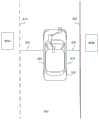
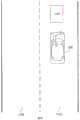
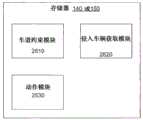
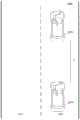
Consistent with the disclosed embodiments, a driver-assisted navigation system for a vehicle is provided. The system may include: at least one image capture device configured to acquire a plurality of images of an area proximate a vehicle; a data interface; and at least one processing device. The at least one processing device may be configured to: receiving the plurality of images via the data interface; determining a first lane constraint on a first side of the vehicle from the plurality of images; determining a second lane constraint on a second side of the vehicle opposite the first side of the vehicle from the plurality of images, wherein the first and second lane constraints define a lane in which the vehicle travels, and wherein a first distance corresponds to a distance between the first side of the vehicle and the first lane constraint and a second distance corresponds to a distance between the second side of the vehicle and the second lane constraint; determining whether a lane offset condition exists on the first side of the vehicle based on the plurality of images; causing the vehicle to travel within the first and second lane constraints if a lane offset condition exists on the first side of the vehicle such that the first distance is greater than the second distance; determining whether a lane offset condition exists on the second side of the vehicle based on the plurality of images; and if a lane offset condition exists on the second side of the vehicle, causing the vehicle to travel within the first and second lane constraints such that the first distance is less than the second distance.
Consistent with the disclosed embodiments, the at least one processing device may be further configured to cause the first distance to be substantially the same as the second distance if a lane offset condition is determined to exist on both the first and second sides of the vehicle based on the plurality of images. The at least one processing device may be configured to determine whether a lane offset condition is substantially absent based on the plurality of images, and if the lane offset condition is substantially absent, cause the vehicle to travel within the first and second lane constraints such that the first distance is substantially equal to the second distance. The at least one processing device may be configured to cause the first distance to be at least 1.25 times greater than the second distance if the driver-assisted navigation system determines that a lane offset condition exists. Alternatively, the at least one processing device may be further configured to cause the first distance to be at least 2 times greater than the second distance. If the driver-assisted navigation system determines that the lane-offset condition includes a curve, the at least one processing device may be configured to cause the vehicle to travel within the first and second lane constraints such that the first distance is toward an outer side of the curve relative to the vehicle and the second distance is toward an inner side of the curve relative to the vehicle. If the driver-assisted navigation system determines that the lane-offset condition includes the presence of one or more objects on one side of the lane, the at least one processing device may be configured to cause the vehicle to travel within the first and second lane constraints such that the first distance greater than the second distance is provided toward the one or more objects. The one or more objects may include parked cars, walls, and/or pedestrians, and may have a height greater than 10cm from a road surface. At least one of the first and second lane constraints may include a line marked on the road surface, a curb of the road surface, or a determined midpoint of the road surface width. Determining whether a lane offset condition exists on the first side of the vehicle may be performed based on a position of a target object on the first side of the vehicle. Causing the vehicle to travel within the first and second lane constraints such that the first distance is greater than the second distance may be overridden based on an input by a driver of the vehicle.
Consistent with another disclosed embodiment, a vehicle may include: a first vehicle side; a second vehicle side opposite the first vehicle side; at least one image capture device configured to acquire a plurality of images of an area proximate a vehicle; a data interface; and at least one processing device. The at least one processing device may be configured to: receiving the plurality of images via the data interface; determining a first lane constraint on the first vehicle side from the plurality of images; determining a second lane constraint on the second vehicle side from the plurality of images, wherein the first and second lane constraints define a lane in which the vehicle travels, and wherein a first distance corresponds to a distance between the first vehicle side and the first lane constraint and a second distance corresponds to a distance between the second vehicle side and the second lane constraint; determining whether a lane offset condition exists on the first vehicle side based on the plurality of images; causing the vehicle to travel within the first and second lane constraints if a lane offset condition exists on the first vehicle side such that the first distance is greater than the second distance; determining whether a lane offset condition exists on the second vehicle side based on the plurality of images; and if a lane offset condition exists on the second vehicle side, causing the vehicle to travel within the first and second lane constraints such that the first distance is less than the second distance.
Consistent with the disclosed embodiments, the at least one processing device may be further configured to cause the first distance to be substantially the same as the second distance if it is determined, based on the plurality of images, that a lane offset condition exists on both the first vehicle side and the second vehicle side. The at least one processing device may be configured to determine whether a lane offset condition is substantially absent based on the plurality of images, and if the lane offset condition is substantially absent, cause the vehicle to travel within the first and second lane constraints such that the first distance is substantially equal to the second distance. The lane offset condition may include a curve, and the at least one processing device may be configured to cause the vehicle to travel within the first and second lane constraints such that the first distance is toward an outer side of the curve relative to the vehicle and the second distance is toward an inner side of the curve relative to the vehicle. The lane offset condition may include the presence of one or more objects on one side of the lane, and the at least one processing device may be configured to cause the vehicle to travel within the first and second lane constraints such that the first distance is provided towards the one or more objects that is greater than the second distance. At least one of the first and second lane constraints may comprise a curb of a road surface and/or a determined midpoint of a road surface width. Determining whether a lane offset condition exists on the first side of the vehicle may be performed based on a position of a target object on the first side of the vehicle. Causing the vehicle to travel within the first and second lane constraints such that the first distance is greater than the second distance may be overridden based on an input by a driver of the vehicle.
Consistent with another disclosed embodiment, a method for navigating a vehicle is provided. The method may comprise: acquiring a plurality of images of an area proximate to a vehicle using at least one image capture device; determining a first lane constraint on a first side of the vehicle from the plurality of images; determining a second lane constraint on a second side of the vehicle opposite the first side of the vehicle from the plurality of images, wherein the first and second lane constraints define a lane in which the vehicle travels, and wherein a first distance corresponds to a distance between the first side of the vehicle and the first lane constraint and a second distance corresponds to a distance between the second side of the vehicle and the second lane constraint; determining whether a lane offset condition exists on the first side of the vehicle based on the plurality of images; causing the vehicle to travel within the first and second lane constraints if a lane offset condition exists on the first side of the vehicle such that the first distance is greater than the second distance; determining whether a lane offset condition exists on the second side of the vehicle based on the plurality of images; and if a lane offset condition exists on the second side of the vehicle, causing the vehicle to travel within the first and second lane constraints such that the first distance is less than the second distance.
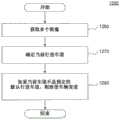
Consistent with the disclosed embodiments, a driver-assisted navigation system for a vehicle is provided. The system may include: at least one image capture device configured to acquire a plurality of images of an area proximate a vehicle; a data interface; and at least one processing device. The at least one processing device may be configured to: receiving the plurality of images via the data interface; determining a current travel lane from among a plurality of available travel lanes from the plurality of images; and causing the vehicle to change lane if the current travel lane is not the same as a predetermined default travel lane.
Consistent with the disclosed embodiments, the predetermined default travel lane may be a rightmost lane among the plurality of available travel lanes. The at least one processing device may be configured to activate a turn signal prior to causing the vehicle to change lanes. The at least one processing device may be configured to generate a voice notification prior to causing the vehicle to change lanes. The at least one processing device may be configured to generate an audible indication prior to causing the vehicle to change lanes. The predetermined default lane of travel may be determined based on the plurality of images of the area proximate the vehicle, based on data received from a global positioning system, and/or based on input received from a user.
Consistent with another disclosed embodiment, a vehicle may include: a main body; at least one image capture device configured to acquire a plurality of images of an area proximate a vehicle; a data interface; and at least one processing device. The at least one processing device may be configured to: receiving the plurality of images via the data interface; determining a current travel lane from among a plurality of available travel lanes from the plurality of images; and causing the vehicle to change lane if the current travel lane is not the same as a predetermined default travel lane.
Consistent with the disclosed embodiments, the predetermined default travel lane may be a rightmost lane among the plurality of available travel lanes. The at least one processing device may be configured to activate a turn signal prior to causing the vehicle to change lanes. The at least one processing device may be configured to generate a voice notification prior to causing the vehicle to change lanes. The at least one processing device may be configured to generate an audible indication prior to causing the vehicle to change lanes. The predetermined default lane of travel may be determined based on the plurality of images of the area proximate the vehicle, based on data received from a global positioning system, and/or based on input received from a user.
Consistent with another disclosed embodiment, a method for navigating a vehicle is provided. The method may comprise: acquiring a plurality of images of an area proximate to a vehicle using at least one image capture device; determining a current travel lane from among a plurality of available travel lanes from the plurality of images; and causing the vehicle to change lane if the current travel lane is not the same as a predetermined default travel lane.
Consistent with the disclosed embodiments, the predetermined default travel lane may be a rightmost lane among the plurality of available travel lanes. A turn signal may be activated prior to causing the vehicle to change lanes. The predetermined default lane of travel may be determined based on the plurality of images of the vehicle vicinity.
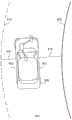
Consistent with the disclosed embodiments, a driver-assisted navigation system for a vehicle is provided. The system may include: at least one image capture device configured to acquire a plurality of images of an area proximate a vehicle; a data interface; and at least one processing device. The at least one processing device may be configured to: receiving the plurality of images via the data interface; identifying a curve to be navigated based on the map data and the vehicle location information; determining an initial target speed of the vehicle based on at least one characteristic of a curve reflected in the map data; adjusting the speed of the vehicle to the initial target speed; determining one or more observed characteristics of a curve based on the plurality of images; determining an updated target speed based on the observed one or more characteristics of the curve; and adjusting the speed of the vehicle to the updated target speed.
Consistent with the disclosed embodiments, the at least one characteristic of the curve may include an expected radius of curvature of the curve determined from the map data. The initial target speed may be determined based on the expected radius of curvature of the curve and a lateral acceleration limit. The lateral acceleration limit may be between about 0.2 m/s2To 3.0 m/s2In the meantime. Alternatively, the lateral acceleration limit may be between about 1.5 meters/second2To 3.0 m/s2In the meantime. The lateral acceleration limit may be adjusted based on a road width determined from the plurality of images. The observed one or more characteristics of the curve may include an actual radius of curvature of the curve determined by analyzing the plurality of images. The updated target speed may be determined based on the actual radius of curvature of the curve and a lateral acceleration limit. The observed one or more characteristics of the curve may include a rate of change of an actual radius of curvature of the curve determined by analyzing the plurality of images. Observed one or more characteristics of the curveMay include a turn slope associated with the curve determined by analyzing the plurality of images. The observed one or more characteristics of the curve may include information related to the curve conveyed by one or more road signs determined by analyzing the plurality of images. The initial target speed may also be based on a focal range of the at least one image capture device. The initial target speed may also be based on determining whether a traffic light is positioned along the curve. The initial target speed may also be based on determining whether a traffic light is located within a predetermined distance after the curve.
Consistent with another disclosed embodiment, a vehicle may include: a main body; at least one image capture device configured to acquire a plurality of images of an area proximate a vehicle; a data interface; and at least one processing device. The at least one processing device may be configured to: receiving the plurality of images via the data interface; identifying a curve to be navigated based on the map data and the vehicle location information; determining an initial target speed of the vehicle based on at least one characteristic of a curve reflected in the map data; adjusting the speed of the vehicle to the initial target speed; determining one or more observed characteristics of a curve based on the plurality of images; determining an updated target speed based on the observed one or more characteristics of the curve; and adjusting the speed of the vehicle to the updated target speed.
Consistent with the disclosed embodiments, the at least one characteristic of the curve may include an expected radius of curvature of the curve determined from the map data. The initial target speed may be determined based on the expected radius of curvature of the curve and a lateral acceleration limit. The lateral acceleration limit may be adjusted based on a road width determined from the plurality of images. The observed one or more characteristics of the curve may include an actual radius of curvature of the curve determined by analyzing the plurality of images. The updated target speed may be determined based on the actual radius of curvature of the curve and a lateral acceleration limit. The observed one or more characteristics of the curve may include a rate of change of an actual radius of curvature of the curve determined by analyzing the plurality of images. The observed one or more characteristics of the curve may include a turn slope associated with the curve determined by analyzing the plurality of images. The observed one or more characteristics of the curve may include information related to the curve conveyed by one or more road signs determined by analyzing the plurality of images. The initial target speed may also be based on a focal range of the at least one image capture device. The initial target speed may also be based on determining whether a traffic light is positioned along the curve. The initial target speed may also be based on determining whether a traffic light is located within a predetermined distance after the curve.
Consistent with another disclosed embodiment, a method for navigating a vehicle is provided. The method may comprise: acquiring a plurality of images of an area proximate to a vehicle using at least one image capture device; identifying a curve to be navigated based on the map data and the vehicle location information; determining an initial target speed of the vehicle based on at least one characteristic of a curve reflected in the map data; adjusting the speed of the vehicle to the initial target speed; determining one or more observed characteristics of a curve based on the plurality of images; determining an updated target speed based on the observed one or more characteristics of the curve; and adjusting the speed of the vehicle to the updated target speed.
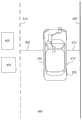
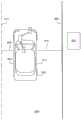
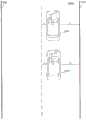
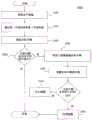
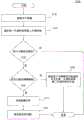
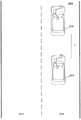
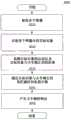
Consistent with the disclosed embodiments, a driver-assisted navigation system for a host vehicle is provided. The system may include: at least one image capture device configured to acquire a plurality of images of an area proximate a host vehicle; a data interface; and at least one processing device. The at least one processing device may be configured to: receiving the plurality of images via the data interface; determining a first lane constraint on a first side of the host vehicle from at least some of the plurality of images; determining a second lane constraint on a second side of the host vehicle opposite the first side of the host vehicle from at least some of the plurality of images, wherein the first and second lane constraints define a lane in which the host vehicle is traveling; causing the host vehicle to travel within the first and second lane constraints; locating a leading vehicle in the plurality of images; determining at least one action taken by the leading vehicle based on the plurality of images; and causing the primary vehicle to mimic the at least one action of the leading vehicle.
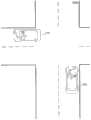
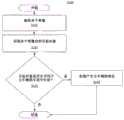
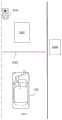
Consistent with the disclosed embodiments, at least one of the first and second lane constraints may include a line marked on a road surface. At least one of the first and second lane constraints may comprise a curb of a roadway. At least one of the first and second lane constraints may include a determined midpoint of a road surface width. The at least one action taken by the leading vehicle may include a turn, and the at least one processing device may cause the host vehicle to perform a similar turn beginning at the location where the leading vehicle initiated its turn. The at least one action taken by the lead vehicle may include acceleration. The at least one action taken by the lead vehicle may include braking. The at least one action taken by the leading vehicle may include providing a first offset distance on a side of the leading vehicle adjacent the first lane constraint that is different from a second offset distance on a side of the leading vehicle adjacent the second lane constraint. The at least one processing device may be further configured to determine whether the leading vehicle is turning at an intersection based on the plurality of images or based on map data and location information, and to refuse to mimic the turning of the leading vehicle if it is determined that the leading vehicle is turning at an intersection. The at least one processing device may be configured to determine whether the lead vehicle turns at an intersection, determine whether the lead vehicle changes lanes within the intersection, mimic the turning of the lead vehicle if it is determined that the lead vehicle is turning at an intersection and is not changing lanes within the intersection, and refuse to mimic the turning of the lead vehicle if it is determined that the lead vehicle is turning at an intersection but is changing lanes within the intersection based on the plurality of images or based on map data and location information. The at least one processing device may be configured to: obtaining a first leading vehicle based on the plurality of images, obtaining a second leading vehicle based on the plurality of images, and causing the host vehicle to mimic the first leading vehicle if it is determined based on the plurality of images that a turning radius of a path that the first leading vehicle continues to travel is less than a path that the second leading vehicle follows. The at least one processing device may be configured to: determining location information of the preceding vehicle and comparing the location information to predetermined map data, creating a navigation history for the preceding vehicle by tracking movement of the preceding vehicle relative to the predetermined map data, and determining whether to cause the host vehicle to mimic the at least one action of the preceding vehicle based on the navigation history of the preceding vehicle. The at least one processing device may be configured to: when the navigation history indicates that the preceding vehicle has successfully navigated at least one preceding turn, causing the host vehicle to mimic a turn of the preceding vehicle even if no turn is detected based on the plurality of images.
Consistent with another disclosed embodiment, a host vehicle may include: a main body; at least one image capture device configured to acquire a plurality of images of an area proximate a host vehicle; a data interface; and at least one processing device. The at least one processing device may be configured to: receiving the plurality of images via the data interface; determining a first lane constraint on a first side of the host vehicle from at least some of the plurality of images; determining a second lane constraint on a second side of the host vehicle opposite the first side of the host vehicle from at least some of the plurality of images, wherein the first and second lane constraints define a lane in which the host vehicle is traveling; causing the host vehicle to travel within the first and second lane constraints; locating a leading vehicle in the plurality of images; determining at least one action taken by the leading vehicle based on the plurality of images; and causing the primary vehicle to mimic the at least one action of the leading vehicle.
Consistent with the disclosed embodiments, at least one of the first and second lane constraints may include a line marked on a road surface. At least one of the first and second lane constraints may comprise a curb of a roadway. At least one of the first and second lane constraints may include a determined midpoint of a road surface width. The at least one action taken by the leading vehicle may include a turn, and the at least one processing device may cause the host vehicle to perform a similar turn beginning at the location where the leading vehicle initiated its turn. The at least one action taken by the lead vehicle may include acceleration. The at least one action taken by the lead vehicle may include braking. The at least one action taken by the leading vehicle may include providing a first offset distance on a side of the leading vehicle adjacent the first lane constraint that is different from a second offset distance on a side of the leading vehicle adjacent the second lane constraint. The at least one processing device may be further configured to determine whether the leading vehicle is turning at an intersection based on the plurality of images or based on map data and location information, and to refuse to mimic the turning of the leading vehicle if it is determined that the leading vehicle is turning at an intersection. The at least one processing device may be configured to determine whether the lead vehicle turns at an intersection, determine whether the lead vehicle changes lanes within the intersection, mimic the turning of the lead vehicle if it is determined that the lead vehicle is turning at an intersection and is not changing lanes within the intersection, and refuse to mimic the turning of the lead vehicle if it is determined that the lead vehicle is turning at an intersection but is changing lanes within the intersection based on the plurality of images or based on map data and location information. The at least one processing device may be configured to: obtaining a first leading vehicle based on the plurality of images, obtaining a second leading vehicle based on the plurality of images, and causing the host vehicle to mimic the first leading vehicle if it is determined based on the plurality of images that a turning radius of a path that the first leading vehicle continues to travel is less than a path that the second leading vehicle follows. The at least one processing device may be configured to: determining location information of the preceding vehicle and comparing the location information to predetermined map data, creating a navigation history for the preceding vehicle by tracking movement of the preceding vehicle relative to the predetermined map data, and determining whether to cause the host vehicle to mimic the at least one action of the preceding vehicle based on the navigation history of the preceding vehicle. The at least one processing device may be configured to: when the navigation history indicates that the preceding vehicle has successfully navigated at least one preceding turn, causing the host vehicle to mimic a turn of the preceding vehicle even if no turn is detected based on the plurality of images.
Consistent with another disclosed embodiment, a method for navigating a host vehicle is provided. The method may comprise: acquiring a plurality of images of an area proximate a host vehicle using at least one image capture device; determining a first lane constraint on a first side of the host vehicle from at least some of the plurality of images; determining a second lane constraint on a second side of the host vehicle opposite the first side of the host vehicle from at least some of the plurality of images, wherein the first and second lane constraints define a lane in which the host vehicle is traveling; causing the host vehicle to travel within the first and second lane constraints; locating a leading vehicle in the plurality of images; determining at least one action taken by the leading vehicle based on the plurality of images; and causing the primary vehicle to mimic the at least one action of the leading vehicle.
Consistent with the disclosed embodiments, a driver-assisted navigation system for a user vehicle is provided. The system may include: at least one image capture device configured to acquire a plurality of images of an area proximate a user vehicle; a data interface; and at least one processing device. The at least one processing device may be configured to: receiving the plurality of images via the data interface; determining a first lane constraint on a first side of the user vehicle from the plurality of images; determining a second lane constraint on a second side of the user vehicle opposite the first side of the user vehicle from the plurality of images, wherein the first and second lane constraints define a lane in which the user vehicle travels; acquiring a target vehicle based on the plurality of images; enabling the user vehicle to override the target vehicle if it is determined that the lane in which the target vehicle is traveling is different from the lane in which the user vehicle is traveling; monitoring a location of the target vehicle based on the plurality of images; and if it is determined that the target vehicle is entering a lane in which the user vehicle is traveling, causing the user vehicle to abort the override before completing the override.
Consistent with the disclosed embodiments, the step of causing the user vehicle to cease the override may include causing a brake in the user vehicle to be applied. The step of causing the user vehicle to abort the override may include generating a voice notification. The step of causing the user vehicle to cease the override may comprise causing the user vehicle to stop accelerating. The step of monitoring the position of the target vehicle may comprise estimating the speed of the target vehicle. At least one of the first and second lane constraints may include a line marked on the road surface, a curb of the road surface, and/or a determined midpoint of the road surface width.
Consistent with another disclosed embodiment, a user vehicle may include: at least one image capture device configured to acquire a plurality of images of an area proximate a user vehicle; a data interface; and at least one processing device. The at least one processing device may be configured to: receiving the plurality of images via the data interface; determining a first lane constraint on a first side of the user vehicle from the plurality of images; determining a second lane constraint on a second side of the user vehicle opposite the first side of the user vehicle from the plurality of images, wherein the first and second lane constraints define a lane in which the user vehicle travels; acquiring a target vehicle based on the plurality of images; enabling the user vehicle to override the target vehicle if it is determined that the lane in which the target vehicle is traveling is different from the lane in which the user vehicle is traveling; monitoring a location of the target vehicle based on the plurality of images; and if it is determined that the target vehicle is entering a lane in which the user vehicle is traveling, causing the user vehicle to abort the override before completing the override.
Consistent with the disclosed embodiments, causing the user vehicle to cease the override may include causing a brake in the user vehicle to be applied. Causing the user vehicle to suspend the override may include generating a voice notification. Causing the user vehicle to suspend the override may include causing the user vehicle to stop accelerating. Monitoring the location of the target vehicle may include estimating a speed of the target vehicle. At least one of the first and second lane constraints may include a line marked on the road surface, a curb of the road surface, and/or a determined midpoint of the road surface width.
Consistent with another disclosed embodiment, a method for navigating a user's vehicle is provided. The method may comprise: acquiring a plurality of images of an area proximate to a user's vehicle using at least one image capture device; determining a first lane constraint on a first side of the user vehicle from the plurality of images; determining a second lane constraint on a second side of the user vehicle opposite the first side of the user vehicle from the plurality of images, wherein the first and second lane constraints define a lane in which the user vehicle travels; acquiring a target vehicle based on the plurality of images; enabling the user vehicle to override the target vehicle if it is determined that the lane in which the target vehicle is traveling is different from the lane in which the user vehicle is traveling; monitoring a location of the target vehicle based on the plurality of images; and if it is determined that the target vehicle is entering a lane in which the user vehicle is traveling, causing the user vehicle to abort the override before completing the override.
Consistent with the disclosed embodiments, the step of causing the user vehicle to cease the override may include causing a brake in the user vehicle to be applied. The step of causing the user vehicle to cease the override may comprise causing the user vehicle to stop accelerating. At least one of the first and second lane constraints may include a line marked on the road surface, a curb of the road surface, and/or a determined midpoint of the road surface width.
Consistent with the disclosed embodiments, a driver-assisted navigation system for a user vehicle is provided. The system may include: at least one image capture device configured to acquire a plurality of images of an area proximate a user vehicle; a data interface; and at least one processing device. The at least one processing device may be configured to: receiving the plurality of images via the data interface; determining a first lane constraint on a first side of the user vehicle from the plurality of images; determining a second lane constraint on a second side of the user vehicle opposite the first side of the user vehicle from the plurality of images, wherein the first and second lane constraints define a lane in which the user vehicle travels; determining whether an intruding vehicle approaches from a side of the user vehicle based on the plurality of images; and causing the user vehicle to maintain a current speed and travel within the first and second lane constraints such that a first distance on a side of the user vehicle that the intruding vehicle is approaching is greater than a second distance.
Consistent with the disclosed embodiments, the at least one processing device may be further configured to cause the user vehicle to take evasive action if analysis of the plurality of images indicates that the intruding vehicle has crossed at least one collision threshold. The evasive action may include lane changing, route changing, and/or braking. The at least one collision threshold may comprise a minimum predetermined distance maintained between the user vehicle and the intruding vehicle. The at least one collision threshold may comprise a time to collision. The at least one processing device may be configured to cause the user vehicle to return to a center of a lane in which the user vehicle originally traveled after completion of the evasive action. The at least one image capture device may have a field of view of at least 140 degrees. The at least one processing device may be configured to cause the user vehicle to resume a preset speed after braking in response to an intruding vehicle. The at least one processing device may be configured to cause the user vehicle to return to lane positions within the first and second lane constraints such that the first distance between the user vehicle and the first lane constraint is substantially equal to the second distance between the user vehicle and the second lane constraint after rerouting in response to an intruding vehicle.
Consistent with another disclosed embodiment, a user vehicle may include: at least one image capture device configured to acquire a plurality of images of an area proximate a user vehicle; a data interface; and at least one processing device. The at least one processing device may be configured to: receiving the plurality of images via the data interface; determining a first lane constraint on a first side of the user vehicle from the plurality of images; determining a second lane constraint on a second side of the user vehicle opposite the first side of the user vehicle from the plurality of images, wherein the first and second lane constraints define a lane in which the user vehicle travels; determining whether an intruding vehicle approaches from a side of the user vehicle based on the plurality of images; and causing the user vehicle to maintain a current speed and travel within the first and second lane constraints such that a first distance on a side of the user vehicle that the intruding vehicle is approaching is greater than a second distance.
Consistent with the disclosed embodiments, the at least one processing device may be further configured to cause the user vehicle to take evasive action if the analysis of the plurality of images indicates that the intruding vehicle has crossed at least one collision threshold. The evasive action may include lane changing, route changing, and/or braking. The at least one collision threshold may comprise a minimum predetermined distance maintained between the user vehicle and the intruding vehicle. The at least one collision threshold may comprise a time to collision. The at least one processing device may be configured to cause the user vehicle to return to a center of a lane in which the user vehicle originally traveled after completion of the evasive action. The at least one image capture device may have a field of view of at least 140 degrees. The at least one processing device may be configured to cause the user vehicle to resume a preset speed after braking in response to an intruding vehicle. The at least one processing device may be configured to cause the user vehicle to return to lane positions within the first and second lane constraints such that the first distance between the user vehicle and the first lane constraint is substantially equal to the second distance between the user vehicle and the second lane constraint after rerouting in response to an intruding vehicle.
Consistent with another disclosed embodiment, a method for navigating a user's vehicle is provided. The method may comprise: acquiring a plurality of images of an area proximate to a user's vehicle using at least one image capture device; determining a first lane constraint on a first side of the user vehicle from the plurality of images; determining a second lane constraint on a second side of the user vehicle opposite the first side of the user vehicle from the plurality of images, wherein the first and second lane constraints define a lane in which the user vehicle travels; determining whether an intruding vehicle approaches from a side of the user vehicle based on the plurality of images; and causing the user vehicle to maintain a current speed and travel within the first and second lane constraints such that a first distance on a side of the user vehicle that the intruding vehicle is approaching is greater than a second distance.
Consistent with the disclosed embodiments, a driver-assisted navigation system for a host vehicle is provided. The system may include: at least one image capture device configured to acquire a plurality of images of an area proximate a host vehicle; a data interface; and at least one processing device. The at least one processing device may be configured to: receiving the plurality of images via the data interface; identifying a target object within the plurality of images; monitoring motion of the target object and a distance between the host vehicle and the target object via the plurality of images; determining an indicator of an intercept time between the host vehicle and the target object based on the monitored motion and a distance between the host vehicle and the target object; and generating a response of the host vehicle based on the comparison of the intercept time to a plurality of predetermined intercept thresholds.
Consistent with the disclosed embodiments, the target object may be a target vehicle traveling in a different lane than the host vehicle. The intercept time may be based on an indicator of a velocity of the tracked object determined from the plurality of images. The intercept time may be based on an indicator of acceleration of the tracked object determined from the plurality of images. The at least one processing device may be further configured to determine whether the target object is traveling in the same lane as the host vehicle, and to abandon the response of the host vehicle if it is determined that the target object is traveling in a different lane than the host vehicle. Determining whether the target object is traveling in the same lane as the host vehicle may be based on the plurality of images. Determining whether the target object is traveling in the same lane as the host vehicle may be based on at least one of predetermined map data or a yaw rate of the host vehicle. The response may be based on an average motion profile associated with the target object if the indicator of intercept time indicates that the target object is outside a first intercept threshold relative to the vehicle. The response may be based on actual motion of the target object if the indicator of intercept time indicates that the target object is between the first and second intercept thresholds relative to the vehicle. The response may include an emergency avoidance action if the indicator of intercept time indicates that the target object is within the second intercept threshold. The emergency avoidance maneuver may include a lane change and/or an emergency brake.
Consistent with another disclosed embodiment, a host vehicle may include: a main body; at least one image capture device configured to acquire a plurality of images of an area proximate a host vehicle; a data interface; and at least one processing device. The at least one processing device may be configured to: receiving the plurality of images via the data interface; identifying a target object within the plurality of images; monitoring motion of the target object and a distance between the host vehicle and the target object via the plurality of images; determining an indicator of an intercept time between the host vehicle and the target object based on the monitored motion and a distance between the host vehicle and the target object; and generating a response of the host vehicle based on the comparison of the intercept time to a plurality of predetermined intercept thresholds.
Consistent with the disclosed embodiments, the target object may be a target vehicle traveling in a different lane than the host vehicle. The intercept time may be based on an indicator of a velocity of the tracked object determined from the plurality of images. The intercept time may be based on an indicator of acceleration of the tracked object determined from the plurality of images. The at least one processing device may be further configured to determine whether the target object is traveling in the same lane as the host vehicle, and to abandon the response of the host vehicle if it is determined that the target object is traveling in a different lane than the host vehicle. Determining whether the target object is traveling in the same lane as the host vehicle may be based on the plurality of images. Determining whether the target object is traveling in the same lane as the host vehicle may be based on at least one of predetermined map data or a yaw rate of the host vehicle. The response may be based on an average motion profile associated with the target object if the indicator of intercept time indicates that the target object is outside a first intercept threshold relative to the vehicle. The response may be based on actual motion of the target object if the indicator of intercept time indicates that the target object is between the first and second intercept thresholds relative to the vehicle. The response may include an emergency avoidance action if the indicator of intercept time indicates that the target object is within the second intercept threshold. The emergency avoidance maneuver may include a lane change and/or an emergency brake.
Consistent with another disclosed embodiment, a method for navigating a host vehicle may include: acquiring, via at least one image capture device, a plurality of images of an area proximate to a host vehicle; identifying a target object within the plurality of images; monitoring motion of the target object and a distance between the host vehicle and the target object based on the plurality of images; determining an indicator of an intercept time between the host vehicle and the target object based on the monitored motion and a distance between the host vehicle and the target object; and generating a response of the host vehicle based on the comparison of the intercept time to a plurality of predetermined intercept thresholds.
Consistent with the disclosed embodiments, a driver-assisted navigation system for a vehicle is provided. The system may include: at least one image capture device configured to acquire a plurality of images of an area proximate a vehicle; a data interface; and at least one processing device. The at least one processing device may be configured to: receiving the plurality of images via the data interface; identifying a trigger for stopping the vehicle based on the analysis of the plurality of images; and based on the identified trigger, causing the vehicle to stop in accordance with a braking profile, the braking profile including a first segment associated with a first deceleration rate, a second segment having a second deceleration rate less than the first deceleration rate, and a third segment that decreases a braking level as a target stopping location is approached, as determined based on the analysis of the plurality of images.
Consistent with the disclosed embodiments, reaching the target stopping location may be accompanied by a release of brake pressure. The trigger may comprise an object. The object may include another vehicle in front of the vehicle. The trigger may include a traffic light signal, a stop sign, and/or a speed limit sign. The at least one processing device may be further configured to provide a voice notification identifying the trigger. The at least one processing device may be configured to generate a voice notification indicating that the vehicle is braking.
Consistent with another disclosed embodiment, a vehicle may include: a main body; at least one image capture device configured to acquire a plurality of images of an area proximate a vehicle; a data interface; and at least one processing device. The at least one processing device may be configured to: receiving the plurality of images via the data interface; identifying a trigger for stopping the vehicle based on the analysis of the plurality of images; and causing the vehicle to stop in accordance with a braking profile based on the identified trigger, the braking profile including a first segment associated with a first deceleration rate, a second segment having a second deceleration rate less than the first deceleration rate, and a third segment that decreases a braking level as a target stopping location is approached, as determined based on the analysis of the plurality of images.
Consistent with the disclosed embodiments, reaching the target stopping location may be accompanied by a release of brake pressure. The trigger may comprise an object. The object may include another vehicle in front of the vehicle. The trigger may include a traffic light signal, a stop sign, and/or a speed limit sign. The at least one processing device may be further configured to provide a voice notification identifying the trigger. The at least one processing device may be configured to generate a voice notification indicating that the vehicle is braking.
Consistent with another disclosed embodiment, a method for navigating a vehicle is provided. The method may comprise: acquiring a plurality of images of an area proximate to a vehicle via at least one image capture device; identifying a trigger for stopping the vehicle based on the analysis of the plurality of images; and causing the vehicle to stop in accordance with a braking profile based on the identified trigger, the braking profile including a first segment associated with a first deceleration rate, a second segment having a second deceleration rate less than the first deceleration rate, and a third segment that decreases a braking level as a target stopping location is approached, as determined based on the analysis of the plurality of images.
Consistent with other disclosed embodiments, a non-transitory computer-readable storage medium may store program instructions that are executed by at least one processing device and that perform any of the methods described herein.
The foregoing general description and the following detailed description are exemplary and explanatory only and are not restrictive of the claims.
Drawings
The accompanying drawings, which are incorporated in and constitute a part of this disclosure, illustrate various disclosed embodiments. In the figure:
FIG. 1 is a diagrammatical representation of an exemplary system consistent with the disclosed embodiments.
FIG. 2A is a diagrammatic side view representation of an exemplary vehicle including a system consistent with the disclosed embodiments.
FIG. 2B is a diagrammatic top view representation of the vehicle and system shown in FIG. 2A consistent with the disclosed embodiments.
FIG. 2C is a diagrammatic top view representation of another embodiment of a vehicle including a system consistent with the disclosed embodiments.
FIG. 2D is a diagrammatic top view representation of yet another embodiment of a vehicle including a system consistent with the disclosed embodiments.
FIG. 2E is a diagrammatic top view representation of yet another embodiment of a vehicle including a system consistent with the disclosed embodiments.
FIG. 2F is a diagrammatical representation of an exemplary vehicle control system consistent with the disclosed embodiments.
FIG. 3A is a diagrammatical representation of an interior of a vehicle consistent with the disclosed embodiments, including a rear view mirror and a user interface for a vehicle imaging system.
FIG. 3B is an illustration of an example of a camera mount configured to be positioned behind a rearview mirror and against a vehicle windshield consistent with the disclosed embodiments.
Fig. 3C is an illustration of the camera mount shown in fig. 3B from a different viewing angle consistent with the disclosed embodiments.
FIG. 3D is an illustration of an example of a camera mount configured to be positioned behind a rearview mirror and against a vehicle windshield consistent with the disclosed embodiments.
FIG. 4 is an exemplary block diagram of a memory configured to store instructions for performing one or more operations consistent with the disclosed embodiments.
FIG. 5A is a flow chart illustrating an exemplary process for generating one or more navigational responses based on monocular image analysis consistent with the disclosed embodiments.
FIG. 5B is a flow chart illustrating an exemplary process for detecting one or more vehicles and/or pedestrians in a set of images consistent with the disclosed embodiments.
Fig. 5C is a flow chart illustrating an exemplary process for detecting landmark and/or lane geometric information in a set of images consistent with the disclosed embodiments.
FIG. 5D is a flow chart illustrating an exemplary process for detecting a traffic light in a set of images consistent with the disclosed embodiments.
FIG. 5E is a flow chart illustrating an exemplary process for generating one or more navigation responses based on a vehicle path consistent with the disclosed embodiments.
FIG. 5F is a flow chart illustrating an exemplary process for determining whether a leading vehicle is changing lanes consistent with the disclosed embodiments.
FIG. 6 is a flow diagram illustrating an exemplary process for generating one or more navigation responses based on stereo image analysis consistent with the disclosed embodiments.
FIG. 7 is a flow diagram illustrating an exemplary process for generating one or more navigational responses based on three sets of image analysis consistent with the disclosed embodiments.
FIG. 8A is a diagrammatical representation of an exemplary vehicle traveling within a first lane constraint and a second lane constraint consistent with the disclosed embodiments, wherein a lane offset condition exists on the first vehicle side.
FIG. 8B is a diagrammatical representation of an exemplary vehicle traveling within a first lane constraint and a second lane constraint, wherein a lane offset condition exists on the second vehicle side, consistent with the disclosed embodiments.
FIG. 8C is a diagrammatical representation of an exemplary vehicle traveling within a first lane constraint and a second lane constraint on a curved road consistent with the disclosed embodiments.
Fig. 8D is a diagrammatical representation of an exemplary vehicle traveling within a first lane constraint and a second lane constraint, where lane offset conditions exist on both the first vehicle side and the second vehicle side, consistent with the disclosed embodiments.
FIG. 9 is a diagrammatical representation of a memory of an exemplary navigation system consistent with the disclosed embodiments.
FIG. 10 is a flow chart of an exemplary method for navigating a vehicle consistent with the disclosed embodiments.
FIG. 11 is a diagrammatical representation of an exemplary vehicle including a navigation system traveling within a default lane consistent with the disclosed embodiments.
FIG. 12A is a diagrammatical representation of a memory of an exemplary navigation system consistent with the disclosed embodiments.
FIG. 12B is a flowchart of an exemplary process for navigating a vehicle, consistent with the disclosed embodiments.
Fig. 13A and 13B are diagrammatic representations of an exemplary vehicle approaching and navigating a curve having one or more characteristics consistent with the disclosed embodiments.
FIG. 14 is an exemplary block diagram of a memory configured to store instructions for performing one or more operations consistent with the disclosed embodiments.
FIG. 15 is a flow chart illustrating an exemplary process for controlling vehicle speed based on a detected curve and observed curve characteristics, consistent with the disclosed embodiments.
Fig. 16A-16D are diagrammatic representations of a host vehicle that mimics one or more actions of a preceding vehicle, consistent with the disclosed embodiments.
FIG. 17 is an exemplary block diagram of a memory configured to store instructions for performing one or more operations consistent with the disclosed embodiments.
FIG. 18 is a flow chart illustrating an exemplary process for causing a host vehicle to mimic one or more actions of a leading vehicle consistent with the disclosed embodiments.
FIG. 19 is a flow chart illustrating an exemplary process for causing the host vehicle to refuse to mimic a leading vehicle turn, consistent with the disclosed embodiments.
FIG. 20 is a flow chart illustrating an exemplary process for causing a host vehicle to mimic or reject a leading vehicle turn, consistent with the disclosed embodiments.
FIG. 21 is a flow diagram illustrating another exemplary process for causing a host vehicle to mimic one or more actions of a leading vehicle, consistent with the disclosed embodiments.
FIG. 22 is a flow diagram illustrating an exemplary process for causing a host vehicle to mimic one or more actions of a preceding vehicle based on a navigation history, consistent with the disclosed embodiments.
FIG. 23 is a diagrammatical representation of an exemplary vehicle traveling within a first lane constraint and a second lane constraint on a roadway along which another vehicle is traveling, consistent with the disclosed embodiments.
Fig. 24A is a diagrammatic representation of a memory storing instructions for navigating a vehicle among intruding vehicles consistent with the disclosed embodiments.
FIG. 24B is a flowchart of an exemplary process for navigating a vehicle among intruding vehicles consistent with the disclosed embodiments.
FIG. 25 is a diagrammatical representation of an exemplary vehicle traveling within a first lane constraint and a second lane constraint on a roadway along which another vehicle is traveling, consistent with the disclosed embodiments.
FIG. 26 is a diagrammatic representation of a memory storing instructions for detecting and responding to a lateral intrusion by vehicular traffic consistent with the disclosed embodiments.
FIG. 27 is a flow chart of an exemplary process for detecting and responding to a lateral intrusion by vehicle traffic consistent with the disclosed embodiments.
Fig. 28A and 28B are diagrammatic representations of generating a host-vehicle response consistent with the disclosed embodiments.
FIG. 29 is an exemplary block diagram of a memory configured to store instructions for performing one or more operations consistent with the disclosed embodiments.
FIG. 30 is a flow chart illustrating an exemplary process for generating a host vehicle response consistent with the disclosed embodiments.
FIG. 31 is a flow chart illustrating an exemplary process for denying generation of a host vehicle response consistent with the disclosed embodiments.
Fig. 32A is a diagrammatic representation of an exemplary vehicle having an object present in the vicinity of the vehicle consistent with the disclosed embodiments.
FIG. 32B illustrates an exemplary braking profile consistent with the disclosed embodiments.
FIG. 33 is a diagrammatical representation of a memory of an exemplary navigation system consistent with the disclosed embodiments.
FIG. 34 is a flow chart of an exemplary method for implementing a braking profile while navigating a vehicle consistent with the disclosed embodiments.
Detailed Description
The following detailed description refers to the accompanying drawings. Wherever possible, the same reference numbers will be used throughout the drawings and the following description to refer to the same or like parts. While several illustrative embodiments have been described herein, modifications, adaptations, and other implementations may be made. For example, substitutions, additions or modifications may be made to the components illustrated in the drawings, and the illustrative methods described herein may be modified by substituting, reordering, removing or adding steps to the disclosed methods. The following detailed description is, therefore, not to be taken in a limiting sense, of the disclosed embodiments and examples. Rather, the appropriate scope is defined by the appended claims.
The disclosed embodiments provide systems and methods for providing autonomous navigation features using a camera. In various embodiments, the system may include one, two, or more cameras that monitor the environment of the vehicle. In one embodiment, the system may monitor and adjust the free space between the vehicle and the boundary of the lane within which the vehicle is traveling. In another embodiment, the system may select a particular lane as a default lane for use while the vehicle is traveling. In another embodiment, the system may control the speed of the vehicle in different scenarios (such as while turning). In yet another embodiment, the system may mimic the motion of a leading vehicle. In yet another embodiment, the system may monitor the target vehicle and enable the vehicle to override the target vehicle under certain conditions (e.g., if the lane in which the target vehicle is traveling is different from the lane in which the vehicle is traveling). In yet another embodiment, the system may create a natural feel in response to a laterally intruding vehicle, such as a vehicle attempting to enter a lane in which the vehicle is traveling.
FIG. 1 is a block diagram representation of asystem 100 consistent with exemplary disclosed embodiments. Thesystem 100 may include various components depending on the requirements of a particular implementation. In some implementations, thesystem 100 can include aprocessing unit 110, animage acquisition unit 120, alocation sensor 130, one ormore memory units map database 160, and auser interface 170. Theprocessing unit 110 may include one or more processing devices. In some embodiments, theprocessing unit 110 may include anapplication processor 180, an image processor 190, or any other suitable processing device. Similarly, theimage acquisition unit 120 may include any number of image acquisition devices and components, depending on the requirements of a particular application. In some embodiments,image acquisition unit 120 may include one or more image capture devices (e.g., cameras), such asimage capture device 122,image capture device 124, andimage capture device 126. Thesystem 100 may further include adata interface 128, the data interface 128 communicatively coupling theprocessing device 110 and theimage acquisition device 120. For example, thedata interface 128 may include any one or more wired and/or wireless links for transmitting image data acquired by theimage acquisition device 120 to theprocessing unit 110.
Both theapplication processor 180 and the image processor 190 may include various types of processing devices. For example, either or both of theapplication processor 180 and the image processor 190 may include a microprocessor, a pre-processor, such as an image pre-processor, a graphics processor, a Central Processing Unit (CPU), support circuits, a digital signal processor, an integrated circuit, a memory, or any other type of device suitable for running applications as well as image processing and analysis. In some embodiments, theapplication processor 180 and/or the image processor 190 may include any type of single or multi-core processor, mobile device microcontroller, central processing unit, or the like. A variety of processing devices may be used,including, for example, those available from Etc., and may include various structures (e.g., x86 processor, etc.)
 Etc.).


In some embodiments, theapplication processor 180 and/or the image processor 190 may include any of the available from The EyeQ series processor chip. These processor designs each include a multi-processing unit having a local memory and an instruction set. Such a processor may include a video input for receiving image data from a plurality of image sensors, and may also include a video output function. In one example of the use of a magnetic resonance imaging system,
 a 90 nm micron technique operating at 332Mhz was used.
 The structure composition is as follows: two floating point, hyper-threaded 32-bit RISC CPUs: (
 Kernel), five Visual Computation Engines (VCE), three vector microcode processors
 A Denali 64-bit mobile DDR controller, a 128-bit internal supersonic interconnect, a dual 16-bit video input controller and an 18-bit video output controller, 16-channel DMA, and several peripherals. MIPS34K CPU manages five VCEs, three VMPsTMAnd DMA, second MIPS34K CPU, and multi-channel DMA, among other peripherals. Five VCEs, three
 And MIPS34K CPUTo perform the intensive visual computations required by the multifunction bundled application. In another example, a third generation processor and
 six times powerful
 May be used in the disclosed embodiments.


Although fig. 1 depicts two separate processing devices included in theprocessing unit 110, more or fewer processing devices may be used. For example, in some embodiments, a single processing device may be used to accomplish the tasks of theapplication processor 180 and the image processor 190. In other embodiments, these tasks may be performed by more than two processing devices.
Theprocessing unit 110 may include various types of devices. For example, theprocessing unit 110 may include various devices such as a controller, an image preprocessor, a Central Processing Unit (CPU), support circuits, a digital signal processor, an integrated circuit, a memory, or any other type of device for image processing and analysis. The image preprocessor may include a video processor for capturing, digitizing, and processing images from the image sensor. The CPU may include any number of microcontrollers or microprocessors. The support circuits may be any number of circuits commonly known in the art, including cache, power supplies, clocks, and input-output circuits. The memory may store software that, when executed by the processor, controls the operation of the system. The memory may include a database and image processing software. The memory may include any number of random access memories, read-only memories, flash memories, disk drives, optical storage media, tape storage media, removable storage media, and other types of storage media. In one example, the memory may be separate from theprocessing unit 110. In another example, memory may be integrated intoprocessing unit 110.
Eachmemory application processor 180 and/or image processor 190), may control the operation of various aspects ofsystem 100. These memory units may include various databases and image processing software. The memory unit may include random access memory, read only memory, flash memory, disk drives, optical storage media, tape storage media, removable storage media, and/or any other type of storage media. In some embodiments, thememory units application processor 180 and/or the image processor 190. In other implementations, these memory units may be integrated into theapplication processor 180 and/or the image processor 190.
Theposition sensor 130 may comprise any type of device suitable for determining a location associated with at least one component of thesystem 100. In some embodiments, thelocation sensor 130 may include a GPS receiver. Such a receiver can determine the user's position and velocity by processing signals propagated by global positioning system satellites. The location information from thelocation sensor 130 may be provided for use by theprocessor 180 and/or the image processor 190.
Theuser interface 170 may be equipped with one or more processing devices configured to provide information to or receive information from a user and process the information for use by, for example, theapplication processor 180. In some implementations, such a processing device may execute instructions to recognize and track eye movement, receive and interpret voice commands, recognize and interpret touches and/or gestures made on a touch screen, respond to keyboard inputs or menu selections, and so forth. In some implementations, theuser interface 170 can include a display, a speaker, a haptic device, and/or any other device for providing output information to a user.
Themap database 160 may include any type of database for storing map data useful to thesystem 100. In some embodiments, themap database 160 may include data relating to location in a reference coordinate system for various items including roads, water features, geographic features, businesses, points of interest, restaurants, gas stations, and the like. Themap database 160 may store not only the locations of such entries, but also descriptors (including, for example, names associated with any stored features) associated with the entries. In some embodiments, themap database 160 may be physically located with other components of thesystem 100. Alternatively or additionally, themap database 160, or a portion thereof, may be remotely located relative to other components of the system 100 (e.g., the processing unit 110). In such embodiments, information from themap database 160 may be downloaded over a wired or wireless data connection of a network (e.g., over a cellular network and/or the Internet, etc.).
Thesystem 100 or various components thereof may be integrated into a variety of different platforms. In some embodiments, thesystem 100 may be included on avehicle 200 as shown in fig. 2A. For example, as described above with respect to fig. 1, thevehicle 200 may be equipped with theprocessing unit 110 and any other components of thesystem 100. While in some embodiments, thevehicle 200 may be equipped with only a single image capture device (e.g., camera), in other embodiments, such as those discussed in conjunction with fig. 2B-2E, multiple image capture devices may be used. For example, either of theimage capture devices vehicle 200 as shown in fig. 2A may be part of an ADAS (advanced driver assistance system) imaging group.
The image capture device included on thevehicle 200 as part of theimage acquisition unit 120 may be positioned at any suitable location. In some embodiments, as shown in fig. 2A-2E and 3A-3C, theimage capture device 122 may be located near the rear view mirror. This location may provide a line of sight (similar to that of the driver of the vehicle 200), which may help determine what is visible to the driver and what is not visible. Theimage capture device 122 may be positioned anywhere near the rear view mirror, but placing theimage capture device 122 on the side of the mirror that is on the driver may further assist in obtaining images representative of the driver's field of view and/or line of sight.
Other locations may also be used for the image capture device of theimage acquisition unit 120. For example, theimage capture device 124 may be located on or in a bumper of thevehicle 200. Such a location may be particularly suitable for image capture devices having a wide field of view. The line of sight of the image capture device located on the bumper may be different from the driver's line of sight, and therefore, the bumper image capture device and the driver may not always see the same object. The image capture devices (e.g.,image capture devices vehicle 200, on the roof of thevehicle 200, on the hood of thevehicle 200, on the trunk of thevehicle 200, on the side of thevehicle 200, mounted on any window of thevehicle 200, positioned behind or in front of any window of thevehicle 200, and mounted in or near the light pattern of the front and/or back of thevehicle 200, and so forth.
In addition to the image capture device, thevehicle 200 may include various other components of thesystem 100. For example, theprocessing unit 110 may be included on thevehicle 200, either integrated with or separate from an Engine Control Unit (ECU) of the vehicle. Thevehicle 200 may also be equipped with aposition sensor 130, such as a GPS receiver, and may also include amap database 160 andmemory units
FIG. 2A is a diagrammatical side view representation of an exemplary vehicle imaging system consistent with the disclosed embodiments. Fig. 2B is a diagrammatic top view illustration of the embodiment shown in fig. 2A. As illustrated in fig. 2B, a disclosed embodiment may include avehicle 200, thevehicle 200 including thesystem 100 in its body, thesystem 100 having a firstimage capture device 122 positioned near a rear view mirror and/or near a driver of thevehicle 200, a secondimage capture device 124 positioned on or in a bumper area (e.g., one of the bumper areas 210) of thevehicle 200, and aprocessing unit 110.
As illustrated in fig. 2C, bothimage capture devices vehicle 200. Additionally, while twoimage capture devices image capture device 122, the secondimage capture device 124, and the thirdimage capture device 126 are included in thesystem 100 of thevehicle 200.
As illustrated in fig. 2D, theimage capture device 122 may be positioned near the rear view mirror and/or near the driver of thevehicle 200, and theimage capture devices vehicle 200. And as shown in fig. 2E, theimage capture devices vehicle 200. The disclosed embodiments are not limited to any particular number and configuration of image capture devices, and the image capture devices may be positioned in any suitable location within and/or on thevehicle 200.
It should be understood that the disclosed embodiments are not limited to vehicles and may be applied in other contexts. It should also be understood that the disclosed embodiments are not limited to a particular type ofvehicle 200 and may be applied to all types of vehicles, including automobiles, trucks, trailers, and other types of vehicles.
The firstimage capture device 122 may include any suitable type of image capture device. Theimage capture device 122 may include an optical axis. In one example, theimage capture device 122 may include an Aptina M9V024WVGA sensor with a global shutter. In other implementations, theimage capture device 122 may provide a resolution of 1280x960 pixels and may include a rolling shutter.Image capture device 122 may include various optical elements. In some embodiments, for example, one or more lenses may be included to provide the desired focal length and field of view for the image capture device. In some embodiments, theimage capture device 122 may be associated with a 6mm lens or a 12mm lens. In some embodiments, as illustrated in fig. 2D,image capture device 122 may be configured to capture an image having a desired field of view (FOV) 202. For example,image capture device 122 may be configured to have a conventional FOV, such as in the range of 40 degrees to 56 degrees, including 46 degrees FOV, 50 degrees FOV, 52 degrees FOV and above. Alternatively, theimage capture device 122 may be configured to have a narrow FOV in the range of 23 to 40 degrees, such as a 28 degree FOV or 36 degree FOV. In addition,image capture device 122 may be configured to have a wide FOV in the range of 100 degrees to 180 degrees. In some embodiments, theimage capture device 122 may include a wide-angle bumper camera or have up to a 180 degree FOV.
The firstimage capture device 122 may acquire a plurality of first images relative to a scene associated with thevehicle 200. Each of the plurality of first images may be acquired as a series of image scan lines that may be captured using a rolling shutter. Each scan line may include a plurality of pixels.
The firstimage capture device 122 may have a scan rate associated with acquiring each of the first series of image scan lines. The scan rate may refer to a rate at which the image sensor may acquire image data associated with each pixel included in a particular scan line.
For example,image capture devices
Using a rolling shutter may cause pixels in different rows to be exposed and captured at different times, which may cause skewing and other image artifacts of the captured image frame. On the other hand, whenimage capture device 122 is configured to operate with a global or synchronized shutter, all pixels may be exposed for the same amount of time and in a common exposure period. As a result, image data for frames collected from a system employing a global shutter represents a snapshot of the entire FOV (such as FOV 202) at a particular time. In contrast, in rolling shutter applications, each row in a frame is exposed and data is captured at a different time. Thus, a moving object may exhibit distortion in an image capturing apparatus having a rolling shutter. This phenomenon will be described in more detail below.
The secondimage capture device 124 and the thirdimage capture device 126 may be any type of image capture device. As with the firstimage capture device 122, each of theimage capture devices image capture devices image capture devices image capture device 122,image capture devices image capture devices FOVs 204 and 206) that are equal to or narrower than the FOV (such as FOV 202) associated withimage capture device 122. For example, theimage capture devices
Theimage capture devices vehicle 200. Each of the plurality of second and third images may be acquired as a second series and a third series of image scan lines that may be captured using a rolling shutter. Each scan line or row may have a plurality of pixels. Theimage capture devices
Eachimage capture device vehicle 200. The relative positioning of theimage capture devices image capture device 124 may partially or completely overlap the FOV (such as FOV 202) of associatedimage capture device 122 and the FOV (such as FOV 206) of associatedimage capture device 126.
The frame rate (e.g., the rate at which the image capture device acquires a set of pixel data for one image frame before moving to capture pixel data associated with the next image frame) may be controllable. The frame rate associated withimage capture device 122 may be greater than, less than, or equal to the frame rates associated withimage capture devices image capture devices image capture devices image capture devices image capture devices image capture device image capture devices image capture devices
These timing controls may synchronize the frame rates associated withimage capture devices image capture device 122 with the image capture of regions where one or more FOVs ofimage capture devices image capture device 122 is different than the FOVs ofimage capture devices
The frame rate timing of theimage capture devices
Another factor that may affect the timing of image data acquisition byimage capture devices image capture devices image capture devices image capture device 122. In some embodiments, the maximum line scan rate ofimage capture devices 124 and/or 126 may be greater than 1.25 times, 1.5 times, 1.75 times, or 2 times the maximum line scan rate ofimage capture device 122.
In another embodiment,image capture devices image capture device 122 may operate at a scan rate less than or equal to its maximum scan rate. The system may be configured such that one or more ofimage capture devices image capture device 122. In other examples, the system may be configured such that the line scan rate ofimage capture device 124 and/orimage capture device 126 may be 1.25 times, 1.5 times, 1.75 times, or more than 2 times the line scan rate ofimage capture device 122.
In some embodiments,image capture devices image capture devices vehicle 200. In some embodiments, one or more of theimage capture devices vehicle 200, behind thevehicle 200, to the side of thevehicle 200, or a combination thereof.
Further, the focal length associated with eachimage capture device vehicle 200. For example, in some implementations, theimage capture devices image capture devices image capture devices image capture devices 124 and 126) may acquire images of objects that are further away from the vehicle 200 (e.g., greater than 20m, 50m, 100m, 150m, etc.).
According to some embodiments, the FOV of one or moreimage capture devices image capture devices vehicle 200. For example,image capture device 122 may be used to capture images of an area to the right or left ofvehicle 200, and in such embodiments,image capture device 122 may desirably have a wide FOV (e.g., at least 140 degrees).
The field of view associated with each of theimage capture devices
Theimage capture devices image capture device 122 may have a horizontal FOV of 46 degrees,image capture device 124 may have a horizontal FOV of 23 degrees, andimage capture device 126 may have a horizontal FOV between 23 degrees and 46 degrees. In another example,image capture device 122 may have a horizontal FOV of 52 degrees,image capture device 124 may have a horizontal FOV of 26 degrees, andimage capture device 126 may have a horizontal FOV between 26 degrees and 52 degrees. In some embodiments, the ratio of the FOV ofimage capture device 122 to the FOV ofimage capture device 124 and/orimage capture device 126 may vary from 1.5 to 2.0. In other embodiments, the ratio may vary between 1.25 and 2.25.
Thesystem 100 may be configured such that the field of view of theimage capture device 122 at least partially or completely overlaps the field of view of theimage capture device 124 and/or theimage capture device 126. In some embodiments,system 100 may be configured such that the fields of view ofimage capture devices image capture device 122 and share a common center with the field of view ofimage capture device 122, for example. In other embodiments,image capture devices image capture devices image capture devices 124 and/or 126 may be located in the lower half of the field of view of thewider FOV device 122.
FIG. 2F is a diagrammatical representation of an exemplary vehicle control system consistent with the disclosed embodiments. As indicated in fig. 2F, thevehicle 200 may include athrottle system 220, abrake system 230, and asteering system 240. Thesystem 100 may provide input (e.g., control signals) to one or more of thethrottling system 220, thebraking system 230, and thesteering system 240 via one or more data links (e.g., one or more links that are any wired and/or wireless for transmitting data). For example, based on analysis of images acquired byimage capture devices system 100 may provide control signals to one or more ofthrottle system 220,brake system 230, andsteering system 240 to navigate vehicle 200 (e.g., by causing acceleration, turning, lane shifting, etc.). Further, thesystem 100 may receive input from one or more of thethrottle system 220, thebrake system 230, and thesteering system 240 indicative of an operating condition of the vehicle 200 (e.g., speed, whether thevehicle 200 is braking and/or turning, etc.). Further details are provided below in connection with fig. 4-7.
As shown in fig. 3A, thevehicle 200 may also include auser interface 170 for interacting with a driver or passenger of thevehicle 200. For example, in a vehicle application, theuser interface 170 may include atouch screen 320,knobs 330,buttons 340, and amicrophone 350. The driver or passenger of thevehicle 200 may also use a handle (e.g., located on or near a steering column of thevehicle 200, e.g., including a turn signal handle), buttons (e.g., located on a steering wheel of the vehicle 200), etc. to interact with thesystem 100. In some embodiments, themicrophone 350 may be positioned adjacent to therear view mirror 310. Similarly, in some embodiments, theimage capture device 122 may be located near therear view mirror 310. In some implementations, theuser interface 170 can also include one or more speakers 360 (e.g., speakers of a vehicle audio system). For example, thesystem 100 may provide various notifications (e.g., prompts) via thespeaker 360.
Fig. 3B-3D are illustrations of anexemplary camera mount 370 consistent with the disclosed embodiments, thecamera mount 370 configured to be positioned behind a rear view mirror (e.g., rear view mirror 310) and against a vehicle windshield. As shown in fig. 3B,camera mount 370 may includeimage capture devices image capture devices visor 380, which visor 380 may be flush with the vehicle windshield and include a combination of films and/or antireflective materials. For example, thevisor 380 may be positioned such that it is aligned against a vehicle windshield having a mating slope. In some embodiments, for example, as depicted in fig. 3D, each of theimage capture devices mask 380. The disclosed embodiments are not limited to any particular configuration of theimage capture devices camera mount 370, and themask 380. Fig. 3C is an illustration of thecamera mount 370 shown in fig. 3B from a front perspective.
Many variations and/or modifications may be made to the foregoing disclosed embodiments, as will be apparent to those skilled in the art having the benefit of this disclosure. For example, not all components are critical to the operation of thesystem 100. Further, any components may be located in any suitable portion of thesystem 100, and the components may be rearranged into various configurations while providing the functionality of the disclosed embodiments. Thus, the foregoing configuration is an example and regardless of the configuration discussed above, thesystem 100 may provide a wide range of functionality to analyze the surrounding environment of thevehicle 200 and navigate thevehicle 200 in response to the analysis.
As discussed in further detail below and consistent with various disclosed embodiments, thesystem 100 may provide various features related to autonomous driving and/or driver assistance techniques. For example, thesystem 100 may analyze image data, location data (e.g., GPS location information), map data, speed data, and/or data from sensors included in thevehicle 200. Thesystem 100 may collect data from, for example, theimage acquisition unit 120, theposition sensor 130, and other sensors for analysis. Further, thesystem 100 may analyze the collected data to determine whether thevehicle 200 should take certain actions, and then automatically take certain actions without human intervention. For example, thesystem 100 may automatically control braking, acceleration, and/or steering of the vehicle 200 (e.g., by sending control signals to one or more of thethrottle system 220, thebraking system 230, and the steering system 240) when thevehicle 200 is navigated without human intervention. Further, thesystem 100 may analyze the collected data and issue a warning, and/or prompt the vehicle occupants based on the analysis of the collected data.
Further, consistent with the disclosed embodiments, the functionality provided by thesystem 100 may cause thevehicle 200 to take different actions to navigate thevehicle 200 within a lane and/or relative to other vehicles and/or objects. For example, thesystem 100 may adjust the positioning of thevehicle 200 relative to the lane in which thevehicle 200 is traveling and/or relative to objects positioned near thevehicle 200, select a particular lane for thevehicle 200 to use while traveling, and take action in response to an intruding vehicle (such as a vehicle attempting to enter the lane in which thevehicle 200 is traveling). Additionally, thesystem 100 may control the speed of thevehicle 200 in different scenarios (such as when thevehicle 200 is making a turn). Thesystem 100 may further cause thevehicle 200 to mimic the motion of a preceding vehicle or monitor a target vehicle and navigate thevehicle 200 beyond the target vehicle. Additional details regarding various embodiments provided bysystem 100 are provided below.
Forward multiple imaging system
As discussed above, thesystem 100 may provide drive assist functionality using a multi-camera system. The multi-camera system may use one or more cameras facing in the forward direction of the vehicle. In other embodiments, the multi-camera system may include one or more cameras facing the side of the vehicle or the rear of the vehicle. In one embodiment, for example, thesystem 100 may use a dual camera imaging system, wherein the first and second cameras (e.g.,image capture devices 122 and 124) may be positioned in front of and/or to the side of a vehicle (e.g., vehicle 200). The field of view of the first camera may be larger, smaller, or partially overlapping with the field of view of the second camera. In addition, the first camera may be connected to a first image processor to perform a monocular image analysis of the image provided by the first camera, and the second camera may be connected to a second image processor to perform a monocular image analysis of the image provided by the second camera. The outputs (e.g., processed information) of the first image processor and the second image processor may be combined. In some implementations, the second image processor can receive images from both the first camera and the second camera to perform stereoscopic analysis. In another embodiment, thesystem 100 may use a three-camera imaging system, where each camera has a different field of view. Thus, such a system may make decisions based on information derived from objects located at varying distances both in front of and to the side of the vehicle. Reference to monocular image analysis may refer to the example that: image analysis is performed based on images captured from a single viewpoint (e.g., from a single camera). Stereoscopic image analysis may refer to the example: image analysis is performed based on two or more images captured with one or more variations of the image capture parameters. For example, captured images suitable for performing stereoscopic image analysis may include images captured by: from two or more different locations, from different fields of view, using different focal lengths, incorporating parallax information, and so forth.
For example, in one embodiment, thesystem 100 may implement a three-camera configuration using theimage capture device image capture device 122 may provide a narrow field of view (e.g., 34 degrees, or other values selected from a range of about 20 degrees to 45 degrees, etc.),image capture device 124 may provide a wide field of view (e.g., 150 degrees, or other values selected from a range of about 100 degrees to about 180 degrees), andimage capture device 126 may provide a medium field of view (e.g., 46 degrees, or other values selected from a range of about 35 degrees to about 60 degrees). In some implementations, theimage capture device 126 may act as the primary camera or primary camera. Theimage capture device rear view mirror 310 and substantially side-by-side (e.g., 6cm spacing). Further, in some embodiments, as discussed above, one or more of theimage capture devices visor 380 that is flush with the windshield of thevehicle 200. Such shading may minimize the impact of any reflections from within the vehicle on the image capture device 122-126.
In another embodiment, as discussed above in connection with fig. 3B and 3C, a wide field of view camera (e.g.,image capture device 124 in the above example) may be mounted lower than a narrow primary field of view camera (e.g.,image devices vehicle 200, and may include a polarizer on the camera to suppress reflected light.
A three-camera system may provide certain performance characteristics. For example, some embodiments may include the following capabilities: the detection of the object by one camera is verified based on the detection result of the other camera. In the three-camera configuration discussed above, processingunit 110 may include, for example, three processing devices (e.g., three EyeQ-series processor chips, as discussed above), each dedicated to processing images captured by one or more ofimage capture devices
In a three-camera system, a first processing device may receive images from both a main camera and a narrow field of view camera and perform visual processing of the narrow FOV camera to, for example, detect other vehicles, pedestrians, lane markings, traffic signs, traffic lights, and other road objects. Further, the first processing device may calculate a pixel disparity between images of the primary camera and the narrow camera and create a three-dimensional reconstruction of the environment of thevehicle 200. Then, the first processing means may combine the three-dimensional reconstruction with the three-dimensional map data or with three-dimensional information calculated based on information of another camera.
The second processing device may receive images from the main camera and perform visual processing to detect other vehicles, pedestrians, lane markings, traffic signs, traffic lights, and other road objects. In addition, the second processing means may calculate camera displacements and, based on the displacements, calculate pixel differences between successive images and create a three-dimensional reconstruction of the scene (e.g. from moving structures). The second processing device may send the structure from the motion-based three-dimensional reconstruction to the first processing device for combination with the stereoscopic three-dimensional image.
The third processing means may receive images from the wide FOV camera and process the images to detect vehicles, pedestrians, lane markings, traffic signs, traffic lights and other road objects. The third processing device may further execute additional processing instructions to analyze the image to identify objects moving in the image, such as lane-changing vehicles, pedestrians, and so forth.
In some embodiments, having the image-based information stream independently captured and processed may provide: providing opportunities for system redundancy. For example, such redundancy may include: the first image capturing device and the image processed from the device are used to verify and/or supplement information obtained by capturing and processing image information from at least the second image capturing device.
In some embodiments, thesystem 100 may use two image capture devices (e.g.,image capture devices 122 and 124) to provide navigation assistance for thevehicle 200, and a third image capture device (e.g., image capture device 126) to provide redundancy and to verify analysis of data received from the other two image capture devices. For example, in such a configuration,image capture devices system 100 to navigatevehicle 200, whileimage capture device 126 may provide images for monocular analysis ofsystem 100 to provide redundancy and verify information obtained based on images captured fromimage capture device 122 and/orimage capture device 124. That is, the image capture device 126 (and corresponding processing device) may be considered to provide a redundant subsystem to provide inspection of the analysis resulting from theimage capture devices 122 and 124 (e.g., to provide an Automatic Emergency Braking (AEB) system).
Those skilled in the art will recognize that the above camera configurations, camera placements, number of cameras, camera locations, etc. are merely examples. These components, as well as others described with respect to the overall system, may be assembled and used in a variety of different configurations without departing from the scope of the disclosed embodiments. Following is further detail regarding the use of a multi-camera system to provide driver assistance and/or autonomous vehicle functionality.
Fig. 4 is an exemplary functional block diagram ofmemories 140 and/or 150, which may store/be programmed with instructions for performing one or more operations, consistent with the disclosed embodiments. Although reference is made below tomemory 140, those skilled in the art will recognize that instructions may be stored inmemory 140 and/or 150.
As shown in fig. 4, thememory 140 may store a monocularimage analysis module 402, a stereo image analysis module 404, a velocity andacceleration module 406, and anavigation response module 408. The disclosed embodiments are not limited to any particular configuration ofmemory 140. Further, theapplication processor 180 and/or the image processor 190 may execute instructions stored in any of themodules memory 140. Those skilled in the art will appreciate that references to theprocessing unit 110 in the following discussion may refer to theapplication processor 180 and the image processor 190 individually or collectively. Accordingly, the steps of any of the following processes may be performed by one or more processing devices.
In one embodiment, monocularimage analysis module 402 may store instructions (such as computer vision software) that, when executed by processingunit 110, perform monocular image analysis of a set of images acquired by one ofimage capture devices processing unit 110 may combine information from a set of images with additional sensory information (e.g., information from radar) to perform monocular image analysis. As described below in connection with fig. 5A-5D, monocularimage analysis module 402 may include instructions for detecting a set of features within a set of images, such as lane markings, vehicles, pedestrians, road signs, highway off-ramps, traffic lights, dangerous objects, and any other feature associated with the vehicle environment. Based on this analysis, the system 100 (e.g., via the processing unit 110) may generate one or more navigation responses in thevehicle 200, such as turns, lane shifts, acceleration changes, and so forth, discussed below in conjunction with thenavigation response module 408.
In one embodiment, the stereo image analysis module 404 may store instructions (such as computer vision software) that, when executed by theprocessing unit 110, perform stereo image analysis of the first and second sets of images acquired by a combination of image capture devices selected from any of theimage capture devices processing unit 110 may combine information from the first and second sets of images with additional sensory information (e.g., information from radar) to perform stereoscopic image analysis. For example, stereoscopic image analysis module 404 may include instructions for performing stereoscopic image analysis based on a first set of images acquired byimage capture device 124 and a second set of images acquired byimage capture device 126. As described below in connection with fig. 6, the stereo image analysis module 404 may include instructions for detecting a set of features (such as lane markings, vehicles, pedestrians, road signs, highway off-ramps, traffic lights, dangerous objects, etc.) within the first and second sets of images. Based on this analysis, theprocessing unit 110 may generate one or more navigation responses in thevehicle 200, such as turns, lane shifts, acceleration changes, and the like, as discussed below in connection with thenavigation response module 408.
In one embodiment, the speed andacceleration module 406 may store software configured to analyze data received from one or more computer-electrical devices of thevehicle 200 configured to cause changes in the speed and/or acceleration of thevehicle 200. For example, theprocessing unit 110 may execute instructions associated with the velocity andacceleration module 406 to calculate a target velocity of thevehicle 200 based on data resulting from executing the monocularimage analysis module 402 and/or the stereo image analysis module 404. For example, such data may include: target position, velocity, and/or acceleration; the position and/or velocity of thevehicle 200 relative to nearby vehicles, pedestrians, or road objects; position information of thevehicle 200 with respect to lane markers of the road, and the like. Additionally, theprocessing unit 110 may calculate a target speed of thevehicle 200 based on sensory input (e.g., information from radar) and input from other systems of thevehicle 200, such as thethrottle system 220, thebrake system 230, and/or thesteering system 240 of thevehicle 200. Based on the calculated target speed, theprocessing unit 110 may send electronic signals to thethrottle system 220, thebrake system 230, and/or thesteering system 240 of thevehicle 200 to trigger a change in speed and/or acceleration by, for example, physically depressing the brakes or releasing the accelerator of thevehicle 200.
In one embodiment, thenavigation response module 408 may store software executable by theprocessing unit 110 to determine a desired navigation response based on data resulting from execution of the monocularimage analysis module 402 and/or the stereoscopic image analysis module 404. Such data may include location and speed information associated with nearby vehicles, pedestrians, and road objects, target location information for thevehicle 200, and so forth. Additionally, in some implementations, the navigation response may be based (partially or entirely) on map data, a predetermined location of thevehicle 200, and/or a relative velocity or relative acceleration between thevehicle 200 and one or more objects detected from execution of the monocularimage analysis module 402 and/or the stereoscopic image analysis module 404. Thenavigation response module 408 may also determine a desired navigation response based on sensory input (e.g., information from radar) and input from other systems of thevehicle 200, such as thethrottle system 220, thebraking system 230, and thesteering system 240 of thevehicle 200. Based on the desired navigational response, theprocessing unit 110 may send electronic signals to thethrottle system 220, thebrake system 230, and thesteering system 240 of thevehicle 200 to trigger the desired navigational response, for example, by turning the steering wheel of thevehicle 200 to achieve a predetermined angular rotation. In some embodiments, theprocessing unit 110 may use the output of the navigation response module 408 (e.g., the desired navigation response) as an input to execute the speed andacceleration module 406 to calculate a change in speed of thevehicle 200.
FIG. 5A is a flow diagram illustrating anexemplary process 500A for generating one or more navigational responses based on monocular image analysis consistent with the disclosed embodiments. Atstep 510, theprocessing unit 110 may receive a plurality of images via thedata interface 128 between theprocessing unit 110 and theimage acquisition unit 120. For example, a camera included in theimage acquisition unit 120, such as theimage capture device 122 having the field ofview 202, may capture multiple images of an area in front of the vehicle 200 (e.g., or to the side or rear of the vehicle) and send the images to theprocessing unit 110 via a data connection (e.g., digital, wired, USB, wireless, bluetooth, etc.). Atstep 520, processingunit 110 may execute monocularimage analysis module 402 to analyze the plurality of images, which is described in further detail below in conjunction with fig. 5B-5D. By performing the analysis, theprocessing unit 110 may detect a set of features within a set of images, such as lane markings, vehicles, pedestrians, road signs, highway exit ramps, traffic lights, and so forth.
Atstep 520, theprocessing unit 110 may also execute the monocularimage analysis module 402 to detect various road hazards, such as portions of truck tires, dropped road signs, loose cargo, small animals, and so forth. Road hazards may vary in structure, shape, size, and color, which may make detecting such hazards more challenging. In some embodiments, theprocessing unit 110 may execute the monocularimage analysis module 402 to perform a multi-frame analysis on a plurality of images to detect road hazards. For example, theprocessing unit 110 may estimate camera motion between consecutive image frames and calculate pixel gaps between the frames to construct a three-dimensional map of the road. Theprocessing unit 110 may then use the three-dimensional map to detect the road surface and the hazards present above the road surface.
Atstep 530, theprocessing unit 110 may execute thenavigation response module 408 to generate one or more navigation responses of thevehicle 200 based on the analysis performed atstep 520 and the techniques described above in connection with fig. 4. For example, the navigational response may include a turn, a lane shift, an acceleration change, and the like. In some implementations, theprocessing unit 110 may use data obtained from executing the velocity andacceleration module 406 to generate one or more navigational responses. Additionally, multiple navigational responses may occur simultaneously, sequentially, or in any combination thereof. For example, theprocessing unit 110 may cause thevehicle 200 to change lanes and then accelerate by, for example, sending control signals to thesteering system 240 and thethrottle system 220 of thevehicle 200 in sequence. Alternatively, theprocessing unit 110 may cause thevehicle 200 to brake while making the lane change by, for example, sending control signals to thebraking system 230 and thesteering system 240 of thevehicle 200 simultaneously.
FIG. 5B is a flow chart illustrating anexemplary process 500B for detecting one or more vehicles and/or pedestrians in a set of images consistent with the disclosed embodiments.Processing unit 110 may execute monocularimage analysis module 402 to implementprocess 500B. Atstep 540, theprocessing unit 110 may determine a set of candidate objects representing possible vehicles and/or pedestrians. For example, theprocessing unit 110 may scan one or more images, compare the images to one or more predetermined patterns, and identify possible locations within each image that may contain an object of interest (e.g., a vehicle, a pedestrian, or a portion thereof). The predetermined pattern may be designed in such a way that a high rate of "fault hits" and a low rate of "misses" are achieved. For example, theprocessing unit 110 may identify the candidate object as a possible vehicle or pedestrian using a similarity to a predetermined pattern low threshold. Doing so may allow theprocessing unit 110 to reduce the probability of missing (e.g., not identifying) a candidate object representing a vehicle or pedestrian.
Instep 542, theprocessing unit 110 may filter the set of candidate objects to exclude certain candidates (e.g., unrelated or less relevant objects) based on the classification criteria. Such criteria may be derived from various attributes associated with the object types stored in a database (e.g., a database stored in memory 140). The attributes may include object shape, size, texture, location (e.g., relative to vehicle 200), and the like. Thus, theprocessing unit 110 may use one or more sets of criteria to reject a wrong candidate from a set of candidates.
Atstep 544, theprocessing unit 110 may analyze the plurality of frames of the image to determine whether an object in the set of candidate objects represents a vehicle and/or a pedestrian. For example, theprocessing unit 110 may track the detected candidate objects across consecutive frames and accumulate frame-by-frame data (e.g., size, position relative to thevehicle 200, etc.) associated with the detected objects. In addition, theprocessing unit 110 may estimate parameters of the detected object and compare frame-by-frame position data of the object with the predicted position.
Instep 546, theprocessing unit 110 may construct a set of measurements of the detected object. For example, such measurements may include position, velocity, and acceleration values (relative to vehicle 200) associated with the detected object. In some embodiments, theprocessing unit 110 may construct the measurement results based on the following techniques: using a series of time-based observations based on estimation techniques (such as kalman filters or Linear Quadratic Estimations (LQE)); and/or available modeling data based on different object types (e.g., cars, trucks, pedestrians, bicycles, road signs, etc.). The kalman filter may be based on a measurement of the dimensions of the object, where the dimension measurement is proportional to the time to collision (e.g., the amount of time thevehicle 200 reaches the object). Thus, by performing steps 540-546, theprocessing unit 110 may identify vehicles and pedestrians appearing within the set of captured images and derive information (e.g., location, speed, size) associated with the vehicles and pedestrians. Based on the identified and derived information, theprocessing unit 110 may generate one or more navigational responses of thevehicle 200, which are described above in connection with fig. 5A.
Atstep 548, theprocessing unit 110 may perform optical flow analysis of the one or more images to reduce the probability of detecting "false hits" and misses of candidate objects representing vehicles or pedestrians. Optical flow analysis may refer to, for example, analyzing a motion pattern relative to thevehicle 200 in one or more images associated with other vehicles and pedestrians, and distinguishing from road surface motion. Theprocessing unit 110 may calculate the motion of the candidate object by observing different positions of the object across multiple image frames (captured at different times). Theprocessing unit 110 may use the position and time values as inputs to a mathematical model for calculating the motion of the candidate object. Thus, optical flow analysis may provide another method of detecting vehicles and pedestrians in the vicinity of thevehicle 200. Theprocessing unit 110 may be combined with steps 540-546 to perform optical flow analysis, providing redundancy for detecting vehicles and pedestrians and increasing the reliability of thesystem 100.
Fig. 5C is a flow chart illustrating anexemplary process 500C for detecting landmark and/or lane geometric information in a set of images, consistent with the disclosed embodiments.Processing unit 110 may execute monocularimage analysis module 402 to implementprocess 500C. Instep 550, theprocessing unit 110 may detect a set of objects by scanning one or more images. To detect a segment of lane markings, lane geometry information, and other relevant landmarks, theprocessing unit 110 may filter a set of objects to exclude those objects that are determined to be irrelevant (e.g., minor potholes, small stones, etc.). Instep 552, theprocessing unit 110 may group together the segments belonging to the same road or lane marking detected instep 550. Based on the grouping, theprocessing unit 110 may build a model, such as a mathematical model, that represents the detected segment.
Instep 554, theprocessing unit 110 may construct a set of measurements associated with the detected segment. In some implementations, theprocessing unit 110 can create a projection of the detected segment from the image plane to the real-world plane. The projection may be characterized using a third polynomial having coefficients corresponding to physical attributes such as position, slope, curvature, and curvature derivatives of the detected roads. In generating the projections, theprocessing unit 110 may take into account the road surface changes, as well as the pitch and yaw rates associated with thevehicle 200. In addition, theprocessing unit 110 may model road elevations by analyzing the position and motion cues present on the road surface. Further, theprocessing unit 110 may estimate the pitch and yaw rates associated with thevehicle 200 by tracking a set of feature points in one or more images.
Atstep 556, theprocessing unit 110 may perform multi-frame analysis by, for example, tracking the detected segments across consecutive image frames and accumulating frame-by-frame data associated with the detected segments. As theprocessing unit 110 performs multi-frame analysis, the set of measurements built atstep 554 may become more reliable and associated with a higher confidence level. Thus, by performing step 550-556, theprocessing unit 110 may identify the landmarks appearing within the set of captured images and derive the lane geometry information. Based on this identification and the resulting information, theprocessing unit 110 may generate one or more navigational responses of thevehicle 200, which are described above in connection with fig. 5A.
Instep 558, theprocessing unit 110 may consider additional sources of information to further build a safety model of thevehicle 200 in the context of its surroundings. Theprocessing unit 110 may use the security model to define the following contexts, namely: thesystem 100 may perform autonomous control of thevehicle 200 in a safe manner. To establish a safety model, in some embodiments, theprocessing unit 110 may consider the position and movement of other vehicles, curbs and obstacles of the detected road, and/or an overall road shape description extracted from map data (such as data of the map database 160). By taking into account additional sources of information, theprocessing unit 110 may provide redundancy to detect road signs and lane geometries and increase the reliability of thesystem 100.
FIG. 5D is a flow chart illustrating anexemplary process 500D for detecting traffic lights in a set of images consistent with the disclosed embodiments.Processing unit 110 may execute monocularimage analysis module 402 to implementprocess 500D. Atstep 560, theprocessing unit 110 may scan a set of images and identify objects that appear at locations in the images that may contain traffic lights. For example, theprocessing unit 110 may filter the identified objects to construct a set of candidate objects, excluding those objects that are unlikely to correspond to traffic lights. Filtering may be done based on various attributes associated with the traffic light, such as shape, size, texture, location (e.g., relative to vehicle 200), etc. Such attributes may be based on multiple examples of traffic lights and traffic control signals and stored in a database. In some implementations, theprocessing unit 110 may perform a multi-frame analysis on a set of candidate objects reflecting possible traffic lights. For example, theprocessing unit 110 may track candidate objects across consecutive image frames, estimate the real world locations of the candidate objects, and filter out those objects that are moving (not likely to be traffic lights). In some embodiments, theprocessing unit 110 may perform color analysis of the candidate objects and identify the relative positions of the detected colors that appear inside the possible traffic lights.
Instep 562, theprocessing unit 110 may analyze the geometry of the hinges. The analysis may be based on any combination of: (i) the number of lanes detected on either side of thevehicle 200; (ii) markings detected on the road (such as arrow markings); and (iii) a description of the junction extracted from map data, such as data of themap database 160.Processing unit 110 may use information obtained from executingmonocular analysis module 402 to perform the analysis. In addition, theprocessing unit 110 may determine a correspondence between the traffic light detected atstep 560 and the lanes present near thevehicle 200.
As thevehicle 200 approaches the junction, theprocessing unit 110 may update the confidence level associated with the analyzed junction geometry and detected traffic light atstep 564. For example, the estimated number of traffic lights present at a junction may affect the confidence level as compared to the number of traffic lights actually present at the junction. Thus, based on the confidence level, theprocessing unit 110 may authorize the driver of thevehicle 200 to take control in order to improve the safety condition. By performingsteps processing unit 110 may identify traffic lights present within the set of captured images and analyze the junction geometry information. Based on this identification and analysis, theprocessing unit 110 may generate one or more navigational responses of thevehicle 200, which are described above in connection with fig. 5A.
FIG. 5E is a flow chart illustrating anexemplary process 500E for generating one or more navigation responses in thevehicle 200 based on a vehicle path, consistent with the disclosed embodiments. Atstep 570, theprocessing unit 110 may construct an initial vehicle path associated with thevehicle 200. The vehicle path may be represented using a set of points expressed in coordinates (x, z), and a distance d between two points of the set of pointsiMay fall within the range of 1 meter to 5 meters. At one isIn an embodiment, theprocessing unit 110 may use two polynomials, such as a left and right road polynomial, to construct the initial vehicle path. Theprocessing unit 110 may calculate the geometric midpoint between the two polynomials and offset each point included in the resulting vehicle path by a predetermined offset amount (e.g., a smart lane offset), if any, (a zero offset may correspond to traveling in the middle of a lane). The direction of the offset may be perpendicular to the section between any two points in the vehicle path. In another embodiment, theprocessing unit 110 may offset each point of the vehicle path using one polynomial and an estimated lane width by: half of the estimated lane width plus a predetermined offset (e.g., a smart lane offset).
Atstep 572, theprocessing unit 110 may update the vehicle path constructed atstep 570. Theprocessing unit 110 may reconstruct the vehicle path constructed atstep 570 using a higher resolution such that the distance d between two points of a set of points representing the vehicle pathkLess than the distance d described abovei. E.g. distance dkMay fall within the range of 0.1 meters to 0.3 meters. Theprocessing unit 110 may reconstruct the vehicle path using a parabolic spline algorithm, which may generate a cumulative distance vector S (i.e., based on a set of points representing the vehicle path) corresponding to the total length of the vehicle path.
Atstep 574, theprocessing unit 110 may determine a look-ahead point (in coordinates (x) based on the updated vehicle path constructed atstep 572l,zl) Expression). Theprocessing unit 110 may extract a look-ahead point from the cumulative distance vector S, and the look-ahead point may be associated with a look-ahead distance and a look-ahead time. The lower limit range may be calculated as the product of the speed of thevehicle 200 and the look-ahead time from a look-ahead distance of 10 meters to 20 meters. For example, as the speed of thevehicle 200 decreases, the look-ahead distance may also decrease (e.g., until the look-ahead distance reaches a lower limit). The look-ahead time, which may range from 0.5 seconds to 1.5 seconds, may be inversely proportional to the gain of one or more control loops associated with generating a navigational response in thevehicle 200, such as a heading error of a tracking control loop. For example, the gain of the heading error of the tracking control loop may depend on the bandwidth of the yaw-rate loop, the steering actuator loop, the vehicle lateral dynamics, and so on. In this way,the larger the gain of the heading error of the tracking control loop, the shorter the look-ahead time.
Instep 576, theprocessing unit 110 may determine a heading error and a yaw-rate command based on the look-ahead point determined instep 574. Theprocessing unit 110 may compute the arctangent of the look-ahead point (e.g., arctan (x)l/zl) To determine a heading error. Theprocessing unit 110 may determine the yaw-rate command as a product of the heading error and the high level control gain. If the look-ahead distance is not at the lower limit, the high level control gain may be equal to: (2/look-ahead time). Otherwise, the high level control gain may be equal to: (2 times the speed/look-ahead distance of the vehicle 200).
FIG. 5F is a flow chart illustrating anexemplary process 500F for determining whether a leading vehicle is changing lanes consistent with the disclosed embodiments. Atstep 580, theprocessing unit 110 may determine navigation information associated with a preceding vehicle (e.g., a vehicle traveling in front of the vehicle 200). For example, theprocessing unit 110 may determine the position, velocity (e.g., direction and speed), and/or acceleration of the lead vehicle using the techniques described above in connection with fig. 5A and 5B. Theprocessing unit 110 may also determine one or more road polynomials, look-ahead points (associated with the vehicle 200), and/or slow moving trails (e.g., a set of points describing a path taken by a preceding vehicle) using the techniques described above in connection with fig. 5E.
Atstep 582, theprocessing unit 110 may analyze the navigation information determined atstep 580. In one implementation,processing unit 110 may calculate a distance between the slow moving trace and the road polynomial (e.g., along the trace). If the variance of this distance along the trace exceeds a predetermined threshold (e.g., 0.1 meters to 0.2 meters on straight roads, 0.3 meters to 0.4 meters on moderately curved roads, and 0.5 meters to 0.6 meters on sharply curved roads),processing unit 110 may determine: the leading vehicle may change lanes. In the event that it is detected that multiple vehicles are traveling beforevehicle 200, processingunit 110 may compare the slow movement track associated with each vehicle. Based on the comparison, processingunit 110 may determine: vehicles whose slow moving track does not match the slow moving track of other vehicles may change lanes. Theprocessing unit 110 may additionally compare the curvature of the slow moving trail (associated with the leading vehicle) to the expected curvature of the road segment traveled by the leading vehicle. The expected curvature may be extracted from among map data (e.g., data of the map database 160), road polynomials, slow moving trails of other vehicles, prior knowledge about roads, and the like. If the difference in curvature of the slow moving trail and the expected curvature of the road segment exceeds a predetermined threshold, theprocessing unit 110 may determine: the leading vehicle may change lanes.
In another embodiment, theprocessing unit 110 may compare the instantaneous position of the preceding vehicle to the look-ahead point (associated with the vehicle 200) over a specific time period (e.g., 0.5 seconds to 1.5 seconds). If the distance between the instantaneous location of the leading vehicle and the look-ahead point changes during a particular time period and the cumulative sum of the changes exceeds a predetermined threshold (e.g., 0.3 to 0.4 meters on straight roads, 0.7 to 0.8 meters on moderately curved roads, and 1.3 to 1.7 meters on sharply curved roads), theprocessing unit 110 may determine: the leading vehicle may change lanes. In another embodiment, processingunit 110 may analyze the geometry of the slow moving trace by comparing the lateral distance traveled along the trace to an expected curvature of the slow moving trace. The expected radius of curvature may be determined according to the following calculation: (deltaz2+δx2)/2/(δx) Wherein δxRepresents the lateral distance traveled, and δzIndicating the longitudinal distance traveled. If the difference between the lateral distance traveled and the expected curvature exceeds a predetermined threshold (e.g., 500 meters to 700 meters),processing unit 110 may determine: the leading vehicle may change lanes. In another embodiment, theprocessing unit 110 may analyze the location of the leading vehicle. If the location of the leading vehicle obscures the road polynomial (e.g., the leading vehicle overlays the top of the road polynomial),processing unit 110 may determine: the leading vehicle may change lanes. In the case where the position of the preceding vehicle is such that another vehicle is detected to be located before the preceding vehicle and the slow moving traces of the two vehicles are not parallel, theprocessing unit 110 may determine: the (closer) leading car may change lanes.
Atstep 584, theprocessing unit 110 may determine whether thelead vehicle 200 is changing lanes based on the analysis performed atstep 582. For example, theprocessing unit 110 may make the determination based on a weighted average of the various analyses performed atstep 582. Under such a scenario, for example, a decision by theprocessing unit 110 that a lane change is likely to be made by the preceding vehicle based on a particular type of analysis may be assigned a value of "1" (while a "0" indicates a determination that a lane change is not likely to be made by the preceding vehicle). The different analyses performed atstep 582 may be assigned different weights, and the disclosed embodiments are not limited to any particular combination of analyses and weights.
FIG. 6 is a flow diagram illustrating anexemplary process 600 for generating one or more navigation responses based on stereo image analysis consistent with the disclosed embodiments. At step 610, theprocessing unit 110 may receive the first and second plurality of images via thedata interface 128. For example, a camera included in the image acquisition unit 120 (such as theimage capture devices view 202 and 204) may capture first and second pluralities of images of an area in front of thevehicle 200 and send the first and second pluralities of images to theprocessing unit 110 via a digital connection (e.g., USB, wireless, bluetooth, etc.). In some embodiments, theprocessing unit 110 may receive the first and second plurality of images via two or more data interfaces. The disclosed embodiments are not limited to any particular data interface architecture or protocol.
Atstep 620, theprocessing unit 110 may execute the stereo image analysis module 404 to perform stereo image analysis of the first and second plurality of images to create a three-dimensional map of the road ahead of the vehicle and to detect features within the images, such as lane markings, vehicles, pedestrians, road signs, highway exit ramps, traffic lights, road hazards, and the like. Stereoscopic image analysis may be performed in a manner similar to the steps described above in connection with fig. 5A-5D. For example, theprocessing unit 110 may execute the stereo image analysis module 404 to detect candidate objects (e.g., vehicles, pedestrians, road signs, traffic lights, road hazards, etc.) within the first and second plurality of images, filter out a subset of the candidate objects based on various criteria, and perform multi-frame analysis, construct measurements, and determine confidence levels for the remaining candidate objects. In performing the above steps, theprocessing unit 110 may consider information from both the first and second plurality of images, rather than information from a group of images alone. For example, theprocessing unit 110 may analyze differences in pixel level data (or other subsets of data from between the two captured image streams) for candidate objects appearing in both the first and second plurality of images. As another example, theprocessing unit 110 may estimate the position and/or velocity of a candidate object (e.g., relative to the vehicle 200) by observing that the object appears in one of the multiple images but not in the other or other differences that may exist with respect to the object appearing in the two image streams. For example, the position, velocity, and/or acceleration relative to thevehicle 200 may be determined based on the trajectory, position, movement characteristics, etc., of features associated with objects appearing in one or both of the image streams.
Atstep 630, theprocessing unit 110 may execute thenavigation response module 408 based on the analysis performed atstep 620 and the techniques described above in connection with fig. 4 to generate one or more navigation responses in thevehicle 200. For example, the navigational response may include turning, lane shifting, acceleration changes, speed changes, braking, and the like. In some embodiments, theprocessing unit 110 may use data obtained from executing the velocity andacceleration module 406 to generate one or more navigational responses. Additionally, multiple navigational responses may occur simultaneously, sequentially, or in any combination thereof.
FIG. 7 is a flow diagram illustrating anexemplary process 700 for generating one or more navigational responses based on analysis of three sets of images consistent with the disclosed embodiments. Atstep 710, theprocessing unit 110 may receive the first, second, and third plurality of images via thedata interface 128. For example, cameras included in the image acquisition unit 120 (such as theimage capture devices view vehicle 200 and transmit the first, second, and third pluralities of images to theprocessing unit 110 via a digital connection (e.g., USB, wireless, bluetooth, etc.). In some embodiments, theprocessing unit 110 may receive the first, second, and third pluralities of images via more than three data interfaces. For example, each of theimage capture devices processing unit 110. The disclosed embodiments are not limited to any particular data interface architecture or protocol.
Atstep 720, theprocessing unit 110 may analyze the first, second, and third pluralities of images to detect features within the images, such as lane markings, vehicles, pedestrians, road signs, highway off-ramps, traffic lights, road hazards, and the like. This analysis may be performed in a manner similar to the steps described above in connection with fig. 5A-5D and 6. For example, processingunit 110 may perform monocular image analysis on each of the first, second, and third pluralities of images (e.g., via executing monocularimage analysis module 402 and based on the steps described above in connection with fig. 5A-5D). Alternatively, theprocessing unit 110 may perform stereoscopic image analysis on the first and second pluralities of images, the second and third pluralities of images, and/or the first and third pluralities of images (e.g., via execution of the stereoscopic image analysis module 404 and based on the steps described above in connection with fig. 6). The processed information corresponding to the analysis of the first, second and/or third plurality of images may be combined. In some embodiments, theprocessing unit 110 may perform a combination of monocular image analysis and stereoscopic image analysis. For example, processingunit 110 may perform monocular image analysis on the first plurality of images (e.g., via executing monocular image analysis module 402) and stereo image analysis on the second and third plurality of images (e.g., via executing stereo image analysis module 404). The configuration of theimage capture devices view image capture devices
In some embodiments, processingunit 110 may perform testing ofsystem 100 based on the images acquired and analyzed atsteps image capture devices system 100. For example, theprocessing unit 110 may determine a ratio of "false hits" (e.g., instances where thesystem 100 incorrectly determines that a vehicle or pedestrian is present) to "misses".
Atstep 730, theprocessing unit 110 may generate one or more navigation responses in thevehicle 200 based on information derived from two of the first, second, and third pluralities of images. Selecting two of the first, second, and third plurality of images may depend on various factors, such as the number, type, and size of objects detected in each of the plurality of images. Theprocessing unit 110 may also make the selection based on: image quality and resolution, the effective field of view of reflections in the image, the number of frames captured, the extent to which one or more objects of interest actually appear in the frames (e.g., the percentage of frames in which an object appears, the proportion of objects that appear in each such frame, etc.), and so forth.
In some implementations, theprocessing unit 110 can select information derived from both the first, second, and third pluralities of images by determining how consistent the information derived from one image source is with information derived from other image sources. For example, theprocessing unit 110 may combine the processed information obtained from each of theimage capture devices image capture devices processing unit 110 may also exclude information that is inconsistent across the captured image (e.g., lane-changing vehicles, lane models that indicate vehicles that are too close to thevehicle 200, etc.). Thus, theprocessing unit 110 may select information derived from two of the first, second, and third pluralities of images based on the determination of consistent and inconsistent information.
For example, the navigational response may include a turn, a lane shift, an acceleration change, and the like. Theprocessing unit 110 may generate one or more navigation responses based on the analysis performed atstep 720 and the techniques described above in connection with fig. 4. Theprocessing unit 110 may also use data obtained from executing the velocity andacceleration module 406 to generate one or more navigational responses. In some embodiments, theprocessing unit 110 may generate one or more navigational responses based on the relative position, relative velocity, and/or relative acceleration between thevehicle 200 and the detected object within any of the first, second, and third plurality of images. Multiple navigational responses may occur simultaneously, sequentially, or in any combination thereof.
Intelligent lane departure
Thesystem 100 may provide driver assistance functionality to monitor and adjust the free space between thevehicle 200 and the travel boundary (e.g., lane boundary) of thevehicle 200. A lane may refer to a designated or intended travel path of a vehicle and may have marked boundaries (e.g., lines on a road) or unmarked boundaries (e.g., curbs, road obstacles, guardrails, parked vehicles, etc.). For example, by default, thesystem 100 may maximize or increase the free space between thevehicle 200 and the current lane boundary. Further, under certain conditions, thesystem 100 may offset thevehicle 200 toward one side of the current lane of travel without exiting the lane. For example, in the case where thevehicle 200 is traveling around a curve, thesystem 100 may reduce the offset toward the inside of the curve (e.g., adjust the position of thevehicle 200 closer to the inside of the curve). As another example, in the event that an obstacle (such as a parked car, a pedestrian, or a cyclist) is present on one side of a lane, thesystem 100 may increase the offset on the side of thevehicle 200 on which the obstacle is present (e.g., adjust the position of thevehicle 200 so as to be further away from the obstacle).
Fig. 8A illustrates avehicle 200 traveling on aroad 800, where the disclosed systems and methods for identifying lane constraints and operating thevehicle 200 within the lane constraints may be used. As shown, thevehicle 200 may have afirst vehicle side 802, and thefirst vehicle side 802 may be afirst distance 805 from afirst roadway constraint 810. Similarly, thevehicle 200 may have asecond vehicle side 812 opposite thefirst vehicle side 802, and thesecond vehicle side 812 may be asecond distance 815 from thesecond lane constraint 820. In this manner,first lane constraint 810 andsecond lane constraint 820 may define lanes in whichvehicle 200 may travel.
Theprocessing unit 110 may be configured to determine thefirst lane constraint 810 and thesecond lane constraint 820 based on a plurality of images acquired by theimage capture device processing unit 110 may receive via thedata interface 128. According to some embodiments,first lane constraint 810 and/orsecond lane constraint 820 may be identified by visible lane boundaries (such as dashed or solid lines marked on a road surface). Additionally or alternatively,first lane constraint 810 and/orsecond lane constraint 820 may include curbs or obstacles of a road surface. Additionally or alternatively,first lane constraint 810 and/orsecond lane constraint 820 may include a marker (e.g., botts point). According to some embodiments, theprocessing unit 110 may determine thefirst lane constraint 810 and/or thesecond lane constraint 820 by identifying a midpoint of the road surface width. According to some embodiments, if theprocessing unit 110 only identifies thefirst lane constraint 810, theprocessing unit 110 may estimate thesecond lane constraint 820, such as based on an estimated lane width or road width. When, for example, a line specifying a roadway lane is not painted or otherwise labeled, theprocessing unit 110 may identify a lane constraint in this manner.
Detecting thefirst lane constraint 810 and/or thesecond lane constraint 820 may include: theprocessing unit 110 determines its three-dimensional model in the camera coordinate system. For example, the three-dimensional model of thefirst lane constraint 810 and/or thesecond lane constraint 820 may be described by a third polynomial. In addition to three-dimensionally modeling thefirst lane constraint 810 and/or thesecond lane constraint 820, theprocessing unit 110 may perform multiple frame estimation of host motion parameters, such as the speed, yaw and pitch rates, and acceleration of thevehicle 200. Optionally, theprocessing unit 110 may detect the static and moving vehicles and their position, heading, speed, and acceleration (all relative to the vehicle 200). Theprocessing unit 110 may further determine a road elevation model to convert all information obtained from the plurality of images into a three-dimensional space.
Generally, as a default condition, thevehicle 200 may travel relatively centrally within the first andsecond lane constraints 810 and/or 820. However, in some situations, environmental factors may make it undesirable or infeasible, such as when an object or structure is present on one side of a roadway. Thus, there may be situations where thevehicle 200 may desire or advantageously be closer to one lane constraint or the other. Theprocessing unit 110 may also be configured to determine whether such a condition, referred to as a lane offset condition, exists based on the plurality of images.
To determine whether a lane offset condition exists, theprocessing unit 110 may be configured to determine that one ormore objects 825 are present in the vicinity of thevehicle 200. For example, object 825 may comprise another vehicle traveling onroad 800, such as a car, truck, or motorcycle. For eachobject 825, theprocessing unit 110 may determine an offset profile. The offset profile may include determining whether theobject 825 will be within a predetermined range of thevehicle 200 in its current predicted position. If theprocessing unit 110 determines that theobject 825 is or will be located within the predetermined range of thevehicle 200, theprocessing unit 110 may determine: whether there is sufficient space within thefirst lane constraint 810 and thesecond lane constraint 820 for thevehicle 200 to bypass theobject 825. If there is not enough space, theprocessing unit 110 may perform a lane change. If there is sufficient space, theprocessing unit 110 may determine whether there is sufficient time to bypass theobject 825 before the distance between thevehicle 200 and theobject 825 is close. If there is sufficient time, theprocessing unit 110 can initiate or activate an offset maneuver to bypass theobject 825. The offset maneuver may be performed by theprocessing unit 110 such that the movement of thevehicle 200 is smooth and comfortable for the driver. For example, the yaw rate may be approximately 0.15 meters/second to 0.75 meters/second. The offset maneuver may be performed such that the maximum amplitude of the offset maneuver will occur when the separation between thevehicle 200 and theobject 825 is shortened. If there is not enough time, theprocessing unit 110 may initiate braking (e.g., by sending an electronic signal to the braking system 230) and then initiate the offset maneuver.
After each offset profile is set for eachobject 825, the processing unit may combine the offset profiles such that a maximum lateral distance is maintained from eachobject 825 bypassed by thevehicle 200. That is, the offset maneuver may be modified and/or performed such that the lateral distance between thevehicle 200 and eachobject 825 that thevehicle 200 bypasses is maximized.
Additionally or alternatively, theobject 825 may be a parked or stationary vehicle, a wall, or a person (such as a pedestrian) or bicycle traffic.Processing unit 110 may determine: a lane offset condition exists based on certain characteristics of theobject 825. For example, processingunit 110 may determine: if the height of theobject 825 exceeds a predetermined threshold, such as 10cm from the road surface, theobject 825 constitutes a lane offset condition. In this manner, theprocessing unit 110 may be configured to filter out objects, such as small pieces of debris, that will not experience lane departure conditions.
Additionally or alternatively, theprocessing unit 110 may be configured to determine whether a lane offset condition exists on thefirst vehicle side 802 based on the position of thetarget object 830 on thefirst vehicle side 802. Thetarget object 830 may include one or more objects constituting a lane offset condition. Additionally or alternatively, thetarget object 830 may not constitute a lane offset condition. For example, thetarget object 830 may be a street sign or other object that is sufficiently far away from the lane of travel or sufficiently infrequent to occur (not constituting a lane offset condition). Theprocessing unit 110 may be configured to conclude that a lane offset condition is not present if such atarget object 830 is detected.
Theprocessing unit 110 may be configured to cause thevehicle 200 to travel such that thefirst distance 805 and thesecond distance 810 are substantially different to avoid or remain further away from theobject 825. For example, if a lane offset condition exists on thefirst vehicle side 802, theprocessing unit 110 may be configured to cause thevehicle 200 to travel within thefirst lane constraint 810 and thesecond lane constraint 820 such that thefirst distance 805 is greater than thesecond distance 815. This is illustrated, for example, in fig. 8A. Alternatively, if a lane offset condition exists on thesecond vehicle side 812, theprocessing unit 110 may create or execute an offset profile configured to cause thevehicle 200 to travel within thefirst lane constraint 810 and thesecond lane constraint 820 such that thefirst distance 805 is less than thesecond distance 815. This is illustrated, for example, in fig. 8B.
As another example, a parked vehicle may be located on one side of thevehicle 200 and a pedestrian may be located on the other side of thevehicle 200. In such a case, thesystem 100 may determine: it is desirable to reduce the distance between thevehicle 200 and the parked vehicle in order to provide more space between thevehicle 200 and the pedestrian. Thus, theprocessing unit 110 may cause thevehicles 200 to travel such that the distance between the parked vehicles is reduced.
The identification of thefirst vehicle side 802 and thesecond vehicle side 812 need not be static, such that at different points in time theprocessing unit 110 can identify thefirst vehicle side 802 as either the driver side or the passenger side of thevehicle 200. For example, depending on which side of thevehicle 200 one ormore objects 825 are present on, the identification of thefirst vehicle side 802 may change such that theobject 825 is present on thefirst vehicle side 802 if a lane offset condition exists based on theobject 825. In such a case, theprocessing unit 110 may create or execute an offset profile configured to cause thevehicle 200 to travel within thefirst lane constraint 810 and thesecond lane constraint 820 such that afirst distance 805 greater than thesecond distance 815 is provided toward theobject 825.
According to some embodiments, when a lane offset condition exists on thefirst vehicle side 802, theprocessing unit 110 may create an offset profile configured to cause thevehicle 200 to travel within thefirst lane constraint 810 and thesecond lane constraint 820 such that thefirst distance 805 is at least 1.25 times greater than thesecond distance 815. Additionally or alternatively, when a lane offset condition exists on thefirst vehicle side 802, theprocessing unit 110 may create an offset profile configured to cause thevehicle 200 to travel within thefirst lane constraint 810 and thesecond lane constraint 820 such that thefirst distance 805 is at least 2 times greater than thesecond distance 815.
In some implementations, as shown in fig. 8C, theprocessing unit 110 may determine that a lane offset condition exists on both thefirst vehicle side 802 and thesecond vehicle side 812. Then, theprocessing unit 110 may create an offset profile for the offset condition configured to cause thevehicle 200 to travel within thefirst lane constraint 810 and thesecond lane constraint 820 such that thefirst distance 805 is substantially equal to thesecond distance 815.
Theprocessing unit 110 may be configured to prioritize the offset profiles for movingobjects 825 as well asstationary objects 825. For example, theprocessing unit 110 may preferentially offset the profile to maintain a predetermined distance between thevehicle 200 and the movingobject 825 and/or thestatic object 825. Theprocessing unit 200 may prioritize (over) these offset conditions based on certain lane characteristics, such as curves. The last priority lane departure condition may include mimicking a leading vehicle.
Theprocessing unit 110 may condition the offset profile or offset as a desired look-ahead point, which may be located at the middle of the lane defined by thefirst lane constraint 810 and thesecond lane constraint 820. Theprocessing unit 110 may calculate and implement a yaw rate command based on the look-ahead point and the offset profile. The yaw rate command may be used to calculate a torque command based on the yaw rate command and the yaw rate of thevehicle 200 measured using the gyroscope. Theprocessing unit 110 may send a torque command to a steering system (e.g., steering system 240) of thevehicle 200.
According to some embodiments, input from the driver of thevehicle 200 may override theprocessing unit 110, such as via theuser interface 170. For example, the user input may override the control ofprocessing unit 110, causingvehicle 200 to travel withinfirst lane constraint 810 andsecond lane constraint 820 such thatfirst distance 805 is greater thansecond distance 815.
Additionally or alternatively, theprocessing unit 110 may be configured to determine whether a lane offset condition is substantially absent based on a plurality of images captured by theimage capture device 122. This may include situations where one ormore objects 825 below certain size thresholds are detected, and/or when noobject 825 is detected, the detected one ormore objects 825 are located outside of a predetermined distance from the lane constraint. In such a case, theprocessing unit 110 may be configured to cause thevehicle 200 to travel within thefirst lane constraint 810 and thesecond lane constraint 820 such that thefirst distance 805 is equal to or substantially equal to thesecond distance 815.
As illustrated in fig. 8D, the lane offset condition may include a curved road. Theprocessing unit 110 may be configured to cause thevehicle 200 to travel within thefirst lane constraint 810 and thesecond lane constraint 820 such that thefirst distance 805 is toward an outer side of the curved road relative to thevehicle 200 and thesecond distance 815 is toward an inner side of the curved road relative to thevehicle 200. For example, thefirst distance 805 may be less than thesecond distance 815.
Fig. 9 is an exemplary block diagram ofmemories 140 and/or 150, which may store instructions for performing one or more operations, consistent with the disclosed embodiments. As illustrated in fig. 9, thememory 140 may store one or more modules for performing the lane offset condition detection and response described herein. For example, thememory 140 may store alane constraint module 910 and a lane offsetmodule 920.Application processor 180 and/or image processor 190 may execute instructions stored in any ofmodules 910 and 920 (included in memory 140). It will be understood by those skilled in the art that references to theprocessing unit 110 from the following discussion may refer to theapplication processor 180 and the image processor 190 individually or collectively. Accordingly, the steps of any of the following processes may be performed by one or more processing devices.
Thelane constraint module 910 may store instructions that, when executed by theprocessing unit 110, may detect and define afirst lane constraint 810 and asecond lane constraint 820. For example, thelane shifting module 910 may process a plurality of images received from the at least oneimage capture device first lane constraint 810 and thesecond lane constraint 820. As discussed above, this may include identifying painted lane lines and/or measuring the midpoint of the roadway.
The lane offsetmodule 920 may store instructions that, when executed by theprocessing unit 110, may detect the presence of a lane offset condition and/or identify whether a lane offset condition is present on thefirst vehicle side 802 and/or thesecond vehicle side 812. For example, thelane shifting module 920 may process a plurality of images to detect the presence of theobject 825 on thefirst vehicle side 802 and/or thesecond vehicle side 812. Thelane shifting module 920 may process the plurality of images to detect a curve in the road on which thevehicle 200 is traveling. Additionally or alternatively, thelane shifting module 920 may receive information from another module or other system indicating the presence of theobject 825 and/or a curved lane. Thelane shifting module 920 may perform control to change the position of thevehicle 200 relative to thefirst lane constraint 810 and/or thesecond lane constraint 820. For example, if the lane offsetmodule 920 determines that the lane offset condition is only on thefirst vehicle side 802, the lane offsetmodule 920 may move thevehicle 200 closer to thesecond lane constraint 820. On the other hand, if the lane offsetmodule 920 determines that the lane offset condition is only on thefirst vehicle side 812, the lane offsetmodule 920 may move thevehicle 200 closer to thefirst lane constraint 810.
FIG. 10 illustrates aprocess 1000 for navigating thevehicle 200 consistent with the disclosed embodiments.Process 1000 may identify lane constraints that define a lane of travel for the vehicle to travel. Theprocess 1000 includes: causing thevehicle 200 to travel closer to one or another lane constraint, such as thefirst lane constraint 810 or thesecond lane constraint 820, in response to detecting the lane offset condition. In this manner, theprocess 1000 may be used to drive thevehicle 200 within the lane constraints and account for environmental factors that may be more desirable to displace thevehicle 200 within thefirst lane constraint 810 and thesecond lane constraint 820.
Atstep 1010,process 1000 may include: a plurality of images of the area proximate thevehicle 200 are acquired using at least oneimage capture device processing unit 110 may receive a plurality of images via thedata interface 128. For example, theprocessing unit 110 may be configured to determine that one ormore objects 825 are present on a side of a roadway. For example, theobject 825 may be a parked or stationary vehicle, a wall, or a person (such as a pedestrian) or bicycle traffic. Theprocessing unit 110 may determine whether a lane offset condition exists based on certain characteristics of theobject 825. For example, processingunit 110 may determine: if the height of theobject 825 exceeds a predetermined threshold, such as 10cm from the road surface, theobject 825 constitutes a lane offset condition. In this manner, theprocessing unit 110 may be configured to filter out objects, such as small pieces of debris, that will not experience lane departure conditions.
Additionally or alternatively, theprocessing unit 110 may be configured to determine whether a lane offset condition exists on thefirst vehicle side 802 based on the position of thetarget object 830 on thefirst vehicle side 802. Thetarget object 830 may be one or more objects constituting a lane offset condition. Additionally or alternatively, thetarget object 830 may not constitute a lane offset condition. For example, thetarget object 830 may be a road obstacle or a street sign. Theprocessing unit 110 may be configured to: if such atarget object 830 is detected, it is concluded that a lane offset condition does not exist.
Atstep 1020, theprocess 1000 may determine a first lane constraint at thefirst vehicle side 802 and a second lane constraint at thesecond vehicle side 812 from the plurality of images. For example, theprocessing unit 110 may be configured to determine thefirst lane constraint 810 and thesecond lane constraint 820 based on a plurality of images received via thedata interface 128.
Atstep 1030, theprocess 1000 may determine whether a lane offset condition exists on thefirst vehicle side 802. If a lane offset condition does exist on thefirst vehicle side 802, then atstep 1040, theprocess 1000 may include: thevehicle 200 is caused to travel within thefirst lane constraint 810 and thesecond lane constraint 820 such that thesecond distance 815 is less than thefirst distance 805. Theprocessing unit 110 may be configured to cause thevehicle 200 to travel such that thefirst distance 805 and thesecond distance 810 are substantially different to avoid or remain further from theobject 825. For example, if a lane offset condition exists on thefirst vehicle side 802, theprocessing unit 110 may be configured to cause thevehicle 200 to travel within thefirst lane constraint 810 and thesecond lane constraint 820 such that thefirst distance 805 is greater than thesecond distance 815. This is illustrated, for example, in fig. 8A. Alternatively, if a lane offset condition exists on thesecond vehicle side 812, theprocessing unit 110 may be configured to cause thevehicle 200 to travel within thefirst lane constraint 810 and thesecond lane constraint 820 such that thefirst distance 805 is less than thesecond distance 815. This is illustrated, for example, in fig. 8B. For example, to navigate thevehicle 200 according to theprocess 1000, theprocessing unit 110 may send electronic signals to one or more of thethrottle system 220, thebraking system 230, and/or thesteering system 240 of thevehicle 200.
If a lane offset condition does not exist on thefirst vehicle side 802, then instep 1050, the method may include: it is determined whether a lane offset condition exists on thesecond vehicle side 812. If a lane offset condition exists on thesecond vehicle side 812, the method may include: thevehicle 200 is caused to travel between thefirst lane constraint 810 and thesecond lane constraint 820 such that thefirst distance 805 is less than thesecond distance 815.
Navigating a vehicle to a default lane
Thesystem 100 may provide driver assistance functionality for monitoring the location of thevehicle 200 in the current travel lane and for bringing thevehicle 200 into a predetermined default travel lane if the current travel lane is not the predetermined default travel lane. The predetermined default travel lane may be defined by user input and/or as a result of processing images received from the at least oneimage capture device
Thesystem 100 may also provide a notification to the driver and passengers and/or other drivers of thevehicle 200 that a lane change of thevehicle 200 to a predetermined default travel lane is imminent. For example, thesystem 100 can activate a turn signal positioned at or near one of thebumper regions 210. Additionally or alternatively, thesystem 100 may emit a voice notification, such as through thespeaker 360. As the vehicle travels, thevehicle 200 may select a particular lane as a predetermined default travel lane using thesystem 100. When the current lane in which thevehicle 200 is traveling (e.g., the current lane of travel) is different from the predetermined default lane of travel, thesystem 100 may cause thevehicle 200 to make a lane change, e.g., enter the predetermined default lane of travel.
Fig. 11 illustrates avehicle 200 traveling in acurrent travel lane 1110 of aroad 800. According to some embodiments, thevehicle 200 may have a predetermined default lane oftravel 1120. For example, the predetermineddefault travel lane 1120 may be the rightmost lane of theroad 800. Thenavigation system 100 may be configured to determine whether thevehicle 200 is traveling in a predetermineddefault travel lane 1120, and if not, cause thevehicle 200 to change to the predetermineddefault travel lane 1120. For example, theprocessing unit 110 may be configured to compare the current lane oftravel 1110 to a predetermined default lane oftravel 1120 and cause thevehicle 200 to return to the predetermined default lane oftravel 1120.
According to some embodiments, theprocessing unit 110 may detect theobject 1130 in the predetermineddefault travel lane 1120 based on a plurality of images acquired by one or more of theimage capture devices processing unit 110 may detect the position and velocity of thevehicle 200 relative to theobject 1130 by analyzing the images using the techniques described above in connection with fig. 5A-5D. According to some embodiments, processingunit 110 may determine whethervehicle 200 should overrideobject 1130. This may be desirable, for example, if the speed and/or acceleration ofvehicle 200 relative to object 1130 exceeds a certain threshold.
Fig. 12A is an exemplary block diagram of amemory 140, thememory 140 may store instructions for performing one or more operations consistent with the disclosed embodiments. As illustrated in fig. 12A,memory 140 may store one or more modules for performing the detection and response of the default lane of travel and the current lane of travel described herein. For example, thememory 140 may store a currentlane detection module 1210, a defaultlane detection module 1220, and an action module 1230.
The currentlane detection module 1210 may store instructions that, when executed by theprocessing unit 110, may detect and define a current lane oftravel 1110. For example, theprocessing unit 110 may execute the current lane detection module 1212 to process a plurality of images received from the at least oneimage capture device travel 1110. This may include detecting the relative position of thevehicle 200 with respect to the curb of theroad 800, the midpoint of theroad 800, and/or lane markers (such as painted lane lines). Theprocessing unit 110 may detect the position of thevehicle 200 relative to theroad 800 by analyzing the images using the techniques described above in connection with fig. 5A-5D.
The defaultlane detection module 1220 may store instructions that, when executed by theprocessing unit 110, may identify a predetermineddefault travel lane 1120 and compare the defaultlane detection module 1220 with thecurrent travel lane 1110 identified by the currentlane detection module 1210. The defaultlane detection module 1220 may identify a predetermineddefault travel lane 1120 based on user input and/or a plurality of images received from the at least oneimage capture device speaker 360 or by selecting a menu displayed on thetouch screen 320.
In some implementations, the predetermined default lane oftravel 1120 may be the rightmost lane of travel, or may be a lane with more desirable characteristics. For example, the defaultlane detection module 1220 may include instructions for selecting lanes with less traffic, lanes closest to vehicles traveling at the speed of thevehicle 200, and/or lanes closest to one of the exits or streets to which thevehicle 200 will turn. In some implementations, the predetermined default lane oftravel 1120 may be determined based on data received from the location sensor 130 (such as a global positioning system).
The action module 1230 may store instructions that, when executed by theprocessing unit 110, may generate a response identifying thecurrent travel lane 1110 and the predetermineddefault travel lane 1120. For example, theprocessing unit 110 may execute the action module 1230 to cause thevehicle 200 to change lanes if thecurrent travel lane 1110 is not the same as the predetermineddefault travel lane 1120. Additionally or alternatively, the action module 1230 may initiate a notification of a lane change, such as activating theturn signal 210 or generating a voice notification.
The action module 1230 may include instructions that cause theprocessing unit 110 to determine whether thevehicle 200 should move out of the predetermined default lane oftravel 1120. For example, action module 1230 may determine:objects 1130 in the predetermined default lane oftravel 1120 should be bypassed by thevehicle 200.
Action module 1230 may further include instructions that causeprocessing unit 110 to determine whether it is safe to make a lane change. For example, prior to performing the lane change, theprocessing unit 110 may evaluate to determine one or more characteristics of theroad 800 based on an analysis of the plurality of images, e.g., using the techniques described above in connection with fig. 5A-5D. If the analysis indicates that the lane change condition is unsafe, processingunit 110 may determine: thevehicle 200 should remain in the current lane.
The action module 1230 may include additional instructions for maneuvering thevehicle 200 to maneuver out of and back to a predetermined default lane oftravel 1120, such as around theobject 1130. When executing these instructions, theprocessing unit 110 may use the estimated motion of thevehicle 200 to estimate the location of the predetermineddefault travel lane 1120. This may be advantageous in situations where the predetermineddefault travel lane 1120 cannot remain detected by the image capture device 122-124.
Theprocessing unit 110 may be configured to execute an offset profile that offsets thevehicle 200 from the predetermineddefault travel lane 1120 by a full lane width, which may be estimated based on the distance between the detected lane markers. The offset maneuver defined by the offset profile may be performed by theprocessing unit 110 such that the movement of thevehicle 200 is smooth and comfortable for the driver. For example, the yaw rate may be approximately 0.15 meters/second to 0.75 meters/second. During an offset maneuver, theprocessing unit 110 may execute instructions from the action module 1230 to switch to follow the center of the current lane oftravel 1110. The instructions may include gradually transitioning from following the predicted lane of the belt offset to following the current lane oftravel 1110. The gradual transition may be accomplished by defining a desired look-ahead point such that no change in time is allowed more than the proposed slew rate (which may be about 0.25 meters/second).
The instructions for transitioning thevehicle 200 from the predetermined default lane oftravel 1120 may be for transitioning thevehicle 200 back into the predetermined default lane of travel. For example, theprocessing unit 110 may be configured to execute an offset profile that offsets thevehicle 200 from the current lane oftravel 1110 by a full lane width, which may be estimated based on the distance between detected lane markers. The offset maneuver defined by the offset profile may be performed by theprocessing unit 110 such that the movement of thevehicle 200 is smooth and comfortable for the driver. For example, the yaw rate may be approximately 0.15 meters/second to 0.75 meters/second. During an offset maneuver, theprocessing unit 110 may execute instructions from the action module 1230 to switch to follow the center of the predetermined default lane oftravel 1120. The instructions may include gradually transitioning from following the predicted lane of belt deviation to following the predetermineddefault travel lane 1120. The gradual transition may be accomplished by defining a desired look-ahead point such that no change in time is allowed more than the proposed slew rate (which may be about 0.25 meters/second).
At one or more steps of transitioning thevehicle 200 between two lanes, theprocessing unit 110 may calculate and implement a yaw rate command based on the look-ahead point and the offset profile. The yaw rate command may be used to calculate a torque command based on the yaw rate command and the yaw rate of thevehicle 200 measured using the gyroscope. Theprocessing unit 110 may send a torque command to a steering system (e.g., steering system 240) of thevehicle 200.
Fig. 12B illustrates aprocess 1250 for navigating thevehicle 200 to a default lane consistent with the disclosed embodiments. According to some embodiments, theprocess 1250 may be implemented by one or more components of the navigation system 100 (such as the at least one processing unit 110). Theprocess 1250 may identify and compare thecurrent travel lane 1110 of thevehicle 200 to the predetermineddefault travel lane 1120 to determine whether thevehicle 200 is traveling within the predetermineddefault travel lane 1120. If thevehicle 200 is not traveling in the predetermineddefault travel lane 1120, theprocessing unit 110 may cause thevehicle 200 to change lanes such that navigation is to thedefault travel lane 1120.
Atstep 1260, one or more of theimage capture devices vehicle 200. Theprocessing unit 110 may receive a plurality of images via thedata interface 128.
Atstep 1270, theprocessing unit 110 may execute the currentlane detection module 1210 to detect and define the current lane oftravel 1110. For example, theprocessing unit 110 may process the plurality of images to, for example, detect the relative position of thevehicle 200 with respect to the roadside of theroad 100, the midpoint of theroad 100, and/or painted lane markers. Theprocessing unit 110 may detect the position of thevehicle 200 relative to theroad 800 by analyzing the images using the techniques described above in connection with fig. 5A-5D.
Atstep 1280, theprocessing unit 110 may execute the defaultlane detection module 1220 to identify the predetermineddefault travel lane 1120 and compare the defaultlane detection module 1220 with thecurrent travel lane 1110 identified by the currentlane detection module 1210. The defaultlane detection module 1220 may identify a predetermineddefault travel lane 1120 based on user input and/or a plurality of images received from the at least oneimage capture device
For example, as discussed above, theprocessing unit 110 may determine the predetermined default lane oftravel 1120 based on any number of factors. The predetermineddefault traveling lane 1120 may be a rightmost lane among the plurality of travelinglanes travel 1120 may be based on input received from a user via theuser interface 170 by processing a plurality of images, and/or based on data received from the location sensor 130 (such as a global positioning system). The predetermineddefault travel lane 1120 may be determined once per vehicle trip, or periodically. For example, the predetermineddefault travel lane 1120 may be dynamically determined in response to conditions of a given location.
If thecurrent lane 1110 is not the same as the predetermined default lane oftravel 1120, theprocessing unit 110 may execute the action module 1230 to cause thevehicle 100 to navigate to the default lane oftravel 1120. For example, theprocessing unit 110 may send an electronic signal to one or more of thethrottle system 220, thebrake system 230, and/or thesteering system 240 of thevehicle 200 to trigger a desired response. For example, theprocessing unit 110 may cause thesteering system 240 to steer the steering wheel of thevehicle 200 to achieve a predetermined angle of rotation.
Further, prior to performing the lane change, theprocessing unit 110 may determine whether the lane change is safe (e.g., no vehicles or objects are in the road). As discussed above, theprocessing unit 110 may evaluate one or more characteristics of theroad 800 based on an analysis of the plurality of images, for example, using the techniques described above in connection with fig. 5A-5D. If the lane change condition is unsafe, processingunit 110 may determine: thevehicle 200 should remain in the current lane.
In some implementations, performing the action module 1230 can initiate notification of a lane change. For example, theprocessing unit 110 may generate a signal to activate a turn signal and/or generate a voice notification via thespeaker 360. Such notification may therefore occur prior to thevehicle 200 changing lanes. In other implementations, the perform action module 1230 may initiate a notification to the driver of thevehicle 200 that thevehicle 200 is not traveling in the default lane without causing a lane change to occur. Thus, in such embodiments, the driver of thevehicle 200 may determine whether to manually take action and steer thevehicle 200 to change lanes.
In some embodiments, thesystem 100 may notify the user of thevehicle 200 and/or other drivers in the vicinity of thevehicle 200 of: if thevehicle 200 is to move toward the predetermined default lane oftravel 1120, thevehicle 200 will change lanes. For example, theprocessing unit 110 may activate a turn signal of thevehicle 200 before causing thevehicle 200 to change lanes. Additionally or alternatively, voice notifications notifying other drivers in the vicinity may be generated by theprocessing unit 110. The voice notification may be sent via, for example, bluetooth to receivers included in other nearby vehicles. Additionally or alternatively, the at least oneprocessing unit 110 may cause the voice indicator to notify the driver of thevehicle 200 prior to causing thevehicle 200 to switch lanes. In this manner, the driver of thevehicle 200 may anticipate: thecontrol system 100 will be applied on thevehicle 200.
Controlling speed of turning vehicle
Thesystem 100 may provide driver assistance functionality for controlling the speed (i.e., speed and/or direction) of thevehicle 200 under different scenarios, such as when making a turn (e.g., through a curve). For example, thesystem 100 may be configured to use a combination of map, location, and/or visual data to control the speed of thevehicle 200 while turning. In particular, thesystem 100 may control the speed of thevehicle 200 as it approaches a curve (while navigating the curve) and/or as it exits the curve. Thesystem 100 may take into account different factors to control speed depending on the position of thevehicle 200 relative to the curve at a given time. For example, thesystem 100 may initially cause thevehicle 200 to decelerate in response to learning that a curve is some distance ahead of thevehicle 200. However, while thevehicle 200 is turning a curve, thesystem 100 may cause thevehicle 200 to accelerate and/or change direction based on an analysis of the curve characteristics.
Fig. 13A and 13B are diagrammatic representations of approaching and navigating a vehicle (e.g., vehicle 200) through a curve having one or more characteristics of aroad 1300, consistent with the disclosed embodiments. As illustrated in fig. 13A, a visual indicator (such as aroad sign 1302 located near the road 1300) may inform thevehicle 200 that the curve is ahead. In response to the warning provided by theroad sign 1302, the driver of thevehicle 200 and/or thesystem 100 providing thevehicle 200 with driver assistance functionality may adjust the speed of the vehicle 200 (e.g., by decelerating and/or steering) to safely navigate a curve.
As thevehicle 200 approaches a curve, thesystem 100 may detect thelane width 1306 and thecurve radius 1308 by using theimage capture devices 122 and/or 124 (which may be cameras) of thevehicle 200. Based on thecurve radius 1308, thelane width 1306, and other characteristics associated with the curve detected using theimage capture devices 122 and/or 124, thesystem 100 may adjust the speed of thevehicle 200. Specifically, thesystem 100 may adjust the speed at which thevehicle 200 approaches a curve and/or thevehicle 200 navigates a curve. Thesystem 100 may also adjust the speed at which thevehicle 200 exits a curve in response to, for example, atraffic light 1304 that appears after the curve. Further details regarding adjusting the speed of thevehicle 200 and detecting thelane width 1306, radius of curvature orcurve radius 1308, and characteristics associated with a curve are described below in conjunction with fig. 14 and 15.
In some implementations, thesystem 100 can identify curves to be navigated based on map data and/or vehicle location information (e.g., GPS data). Thesystem 100 may determine an initial target speed of the vehicle based on one or more characteristics of the curve reflected in the map data. Thesystem 100 may adjust the speed of the vehicle to an initial target speed and determine one or more observed characteristics of the curve based on one or more images acquired by one or more of theimage capture devices system 100 may determine an updated target speed based on the observed one or more characteristics of the curve and adjust the speed of the vehicle to the updated target speed.
FIG. 14 is an exemplary block diagram of a memory configured to store instructions for performing one or more operations consistent with the disclosed embodiments. As indicated in FIG. 14, thememory 140 may store acurve recognition module 1402, acharacteristic observation module 1404, and aspeed module 1406. The disclosed embodiments are not limited to any particular configuration ofmemory 140. Further, theprocessing unit 110 may execute instructions stored in any of themodules 1402 and 1406 (included in the memory 140).
In one embodiment, thecurve recognition module 1402 may store software instructions (such as computer vision software) that, when executed by theprocessing unit 110, detect a curve by, for example, analyzing one or more sets of images and/or using map and/or location data (e.g., data stored in the map database 160). The image sets may be acquired by one or more of theimage capture devices vehicle 200 to change. For example, if theprocessing unit 110 detects the presence of a curve located within a minimum threshold distance in front of thevehicle 200, theprocessing unit 110 may cause the speed of thevehicle 200 to decrease by a predetermined amount and/or adjust the direction of thevehicle 200 by a particular angle.
In one embodiment, thecharacteristic observation module 1404 may store software instructions (such as computer vision software) that, when executed by theprocessing unit 110, observe a characteristic associated with a curve detected by the system 100 (e.g., via execution of the curve recognition module 1402). Theprocessing unit 110 may observe characteristics associated with the detected curve by analyzing one or more sets of images acquired by one or more of theimage capture devices curve radius 1308,lane width 1306, degree of curvature, rate of change of curvature, turn inclination, length or arc length of the curve, and the like. These characteristics may include estimated values (e.g., curve characteristics calculated using pre-existing data and/or mathematical models based on such data) and actual values (e.g., curve characteristics calculated by analyzing captured images of a curve). Based on the analysis, theprocessing unit 110 may cause the speed of thevehicle 200 to change. For example, given the high rate of curvature change associated with a curve 25 meters ahead of thevehicle 200, theprocessing unit 110 may cause the speed of thevehicle 200 to decrease and/or adjust the direction of thevehicle 200 by a particular angle.
In one embodiment, thespeed module 1406 may store software instructions configured to analyze data from one or more computer-electrical devices configured to determine a target speed and cause the speed of thevehicle 200 to change to the target speed. For example, theprocessing unit 110 may execute thespeed module 1406 to calculate a target speed of thevehicle 200 based on data obtained from executing thecurve recognition module 1402 and thecharacteristic observation module 1404. For example, such data may include an initial target position and initial velocity, an updated target position and updated velocity, a final target position and final velocity, and so forth. Additionally, theprocessing unit 110 may be based on input from other systems of the vehicle 200 (such as thethrottle system 220, thebrake system 230, and/or thesteering system 240 of the vehicle 200)The speed of thevehicle 200 is calculated. Based on the calculated target speed, theprocessing unit 110 may send electronic signals (e.g., via a controller area network bus ("CAN bus")) to athrottle system 220, abrake system 230, and/or asteering system 240 of thevehicle 200 to trigger a change in speed and/or direction of thevehicle 200 by, for example, physically depressing a brake, releasing an accelerator of thevehicle 200, or steering thevehicle 200 in a particular direction (e.g., at a particular angle). The increase in velocity may correspond to a corresponding acceleration (e.g., between 0.2 meters/second)2To 3.0 m/s2Between) are associated. The speed reduction, in turn, may be associated with a corresponding deceleration. Additionally, the acceleration or deceleration may be based on the type of road (e.g., highway, city street, country road, etc.), the presence of any speed constraints nearby (e.g., sharp curves, traffic lights), and the road width orlane width 1306. For purposes of this disclosure, deceleration may refer to acceleration having a negative value.
FIG. 15 is a flow chart illustrating anexemplary process 1500 for controlling vehicle speed based on detected curve and observed curve characteristics and/or map data regarding curves consistent with the disclosed embodiments. Atstep 1510, theprocessing unit 110 may receive a plurality of images via thedata interface 128 located between theprocessing unit 110 and theimage acquisition unit 120. For example, a camera included in the image acquisition unit 120 (such as the image capture device 122) may capture multiple images and send the images to theprocessing unit 110 via a digital connection (e.g., USB, wireless, bluetooth, etc.). In some embodiments, theprocessing unit 110 may receive more than one of the plurality of images via the plurality of data interfaces. For example, theprocessing unit 110 may receive a plurality of images from each of theimage capture devices image capture devices processing unit 110. The disclosed embodiments are not limited to any particular data interface architecture or protocol.
Atstep 1520, theprocessing unit 110 may execute the curve recognition module 1502 to detect a curve ahead of thevehicle 200 based on, for example, map and/or location data (e.g., data stored in the map database 160). Such data may indicate the location of a curve that exists on a given road. The data may indicate an absolute location of a particular curve (e.g., via GPS coordinates) or a relative location of the curve (e.g., by describing the curve relative to thevehicle 200, theroad sign 1302, thetraffic light 1304, and/or other descriptive landmarks). In some implementations, theprocessing unit 110 may execute the curve recognition module 1502 to detect a curve by analyzing a plurality of images. This analysis may be performed using the techniques described above in connection with fig. 5A-5D and 6.
Atstep 1530, theprocessing unit 110 may execute thespeed module 1406 to determine an initial target speed of thevehicle 200 based on, for example, data obtained from executing thecurve recognition module 1402. The initial target speed may reflect the speed and direction of thevehicle 200 to safely enter an upcoming curve and may be determined using the techniques described above in connection with fig. 14. For example, thespeed module 1406 may determine an initial target speed based on known or estimated characteristics associated with an upcoming curve, such as thecurve radius 1308 and the curve inclination. Thespeed module 1406 may calculate the initial target speed in accordance with a mathematical model and/or formula and based on various constraints. In some implementations, for example, thespeed module 1406 may determine the initial target speed based on traffic lights (such as traffic light 1304) present before, during, or after a curve, weather conditions (e.g., light rain, heavy rain, strong wind, cloudy, etc.), road conditions (e.g., tarmac, dirt roads, potholes, etc.), speed limits, presence of vehicles or pedestrians nearby, and so forth. The initial target speed may also be based on a lateral acceleration limit associated with thevehicle 200. In some embodiments, the lateral acceleration limit may be at 0.2 meters/second2To 3.0 m/s2And may be adjusted depending on the curve characteristics, road width orlane width 1306. Additionally, the initial target speed may be based on a focal range associated with one or more cameras (such asimage capture devices 122 and 124).
For example, thespeed module 1406 may determine an initial target speed based on a radius of curvature of a road ahead of thevehicle 200. Thespeed module 1406 may determine the radius of curvature at various distances from thevehicle 200 and with a vector R: (b:)1: n) store information. In one embodiment, thevelocity module 1406 may determine the radius of curvature for: (1) the current location of thevehicle 200; (2) distance D fromvehicle 200Terminal pointWherein D isTerminal pointKnowledge of the road characteristics in front of thevehicle 200 allows thesystem 100 to control the navigation response of thevehicle 200 to a distance that the driver may feel comfortable; and (3) incremental distances from thevehicle 200, such as every 1 meter, and so forth. Distance DTerminal pointMay depend on the current speed V of thevehicle 200ego. For example, VegoThe greater the value of (e.g., the faster thevehicle 200 travels), DTerminal pointThe greater the value of (e.g., the longer distance may be considered to provide sufficient time for thesystem 100 to provide a navigation response, such as to comfortably reduce the speed of thevehicle 200 based on approaching a sharp turn or curve). In one embodiment, DTerminal pointCan be calculated according to the following formula: dTerminal point=(Vego2/2)/(0.7/40*Vego+0.5). Thus, vector D (1: n) — 1:1: n]Where n is rounded down (D)Terminal point)。
In some embodiments, thevelocity module 1406 may constrain a based on lateral accelerationMaximum of(e.g., maximum allowed lateral acceleration) to determine the initial target velocity. a isMaximum ofCan fall into 1.5 m/s2To 3.5 m/s2Within the range of (1). Based on aMaximum ofAnd the radius of curvature vector R (discussed above), thespeed module 1406 may limit the speed of the vehicle 200 (e.g., at different points or distances from the current location of the vehicle 200) to a speed vExtreme limitThe calculation is as follows: v. ofExtreme limit(1:n)=(aMaximum of*R(1:n))1/2. In addition, according to vExtreme limitThe deceleration constraint derived from the determination of (a) may be calculated as: decExtreme limit(v) { ((v) minExtreme limit(1:n)2-Vego2) 2), maximum { d }Minimum size,D(1:n)-2*Vego} where d is equal toMinimum sizeEqual to 40 meters. dMinimum sizeMay represent a point at which it is comfortable for the driver of thevehicle 200 to feel decelerating.
In some implementations, thespeed module 1406 may constrain based on the slew rate of curvatureslewMaximum ofThe initial target speed is determined (possibly based on the rate of curvature change). slewMaximum ofCan fall into 0.5 m/s3To 1.5 m/s3Within the range of (1). Thevelocity module 1406 may determine v according to the following equationExtreme limit:vExtreme limit(1:n)=(slewMaximum of/abs{{1/R(1:n)}’})1/3. Further, thespeed module 1406 may determine dec according to the following equationExtreme limit:decExtreme limit(v) { ((v) minExtreme limit(1:n)2-Vego2) 2), maximum { d }Minimum size,D(1:n)-2*Vego} where d is equal toMinimum sizeEqual to 40 meters.
In some implementations, thespeed module 1406 may determine comfort constraints such that a driver of thevehicle 200 is comfortable while thevehicle 200 is experiencing various navigational responses (such as turning or navigating a curve). Thevelocity module 1406 may determine v according to the following equationExtreme limit:vExtreme limit(1: n) ═ 4/500R (1: n) + 22.5. Further, thespeed module 1406 may determine dec according to the following equationExtreme limit:decExtreme limit(v) { ((v) minExtreme limit(1:n)2-Vego2) 2), maximum { d }Minimum size,D(1:n)-2*Vego} where d is equal toMinimum sizeEqual to 40 meters.
Thespeed module 1406 may calculate dec by using the association with each constraintExtreme limitTo combine the three constraints identified above, namely the lateral acceleration constraint, the curvature slew rate constraint and the comfort constraint. After merging the constraints, thespeed module 1406 may achieve the initial target speed by determining an amount to adjust the speed of thevehicle 200 according to the following equation, denoted as vComfort of the wearer:vComfort of the wearer=vComfort (front)+decExtreme limitΔ t, wherein vComfort (front)Represents a previous speed of the vehicle 200 (e.g., a previously determined speed, the speed of thevehicle 200 prior to any adjustment made by thespeed module 1406, etc.), and Δ t represents a determination of vComfort of the wearerAnd vComfort (front)The time in between.
Instep 1540, theprocessing unit 110 may execute thespeed module 1406 to adjust the speed of thevehicle 200 to the initial target speed determined instep 1530. Based on the current speed of thevehicle 200 and the initial target speed determined atstep 1530, theprocessing unit 110 may send electronic signals to thethrottle system 220, thebrake system 230, and/or thesteering system 240 of thevehicle 200 to change the speed of thevehicle 200 to the initial target speed. Further, one or more actuators may control thethrottling system 220, thebraking system 230, and/or thesteering system 240. For example, theprocessing unit 110 may send an electronic signal causing thesystem 100 to physically depress the brakes by a predetermined amount or partially release the accelerator of thevehicle 200. Further, theprocessing unit 110 may send an electronic signal that causes thesystem 100 to steer thevehicle 200 in a particular direction. In some embodiments, the magnitude of the acceleration (or deceleration) may be based on the difference between the current speed of thevehicle 200 and the initial target speed. When the difference is large (e.g., the current speed is 10km/hr greater than the initial target speed), for example, thesystem 100 may change the current speed by braking in a manner that maximizes deceleration and results in thevehicle 200 achieving the initial target speed as safely as possible in a shortest amount of time. Alternatively, thesystem 100 may apply the brakes in a manner that minimizes deceleration and causes thevehicle 200 to gradually achieve the initial target speed. More generally, thesystem 100 may change the current speed to the initial target speed according to any particular braking profile (e.g., a braking profile that requires a high braking level for the first two seconds and a low braking level for the next three seconds). The disclosed embodiments are not limited to any particular braking profile or braking pattern.
Atstep 1550, theprocessing unit 110 may execute thecharacteristic observation module 1404 to determine one or more characteristics of a curve ahead of thevehicle 200 based on, for example, analyzing a plurality of images made using the techniques described above in connection with fig. 5A-5D. For example, the characteristics may include estimated and/or actual values associated with:curve radius 1308, road orlane width 1306, degree of curvature, rate of change of curvature, cornering inclination, etc. For example, the characteristics may also include information conveyed by one or more road signs (such as road sign 1302). Further, the characteristic may include a length or arc length of the curve being detected (mayTo be a function of the speed of thevehicle 200 as it approaches a curve). Theprocessing unit 110 may execute thecharacteristic observation module 1404 to calculate values associated with these characteristics (e.g.,curve radius 1308, degree of curvature, rate of change of curvature, curve arc length, etc.) based on a mathematical model and/or formula. In some implementations, theprocessing unit 110 may execute thecharacteristic observation module 1404 to construct a mathematical model that expresses curve curvature as a function of distance (e.g., distance traveled). Such a model may be constrained, such as a maximum lateral acceleration constraint (e.g., at 1.5 meters/second)2To 3.0 m/s2Within) and/or maximum lateral acceleration derived constraints (e.g., at 0.8 m/s)2To 1.2 m/s2Within the range of (a). These constraints may yield the maximum speed of the vehicle 200 (as a function of distance traveled).
Atstep 1560, processingunit 110 may executespeed module 1406 to calculate an updated target speed based on the characteristics determined atstep 1550. The updated target speed may reflect an updated speed and/or direction of thevehicle 200 to safely perform any combination of the following: (i) entering an upcoming curve; (ii) navigating through a curve; or (iii) exit a curve. The updated target speed may be determined using the techniques described above in connection with fig. 14 andstep 1530. For example, thespeed module 1406 may determine an updated target speed based on characteristics associated with the curve and based on a mathematical model and/or formula.
Atstep 1570, processingunit 110 may executespeed module 1406 to adjust the speed ofvehicle 200 to the updated target speed determined atstep 1560. Such adjustments may be accomplished using the techniques described above in connection withstep 1540. For example, based on the current speed of thevehicle 200 and the updated target speed determined atstep 1560, theprocessing unit 110 may send electronic signals (e.g., via the CAN bus) to thethrottle system 220, thebrake system 230, and/or thesteering system 240 of thevehicle 200 to change the speed of thevehicle 200 to the updated target speed. At this point, the current speed of thevehicle 200 is not necessarily the same as the initial target speed determined atstep 1530. For example, theprocessing unit 110 may have determined an updated target speed atstep 1560 while adjusting the speed of thevehicle 200 to the initial target speed. This may indeed exist where the speed of thevehicle 200 differs from the initial target speed by a large amount (e.g. more than 10km/hr) and the associated acceleration is small.
In some implementations, thesystem 100 can routinely update to the target speed based on continued observation of the curve characteristics (e.g., based on image data of the portion of thevehicle 200 approaching depicting the curve). Additionally, after thesystem 100 navigates thevehicle 200 through a curve, thesystem 100 may cause thevehicle 200 to accelerate to a new target speed that is appropriate for the non-curve segment of the road of travel, as determined by analyzing the map data, location data, and/or image data acquired by thesystem 100.
Imitating front vehicle
Thesystem 100 may provide driver assistance functionality for causing thevehicle 200 to mimic (or refuse to mimic) a leading vehicle in a different scenario, such as when the leading vehicle switches lanes, accelerates, or turns. For example, thesystem 100 may be configured to detect a leading vehicle and determine one or more actions taken by the leading vehicle by analyzing the plurality of images. In some scenarios, such as when the current vehicle is turning at an intersection, thesystem 100 may be configured to cause thevehicle 200 to refuse to mimic the turn. In other scenarios, such as when the current vehicle is turning at an intersection and is not changing lanes within the intersection, thesystem 100 may be configured to cause thevehicle 200 to mimic a turn. Thesystem 100 may also be configured to cause thevehicle 200 to mimic one or more actions of the preceding vehicle based on the navigation history of the preceding vehicle.
Fig. 16A and 16B are diagrammatic representations of ahost vehicle 200a simulating one or more motions of a leading vehicle 200B on aroadway 1600a consistent with the disclosed embodiments. As illustrated in fig. 16A and 16B, thehost vehicle 200a may track the leading vehicle 200B while traveling in the same lane of theroad 1600 a. The lane may have aleft edge 1620, aright edge 1630, and amidpoint 1610, w1And w2Indicating the left and right halves of the lane, respectively. Thehost vehicle 200a and thelead vehicle 200b may be positioned in the lane such that neither vehicle is centered on themidpoint 1610. As shown in FIG. 16A, for example, thehost vehicle 200a may be centered to the right of themidpoint 1610 such that thehost vehicle 200a and theleft edge 1620, c between1Greater than the distance c between thehost vehicle 200a and theright edge 16302. In contrast, thefront vehicle 200b may be centered to the left of themidpoint 1610, such that the distance c between thefront vehicle 200b and theleft edge 16203Is less than the distance c between thefront vehicle 200b and theright edge 16304. The locations of thehost vehicle 200a and thefront vehicle 200b may have different configurations. For example, thehost vehicle 200a and thelead vehicle 200b may be positioned anywhere on theroadway 1600 a. Further, although fig. 16A depicts afront cart 200b having a camera system, the disclosed embodiments are not limited to configurations in which thefront cart 200b includes a camera system.
Thesystem 100 of thehost vehicle 200a may cause thehost vehicle 200a to mimic one or more actions of thefront vehicle 200 b. As shown in fig. 16B, for example, thehost vehicle 200a may mimic the lane shifting performed by the lead vehicle 200B. After mimicking lane shift, distance c1May be equal to the distance c3And a distance c2May be equal to the distance c4. In some embodiments, thehost vehicle 200a may mimic the lane shifting performed by thelead vehicle 200b such that the distance c1And c3And c2And c4Are not equal. For example, where thehost vehicle 200a mimics the leftward lane-shift of thehost vehicle 200b and is positioned (after the lane-shift) to the left of thehost vehicle 200a, c1Will be less than c3And c is2Will be greater than c4. Alternatively, where thehost vehicle 200a mimics the leftward lane shifting of thehost vehicle 200b and is positioned to the right of thehost vehicle 200a, c1Will be greater than c3And c is2Will be less than c4。
Fig. 16C and 16D are diagrammatic representations of ahost vehicle 200a simulating one or more motions of a leadingvehicle 200b on aroadway 1600b consistent with the disclosed embodiments. As illustrated in fig. 16C, thehost vehicle 200a may travel behind thefront vehicle 200b, and thefront vehicle 200b may turn left at the intersection. Thesystem 100 of thehost vehicle 200a may cause thehost vehicle 200a to mimic a left turn of thefront vehicle 200b, as shown in fig. 16D. Thesystem 100 may cause thehost vehicle 200a to mimic a left turn based on various factors, such as whether the leadingvehicle 200b is turning in the intersection while changing lanes, a navigation history associated with the leadingvehicle 200b, a relative speed difference between thehost vehicle 200a and the leadingvehicle 200b, and the like. Additionally, thehost vehicle 200a may mimic the leadingvehicle 200b under various conditions (such as based on whether the leadingvehicle 200b is traveling along the same route or same portion of the route along which thehost vehicle 200a is traveling). Further details regarding scenarios in which thesystem 100 may cause thehost vehicle 200a to mimic one or more actions of thelead vehicle 200b are described below in connection with fig. 17-22.
In some embodiments, thesystem 100 may be configured to determine whether to mimic a particular movement of a leading vehicle. For example, thesystem 100 may determine: some movement of the lead vehicle need not be emulated because such movement does not affect the route of the lead vehicle. For example, thesystem 100 may determine: small changes in movement (such as movement within a particular lane) need not be mimicked. In other embodiments, thesystem 100 may implement smooth operation to filter out small movements of the lead vehicle. Smooth operation may cause the host vehicle to perform more significant and/or important movements (e.g., lane changes) of the lead vehicle while filtering out smaller amounts of movement that do not affect the overall route of the lead vehicle.
FIG. 17 is an exemplary block diagram of a memory configured to store instructions for performing one or more operations consistent with the disclosed embodiments. As shown in fig. 17, thememory 140 may store alane constraint module 1702, amotion detection module 1704, and amotion response module 1706. The disclosed embodiments are not limited to any particular configuration ofmemory 140. Further, theprocessing unit 110 may execute instructions stored in any of the modules 1702-1706 (included in the memory 140).
In one embodiment, thelane constraint module 1702 may store software instructions (such as computer vision software) that, when executed by theprocessing unit 110, determine one or more constraints associated with the lane of travel of thehost vehicle 200 a. The lane constraint may include acenter point 1610, aleft edge 1620, and aright edge 1630 of the lane. Lane constraints may also include one or more lines or other symbols marked on the surface ofroad processing unit 110 may execute thelane constraint module 1702 to determine the location of the vehicle by, for example, analyzing one or more sets of images and/or using maps and/or location data (e.g., stored in the map database 160)Data) to determine the constraints. The image sets may be acquired by one or more of theimage capture devices host vehicle 200a to travel within the lane defined by theleft edge 1620 and theright edge 1630. In some embodiments, if distance c1Or c2One is less than the predetermined threshold, thesystem 100 may cause thehost vehicle 200a to move away from theleft edge 1620 or theright edge 1630.
In one embodiment, theaction detection module 1704 may store software instructions (such as computer vision software) that, when executed by theprocessing unit 110, detect one or more actions taken by a leadingvehicle 200b traveling ahead of thehost vehicle 200 a. Thefront vehicle 200b may travel in the same lane as thehost vehicle 200a or in a different lane. Theprocessing unit 110 may execute theaction detection module 1704 to detect one or more actions taken by the leadingvehicle 200b by, for example, analyzing one or more sets of images acquired by one or more of theimage capture devices processing unit 110 may determine that the leadingvehicle 200b has changed lanes, turned, accelerated, decelerated, applied brakes, and the like. As another example, thelead vehicle 200b may perform a maneuver such that a first offset distance of a side of thelead vehicle 200b adjacent the first lane constraint is different than a second offset distance of a side of thelead vehicle 200b adjacent the second lane constraint. For example, processingunit 110 may perform such analysis based on the techniques described above in connection with fig. 5A-5D.
In one embodiment, the action-response module 1706 may store software instructions (such as computer vision software) that, when executed by theprocessing unit 110, determine one or more actions to take by thehost vehicle 200a based on one or more actions taken by thefront vehicle 200b detected by the system 100 (e.g., via execution of the action-detection module 1704). For example, theprocessing unit 110 may execute theaction response module 1706 to determine whether to mimic one or more actions of the leadingvehicle 200 b. The determination may be based on the nature of the action (e.g., turn, lane shift, etc.) of the leadingvehicle 200b, information associated with thehost vehicle 200a (e.g., speed from the lane curb, distance c, etc.)1And c2Etc.), road and environmental conditions (e.g., potholes, heavy rain or wind, etc.), etc. In the event that theprocessing unit 110 determines to mimic one or more actions of the leadingvehicle 200b, theprocessing unit 110 may do so by: for example, an electronic signal is sent to thethrottle system 220, thebrake system 230, and/or thesteering system 240 of thehost vehicle 200a (e.g., via a CAN bus) to trigger a turn, a lane shift, a speed change, and/or a direction change of thehost vehicle 200 a. Theprocessing unit 110 may use the techniques described above in connection with fig. 4-7 to cause thehost vehicle 200a to mimic one or more actions. To mimic one or more actions, thesystem 100 may provide control signals to one or more of thethrottle system 220, thebraking system 230, and thesteering system 240 to navigate the vehicle 200 (e.g., by causing acceleration, turning, lane shifting, etc.). Further, one or more actuators may control thethrottling system 220, thebraking system 230, and/or thesteering system 240.
Fig. 18 is a flow chart illustrating an exemplary process for causing thehost vehicle 200a to mimic one or more actions of thelead vehicle 200b consistent with the disclosed embodiments. Atstep 1810, theprocessing unit 110 may receive a plurality of images via thedata interface 128 between theprocessing unit 110 and theimage acquisition unit 120. For example, a camera included in the image acquisition unit 120 (such as the image capture device 122) may capture multiple images and send the images to theprocessing unit 110 via a digital connection (e.g., USB, wireless, bluetooth, etc.). In some embodiments, theprocessing unit 110 may receive more than one of the plurality of images via the plurality of data interfaces. For example, theprocessing unit 110 may receive a plurality of images from each of theimage capture devices image capture devices processing unit 110. The disclosed embodiments are not limited to any particular data interface architecture or protocol.
At steps 1820 and 1830, theprocessing unit 110 may execute thelane constraint module 1702 to determine constraints associated with the lane of travel of thehost vehicle 200a for each side of thehost vehicle 200 a. Theprocessing unit 110 may determine the constraints by analyzing the image received atstep 1810. In this way,at step 1820, theprocessing unit 110 may determine a first lane constraint (e.g., a distance, c, between the left side of thehost vehicle 200a and theleft edge 1620 of the lane) on a first side of thehost vehicle 200a1) And at step 1830, a second lane constraint (e.g., distance, c, between the right side of thehost vehicle 200a and theright edge 1620 of the lane) on a second side opposite the first side is determined2). In some implementations, theprocessing unit 110 may determine the constraints by using a map and/or position data (e.g., data stored in the map database 160) indicating the location of thehost vehicle 200a relative to thecenter point 1610, theleft edge 1620, and theright edge 1630 of the lane. Theprocessing unit 110 may determine constraints based on analyzing both the image received atstep 1810 and the map and/or location data; doing so may increase the confidence level associated with the constraint.
Atstep 1840, theprocessing unit 110 may execute thelane constraint module 1702 to cause thehost vehicle 200a to travel within the lane constraints determined at steps 1820 and 1830. For example, the left side of thehost vehicle 200a may be positioned to the left of theleft edge 1620, or the right side of thehost vehicle 200a may be positioned to the right of theright edge 1630. In such a scenario, theprocessing unit 110 may send electronic signals (e.g., via the CAN bus) to thethrottle system 220, thebrake system 230, and/or thesteering system 240 of thehost vehicle 200a to cause thehost vehicle 200a to adjust its position and travel within the lane constraints.
Atstep 1850, theprocessing unit 110 may execute themotion detection module 1704 to position the leadingvehicle 200b within the image received atstep 1810 by analyzing the image. Theprocessing unit 110 may use the techniques described above in connection with fig. 5A and 5B to detect the presence of a vehicle in an image. For each detected vehicle, theprocessing unit 110 may construct a multi-frame model of the detected vehicle's position, velocity (e.g., speed and direction), and acceleration relative to thehost vehicle 200 a.Processing unit 110 may use the techniques described above in connection with fig. 5A and 5B to construct such a model. In addition, theprocessing unit 110 may determine the travel lane associated with each detected vehicle based on, for example, the lane or other road markers and the lane constraints determined at steps 1820 and 1830. Theprocessing unit 110 may determine that the leadingvehicle 200b is the closest detected vehicle and is traveling in the same lane as thehost vehicle 200 a. Instep 1860, theprocessing unit 110 may execute theaction detection module 1704 to determine the one or more actions taken by the leadingvehicle 200b detected within the image instep 1850. For example, processingunit 110 may determine: the precedingvehicle 200b has changed lanes, turned, accelerated, decelerated, etc. Additionally, theprocessing unit 110 may analyze the images to determine characteristics associated with the leadingvehicle 200b, such as its speed and position (e.g., relative to thehost vehicle 200 a). These determinations may be based on the techniques described above in connection with fig. 5A and 5B. In some implementations, theprocessing unit 110 may analyze the image to determine characteristics associated with the action performed by the leadingvehicle 200 b. For example, in the case where the precedingvehicle 200b turns, theprocessing unit 110 may determine position information of the precedingvehicle 200b just before the start of turning, position information of the precedingvehicle 200b at the time of completion of turning, a turning radius, and a velocity profile describing a change in velocity (e.g., passage of time) of the precedingvehicle 200b at the time of turning.
Atstep 1870, theprocessing unit 110 may execute theaction response module 1706 to cause thehost vehicle 200a to mimic the one or more actions of the precedingvehicle 200b determined atstep 1850. For example, theprocessing unit 110 may send electronic signals (e.g., via a CAN bus) to thethrottle system 220, thebrake system 230, and/or thesteering system 240 of thehost vehicle 200a to trigger a turn, lane shift, speed change, and/or direction change of thehost vehicle 200 a. Additionally, theprocessing unit 110 may construct a set of waypoints to guide the change in position and speed of thehost vehicle 200 a. The path points may be based on lane markings (e.g., acenter point 1610, aleft edge 1620, aright edge 1630, etc.) represented by a polynomial (e.g., a third polynomial) and target coordinates associated with a target vehicle, such as the leadingvehicle 200 b. Theprocessing unit 110 may adjust the coefficients of the polynomial such that the waypoints pass the target coordinates.Processing unit 110 may also offset the waypoints (e.g., relative toleft edge 1620 and right edge 1630) based on a predetermined offset. Asprocessing unit 110 adjusts the polynomial coefficients and offsets the waypoints, processingunit 110 may also calculate local curvature information for each resulting segment formed between the waypoints.
In some implementations, the processing unit 110 (e.g., via executing the action response module 1706) may cause thehost vehicle 200a to mimic thelead vehicle 200b within certain position, speed, and/or acceleration constraints associated with the two vehicles. For example, the constraints may require a predetermined minimum distance (e.g., a safe distance) between thehost vehicle 200a and thelead vehicle 200b or a predetermined maximum difference in speed and/or acceleration between the vehicles. As such, if the action performed by themock lead vehicle 200b would violate one or more constraints (e.g., the mock acceleration would cause thehost vehicle 200a to be too close to thelead vehicle 200b), theprocessing unit 110 may cause thehost vehicle 200a to refuse to mimic the one or more actions of thelead vehicle 200 b. In addition, even while mimicking the action (e.g., lane shifting) performed by the leadingvehicle 200b, theprocessing unit 110 may cause thehost vehicle 200a to follow the velocity profile of the leadingvehicle 200b and maintain a predetermined or safe distance from the leadingvehicle 200 b. Theprocessing unit 110 may accomplish this by causing thehost vehicle 200a to: (i) when the distance is larger than the preset minimum distance, the distance difference between thefront vehicle 200b and the front vehicle is continuously shortened; (ii) the difference between the speeds of thehost vehicle 200a and thelead vehicle 200b is continuously shortened; and (iii) matching the acceleration of the leadingvehicle 200b to a degree consistent with predetermined constraints. To control how much these actions should be performed, theprocessing unit 110 may associate each action with a weight in real-time based on the current predicted distance to the leadingvehicle 200 b. Thus, for example, as the distance from the leadingvehicle 200b decreases, more weight may be added to the deceleration than to match the acceleration of the leadingvehicle 200 b.
As another example, in the event that thehost vehicle 200a approaches the precedingvehicle 200b at a velocity greater than the velocity of the precedingvehicle 200b, theprocessing unit 110 may cause thehost vehicle 200a to gradually decelerate so that the velocities of the two vehicles are the same when the distance between the two vehicles is equal to a predetermined safe distance (such as a minimum following distance). In another example, in the event that the precedingvehicle 200b suddenly appears in front of thehost vehicle 200a, causing the distance between the two vehicles to be less than the minimum following distance, theprocessing unit 110 may cause thehost vehicle 200a to gradually decelerate to avoid coming closer to the precedingvehicle 200b while increasing the distance between the vehicles until the distance reaches the minimum following distance.
FIG. 19 is a flowchart illustrating anexemplary process 1900 for causing thehost vehicle 200a to refuse to mimic a turn of thelead vehicle 200b consistent with the disclosed embodiments. Atstep 1910, theprocessing unit 110 may receive a plurality of images via thedata interface 128 between theprocessing unit 110 and theimage acquisition unit 120, as described above in connection withstep 1810 of fig. 18. Atstep 1920, theprocessing unit 110 may execute themotion detection module 1704 to position the leadingvehicle 200b within the image received atstep 1910 by analyzing the image, as described above in connection withstep 1850 of fig. 18. At step 1925, theprocessing unit 110 may execute theaction detection module 1704 to determine whether thelead vehicle 200b is turning at the intersection using the techniques described above in connection withstep 1860 of fig. 18. If it is determined that the leadingvehicle 200b is turning at the intersection (yes, step 1925), theprocessing unit 110 may cause thehost vehicle 200a to refuse to mimic the turning of the leadingvehicle 200b, atstep 1930. Otherwise (no, step 1925), theprocess 1900 ends.
FIG. 20 is a flow chart illustrating anexemplary process 2000 for causing thehost vehicle 200a to mimic or reject a turn of the leadingvehicle 200b consistent with the disclosed embodiments. Atstep 2010, theprocessing unit 110 may receive a plurality of images via thedata interface 128 between theprocessing unit 110 and theimage acquisition unit 120, as described above in connection withstep 1810 of fig. 18. Atstep 2020, theprocessing unit 110 may execute themotion detection module 1704 to position thelead vehicle 200b within the image received atstep 2010 by analyzing the image, as described above in connection withstep 1850 of fig. 18. Atstep 2025, theprocessing unit 110 may execute theaction detection module 1704 to determine whether the leadingvehicle 200b is turning at the intersection using the techniques described above in connection withstep 1860 of fig. 18. If it is determined that the leadingvehicle 200b is turning at an intersection (step 2025, yes), theprocessing unit 110 may execute theaction detection module 1704 to determine whether the leadingvehicle 200b is changing lanes within the intersection using the techniques described above in connection withstep 1860 of FIG. 18 atstep 2035. Otherwise (no, step 2025), theprocess 2000 ends. If it is determined that the leadingvehicle 200b is changing lanes within the intersection (step 2035, yes), theprocessing unit 110 may cause thehost vehicle 200a to refuse to mimic the turn of the leadingvehicle 200b atstep 2050. Otherwise (no, step 2035), atstep 2040, theprocessing unit 110 may cause thehost vehicle 200a to mimic a turn of thefront vehicle 200 b.
Fig. 21 is a flowchart illustrating anotherexemplary process 2100 for causing thehost vehicle 200a to mimic one or more actions of a first lead vehicle consistent with the disclosed embodiments. Atstep 2110, theprocessing unit 110 may receive the plurality of images via thedata interface 128 between theprocessing unit 110 and theimage acquisition unit 120, as described above in connection withstep 1810 of fig. 18. Atsteps processing unit 110 may execute themotion detection module 1704 to position the first and second lead vehicles within the image received atstep 2110 by analyzing the image, as described above in connection withstep 1850 of fig. 18. Atstep 2135, theprocessing unit 110 may execute theaction detection module 1704 to determine whether the turn radius of the first forward vehicle path is less than the second forward vehicle path using the techniques described above in connection withstep 1860 of fig. 18. If it is determined that the turning radius of the first leading vehicle path is less than the second leading vehicle path (yes, step 2135), theprocessing unit 110 may cause thehost vehicle 200a to mimic the turning of the first leading vehicle, atstep 2140. Otherwise (no, step 2135), theprocess 2100 ends.
Fig. 22 is a flowchart illustrating anexemplary process 2200 for causing thehost vehicle 200a to mimic one or more actions of thelead vehicle 200b based on navigation history, consistent with the disclosed embodiments. Atstep 2210, theprocessing unit 110 may receive a plurality of images via thedata interface 128 between theprocessing unit 110 and theimage acquisition unit 120, as described above in connection withstep 1810 of FIG. 18. Atstep 2220, theprocessing unit 110 may execute themotion detection module 1704 to position thelead vehicle 200b within the image received atstep 2210 by analyzing the image, as described above in connection withstep 1850 of fig. 18.
Atstep 2230, theprocessing unit 110 may determine location information of the leadingvehicle 200b by analyzing the image received atstep 2210. The position information of the precedingvehicle 200b may indicate the position of the precedingvehicle 200b relative to thehost vehicle 200 a. Theprocessing unit 110 may analyze the images to derive location information for the leadingvehicle 200b and one or more actions taken by the leadingvehicle 200b by using the techniques described above in connection with fig. 5A-5D.
Atstep 2240, theprocessing unit 110 may compare the location information of the precedingvehicle 200b determined atstep 2230 with predetermined map data (e.g., data stored in the map database 160). For example, theprocessing unit 110 may obtain the position coordinates of the precedingvehicle 200b by comparing the position information with predetermined map data. Additionally, theprocessing unit 110 may use predetermined map data as an indicator of the confidence level associated with the location information determined atstep 2230.
Atstep 2250, theprocessing unit 110 may create a navigation history associated with the leadingvehicle 200b by, for example, tracking actions taken by the leadingvehicle 200 b. Theprocessing unit 110 may associate the action taken by thelead vehicle 200b (e.g., determined from analyzing the image at step 2230) with the predetermined map data ofstep 2240. Thus, the navigation history may indicate that the leadingvehicle 200b performing certain actions (e.g., turning, lane shifting, etc.) is at a certain position coordinate.
Atstep 2260, theprocessing unit 110 may execute theaction response module 1706 to determine whether to cause thehost vehicle 200a to mimic one or more actions of the precedingvehicle 200b based on the navigation history created atstep 2250 and using the techniques described above in connection withstep 1870 of fig. 18. For example, even in the event that no turn is detected from the analysis image (e.g., at step 2230), the processing unit 110 (e.g., via the action response module 1706) may cause thehost vehicle 200a to mimic the turn of the precedingvehicle 200b when the navigation history indicates that the precedingvehicle 200b has successfully navigated at least one preceding turn. More generally, where the navigation history indicates that the precedingvehicle 200b has successfully performed such an action, theprocessing unit 110 may cause thehost vehicle 200a to mimic the action taken by the precedingvehicle 200 b.
Navigating a vehicle to override another vehicle
Thesystem 100 may provide driver assistance functionality for monitoring the vicinity of thevehicle 200 and discontinuing a lane change if the lane change is deemed to be placed at risk of causing, for example, a collision with another vehicle (e.g., a target vehicle). For example, if it is determined that the target vehicle is located in a different lane than thevehicle 200, thesystem 100 may enable thevehicle 200 to complete the override of the target vehicle. If, prior to completing the override, thesystem 100 determines that the target vehicle is entering the lane of travel of thevehicle 200, thesystem 100 may cause thevehicle 200 to abort the override. For example, discontinuing the override may include causing thevehicle 200 to brake or causing thevehicle 200 to stop accelerating.
As illustrated in fig. 23, thevehicle 200 may travel on aroad 2300. Thevehicle 200 may be equipped with thesystem 100 and may implement any of the disclosed embodiments to identify lane constraints and operate thevehicle 200 within the lane constraints. Thesystem 100 may also facilitate lane changes made by thevehicle 200. For example, thesystem 100 may determine whether the situation allows thevehicle 200 to safely make a lane change and, if the situation changes during the lane change, cause thevehicle 200 to abort the lane change.
As shown in fig. 23 and as previously discussed with respect to fig. 8A-8D, thevehicle 200 may include afirst vehicle side 802, thefirst vehicle side 802 may be afirst distance 805 from afirst roadway constraint 2302. Similarly, thevehicle 200 may include asecond vehicle side 812 opposite thefirst vehicle side 802, and thesecond vehicle side 812 may be asecond distance 815 from thesecond lane constraint 2304. In this manner,first lane constraint 810 andsecond lane constraint 2304 may define alane 2330 in whichvehicle 200 may travel.
Thesystem 100 may determine thefirst lane constraint 2302 and thesecond lane constraint 2304 based on a plurality of images acquired by one or more of the image capture devices 122-126. According to some embodiments,first lane constraint 2302 and/orsecond lane constraint 2304 may be identified by visible lane boundaries (including lines marked on the road surface). Additionally or alternatively,first lane constraint 2302 and/orsecond lane constraint 2304 may include curbs of a road surface. According to some embodiments, thesystem 100 may determine thefirst lane constraint 2302 and/or thesecond lane constraint 2304 by identifying a midpoint of the road width 2320 (or any other suitable road feature that thevehicle 200 may use as a navigation reference). For example, when a line specifying a roadway lane is not painted or otherwise labeled, thesystem 100 may identify lane constraints in this manner.
When passing thetarget vehicle 2310, lane changes of thevehicle 200 may be complicated by the change in trajectory of thetarget vehicle 2330. Thus, thesystem 100 may identify thetarget vehicle 2310 based on an analysis of the plurality of images acquired by one or more of theimage capture devices system 100 may also identify asecond lane 2340 in which thetarget vehicle 2310 is traveling. Further, thesystem 100 may determine whether thesecond lane 2340 is different from thelane 2330 in which thevehicle 200 is traveling. If thesecond lane 2340 is different than thelane 2330, thesystem 100 may be configured to enable thevehicle 200 to overrun thetarget vehicle 2310.
Thesystem 100 may also monitor thetarget vehicle 2310 based on the plurality of images. For example, thesystem 100 may monitor the position of thetarget vehicle 2310, such as monitoring the position of thetarget vehicle 2310 relative to thevehicle 200, relative to thefirst lane constraint 2302 and/or thesecond lane constraint 2304, an absolute position, or relative to another reference point. Additionally or alternatively, monitoring the location of thetarget vehicle 2310 may include estimating a speed of thetarget vehicle 2310.
If thesystem 100 determines that thetarget vehicle 2310 is entering thelane 2330 in which thevehicle 200 is traveling, thesystem 100 may cause thevehicle 200 to cease the passing of thetarget vehicle 2310. For example, thesystem 100 may cause thevehicle 200 to stop accelerating or to brake. Additionally or alternatively, thesystem 100 may issue a voice notification, such as notifying the driver of thevehicle 200 to abort a lane change.
Fig. 24A is an exemplary block diagram of amemory 140, whichmemory 140 may store instructions for performing one or more operations, consistent with the disclosed embodiments. As illustrated in fig. 24A,memory 140 may store one or more modules for identifying a target vehicle and the responses described herein. For example, thememory 140 may store thelane constraint module 2400, the target vehicle acquisition module 2410, and the action module 2415.
In one embodiment, thelane constraint module 2400 may store instructions that, when executed by theprocessing unit 110, may detect and define thefirst lane constraint 2302 and thesecond lane constraint 2304. For example, theprocessing unit 110 may execute the lane offsetmodule 2400 to process a plurality of images received from the at least oneimage capture device first lane constraint 2302 and asecond lane constraint 2304. As discussed above, this may include identifying painted lane lines or markers and/or measuring the midpoint of the roadway.Processing unit 110 may perform such analysis based on the techniques described above in connection with fig. 5A-5D.
In some implementations, the target acquisition module 2410 may store instructions that, when executed by theprocessing unit 110, may detect the presence of thetarget vehicle 2310 and monitor the location of thetarget vehicle 2310. For example, the target acquisition module 2410 may process a plurality of images to detect and monitor thetarget vehicle 2310. Additionally or alternatively, when executing the goal acquisition module 2410, theprocessing unit 110 may receive information from another module or other system indicating the presence and/or location of thetarget vehicle 2310.Processing unit 110 may perform such analysis based on the techniques described above in connection with fig. 5A-5D.
Theprocessing unit 110 may be configured to determine the presence of one or more objects, such as atarget vehicle 2310 in the vicinity of thevehicle 200. For example, thetarget vehicle 2310 may include another vehicle, such as an automobile, truck, or motorcycle, traveling in the vicinity of thevehicle 200. For eachtarget vehicle 2310, theprocessing unit 110 may determine an offset profile. The offset profile may include determining whether thetarget vehicle 2310 will be within a predetermined range of thevehicle 200 in its current predicted position. If theprocessing unit 110 determines that thetarget vehicle 2310 is or will be within a predetermined range of thevehicle 200, the processing unit may determine: whether there is sufficient space within thefirst lane constraint 810 and thesecond lane constraint 820 for thevehicle 200 to bypass thetarget vehicle 2310. If there is not enough space, theprocessing unit 110 may perform a lane change. If there is sufficient space, theprocessing unit 110 may determine whether there is sufficient time to bypass thetarget vehicle 2310 before the distance between thevehicle 200 and thetarget vehicle 2310 is reduced. If there is sufficient time, theprocessing unit 110 may initiate or activate an offset maneuver to bypass thetarget vehicle 2310. The offset maneuver may be performed by theprocessing unit 110 such that the movement of thevehicle 200 is smooth and comfortable for the driver. For example, the yaw rate may be approximately 0.15 meters/second to 0.75 meters/second. The offset maneuver may be performed such that the maximum amplitude of the offset maneuver will occur when the separation between thevehicle 200 and theobject 825 is shortened. If there is not enough time, theprocessing unit 110 may initiate braking and then initiate the offset maneuver.
Further, theprocessing unit 110 may execute the action module 2415 to suspend the planning of thevehicle 200 to override thetarget vehicle 2310. If thetarget vehicle 2310 is not in thelane 2330 of thevehicle 200, the instructions included in the action module 1230 may enable thevehicle 200 to override thetarget vehicle 2330. However, if execution of the target vehicle acquisition module 2410 indicates that thetarget vehicle 2310 is changing lanes into thelane 2330 of thevehicle 200, theprocessing unit 110 may execute the instructions included in action module 2415 to abort the lane change of thevehicle 200. For example, theprocessing unit 110 may send an electronic signal to thethrottle system 220, thebrake system 230, and/or thesteering system 240 of thevehicle 200 to abort the lane change. Additionally or alternatively, the processing unit may cause a voice notification to be emitted.
FIG. 24B illustrates a flowchart of anexemplary process 2420 for navigating a vehicle among intruding vehicles consistent with the disclosed embodiments.Process 2420 may identify lane constraints that define a travel lane for a vehicle (e.g., vehicle 200) to travel, identify and monitor a target vehicle (e.g., vehicle 2310), and enable the vehicle to override the target vehicle or suspend the override if it is determined that the target vehicle is entering the vehicle's travel lane.
Atstep 2430, at least one of theimage capture devices vehicle 200. For example, a camera included in the image acquisition unit 120 (such as the image capture device 122) may capture multiple images and send the images to theprocessing unit 110 via a digital connection (e.g., USB, wireless, bluetooth, etc.). In some embodiments, theprocessing unit 110 may receive more than one of the plurality of images via the plurality of data interfaces. For example, theprocessing unit 110 may receive a plurality of images from each of theimage capture devices image capture devices processing unit 110. The disclosed embodiments are not limited to any particular data interface architecture or protocol.
Next, atstep 2440, theprocessing unit 110 may determine a first lane constraint on thefirst vehicle side 802 and a second lane constraint on thesecond vehicle side 812 using the plurality of images received via thedata interface 128. For example, as part of implementingstep 2440, theprocessing unit 110 may execute the instructions of thelane constraint module 910. Further, as part of determining the first and second lane constraints, theprocessing unit 110 may use one or more of the processes discussed above in connection with fig. 5A-5D.
Atstep 2450, theprocessing unit 110 may acquire thetarget vehicle 2310. To obtain thetarget vehicle 2310, theprocessing unit 110 may execute a target vehicle acquisition module 2410. For example, theprocessing unit 110 may execute instructions to analyze the acquired images to identify asecond lane 2340 in which thetarget vehicle 2310 is traveling and to determine whether thetarget vehicle 2310 is traveling in thelane 2330 in which thevehicle 200 is traveling. Such a determination may be based on the techniques described above in connection with fig. 5A-5D.
Atstep 2455, theprocessing unit 110 may determine whether thesecond lane 2340 in which thetarget vehicle 2310 travels is different from thelane 2330 in which thevehicle 200 travels.
Atstep 2460, if thesecond lane 2340 is different from thelane 2330 in which thevehicle 200 is traveling, theprocessing unit 110 may enable thevehicle 200 to override thetarget vehicle 2310. To enable thevehicle 200 to overrun thetarget vehicle 2310, the processing unit may execute action module 2415.
Next, atstep 2465, theprocessing unit 110 may execute the target acquisition module 2410 to monitor thetarget vehicle 2310. This may include estimating the speed of thetarget vehicle 2310 and determining the location of thetarget vehicle 2310, such as relative to thevehicle 200.
Step 2470 may include determining whether thetarget vehicle 2310 has entered thelane 2330. If theprocessing unit 110 determines that thetarget vehicle 2310 has not entered thelane 2330, theprocessing unit 110 may allow thevehicle 200 to complete the override atstep 2480.
Atstep 2490, if theprocessing unit 110 determines that thetarget vehicle 2310 has entered the lane 2330 (or is entering thelane 2330 or is otherwise on a trajectory that is about to bring thevehicle 2310 into the lane 2330), theprocessing unit 110 may execute action module 2415 to abort the override. For example, this may include issuing a voice notification to the driver of thevehicle 200 via thespeaker 360. Additionally or alternatively,step 2490 may include executing instructions included in action module 2415 to cause theprocessing unit 110 to send electronic signals to thethrottle system 220,brake system 230, and/orsteering system 240 of thevehicle 200 to abort the lane change.
Navigating a vehicle to avoid intruding into traffic
Thesystem 100 may provide driver assistance functionality for monitoring the vicinity of thevehicle 200 and responding to the presence of another vehicle intruding thevehicle 200. Monitoring the vicinity of thevehicle 200 may include monitoring a collision threshold. For example, the collision threshold may include a time to collision or a minimum predetermined distance between thevehicle 200 and other traffic. Thesystem 100 may further cause thevehicle 200 to take evasive action to avoid intruding into the traffic. For example, evasive action may include braking, changing lanes, or otherwise altering the course ofvehicle 200.
As illustrated in fig. 25, thevehicle 200 may travel on aroad 2500. Thevehicle 200 may include asystem 100 for detecting and responding to intruding traffic. For example, thevehicle 200 may determine that another vehicle is entering the lane of travel of thevehicle 200, or otherwise determine that another vehicle is crossing the collision threshold. Thevehicle 200 may react to an intruding vehicle by, for example, changing course, braking, or accelerating.
As discussed with respect to fig. 8A-8D and as shown in fig. 25, thevehicle 200 may include afirst vehicle side 802, thefirst vehicle side 802 may be afirst distance 805 from afirst roadway constraint 2502. Similarly, thevehicle 200 may include asecond vehicle side 812 opposite thefirst vehicle side 802, and thesecond vehicle side 812 may be asecond distance 815 from thesecond lane constraint 2504. In this manner, thefirst lane constraint 2502 and thesecond lane constraint 2504 may define alane 2505 in which thevehicle 200 may travel.
Thesystem 100 may determine thefirst lane constraint 2502 and thesecond lane constraint 2504 based on a plurality of images acquired by one or more of theimage capture devices first lane constraint 2502 and/or thesecond lane constraint 2504 may be identified by visible lane boundaries (such as lines marked on a road surface). Additionally or alternatively, thefirst lane constraint 2502 and/or thesecond lane constraint 2504 may comprise curbs of a road surface. According to some embodiments, thesystem 100 may determine thefirst lane constraint 2502 and/or thesecond lane constraint 2502 by identifying amidpoint 2520 of the road surface width (or any other suitable roadcharacteristic vehicle 200 may be used as a navigation reference). Thesystem 100 may identify lane constraints in this manner when, for example, a line specifying a roadway lane is not painted or otherwise labeled.
Detecting thefirst lane constraint 2502 and/or thesecond lane constraint 2504 may include theprocessing unit 110 determining their three-dimensional model in a camera coordinate system. For example, a three-dimensional model of thefirst lane constraint 2502 and/or thesecond lane constraint 2504 may be described by a third polynomial. In addition to the three-dimensional modeling of thefirst lane constraint 2502 and/or thesecond lane constraint 2504, theprocessing unit 110 may estimate motion parameters, such as the speed, yaw and pitch rates, and acceleration of thevehicle 200. Optionally, the processing unit may detect the static and moving vehicles and their position, heading, speed and acceleration (all relative to the vehicle 200). Theprocessing unit 110 may determine a road elevation model to convert information obtained from the plurality of images into a three-dimensional space.
The driver of thevehicle 200 cannot assume that if it is safe to shift traffic into thelane 2505 in which thevehicle 200 is traveling, other traffic traveling in adjacent or nearby adjacent lanes will only change lanes. Thus, it may be desirable to consider and monitor traffic traveling in nearby lanes to detect lateral intrusion into thelane 2505 of thevehicle 200 so that thevehicle 200 may react to the lateral intrusion to avoid a collision. Thesystem 100 may identify the intrudingvehicle 2510 based on the plurality of images and determine that the intrudingvehicle 2510 is approaching thevehicle 200. Thesystem 100 may then generate an action to account for the intruding vehicle. For example, thesystem 100 may cause thevehicle 200 to maintain a current speed and travel within thefirst lane constraint 2502 and thesecond lane constraint 2504 such that thefirst distance 2530 on thefirst vehicle side 802 that the intrudingvehicle 2510 approaches is greater than thesecond distance 2540.
Theprocessing unit 110 may be configured to determine the presence of one ormore intruding vehicles 2510 in the vicinity of thevehicle 200. For each intrudingvehicle 2510, theprocessing unit 110 may determine an offset profile. The offset profile may include determining whether intrudingvehicle 2510 will be within a predetermined range ofvehicle 200 in its current predicted location. Ifprocessing unit 110 determines that intrudingvehicle 2510 is or will be within a predetermined range ofvehicle 200, then processing unit may determine: whether there is sufficient space withinfirst lane constraint 2502 andsecond lane constraint 2504 forvehicle 200 to bypass intrudingvehicle 2510. If there is not enough space, theprocessing unit 110 may perform a lane change. If there is sufficient space, processingunit 110 may determine whether there is sufficient time to bypass intrudingvehicle 2510 before the distance betweenvehicle 200 and intrudingvehicle 2510 is shortened.
For example, if there is sufficient time, theprocessing unit 110 may initiate or activate an offset maneuver to bypass the intrudingvehicle 2510. The offset maneuver may be performed by theprocessing unit 110 such that the movement of thevehicle 200 is smooth and comfortable for the driver. For example, the yaw rate may be approximately 0.15 meters/second to 0.75 meters/second. The offset maneuver may be performed such that the maximum amplitude of the offset maneuver will occur when the spacing between thevehicle 200 and the intrudingvehicle 2510 is shortened. If there is not enough time, theprocessing unit 110 may initiate braking (e.g., via sending an electronic signal to the braking system 230) and then initiate the offset maneuver (e.g., by sending an electronic signal to thethrottling system 220 and/or the steering system 240).
Thesystem 100 may determine based on a plurality of images acquired by one or more of the image capture devices 122-126: intrudingvehicle 2510 has crossed at least one collision threshold. For example, the at least one collision threshold may include a minimumpredetermined distance 2550 between thevehicle 200 and the intrudingvehicle 2510. For example, as illustrated in fig. 25, intrudingvehicle 2510 is shown exceeding a minimumpredetermined distance 2550. Additionally or alternatively, the at least one collision threshold may include a time at which thevehicle 200 is about to collide with an intrudingvehicle 2510. The time-based collision threshold may be determined based on: a distance betweenvehicle 200 and intrudingvehicle 2510, a speed ofvehicle 200 and/or intrudingvehicle 2510, a lateral speed ofvehicle 200 and/or intrudingvehicle 2510, and/or an acceleration ofvehicle 200 and/or intrudingvehicle 2510. The collision threshold based on the time of collision may be set to allow sufficient time for thesystem 100 to effectively perform evasive action to avoid the collision.
If thesystem 100 determines that at least one collision threshold has been crossed, thesystem 100 may cause thevehicle 200 to take evasive action. For example, this may include causing other subsystems of thevehicle 200 to operate. As such, thesystem 100 may be operable to cause the speed of thevehicle 200 to increase by communicating with thethrottle system 220, thebrake system 230, and/or thesteering system 240 to change the speed and/or direction of thevehicle 200.
The evasive action may include causing thevehicle 200 to change lanes. It may be desirable to respond, for example, if thevehicle 200 is traveling on a multi-lane highway, and thesystem 100 determines: lane change away from intrudingvehicle 2510 will avoid the collision. The evasive action may include causing thevehicle 200 to change its course. Additionally or alternatively, the evasive action may include changing the course of thevehicle 200. For example, to take evasive action, theprocessing unit 110 may send electronic signals to thethrottling system 220, thebraking system 230, and/or thesteering system 240.
Thesystem 100 may also be configured to cause thevehicle 200 to take action after the evasive action has been completed. For example, thesystem 100 may cause thevehicle 200 to return to amidpoint 2520 of thelane 2505 in which thevehicle 200 is traveling. Additionally or alternatively, thesystem 100 may cause thevehicle 200 to resume the preset speed after braking in response to anintruding vehicle 2510.
FIG. 26 is an exemplary block diagram of amemory 140 consistent with the disclosed embodiments, thememory 140 may store instructions for detecting and responding to a traffic side intrusion of a vehicle. As illustrated in fig. 26, thememory 140 may store alane constraint module 2610, an intrusivevehicle acquisition module 2620, and an action module 2630.
In one embodiment, thelane constraint module 2610 may store instructions that, when executed by theprocessing unit 110, may detect and define afirst lane constraint 2502 and asecond lane constraint 2504. For example, theprocessing unit 110 may execute the lane offsetconstraint module 2610 to process a plurality of images received from the at least oneimage capture device first lane constraint 2502 and thesecond lane constraint 2504. As discussed above, this may include identifying painted lane lines and/or measuring the midpoint of the roadway.Processing unit 110 may perform such analysis based on the techniques described above in connection with fig. 5A-5D.
In one embodiment, the intrusivevehicle acquisition module 2620 may store instructions that, when executed by theprocessing unit 110, may detect the presence of anintrusive vehicle 2510 and monitor theintrusive vehicle 2510. For example, the intrusivevehicle acquisition module 2620 may include instructions for determining the relative location of theintrusive vehicle 2510 with respect to thevehicle 200. In some embodiments, this may include monitoring the speed of the intrudingvehicle 200. According to some embodiments, the intrusivevehicle acquisition module 2620 may determine whether theintrusive vehicle 2510 has exceeded a collision threshold. For example, the collision threshold may be a minimum predetermined distance betweenvehicle 200 and intrudingvehicle 2510. If the intrudingvehicle 2510 is closer to thevehicle 200 than the minimum predetermined distance, theprocessing unit 110 may determine that the intrudingvehicle 2510 is indeed intruding and execute instructions to avoid a collision with the intrudingvehicle 2510.
Additionally or alternatively, the collision threshold may comprise a collision time. The time-based collision threshold may be determined based on: a distance betweenvehicle 200 and intrudingvehicle 2510, a speed ofvehicle 200 and/or intrudingvehicle 2510, a lateral speed ofvehicle 200 and/or intrudingvehicle 2510, and/or an acceleration ofvehicle 200 and/or intrudingvehicle 2510. The collision threshold based on the time of collision may be set to allow theprocessing unit 110 and thesystem 100 sufficient time to effectively perform evasive action to avoid the collision.
Further, theprocessing unit 110 may execute the action module 2630 in response to detection of anintruding vehicle 2510 and/or crossing a collision threshold. For example, the action module 2630 may include instructions to cause thevehicle 200 to maintain a current speed and travel within thefirst lane constraint 2502 and thesecond lane constraint 2504 such that thefirst distance 2530 is greater than thesecond distance 2540.First distance 2530 may be located on the same side ofvehicle 200 as intrudingvehicle 2510 such thatvehicle 200 is farther away from intrudingvehicle 2510 while still withinfirst lane constraint 2502 andsecond lane constraint 2504. If theprocessing unit 110 determines that the collision threshold has been crossed, theprocessing unit 110 may execute the action module 2630 to cause thevehicle 200 to take evasive action, such as changing routes, braking, and/or changing lanes. Action module 2630 may also include instructions that causevehicle 200 to resume a route after completing the evasive action. For example, after braking or returning to the center of thelane 2505, theprocessing unit 110 may cause thevehicle 200 to resume a preset speed.
FIG. 27 illustrates a flowchart of anexemplary process 2720 of detecting and responding to a lateral intrusion of traffic by a vehicle consistent with the disclosed embodiments. Theprocess 2720 may identify lane constraints that define a lane of travel in which the vehicle is traveling, determine whether the intrudingvehicle 2510 is approaching, and cause thevehicle 200 to maintain a current speed and travel within the first lane constraint 2501 and thesecond lane constraint 2504 such that thefirst distance 2530 on the side of thevehicle 200 that the intrudingvehicle 2510 is approaching is greater than thesecond distance 2540.
Atstep 2730, at least oneimage capture device vehicle 200. For example, a camera included in the image acquisition unit 120 (such as the image capture device 122) may capture multiple images and send the images to theprocessing unit 110 via a digital connection (e.g., USB, wireless, bluetooth, etc.). In some embodiments, theprocessing unit 110 may receive more than one of the plurality of images via the plurality of data interfaces. For example, theprocessing unit 110 may receive a plurality of images from each of theimage capture devices image capture devices processing unit 110. The disclosed embodiments are not limited to any particular data interface architecture or protocol.
Next, atstep 2740, theprocessing unit 110 may determine a first lane constraint on thefirst vehicle side 802 and a second lane constraint on thesecond vehicle side 812 using the plurality of images received via thedata interface 128. For example, as part of implementingstep 2740, theprocessing unit 110 may execute the instructions of thelane constraint module 2610. Further, as part of determining the first and second lane constraints, theprocessing unit 110 may use one or more of the processes discussed above in connection with fig. 5A-5D.
Atstep 2750, processingunit 110 may determine whether an intrudingvehicle 2510 is approaching. To make such a determination, theprocessing unit 110 may execute the intrusivevehicle acquisition module 2620. The intrusivevehicle acquisition module 2620 may include instructions to process the images to detect other traffic. This may include identifying vehicles within a particular range of thevehicle 200, such as those vehicles that are proximate to thevehicle 200. These nearby vehicles may be intrudingvehicles 2510.
Once an intrudingvehicle 2510 is identified, the processing unit may determine more information aboutvehicle 2510. For example, in step 2555, theprocessing unit 110 may determine whether thetarget vehicle 2330 has exceeded a collision threshold. For example, the collision threshold may be a minimum predetermined distance betweenvehicle 200 and intrudingvehicle 2510. If the intrudingvehicle 2510 is closer to thevehicle 200 than the minimum predetermined distance, theprocessing unit 110 may determine that the intrudingvehicle 2510 is indeed intruding and execute instructions to avoid a collision with the intrudingvehicle 2510.
Additionally or alternatively, the collision threshold may be a collision time. The time-based collision threshold may be determined based on: a distance betweenvehicle 200 and intrudingvehicle 2510, a speed ofvehicle 200 and/or intrudingvehicle 2510, a lateral speed ofvehicle 200 and/or intrudingvehicle 2510, and/or an acceleration ofvehicle 200 and/or intrudingvehicle 2510. The collision threshold based on the time of collision may be set to allow theprocessing unit 110 and thesystem 100 sufficient time to effectively perform evasive action to avoid the collision.
Atstep 2760, theprocessing unit 110 may cause thevehicle 200 to maintain the current speed and travel within thefirst lane constraint 2502 and thesecond lane constraint 2504. To cause thevehicle 200 to operate in this manner, theprocessing unit 110 may execute the action module 2630. Additionally or alternatively,step 2760 may include executing instructions on the action module 1230 to cause theprocessing unit 110 to send electronic signals to theaccelerator 2610,brake 2620, and/or steering system of thevehicle 200 to cause thevehicle 200 to maintain the current speed and travel within thefirst lane constraint 810 and thesecond lane constraint 820.
Atstep 2755, if theprocessing unit 110 determines that the collision threshold has been exceeded, theprocessing unit 110 may take evasive action. The evasive action may include causing thevehicle 200 to change lanes. It may be desirable to respond, for example, that thevehicle 200 is traveling on a multi-lane highway and thesystem 100 determines that a lane change away from the intrudingvehicle 2510 will avoid the collision. The evasive action may include causing thevehicle 200 to change its course. Additionally or alternatively, the evasive action may include changing the course of thevehicle 200. For example, theprocessing unit 110 may take evasive action by sending electronic signals to thethrottle system 220, thebrake system 230, and/or thesteering system 240 of thevehicle 200. After completing the evasive maneuver, theprocessing unit 110 may control thevehicle 200 to resume its original navigation (e.g., resume navigation to a desired location) atstep 2780.
Multi-threshold reaction zone for vehicle navigation
Thesystem 100 may provide driver assistance functionality for generating a response of thevehicle 200, such as braking, accelerating, lane switching, turning, and/or other navigation responses. For example, if thesystem 100 detects the presence of another vehicle that is located in front of thevehicle 200 traveling at a slower speed than thevehicle 200, thesystem 100 may cause thevehicle 200 to reduce its speed by braking. Thesystem 100 may apply a braking profile that provides the driver with a natural driving feel in view of the immediacy of risk (e.g., risk of collision).
For example, thesystem 100 may generate a variety of different responses depending on the situation and deterministic risk of a collision with another vehicle. If the target vehicle is far enough in front and the deterministic risk of collision is low, thesystem 100 may take no action in response to a change in speed or direction of the preceding target vehicle. Thesystem 100 may generate a response, such as braking, etc., when the target vehicle may be closer or when the risk of collision rises above a predetermined level. When the risk of collision is even higher (e.g., thesystem 100 determines that the collision will be imminent without evasive action), thesystem 100 may cause thevehicle 100 to take evasive action, such as maximum or near maximum braking, a change in direction, and so forth.
Fig. 28A and 28B are diagrammatic representations of ahost vehicle 200a on aroadway 2800 consistent with the disclosed embodiments. In some examples,road 2800 may be divided into two lanes,lane 2810 andlane 2820. Target objects such as target vehicle 200B may be in the same lane (e.g., as shown in fig. 28A and 28B)Lane 2820) or in a different lane. As shown in the example depicted in FIG. 28A,host vehicle 200a andtarget vehicle 200b may be separated by a distance d1. At a given time after the scene depicted in FIG. 28A, thehost vehicle 200a and the target vehicle 200B may be separated by a distance d, as shown in FIG. 28B2Wherein d is2Is less than d1. For example, thehost vehicle 200a may travel at a greater speed than thetarget vehicle 200b, causing the distance between the vehicles to be from d1Down to d2。
As another example, thehost vehicle 200a and thetarget vehicle 200b may travel at the same speed until thetarget vehicle 200b reduces its speed by braking or thehost vehicle 200a increases its speed by accelerating, causing the distance between the vehicles to vary from d1Down to d2. As another example, thetarget vehicle 200b may intrude from one side of thehost vehicle 200 a. In some cases, thesystem 100 may take no action if thetarget vehicle 200b is ahead of thehost vehicle 200a or far enough away from thehost vehicle 200a (e.g., more than five meters, more than 10 meters, etc.) and moves toward thehost vehicle 200 a. However, if thetarget vehicle 200b continues to move closer to thehost vehicle 200a, thesystem 100 may cause thehost vehicle 200a to brake, change speed, and/or change lanes. For example, if thetarget vehicle 200b is within a predetermined threshold (e.g., within five meters), thehost vehicle 200a may take action. There may be different scenarios involving the relative speed and position of thehost vehicle 200a and thetarget vehicle 200b, and the disclosed embodiments are not limited to any particular scenario.
In some embodiments, the multi-threshold reaction zone may provide a natural feel driving experience to the user. For example, as discussed above, if the risk of collision is low, thesystem 100 may ignore the movement of thetarget vehicle 200 b. As a result, thehost vehicle 200a may not respond to the movement or action of thetarget vehicle 200b when there is no risk of collision (e.g., thehost vehicle 200a will not need to mimic every movement of thetarget vehicle 200b when thetarget vehicle 200b is before 100 meters). However, if thetarget vehicle 200b is approaching thehost vehicle 200a and/or if thesystem 100 determines that the risk of collision is high, a responsive maneuver may be undertaken, making the user feel safer by increasing the space between thehost vehicle 200a and thetarget vehicle 200 b. If thesystem 100 determines that an impact may be imminent, thesystem 100 may take more aggressive action without causing the user to be surprised, as the action may be necessary to avoid the collision.
Thus, in some embodiments, thesystem 100 may associate different reaction zones with different degrees of response activity. For example, in some embodiments, when thetarget vehicle 200b is within a first threshold (e.g., when thetarget vehicle 200b is away from thehost vehicle 200a), thesystem 100 may take no action; when thetarget vehicle 200b is within the second threshold (e.g., when thetarget vehicle 200b is closer to thehost vehicle 200a), thesystem 100 may take a medium action; and when thetarget vehicle 200 is within the third threshold (e.g., when there is a risk of collision with thetarget vehicle 200b close enough to thehost vehicle 200a), thesystem 100 may take more aggressive action. In the first reaction zone associated with the first threshold, thesystem 100 may take no action when the estimated distance to the target associated with thetarget vehicle 200b is greater than two times the predetermined safe distance. In some embodiments, the first reaction zone may be applied where the estimated distance to the target associated withtarget vehicle 200b falls within a range of 1.5 to 2.5 times the predetermined safe distance.
The estimated distance to the target may be the current distance between thehost vehicle 200a and thetarget vehicle 200b plus the expected change in that distance over a predicted time (e.g., in the range of 0.1 seconds to 1.0 seconds, depending on factors associated with thesystem 100, such as speed tracking control loops, actuators, and vehicle dynamics). The expected distance change may be calculated as: (v)Target-vMaster and slave)*tPrediction+((aTarget-aMaster and slave)*tPrediction1/2) Wherein v isTargetAnd vMaster and slaveCorresponding to the speeds, a, of thetarget vehicle 200b and thehost vehicle 200a, respectivelyTargetAnd aMaster and slaveCorresponding to the accelerations of thetarget vehicle 200b and thehost vehicle 200a, respectively, and tPredictionCorresponding to the predicted time. Selecting a predicted time that approximates the overall reaction time of thesystem 100 may take into account the fact that the desired navigational response of thehost vehicle 200a may not be immediately implemented and thus may be the host vehicle200a provides a smooth natural driving experience.
The predetermined safe distance may be defined as: maximum { d }Static state,dDynamic state}. D which may fall within the range of 2 to 10 metersStatic stateMay represent a desired safe distance between thehost vehicle 200a and another vehicle, such as thetarget vehicle 200b, when the vehicle is stopped and/or moving at a low speed. dDynamic stateMay represent a desired safe distance when the vehicle is moving at a speed greater than the low speed, and may be calculated as: t is tSecurityMinimum (v)Target,vMaster and slave) Wherein v isTargetAnd vMaster and slaveCorresponding to the speeds of thetarget vehicle 200b and thehost vehicle 200a, respectively. t is tSecurityMay fall within the range of 0.5 seconds to 2.5 seconds and may be adjusted by the driver of thehost vehicle 200a via theuser interface 170 according to the driver's preferences. Thus, the driver can control the distance that thesystem 100 maintains between thehost vehicle 200a and other vehicles.
In a second reaction zone associated with a second threshold, thesystem 100 may place thetarget vehicle 200b in a safe zone and apply different weights to different maneuvers performed by thetarget vehicle 200 b. For example, where thetarget vehicle 200b may approach a lower boundary of a safe zone, e.g., the estimated distance to the target associated with thetarget vehicle 200b may approach a predetermined safe distance (discussed above in connection with the first reaction zone), thesystem 100 may assign greater weight (e.g., more emulation) to maneuvering deceleration and less weight (e.g., less emulation) to maneuvering acceleration. In some embodiments, the lower boundary may fall within a range of 0.5 to 1.5 times the predetermined safe distance (depending on driver preference). Conversely, as thetarget vehicle 200b approaches an upper boundary of a safe zone, e.g., the estimated distance to the target associated with thetarget vehicle 200b may approach twice the predetermined safe distance, thesystem 100 may assign less weight (e.g., less emulation) to maneuvering deceleration and greater weight (e.g., more emulation) to maneuvering acceleration. In some embodiments, the lower boundary may fall within a range of 1.5 to 2.5 times the predetermined safe distance (depending on driver preference).
In a third reaction zone associated with a third threshold, thesystem 100 may place thetarget vehicle 200b in the hazard zone when the estimated distance to the target associated with thetarget vehicle 200b is less than the predetermined safe distance. In this scenario, thesystem 100 may cause thehost vehicle 200a to mimic (e.g., immediately mimic) any decelerating maneuver performed by thetarget vehicle 200b (while not considering any accelerating maneuver). In some embodiments, the first reaction zone may be applied in the event that the estimated distance to the target associated with thetarget vehicle 200b falls within a range of 0.5 to 1.5 times the predetermined safe distance (depending on driver preference).
In some embodiments, thesystem 100 may generate a response of thehost vehicle 200a, such as braking. As indicated in fig. 28B, for example, the distance between thehost vehicle 200a and the target vehicle 200B may be from d1Down to d2. Dependent on the distance d2And extending to a time prior to the collision, thesystem 100 may cause thehost vehicle 200a to reduce its speed to avoid a collision with thetarget vehicle 200 b. Additionally, thesystem 100 may apply one or more braking profiles when causing thehost vehicle 200a to reduce its speed, also based on, for example, the time before the collision. Thus, if the time (and/or distance d) before the collision is2) Beyond the first predetermined threshold, thesystem 100 may cause thehost vehicle 200a to brake, lane change, and/or change speed in a gradual manner if the time (and/or distance d) before the collision2) Below the second predetermined threshold, thesystem 100 may cause thehost vehicle 200a to brake, change lanes, and/or change speeds in a faster manner.
FIG. 29 is an exemplary block diagram of a memory configured to store instructions for performing one or more operations consistent with the disclosed embodiments. As shown in fig. 29,memory 140 may store anobject monitoring module 2902, anintercept time module 2904, and anaction response module 2906. The disclosed embodiments are not limited to any particular configuration ofmemory 140. Further, theprocessing unit 110 may execute instructions stored in any of themodules 2902 and 2906 (included in memory 140).
In one embodiment, thetarget monitoring module 2902 may store software instructions (such as computer vision software) that, when executed by theprocessing unit 110, identify and monitor target objects (such as thetarget vehicle 200b) that are present in the plurality of images representing the environment proximate thehost vehicle 200. For purposes of this disclosure, the target object may also be referred to astarget vehicle 200b, but the target object may be a pedestrian, a road hazard (e.g., large debris), or the like. The plurality of images may be acquired by one or more of theimage capture devices Processing unit 110 may executeobject monitoring module 2902 to identify and monitortarget vehicle 200b by, for example, analyzing multiple images using the techniques described above in connection with fig. 5A-5D. As such,target monitoring module 2902 may track different variables, such as motion (e.g., direction and trajectory of travel), speed, and acceleration associated withtarget vehicle 200b, and the distance betweenhost vehicle 200a andtarget vehicle 200 b. Such information may be tracked continuously or at predetermined intervals.
In one embodiment, theintercept time module 2904 may store software instructions that, when executed by theprocessing unit 110, determine an indicator of the intercept time between thehost vehicle 200a and thetarget vehicle 200 b. The intercept time may refer to an amount of time before thehost vehicle 200a comes into contact (e.g., collides) with thetarget vehicle 200 b. Theprocessing unit 110 may execute theintercept time module 2904 to determine an indicator of the intercept time based on analyzing images acquired by one or more of theimage capture devices intercept time module 2904 may use a series of time-based observations, such as kalman filters or Linear Quadratic Estimates (LQE), of the position, velocity, and/or acceleration of thetarget vehicle 200b (relative to thehost vehicle 200a), for example, to make the determination. The kalman filter may be based on a measurement of a dimension of thetarget vehicle 200b, where the dimension measurement is proportional to the intercept time.
In one embodiment, theaction response module 2906 may store software instructions (such as computer vision software) that, when executed by theprocessing unit 110, generate one or more responses in thehost vehicle 200 a. The response may be based on identification and monitoring oftarget vehicle 200b (e.g., performed via executing target monitoring module 2902) and/or an indicator of an intercept time betweenhost vehicle 200a andtarget vehicle 200b (e.g., determined via executing intercept time module 2904). Theprocessing unit 110 may generate one or more responses in thehost vehicle 200a to brake, accelerate, or trigger a turn, lane shift, and/or direction change of thehost vehicle 200a by, for example, sending electronic signals to thethrottle system 220,brake system 230, and/orsteering system 240 of thehost vehicle 200a (e.g., via a CAN bus). Theprocessing unit 110 may use an extended kalman filter to estimate data associated with thetarget vehicle 200b and thehost vehicle 200a, such as: speed, acceleration, turn rate, pitch angle, pitch rate, position and heading of thetarget vehicle 200b relative to thehost vehicle 200a, size of thetarget vehicle 200b, road geometry, etc. For example, theprocessing unit 110 may receive measurements from components on thehost vehicle 200a, such as an odometer, an Inertial Measurement Unit (IMU), an image processor 190, and so forth. Thus, theprocessing unit 110 may calculate data associated with thetarget vehicle 200b and/or thehost vehicle 200a using a state formula, rigid constraints, and motion assumptions derived from kinematic formulas of motion, where the inputs to the formulas may include measurements from components on thehost vehicle 200 a. Theprocessing unit 110 may also use the techniques described above in connection with fig. 4-7 to generate one or more responses of thehost vehicle 200 a.
FIG. 30 is a flow chart illustrating anexemplary process 3000 for generating a response of a host vehicle consistent with the disclosed embodiments. Atstep 3010, theprocessing unit 110 may receive a plurality of images via thedata interface 128 between theprocessing unit 110 and theimage acquisition unit 120. For example, one or more cameras included in theimage acquisition unit 120 may capture multiple images of an area in front of thehost vehicle 200a (e.g., or to the side or rear of the vehicle) and transmit the images to theprocessing unit 110 via a data connection (e.g., digital, wired, USB, wireless, bluetooth, etc.).
Atstep 3020, theprocessing unit 110 may execute thetarget monitoring module 2902 to identify a target object (such as thetarget vehicle 200b) within the plurality of images. For example, objectmonitoring module 2902 may use the techniques described above in connection with fig. 5A and 5B to detect the presence of a vehicle in an image. Based on image data, location data (e.g., GPS location information), map data, yaw rate of thehost vehicle 200a, lanes or other road markings, speed data, and/or data of sensors included in thehost vehicle 200a, multiple vehicles (and/or objects) may be detected in the same lane as thehost vehicle 200a or in a different lane, and the distance to thehost vehicle 200a is varied. In scenarios where multiple vehicles are detected,target monitoring module 2902 may determinetarget vehicle 200b as the vehicle traveling in the same lane ashost vehicle 200a and/or closest to hostvehicle 200 a.
Atstep 3030, theprocessing unit 110 may execute thetarget monitoring module 2902 to monitor thetarget vehicle 200b identified atstep 3020. For example,target monitoring module 2902 may track information associated withtarget vehicle 200b, such as motion (e.g., direction and trajectory of travel), speed, and acceleration, as well as the distance betweenhost vehicle 200a andtarget vehicle 200 b. Theobject monitoring module 2902 may track such information constantly or at predetermined intervals by analyzing multiple images using the techniques described above in connection with fig. 5A-5D. Atstep 3040, theprocessing unit 110 may execute theintercept time module 2904 to determine an indicator of the intercept time between thehost vehicle 200a and thetarget vehicle 200 b. Theintercept time module 2904 may make the determination by tracking the position, velocity, and/or acceleration of thetarget vehicle 200b (relative to thehost vehicle 200a) over one or more time periods.Intercept time module 2904 may track such information using the techniques described above in connection with fig. 5A and 5B.
Atstep 3050, theprocessing unit 110 may execute theaction response module 2906 to generate one or more responses of thehost vehicle 200 a. For example, theprocessing unit 110 may send electronic signals to thethrottle system 220, thebrake system 230, and/or thesteering system 240 of thehost vehicle 200a (e.g., via the CAN bus) to brake, accelerate, or trigger a turn, lane shift, and/or direction change of thehost vehicle 200 a. Further, one or more actuators may control thethrottling system 220, thebraking system 230, and/or thesteering system 240. For example, theprocessing unit 110 may send an electronic signal causing thesystem 100 to physically depress the brakes by a predetermined amount or partially release the accelerator of thevehicle 200. Further, theprocessing unit 110 may send an electronic signal that causes thesystem 100 to steer thevehicle 200 in a particular direction. Such a response may be based on the monitoring of thetarget vehicle 200b (performed at step 3030) and/or an indicator of the intercept time between thehost vehicle 200a and thetarget vehicle 200b (determined at step 3040). In some implementations, the intercept time can be compared to one or more predetermined thresholds (e.g., first and second intercept thresholds). For example, if the indicator of the interception time indicates that the target object is within a certain interception threshold (e.g., within a second interception threshold), the response may include an emergency avoidance action. The emergency avoidance maneuver may include a lane change and/or an emergency brake.
The threshold may be expressed in units of time. Thus, for example, if the indicator of the intercept time indicates that thetarget vehicle 200b is outside of a first threshold (e.g., the time before the collision between thehost vehicle 200a and thetarget vehicle 200b exceeds the first threshold), theaction response module 2906 may generate a response in thehost vehicle 200a based on the average motion profile associated with thetarget vehicle 200 b. The average motion profile associated with thetarget vehicle 200b may represent an average position and/or an average velocity of thetarget vehicle 200b for a particular threshold. In some embodiments, if thetarget vehicle 200b is a certain distance and/or traveling at a certain speed, thesystem 100 may take no action. For example, if thetarget vehicle 200b is ahead of thehost vehicle 200a or is a sufficient distance away from thehost vehicle 200a (e.g., five meters, 10 meters, etc.), thesystem 100 may take no action unless thetarget vehicle 200b is closer to thehost vehicle 200.
If the indicator of the intercept time indicates that thetarget vehicle 200b is between the first threshold and the second threshold (e.g., the time before the collision between thehost vehicle 200a and thetarget vehicle 200b falls between the first threshold and the second threshold), theaction response module 2906 may generate a response of thehost vehicle 200a based on the actual motion associated with thetarget vehicle 200 b. Actual motion may represent the position and/or velocity of thetarget vehicle 200b (e.g., not averaged or delayed), and if the indicator of intercept time indicates that thetarget vehicle 200b is within a second threshold (e.g., the time before the collision between thehost vehicle 200a and thetarget vehicle 200b is below the second threshold), theaction response module 2906 may generate an emergency action of thehost vehicle 200a (such as a lane change or emergency braking).
FIG. 31 is a flow chart illustrating anexemplary process 3100 for rejecting a response generated in a host vehicle, consistent with the disclosed embodiments. Atstep 3110, theprocessing unit 110 may receive a plurality of images via thedata interface 128 between theprocessing unit 110 and theimage acquisition unit 120, as described above in connection withstep 3010 of fig. 30.
Atstep 3120, theprocessing unit 110 may execute thetarget monitoring module 2902 to position a target object (e.g., thetarget vehicle 200b) within the image received atstep 3010 by analyzing the image, as described above in connection withstep 3020 of fig. 30. Atstep 3125, theprocessing unit 110 may execute thetarget monitoring module 2902 to determine whether the target object (e.g., thetarget vehicle 200b) is traveling in a lane different from thehost vehicle 200a using the techniques described above in connection withstep 3030 of fig. 30. If it is determined that thetarget vehicle 200b is traveling in a lane different from thehost vehicle 200a (YES, step 3125), theprocessing unit 110 may refuse to generate a response in thehost vehicle 200a atstep 3130. Alternatively, if thesystem 100 determines that thetarget vehicle 200b does not constitute an imminent risk of collision (e.g., thetarget vehicle 200b is on a non-intersecting trajectory with thehost vehicle 200a or the potential time to collision exceeds a threshold such that the target object does not constitute an imminent risk at the present time), theprocessing unit 110 may refuse to generate a response in thehost vehicle 200a atstep 3130. Otherwise (no, step 3125),process 3100 may end and no response occurs.
Stopping an autonomous driving vehicle using a multi-zone braking profile
Thesystem 100 may provide driver assistance functionality for monitoring and responding to environmental conditions to control braking of thevehicle 200. For example, thesystem 100 may detect an object that triggers thevehicle 200 to stop based on the plurality of images. For example, the object may include another vehicle, a traffic light, and/or a traffic sign in the vicinity ofvehicle 200. Thesystem 100 may use the braking profile to slow and/or stop thevehicle 200. According to some embodiments, the braking profile may comprise a plurality of sections performing deceleration at different stages. For example, the braking profile may cause thesystem 100 to stop thevehicle 200 at a deceleration that decreases.
By providing a braking profile that includes multiple sections, thesystem 100 may cause thevehicle 200 to operate in a manner that feels natural to the driver and/or passengers. For example, when the driver stops the vehicle at a traffic light, the brake is typically not applied at a constant speed from the time of application until the time the vehicle stops. Operating the brake in this manner results in an abrupt stop at termination. Instead, the driver may first apply the brakes gently, then increase the pressure, and then when the vehicle reaches its target stopping point, the driver may decrease the level of braking until it reaches zero (or near zero) at the moment the vehicle stops. Operating the vehicle in this manner may provide a natural stopping process, i.e., the driver may first cause a gradual deceleration so the vehicle does not experience a sudden initial deceleration and then terminates so that the vehicle does not suddenly stop.
Thesystem 100 may provide autonomous vehicle navigation that may implement braking according to methods that feel natural to the driver and/or passengers of thevehicle 200. For example, in some implementations, thesystem 100 may cause one or more of theimage capture devices vehicle 200. Theprocessing device 110 may receive the plurality of images via thedata interface 128 and identify a trigger (e.g., an object, a traffic light, and/or a traffic sign) for stopping thevehicle 200 based on an analysis of the plurality of images. Based on the identified trigger, thesystem 100 may cause thevehicle 200 to stop according to the braking profile. In some embodiments, the braking profile may include a plurality of segments (e.g., including a first segment associated with a first deceleration rate, a second segment including a second deceleration rate less than the first deceleration rate, and a third segment that reduces the braking level as the target stopping location is approached), as determined based on analysis of the plurality of images.
Fig. 32A illustrates avehicle 200 traveling on aroad 3210 including anobject 3220. Thesystem 100 may identify a trigger (e.g., object 3220) to stop thevehicle 200 with respect to detection of the trigger. For example, thesystem 100 may first decelerate thevehicle 200 after a trigger is detected and stop thevehicle 200 before reaching theobject 3220.
Theprocessing unit 110 may be configured to determine a trigger for stopping thevehicle 200 based on a plurality of images acquired by one or more of theimage capture devices processing unit 110 may receive images from theimage capture device data interface 128. According to some embodiments, the trigger may include anobject 3220. For example,object 3220 may be another vehicle onroad 2810. According to some embodiments, theprocessing unit 110 may identify the trigger if theobject 3220 is within a certain proximity of thevehicle 200. For example, identifying a trigger may depend on the relative distance between theobject 3220 and thevehicle 200. Further, such identification optionally takes into account the relative velocity and/or relative acceleration between theobject 3220 and thevehicle 200.
Additionally or alternatively, the trigger may include a traffic sign, such astraffic sign 3240 shown in fig. 32A. For example, thetraffic sign 3240 may be a stop sign and/or a speed limit sign. According to some embodiments, theprocessing unit 110 may process the plurality of images to determine the content of thetraffic sign 3240 as part of determining whether a trigger is present. For example, if thevehicle 200 exceeds the speed limit, theprocessing unit 110 may determine the presence of a trigger based on the speed limit specified by thetraffic sign 3240. As another example, if a yellow light is on and/or a red light is on, theprocessing unit 110 may determine the presence of a trigger based on the traffic light 2830.
Based on the plurality of images, theprocessing unit 110 may determine atarget stop location 3250 at which thevehicle 200 will stop once the braking profile is executed 3250. Reaching thetarget stop point 3250 may be accompanied by a release of brake pressure of thevehicle 200.Goal stop location 3250 may be based on the location oftraffic light 3230 and/ortraffic sign 3240 such thatvehicle 200 conforms totraffic light 3230 and/ortraffic sign 3240. Alternatively, thetarget stop location 3250 may be based on theobject 3220 such that thevehicle 200 stops before reaching theobject 3220. Accordingly, thetarget stop location 3250 may be based on the location of theobject 3220 to avoid a collision between thevehicle 200 and theobject 3220. In some embodiments, the update of thetarget stop location 3250 may be based on new information obtained from the plurality of images, such as a newly identified target, a new visible obstruction, a new visible sign, and so forth.
FIG. 32B illustrates an exemplary braking profile consistent with the disclosed embodiments. In the example shown in fig. 32B, the braking profile includes four segments. However, the number of sections is exemplary, and a braking profile consistent with the disclosed embodiments may include any suitable number of sections (e.g., 2, 3, 4, 5, 6, etc. sections).
In zone 1, thesystem 100 may prepare for possible braking scenarios. For example, in this zone, thesystem 100 may receive information (e.g., map data and/or image data) about an upcoming intersection (e.g., an intersection with traffic lights). Thesystem 100 may gradually reduce the speed of the vehicle 200 (e.g., the speed of thevehicle 200 may gradually reduce to about 70-50km/hr depending on the characteristics of the intersection). Thesystem 100 may generate a speed adjustment, e.g., an average deceleration of about 0.2-0.4 m/s at about 100-200 m ahead of the hub2(maximum about 0.5 m/s2). By reducing the speed of thevehicle 200 in zone 1, thesystem 100 can provide confidence to the driver and/or passenger of thevehicle 200 that thesystem 100 is aware of the approaching intersection.
In zone 2, thesystem 100 may apply a strong brake. In this section, thesystem 100 may receive information based on analysis of the image data, for example, a traffic light turning red and/or the presence of a stopped vehicle at an intersection in the line of travel of thevehicle 200. Thesystem 100 may cause thevehicle 200 to experience a significant speed reduction in the zone while still having a greater distance from the stop line or the stopped vehicle. Doing so may provide a comfortable feel to the driver and/or passengers of thevehicle 200, and thesystem 100 will have sufficient space to complete a braking maneuver. The zone may be about 30-100 meters away from the stop line and the average deceleration may be about 1.5-2.5 meters/second2(maximum about 3.5 m/s)2)。
In zone 3, thesystem 100 may make moderate braking adjustments. For example, in this section, thesystem 100 may adjust the vehicle according to the remaining distance from the stop line or stopped vehicle and based on the current speed and deceleration of the vehicle 200A speed of 200. By making such adjustments, thesystem 100 may provide the driver and/or passenger of thevehicle 200 with an indication as follows: thesystem 100 is releasing most of the braking power while the speed is still decreasing, but slower than before. The zone may be about 5-30 meters away from the stopping line or stopping vehicle, and the average deceleration may be about 0.5-1.5 meters/second2(maximum about 2 m/s)2)。
In zone 4, thesystem 100 may make small braking adjustments. In this section, thesystem 100 can shorten the remaining distance to stop the line or stop the vehicle at a very low speed that gradually goes to zero. In this zone, the driver and/or passenger may feel that thevehicle 200 is slowly sliding into position (e.g., at a stop line or behind another vehicle). This zone may constitute about the last 5-7 meters from the stopping line or stopped vehicle, and the average deceleration may be about 0.3-0.5 meters/second2(maximum about 1 m/s)2)。
Fig. 33 is an exemplary block diagram ofmemory 140 and/or 150, whichmemory 140 and/or 150 may store instructions for performing one or more operations, consistent with the disclosed embodiments. As illustrated in fig. 33,memory 140 may store one or more modules for performing trigger detection and response described herein. For example, thememory 140 may store atrigger identification module 3300 and amotion response module 3310.
Thetrigger identification module 3300 may store instructions that, when executed by theprocessing unit 110, may detect the presence of a trigger for stopping thevehicle 200. For example, thetrigger identification module 3300 may process a plurality of images received from at least oneimage capture device object 3220,traffic light 3230, and/ortraffic sign 3240.
Themotion response module 3310 may store instructions that, when executed by theprocessing unit 110, may respond to the presence of a trigger. For example, themotion response module 3310 may perform controls to slow and/or stop thevehicle 200. For example, themotion response module 3310 may execute a brake profile to slow and/or stop thevehicle 200. Themotion response module 3310 may determine to implement one of a plurality of brake profiles based on the number of brake profiles and based on, for example, environmental factors, the type of trigger detected, and the speed of thevehicle 200. To navigate thevehicle 200 to a stop based on the detected trigger, theprocessing unit 110 may send an electronic signal to one or more of thethrottle system 220, thebrake system 230, and/or thesteering system 240 of thevehicle 200. Further, one or more actuators may control thethrottling system 220, thebraking system 230, and/or thesteering system 240. For example, theprocessing unit 110 may send an electronic signal that causes thesystem 100 to physically depress the brakes by a predetermined amount.
FIG. 34 illustrates aprocess 3400 for navigating thevehicle 200 consistent with the disclosed embodiments. Theprocess 3000 may identify a trigger (e.g., an object, a vehicle, a traffic light, a traffic sign, etc.) for stopping thevehicle 200 and execute a braking profile in response to detection of the trigger. Theprocess 3400 may detect various types of triggers to determine which of a plurality of braking profiles to execute.
The braking profile may be based on the type of detected trigger and/or other environmental conditions (e.g., distance from the object) associated with the detected trigger. For example, in some embodiments, the braking profile may include a plurality of segments (e.g., three segments). In a three-segment braking profile, a first segment of the braking profile may be associated with a first rate of deceleration, a second segment of the braking profile may include a second rate of deceleration that is less than the first rate of deceleration, and a third segment of the braking profile may include causing a reduction in braking level as the target stopping location is approached, as determined based on an analysis of a plurality of images acquired by one or more of theimage capture devices vehicle 200 to gradually increase deceleration, a second section may cause thevehicle 200 to decelerate at a constant speed, and a third section may cause thevehicle 200 to gradually decrease its deceleration rate to zero (or near zero).
Atstep 3410, theprocess 3400 may acquire a plurality of images of the area proximate thevehicle 200 using at least one of theimage capture devices processing unit 110 may receive a plurality of images via thedata interface 128. Theprocessing unit 110 may be configured to determine the presence of one or more objects and/or markers located on or near theroadway 3210 based on the acquired images. For example, theprocessing unit 110 may be configured to determine the presence of anobject 3220, atraffic light 3230, and/or atraffic sign 3240. Theprocessing unit 110 may be further configured to read the contents of thetraffic sign 3240. For example, theprocessing unit 110 may be configured to distinguish between a speed limit sign and a stop sign. Further, theprocessing unit 110 may be configured to process the image based on thetraffic sign 3240 to determine the speed limit.
Atstep 3420, the process 300 may include a trigger for stopping thevehicle 200. For example, theprocessing unit 110 may identify the trigger based on the presence of theobject 3220 within the vicinity of thevehicle 200. Additionally or alternatively, theprocessing unit 110 may identify the trigger based on the current signal state of thetraffic lamp 3230. According to some embodiments, if not a green light, processingunit 110 may determine thattraffic light 3230 constitutes a trigger. According to some embodiments, for example, if thetraffic sign 3240 is a stop sign, theprocessing unit 110 may determine that thetraffic sign 3240 constitutes a trigger. In some embodiments, if thetraffic sign 3240 is a speed limit sign and thevehicle 200 is exceeding the speed limit, thetraffic sign 3240 may constitute a trigger. Further in some implementations, theprocessing unit 110 may cause thesystem 100 to provide a voice notification, recognize a trigger, and/or indicate that thevehicle 200 is braking or is about to begin braking.
After theprocessing unit 110 identifies the trigger, theprocessing unit 110 may cause thevehicle 200 to slow and/or stop according to the braking profile atstep 3430. In some embodiments, the braking profile may include a number of profile sections. The different profile sections of the braking profile may be defined by a time period and/or a vehicle speed. For example, theprocessing unit 110 may perform the control of thevehicle 200 in accordance with a first profile section that lasts for a predetermined period of time or until the speed of thevehicle 200 reaches a target value. The target value may be a predetermined speed or may be a percentage of the speed that thevehicle 200 has traveled in the past before executing the braking profile. To implement the braking profile, theprocessing unit 110 may send electronic signals to one or more of thethrottle system 220, thebraking system 230, and/or thesteering system 240 of thevehicle 200. Further, one or more actuators may control thethrottling system 220, thebraking system 230, and/or thesteering system 240.
As discussed above, according to some embodiments, the profile section of the braking profile may correspond to a deceleration rate. For example, the braking profile may include a plurality of segments, and the first segment may be associated with a first deceleration rate. The braking profile may further include a second segment associated with a second deceleration rate. The second rate of deceleration may be less than the first rate of deceleration.
Further, as discussed above, according to some embodiments, the braking profile may include a third profile section, wherein the reduction in braking level is a function of the distance between thevehicle 200 and the potential factor generating the trigger (e.g.,object 3220,traffic light 3230, traffic sign 3240). For example, the braking profile may include decreasing the level of braking as thevehicle 200 approaches thetarget stop point 3250. Further, reaching thetarget stop point 3250 may be accompanied by a release of brake pressure of thevehicle 200.
The foregoing description has been presented for purposes of illustration. It is not intended to be exhaustive or to be limited to the precise form or embodiments disclosed. Modifications and adaptations will be apparent to those skilled in the art in view of the description and practice of the disclosed embodiments. Additionally, although aspects of the disclosed embodiments are described as being stored in memory, those skilled in the art will appreciate that these aspects can also be stored on other types of computer-readable media, such as secondary storage devices, e.g., hard disks or CD ROMs, or other forms of RAM or ROM, USB media, DVD, Blu-ray, or other optical drive media.
Computer programs based on the written description and the disclosed methods are within the skill of an experienced developer. Various programs or program modules may be created using any technique known to those skilled in the art or may be combined with existing software designs. For example, program segments or program modules may be designed or facilitated by Net Framework,. Net Compact Framework (and related languages such as Visual Basic, C, etc.), Java, C + +, Objective-C, HTML/AJAX combinations, XML, or HTML that includes Java applets.
Moreover, although illustrative embodiments have been described herein, the scope of any and all embodiments having equivalent elements, modifications, omissions, combinations (e.g., of aspects across various embodiments), adaptations and/or alterations will be apparent to those skilled in the art based on this disclosure. The limitations in the claims are to be interpreted broadly based on the language employed in the claims and not limited to examples described in the specification or during the prosecution of the application. The examples should be construed as non-exclusive. Further, the steps in the disclosed methods may be modified in any manner, including by reordering steps and/or inserting or deleting steps. It is intended, therefore, that the specification and examples be considered as exemplary only, with a true scope and spirit being indicated by the following claims and their full scope of equivalents.
Cross Reference to Related Applications
The present application claims the following priority: us provisional patent application No. 61/911,490 filed on 4.12.2013; U.S. provisional patent application No. 61/993,084 filed 5, month 14, 2014; U.S. provisional patent application No. 61/993,111 filed 5, month 14, 2014; united states provisional patent application 62/015,524 filed 6/23 2014; united states provisional patent application 62/022,221 filed on 7/9/2014; U.S. provisional patent application No. 62/040,224 filed on day 8, 21, 2014; and us provisional patent application 62/040,269 filed on 8/21 2014. The entire contents of all of the aforementioned applications are incorporated herein by reference.
Claims (12)
Translated fromChinesePriority Applications (1)
| Application Number | Priority Date | Filing Date | Title |
|---|---|---|---|
| CN201911163613.6ACN111027420B (en) | 2013-12-04 | 2014-12-04 | System and method for mimicking a lead vehicle |
Applications Claiming Priority (17)
| Application Number | Priority Date | Filing Date | Title |
|---|---|---|---|
| US201361911490P | 2013-12-04 | 2013-12-04 | |
| US61/911,490 | 2013-12-04 | ||
| US201461993111P | 2014-05-14 | 2014-05-14 | |
| US201461993084P | 2014-05-14 | 2014-05-14 | |
| US61/993,084 | 2014-05-14 | ||
| US61/993,111 | 2014-05-14 | ||
| US201462015524P | 2014-06-23 | 2014-06-23 | |
| US62/015,524 | 2014-06-23 | ||
| US201462022221P | 2014-07-09 | 2014-07-09 | |
| US62/022,221 | 2014-07-09 | ||
| US201462040269P | 2014-08-21 | 2014-08-21 | |
| US201462040224P | 2014-08-21 | 2014-08-21 | |
| US62/040,269 | 2014-08-21 | ||
| US62/040,224 | 2014-08-21 | ||
| PCT/IB2014/003151WO2015083009A1 (en) | 2013-12-04 | 2014-12-04 | Systems and methods for mimicking a leading vehicle |
| CN201480074153.9ACN106030609B (en) | 2013-12-04 | 2014-12-04 | System and method for imitating a preceding vehicle |
| CN201911163613.6ACN111027420B (en) | 2013-12-04 | 2014-12-04 | System and method for mimicking a lead vehicle |
Related Parent Applications (1)
| Application Number | Title | Priority Date | Filing Date |
|---|---|---|---|
| CN201480074153.9ADivisionCN106030609B (en) | 2013-12-04 | 2014-12-04 | System and method for imitating a preceding vehicle |
Publications (2)
| Publication Number | Publication Date |
|---|---|
| CN111027420Atrue CN111027420A (en) | 2020-04-17 |
| CN111027420B CN111027420B (en) | 2023-10-24 |
Family
ID=52630407
Family Applications (3)
| Application Number | Title | Priority Date | Filing Date |
|---|---|---|---|
| CN201911163613.6AActiveCN111027420B (en) | 2013-12-04 | 2014-12-04 | System and method for mimicking a lead vehicle |
| CN201480074153.9AActiveCN106030609B (en) | 2013-12-04 | 2014-12-04 | System and method for imitating a preceding vehicle |
| CN201911164109.8AActiveCN110920609B (en) | 2013-12-04 | 2014-12-04 | System and method for imitating a preceding vehicle |
Family Applications After (2)
| Application Number | Title | Priority Date | Filing Date |
|---|---|---|---|
| CN201480074153.9AActiveCN106030609B (en) | 2013-12-04 | 2014-12-04 | System and method for imitating a preceding vehicle |
| CN201911164109.8AActiveCN110920609B (en) | 2013-12-04 | 2014-12-04 | System and method for imitating a preceding vehicle |
Country Status (4)
| Country | Link |
|---|---|
| US (18) | US9393998B2 (en) |
| EP (9) | EP3514032B1 (en) |
| CN (3) | CN111027420B (en) |
| WO (1) | WO2015083009A1 (en) |
Cited By (1)
| Publication number | Priority date | Publication date | Assignee | Title |
|---|---|---|---|---|
| US11091171B2 (en) | 2015-09-25 | 2021-08-17 | Slingshot Iot Llc | Controlling driving modes of self-driving vehicles |
Families Citing this family (501)
| Publication number | Priority date | Publication date | Assignee | Title |
|---|---|---|---|---|
| US7786898B2 (en)* | 2006-05-31 | 2010-08-31 | Mobileye Technologies Ltd. | Fusion of far infrared and visible images in enhanced obstacle detection in automotive applications |
| US8509982B2 (en) | 2010-10-05 | 2013-08-13 | Google Inc. | Zone driving |
| GB201202878D0 (en)* | 2012-02-20 | 2012-04-04 | Jaguar Cars | Improvements in vehicle autonomous cruise control |
| EP2885186B1 (en)* | 2012-08-16 | 2019-05-01 | Jaguar Land Rover Limited | System and method for controlling vehcile speed to enhance occupant comfort |
| US9177245B2 (en) | 2013-02-08 | 2015-11-03 | Qualcomm Technologies Inc. | Spiking network apparatus and method with bimodal spike-timing dependent plasticity |
| US10657808B2 (en)* | 2013-03-15 | 2020-05-19 | John Lindsay | Vehicular communication system |
| US9164511B1 (en)* | 2013-04-17 | 2015-10-20 | Google Inc. | Use of detected objects for image processing |
| KR102133365B1 (en)* | 2013-05-09 | 2020-07-13 | 삼성전자 주식회사 | Electronic device for providing information to user |
| DE102013211427B4 (en)* | 2013-06-18 | 2016-10-13 | Continental Automotive Gmbh | Method and device for determining a driving state of an external motor vehicle |
| DE102014210411A1 (en)* | 2013-09-06 | 2015-03-12 | Robert Bosch Gmbh | Method and control and detection device for plausibility of a wrong-way drive of a motor vehicle |
| US9528834B2 (en) | 2013-11-01 | 2016-12-27 | Intelligent Technologies International, Inc. | Mapping techniques using probe vehicles |
| US9481295B2 (en)* | 2014-03-22 | 2016-11-01 | Ford Global Technologies, Llc | Emergency vehicle maneuver communications |
| JP6105509B2 (en)* | 2014-04-08 | 2017-03-29 | 株式会社日本自動車部品総合研究所 | Runway estimation device and runway estimation program |
| DE102014207628A1 (en)* | 2014-04-23 | 2015-10-29 | Continental Teves Ag & Co. Ohg | Method for determining an offset of an inertial sensor |
| US20150316386A1 (en)* | 2014-04-30 | 2015-11-05 | Toyota Motor Engineering & Manufacturing North America, Inc. | Detailed map format for autonomous driving |
| US9939253B2 (en) | 2014-05-22 | 2018-04-10 | Brain Corporation | Apparatus and methods for distance estimation using multiple image sensors |
| US9475422B2 (en)* | 2014-05-22 | 2016-10-25 | Applied Invention, Llc | Communication between autonomous vehicle and external observers |
| US10194163B2 (en) | 2014-05-22 | 2019-01-29 | Brain Corporation | Apparatus and methods for real time estimation of differential motion in live video |
| US9713982B2 (en) | 2014-05-22 | 2017-07-25 | Brain Corporation | Apparatus and methods for robotic operation using video imagery |
| WO2015189847A1 (en) | 2014-06-10 | 2015-12-17 | Mobileye Vision Technologies Ltd. | Top-down refinement in lane marking navigation |
| US10452934B1 (en) | 2014-06-13 | 2019-10-22 | B/E Aerospace, Inc. | Apparatus and method for providing attitude reference for vehicle passengers |
| US9848112B2 (en)* | 2014-07-01 | 2017-12-19 | Brain Corporation | Optical detection apparatus and methods |
| US10057593B2 (en) | 2014-07-08 | 2018-08-21 | Brain Corporation | Apparatus and methods for distance estimation using stereo imagery |
| US9707960B2 (en) | 2014-07-31 | 2017-07-18 | Waymo Llc | Traffic signal response for autonomous vehicles |
| EP4254383A3 (en) | 2014-08-18 | 2023-12-20 | Mobileye Vision Technologies Ltd. | Recognition and prediction of lane constraints |
| US9321461B1 (en) | 2014-08-29 | 2016-04-26 | Google Inc. | Change detection using curve alignment |
| JP6488594B2 (en)* | 2014-09-02 | 2019-03-27 | アイシン・エィ・ダブリュ株式会社 | Automatic driving support system, automatic driving support method, and computer program |
| JP6423212B2 (en)* | 2014-09-12 | 2018-11-14 | 株式会社ゼンリン | Driving support system, data structure |
| US10055850B2 (en) | 2014-09-19 | 2018-08-21 | Brain Corporation | Salient features tracking apparatus and methods using visual initialization |
| JP6285838B2 (en)* | 2014-09-29 | 2018-02-28 | 日立建機株式会社 | Work vehicle movement control device and work vehicle |
| JP6396742B2 (en)* | 2014-09-30 | 2018-09-26 | 本田技研工業株式会社 | Vehicle operation guidance control system |
| US9248834B1 (en) | 2014-10-02 | 2016-02-02 | Google Inc. | Predicting trajectories of objects based on contextual information |
| US9881349B1 (en)* | 2014-10-24 | 2018-01-30 | Gopro, Inc. | Apparatus and methods for computerized object identification |
| US9463804B2 (en)* | 2014-11-11 | 2016-10-11 | Ford Global Tehnologies, LLC | Vehicle cornering modes |
| KR102263725B1 (en)* | 2014-11-21 | 2021-06-11 | 현대모비스 주식회사 | Method and apparatus for providing driving information |
| US9855890B2 (en)* | 2014-12-11 | 2018-01-02 | Toyota Motor Engineering & Manufacturing North America, Inc. | Autonomous vehicle interaction with external environment |
| US9656805B1 (en) | 2014-12-12 | 2017-05-23 | Amazon Technologies, Inc. | Mobile base utilizing transportation units for receiving items |
| US9928474B1 (en) | 2014-12-12 | 2018-03-27 | Amazon Technologies, Inc. | Mobile base utilizing transportation units for delivering items |
| US10088322B2 (en)* | 2014-12-16 | 2018-10-02 | Ford Global Technologies, Llc | Traffic control device detection |
| US9562779B2 (en)* | 2014-12-23 | 2017-02-07 | Here Global B.V. | Method and apparatus for providing a steering reliability map based on driven curvatures and geometry curvature |
| JP6363516B2 (en)* | 2015-01-21 | 2018-07-25 | 株式会社デンソー | Vehicle travel control device |
| KR101724299B1 (en)* | 2015-02-04 | 2017-04-07 | 엘지전자 주식회사 | Triple camera |
| CN112902975B (en)* | 2015-02-10 | 2024-04-30 | 御眼视觉技术有限公司 | Autonomous vehicle navigation method, readable device, server, vehicle and system |
| DE102015203270A1 (en)* | 2015-02-24 | 2016-08-25 | Robert Bosch Gmbh | Method and apparatus for adjusting a vehicle speed for a vehicle |
| US9809305B2 (en) | 2015-03-02 | 2017-11-07 | Amazon Technologies, Inc. | Landing of unmanned aerial vehicles on transportation vehicles for transport |
| US9701305B2 (en)* | 2015-03-10 | 2017-07-11 | GM Global Technology Operations LLC | Automatic valet parking |
| DE102015004478A1 (en)* | 2015-04-07 | 2016-10-13 | Lucas Automotive Gmbh | A control system and method for enabling a shunting of another motor vehicle from a neighboring lane in the ACC operation of the own motor vehicle |
| JP6412460B2 (en)* | 2015-04-14 | 2018-10-24 | 株式会社Soken | Travel path estimation device |
| US9650043B2 (en)* | 2015-04-30 | 2017-05-16 | GM Global Technology Operations LLC | Real-time anticipatory speed control |
| DE102015208590A1 (en)* | 2015-05-08 | 2016-11-10 | Conti Temic Microelectronic Gmbh | DEVICE FOR DETERMINING A ROUGH FOR A VEHICLE, CORRESPONDING METHOD AND VEHICLE |
| US9898671B2 (en) | 2015-05-11 | 2018-02-20 | Magna Electronics Inc. | Vehicle vision system with structure and motion estimation |
| US10703374B2 (en)* | 2015-05-19 | 2020-07-07 | Lg Electronics Inc. | Vehicle driving assisting apparatus and vehicle comprising same |
| JP6396850B2 (en) | 2015-05-29 | 2018-09-26 | 株式会社デンソー | Driving support device and driving support method |
| EP3106369B1 (en)* | 2015-06-16 | 2018-12-12 | Volvo Car Corporation | Method and system for safe steering assistance in a vehicle |
| US20170010619A1 (en)* | 2015-07-08 | 2017-01-12 | Cnh Industrial America Llc | Automation kit for an agricultural vehicle |
| JP6226920B2 (en)* | 2015-07-10 | 2017-11-08 | 本田技研工業株式会社 | Emergency vehicle control device |
| JP6226919B2 (en)* | 2015-07-10 | 2017-11-08 | 本田技研工業株式会社 | Emergency vehicle control device |
| JP6126171B2 (en)* | 2015-07-10 | 2017-05-10 | 本田技研工業株式会社 | Emergency vehicle control device |
| US10214206B2 (en)* | 2015-07-13 | 2019-02-26 | Magna Electronics Inc. | Parking assist system for vehicle |
| US10197664B2 (en) | 2015-07-20 | 2019-02-05 | Brain Corporation | Apparatus and methods for detection of objects using broadband signals |
| US10691958B1 (en)* | 2015-07-30 | 2020-06-23 | Ambarella International Lp | Per-lane traffic data collection and/or navigation |
| US10086870B2 (en) | 2015-08-18 | 2018-10-02 | Magna Electronics Inc. | Trailer parking assist system for vehicle |
| US20170057545A1 (en)* | 2015-08-26 | 2017-03-02 | Delphi Technologies, Inc. | Gps data correction for automated vehicle |
| JP6027659B1 (en)* | 2015-08-27 | 2016-11-16 | 富士重工業株式会社 | Vehicle travel control device |
| JP6626293B2 (en)* | 2015-09-02 | 2019-12-25 | 株式会社Subaru | Vehicle driving support device |
| JP6444835B2 (en) | 2015-09-07 | 2018-12-26 | 株式会社東芝 | Image processing apparatus, image processing program, and image processing system |
| JP6231526B2 (en)* | 2015-09-07 | 2017-11-15 | 本田技研工業株式会社 | Travel control device |
| ITUB20153491A1 (en)* | 2015-09-08 | 2017-03-08 | Pitom S N C | METHOD AND SYSTEM TO DETECT THE PRESENCE OF AN INDIVIDUAL IN PROXIMITY OF AN INDUSTRIAL VEHICLE |
| US10053001B1 (en)* | 2015-09-24 | 2018-08-21 | Apple Inc. | System and method for visual communication of an operational status |
| TWI663466B (en)* | 2015-09-25 | 2019-06-21 | 佳能企業股份有限公司 | Image capture device and operating method thereof |
| WO2017053612A1 (en)* | 2015-09-25 | 2017-03-30 | Nyqamin Dynamics Llc | Automated capture of image data for points of interest |
| US9487212B1 (en)* | 2015-10-09 | 2016-11-08 | GM Global Technology Operations LLC | Method and system for controlling vehicle with automated driving system |
| US9747506B2 (en)* | 2015-10-21 | 2017-08-29 | Ford Global Technologies, Llc | Perception-based speed limit estimation and learning |
| US9789822B2 (en)* | 2015-10-22 | 2017-10-17 | Feniex Industries, Inc. | Mirror controller unit for emergency vehicle warning devices |
| US9598076B1 (en)* | 2015-10-22 | 2017-03-21 | Ford Global Technologies, Llc | Detection of lane-splitting motorcycles |
| US11212654B2 (en)* | 2015-11-04 | 2021-12-28 | Honda Motor Co., Ltd. | Coordinated driving through driver-to-driver V2X communication |
| JP6198181B2 (en)* | 2015-11-06 | 2017-09-20 | マツダ株式会社 | Vehicle behavior control device |
| US10532736B2 (en)* | 2015-11-06 | 2020-01-14 | Honda Motor Co., Ltd. | Vehicle travel control device |
| US9547986B1 (en)* | 2015-11-19 | 2017-01-17 | Amazon Technologies, Inc. | Lane assignments for autonomous vehicles |
| US9771071B2 (en) | 2015-11-19 | 2017-09-26 | Ford Global Technologies, Llc | Dynamic lane positioning for improved biker safety |
| US10144419B2 (en)* | 2015-11-23 | 2018-12-04 | Magna Electronics Inc. | Vehicle dynamic control system for emergency handling |
| DE102016205433A1 (en)* | 2015-11-25 | 2017-06-14 | Volkswagen Aktiengesellschaft | Method, device, card management device and system for pinpoint localization of a motor vehicle in an environment |
| WO2017089136A1 (en)* | 2015-11-25 | 2017-06-01 | Volkswagen Aktiengesellschaft | Method, device, map management apparatus, and system for precision-locating a motor vehicle in an environment |
| US10227017B2 (en)* | 2015-11-30 | 2019-03-12 | Faraday & Future Inc. | Camera-based vehicle position determination with known target |
| US10152882B2 (en)* | 2015-11-30 | 2018-12-11 | Nissan North America, Inc. | Host vehicle operation using remote vehicle intention prediction |
| US10108197B2 (en) | 2015-12-08 | 2018-10-23 | Ford Global Technologies, Llc | Deceleration determination of a vehicle |
| US10202144B2 (en)* | 2015-12-08 | 2019-02-12 | Ford Global Technologies, Llc | Vehicle curvature determination |
| KR101782362B1 (en)* | 2015-12-14 | 2017-10-13 | 현대자동차주식회사 | Vehicle, and control method for the same |
| US9878711B2 (en)* | 2015-12-14 | 2018-01-30 | Honda Motor Co., Ltd. | Method and system for lane detection and validation |
| EP3391339A2 (en)* | 2015-12-18 | 2018-10-24 | Iris Automation, Inc. | Real-time visual situational awareness system |
| GB2545900B (en)* | 2015-12-21 | 2020-08-12 | Canon Kk | Method, device, and computer program for re-identification of objects in images obtained from a plurality of cameras |
| CN105588545A (en)* | 2015-12-31 | 2016-05-18 | 歌尔科技有限公司 | Multi-target positioning method and system |
| US10322717B2 (en)* | 2016-01-04 | 2019-06-18 | GM Global Technology Operations LLC | Expert mode for vehicles |
| CN112051855B (en) | 2016-01-05 | 2025-04-08 | 御眼视觉技术有限公司 | Navigation system for host vehicle, autonomous vehicle, and method of navigating autonomous vehicle |
| EP3196861B1 (en)* | 2016-01-19 | 2023-08-02 | Continental Autonomous Mobility Germany GmbH | Method and device for supporting a lane change in a vehicle |
| JP6330825B2 (en)* | 2016-01-26 | 2018-05-30 | トヨタ自動車株式会社 | Vehicle collision avoidance support system |
| JP6361666B2 (en) | 2016-01-26 | 2018-07-25 | トヨタ自動車株式会社 | Vehicle collision avoidance support system |
| JP2017134520A (en)* | 2016-01-26 | 2017-08-03 | トヨタ自動車株式会社 | Vehicle collision avoidance support system |
| JP6659379B2 (en)* | 2016-01-28 | 2020-03-04 | 日立オートモティブシステムズ株式会社 | Road information recognition system and road information recognition method |
| US10257394B2 (en) | 2016-02-12 | 2019-04-09 | Contrast, Inc. | Combined HDR/LDR video streaming |
| US10264196B2 (en) | 2016-02-12 | 2019-04-16 | Contrast, Inc. | Systems and methods for HDR video capture with a mobile device |
| KR20170098488A (en)* | 2016-02-22 | 2017-08-30 | 주식회사 만도 | Driving assistant apparatus and driving assistant method |
| JP6623082B2 (en)* | 2016-02-29 | 2019-12-18 | 日立オートモティブシステムズ株式会社 | Vehicle control device |
| US20170267232A1 (en)* | 2016-03-15 | 2017-09-21 | GM Global Technology Operations LLC | Systems and methods for holistic vehicle control with integrated slip control |
| US10553122B1 (en) | 2016-03-22 | 2020-02-04 | Amazon Technologies, Inc. | Unmanned aerial vehicle data collection for routing |
| US9857795B2 (en) | 2016-03-24 | 2018-01-02 | Honda Motor Co., Ltd. | System and method for trajectory planning for unexpected pedestrians |
| JP6508118B2 (en)* | 2016-04-26 | 2019-05-08 | トヨタ自動車株式会社 | Vehicle travel control device |
| US20210354691A1 (en) | 2016-04-27 | 2021-11-18 | State Farm Mutual Automobile Insurance Company | Systems and methods for reconstruction of a vehicular crash |
| US10351133B1 (en) | 2016-04-27 | 2019-07-16 | State Farm Mutual Automobile Insurance Company | Systems and methods for reconstruction of a vehicular crash |
| KR101795250B1 (en)* | 2016-05-03 | 2017-11-07 | 현대자동차주식회사 | Path planning apparatus and method for autonomous vehicle |
| DE102016208000A1 (en)* | 2016-05-10 | 2017-11-16 | Volkswagen Aktiengesellschaft | Motor vehicle control device and method for operating the control device for the autonomous guidance of a motor vehicle |
| CN106052703B (en)* | 2016-05-26 | 2019-01-25 | 恒大法拉第未来智能汽车(广东)有限公司 | Judge the method and system of vehicle tracking situation |
| DE102016209678B4 (en)* | 2016-06-02 | 2024-01-25 | Ford Global Technologies, Llc | Method for operating a motor vehicle, motor vehicle and system for processing data on crosswind loads acting on a motor vehicle |
| JP6585006B2 (en)* | 2016-06-07 | 2019-10-02 | 株式会社東芝 | Imaging device and vehicle |
| JP6340037B2 (en)* | 2016-06-07 | 2018-06-06 | 株式会社Subaru | Vehicle travel control device |
| US10137897B2 (en) | 2016-06-13 | 2018-11-27 | Toyota Motor Engineering & Manufacturing North America, Inc. | Systems and methodologies for modifying a vehicle operating profile |
| KR20230017365A (en)* | 2016-06-27 | 2023-02-03 | 모빌아이 비젼 테크놀로지스 엘티디. | controlling host vehicle based on detected spacing between stationary vehicles |
| US10104496B2 (en)* | 2016-07-01 | 2018-10-16 | Laird Technologies, Inc. | Telematics devices and systems |
| DE102016212702A1 (en)* | 2016-07-13 | 2018-01-18 | Robert Bosch Gmbh | Method and device for changing at least one driving parameter of a vehicle during a journey |
| KR20190069384A (en)* | 2016-07-21 | 2019-06-19 | 모빌아이 비젼 테크놀로지스 엘티디. | Crowd sourcing and distribution and lane measurement of sparse maps for autonomous driving |
| US10365658B2 (en)* | 2016-07-21 | 2019-07-30 | Mobileye Vision Technologies Ltd. | Systems and methods for aligning crowdsourced sparse map data |
| US10216188B2 (en) | 2016-07-25 | 2019-02-26 | Amazon Technologies, Inc. | Autonomous ground vehicles based at delivery locations |
| US10203696B2 (en)* | 2016-07-26 | 2019-02-12 | Waymo Llc | Determining drivability of objects for autonomous vehicles |
| CN107672584B (en) | 2016-07-29 | 2022-05-03 | 福特环球技术公司 | System and method for overtaking lane control |
| US10126722B2 (en) | 2016-08-01 | 2018-11-13 | Qualcomm Incorporated | System and method of dynamically controlling parameters for processing sensor output data for collision avoidance and path planning |
| WO2018029758A1 (en)* | 2016-08-08 | 2018-02-15 | 日産自動車株式会社 | Control method and control device for automatically driven vehicles |
| WO2018029789A1 (en)* | 2016-08-09 | 2018-02-15 | 日産自動車株式会社 | Control method and control device for automatically driven vehicle |
| US10554901B2 (en) | 2016-08-09 | 2020-02-04 | Contrast Inc. | Real-time HDR video for vehicle control |
| US10068485B2 (en) | 2016-08-15 | 2018-09-04 | Ford Global Technologies, Llc | Platooning autonomous vehicle navigation sensory exchange |
| ES2985932T3 (en)* | 2016-08-17 | 2024-11-07 | Kennesaw State Univ Research And Service Foundation Inc | Vehicle with non-physically coupled sections |
| US10543852B2 (en)* | 2016-08-20 | 2020-01-28 | Toyota Motor Engineering & Manufacturing North America, Inc. | Environmental driver comfort feedback for autonomous vehicle |
| JP6294924B2 (en)* | 2016-09-05 | 2018-03-14 | 株式会社Subaru | Vehicle travel control device |
| US10248120B1 (en) | 2016-09-16 | 2019-04-02 | Amazon Technologies, Inc. | Navigable path networks for autonomous vehicles |
| JP6577926B2 (en)* | 2016-09-26 | 2019-09-18 | 本田技研工業株式会社 | Driving support device and driving support method |
| US10222798B1 (en) | 2016-09-29 | 2019-03-05 | Amazon Technologies, Inc. | Autonomous ground vehicles congregating in meeting areas |
| US10241516B1 (en) | 2016-09-29 | 2019-03-26 | Amazon Technologies, Inc. | Autonomous ground vehicles deployed from facilities |
| US10303171B1 (en) | 2016-09-29 | 2019-05-28 | Amazon Technologies, Inc. | Autonomous ground vehicles providing ordered items in pickup areas |
| US10245993B1 (en) | 2016-09-29 | 2019-04-02 | Amazon Technologies, Inc. | Modular autonomous ground vehicles |
| KR20190062390A (en)* | 2016-10-11 | 2019-06-05 | 모빌아이 비젼 테크놀로지스 엘티디. | Vehicle navigation based on detected barriers |
| JP6663835B2 (en)* | 2016-10-12 | 2020-03-13 | 本田技研工業株式会社 | Vehicle control device |
| US10635117B2 (en) | 2016-10-25 | 2020-04-28 | International Business Machines Corporation | Traffic navigation for a lead vehicle and associated following vehicles |
| KR102524851B1 (en) | 2016-10-31 | 2023-04-25 | 모빌아이 비젼 테크놀로지스 엘티디. | System and method for lane merging and lane separation navigation |
| US10233021B1 (en) | 2016-11-02 | 2019-03-19 | Amazon Technologies, Inc. | Autonomous vehicles for delivery and safety |
| KR102554648B1 (en)* | 2016-11-08 | 2023-07-12 | 추 시옹 림 | Door or window mounting assembly and door or window assembly employing it |
| US10514690B1 (en) | 2016-11-15 | 2019-12-24 | Amazon Technologies, Inc. | Cooperative autonomous aerial and ground vehicles for item delivery |
| US10338591B2 (en) | 2016-11-22 | 2019-07-02 | Amazon Technologies, Inc. | Methods for autonomously navigating across uncontrolled and controlled intersections |
| US10196058B2 (en) | 2016-11-28 | 2019-02-05 | drive.ai Inc. | Method for influencing entities at a roadway intersection |
| US20180148007A1 (en)* | 2016-11-30 | 2018-05-31 | Toyota Motor Engineering & Manufacturing North America, Inc. | Systems and methods for adjusting one or more vehicle settings |
| US9932038B1 (en)* | 2016-11-30 | 2018-04-03 | Baidu Usa Llc | Speed control for a full stop of an autonomous driving vehicle |
| US10629079B2 (en)* | 2016-12-05 | 2020-04-21 | Ford Global Technologies, Llc | Vehicle collision avoidance |
| US11263579B1 (en) | 2016-12-05 | 2022-03-01 | Amazon Technologies, Inc. | Autonomous vehicle networks |
| US11180143B2 (en)* | 2016-12-07 | 2021-11-23 | Honda Motor Co., Ltd. | Vehicle control device |
| US11155260B1 (en)* | 2016-12-09 | 2021-10-26 | United Services Automobile Association (Usaa) | Autonomous vehicle entity vector-based situational awareness scoring matrix |
| CN107097794B (en)* | 2016-12-15 | 2020-04-21 | 财团法人车辆研究测试中心 | Road lane line detection system and method |
| US10261513B2 (en) | 2016-12-19 | 2019-04-16 | drive.ai Inc. | Methods for communicating state, intent, and context of an autonomous vehicle |
| US10435023B2 (en)* | 2016-12-19 | 2019-10-08 | Continental Automotive Systems, Inc. | Predictive powertrain limits strategy for autonomous/automated driving vehicle |
| KR102690404B1 (en)* | 2016-12-20 | 2024-08-01 | 현대자동차주식회사 | Vehicle and method for controlling thereof |
| CN106515578A (en)* | 2016-12-22 | 2017-03-22 | 百度在线网络技术(北京)有限公司 | Recognition device and method for driving state of unmanned vehicle, and unmanned vehicle |
| CN119705500A (en) | 2016-12-23 | 2025-03-28 | 御眼视觉技术有限公司 | System for navigating a host vehicle and autonomous vehicle |
| US10308430B1 (en) | 2016-12-23 | 2019-06-04 | Amazon Technologies, Inc. | Distribution and retrieval of inventory and materials using autonomous vehicles |
| US10310500B1 (en) | 2016-12-23 | 2019-06-04 | Amazon Technologies, Inc. | Automated access to secure facilities using autonomous vehicles |
| US10310499B1 (en) | 2016-12-23 | 2019-06-04 | Amazon Technologies, Inc. | Distributed production of items from locally sourced materials using autonomous vehicles |
| KR102281653B1 (en) | 2017-01-09 | 2021-07-29 | 현대자동차주식회사 | A vehicle and method for controlling the same |
| KR102513185B1 (en)* | 2017-01-12 | 2023-03-23 | 모빌아이 비젼 테크놀로지스 엘티디. | rules-based navigation |
| US10232849B2 (en)* | 2017-01-23 | 2019-03-19 | Ford Global Technologies, Llc | Collision mitigation and avoidance |
| WO2018140889A1 (en)* | 2017-01-27 | 2018-08-02 | Traxxas Lp | Drag braking electronic speed control for a model vehicle |
| US10220850B2 (en)* | 2017-01-30 | 2019-03-05 | GM Global Technology Operations LLC | Vehicle propulsion systems and methods |
| JP6711294B2 (en)* | 2017-02-03 | 2020-06-17 | トヨタ自動車株式会社 | Driving support device |
| BR112019016268B1 (en) | 2017-02-10 | 2023-11-14 | Nissan North America, Inc. | METHOD FOR USE IN CROSSING A VEHICLE AND AUTONOMOUS VEHICLE TRANSPORTATION NETWORK |
| CN110418743B (en) | 2017-02-10 | 2022-10-04 | 日产北美公司 | Autonomous vehicle operation management hinders monitoring |
| US10654476B2 (en)* | 2017-02-10 | 2020-05-19 | Nissan North America, Inc. | Autonomous vehicle operational management control |
| JP6867184B2 (en)* | 2017-02-13 | 2021-04-28 | トヨタ自動車株式会社 | Driving support device |
| EP3548846B1 (en) | 2017-03-01 | 2022-04-13 | Mobileye Vision Technologies Ltd. | Systems and methods for navigating with sensing uncertainty |
| KR102309420B1 (en)* | 2017-03-03 | 2021-10-07 | 현대자동차주식회사 | Vehicle and method for controlling thereof |
| US10067509B1 (en) | 2017-03-10 | 2018-09-04 | TuSimple | System and method for occluding contour detection |
| US10147193B2 (en) | 2017-03-10 | 2018-12-04 | TuSimple | System and method for semantic segmentation using hybrid dilated convolution (HDC) |
| US9953236B1 (en) | 2017-03-10 | 2018-04-24 | TuSimple | System and method for semantic segmentation using dense upsampling convolution (DUC) |
| US11587304B2 (en) | 2017-03-10 | 2023-02-21 | Tusimple, Inc. | System and method for occluding contour detection |
| US10671873B2 (en) | 2017-03-10 | 2020-06-02 | Tusimple, Inc. | System and method for vehicle wheel detection |
| US10311312B2 (en) | 2017-08-31 | 2019-06-04 | TuSimple | System and method for vehicle occlusion detection |
| US10379538B1 (en)* | 2017-03-20 | 2019-08-13 | Zoox, Inc. | Trajectory generation using motion primitives |
| US10061322B1 (en)* | 2017-04-06 | 2018-08-28 | GM Global Technology Operations LLC | Systems and methods for determining the lighting state of a vehicle |
| US10471963B2 (en) | 2017-04-07 | 2019-11-12 | TuSimple | System and method for transitioning between an autonomous and manual driving mode based on detection of a drivers capacity to control a vehicle |
| US9952594B1 (en) | 2017-04-07 | 2018-04-24 | TuSimple | System and method for traffic data collection using unmanned aerial vehicles (UAVs) |
| US10710592B2 (en) | 2017-04-07 | 2020-07-14 | Tusimple, Inc. | System and method for path planning of autonomous vehicles based on gradient |
| DE102017206343A1 (en)* | 2017-04-12 | 2018-10-18 | Robert Bosch Gmbh | Method for determining data of a traffic scenario |
| US10552691B2 (en) | 2017-04-25 | 2020-02-04 | TuSimple | System and method for vehicle position and velocity estimation based on camera and lidar data |
| US10481044B2 (en) | 2017-05-18 | 2019-11-19 | TuSimple | Perception simulation for improved autonomous vehicle control |
| US10558864B2 (en) | 2017-05-18 | 2020-02-11 | TuSimple | System and method for image localization based on semantic segmentation |
| US10474790B2 (en) | 2017-06-02 | 2019-11-12 | TuSimple | Large scale distributed simulation for realistic multiple-agent interactive environments |
| JP6589941B2 (en)* | 2017-06-06 | 2019-10-16 | トヨタ自動車株式会社 | Steering support device |
| JP2019003234A (en)* | 2017-06-09 | 2019-01-10 | トヨタ自動車株式会社 | Driving assistance device |
| DE102017210070A1 (en)* | 2017-06-14 | 2018-12-20 | Robert Bosch Gmbh | Method for creating a digital map for an automated vehicle |
| US10762635B2 (en) | 2017-06-14 | 2020-09-01 | Tusimple, Inc. | System and method for actively selecting and labeling images for semantic segmentation |
| US10551842B2 (en)* | 2017-06-19 | 2020-02-04 | Hitachi, Ltd. | Real-time vehicle state trajectory prediction for vehicle energy management and autonomous drive |
| US10683002B2 (en) | 2017-06-27 | 2020-06-16 | Toyota Motor Engineering & Manufacturing North America, Inc. | Efficient acceleration from surrounding vehicles |
| US10737695B2 (en) | 2017-07-01 | 2020-08-11 | Tusimple, Inc. | System and method for adaptive cruise control for low speed following |
| US10752246B2 (en) | 2017-07-01 | 2020-08-25 | Tusimple, Inc. | System and method for adaptive cruise control with proximate vehicle detection |
| US10493988B2 (en) | 2017-07-01 | 2019-12-03 | TuSimple | System and method for adaptive cruise control for defensive driving |
| US10308242B2 (en) | 2017-07-01 | 2019-06-04 | TuSimple | System and method for using human driving patterns to detect and correct abnormal driving behaviors of autonomous vehicles |
| US10303522B2 (en) | 2017-07-01 | 2019-05-28 | TuSimple | System and method for distributed graphics processing unit (GPU) computation |
| CN109213134B (en)* | 2017-07-03 | 2020-04-28 | 百度在线网络技术(北京)有限公司 | Method and device for generating automatic driving strategy |
| US10331134B2 (en)* | 2017-07-14 | 2019-06-25 | Uber Technologies, Inc. | Supervised movement of autonomous vehicle |
| DE102017006835A1 (en)* | 2017-07-19 | 2019-01-24 | Trw Automotive Gmbh | Control system, method and motor vehicle for calculating a motor vehicle trajectory |
| JP6658691B2 (en)* | 2017-07-26 | 2020-03-04 | トヨタ自動車株式会社 | Driving support device |
| US11029693B2 (en) | 2017-08-08 | 2021-06-08 | Tusimple, Inc. | Neural network based vehicle dynamics model |
| US10360257B2 (en) | 2017-08-08 | 2019-07-23 | TuSimple | System and method for image annotation |
| JP6904849B2 (en)* | 2017-08-14 | 2021-07-21 | 本田技研工業株式会社 | Vehicle control devices, vehicle control methods, and programs. |
| CN107512271A (en)* | 2017-08-15 | 2017-12-26 | 广州智网联运物流有限公司 | Shuttle machine automatic ride control system and its control method |
| US10261514B2 (en)* | 2017-08-16 | 2019-04-16 | Uber Technologies, Inc. | Systems and methods for communicating autonomous vehicle scenario evaluation and intended vehicle actions |
| US11210744B2 (en) | 2017-08-16 | 2021-12-28 | Mobileye Vision Technologies Ltd. | Navigation based on liability constraints |
| JP6944308B2 (en)* | 2017-08-18 | 2021-10-06 | ソニーセミコンダクタソリューションズ株式会社 | Control devices, control systems, and control methods |
| US10816354B2 (en) | 2017-08-22 | 2020-10-27 | Tusimple, Inc. | Verification module system and method for motion-based lane detection with multiple sensors |
| DE102017214666A1 (en)* | 2017-08-22 | 2019-02-28 | Robert Bosch Gmbh | Method and device for estimating a self-motion of a vehicle |
| US10762673B2 (en) | 2017-08-23 | 2020-09-01 | Tusimple, Inc. | 3D submap reconstruction system and method for centimeter precision localization using camera-based submap and LiDAR-based global map |
| US10565457B2 (en) | 2017-08-23 | 2020-02-18 | Tusimple, Inc. | Feature matching and correspondence refinement and 3D submap position refinement system and method for centimeter precision localization using camera-based submap and LiDAR-based global map |
| US10303956B2 (en) | 2017-08-23 | 2019-05-28 | TuSimple | System and method for using triplet loss for proposal free instance-wise semantic segmentation for lane detection |
| US10654453B2 (en)* | 2017-08-23 | 2020-05-19 | Uatc Llc | Systems and methods for low-latency braking action for an autonomous vehicle |
| US10678234B2 (en) | 2017-08-24 | 2020-06-09 | Tusimple, Inc. | System and method for autonomous vehicle control to minimize energy cost |
| CN110832565B (en)* | 2017-08-25 | 2022-03-22 | 本田技研工业株式会社 | Travel control device and vehicle |
| US10429846B2 (en) | 2017-08-28 | 2019-10-01 | Uber Technologies, Inc. | Systems and methods for communicating intent of an autonomous vehicle |
| JP6638178B2 (en)* | 2017-08-29 | 2020-01-29 | 本田技研工業株式会社 | Vehicle control system, vehicle control method, and program |
| US11232391B1 (en) | 2017-08-31 | 2022-01-25 | Amazon Technologies, Inc. | Customized indoor and outdoor navigation maps and routes for autonomous vehicles |
| US10783381B2 (en) | 2017-08-31 | 2020-09-22 | Tusimple, Inc. | System and method for vehicle occlusion detection |
| WO2019044625A1 (en)* | 2017-09-01 | 2019-03-07 | 株式会社村上開明堂 | Collision prediction device, collision prediction method, and program |
| US10782694B2 (en) | 2017-09-07 | 2020-09-22 | Tusimple, Inc. | Prediction-based system and method for trajectory planning of autonomous vehicles |
| US10953881B2 (en) | 2017-09-07 | 2021-03-23 | Tusimple, Inc. | System and method for automated lane change control for autonomous vehicles |
| US10656644B2 (en) | 2017-09-07 | 2020-05-19 | Tusimple, Inc. | System and method for using human driving patterns to manage speed control for autonomous vehicles |
| US10782693B2 (en) | 2017-09-07 | 2020-09-22 | Tusimple, Inc. | Prediction-based system and method for trajectory planning of autonomous vehicles |
| US10953880B2 (en) | 2017-09-07 | 2021-03-23 | Tusimple, Inc. | System and method for automated lane change control for autonomous vehicles |
| US10649458B2 (en) | 2017-09-07 | 2020-05-12 | Tusimple, Inc. | Data-driven prediction-based system and method for trajectory planning of autonomous vehicles |
| US10671083B2 (en) | 2017-09-13 | 2020-06-02 | Tusimple, Inc. | Neural network architecture system for deep odometry assisted by static scene optical flow |
| US10552979B2 (en) | 2017-09-13 | 2020-02-04 | TuSimple | Output of a neural network method for deep odometry assisted by static scene optical flow |
| JP6617126B2 (en)* | 2017-09-15 | 2019-12-11 | 本田技研工業株式会社 | Travel control system and vehicle control method |
| EP3580625B1 (en)* | 2017-09-18 | 2024-02-14 | Baidu.com Times Technology (Beijing) Co., Ltd. | Driving scenario based lane guidelines for path planning of autonomous driving vehicles |
| US10387736B2 (en) | 2017-09-20 | 2019-08-20 | TuSimple | System and method for detecting taillight signals of a vehicle |
| US10733465B2 (en) | 2017-09-20 | 2020-08-04 | Tusimple, Inc. | System and method for vehicle taillight state recognition |
| US10571923B2 (en)* | 2017-09-20 | 2020-02-25 | Tata Consultancy Services Limited | System and method for steering control during autonomous vehicle driving |
| JP6822365B2 (en)* | 2017-09-28 | 2021-01-27 | トヨタ自動車株式会社 | Vehicle driving support device |
| WO2019066949A1 (en)* | 2017-09-29 | 2019-04-04 | Intel Corporation | Lane motion randomization of automated vehicles |
| US10970564B2 (en) | 2017-09-30 | 2021-04-06 | Tusimple, Inc. | System and method for instance-level lane detection for autonomous vehicle control |
| CN109591812B (en)* | 2017-09-30 | 2020-10-09 | 上海蔚来汽车有限公司 | Forward collision avoidance method and system for vehicle |
| US10962979B2 (en) | 2017-09-30 | 2021-03-30 | Tusimple, Inc. | System and method for multitask processing for autonomous vehicle computation and control |
| US10768626B2 (en) | 2017-09-30 | 2020-09-08 | Tusimple, Inc. | System and method for providing multiple agents for decision making, trajectory planning, and control for autonomous vehicles |
| US10410055B2 (en) | 2017-10-05 | 2019-09-10 | TuSimple | System and method for aerial video traffic analysis |
| JP7135796B2 (en) | 2018-11-30 | 2022-09-13 | トヨタ自動車株式会社 | Server device, server control method, server control program, vehicle, vehicle control method, and vehicle control program |
| US10703363B2 (en)* | 2017-10-13 | 2020-07-07 | Ford Global Technologies, Llc | In-vehicle traffic assist |
| JP6937218B2 (en)* | 2017-10-19 | 2021-09-22 | 株式会社東芝 | Information processing equipment, information processing methods, and programs |
| US11052913B2 (en) | 2017-10-23 | 2021-07-06 | Uatc, Llc | Cargo trailer sensor assembly |
| KR102070605B1 (en)* | 2017-10-27 | 2020-03-02 | 주식회사 만도 | Autonomous emergency braking system and method by predicting circumstances surrounding vehicle |
| US10739775B2 (en)* | 2017-10-28 | 2020-08-11 | Tusimple, Inc. | System and method for real world autonomous vehicle trajectory simulation |
| US10812589B2 (en) | 2017-10-28 | 2020-10-20 | Tusimple, Inc. | Storage architecture for heterogeneous multimedia data |
| US10666730B2 (en) | 2017-10-28 | 2020-05-26 | Tusimple, Inc. | Storage architecture for heterogeneous multimedia data |
| US10836405B2 (en) | 2017-10-30 | 2020-11-17 | Nissan North America, Inc. | Continual planning and metareasoning for controlling an autonomous vehicle |
| US10871628B2 (en) | 2017-10-31 | 2020-12-22 | Pony Ai Inc. | Camera multi-lens mount for assisted-driving vehicle |
| WO2019089015A1 (en) | 2017-10-31 | 2019-05-09 | Nissan North America, Inc. | Autonomous vehicle operation with explicit occlusion reasoning |
| WO2019088989A1 (en) | 2017-10-31 | 2019-05-09 | Nissan North America, Inc. | Reinforcement and model learning for vehicle operation |
| US10948912B2 (en)* | 2017-10-31 | 2021-03-16 | Passion Mobility Ltd. | Automatic following system and method |
| JP6859927B2 (en)* | 2017-11-06 | 2021-04-14 | トヨタ自動車株式会社 | Vehicle position estimation device |
| US10618519B2 (en)* | 2017-11-06 | 2020-04-14 | Uatc Llc | Systems and methods for autonomous vehicle lane change control |
| JP6907895B2 (en) | 2017-11-15 | 2021-07-21 | トヨタ自動車株式会社 | Autonomous driving system |
| JP6859931B2 (en)* | 2017-11-15 | 2021-04-14 | トヨタ自動車株式会社 | Autonomous driving system |
| JP7339960B2 (en)* | 2017-11-22 | 2023-09-06 | ウェイモ エルエルシー | Using Discomfort for Autonomous Vehicle Speed Planning |
| US10627825B2 (en) | 2017-11-22 | 2020-04-21 | Waymo Llc | Using discomfort for speed planning in autonomous vehicles |
| US10528823B2 (en) | 2017-11-27 | 2020-01-07 | TuSimple | System and method for large-scale lane marking detection using multimodal sensor data |
| US10528851B2 (en) | 2017-11-27 | 2020-01-07 | TuSimple | System and method for drivable road surface representation generation using multimodal sensor data |
| US10657390B2 (en) | 2017-11-27 | 2020-05-19 | Tusimple, Inc. | System and method for large-scale lane marking detection using multimodal sensor data |
| US11403816B2 (en)* | 2017-11-30 | 2022-08-02 | Mitsubishi Electric Corporation | Three-dimensional map generation system, three-dimensional map generation method, and computer readable medium |
| US10860018B2 (en) | 2017-11-30 | 2020-12-08 | Tusimple, Inc. | System and method for generating simulated vehicles with configured behaviors for analyzing autonomous vehicle motion planners |
| CN111629945B (en) | 2017-11-30 | 2022-04-26 | 日产北美公司 | Autonomous vehicle operation management scenario |
| US10877476B2 (en) | 2017-11-30 | 2020-12-29 | Tusimple, Inc. | Autonomous vehicle simulation system for analyzing motion planners |
| US11360475B2 (en) | 2017-12-05 | 2022-06-14 | Waymo Llc | Real-time lane change selection for autonomous vehicles |
| US10509410B2 (en)* | 2017-12-06 | 2019-12-17 | Zoox, Inc. | External control of an autonomous vehicle |
| JP2019099035A (en)* | 2017-12-06 | 2019-06-24 | ロベルト・ボッシュ・ゲゼルシャフト・ミト・ベシュレンクテル・ハフツングRobert Bosch Gmbh | Control device and control method for controlling behavior of motor cycle |
| JP2019099034A (en)* | 2017-12-06 | 2019-06-24 | ロベルト・ボッシュ・ゲゼルシャフト・ミト・ベシュレンクテル・ハフツングRobert Bosch Gmbh | Control device and control method for controlling behavior of motor cycle |
| US10994418B2 (en)* | 2017-12-13 | 2021-05-04 | X Development Llc | Dynamically adjusting roadmaps for robots based on sensed environmental data |
| US11525688B2 (en) | 2017-12-15 | 2022-12-13 | Samsung Electronics Co., Ltd. | Method and apparatus for determining object position |
| JP7069692B2 (en)* | 2017-12-20 | 2022-05-18 | トヨタ自動車株式会社 | Image display device |
| DE102017223486A1 (en)* | 2017-12-21 | 2019-06-27 | Continental Teves Ag & Co. Ohg | Method and system for avoiding lateral collisions |
| US11874120B2 (en) | 2017-12-22 | 2024-01-16 | Nissan North America, Inc. | Shared autonomous vehicle operational management |
| JP2019111927A (en)* | 2017-12-22 | 2019-07-11 | ダイムラー・アクチェンゲゼルシャフトDaimler AG | Vehicle running controller |
| US11718303B2 (en)* | 2018-01-03 | 2023-08-08 | Toyota Research Institute, Inc. | Vehicles and methods for building vehicle profiles based on reactions created by surrounding vehicles |
| KR102504225B1 (en)* | 2018-01-05 | 2023-02-27 | 현대자동차주식회사 | Apparatus and method for calculating distance between vehicles using 3-channel camera |
| AU2019206509A1 (en) | 2018-01-09 | 2020-07-23 | Tusimple, Inc. | Real-time remote control of vehicles with high redundancy |
| JP7034721B2 (en)* | 2018-01-10 | 2022-03-14 | アルパイン株式会社 | Control device and control method for unmanned transport aircraft |
| CN115834617A (en) | 2018-01-11 | 2023-03-21 | 图森有限公司 | Monitoring system for autonomous vehicle operation |
| DE102018200982A1 (en)* | 2018-01-23 | 2019-08-08 | Volkswagen Aktiengesellschaft | Method for processing sensor data in a number of control units, appropriately designed preprocessing unit and vehicle |
| KR102541561B1 (en) | 2018-02-12 | 2023-06-08 | 삼성전자주식회사 | Method of providing information for driving vehicle and apparatus thereof |
| US11009356B2 (en) | 2018-02-14 | 2021-05-18 | Tusimple, Inc. | Lane marking localization and fusion |
| US11009365B2 (en) | 2018-02-14 | 2021-05-18 | Tusimple, Inc. | Lane marking localization |
| US12270661B2 (en) | 2018-02-14 | 2025-04-08 | Tusimple, Inc. | Lane marking localization and fusion |
| KR102540919B1 (en)* | 2018-02-20 | 2023-06-07 | 현대자동차주식회사 | Apparatus and method for controlling drive of vehicle |
| KR102463722B1 (en)* | 2018-02-20 | 2022-11-07 | 현대자동차주식회사 | Apparatus and method for setting velocity of vehicle |
| EP3759563B1 (en) | 2018-02-26 | 2023-11-22 | Nissan North America, Inc. | Centralized shared autonomous vehicle operational management |
| JP6648384B2 (en)* | 2018-02-26 | 2020-02-14 | 本田技研工業株式会社 | Vehicle control device, vehicle control method, and program |
| US10685244B2 (en) | 2018-02-27 | 2020-06-16 | Tusimple, Inc. | System and method for online real-time multi-object tracking |
| JP7003735B2 (en)* | 2018-02-28 | 2022-01-21 | トヨタ自動車株式会社 | Driving support device |
| JP2019159349A (en)* | 2018-03-07 | 2019-09-19 | 株式会社リコー | Information processing device and mobile body |
| JP2019159479A (en)* | 2018-03-08 | 2019-09-19 | 株式会社デンソー | Control device |
| US10685239B2 (en) | 2018-03-18 | 2020-06-16 | Tusimple, Inc. | System and method for lateral vehicle detection |
| KR102423172B1 (en) | 2018-03-20 | 2022-07-22 | 모빌아이 비젼 테크놀로지스 엘티디 | Systems and methods for navigating a vehicle |
| CN110316187B (en)* | 2018-03-30 | 2022-01-07 | 比亚迪股份有限公司 | Automobile and obstacle avoidance control method thereof |
| US20180224860A1 (en)* | 2018-04-02 | 2018-08-09 | GM Global Technology Operations LLC | Autonomous vehicle movement around stationary vehicles |
| WO2019195415A1 (en) | 2018-04-03 | 2019-10-10 | Mobileye Vision Technologies Ltd. | Systems and methods for determining navigational parameters |
| WO2019204053A1 (en)* | 2018-04-05 | 2019-10-24 | TuSimple | System and method for automated lane change control for autonomous vehicles |
| CN110356401B (en)* | 2018-04-05 | 2020-06-16 | 北京图森未来科技有限公司 | Automatic driving vehicle and lane changing control method and system thereof |
| US10895468B2 (en) | 2018-04-10 | 2021-01-19 | Toyota Jidosha Kabushiki Kaisha | Dynamic lane-level vehicle navigation with lane group identification |
| CN110378184A (en) | 2018-04-12 | 2019-10-25 | 北京图森未来科技有限公司 | A kind of image processing method applied to automatic driving vehicle, device |
| US11294060B2 (en) | 2018-04-18 | 2022-04-05 | Faraday & Future Inc. | System and method for lidar-based vehicular localization relating to autonomous navigation |
| CN116129376A (en) | 2018-05-02 | 2023-05-16 | 北京图森未来科技有限公司 | Road edge detection method and device |
| US10739455B2 (en)* | 2018-05-24 | 2020-08-11 | GM Global Technology Operations LLC | Method and apparatus for acquiring depth information using cameras from different vehicles |
| CN108875603B (en)* | 2018-05-31 | 2021-06-04 | 上海商汤智能科技有限公司 | Intelligent driving control method and device based on lane line and electronic equipment |
| US10745011B2 (en) | 2018-05-31 | 2020-08-18 | Nissan North America, Inc. | Predicting yield behaviors |
| RU2751382C1 (en) | 2018-05-31 | 2021-07-13 | Ниссан Норт Америка, Инк. | Trajectory planning |
| US11104334B2 (en) | 2018-05-31 | 2021-08-31 | Tusimple, Inc. | System and method for proximate vehicle intention prediction for autonomous vehicles |
| US10564643B2 (en) | 2018-05-31 | 2020-02-18 | Nissan North America, Inc. | Time-warping for autonomous driving simulation |
| CN112204633B (en) | 2018-05-31 | 2021-11-09 | 北美日产公司 | Probabilistic object tracking and prediction framework |
| US10569773B2 (en)* | 2018-05-31 | 2020-02-25 | Nissan North America, Inc. | Predicting behaviors of oncoming vehicles |
| US10951888B2 (en) | 2018-06-04 | 2021-03-16 | Contrast, Inc. | Compressed high dynamic range video |
| JP6694472B2 (en)* | 2018-06-07 | 2020-05-13 | 本田技研工業株式会社 | Vehicle tracking control device |
| TW202001672A (en)* | 2018-06-26 | 2020-01-01 | 大陸商上海蔚蘭動力科技有限公司 | Driving assistance system and method for operating a driving assistance system |
| US20200001779A1 (en) | 2018-06-27 | 2020-01-02 | drive.ai Inc. | Method for communicating intent of an autonomous vehicle |
| US11120688B2 (en) | 2018-06-29 | 2021-09-14 | Nissan North America, Inc. | Orientation-adjust actions for autonomous vehicle operational management |
| JP6962468B2 (en)* | 2018-06-29 | 2021-11-05 | 日産自動車株式会社 | Driving support method and vehicle control device |
| CN108583432B (en)* | 2018-07-05 | 2023-11-07 | 广东机电职业技术学院 | Intelligent A-pillar dead zone early warning device and method based on image recognition technology |
| US11325598B2 (en)* | 2018-07-06 | 2022-05-10 | Nissan Motor Co., Ltd. | Travel assistance method and travel assistance device |
| DE102018212555A1 (en)* | 2018-07-27 | 2020-01-30 | Bayerische Motoren Werke Aktiengesellschaft | Method and system for lane detection |
| DE102018212916A1 (en)* | 2018-08-02 | 2020-02-06 | Bayerische Motoren Werke Aktiengesellschaft | Determination of a course of a lane |
| US11303932B2 (en) | 2018-08-14 | 2022-04-12 | Contrast, Inc. | Image compression |
| JP7609528B2 (en) | 2018-08-14 | 2025-01-07 | モービルアイ ビジョン テクノロジーズ リミテッド | System and method for navigating at a safe distance - Patents.com |
| US10824155B2 (en)* | 2018-08-22 | 2020-11-03 | Ford Global Technologies, Llc | Predicting movement intent of objects |
| US10703373B2 (en)* | 2018-08-24 | 2020-07-07 | Ford Global Technologies, Llc | Vehicle velocity control |
| JP7107095B2 (en)* | 2018-08-28 | 2022-07-27 | トヨタ自動車株式会社 | Autonomous driving system |
| CN112601690B (en)* | 2018-09-07 | 2023-02-17 | 日产自动车株式会社 | Vehicle travel control method and travel control device |
| EP3848272B1 (en)* | 2018-09-07 | 2023-11-01 | Nissan Motor Co., Ltd. | Vehicle traveling control method and traveling control device |
| US10839234B2 (en) | 2018-09-12 | 2020-11-17 | Tusimple, Inc. | System and method for three-dimensional (3D) object detection |
| CN118289018A (en) | 2018-09-13 | 2024-07-05 | 图森有限公司 | Remote safe driving method and system |
| US10793150B2 (en)* | 2018-09-14 | 2020-10-06 | Wipro Limited | Method and device for controlling vehicle based on neighboring vehicles |
| JP7169831B2 (en)* | 2018-09-27 | 2022-11-11 | 株式会社Subaru | MOBILE OBJECT MONITORING DEVICE, VEHICLE CONTROL SYSTEM AND TRAFFIC SYSTEM USING THE SAME |
| US11495028B2 (en)* | 2018-09-28 | 2022-11-08 | Intel Corporation | Obstacle analyzer, vehicle control system, and methods thereof |
| JP2020050221A (en)* | 2018-09-28 | 2020-04-02 | ロベルト・ボッシュ・ゲゼルシャフト・ミト・ベシュレンクテル・ハフツングRobert Bosch Gmbh | Control device and control method |
| DE102018124161A1 (en)* | 2018-10-01 | 2020-04-02 | Daimler Ag | Method for at least partially automated driving of a motor vehicle on a roadway |
| US11068724B2 (en)* | 2018-10-11 | 2021-07-20 | Baidu Usa Llc | Deep learning continuous lane lines detection system for autonomous vehicles |
| US10816987B2 (en)* | 2018-10-15 | 2020-10-27 | Zoox, Inc. | Responsive vehicle control |
| US12330646B2 (en) | 2018-10-18 | 2025-06-17 | Autobrains Technologies Ltd | Off road assistance |
| US10796402B2 (en) | 2018-10-19 | 2020-10-06 | Tusimple, Inc. | System and method for fisheye image processing |
| US10748038B1 (en) | 2019-03-31 | 2020-08-18 | Cortica Ltd. | Efficient calculation of a robust signature of a media unit |
| US11904863B2 (en)* | 2018-10-26 | 2024-02-20 | AutoBrains Technologies Ltd. | Passing a curve |
| US10942271B2 (en) | 2018-10-30 | 2021-03-09 | Tusimple, Inc. | Determining an angle between a tow vehicle and a trailer |
| US11590968B2 (en) | 2018-10-31 | 2023-02-28 | Intel Corporation | Methods and apparatus to mitigate hard-braking events |
| EP3647143B1 (en) | 2018-11-01 | 2023-08-16 | Zenuity AB | Method and arrangement for continous curve speed adjustment for a road vehicle |
| EP3653459B1 (en)* | 2018-11-15 | 2021-07-14 | Volvo Car Corporation | Vehicle safe stop |
| FR3088590B1 (en)* | 2018-11-16 | 2020-10-23 | Psa Automobiles Sa | REGULATING THE SPEED OF A VEHICLE, TAKING INTO ACCOUNT THE DRIVER'S DESIRED IN A BEND |
| TWI686747B (en)* | 2018-11-29 | 2020-03-01 | 財團法人金屬工業研究發展中心 | Method for avoiding obstacles of mobile vehicles all week |
| CN116184417A (en) | 2018-12-10 | 2023-05-30 | 北京图森智途科技有限公司 | Trailer pinch angle measuring method and device and vehicle |
| US11392130B1 (en) | 2018-12-12 | 2022-07-19 | Amazon Technologies, Inc. | Selecting delivery modes and delivery areas using autonomous ground vehicles |
| CN111319629B (en) | 2018-12-14 | 2021-07-16 | 北京图森智途科技有限公司 | A method, device and system for forming an autonomous vehicle fleet |
| TWI687329B (en)* | 2018-12-19 | 2020-03-11 | 宏碁股份有限公司 | Vehicle braking control method, vehicle braking system and vehicle |
| EP3905219B1 (en)* | 2018-12-28 | 2023-05-31 | NISSAN MOTOR Co., Ltd. | Driving assistance method and driving assistance device |
| DE102018251774A1 (en)* | 2018-12-28 | 2020-07-02 | Robert Bosch Gmbh | Method for at least partially automated driving of a motor vehicle |
| US10823562B1 (en) | 2019-01-10 | 2020-11-03 | State Farm Mutual Automobile Insurance Company | Systems and methods for enhanced base map generation |
| JP7540878B2 (en)* | 2019-01-10 | 2024-08-27 | 株式会社ダイフク | Item transport device |
| EP3918590A4 (en) | 2019-01-30 | 2023-02-08 | Perceptive Automata, Inc. | Neural network based navigation of autonomous vehicles through traffic entities |
| CN109774710B (en)* | 2019-01-30 | 2020-12-04 | 爱驰汽车有限公司 | Control method and device for automobile obstacle avoidance and automobile |
| US11117576B2 (en) | 2019-02-04 | 2021-09-14 | Denso Corporation | Vehicle lane trace control system |
| US11467579B2 (en) | 2019-02-06 | 2022-10-11 | Perceptive Automata, Inc. | Probabilistic neural network for predicting hidden context of traffic entities for autonomous vehicles |
| CN109765902B (en) | 2019-02-22 | 2022-10-11 | 阿波罗智能技术(北京)有限公司 | Unmanned vehicle driving reference line processing method and device and vehicle |
| US10719076B1 (en)* | 2019-02-25 | 2020-07-21 | Rockwell Collins, Inc. | Lead and follower aircraft navigation system |
| JP7093738B2 (en)* | 2019-03-08 | 2022-06-30 | 本田技研工業株式会社 | Vehicle control unit |
| FR3094318B1 (en)* | 2019-03-28 | 2021-02-26 | Renault Sas | Method for controlling the positioning of a motor vehicle on a traffic lane |
| CN110015297A (en)* | 2019-04-02 | 2019-07-16 | 北京海纳川汽车部件股份有限公司 | Self-adapting cruise control method, device and automatic driving vehicle |
| KR102696569B1 (en)* | 2019-04-09 | 2024-08-21 | 현대자동차주식회사 | Vehicle and method for controlling thereof |
| US11091132B2 (en) | 2019-04-12 | 2021-08-17 | Bendix Commercial Vehicle Systems, Llc | Delay autonomous braking activation due to potential forward turning vehicle |
| US10958737B2 (en) | 2019-04-29 | 2021-03-23 | Synamedia Limited | Systems and methods for distributing content |
| US11230273B2 (en)* | 2019-05-02 | 2022-01-25 | Liebherr Mining Equipment Newport News Co. | Method for autonomously controlling a vehicle |
| US20220304580A1 (en) | 2019-05-13 | 2022-09-29 | Starkey Laboratories, Inc. | Ear-worn devices for communication with medical devices |
| CN113825979B (en)* | 2019-05-24 | 2025-03-28 | 御眼视觉技术有限公司 | System and method for vehicle navigation based on image analysis |
| CN110126888A (en)* | 2019-05-29 | 2019-08-16 | 江苏飞梭智行设备有限公司 | A kind of method that track automatic driving vehicle is independently stopped |
| JP7303667B2 (en)* | 2019-05-31 | 2023-07-05 | 株式会社Subaru | Automated driving support device |
| EP3747718B1 (en) | 2019-06-04 | 2021-11-03 | Zenuity AB | Method of adapting tuning parameter settings of a system functionality for road vehicle speed adjustment control |
| US10885775B2 (en)* | 2019-06-06 | 2021-01-05 | Verizon Patent And Licensing Inc. | Monitoring a scene to analyze an event using a plurality of image streams |
| US11613254B2 (en)* | 2019-06-13 | 2023-03-28 | Baidu Usa Llc | Method to monitor control system of autonomous driving vehicle with multiple levels of warning and fail operations |
| US11823460B2 (en) | 2019-06-14 | 2023-11-21 | Tusimple, Inc. | Image fusion for autonomous vehicle operation |
| US11637860B2 (en)* | 2019-06-17 | 2023-04-25 | At&T Intellectual Property I, L.P. | Autonomous vehicle DoS resistant communication system using acoustic communications |
| US11988758B2 (en) | 2019-06-18 | 2024-05-21 | Harley-Davidson Motor Company, Inc. | Global Positioning System assisted cruise control |
| CN114008681A (en)* | 2019-07-09 | 2022-02-01 | 三星电子株式会社 | Electronic equipment and control method thereof |
| US11787407B2 (en)* | 2019-07-24 | 2023-10-17 | Pony Ai Inc. | System and method for sensing vehicles and street |
| US11474530B1 (en) | 2019-08-15 | 2022-10-18 | Amazon Technologies, Inc. | Semantic navigation of autonomous ground vehicles |
| USD924256S1 (en) | 2019-08-21 | 2021-07-06 | Aristocrat Technologies Australia Pty Limited | Display screen or portion thereof with a gaming machine interface |
| JP7140077B2 (en)* | 2019-09-02 | 2022-09-21 | トヨタ自動車株式会社 | Collision avoidance support device |
| FR3100515B1 (en)* | 2019-09-05 | 2021-09-17 | Renault Sas | Method for controlling an inter-vehicle distance regulation system |
| JP7156218B2 (en)* | 2019-09-06 | 2022-10-19 | トヨタ自動車株式会社 | Driving support device |
| US11479297B2 (en) | 2019-09-10 | 2022-10-25 | Ford Global Technologies, Llc | Overshoot protection in hitch assist operation |
| WO2021061430A1 (en) | 2019-09-24 | 2021-04-01 | Apple Inc. | Systems and methods for hedging for different gaps in an interaction zone |
| US10796562B1 (en) | 2019-09-26 | 2020-10-06 | Amazon Technologies, Inc. | Autonomous home security devices |
| US11260970B2 (en) | 2019-09-26 | 2022-03-01 | Amazon Technologies, Inc. | Autonomous home security devices |
| DE102020006337A1 (en) | 2019-10-09 | 2021-04-15 | Metralabs Gmbh Neue Technologien Und Systeme | Autonomous industrial truck |
| DE102020212782A1 (en)* | 2019-10-11 | 2021-04-15 | Hyundai Motor Company | DEVICE AND METHOD FOR CONTROLLING A LANE TRACKING |
| US11273806B2 (en)* | 2019-10-17 | 2022-03-15 | Ford Global Technologies, Llc | Enhanced collision mitigation |
| US11390300B2 (en)* | 2019-10-18 | 2022-07-19 | Uatc, Llc | Method for using lateral motion to optimize trajectories for autonomous vehicles |
| US11192547B2 (en)* | 2019-11-01 | 2021-12-07 | Aptiv Technologies Limited | Adaptive speed control system |
| US20220379679A1 (en)* | 2019-11-04 | 2022-12-01 | ClearMotion, Inc. | Vehicle system control based on road feature detection and classification |
| JP7255460B2 (en)* | 2019-11-15 | 2023-04-11 | トヨタ自動車株式会社 | vehicle control system |
| CN110775056B (en)* | 2019-11-25 | 2021-10-15 | 苏州智加科技有限公司 | Vehicle driving method, device, terminal and medium based on radar detection |
| US11899454B2 (en) | 2019-11-26 | 2024-02-13 | Nissan North America, Inc. | Objective-based reasoning in autonomous vehicle decision-making |
| US11635758B2 (en) | 2019-11-26 | 2023-04-25 | Nissan North America, Inc. | Risk aware executor with action set recommendations |
| CN110979346B (en)* | 2019-11-29 | 2021-08-31 | 北京百度网讯科技有限公司 | Method, device and device for determining lane in which vehicle is located |
| EP3835148B1 (en)* | 2019-12-13 | 2022-09-21 | KNORR-BREMSE Systeme für Nutzfahrzeuge GmbH | System and method for automatically stopping an autonomous vehicle |
| US11613269B2 (en) | 2019-12-23 | 2023-03-28 | Nissan North America, Inc. | Learning safety and human-centered constraints in autonomous vehicles |
| US11300957B2 (en) | 2019-12-26 | 2022-04-12 | Nissan North America, Inc. | Multiple objective explanation and control interface design |
| US11623622B2 (en)* | 2019-12-27 | 2023-04-11 | Intel Corporation | System and method for emergency braking |
| US11967106B2 (en)* | 2019-12-27 | 2024-04-23 | Motional Ad Llc | Object tracking supporting autonomous vehicle navigation |
| US11560131B2 (en) | 2020-01-13 | 2023-01-24 | Nio Technology (Anhui) Co., Ltd. | Lane prediction and smoothing for extended motion planning horizon |
| US11714971B2 (en) | 2020-01-31 | 2023-08-01 | Nissan North America, Inc. | Explainability of autonomous vehicle decision making |
| US11577746B2 (en) | 2020-01-31 | 2023-02-14 | Nissan North America, Inc. | Explainability of autonomous vehicle decision making |
| CN113297878B (en)* | 2020-02-21 | 2023-12-08 | 百度在线网络技术(北京)有限公司 | Road intersection identification method, device, computer equipment and storage medium |
| US11400934B2 (en) | 2020-03-17 | 2022-08-02 | Honda Motor Co., Ltd. | Systems and methods for cooperative ramp merge |
| US11782438B2 (en) | 2020-03-17 | 2023-10-10 | Nissan North America, Inc. | Apparatus and method for post-processing a decision-making model of an autonomous vehicle using multivariate data |
| US11468774B2 (en)* | 2020-03-17 | 2022-10-11 | Honda Motor Co., Ltd. | Systems and methods for cooperative ramp merge |
| CN111267852B (en)* | 2020-03-18 | 2021-06-08 | 清华大学苏州汽车研究院(相城) | Cruise control method for motorcade cooperative driving |
| CN111267845A (en)* | 2020-03-31 | 2020-06-12 | 东风柳州汽车有限公司 | A method and system for predicting and avoiding truck turning risk |
| EP3893150A1 (en) | 2020-04-09 | 2021-10-13 | Tusimple, Inc. | Camera pose estimation techniques |
| CN112639765B (en)* | 2020-04-18 | 2022-02-11 | 华为技术有限公司 | Lane line identification abnormal event determination method, lane line identification device and system |
| KR102843824B1 (en)* | 2020-05-08 | 2025-08-08 | 주식회사 에이치엘클레무브 | Driver assistance system and method therof |
| CN111619564B (en)* | 2020-05-29 | 2022-06-07 | 重庆长安汽车股份有限公司 | Vehicle self-adaptive cruise speed control method, device, processor, automobile and computer readable storage medium |
| AU2021203567A1 (en) | 2020-06-18 | 2022-01-20 | Tusimple, Inc. | Angle and orientation measurements for vehicles with multiple drivable sections |
| US11823395B2 (en)* | 2020-07-02 | 2023-11-21 | Magna Electronics Inc. | Vehicular vision system with road contour detection feature |
| KR20220017048A (en)* | 2020-08-03 | 2022-02-11 | 현대자동차주식회사 | System and method for autonomous driving control |
| US11527156B2 (en)* | 2020-08-03 | 2022-12-13 | Toyota Research Institute, Inc. | Light emitting component-wise traffic light state, signal, and transition estimator |
| CN116490888A (en)* | 2020-08-27 | 2023-07-25 | 应用弹窗公司 | System for providing mobile device with remote or proxy access to a merchant application and/or automatic registration on the merchant application based on location parameters |
| US11597404B2 (en)* | 2020-09-23 | 2023-03-07 | Robert D. Fish | Traffic signal alarm device |
| US12300103B2 (en)* | 2020-09-23 | 2025-05-13 | Robert D. Fish | Traffic signal alarm device using images to calibrate distance |
| US11840175B2 (en)* | 2020-09-23 | 2023-12-12 | Robert D. Fish | Traffic signal alarm device having no navigational control |
| US12049116B2 (en) | 2020-09-30 | 2024-07-30 | Autobrains Technologies Ltd | Configuring an active suspension |
| DE102020126678A1 (en) | 2020-10-12 | 2022-04-14 | Bayerische Motoren Werke Aktiengesellschaft | Vehicle guidance system and method for automatically starting a vehicle |
| DE102020126672A1 (en)* | 2020-10-12 | 2022-04-14 | Bayerische Motoren Werke Aktiengesellschaft | Vehicle guidance system and method for operating a driving function when there is a contradiction with map data |
| DE102020126670A1 (en)* | 2020-10-12 | 2022-04-14 | Bayerische Motoren Werke Aktiengesellschaft | Vehicle guidance system and method for operating a driving function in different modes |
| DE102020126673A1 (en)* | 2020-10-12 | 2022-04-14 | Bayerische Motoren Werke Aktiengesellschaft | Vehicle guidance system and method for outputting information relating to a signaling unit |
| DE102020126680A1 (en) | 2020-10-12 | 2022-04-14 | Bayerische Motoren Werke Aktiengesellschaft | Vehicle guidance system and method for operating a driving function when the accelerator pedal is actuated |
| CN114415163A (en) | 2020-10-13 | 2022-04-29 | 奥特贝睿技术有限公司 | Camera-based distance measurement |
| DE102020213454A1 (en) | 2020-10-26 | 2022-04-28 | Zf Friedrichshafen Ag | Method and system for temporal collision avoidance |
| KR20220056922A (en)* | 2020-10-28 | 2022-05-09 | 현대자동차주식회사 | Apparatus and method for controlling autonomous driving of vehicle |
| US11948454B2 (en)* | 2020-10-30 | 2024-04-02 | Honda Research Institute Europe Gmbh | Method and system for enhancing traffic estimation using top view sensor data |
| JP7248001B2 (en)* | 2020-11-18 | 2023-03-29 | トヨタ自動車株式会社 | Driving support device |
| CN112463048B (en)* | 2020-11-26 | 2022-08-30 | 新华三技术有限公司成都分公司 | Compact processing speed adjusting method and device, electronic equipment and medium |
| CN112650243B (en)* | 2020-12-22 | 2023-10-10 | 北京百度网讯科技有限公司 | Vehicle control methods, devices, electronic equipment and autonomous vehicles |
| CN112849160B (en)* | 2021-01-04 | 2022-10-14 | 广州小鹏自动驾驶科技有限公司 | Vehicle control method and device based on automatic driving |
| CN112733778B (en)* | 2021-01-18 | 2021-08-10 | 国汽智控(北京)科技有限公司 | Vehicle front guide determination method and device and computer equipment |
| US12257949B2 (en) | 2021-01-25 | 2025-03-25 | Autobrains Technologies Ltd | Alerting on driving affecting signal |
| US11724673B2 (en) | 2021-01-26 | 2023-08-15 | Aptiv Technologies Limited | Automatic emergency braking using a time-to-collision threshold based on target acceleration |
| US12084048B2 (en)* | 2021-02-16 | 2024-09-10 | Atieva, Inc. | Physical feedback confirmation from assisted- driving system about traffic event |
| CN112866537A (en)* | 2021-02-25 | 2021-05-28 | 浙江舜宇智领技术有限公司 | High-pixel front-view multi-camera module |
| FR3120340B1 (en)* | 2021-03-02 | 2023-06-09 | Psa Automobiles Sa | Method and device for determining a regulatory speed on a portion of road for a vehicle |
| US12085944B2 (en)* | 2021-03-02 | 2024-09-10 | Yujin Robot Co., Ltd. | Moving path planning apparatus and method for robot |
| JP7377826B2 (en)* | 2021-03-09 | 2023-11-10 | 本田技研工業株式会社 | Failure sign detection system, automobile, failure sign detection method, and program |
| CN113096441B (en)* | 2021-03-25 | 2022-08-05 | 北京星云互联科技有限公司 | Vehicle early warning method and device, vehicle and storage medium |
| EP4063215B1 (en)* | 2021-03-26 | 2023-12-20 | Aptiv Technologies Limited | Longitudinal acceleration control for autonomous driving |
| US12077157B2 (en) | 2021-04-27 | 2024-09-03 | Ford Global Technologies, Llc | Adaptive cruise control based on information about low visibility zones |
| CN113254909B (en)* | 2021-06-04 | 2021-10-15 | 宁波均联智行科技股份有限公司 | Vehicle-mounted user account login method and system |
| US12139166B2 (en) | 2021-06-07 | 2024-11-12 | Autobrains Technologies Ltd | Cabin preferences setting that is based on identification of one or more persons in the cabin |
| CN113496213B (en)* | 2021-06-29 | 2024-05-28 | 中汽创智科技有限公司 | Method, device, system and storage medium for determining target perception data |
| US12423994B2 (en) | 2021-07-01 | 2025-09-23 | Autobrains Technologies Ltd | Lane boundary detection |
| EP4194300A1 (en) | 2021-08-05 | 2023-06-14 | Autobrains Technologies LTD. | Providing a prediction of a radius of a motorcycle turn |
| US11912311B2 (en)* | 2021-08-10 | 2024-02-27 | GM Global Technology Operations LLC | System and method of detecting and mitigating erratic on-road vehicles |
| US11926342B2 (en)* | 2021-08-31 | 2024-03-12 | Motional Ad Llc | Autonomous vehicle post-action explanation system |
| US11760416B2 (en) | 2021-09-01 | 2023-09-19 | Bendix Commercial Vehicle Systems Llc | Lane detection and alert system |
| US12420831B2 (en) | 2021-10-14 | 2025-09-23 | Tusimple, Inc. | Systems and methods for operating an autonomous vehicle |
| US12293560B2 (en) | 2021-10-26 | 2025-05-06 | Autobrains Technologies Ltd | Context based separation of on-/off-vehicle points of interest in videos |
| GB2613033B (en)* | 2021-11-17 | 2024-07-17 | Cirrus Logic Int Semiconductor Ltd | Controlling slew rate |
| AT525694B1 (en)* | 2021-12-06 | 2024-09-15 | Avl List Gmbh | METHOD FOR DETERMINING THE SPEED AND/OR DIRECTION OF MOVEMENT OF A VEHICLE |
| JP7583702B2 (en)* | 2021-12-15 | 2024-11-14 | 本田技研工業株式会社 | Vehicle control device |
| CN118984788A (en)* | 2021-12-29 | 2024-11-19 | 御眼视觉技术有限公司 | Calculate vehicle speed for road curves |
| CN114419551A (en)* | 2022-01-11 | 2022-04-29 | 北京百度网讯科技有限公司 | Channel monitoring method, device, device and storage medium |
| KR20230112947A (en)* | 2022-01-21 | 2023-07-28 | 주식회사 에이치엘클레무브 | Driver assistance system and driver assistance method |
| US20230294742A1 (en)* | 2022-03-17 | 2023-09-21 | Toyota Research Institute, Inc. | System and method for lane association/transition association with splines |
| US20230351772A1 (en)* | 2022-04-28 | 2023-11-02 | Perceptive Automata, Inc. | Framework for evaluation of machine learning based model used for autonomous vehicle |
| US12372366B2 (en) | 2022-06-27 | 2025-07-29 | Waymo Llc | Lane changes for autonomous vehicles involving traffic stacks at intersection |
| US12203773B1 (en) | 2022-06-29 | 2025-01-21 | Amazon Technologies, Inc. | Visual localization for autonomous ground vehicles |
| US12280889B1 (en) | 2022-06-30 | 2025-04-22 | Amazon Technologies, Inc. | Indoor navigation and obstacle avoidance for unmanned aerial vehicles |
| US11654902B1 (en) | 2022-07-29 | 2023-05-23 | Plusai, Inc. | Managing lane change threats |
| US12346128B1 (en) | 2022-09-30 | 2025-07-01 | Amazon Technologies, Inc. | Indoor altitude determination for aerial vehicles |
| KR20240068861A (en)* | 2022-11-09 | 2024-05-20 | 삼성전자주식회사 | Method and device with autonomous driving plan |
| US12260760B2 (en) | 2022-11-11 | 2025-03-25 | Ford Global Technologies, Llc | Remote sensor access |
| US20240166239A1 (en)* | 2022-11-21 | 2024-05-23 | Apollo Autonomous Driving USA LLC | Trajectory planning for navigating small objects on road |
| CN115719325B (en)* | 2022-12-07 | 2023-11-17 | 钧捷科技(北京)有限公司 | Unmanned road condition image processing system |
| KR102551819B1 (en)* | 2022-12-15 | 2023-07-05 | (주)시터스 | Electronic device for detecting vehicle driving behavior multi-dimensionally and method thereof |
| KR20240126686A (en)* | 2023-02-14 | 2024-08-21 | 주식회사 에이치엘클레무브 | driving ASSISTANCE SYSTEM, VEHICLE AND driving ASSISTANCE METHOD |
| WO2024189049A1 (en)* | 2023-03-14 | 2024-09-19 | Continental Autonomous Mobility Germany GmbH | A computer-implemented method for providing steering control for an autonomously driven or semi-autonomously driven vehicle |
| JP2024131467A (en)* | 2023-03-16 | 2024-09-30 | 株式会社Subaru | Vehicle driving control device and server device |
| US12202634B1 (en) | 2023-03-30 | 2025-01-21 | Amazon Technologies, Inc. | Indoor aerial vehicles with advanced safety features |
| CN116166033B (en)* | 2023-04-21 | 2024-05-21 | 深圳市速腾聚创科技有限公司 | Vehicle obstacle avoidance method, device, medium and electronic equipment |
| US12340218B2 (en)* | 2023-05-05 | 2025-06-24 | The Boeing Company | Detection of high curvature regions on curves |
| US20240425050A1 (en)* | 2023-06-23 | 2024-12-26 | GM Global Technology Operations LLC | Probabilistic driving behavior modeling system for a vehicle |
| US12205483B1 (en)* | 2023-06-26 | 2025-01-21 | Amazon Technologies, Inc. | Selecting paths for indoor obstacle avoidance by unmanned aerial vehicles |
| CN116729384B (en)* | 2023-06-27 | 2024-01-09 | 广州小鹏自动驾驶科技有限公司 | Detour planning method and device in lane keeping state and vehicle |
| GB2632798A (en)* | 2023-08-18 | 2025-02-26 | Jaguar Land Rover Ltd | Controlling a position of a vehicle |
| US12227318B1 (en) | 2023-09-28 | 2025-02-18 | Amazon Technologies, Inc. | Aerial vehicles with proximity sensors for safety |
| US20250242799A1 (en)* | 2024-01-30 | 2025-07-31 | Toyota Jidosha Kabushiki Kaisha | Intrusion-based collision avoidance |
| CN118665481A (en)* | 2024-06-14 | 2024-09-20 | 奇瑞汽车股份有限公司 | Curve speed limiting method, device and storage medium based on front vehicle track prediction |
| CN118968772B (en)* | 2024-10-16 | 2024-12-31 | 吉林大学 | Public traffic and ride sharing lane drivable-in interval calculation method based on utility selection |
| KR102820145B1 (en)* | 2025-02-14 | 2025-06-16 | (주)오토노머스에이투지 | Method for determining driving state of a vehicle and controlling the vehicle by using sensors of the vehicle, and device using the same |
Citations (8)
| Publication number | Priority date | Publication date | Assignee | Title |
|---|---|---|---|---|
| CN1880919A (en)* | 2005-06-15 | 2006-12-20 | 株式会社电装 | Vehicle drive assist system |
| CN101275849A (en)* | 2007-03-29 | 2008-10-01 | Skc&C株式会社 | Intersection guiding method in navigation system |
| US20090128647A1 (en)* | 2007-11-16 | 2009-05-21 | Samsung Electronics Co., Ltd. | System and method for automatic image capture in a handheld camera with a multiple-axis actuating mechanism |
| US20110050886A1 (en)* | 2009-08-27 | 2011-03-03 | Robert Bosch Gmbh | System and method for providing guidance information to a driver of a vehicle |
| CN102227612A (en)* | 2008-10-24 | 2011-10-26 | 格瑞股份公司 | Controls and systems for autonomous vehicles |
| CN102765420A (en)* | 2011-05-05 | 2012-11-07 | 通用汽车环球科技运作有限责任公司 | System and method of steering override end detection for automated lane centering |
| CN102963361A (en)* | 2011-09-01 | 2013-03-13 | 通用汽车环球科技运作有限责任公司 | Method of operating a vehicle safety system |
| US8600657B2 (en)* | 2008-09-19 | 2013-12-03 | Hitachi Automotive Systems, Ltd. | Vehicle control apparatus |
Family Cites Families (200)
| Publication number | Priority date | Publication date | Assignee | Title |
|---|---|---|---|---|
| US4970653A (en) | 1989-04-06 | 1990-11-13 | General Motors Corporation | Vision method of detecting lane boundaries and obstacles |
| US5189619A (en) | 1989-09-05 | 1993-02-23 | Toyota Jidosha Kabushiki Kaisha | AI-based adaptive vehicle control system |
| AU658325B2 (en) | 1989-12-11 | 1995-04-06 | Caterpillar Inc. | Integrated vehicle positioning and navigation system apparatus and method |
| JP2987778B2 (en) | 1990-11-30 | 1999-12-06 | アイシン精機株式会社 | Vehicle speed control device |
| JP3133770B2 (en) | 1991-01-18 | 2001-02-13 | マツダ株式会社 | Car driving system |
| US5309137A (en) | 1991-02-26 | 1994-05-03 | Mitsubishi Denki Kabushiki Kaisha | Motor car traveling control device |
| US5207095A (en) | 1991-10-11 | 1993-05-04 | Liberty Mutual Insurance Company | Vehicle braking technique evaluation apparatus |
| US6553130B1 (en)* | 1993-08-11 | 2003-04-22 | Jerome H. Lemelson | Motor vehicle warning and control system and method |
| GB9317983D0 (en) | 1993-08-28 | 1993-10-13 | Lucas Ind Plc | A driver assistance system for a vehicle |
| US5661650A (en) | 1994-02-23 | 1997-08-26 | Honda Giken Kogyo Kabushiki Kaisha | System for controlling a vehicle relative to a judged shape of a travel road |
| JPH08263793A (en)* | 1995-03-23 | 1996-10-11 | Honda Motor Co Ltd | Vehicle control device |
| US5684697A (en) | 1995-06-26 | 1997-11-04 | Mullen; Charles H. | Driver emulative vehicle control system |
| JP3574235B2 (en) | 1995-08-31 | 2004-10-06 | 本田技研工業株式会社 | Vehicle steering force correction device |
| JP3588728B2 (en)* | 1995-09-29 | 2004-11-17 | アイシン精機株式会社 | On-street line detector in front of vehicle |
| DE19644975B4 (en) | 1995-10-31 | 2004-07-22 | Honda Giken Kogyo K.K. | Procedure for assessing a vehicle collision |
| US5899289A (en)* | 1995-10-31 | 1999-05-04 | Honda Giken Kogyo Kabushiki Kaisha | Automatically driven motor vehicle |
| FR2743162B1 (en) | 1995-12-27 | 1998-05-07 | Dassault Electronique | CONTROL DEVICE FOR SECURING A FAST VEHICLE, IN PARTICULAR GUIDED BY AN OPERATOR ON OR OFF BY THE VEHICLE |
| IL117279A (en) | 1996-02-27 | 2000-01-31 | Israel Aircraft Ind Ltd | System for detecting obstacles on a railway track |
| JP3599144B2 (en) | 1996-05-09 | 2004-12-08 | 本田技研工業株式会社 | Vehicle steering assist system |
| JPH1031799A (en)* | 1996-07-15 | 1998-02-03 | Toyota Motor Corp | Automatic driving control device |
| JP3355947B2 (en) | 1996-08-06 | 2002-12-09 | 日産自動車株式会社 | Preceding car tracking device |
| US6091833A (en)* | 1996-08-28 | 2000-07-18 | Matsushita Electric Industrial Co., Ltd. | Local positioning apparatus, and a method therefor |
| DE69736970T2 (en) | 1996-09-03 | 2007-09-13 | Ube Industries, Ltd., Ube | Non-aqueous lithium-ion secondary battery |
| JP3393427B2 (en)* | 1996-09-30 | 2003-04-07 | 三菱自動車工業株式会社 | Curve radius estimation device and automatic steering control system with curve radius estimation device |
| JPH10141102A (en) | 1996-11-12 | 1998-05-26 | Honda Motor Co Ltd | Vehicle control device |
| JP3687252B2 (en) | 1997-02-28 | 2005-08-24 | 日産自動車株式会社 | Car steering system |
| US5844505A (en) | 1997-04-01 | 1998-12-01 | Sony Corporation | Automobile navigation system |
| JPH1068777A (en) | 1997-05-08 | 1998-03-10 | Toyota Motor Corp | Vehicle preceding vehicle detection device |
| JP3642547B2 (en) | 1997-08-22 | 2005-04-27 | 株式会社小松製作所 | Self-propelled vehicle speed control device |
| US7647180B2 (en) | 1997-10-22 | 2010-01-12 | Intelligent Technologies International, Inc. | Vehicular intersection management techniques |
| EP1037760B1 (en) | 1997-12-15 | 2003-04-02 | Volkswagen Aktiengesellschaft | Method for regulating speed and distance during passing maneuvers |
| JP3402173B2 (en) | 1998-01-08 | 2003-04-28 | 日産自動車株式会社 | Automatic speed controller |
| JP3674316B2 (en) | 1998-06-25 | 2005-07-20 | 日産自動車株式会社 | Travel position determination device |
| US6651004B1 (en) | 1999-01-25 | 2003-11-18 | The United States Of America As Represented By The Secretary Of The Navy | Guidance system |
| JP4800455B2 (en) | 1999-02-19 | 2011-10-26 | 富士通株式会社 | Vehicle speed measuring method and apparatus |
| US6161071A (en) | 1999-03-12 | 2000-12-12 | Navigation Technologies Corporation | Method and system for an in-vehicle computing architecture |
| JP2002541577A (en) | 1999-04-09 | 2002-12-03 | ローベルト ボッシュ ゲゼルシャフト ミット ベシュレンクテル ハフツング | Automatic vehicle following guide, especially automatic traffic jam following guide system |
| JP4007723B2 (en) | 1999-06-16 | 2007-11-14 | 本田技研工業株式会社 | Vehicle travel safety device |
| JP3529037B2 (en) | 1999-08-02 | 2004-05-24 | 日産自動車株式会社 | Lane tracking device |
| JP3092803B1 (en) | 1999-09-21 | 2000-09-25 | 富士重工業株式会社 | Curve approach speed control device |
| JP3929668B2 (en) | 2000-02-21 | 2007-06-13 | 日産自動車株式会社 | Pre-brake control device |
| ES2267728T3 (en)* | 2000-02-28 | 2007-03-16 | Calspan Corporation | A SYSTEM AND METHOD TO AVOID COLLISIONS OF VEHICLES IN INTERSECTIONS. |
| US7167796B2 (en) | 2000-03-09 | 2007-01-23 | Donnelly Corporation | Vehicle navigation system for use with a telematics system |
| JP5063851B2 (en)* | 2000-08-16 | 2012-10-31 | ヴァレオ・レイダー・システムズ・インコーポレーテッド | Proximity object detection system |
| US6675085B2 (en) | 2000-08-17 | 2004-01-06 | Michael P. Straub | Method and apparatus for storing, accessing, generating and using information about speed limits and speed traps |
| JP3911979B2 (en)* | 2000-08-29 | 2007-05-09 | トヨタ自動車株式会社 | Alarm device and travel control device provided with the alarm device |
| JP3603768B2 (en) | 2000-09-06 | 2004-12-22 | 日産自動車株式会社 | Lane departure judgment device |
| US6539303B2 (en) | 2000-12-08 | 2003-03-25 | Mcclure John A. | GPS derived swathing guidance system |
| EP1220182A3 (en) | 2000-12-25 | 2005-08-17 | Matsushita Electric Industrial Co., Ltd. | Image detection apparatus, program, and recording medium |
| JP3800007B2 (en) | 2001-01-09 | 2006-07-19 | 日産自動車株式会社 | Braking control device |
| JP3690283B2 (en) | 2001-01-18 | 2005-08-31 | 日産自動車株式会社 | Lane tracking control device |
| US6708100B2 (en)* | 2001-03-14 | 2004-03-16 | Raytheon Company | Safe distance algorithm for adaptive cruise control |
| DE10114187A1 (en)* | 2001-03-23 | 2002-09-26 | Bosch Gmbh Robert | Overtaking maneuver assistance system for motor vehicle computes overtaking speed from distances of vehicle to be overtaken and immediately preceding vehicle in overtaking lane |
| US6658336B2 (en)* | 2001-05-11 | 2003-12-02 | General Motors Corporation | Method and system of cooperative collision mitigation |
| GB0111979D0 (en) | 2001-05-17 | 2001-07-04 | Lucas Industries Ltd | Sensing apparatus for vehicles |
| US6662099B2 (en)* | 2001-05-22 | 2003-12-09 | Massachusetts Institute Of Technology | Wireless roadway monitoring system |
| JP2002367095A (en) | 2001-06-12 | 2002-12-20 | Nissan Motor Co Ltd | Lane following travel control device |
| JP2003123196A (en) | 2001-10-10 | 2003-04-25 | Denso Corp | Device and program for monitoring circumference of vehicle |
| US6607255B2 (en) | 2002-01-17 | 2003-08-19 | Ford Global Technologies, Llc | Collision mitigation by braking system |
| US6519519B1 (en)* | 2002-02-01 | 2003-02-11 | Ford Global Technologies, Inc. | Passive countermeasure methods |
| DE10218010A1 (en) | 2002-04-23 | 2003-11-06 | Bosch Gmbh Robert | Method and device for lateral guidance support in motor vehicles |
| US7260465B2 (en) | 2002-04-30 | 2007-08-21 | Ford Global Technology, Llc | Ramp identification in adaptive cruise control |
| US7124027B1 (en)* | 2002-07-11 | 2006-10-17 | Yazaki North America, Inc. | Vehicular collision avoidance system |
| US7831368B2 (en) | 2002-11-21 | 2010-11-09 | Lucas Automotive Gmbh | System for influencing the speed of a motor vehicle |
| ATE428617T1 (en) | 2003-02-11 | 2009-05-15 | Nexter Systems | METHOD FOR REDUCING THE SPEED OF A VEHICLE IN CURVING |
| US7016783B2 (en) | 2003-03-28 | 2006-03-21 | Delphi Technologies, Inc. | Collision avoidance with active steering and braking |
| US7085634B2 (en) | 2003-04-11 | 2006-08-01 | Toyota Jidosha Kabushiki Kaisha | Parking assist apparatus and parking assist method for vehicle |
| US7510038B2 (en) | 2003-06-11 | 2009-03-31 | Delphi Technologies, Inc. | Steering system with lane keeping integration |
| KR100559870B1 (en)* | 2003-11-04 | 2006-03-13 | 현대자동차주식회사 | How to change the driving lane of the vehicle |
| JP3982503B2 (en) | 2004-01-21 | 2007-09-26 | 日産自動車株式会社 | Vehicle travel control device |
| EP2068269A3 (en)* | 2004-04-08 | 2009-10-07 | Mobileye Technologies Limited | Collision warning system |
| DE102004019337A1 (en) | 2004-04-21 | 2005-11-17 | Siemens Ag | Assistance system for motor vehicles |
| JP4277755B2 (en) | 2004-07-16 | 2009-06-10 | 日産自動車株式会社 | Vehicle turning control device |
| WO2006029353A2 (en) | 2004-09-09 | 2006-03-16 | Kelsey-Hayes Company | Vehicular system having regenerative brake control |
| DE102005025387A1 (en) | 2004-09-30 | 2006-05-04 | Daimlerchrysler Ag | Method and device for driver's warning or to actively intervene in the driving dynamics, if threatening to leave the lane |
| JP2006131055A (en) | 2004-11-04 | 2006-05-25 | Denso Corp | Vehicle traveling controlling device |
| DE102004054720A1 (en)* | 2004-11-12 | 2006-05-18 | Daimlerchrysler Ag | Method for operating a vehicle with a collision avoidance system and apparatus for carrying out such a method |
| US7720580B2 (en) | 2004-12-23 | 2010-05-18 | Donnelly Corporation | Object detection system for vehicle |
| WO2006092431A1 (en) | 2005-03-03 | 2006-09-08 | Continental Teves Ag & Co. Ohg | Method and device for avoiding a collision as a vehicle is changing lanes |
| US7231288B2 (en) | 2005-03-15 | 2007-06-12 | Visteon Global Technologies, Inc. | System to determine distance to a lead vehicle |
| JP4637618B2 (en) | 2005-03-18 | 2011-02-23 | 株式会社ホンダエレシス | Lane recognition device |
| DE602005001615T2 (en)* | 2005-04-29 | 2008-04-10 | Ford Global Technologies, LLC, Dearborn | Method and system for forward collision prevention for a motor vehicle |
| DE102005024382A1 (en)* | 2005-05-27 | 2006-12-07 | Robert Bosch Gmbh | Lane departure warning for motor vehicles |
| US7573402B2 (en) | 2005-08-25 | 2009-08-11 | Herbert William J | Dual laser beam guidance and parking device |
| JP4684954B2 (en)* | 2005-08-31 | 2011-05-18 | 本田技研工業株式会社 | Vehicle travel safety device |
| US7400963B2 (en)* | 2005-12-09 | 2008-07-15 | Gm Global Technology Operations, Inc. | Speed control method for vehicle approaching and traveling on a curve |
| JP4169065B2 (en) | 2006-02-13 | 2008-10-22 | 株式会社デンソー | Vehicle control device |
| US7853388B2 (en)* | 2006-02-23 | 2010-12-14 | Siemens Industry, Inc. | Devices, systems, and methods for controlling a braking system |
| JP4631750B2 (en) | 2006-03-06 | 2011-02-16 | トヨタ自動車株式会社 | Image processing system |
| US8050863B2 (en) | 2006-03-16 | 2011-11-01 | Gray & Company, Inc. | Navigation and control system for autonomous vehicles |
| JP4721279B2 (en) | 2006-03-29 | 2011-07-13 | 富士重工業株式会社 | Lane tracking support device |
| EP1849669B1 (en) | 2006-04-28 | 2011-10-05 | Nissan Motor Co., Ltd. | Lane departure prevention apparatus and method for a motor vehicle |
| JP4816248B2 (en)* | 2006-05-23 | 2011-11-16 | 日産自動車株式会社 | Driving assistance device for vehicle |
| ATE519647T1 (en) | 2006-06-11 | 2011-08-15 | Volvo Technology Corp | METHOD AND DEVICE FOR USING AN AUTOMATED LANE KEEPING SYSTEM FOR MAINTAINING SIDE VEHICLE DISTANCE |
| JP4893118B2 (en)* | 2006-06-13 | 2012-03-07 | 日産自動車株式会社 | Avoidance control device, vehicle including the avoidance control device, and avoidance control method |
| JP4600357B2 (en) | 2006-06-21 | 2010-12-15 | トヨタ自動車株式会社 | Positioning device |
| JP2008012975A (en) | 2006-07-04 | 2008-01-24 | Xanavi Informatics Corp | Vehicle traveling control system |
| US7970535B2 (en) | 2006-07-04 | 2011-06-28 | Denso Corporation | Drive assist system |
| JP2008056226A (en)* | 2006-08-01 | 2008-03-13 | Nissan Motor Co Ltd | Vehicle travel control device and vehicle travel control method |
| US20080065328A1 (en)* | 2006-09-08 | 2008-03-13 | Andreas Eidehall | Method and system for collision avoidance |
| US7503221B2 (en) | 2006-11-08 | 2009-03-17 | Honeywell International Inc. | Dual span absolute pressure sense die |
| DE602006012510D1 (en) | 2006-11-21 | 2010-04-08 | Harman Becker Automotive Sys | Presentation of video images of a vehicle environment |
| US9302678B2 (en)* | 2006-12-29 | 2016-04-05 | Robotic Research, Llc | Robotic driving system |
| JP4861850B2 (en)* | 2007-02-13 | 2012-01-25 | アイシン・エィ・ダブリュ株式会社 | Lane determination device and lane determination method |
| JP5053692B2 (en) | 2007-04-16 | 2012-10-17 | 日立オートモティブシステムズ株式会社 | Steering support system and vehicle equipped with the same |
| CN101681557A (en) | 2007-04-27 | 2010-03-24 | 爱信艾达株式会社 | Driving support system |
| JP4967806B2 (en)* | 2007-05-22 | 2012-07-04 | 株式会社日立製作所 | Vehicle speed control device according to path curvature |
| JP4450023B2 (en)* | 2007-07-12 | 2010-04-14 | トヨタ自動車株式会社 | Own vehicle risk acquisition device |
| US8355539B2 (en) | 2007-09-07 | 2013-01-15 | Sri International | Radar guided vision system for vehicle validation and vehicle motion characterization |
| US7919940B2 (en)* | 2007-10-21 | 2011-04-05 | Ge Intelligent Platforms, Inc. | System and method for jerk limited trajectory planning for a path planner |
| JP2009132270A (en) | 2007-11-30 | 2009-06-18 | Mitsubishi Fuso Truck & Bus Corp | Braking control system of hybrid vehicle |
| JP5075612B2 (en) | 2007-12-21 | 2012-11-21 | 富士重工業株式会社 | Vehicle travel control device |
| JP5257923B2 (en) | 2008-01-31 | 2013-08-07 | 株式会社アドヴィックス | Vehicle motion control device |
| US8666591B2 (en) | 2008-02-15 | 2014-03-04 | Continental Teves Ag & Co. Ohg | Vehicle system for navigation and/or driver assistance |
| JP5180641B2 (en)* | 2008-03-25 | 2013-04-10 | 富士重工業株式会社 | Vehicle driving support device |
| US8751154B2 (en)* | 2008-04-24 | 2014-06-10 | GM Global Technology Operations LLC | Enhanced clear path detection in the presence of traffic infrastructure indicator |
| US8170739B2 (en) | 2008-06-20 | 2012-05-01 | GM Global Technology Operations LLC | Path generation algorithm for automated lane centering and lane changing control system |
| US8428843B2 (en)* | 2008-06-20 | 2013-04-23 | GM Global Technology Operations LLC | Method to adaptively control vehicle operation using an autonomic vehicle control system |
| US8055422B2 (en) | 2008-08-08 | 2011-11-08 | GM Global Technology Operations LLC | Vehicle deceleration rate control method and apparatus |
| US8392065B2 (en) | 2008-09-11 | 2013-03-05 | Deere & Company | Leader-follower semi-autonomous vehicle with operator on side |
| JP5089545B2 (en)* | 2008-09-17 | 2012-12-05 | 日立オートモティブシステムズ株式会社 | Road boundary detection and judgment device |
| JP5139939B2 (en)* | 2008-09-25 | 2013-02-06 | 日立オートモティブシステムズ株式会社 | Vehicle deceleration support device |
| CN101746363B (en)* | 2008-12-09 | 2014-01-29 | 赵继安 | Device for intellectually monitoring vehicle space, alarming and automatically braking |
| EP2214122B1 (en) | 2009-02-03 | 2013-07-17 | Harman Becker Automotive Systems GmbH | Methods and devices for assisting a vehicle driver |
| US8411245B2 (en)* | 2009-02-06 | 2013-04-02 | Gentex Corporation | Multi-display mirror system and method for expanded view around a vehicle |
| US8315775B2 (en) | 2009-02-06 | 2012-11-20 | GM Global Technology Operations LLC | Cruise control systems and methods with adaptive speed adjustment rates |
| US20110313665A1 (en)* | 2009-03-04 | 2011-12-22 | Adc Automotive Distance Control Systems Gmbh | Method for Automatically Detecting a Driving Maneuver of a Motor Vehicle and a Driver Assistance System Comprising Said Method |
| JP5066123B2 (en) | 2009-03-24 | 2012-11-07 | 日立オートモティブシステムズ株式会社 | Vehicle driving support device |
| US8269652B2 (en)* | 2009-04-02 | 2012-09-18 | GM Global Technology Operations LLC | Vehicle-to-vehicle communicator on full-windshield head-up display |
| US8817090B2 (en) | 2009-04-02 | 2014-08-26 | GM Global Technology Operations LLC | Luminance uniformity compensation of vector projection display |
| US8352111B2 (en) | 2009-04-06 | 2013-01-08 | GM Global Technology Operations LLC | Platoon vehicle management |
| US8977489B2 (en)* | 2009-05-18 | 2015-03-10 | GM Global Technology Operations LLC | Turn by turn graphical navigation on full windshield head-up display |
| DE112009004844B4 (en)* | 2009-06-02 | 2015-05-13 | Toyota Jidosha Kabushiki Kaisha | VEHICLE MONITORING DEVICE ENVIRONMENT |
| US20120109465A1 (en) | 2009-06-29 | 2012-05-03 | Volvo Lastvagnar Ab | Method and a system for changing a vehicle's trajectory |
| DE102009033124A1 (en) | 2009-07-15 | 2011-01-27 | Audi Ag | Method for determining an entry or exit process of a vehicle driving ahead of one's own motor vehicle |
| JP5363906B2 (en)* | 2009-08-05 | 2013-12-11 | 株式会社アドヴィックス | Vehicle speed control device |
| EP2289754B1 (en)* | 2009-08-31 | 2015-04-29 | Toyota Motor Europe NV/SA | Vehicle or traffic control method and system |
| KR101214474B1 (en)* | 2009-09-15 | 2012-12-24 | 한국전자통신연구원 | Navigation apparatus and driving route information offering method using by it, automatic driving system and its method |
| US8577550B2 (en) | 2009-10-05 | 2013-11-05 | Ford Global Technologies, Llc | System for vehicle control to mitigate intersection collisions and method of using the same |
| JP5414454B2 (en)* | 2009-10-23 | 2014-02-12 | 日立オートモティブシステムズ株式会社 | Vehicle motion control device |
| EP2316705B1 (en) | 2009-10-28 | 2012-06-20 | Honda Research Institute Europe GmbH | Behavior-based learning of visual characteristics from real-world traffic scenes for driver assistance systems |
| KR101102144B1 (en)* | 2009-11-17 | 2012-01-02 | 주식회사 만도 | Lane Keep Control Method and System |
| JP4873068B2 (en) | 2009-11-20 | 2012-02-08 | 株式会社デンソー | Collision damage reduction device |
| KR101406457B1 (en) | 2009-11-27 | 2014-06-27 | 도요타지도샤가부시키가이샤 | Drive assistance device and drive assistance method |
| DE102009047476A1 (en)* | 2009-12-04 | 2011-06-09 | Robert Bosch Gmbh | Method and control unit for determining a section trajectory of a curve section of a roadway |
| JP5664152B2 (en)* | 2009-12-25 | 2015-02-04 | 株式会社リコー | Imaging device, in-vehicle imaging system, and object identification device |
| US8669857B2 (en)* | 2010-01-13 | 2014-03-11 | Denso International America, Inc. | Hand-held device integration for automobile safety |
| US8559673B2 (en) | 2010-01-22 | 2013-10-15 | Google Inc. | Traffic signal mapping and detection |
| US20110190972A1 (en)* | 2010-02-02 | 2011-08-04 | Gm Global Technology Operations, Inc. | Grid unlock |
| EP2539197B1 (en) | 2010-02-26 | 2020-12-16 | Gentex Corporation | Automatic vehicle equipment monitoring, warning, and control system |
| KR101340779B1 (en)* | 2010-03-17 | 2013-12-11 | 주식회사 만도 | Method for setting basis following position and lane keeping control system |
| US8626391B2 (en)* | 2010-03-17 | 2014-01-07 | Mando Corporation | Method and system for lane-keeping control |
| JP5057184B2 (en) | 2010-03-31 | 2012-10-24 | アイシン・エィ・ダブリュ株式会社 | Image processing system and vehicle control system |
| US9165468B2 (en) | 2010-04-12 | 2015-10-20 | Robert Bosch Gmbh | Video based intelligent vehicle control system |
| JP5378318B2 (en)* | 2010-07-30 | 2013-12-25 | 日立オートモティブシステムズ株式会社 | Vehicle motion control device |
| US8452535B2 (en) | 2010-12-13 | 2013-05-28 | GM Global Technology Operations LLC | Systems and methods for precise sub-lane vehicle positioning |
| US8977419B2 (en) | 2010-12-23 | 2015-03-10 | GM Global Technology Operations LLC | Driving-based lane offset control for lane centering |
| US9542846B2 (en)* | 2011-02-28 | 2017-01-10 | GM Global Technology Operations LLC | Redundant lane sensing systems for fault-tolerant vehicular lateral controller |
| JP5503585B2 (en) | 2011-03-29 | 2014-05-28 | 富士重工業株式会社 | Vehicle driving support device |
| BR112013025832A2 (en) | 2011-04-08 | 2016-12-20 | Toyota Motor Co Ltd | driving support system |
| US9478135B2 (en)* | 2011-04-26 | 2016-10-25 | Toyota Jidosha Kabushiki Kaisha | Drive support apparatus |
| US20120283913A1 (en)* | 2011-05-05 | 2012-11-08 | GM Global Technology Operations LLC | System and method for adjusting smoothness for lane centering steering control |
| KR101245101B1 (en)* | 2011-06-08 | 2013-03-25 | 주식회사 만도 | Cruise control apparatus and method for controlling the same |
| JP5417386B2 (en)* | 2011-07-01 | 2014-02-12 | 日立オートモティブシステムズ株式会社 | Vehicle motion control device |
| US8948447B2 (en) | 2011-07-12 | 2015-02-03 | Lucasfilm Entertainment Companyy, Ltd. | Scale independent tracking pattern |
| EP2562060B1 (en)* | 2011-08-22 | 2014-10-01 | Honda Research Institute Europe GmbH | A method and system for predicting movement behavior of a target traffic object |
| CN103029621B (en)* | 2011-09-30 | 2016-04-06 | 株式会社理光 | Detect the method and apparatus of front vehicles |
| DE102011086299A1 (en) | 2011-11-14 | 2013-05-16 | Bayerische Motoren Werke Aktiengesellschaft | Method for providing information about feasibility of overtaking maneuver to driver of overhauling vehicle, involves determining information about feasibility based on sensor information that is determined during overtaking maneuver |
| KR101361360B1 (en) | 2011-12-26 | 2014-02-11 | 현대자동차주식회사 | Smart cruise control system of vehicle and method thereof |
| US9187117B2 (en)* | 2012-01-17 | 2015-11-17 | Ford Global Technologies, Llc | Autonomous lane control system |
| DE102013100578B4 (en)* | 2012-01-25 | 2024-02-01 | Denso Corporation | Lane keeping control system |
| US8976040B2 (en) | 2012-02-16 | 2015-03-10 | Bianca RAY AVALANI | Intelligent driver assist system based on multimodal sensor fusion |
| JP5964609B2 (en) | 2012-02-23 | 2016-08-03 | 株式会社日本自動車部品総合研究所 | Vehicle tracking control device |
| DE102012202916B4 (en) | 2012-02-27 | 2025-10-02 | Robert Bosch Gmbh | Method and device for operating a vehicle |
| JP5977047B2 (en) | 2012-02-29 | 2016-08-24 | 株式会社日本自動車部品総合研究所 | Vehicle travel control device |
| US8948954B1 (en)* | 2012-03-15 | 2015-02-03 | Google Inc. | Modifying vehicle behavior based on confidence in lane estimation |
| US8457827B1 (en)* | 2012-03-15 | 2013-06-04 | Google Inc. | Modifying behavior of autonomous vehicle based on predicted behavior of other vehicles |
| US8761991B1 (en) | 2012-04-09 | 2014-06-24 | Google Inc. | Use of uncertainty regarding observations of traffic intersections to modify behavior of a vehicle |
| US20130278441A1 (en)* | 2012-04-24 | 2013-10-24 | Zetta Research and Development, LLC - ForC Series | Vehicle proxying |
| US8504233B1 (en)* | 2012-04-27 | 2013-08-06 | Google Inc. | Safely navigating on roads through maintaining safe distance from other vehicles |
| US9538144B2 (en)* | 2012-05-02 | 2017-01-03 | GM Global Technology Operations LLC | Full speed lane sensing using multiple cameras |
| US20140005907A1 (en) | 2012-06-29 | 2014-01-02 | Magna Electronics Inc. | Vision-based adaptive cruise control system |
| US8849515B2 (en) | 2012-07-24 | 2014-09-30 | GM Global Technology Operations LLC | Steering assist in driver initiated collision avoidance maneuver |
| US8706417B2 (en)* | 2012-07-30 | 2014-04-22 | GM Global Technology Operations LLC | Anchor lane selection method using navigation input in road change scenarios |
| US9365162B2 (en) | 2012-08-20 | 2016-06-14 | Magna Electronics Inc. | Method of obtaining data relating to a driver assistance system of a vehicle |
| DE102013217430A1 (en)* | 2012-09-04 | 2014-03-06 | Magna Electronics, Inc. | Driver assistance system for a motor vehicle |
| KR20140033274A (en) | 2012-09-07 | 2014-03-18 | 주식회사 만도 | Apparatus and method for avoiding side crash of a vehicle |
| KR102047280B1 (en) | 2012-09-27 | 2019-11-21 | 한국전자통신연구원 | Lane tracking apparatus using camera direction control and method thereof |
| US8473144B1 (en)* | 2012-10-30 | 2013-06-25 | Google Inc. | Controlling vehicle lateral lane positioning |
| US9090234B2 (en) | 2012-11-19 | 2015-07-28 | Magna Electronics Inc. | Braking control system for vehicle |
| CN203047139U (en) | 2012-11-29 | 2013-07-10 | 长安大学 | Vehicle driving auxiliary device |
| DE102012024970A1 (en)* | 2012-12-20 | 2013-07-04 | Daimler Ag | Method for determining target curve inclination of motor vehicle i.e. motor car, while driving on curvilinear lane section, involves determining road curvature in accordance with acceleration determination using vehicle navigation system |
| US8788134B1 (en) | 2013-01-04 | 2014-07-22 | GM Global Technology Operations LLC | Autonomous driving merge management system |
| US9096267B2 (en)* | 2013-01-21 | 2015-08-04 | GM Global Technology Operations LLC | Efficient data flow algorithms for autonomous lane changing, passing and overtaking behaviors |
| DE102013201796B4 (en) | 2013-02-05 | 2025-02-20 | Robert Bosch Gmbh | Method for providing a driving corridor for a vehicle and driver assistance system |
| JP2016513805A (en)* | 2013-03-15 | 2016-05-16 | キャリパー コーポレイション | Lane-level vehicle navigation for vehicle routing and traffic management |
| CN103465828A (en)* | 2013-05-21 | 2013-12-25 | 麦特汽车服务股份有限公司 | Automobile steering early warning method and vehicle-mounted intelligent terminal device thereof |
| US9145139B2 (en)* | 2013-06-24 | 2015-09-29 | Google Inc. | Use of environmental information to aid image processing for autonomous vehicles |
| DE202013006676U1 (en)* | 2013-07-25 | 2014-10-28 | GM Global Technology Operations LLC (n. d. Ges. d. Staates Delaware) | System for warning of a possible collision of a motor vehicle with an object |
| US9304515B2 (en)* | 2014-04-24 | 2016-04-05 | Lenovo Enterprise Solutions (Singapore) Pte. Ltd. | Regional operation modes for autonomous vehicles |
- 2014
- 2014-12-04EPEP19160915.5Apatent/EP3514032B1/enactiveActive
- 2014-12-04EPEP20212599.3Apatent/EP3808634A1/enactivePending
- 2014-12-04EPEP20212597.7Apatent/EP3812962A1/enactivePending
- 2014-12-04WOPCT/IB2014/003151patent/WO2015083009A1/enactiveApplication Filing
- 2014-12-04USUS14/560,375patent/US9393998B2/enactiveActive
- 2014-12-04EPEP20182739.1Apatent/EP3742339A1/enactivePending
- 2014-12-04USUS14/560,952patent/US9156473B2/enactiveActive
- 2014-12-04EPEP14843184.4Apatent/EP3092599B1/enactiveActive
- 2014-12-04EPEP20212598.5Apatent/EP3808633A1/enactivePending
- 2014-12-04CNCN201911163613.6Apatent/CN111027420B/enactiveActive
- 2014-12-04EPEP20182754.0Apatent/EP3751459A1/enactivePending
- 2014-12-04USUS14/560,420patent/US10293826B2/enactiveActive
- 2014-12-04USUS14/560,910patent/US9090260B2/enactiveActive
- 2014-12-04CNCN201480074153.9Apatent/CN106030609B/enactiveActive
- 2014-12-04USUS14/560,454patent/US9145116B2/enactiveActive
- 2014-12-04CNCN201911164109.8Apatent/CN110920609B/enactiveActive
- 2014-12-04USUS14/560,400patent/US9656673B2/enactiveActive
- 2014-12-04EPEP20159461.1Apatent/EP3680818B1/enactiveActive
- 2014-12-04EPEP20159457.9Apatent/EP3761223B1/enactiveActive
- 2014-12-04USUS14/560,938patent/US9150220B2/enactiveActive
- 2014-12-04USUS14/560,438patent/US9452754B2/enactiveActive
- 2015
- 2015-09-02USUS14/843,612patent/US9676389B2/enactiveActive
- 2015-09-14USUS14/853,117patent/US9415777B2/enactiveActive
- 2019
- 2019-04-24USUS16/393,846patent/US10953884B2/enactiveActive
- 2019-10-30USUS16/669,189patent/US11529957B2/enactiveActive
- 2019-11-21USUS16/691,177patent/US11511750B2/enactiveActive
- 2020
- 2020-06-26USUS16/913,951patent/US11667292B2/enactiveActive
- 2020-11-24USUS17/102,574patent/US11697417B2/enactiveActive
- 2020-11-24USUS17/102,647patent/US11713042B2/enactiveActive
- 2020-11-24USUS17/102,616patent/US11708077B2/enactiveActive
- 2023
- 2023-06-22USUS18/339,258patent/US12221110B2/enactiveActive
Patent Citations (9)
| Publication number | Priority date | Publication date | Assignee | Title |
|---|---|---|---|---|
| CN1880919A (en)* | 2005-06-15 | 2006-12-20 | 株式会社电装 | Vehicle drive assist system |
| CN101275849A (en)* | 2007-03-29 | 2008-10-01 | Skc&C株式会社 | Intersection guiding method in navigation system |
| US20090128647A1 (en)* | 2007-11-16 | 2009-05-21 | Samsung Electronics Co., Ltd. | System and method for automatic image capture in a handheld camera with a multiple-axis actuating mechanism |
| US8600657B2 (en)* | 2008-09-19 | 2013-12-03 | Hitachi Automotive Systems, Ltd. | Vehicle control apparatus |
| CN102227612A (en)* | 2008-10-24 | 2011-10-26 | 格瑞股份公司 | Controls and systems for autonomous vehicles |
| US20110050886A1 (en)* | 2009-08-27 | 2011-03-03 | Robert Bosch Gmbh | System and method for providing guidance information to a driver of a vehicle |
| CN102765420A (en)* | 2011-05-05 | 2012-11-07 | 通用汽车环球科技运作有限责任公司 | System and method of steering override end detection for automated lane centering |
| US20120283912A1 (en)* | 2011-05-05 | 2012-11-08 | GM Global Technology Operations LLC | System and method of steering override end detection for automated lane centering |
| CN102963361A (en)* | 2011-09-01 | 2013-03-13 | 通用汽车环球科技运作有限责任公司 | Method of operating a vehicle safety system |
Non-Patent Citations (1)
| Title |
|---|
| 刘志强等: "车辆防撞检测技术研究"* |
Cited By (4)
| Publication number | Priority date | Publication date | Assignee | Title |
|---|---|---|---|---|
| US11091171B2 (en) | 2015-09-25 | 2021-08-17 | Slingshot Iot Llc | Controlling driving modes of self-driving vehicles |
| US11597402B2 (en) | 2015-09-25 | 2023-03-07 | Slingshot Iot Llc | Controlling driving modes of self-driving vehicles |
| US11738765B2 (en) | 2015-09-25 | 2023-08-29 | Slingshot Iot Llc | Controlling driving modes of self-driving vehicles |
| US12037004B2 (en) | 2015-09-25 | 2024-07-16 | Granite Vehicle Ventures Llc | Controlling driving modes of self-driving vehicles |
Also Published As
Similar Documents
| Publication | Publication Date | Title |
|---|---|---|
| US12221110B2 (en) | Systems and methods for navigating a vehicle among encroaching vehicles | |
| US20250319873A1 (en) | Systems and methods for navigating a vehicle among encroaching vehicles |
Legal Events
| Date | Code | Title | Description |
|---|---|---|---|
| PB01 | Publication | ||
| PB01 | Publication | ||
| SE01 | Entry into force of request for substantive examination | ||
| SE01 | Entry into force of request for substantive examination | ||
| GR01 | Patent grant | ||
| GR01 | Patent grant |