CN110914753A - Light-blocking blade, blade drive device, and imaging device - Google Patents
Light-blocking blade, blade drive device, and imaging deviceDownload PDFInfo
- Publication number
- CN110914753A CN110914753ACN201880047685.1ACN201880047685ACN110914753ACN 110914753 ACN110914753 ACN 110914753ACN 201880047685 ACN201880047685 ACN 201880047685ACN 110914753 ACN110914753 ACN 110914753A
- Authority
- CN
- China
- Prior art keywords
- magnet
- blade
- light
- axial direction
- hole
- Prior art date
- Legal status (The legal status is an assumption and is not a legal conclusion. Google has not performed a legal analysis and makes no representation as to the accuracy of the status listed.)
- Pending
Links
- 238000003384imaging methodMethods0.000titleabstractdescription39
- 239000000853adhesiveSubstances0.000claimsabstractdescription84
- 230000001070adhesive effectEffects0.000claimsabstractdescription83
- 230000000149penetrating effectEffects0.000claimsdescription4
- 230000000903blocking effectEffects0.000description19
- 238000000034methodMethods0.000description6
- 239000000463materialSubstances0.000description5
- -1aluminumChemical class0.000description3
- 229920000139polyethylene terephthalatePolymers0.000description3
- 239000005020polyethylene terephthalateSubstances0.000description3
- XEEYBQQBJWHFJM-UHFFFAOYSA-NIronChemical compound[Fe]XEEYBQQBJWHFJM-UHFFFAOYSA-N0.000description2
- 229910052782aluminiumInorganic materials0.000description2
- XAGFODPZIPBFFR-UHFFFAOYSA-NaluminiumChemical compound[Al]XAGFODPZIPBFFR-UHFFFAOYSA-N0.000description2
- 230000006870functionEffects0.000description2
- 229910052751metalInorganic materials0.000description2
- 239000002184metalSubstances0.000description2
- 230000002093peripheral effectEffects0.000description2
- 229920001187thermosetting polymerPolymers0.000description2
- 239000002390adhesive tapeSubstances0.000description1
- 230000008878couplingEffects0.000description1
- 238000010168coupling processMethods0.000description1
- 238000005859coupling reactionMethods0.000description1
- 230000003247decreasing effectEffects0.000description1
- 230000002950deficientEffects0.000description1
- 230000005347demagnetizationEffects0.000description1
- 238000010586diagramMethods0.000description1
- 230000000694effectsEffects0.000description1
- 238000010438heat treatmentMethods0.000description1
- 238000003780insertionMethods0.000description1
- 230000037431insertionEffects0.000description1
- 229910052742ironInorganic materials0.000description1
- 150000002739metalsChemical class0.000description1
- 230000011514reflexEffects0.000description1
- 229920005989resinPolymers0.000description1
- 239000011347resinSubstances0.000description1
Images



Classifications
- G—PHYSICS
- G03—PHOTOGRAPHY; CINEMATOGRAPHY; ANALOGOUS TECHNIQUES USING WAVES OTHER THAN OPTICAL WAVES; ELECTROGRAPHY; HOLOGRAPHY
- G03B—APPARATUS OR ARRANGEMENTS FOR TAKING PHOTOGRAPHS OR FOR PROJECTING OR VIEWING THEM; APPARATUS OR ARRANGEMENTS EMPLOYING ANALOGOUS TECHNIQUES USING WAVES OTHER THAN OPTICAL WAVES; ACCESSORIES THEREFOR
- G03B9/00—Exposure-making shutters; Diaphragms
- G03B9/02—Diaphragms
- G—PHYSICS
- G03—PHOTOGRAPHY; CINEMATOGRAPHY; ANALOGOUS TECHNIQUES USING WAVES OTHER THAN OPTICAL WAVES; ELECTROGRAPHY; HOLOGRAPHY
- G03B—APPARATUS OR ARRANGEMENTS FOR TAKING PHOTOGRAPHS OR FOR PROJECTING OR VIEWING THEM; APPARATUS OR ARRANGEMENTS EMPLOYING ANALOGOUS TECHNIQUES USING WAVES OTHER THAN OPTICAL WAVES; ACCESSORIES THEREFOR
- G03B9/00—Exposure-making shutters; Diaphragms
- G03B9/08—Shutters
- G03B9/10—Blade or disc rotating or pivoting about axis normal to its plane
Landscapes
- Physics & Mathematics (AREA)
- General Physics & Mathematics (AREA)
- Shutters For Cameras (AREA)
- Studio Devices (AREA)
- Diaphragms For Cameras (AREA)
Abstract
Description
Technical Field
The invention relates to a light-shielding blade, a blade driving device and an imaging device.
Background
Light-shielding blades for imaging devices are known. For example,patent document 1 describes a configuration in which a shutter blade as a light blocking blade is rotated by a rotor as a permanent magnet.
Documents of the prior art
Patent document
Patent document 1: japanese patent laid-open No. 2005-77765
Disclosure of Invention
Problems to be solved by the invention
In the light shielding blade as described above, it is conceivable to fix the permanent magnet directly to the blade body of the light shielding blade using an adhesive. In this case, for example, a hole into which a support pin is inserted is provided in at least one of the permanent magnet and the blade body, and the permanent magnet and the blade body are rotatably supported by the support pin.
In the case of the above-described configuration, when the permanent magnet is fixed to the vane main body, it is conceivable that the adhesive enters the hole portion. If the adhesive enters the hole, the relative rotation of the permanent magnet and the blade body with respect to the support pin may be inhibited by the adhesive, and the light shielding blade may not be able to operate properly. Therefore, the yield of the light-shielding blade may be reduced.
In view of the above, it is an object of the present invention to provide a light-shielding blade having a blade body and a magnet fixed to the blade body with an adhesive and having a structure capable of improving a yield, a blade driving device including the light-shielding blade, and an imaging device including the light-shielding blade or the blade driving device.
Means for solving the problems
One aspect of the light-shielding blade according to the present invention is a light-shielding blade for an imaging device, including: a magnet having a hole portion arranged along a central axis extending in one direction; and a blade body having a fixing surface facing one side in the axial direction; the magnet is fixed to the fixing surface on one axial side of the blade body, the hole is recessed from an end portion of the other axial side of the magnet toward the one axial side, the blade body has a through hole penetrating the blade body in the axial direction and connected to the hole, the magnet has an opposing portion facing the other axial side and disposed apart from the fixing surface toward the one axial side, and an adhesive for bonding the opposing portion to the fixing surface is disposed in a gap between the opposing portion and the fixing surface in the axial direction.
One embodiment of a blade drive device according to the present invention includes: the shading blade; a support pin inserted into the hole portion and rotatably supporting the light shielding blade around the central axis; and a driving part which generates a magnetic field passing through the magnet to rotate the light shielding blade around the central shaft.
One embodiment of the imaging device according to the present invention includes the light-shielding blade or the blade driving device.
ADVANTAGEOUS EFFECTS OF INVENTION
According to one aspect of the present invention, there is provided a light-shielding blade having a structure capable of improving yield, the light-shielding blade including a blade body and a magnet fixed to the blade body with an adhesive, a blade driving device including the light-shielding blade, and an imaging device including the light-shielding blade or the blade driving device.
Drawings
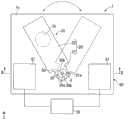
Fig. 1 is a schematic configuration diagram showing a blade drive device according to a first embodiment.
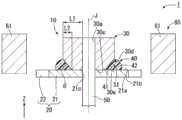
Fig. 2 is a view showing the blade drive device according to the first embodiment, and is a sectional view taken along line II-II of fig. 1.
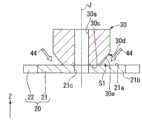
Fig. 3 is a sectional view showing a part of an assembling procedure of the light shielding blade according to the first embodiment.
Fig. 4 is a sectional view showing a light shielding blade according to a second embodiment.
Fig. 5 is a sectional view showing a light shielding blade according to a third embodiment.
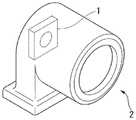
Fig. 6 is a perspective view showing an example of the embodiment of the imaging device.
Fig. 7 is a perspective view showing an example of the embodiment of the imaging device.
Fig. 8 is a perspective view showing an example of the embodiment of the imaging device.
Detailed Description
The Z-axis direction shown in the drawings is a direction parallel to the vertical direction. The positive side in the Z-axis direction is referred to as "upper side", and the negative side in the Z-axis direction is referred to as "lower side". The central axis J shown in the drawings extends in the Z-axis direction, i.e., in the vertical direction. In the following description, the axial direction of the central axis J, i.e., the vertical direction parallel to the Z-axis direction, is simply referred to as the "axial direction". The radial direction around the central axis J is simply referred to as the "radial direction", and the circumferential direction around the central axis J is simply referred to as the "circumferential direction".
In the following embodiments, the upper side corresponds to one side in the axial direction. The lower side corresponds to the other side in the axial direction. The vertical direction, the upper side, and the lower side are only names for describing the relative positional relationship of the respective parts, and the actual arrangement relationship may be an arrangement relationship other than the arrangement relationship indicated by the names.
First embodiment > theblade drive device 1 of the present embodiment shown in fig. 1 and 2 is mounted on an imaging device. Theblade drive device 1 is, for example, a shutter device of an infrared camera mounted in an imaging device. Theblade drive device 1 includes: abase plate 1a, alight shielding blade 10, asupport pin 50, and adriving part 60. Thebottom plate 1a supports theshade blade 10. Thebottom plate 1a has an opening 1b penetrating thebottom plate 1a in the axial direction. The opening 1b is an opening for exposure.
Thelight blocking blade 10 of the present embodiment is a light blocking blade for an imaging device, and is, for example, a shutter blade of an infrared camera. The light-shielding blades 10 rotate around the central axis J, and can be switched between an open state shown by a two-dot chain line in fig. 1 in which the opening 1b is exposed and a closed state shown by a solid line in fig. 1 in which the opening 1b is covered. In the closed state, thelight blocking blade 10 blocks exposure light passing through the opening 1 b. Theshade blade 10 includes ablade body 20 and amagnet 30.
Theblade body 20 is a plate-like body elongated in the radial direction. As shown in fig. 1, theblade body 20 includes a supportedportion 21 and ablade portion 22. The supportedportion 21 has a square shape as viewed from the upper side. The upper surface of the supportedportion 21 is afixed surface 21 a. That is, theblade body 20 has a fixingsurface 21a facing upward. Thefixing surface 21a is orthogonal to the axial direction. The lower surface of the supportedportion 21 is a supportedsurface 21 b. The supportedsurface 21b is orthogonal to the axial direction. Theblade portions 22 extend radially outward from the supportedportion 21. The shape of theblade 22 as viewed from the upper side is, for example, a rectangle that is long in the radial direction.
As shown in fig. 2, theblade body 20 has a throughhole 21c that penetrates theblade body 20 in the axial direction. In the present embodiment, the through-hole 21c penetrates the supportedportion 21 in the axial direction. The cross-sectional shape of the through-hole 21c perpendicular to the axial direction is, for example, a circle having the central axis J as the center. Examples of the material of theblade body 20 include: metals such as aluminum, and resins such as Polyethylene terephthalate (PET). The material of theblade body 20 can be selected as appropriate according to the use of the light-shielding blade 10. In the case of a light-shielding blade for an infrared camera, such as the light-shielding blade 10 of the present embodiment, aluminum, for example, can be used as the material of the blade body. In the case where the light blocking blade is a shutter blade for a digital camera or a film camera, polyethylene terephthalate may be used as a material of the blade body.
Themagnet 30 has a substantially cylindrical shape with the center axis J as the center. In the present embodiment, themagnet 30 is a single member. Themagnet 30 has N and S poles as two different magnetic poles. The N pole and the S pole are arranged in a predetermined direction orthogonal to the axial direction. For example, a portion of themagnet 30 on one side in the predetermined direction from the central axis J is an N-pole, and a portion of themagnet 30 on the other side in the predetermined direction from the central axis J is an S-pole. An N pole and an S pole are arranged with a central axis J therebetween. Themagnet 30 is fixed to the fixingsurface 21a by an adhesive 40 on the upper side of theblade body 20. The lower surface of themagnet 30 contacts the fixingsurface 21 a.
As shown in fig. 1, themagnet 30 has a shape, as viewed from above, which is a circle centered on the central axis J and is cut out from both side portions thereof with the central axis J interposed therebetween in the radial direction. Thus, themagnet 30 has a pair offlat surfaces 30b as a part of the radially outer surface of themagnet 30. The pair offlat surfaces 30b are provided on both side portions of themagnet 30 across the center axis J. Theflat surface 30b is a flat surface orthogonal to the radial direction. The pair offlat surfaces 30b are parallel to each other. In the present embodiment, the pair offlat surfaces 30b is parallel to a predetermined direction in which the N-pole and S-pole of themagnet 30 are arranged.
As shown in fig. 2, themagnet 30 has ahole 30a disposed along a central axis J extending in the axial direction. Thehole 30a is recessed upward from the lower end of themagnet 30. In the present embodiment, thehole 30a penetrates themagnet 30 in the axial direction. As shown in fig. 1, the cross-sectional shape ofhole 30a perpendicular to central axis J is a circle having central axis J as the center.
As shown in fig. 2, the inner diameter of thehole 30a is substantially the same as the inner diameter of the through-hole 21c, for example. Thehole 30a and the through-hole 21c are entirely overlapped with each other when viewed in the axial direction. The lower peripheral edge of thehole 30a and the upper peripheral edge of the through-hole 21c are in contact with each other. Thereby, the through-hole 21c is connected to thehole 30 a.
Themagnet 30 has aninclined surface 30e at the lower end. Theinclined surface 30e is an inclined surface located on the upper side from the radially inner side toward the radially outer side. Theinclined surface 30e is substantially annular with the central axis J as the center. Theinclined surface 30e faces radially outward. Theinclined surface 30e is a radially outer surface of the lower portion of themagnet 30. Thus, the outer diameter of the lower portion of themagnet 30 becomes smaller from the upper side toward the lower side. Theinclined surface 30e is formed by chamfering the corner of the lower end of the columnar magnet, for example. The lower end of theinclined surface 30e is connected to thelower surface 30c of themagnet 30.
Themagnet 30 has a first facingportion 30d on the radially outer side of thehole 30a, and the first facingportion 30d is a facing portion that faces downward and is disposed apart upward from the fixingsurface 21 a. That is, in the present embodiment, the facing portion includes the first facingportion 30 d. In the present embodiment, the first facingportion 30d is at least a part of theinclined surface 30 e. The first facingportion 30d is provided at the radially outer edge portion of the lower end of themagnet 30. The first facingportion 30d is provided around the entire periphery of the radially outer edge portion of the lower end of themagnet 30. The first facingportion 30d is substantially annular with the center axis J as the center.
In the present embodiment, the first facingportion 30d is an inclined surface located on the upper side from the radially inner side toward the radially outer side. Thereby, the first facingportion 30d faces radially outward. In the present embodiment, the first facingportion 30d is a radially outer surface of the lower portion of themagnet 30.
The angle θ of the first opposingportion 30d with respect to the fixedsurface 21a is 45 ° or more and less than 90 °. The radial dimension L2 of the first facingportion 30d is equal to or less than half of the maximum radial distance L1 from the radially inner surface of thehole 30a to the radially outer surface of themagnet 30. Maximum distance L1 is the maximum distance among the radial distances from the radially inner surface ofhole 30a to the radially outer surface ofmagnet 30. In the present embodiment, the maximum distance L1 is the radial distance from the radially inner surface ofhole 30a to the radially outer surface of the portion ofmagnet 30 above first facingportion 30 d. The dimension L2 is a radial distance from the radially inner edge of the first facingportion 30d to the radially outer edge of the first facingportion 30 d.
By setting the dimension L2 of the first facingportion 30d to be equal to or less than half of the maximum distance L1, the dimension of thelower surface 30c of themagnet 30 in the radial direction can be increased. This can increase the contact area of themagnet 30 with the fixingsurface 21a, and can stably fix themagnet 30 to the fixingsurface 21 a. The radial dimension L2 of the first facingportion 30d is, for example, about 0.05mm to 0.2 mm.
The axial gap S1 between the first facingportion 30d and the fixedsurface 21a is open radially outward. The axial dimension of the gap S1 increases from the radially inner side to the radially outer side. In the gap S1, the first facingportion 30d is disposed and fixed
And an adhesive 40 for bonding thesurface 21 a. Thereby, theblade body 20 and themagnet 30 are bonded and fixed via the adhesive 40. The adhesive 40 is a cured portion of theuncured adhesive 44 applied to the gap S1.
The adhesive 40 is filled up to the entire gap S1. The adhesive 40 has afirst portion 41 and asecond portion 42. Thefirst portion 41 is a portion located at the gap S1. Thefirst portion 41 is bonded to both the first facingportion 30d and the fixingsurface 21 a. Thesecond portion 42 is a portion located radially outward of themagnet 30. That is, thesecond portion 42 is a portion exposed radially outward from the gap S1.
In this way, since the adhesive 40 has thesecond portion 42 positioned radially outward of themagnet 30, the adhesive 40 can be easily filled in the entire gap S1, and the amount of the adhesive 40 adhering the first facingportion 30d to the fixingsurface 21a can be suppressed from decreasing. This makes it possible to increase the area of the first facingportion 30d to which the adhesive 40 is bonded, and to firmly fix themagnet 30 to theblade body 20. In addition, the amount of uncured adhesive 44 applied when bonding themagnet 30 to theblade body 20 is easily managed.
Thesecond portion 42 is bonded to the fixingface 21 a. This can increase the area of the fixingsurface 21a to which the adhesive 40 is bonded. Therefore, themagnet 30 can be more firmly fixed to theblade body 20.
The adhesive 40 is, for example, an ultraviolet-curable adhesive. This makes it possible to shorten the time until theuncured adhesive 44 is cured, compared with a thermosetting adhesive or the like. Further, since heating is not required when theuncured adhesive 44 is cured, demagnetization of themagnet 30 can be suppressed. In the present embodiment, theuncured adhesive 44 is applied to the gap S1 that opens radially outward. Therefore, the applieduncured adhesive 44 becomes a state of being exposed to the outside of thelight shielding blade 10. Therefore, even if the material of theblade body 20 is metal or the like, for example, the applied uncured adhesive 44 can be irradiated with ultraviolet rays.
For example, in the case where the first facingportion 30d is an inclined surface facing radially outward and the gap S1 is likely to be relatively large as in the present embodiment, it is preferable to use an adhesive having a relatively high viscosity as the adhesive 40. The reason for this is that: when theuncured adhesive 44 has been applied to the gap S1, it is easy to first hold theuncured adhesive 44 in the relatively large gap S1. That is, the shape of themagnet 30 of the present embodiment is particularly useful when an adhesive having a relatively high viscosity is used as the adhesive 40.
As shown in fig. 3, the worker assembling thelight blocking blade 10 brings thelower surface 30c of themagnet 30 into contact with the fixingsurface 21a in a state where thehole 30a and the through-hole 21c are aligned along the central axis J. At this time, theblade body 20 and themagnet 30 are positioned by a jig not shown. For example, the supportedsurface 21b is supported from the lower side by a jig to position theblade body 20 in the axial direction.
For example, the pair offlat surfaces 30b may be pressed against a jig to position themagnet 30 in the radial direction. In the present embodiment, since theflat surface 30b is parallel to the predetermined direction in which the N-pole and S-pole of themagnet 30 are arranged, themagnet 30 can be positioned by theflat surface 30b, and the direction of the magnetic pole of themagnet 30 can be aligned with theblade body 20 with high accuracy. Alternatively, themagnet 30 may be positioned in the radial direction by inserting a positioning pin into thehole 30 a.
The worker applies the uncured adhesive 44 from the outside in the radial direction toward the gap S1 as indicated by the arrow in a state where themagnet 30 is in contact with the fixingsurface 21a as shown in fig. 3. Then, the worker irradiates the uncured adhesive 44 with ultraviolet light. Thereby, theuncured adhesive 44 is cured to become the adhesive 40. Therefore, the first facingportion 30d is bonded to the fixingsurface 21a, and themagnet 30 is fixed to theblade body 20. Thereby, thelight shielding blade 10 is assembled. In addition, thelight blocking blade 10 may be assembled by an assembly robot, for example.
Thesupport pin 50 is a cylindrical shape extending in the axial direction with the center axis J as the center. The lower end of thesupport pin 50 is fixed to, for example, a housing of theblade drive device 1, not shown. Thesupport pin 50 is inserted into thehole 30a from the lower side of theblade body 20 through the throughhole 21 c. Thesupport pin 50 supports thelight shielding blade 10 rotatably around the center axis J. In fig. 2, the upper end of thesupport pin 50 is disposed at the same position as the upper surface of themagnet 30, for example, in the axial direction. When thelight shielding blade 10 rotates, the inner circumferential surface of thehole portion 30a and the inner circumferential surface of the through-hole 21c move relative to each other in the circumferential direction while sliding on the outer circumferential surface of thesupport pin 50, for example.
In fig. 2, thesupport pin 50 is inserted from below thehole 30a, but the present invention is not limited to this. In the present embodiment, thehole 30a penetrates themagnet 30 in the axial direction, and therefore thesupport pin 50 may be inserted from above thehole 30 a. Therefore, it is also possible to cause thesupport pin 50 to support thelight shielding blade 10 in a state where the posture of thelight shielding blade 10 has been reversed in the axial direction with respect to the posture shown in fig. 2. Therefore, theblade drive device 1 can be easily assembled.
The drivingpart 60 generates a magnetic field passing through themagnet 30 to rotate thelight blocking blade 10 around the central axis J. Thedrive unit 60 includes: a pair ofcoils 61 arranged in a direction orthogonal to the axial direction with themagnet 30 interposed therebetween, and a yoke, not shown, to which thecoils 61 are attached.
Thecoil 61 is supplied with current from apower supply 70 shown in fig. 1. Thereby, a magnetic field is generated between the pair ofcoils 61. The magnetic field generated by thecoil 61 and the magnetic field generated by themagnet 30 generate a magnetic force in themagnet 30 that rotates themagnet 30 around the central axis J. Therefore, themagnet 30 can be rotated by the drivingunit 60, and thelight blocking blade 10 fixed to themagnet 30 can be rotated around the central axis J. Thereby, the light-shielding blade 10 can be switched between the open state and the closed state.
In the present embodiment, thelight blocking blades 10 are maintained in the open state shown by the two-dot chain line in fig. 1 in a state where no current is supplied to thecoil 61. At this time, thelight blocking blade 10 is maintained in the open state by the magnetic force of themagnet 30. On the other hand, when a current is supplied to thecoil 61, thelight blocking blade 10 rotates around the central axis J to be in a closed state shown by a solid line in fig. 1. When the supply of the current to thecoil 61 is stopped, thelight blocking blade 10 rotates in the opposite direction around the center axis J by the magnetic force of themagnet 30, and is opened again.
In addition, thelight blocking blade 10 may be maintained in the closed state in a state where no current is supplied to thecoil 61. In this case, when a current is supplied to thecoil 61, the light-shielding blade 10 is switched to the open state.
According to the present embodiment, the adhesive 40 is disposed in the space S1 between the first facingportion 30d located radially outward of thehole 30a and the fixingsurface 21a, whereby the first facingportion 30d and the fixingsurface 21a are bonded to each other, and themagnet 30 is fixed to theblade body 20. Therefore, whenuncured adhesive 44 is applied,uncured adhesive 44 is easily left in gap S1, and entry of uncured adhesive 44 intohole 30a and through-hole 21c can be suppressed. This can prevent themagnet 30 and theblade body 20 from being hindered from rotating relative to thesupport pin 50, and can obtain alight shielding blade 10 that operates properly. Further, the insertion of thesupport pin 50 into thehole 30a and the through-hole 21c can be suppressed from being hindered.
Therefore, the manufactured light-shielding blade 10 can be prevented from becoming a defective product, and the yield of the light-shielding blade 10 can be improved. In addition, thelight blocking blade 10 that operates appropriately can be obtained, whereby theblade driving device 1 excellent in reliability can be obtained.
Further, for example, when themagnet 30 is positioned in the radial direction by inserting the positioning pin into thehole 30a, the applied uncured adhesive 44 can be prevented from adhering to the positioning pin. Therefore, the workability of assembling thelight blocking blade 10 can be improved.
Further, according to the present embodiment, since the gap S1 is opened radially outward, a method may be employed in which thelower surface 30c of themagnet 30 is brought into contact with the fixingsurface 21a as described above, and then theuncured adhesive 44 is applied to the gap S1. By adopting this method, theuncured adhesive 44 applied to the gap S1 is blocked by the contact portion between thelower surface 30c and the fixingsurface 21a, and the flow into thehole 30a and the through-hole 21c is suppressed. Therefore, theuncured adhesive 44 can be further suppressed from entering thehole portion 30a and the through-hole 21 c. Further, since thelower surface 30c of themagnet 30 and the fixingsurface 21a can be brought into contact without theuncured adhesive 44, themagnet 30 can be positioned with high accuracy with respect to theblade body 20.
In addition, according to the present embodiment, the first facingportion 30d is an inclined surface located on the upper side as going from the radially inner side to the radially outer side. Therefore, the area of the first facingportion 30d is easily increased, and the area of themagnet 30 in contact with the adhesive 40 is easily increased. This makes it possible to more firmly fix themagnet 30 to theblade body 20.
In particular, in the present embodiment, the angle θ of the first opposingportion 30d with respect to the fixedsurface 21a is 45 ° or more and less than 90 °. Therefore, the area of the first facingportion 30d can be easily increased. Therefore, themagnet 30 can be more firmly fixed to theblade body 20. In the present embodiment, the dimension L2 in the radial direction of the first facingportion 30d is 0.05mm or more. Therefore, the area of the first facingportion 30d can be easily increased, and themagnet 30 can be more firmly fixed to theblade body 20.
In addition, according to the present embodiment, the first facingportion 30d is provided around the entire periphery of the radially outer edge portion of the lower end portion of themagnet 30. Therefore, the entire circumference of themagnet 30 can be fixed to theblade body 20 by the adhesive 40. This makes it possible to fix themagnet 30 to theblade body 20 more firmly and in a more stable state.
In addition, according to the present embodiment, since themagnet 30 is directly fixed to theblade body 20, another member for coupling themagnet 30 to theblade body 20 is not necessary. Therefore, the number of parts of theblade drive device 1 can be reduced. In addition, theblade drive device 1 can be easily downsized.
As shown in fig. 4, in thelight blocking blade 110 of the present embodiment, themagnet 130 has agroove 133 recessed from the lower end of themagnet 130 toward the upper side and extending in the circumferential direction. Although not shown, thegroove 133 is annular with the central axis J as the center. The cross-sectional shape of thegroove 133 perpendicular to the circumferential direction is, for example, a half-elliptical shape protruding upward. Thegroove 133 is located radially outward of thehole 30a and radially inward of the first facingportion 30 d.
In the present embodiment, the facing portion includes a second facingportion 133a as an inner surface of thegroove 133. Thesecond facing portion 133a is annular with the central axis J as the center. The dimension in the radial direction of the second facingportion 133a, i.e., the width of thegroove 133, is, for example, not more than half of the distance in the radial direction from the radially inner surface of thehole portion 30a to the radially outer edge of thelower surface 30 c. This can increase the contact area of themagnet 130 with the fixingsurface 21a, and can stably fix themagnet 130 to the fixingsurface 21 a.
The adhesive 140 for bonding the second facingportion 133a to the fixingsurface 21a is disposed in the gap S2 in the axial direction between the second facingportion 133a, which is the facing portion, and the fixingsurface 21a, that is, inside thegroove 133. The adhesive 140 is filled into the gap S2. Since the first facingportion 30d is fixed to the fixingsurface 21a by the adhesive 40 and the second facingportion 133a is fixed to the fixingsurface 21a by the adhesive 140, themagnet 130 can be more firmly fixed to theblade body 20.
In addition, according to the present embodiment, for example, after theuncured adhesive 44 is applied to the fixingsurface 21a, the magnet is attached
When theiron 130 is bonded to theblade body 20, even when theuncured adhesive 44 enters between thelower surface 30c of themagnet 130 and the fixingsurface 21a, theuncured adhesive 44 can be caught in the gap S2. This can prevent uncured adhesive 44 from penetrating betweenlower surface 30c ofmagnet 130 and fixingsurface 21a and reachinghole 30a and through-hole 21 c.
Therefore, even if the method of applying theuncured adhesive 44 to the fixingsurface 21a is adopted as the method of bonding themagnet 130 and theblade body 20, theuncured adhesive 44 can be prevented from entering thehole portion 30a and the through-hole 21 c. When theuncured adhesive 44 is first applied to the fixingsurface 21a, theuncured adhesive 44 can be applied from directly above the fixingsurface 21a, and thus theuncured adhesive 44 can be easily applied. Although not shown, thelower surface 30c of themagnet 130 is fixed to the fixingsurface 21a via an adhesive at a portion between the first facingportion 30d and the second facingportion 133a in the radial direction.
As shown in fig. 5, in thelight shielding blade 210 of the present embodiment, themagnet 230 has alarge diameter portion 231 and asmall diameter portion 232. Thesmall diameter portion 232 is connected to a lower end portion of thelarge diameter portion 231. Thesmall diameter portion 232 has an outer diameter smaller than that of thelarge diameter portion 231. In the present embodiment, thelower surface 230c of themagnet 230 is the lower surface of thesmall diameter portion 232.
In the present embodiment, the first facingportion 230d is a lower surface of thelarge diameter portion 231. The first facingportion 230d is annular and perpendicular to the axial direction, and has a center axis J as a center. The axial gap S3 between the first facingportion 230d and the fixedsurface 21a is open radially outward. In the present embodiment, the axial dimension of the gap S3 is the same as the axial dimension of thesmall diameter portion 232. The axial dimension of the gap S3 is substantially uniform over the entire radial direction.
The adhesive 240 is disposed in the axial gap S3 between the first facingportion 230d and the fixingsurface 21 a. In the case where the first facingportion 230d is orthogonal to the axial direction as in the present embodiment, the dimension of the gap S3 in the axial direction is substantially uniform over the entire radial direction, and therefore the opening portion on the outer side in the radial direction of the gap S3 is likely to be relatively small. In this case, as the adhesive 240, an adhesive having a relatively low viscosity is preferably used. The reason for this is that: the uncured adhesive is likely to enter the gap S3 by capillary phenomenon. That is, the shape of themagnet 230 of the present embodiment is particularly useful when an adhesive having a relatively low viscosity is used as the adhesive 240.
The present invention is not limited to the above embodiments, and other configurations may be adopted. The blade body is not particularly limited as long as it has a fixing surface. The hole of the magnet may not penetrate the magnet. The facing portion is not particularly limited as long as it faces downward and is disposed apart from the fixing surface toward the upper side. For example, themagnet 130 of the second embodiment may not have the first facingportion 30 d. Themagnet 230 of the third embodiment may have the second facingportion 133a of the second embodiment.
The radial dimension of the first facing portion may be larger than half of a maximum radial distance from the radially inner surface of the hole portion to the radially outer surface of the magnet. The first facing portion and the second facing portion may not be annular. The first facing portions may be provided in plurality at intervals in the circumferential direction. The second facing portions may be provided in plurality at intervals in the circumferential direction. The magnet may be formed by connecting a plurality of magnets. The shape of the magnet is not particularly limited, and may be a substantially polygonal columnar shape such as a substantially hexagonal columnar shape, or may be a substantially elliptical columnar shape.
The type of the adhesive is not particularly limited as long as the blade body and the magnet can be bonded to each other. The adhesive may be a thermosetting adhesive. The adhesive may not have a portion located radially outward of the magnet. That is, the entire adhesive may be disposed in the axial gap between the facing portion and the fixing surface. The adhesive may not be filled in the axial gap between the facing portion and the fixing surface. For example, when the magnet has a plurality of facing portions, the magnet may have a facing portion in which the adhesive is not disposed in the axial gap with the fixing surface.
When the magnet is fixed to the blade body, the magnet may be fixed to the blade body by applying an uncured adhesive to the magnet and then bringing the magnet into contact with the fixing surface. Alternatively, the magnet and the blade body may be fixed by applying an uncured adhesive to both the magnet and the fixing surface and then bringing the magnet into contact with the fixing surface. Instead of the adhesive, an adhesive sheet (adhesive tape) may be used to fix the blade body and the magnet.
The use of the light-shielding blade is not particularly limited as long as it is a light-shielding blade for an imaging device. The light blocking blade may be, for example, a filter blade or an aperture blade. The blade driving device is not particularly limited as long as it includes a light blocking blade, and may be a diaphragm device or the like.
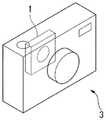
Embodiment of imaging device > theimaging device 2 shown in fig. 6 is an example of an infrared camera. Theimaging device 3 shown in fig. 7 is an example of a digital camera. Theimaging device 4 shown in fig. 8 is an example of a portable information terminal having an imaging function. Theimaging device 4 is, for example, a smartphone.
Theimaging device 2, theimaging device 3, and theimaging device 4 each include theblade drive device 1 of the first embodiment. In theimaging device 2, theimaging device 3, and theimaging device 4, theblade driving device 1 is an imaging element incorporated in each imaging device. Theimaging device 2, theimaging device 3, and theimaging device 4 each include a lens positioned in front of theblade drive device 1, a processing circuit that processes a captured image, a memory, and the like. Further, theblade driving device 1, which is an imaging element included in a smartphone such as theimaging device 4, may be an imaging element mounted on the rear of the smartphone.
The blade driving device mounted on theimaging devices shielding blade 110 according to the second embodiment, or may be the blade driving device including the light-shielding blade 210 according to the third embodiment. The imaging device is not particularly limited, and may be a single-lens reflex camera, or may be a portable information terminal having an imaging function other than a smartphone.
The respective configurations described above can be combined as appropriate within a range not inconsistent with each other.
Description of the symbols
1: blade drive device
2. 3, 4: image pickup apparatus
10. 110, 210: shading blade
20: blade body
21 a: fixing surface
21 c: through hole
30. 130, 230: magnet
30 a: hole part
30d, 230 d: first opposite part
40. 44, 140, 240: adhesive agent
50: support pin
60: driving part
133: trough
133 a: second opposite part
J: center shaft
L1: maximum distance
L2: radial dimension of the first facing portion
S1, S2, S3: gap
θ: angle of rotation
Claims (12)
1. A light-shielding blade for an image pickup apparatus, comprising: a magnet having a hole portion arranged along a central axis extending in one direction; and a blade body having a fixing surface facing one side in the axial direction; the magnet is fixed to the fixing surface on one axial side of the blade body, the hole is recessed from an end portion of the other axial side of the magnet toward the one axial side, the blade body has a through hole penetrating the blade body in the axial direction and connected to the hole, the magnet has an opposing portion facing the other axial side and disposed apart from the fixing surface toward the one axial side, and an adhesive for bonding the opposing portion to the fixing surface is disposed in a gap between the opposing portion and the fixing surface in the axial direction.
2. The light-shielding blade according to claim 1, wherein the facing portion includes a first facing portion provided at a radially outer edge portion of an end portion on the other side in the axial direction of the magnet, and a gap in the axial direction between the first facing portion and the fixing surface is open radially outward.
3. The light-shielding blade according to claim 2, wherein the first facing portion is an inclined surface located on one side in the axial direction as going from a radially inner side toward a radially outer side.
4. The light-shielding blade according to claim 3, wherein an angle of the first facing portion with respect to the fixing surface is 45 ° or more and less than 90 °.
5. The light-shielding blade according to any one of claims 2 to 4, wherein the first facing portion is provided on the entire periphery of a radially outer edge portion of an end portion on the other side in the axial direction of the magnet.
6. The shading blade according to any one of claims 2 to 5, wherein the adhesive has a portion located radially outside of the magnet.
7. The light-shielding blade according to any one of claims 2 to 6, wherein a dimension in a radial direction of the first facing portion is not more than half of a maximum distance in the radial direction from a radially inner side surface of the hole portion to a radially outer side surface of the magnet.
8. The light-shielding blade according to any one of claims 2 to 7, wherein a dimension in a radial direction of the first facing portion is 0.05mm or more.
9. The shading blade according to any one of claims 1 to 8, wherein the magnet has a groove recessed from an end portion of the other side in the axial direction of the magnet toward the one side in the axial direction and elongated in the circumferential direction, the facing portion including a second facing portion as an inner side surface of the groove.
10. The shading blade according to any one of claims 1 to 9, wherein the hole portion penetrates the magnet in an axial direction.
11. A blade drive apparatus comprising: the shading blade according to any one of claims 1 to 10; a support pin inserted into the hole portion and rotatably supporting the light shielding blade around the central axis; and a driving part which generates a magnetic field passing through the magnet to rotate the light shielding blade around the central shaft.
12. An image pickup apparatus comprising the light-shielding blade according to any one of claims 1 to 10 or the blade driving apparatus according to claim 11.
Applications Claiming Priority (3)
| Application Number | Priority Date | Filing Date | Title |
|---|---|---|---|
| JP2017148155 | 2017-07-31 | ||
| JP2017-148155 | 2017-07-31 | ||
| PCT/JP2018/023295WO2019026448A1 (en) | 2017-07-31 | 2018-06-19 | Light-shielding blade, blade drive device, and imaging device |
Publications (1)
| Publication Number | Publication Date |
|---|---|
| CN110914753Atrue CN110914753A (en) | 2020-03-24 |
Family
ID=65233778
Family Applications (1)
| Application Number | Title | Priority Date | Filing Date |
|---|---|---|---|
| CN201880047685.1APendingCN110914753A (en) | 2017-07-31 | 2018-06-19 | Light-blocking blade, blade drive device, and imaging device |
Country Status (3)
| Country | Link |
|---|---|
| JP (1) | JPWO2019026448A1 (en) |
| CN (1) | CN110914753A (en) |
| WO (1) | WO2019026448A1 (en) |
Citations (12)
| Publication number | Priority date | Publication date | Assignee | Title |
|---|---|---|---|---|
| JPH0539467A (en)* | 1991-08-02 | 1993-02-19 | Olympus Optical Co Ltd | Optical part |
| CN1256434A (en)* | 1998-12-04 | 2000-06-14 | 阿尔卑斯电气株式会社 | Magnetic head mounting assembly |
| JP2003107309A (en)* | 2001-09-28 | 2003-04-09 | Kyocera Corp | Optical device and assembling method thereof |
| US20040212903A1 (en)* | 2003-04-24 | 2004-10-28 | Funai Electric Co., Ltd. | Object lens unit |
| CN1701592A (en)* | 2003-04-28 | 2005-11-23 | 松下电器产业株式会社 | camera device |
| CN1940616A (en)* | 2005-09-30 | 2007-04-04 | 富士能株式会社 | Lens block, lens, holder for holding the lens block, and projector using the lens holder |
| CN1953295A (en)* | 2005-10-21 | 2007-04-25 | 佳能株式会社 | Exposure adjusting device and driving device for it |
| CN101124813A (en)* | 2004-02-20 | 2008-02-13 | 弗莱克斯特罗尼克斯美国国际公司 | Integrated lens and chip assembly for digital camera |
| US20090120569A1 (en)* | 2004-05-31 | 2009-05-14 | Konica Minolta Opto, Inc. | Fixing method, optical component and pickup manufactured by the fixing method |
| CN101493631A (en)* | 2008-01-24 | 2009-07-29 | 鸿富锦精密工业(深圳)有限公司 | Mechanical shutter and camera module using the mechanical shutter |
| CN102551641A (en)* | 2010-11-25 | 2012-07-11 | 富士胶片株式会社 | Illumination optical unit for endoscope, method of manufacturing the same, and adhesive for endoscope optical member |
| CN203963144U (en)* | 2014-05-26 | 2014-11-26 | 常州剑湖金城车辆设备有限公司 | A kind of one-way valve and adopt the rail vehicle heating device electric hot plate of this one-way valve |
Family Cites Families (2)
| Publication number | Priority date | Publication date | Assignee | Title |
|---|---|---|---|---|
| JP2006258867A (en)* | 2005-03-15 | 2006-09-28 | Matsushita Electric Ind Co Ltd | Shutter blade |
| JP5064809B2 (en)* | 2007-01-09 | 2012-10-31 | キヤノン株式会社 | Light control device |
- 2018
- 2018-06-19CNCN201880047685.1Apatent/CN110914753A/enactivePending
- 2018-06-19WOPCT/JP2018/023295patent/WO2019026448A1/ennot_activeCeased
- 2018-06-19JPJP2019533952Apatent/JPWO2019026448A1/enactivePending
Patent Citations (12)
| Publication number | Priority date | Publication date | Assignee | Title |
|---|---|---|---|---|
| JPH0539467A (en)* | 1991-08-02 | 1993-02-19 | Olympus Optical Co Ltd | Optical part |
| CN1256434A (en)* | 1998-12-04 | 2000-06-14 | 阿尔卑斯电气株式会社 | Magnetic head mounting assembly |
| JP2003107309A (en)* | 2001-09-28 | 2003-04-09 | Kyocera Corp | Optical device and assembling method thereof |
| US20040212903A1 (en)* | 2003-04-24 | 2004-10-28 | Funai Electric Co., Ltd. | Object lens unit |
| CN1701592A (en)* | 2003-04-28 | 2005-11-23 | 松下电器产业株式会社 | camera device |
| CN101124813A (en)* | 2004-02-20 | 2008-02-13 | 弗莱克斯特罗尼克斯美国国际公司 | Integrated lens and chip assembly for digital camera |
| US20090120569A1 (en)* | 2004-05-31 | 2009-05-14 | Konica Minolta Opto, Inc. | Fixing method, optical component and pickup manufactured by the fixing method |
| CN1940616A (en)* | 2005-09-30 | 2007-04-04 | 富士能株式会社 | Lens block, lens, holder for holding the lens block, and projector using the lens holder |
| CN1953295A (en)* | 2005-10-21 | 2007-04-25 | 佳能株式会社 | Exposure adjusting device and driving device for it |
| CN101493631A (en)* | 2008-01-24 | 2009-07-29 | 鸿富锦精密工业(深圳)有限公司 | Mechanical shutter and camera module using the mechanical shutter |
| CN102551641A (en)* | 2010-11-25 | 2012-07-11 | 富士胶片株式会社 | Illumination optical unit for endoscope, method of manufacturing the same, and adhesive for endoscope optical member |
| CN203963144U (en)* | 2014-05-26 | 2014-11-26 | 常州剑湖金城车辆设备有限公司 | A kind of one-way valve and adopt the rail vehicle heating device electric hot plate of this one-way valve |
Also Published As
| Publication number | Publication date |
|---|---|
| WO2019026448A1 (en) | 2019-02-07 |
| JPWO2019026448A1 (en) | 2020-08-27 |
Similar Documents
| Publication | Publication Date | Title |
|---|---|---|
| US7794162B2 (en) | Mechanical shutter and camera module having the same | |
| US10110816B2 (en) | Optical unit with shake correction function | |
| JP2009080217A (en) | Lens driving device, camera and mobil phone with camera | |
| US6733192B2 (en) | Electromagnetic actuator and camera blade driving device | |
| US10634928B2 (en) | Method for adjusting position of swing member of optical unit with shake correction function and optical unit with shake correction function | |
| CN101000446A (en) | Magnet rotor and electromagnetically-driving device using the same, and optical apparatus with light quantity-control device | |
| JP6685650B2 (en) | Blade drive device and optical instrument | |
| TWI665509B (en) | Optical unit with shake correction function and manufacturing method thereof | |
| WO2020258091A1 (en) | Shutter structure and photographing device | |
| CN106547159B (en) | Blade drive device and optical apparatus | |
| CN105319802B (en) | Camera model | |
| CN110945424A (en) | Light-blocking blade, blade drive device, and imaging device | |
| CN110914753A (en) | Light-blocking blade, blade drive device, and imaging device | |
| US7960876B2 (en) | Magnet rotor, electromagnetic drive device and light quantity adjustment device using the magnet rotor | |
| CN110914752A (en) | Shading blade, blade driving device and camera device | |
| CN113632349A (en) | Method for manufacturing rotor and method for manufacturing motor | |
| CN113632350B (en) | Rotor and motor | |
| JP2016061985A (en) | Magnetic driving device and imaging apparatus | |
| US8384254B2 (en) | Electromagnetically-driven mechanical shutter and electronic device using the same | |
| JP4979920B2 (en) | Camera blade drive | |
| KR20180118328A (en) | Jig for marking actuator of camera module | |
| JP4575055B2 (en) | Camera blade drive | |
| JP2009300661A (en) | Blade drive mechanism in camera | |
| JP2006215324A (en) | Light quantity adjustment device and optical equipment | |
| JP2017060227A (en) | Electromagnetic motor and optical device |
Legal Events
| Date | Code | Title | Description |
|---|---|---|---|
| PB01 | Publication | ||
| PB01 | Publication | ||
| SE01 | Entry into force of request for substantive examination | ||
| SE01 | Entry into force of request for substantive examination | ||
| WD01 | Invention patent application deemed withdrawn after publication | Application publication date:20200324 | |
| WD01 | Invention patent application deemed withdrawn after publication |