CN110607221B - Method for detecting telomere DNA length based on electrotransfer and vacuum transfer - Google Patents
Method for detecting telomere DNA length based on electrotransfer and vacuum transferDownload PDFInfo
- Publication number
- CN110607221B CN110607221BCN201910828910.1ACN201910828910ACN110607221BCN 110607221 BCN110607221 BCN 110607221BCN 201910828910 ACN201910828910 ACN 201910828910ACN 110607221 BCN110607221 BCN 110607221B
- Authority
- CN
- China
- Prior art keywords
- dna
- telomere dna
- plate
- transfer
- telomere
- Prior art date
- Legal status (The legal status is an assumption and is not a legal conclusion. Google has not performed a legal analysis and makes no representation as to the accuracy of the status listed.)
- Active
Links
Images



Classifications
- C—CHEMISTRY; METALLURGY
- C12—BIOCHEMISTRY; BEER; SPIRITS; WINE; VINEGAR; MICROBIOLOGY; ENZYMOLOGY; MUTATION OR GENETIC ENGINEERING
- C12Q—MEASURING OR TESTING PROCESSES INVOLVING ENZYMES, NUCLEIC ACIDS OR MICROORGANISMS; COMPOSITIONS OR TEST PAPERS THEREFOR; PROCESSES OF PREPARING SUCH COMPOSITIONS; CONDITION-RESPONSIVE CONTROL IN MICROBIOLOGICAL OR ENZYMOLOGICAL PROCESSES
- C12Q1/00—Measuring or testing processes involving enzymes, nucleic acids or microorganisms; Compositions therefor; Processes of preparing such compositions
- C12Q1/68—Measuring or testing processes involving enzymes, nucleic acids or microorganisms; Compositions therefor; Processes of preparing such compositions involving nucleic acids
- C12Q1/6806—Preparing nucleic acids for analysis, e.g. for polymerase chain reaction [PCR] assay
- C—CHEMISTRY; METALLURGY
- C12—BIOCHEMISTRY; BEER; SPIRITS; WINE; VINEGAR; MICROBIOLOGY; ENZYMOLOGY; MUTATION OR GENETIC ENGINEERING
- C12Q—MEASURING OR TESTING PROCESSES INVOLVING ENZYMES, NUCLEIC ACIDS OR MICROORGANISMS; COMPOSITIONS OR TEST PAPERS THEREFOR; PROCESSES OF PREPARING SUCH COMPOSITIONS; CONDITION-RESPONSIVE CONTROL IN MICROBIOLOGICAL OR ENZYMOLOGICAL PROCESSES
- C12Q1/00—Measuring or testing processes involving enzymes, nucleic acids or microorganisms; Compositions therefor; Processes of preparing such compositions
- C12Q1/68—Measuring or testing processes involving enzymes, nucleic acids or microorganisms; Compositions therefor; Processes of preparing such compositions involving nucleic acids
- C12Q1/6813—Hybridisation assays
Landscapes
- Chemical & Material Sciences (AREA)
- Organic Chemistry (AREA)
- Life Sciences & Earth Sciences (AREA)
- Analytical Chemistry (AREA)
- Zoology (AREA)
- Wood Science & Technology (AREA)
- Proteomics, Peptides & Aminoacids (AREA)
- Health & Medical Sciences (AREA)
- Engineering & Computer Science (AREA)
- Biophysics (AREA)
- Immunology (AREA)
- Microbiology (AREA)
- Molecular Biology (AREA)
- Biotechnology (AREA)
- Physics & Mathematics (AREA)
- Chemical Kinetics & Catalysis (AREA)
- Biochemistry (AREA)
- Bioinformatics & Cheminformatics (AREA)
- General Engineering & Computer Science (AREA)
- General Health & Medical Sciences (AREA)
- Genetics & Genomics (AREA)
- Measuring Or Testing Involving Enzymes Or Micro-Organisms (AREA)
Abstract
Description
Technical Field
The invention relates to the technical field of DNA detection, in particular to a telomere DNA length detection method based on electrotransfer and vacuum transfer.
Background
Telomeres are small fragments of DNA-protein complexes present at the end of the linear chromosomes of eukaryotic cells, which maintain chromosome integrity and control the cell division cycle; research has shown that the change of the length of telomere DNA has close correlation with aging, tumor generation and DNA repair, so the measurement of the length of telomere DNA is of great significance for life science research.
Southern hybridization is a common method for determining DNA, and DNA is transferred to a hybridization membrane for molecular hybridization, and the length of the DNA molecule can be detected after color development. However, the existing transfer method has long time consumption, low transfer efficiency, poor repeatability and poor transfer effect on high molecular weight DNA, thereby influencing the detection result; therefore, how to provide a rapid, efficient and stable method for detecting the length of telomere DNA becomes a technical problem to be solved in the field.
Disclosure of Invention
In view of the above, the invention discloses a method for detecting the length of telomeric DNA based on electrotransfer and vacuum transfer, the transfer of telomeric DNA can be completed in 10min, the deviation after the transfer is small, and the detection result is accurate and stable.
In order to achieve the purpose, the invention adopts the following technical scheme:
a telomere DNA transfer device comprises a negative pressure box, a positive plate, a DNA transfer assembly and a negative plate;
the negative pressure box is a hollow box body, the top of the negative pressure box is opened, and an air suction port is arranged on the side surface or the bottom of the negative pressure box;
the positive plate, the DNA transfer assembly and the negative plate are sequentially arranged at the opening from bottom to top;
the positive plate and the negative plate are respectively connected with the positive electrode and the negative electrode of the external power supply, and air holes are distributed on the positive plate and the negative plate;
the DNA transfer assembly comprises filter paper, a hybridization film and an electrophoresis gel block of telomere DNA, and the filter paper, the hybridization film and the electrophoresis gel block of telomere DNA are sequentially placed between the positive plate and the negative plate from bottom to top.
The DNA transfer assembly is arranged between the positive plate and the negative plate, and can transfer the DNA to the hybridization film rapidly under the action of an electric field; air holes are uniformly distributed on the positive plate and the negative plate, and the air holes are vacuumized from the air exhaust port, so that the transfer of high molecular weight telomere DNA can be promoted through negative pressure, the transfer time is further shortened, and the transfer deviation is reduced.
The positive plate and the negative plate can be made of conductive materials and are provided with air holes.
Preferably, the positive plate and the negative plate are prepared by mixing graphene powder and silica sand powder (80-150 meshes) in a ratio of (1000: 1) - (50: 1) and placing the mixture in a mold for high-temperature sintering to form the electrode plate with the air holes with the diameter of 30-50 mu m.
Preferably, the hybridization membrane is an NC membrane or a nylon membrane.
Preferably, the DNA transfer assembly further comprises a silica gel membrane, the silica gel membrane has an opening corresponding to the band region on the electrophoresis gel block of telomere DNA; the silica gel membrane is placed between the hybridization membrane and the filter paper.
The arrangement of the silica gel membrane can ensure that a band area on an electrophoresis gel block of telomere DNA forms stronger negative pressure, thereby promoting the transfer of the telomere DNA.
Preferably, a plurality of openings can be formed in the silica gel membrane, each opening corresponds to a band region of the electrophoresis gel block of telomere DNA during installation, and then a plurality of electrophoresis gel blocks of telomere DNA are processed simultaneously.
Preferably, the telomere DNA transfer device further comprises a support plate, wherein a plurality of ventilation openings are uniformly distributed on the support plate; the supporting plate is arranged at the opening; the positive plate is placed on the supporting plate.
The backup pad is used for supporting the positive plate, avoids long-term back positive plate to produce deformation.
A telomere DNA transfer method uses the telomere DNA transfer device to transfer telomere DNA on an electrophoresis gel block of the telomere DNA to a hybridization membrane.
The telomere DNA transfer method comprises the following steps:
(1) assembling a telomere DNA transfer device, wetting filter paper by using transfer liquid in the assembling process, and communicating an air suction port with a negative pressure air suction pump;
(2) and opening a negative pressure air pump, connecting an external power supply, transferring the telomere DNA, and continuously adding the transfer liquid to the electrophoresis gel block of the telomere DNA in the transfer process.
Preferably, the vacuum degree during the transfer of telomere DNA is 0.04MPa, and the applied voltage is 3V/cm.
Preferably, the transfer solution is 20 × SSC.
And transferring the telomere DNA on the telomere DNA electrophoresis gel block to a hybridization membrane by using the telomere DNA transfer device or the telomere DNA transfer method, and hybridizing to detect the length of the telomere DNA.
According to the technical scheme, compared with the prior art, the electric field is introduced on the basis of vacuum transfer, so that the transfer speed of the telomere DNA with high molecular weight is higher, the result is more accurate and stable, and the method is suitable for telomere DNA (3-10 kb for human and about 100kb for mouse) with different molecular weights.
Drawings
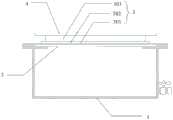
FIG. 1 is a schematic view showing the structure of a telomere DNA transfer apparatus according to example 1;
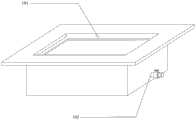
FIG. 2 is a schematic view of a negative pressure box;
FIG. 3 is a schematic view showing the structure of a telomere DNA transfer apparatus according to example 2;
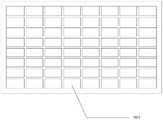
FIG. 4 is a schematic view of a support plate;
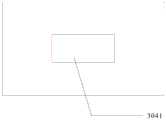
FIG. 5 is a schematic view of a silicone membrane structure;
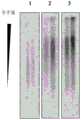
FIG. 6 shows the comparison of the method of the present invention with the conventional method;
wherein, 1 is the transfer for 10min by the traditional method; 2, transferring for 30min by using a traditional method; 3 transfer 10min for example 3.
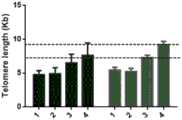
FIG. 7 shows the comparison of the method of the present invention with the conventional method;
wherein, the left figure is the traditional method for transferring for 30min, and the right figure is theembodiment 3 method for transferring for 10 min;
m is Marker; 1 is cell line 293T; 2 is cell line HeLa; 3 is cell line HCT 16; 4 is cell line HT 080;
FIG. 8 shows the consistency of the fluorescence in situ hybridization results compared with the methods of the present invention and the conventional methods;
FIG. 9 shows the results of the reproducibility verification test;
wherein, the left figure 1-4 is the traditional method for transferring for 30min, and the right figure 1-4 is theembodiment 3 method for transferring for 10 min;
1 is cell line 293T; 2 is cell line HeLa; 3 is cell line HCT 16; 4 is cell line HT 080;
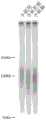
FIG. 10 shows the results of telomere DNA detection of histiocytes from different mice;
reference numerals: 1. a negative pressure box; 101. mounting grooves; 102. an air extraction opening; 2. a positive plate; a DNA transfer module; 301. filtering paper; 302. a hybrid membrane; 303. electrophoresis gel blocks of telomeric DNA; 304. a silicone membrane; 3041. opening a hole; 4. a negative plate; 5. a support plate; 501. and (4) ventilating openings.
Detailed Description
The technical solutions in the embodiments of the present invention will be clearly and completely described below, and it is obvious that the described embodiments are only a part of the embodiments of the present invention, and not all embodiments. All other embodiments, which can be derived by a person skilled in the art from the embodiments given herein without making any creative effort, shall fall within the protection scope of the present invention.
Example 1
As shown in fig. 1-2, a telomere DNA transfer device comprises anegative pressure box 1, apositive plate 2, aDNA transfer component 3 and anegative plate 4.
Thenegative pressure box 1 is a hollow box body, the opening at the top is provided with a mountinggroove 101, and the side is provided with anair suction opening 102.
Thepositive plate 2 is placed in the mountinggroove 101, and theDNA transfer assembly 3 and thenegative plate 4 are sequentially placed on thepositive plate 2 and tightly attached to each other.
Thepositive plate 2 and thenegative plate 4 are respectively connected with the positive electrode and the negative electrode of an external power supply. The preparation method of thepositive plate 2 and thenegative plate 4 comprises the following steps: graphene powder and 100-mesh silica sand powder are mixed in a ratio of 50:1, and the mixture is placed in a mold and sintered at high temperature to form the electrode plate with the air holes with the diameter of 30-50 mu m.
TheDNA transfer assembly 3 comprisesfilter paper 301, ahybridization film 302 and anelectrophoresis gel block 303 of telomere DNA, and thefilter paper 301, thehybridization film 302 and theelectrophoresis gel block 303 of telomere DNA are sequentially placed between thepositive plate 2 and thenegative plate 4 from bottom to top.
Thehybrid membrane 302 is a nylon membrane.
Theelectrophoresis gel block 303 of telomere DNA is an agarose gel block of the telomere DNA of the sample.
Example 2
As shown in figures 2-5, the telomere DNA transfer device comprises anegative pressure box 1, a support plate 5, apositive plate 2, aDNA transfer component 3 and anegative plate 4.
Thenegative pressure box 1 is a hollow box body, the opening at the top is provided with a mountinggroove 101, and the side is provided with anair suction opening 102.
The supporting plate 5 is a stainless steel screen plate, and a plurality ofventilation ports 501 are uniformly distributed on the supporting plate; the support plate 5 is placed in theinstallation groove 101.
Thepositive plate 2, theDNA transfer assembly 3 and thenegative plate 4 are sequentially placed on the supporting plate 5, and all layers are tightly attached.
Thepositive plate 2 and thenegative plate 4 are respectively connected with the positive electrode and the negative electrode of an external power supply. The preparation method of thepositive plate 2 and thenegative plate 4 comprises the following steps: graphene powder and 100-mesh silica sand powder are mixed in a proportion of 100: 1 proportion, placing the mixture in a mould, and sintering the mixture at high temperature to form the electrode plate with the air holes with the diameter of 30-50 mu m.
TheDNA transfer assembly 3 comprisesfilter paper 301, asilica gel film 304, ahybridization film 302 and anelectrophoresis gel block 303 of telomere DNA, and thefilter paper 301, thesilica gel film 304, thehybridization film 302 and theelectrophoresis gel block 303 of telomere DNA are sequentially placed between thepositive plate 2 and thenegative plate 4 from bottom to top.
The center of thesilicone membrane 304 is provided with anopening 3041, theopening 3041 corresponds to the banding region on the electrophoresis gel block of telomere DNA, and the size of the opening is not less than the area of the banding region on the electrophoresis gel block of telomere DNA.
Thehybrid membrane 302 is a nylon membrane.
Theelectrophoresis gel block 303 of telomere DNA is an agarose gel block of the telomere DNA of the sample.
Example 3 method for detecting telomere DNA Length
1. Preparation of telomeres (genomic DNA extracted using Qiagen69506 kit)
(1) Culturing cells in a 10cm cell culture dish, discarding cell culture solution, washing with PBS for 2 times, digesting with pancreatin at 37 ℃ for 3min, collecting in a 15mL centrifuge tube, centrifuging for 3min at 200g, discarding supernatant, washing cells with PBS for 2 times, and transferring to a 1.5mL centrifuge tube.
(2) Adding 200. mu.L of buffer TL, blowing and mixing evenly, adding 20. mu.L of proteinase K, and oscillating and digesting in a water bath kettle at 57 ℃ for 30-60min until the cells are completely lysed.
(3) Adding 220 μ L of buffer BL, mixing by vortex, and shaking and standing in a water bath kettle at 50 ℃ for 10 min.
(4) Add 220. mu.L of absolute ethanol and mix by vortexing.
(5) The DNA adsorption column in the kit was placed in a 2mL collection tube, and all the liquid obtained in the previous step was added to the adsorption column and centrifuged at 13000rpm (15871g) for 1 min.
(6) The filtrate was discarded, the column was returned to a 2mL centrifuge tube, and 500. mu.L of BufferKB was added to the column, and the column was centrifuged at 13000rpm (15871g) for 30 seconds.
(7) The filtrate was discarded, and the column was returned to a 2mL centrifuge tube, and subjected to centrifugation with DNAWashingBuffer 650. mu.L at 13000rpm (15871g) for 1 min.
(8) The filtrate was discarded, and the column was returned to a 2mL centrifuge tube, and subjected to centrifugation with DNAWashingBuffer (450. mu.L) at 13000rpm (15871g) for 1 min.
(9) The filtrate was discarded, the adsorption column was put back into a 2mL centrifuge tube, and centrifuged for 2min with the lid opened at 13000rpm to remove the residual ethanol.
(10) The column was placed in a new 1.5mL centrifuge tube, 100. mu.L of preheated (70 ℃ C.) Elutionbuffer (for Real-time PCR) or enzyme-free water (for southern blot and C-circle) was added to the center of the column membrane, and the column was allowed to stand at room temperature for 1-3min and centrifuged at 13000rpm (15871g) for 1min to elute DNA.
(11) Mu.g of the genomic DNA obtained in step (10) was subjected to restriction digestion with HinfI and RsaI for 2 hours, the genomic DNA was digested, and telomere DNA was retained.
2. Telomere agarose gel electrophoresis
Adding 500ng telomere DNA into 6 XLoading buffer solution, mixing and Loading; 1-2V/cm, wherein telomere DNA is electrophoresed from the negative electrode to the positive electrode; electrophoresis was stopped until the bromophenol blue indicator approached the other end of the gel.
3. Rotary film
Transferring DNA in the agarose gel to a nylon membrane to form solid-phase DNA; the method comprises the following specific steps:
(1) assembly example 2 telomeric DNA transfer device:
the support plate 5 is placed in the mountinggroove 101, and thepositive plate 2 is placed on the support plate 5. Thefilter paper 301 is laid on thepositive electrode plate 2, and thefilter paper 301 is wetted with 20 × SSC transfer liquid. And then sequentially paving thesilica gel film 304 and thehybrid film 302 on thefilter paper 301, taking theelectrophoresis gel block 303 of the telomere DNA obtained in thestep 3, placing theelectrophoresis gel block 303 on thehybrid film 302, and enabling the band area on theelectrophoresis gel block 303 of the telomere DNA to be positioned at the position of theopening 3041 on thesilica gel film 304.Negative plates 4 were placed on theblock 303 of gel electrophoresis of telomeric DNA. The layers are tightly attached. Thepositive plate 2 and thenegative plate 4 are respectively connected with the positive electrode and the negative electrode of an external power supply. Thesuction port 102 communicates with a negative pressure suction pump.
(2) And (3) opening a negative pressure air pump, connecting an external power supply, transferring telomeric DNA, wherein the vacuum degree is 0.04Mp, the applied voltage is 3V/cm, the transfer time is 10min, and the transfer liquid is continuously replenished to theelectrophoresis gel block 303 of the telomeric DNA from the top of thenegative plate 4 in the transfer process.
4. Hybridization of
And hybridizing with a telomere probe, and detecting the length after developing the color. Utilizing Telotool software to uniformly divide telomere dispersion bands into 20 regions, carrying out brightness statistics on each region, and converting according to molecular weight markerStatistics (Janett) Nick Fulcher,Jaroslaw Jacak,Karel Riha et al.2014.Telo Tool:a new tool for telomere length measurement from terminal restriction fragment analysis with improved probe intensity correction.Nucleic Acid Res,42:21-27)。

Example 4
Human cervical cancer cells HeLa 1.2.11 (Carolyn Price laboratory, university of Occinagi, USA) were tested for telomeric DNA (18 kb telomeric length) using the method of example 3 and compared by replacingstep 3 with the conventional vacuum transfer method.
Conventional vacuum transfer methods: placing filter paper, a nylon membrane and an electrophoresis gel block of telomeric DNA in a telomeric DNA transfer tank from bottom to top, and removing air bubbles. And opening a negative pressure air pump, performing suction filtration and membrane transfer, and continuously supplementing the transfer liquid 20 XSSC on the rubber surface in the period. The transfer time is 10min and 30min respectively.
As shown in FIG. 6, the result of the telomere DNA transfer for 10min using the method of example 3 is better than the result of the transfer for 30min using the conventional method.
Example 5
The cell line 293T (1) was treated using the method of example 3 and the conventional method of example 4, respectively ACS-4500, telomere length 5.2kb), HeLa: (
 CCL-2, telomere length 5.4kb), HCT16 (C: (C) ((C))
 CCL-247EMT, telomere length 7.0kb), HT080
 CRL-12012, telomere length 9kb) was detected, and the results are shown in fig. 7. Macromolecules when calculating the length of telomere DNAThe weight occupied by DNA was higher, so the results generated by the method of example 3 were closer to the actual telomere length.


Further, telomeric DNA length was determined using fluorescence in situ hybridization (Zijlmans JMJM, Martens UM, Poon SSS, Raap AK, Tanke HJ, et al (1997) Telomers in the mouse have inter-chromosomal variations in the number of T2AG3 repeats. Proc Natl Acad Sci 94: 7423-7428.). As shown in FIG. 8, the method of example 3 has high consistency and small deviation with the fluorescence in situ hybridization result.
Further, the telomeric DNA of 4 cells was repeatedly detected 3 times by using the method of example 3 and the conventional method of example 4, and the result is shown in fig. 9, and the method of example 3 of the present invention is more repeatable.
Example 6
The method of example 3 was used to detect telomeric DNA of mouse tail, mouse liver and mouse brain cell, respectively, as shown in FIG. 10, the method of the present invention is also applicable to large fragment telomeric DNA.
The previous description of the disclosed embodiments is provided to enable any person skilled in the art to make or use the present invention. Various modifications to the above-described embodiments will be readily apparent to those skilled in the art, and the generic principles defined herein may be applied to other embodiments without departing from the spirit or scope of the invention. Thus, the present invention is not intended to be limited to the embodiments shown herein but is to be accorded the widest scope consistent with the principles and novel features disclosed herein.
Claims (4)
1. A telomere DNA transfer device is characterized by comprising a negative pressure box, a support plate, a positive plate, a DNA transfer assembly and a negative plate;
the negative pressure box is a hollow box body, the top of the negative pressure box is open, and an air suction port is formed in the side surface or the bottom of the negative pressure box;
the supporting plate is uniformly distributed with ventilating openings;
the support plate, the positive plate, the DNA transfer assembly and the negative plate are sequentially arranged at the opening from bottom to top;
the positive plate and the negative plate are respectively connected with a positive electrode and a negative electrode of an external power supply, and air holes with the diameter of 30-50 mu m are uniformly distributed on the positive plate and the negative plate; the positive plate and the negative plate are prepared from graphene powder and 80-150-mesh silica sand powder, wherein the weight ratio of the graphene powder to the 80-150-mesh silica sand powder is 1000: 1-50: 1, mixing and sintering at a certain ratio to obtain the product;
the DNA transfer assembly comprises filter paper, a silica gel membrane, a hybridization membrane and an electrophoresis gel block of telomere DNA, and the filter paper, the silica gel membrane, the hybridization membrane and the electrophoresis gel block of telomere DNA are sequentially placed between the positive plate and the negative plate from bottom to top;
the silica gel membrane is provided with an opening corresponding to a band area on the electrophoresis gel block of the telomere DNA.
2. A telomere DNA transfer method, wherein telomere DNA on an electrophoresis gel block of telomere DNA is transferred to a hybridization membrane using the telomere DNA transfer apparatus of claim 1, comprising the steps of:
assembling a telomere DNA transfer device, wetting filter paper by using transfer liquid in the assembling process, and communicating an air suction port with a negative pressure air suction pump;
opening a negative pressure air pump, connecting an external power supply, transferring telomere DNA, and continuously adding transfer liquid into the electrophoresis gel block of the telomere DNA in the transfer process;
the vacuum degree is 0.04Mpa in the telomere DNA transfer process, and the applied voltage is 3V/cm.
3. The method of claim 2, wherein the transfer solution is 20 XSSC.
4. A method for detecting telomere DNA length based on electrotransfer and vacuum transfer, wherein telomere DNA on an electrophoresis gel block of telomere DNA is transferred to a hybridization membrane using a telomere DNA transfer device of claim 1 or a telomere DNA transfer method of claim 2 or 3, and hybridization is performed to detect telomere DNA length.
Priority Applications (1)
| Application Number | Priority Date | Filing Date | Title |
|---|---|---|---|
| CN201910828910.1ACN110607221B (en) | 2019-09-03 | 2019-09-03 | Method for detecting telomere DNA length based on electrotransfer and vacuum transfer |
Applications Claiming Priority (1)
| Application Number | Priority Date | Filing Date | Title |
|---|---|---|---|
| CN201910828910.1ACN110607221B (en) | 2019-09-03 | 2019-09-03 | Method for detecting telomere DNA length based on electrotransfer and vacuum transfer |
Publications (2)
| Publication Number | Publication Date |
|---|---|
| CN110607221A CN110607221A (en) | 2019-12-24 |
| CN110607221Btrue CN110607221B (en) | 2021-12-28 |
Family
ID=68891113
Family Applications (1)
| Application Number | Title | Priority Date | Filing Date |
|---|---|---|---|
| CN201910828910.1AActiveCN110607221B (en) | 2019-09-03 | 2019-09-03 | Method for detecting telomere DNA length based on electrotransfer and vacuum transfer |
Country Status (1)
| Country | Link |
|---|---|
| CN (1) | CN110607221B (en) |
Families Citing this family (1)
| Publication number | Priority date | Publication date | Assignee | Title |
|---|---|---|---|---|
| CN112126580A (en)* | 2020-09-04 | 2020-12-25 | 深圳市龙岗区耳鼻咽喉医院 | Nucleic acid transfer membrane device and nucleic acid transfer membrane method |
Citations (5)
| Publication number | Priority date | Publication date | Assignee | Title |
|---|---|---|---|---|
| US4911816A (en)* | 1986-02-04 | 1990-03-27 | Oncor, Inc. | Process for conducting electrophoresis and transfer |
| US5217592A (en)* | 1985-09-26 | 1993-06-08 | Jones Kenneth W | Electrophoresis and vacuum molecular transfer apparatus |
| US5269931A (en)* | 1990-09-17 | 1993-12-14 | Gelman Sciences Inc. | Cationic charge modified microporous membranes |
| US5279721A (en)* | 1993-04-22 | 1994-01-18 | Peter Schmid | Apparatus and method for an automated electrophoresis system |
| CN1240831A (en)* | 1998-07-03 | 2000-01-12 | 新疆保利达科工贸有限责任公司 | Nucleic acid pulse hybrid method |
Family Cites Families (1)
| Publication number | Priority date | Publication date | Assignee | Title |
|---|---|---|---|---|
| CN109439517B (en)* | 2018-12-26 | 2024-07-05 | 天康生物制药有限公司 | Spot hybridization reaction device, application thereof and immunoblotting detection method |
- 2019
- 2019-09-03CNCN201910828910.1Apatent/CN110607221B/enactiveActive
Patent Citations (5)
| Publication number | Priority date | Publication date | Assignee | Title |
|---|---|---|---|---|
| US5217592A (en)* | 1985-09-26 | 1993-06-08 | Jones Kenneth W | Electrophoresis and vacuum molecular transfer apparatus |
| US4911816A (en)* | 1986-02-04 | 1990-03-27 | Oncor, Inc. | Process for conducting electrophoresis and transfer |
| US5269931A (en)* | 1990-09-17 | 1993-12-14 | Gelman Sciences Inc. | Cationic charge modified microporous membranes |
| US5279721A (en)* | 1993-04-22 | 1994-01-18 | Peter Schmid | Apparatus and method for an automated electrophoresis system |
| CN1240831A (en)* | 1998-07-03 | 2000-01-12 | 新疆保利达科工贸有限责任公司 | Nucleic acid pulse hybrid method |
Also Published As
| Publication number | Publication date |
|---|---|
| CN110607221A (en) | 2019-12-24 |
Similar Documents
| Publication | Publication Date | Title |
|---|---|---|
| Southern | Southern blotting | |
| Marra et al. | High throughput fingerprint analysis of large-insert clones | |
| CN110607221B (en) | Method for detecting telomere DNA length based on electrotransfer and vacuum transfer | |
| CN110872622A (en) | Kit for detecting MMACHC gene mutation sites | |
| Zhao et al. | Identification of sesame (Sesamum indicum L.) chromosomes using the BAC‐FISH system | |
| CN111793713A (en) | Pheretima and wax gourd InDel molecular marker primer and application thereof | |
| CN106521024A (en) | Medicago-truncatula-gaertn microRNA-SSR molecular marker primer and application to alfalfa variety identification | |
| Green et al. | Analysis of DNA by Southern blotting | |
| CN105925722A (en) | Acquisition method of soybean-protein-content-related QTLs (quantitative trait loci) and molecular markers, molecular markers and application thereof | |
| CN219830938U (en) | Agarose gel electrophoresis device | |
| US4756809A (en) | Process for conducting electrophoresis and transfer | |
| CN104152448A (en) | Rye chromosome oligonucleotide probe and preparation method thereof | |
| CN104894255A (en) | Method for detecting low-efficiency genome editing based on polyacrylamide gel electrophoresis and application of method | |
| CN103243094A (en) | Single nucleotide polymorphism of black cattle PDSS1 gene and detection method thereof | |
| CN116064541A (en) | A method for knocking out pig cell Y chromosome based on CRISPR/Cas9 system | |
| CN113502269A (en) | Method for inhibiting bovine skeletal muscle satellite cell proliferation and myogenic differentiation by interfering UBA2 expression | |
| Carninci et al. | A discontinuous buffer system increasing resolution and reproducibility in DNA sequencing on high voltage horizontal ultrathin‐layer electrophoresis | |
| CN103146698A (en) | Single nucleotide polymorphism of Blackett black cow COQ2 gene and detecting method thereof | |
| CN219032144U (en) | Slide thermostat for fluorescence in situ hybridization experiment | |
| CN118685365B (en) | Construction and application of miR-423-5p high-abundance engineering vesicle | |
| CN220063921U (en) | Gel box for electrophoresis | |
| CN117487954B (en) | Indel molecular marker primers for identifying the density types of epidermal hairs in Wucai and their application | |
| CN118562976B (en) | Combination and application of SNP molecular markers for growth traits of sea cucumber based on genome-wide association analysis | |
| CN221810383U (en) | A visualized single-cell electroporation transfection device | |
| CN211426363U (en) | Nucleic acid electrophoresis cell with heating function |
Legal Events
| Date | Code | Title | Description |
|---|---|---|---|
| PB01 | Publication | ||
| PB01 | Publication | ||
| SE01 | Entry into force of request for substantive examination | ||
| SE01 | Entry into force of request for substantive examination | ||
| TA01 | Transfer of patent application right | ||
| TA01 | Transfer of patent application right | Effective date of registration:20200526 Address after:No. 1601, gate 21, Senmiao apartment, Pingshan Road, Hexi District, Tianjin Applicant after:Hu Yan Address before:300070 No. 22 Meteorological Observatory Road, Heping District, Tianjin Applicant before:SHAANXI UNIVERSITY OF SCIENCE AND TECHNOLOGY | |
| GR01 | Patent grant | ||
| GR01 | Patent grant |