CN110443287B - Crowd moving stream drawing method based on sparse trajectory data - Google Patents
Crowd moving stream drawing method based on sparse trajectory dataDownload PDFInfo
- Publication number
- CN110443287B CN110443287BCN201910652508.2ACN201910652508ACN110443287BCN 110443287 BCN110443287 BCN 110443287BCN 201910652508 ACN201910652508 ACN 201910652508ACN 110443287 BCN110443287 BCN 110443287B
- Authority
- CN
- China
- Prior art keywords
- vector
- space
- records
- time
- stream
- Prior art date
- Legal status (The legal status is an assumption and is not a legal conclusion. Google has not performed a legal analysis and makes no representation as to the accuracy of the status listed.)
- Active
Links
Images

Classifications
- G—PHYSICS
- G06—COMPUTING OR CALCULATING; COUNTING
- G06F—ELECTRIC DIGITAL DATA PROCESSING
- G06F18/00—Pattern recognition
- G06F18/20—Analysing
- G06F18/23—Clustering techniques
- G06F18/232—Non-hierarchical techniques
- G06F18/2321—Non-hierarchical techniques using statistics or function optimisation, e.g. modelling of probability density functions
- G—PHYSICS
- G06—COMPUTING OR CALCULATING; COUNTING
- G06T—IMAGE DATA PROCESSING OR GENERATION, IN GENERAL
- G06T11/00—2D [Two Dimensional] image generation
- G06T11/20—Drawing from basic elements, e.g. lines or circles
- G06T11/206—Drawing of charts or graphs
Landscapes
- Engineering & Computer Science (AREA)
- Theoretical Computer Science (AREA)
- Data Mining & Analysis (AREA)
- Physics & Mathematics (AREA)
- General Physics & Mathematics (AREA)
- Life Sciences & Earth Sciences (AREA)
- Bioinformatics & Cheminformatics (AREA)
- Bioinformatics & Computational Biology (AREA)
- Computer Vision & Pattern Recognition (AREA)
- Evolutionary Biology (AREA)
- Evolutionary Computation (AREA)
- General Engineering & Computer Science (AREA)
- Artificial Intelligence (AREA)
- Probability & Statistics with Applications (AREA)
- Image Analysis (AREA)
- Management, Administration, Business Operations System, And Electronic Commerce (AREA)
Abstract
Translated fromChinese
Description
Technical Field
The invention relates to a crowd moving stream drawing method, in particular to a crowd moving stream drawing method based on sparse track data.
Background
In recent years, with the continuous development of gps (global Positioning system) Positioning technology, sensing technology such as sensors, and social media, a large amount of data carrying geographical location information is generated in cities, which makes display and mapping of crowd movement a recent research hotspot and is widely applied.
The research on the movement of people in cities has important practical significance and application value, for example, the research provides support for work such as traffic optimization, city planning and safety management, and provides reference information based on data for decision tasks such as business site selection.
Most of the existing research methods aim at the dense track with a small sampling interval or data with determined OD information, but do not support the data with a large time interval and unfixed sampling time, and the data also have no fixed OD information, which is called as the sparse track.
In the existing research, some technologies designed for sparse trajectory visualization exist. For example, researchers have proposed a point-based congestion status visualization method for displaying congestion status of all traffic units with large traffic volume aiming at sparse tracks in cities, and the method focuses on the research of urban traffic congestion situations. The method mainly researches the traffic congestion situation at the traffic unit, and ignores the overall overview of movement in the city; the visualization result is related to the number of the existing traffic units, if the number of the traffic units is large, the occlusion and the disorder are easily caused, and if the number of the traffic units is small, the observation and the analysis of the traffic congestion condition in the city can be influenced.
Disclosure of Invention
The invention provides a sparse track data-based crowd movement flow drawing method for visualizing a sparse track, and further displaying the general profile and the law of crowd movement in a city, so as to realize visual analysis of the sparse track and provide a visualization tool and an analysis means for relevant users of city analysis.
The invention comprises the following steps: a crowd moving stream drawing method based on sparse track data is characterized in that in the step 1, a moving extraction method is used for extracting sparse tracks, extracted moving records are sorted according to time, records before and after the current position of a track sequence are connected, every two adjacent records are used as a group, the space coordinate of the previous record in each group of records is used as a starting point, the space coordinate of the next record is used as an end point, and a local moving vector is obtained;
step 2, performing space-time division on the motion vectors obtained in the step 1, dividing the motion vectors into one hour or a plurality of hours of time in terms of time, and dividing the motion vectors into 500 m-500 m grids in terms of space;
step 3, smoothing the motion vectors subjected to space-time division in the step 2 by using a kernel density estimation method, and then performing aggregation to obtain local space motion vector clusters;
step 4, processing the motion vector after space-time division in the step 2, measuring the distribution characteristics of the motion vector direction in the space unit by using a two-way variance in space, and calculating an abnormal value in the space unit by adopting a method for calculating an extreme value in time;
step 5, obtaining an obvious global motion flow from the motion vector clustering in the step 3 by using a deterministic fiber bundle tracking mode;
and 6, circularly displaying the global mobile stream in the step 5, and displaying the abnormal values and the crowd distribution attributes obtained in the step 4 by using a thermodynamic diagram method.
Drawings
FIG. 1 is an overall flow chart of the present invention;
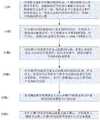
FIG. 2 is a flow chart of a mobile stream generation method
Detailed Description
In order to make the objects, technical solutions and advantages of the present invention more apparent, the present invention is described in further detail below with reference to the accompanying drawings and embodiments. It should be understood that the specific embodiments described herein are merely illustrative of the invention and are not intended to limit the invention. In addition, the technical features involved in the embodiments of the present invention described below may be combined with each other as long as they do not conflict with each other.
The invention provides a sparse track data-based crowd movement flow drawing method for visualizing a sparse track, and further displaying the general profile and the law of crowd movement in a city, so as to realize visual analysis of the sparse track and provide a visualization tool and an analysis means for relevant users of city analysis.
The method comprises the following steps of 1, extracting sparse tracks by using a mobile extraction method, sequencing the extracted mobile records according to time, connecting the records before and after the current position of a track sequence, taking every two adjacent records as a group, taking the space coordinate of the previous record in each group of records as a starting point, and taking the space coordinate of the subsequent record as an end point to obtain a local mobile vector;
step 2, performing space-time division on the motion vectors obtained in the step 1, dividing the motion vectors into one hour or a plurality of hours of time in terms of time, and dividing the motion vectors into 500 m-500 m grids in terms of space;
step 3, smoothing the motion vectors subjected to space-time division in the step 2 by using a kernel density estimation method, and then performing aggregation to obtain local space motion vector clusters;
step 4, processing the motion vector after space-time division in the step 2, measuring the distribution characteristics of the motion vector direction in the space unit by using a two-way variance in space, and calculating an abnormal value in the space unit by adopting a method for calculating an extreme value in time;
step 5, obtaining an obvious global motion flow from the motion vector clustering in the step 3 by using a deterministic fiber bundle tracking mode;
and 6, circularly displaying the global mobile stream in the step 5, and displaying the abnormal values and the crowd distribution attributes obtained in the step 4 by using a thermodynamic diagram method.
The moving extraction algorithm for the sparse trajectory in the step 1 is realized as follows:
step 1-1, sorting tracks (with same device id) of a single device according to time stamps, and if the time difference between adjacent records is greater than Δ T, dividing the tracks (for example, for a record sequence r1r2r3r4, if T3-T2> Δ T, dividing the sequence into r1r2 and r3r4) to obtain a plurality of densely-measured sub-tracks;
step 1-2, for a segment of each sub-track, if the distance difference (distance calculated by using adjacent recording space coordinates) between all records of the segment is less than Δ S/3, and the time span of the segment of records (time difference between the head record and the tail record of the segment) does not exceed Δ T, the segment is a static segment (consisting of static records);
in step 1-3, for the remaining records (not belonging to any static segment) in step 1-2, if there are two records before and after the record with a distance greater than Δ S from the record and the time difference between the two records is less than Δ T, then the record is a moving record.
The kernel density estimation smoothing method in the step 3 is realized as follows:
with gaussian kernel density estimation with bandwidth parameters, each vector in the grid is copied into the surrounding grid, and the weights decay with distance according to the gaussian kernel function. Finally, the local motion vector of each mesh can be calculated by equation (1)

Wherein v is0(xj)∈V0(xj),V0(xj) Is a set of grid j initial motion vectors, { v0(xj) W is a weight vector, V (x)i) Is the set of vectors after using the KDE. Grid i will be affected by grids within its surrounding R, where h is the KDE bandwidth, which controls the degree of vector smoothing.
The polymerization method in the step 3 is named as a one-dimensional DBSCAN algorithm, and is specifically realized as follows: applying DBSCAN-based on the intersection of a vector with its surrounding circle, the intersection may further translate to an angle value in 0, 360 °, each motion vector being represented as a point in 0, 360 °. To ensure that vectors are grouped into classes around 0 and 360, all points on [0 °,360 °) are copied in the expansion axis of [360 °,720 °. The one-dimensional DBSCAN algorithm starts with an initial window [180 °,181 °) and the window will expand along the axis in both directions only if the density of points in the current window exceeds a neighborhood distance threshold e (density condition in DBSCAN algorithm). When the window cannot be expanded any more, all points in the window become one class if the number of points exceeds the neighborhood sample number threshold MinPts (the minimum number of samples in each cluster in DBSCAN). These points, and the points that they extend to replicate on the axis, are then removed from the axis. The next window starts from the right frame of the previous window and the remaining vector directions are detected until no new class can be found. Each detected class corresponds to a local motion stream, denoted as f ═ v, w, the direction of the stream (v ∈ [0 °,360 °)) is the weighted average of all vector directions in the class, and w is the number of motion vectors in the class. The complexity of the one-dimensional DBSCAN algorithm is O (n), and extremely long calculation time caused by more grids and more motion vectors is avoided.
The bidirectional variance calculation method in the step 4 is specifically realized as follows:
step 4-1, representing the vectors in a spatial grid containing k motion vector clusters as:
V=∪i={1,...,k}{vi,wi} (2)
step 4-2, calculating the average value mu of the moving vector direction in the space unit:

step 4-3, the circle is then divided into two semicircles by this mean value and the value obtained after rotating the mean value by 180 in the circle, these two values being b1And b2:
b1(b2)=min(max)[u,(u+180)%360] (4)
Step 4-4, then, the respective mean values u are calculated in the two semicircles respectively1And u2:


Step 4-5, finally, calculating the final bidirectional variance bivar (v):

wherein | x | purpleaMin (| x |,360- | x |) represents the angular distance, | | | v |, and the likei-u1||、||vi-u2Respectively representing each stream (v)i) Average angle value to the semicircle containing the stream ([ b ]1,b2) Mean value u in the range1,[b2,360)∪[0,b1) Mean value u in the range2) The angular distance of (c).
The abnormality calculation method in the step 4 specifically includes:
the calculation formula of the abnormal score is as follows:

wherein p is the probability of deviating from normal distribution, and the calculation formula is as follows:

wherein y ismFor the normalized mahalanobis distance of the number of devices in a space unit and the mean, the calculation formula is:

wherein And m is the number of samples.

The global mobile stream generating method in step 5 is specifically as follows
Step 5-1, selecting a seed flow, wherein the seed flow comprises three modes, namely a vector with larger flow, a hub grid and a trunk grid;
and 5-2, forward searching for a vector meeting the search condition according to the direction of the seed flow, connecting the vector with the last vector, and continuing forward searching and connecting with the newly selected vector until the vector meeting the search condition cannot be found.
The search condition simultaneously satisfies the following conditions:
a. the difference in direction between the current vector and the next selected vector should be less than some threshold (30 ° by default);
b. the next motion vector's traffic should be greater than some percentage threshold of seed vector traffic (default to 0.1);
c. the cumulative curvature of all selected vectors with respect to the seed vector should be less than some threshold (90 ° by default);
d. the maximum length of the generated stream is less than some threshold (by default there is no length limit);
the user can set seed stream selection modes and thresholds in the search conditions in the visual analysis system.
The dynamic circulation display method for the mobile flow in the step 6 is specifically realized as follows:
fig. 2 is a flow chart of a mobile stream generation method according to an embodiment.
The "header" is the current position of the drawing. Firstly, placing the head at the position where the track starts, then drawing a distance forwards according to the flow speed of the current position, next, judging whether the moving stream is drawn for the first time, if so, covering the previously drawn moving stream by using a line with transparency of 0.1 and close to the color of the base map, if not, covering the whole track stream, next, judging whether the head reaches the tail end position of the track, if so, placing the head at the track position again, and if not, continuing to draw a distance forwards from the current position. According to the process, the dynamic mobile stream is formed by continuously and circularly drawing.
Finally, it should be noted that: the above examples are only intended to illustrate the technical solution of the present invention, but not to limit it; although the present invention has been described in detail with reference to the foregoing embodiments, it will be understood by those of ordinary skill in the art that: the technical solutions described in the foregoing embodiments may still be modified, or some technical features may be equivalently replaced; and such modifications or substitutions do not depart from the spirit and scope of the corresponding technical solutions of the embodiments of the present invention.
Claims (5)
1. A crowd moving stream drawing method based on sparse track data is characterized by comprising the following steps:
step 1, extracting sparse tracks by using a mobile extraction method, sequencing the extracted sparse tracks according to time, connecting records before and after the current position of a track sequence, taking every two adjacent records as a group, taking a space coordinate recorded in the front of each group of records as a starting point, and taking a space coordinate recorded in the back of each group of records as an end point, and obtaining a local mobile vector;
step 2, performing space-time division on the motion vectors obtained in the step 1, dividing the motion vectors into one hour or more hours of time in terms of time, and dividing the motion vectors into 500 m-500 m grids in terms of space, wherein m means meter;
step 3, smoothing the motion vectors subjected to space-time division in the step 2 by using a kernel density estimation method, and then performing aggregation to obtain local space motion vector clusters;
step 4, processing the motion vector after space-time division in the step 2, measuring the distribution characteristics of the motion vector direction in the space unit by using a two-way variance in space, and calculating an abnormal value in the space unit by adopting a method for calculating an extreme value in time;
step 5, obtaining an obvious global motion flow from the motion vector clustering in the step 3 by using a deterministic fiber bundle tracking mode;
step 6, circularly displaying the global mobile stream in the step 5, and displaying the abnormal values and the crowd distribution attributes obtained in the step 4 by using a thermodynamic diagram method; the sparse trajectory is extracted by using a mobile extraction method in the step 1, and the following is realized:
step 1-1, sorting tracks of devices with the same id according to time stamps, and if the time difference between adjacent records is larger than delta T, dividing the records to obtain a plurality of densely-measured sub-tracks;
step 1-2, for each sub-track segment, if the distance difference between all records is less than Δ S/3, the distance difference is the distance calculated by using the adjacent recording space coordinates, and the time span of the segment of records exceeds Δ T, the segment is composed of static records, the time span is the time difference between the head record and the tail record of the segment, the Δ T and the Δ S are positive numbers, the Δ T means the minimum static segment time, and the Δ S means the maximum static segment distance;
step 1-3, for any static segment which does not belong to the step 1-2, if two records with a distance larger than delta S exist before and after the record and the time difference between the two records is smaller than delta T, the record is a moving record;
the bidirectional variance calculation method in the step 4 is specifically realized as follows:
step 4-1, { vi,wiIs the weighting vector, viIs a certain cluster vector, wiFor the corresponding weights, the vectors in a spatial grid containing k clusters of motion vectors are represented as:
V=Ui={1,…,k}{vi,wi}
step 4-2, calculating the average value mu of the moving vector direction in the space unit:

step 4-3, then, the value obtained by this mean value and the mean value rotated by 180 degrees in the circle is respectively b1And b2:
b1=min[μ,(μ+180)%360]
b2=max[μ,(μ+180)%360]
The% is a remainder operation;
step 4-4, respectively calculating respective mean values u1And u2:


Step 4-5, calculating the final bidirectional variance bivar (v):

wherein the meaning of U is union, | | x | | non-woven phosphoraMin (| x |,360- | x |) represents an angular distance, x meaning an angle, | | v |i-u1||a、||vi-u2||aRespectively represent vectors viThe mean angle value to the semicircle containing it is [ b1,b2) Mean value u in the range1、[b2,360)∪[0,b1) Mean value u in the range2The angular distance of (c).
2. The method of claim 1, wherein the kernel density estimation method of step 3 is implemented as follows:
with gaussian kernel density estimation with bandwidth parameters, each vector in the grid is copied into the surrounding grid, the weights decay with distance according to the gaussian kernel function, and finally, the local motion vector of each grid can be calculated by the following formula:

wherein the meaning of U is union, v0(xj) Means some initial motion vector, v, in the grid j0(xj)∈V0(xj),V0(xj) Is a set of mesh j initial motion vectors, V (x)i) Is the initial vector set, x, after using kernel density estimationi、xjFor the set of motion vectors for grid i, j, R is a positive number representing the range distance, where h is the bandwidth of the kernel density estimate.
3. The method of claim 2, wherein the outlier calculation of step 4 is implemented as follows:
the calculation formula of the abnormal score is as follows:

wherein p is the probability of deviating from normal distribution, and the calculation formula is as follows:

wherein y ismIs a statistical value x in a space unitlNormalized mahalanobis distance from the mean μ is calculated as:

wherein m is the number of samples, xlIs the assumed statistical value of the first hour, Γ is the expected highest anomaly score for normalization, and σ is the variance of the assumed normal distribution.

4. The method as claimed in claim 1, wherein the global mobile stream generating method in step 5 is as follows
Step 5-1, selecting a seed stream, wherein the seed stream comprises three modes: vector, hub grid and main road grid with large flow;
step 5-2, searching for a vector meeting the search condition according to the direction of the seed stream, wherein the current vector is piA 1 is to piAnd vector pi+1Connect to newly select pi+1Continuing to find and connect until no vectors are found that satisfy a search condition that satisfies the following simultaneously:
a.piand selected pi+1The direction difference between the two is less than a set threshold value of 30 degrees;
b.pi+1is greater than the percentage threshold of seed vector flow of 0.1;
c. the cumulative curvature of all selected vectors relative to the seed vector should be less than the threshold 90 °;
d. the maximum length of the generated flow is smaller than a set threshold value; the seed vector is a seed stream.
5. The method according to claim 1, wherein the global mobile stream circulation display method in step 6 is implemented as follows:
the head is the current position of drawing, firstly the head is placed at the position where the track starts, then the head is drawn forwards according to the flow direction of the current position, whether the drawing of the moving stream is the first time is judged, if yes, the previously drawn moving stream is covered by a line with transparency of 0.1 and color close to the base map, and if not, the whole track stream is covered; and then judging whether the head reaches the tail end position of the track, if so, resetting the head at the track position, and if not, continuously drawing forwards from the current position to form a dynamic mobile stream.
Priority Applications (1)
| Application Number | Priority Date | Filing Date | Title |
|---|---|---|---|
| CN201910652508.2ACN110443287B (en) | 2019-07-19 | 2019-07-19 | Crowd moving stream drawing method based on sparse trajectory data |
Applications Claiming Priority (1)
| Application Number | Priority Date | Filing Date | Title |
|---|---|---|---|
| CN201910652508.2ACN110443287B (en) | 2019-07-19 | 2019-07-19 | Crowd moving stream drawing method based on sparse trajectory data |
Publications (2)
| Publication Number | Publication Date |
|---|---|
| CN110443287A CN110443287A (en) | 2019-11-12 |
| CN110443287Btrue CN110443287B (en) | 2022-01-14 |
Family
ID=68430732
Family Applications (1)
| Application Number | Title | Priority Date | Filing Date |
|---|---|---|---|
| CN201910652508.2AActiveCN110443287B (en) | 2019-07-19 | 2019-07-19 | Crowd moving stream drawing method based on sparse trajectory data |
Country Status (1)
| Country | Link |
|---|---|
| CN (1) | CN110443287B (en) |
Families Citing this family (5)
| Publication number | Priority date | Publication date | Assignee | Title |
|---|---|---|---|---|
| CN111405483B (en)* | 2020-03-10 | 2021-07-30 | 腾讯科技(深圳)有限公司 | Travel track generation method and device, electronic equipment and storage medium |
| CN111569432B (en)* | 2020-05-19 | 2021-01-15 | 北京中科深智科技有限公司 | System and method for capturing 6DoF scene image from game |
| CN111694913B (en)* | 2020-06-05 | 2023-07-11 | 海南大学 | Ship AIS track clustering method and device based on convolution self-encoder |
| CN113127711A (en)* | 2021-03-31 | 2021-07-16 | 哈尔滨理工大学 | Crowd moving algorithm based on sparse trajectory data |
| CN114440920B (en)* | 2022-01-27 | 2024-07-23 | 电信科学技术第十研究所有限公司 | Track flow display method and device based on electronic map |
Citations (8)
| Publication number | Priority date | Publication date | Assignee | Title |
|---|---|---|---|---|
| WO2010080121A1 (en)* | 2008-12-18 | 2010-07-15 | The Regents Of The University Of California, Santa Cruz | Training-free generic object detection in 2-d and 3-d using locally adaptive regression kernels |
| CN103456192A (en)* | 2013-09-01 | 2013-12-18 | 中国民航大学 | Terminal area prevailing traffic flow recognizing method based on track spectral clusters |
| CN104200042A (en)* | 2014-09-17 | 2014-12-10 | 王伟 | Positioning-data trajectory tracking method |
| CN104933710A (en)* | 2015-06-10 | 2015-09-23 | 华南理工大学 | Intelligent analysis method of store people stream track on the basis of surveillance video |
| CN105808754A (en)* | 2016-03-15 | 2016-07-27 | 苏州大学 | Method for rapidly discovering accumulation mode from movement trajectory data |
| CN107491749A (en)* | 2017-08-11 | 2017-12-19 | 南京邮电大学 | Global and local anomaly detection method in a kind of crowd's scene |
| CN107958260A (en)* | 2017-10-27 | 2018-04-24 | 四川大学 | A kind of group behavior analysis method based on multi-feature fusion |
| CN109684384A (en)* | 2018-12-29 | 2019-04-26 | 太原科技大学 | A kind of track data space-time density Analysis System and its analysis method |
- 2019
- 2019-07-19CNCN201910652508.2Apatent/CN110443287B/enactiveActive
Patent Citations (8)
| Publication number | Priority date | Publication date | Assignee | Title |
|---|---|---|---|---|
| WO2010080121A1 (en)* | 2008-12-18 | 2010-07-15 | The Regents Of The University Of California, Santa Cruz | Training-free generic object detection in 2-d and 3-d using locally adaptive regression kernels |
| CN103456192A (en)* | 2013-09-01 | 2013-12-18 | 中国民航大学 | Terminal area prevailing traffic flow recognizing method based on track spectral clusters |
| CN104200042A (en)* | 2014-09-17 | 2014-12-10 | 王伟 | Positioning-data trajectory tracking method |
| CN104933710A (en)* | 2015-06-10 | 2015-09-23 | 华南理工大学 | Intelligent analysis method of store people stream track on the basis of surveillance video |
| CN105808754A (en)* | 2016-03-15 | 2016-07-27 | 苏州大学 | Method for rapidly discovering accumulation mode from movement trajectory data |
| CN107491749A (en)* | 2017-08-11 | 2017-12-19 | 南京邮电大学 | Global and local anomaly detection method in a kind of crowd's scene |
| CN107958260A (en)* | 2017-10-27 | 2018-04-24 | 四川大学 | A kind of group behavior analysis method based on multi-feature fusion |
| CN109684384A (en)* | 2018-12-29 | 2019-04-26 | 太原科技大学 | A kind of track data space-time density Analysis System and its analysis method |
Also Published As
| Publication number | Publication date |
|---|---|
| CN110443287A (en) | 2019-11-12 |
Similar Documents
| Publication | Publication Date | Title |
|---|---|---|
| CN110443287B (en) | Crowd moving stream drawing method based on sparse trajectory data | |
| CN107103754B (en) | A method and system for predicting road traffic conditions | |
| EP3241370B1 (en) | Analyzing semantic places and related data from a plurality of location data reports | |
| Chen et al. | The promises of big data and small data for travel behavior (aka human mobility) analysis | |
| Zheng | Trajectory data mining: an overview | |
| CN106407519B (en) | A kind of modeling method of crowd's movement law | |
| CN105723242B (en) | Measure the traffic speed in road network | |
| Long et al. | Moving ahead with computational movement analysis | |
| CN111212383B (en) | Method, device, server and medium for determining number of regional permanent population | |
| CN113127711A (en) | Crowd moving algorithm based on sparse trajectory data | |
| CN106951455A (en) | A kind of similar track analysis system and its analysis method | |
| CN107071721B (en) | Stopover point extraction method based on mobile phone positioning data | |
| Doulamis et al. | EasyTracker: An Android application for capturing mobility behavior | |
| Yao et al. | Mining multiple spatial–temporal paths from social media data | |
| CN111667920B (en) | Crowd close contact investigation method based on positioning data | |
| Sasaki et al. | Road segment interpolation for incomplete road data | |
| US20210180972A1 (en) | Correcting speed estimations using aggregated telemetry data | |
| CN114443763B (en) | Big data synchronization method based on distributed network | |
| Zingaro et al. | Exploring Map App Usage Behaviour Through Touchscreen Interactions (Short Paper) | |
| Shao et al. | Onlineairtrajclus: An online aircraft trajectory clustering for tarmac situation awareness | |
| Luo et al. | Automatic floor map construction for indoor localization | |
| Musa et al. | Optimal sampling for Moving Object Trajectory Tracking in Smart Transportation Systems: A Transformer-based Approach | |
| JP6983275B2 (en) | Information processing equipment, information processing methods and programs related to abnormality detection and abnormality degree visualization | |
| CN114444580A (en) | Big data processing method based on convolutional neural network | |
| Peters et al. | Visual Analysis of Lightning Data Using Space–Time-Cube |
Legal Events
| Date | Code | Title | Description |
|---|---|---|---|
| PB01 | Publication | ||
| PB01 | Publication | ||
| SE01 | Entry into force of request for substantive examination | ||
| SE01 | Entry into force of request for substantive examination | ||
| GR01 | Patent grant | ||
| GR01 | Patent grant |