CN109583029B - Method and device for eliminating slope value of signal edge influenced by edge - Google Patents
Method and device for eliminating slope value of signal edge influenced by edgeDownload PDFInfo
- Publication number
- CN109583029B CN109583029BCN201811293504.1ACN201811293504ACN109583029BCN 109583029 BCN109583029 BCN 109583029BCN 201811293504 ACN201811293504 ACN 201811293504ACN 109583029 BCN109583029 BCN 109583029B
- Authority
- CN
- China
- Prior art keywords
- signal
- waveform
- edge
- slope
- derivative
- Prior art date
- Legal status (The legal status is an assumption and is not a legal conclusion. Google has not performed a legal analysis and makes no representation as to the accuracy of the status listed.)
- Active
Links
Images




Classifications
- G—PHYSICS
- G06—COMPUTING OR CALCULATING; COUNTING
- G06F—ELECTRIC DIGITAL DATA PROCESSING
- G06F30/00—Computer-aided design [CAD]
- G06F30/20—Design optimisation, verification or simulation
- G—PHYSICS
- G06—COMPUTING OR CALCULATING; COUNTING
- G06F—ELECTRIC DIGITAL DATA PROCESSING
- G06F17/00—Digital computing or data processing equipment or methods, specially adapted for specific functions
- G06F17/10—Complex mathematical operations
- G06F17/15—Correlation function computation including computation of convolution operations
- G—PHYSICS
- G06—COMPUTING OR CALCULATING; COUNTING
- G06F—ELECTRIC DIGITAL DATA PROCESSING
- G06F17/00—Digital computing or data processing equipment or methods, specially adapted for specific functions
- G06F17/10—Complex mathematical operations
- G06F17/18—Complex mathematical operations for evaluating statistical data, e.g. average values, frequency distributions, probability functions, regression analysis
- G—PHYSICS
- G06—COMPUTING OR CALCULATING; COUNTING
- G06F—ELECTRIC DIGITAL DATA PROCESSING
- G06F2113/00—Details relating to the application field
- G06F2113/18—Chip packaging
Landscapes
- Engineering & Computer Science (AREA)
- Physics & Mathematics (AREA)
- General Physics & Mathematics (AREA)
- Theoretical Computer Science (AREA)
- Data Mining & Analysis (AREA)
- Pure & Applied Mathematics (AREA)
- Computational Mathematics (AREA)
- Mathematical Analysis (AREA)
- Mathematical Optimization (AREA)
- Mathematical Physics (AREA)
- General Engineering & Computer Science (AREA)
- Software Systems (AREA)
- Databases & Information Systems (AREA)
- Algebra (AREA)
- Computer Hardware Design (AREA)
- Evolutionary Computation (AREA)
- Computing Systems (AREA)
- Geometry (AREA)
- Life Sciences & Earth Sciences (AREA)
- Bioinformatics & Cheminformatics (AREA)
- Bioinformatics & Computational Biology (AREA)
- Evolutionary Biology (AREA)
- Operations Research (AREA)
- Probability & Statistics with Applications (AREA)
- Tests Of Electronic Circuits (AREA)
Abstract
Translated fromChinese
Description
Technical Field
The present invention relates to a method for eliminating a signal edge slope value, and more particularly, to a method and an apparatus for eliminating a signal edge slope value affected by a edge.
Background
When a server product is designed and developed, the CLK clock periodic signals interconnected with the system are usually subjected to index measurement such as the slope of a time domain waveform and the like so as to judge whether the signal quality meets the system performance evaluation test requirement, and avoid the current problems that the signal code element collected by a high-speed link transmission signal at a chip receiving end is invalid and the error rate of an effective signal is increased and the like due to the fact that the edge slope index does not meet the requirement, so that the bandwidth of the effective transmission system of the whole high-speed link is reduced, and the system interconnection equipment cannot be detected and the like. Therefore, the control of the design quality of the clock signal of the system CLK in the test stage is an important signal quality monitoring link in the product development stage.
However, during the testing of the main board CLK clock system in the prior art, the probe point of the measurement clock waveform cannot be placed at the terminal of the receiving chip, i.e. Die (semiconductor chip Die inside the chip package) inside the receiving chip, and only the test point capable of contacting the signal network can be found at the periphery of the chip package device on the PCB, and at the same time, the test point is proposed to be as close to the receiving end of the chip as possible, as shown in fig. 1, the network point near the chip pin at the periphery of the receiving end of the chip is taken as the measurement point for the CLK clock waveform of the system interconnection according to the topology structure diagram shown in fig. 1, and at the same time, the measurement point at the periphery of the chip is proposed to be as close to the chip pin as possible, so as to reduce the influence of the signal reflection at the terminal Die inside the chip on the accuracy of the external probe point of the chip for measuring the waveform data.
As shown in fig. 2, an analog simulation is performed for the interconnection topology shown in fig. 1, in which the waveforms of the clock signal at the receiving end Die and the clock rising edge at the peripheral probing point at a certain distance from the receiving end are as shown in fig. 2, and thus, the waveform of the clock rising edge at the position point of the detection point has obvious edge (namely, a staircase), which causes the problem of the rising time of the signal becoming longer and the rising edge slope becoming slower, therefore, the signal reflection at the Die end inside the chip causes the problem of the signal waveform measured at the probe point outside the chip package generating the edge on the rising and falling edge waveforms, although the signal probe point can be close to the chip receiving pin end, when the chip package size is larger, the distance between the signal detection point and the Die inside the chip package will be much longer, and the length of the edge will be longer as the distance between the signal detection point and the Die inside the chip increases. Therefore, the time of rising and falling edges of the signal is seriously affected to lengthen the time of the rising and falling edges of the signal, so that the slope of the signal edge is slowed down, and the slope index of the signal edge possibly does not meet the definition requirement of the system performance evaluation test. Thus, the development and design are questioned that the signal quality is difficult to evaluate.
Disclosure of Invention
The invention aims to solve the problem that the edge slope value of a clock signal is influenced by a ridge in the prior art, and provides a method for eliminating the edge slope value of a signal influenced by the ridge.
The first aspect of the present invention provides a method for eliminating a slope value of an edge of a signal affected by a edge, including:
solving a first derivative of the clock waveform of the collected signal and solving an average value of the first derivative to obtain a slope waveform of the clock waveform of the signal;
two wave peak values or two wave valley values of the slope waveform of the selected signal clock waveform are added, and the obtained numerical sum is the signal edge slope numerical value of the receiving end of the equivalent chip.
With reference to the first aspect, in a first possible implementation manner of the first aspect, before the obtaining a first derivative of the clock waveform of the acquired signal and averaging the first derivative, the method further includes: and selecting network points on the periphery of the receiving end of the chip as measuring points, and acquiring the clock waveform of the signal by using an oscilloscope.
With reference to the first aspect, in a second possible implementation manner of the first aspect, the distance between the measuring point and the chip receiving end pin is 0 to 1 inch.
With reference to the first aspect, in a third possible implementation manner of the first aspect, when the oscilloscope is used to collect the clock waveforms of the signals, at least 10000 waveforms per second are set to be collected.
With reference to the first aspect, in a fourth possible implementation manner of the first aspect, when the oscilloscope is used to collect the clock waveform of the signal, the collection is suspended every 4 to 6 seconds.
With reference to the first aspect, in a fifth possible implementation manner of the first aspect, the obtaining a first derivative of the clock waveform of the acquired signal is implemented by an oscilloscope, and the obtaining an average value of the first derivative of the clock waveform of the acquired signal is implemented by the oscilloscope.
With reference to the first aspect, in a sixth possible implementation manner of the first aspect, two peak values of a slope waveform of a selected signal clock waveform are added, and an obtained sum of values is a slope value of a signal rising edge at a receiving end of the equivalent chip.
With reference to the first aspect, in a seventh possible implementation manner of the first aspect, two valley values of a slope waveform of a selected signal clock waveform are added, and an obtained sum of the values is a slope value of a signal falling edge at a receiving end of the equivalent chip.
The second aspect of the present invention provides an apparatus for eliminating edge slope values of a signal affected by a edge, comprising:
the acquisition slope waveform module is used for solving a first derivative of the clock waveform of the acquired signal and solving an average value of the first derivative to obtain the slope waveform of the clock waveform of the signal;
and the addition operation module is used for selecting two wave peak values or two wave valley values of the slope waveform of the signal clock waveform to add, and the sum of the obtained values is the signal edge slope value of the receiving end of the equivalent chip.
With reference to the second aspect, in a first possible implementation manner of the second aspect, the method further includes: and the acquisition module selects a network point on the periphery of the receiving end of the chip as a measurement point and acquires the clock waveform of the signal by using an oscilloscope.
The technical scheme adopted by the invention comprises the following technical effects:
the invention aims to solve the problem that the clock signal test is influenced by a ridge in the prior art, provides a method for eliminating the edge slope value of the signal influenced by the ridge, and by adopting the method, the waveform can be collected at the periphery of a chip package by using the existing waveform measuring scheme, the first derivative of the measured waveform is obtained, the average value of the first derivative is obtained, the slope waveform is obtained, and then the signal edge slope value equivalent to the chip package Die terminal is calculated through addition operation, the invention also provides a device for eliminating the edge slope value of the signal influenced by the ridge, the influence of the ridge generated by the measured signal waveform edge caused by signal reflection on the accuracy of the measured data is eliminated, the precision of the clock signal test data is improved, the signal quality of research and development is accurately judged, especially when the chip package size is larger, the effect is better.
It is to be understood that both the foregoing general description and the following detailed description are exemplary and explanatory only and are not restrictive of the invention, as claimed.
Drawings
In order to more clearly illustrate the embodiments or technical solutions in the prior art of the present invention, the drawings used in the description of the embodiments or prior art will be briefly described below, and it is obvious for those skilled in the art that other drawings can be obtained based on these drawings without any creative effort.
FIG. 1 is a topological schematic of a prior art clock waveform testing scheme of the present invention;
FIG. 2 is a schematic diagram of simulated waveforms of Die terminals and peripheral test points of a chip under a conventional clock waveform test topology according to the present invention;
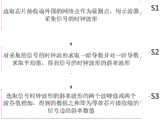
FIG. 3 is a schematic flow chart of a first embodiment of the method of the present invention;
FIG. 4 is a schematic flow chart of a second embodiment of the method of the present invention;
fig. 5 is a schematic diagram illustrating a Ledge phenomenon generated at a waveform edge of a test point due to signal reflection in the solution of the present invention;
FIG. 6 is a schematic diagram of a first derivative of a clock waveform and a waveform of a slope value corresponding to each time point after the first derivative is averaged;
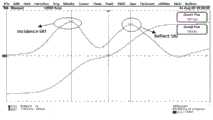
FIG. 7 is a schematic diagram of the slope points of the input and reflected waveforms collected in the slope waveform of FIG. 6 in accordance with aspects of the present invention;
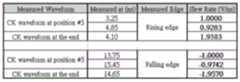
FIG. 8 is a schematic diagram of simulated slope values of signals at the chip receiving terminal and the peripheral probing points in the solution of the present invention;
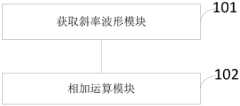
FIG. 9 is a schematic structural view of a third embodiment of the apparatus according to the present invention;
FIG. 10 is a schematic structural diagram of a fourth embodiment of the apparatus according to the present invention.
Detailed Description
In order to clearly explain the technical features of the present invention, the following detailed description of the present invention is provided with reference to the accompanying drawings. The following disclosure provides many different embodiments, or examples, for implementing different features of the invention. To simplify the disclosure of the present invention, the components and arrangements of specific examples are described below. Furthermore, the present invention may repeat reference numerals and/or letters in the various examples. This repetition is for the purpose of simplicity and clarity and does not in itself dictate a relationship between the various embodiments and/or configurations discussed. It should be noted that the components illustrated in the figures are not necessarily drawn to scale. Descriptions of well-known components and processing techniques and procedures are omitted so as to not unnecessarily limit the invention.
Example one
As shown in fig. 3, a method for eliminating a slope value of an edge of a signal affected by a edge in the technical solution of the present invention includes:
s1, calculating a first derivative of the clock waveform of the collected signal and calculating an average value of the first derivative to obtain a slope waveform of the clock waveform of the signal;
s2, selecting two wave peak values or two wave valley values of the slope waveform of the signal clock waveform to be added, and obtaining the sum of the values, namely the signal edge slope value of the receiving end of the equivalent chip.
In step S1, the first derivative of the clock waveform of the acquired signal is obtained by a derivative function of an oscilloscope, and the average of the first derivative of the clock waveform of the acquired signal is obtained by an average function of the oscilloscope.
And adding two wave peak values of the slope waveform of the selected signal clock waveform to obtain the sum of the values, namely the signal rising edge slope value of the receiving end of the equivalent chip.
As shown in fig. 5, the waveforms are clock signal edge waveforms acquired at a receiving end and a non-receiving end of a signal, and it can be seen from the figure that when the clock signal does not acquire the waveform at the receiving end, the signal rising edge is divided into three waveforms, the lower half part of the rising edge is a signal input waveform, the middle part of the rising edge is a signal echo reflection delay waveform, and the upper half part of the rising edge is a reflected signal waveform of a Die receiving terminal. Aiming at the edge waveform of the clock signal collected by the peripheral measuring point close to the receiving end of the chip, the invention adopts the derivative function average () of the oscilloscope, namely the first derivative, and the average value function derivative (), wherein the two functions respectively process the measuring clock waveform, and the specific formula is as follows:
math1 (gradient (Channel 1)) is used to generate a corresponding slope waveform at each time point, as shown in FIG. 6, the slope waveform at each time point after waveform processing according to a function formula is the same as that introduced by theoretical analysis in FIG. 5, so that the clock signal edge waveform measured and collected by other nodes except the chip receiving terminal may include two contents, namely a rising edge lower half edge input waveform slope and a rising edge upper half reflected waveform slope, in addition to a ridge.
As shown in fig. 7, the SR1 point is the peak value of the slope value of the rising edge of the input signal, the SR2 point is the peak value of the slope value of the rising edge of the reflected signal, and the slope value of the signal edge at the receiving end of the equivalent chip can be calculated according to the following formula:
Final SR=SR1+SR2
by using the above improved measurement processing method, the analog simulation waveform shown in fig. 2 in the description of the existing clock waveform test scheme is analyzed, and the analog slope values of the signals at the chip receiving terminal and the peripheral probing point Position3 are shown in fig. 8, so that:
final SR (1.9383V/ns) ═ rising edge lower half SR1(1.0V/ns) + rising edge upper half SR2 (0.9283V/ns).
And adding two wave valley values of the slope waveform of the selected signal clock waveform to obtain the sum of the values, namely the slope value of the signal falling edge of the receiving end of the equivalent chip.
The falling edge is similar to the rising edge and is not described in detail herein.
Example two
As shown in fig. 4, a method for eliminating a slope value of an edge of a signal affected by a edge in a technical solution of the present invention includes:
s1, selecting a network point on the periphery of the chip receiving end as a measuring point, and acquiring the clock waveform of the signal by using an oscilloscope;
s2, calculating a first derivative of the clock waveform of the collected signal and calculating an average value of the first derivative to obtain a slope waveform of the clock waveform of the signal;
s3, selecting two wave peak values or two wave valley values of the slope waveform of the signal clock waveform to be added, and obtaining the sum of the values, namely the signal edge slope value of the receiving end of the equivalent chip.
In step S1, the distance between the measuring point and the chip receiving terminal pin is 0-1 inch.
When an oscilloscope is used for collecting clock waveforms of signals, at least 10000 waveforms are collected every second.
When the oscilloscope is used for collecting the clock waveform of the signal, the collection is suspended every 4 to 6 seconds.
EXAMPLE III
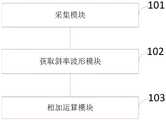
As shown in fig. 9, an apparatus for eliminating edge slope values of a signal affected by a edge, includes:
the slopewaveform obtaining module 101 obtains a first derivative of the clock waveform of the collected signal and an average value of the first derivative to obtain a slope waveform of the clock waveform of the signal;
theaddition operation module 102 selects two peak values or two valley values of the slope waveform of the signal clock waveform to add, and the sum of the obtained values is the signal edge slope value of the receiving end of the equivalent chip.
Example four
As shown in fig. 10, an apparatus for eliminating edge slope values of a signal affected by a edge, includes:
theacquisition module 101 selects a network point on the periphery of the receiving end of the chip as a measurement point, and acquires the clock waveform of the signal by using an oscilloscope.
The slopewaveform obtaining module 102 is configured to obtain a first derivative of the clock waveform of the acquired signal and obtain an average of the first derivative to obtain a slope waveform of the clock waveform of the signal;
theaddition operation module 103 selects two peak values or two valley values of the slope waveform of the signal clock waveform to add, and the sum of the obtained values is the signal edge slope value of the receiving end of the equivalent chip.
The technical scheme of the invention can be applied to the scheme for measuring the waveform edge data of all the system interconnection Clock signals.
Although the embodiments of the present invention have been described with reference to the accompanying drawings, it is not intended to limit the scope of the present invention, and it should be understood by those skilled in the art that various modifications and variations can be made without inventive efforts by those skilled in the art based on the technical solution of the present invention.
Claims (6)
1. A method for eliminating the slope value of the edge of a signal influenced by a Ledge is characterized by comprising the following steps:
selecting network points on the periphery of a chip receiving end as measuring points, and acquiring clock waveforms of signals by using an oscilloscope; the distance between the measuring point and the pin of the chip receiving end is 0-1 inch;
solving a first derivative of the clock waveform of the collected signal and solving an average value of the first derivative to obtain a slope waveform of the clock waveform of the signal; the first derivative of the clock waveform of the acquired signal is obtained through a derivative function of the oscilloscope, and the average of the first derivative of the clock waveform of the acquired signal is obtained through an average function of the oscilloscope;
two wave peak values or two wave valley values of the slope waveform of the selected signal clock waveform are added, and the obtained numerical sum is the signal edge slope numerical value of the receiving end of the equivalent chip.
2. The method for eliminating edge slope value of a signal affected by Ledge according to claim 1, wherein when the oscilloscope is used to collect the clock waveform of the signal, at least 10000 waveforms per second are set to be collected.
3. The method for eliminating edge slope values of a signal affected by a Ledge according to claim 1, wherein the acquisition is suspended every 4-6 seconds when the oscilloscope is used for acquiring the clock waveform of the signal.
4. The method for eliminating the edge-affected signal edge slope value according to claim 1, wherein two peak values of the slope waveform of the signal clock waveform are selected and added, and the sum of the obtained values is the signal rising edge slope value of the receiving end of the equivalent chip.
5. The method as claimed in claim 1, wherein the slope values of the edge-affected signal are added by selecting two wave troughs of the slope waveform of the signal clock waveform, and the sum of the obtained values is the slope value of the falling edge of the signal at the receiving end of the equivalent chip.
6. An apparatus for eliminating edge slope values of a signal affected by a edge, comprising:
the acquisition module selects network points on the periphery of the receiving end of the chip as measurement points and acquires the clock waveform of a signal by using an oscilloscope; the distance between the measuring point and the pin of the chip receiving end is 0-1 inch;
the acquisition slope waveform module is used for solving a first derivative of the clock waveform of the acquired signal and solving an average value of the first derivative to obtain the slope waveform of the clock waveform of the signal; the first derivative of the clock waveform of the acquired signal is obtained through a derivative function of the oscilloscope, and the average of the first derivative of the clock waveform of the acquired signal is obtained through an average function of the oscilloscope;
and the addition operation module is used for selecting two wave peak values or two wave valley values of the slope waveform of the signal clock waveform to add, and the sum of the obtained values is the signal edge slope value of the receiving end of the equivalent chip.
Priority Applications (1)
| Application Number | Priority Date | Filing Date | Title |
|---|---|---|---|
| CN201811293504.1ACN109583029B (en) | 2018-11-01 | 2018-11-01 | Method and device for eliminating slope value of signal edge influenced by edge |
Applications Claiming Priority (1)
| Application Number | Priority Date | Filing Date | Title |
|---|---|---|---|
| CN201811293504.1ACN109583029B (en) | 2018-11-01 | 2018-11-01 | Method and device for eliminating slope value of signal edge influenced by edge |
Publications (2)
| Publication Number | Publication Date |
|---|---|
| CN109583029A CN109583029A (en) | 2019-04-05 |
| CN109583029Btrue CN109583029B (en) | 2022-02-18 |
Family
ID=65921076
Family Applications (1)
| Application Number | Title | Priority Date | Filing Date |
|---|---|---|---|
| CN201811293504.1AActiveCN109583029B (en) | 2018-11-01 | 2018-11-01 | Method and device for eliminating slope value of signal edge influenced by edge |
Country Status (1)
| Country | Link |
|---|---|
| CN (1) | CN109583029B (en) |
Families Citing this family (1)
| Publication number | Priority date | Publication date | Assignee | Title |
|---|---|---|---|---|
| CN112100974B (en)* | 2020-09-17 | 2024-06-07 | 深圳市一博科技股份有限公司 | Test point checking method based on ALLEGRO software |
Citations (11)
| Publication number | Priority date | Publication date | Assignee | Title |
|---|---|---|---|---|
| US5933459A (en)* | 1996-12-30 | 1999-08-03 | Intel Corporation | Dual reference voltage input receiver for high speed data transmission |
| CN1422006A (en)* | 2001-11-16 | 2003-06-04 | 皇家菲利浦电子有限公司 | Receiving circuit for receiving information signal |
| JP2004335061A (en)* | 2003-05-12 | 2004-11-25 | Sharp Corp | Clock recovery device |
| CN101159535A (en)* | 2007-10-26 | 2008-04-09 | 中兴通讯股份有限公司 | Clock signal conditioning device and method |
| TW200905208A (en)* | 2007-07-20 | 2009-02-01 | Hon Hai Prec Ind Co Ltd | System and method for analyzing non-monotonicity of a waveform curve of signals |
| CN101514628A (en)* | 2008-04-16 | 2009-08-26 | 中国科学院自动化研究所 | Underground pressure real-time measuring and correcting method |
| CN103033824A (en)* | 2012-12-18 | 2013-04-10 | 中国科学院国家授时中心 | High-performance navigational satellite space signal quality assessment method |
| CN103095255A (en)* | 2013-01-22 | 2013-05-08 | 烽火通信科技股份有限公司 | Method used for eliminating return channels and based on schmitt trigger |
| CN104173030A (en)* | 2014-09-09 | 2014-12-03 | 北京航空航天大学 | Pulse wave starting point real-time detection method resisting waveform change interference and application thereof |
| CN105629157A (en)* | 2014-12-01 | 2016-06-01 | 中国航空工业集团公司第六三一研究所 | Data reliability discrimination method in high-speed digital acquisition |
| CN106908655A (en)* | 2017-03-06 | 2017-06-30 | 广东顺德工业设计研究院(广东顺德创新设计研究院) | Photosignal peak-value detection method and system |
Family Cites Families (3)
| Publication number | Priority date | Publication date | Assignee | Title |
|---|---|---|---|---|
| US8049312B2 (en)* | 2009-01-12 | 2011-11-01 | Texas Instruments Incorporated | Semiconductor device package and method of assembly thereof |
| US9479275B2 (en)* | 2012-06-01 | 2016-10-25 | Blackberry Limited | Multiformat digital audio interface |
| TWI532327B (en)* | 2014-09-17 | 2016-05-01 | 國立交通大學 | Phase detection device and clock data recovery circuit embedded in decision feedback equalizer |
- 2018
- 2018-11-01CNCN201811293504.1Apatent/CN109583029B/enactiveActive
Patent Citations (11)
| Publication number | Priority date | Publication date | Assignee | Title |
|---|---|---|---|---|
| US5933459A (en)* | 1996-12-30 | 1999-08-03 | Intel Corporation | Dual reference voltage input receiver for high speed data transmission |
| CN1422006A (en)* | 2001-11-16 | 2003-06-04 | 皇家菲利浦电子有限公司 | Receiving circuit for receiving information signal |
| JP2004335061A (en)* | 2003-05-12 | 2004-11-25 | Sharp Corp | Clock recovery device |
| TW200905208A (en)* | 2007-07-20 | 2009-02-01 | Hon Hai Prec Ind Co Ltd | System and method for analyzing non-monotonicity of a waveform curve of signals |
| CN101159535A (en)* | 2007-10-26 | 2008-04-09 | 中兴通讯股份有限公司 | Clock signal conditioning device and method |
| CN101514628A (en)* | 2008-04-16 | 2009-08-26 | 中国科学院自动化研究所 | Underground pressure real-time measuring and correcting method |
| CN103033824A (en)* | 2012-12-18 | 2013-04-10 | 中国科学院国家授时中心 | High-performance navigational satellite space signal quality assessment method |
| CN103095255A (en)* | 2013-01-22 | 2013-05-08 | 烽火通信科技股份有限公司 | Method used for eliminating return channels and based on schmitt trigger |
| CN104173030A (en)* | 2014-09-09 | 2014-12-03 | 北京航空航天大学 | Pulse wave starting point real-time detection method resisting waveform change interference and application thereof |
| CN105629157A (en)* | 2014-12-01 | 2016-06-01 | 中国航空工业集团公司第六三一研究所 | Data reliability discrimination method in high-speed digital acquisition |
| CN106908655A (en)* | 2017-03-06 | 2017-06-30 | 广东顺德工业设计研究院(广东顺德创新设计研究院) | Photosignal peak-value detection method and system |
Non-Patent Citations (1)
| Title |
|---|
| 高速信号测试常见问题分析(上)——一个25MHz时钟信号的单调性问题测试分析;胡为东;《国外电子测量技术》;20091231;第28卷(第1期);第9-12页* |
Also Published As
| Publication number | Publication date |
|---|---|
| CN109583029A (en) | 2019-04-05 |
Similar Documents
| Publication | Publication Date | Title |
|---|---|---|
| CN106990340B (en) | Partial discharge monitoring system and method | |
| KR20080031921A (en) | How to obtain test data for a device | |
| CN111934760B (en) | Signal processing transmission delay characteristic detection device, method and terminal equipment | |
| EP3051709B1 (en) | De-embedding cable effect for waveform monitoring for arbitrary waveform and function generator | |
| CN109581062A (en) | High-precision impedance measurement system for oscilloscope calibrator probe | |
| JP5319665B2 (en) | Jitter calibration | |
| CN112702231A (en) | Network delay measuring method and system | |
| US12320853B2 (en) | Systems and methods for automatic time domain reflectometer measurement on a uni-directional drive channel | |
| TWI509260B (en) | System and method for low voltage differential signaling test | |
| CN109583029B (en) | Method and device for eliminating slope value of signal edge influenced by edge | |
| US8271220B2 (en) | Evaluating high frequency time domain in embedded device probing | |
| US10509064B2 (en) | Impedance measurement through waveform monitoring | |
| Marzocca et al. | Mixed-signal circuit classification in a pseudo-random testing scheme | |
| JP2008526112A (en) | Use of a parametric measurement unit for transducer testing. | |
| CN107356896A (en) | A kind of electric energy meter detection method, device and storage medium | |
| CN113655260A (en) | Picture processing method and equipment | |
| US7178071B2 (en) | Device for and method of examining the signal performance of semiconductor circuits | |
| CN115934450B (en) | Data transmission quality detection method, device, storage medium and electronic device | |
| CN223244998U (en) | Time measuring unit and tester | |
| CN117269735B (en) | Intelligent electronic chip detection method for electric power tools and appliances based on electromagnetic microwave means | |
| CN114966281B (en) | Lightning arrester characteristic live tester | |
| CN113702893B (en) | Transient waveform transmission consistency evaluation method and device for direct current transformer | |
| US9141499B2 (en) | Semiconductor inspection apparatus and semiconductor inspection method | |
| CN204422715U (en) | Circuit radar installations | |
| EP3796010B1 (en) | System and methods for on-chip time-domain reflectometry |
Legal Events
| Date | Code | Title | Description |
|---|---|---|---|
| PB01 | Publication | ||
| PB01 | Publication | ||
| SE01 | Entry into force of request for substantive examination | ||
| SE01 | Entry into force of request for substantive examination | ||
| GR01 | Patent grant | ||
| GR01 | Patent grant |