CN109426379B - Electronic device and touch mode switching method thereof - Google Patents
Electronic device and touch mode switching method thereofDownload PDFInfo
- Publication number
- CN109426379B CN109426379BCN201710745003.1ACN201710745003ACN109426379BCN 109426379 BCN109426379 BCN 109426379BCN 201710745003 ACN201710745003 ACN 201710745003ACN 109426379 BCN109426379 BCN 109426379B
- Authority
- CN
- China
- Prior art keywords
- electronic device
- signal
- pressure
- touch
- processing unit
- Prior art date
- Legal status (The legal status is an assumption and is not a legal conclusion. Google has not performed a legal analysis and makes no representation as to the accuracy of the status listed.)
- Expired - Fee Related
Links
Images
Classifications
- G—PHYSICS
- G06—COMPUTING OR CALCULATING; COUNTING
- G06F—ELECTRIC DIGITAL DATA PROCESSING
- G06F3/00—Input arrangements for transferring data to be processed into a form capable of being handled by the computer; Output arrangements for transferring data from processing unit to output unit, e.g. interface arrangements
- G06F3/01—Input arrangements or combined input and output arrangements for interaction between user and computer
- G06F3/03—Arrangements for converting the position or the displacement of a member into a coded form
- G06F3/041—Digitisers, e.g. for touch screens or touch pads, characterised by the transducing means
- G06F3/0414—Digitisers, e.g. for touch screens or touch pads, characterised by the transducing means using force sensing means to determine a position
- G—PHYSICS
- G06—COMPUTING OR CALCULATING; COUNTING
- G06F—ELECTRIC DIGITAL DATA PROCESSING
- G06F3/00—Input arrangements for transferring data to be processed into a form capable of being handled by the computer; Output arrangements for transferring data from processing unit to output unit, e.g. interface arrangements
- G06F3/01—Input arrangements or combined input and output arrangements for interaction between user and computer
- G06F3/03—Arrangements for converting the position or the displacement of a member into a coded form
- G06F3/041—Digitisers, e.g. for touch screens or touch pads, characterised by the transducing means
- G06F3/044—Digitisers, e.g. for touch screens or touch pads, characterised by the transducing means by capacitive means
Landscapes
- Engineering & Computer Science (AREA)
- General Engineering & Computer Science (AREA)
- Theoretical Computer Science (AREA)
- Human Computer Interaction (AREA)
- Physics & Mathematics (AREA)
- General Physics & Mathematics (AREA)
- User Interface Of Digital Computer (AREA)
Abstract
Translated fromChinese
Description
Technical Field
The invention relates to an electronic device and a touch mode switching method thereof.
Background
Capacitive touch has been widely applied to electronic devices such as mobile phones due to its good touch experience. However, in special cases, such as when a user wears gloves or performs touch operation in a wet environment, the capacitive touch is prone to malfunction and does not work, and the pressure type touch can be used to overcome the disadvantage of the capacitive touch. However, the electronic devices in the industry are not simultaneously applied to two touch modes, namely capacitive touch and pressure touch, and cannot switch the application between the two touch modes as appropriate.
Disclosure of Invention
In view of the above, it is desirable to provide an electronic device having two touch modes and a touch mode switching method thereof.
An electronic device comprises a display screen, a capacitive sensor, a pressure type sensor and a processing unit, wherein the processing unit is electrically connected with the display screen, the capacitive sensor and the pressure type sensor, when the processing unit detects a preset operation, the processing unit controls the electronic device to switch between a first touch control mode and a second touch control mode, when the electronic device works in the first touch control mode, the capacitive sensor and the pressure type sensor are both in a working state, and when the electronic device works in the second touch control mode, the pressure type sensor is in the working state, and the capacitive sensor is forbidden.
A touch mode switching method is applied to the electronic device, and comprises the following steps:
detecting whether a preset operation exists or not;
when the preset operation is detected, judging the current touch mode of the electronic device;
and switching the touch mode according to the current touch mode of the electronic device.
The electronic device and the touch mode switching method thereof have two touch modes, are switchable, have a simple structure and are convenient for life of people.
Drawings
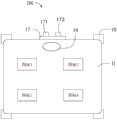
Fig. 1 is a schematic diagram of an electronic device according to an embodiment of the invention.
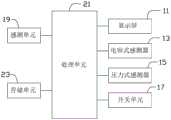
Fig. 2 is a functional block diagram of the electronic device shown in fig. 1.
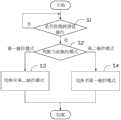
Fig. 3 is a flowchart of a touch mode switching method according to an embodiment of the invention.
Description of the main elements
| 100 | |
| 11 | |
| 13 | |
| 15 | |
| 17 | |
| 171 | |
| 173 | |
| 19 | |
| 21 | |
| 23 |
The following detailed description will further illustrate the invention in conjunction with the above-described figures.
Detailed Description
The technical solutions in the embodiments of the present invention will be clearly and completely described below with reference to the drawings in the embodiments of the present invention, and it is obvious that the described embodiments are only a part of the embodiments of the present invention, and not all of the embodiments. All other embodiments, which can be derived by a person skilled in the art from the embodiments given herein without making any creative effort, shall fall within the protection scope of the present invention.
It will be understood that when an element is referred to as being "electrically connected" to another element, it can be directly on the other element or intervening elements may also be present. When an element is referred to as being "electrically connected" to another element, it can be connected by contact, e.g., by wires, or by contactless connection, e.g., by contactless coupling.
Unless defined otherwise, all technical and scientific terms used herein have the same meaning as commonly understood by one of ordinary skill in the art to which this invention belongs. The terminology used in the description of the invention herein is for the purpose of describing particular embodiments only and is not intended to be limiting of the invention. As used herein, the term "and/or" includes any and all combinations of one or more of the associated listed items.
Some embodiments of the invention are described in detail below with reference to the accompanying drawings. The embodiments described below and the features of the embodiments can be combined with each other without conflict.
Referring to fig. 1 and fig. 2, anelectronic device 100 according to a preferred embodiment of the invention is provided. Theelectronic device 100 may be a mobile device such as a mobile phone, a tablet, a wearable device, etc. Theelectronic device 100 includes adisplay 11, acapacitive sensor 13, apressure sensor 15, aswitch unit 17, asensing unit 19, aprocessing unit 21, and astorage unit 23.
In this embodiment, thedisplay screen 11 is used to provide a graphical user interface for displaying information to a user.
Thecapacitive sensor 13 is disposed in thedisplay screen 11. Thecapacitive sensor 13 is electrically connected to theprocessing unit 21. Thecapacitive sensor 13 is used for sensing a touch action on thedisplay screen 11 and generating a touch signal. Thecapacitive sensor 13 transmits the touch signal to theprocessing unit 21.
In the present embodiment, theelectronic device 100 includes fourpressure sensors 15. The fourpressure sensors 15 are respectively disposed below four corners of thedisplay screen 11, and are electrically connected to theprocessing unit 21. Thepressure sensor 15 is used for sensing the pressing action on thedisplay screen 11 and generating a pressure signal, and transmitting the pressure signal to theprocessing unit 21.
Of course, it is understood that the number of thepressure sensors 15 in theelectronic device 100 is not limited to four, and the number thereof can be adjusted according to specific requirements. The position of thepressure sensor 15 is not limited to be disposed below thedisplay screen 11, and may be adjusted according to specific requirements. For example, thepressure sensor 15 may be disposed inside or above the surface of thedisplay screen 11. Thepressure sensors 15 are not limited to be disposed at four corners of thedisplay screen 11, and may be disposed at other positions, such as two sides of thedisplay screen 11.
In the present embodiment, theelectronic device 100 includes two touch modes, i.e., a first touch mode and a second touch mode. When theelectronic device 100 operates in the first touch mode, thecapacitive sensor 13 and thepressure sensor 15 are both in an operating state, that is, the first touch mode is a cooperative touch mode. When theelectronic device 100 operates in the second touch mode, thepressure sensor 15 is in an operating state, and thecapacitive sensor 13 is in a non-operating state, that is, when theelectronic device 100 operates in the second touch mode, thecapacitive sensor 13 is disabled, that is, the second touch mode is a pressure touch mode.
It is understood that, in the present embodiment, theswitch unit 17 is a mechanical switch, such as a toggle switch, which is disposed on a side of theelectronic device 100. Theswitch unit 17 is electrically connected to theprocessing unit 21, and is configured to control switching between two touch modes of theelectronic device 100. Specifically, when theswitch unit 17 is toggled, theswitch unit 17 generates a toggle signal and transmits the toggle signal to theprocessing unit 21. Theprocessing unit 21 controls the switching of the two touch modes of theelectronic device 100 according to the toggle signal. In this embodiment, theswitch unit 17 is configured such that when theswitch unit 17 is toggled to thefirst position 171, theswitch unit 17 generates a first toggle signal and sends the first toggle signal to theprocessing unit 21. Theprocessing unit 21 switches theelectronic device 100 to the first touch mode according to the first toggle signal. When theswitch unit 17 is toggled to thesecond position 173, theswitch unit 17 generates a second toggle signal different from the first toggle signal and sends the second toggle signal to theprocessing unit 21. Theprocessing unit 21 switches theelectronic device 100 to the second touch mode according to the second toggle signal.
It is understood that in other embodiments, theswitch unit 17 may also be a push switch. When theswitch unit 17 is pressed, theswitch unit 17 generates a pressing signal and transmits the pressing signal to theprocessing unit 21. Theprocessing unit 21 controls the switching between the two touch modes of theelectronic device 100 according to the pressing signal. In the present embodiment, theswitch unit 17 is integrated with the function key of theelectronic device 100. Theprocessing unit 21 is configured to trigger the switching of the one-touch mode every time the pressing signal of theswitch unit 17 is received. For example, when theelectronic device 100 is currently in the first touch mode, if theswitch unit 17 is pressed, theelectronic device 100 is switched to the second touch mode. When theelectronic device 100 is currently in the second touch mode, if theswitch unit 17 is pressed, theelectronic device 100 is switched to the first touch mode.
Thesensing unit 19 is disposed in theelectronic device 100 and electrically connected to theprocessing unit 21. Thesensing unit 19 is used for sensing the motion of theelectronic device 100, such as the movement or shaking of theelectronic device 100, generating a motion signal and transmitting the motion signal to theprocessing unit 21. In this embodiment, thesensing unit 19 is an accelerometer, and the motion signal is an acceleration signal. Of course, it is understood that thesensing unit 19 is not limited to the accelerometer, but may be other sensing mechanisms, as long as thesensing unit 19 can sense the movement of theelectronic device 100.
In this embodiment, shaking theelectronic device 100 while the user presses thedisplay screen 11 may also implement switching between two touch modes of theelectronic device 100. Specifically, thepressure sensor 15 senses the pressing action on thedisplay screen 11 and generates a pressure signal, and transmits the pressure signal to theprocessing unit 21. Thesensing unit 19 senses the motion of theelectronic device 100 and generates and transmits a corresponding motion signal of theelectronic device 100 to theprocessing unit 21. Theprocessing unit 21 receives the pressure signal from thepressure sensor 15 and the motion signal from thesensing unit 19, processes the pressure signal and the motion signal, and determines whether to switch the touch mode. For example, when theprocessing unit 21 receives the pressure signal and the motion signal in the same time period, theprocessing unit 21 compares a pressure value included in the received pressure signal with a preset pressure threshold value, and compares a motion value included in the received motion signal with a preset motion threshold value. When theprocessing unit 21 determines that the pressure value and the motion value both exceed the corresponding threshold values, the switching of the one-time touch mode is triggered. It is understood that the preset pressure threshold and the preset motion threshold are both stored in thestorage unit 23. In other embodiments, thestorage unit 23 can also be used for storing other data and signals.
It can be understood that, according to the above description, in the present embodiment, theelectronic device 100 can control the switching of the two touch modes in three ways, that is, theelectronic device 100 can trigger the switching of the touch modes by toggling theswitch unit 17, pressing theswitch unit 17, and simultaneously pressing thedisplay screen 11 and shaking theelectronic device 100.
It is understood that, in the present embodiment, the toggling of theswitch unit 17, the pressing of theswitch unit 17, and the simultaneous pressing of thedisplay screen 11 and shaking of theelectronic device 100 are defined as preset operations. For example, the toggling of theswitch unit 17 is defined as a first preset operation, the pressing of theswitch unit 17 is defined as a second preset operation, and the simultaneous pressing of thedisplay screen 11 and shaking of theelectronic device 100 is defined as a third preset operation.
Referring to fig. 3, a touch mode switching method applied to theelectronic device 100 according to an embodiment of the invention includes the following steps.
In step S1, whether a preset operation is detected is determined, if yes, step S2 is performed, and if no, step S1 is continued.
Specifically, theprocessing unit 21 detects whether a toggle signal is received from theswitch unit 17. If yes, judging that a first preset operation is detected; if not, theprocessing unit 21 further detects whether a pressing signal is received from theswitch unit 17. If yes, it is determined that the second preset operation is detected, and if not, theprocessing unit 21 further detects whether the pressure signal from thepressure sensor 15 and the motion signal from thesensing unit 19 are received in the same time period. If yes, theprocessing unit 21 compares the pressure value and the motion value with a preset pressure threshold value and a preset motion threshold value respectively, and when both the pressure value and the motion value exceed the corresponding threshold values, it is determined that a third preset operation is detected; if not, execution continues with S1.
In step S2, the current touch mode is determined.
Specifically, theprocessing unit 21 determines a current touch mode of theelectronic device 100, and if the current touch mode of theelectronic device 100 is the first touch mode, executes step S3. If the touch mode of theelectronic device 100 is the second touch mode, step S4 is executed.
In step S3, the touch screen is switched to the second touch mode. Theprocessing unit 21 switches theelectronic device 100 to a second touch mode to execute a function corresponding to the second touch mode, that is, theprocessing unit 21 configures thepressure sensor 15 to be in an operating state and configures thecapacitive sensor 13 to be in a non-operating state.
In step S4, the touch screen is switched to the first touch mode. Theprocessing unit 21 switches theelectronic device 100 to a first touch mode to execute a function corresponding to the first touch mode, that is, theprocessing unit 21 configures both thecapacitive sensor 13 and thepressure sensor 15 to be in a working state.
Obviously, theelectronic device 100 is provided with thepressure sensor 15, theswitch unit 17 and thesensing unit 19, so as to control the switching of the two touch modes of theelectronic device 100 in three different ways. It is understood that theelectronic device 100 may also switch the touch mode of theelectronic device 100 by only one of the three manners or a combination of any two manners.
Although the present invention has been described in detail with reference to the preferred embodiments, it will be understood by those skilled in the art that various changes may be made and equivalents may be substituted for elements thereof without departing from the spirit and scope of the present invention.
Claims (13)
1. An electronic device comprises a display screen, a capacitive sensor, a pressure sensor, a sensing unit and a processing unit, and is characterized in that: the processing unit is electrically connected with the display screen, the capacitive sensor, the pressure sensor and the sensing unit,
when the processing unit detects a preset operation,
the processing unit controls the electronic device to switch between a first touch mode and a second touch mode,
when the electronic device works in the first touch mode, the capacitive sensor and the pressure sensor are both in a working state, and the first touch mode is a cooperative touch mode;
when the electronic device works in the second touch mode, the pressure type sensor is in a working state, the capacitance type sensor is forbidden, and the second touch mode is a pressure touch mode;
and when the processing unit receives that the pressure signal detected by the pressure type sensor and the motion signal detected by the sensing unit both exceed the corresponding preset threshold value in the same time period, judging that the electronic device generates the preset operation.
2. The electronic device of claim 1, wherein the capacitive sensor senses a touch on the display screen and generates a touch signal, and transmits the touch signal to the processing unit.
3. The electronic device of claim 1, wherein the pressure sensor senses a pressing action on the display screen and generates a pressure signal, and transmits the pressure signal to the processing unit.
4. The electronic device according to claim 1, further comprising a switch unit, wherein the switch unit is a toggle switch, the switch unit generates a toggle signal when being toggled and transmits the toggle signal to the processing unit, and the processing unit determines whether the electronic device generates the preset operation according to the toggle signal.
5. The electronic device of claim 1, further comprising a switch unit, wherein the switch unit is a key switch, the switch unit generates a pressing signal when pressed and transmits the pressing signal to the processing unit, and the processing unit determines whether the electronic device generates the preset operation according to the pressing signal.
6. The electronic device of claim 1, wherein the sensing unit senses a motion of the electronic device, generates a motion signal, and transmits the motion signal to the processing unit.
7. The electronic device of claim 6, wherein when the processing unit receives the pressure signal from the pressure sensor and the motion signal from the sensing unit in the same time period, the processing unit compares a pressure value contained in the received pressure signal with a preset pressure threshold and compares a motion value contained in the received motion signal with a preset motion threshold.
8. The electronic device of claim 7, further comprising a storage unit for storing the preset pressure threshold and the preset motion threshold.
9. A touch mode switching method applied to the electronic device of claim 1, the touch mode switching method comprising:
detecting whether a preset operation exists or not;
when the pressure signal and the motion signal received in the same time period exceed the corresponding preset threshold values, judging that the electronic device generates the preset operation;
when the preset operation is detected, judging the current touch mode of the electronic device;
switching a touch mode according to the current touch mode of the electronic device;
the touch control modes comprise a first touch control mode and a second touch control mode, the first touch control mode is a cooperative touch control mode, the second touch control mode is a pressure touch control mode, and when the electronic device works in the cooperative touch control mode, the capacitive sensor and the pressure sensor are controlled to be in working states; when the electronic device works in the pressure touch mode, the pressure type sensor is controlled to be in a working state, and the capacitance type sensor is controlled to be in a non-working state.
10. The method of claim 9, wherein detecting whether there is a predetermined operation comprises determining whether the predetermined operation is generated according to a toggle signal from a switch unit.
11. The method of claim 9, wherein detecting whether there is a predetermined operation comprises determining whether the predetermined operation is set according to a pressing signal from a key switch.
12. The method of claim 9, wherein detecting whether there is a predetermined operation comprises determining whether the predetermined operation is generated according to the pressure signal from a pressure sensor and the motion signal from a sensing unit.
13. The touch mode switching method according to claim 12, wherein when the pressure signal and the motion signal are received in the same time period, a pressure value included in the received pressure signal is compared with a preset pressure threshold, and a motion value included in the received motion signal is compared with a preset motion threshold.
Priority Applications (1)
| Application Number | Priority Date | Filing Date | Title |
|---|---|---|---|
| CN201710745003.1ACN109426379B (en) | 2017-08-25 | 2017-08-25 | Electronic device and touch mode switching method thereof |
Applications Claiming Priority (1)
| Application Number | Priority Date | Filing Date | Title |
|---|---|---|---|
| CN201710745003.1ACN109426379B (en) | 2017-08-25 | 2017-08-25 | Electronic device and touch mode switching method thereof |
Publications (2)
| Publication Number | Publication Date |
|---|---|
| CN109426379A CN109426379A (en) | 2019-03-05 |
| CN109426379Btrue CN109426379B (en) | 2022-02-18 |
Family
ID=65500189
Family Applications (1)
| Application Number | Title | Priority Date | Filing Date |
|---|---|---|---|
| CN201710745003.1AExpired - Fee RelatedCN109426379B (en) | 2017-08-25 | 2017-08-25 | Electronic device and touch mode switching method thereof |
Country Status (1)
| Country | Link |
|---|---|
| CN (1) | CN109426379B (en) |
Families Citing this family (1)
| Publication number | Priority date | Publication date | Assignee | Title |
|---|---|---|---|---|
| CN111130527A (en)* | 2020-01-17 | 2020-05-08 | 宁波神励乐慧科技有限公司 | Touch mode optional key module and assembling communication method thereof |
Citations (5)
| Publication number | Priority date | Publication date | Assignee | Title |
|---|---|---|---|---|
| CN101888424A (en)* | 2009-05-14 | 2010-11-17 | 深圳富泰宏精密工业有限公司 | Input module of handheld electronic device |
| CN102799302A (en)* | 2011-05-27 | 2012-11-28 | 义隆电子股份有限公司 | Input device and touch event processing method |
| CN101668351B (en)* | 2008-09-04 | 2014-07-09 | 宏达国际电子股份有限公司 | Portable electronic device and mode switching method thereof |
| CN204695285U (en)* | 2015-06-02 | 2015-10-07 | 南昌欧菲光科技有限公司 | Display device and touch-screen thereof |
| CN106843568A (en)* | 2016-12-30 | 2017-06-13 | 珠海市魅族科技有限公司 | A kind of terminal installation of false-touch prevention method and false-touch prevention |
Family Cites Families (3)
| Publication number | Priority date | Publication date | Assignee | Title |
|---|---|---|---|---|
| TW201005503A (en)* | 2008-07-16 | 2010-02-01 | Htc Corp | Portable electronic device and the mode switching method thereof |
| TWM470311U (en)* | 2013-08-06 | 2014-01-11 | Sentelic Corp | System and electronic device of transiently switching operational status of touch panel |
| CN106843716A (en)* | 2016-11-16 | 2017-06-13 | 努比亚技术有限公司 | A kind of terminal desktop switching control and method |
- 2017
- 2017-08-25CNCN201710745003.1Apatent/CN109426379B/ennot_activeExpired - Fee Related
Patent Citations (5)
| Publication number | Priority date | Publication date | Assignee | Title |
|---|---|---|---|---|
| CN101668351B (en)* | 2008-09-04 | 2014-07-09 | 宏达国际电子股份有限公司 | Portable electronic device and mode switching method thereof |
| CN101888424A (en)* | 2009-05-14 | 2010-11-17 | 深圳富泰宏精密工业有限公司 | Input module of handheld electronic device |
| CN102799302A (en)* | 2011-05-27 | 2012-11-28 | 义隆电子股份有限公司 | Input device and touch event processing method |
| CN204695285U (en)* | 2015-06-02 | 2015-10-07 | 南昌欧菲光科技有限公司 | Display device and touch-screen thereof |
| CN106843568A (en)* | 2016-12-30 | 2017-06-13 | 珠海市魅族科技有限公司 | A kind of terminal installation of false-touch prevention method and false-touch prevention |
Also Published As
| Publication number | Publication date |
|---|---|
| CN109426379A (en) | 2019-03-05 |
Similar Documents
| Publication | Publication Date | Title |
|---|---|---|
| KR101572071B1 (en) | Method and apparatus for on / off control of portable terminal display unit | |
| US9235299B2 (en) | Touch sensitive surface for an electronic device with false touch protection | |
| US11720182B2 (en) | Key indication method and electronic device | |
| EP2674846A2 (en) | Information terminal device and display control method | |
| US9465455B2 (en) | Active pen system | |
| JP2013222283A (en) | Electronic device, and method and program for controlling the same | |
| CN204362145U (en) | Mobile terminal capable of automatically identifying left hand and right hand | |
| CN108845724A (en) | Capacitive key module with function of preventing mistaken touch | |
| WO2016192641A1 (en) | Key device manipulation and control method, key device and terminal | |
| CN107463290B (en) | Response control method and device for touch operation, storage medium and mobile terminal | |
| JP5659254B2 (en) | Input operation receiving device and threshold adjustment method | |
| US20140267139A1 (en) | Touch Sensitive Surface with False Touch Protection for an Electronic Device | |
| JP2013235468A (en) | Mobile terminal and mobile terminal cover | |
| WO2020134811A1 (en) | Key control method, and terminal | |
| CN103813023A (en) | State control method and device and electronic device | |
| CN109426379B (en) | Electronic device and touch mode switching method thereof | |
| TW201619792A (en) | Operation mode switching method used in capacitive touch control panel module | |
| CN106791086A (en) | The control method and mobile terminal of a kind of mobile terminal | |
| JP2014123327A (en) | Portable information terminal | |
| CN107257411B (en) | A message reminder method and mobile terminal | |
| CN107407996B (en) | Suspension touch device and method | |
| TWI704504B (en) | Input method based on light sensor, terminal device and computer readable recording media | |
| TWI643108B (en) | Electronic device and method for switching touch modes | |
| CN106775406A (en) | Anti-incorrect touch control method and device for touch screen of mobile terminal, and mobile terminal | |
| EP3528103B1 (en) | Screen locking method, terminal and screen locking device |
Legal Events
| Date | Code | Title | Description |
|---|---|---|---|
| PB01 | Publication | ||
| PB01 | Publication | ||
| SE01 | Entry into force of request for substantive examination | ||
| SE01 | Entry into force of request for substantive examination | ||
| GR01 | Patent grant | ||
| GR01 | Patent grant | ||
| CF01 | Termination of patent right due to non-payment of annual fee | ||
| CF01 | Termination of patent right due to non-payment of annual fee | Granted publication date:20220218 |