CN109196113B - Polyphenol additives in sequencing by synthesis - Google Patents
Polyphenol additives in sequencing by synthesisDownload PDFInfo
- Publication number
- CN109196113B CN109196113BCN201780018264.1ACN201780018264ACN109196113BCN 109196113 BCN109196113 BCN 109196113BCN 201780018264 ACN201780018264 ACN 201780018264ACN 109196113 BCN109196113 BCN 109196113B
- Authority
- CN
- China
- Prior art keywords
- acid
- sequencing
- reducing agent
- polyphenolic compound
- gallic acid
- Prior art date
- Legal status (The legal status is an assumption and is not a legal conclusion. Google has not performed a legal analysis and makes no representation as to the accuracy of the status listed.)
- Active
Links
Images


Classifications
- C—CHEMISTRY; METALLURGY
- C12—BIOCHEMISTRY; BEER; SPIRITS; WINE; VINEGAR; MICROBIOLOGY; ENZYMOLOGY; MUTATION OR GENETIC ENGINEERING
- C12Q—MEASURING OR TESTING PROCESSES INVOLVING ENZYMES, NUCLEIC ACIDS OR MICROORGANISMS; COMPOSITIONS OR TEST PAPERS THEREFOR; PROCESSES OF PREPARING SUCH COMPOSITIONS; CONDITION-RESPONSIVE CONTROL IN MICROBIOLOGICAL OR ENZYMOLOGICAL PROCESSES
- C12Q1/00—Measuring or testing processes involving enzymes, nucleic acids or microorganisms; Compositions therefor; Processes of preparing such compositions
- C12Q1/68—Measuring or testing processes involving enzymes, nucleic acids or microorganisms; Compositions therefor; Processes of preparing such compositions involving nucleic acids
- C12Q1/6813—Hybridisation assays
- C12Q1/6816—Hybridisation assays characterised by the detection means
- C12Q1/6823—Release of bound markers
- C—CHEMISTRY; METALLURGY
- C12—BIOCHEMISTRY; BEER; SPIRITS; WINE; VINEGAR; MICROBIOLOGY; ENZYMOLOGY; MUTATION OR GENETIC ENGINEERING
- C12Q—MEASURING OR TESTING PROCESSES INVOLVING ENZYMES, NUCLEIC ACIDS OR MICROORGANISMS; COMPOSITIONS OR TEST PAPERS THEREFOR; PROCESSES OF PREPARING SUCH COMPOSITIONS; CONDITION-RESPONSIVE CONTROL IN MICROBIOLOGICAL OR ENZYMOLOGICAL PROCESSES
- C12Q1/00—Measuring or testing processes involving enzymes, nucleic acids or microorganisms; Compositions therefor; Processes of preparing such compositions
- C12Q1/68—Measuring or testing processes involving enzymes, nucleic acids or microorganisms; Compositions therefor; Processes of preparing such compositions involving nucleic acids
- C12Q1/6869—Methods for sequencing
Landscapes
- Chemical & Material Sciences (AREA)
- Life Sciences & Earth Sciences (AREA)
- Organic Chemistry (AREA)
- Proteomics, Peptides & Aminoacids (AREA)
- Zoology (AREA)
- Wood Science & Technology (AREA)
- Health & Medical Sciences (AREA)
- Engineering & Computer Science (AREA)
- Biochemistry (AREA)
- General Health & Medical Sciences (AREA)
- Microbiology (AREA)
- Molecular Biology (AREA)
- Biotechnology (AREA)
- Genetics & Genomics (AREA)
- Immunology (AREA)
- General Engineering & Computer Science (AREA)
- Bioinformatics & Cheminformatics (AREA)
- Physics & Mathematics (AREA)
- Analytical Chemistry (AREA)
- Biophysics (AREA)
- Measuring Or Testing Involving Enzymes Or Micro-Organisms (AREA)
- Chemical Kinetics & Catalysis (AREA)
Abstract
Description
Translated fromChinese发明领域Field of Invention
本发明涉及如所述的方法、组合物、装置、系统和试剂盒,其包含但不限于用于使用例如合成测序方法确定核苷酸序列中核酸的身份的试剂和混合物。特别地,本发明考虑使用被称为抗氧化添加剂的多酚化合物来提高合成测序反应的效率。例如,没食子酸(GA)在本文中显示为许多示例性SBS多酚添加剂之一。The present invention relates to methods, compositions, devices, systems and kits as described, including, but not limited to, reagents and mixtures for determining the identity of nucleic acids in nucleotide sequences using, for example, sequencing-by-synthesis methods. In particular, the present invention contemplates the use of polyphenolic compounds known as antioxidant additives to improve the efficiency of sequencing-by-synthesis reactions. For example, gallic acid (GA) is shown herein as one of many exemplary SBS polyphenol additives.
背景background
在过去的25年中,已生成并存入Genbank的DNA序列信息量呈指数增长。传统的测序方法(例如,Sanger测序)正在被使用合成测序形式(SBS)的新一代测序技术所取代,其中使用特殊设计的核苷酸和DNA聚合酶来以受控方式读取芯片结合的单链DNA模板的序列。为了获得高通量,在测序芯片上排列了数百万个这样的模板斑点,并且独立地读出和记录它们的序列。Over the past 25 years, the amount of DNA sequence information that has been generated and deposited in Genbank has grown exponentially. Traditional sequencing methods (eg, Sanger sequencing) are being replaced by next-generation sequencing technologies that use a form of sequencing-by-synthesis (SBS), in which specially designed nucleotide and DNA polymerases are used to read chip-bound single cells in a controlled manner. Sequence of the strand DNA template. To achieve high throughput, millions of such template spots are arrayed on a sequencer and their sequences are read and recorded independently.
使用阵列进行DNA测序的系统是已知的(例如,Ju等人,美国专利号6,664,079)。然而,仍然需要用于提高核酸序列测序的准确性和/或效率以及增加可用于自动测序的阅读长度的方法和组合物。Systems for DNA sequencing using arrays are known (eg, Ju et al., US Pat. No. 6,664,079). However, there remains a need for methods and compositions for improving the accuracy and/or efficiency of nucleic acid sequence sequencing and for increasing the read length available for automated sequencing.
发明概述SUMMARY OF THE INVENTION
本发明涉及如所述的方法、组合物、装置、系统和试剂盒,其包含但不限于用于使用例如合成测序方法确定核苷酸序列中核酸的身份的试剂和混合物。特别地,本发明考虑使用被称为抗氧化添加剂的多酚化合物来提高合成测序反应的效率。例如,没食子酸(GA)在本文中显示为许多示例性SBS多酚添加剂之一。The present invention relates to methods, compositions, devices, systems and kits as described, including, but not limited to, reagents and mixtures for determining the identity of nucleic acids in nucleotide sequences using, for example, sequencing-by-synthesis methods. In particular, the present invention contemplates the use of polyphenolic compounds known as antioxidant additives to improve the efficiency of sequencing-by-synthesis reactions. For example, gallic acid (GA) is shown herein as one of many exemplary SBS polyphenol additives.
在一个实施方案中,本发明考虑在合成测序(SBS)的裂解步骤期间使用多酚化合物作为裂解试剂的抗氧化添加剂。这种应用方法导致测序性能的显著改善(原始错误率因此支持更长的读长)。这种效果可能是由于通过清除自由基副产物和过量裂解试剂的失活来提高裂解反应的效力。这种自由基副产物可能在流动池中积聚,导致进入随后的延伸步骤,从而导致3'-OH部分的过早去保护并损害单碱掺入率。In one embodiment, the present invention contemplates the use of polyphenolic compounds as antioxidant additives for cleavage reagents during the cleavage step of sequencing by synthesis (SBS). This applied method resulted in a significant improvement in sequencing performance (raw error rates thus supporting longer read lengths). This effect may be due to the enhanced efficiency of the cleavage reaction by scavenging free radical by-products and inactivation of excess cleavage reagents. This radical by-product may accumulate in the flow cell, leading to subsequent extension steps, resulting in premature deprotection of the 3'-OH moiety and impairing the single-base incorporation rate.
在一个实施方案中,本发明考虑了掺入经标记的核苷酸的方法,包括:a)提供i)多个核酸引物和模板分子,ii)聚合酶,iii)包含还原剂和多酚的裂解试剂化合物,和iv)多个核苷酸类似物,其中至少一部分所述核苷酸类似物用通过可裂解接头(例如二硫化物接头)连接到碱基上的标记物标记;b)将至少一部分所述引物与至少一部分所述模板分子杂交,以产生杂交的引物;c)将第一经标记的核苷酸类似物与所述聚合酶掺入到至少一部分所述杂交的引物中,以产生包含掺入的经标记的核苷酸类似物的延伸引物;d)检测所述掺入的经标记的核苷酸类似物;e)用所述裂解试剂裂解所述掺入的核苷酸类似物的可裂解接头。在一个实施方案中,多酚化合物选自没食子酸,龙胆酸,邻苯二酚,邻苯三酚,对苯二酚和/或间苯二酚(或其组合)。在一个实施方案中,所述裂解试剂的所述还原剂包含TCEP(三(2-羧乙基)膦)。在一个实施方案中,步骤c)的所述掺入的核苷酸类似物还包含封闭3'-OH基团的可去除的化学部分。在一个实施方案中,步骤e)的裂解去除了封闭3'-OH基团的可去除的化学部分。在一个实施方案中,该方法还包括f)将第二核苷酸类似物与所述聚合酶掺入到至少一部分所述延伸引物中。In one embodiment, the present invention contemplates a method of incorporating labeled nucleotides comprising: a) providing i) a plurality of nucleic acid primers and template molecules, ii) a polymerase, iii) a reducing agent and a polyphenol comprising a cleavage reagent compound, and iv) a plurality of nucleotide analogs, wherein at least a portion of the nucleotide analogs are labeled with a label attached to the base through a cleavable linker (eg, a disulfide linker); b) the at least a portion of said primers hybridize to at least a portion of said template molecules to produce hybridized primers; c) incorporating a first labeled nucleotide analog and said polymerase into at least a portion of said hybridized primers, to generate an extension primer comprising an incorporated labeled nucleotide analog; d) detect the incorporated labeled nucleotide analog; e) cleave the incorporated nucleoside with the cleavage reagent Cleavable linkers for acid analogs. In one embodiment, the polyphenolic compound is selected from the group consisting of gallic acid, gentisic acid, catechol, pyrogallol, hydroquinone and/or resorcinol (or combinations thereof). In one embodiment, the reducing agent of the cleavage reagent comprises TCEP (tris(2-carboxyethyl)phosphine). In one embodiment, the incorporated nucleotide analog of step c) further comprises a removable chemical moiety blocking the 3'-OH group. In one embodiment, the cleavage of step e) removes the removable chemical moiety blocking the 3'-OH group. In one embodiment, the method further comprises f) incorporating a second nucleotide analog with the polymerase into at least a portion of the extension primer.
不意欲本发明限于标记物的类型。考虑了各种标记物。在优选的实施方案中,所述标记物是发荧光的。It is not intended that the present invention be limited to the type of marker. Various markers were considered. In preferred embodiments, the label is fluorescent.
本发明还涉及组合物和试剂。在一个实施方案中,本发明涉及裂解试剂,其包含i)还原剂,和ii)多酚化合物。在一个实施方案中,多酚化合物包括但不限于没食子酸,龙胆酸,邻苯二酚,邻苯三酚,对苯二酚和/或间苯二酚。在一个实施方案中,所述还原剂是TCEP(三(2-羧乙基)膦)。The present invention also relates to compositions and reagents. In one embodiment, the present invention relates to a cleavage reagent comprising i) a reducing agent, and ii) a polyphenolic compound. In one embodiment, polyphenolic compounds include, but are not limited to, gallic acid, gentisic acid, catechol, pyrogallol, hydroquinone, and/or resorcinol. In one embodiment, the reducing agent is TCEP (tris(2-carboxyethyl)phosphine).
本发明还涉及试剂盒,其中提供试剂及其使用说明书。在一个实施方案中,本发明涉及试剂盒,其包含:i)裂解试剂和ii)多个核苷酸类似物,其中至少一部分所述核苷酸类似物用通过可裂解接头(例如二硫化物接头)连接至碱基的标记物标记。在一个实施方案中,裂解试剂包含i)还原剂,和ii)多酚化合物。在一个实施方案中,多酚化合物包括但不限于没食子酸,龙胆酸,邻苯二酚,邻苯三酚,对苯二酚和/或间苯二酚。在一个实施方案中,所述还原剂是TCEP(三(2-羧乙基)膦)。The present invention also relates to kits in which reagents and instructions for their use are provided. In one embodiment, the present invention relates to a kit comprising: i) a cleavage reagent and ii) a plurality of nucleotide analogs, wherein at least a portion of the nucleotide analogs are used via a cleavable linker (eg, a disulfide linker) is attached to the base label. In one embodiment, the cleavage reagent comprises i) a reducing agent, and ii) a polyphenolic compound. In one embodiment, polyphenolic compounds include, but are not limited to, gallic acid, gentisic acid, catechol, pyrogallol, hydroquinone, and/or resorcinol. In one embodiment, the reducing agent is TCEP (tris(2-carboxyethyl)phosphine).
本发明还考虑了系统,例如具有流动池的系统,其中流动池与试剂的来源连接。参见例如美国专利No.9,145,589,在此引入作为参考。在一个实施方案中,本发明涉及包含与溶液中的模板杂交的引物的系统,所述溶液包含裂解试剂,裂解试剂包含i)还原剂,和ii)多酚化合物。在一个实施方案中,多酚化合物包括但不限于没食子酸,龙胆酸,邻苯二酚,邻苯三酚,对苯二酚和/或间苯二酚。在一个实施方案中,所述还原剂是TCEP(三(2-羧乙基)膦)。在一个实施方案中,所述杂交的引物和模板是固定的。在一个实施方案中,所述杂交的引物和模板在流动池中。The present invention also contemplates systems, such as systems having a flow cell, wherein the flow cell is connected to a source of reagents. See, eg, US Patent No. 9,145,589, incorporated herein by reference. In one embodiment, the present invention relates to a system comprising a primer that hybridizes to a template in a solution comprising a cleavage reagent comprising i) a reducing agent, and ii) a polyphenolic compound. In one embodiment, polyphenolic compounds include, but are not limited to, gallic acid, gentisic acid, catechol, pyrogallol, hydroquinone, and/or resorcinol. In one embodiment, the reducing agent is TCEP (tris(2-carboxyethyl)phosphine). In one embodiment, the hybridized primers and templates are immobilized. In one embodiment, the hybridized primer and template are in a flow cell.
定义definition
为了便于理解本发明,下面定义了许多术语。本文定义的术语具有本领域普通技术人员在与本发明相关的领域中通常理解的含义。诸如“一个”、“一种”和“所述”之类的术语不旨在仅指单个实体而且还指多个实体,并且还包括可以用于举例说明的特定实例的一般类别。本文的术语用于描述本发明的具体实施方案,但是除了权利要求中所陈述的之外,它们的使用不限制本发明。To facilitate understanding of the present invention, a number of terms are defined below. Terms defined herein have the meanings commonly understood by those of ordinary skill in the art in the field relevant to the present invention. Terms such as "a," "an," and "the" are not intended to refer to only a single entity but also multiple entities, and also include general categories that can be used to illustrate specific instances. The terminology herein is used to describe specific embodiments of the invention, but their usage does not limit the invention, except as set forth in the claims.
在任何测定测量的背景下,本文所用的术语“约”是指给定测量的+/-5%。In the context of any assay measurement, the term "about" as used herein refers to +/- 5% of a given measurement.
如本文所用的术语“接头”是指能够连接易于裂解的标记和/或化学部分的任何分子(或分子集合)。在一个实施方案中,接头的裂解可产生毒性自由基产物。例如,接头可包括但不限于二硫化物接头和/或叠氮化物接头。The term "linker" as used herein refers to any molecule (or collection of molecules) capable of attaching a readily cleavable label and/or chemical moiety. In one embodiment, cleavage of the linker can generate toxic free radical products. For example, linkers may include, but are not limited to, disulfide linkers and/or azide linkers.
如本文所用的术语“连接”是指第一分子(例如,核酸)和第二分子(例如,标记分子)之间的任何相互作用。连接可能是可逆的或不可逆的。这种连接包括但不限于共价键合,离子键合,范德华力或摩擦力等。The term "linked" as used herein refers to any interaction between a first molecule (eg, a nucleic acid) and a second molecule (eg, a marker molecule). The linkage may be reversible or irreversible. Such linkages include, but are not limited to, covalent bonding, ionic bonding, van der Waals or frictional forces, and the like.
如本文所用的“核酸序列”和“核苷酸序列”是指寡核苷酸或多核苷酸,及其片段或部分,以及基因组或合成来源的DNA或RNA,其可以是单链或双链的,并且代表正义或反义链。此类核酸可包括但不限于cDNA,mRNA或其他核酸序列。"Nucleic acid sequence" and "nucleotide sequence" as used herein refer to oligonucleotides or polynucleotides, and fragments or portions thereof, as well as DNA or RNA of genomic or synthetic origin, which may be single-stranded or double-stranded , and represents the sense or antisense strand. Such nucleic acids may include, but are not limited to, cDNA, mRNA or other nucleic acid sequences.
如本文所用,术语“分离的核酸”是指已从其天然状态移出的任何核酸分子(例如,从细胞中移出并且在优选的实施方案中,不含其他基因组核酸)。As used herein, the term "isolated nucleic acid" refers to any nucleic acid molecule that has been removed from its natural state (eg, removed from a cell and, in preferred embodiments, free of other genomic nucleic acid).
在一些实施方案中,本发明考虑将核酸杂交在一起。这需要一定程度的互补性。如本文所用,术语“互补”或“互补性”用于指通过碱基配对规则相关的“多核苷酸”和“寡核苷酸”(其是指核苷酸序列的可互换术语)。例如,序列“C-A-G-T”与序列“G-T-C-A”互补。互补性可以是“部分的”或“全部的”。“部分”互补性是根据碱基配对规则不匹配一个或多个核酸碱基的情况。核酸之间的“全部”或“完全”互补性是在碱基配对规则下每个核酸碱基与另一个碱基匹配的情况。核酸链之间的互补程度对核酸链之间的杂交效率和强度具有显著影响。这在扩增反应以及依赖于核酸之间结合的检测方法中特别重要。In some embodiments, the present invention contemplates hybridizing nucleic acids together. This requires a certain degree of complementarity. As used herein, the terms "complementary" or "complementarity" are used to refer to "polynucleotides" and "oligonucleotides" (which are interchangeable terms referring to nucleotide sequences) that are related by the rules of base pairing. For example, the sequence "C-A-G-T" is complementary to the sequence "G-T-C-A". Complementarity can be "partial" or "full". "Partial" complementarity is one or more nucleic acid bases that do not match according to the base pairing rules. "Total" or "complete" complementarity between nucleic acids is where each nucleic acid base matches another base under the base pairing rules. The degree of complementarity between nucleic acid strands has a significant impact on the efficiency and strength of hybridization between nucleic acid strands. This is particularly important in amplification reactions and detection methods that rely on binding between nucleic acids.
如本文所用,关于核苷酸序列的术语“同源性”和“同源的”是指与其他核苷酸序列的互补程度。可能存在部分同源性或完全同源性(即同一性)。与核酸序列部分互补即“基本上同源”的核苷酸序列是至少部分抑制完全互补序列与靶核酸序列杂交的核苷酸序列。可以在低严格性条件下使用杂交测定(Southern或Northern印迹,溶液杂交等)检查完全互补序列与靶序列杂交的抑制。基本上同源的序列或探针将在低严格性条件下竞争并抑制完全同源序列与靶序列的结合(即杂交)。这并不是说低严格性的条件是允许非特异性结合;低严格条件要求两个序列彼此的结合是特异性(即选择性)相互作用。可以通过使用缺乏甚至部分互补程度(例如,小于约30%同一性)的第二靶序列来测试非特异性结合的不存在;在没有非特异性结合的情况下,探针不会与第二个非互补靶杂交。As used herein, the terms "homology" and "homologous" with respect to nucleotide sequences refer to the degree of complementarity to other nucleotide sequences. Partial or complete homology (ie, identity) may exist. A nucleotide sequence that is partially complementary, ie, "substantially homologous," to a nucleic acid sequence is a nucleotide sequence that at least partially inhibits hybridization of the fully complementary sequence to a target nucleic acid sequence. Inhibition of hybridization of the fully complementary sequence to the target sequence can be examined using hybridization assays (Southern or Northern blots, solution hybridization, etc.) under low stringency conditions. Substantially homologous sequences or probes will compete under low stringency conditions and inhibit the binding (ie, hybridization) of fully homologous sequences to the target sequence. This is not to say that low stringency conditions permit nonspecific binding; low stringency conditions require that the binding of two sequences to each other is a specific (ie selective) interaction. The absence of non-specific binding can be tested by using a second target sequence that lacks even partial complementarity (eg, less than about 30% identity); in the absence of non-specific binding, the probe will not interact with the second non-specific binding. Complementary target hybridization.
低严格条件包括相当于在42℃下在由5×SSPE(43.8g/l NaCl,6.9g/l NaH2PO4-H2O和1.85g/l EDTA,用NaOH调节pH至7.4)、0.1%SDS、5x Denhardt试剂(50x Denhard每500ml含有5g Ficoll(400型,Pharmacia)、5g BSA(级分V;Sigma))和100μg/ml变性鲑鱼精子DNA组成的溶液中结合或杂交然后在使用长度为约500个核苷酸的探针时在42℃下包含5x SSPE、0.1%SDS的溶液中洗涤的条件。还可以采用许多等效条件来包括低严格条件;因素诸如探针的长度和性质(DNA,RNA,碱基组成)和靶标的性质(DNA,RNA,碱基组成,存在于溶液中或固定化等)以及盐和其他组分的浓度(例如,甲酰胺、硫酸葡聚糖、聚乙二醇的存在或不存在)以及杂交溶液的组分可以改变以产生与上述条件不同但等价的低严格杂交条件。另外,还可以使用在高严格条件下促进杂交的条件(例如,提高杂交和/或洗涤步骤的温度,在杂交溶液中使用甲酰胺等)。Low stringency conditions included equivalent to 5x SSPE (43.8g/l NaCl, 6.9g/l NaH2PO4-H2O and 1.85g/l EDTA, pH adjusted to 7.4 with NaOH), 0.1% SDS, 5x Denhardt at 42°C Reagents (50x Denhard containing 5g Ficoll (type 400, Pharmacia), 5g BSA (fraction V; Sigma)) and 100μg/ml denatured salmon sperm DNA per 500ml were combined or hybridized in a solution using approximately 500 nuclei in length. The nucleotide probe was washed in a solution containing 5x SSPE, 0.1% SDS at 42°C. A number of equivalent conditions can also be employed to include low stringency conditions; factors such as the length and nature of the probe (DNA, RNA, base composition) and the nature of the target (DNA, RNA, base composition, present in solution or immobilized etc.) and concentrations of salts and other components (e.g., the presence or absence of formamide, dextran sulfate, polyethylene glycol) and the composition of the hybridization solution can be varied to produce different but equivalent low Stringent hybridization conditions. Additionally, conditions that promote hybridization under high stringency conditions can also be used (eg, increasing the temperature of the hybridization and/or wash steps, use of formamide in the hybridization solution, etc.).
如本文所用,术语“杂交”用于指使用核酸链通过碱基配对与互补链连接以形成杂交复合物的任何过程的互补核酸配对。杂交和杂交强度(即核酸之间结合的强度)受到诸如核酸之间的互补程度、所涉及的条件的严格性、形成的杂交体的Tm和核酸内的G:C比率等因素的影响。As used herein, the term "hybridization" is used to refer to the pairing of complementary nucleic acids using any process in which a nucleic acid strand is attached to a complementary strand by base pairing to form a hybridization complex. Hybridization and the strength of hybridization (ie, the strength of binding between nucleic acids) are affected by factors such as the degree of complementarity between the nucleic acids, the stringency of the conditions involved, the Tm of the hybrid formed, and the G:C ratio within the nucleic acids.
如本文所用,术语“杂交复合物”是指通过在互补的G和C碱基之间以及互补的A和T碱基之间形成氢键而在两个核酸序列之间形成的复合物;这些氢键可以通过碱基堆积相互作用进一步稳定。两个互补核酸序列以反平行构型氢键合。杂交复合物可以在溶液中形成(例如,C0t或R0t分析)或在溶液中存在的一种核酸序列和固定在固体支持物(例如,如用于Southern和Northern印迹的尼龙膜或硝酸纤维素滤膜,如用于原位杂交的斑点印迹或载玻片,包括FISH(荧光原位杂交))上的另一种核酸序列之间形成。As used herein, the term "hybrid complex" refers to a complex formed between two nucleic acid sequences by the formation of hydrogen bonds between complementary G and C bases and between complementary A and T bases; these Hydrogen bonds can be further stabilized by base stacking interactions. Two complementary nucleic acid sequences are hydrogen bonded in an antiparallel configuration. Hybridization complexes can be formed in solution (e.g., Cot or Rot assays) or a nucleic acid sequence present in solution and immobilized on solid supports (e.g., nylon membranes or nitrocellulose filters such as for Southern and Northern blotting). Membranes, such as dot blots or glass slides for in situ hybridization, including FISH (fluorescence in situ hybridization), are formed between another nucleic acid sequence.
如本文所用,术语“Tm”用于指“解链温度”。解链温度是一群双链核酸分子中的一半解离成单链时的温度。如标准参考文献所示,当核酸在1M NaCl的水溶液中时,可以通过以下等式计算Tm值的简单估计:Tm=81.5+0.41(%G+C)。Anderson等,“QuantitativeFilter Hybridization”In:Nucleic Acid Hybridization(1985)。更复杂的计算将结构和序列特征考虑在内,以计算Tm。As used herein, the term "Tm" is used to refer to "melting temperature". The melting temperature is the temperature at which half of a population of double-stranded nucleic acid molecules dissociates into single strands. As shown in standard references, when nucleic acids are in 1 M NaCl in water, a simple estimate of the Tm value can be calculated by the following equation: Tm=81.5+0.41(%G+C). Anderson et al, "Quantitative Filter Hybridization" In: Nucleic Acid Hybridization (1985). More sophisticated calculations take structural and sequence features into account to calculate Tm.
如本文所用,术语“严格性”用于指离子强度、温度和作为有机溶剂的其他化合物的存在的条件,在该条件下进行核酸杂交。“严格性”通常发生在约Tm至低于Tm约20℃至25℃的范围内。“严格杂交”可用于鉴定或检测相同的多核苷酸序列或鉴定或检测相似或相关的多核苷酸序列。例如,当在严格条件下在杂交反应中使用片段时,有利于含有独特序列(即,与其非同源或含有低于约50%的同源性或互补性的区域)的片段的杂交。或者,当使用“弱”或“低”严格性条件时,可以与衍生自遗传多样的生物(即,例如,这些生物之间的互补序列的频率通常较低)的核酸发生杂交。As used herein, the term "stringency" is used to refer to the conditions of ionic strength, temperature, and presence of other compounds as organic solvents under which nucleic acid hybridization occurs. "Stringency" generally occurs in the range from about Tm to about 20°C to 25°C below Tm. "Stringent hybridization" can be used to identify or detect identical polynucleotide sequences or to identify or detect similar or related polynucleotide sequences. For example, when fragments are used in hybridization reactions under stringent conditions, hybridization of fragments containing unique sequences (ie, regions with which they are non-homologous or contain less than about 50% homology or complementarity) is favored. Alternatively, when "weak" or "low" stringency conditions are used, hybridization can occur with nucleic acids derived from genetically diverse organisms (ie, for example, the frequency of complementary sequences between these organisms is generally low).
如本文所用,术语“可扩增的核酸”用于指可通过任何扩增方法扩增的核酸。预期“可扩增的核酸”通常包含“样品模板”。As used herein, the term "amplizable nucleic acid" is used to refer to a nucleic acid that can be amplified by any amplification method. It is expected that the "amplifiable nucleic acid" will generally comprise a "sample template".
如本文所用,术语“样品模板”或(更简单地)“模板”是指源自样品的核酸,针对其分析目标靶序列的存在。相反,“背景模板”用于指样品模板以外的核酸,其可以存在或不存在于样品中。背景模板通常是无意的。这可能是携带的结果,或者可能是由于试图从样品中纯化出来的核酸污染物的存在。例如,来自待检测的生物以外的生物的核酸可以作为背景存在于测试样品中。As used herein, the term "sample template" or (more simply) "template" refers to a nucleic acid derived from a sample for which the presence of a target sequence of interest is analyzed. In contrast, "background template" is used to refer to nucleic acids other than the sample template, which may or may not be present in the sample. Background templates are usually unintentional. This could be the result of carryover, or it could be due to the presence of nucleic acid contaminants that were attempted to be purified from the sample. For example, nucleic acids from organisms other than the organism to be detected can be present in the test sample as background.
“扩增”定义为核酸序列的额外拷贝的产生,并且通常使用聚合酶链反应进行。Dieffenbach C.W.和G.S.Dveksler(1995)In:PGR Primer,a Laboratory Manual,ColdSpring Harbor Press,Plainview,N.Y。"Amplification" is defined as the production of additional copies of a nucleic acid sequence, and is typically performed using the polymerase chain reaction. Dieffenbach C.W. and G.S. Dveksler (1995) In: PGR Primer, a Laboratory Manual, Cold Spring Harbor Press, Plainview, N.Y.
如本文所用,术语“聚合酶链式反应”(“PCR”)是指K.B.Mullis美国专利4,683,195和4,683,202(在此引入作为参考)的方法,它描述了在不进行克隆或纯化的情况下增加基因组DNA混合物中靶序列片段浓度的方法。所需靶序列的扩增片段的长度由两个寡核苷酸引物相对于彼此的相对位置确定,因此,该长度是可控参数。由于该方法的重复方面,该方法被称为“聚合酶链反应”(下文中称为“PCR”)。因为靶序列的所需扩增区段成为混合物中的主要序列(就浓度而言),所以它们被称为“PCR扩增”。通过PCR,可以将基因组DNA中特定靶序列的单拷贝扩增至可通过几种不同方法(例如,与标记探针杂交;掺入生物素化引物,然后进行抗生物素蛋白-酶缀合物检测;掺入32P-标记的脱氧核苷酸三磷酸,例如dCTP或dATP,到扩增的区段中)检测的水平。除基因组DNA外,可以用适当的引物分子组扩增任何寡核苷酸序列。特别地,由PCR过程本身产生的扩增片段本身是用于后续PCR扩增的有效模板。As used herein, the term "polymerase chain reaction" ("PCR") refers to the method of K.B. Mullis US Pat. Nos. 4,683,195 and 4,683,202 (incorporated herein by reference), which describe the addition of genomes without cloning or purification A method for the concentration of target sequence fragments in DNA mixtures. The length of the amplified fragment of the desired target sequence is determined by the relative positions of the two oligonucleotide primers with respect to each other, and therefore, this length is a controllable parameter. Due to the repetitive aspect of the method, the method is referred to as "polymerase chain reaction" (hereinafter "PCR"). Because the desired amplified segment of the target sequence becomes the predominant sequence (in terms of concentration) in the mixture, they are referred to as "PCR amplifications". By PCR, a single copy of a specific target sequence in genomic DNA can be amplified to a level that can be amplified by several different methods (eg, hybridization with labeled probes; incorporation of biotinylated primers followed by avidin-enzyme conjugates) Detection; incorporation of 32P-labeled deoxynucleotide triphosphates, such as dCTP or dATP, into amplified segments) detected levels. In addition to genomic DNA, any oligonucleotide sequence can be amplified with an appropriate set of primer molecules. In particular, the amplified fragments produced by the PCR process itself are effective templates for subsequent PCR amplifications.
如本文所用,术语“引物”是指寡核苷酸,无论是天然存在的(如在纯化的限制性消化物中)还是合成产生的,当置于诱导与核酸链互补的引物延伸产物的合成的条件下(即,在核苷酸和诱导剂如DNA聚合酶存在下并在合适的温度和pH下)时,其能够作为合成起始点。引物优选是单链的,以获得最大的扩增效率,但也可以是双链的。如果是双链的,首先处理引物以分离其链,然后用于制备延伸产物。优选地,引物是寡脱氧核糖核苷酸。引物必须足够长以在诱导剂存在下引发延伸产物的合成。引物的确切长度取决于许多因素,包括温度、引物来源和使用的方法。As used herein, the term "primer" refers to an oligonucleotide, whether naturally occurring (as in a purified restriction digest) or synthetically produced, when placed to induce synthesis of a primer extension product complementary to a nucleic acid strand It is capable of serving as a starting point for synthesis in the presence of nucleotides and an inducing agent such as DNA polymerase and at a suitable temperature and pH. Primers are preferably single-stranded for maximum amplification efficiency, but can also be double-stranded. If double-stranded, the primers are first treated to separate their strands and then used to make extension products. Preferably, the primers are oligodeoxyribonucleotides. The primer must be long enough to initiate synthesis of the extension product in the presence of the inducer. The exact length of primers depends on many factors, including temperature, source of primer, and method used.
如本文所用,术语“探针”是指;寡核苷酸(即,核苷酸序列),天然存在的(如在纯化的限制性消化物中)还是通过重组或PCR扩增合成产生的,其能够与另一种感兴趣的寡核苷酸杂交。探针可以是单链或双链的。探针可用于特定基因序列的检测、鉴定和分离。预期本发明中使用的任何探针将用任何“报道分子”标记,因此可在任何检测系统中检测,包括但不限于酶(例如,ELISA,以及基于酶的组织化学测定)、荧光、放射性和发光系统。本发明不旨在限于任何特定的检测系统或标记物。As used herein, the term "probe" refers to; an oligonucleotide (ie, a nucleotide sequence), either naturally occurring (as in a purified restriction digest) or synthetically produced by recombinant or PCR amplification, It is capable of hybridizing to another oligonucleotide of interest. Probes can be single-stranded or double-stranded. Probes can be used for the detection, identification and isolation of specific gene sequences. It is contemplated that any probe used in the present invention will be labeled with any "reporter" and thus detectable in any detection system, including but not limited to enzymatic (eg, ELISA, and enzyme-based histochemical assays), fluorescence, radioactivity, and Lighting system. The present invention is not intended to be limited to any particular detection system or marker.
本文使用的术语“标记物”或“可检测的标记物”是指可通过光谱,光化学,生物化学,免疫化学,电学,光学或化学方法检测的任何组合物。此类标记物包括用于用标记的链霉抗生物素蛋白缀合物染色的生物素、磁珠(例如,
在优选的实施方案中,标记物通常是发荧光的并且与核苷酸的碱基连接。对于胞嘧啶和胸腺嘧啶,连接通常是在5位。对于其他碱基,产生去氮衍生物并且标记物与去氮腺嘌呤或去氮鸟嘌呤的7-位连接。In a preferred embodiment, the label is generally fluorescent and is attached to the base of the nucleotide. For cytosine and thymine, the linkage is usually at the 5 position. For other bases, deaza derivatives are generated and the label is attached to the 7-position of deazaadenine or deazaguanine.
可以通过许多方法检测本发明中考虑的标记物。例如,可以使用照相胶片或闪烁计数器检测放射性标记,可以使用光电检测器检测荧光标记以检测发射的光。通常通过向酶提供底物并检测酶在底物上的作用产生的反应产物来检测酶标记物,和通过简单地使有色标记物可视化来检测量热标记物。The markers contemplated in the present invention can be detected by a number of methods. For example, radioactive labels can be detected using photographic film or a scintillation counter, and fluorescent labels can be detected using photodetectors to detect emitted light. Enzyme labels are typically detected by providing a substrate to the enzyme and detecting the reaction product resulting from the action of the enzyme on the substrate, and calorimetric labels are detected by simply visualizing a colored label.
如本文所用,术语“发光”和/或“荧光”是指从物体、化学物质和/或化合物发射电磁辐射(光)的任何过程。发光和/或荧光由系统产生,该系统从激发态“弛豫”到较低状态,伴随光子形式的能量的相应释放。这些状态可以是电子、电子振动、旋转或三者的任意组合。负责发光的转变可以通过化学释放存储在系统中的能量或从外部源添加到系统中来激发。外部能量源可以是各种类型,包括但不限于化学、热、电、磁、电磁、物理或能够使系统被激发到高于基态的状态的任何其他类型。例如,可以通过吸收光子、放置在电场中或通过化学氧化还原反应来激发系统。在发光期间发射的光子的能量可以在从低能微波辐射到高能X射线辐射的范围内。通常,发光是指从UV到IR辐射范围内的光子。As used herein, the terms "luminescence" and/or "fluorescence" refer to any process that emits electromagnetic radiation (light) from objects, chemicals and/or compounds. Luminescence and/or fluorescence is produced by a system that "relaxes" from an excited state to a lower state, with a corresponding release of energy in the form of photons. These states can be electrons, electron vibrations, rotations, or any combination of the three. The transitions responsible for luminescence can be excited by chemical release of energy stored in the system or by addition to the system from an external source. External energy sources may be of various types including, but not limited to, chemical, thermal, electrical, magnetic, electromagnetic, physical, or any other type that enables the system to be excited to a state above the ground state. The system can be excited, for example, by absorbing photons, by being placed in an electric field, or by chemical redox reactions. The energy of photons emitted during light emission can range from low energy microwave radiation to high energy X-ray radiation. In general, luminescence refers to photons ranging from UV to IR radiation.
附图的简要说明Brief Description of Drawings
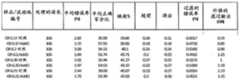
图1显示了示例性数据,其显示了在裂解溶液相对基线运行中含有没食子酸(addG)的运行的测序性能的比较。测序参数包括平均错误率、正确(无错误)读数的平均百分比、相位参数(超前和滞后)。Figure 1 shows exemplary data showing a comparison of the sequencing performance of runs containing gallic acid (addG) in the lysis solution versus a baseline run. Sequencing parameters include average error rate, average percentage of correct (error-free) reads, phase parameters (lead and lag).
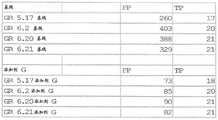
图2显示了示例性数据,其显示了在裂解溶液相对基线运行中含有没食子酸(addG)的运行的测序性能的比较。测序包括对调取的变体的评估(真阳性-TP,假阳性-FP)。Figure 2 shows exemplary data showing a comparison of the sequencing performance of runs containing gallic acid (addG) in the lysis solution versus a baseline run. Sequencing includes evaluation of called variants (true positive-TP, false positive-FP).
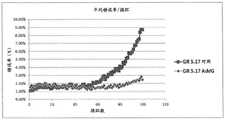
图3显示了示例性数据,其显示了在裂解溶液相对基线运行中含有没食子酸(addG)的运行的测序性能的比较。测序包括评估每个循环的平均错误率。Figure 3 shows exemplary data showing a comparison of the sequencing performance of runs containing gallic acid (addG) in the lysis solution versus a baseline run. Sequencing included an assessment of the average error rate per cycle.
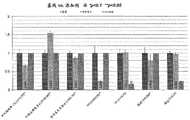
图4显示了示例性数据,其显示了在裂解溶液相对基线运行中含有没食子酸(addG)的运行的测序性能的比较。测序包括评估以下性能指标:每个周期的平均错误率,正确读数的平均百分比,信号保留百分比,假阳性率和超前/滞后。第三条上高于0.95的值表示统计显著性,第一条对应于基线,第二条对应于使用相对改善因子的实验。Figure 4 shows exemplary data showing a comparison of the sequencing performance of runs containing gallic acid (addG) in lysis solutions versus baseline runs. Sequencing included evaluation of the following performance metrics: average error rate per cycle, average percent of correct reads, percent signal retention, false positive rate, and lead/lag. Values above 0.95 on the third bar indicate statistical significance, the first bar corresponds to the baseline and the second bar corresponds to the experiment using the relative improvement factor.
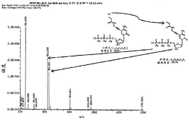
图5显示了示例性数据,其显示了裂解的间隔臂的LC-MS分析,所述间隔臂以游离SH基团终止并暴露于不含添加剂的裂解。在裂解步骤中由于副反应检测到烯烃部分的形成。Figure 5 shows exemplary data showing LC-MS analysis of cleaved spacers terminated with free SH groups and exposed to additive-free cleavage. The formation of olefin moieties was detected during the cracking step due to side reactions.
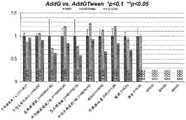
图6显示了示例性数据,其显示了在裂解溶液中含有没食子酸(addG)的运行相对具有没食子酸和Tween去污剂的溶液的测序性能的比较。测序包括评估以下性能指标:每个循环的平均错误率,正确读数的平均百分比,信号保留百分比,假阳性率和超前/滞后。第三条上高于0.95的值表示统计显著性,第一条对应于基线,第二条对应于使用相对改善因子的实验。Figure 6 shows exemplary data showing a comparison of the sequencing performance of runs containing gallic acid (addG) in the lysis solution versus solutions with gallic acid and Tween detergent. Sequencing included evaluation of the following performance metrics: average error rate per cycle, average percentage of correct reads, percent signal retention, false positive rate, and lead/lag. Values above 0.95 on the third bar indicate statistical significance, the first bar corresponds to the baseline and the second bar corresponds to the experiment using the relative improvement factor.
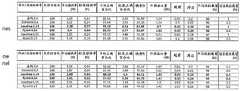
图7显示了示例性数据,其显示了在裂解溶液中含有addG替代物(邻苯三酚,邻苯二酚,龙胆酸)的运行相对不含任何添加剂的基线运行的测序性能的比较。提供了两种样品类型(克隆和基因组)的结果。当对裂解添加邻苯三酚、邻苯二酚、龙胆酸等添加剂替代品时,对测序KPI例如错误率、正确百分比和超前/滞后观察到改善。Figure 7 shows exemplary data showing a comparison of the sequencing performance of runs containing addG surrogates (pyrogallol, catechol, gentisic acid) in the lysis solution relative to a baseline run without any additives. Results are provided for two sample types (clonal and genomic). Improvements were observed for sequencing KPIs such as error rate, percent correct, and lead/lag when additive surrogates such as pyrogallol, catechol, gentisic acid were added to the cleavage.
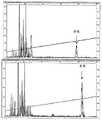
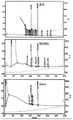
图8显示了在基线条件下(A)和在裂解中具有没食子酸添加剂(B)的测序后测序产物的代表性电泳图。在具有添加剂(B)的情况下观察到的全长产物的产率更高。Figure 8 shows representative electropherograms of post-sequenced sequencing products under baseline conditions (A) and with gallic acid additive in lysis (B). Higher yields of full-length product were observed with additive (B).
图9显示了在不存在(基线)和存在添加剂(没食子酸和龙胆酸的实例)的情况下标记的dCTP核苷酸的示例性RP-HPLC裂解研究。副产物在基线中清晰可见,并且在添加剂的色谱图中不存在。Figure 9 shows an exemplary RP-HPLC cleavage study of labeled dCTP nucleotides in the absence (baseline) and presence of additives (examples of gallic acid and gentisic acid). By-products are clearly visible in the baseline and absent in the chromatogram of the additive.
图10显示了示例性数据,其显示了含有基线成像缓冲液相对含有添加剂(GR5.10:用具有终浓度为25mM龙胆酸的单一HEPES pH 7.5缓冲液替换基线成像缓冲液;GR5.4:向成像B中加入龙胆酸(25mM);GR 5.5:去除Trolox并加入龙胆酸(25mM)的成像B缓冲液)的成像缓冲液的运行的测序性能的比较。Figure 10 shows exemplary data showing baseline imaging buffer containing versus additive containing (GR5.10: Replacement of baseline imaging buffer with single HEPES pH 7.5 buffer with a final concentration of 25 mM gentisic acid; GR5.4: Comparison of sequencing performance of runs of imaging buffer with gentisic acid (25 mM) added to imaging B; GR 5.5: Imaging buffer with Trolox removed and gentisic acid (25 mM) added in imaging B buffer).
图11显示了示例性数据,其显示了在比较吲哚-3-丙酸(IPA:AddC_15FC)和没食子酸(GA:AddG_7FC)的运行期间流动池中的相对珠粒损失。Figure 11 shows exemplary data showing relative bead loss in the flow cell during runs comparing indole-3-propionic acid (IPA: AddC_15FC) and gallic acid (GA: AddG_7FC).
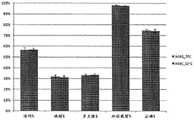
图12显示了比较抗坏血酸(添加AA)、添加剂C(添加C)、添加剂G(光)和无添加剂对照(无添加)的原始错误率的示例性数据,其中结果在使用NA12878/101X基因实验组作为模板的测序运行中生成。抗坏血酸的原始错误率明显优于i)无添加剂运行,和ii)添加剂C的运行(与添加剂G的表现相当)。Figure 12 shows exemplary data comparing raw error rates for ascorbic acid (AA added), additive C (added C), additive G (light), and no additive control (no added), where the results were compared using the NA12878/101X gene experimental set Generated as a template in a sequencing run. The raw error rate for ascorbic acid is significantly better than the i) run without additive, and ii) the run with additive C (comparable to the performance of additive G).
发明详述Detailed description of the invention
本发明涉及如所述的方法、组合物、装置、系统和试剂盒,其包含但不限于用于使用例如合成测序方法确定核苷酸序列中核酸的身份的试剂和混合物。特别地,本发明考虑使用被称为抗氧化添加剂的多酚化合物来提高合成测序反应的效率。例如,没食子酸(GA)在本文中显示为许多示例性SBS多酚添加剂之一。The present invention relates to methods, compositions, devices, systems and kits as described, including, but not limited to, reagents and mixtures for determining the identity of nucleic acids in nucleotide sequences using, for example, sequencing-by-synthesis methods. In particular, the present invention contemplates the use of polyphenolic compounds known as antioxidant additives to improve the efficiency of sequencing-by-synthesis reactions. For example, gallic acid (GA) is shown herein as one of many exemplary SBS polyphenol additives.
I.合成测序(SBS)I. Sequencing by synthesis (SBS)
合成测序工作流程中的一个步骤是去除荧光标记,该荧光标记通过可裂解的接头分子共价连接到参与掺入步骤的核苷酸(可逆终止子)的杂环碱基的环位置。裂解步骤的功效不仅反映在荧光标记裂解的效率上,而且还反映在可能在流动池中积累并干扰随后的碱基掺入步骤的反应副产物的减轻中。此类化合物的实例是自由基副产物,其可能由于涉及接头分子的溶解性断裂以释放荧光标记和过量裂解试剂(即三(2-羧乙基)膦或TCEP)的自由基途径而形成。这些可能在流动池中积聚并延续到随后的碱基延伸步骤中,从而导致3'-OH部分的过早去保护并引起多于一个碱基的掺入。有效的裂解步骤对于整个测序反应中的单核苷酸掺入是重要的,并且是低错误率和长读取长度的先决条件。为了提高裂解步骤的功效,考虑了淬灭自由基途径和氧化过量TCEP的分子,例如抗坏血酸,以增强该反应步骤的功效。One step in the sequencing-by-synthesis workflow is the removal of the fluorescent label that is covalently attached to the loop position of the heterocyclic base of the nucleotide (reversible terminator) involved in the incorporation step through a cleavable linker molecule. The efficacy of the cleavage step is reflected not only in the efficiency of fluorescent label cleavage, but also in the mitigation of reaction byproducts that may accumulate in the flow cell and interfere with subsequent base incorporation steps. Examples of such compounds are free-radical byproducts, which may be formed as a result of a free-radical pathway involving soluble cleavage of linker molecules to release fluorescent labels and excess cleavage reagents (ie, tris(2-carboxyethyl)phosphine or TCEP). These may accumulate in the flow cell and carry over into subsequent base extension steps, resulting in premature deprotection of the 3'-OH moiety and incorporation of more than one base. An efficient cleavage step is important for single nucleotide incorporation throughout the sequencing reaction and is a prerequisite for low error rates and long read lengths. To enhance the efficacy of the cleavage step, quenching the free radical pathway and oxidizing molecules of excess TCEP, such as ascorbic acid, were considered to enhance the efficacy of this reaction step.
在一个实施方案中,本发明考虑了通过合成仪器的自动测序进行的一系列方法步骤。参见美国专利No.9,145,589,在此引入作为参考。在一个实施方案中,该装置由许多试剂储库组成。每个试剂储库具有分配在储库内的特定反应性试剂以支持SBS过程,例如:In one embodiment, the present invention contemplates a series of method steps performed by automated sequencing of synthetic instruments. See US Patent No. 9,145,589, incorporated herein by reference. In one embodiment, the device consists of a number of reagent reservoirs. Each reagent reservoir has specific reactive reagents allocated within the reservoir to support the SBS process, such as:
使用可裂解荧光核苷酸可逆终止子的合成测序方法中的一个反应步骤包括从核苷酸类似物分子裂解荧光标记物。本发明并不意图受到裂解剂的性质的限制。One reaction step in a sequencing-by-synthesis method using a cleavable fluorescent nucleotide reversible terminator involves cleavage of a fluorescent label from a nucleotide analog molecule. The present invention is not intended to be limited by the nature of the lysing agent.
在一个实施方案中,SBS方法包括在不同物质处进行不同的步骤。举例来说,每个位置与特定步骤相关联。虽然不限于特定制剂,但这些步骤的一些实例和相关试剂如下所示:In one embodiment, the SBS method includes performing different steps at different substances. For example, each location is associated with a specific step. While not limited to a particular formulation, some examples of these steps and related reagents are shown below:
1)延伸A试剂:包含可逆终止的标记核苷酸和聚合酶。延伸A的组成如下:1) Extension A reagent: contains reversibly terminated labeled nucleotides and a polymerase. The composition of extension A is as follows:


*具有烷基化的游离半胱氨酸*with alkylated free cysteine
2)延伸B试剂:包含可逆终止的未标记核苷酸和聚合酶,但缺少经标记的核苷酸类似物。延伸B的组成如下:2) Extension B Reagent: Contains reversibly terminated unlabeled nucleotides and polymerase, but lacks labeled nucleotide analogs. The composition of extension B is as follows:

*烷基化的游离半胱氨酸*Alkylated free cysteine
3)具有去污剂(例如聚山梨醇酯20)柠檬酸盐缓冲液(例如盐水)的洗涤溶液13)
4)裂解试剂:裂解溶液组成如下:4) Lysis reagent: The composition of the lysis solution is as follows:

5)具有去污剂(例如聚山梨醇酯20)三(羟甲基)-氨基甲烷(Tris)缓冲液的洗涤溶液2。5)
II.多酚测序添加剂II. Polyphenol Sequencing Additives
在一个实施方案中,本发明涉及作为抗氧化添加剂的多酚化合物的组合物和化合物,其改善了合成测序的方法。在一个实施方案中,多酚化合物包括但不限于没食子酸,龙胆酸,邻苯二酚,邻苯三酚,对苯二酚和/或间苯二酚。In one embodiment, the present invention relates to compositions and compounds of polyphenolic compounds as antioxidant additives that improve sequencing-by-synthesis methods. In one embodiment, polyphenolic compounds include, but are not limited to, gallic acid, gentisic acid, catechol, pyrogallol, hydroquinone, and/or resorcinol.
本发明的一个实施方案包括在裂解溶液的测序反应中添加多酚添加剂以改善溶液的寿命、减少不希望的自由基驱动的副反应、允许预混合并因此改善测序性能。另一个实施方案包括向成像溶液中加入多酚化合物以改善溶液的寿命并减少不希望的自由基驱动的副反应。One embodiment of the present invention includes adding polyphenol additives to the sequencing reaction of the lysis solution to improve the lifetime of the solution, reduce unwanted free radical driven side reactions, allow for premixing and thus improve sequencing performance. Another embodiment includes adding a polyphenolic compound to the imaging solution to improve solution lifetime and reduce unwanted free radical driven side reactions.
本发明的另一个实施方案是添加多酚化合物以延伸溶液以改善溶液的寿命并减少不希望的自由基驱动的副反应。在本发明的一个实施方案中,多酚化合物是抗氧化剂。在另一个实施方案中,多酚化合物具有自由基清除性质。Another embodiment of the present invention is the addition of polyphenolic compounds to extend the solution to improve the lifetime of the solution and reduce unwanted free radical driven side reactions. In one embodiment of the present invention, the polyphenolic compound is an antioxidant. In another embodiment, the polyphenolic compound has free radical scavenging properties.
目前的测序方法包括裂解溶液,其具有缓冲的膦以使3'-OH基团脱保护和二硫化物染料接头。该溶液由于空气中的氧气吸收和GeneReader仪器上的开口的裂解容器而具有有限的活性窗口。文献报道表明,诸如TCEP(三(羧乙基)膦)的膦可以与硫醇基化合物产生副产物。一个例子是肽中半胱氨酸向脱氢叶酸残基的转化。该过程被认为涉及自由基路径。Zhouxi等,Rapid Commun Mass Spectrom。(2010)24(3):267-275通过LC-MS分析溶液中SBS核苷酸裂解反应表明除了预期产物外还形成另外的物质。通过变性毛细管电泳分析测序产物表明存在非全长产物。Current sequencing methods include a cleavage solution with a buffered phosphine to deprotect the 3'-OH group and a disulfide dye linker. This solution has a limited activity window due to oxygen absorption in the air and the open lysis vessel on the GeneReader instrument. Literature reports indicate that phosphines such as TCEP (tris(carboxyethyl)phosphine) can produce by-products with thiol-based compounds. An example is the conversion of cysteine to dehydrofolate residues in peptides. The process is thought to involve a free radical pathway. Zhouxi et al., Rapid Commun Mass Spectrom. (2010) 24(3): 267-275 Analysis of the SBS nucleotide cleavage reaction in solution by LC-MS indicated the formation of additional species in addition to the expected product. Analysis of the sequenced products by denaturing capillary electrophoresis indicated the presence of non-full-length products.
目前在GeneReader上使用的一种成像溶液使用活性氧清除系统和自由基/三重态清除剂。由于与测序化学相容(二硫桥),延伸A/B溶液不含还原剂。在另一个实施方案中,鉴定了多酚抗氧化剂化合物,其主动从裂解溶液中清除溶解的氧并延长裂解溶液的使用寿命并提高其效率。在另一个实施方案中,公开了裂解步骤的改进性能和副反应的减少。One imaging solution currently used on the GeneReader uses a reactive oxygen species scavenging system and a free radical/triplet scavenger. The extension A/B solution is free of reducing agents due to compatibility with sequencing chemistry (disulfide bridges). In another embodiment, polyphenolic antioxidant compounds are identified that actively scavenge dissolved oxygen from the lysis solution and extend the useful life and efficiency of the lysis solution. In another embodiment, improved performance of the cleavage step and reduction of side reactions are disclosed.
初步数据包括使用多酚添加剂对裂解试剂进行测试,以评估SBS性能的改善。结果表明,几种多酚类化合物具有很高的抗氧化能力。例如,选择两种有希望的多酚化合物用于进一步研究:没食子酸和龙胆酸。除了减少可用氧气并对裂解溶液(还原剂)的寿命产生积极影响外,这两种多酚化合物还可能由于减少副反应而对测序性能产生额外的积极影响。Preliminary data included testing of lysis reagents with polyphenol additives to assess improvements in SBS performance. The results showed that several polyphenolic compounds have high antioxidant capacity. For example, two promising polyphenolic compounds were selected for further study: gallic acid and gentisic acid. In addition to reducing available oxygen and positively affecting the lifetime of the lysis solution (reducing agent), these two polyphenolic compounds may have additional positive effects on sequencing performance due to reduced side reactions.
测序使用标准基线SBS条件(pH=8.5的50mM TCEP)相对于在相同pH下使用添加剂的运行评估SBS化学性能。为此,基于实验数据得出以下结论并进一步详细描述:Sequencing SBS chemistry was evaluated using standard baseline SBS conditions (50 mM TCEP at pH=8.5) relative to runs with additives at the same pH. To this end, the following conclusions are drawn based on the experimental data and described in further detail:
1.进行了在不存在和存在添加剂的情况下通过分析型HPLC和LC-MS(标记的和封端核苷酸)对核苷酸水平的裂解反应的分析。这些分析表明,含有抗氧化剂化合物(50mM)(包括但不限于没食子酸,龙胆酸,邻苯二酚或邻苯三酚)的裂解反应的副产物较少。1. Analysis of cleavage reactions at the nucleotide level by analytical HPLC and LC-MS (labeled and capped nucleotides) in the absence and presence of additives was performed. These analyses indicated that cleavage reactions containing antioxidant compounds (50 mM), including but not limited to gallic acid, gentisic acid, catechol or pyrogallol, had fewer by-products.
2.以不同浓度进行仅含膦或含有没食子酸、龙胆酸、邻苯二酚、邻苯三酚的裂解溶液的测序运行。对序列KPI的分析表明更好的性能,如较低的错误率、较高的信号余量和较低的超前值以及变体的较低的假阳性率,有效地将可用读取长度延长25-50%。CE分析显示全长测序产物的产率更高。流动池数据均质性也得到改善,表明可能对流动池中的裂解溶液清除产生有益影响。2. Sequencing runs with phosphine-only or lysis solutions containing gallic acid, gentisic acid, catechol, pyrogallol were performed at different concentrations. Analysis of sequence KPIs showed better performance, such as lower error rates, higher signal margins and lower lead values, and lower false positive rates for variants, effectively extending the available read length by 25 -50%. CE analysis showed higher yields of full-length sequencing products. Flow cell data homogeneity was also improved, suggesting a possible beneficial effect on lysis solution clearance in the flow cell.
3.在成像溶液中含有没食子酸、龙胆酸、邻苯二酚或邻苯三酚的测序运行表明具有更好的性能,如较低的错误率、较高的信号余量和较低的超前值以及变体的较低的假阳性率。CE分析显示全长测序产物的产率更高。3. Sequencing runs containing gallic acid, gentisic acid, catechol, or pyrogallol in the imaging solution showed better performance, such as lower error rates, higher signal margins, and lower The look-ahead value as well as the variant's lower false positive rate. CE analysis showed higher yields of full-length sequencing products.
4.鉴定了具有相似性质的其他化合物的鉴定。作为裂解添加剂评估的其他化合物显示出与上述1-3中所示相似的益处。这些化合物含有聚酚基团或具有抗氧化性质。测试的化合物包括邻苯三酚,邻苯二酚,对苯二酚,间苯二酚,但并不意味着本发明限于这组化合物。4. Identification of other compounds with similar properties identified. Other compounds evaluated as cleavage additives showed similar benefits to those shown in 1-3 above. These compounds contain polyphenolic groups or have antioxidant properties. Compounds tested include pyrogallol, catechol, hydroquinone, resorcinol, but are not meant to limit the invention to this group of compounds.
A.没食子酸A. Gallic acid
已显示没食子酸(GA)改善测序性能并允许系统提供1Gb的过滤修剪序列输出。Gallic acid (GA) has been shown to improve sequencing performance and allow the system to provide 1 Gb of filtered trimmed sequence output.
在许多陆地植物中发现了没食子酸,例如寄生植物,朱红锁阳(Cynomoriumcoccineum),水生植物,狐尾藻(Myriophyllum spicatum)和蓝绿藻,铜绿微囊藻(Microcystis aeruginosa)。Zucca等,"Evaluation of Antioxidant Potential of"Maltese Mushroom"(Cynomorium coccineum)by Means of Multiple Chemical andBiological Assays"Nutrients 5(1):149—161;和Nakai,S(2000)."Myriophyllumspicatum-released allelopathic polyphenols inhibiting growth of blue-greenalgae Microcystis aeruginosa"Water Research 34(11):3026-3032。没食子酸是三羟基苯甲酸,一种酚酸,一种有机酸,也称为3,4,5-三羟基苯甲酸,其存在于没食子、漆树、金缕梅、茶叶、橡树皮和其他植物中。化学式为C6H2(OH)3COOH,具有以下结构:Gallic acid is found in many terrestrial plants, such as parasitic plants, Cynomorium coccineum, aquatic plants, Myriophyllum spicatum and the blue-green alga, Microcystis aeruginosa. Zucca et al., "Evaluation of Antioxidant Potential of "Maltese Mushroom" (Cynomorium coccineum) by Means of Multiple Chemical and Biological Assays" Nutrients 5(1):149-161; and Nakai, S(2000)." Myriophyllumspicatum-released allelopathic polyphenols inhibiting growth of blue-greenalgae Microcystis aeruginosa" Water Research 34(11):3026-3032. Gallic acid is trihydroxybenzoic acid, a phenolic acid, an organic acid also known as 3,4,5-trihydroxybenzoic acid, which is found in gallic, sumac, witch hazel, tea leaves, oak bark, and other plants middle. The chemical formula is C6 H2(OH)3 COOH and it has the following structure:

没食子酸是游离存在的并且是可水解的单宁酸的一部分。没食子酸基团通常键合形成二聚体,例如鞣花酸。可水解的单宁酸在水解时分解,得到没食子酸和葡萄糖或鞣花酸和葡萄糖,分别称为没食子鞣质和鞣花单宁。没食子酸也可以形成分子间酯(缩酚酸类),例如二元酸和三元酸,以及环醚酯(缩酚酸环醚),并且通常用于制药工业。Fiuza等,"Phenolic acid derivatives with potential anticancer properties—a structure-activity relationship study.Part 1:Methyl,propyl and octyl esters of caffeicand gallic acids".Bioorganic&Medicinal Chemistry(Elsevier)12(13):3581-3589。通过酸性或碱性水解,没食子酸很容易从没食子鞣质中游离出来。当用浓硫酸加热没食子酸时,通过缩合产生绛五倍子酸(rufigallol)。用砷酸、高锰酸盐、过硫酸盐或碘氧化产生鞣花酸,没食子酸甲酯与氯化铁(III)的反应也是如此。Gallic acid is present free and is part of the hydrolyzable tannins. Gallic acid groups are often bonded to form dimers, such as ellagic acid. The hydrolyzable tannins are decomposed upon hydrolysis to give gallic acid and glucose or ellagic acid and glucose, called gallotannins and ellagitannins, respectively. Gallic acids can also form intermolecular esters (depsidic acids), such as di- and tri-acids, and cyclic ether esters (depsidic cyclic ethers), and are commonly used in the pharmaceutical industry. Fiuza et al., "Phenolic acid derivatives with potential anticancer properties—a structure-activity relationship study. Part 1: Methyl, propyl and octyl esters of caffeic and gallic acids". Bioorganic & Medicinal Chemistry (Elsevier) 12(13):3581-3589. Gallic acid is easily liberated from gallic tannins by acidic or alkaline hydrolysis. When gallic acid is heated with concentrated sulfuric acid, rufigallol is produced by condensation. Oxidation with arsenic acid, permanganate, persulfate or iodine produces ellagic acid, as does the reaction of methyl gallate with iron(III) chloride.
通过酶莽草酸脱氢酶的作用由3-脱氢莽草酸以产生3,5-二脱氢莽草酸来形成没食子酸。3,5-二脱氢莽草酸化合物互变异构形成氧化还原当量的没食子酸,其中平衡基本上完全朝向没食子酸,因为同时发生的芳构化。Dewick等,(1969)"Phenol biosynthesisin higher plants.Gallic acid".Biochemical Journal 113(3):537-542。没食子酸加氨酶和没食子酸脱羧酶是负责没食子酸降解的酶。Gallic acid is formed from 3-dehydroshikimate to produce 3,5-didehydroshikimate by the action of the enzyme shikimate dehydrogenase. The 3,5-didehydroshikimic acid compound tautomerizes to form redox equivalents of gallic acid, with the equilibrium essentially completely towards gallic acid because of the simultaneous aromatization. Dewick et al. (1969) "Phenol biosynthesis in higher plants. Gallic acid". Biochemical Journal 113(3):537-542. Gallate aminotransferase and gallate decarboxylase are the enzymes responsible for the degradation of gallic acid.
本文提供的数据表明,具有没食子酸的SBS运行显示没有珠粒损失,如通过与使用吲哚-3-丙酸(IPA)的SBS运行的比较所示。参见图11。这些数据表明,与IPA一样,没食子酸在SBS期间不会经历任何珠粒损失,这与先前的报道相矛盾。尽管没有必要理解本发明的机理,但据信当达到某一pH值时,没食子酸经历不可逆的转变而成为新的化学实体。据信这种化学转变产生活性没食子酸衍生物,其负责先前观察到的珠粒损失。在一个实施方案中,本发明考虑了SBS试剂(例如,裂解1缓冲液,其中在TCEP不存在时没有混合没食子酸。当没食子酸和TCEP都存在于SBS试剂中时,没有观察到珠粒损失。The data presented herein indicate that the SBS run with gallic acid showed no loss of beads, as shown by comparison to the SBS run with indole-3-propionic acid (IPA). See Figure 11. These data suggest that, like IPA, gallic acid does not experience any bead loss during SBS, contradicting previous reports. Although it is not necessary to understand the mechanism of the present invention, it is believed that when a certain pH value is reached, gallic acid undergoes an irreversible transformation into a new chemical entity. This chemical transformation is believed to yield the active gallic acid derivative responsible for the previously observed bead loss. In one embodiment, the present invention contemplates the SBS reagent (eg,
这种珠粒损失的缺乏反映在数据中,其当在没食子酸、IPA和抗坏血酸的存在下比较SBS运行时显示改善的错误率。与无添加剂相比,所有三种添加剂均改善了SBS错误率。参见图12。数据显示没食子酸(AddG)导致的原始错误率明显优于无添加剂和IPA(AddC)。This lack of bead loss is reflected in the data, which show improved error rates when comparing SBS runs in the presence of gallic acid, IPA and ascorbic acid. All three additives improved the SBS error rate compared to no additive. See Figure 12. The data showed that gallic acid (AddG) resulted in significantly better raw error rates than no additive and IPA (AddC).
B.龙胆酸B. gentisic acid
龙胆酸是二羟基苯甲酸。它是苯甲酸的衍生物和阿司匹林代谢分解的次要(1%)产物。它也存在于非洲树Alchornea cordifolia和葡萄酒中。Gentianic acid is dihydroxybenzoic acid. It is a derivative of benzoic acid and a minor (1%) product of the metabolic breakdown of aspirin. It is also found in the African tree Alchornea cordifolia and in wine.
通过对苯二酚的羧化可以产生龙胆酸:Gentianic acid can be produced by carboxylation of hydroquinone:
C6H4(OH)2+CO2→C6H3(CO2H)(OH)2C6 H4 (OH)2 +CO2 →C6 H3 (CO2 H)(OH)2
该转化是Kolbe-Schmitt反应的一个实例,并产生以下结构:This transformation is an example of the Kolbe-Schmitt reaction and yields the following structure:

或者,该化合物可以通过过硫酸钠过氧化从水杨酸合成(50%产率)。Schock Jr.等,(1951)"The Persulfate Oxidation of Salicylic Acid.2,3,5-TrihydroxybenzoicAcid"The Journal of Organic Chemistry16(11):1772-1775。作为对苯二酚,龙胆酸易于被氧化,并且在一些药物制剂中用作抗氧化剂赋形剂。在实验室中,它被用作基质辅助激光解吸/电离(MALDI)质谱中的样品基质,并且已经显示通过MALDI方便地检测掺入硼酸部分的肽。Strupat等,(1991)"2,5-Dihidroxybenzoic acid:a new matrix for laserdesorption-ionization mass spectrometry"Int.J.Mass Spectrom.Ion Processes 72(111):89—102;和Crumpton et al.,(2011)"Facile Analysis and Sequencing ofLinear and Branched Peptide Boronic Acids by MALDI Mass Spectrometry"Analytical Chemistry 83(9):3548-3554。Alternatively, this compound can be synthesized from salicylic acid by sodium persulfate peroxidation (50% yield). Schock Jr. et al. (1951) "The Persulfate Oxidation of Salicylic Acid. 2,3,5-Trihydroxybenzoic Acid" The Journal of Organic Chemistry 16(11):1772-1775. As hydroquinone, gentisic acid is easily oxidized and is used as an antioxidant excipient in some pharmaceutical formulations. In the laboratory, it is used as a sample matrix in matrix-assisted laser desorption/ionization (MALDI) mass spectrometry and has been shown to conveniently detect peptides incorporating boronic acid moieties by MALDI. Strupat et al., (1991) "2,5-Dihidroxybenzoic acid: a new matrix for laserdesorption-ionization mass spectrometry" Int.J.Mass Spectrom.Ion Processes 72(111):89-102; and Crumpton et al., (2011 ) "Facile Analysis and Sequencing of Linear and Branched Peptide Boronic Acids by MALDI Mass Spectrometry" Analytical Chemistry 83(9):3548-3554.
C.邻苯二酚C. Catechol
邻苯二酚,也称为儿茶酚或1,2-二羟基苯,是分子式为C6H4(OH)2的有机化合物。它是三种异构苯二醇的邻位异构体。这种无色化合物微量地天然存在。它首先通过植物提取物儿茶素的破坏性蒸馏发现。现在每年大约合成2000万公斤作为商品有机化学品,主要作为农药、调味料和香料的前体。Catechol, also known as catechol or 1,2-dihydroxybenzene, is an organic compound with the molecularformulaC6H4 (OH)2 . It is the ortho-isomer of three isomeric benzenediols. This colorless compound occurs naturally in trace amounts. It was first discovered through the destructive distillation of the plant extract catechin. About 20 million kilograms are now synthesized annually as commercial organic chemicals, mainly as precursors for pesticides, seasonings and fragrances.
儿茶酚是通过使用过氧化氢对苯酚进行羟基化来工业生产的:Catechol is industrially produced by the hydroxylation of phenol with hydrogen peroxide:
C6H5OH+H2O2→C6H4(OH)2+H2OC6 H5 OH+H2 O2 →C6 H4 (OH)2 +H2 O
并得出以下结构:and results in the following structure:

以前,它是通过用含有碱金属氢氧化物的热水溶液水解2-取代酚,特别是2-氯苯酚来制备的。其甲基醚衍生物愈创木酚通过氢碘酸促进的CH3-O键的水解转化为儿茶酚。Previously, it was prepared by hydrolysis of 2-substituted phenols, especially 2-chlorophenol, with hot aqueous solutions containing alkali metal hydroxides. Its methyl ether derivative, guaiacol, is converted to catechol by hydroiodic acid-promoted hydrolysis of the CH3-O bond.
D.邻苯三酚D. Pyrogallol
邻苯三酚是具有下式化学结构的式C6H3(OH)3的有机化合物:Pyrogallol is an organic compound of formula C6 H3 (OH)3 having the following chemical structure:

它是一种白色固体,但由于其对氧的敏感性,样品通常呈褐色。它是三种异构苯甲醇中的一种。它是通过加热没食子酸(导致脱羧)产生的。备选的制备方法包括用氢氧化钾处理对氯苯酚磺酸。It is a white solid, but samples are usually brownish due to its sensitivity to oxygen. It is one of three isomeric benzyl alcohols. It is produced by heating gallic acid (resulting in decarboxylation). An alternative preparation method involves treating p-chlorophenolsulfonic acid with potassium hydroxide.
E.对苯二酚E. Hydroquinone
对苯二酚,也称为苯-1,4-二醇或喹啉,是一种芳香族有机化合物,其是一种苯酚,苯的衍生物,具有化学式C6H4(OH)2,具有下列结构:Hydroquinone, also known as benzene-1,4-diol or quinoline, is an aromatic organic compound that is a phenol, a derivative of benzene, with the formulaC6H4(OH)2, Has the following structure:

其化学结构的特征是两个与苯环键合的对位羟基。它是一种白色颗粒状固体。该母体化合物的取代衍生物也称为氢醌类。Its chemical structure is characterized by two para-hydroxyl groups bonded to the benzene ring. It is a white granular solid. Substituted derivatives of the parent compound are also known as hydroquinones.
对苯二酚的O-H基团的反应性类似于其他酚类,呈弱酸性。得到的共轭碱经历容易的O-烷基化,得到单醚和二醚。类似地,对苯二酚非常容易通过Friedel-Crafts反应如烷基化进行环取代。该反应在途中开发于常用的抗氧化剂如2-叔丁基-4-甲氧基苯酚(“BHA”)。有用的染料喹嗪是通过对苯二酚与邻苯二甲酸酐的二酰化反应制备的。对苯二酚在温和条件下进行氧化,得到苯醌。这个过程可以逆转。一些天然存在的对苯二酚衍生物表现出这种反应性,一个例子是辅酶Q。The reactivity of the O-H group of hydroquinone is similar to that of other phenols and is weakly acidic. The resulting conjugate base undergoes facile O-alkylation to give monoethers and diethers. Similarly, hydroquinone is very susceptible to ring substitution by Friedel-Crafts reactions such as alkylation. This reaction was developed en route to common antioxidants such as 2-tert-butyl-4-methoxyphenol ("BHA"). Useful dyes quinazines are prepared by diacylation of hydroquinone with phthalic anhydride. Hydroquinone is oxidized under mild conditions to give benzoquinone. This process can be reversed. Some naturally occurring derivatives of hydroquinone exhibit this reactivity, one example being coenzyme Q.
工业上,这种反应既可以用对苯二酚本身,也可以用其衍生物,其中一个OH被胺取代。Industrially, this reaction can be performed either with hydroquinone itself or with its derivatives, in which one OH is replaced by an amine.
还有与其降低功率相关的各种其他用途。作为聚合抑制剂,对苯二酚防止丙烯酸、甲基丙烯酸甲酯、氰基丙烯酸酯和易于自由基引发聚合的其它单体的聚合。该应用利用对苯二酚的抗氧化性质。There are various other uses related to its reduced power. As a polymerization inhibitor, hydroquinone prevents the polymerization of acrylic acid, methyl methacrylate, cyanoacrylate and other monomers susceptible to free radical initiated polymerization. This application takes advantage of the antioxidant properties of hydroquinone.
对苯二酚可以经过温和氧化转化为化合物对苯醌,C6H4O2,通常称为对醌或简单称为醌。醌的还原将该反应逆转至对苯二酚。一些生物化学化合物在其结构中具有这种对苯二酚或醌部分,例如辅酶Q,并且可以经历类似的氧化还原相互转化。Hydroquinone can be converted to the compound p-benzoquinone, C6H4O2, by mild oxidation, commonly referred to as p-quinone or simply quinone. Reduction of the quinone reverses the reaction to hydroquinone. Some biochemical compounds have this hydroquinone or quinone moiety in their structure, such as coenzyme Q, and can undergo similar redox interconversions.
对苯二酚可以从两者中失去H+以形成二酚盐离子。对苯二酚的二苯酚二钠盐在聚合物PEEK的制备中用作交替共聚单体单元。Hydroquinone can lose H+ from both to form a diphenate ion. The diphenol disodium salt of hydroquinone is used as alternating comonomer units in the preparation of the polymer PEEK.
F.间苯二酚F. Resorcinol
间苯二酚是具有式C6H4(OH)2的苯二酚的1,3-异构体(或间位异构体),其具有以下结构:Resorcinol is the 1,3-isomer (or meta-isomer) of quinone having the formula C6H4(OH)2,which has the following structure:

间苯二酚从苯中结晶为无色针状物,其易溶于水、醇和醚,但不溶于氯仿和二硫化碳。钠汞齐将其还原成二氢间苯二酚,当用浓氢氧化钡溶液加热到150-160℃时,得到γ-乙酰基丁酸,并且当与氢氧化钾稠合时,间苯二酚产生间苯三酚、邻苯二酚和去甲肾上腺素。Resorcinol crystallizes from benzene as colorless needles, which are easily soluble in water, alcohol and ether, but insoluble in chloroform and carbon disulfide. Sodium amalgam reduces it to dihydroresorcinol, which, when heated to 150-160°C with concentrated barium hydroxide solution, gives gamma-acetylbutyric acid, and when condensed with potassium hydroxide, isophthalic acid Phenol produces phloroglucinol, catechol, and norepinephrine.
实验experiment
实施例1Example 1
在一个实施方案中,本发明涉及包含表1中所示步骤的SBS方法。参见Olejink等,“Methods and Compositions For Inhibiting Undesired Cleaving Of Labels”美国专利号8,623,598(通过引用整体并入本文)。In one embodiment, the present invention relates to an SBS method comprising the steps shown in Table 1 . See Olejink et al., "Methods and Compositions For Inhibiting Undesired Cleaving Of Labels" US Patent No. 8,623,598 (incorporated herein by reference in its entirety).
表1:示例性SBS工作流程Table 1: Exemplary SBS Workflow


试剂1=延伸A;试剂2=延伸B;试剂3=洗涤;试剂4=成像A;试剂5=成像B;试剂6=裂解;和试剂7=洗涤11
上述说明书中提及的所有出版物和专利均通过引用结合到本文中。在不脱离本发明的范围和精神的情况下,本发明所述方法和系统的各种修改和变化对于本领域技术人员来说是明显的。尽管已经结合具体实施方案描述了本发明,但是应该理解,要求保护的本发明不应该不适当地限于这些特定实施方案。实际上,对于本领域技术人员和与其相关的领域显而易见的用于实施本发明的所述模式的各种修改旨在落入所附权利要求的范围内。All publications and patents mentioned in the above specification are incorporated herein by reference. Various modifications and variations of the methods and systems described herein will be apparent to those skilled in the art without departing from the scope and spirit of the invention. Although the invention has been described in connection with specific embodiments, it should be understood that the invention as claimed should not be unduly limited to these specific embodiments. Indeed, various modifications of the described modes for carrying out the invention that are obvious to those skilled in the art and the fields pertaining thereto are intended to fall within the scope of the appended claims.
Claims (13)
Translated fromChineseApplications Claiming Priority (5)
| Application Number | Priority Date | Filing Date | Title |
|---|---|---|---|
| US201662293969P | 2016-02-11 | 2016-02-11 | |
| US62/293,969 | 2016-02-11 | ||
| US201662419685P | 2016-11-09 | 2016-11-09 | |
| US62/419,685 | 2016-11-09 | ||
| PCT/US2017/017068WO2017139419A1 (en) | 2016-02-11 | 2017-02-08 | Polyphenolic additives in sequencing-by-synthesis |
Publications (2)
| Publication Number | Publication Date |
|---|---|
| CN109196113A CN109196113A (en) | 2019-01-11 |
| CN109196113Btrue CN109196113B (en) | 2022-10-04 |
Family
ID=59561276
Family Applications (1)
| Application Number | Title | Priority Date | Filing Date |
|---|---|---|---|
| CN201780018264.1AActiveCN109196113B (en) | 2016-02-11 | 2017-02-08 | Polyphenol additives in sequencing by synthesis |
Country Status (4)
| Country | Link |
|---|---|
| US (3) | US10337050B2 (en) |
| EP (1) | EP3414338B1 (en) |
| CN (1) | CN109196113B (en) |
| WO (1) | WO2017139419A1 (en) |
Families Citing this family (4)
| Publication number | Priority date | Publication date | Assignee | Title |
|---|---|---|---|---|
| EP3527673A1 (en) | 2018-02-15 | 2019-08-21 | QIAGEN GmbH | Sequencing method |
| EP3702474A1 (en) | 2019-02-26 | 2020-09-02 | QIAGEN GmbH | Sequencing method and kit |
| CN113795595B (en)* | 2020-04-20 | 2023-02-28 | 深圳华大智造科技股份有限公司 | DNA protective agents in DNA imaging buffers |
| CN119095981A (en)* | 2022-09-09 | 2024-12-06 | 深圳华大智造科技股份有限公司 | Antioxidant composition and its use in nucleic acid detection |
Citations (5)
| Publication number | Priority date | Publication date | Assignee | Title |
|---|---|---|---|---|
| US5116734A (en)* | 1989-09-01 | 1992-05-26 | Digene Diagnostics, Inc. | Highly sensitive method for detecting peroxidase |
| AU4786797A (en)* | 1996-10-28 | 1998-05-22 | Nycomed Imaging As | Improvements in or relating to diagnostic/therapeutic agents |
| WO1998026095A1 (en)* | 1996-12-10 | 1998-06-18 | Genetrace Systems Inc. | Releasable nonvolatile mass-label molecules |
| WO2000077235A1 (en)* | 1999-06-16 | 2000-12-21 | University Of Cincinnati | Agent and process for isolation of extra-chromosomal nucleic acids |
| US6187286B1 (en)* | 1996-12-27 | 2001-02-13 | The General Hospital Corporation | Tumor imaging agents, methods and kits |
Family Cites Families (21)
| Publication number | Priority date | Publication date | Assignee | Title |
|---|---|---|---|---|
| NL154598B (en) | 1970-11-10 | 1977-09-15 | Organon Nv | PROCEDURE FOR DETERMINING AND DETERMINING LOW MOLECULAR COMPOUNDS AND PROTEINS THAT CAN SPECIFICALLY BIND THESE COMPOUNDS AND TEST PACKAGING. |
| US3817837A (en) | 1971-05-14 | 1974-06-18 | Syva Corp | Enzyme amplification assay |
| US3939350A (en) | 1974-04-29 | 1976-02-17 | Board Of Trustees Of The Leland Stanford Junior University | Fluorescent immunoassay employing total reflection for activation |
| US3996345A (en) | 1974-08-12 | 1976-12-07 | Syva Company | Fluorescence quenching with immunological pairs in immunoassays |
| US4277437A (en) | 1978-04-05 | 1981-07-07 | Syva Company | Kit for carrying out chemically induced fluorescence immunoassay |
| US4275149A (en) | 1978-11-24 | 1981-06-23 | Syva Company | Macromolecular environment control in specific receptor assays |
| US4366241A (en) | 1980-08-07 | 1982-12-28 | Syva Company | Concentrating zone method in heterogeneous immunoassays |
| US4683202A (en) | 1985-03-28 | 1987-07-28 | Cetus Corporation | Process for amplifying nucleic acid sequences |
| US4683195A (en) | 1986-01-30 | 1987-07-28 | Cetus Corporation | Process for amplifying, detecting, and/or-cloning nucleic acid sequences |
| AU2001296645A1 (en) | 2000-10-06 | 2002-04-15 | The Trustees Of Columbia University In The City Of New York | Massive parallel method for decoding dna and rna |
| JP2004210741A (en)* | 2003-01-08 | 2004-07-29 | B Road:Kk | Allergen neutralizing composition |
| US20080026380A1 (en)* | 2006-07-31 | 2008-01-31 | Siddiqi Suhaib M | Nucleotide analogs |
| JP2008182221A (en)* | 2006-12-28 | 2008-08-07 | Sanyo Chem Ind Ltd | Cleaning agent for semiconductor substrate |
| US8481259B2 (en)* | 2007-02-05 | 2013-07-09 | Intelligent Bio-Systems, Inc. | Methods and devices for sequencing nucleic acids in smaller batches |
| US8017338B2 (en)* | 2007-11-20 | 2011-09-13 | Life Technologies Corporation | Reversible di-nucleotide terminator sequencing |
| CN101888906B (en)* | 2007-12-17 | 2012-12-19 | 三洋化成工业株式会社 | Cleaning agent and cleaning method for electronic material |
| US8623598B2 (en) | 2008-03-19 | 2014-01-07 | Intelligent Bio Systems, Inc. | Methods and compositions for inhibiting undesired cleaving of labels |
| US20140193386A1 (en)* | 2008-06-18 | 2014-07-10 | Lifebond Ltd. | Method for enzymatic cross-linking of a protein |
| WO2010059880A2 (en)* | 2008-11-19 | 2010-05-27 | Pacific Biosciences Of California, Inc. | Photo-induced damage mitigating agents and preparation and methods of use thereof |
| TWI403556B (en)* | 2010-02-12 | 2013-08-01 | Elite Material Co Ltd | A resin composition, and a prepreg, a laminate, and a circuit board comprising the resin composition |
| US9115353B2 (en)* | 2011-01-31 | 2015-08-25 | Illumina, Inc. | Method for nucleotide detection |
- 2017
- 2017-02-08CNCN201780018264.1Apatent/CN109196113B/enactiveActive
- 2017-02-08WOPCT/US2017/017068patent/WO2017139419A1/ennot_activeCeased
- 2017-02-08EPEP17750729.0Apatent/EP3414338B1/enactiveActive
- 2017-02-08USUS15/427,664patent/US10337050B2/enactiveActive
- 2019
- 2019-05-24USUS16/422,056patent/US11078526B2/ennot_activeExpired - Fee Related
- 2021
- 2021-07-28USUS17/386,883patent/US20210355529A1/ennot_activeAbandoned
Patent Citations (5)
| Publication number | Priority date | Publication date | Assignee | Title |
|---|---|---|---|---|
| US5116734A (en)* | 1989-09-01 | 1992-05-26 | Digene Diagnostics, Inc. | Highly sensitive method for detecting peroxidase |
| AU4786797A (en)* | 1996-10-28 | 1998-05-22 | Nycomed Imaging As | Improvements in or relating to diagnostic/therapeutic agents |
| WO1998026095A1 (en)* | 1996-12-10 | 1998-06-18 | Genetrace Systems Inc. | Releasable nonvolatile mass-label molecules |
| US6187286B1 (en)* | 1996-12-27 | 2001-02-13 | The General Hospital Corporation | Tumor imaging agents, methods and kits |
| WO2000077235A1 (en)* | 1999-06-16 | 2000-12-21 | University Of Cincinnati | Agent and process for isolation of extra-chromosomal nucleic acids |
Also Published As
| Publication number | Publication date |
|---|---|
| US11078526B2 (en) | 2021-08-03 |
| EP3414338B1 (en) | 2022-12-21 |
| US20170233796A1 (en) | 2017-08-17 |
| WO2017139419A1 (en) | 2017-08-17 |
| CN109196113A (en) | 2019-01-11 |
| EP3414338A1 (en) | 2018-12-19 |
| US20210355529A1 (en) | 2021-11-18 |
| US10337050B2 (en) | 2019-07-02 |
| EP3414338A4 (en) | 2019-07-24 |
| US20190330690A1 (en) | 2019-10-31 |
Similar Documents
| Publication | Publication Date | Title |
|---|---|---|
| US20210355529A1 (en) | Polyphenolic additives in sequencing-by-synthesis | |
| EP3538093B1 (en) | Photoprotective mixtures as imaging reagents in sequencing-by-synthesis | |
| JP2022547564A (en) | Novel class 2 type II and type V CRISPR-CAS RNA guided endonucleases | |
| WO2013012434A1 (en) | Bioluminescent stem-loop probes, compositions containing the same and methods utilizing the same | |
| EP2698437B1 (en) | Method for detecting 5-hydroxymethylcytosine in nucleic acids | |
| KR101880502B1 (en) | Compound based merocyanine, labeling dye, kit and contrast medium composition for biomolecule comprising the same | |
| EP2495336B1 (en) | A new type of universal probes for the detection of genomic variants | |
| KR101825117B1 (en) | Methods and kits for the BRAF mutant detection using PNA mediated Real-time PCR clamping | |
| US9969887B2 (en) | Merocyanine-based compounds, and dyes, kits and contrast medium compositions for labelling biomolecules comprising the same | |
| KR20040107476A (en) | Novel method of highly sensitive nucleic acid analysis | |
| Tang et al. | A single quantum dot-based biosensor for DNA point mutation assay | |
| KR20110130638A (en) | Method and kit for methylation analysis of genes using PNA-based real-time PCR clamping | |
| JP5741894B2 (en) | Method for detecting pathogen Candidatus Phromobacterfragriae of strawberry leaf rim | |
| Girigoswami et al. | Gold nanoparticle-based label-free detection of BRCA1 mutations utilizing DNA ligation on DNA microarray | |
| CN104762386B (en) | A kind of kit for detecting the related DNA methylation of cancer and application | |
| JP5763111B2 (en) | A novel detection probe that works by molecular recognition | |
| CA2335026A1 (en) | Multi-fluorescent hairpin energy transfer oligonucleotides | |
| Leck | Fluorescent nucleic acid probes for DNA sensing and imaging | |
| BR102014029398A2 (en) | hot-start reverse transcription reaction composition, preparation methods, and hot-start reverse transcription reaction kit | |
| KR20170135410A (en) | PNA probe for Differentiating Recombinant CSFV Vaccinated Swine and Wild Type CSFV Infected Swine, and Differeanting Method Using Thereof | |
| JP3086852B2 (en) | Oligonucleotide and Vero toxin type 1 gene detection reagent | |
| US20180127819A1 (en) | Enhancing Sequencing Performance in Sequencing-by-Synthesis | |
| JP2012080791A (en) | Method for evaluating predisposition to pediatric solid tumor or esophageal cancer, evaluation kit, agent for the same, and method for selecting the same | |
| JP2003310278A (en) | Method for measuring mRNA of enzyme involved in sulfate conjugation in human, probe and kit therefor |
Legal Events
| Date | Code | Title | Description |
|---|---|---|---|
| PB01 | Publication | ||
| PB01 | Publication | ||
| SE01 | Entry into force of request for substantive examination | ||
| SE01 | Entry into force of request for substantive examination | ||
| GR01 | Patent grant | ||
| GR01 | Patent grant |