CN109011149B - Fixing device and processing method of implantable medical device and implantable medical device - Google Patents
Fixing device and processing method of implantable medical device and implantable medical deviceDownload PDFInfo
- Publication number
- CN109011149B CN109011149BCN201811027953.1ACN201811027953ACN109011149BCN 109011149 BCN109011149 BCN 109011149BCN 201811027953 ACN201811027953 ACN 201811027953ACN 109011149 BCN109011149 BCN 109011149B
- Authority
- CN
- China
- Prior art keywords
- medical device
- attachment
- base member
- fixing device
- base
- Prior art date
- Legal status (The legal status is an assumption and is not a legal conclusion. Google has not performed a legal analysis and makes no representation as to the accuracy of the status listed.)
- Active
Links
Images



Classifications
- A—HUMAN NECESSITIES
- A61—MEDICAL OR VETERINARY SCIENCE; HYGIENE
- A61N—ELECTROTHERAPY; MAGNETOTHERAPY; RADIATION THERAPY; ULTRASOUND THERAPY
- A61N1/00—Electrotherapy; Circuits therefor
- A61N1/18—Applying electric currents by contact electrodes
- A61N1/32—Applying electric currents by contact electrodes alternating or intermittent currents
- A61N1/36—Applying electric currents by contact electrodes alternating or intermittent currents for stimulation
- A61N1/3605—Implantable neurostimulators for stimulating central or peripheral nerve system
- A—HUMAN NECESSITIES
- A61—MEDICAL OR VETERINARY SCIENCE; HYGIENE
- A61N—ELECTROTHERAPY; MAGNETOTHERAPY; RADIATION THERAPY; ULTRASOUND THERAPY
- A61N1/00—Electrotherapy; Circuits therefor
- A61N1/18—Applying electric currents by contact electrodes
- A61N1/32—Applying electric currents by contact electrodes alternating or intermittent currents
- A61N1/36—Applying electric currents by contact electrodes alternating or intermittent currents for stimulation
- A61N1/36007—Applying electric currents by contact electrodes alternating or intermittent currents for stimulation of urogenital or gastrointestinal organs, e.g. for incontinence control
- A—HUMAN NECESSITIES
- A61—MEDICAL OR VETERINARY SCIENCE; HYGIENE
- A61N—ELECTROTHERAPY; MAGNETOTHERAPY; RADIATION THERAPY; ULTRASOUND THERAPY
- A61N1/00—Electrotherapy; Circuits therefor
- A61N1/18—Applying electric currents by contact electrodes
- A61N1/32—Applying electric currents by contact electrodes alternating or intermittent currents
- A61N1/36—Applying electric currents by contact electrodes alternating or intermittent currents for stimulation
- A61N1/3605—Implantable neurostimulators for stimulating central or peripheral nerve system
- A61N1/36053—Implantable neurostimulators for stimulating central or peripheral nerve system adapted for vagal stimulation
- A—HUMAN NECESSITIES
- A61—MEDICAL OR VETERINARY SCIENCE; HYGIENE
- A61N—ELECTROTHERAPY; MAGNETOTHERAPY; RADIATION THERAPY; ULTRASOUND THERAPY
- A61N1/00—Electrotherapy; Circuits therefor
- A61N1/18—Applying electric currents by contact electrodes
- A61N1/32—Applying electric currents by contact electrodes alternating or intermittent currents
- A61N1/36—Applying electric currents by contact electrodes alternating or intermittent currents for stimulation
- A61N1/3605—Implantable neurostimulators for stimulating central or peripheral nerve system
- A61N1/3606—Implantable neurostimulators for stimulating central or peripheral nerve system adapted for a particular treatment
- A61N1/36062—Spinal stimulation
- A—HUMAN NECESSITIES
- A61—MEDICAL OR VETERINARY SCIENCE; HYGIENE
- A61N—ELECTROTHERAPY; MAGNETOTHERAPY; RADIATION THERAPY; ULTRASOUND THERAPY
- A61N1/00—Electrotherapy; Circuits therefor
- A61N1/18—Applying electric currents by contact electrodes
- A61N1/32—Applying electric currents by contact electrodes alternating or intermittent currents
- A61N1/36—Applying electric currents by contact electrodes alternating or intermittent currents for stimulation
- A61N1/3605—Implantable neurostimulators for stimulating central or peripheral nerve system
- A61N1/36125—Details of circuitry or electric components
- A—HUMAN NECESSITIES
- A61—MEDICAL OR VETERINARY SCIENCE; HYGIENE
- A61N—ELECTROTHERAPY; MAGNETOTHERAPY; RADIATION THERAPY; ULTRASOUND THERAPY
- A61N1/00—Electrotherapy; Circuits therefor
- A61N1/18—Applying electric currents by contact electrodes
- A61N1/32—Applying electric currents by contact electrodes alternating or intermittent currents
- A61N1/36—Applying electric currents by contact electrodes alternating or intermittent currents for stimulation
- A61N1/362—Heart stimulators
- A—HUMAN NECESSITIES
- A61—MEDICAL OR VETERINARY SCIENCE; HYGIENE
- A61N—ELECTROTHERAPY; MAGNETOTHERAPY; RADIATION THERAPY; ULTRASOUND THERAPY
- A61N1/00—Electrotherapy; Circuits therefor
- A61N1/18—Applying electric currents by contact electrodes
- A61N1/32—Applying electric currents by contact electrodes alternating or intermittent currents
- A61N1/36—Applying electric currents by contact electrodes alternating or intermittent currents for stimulation
- A61N1/372—Arrangements in connection with the implantation of stimulators
- A—HUMAN NECESSITIES
- A61—MEDICAL OR VETERINARY SCIENCE; HYGIENE
- A61N—ELECTROTHERAPY; MAGNETOTHERAPY; RADIATION THERAPY; ULTRASOUND THERAPY
- A61N1/00—Electrotherapy; Circuits therefor
- A61N1/18—Applying electric currents by contact electrodes
- A61N1/32—Applying electric currents by contact electrodes alternating or intermittent currents
- A61N1/38—Applying electric currents by contact electrodes alternating or intermittent currents for producing shock effects
- A61N1/39—Heart defibrillators
- A—HUMAN NECESSITIES
- A61—MEDICAL OR VETERINARY SCIENCE; HYGIENE
- A61N—ELECTROTHERAPY; MAGNETOTHERAPY; RADIATION THERAPY; ULTRASOUND THERAPY
- A61N1/00—Electrotherapy; Circuits therefor
- A61N1/18—Applying electric currents by contact electrodes
- A61N1/32—Applying electric currents by contact electrodes alternating or intermittent currents
- A61N1/38—Applying electric currents by contact electrodes alternating or intermittent currents for producing shock effects
- A61N1/39—Heart defibrillators
- A61N1/3968—Constructional arrangements, e.g. casings
Landscapes
- Health & Medical Sciences (AREA)
- Life Sciences & Earth Sciences (AREA)
- General Health & Medical Sciences (AREA)
- Veterinary Medicine (AREA)
- Engineering & Computer Science (AREA)
- Biomedical Technology (AREA)
- Nuclear Medicine, Radiotherapy & Molecular Imaging (AREA)
- Public Health (AREA)
- Radiology & Medical Imaging (AREA)
- Animal Behavior & Ethology (AREA)
- Neurology (AREA)
- Neurosurgery (AREA)
- Cardiology (AREA)
- Heart & Thoracic Surgery (AREA)
- Orthopedic Medicine & Surgery (AREA)
- Gastroenterology & Hepatology (AREA)
- Prostheses (AREA)
Abstract
Translated fromChinese
Description
Technical Field
The invention relates to the field of implantable medical devices, in particular to an implantable lead fixing device.
Background
Conventional implantable neurostimulation electrodes typically include a pulse generator and an electrode lead, sometimes requiring an extension lead to be introduced between the pulse generator and the electrode lead. The extension lead can make up the problem that the electrode lead is not directly connected with the pulse generator in short length, and can also solve the problem that the interface between the electrode end of the electrode lead and the top cover of the pulse generator is not matched. In addition, it is important that the extension lead has better bending fatigue properties than the electrode lead and can withstand fatigue loads caused by frequent movements of the neck of the human body.
The extension lead typically includes a socket end for insertion of the electrode lead and interfacing with the extension lead. A sleeve is typically provided over the socket end to protect and connect the electrode leads and extension leads. Usually, the sleeve is fixed on the neck and behind the ear of the human body by means of a wire tying so as to enable the extension lead to bear the fatigue load of the neck, thereby achieving the purpose of protecting the electrode. However, when the fixation of the sleeve is in trouble, the sleeve may slip down below the neck, so that the electrode is subjected to the action of fatigue load, and fatigue fracture of the electrode may occur, causing discomfort and potential safety hazard to the patient.
Disclosure of Invention
In view of the above-described state of the art, the present invention provides an apparatus that can reliably secure an implantable medical device, such as an implantable lead, for a long period of time.
According to a first aspect of the present invention, there is provided a fixation device for an implantable medical device, comprising a base member for mounting the fixation device to a body of the medical device and an attachment member,
at least a portion of the surface of the attachment member is a non-planar surface, and the attachment member is at least partially embedded in the base member.
In at least one embodiment, the uneven surface has a plurality of depressions.
In at least one embodiment, the recess is formed by a through hole through the attachment piece.
In at least one embodiment, the edges of the through-hole are one or more of circular arc, linear line, and wavy line.
In at least one embodiment, a portion of the add-on is not embedded in the base member.
In at least one embodiment, the attachment is fully embedded in the base member and forms at least a portion of the surface of the base member as an uneven surface.
In at least one embodiment, the base member has a central base member opening, and the through holes of the attachment member are in communication with the central base member opening.
In at least one embodiment, the base member has a plurality of base members, and the edge of the attachment member is at least partially embedded in the plurality of base members.
In at least one embodiment, the material of construction of the fixation device comprises: one or more of metals, ceramics and polymers having biocompatibility.
According to a second aspect of the present invention, there is provided an implantable medical device comprising:
a body and a fixture according to the first aspect of the invention, the fixture being fixedly mounted to the body.
In at least one embodiment, the body is cylindrical.
In at least one embodiment, the fixing means is laminar, the fixing means being helically wound to the body about an axis of the body.
In at least one embodiment, the fixing device is tubular and is sleeved on the body.
In at least one embodiment, the fixing device is provided with a plurality of fixing devices which are distributed at intervals along the axial direction of the body,
and/or the presence of a gas in the gas,
a plurality of the fixing devices are distributed at intervals along the circumferential direction of the body.
In at least one embodiment, the body includes a first connecting wire, a second connecting wire, and a joint through which the first connecting wire is connected to the second connecting wire, the fixture being mounted to at least one of the first connecting wire, the second connecting wire, and the joint.
In at least one embodiment, the medical device further comprises a sleeve fitted around an outer periphery of the joint, and the fixing means is mounted to at least one of the first connecting wire, the second connecting wire, the joint, and the sleeve.
In at least one embodiment, the first connecting lead is an electrode lead and the second connecting lead is an extension lead.
In at least one embodiment, the medical device is a cardiac pacemaker, a defibrillator, a deep brain stimulator, a spinal cord stimulator, a vagus nerve stimulator, or a gastrointestinal stimulator.
According to a third aspect of the present invention, there is provided a method of machining a fixture for an implantable medical device, the fixture being according to the first aspect of the present invention, the method comprising machining an attachment blank using a laser to obtain the uneven surface of the attachment.
In at least one embodiment, the attachment blank is cylindrical with a closed sidewall.
According to a fourth aspect of the present invention, there is provided a method of manufacturing a fixture for an implantable medical device, the fixture being according to the first aspect of the present invention, the method comprising weaving fibres in a weaving die to obtain the uneven surface of the attachment.
In at least one embodiment, the fixation device is a single layer mesh structure and the fibers are made of a material having biocompatibility.
In at least one embodiment, the fibers have a diameter of not less than 0.02 millimeters and not greater than 0.2 millimeters.
Compared with the prior art, the fixing device can reliably fix the implanted medical appliance at a specific position in the body, and is tightly combined with the human tissue, so that the long-term stability and reliability of fixation are ensured.
Drawings
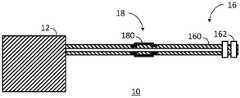
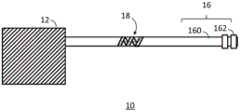
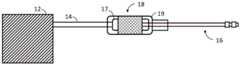
Fig. 1 is a schematic illustration of an implantable medical device according to an embodiment of the present invention.
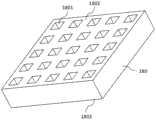
Fig. 2 is a schematic structural view of an attachment according to an embodiment of the present invention.
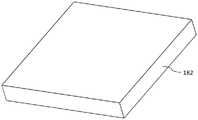
Fig. 3 is a schematic structural view of a base member according to an embodiment of the present invention.
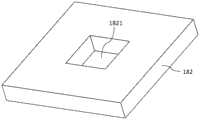
Fig. 4 is a schematic structural view of a base member according to an embodiment of the present invention.
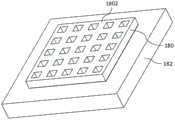
Fig. 5 is a perspective view of a first coupling manner of the attachment member and the base member of the fixing device according to the present invention.
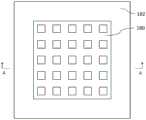
Fig. 6 is a top view of a first attachment of the attachment member to the base member of the fixation device in accordance with the present invention.
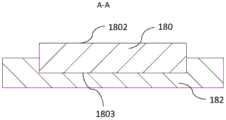
Fig. 7 is a sectional view taken along line a-a of fig. 6.
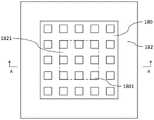
Fig. 8 is a top view of a second attachment of the attachment and base members of the fixation device according to the present invention.
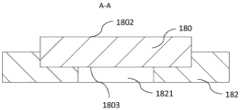
Fig. 9 is a sectional view taken along line a-a of fig. 8.
Fig. 10 is a top view of a third manner of coupling the attachment member and the base member of the fixation device in accordance with the present invention.
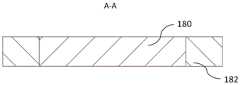
Fig. 11 is a sectional view taken along line a-a of fig. 10.
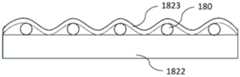
Fig. 12 is a cut-away schematic view of a first implementation of a fourth combination of an attachment member and a base member of a fixation device according to the present invention.
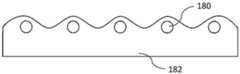
Fig. 13 is a cut-away schematic view of a second implementation of a fourth combination of an attachment member and a base member of a fixation device according to the present invention.
Fig. 14 is a schematic view of a modified combination of an attachment member and a base member of the fixation device according to the present invention.
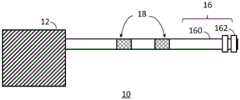
FIG. 15 is a schematic view of a first arrangement of an anchor according to the present invention on an implantable medical device.
FIG. 16 is a schematic view of a second arrangement of an anchor according to the present invention on an implantable medical device.
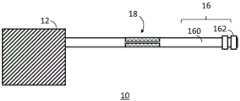
Fig. 17 is a schematic view of a third arrangement of an anchor according to the present invention on an implantable medical device.
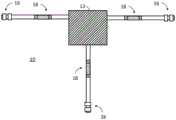
Fig. 18 is a schematic view of a first variant arrangement of a medical device according to the invention.
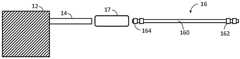
Fig. 19 is a schematic view of components (excluding the fixation device) of a second alternative arrangement of a medical device according to the invention.
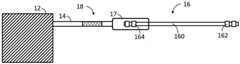
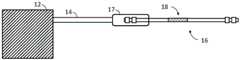
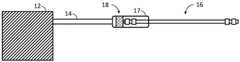
Fig. 20-22 are schematic illustrations of a second alternative arrangement of a medical device according to the present invention.
Fig. 23 is a schematic view of components (excluding the fixation device) of a third alternative arrangement of a medical device according to the invention.
Fig. 24 is a schematic view of a third variant of the arrangement of the medical device according to the invention.
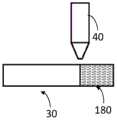
Fig. 25 is a schematic view of a first method of manufacturing the attachment.
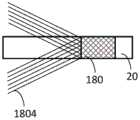
Fig. 26 is a schematic view of a second method of manufacturing the attachment.
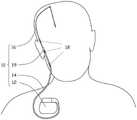
FIG. 27 is a schematic view of a medical device implanted in a human body according to an embodiment of the present invention.
Description of the reference numerals
10 an implantable medical device; 12 a controller; 14 extending the lead; 16 electrode leads; 160 a flexible insulated conduit; 162. 164 a connector; 17 a linker; 18 a securing device; 180 attachment pieces; 1801 mesh; 1802 a first surface; 1803 a second surface; 1804 fiber; 182 a base member; 1821 a hole in the base member; 1822 a base member body; 1823 laminating the base material; 19 a sleeve; 20 weaving a mold; 30 an attachment blank; 40 laser.
Detailed Description
Exemplary embodiments of the present invention are described below with reference to the accompanying drawings. It should be understood that the detailed description is intended only to teach one skilled in the art how to practice the invention, and is not intended to be exhaustive or to limit the scope of the invention.
Implantable medical device anchors according to the present invention may be used, for example, in cardiac pacemakers, defibrillators, deep brain electrical stimulators, spinal cord stimulators, vagus nerve stimulators, gastrointestinal stimulators, or other similar implantable medical devices.
The implantable medical device fixation apparatus according to the present invention includes a base member and a substantially mesh-shaped attachment member. The invention aims to provide a fixing device with a concave uneven surface through an additional piece with a net-shaped porous structure, so that an implanted medical device can be tightly combined with human tissues at a specific position after being implanted into a human body, the medical device is limited, and potential safety hazards caused by the position movement of the medical device are prevented. Meanwhile, the base piece can limit and adjust the stress mode and the activity of the additional piece, improve the fatigue life of the additional piece and avoid the damage of the reticular porous structure of the additional piece.
The radial size of the scaffold (or fiber) of the attachment forming the net structure is several micrometers to several tens of millimeters, and the size of the mesh is several micrometers to several tens of millimeters. The appendage covers a partial or full length of an implantable medical device, such as an implantable lead, covering a length of several millimeters to several hundred millimeters. Preferably, the fixture has a large amount of tissue grown in the depressions of the uneven surface of the fixture after 1-6 months of implantation, thereby tightly coupling the human tissue to the fixture.
Because the base piece wraps at least one part of the additional piece, on one hand, the base piece plays a role in fixing the reticular porous structure of the additional piece, on the other hand, the base piece can limit and adjust the stress mode and the activity of the reticular porous structure, the fatigue life of the base piece is prolonged, and the damage of the reticular porous structure is avoided.
The present invention will be described in detail with reference to the accompanying drawings and specific embodiments.
Referring to fig. 1, taking an implantable deep brain electrical stimulator as an example, an implantablemedical device 10 includes acontroller 12, anelectrode lead 16, and afixation device 18. Thecontroller 12 is configured to receive an electrical signal transmitted from theelectrode lead 16 or to output a voltage or current to theelectrode lead 16, and the configuration and type of thecontroller 12 may be designed and selected according to the intended use of the implantable medical device. Theelectrode lead 16 includes a spiral lead (not shown) and a flexibleinsulating tube 160 that is sleeved outside the spiral lead. A first end of theelectrode lead 16 is electrically connected to thecontroller 12 and a second end of theelectrode lead 16 has at least oneconnector 162, with a coiled lead electrically connecting theconnector 162 to thecontroller 12. The flexibleinsulated conduit 160 mainly functions to support theconnector 162 and to protect the spiral conductor from the outside. The length, inner diameter, and outer diameter of the flexibleinsulated catheter 160 are not limited and can be selected according to the needs of clinical therapy. Preferably, the flexibleinsulating conduit 160 is made of one or more materials of a polyurethane material, a silicone rubber material, and a nylon material. The spiral lead comprises a conductive wire with biocompatibility and an insulating high polymer material coating arranged on the outer surface of the conductive wire. The polymer material of the coating can be one or more of polyurethane, silicon rubber, nylon, fluorine-containing plastics (such as PTFE, ETFE and the like), parylene and polyimide. The coating may be a single layer of a single type of material or a multi-layer structure formed from multiple materials. Preferably, the conductive wires of the helical wire are made of a good electrical conductor material having biocompatibility for transferring electrical signals between thecontroller 12 and theconnector 162. The number of wires and turns of the helical wire are not limited and can be selected as desired, for example, the helical wire is a four-wire configuration having four wires, and each wire electrically connects thecontroller 12 with acorresponding connector 162.
Thefixture 18 includes anattachment member 180 and abase member 182.
Referring to fig. 2, the extension form of theattachment 180 is substantially sheet-shaped, and amesh 1801 is formed on the surface of theattachment 180. The mesh holes 1801 provide theattachment member 180 with afirst surface 1802 having a surface that is uneven so that when thefixation device 18 is implanted in human tissue, tissue grows at the mesh holes 1801, thereby tightly engaging the human tissue with thefixation device 18. It should be understood that themesh 1801 may not extend through theattachment 180, in that thefirst surface 1802 has depressions, while thesecond surface 1803 opposite the unevenfirst surface 1802 may be a flat surface. The invention does not limit the shape of themesh 1801, and the cross section of themesh 1801 can be polygonal, such as diamond, circular, or annular formed by other curves, etc.; a variety of differently shapedmeshes 1801 may also be combined to form an array. The combination of differently shapedmesh holes 1801 to form different arrays can change the configuration of theappendage 180 and its bond to tissue, thereby changing the force pattern of theappendage 180. The shape of themesh 1801 can be selected according to the implantation position and the tissue movement condition of theattachment 180, and the stress distribution of theattachment 180 is optimized, so that the fatigue life of theattachment 180 is prolonged. Preferably, theattachment member 180 is constructed of one or more materials selected from the group consisting of metals, ceramics, and polymers having biocompatibility.
Referring to fig. 3-4, the expanded configuration ofbase member 182 is generally sheet-like; in various embodiments,base member 182 may define a centralbase member opening 1821 therein for providingattachment member 180 with a greater surface area for contact with body tissue and/or for better mechanical properties. The number, location and configuration of thebase member apertures 1821 for eachbase member 182 is not a limitation of the present invention. Preferably, the outer peripheral dimensions of thebase member 182 are slightly larger than or equal to the outer peripheral dimensions of theattachment member 180. Preferably, thebase member 182 is made of a biocompatible material, for example, a biocompatible metal material such as platinum, platinum alloy, iridium alloy, titanium alloy, stainless steel, nickel-titanium alloy, or cobalt-based alloy, and a biocompatible polymer.
At least a portion ofattachment member 180 is embedded inbase member 182, and the manner in whichbase member 182 securesattachment member 180 may be by methods including, but not limited to: securing theattachment member 180 to thebase member 182 by providing a securing force using elastic contraction force, using shape memory effect of a shape memory material, or the like; adheringattachment member 180 andbase member 182 with an adhesive; molding allowsattachment member 180 andbase member 182 to be joined together, etc. Four ways of coupling theattachment member 180 and thebase member 182 of thefixation device 18 are described below. For convenience of description, hereinafter, unless otherwise specified, a portion of theattachment 180 adjacent to thefirst surface 1802 is referred to as an "upper portion" of theattachment 180, and a portion of theattachment 180 adjacent to thesecond surface 1803 is referred to as a "lower portion" of theattachment 180.
(first combination ofattachment member 180 and base member 182)
In a first combination, the lower portion of theattachment piece 180 is combined with thebase piece 182 without the base piececentral hole 1821. Referring to fig. 5-7, thesecond surface 1803 of theattachment member 180 is fully embedded in thebase member 182, while thefirst surface 1802 of theattachment member 180 is exposed to thebase member 182. Such a combination not only secures theattachment member 180 to thebase member 182, but also protects theattachment member 180 from being arbitrarily torn by tissue and damaged.
(second combination ofattachment member 180 and base member 182)
In a second combination, the lower portion of theattachment piece 180 is combined with abase piece 182 having a base piececentral aperture 1821. Referring to fig. 8-9,second surface 1803 ofattachment 180 is embedded inbase member 182 and the central region ofsecond surface 1803 ofattachment 180 is not bonded tobase member 182 due to the centralbase member aperture 1821 inbase member 182; thefirst surface 1802 of theattachment member 180 is exposed to thebase member 182.
(third combination ofattachment member 180 and base member 182)
In a third combination, the outer periphery of theattachment piece 180 is combined with thebase piece 182 having a base piececentral hole 1821. Referring to fig. 10-11,attachment member 180 andbase member 182 have substantially equal thicknesses, with the outer periphery ofattachment member 180 being embedded inbase member 182. Sincebase member 182 has a base membercentral hole 1821 in the center, the middle region ofattachment piece 180 is not joined tobase member 182; themeshes 1801 of the fixingdevice 18 located in the base membercentral hole 1821 are through-passed, and themeshes 1801 located on the outer peripheral side of the base membercentral hole 1821 are filled with thebase member 182.
The second and third combination modes of theadditional piece 180 and thebase piece 182 can ensure the fixing of thebase piece 182 to theadditional piece 180 and protect theadditional piece 180, so that theadditional piece 180 is not easy to be torn arbitrarily by tissues to be damaged; at the same time, the central area ofattachment member 180 extends through mesh 1801 (mesh 1801 inhole 1821 in the base member) to allow full contact with tissue, facilitating tissue ingrowth and allowingattachment member 180 to form a tight, secure bond with the tissue.
(fourth combination ofattachment member 180 and base member 182)
In a fourth combination, the thickness of theattachment member 180 is slightly less than the thickness of thebase member 182, and theattachment member 180 is fully embedded in thebase member 182 to couple with thebase member 182. With reference now to fig. 12 and 13, two possible implementations are provided for this combination, preferably theappendage 180 is in the form of a mesh, so that in the cut-away schematic shown in fig. 12 and 13, theappendage 180 is in the form of a section of mesh wire. Referring to fig. 12, in a first implementation, thebase member 182 includes a base membermain body 1822 and a basemember coating film 1823, theattachment member 180 is disposed on the upper surface of the base membermain body 1822, and the basemember coating film 1823 is covered on the upper surface of theattachment member 180. Thebase member body 1822 and thebase member coating 1823 preferably completely encase theattachment member 180. The thickness of the basemember coating film 1823 is very small, so the surface of the basemember coating film 1823 undulates with the undulated surface of theattachment member 180, eventually appearing as the upper surface of the fixingdevice 18 appears uneven. Referring to fig. 13, in a second implementation, thebase member 182 is integrally formed to cover theattachment 180, and thebase member 182 is fixed to theattachment 180 by, for example, molding. The position of theattachment 180 embedded in thebase member 182 is very close to the upper surface of the base member 182 (i.e. the upper surface of the fixture 18), and the upper surface of thebase member 182 fluctuates with the fluctuation of the uneven surface of theattachment 180, and finally the upper surface of thefixture 18 shows unevenness.
The fourth combination of theattachment element 180 and thebase element 182 ensures the fixation of thebase element 182 to theattachment element 180 and protects theattachment element 180 from being torn by tissue. At the same time, the uneven surface of the fixation means 18 provides a structure that enhances the bonding with the body tissue, while avoiding themesh 1801 of theattachment 180 from adhering completely to the body tissue, which is particularly suitable for situations where the implant subsequently needs to be removed from the body, either completely or partially, reducing the difficulty of removing the implant from the body.
It should be understood that the combination of theattachment member 180 and thebase member 182 of thefixation device 18 according to the present invention is not limited to the above four, and any reasonable form in which at least a portion of theattachment member 180 is combined with thebase member 182 to construct at least a portion of the uneven surface of thefixation device 18 falls within the scope of the present invention.
Variations of the manner of coupling theattachment member 180 and thebase member 182, for example, oneattachment member 180 is coupled to a plurality, e.g., two,base members 182. Referring to fig. 1, each of two side portions of theattachment member 180 is provided with abase member 182, and the combination of eachbase member 182 and theattachment member 180 may be selected from, for example, one of the four combinations of theattachment member 180 and thebase member 182 described above. For another example, referring to fig. 14,attachment 180 is directly coupled to flexibleinsulated catheter 160 of implantablemedical device 10, i.e.,attachment 180 is secured by embedding both ends in flexibleinsulated catheter 160, and flexibleinsulated catheter 160 simultaneously functions asbase 182 and may be identical tobase 182. A portion of theappendage 180 exposes the flexibleinsulated conduit 160 for direct contact with body tissue.
Next, three configurations of theanchor 18 on the implantablemedical device 10 will be described.
(first arrangement of theanchor 18 on the implantable medical device 10)
Referring to fig. 15, the dimension of thefixture 18 in one direction is greatly larger than that in the other direction, and thefixture 18 is spirally wound around the outer circumference of theelectrode lead 16 around the axis of theelectrode lead 16. The screw type mounting structure of the fixingdevice 18 has a tensile property. When the tissue moves, the fixingdevice 18, especially theadditional piece 180 can deform correspondingly, so that the stress mode of the fixingdevice 18 is changed, the stress distribution is optimized, and the fatigue performance of the fixingdevice 18 in the tissue body is improved.
(second configuration of theanchor 18 on the implantable medical device 10)
Referring to fig. 16, two fixing means 18 are spaced apart along the axial direction of theelectrode lead 16. The segmented distribution of thefixation devices 18 serves to fix theelectrode lead 16 at different locations and provides mobility to different segments of theelectrode lead 16 between different fixation locations to increase the flexibility of the implantablemedical device 10 within the body of tissue. It should be understood that the present invention is not limited to the number offixtures 18 on asingle electrode lead 16, and may be only one or more than two; when the number of the fixingdevices 18 is greater than two, the interval distance between the plurality of fixingdevices 18 is not limited.
(third configuration of theanchor 18 on the implantable medical device 10)
Referring to fig. 17, a plurality of fixing means 18 are distributed at intervals in the circumferential direction of theelectrode lead 16. By fixing theelectrode lead 16 at circumferentially different azimuthal angles, theelectrode lead 16 can be made to have some mobility in the circumferential direction to increase the flexibility of the implantablemedical device 10 in vivo. It should be understood that the present invention is not limited to the number offixtures 18 on asingle electrode lead 16, and may be only one or more than two; when the fixing means 18 is one, the end of the single fixing means 18 is coated on a part of the outer circumference of theelectrode lead 16 without being contacted; when the number of the fixingdevices 18 is greater than two, the interval distance between the plurality of fixingdevices 18 is not limited.
It should be understood that the above three types offixation devices 18 may be provided on the implantablemedical device 10 either individually or in combination.
Next, four other configurations of the implantablemedical device 10 including theanchor 18 will be described, hereinafter referred to as first through fourth variant configurations of the implantablemedical device 10.
(first modification of the medical device 10)
Referring to fig. 18, thecontroller 12 of the implantablemedical device 10 is coupled to a plurality of electrode leads 16, the electrode leads 16 being implantable at various locations in the body tissue, and eachelectrode lead 16 having afixation device 18 disposed thereon. Eachelectrode lead 16 may have a different length, and the fixing means 18 may be provided at any position on theelectrode lead 16.
(second modification of the medical device 10)
Referring to fig. 19-22, the leads externally connected to thecontroller 12 include theextension lead 14, theelectrode lead 16, and theconnectors 17 for both. Theelectrode lead 16 includesconnectors insulated conduit 160, and a connecting lead (not shown). Alternatively, the number ofconnectors 162 is the same as the number ofconnectors 164 and corresponds to one, and each pair ofconnectors connector 17 has an inner cavity, theextension lead 14 and theelectrode lead 16 can be inserted into the inner cavity of theconnector 17 from both ends of theconnector 17, respectively, and electrical connection is achieved in the inner cavity, and theconnector 17 can also seal and protect theextension lead 14 and theelectrode lead 16. Alternatively, the joint 17 may be formed integrally with theelectrode lead 16 or theextension lead 14. Formedical devices 10 that include aconnector 17, afixation device 18 may be provided on theextension lead 14, theelectrode lead 16, or theconnector 17 for securing the lead thereof, see fig. 20, 21, and 22, respectively. Of course, thefixation device 18 may also be on more of theextension lead 14, theelectrode lead 16, and the joint 17; in addition, the securingdevice 18 may also be on thecontroller 12.
(third modification of the medical device 10)
Referring to fig. 23-24, in contrast to the second variant of themedical device 10, in the third variant, asleeve 19 is also sleeved outside the joint 17. Thesleeve 19 has an inner cavity, and theextension wire 14 and theelectrode wire 16 are received in the inner cavity of thesleeve 19 and protrude from both ends of thesleeve 19. Thesleeve 19 provides a seal at the junction of theelongate lead 14 and theelectrode lead 16 within its lumen, optionally by interference fit between the wall of the lumen of thesleeve 19 and the contents, or by the addition of fasteners (e.g. ties) to the outer surface of thesleeve 19. The fixing means 18 may be provided on the outer surface of thesleeve 19. Of course, thefixation device 18 may also be on one or more of theextension lead 14, theelectrode lead 16, and thecontroller 12.
Next, two processing methods of theattachment 180 will be described.
First machining method, referring to FIG. 25, a blank 30 of the attachment is laser machined using alaser 40 to produce anattachment 180 having amesh 1801. Preferably, the attachment blank 30 is cylindrical with a closed sidewall, and the material of the attachment blank 30 may be one or more of biocompatible metal, ceramic, and polymer. Themesh 1801 may be of different shapes and apertures; themesh 1801 may be replaced with a recess having a certain depth instead of the through hole.
In a second method of manufacture, referring to fig. 26, anattachment 180 havingmesh holes 1801 is knitted on aknitting die 20 by a knitting machine (not shown). Preferably, theattachment 180 is a cylindrical structure with a net-shaped sidewall, which provides theattachment 180 with good flexibility and fatigue resistance and is capable of large deformation. Preferably, theattachment member 180 is a single-layered mesh structure. Preferably, the woven material isfibers 1804 made of a biocompatible material. Preferably, the diameter of thefibers 1804 is greater than or equal to 0.02 mm and less than or equal to 0.2 mm; preferably, to ensure good flexibility and fatigue resistance of theattachment piece 180, the diameter of thefibers 1804 should be less than or equal to 0.2 mm. Alternatively, the weaving method may be monofilament weaving or doubling weaving.
It should be understood that the machining method of theattachment member 180 is not limited to the above two methods, and other machining methods capable of forming an uneven surface may be used to form theattachment member 180, such as die casting, etching, shot blasting, and the like.
Next, the application of the implantablemedical device 10 according to the present invention will be described. Referring to fig. 27, first, theextension lead 14 and theelectrode lead 16 are implanted into different parts of the human body, respectively, and then theextension lead 14 and theelectrode lead 16 are connected at the connection part using the joint 17, and thesleeve 19 is fitted over the joint 17. Thefixation device 18 may be disposed on a surface of any one or more of theelectrode lead 16, theextension lead 14, theconnector 17, or thesleeve 19. After implantation, theelectrode lead 16,extension lead 14,connector 17 orsleeve 19 may be temporarily secured, for example, by a wire tie. After 1-6 months of implantation, thefixation device 18 is tightly combined with the biological tissue of the human body to form a reliable permanent fixation.
Theanchor 18 and implantablemedical device 10 including theanchor 18 according to the present invention have at least one of the following advantages:
(1) theanchor 18 provides an uneven surface for human tissue to grow and engage with theanchor 18, allowing the implantablemedical device 10 to be secured for a long period of time and stability.
(2)Base member 182 adjusts the force distribution ofattachment member 180 while securingattachment member 180, resulting in a suitable flexibility and structural strength of theoverall fastening device 18.
(3) By selecting a suitable combination ofbase member 182 andattachment member 180, the strength of the combination offixation device 18 and body tissue can be adjusted; for medical devices that need to be removed, either fully or partially, from the body after a certain period of implantation, theattachment member 180 may optionally be completely embedded in thebase member 182, reducing the difficulty of removing the implant from the body.
(4) By the different setting positions and setting manners of the fixingdevices 18 on the body of the implantablemedical device 10, the combination position of the implantablemedical device 10 in the human body can be flexibly controlled to make the implantablemedical device 10 have proper flexibility.
It should be understood that the above embodiments are only exemplary and are not intended to limit the present invention. Various modifications and alterations of the above-described embodiments may be made by those skilled in the art in light of the teachings of the present invention without departing from the scope thereof. For example:
the medical instrument and the connecting mechanism thereof can be applied to human tissues and other animal tissues.
Claims (23)
Translated fromChinesePriority Applications (1)
| Application Number | Priority Date | Filing Date | Title |
|---|---|---|---|
| CN201811027953.1ACN109011149B (en) | 2018-09-04 | 2018-09-04 | Fixing device and processing method of implantable medical device and implantable medical device |
Applications Claiming Priority (1)
| Application Number | Priority Date | Filing Date | Title |
|---|---|---|---|
| CN201811027953.1ACN109011149B (en) | 2018-09-04 | 2018-09-04 | Fixing device and processing method of implantable medical device and implantable medical device |
Publications (2)
| Publication Number | Publication Date |
|---|---|
| CN109011149A CN109011149A (en) | 2018-12-18 |
| CN109011149Btrue CN109011149B (en) | 2021-01-08 |
Family
ID=64623924
Family Applications (1)
| Application Number | Title | Priority Date | Filing Date |
|---|---|---|---|
| CN201811027953.1AActiveCN109011149B (en) | 2018-09-04 | 2018-09-04 | Fixing device and processing method of implantable medical device and implantable medical device |
Country Status (1)
| Country | Link |
|---|---|
| CN (1) | CN109011149B (en) |
Families Citing this family (13)
| Publication number | Priority date | Publication date | Assignee | Title |
|---|---|---|---|---|
| US11571205B2 (en) | 2018-07-16 | 2023-02-07 | Cilag Gmbh International | Surgical visualization feedback system |
| US12257013B2 (en) | 2019-03-15 | 2025-03-25 | Cilag Gmbh International | Robotic surgical systems with mechanisms for scaling camera magnification according to proximity of surgical tool to tissue |
| US11776144B2 (en) | 2019-12-30 | 2023-10-03 | Cilag Gmbh International | System and method for determining, adjusting, and managing resection margin about a subject tissue |
| US12207881B2 (en) | 2019-12-30 | 2025-01-28 | Cilag Gmbh International | Surgical systems correlating visualization data and powered surgical instrument data |
| US11648060B2 (en) | 2019-12-30 | 2023-05-16 | Cilag Gmbh International | Surgical system for overlaying surgical instrument data onto a virtual three dimensional construct of an organ |
| US11744667B2 (en) | 2019-12-30 | 2023-09-05 | Cilag Gmbh International | Adaptive visualization by a surgical system |
| US11896442B2 (en) | 2019-12-30 | 2024-02-13 | Cilag Gmbh International | Surgical systems for proposing and corroborating organ portion removals |
| US11284963B2 (en) | 2019-12-30 | 2022-03-29 | Cilag Gmbh International | Method of using imaging devices in surgery |
| US11759283B2 (en) | 2019-12-30 | 2023-09-19 | Cilag Gmbh International | Surgical systems for generating three dimensional constructs of anatomical organs and coupling identified anatomical structures thereto |
| US11219501B2 (en) | 2019-12-30 | 2022-01-11 | Cilag Gmbh International | Visualization systems using structured light |
| US12002571B2 (en) | 2019-12-30 | 2024-06-04 | Cilag Gmbh International | Dynamic surgical visualization systems |
| US12053223B2 (en) | 2019-12-30 | 2024-08-06 | Cilag Gmbh International | Adaptive surgical system control according to surgical smoke particulate characteristics |
| US11832996B2 (en) | 2019-12-30 | 2023-12-05 | Cilag Gmbh International | Analyzing surgical trends by a surgical system |
Citations (2)
| Publication number | Priority date | Publication date | Assignee | Title |
|---|---|---|---|---|
| CN205729453U (en)* | 2015-11-27 | 2016-11-30 | 重庆西山科技股份有限公司 | Lateral abrasive drilling cutter head |
| CN106422087A (en)* | 2016-09-26 | 2017-02-22 | 中国人民解放军第四军医大学 | In-vivo implanted photodynamic therapy instrument |
Family Cites Families (7)
| Publication number | Priority date | Publication date | Assignee | Title |
|---|---|---|---|---|
| US5383913A (en)* | 1993-04-21 | 1995-01-24 | Schiff; Steven M. | Bidirectional lead connector for left or right sided implantation of pacemakers and/or other implantable electrophysiologic devices and a method for using the same |
| US6961621B2 (en)* | 2001-12-04 | 2005-11-01 | Cardiac Pacemakers, Inc. | Apparatus and method for stabilizing an implantable lead |
| US8515555B1 (en)* | 2007-10-09 | 2013-08-20 | Advanced Neuromodulation Systems, Inc. | Extension device for coupling between pulse generator and stimulation lead, stimulation system using the same, and method of manufacturing the same |
| US20110152990A1 (en)* | 2009-12-22 | 2011-06-23 | Pacesetter, Inc. | Mri compatible lead employing multiple miniature inductors |
| CN102210903A (en)* | 2010-04-02 | 2011-10-12 | 鼎迈医疗科技(苏州)有限公司 | Extension wire protective sleeve of implanted nerve electrical stimulation system |
| JP2015510790A (en)* | 2012-03-07 | 2015-04-13 | ボストン サイエンティフィック ニューロモデュレイション コーポレイション | System and method for securing an implant to tissue |
| CN104606781B (en)* | 2015-01-19 | 2017-01-04 | 清华大学 | A kind of split implantable medical devices of MRI compatible |
- 2018
- 2018-09-04CNCN201811027953.1Apatent/CN109011149B/enactiveActive
Patent Citations (2)
| Publication number | Priority date | Publication date | Assignee | Title |
|---|---|---|---|---|
| CN205729453U (en)* | 2015-11-27 | 2016-11-30 | 重庆西山科技股份有限公司 | Lateral abrasive drilling cutter head |
| CN106422087A (en)* | 2016-09-26 | 2017-02-22 | 中国人民解放军第四军医大学 | In-vivo implanted photodynamic therapy instrument |
Non-Patent Citations (2)
| Title |
|---|
| Long-term outcome after all inside meniscal repair using the FasT-Fix system;Alexander Zimmerer et al.;《Journal of Orthopaedics》;20180508;第15卷(第2期);全文* |
| 植入式大鼠脑皮层电极的电化学修饰研究;李明哲;《中国博士学位论文全文数据库 医药卫生科技辑》;20170315;第E070-8页* |
Also Published As
| Publication number | Publication date |
|---|---|
| CN109011149A (en) | 2018-12-18 |
Similar Documents
| Publication | Publication Date | Title |
|---|---|---|
| CN109011149B (en) | Fixing device and processing method of implantable medical device and implantable medical device | |
| US20040111139A1 (en) | Apparatus and methods for differential stimulation of nerve fibers | |
| EP0438510B1 (en) | Bidirectional helical electrode for nerve stimulation | |
| US10661077B2 (en) | Manufacturing method of a dynamic coil for implantable stimulation leads | |
| JP4452724B2 (en) | Stretched strand-filled tube wire | |
| EP0662853B1 (en) | An implantable lead | |
| US5324321A (en) | Medical electrical lead having sigmoidal conductors and non-circular lumens | |
| US9604048B2 (en) | Leads with electrodes disposed in mesh material and methods and systems using the leads | |
| US20090024196A1 (en) | Implantable electrode, insertion tool for use therewith, and insertion method | |
| ES3010478T3 (en) | Neural interface system | |
| JP6069507B2 (en) | Fixation mechanism for temporary implantable electrical stimulation leads | |
| US11395921B2 (en) | Intravascular electrode arrays for neuromodulation | |
| JP2006524110A (en) | Implantable medical lead design | |
| CN106693173A (en) | Inhibition of implant migration | |
| EP3021935B1 (en) | Multi-electrode lead with backing for mecho/baroreceptor stimulation | |
| US20090281409A1 (en) | Reinforced medical device | |
| CN219271956U (en) | An implantable neurostimulator | |
| CN215195029U (en) | Artificial cochlea implanting device and artificial cochlea | |
| US20130123866A1 (en) | Neurostimulation system with lead fastener and methods of making and using | |
| CN118217528A (en) | Implantable electrode device and electrode system | |
| CN115253071B (en) | Cochlear implant device and cochlear implant | |
| US11077303B2 (en) | Implantable probe for electrical stimulation and/or for detection of electrical potentials on an organ | |
| CN118022175A (en) | Nerve stimulation implantation device and nerve stimulation equipment | |
| GB1598792A (en) | Electrode catheters | |
| JP2016007263A (en) | Medical lead |
Legal Events
| Date | Code | Title | Description |
|---|---|---|---|
| PB01 | Publication | ||
| PB01 | Publication | ||
| SE01 | Entry into force of request for substantive examination | ||
| SE01 | Entry into force of request for substantive examination | ||
| GR01 | Patent grant | ||
| GR01 | Patent grant |