CN108763202B - Method, device and equipment for identifying sensitive text and readable storage medium - Google Patents
Method, device and equipment for identifying sensitive text and readable storage mediumDownload PDFInfo
- Publication number
- CN108763202B CN108763202BCN201810479412.6ACN201810479412ACN108763202BCN 108763202 BCN108763202 BCN 108763202BCN 201810479412 ACN201810479412 ACN 201810479412ACN 108763202 BCN108763202 BCN 108763202B
- Authority
- CN
- China
- Prior art keywords
- text
- speech
- recognized
- probability
- sensitive
- Prior art date
- Legal status (The legal status is an assumption and is not a legal conclusion. Google has not performed a legal analysis and makes no representation as to the accuracy of the status listed.)
- Active
Links
Images

Classifications
- G—PHYSICS
- G06—COMPUTING OR CALCULATING; COUNTING
- G06F—ELECTRIC DIGITAL DATA PROCESSING
- G06F40/00—Handling natural language data
- G06F40/20—Natural language analysis
- G06F40/279—Recognition of textual entities
- G06F40/284—Lexical analysis, e.g. tokenisation or collocates
Landscapes
- Engineering & Computer Science (AREA)
- Theoretical Computer Science (AREA)
- Health & Medical Sciences (AREA)
- Artificial Intelligence (AREA)
- Audiology, Speech & Language Pathology (AREA)
- Computational Linguistics (AREA)
- General Health & Medical Sciences (AREA)
- Physics & Mathematics (AREA)
- General Engineering & Computer Science (AREA)
- General Physics & Mathematics (AREA)
- Machine Translation (AREA)
Abstract
Description
Technical Field
The present invention relates to the field of information processing technologies, and in particular, to a method, an apparatus, a device, and a readable storage medium for identifying a sensitive text.
Background
With the rapid development of the internet industry, information on the network is greatly enriched, and a plurality of contents which do not conform to the internet use environment and even violate national laws and regulations are generated along with the information, such as the contents of no statements, and the like, so that the related network platform has safe operation risks due to violating the mandatory regulations of the national laws and regulations; in addition, the negative information content greatly damages the brand image of the network platform, and also has adverse effect on the use experience of the user.
At present, some network platforms gradually develop an internet-oriented sensitive information filtering system, and titles with violence, low customs, commercial advertisements and other information issued in the internet can be identified through keyword matching, semantic identification and other modes. However, since the expression modes of chinese are infinite, illegal people often use rare characters, spliced characters, etc. in the title to avoid striking, which results in failure of the general semantic and grammar models, for example, the title uses the morpheme "river crab" to replace "harmony", which often results in a review vulnerability, i.e., it is difficult to identify sensitive texts that do not conform to grammar rules in the prior art.
Disclosure of Invention
The invention mainly aims to provide a method, a device, equipment and a readable storage medium for identifying sensitive texts, which can solve the technical problem that sensitive texts which do not conform to grammatical rules are difficult to identify in the prior art.
To achieve the above object, a first aspect of the present invention provides a method for recognizing sensitive text, the method comprising:
determining a part-of-speech sequence of the text to be recognized based on the part-of-speech of each word in the text to be recognized;
calculating the occurrence probability of the part of speech sequence according to the published historical texts;
and when the occurrence probability of the part of speech sequence is smaller than a preset threshold value, determining that the text to be recognized is a sensitive text.
To achieve the above object, a second aspect of the present invention provides an apparatus for recognizing sensitive text, the apparatus comprising:
the determining module is used for determining a part-of-speech sequence of the text to be recognized based on the part-of-speech of each word in the text to be recognized;
the calculation module is used for calculating the occurrence probability of the part of speech sequence according to the published historical texts;
and the recognition module is used for determining the text to be recognized as the sensitive text when the occurrence probability of the part of speech sequence is smaller than a preset threshold value.
In order to achieve the above object, a third aspect of the present invention provides an apparatus, including a memory, a processor, and a computer program stored in the memory and running on the processor, where the computer program is a program for identifying sensitive text, and the processor executes the computer program to implement the steps of the method for identifying sensitive text provided by the first aspect of the present invention.
To achieve the above object, a fourth aspect of the present invention provides a storage medium, on which a computer program is stored, the computer program being a program for identifying sensitive text, and the computer program, when executed by a processor, implementing the steps of the method for identifying sensitive text provided by the first aspect of the present invention.
The method for identifying the sensitive text provided by the embodiment of the invention comprises the following steps: the method comprises the steps of determining a part-of-speech sequence of a text to be recognized based on the part of speech of each word in the text to be recognized, then calculating the probability of the part-of-speech sequence according to published historical texts, and determining the text to be recognized as a sensitive text when the probability of the part-of-speech sequence is smaller than a preset threshold. Compared with the prior art, the method and the device for recognizing the sensitive text determine whether the text to be recognized is the sensitive text or not by calculating the occurrence probability of the part of speech sequence of the text to be recognized, and because the corresponding part of speech sequence of the text to be recognized does not accord with the grammar regulation and is not common, the occurrence probability of the part of speech sequence of the text to be recognized is lower, when the occurrence probability of the part of speech sequence of the text to be recognized is smaller than the preset threshold value, the text to be recognized can be determined to be not accord with the grammar regulation and is not common and belongs to the sensitive text.
Drawings
In order to more clearly illustrate the embodiments of the present invention or the technical solutions in the prior art, the drawings used in the description of the embodiments or the prior art will be briefly described below, it is obvious that the drawings in the following description are only some embodiments of the present invention, and for those skilled in the art, other drawings can be obtained according to the drawings without creative efforts.
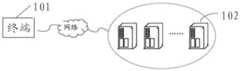
FIG. 1a is a schematic diagram of an operating system of a method for recognizing sensitive text according to an embodiment of the present invention;
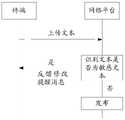
FIG. 1b is a diagram illustrating an implementation scenario of a method for identifying a sensitive text according to an embodiment of the present invention;
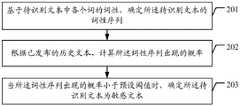
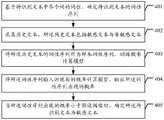
FIG. 2 is a flowchart illustrating steps of a method for recognizing sensitive text according to an embodiment of the present invention;
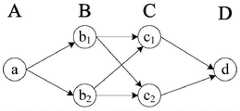
FIG. 3 is a diagram illustrating a determination of a part-of-speech sequence of a text to be recognized according to an embodiment of the present invention;
FIG. 4 is a flowchart illustrating another step of a method for identifying sensitive text according to an embodiment of the present invention;
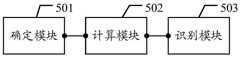
FIG. 5 is a block diagram of a program module of an apparatus for recognizing sensitive texts according to an embodiment of the present invention;
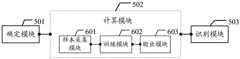
FIG. 6 is a block diagram of another program module of an apparatus for recognizing sensitive text according to an embodiment of the present invention;
fig. 7 is a schematic diagram of the structure of anapparatus 70 according to an embodiment of the present invention.
Detailed Description
In order to make the objects, features and advantages of the present invention more obvious and understandable, the technical solutions in the embodiments of the present invention will be clearly and completely described below with reference to the accompanying drawings in the embodiments of the present invention, and it is apparent that the described embodiments are only a part of the embodiments of the present invention, and not all of the embodiments. All other embodiments, which can be derived by a person skilled in the art from the embodiments given herein without making any creative effort, shall fall within the protection scope of the present invention.
In the prior art, when rarely-used words, spliced fonts and the like are used in the titles, the common semantic and grammar models can be invalid, the titles can be difficult to identify through key word matching, semantic identification and other modes, and an audit vulnerability exists in the process of auditing sensitive information, namely the technical problem that sensitive texts which do not accord with grammar rules are difficult to identify exists in the prior art.
In order to solve the technical problem, the invention provides a method for identifying a sensitive text, which determines whether the text to be identified is the sensitive text or not by calculating the occurrence probability of a part of speech sequence of the text to be identified, wherein the occurrence probability of the part of speech sequence corresponding to the text to be identified is lower due to the fact that the text does not conform to grammar rules and is uncommon, and therefore when the occurrence probability of the part of speech sequence of the text to be identified is smaller than a preset threshold value, the text to be identified can be determined to be not conform to grammar rules and is uncommon and belongs to the sensitive text.
Referring to fig. 1a, fig. 1a is a schematic diagram of an operating system of a method for recognizing a sensitive text according to an embodiment of the present invention, where the method for recognizing a sensitive text can be applied to a hardware environment formed by aterminal 101 and aserver 102 as shown in fig. 1 a. In fig. 1a, aserver 102 is connected to aterminal 101 through a network including, but not limited to: a wide area network, a metropolitan area network, or a local area network, theterminal 101 is not limited to a PC (Personal Computer), a mobile phone, a tablet Computer, etc., and theserver 102 includes but is not limited to a single server, a multi-server, and a distributed server, the steps of the method for identifying sensitive text in the embodiment of the present invention may be executed by theserver 102, theterminal 101, or both theserver 102 and theterminal 101, for example, in some embodiments, the user uploads text to theserver 102 via a client in theterminal 101; after theserver 102 receives the text uploaded by theterminal 101, the received text is identified, and whether the text belongs to sensitive text is determined, wherein, when theserver 102 determines that the text uploaded by theterminal 101 is the sensitive text, the modification alert message may be sent to theterminal 101 or the text may be deleted/hidden directly.
For better understanding of the embodiment of the present invention, referring to fig. 1b, fig. 1b is a scene diagram of an implementation of the method for recognizing sensitive text in the embodiment of the present invention. The embodiment of the invention can be applied to a network platform and helps the network platform to check the text uploaded by the user. In fig. 1b, the network platform receives a text uploaded by a user through the terminal, identifies the text, determines whether the text is a sensitive text, and feeds a modification reminding message back to the terminal or directly deletes/hides the text if the text is the sensitive text; and if the text is the non-sensitive text, releasing the text in the network platform.
Referring to fig. 2, fig. 2 is a schematic flowchart illustrating a step of a method for recognizing a sensitive text according to an embodiment of the present invention, where the method for recognizing a sensitive text includes:
In the embodiment of the invention, a text to be recognized, such as a document title, a title link, a billboard and the like, is obtained first, then the part of speech of each word in the text to be recognized is determined, and a part of speech sequence of the text to be recognized is determined based on the part of speech of each word in the text to be recognized. For example: assuming that the text to be recognized is "I live in Guangzhou", the part-of-speech sequence of the text to be recognized is "r-v-p-ns" because the part-of-speech of "I" in the text to be recognized is pronoun (r), the part-of-speech of "live" is verb (v), the part-of-speech of "live" is preposition (p), and the part-of-speech of "Guangzhou" is place name (ns).
And 202, calculating the occurrence probability of the part-of-speech sequence according to the published historical texts.
In the embodiment of the invention, a plurality of published historical texts can be randomly collected, for example, titles of 10 ten thousand articles published in a legal network platform are randomly extracted. And then, analyzing the part of speech of each word in the historical text, determining the change condition of the part of speech of each word in the historical text, and calculating the probability of the part of speech sequence of the text to be recognized according to the change condition of the part of speech of each word in the historical text.
And 203, when the occurrence probability of the part of speech sequence is smaller than a preset threshold value, determining that the text to be recognized is a sensitive text.
It can be understood that for sensitive texts not conforming to the grammatical rules, the corresponding part-of-speech sequences do not conform to the grammatical rules, for example, the part-of-speech sequence of "777% hemorrhoid cc sore does not cure how the part-of-speech sequence is to be seen for a long time" does not conform to the grammatical rules, and therefore the probability of occurrence under normal conditions is very low. Therefore, in the embodiment of the present invention, when the probability of occurrence of the part-of-speech sequence of the text to be recognized is smaller than a preset threshold (e.g., 1%), it can be determined that the text to be recognized does not conform to the grammar rule and is uncommon and belongs to a sensitive text.
The method for identifying the sensitive text provided by the embodiment of the invention comprises the following steps: the method comprises the steps of determining a part-of-speech sequence of a text to be recognized based on the part of speech of each word in the text to be recognized, then calculating the probability of the part-of-speech sequence according to published historical texts, and determining the text to be recognized as a sensitive text when the probability of the part-of-speech sequence is smaller than a preset threshold. Compared with the prior art, the method and the device for recognizing the sensitive text determine whether the text to be recognized is the sensitive text or not by calculating the occurrence probability of the part of speech sequence of the text to be recognized, and because the corresponding part of speech sequence of the text to be recognized does not accord with the grammar regulation and is not common, the occurrence probability of the part of speech sequence of the text to be recognized is lower, when the occurrence probability of the part of speech sequence of the text to be recognized is smaller than the preset threshold value, the text to be recognized can be determined to be not accord with the grammar regulation and is not common and belongs to the sensitive text.
Further, based on the above embodiment, in the embodiment of the present invention,step 201 may be subdivided into the following steps:
step a, dividing a text to be recognized to obtain each word in the text to be recognized;
the text to be recognized may be divided by using a word segmentation algorithm, for example, a word segmentation algorithm based on character string matching, a word segmentation algorithm based on understanding, a word segmentation algorithm based on statistics, and the like.
Specifically, the word segmentation algorithm for character string matching is also called a mechanical word segmentation method, and is to match a Chinese character string to be analyzed with a vocabulary entry in a "sufficiently large" machine dictionary according to a certain strategy, and if a certain character string is found in the dictionary, the matching is successful (a word is recognized). According to different scanning directions, a character string matching word segmentation algorithm can be divided into forward matching and reverse matching; according to the situation of preferential matching with different lengths, the maximum (longest) matching and the minimum (shortest) matching can be divided.
The comprehension-based word segmentation algorithm achieves the effect of recognizing words by enabling a computer to simulate human comprehension of sentences. The basic idea is to analyze syntax and semantics while segmenting words, and to process ambiguity phenomenon by using syntax information and semantic information. It generally comprises three parts: word segmentation subsystem, syntax semantic subsystem, and master control part. Under the coordination of the master control part, the word segmentation subsystem can obtain syntactic and semantic information of related words, sentences and the like to judge word segmentation ambiguity, namely the word segmentation subsystem simulates the process of understanding sentences by people.
The principle of the statistical-based word segmentation algorithm is as follows: a word is formally a stable combination of words, so in this context, the more times adjacent words occur simultaneously, the more likely it is to constitute a word. Therefore, the frequency or probability of the co-occurrence of the characters and the adjacent characters can better reflect the credibility of the words. The frequency of the combination of adjacent co-occurring words in the material can be counted to calculate their co-occurrence information. The co-occurrence information of two characters is defined, and the adjacent co-occurrence probability of two Chinese characters W, V is calculated. The mutual presentation information reflects the closeness degree of the combination relation between the Chinese characters, and when the closeness degree is higher than a certain threshold value, the character group can be considered to possibly form a word.
B, searching a preset part-of-speech database, and determining the part-of-speech of each word;
in the embodiment of the present invention, parts of speech of each Word may be labeled by a CLAWS (content-likehood Automatic Word-labeling System).
And c, arranging the parts of speech of each word according to the sequence of each word in the text to be recognized to obtain a part of speech sequence of the text to be recognized.
The method for identifying the sensitive text provided by the embodiment of the invention comprises the following steps: dividing the text to be recognized to obtain each word in the text to be recognized; searching a preset part-of-speech database, and determining the part-of-speech of each word; and arranging the parts of speech of the words according to the sequence of the words in the text to be recognized to obtain a part of speech sequence of the text to be recognized. The method and the device for recognizing the sensitive text can determine the part-of-speech sequence of the text to be recognized by segmenting the text to be recognized, and therefore whether the text to be recognized is the sensitive text can be determined according to the probability of the part-of-speech sequence of the text to be recognized.
Further, based on the foregoing embodiment, in the embodiment of the present invention, in the foregoingstep 202, calculating the probability of occurrence of the part-of-speech sequence according to the published historical text specifically includes:
step a, collecting published non-sensitive texts, and determining the part of speech of each word in the non-sensitive texts;
and b, calculating the occurrence probability of the part of speech sequence based on the continuous occurrence probability of any N parts of speech in the non-sensitive text, wherein N is a positive integer and is more than or equal to 2.
It will be appreciated that in writing conventional text, where the text needs to be organized according to the part of speech of the individual words, for example, in grammatical rules, articles are used to modify nouns, prepositions are used to connect places, times, etc. or to form a phrase, verbs cannot be used to modify other words, but can only be modified by adverbs.
In the embodiment of the invention, the continuous occurrence frequency of any N parts of speech in the historical text can be counted based on the parts of speech of each word in the historical text, so that the continuous occurrence probability of any N parts of speech in the historical text can be obtained. For example, when N is 2, any 2 parts of speech t in the history text are countedi-1、tiNumber of consecutive occurrences X, and tiThe occurrence times Y are obtained, and then the part of speech t in the historical text is obtainedi-1、tiThe probability of successive occurrences is X/Y.
After determining the probability of continuous occurrence of any N parts-of-speech in the historical text, HMM (Hidden Markov Model) may be used to calculate the probability of occurrence of the part-of-speech sequence.
Specifically, the probability of occurrence of the part-of-speech sequence may be calculated by using the following formula:
P(T)=ΠP(ti|ti-N+1、…、ti-2、ti-1)
wherein T represents a part-of-speech sequence of the text to be recognized, and T is T1、t2、…、tn,P(ti|ti-N+1、…、ti-2、ti-1) Representing part of speech t in said non-sensitive texti-N+1、…、ti-2、ti-1、tiProbability of successive occurrence, tiRepresents the ith part of speech in the part of speech sequence, and N is less than or equal to i and less than or equal to N.
In the embodiment of the invention, the part-of-speech sequence of the text to be recognized is assumed to be T, and T is T1、t2、…、tn,tkRepresenting the part of speech of the kth word in the text to be recognized, wherein k is more than or equal to 1 and less than or equal to n, and then establishing a language model, wherein:
for a unary language model, tkIf the word sequences are independent, that is, the parts of speech of each word in the text to be recognized are independent, the probability of occurrence of the part of speech sequence T is:
P(t1、t2、…、tn)=P(t1)*P(t2)*、…、*P(tn);
for the binary language model, tkIs determined by tk-1That is, there is a relation between the parts of speech of two adjacent words in the text to be recognized, the probability of occurrence of the part of speech sequence T is:
P(t1、t2、…、tn)=P(t1)*P(t2|t1)*P(t3|t2)、*…、*P(tn|tn-1)
for the trigram language model, tkIs determined by tk-1And tk-2I.e. there is a connection between the parts of speech of three adjacent words in the text to be recognizedAnd if so, the probability of occurrence of the part-of-speech sequence T is as follows:
P(t1、t2、…、tn)=P(t1)*P(t2|t1)*P(t3|t1、t2)、*…、*P(tn|tn-2、tn-1)
by the method, the probability of the occurrence of the part-of-speech sequence T in the N-element language model can be deduced as follows:
P(t1、t2、…、tn)=P(t1)*P(t2|t1)*P(t3|t1、t2)、*…、*P(tn|tn-N+1、…、tn-2、tn-1)
for convenience of calculation, in this embodiment, a calculation formula of the probability of occurrence of the part-of-speech sequence T in the N-ary language model may be simplified to obtain the following calculation formula:
P(t1、t2、…、tn)=ΠP(ti|ti-N+1、…、ti-2、ti-1),N≤i≤n
for example: when N is 2, P (t)1、t2、…、tn)=ΠP(ti|ti-1);
When N is 3, P (t)1、t2、…、tn)=ΠP(ti|ti-2、ti-1);
When N is 5, P (t)1、t2、…、tn)=ΠP(ti|ti-4、ti-3、ti-2、ti-1)。
Specifically, the probability of occurrence of the part-of-speech sequence T may be calculated according to the probability of continuous occurrence of any N parts-of-speech in the non-sensitive text determined in the step b. For example, assuming that the part-of-speech sequence of the text to be recognized "i live in the state of guangdhou" is "r-v-P-ns", and in the 2-element model, the probability of occurrence of the part-of-speech r and the part-of-speech v in succession is P (r-v), the probability of occurrence of the part-of-speech v and the part-of-speech P in succession is P (v-P), and the probability of occurrence of the part-of-speech P and the part-of-speech ns in succession is P (P-ns) determined in the above step b, the probability of occurrence of the part-of-speech sequence "r-v-P-ns" P (r-v-P-ns) ═ P (v-P) × P (P-ns).
Further, it is considered that there may be two or more parts of speech of individual words in the text to be recognized, in which case the text to be recognized will have two or more different sequences of parts of speech. In the embodiment of the invention, all possible part-of-speech sequences of the text to be recognized can be determined according to the part of speech of each word in the text to be recognized, then the probability of occurrence of each part-of-speech sequence is respectively calculated, and when the probability of occurrence of each part-of-speech sequence is smaller than the preset threshold value, the text to be recognized can be determined to be a sensitive text.
For better understanding of the embodiment of the present invention, referring to fig. 3, fig. 3 is a schematic diagram of determining a part-of-speech sequence of a text to be recognized in the embodiment of the present invention, and in fig. 3, it is assumed that the text to be recognized is ABCD, where a is a part-of-speech and B is B1And b2And the part of speech of C is C1And c2D, the part of speech is D, the part of speech sequence of the text to be recognized ABCD comprises' a-b1-c1-d”、“a-b2-c1-d”、“a-b1-c2-d”、“a-b2-c2-d”。
The method for identifying the sensitive text comprises the steps of collecting published non-sensitive texts, determining the part of speech of each word in the non-sensitive texts, calculating the probability of occurrence of the part of speech sequence of the text to be identified based on the probability of continuous occurrence of any N parts of speech in the non-sensitive texts, and when the probability of occurrence of the part of speech sequence of the text to be identified is smaller than a preset threshold value, considering that the grammar of the text to be identified is different from the grammar adopted in the non-sensitive text, so that the text to be identified can be determined to be the sensitive text.
Further, based on the foregoing embodiment, referring to fig. 4, fig. 4 is a schematic flow chart of another step of the method for identifying a sensitive text in the embodiment of the present invention, the method includes:
Step 401 is consistent with the content described instep 201 in the above embodiment of the present invention, and reference may be made to step 201 in the above embodiment, which is not described herein again.
In the embodiment of the invention, the found sensitive text can be collected as a negative sample, and the non-sensitive text can be collected as a positive sample.
And 403, taking the part-of-speech sequence of the historical text as a sample part-of-speech sequence, and training a probability calculation model.
In the embodiment of the invention, influence characteristics influencing the sensitivity of the text, such as the symbol proportion, the Chinese-English proportion, the number proportion and the like in the text are determined, then, a part-of-speech sequence of a historical text is used as a sample part-of-speech sequence, a probability calculation model is trained, and parameters corresponding to the influence characteristics in the probability calculation model are determined. The training may be performed by using a Gradient lifting tree, an xgboost (eXtreme Gradient lifting) training algorithm, an LR (Logistic Regression model), a neural network algorithm, or the like.
And step 404, inputting the part of speech sequence into the trained probability calculation model, and outputting the occurrence probability of the part of speech sequence.
And 405, when the occurrence probability of the part of speech sequence is smaller than a preset threshold value, determining that the text to be recognized is a sensitive text.
In the embodiment of the invention, after the training of the probability calculation model is finished, the determined part-of-speech sequence of the text to be recognized can be input into the model, then the occurrence probability of the part-of-speech sequence of the text to be recognized is output, and whether the text to be recognized is a sensitive text can be determined according to the occurrence probability of the part-of-speech sequence of the text to be recognized.
The method for identifying the sensitive text provided by the embodiment of the invention comprises the following steps: determining a part-of-speech sequence of the text to be recognized based on the part-of-speech of each word in the text to be recognized; collecting historical texts, taking part-of-speech sequences of the historical texts as sample part-of-speech sequences, and training a probability calculation model; and inputting the part of speech sequence into a trained probability calculation model, and outputting the probability of the part of speech sequence. Compared with the prior art, the method and the device for recognizing the sensitive text have the advantages that the probability of the part of speech sequence of the text to be recognized is calculated by training the probability calculation model, and the probability of the part of speech sequence corresponding to the text to be recognized is lower due to the fact that the text does not accord with the grammar regulation and is uncommon, so that when the probability of the part of speech sequence of the text to be recognized is smaller than the preset threshold value, the text to be recognized can be determined to be not accord with the grammar regulation and is uncommon and belongs to the sensitive text.
In order to solve the above technical problem, an embodiment of the present invention further provides a device for recognizing a sensitive text, and referring to fig. 5, fig. 5 is a schematic view of a program module of the device for recognizing a sensitive text in an embodiment of the present invention. In an embodiment of the present invention, the apparatus includes:
the determiningmodule 501 is configured to determine a part-of-speech sequence of the text to be recognized based on parts-of-speech of each word in the text to be recognized.
And the calculatingmodule 502 is configured to calculate the probability of occurrence of the part-of-speech sequence according to the published historical texts.
The identifyingmodule 503 is configured to determine that the text to be identified is a sensitive text when the probability of occurrence of the part-of-speech sequence is smaller than a preset threshold.
The device for identifying the sensitive text provided by the embodiment of the invention comprises the following components: a determiningmodule 501, configured to determine a part-of-speech sequence of the text to be recognized based on parts-of-speech of each word in the text to be recognized; a calculatingmodule 502, configured to calculate, according to the published historical text, a probability of occurrence of the part-of-speech sequence; therecognition module 503 is configured to determine that the text to be recognized is a sensitive text when the probability of occurrence of the part of speech sequence is smaller than a preset threshold. Compared with the prior art, the method and the device for recognizing the sensitive text determine whether the text to be recognized is the sensitive text or not by calculating the occurrence probability of the part of speech sequence of the text to be recognized, and because the corresponding part of speech sequence of the text to be recognized does not accord with the grammar regulation and is not common, the occurrence probability of the part of speech sequence of the text to be recognized is lower, when the occurrence probability of the part of speech sequence of the text to be recognized is smaller than the preset threshold value, the text to be recognized can be determined to be not accord with the grammar regulation and is not common and belongs to the sensitive text.
Further, based on the above embodiment, in the embodiment of the present invention, the determiningmodule 501 includes:
and the dividing module is used for dividing the text to be recognized to obtain each word in the text to be recognized.
And the searching module is used for searching a preset part-of-speech database and determining the part-of-speech of each word.
And the arrangement module is used for arranging the parts of speech of the words according to the sequence of the words in the text to be recognized to obtain a part of speech sequence of the text to be recognized.
In the apparatus for identifying a sensitive text provided in the embodiment of the present invention, the determiningmodule 501 includes: the dividing module is used for dividing the text to be recognized to obtain each word in the text to be recognized; the searching module is used for searching a preset part-of-speech database and determining the part-of-speech of each word; and the arrangement module is used for arranging the parts of speech of the words according to the sequence of the words in the text to be recognized to obtain a part of speech sequence of the text to be recognized. The method and the device for recognizing the sensitive text can determine the part-of-speech sequence of the text to be recognized by segmenting the text to be recognized, and therefore whether the text to be recognized is the sensitive text can be determined according to the probability of the part-of-speech sequence of the text to be recognized.
Further, based on the above embodiment, in the embodiment of the present invention, the calculatingmodule 502 includes:
and the acquisition module is used for acquiring the published non-sensitive text and determining the part of speech of each word in the non-sensitive text.
And the calculation execution module is used for calculating the occurrence probability of the part of speech sequence based on the continuous occurrence probability of any N parts of speech in the non-sensitive text, wherein N is a positive integer and is more than or equal to 2.
The calculation execution module is specifically configured to:
the probability of occurrence of the above part-of-speech sequence is calculated using the following formula,
P(T)=ΠP(ti|ti-N+1、…、ti-2、ti-1)
wherein T represents a part-of-speech sequence of the text to be recognized, and T ist1、t2、…、tn,P(ti|ti-N+1、…、ti-2、ti-1) Representing part of speech t in non-sensitive texti-N+1、…、ti-2、ti-1、tiProbability of successive occurrence, tiAnd representing the ith part of speech in the part of speech sequence, wherein N represents that any N parts of speech continuously appear in the non-sensitive text, and is more than or equal to N.
In the apparatus for identifying a sensitive text provided in the embodiment of the present invention, the calculatingmodule 502 includes: the acquisition module is used for acquiring the published non-sensitive text and determining the part of speech of each word in the non-sensitive text; and the calculation execution module is used for calculating the probability of the occurrence of the part-of-speech sequence of the text to be recognized based on the probability of the continuous occurrence of any N parts-of-speech in the non-sensitive text, and when the probability of the occurrence of the part-of-speech sequence of the text to be recognized is smaller than a preset threshold value, the grammar of the text to be recognized is different from the grammar adopted by the non-sensitive text, namely the text to be recognized is determined to be the sensitive text.
Further, based on the above embodiments, referring to fig. 6, fig. 6 is a schematic diagram of another program module of the apparatus for recognizing sensitive text in the embodiment of the present invention. In an embodiment of the present invention, the apparatus includes:
a determiningmodule 501, configured to determine a part-of-speech sequence of the text to be recognized based on parts-of-speech of each word in the text to be recognized.
A calculatingmodule 502, configured to calculate, according to the published historical text, a probability of occurrence of the part-of-speech sequence.
The identifyingmodule 503 is configured to determine that the text to be identified is a sensitive text when the probability of occurrence of the part of speech sequence is smaller than a preset threshold.
Specifically, thecalculation module 502 includes:
thesample collection module 601 is configured to collect historical texts, where the historical texts include sensitive texts and non-sensitive texts.
And thetraining module 602 is configured to train a probability calculation model by using the part-of-speech sequence of the historical text as a sample part-of-speech sequence.
Anoutput module 603, configured to input the part-of-speech sequence into the trained probability computation model, and output a probability of occurrence of the part-of-speech sequence.
In the apparatus for identifying a sensitive text provided in the embodiment of the present invention, the calculatingmodule 502 includes: thesample acquisition module 601 is used for acquiring historical texts; atraining module 602, configured to train a probability calculation model by using a part-of-speech sequence of a historical text as a sample part-of-speech sequence; theoutput module 603 is configured to input the part-of-speech sequence of the text to be recognized into the trained probability calculation model, and output a probability that the part-of-speech sequence of the text to be recognized appears. Compared with the prior art, the method and the device for recognizing the sensitive text have the advantages that the probability of the part of speech sequence of the text to be recognized is calculated by training the probability calculation model, and the probability of the part of speech sequence corresponding to the text to be recognized is lower due to the fact that the text does not accord with the grammar regulation and is uncommon, so that when the probability of the part of speech sequence of the text to be recognized is smaller than the preset threshold value, the text to be recognized can be determined to be not accord with the grammar regulation and is uncommon and belongs to the sensitive text.
It is understood that, in the embodiment of the present invention, the apparatus for recognizing sensitive text may be a device, please refer to fig. 7, and fig. 7 is a schematic structural diagram of adevice 70 in the embodiment of the present invention. Thedevice 70 includes aprocessor 701, a memory 702, and atransceiver 703. the memory 702 may include read-only memory and random access memory, and provides operating instructions and data to theprocessor 701. A portion of the memory 702 may also include non-volatile random access memory (NVRAM).
In some embodiments, the memory 702 stores the following elements: an executable module or a data structure, or a subset thereof, or an expanded set thereof.
In the embodiment of the present invention, by calling the operation instruction stored in the memory 702 (the operation instruction may be stored in the operating system), the following processes are performed:
determining a part-of-speech sequence of the text to be recognized based on the part of speech of each word in the text to be recognized; calculating the occurrence probability of the part of speech sequence according to the published historical texts; and when the probability of the occurrence of the word sequence is less than a preset threshold value, determining that the text to be recognized is a sensitive text.
Compared with the prior art, the method and the device for recognizing the sensitive text determine whether the text to be recognized is the sensitive text or not by calculating the occurrence probability of the part of speech sequence of the text to be recognized, and because the text which does not accord with the grammar regulation and is not common has lower occurrence probability of the part of speech sequence corresponding to the text to be recognized, when the occurrence probability of the part of speech sequence of the text to be recognized is smaller than the preset threshold value, the text to be recognized can be determined to be not accord with the grammar regulation and is not common and belongs to the sensitive text.
Whereprocessor 701 controls the operation ofdevice 70,processor 701 may also be referred to as a CPU (Central Processing Unit). The memory 702 may include both read-only memory and random access memory, and provides instructions and data to theprocessor 701. A portion of the memory 702 may also include non-volatile random access memory (NVRAM). The various components ofdevice 70 are coupled together by abus system 704 for the particular application, wherebus system 704 may include a power bus, a control bus, a status signal bus, etc., in addition to a data bus. For clarity of illustration, however, the various buses are designated in the figure as thebus system 704.
The method disclosed in the above embodiments of the present invention may be applied to theprocessor 701, or implemented by theprocessor 701. Theprocessor 701 may be an integrated circuit chip having signal processing capabilities. In implementation, the steps of the above method may be implemented by integrated logic circuits of hardware or instructions in the form of software in theprocessor 701. Theprocessor 701 described above may be a general purpose processor, a Digital Signal Processor (DSP), an Application Specific Integrated Circuit (ASIC), an off-the-shelf programmable gate array (FPGA) or other programmable logic device, discrete gate or transistor logic, discrete hardware components. The various methods, steps and logic blocks disclosed in the embodiments of the present invention may be implemented or performed. A general purpose processor may be a microprocessor or the processor may be any conventional processor or the like. The steps of the method disclosed in connection with the embodiments of the present invention may be directly implemented by a hardware decoding processor, or implemented by a combination of hardware and software modules in the decoding processor. The software module may be located in ram, flash memory, rom, prom, or eprom, registers, etc. storage media as is well known in the art. The storage medium is located in the memory 702, and theprocessor 701 reads the information in the memory 702 and performs the steps of the above method in combination with the hardware thereof.
In the several embodiments provided in the present application, it should be understood that the disclosed apparatus and method may be implemented in other ways. For example, the above-described apparatus embodiments are merely illustrative, and for example, the division of the modules is merely a logical division, and in actual implementation, there may be other divisions, for example, multiple modules or components may be combined or integrated into another system, or some features may be omitted, or not implemented. In addition, the shown or discussed mutual coupling or direct coupling or communication connection may be an indirect coupling or communication connection through some interfaces, devices or modules, and may be in an electrical, mechanical or other form.
In addition, functional modules in the embodiments of the present invention may be integrated into one processing module, or each of the modules may exist alone physically, or two or more modules are integrated into one module. The integrated module can be realized in a hardware mode, and can also be realized in a software functional module mode.
The integrated module, if implemented in the form of a software functional module and sold or used as a stand-alone product, may be stored in a computer readable storage medium. Based on such understanding, the technical solution of the present invention may be embodied in the form of a software product, which is stored in a storage medium and includes instructions for causing a computer device (which may be a personal computer, a server, or a network device) to execute all or part of the steps of the method according to the embodiments of the present invention. And the aforementioned storage medium includes: a U-disk, a removable hard disk, a Read-Only Memory (ROM), a Random Access Memory (RAM), a magnetic disk or an optical disk, and other various media capable of storing program codes.
It should be noted that, for the sake of simplicity, the above-mentioned method embodiments are described as a series of acts or combinations, but those skilled in the art should understand that the present invention is not limited by the described order of acts, as some steps may be performed in other orders or simultaneously according to the present invention. Further, those skilled in the art will appreciate that the embodiments described in this specification are presently considered to be preferred embodiments and that no single act or module is essential to the invention.
In the above embodiments, the descriptions of the respective embodiments have respective emphasis, and for parts that are not described in detail in a certain embodiment, reference may be made to related descriptions of other embodiments.
The above descriptions of the method, apparatus, device and readable storage medium for recognizing sensitive text provided by the present invention are provided, and those skilled in the art will be able to change the concepts of the embodiments of the present invention in the following detailed description and the application scope, and in summary, the content of the present specification should not be construed as limiting the present invention.
Claims (10)
1. A method of identifying sensitive text, the method comprising:
determining a part-of-speech sequence of the text to be recognized based on the part-of-speech of each word in the text to be recognized;
determining the part of speech of each word in the released non-sensitive text, and calculating the probability of the part of speech sequence based on the probability of continuous occurrence of any multiple parts of speech in the non-sensitive text; or determining a probability of occurrence of the sequence of parts of speech based on a probabilistic computational model;
and when the occurrence probability of the part of speech sequence is smaller than a preset threshold value, determining that the text to be recognized is a sensitive text.
2. The method of claim 1, wherein the step of calculating the probability of occurrence of the sequence of parts-of-speech based on the probability of successive occurrence of any of a plurality of parts-of-speech in the non-sensitive text comprises:
calculating the probability P (T) of occurrence of the part-of-speech sequence by using the following formula,
P(T)=ΠP(ti|ti-N+1、…、ti-2、ti-1)
wherein T represents a part-of-speech sequence of the text to be recognized, and T is T1、t2、…、tn,P(ti|ti-N+1、…、ti-2、ti-1) Representing part of speech t in said non-sensitive texti-N+1、…、ti-2、ti-1、tiProbability of successive occurrence, tiAnd the i-th part of speech in the part of speech sequence is represented, N is a positive integer and is more than or equal to 2, N represents that any N parts of speech continuously appear in the non-sensitive text, and i is more than or equal to N.
3. The method according to any one of claims 1 to 2, wherein the step of determining the part-of-speech sequence of the text to be recognized based on the parts-of-speech of the words in the text to be recognized comprises:
dividing the text to be recognized to obtain each word in the text to be recognized;
searching a preset part-of-speech database and determining the part-of-speech of each word;
and arranging the part of speech of each word according to the sequence of each word in the text to be recognized to obtain a part of speech sequence of the text to be recognized.
4. The method of claim 1, wherein the step of determining the probability of occurrence of the sequence of parts-of-speech based on a probabilistic computational model is preceded by the step of:
collecting historical texts, wherein the historical texts comprise sensitive texts and non-sensitive texts;
and taking the part-of-speech sequence of the historical text as a sample part-of-speech sequence, and training a probability calculation model.
5. An apparatus for recognizing sensitive text, the apparatus comprising:
the determining module is used for determining a part-of-speech sequence of the text to be recognized based on the part-of-speech of each word in the text to be recognized;
the calculation module is used for calculating the occurrence probability of the part of speech sequence according to the published historical texts;
the recognition module is used for determining the text to be recognized as a sensitive text when the occurrence probability of the part-of-speech sequence is smaller than a preset threshold value;
and the calculation module is also used for collecting the released non-sensitive text, determining the part of speech of each word in the non-sensitive text, and calculating the occurrence probability of the part of speech sequence based on the continuous occurrence probability of any multiple parts of speech in the non-sensitive text.
6. The apparatus of claim 5, wherein the computation execution module is to:
calculating the probability P (T) of occurrence of the part-of-speech sequence by using the following formula,
P(T)=ΠP(ti|ti-N+1、…、ti-2、ti-1)
wherein T represents a part-of-speech sequence of the text to be recognized, and T is T1、t2、…、tn,P(ti|ti-N+1、…、ti-2、ti-1) Representing part of speech t in said non-sensitive texti-N+1、…、ti-2、ti-1、tiProbability of successive occurrence, tiAnd the i-th part of speech in the part of speech sequence is represented, N is a positive integer and is more than or equal to 2, N represents that any N parts of speech continuously appear in the non-sensitive text, and i is more than or equal to N.
7. The apparatus of any of claims 5 to 6, wherein the determining module comprises:
the dividing module is used for dividing the text to be recognized to obtain each word in the text to be recognized;
the searching module is used for searching a preset part-of-speech database and determining the part-of-speech of each word;
and the arranging module is used for arranging the part of speech of each word according to the sequence of each word in the text to be recognized to obtain a part of speech sequence of the text to be recognized.
8. The apparatus of claim 5, wherein the computing module further comprises:
the sample acquisition module is used for acquiring historical texts, wherein the historical texts comprise sensitive texts and non-sensitive texts;
the training module is used for taking the part-of-speech sequence of the historical text as a sample part-of-speech sequence and training a probability calculation model;
and the output module is used for inputting the part of speech sequence into the trained probability calculation model and outputting the occurrence probability of the part of speech sequence.
9. An electronic device for identifying sensitive text, comprising a memory, a processor and a computer program stored on the memory and running on the processor, wherein the computer program is a program for identifying sensitive text, and the processor implements the steps of the method for identifying sensitive text according to any one of claims 1 to 4 when executing the computer program.
10. A storage medium on which a computer program is stored, wherein the computer program is a program for identifying sensitive text, and when being executed by a processor, the computer program implements the steps of the method for identifying sensitive text according to any one of claims 1 to 4.
Priority Applications (1)
| Application Number | Priority Date | Filing Date | Title |
|---|---|---|---|
| CN201810479412.6ACN108763202B (en) | 2018-05-18 | 2018-05-18 | Method, device and equipment for identifying sensitive text and readable storage medium |
Applications Claiming Priority (1)
| Application Number | Priority Date | Filing Date | Title |
|---|---|---|---|
| CN201810479412.6ACN108763202B (en) | 2018-05-18 | 2018-05-18 | Method, device and equipment for identifying sensitive text and readable storage medium |
Publications (2)
| Publication Number | Publication Date |
|---|---|
| CN108763202A CN108763202A (en) | 2018-11-06 |
| CN108763202Btrue CN108763202B (en) | 2022-05-17 |
Family
ID=64007290
Family Applications (1)
| Application Number | Title | Priority Date | Filing Date |
|---|---|---|---|
| CN201810479412.6AActiveCN108763202B (en) | 2018-05-18 | 2018-05-18 | Method, device and equipment for identifying sensitive text and readable storage medium |
Country Status (1)
| Country | Link |
|---|---|
| CN (1) | CN108763202B (en) |
Families Citing this family (6)
| Publication number | Priority date | Publication date | Assignee | Title |
|---|---|---|---|---|
| CN110469753A (en)* | 2019-07-16 | 2019-11-19 | 盐城师范学院 | A kind of digital content dispensing device |
| CN110472234B (en)* | 2019-07-19 | 2024-08-20 | 平安科技(深圳)有限公司 | Sensitive text recognition method, device, medium and computer equipment |
| CN111079029B (en)* | 2019-12-20 | 2023-11-21 | 珠海格力电器股份有限公司 | Sensitive account detection method, storage medium and computer equipment |
| CN111753539B (en)* | 2020-06-30 | 2023-12-26 | 北京搜狗科技发展有限公司 | Method and device for identifying sensitive text |
| CN113011171B (en)* | 2021-03-05 | 2024-11-29 | 北京市博汇科技股份有限公司 | BERT-based violation text recognition algorithm and device |
| CN114140798B (en)* | 2021-12-03 | 2024-09-27 | 北京奇艺世纪科技有限公司 | Text region segmentation method and device, electronic equipment and storage medium |
Family Cites Families (9)
| Publication number | Priority date | Publication date | Assignee | Title |
|---|---|---|---|---|
| US5537317A (en)* | 1994-06-01 | 1996-07-16 | Mitsubishi Electric Research Laboratories Inc. | System for correcting grammer based parts on speech probability |
| US6859771B2 (en)* | 2001-04-23 | 2005-02-22 | Microsoft Corporation | System and method for identifying base noun phrases |
| JP3557605B2 (en)* | 2001-09-19 | 2004-08-25 | インターナショナル・ビジネス・マシーンズ・コーポレーション | Sentence segmentation method, sentence segmentation processing device using the same, machine translation device, and program |
| US7761287B2 (en)* | 2006-10-23 | 2010-07-20 | Microsoft Corporation | Inferring opinions based on learned probabilities |
| CN102681981A (en)* | 2011-03-11 | 2012-09-19 | 富士通株式会社 | Natural language lexical analysis method, device and analyzer training method |
| CN103064838B (en)* | 2011-10-19 | 2016-03-30 | 阿里巴巴集团控股有限公司 | Data search method and device |
| CN103955451B (en)* | 2014-05-15 | 2017-04-19 | 北京优捷信达信息科技有限公司 | Method for judging emotional tendentiousness of short text |
| CN105740236B (en)* | 2016-01-29 | 2018-09-07 | 中国科学院自动化研究所 | In conjunction with the Chinese emotion new word identification method and system of writing characteristic and sequence signature |
| CN105955957B (en)* | 2016-05-05 | 2019-01-25 | 北京邮电大学 | A method and device for determining aspect scores in overall reviews of merchants |
- 2018
- 2018-05-18CNCN201810479412.6Apatent/CN108763202B/enactiveActive
Also Published As
| Publication number | Publication date |
|---|---|
| CN108763202A (en) | 2018-11-06 |
Similar Documents
| Publication | Publication Date | Title |
|---|---|---|
| CN108763202B (en) | Method, device and equipment for identifying sensitive text and readable storage medium | |
| JP2764343B2 (en) | Clause / phrase boundary extraction method | |
| JP6813591B2 (en) | Modeling device, text search device, model creation method, text search method, and program | |
| US6658377B1 (en) | Method and system for text analysis based on the tagging, processing, and/or reformatting of the input text | |
| EP3179384A1 (en) | Method and device for parsing interrogative sentence in knowledge base | |
| US10460028B1 (en) | Syntactic graph traversal for recognition of inferred clauses within natural language inputs | |
| CN110135457A (en) | Method and system for extracting event trigger words based on autoencoder fusion document information | |
| CN112364648A (en) | Keyword extraction method and device, electronic equipment and storage medium | |
| CN112699677B (en) | Event extraction method and device, electronic equipment and storage medium | |
| WO2017198031A1 (en) | Semantic parsing method and apparatus | |
| CN113190675A (en) | Text abstract generation method and device, computer equipment and storage medium | |
| CN108959247A (en) | A kind of data processing method, server and computer-readable medium | |
| CN116227466B (en) | Sentence generation method, device and equipment with similar semantic different expressions | |
| CN111460797A (en) | Keyword extraction method and device, electronic equipment and readable storage medium | |
| CN112380866A (en) | Text topic label generation method, terminal device and storage medium | |
| CN115017870A (en) | Closed-loop dialect expanding writing method and device, computer equipment and storage medium | |
| CN116050425A (en) | Method for establishing pre-trained language model, text prediction method and device | |
| CN115840808A (en) | Scientific and technological project consultation method, device, server and computer-readable storage medium | |
| Baroi et al. | NITS-Hinglish-SentiMix at SemEval-2020 Task 9: sentiment analysis for code-mixed social media text using an ensemble model | |
| CN114611486B (en) | Method and device for generating information extraction engine and electronic equipment | |
| US20210133394A1 (en) | Experiential parser | |
| CN113051935A (en) | Intelligent translation method and device, terminal equipment and computer readable storage medium | |
| CN113032529B (en) | English phrase recognition method, device, medium and electronic equipment | |
| CN115204181A (en) | Text detection method, apparatus, electronic device, and computer-readable storage medium | |
| CN114707489A (en) | Method and device for acquiring marked data set, electronic equipment and storage medium |
Legal Events
| Date | Code | Title | Description |
|---|---|---|---|
| PB01 | Publication | ||
| PB01 | Publication | ||
| SE01 | Entry into force of request for substantive examination | ||
| SE01 | Entry into force of request for substantive examination | ||
| GR01 | Patent grant | ||
| GR01 | Patent grant |