CN107832718B - Finger vein anti-counterfeiting identification method and system based on self-encoder - Google Patents
Finger vein anti-counterfeiting identification method and system based on self-encoderDownload PDFInfo
- Publication number
- CN107832718B CN107832718BCN201711135122.1ACN201711135122ACN107832718BCN 107832718 BCN107832718 BCN 107832718BCN 201711135122 ACN201711135122 ACN 201711135122ACN 107832718 BCN107832718 BCN 107832718B
- Authority
- CN
- China
- Prior art keywords
- training
- true
- images
- false
- image
- Prior art date
- Legal status (The legal status is an assumption and is not a legal conclusion. Google has not performed a legal analysis and makes no representation as to the accuracy of the status listed.)
- Active
Links
Images
Classifications
- G—PHYSICS
- G06—COMPUTING OR CALCULATING; COUNTING
- G06V—IMAGE OR VIDEO RECOGNITION OR UNDERSTANDING
- G06V40/00—Recognition of biometric, human-related or animal-related patterns in image or video data
- G06V40/10—Human or animal bodies, e.g. vehicle occupants or pedestrians; Body parts, e.g. hands
- G06V40/12—Fingerprints or palmprints
- G06V40/1382—Detecting the live character of the finger, i.e. distinguishing from a fake or cadaver finger
- G06V40/1388—Detecting the live character of the finger, i.e. distinguishing from a fake or cadaver finger using image processing
- G—PHYSICS
- G06—COMPUTING OR CALCULATING; COUNTING
- G06F—ELECTRIC DIGITAL DATA PROCESSING
- G06F18/00—Pattern recognition
- G06F18/20—Analysing
- G06F18/21—Design or setup of recognition systems or techniques; Extraction of features in feature space; Blind source separation
- G06F18/214—Generating training patterns; Bootstrap methods, e.g. bagging or boosting
- G06F18/2148—Generating training patterns; Bootstrap methods, e.g. bagging or boosting characterised by the process organisation or structure, e.g. boosting cascade
- G—PHYSICS
- G06—COMPUTING OR CALCULATING; COUNTING
- G06F—ELECTRIC DIGITAL DATA PROCESSING
- G06F18/00—Pattern recognition
- G06F18/20—Analysing
- G06F18/24—Classification techniques
- G06F18/241—Classification techniques relating to the classification model, e.g. parametric or non-parametric approaches
- G06F18/2415—Classification techniques relating to the classification model, e.g. parametric or non-parametric approaches based on parametric or probabilistic models, e.g. based on likelihood ratio or false acceptance rate versus a false rejection rate
- G06F18/24155—Bayesian classification
- G—PHYSICS
- G06—COMPUTING OR CALCULATING; COUNTING
- G06N—COMPUTING ARRANGEMENTS BASED ON SPECIFIC COMPUTATIONAL MODELS
- G06N3/00—Computing arrangements based on biological models
- G06N3/02—Neural networks
- G06N3/08—Learning methods
- G06N3/084—Backpropagation, e.g. using gradient descent
- G—PHYSICS
- G06—COMPUTING OR CALCULATING; COUNTING
- G06V—IMAGE OR VIDEO RECOGNITION OR UNDERSTANDING
- G06V40/00—Recognition of biometric, human-related or animal-related patterns in image or video data
- G06V40/40—Spoof detection, e.g. liveness detection
- G06V40/45—Detection of the body part being alive
- G—PHYSICS
- G06—COMPUTING OR CALCULATING; COUNTING
- G06V—IMAGE OR VIDEO RECOGNITION OR UNDERSTANDING
- G06V40/00—Recognition of biometric, human-related or animal-related patterns in image or video data
- G06V40/10—Human or animal bodies, e.g. vehicle occupants or pedestrians; Body parts, e.g. hands
- G06V40/14—Vascular patterns
Landscapes
- Engineering & Computer Science (AREA)
- Theoretical Computer Science (AREA)
- Physics & Mathematics (AREA)
- Data Mining & Analysis (AREA)
- General Physics & Mathematics (AREA)
- Computer Vision & Pattern Recognition (AREA)
- Evolutionary Computation (AREA)
- General Engineering & Computer Science (AREA)
- Artificial Intelligence (AREA)
- Life Sciences & Earth Sciences (AREA)
- Bioinformatics & Computational Biology (AREA)
- Evolutionary Biology (AREA)
- Bioinformatics & Cheminformatics (AREA)
- Multimedia (AREA)
- Human Computer Interaction (AREA)
- Biophysics (AREA)
- Biomedical Technology (AREA)
- Computational Linguistics (AREA)
- General Health & Medical Sciences (AREA)
- Molecular Biology (AREA)
- Computing Systems (AREA)
- Mathematical Physics (AREA)
- Software Systems (AREA)
- Health & Medical Sciences (AREA)
- Probability & Statistics with Applications (AREA)
- Other Investigation Or Analysis Of Materials By Electrical Means (AREA)
- Measurement Of The Respiration, Hearing Ability, Form, And Blood Characteristics Of Living Organisms (AREA)
Abstract
Translated fromChinese
Description
Translated fromChinese技术领域technical field
本发明涉及生物特征识别技术领域,具体而言,涉及基于自编码器的手指静脉防伪鉴别方法及系统。The present invention relates to the technical field of biometric identification, in particular, to a finger vein anti-counterfeiting identification method and system based on an autoencoder.
背景技术Background technique
信息技术的快速发展使得信息安全越来越重要,这也意味着需要越来越高的信息安全保护。作为一种新兴的生物识别技术,基于静脉的生物特征在生物识别领域引起了广泛关注。与传统生物识别技术,如指纹,掌纹,虹膜,面部识别相比,静脉识别技术具有成本低廉,数据易于采集的无接触式操作的优点。此外,由于静脉位于生物体的内部,所以很难被盗取和伪造,并且不易受表层皮肤变化的影响,因此具有更高的安全性能。The rapid development of information technology makes information security more and more important, which also means that higher and higher information security protection is required. As an emerging biometric technology, vein-based biometrics have attracted extensive attention in the field of biometrics. Compared with traditional biometric technologies, such as fingerprint, palm print, iris, and face recognition, vein recognition technology has the advantages of low cost and contactless operation with easy data collection. In addition, since the vein is located inside the living body, it is difficult to be stolen and counterfeited, and it is not easily affected by changes in the superficial skin, so it has higher security performance.
然而,手指静脉识别面临着许多挑战,一个关键的问题是使用假手指静脉图像进行系统攻击。有研究表明使用传统激光打印机打印真伪手指静脉图像而产生静脉伪影对生物识别系统产生了成功的攻击。因此,对于手指静脉防伪鉴别应予以极大重视。目前已有不少手指静脉防伪鉴别算法,比如二值化统计图像特征(BSIF),雷斯变换(RT),局部二进制模式(LBP),局部相位量化(LPQ),但它们利用手工描述子对静脉特征进行提取,因此现有技术中存在以下缺点:(1)很难证明手工提取的特征一定与手指静脉的图像真伪是相关的。(2)即使存在区分图像真伪的特征,也很难建立有效的数学模型去描述它们。However, finger vein recognition faces many challenges, and a key issue is the use of fake finger vein images for systematic attacks. Some studies have shown that the use of traditional laser printers to print authentic and fake finger vein images to generate vein artifacts has successfully attacked biometric systems. Therefore, great attention should be paid to the anti-counterfeiting identification of finger veins. At present, there are many anti-counterfeiting identification algorithms for finger veins, such as Binarized Statistical Image Feature (BSIF), Rice Transform (RT), Local Binary Pattern (LBP), Local Phase Quantization (LPQ), but they use manual descriptor pairs The vein features are extracted, so there are the following shortcomings in the prior art: (1) It is difficult to prove that the manually extracted features must be related to the authenticity of the image of the finger veins. (2) Even if there are features to distinguish the authenticity of images, it is difficult to establish an effective mathematical model to describe them.
发明内容SUMMARY OF THE INVENTION
本发明提供的基于自编码器的手指静脉防伪鉴别方法及系统,旨在改善上述技术问题。The finger vein anti-counterfeiting identification method and system based on the autoencoder provided by the present invention aims to improve the above technical problems.
本发明提供的一种基于自编码器的手指静脉防伪鉴别方法,包括:采集手指静脉图像;基于预设规则获取所述手指静脉图像的真假图像,并对所述真假图像进行标注;基于所述静脉图像构建训练集合、验证集合和测试集合,其中各个集合中真静脉图像和假静脉图像数量相同;基于所述标注后的所述真假图像进行构建和训练稀疏自编码器;获取所述稀疏自编码器的权重和偏置;基于预设softmax分类器和所述稀疏自编码器构建BP神经网络;基于所述权重初始化所述BP神经网络;基于所述标注后的所述真假图像训练所述BP神经网络;获取所述BP神经网络所输出的输出结果;将所述输出结果作为输入的所述真假图像的深度特征;将所述深度特征分别输入到对应的预设随机森林分类器中进行训练;获取所述随机森林分类器的输出结果;将所述随机森林分类器的输出结果进行最小错误率贝叶斯决策融合,获取每幅所述真假图像的概率;基于所述概率判断所述手指静脉图像的真假。The invention provides a finger vein anti-counterfeiting identification method based on an autoencoder, comprising: collecting finger vein images; acquiring true and false images of the finger vein images based on preset rules, and labeling the true and false images; The vein images construct a training set, a verification set and a test set, wherein the number of true vein images and false vein images in each set is the same; build and train a sparse autoencoder based on the true and false images after the labeling; the weights and biases of the sparse autoencoder; build a BP neural network based on the preset softmax classifier and the sparse autoencoder; initialize the BP neural network based on the weights; based on the true and false after the labeling Image training the BP neural network; obtain the output result output by the BP neural network; use the output result as the depth feature of the true and false images of the input; input the depth feature into the corresponding preset random training in the forest classifier; obtaining the output result of the random forest classifier; subjecting the output result of the random forest classifier to Bayesian decision fusion with minimum error rate to obtain the probability of each true and false image; based on The probability judges the authenticity of the finger vein image.
优选地,所述的稀疏自编码器满足:将原始数据x={x1,x2,…,xn}通过线性函数和sigmoid激活函数,映射到隐含层得到编码结果y={y1,y2,…,ym},即:


优选地,所述的预设softmax分类器中的预设函数为Softmax函数。Preferably, the preset function in the preset softmax classifier is a Softmax function.
优选地,所述的Softmax函数满足:σ(z)={σ(z1),…,σ(zm)},其中:
优选地,所述预设随机森林分类器满足:利用bootstrap抽样从训练集抽取与训练集容量大小相同的样本作为一棵决策树的根节点;从所有特征中随机无放回地按照一定规则抽取部分特征作为节点的分裂属性,以此建立一个CART决策树模型;重复上述两个步骤k次,建立k颗决策树,产生k种分类结果,即建立随机森林;根据k种分类结果对训练样本进行投票表决决定其最终分类,其中,通过k轮训练,得到的分类模型序列{h1(x),h2(x),…,hk(x)},最终的分类决策如下:
本发明提供的一种基于自编码器的手指静脉防伪鉴别系统,包括:图像采集单元,用于采集手指静脉图像;图像处理单元,用于基于预设规则获取所述手指静脉图像的真假图像,并对所述真假图像进行标注;第一训练单元,用于基于所述静脉图像构建训练集合、验证集合和测试集合,其中各个集合中真静脉图像和假静脉图像数量相同;第一构建单元,用于基于所述标注后的所述真假图像进行构建和训练稀疏自编码器;第一数据获取单元,用于获取所述稀疏自编码器的权重和偏置;第二构建单元,用于基于预设softmax分类器和所述稀疏自编码器构建BP神经网络;初始化单元,用于基于所述权重初始化所述BP神经网络;第二训练单元,用于基于所述标注后的所述真假图像训练所述BP神经网络;第二数据获取单元,用于获取所述BP神经网络所输出的输出结果;数据标记单元,用于将所述输出结果作为输入的所述真假图像的深度特征;第三训练单元,用于将所述深度特征分别输入到对应的预设随机森林分类器中进行训练;第三数据获取单元,用于获取所述随机森林分类器的输出结果;概率获取单元,用于将所述随机森林分类器的输出结果进行最小错误率贝叶斯决策融合,获取每幅所述真假图像的概率;真假识别单元,用于基于所述概率判断所述手指静脉图像的真假。A finger vein anti-counterfeiting identification system based on an autoencoder provided by the present invention includes: an image acquisition unit for acquiring finger vein images; and an image processing unit for acquiring true and false images of the finger vein images based on preset rules , and label the true and false images; the first training unit is used to construct a training set, a verification set and a test set based on the vein images, wherein the number of true vein images and false vein images in each set is the same; the first construction a unit for constructing and training a sparse auto-encoder based on the labeled true and false images; a first data acquisition unit for acquiring the weight and bias of the sparse auto-encoder; a second construction unit, for constructing a BP neural network based on a preset softmax classifier and the sparse autoencoder; an initialization unit for initializing the BP neural network based on the weights; a second training unit for The true and false images are used to train the BP neural network; the second data acquisition unit is used to obtain the output result output by the BP neural network; the data labeling unit is used to take the output result as the input of the true and false images The depth feature of ; the third training unit is used to respectively input the depth feature into the corresponding preset random forest classifier for training; the third data acquisition unit is used to obtain the output result of the random forest classifier; A probability acquisition unit, used for performing Bayesian decision fusion with minimum error rate on the output results of the random forest classifier, to obtain the probability of each of the true and false images; a true and false identification unit, used for judging the Describe the authenticity of finger vein images.
优选地,所述的稀疏自编码器满足:将原始数据x={x1,x2,…,xn}通过线性函数和sigmoid激活函数,映射到隐含层得到编码结果y={y1,y2,…,ym},即:


优选地,所述的预设softmax分类器中的预设函数为Softmax函数。Preferably, the preset function in the preset softmax classifier is a Softmax function.
优选地,所述的Softmax函数满足:σ(z)={σ(z1),…,σ(zm)},其中:
优选地,所述预设随机森林分类器满足:利用bootstrap抽样从训练集抽取与训练集容量大小相同的样本作为一棵决策树的根节点;从所有特征中随机无放回地按照一定规则抽取部分特征作为节点的分裂属性,以此建立一个CART决策树模型;重复上述两个步骤k次,建立k颗决策树,产生k种分类结果,即建立随机森林;根据k种分类结果对训练样本进行投票表决决定其最终分类,其中,通过k轮训练,得到的分类模型序列{h1(x),h2(x),…,hk(x)},最终的分类决策如下:
上述本发明提供的基于自编码器的手指静脉防伪鉴别方法及系统,通过采集手指静脉图像,再基于预设规则获取所述手指静脉图像的真假图像,并对所述真假图像进行标注;从而基于所述静脉图像构建训练集合、验证集合和测试集合,其中各个集合中真静脉图像和假静脉图像数量相同;接着再基于所述标注后的所述真假图像进行构建和训练稀疏自编码器;通过获取所述稀疏自编码器的权重和偏置;再基于预设softmax分类器和所述稀疏自编码器构建BP神经网络;再基于所述权重初始化所述BP神经网络;再基于所述标注后的所述真假图像训练所述BP神经网络;再获取所述BP神经网络所输出的输出结果;通过将所述输出结果作为输入的所述真假图像的深度特征;从而将所述深度特征分别输入到对应的预设随机森林分类器中进行训练;获取所述随机森林分类器的输出结果;将所述随机森林分类器的输出结果进行最小错误率贝叶斯决策融合,获取每幅所述真假图像的概率;最后基于所述概率判断所述手指静脉图像的真假。本发明首次将稀疏自编码器用于手指静脉图像的防伪鉴别;并且首次结合稀疏自编码器、BP神经网络和随机森林实现对手指静脉真假图像的鉴别。以及为了充分训练该网络,本发明对决策层进行最小错误率贝叶斯决策融合。The above-mentioned method and system for anti-counterfeiting identification of finger veins based on an autoencoder provided by the present invention collects finger vein images, then obtains true and false images of the finger vein images based on preset rules, and marks the true and false images; Thus, a training set, a verification set and a test set are constructed based on the vein images, wherein the number of true vein images and false vein images in each set is the same; then based on the labeled true and false images, construct and train sparse self-encoding. by obtaining the weights and biases of the sparse autoencoder; then construct a BP neural network based on the preset softmax classifier and the sparse autoencoder; then initialize the BP neural network based on the weights; training the BP neural network with the labeled true and false images; then obtain the output results output by the BP neural network; by taking the output results as the depth features of the true and false images of the input; The depth features are respectively input into the corresponding preset random forest classifiers for training; the output results of the random forest classifiers are obtained; the output results of the random forest classifiers are subjected to minimum error rate Bayesian decision fusion to obtain The probability of each of the true and false images; finally, the true or false of the finger vein images is judged based on the probability. The invention uses the sparse auto-encoder for the anti-counterfeiting identification of finger vein images for the first time; and combines the sparse auto-encoder, BP neural network and random forest for the first time to realize the identification of true and false images of finger veins. And in order to fully train the network, the present invention performs minimum error rate Bayesian decision fusion on the decision layer.
附图说明Description of drawings
为了更清楚地说明本发明实施例的技术方案,下面将对实施例中所需要使用的附图作简单地介绍,应当理解,以下附图仅示出了本发明的某些实施例,因此不应被看作是对范围的限定,对于本领域普通技术人员来讲,在不付出创造性劳动的前提下,还可以根据这些附图获得其他相关的附图。In order to illustrate the technical solutions of the embodiments of the present invention more clearly, the following briefly introduces the accompanying drawings used in the embodiments. It should be understood that the following drawings only show some embodiments of the present invention, and therefore do not It should be regarded as a limitation of the scope, and for those of ordinary skill in the art, other related drawings can also be obtained according to these drawings without any creative effort.
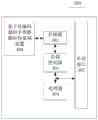
图1为本发明实施例提供的电子设备的结构框图;1 is a structural block diagram of an electronic device provided by an embodiment of the present invention;
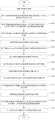
图2为本发明第一实施例提供的基于自编码器的手指静脉防伪鉴别方法的流程图;2 is a flowchart of a method for anti-counterfeiting identification of finger veins based on an autoencoder provided by the first embodiment of the present invention;
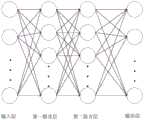
图3为图2所示的基于自编码器的手指静脉防伪鉴别方法中的基于SAE的网络结构示意图;Fig. 3 is the network structure diagram based on SAE in the finger vein anti-counterfeiting identification method based on autoencoder shown in Fig. 2;
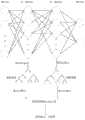
图4为图2所示的基于自编码器的手指静脉防伪鉴别方法中的基于BP神经网络与随机森林的手指静脉图像真伪鉴别模型;Fig. 4 is the finger vein image authenticity discrimination model based on BP neural network and random forest in the finger vein anti-counterfeiting discrimination method based on autoencoder shown in Fig. 2;
图5为本发明第二实施例提供的基于自编码器的手指静脉防伪鉴别装置的功能模块示意图。FIG. 5 is a schematic diagram of functional modules of a finger vein anti-counterfeiting identification device based on an autoencoder according to a second embodiment of the present invention.
具体实施方式Detailed ways
为使本发明实施例的目的、技术方案和优点更加清楚,下面将结合本发明实施例中的附图,对本发明实施例中的技术方案进行清楚、完整地描述,显然,所描述的实施例是本发明一部分实施例,而不是全部的实施例。基于本发明中的实施例,本领域普通技术人员在没有作出创造性劳动前提下所获得的所有其他实施例,都属于本发明保护的范围。因此,以下对在附图中提供的本发明的实施例的详细描述并非旨在限制要求保护的本发明的范围,而是仅仅表示本发明的选定实施例。基于本发明中的实施例,本领域普通技术人员在没有作出创造性劳动前提下所获得的所有其他实施例,都属于本发明保护的范围。In order to make the purposes, technical solutions and advantages of the embodiments of the present invention clearer, the technical solutions in the embodiments of the present invention will be clearly and completely described below with reference to the accompanying drawings in the embodiments of the present invention. Obviously, the described embodiments These are some embodiments of the present invention, but not all embodiments. Based on the embodiments of the present invention, all other embodiments obtained by those of ordinary skill in the art without creative efforts shall fall within the protection scope of the present invention. Thus, the following detailed description of the embodiments of the invention provided in the accompanying drawings is not intended to limit the scope of the invention as claimed, but is merely representative of selected embodiments of the invention. Based on the embodiments of the present invention, all other embodiments obtained by those of ordinary skill in the art without creative efforts shall fall within the protection scope of the present invention.
如图1所示,为本发明实施例提供的一种电子设备的结构框图。所述电子设备300包括基于自编码器的手指静脉防伪鉴别装置400、存储器302、存储控制器303、处理器304及外设接口305。As shown in FIG. 1 , it is a structural block diagram of an electronic device provided by an embodiment of the present invention. The
所述存储器302、存储控制器303、处理器304及外设接口305各元件相互之间直接或间接地电性连接,以实现数据的传输或交互。例如,这些元件相互之间可通过一条或多条通讯总线或信号线实现电性连接。所述基于自编码器的手指静脉防伪鉴别装置400包括至少一个可以软件或固件(firmware)的形式存储于所述存储器302中或固化在所述电子设备300的操作系统(operating system,OS)中的软件功能模块。所述处理器304用于执行存储器302中存储的可执行模块,例如所述基于自编码器的手指静脉防伪鉴别装置400包括的软件功能模块或计算机程序。The elements of the
其中,存储器302可以是,但不限于,随机存取存储器(Random Access Memory,RAM),只读存储器(Read Only Memory,ROM),可编程只读存储器(Programmable Read-Only Memory,PROM),可擦除只读存储器(Erasable Programmable Read-Only Memory,EPROM),电可擦除只读存储器(Electric Erasable Programmable Read-Only Memory,EEPROM)等。其中,存储器302用于存储程序,所述处理器304在接收到执行指令后,执行所述程序,前述本发明实施例任一实施例揭示的流过程定义的服务器100所执行的方法可以应用于处理器304中,或者由处理器304实现。Wherein, the
处理器304可能是一种集成电路芯片,具有信号的处理能力。上述的处理器304可以是通用处理器,包括中央处理器(Central Processing Unit,简称CPU)、网络处理器(Network Processor,简称NP)等;还可以是数字信号处理器(DSP)、专用集成电路(ASIC)、现成可编程门阵列(FPGA)或者其他可编程逻辑器件、分立门或者晶体管逻辑器件、分立硬件组件。可以实现或者执行本发明实施例中的公开的各方法、步骤及逻辑框图。通用处理器可以是微处理器或者该处理器也可以是任何常规的处理器等。The
所述外设接口305将各种输入/输出装置耦合至处理器304以及存储器302。在一些实施例中,外设接口305、处理器304以及存储控制器303可以在单个芯片中实现。在其他一些实例中,他们可以分别由独立的芯片实现。The
请参阅图2,为本发明第一实施例提供的基于自编码器的手指静脉防伪鉴别方法的流程图。下面将对图2所示的具体流程进行详细阐述。Please refer to FIG. 2 , which is a flowchart of a method for anti-counterfeiting identification of finger veins based on an autoencoder provided by the first embodiment of the present invention. The specific flow shown in FIG. 2 will be described in detail below.
步骤S101,采集手指静脉图像。In step S101, a finger vein image is collected.
在本实施例中,所述样本集中的图像来源于瑞士Idiap研究所的“Spoofing-Attack Finger Vein Database”(https://www.idiap.ch/dataset/fvspoofingattack)。该数据库中真假手指静脉图像来自110个人体产生的440幅图像,每人左右食指各采集两次,共产生880幅静脉图像。这又分为3个部分,即训练集、验证集、测试集,其中训练集中有真假手指静脉图像各120幅共240幅,验证集中有真假手指静脉图像各120幅共240幅,测试集中包含共400幅真假手指静脉图像,每幅图像大小为150×565像素。训练集用来训练DBN模型与BP神经网络模型,验证集用于阈值估算,测试集用于检验模型的好坏。In this embodiment, the images in the sample set come from the "Spoofing-Attack Finger Vein Database" (https://www.idiap.ch/dataset/fvspoofingattack) of the Idiap Institute in Switzerland. The real and fake finger vein images in this database come from 440 images generated by 110 human bodies, and each person's left and right index fingers are collected twice, resulting in a total of 880 vein images. This is divided into 3 parts, namely training set, validation set, and test set. There are 120 real and fake finger vein images in the training set, a total of 240 images, and 120 real and fake finger vein images in the validation set, a total of 240 images. The collection contains a total of 400 real and fake finger vein images, each with a size of 150 × 565 pixels. The training set is used to train the DBN model and the BP neural network model, the validation set is used for threshold estimation, and the test set is used to test the quality of the model.
作为一种实施方式,在手指静脉图像的采集中,首先,利用红外光采集照射人体手指,位于手指下方的红外相机可以获取到相应的手指静脉图像。As an implementation manner, in the collection of finger vein images, first, the human finger is irradiated by infrared light collection, and the corresponding finger vein image can be obtained by an infrared camera located under the finger.
步骤S102,基于预设规则获取所述手指静脉图像的真假图像,并对所述真假图像进行标注。Step S102: Acquire true and false images of the finger vein images based on a preset rule, and mark the true and false images.
作为一种实施方式,将真实的手指静脉图像打印到纸张上,再放入采集装置中获取到该手指对应的假手指静脉图像。在数据库建立过程中,把从人体手指上采集的静脉图像标注为1,从打印纸上采集得到的图像标注为0,从而设置手指静脉图像的真假图像。例如,设为1的为真图像,为0的为假图像,也可以是为0的为真图像,为1的为假图像。在此,不作具体限定。As an implementation manner, a real finger vein image is printed on paper, and then placed in a collection device to obtain a fake finger vein image corresponding to the finger. In the process of database establishment, the vein images collected from human fingers are marked as 1, and the images collected from printing paper are marked as 0, so as to set the true and false images of finger vein images. For example, if it is set to 1, it is a true image, and if it is 0, it is a false image, or it may be a true image if it is 0, and a false image if it is 1. Here, no specific limitation is made.
步骤S103,基于所述静脉图像构建训练集合、验证集合和测试集合,其中各个集合中真静脉图像和假静脉图像数量相同。In step S103, a training set, a verification set and a test set are constructed based on the vein images, wherein the number of real vein images and false vein images in each set is the same.
作为一种实施方式,训练集合中只含有真假静脉图像各120幅共240幅。验证集合中共有240幅图像,其中120幅真,120幅假。测试集合中共有400幅图像,其中200幅真,200幅假。As an implementation manner, the training set only contains 120 true and false vein images each, a total of 240 images. There are a total of 240 images in the validation set, of which 120 are true and 120 are false. There are a total of 400 images in the test set, of which 200 are real and 200 are fake.
在本实施例中,手指静脉图像的深度特征提取方法如下:In this embodiment, the depth feature extraction method of the finger vein image is as follows:
所述的应用于提取手指静脉图像特征的稀疏自编码器模型包括:输入层、第一隐含层、第二隐含层、输出层,如图3所示。所述的应用于提取手指静脉图像特征的神经网络模型包括:输入层、第一隐含层、第二隐含层、输出层,如图4所示。The sparse autoencoder model applied to extract finger vein image features includes: an input layer, a first hidden layer, a second hidden layer, and an output layer, as shown in FIG. 3 . The described neural network model applied to extract finger vein image features includes: an input layer, a first hidden layer, a second hidden layer, and an output layer, as shown in FIG. 4 .
所述的输入层,SAE(稀疏自编码器)模型含有经归一化处理的240幅图像,每幅归一化图像维度为3390(30×113)维,即3390个输入;NN模型含有3390个神经元与对应的真假图像块标签。For the input layer, the SAE (sparse autoencoder) model contains 240 normalized images, and the dimension of each normalized image is 3390 (30×113) dimensions, that is, 3390 inputs; the NN model contains 3390 neurons with corresponding true and false image patch labels.
所述的隐含层,SAE模型与NN模型均采用sigmoid函数作为激活函数。The hidden layer, the SAE model and the NN model all use the sigmoid function as the activation function.
所述的输出层,SAE模型输出神经元个数与其输入神经元个数一致,NN模型输出两个神经元,即真假静脉图像,其值在{0,1}间选择。In the output layer, the number of output neurons of the SAE model is consistent with the number of input neurons, and the NN model outputs two neurons, namely true and false vein images, whose values are selected between {0, 1}.
步骤S104,基于所述标注后的所述真假图像进行构建和训练稀疏自编码器。Step S104, constructing and training a sparse autoencoder based on the labeled true and false images.
在本实施例中,训练稀疏自编码器包括:①构建两个稀疏自编码器,然后初始化SAE中均值为0的权重w,偏置b,以及偏置增量Δb和权重增量Δw均为零,其他参数初始值为任意常数。In this embodiment, training a sparse autoencoder includes: ①Constructing two sparse autoencoders, and then initializing the weight w, the bias b, the bias increment Δb and the weight increment Δw with a mean value of 0 in the SAE Zero, other parameters are initialized to arbitrary constants.
②对于一幅图像F,它的质量标签为q∈{0,1},其中0表示印刷图像,1表示真实获得的静脉图像。训练集合表示为{(F1,q1),(F2,q2),…,(FN,qN)}。把训练数据集分成不同的子集合,分批次输入到如图2所示的自编码器中,通过sigmoid激活函数将原始数据编码以及解码,具体地,将原始数据x={x1,x2,…,xn}通过线性函数和sigmoid激活函数,映射到隐含层得到编码结果y={y1,y2,…,ym},即:② For an image F, its quality label is q∈{0,1}, where 0 represents the printed image and 1 represents the real obtained vein image. The training set is denoted as {(F1, q1), (F2, q2), ..., (FN, qN)}. Divide the training data set into different subsets, input them into the autoencoder in batches as shown in Figure 2, and encode and decode the original data through the sigmoid activation function. Specifically, the original data x={x1 , x2 ,...,xn } is mapped to the hidden layer through the linear function and the sigmoid activation function to obtain the encoding result y={y1 ,y2 ,...,ym }, namely:

其中,f是sigmoid激活函数,然后将编码结果y映射到重构层得到解码结果z={z1,z2,…zn},z的维度与原始数据x的维度一致,即:Among them, f is the sigmoid activation function, and then the encoding result y is mapped to the reconstruction layer to obtain the decoding result z={z1 , z2 ,...zn }, and the dimension of z is consistent with the dimension of the original data x, namely:

其中,y为编码后的数据,即原始数据的特征表达,z为解码后的数据,w1、w2、b1、b2分别为输入层到隐含层、隐含层到重构层的权重及偏置;Among them, y is the encoded data, that is, the feature expression of the original data, z is the decoded data, w1 , w2 , b1 , and b2 are the input layer to the hidden layer, and the hidden layer to the reconstruction layer, respectively weights and biases;
然后加入稀疏项以及正则项构造代价损失函数计算解码后的数据与原始数据的误差,再采用梯度下降算法优化权重和偏置,使得代价损失函数误差较小,即原始特征与重构特征比较相似。当所有批次的图像在网络进行一次前向传播和反向传播后,得到更新的权重和偏置,以此训练SAE。具体为:Then add the sparse term and the regular term to construct the cost loss function to calculate the error between the decoded data and the original data, and then use the gradient descent algorithm to optimize the weights and biases, so that the cost loss function has a small error, that is, the original features are similar to the reconstructed features . When all batches of images are forward-propagated and back-propagated through the network once, the updated weights and biases are obtained to train SAE. Specifically:


其中,J(w,b)为代价损失函数,N为样本个数,


其中,x(k),z(k)为第k个原始数据和重构数据,α表示学习率,wk为第k个数据的权重,bk为第k个数据的偏置。Among them, x(k), z(k) are the k-th original data and reconstructed data, α represents the learning rate, wk is the weight of the k-th data, and bk is the bias of the k-th data.
③通过反复迭代寻找权重和偏置的最优解。当精度满足要求时,停止迭代,从而完成本次深度神经网络模型的训练。③ Find the optimal solution of weights and biases through repeated iterations. When the accuracy meets the requirements, the iteration is stopped to complete the training of the deep neural network model.
④完成训练后,去掉稀疏自编码器的输出层。增加一个softmax分类器作为输出层以构建一个BP神经网络,然后将带标签的训练图像输入到NN中进行训练。④ After training, remove the output layer of the sparse autoencoder. Add a softmax classifier as the output layer to build a BP neural network, and then feed the labeled training images into the NN for training.
步骤S105,获取所述稀疏自编码器的权重和偏置。Step S105: Obtain the weight and bias of the sparse autoencoder.
步骤S106,基于预设softmax分类器和所述稀疏自编码器构建BP神经网络。Step S106, construct a BP neural network based on the preset softmax classifier and the sparse autoencoder.
所述的预设softmax分类器中的预设函数为Softmax函数。所述的Softmax函数满足:σ(z)={σ(z1),…,σ(zm)},The preset function in the preset softmax classifier is a Softmax function. The Softmax function satisfies: σ(z)={σ(z1 ),...,σ(zm )},
其中:in:

zi=wix+bi,zi =wi x+bi ,
其中,所述σ(zi)表示数据x属于类别i的概率,所述zi表示第i个类别的线性预测结果,所述m表示分类个数,所述w和所述b表示所述x的权重和偏置。Wherein, the σ(zi ) represents the probability that the data x belongs to the category i, thezi represents the linear prediction result of the ith category, the m represents the number of categories, the w and the b represent the Weights and biases for x.
步骤S107,基于所述权重初始化所述BP神经网络。Step S107, initialize the BP neural network based on the weight.
步骤S108,基于所述标注后的所述真假图像训练所述BP神经网络。Step S108: Train the BP neural network based on the labeled true and false images.
在本实施例中,所述BP神经网络的训练如下:In this embodiment, the training of the BP neural network is as follows:
在SAE(Sparse Autoencoder,稀疏自编码器)网络结构中增加一个softmax分类器构建一个神经网络NN,然后利用SAE训练的权值初始化BP神经网络,把带标签的训练图像输入到NN中进行训练,以提取真假静脉图像的特征。其中,BP神经网络中输入层、第一隐含层、第二隐含层神经元个数与SAE网络中对应的输入层、第一隐含层、第二隐含层神经元个数相同。Add a softmax classifier to the SAE (Sparse Autoencoder, sparse autoencoder) network structure to build a neural network NN, then use the weights trained by SAE to initialize the BP neural network, and input the labeled training images into the NN for training, to extract the features of real and fake vein images. Among them, the number of neurons in the input layer, the first hidden layer, and the second hidden layer in the BP neural network is the same as the number of neurons in the corresponding input layer, the first hidden layer, and the second hidden layer in the SAE network.
BP神经网络模型的隐含层中,使用sigmoid激活函数的表达式作为激励函数。其定义如下:In the hidden layer of the BP neural network model, the expression of the sigmoid activation function is used as the activation function. It is defined as follows:

其中σ(x)为激活函数的输出。where σ(x) is the output of the activation function.
BP神经网络模型的输出层中,采用softmax分类器。Softmax函数σ(z)={σ(z1),…,σ(zm)}定义如下:In the output layer of the BP neural network model, a softmax classifier is used. The Softmax function σ(z)={σ(z1 ),...,σ(zm )} is defined as follows:

zi=wix+bizi =wi x+bi
其中,σ(zi)表示数据x属于类别i的概率,zi表示第i个类别的线性预测结果,m表示分类个数,w和b表示x的权重和偏置。Among them, σ(zi ) represents the probability that the data x belongs to category i, zi represents the linear prediction result of the ith category, m represents the number of classifications, and w and b represent the weight and bias of x.
步骤S109,获取所述BP神经网络所输出的输出结果。Step S109, obtaining the output result output by the BP neural network.
步骤S110,将所述输出结果作为输入的所述真假图像的深度特征。Step S110, taking the output result as the depth feature of the input true and false images.
步骤S111,将所述深度特征分别输入到对应的预设随机森林分类器中进行训练。Step S111, the depth features are respectively input into corresponding preset random forest classifiers for training.
其中,所述的预设随机森林分类器满足:首先,利用bootstrap抽样从训练集抽取与训练集容量大小相同的样本作为一棵决策树的根节点;其次,从所有特征中随机无放回地按照一定规则抽取部分特征作为节点的分裂属性,以此建立一个CART决策树模型;再次,重复前面两个步骤k次,建立k颗决策树,产生k种分类结果,即建立随机森林;最后,根据k种分类结果对训练样本进行投票表决决定其最终分类。通过k轮训练,得到的分类模型序列{h1(x),h2(x),…,hk(x)}最终的分类决策如下:Among them, the preset random forest classifier satisfies: first, use bootstrap sampling to extract samples with the same size as the training set from the training set as the root node of a decision tree; secondly, randomly without replacement from all features According to certain rules, some features are extracted as the splitting attributes of nodes, so as to establish a CART decision tree model; again, repeat the previous two steps k times to establish k decision trees, and generate k classification results, that is, establish a random forest; finally, According to the k classification results, the training samples are voted to determine their final classification. Through k rounds of training, the obtained classification model sequence {h1 (x), h2 (x),...,hk (x)} The final classification decision is as follows:

其中,H(x)表示组合分类模型,hi表示单个决策树分类模型,y为输出变量,I(hi(x)=y)为示性函数。经过训练后,随机森林可以计算任意输入特征向量所对应输出图像的真假类别。Among them, H(x) represents a combined classification model,hi represents a single decision tree classification model, y is an output variable, and I(hi (x)=y) is an indicative function. After training, random forest can calculate the true and false category of the output image corresponding to any input feature vector.
步骤S112,获取所述随机森林分类器的输出结果。Step S112, obtaining the output result of the random forest classifier.
步骤S113,将所述随机森林分类器的输出结果进行最小错误率贝叶斯决策融合,获取每幅所述真假图像的概率。In step S113, the output result of the random forest classifier is subjected to Bayesian decision fusion with minimum error rate to obtain the probability of each true and false image.
在本实施例中,将各随机森林分类器得到的输出结果,进行最小错误率贝叶斯决策融合,得到最终分类结果,从而判断出手指静脉图像的真假。基于最小错误率的贝叶斯决策过程是首先计算出样本x属于各个不同类别的可能性,然后根据判决规则,选择可能性最大的一个作为决策的结果。具体计算如下:In this embodiment, the output results obtained by each random forest classifier are subjected to Bayesian decision fusion with a minimum error rate to obtain a final classification result, thereby judging the authenticity of the finger vein image. The Bayesian decision process based on the minimum error rate is to first calculate the possibility that the sample x belongs to each different category, and then select the one with the highest probability as the decision result according to the decision rule. The specific calculation is as follows:
首先通过贝叶斯公式计算后验概率p(wi|x):First, the posterior probability p(wi |x) is calculated by Bayesian formula:

其中,p(wi|x)表示在x出现的条件下,样本为wi类的概率,p(wi)是先验概率,p(x|wi)是条件概率密度函数,c为类别总数。Among them, p(wi |x) represents the probability that the sample is classwi under the condition that x appears, p(wi ) is the prior probability, p(x|wi ) is the conditional probability density function, and c is Total number of categories.
然后通过决策规则判断样本x的最终类别:Then judge the final category of the sample x by the decision rule:
如果p(wi|x)=maxj=1,2…cp(wj|x),则x∈wi。If p(wi |x)=maxj=1,2...c p(wj |x), thenx∈wi .
步骤S114,基于所述概率判断所述手指静脉图像的真假。Step S114, based on the probability, determine whether the finger vein image is true or false.
在本实施例中,本申请所提出的基于自编码器的手指静脉防伪鉴别方法不仅适用于手指静脉图像的防伪鉴别,而且可以应用到其他生物特征图像防伪鉴别中。在此,不作具体限定。In this embodiment, the finger vein anti-counterfeiting identification method based on the autoencoder proposed in this application is not only applicable to the anti-counterfeiting identification of finger vein images, but also can be applied to the anti-counterfeiting identification of other biometric images. Here, no specific limitation is made.
请参阅图5,为本发明第二实施例提供的基于自编码器的手指静脉防伪鉴别装置的功能模块示意图。所述基于自编码器的手指静脉防伪鉴别装置400包括:图像采集单元410、图像处理单元420、第一训练单元430、第一构建单元440、第一数据获取单元450、第二构建单元460、初始化单元470、第二训练单元480、第二数据获取单元490、数据标记单元491、第三训练单元492、第三数据获取单元493、概率获取单元494和真假识别单元495。Please refer to FIG. 5 , which is a schematic diagram of functional modules of a finger vein anti-counterfeiting identification device based on an autoencoder according to a second embodiment of the present invention. The finger vein
图像采集单元410,用于采集手指静脉图像。The
图像处理单元420,用于基于预设规则获取所述手指静脉图像的真假图像,并对所述真假图像进行标注。The
第一训练单元430,用于基于所述静脉图像构建训练集合、验证集合和测试集合,其中各个集合中真静脉图像和假静脉图像数量相同。The
第一构建单元440,用于基于所述标注后的所述真假图像进行构建和训练稀疏自编码器。The
其中,所述的稀疏自编码器满足:将原始数据x={x1,x2,…,xn}通过线性函数和sigmoid激活函数,映射到隐含层得到编码结果y={y1,y2,…,ym},即:


第一数据获取单元450,用于获取所述稀疏自编码器的权重和偏置。The first
第二构建单元460,用于基于预设softmax分类器和所述稀疏自编码器构建BP神经网络。The
其中,所述的预设softmax分类器中的预设函数为Softmax函数,所述的Softmax函数满足:σ(z)={σ(z1),…,σ(zm)},其中:
初始化单元470,用于基于所述权重初始化所述BP神经网络。An
第二训练单元480,用于基于所述标注后的所述真假图像训练所述BP神经网络。The
第二数据获取单元490,用于获取所述BP神经网络所输出的输出结果。The second
数据标记单元491,用于将所述输出结果作为输入的所述真假图像的深度特征。The
第三训练单元492,用于将所述深度特征分别输入到对应的预设随机森林分类器中进行训练。The
其中,所述预设随机森林分类器满足:利用bootstrap抽样从训练集抽取与训练集容量大小相同的样本作为一棵决策树的根节点;从所有特征中随机无放回地按照一定规则抽取部分特征作为节点的分裂属性,以此建立一个CART决策树模型;重复上述两个步骤k次,建立k颗决策树,产生k种分类结果,即建立随机森林;根据k种分类结果对训练样本进行投票表决决定其最终分类,其中,通过k轮训练,得到的分类模型序列{h1(x),h2(x),…,hk(x)},最终的分类决策如下:
第三数据获取单元493,用于获取所述随机森林分类器的输出结果。The third
概率获取单元494,用于将所述随机森林分类器的输出结果进行最小错误率贝叶斯决策融合,获取每幅所述真假图像的概率。The
真假识别单元495,用于基于所述概率判断所述手指静脉图像的真假。The
综上所述,本发明提供的基于自编码器的手指静脉防伪鉴别方法及系统,通过采集手指静脉图像,再基于预设规则获取所述手指静脉图像的真假图像,并对所述真假图像进行标注;从而基于所述静脉图像构建训练集合、验证集合和测试集合,其中各个集合中真静脉图像和假静脉图像数量相同;接着再基于所述标注后的所述真假图像进行构建和训练稀疏自编码器;通过获取所述稀疏自编码器的权重和偏置;再基于预设softmax分类器和所述稀疏自编码器构建BP神经网络;再基于所述权重初始化所述BP神经网络;再基于所述标注后的所述真假图像训练所述BP神经网络;再获取所述BP神经网络所输出的输出结果;通过将所述输出结果作为输入的所述真假图像的深度特征;从而将所述深度特征分别输入到对应的预设随机森林分类器中进行训练;获取所述随机森林分类器的输出结果;将所述随机森林分类器的输出结果进行最小错误率贝叶斯决策融合,获取每幅所述真假图像的概率;最后基于所述概率判断所述手指静脉图像的真假。本申请首次将稀疏自编码器用于手指静脉图像的防伪鉴别;并且首次结合稀疏自编码器、BP神经网络和随机森林实现对手指静脉真假图像的鉴别。为了得到较好的分类结果,本申请对决策层进行最小错误率贝叶斯决策融合。To sum up, the finger vein anti-counterfeiting identification method and system based on the autoencoder provided by the present invention collects finger vein images, and then obtains the true and false images of the finger vein images based on preset rules, and determines the true and false images of the finger vein images. The images are labeled; thus, a training set, a verification set and a test set are constructed based on the vein images, wherein the number of true vein images and false vein images in each set is the same; training a sparse autoencoder; obtaining the weights and biases of the sparse autoencoder; then constructing a BP neural network based on the preset softmax classifier and the sparse autoencoder; and then initializing the BP neural network based on the weights ; Train the BP neural network based on the true and false images after the labeling; Obtain the output result output by the BP neural network again; By taking the output result as the depth feature of the true and false images of the input ; thereby inputting the depth features into corresponding preset random forest classifiers for training; obtaining the output results of the random forest classifiers; performing the minimum error rate Bayesian analysis on the output results of the random forest classifiers Decision fusion is performed to obtain the probability of each true and false image; finally, the true or false of the finger vein image is judged based on the probability. In this application, the sparse autoencoder is used for the anti-counterfeiting identification of finger vein images for the first time; and the identification of true and false images of finger veins is realized for the first time by combining the sparse autoencoder, BP neural network and random forest. In order to obtain better classification results, this application performs Bayesian decision fusion with minimum error rate on the decision layer.
在本申请所提供的几个实施例中,应该理解到,所揭露的装置和方法,也可以通过其它的方式实现。以上所描述的装置实施例仅仅是示意性的,例如,附图中的流程图和框图显示了根据本发明的多个实施例的装置、方法和计算机程序产品的可能实现的体系架构、功能和操作。在这点上,流程图或框图中的每个方框可以代表一个模块、程序段或代码的一部分,所述模块、程序段或代码的一部分包含一个或多个用于实现规定的逻辑功能的可执行指令。也应当注意,在有些作为替换的实现方式中,方框中所标注的功能也可以以不同于附图中所标注的顺序发生。例如,两个连续的方框实际上可以基本并行地执行,它们有时也可以按相反的顺序执行,这依所涉及的功能而定。也要注意的是,框图和/或流程图中的每个方框、以及框图和/或流程图中的方框的组合,可以用执行规定的功能或动作的专用的基于硬件的系统来实现,或者可以用专用硬件与计算机指令的组合来实现。In the several embodiments provided in this application, it should be understood that the disclosed apparatus and method may also be implemented in other manners. The apparatus embodiments described above are merely illustrative, for example, the flowcharts and block diagrams in the accompanying drawings illustrate the architecture, functionality and possible implementations of apparatuses, methods and computer program products according to various embodiments of the present invention. operate. In this regard, each block in the flowchart or block diagrams may represent a module, segment, or portion of code that contains one or more functions for implementing the specified logical function(s) executable instructions. It should also be noted that, in some alternative implementations, the functions noted in the block may occur out of the order noted in the figures. For example, two blocks in succession may, in fact, be executed substantially concurrently, or the blocks may sometimes be executed in the reverse order, depending upon the functionality involved. It is also noted that each block of the block diagrams and/or flowchart illustrations, and combinations of blocks in the block diagrams and/or flowchart illustrations, can be implemented in dedicated hardware-based systems that perform the specified functions or actions , or can be implemented in a combination of dedicated hardware and computer instructions.
另外,在本发明各个实施例中的各功能模块可以集成在一起形成一个独立的部分,也可以是各个模块单独存在,也可以两个或两个以上模块集成形成一个独立的部分。In addition, each functional module in each embodiment of the present invention may be integrated to form an independent part, or each module may exist independently, or two or more modules may be integrated to form an independent part.
所述功能如果以软件功能模块的形式实现并作为独立的产品销售或使用时,可以存储在一个计算机可读取存储介质中。基于这样的理解,本发明的技术方案本质上或者说对现有技术做出贡献的部分或者该技术方案的部分可以以软件产品的形式体现出来,该计算机软件产品存储在一个存储介质中,包括若干指令用以使得一台计算机设备(可以是个人计算机,服务器,或者网络设备等)执行本发明各个实施例所述方法的全部或部分步骤。而前述的存储介质包括:U盘、移动硬盘、只读存储器(ROM,Read-Only Memory)、随机存取存储器(RAM,Random Access Memory)、磁碟或者光盘等各种可以存储程序代码的介质。需要说明的是,在本文中,诸如第一和第二等之类的关系术语仅仅用来将一个实体或者操作与另一个实体或操作区分开来,而不一定要求或者暗示这些实体或操作之间存在任何这种实际的关系或者顺序。而且,术语“包括”、“包含”或者其任何其他变体意在涵盖非排他性的包含,从而使得包括一系列要素的过程、方法、物品或者设备不仅包括那些要素,而且还包括没有明确列出的其他要素,或者是还包括为这种过程、方法、物品或者设备所固有的要素。在没有更多限制的情况下,由语句“包括一个……”限定的要素,并不排除在包括所述要素的过程、方法、物品或者设备中还存在另外的相同要素。If the functions are implemented in the form of software function modules and sold or used as independent products, they can be stored in a computer-readable storage medium. Based on this understanding, the technical solution of the present invention can be embodied in the form of a software product in essence, or the part that contributes to the prior art or the part of the technical solution. The computer software product is stored in a storage medium, including Several instructions are used to cause a computer device (which may be a personal computer, a server, or a network device, etc.) to execute all or part of the steps of the methods described in the various embodiments of the present invention. The aforementioned storage medium includes: U disk, mobile hard disk, Read-Only Memory (ROM, Read-Only Memory), Random Access Memory (RAM, Random Access Memory), magnetic disk or optical disk and other media that can store program codes . It should be noted that, in this document, relational terms such as first and second are only used to distinguish one entity or operation from another entity or operation, and do not necessarily require or imply any relationship between these entities or operations. any such actual relationship or sequence exists. Moreover, the terms "comprising", "comprising" or any other variation thereof are intended to encompass a non-exclusive inclusion such that a process, method, article or device that includes a list of elements includes not only those elements, but also includes not explicitly listed or other elements inherent to such a process, method, article or apparatus. Without further limitation, an element qualified by the phrase "comprising a..." does not preclude the presence of additional identical elements in a process, method, article or apparatus that includes the element.
以上所述仅为本发明的优选实施例而已,并不用于限制本发明,对于本领域的技术人员来说,本发明可以有各种更改和变化。凡在本发明的精神和原则之内,所作的任何修改、等同替换、改进等,均应包含在本发明的保护范围之内。应注意到:相似的标号和字母在下面的附图中表示类似项,因此,一旦某一项在一个附图中被定义,则在随后的附图中不需要对其进行进一步定义和解释。The above descriptions are only preferred embodiments of the present invention, and are not intended to limit the present invention. For those skilled in the art, the present invention may have various modifications and changes. Any modification, equivalent replacement, improvement, etc. made within the spirit and principle of the present invention shall be included within the protection scope of the present invention. It should be noted that like numerals and letters refer to like items in the following figures, so once an item is defined in one figure, it does not require further definition and explanation in subsequent figures.
Claims (8)


Priority Applications (1)
| Application Number | Priority Date | Filing Date | Title |
|---|---|---|---|
| CN201711135122.1ACN107832718B (en) | 2017-11-13 | 2017-11-13 | Finger vein anti-counterfeiting identification method and system based on self-encoder |
Applications Claiming Priority (1)
| Application Number | Priority Date | Filing Date | Title |
|---|---|---|---|
| CN201711135122.1ACN107832718B (en) | 2017-11-13 | 2017-11-13 | Finger vein anti-counterfeiting identification method and system based on self-encoder |
Publications (2)
| Publication Number | Publication Date |
|---|---|
| CN107832718A CN107832718A (en) | 2018-03-23 |
| CN107832718Btrue CN107832718B (en) | 2020-06-05 |
Family
ID=61651825
Family Applications (1)
| Application Number | Title | Priority Date | Filing Date |
|---|---|---|---|
| CN201711135122.1AActiveCN107832718B (en) | 2017-11-13 | 2017-11-13 | Finger vein anti-counterfeiting identification method and system based on self-encoder |
Country Status (1)
| Country | Link |
|---|---|
| CN (1) | CN107832718B (en) |
Families Citing this family (16)
| Publication number | Priority date | Publication date | Assignee | Title |
|---|---|---|---|---|
| CN108776805A (en)* | 2018-05-03 | 2018-11-09 | 北斗导航位置服务(北京)有限公司 | It is a kind of establish image classification model, characteristics of image classification method and device |
| WO2020087732A1 (en)* | 2018-11-02 | 2020-05-07 | 无锡祥生医疗科技股份有限公司 | Neural network-based method and system for vein and artery identification |
| CN109635756B (en)* | 2018-12-17 | 2022-07-05 | 黑龙江大学 | Two-dimensional code authentication method integrating fingerprint and finger vein |
| BR112021014660A2 (en)* | 2019-02-28 | 2021-09-21 | Mitsubishi Electric Corporation | DEVICE, SYSTEM AND DATA PROCESSING METHOD |
| CN111860552B (en)* | 2019-04-28 | 2024-10-15 | 中国科学院计算机网络信息中心 | Model training method and device based on nuclear self-encoder and storage medium |
| CN110390309B (en)* | 2019-05-22 | 2021-06-29 | 西南科技大学 | A method for identifying illegal users of finger veins based on residual distribution |
| CN110443217B (en)* | 2019-08-13 | 2022-09-02 | 深圳大学 | Multispectral-based fingerprint anti-counterfeiting method and system |
| KR20220122741A (en)* | 2020-02-03 | 2022-09-02 | 구글 엘엘씨 | Verification of authenticity of images |
| CN111339974B (en)* | 2020-03-03 | 2023-04-07 | 景德镇陶瓷大学 | Method for identifying modern ceramics and ancient ceramics |
| CN111767958A (en)* | 2020-07-01 | 2020-10-13 | 武汉楚精灵医疗科技有限公司 | Real-time enteroscopy withdrawal time monitoring method based on random forest algorithm |
| CN113487762B (en)* | 2021-07-22 | 2023-07-04 | 东软睿驰汽车技术(沈阳)有限公司 | Coding model generation method, charging data acquisition method and device |
| CN114943290B (en)* | 2022-05-25 | 2023-08-08 | 盐城师范学院 | A biological invasion identification method based on multi-source data fusion analysis |
| CN114863191B (en)* | 2022-07-06 | 2023-10-24 | 南通大学 | Block chain-based anti-fake information identification and transmission method |
| CN116246102B (en)* | 2023-02-07 | 2025-08-01 | 华东交通大学 | Image classification method and system based on self-encoder and decision tree |
| CN116258579B (en)* | 2023-04-28 | 2023-08-04 | 成都新希望金融信息有限公司 | Training method of user credit scoring model and user credit scoring method |
| CN118116036B (en)* | 2024-01-25 | 2024-10-29 | 重庆工商大学 | Finger vein image feature extraction and coding method based on deep reinforcement learning |
Citations (5)
| Publication number | Priority date | Publication date | Assignee | Title |
|---|---|---|---|---|
| CN104463120A (en)* | 2014-12-08 | 2015-03-25 | 中国人民解放军国防科学技术大学 | Finger vein recognition method based on binary tree |
| CN105069400A (en)* | 2015-07-16 | 2015-11-18 | 北京工业大学 | Face image gender recognition system based on stack type sparse self-coding |
| CN105550712A (en)* | 2015-12-23 | 2016-05-04 | 西安电子科技大学 | Optimized convolution automatic encoding network-based auroral image sorting method |
| CN106096623A (en)* | 2016-05-25 | 2016-11-09 | 中山大学 | A kind of crime identifies and Forecasting Methodology |
| CN106503654A (en)* | 2016-10-24 | 2017-03-15 | 中国地质大学(武汉) | A kind of face emotion identification method based on the sparse autoencoder network of depth |
Family Cites Families (1)
| Publication number | Priority date | Publication date | Assignee | Title |
|---|---|---|---|---|
| US10552730B2 (en)* | 2015-06-30 | 2020-02-04 | Adobe Inc. | Procedural modeling using autoencoder neural networks |
- 2017
- 2017-11-13CNCN201711135122.1Apatent/CN107832718B/enactiveActive
Patent Citations (5)
| Publication number | Priority date | Publication date | Assignee | Title |
|---|---|---|---|---|
| CN104463120A (en)* | 2014-12-08 | 2015-03-25 | 中国人民解放军国防科学技术大学 | Finger vein recognition method based on binary tree |
| CN105069400A (en)* | 2015-07-16 | 2015-11-18 | 北京工业大学 | Face image gender recognition system based on stack type sparse self-coding |
| CN105550712A (en)* | 2015-12-23 | 2016-05-04 | 西安电子科技大学 | Optimized convolution automatic encoding network-based auroral image sorting method |
| CN106096623A (en)* | 2016-05-25 | 2016-11-09 | 中山大学 | A kind of crime identifies and Forecasting Methodology |
| CN106503654A (en)* | 2016-10-24 | 2017-03-15 | 中国地质大学(武汉) | A kind of face emotion identification method based on the sparse autoencoder network of depth |
Also Published As
| Publication number | Publication date |
|---|---|
| CN107832718A (en) | 2018-03-23 |
Similar Documents
| Publication | Publication Date | Title |
|---|---|---|
| CN107832718B (en) | Finger vein anti-counterfeiting identification method and system based on self-encoder | |
| Sundararajan et al. | Deep learning for biometrics: A survey | |
| Taheri et al. | Animal classification using facial images with score‐level fusion | |
| Ahsan et al. | An intelligent system for automatic fingerprint identification using feature fusion by Gabor filter and deep learning | |
| Nie et al. | Periocular recognition using unsupervised convolutional RBM feature learning | |
| Gumaei et al. | An improved multispectral palmprint recognition system using autoencoder with regularized extreme learning machine | |
| Zambrano et al. | Iris recognition using low-level CNN layers without training and single matching | |
| Kumar et al. | Dorsal hand vein recognition using very deep learning | |
| Impedovo et al. | A comparative study of shallow learning and deep transfer learning techniques for accurate fingerprints vitality detection | |
| Shawkat et al. | The new hand geometry system and automatic identification | |
| Ata et al. | Toward palmprint recognition methodology based machine learning techniques | |
| Alsharman et al. | Pattern mathematical model for fingerprint security using bifurcation minutiae extraction and neural network feature selection | |
| Diarra et al. | Study of deep learning methods for fingerprint recognition | |
| Kumar et al. | Ann trained and WOA optimized feature-level fusion of iris and fingerprint | |
| Qin et al. | Adversarial learning-based data augmentation for palm-vein identification | |
| Khan et al. | A common convolutional neural network model to classify plain, rolled and latent fingerprints | |
| Wong et al. | On robust face recognition via sparse coding: the good, the bad and the ugly | |
| Ramirez-Cortes et al. | A biometric system based on neural networks and SVM using morphological feature extraction from hand-shape images | |
| Kulagin et al. | Multidimensional mutual ordering of patterns using a set of pre-trained artificial neural networks | |
| Adjimi et al. | Extraction and selection of binarised statistical image features for fingerprint recognition | |
| Shilpa et al. | Hybrid deep learning approach for face spoofing detection | |
| Paul et al. | Writer verification using feature selection based on genetic algorithm: A case study on handwritten Bangla dataset | |
| Xu et al. | Fast near-infrared palmprint recognition using nonnegative matrix factorization extreme learning machine | |
| Lam et al. | Application of convolutional neural networks for fingerprint recognition | |
| Oyeniyi et al. | An enhanced iris feature extraction technique using continuous wavelet transform |
Legal Events
| Date | Code | Title | Description |
|---|---|---|---|
| PB01 | Publication | ||
| PB01 | Publication | ||
| SE01 | Entry into force of request for substantive examination | ||
| SE01 | Entry into force of request for substantive examination | ||
| GR01 | Patent grant | ||
| GR01 | Patent grant | ||
| TR01 | Transfer of patent right | ||
| TR01 | Transfer of patent right | Effective date of registration:20230329 Address after:401329 2nd Floor, Building 18, Section 1, Science Valley Phase 1, Hangu Town, Nan'an District, Chongqing Patentee after:Chongqing Financial Technology Research Institute Patentee after:Qin Huafeng Address before:No.19, Xuefu Avenue, Nan'an District, Chongqing, 400000 Patentee before:CHONGQING TECHNOLOGY AND BUSINESS University | |
| TR01 | Transfer of patent right | ||
| TR01 | Transfer of patent right | Effective date of registration:20240606 Address after:Building 18, 2nd Floor, Section 1, Science Valley Phase 1, Hangu Town, Jiulongpo District, Chongqing, 400000 Patentee after:Chongqing Weimai Zhilian Technology Co.,Ltd. Country or region after:China Address before:401329 2nd Floor, Building 18, Section 1, Science Valley Phase 1, Hangu Town, Nan'an District, Chongqing Patentee before:Chongqing Financial Technology Research Institute Country or region before:China Patentee before:Qin Huafeng |