CN107409220B - Intra-block copy search - Google Patents
Intra-block copy searchDownload PDFInfo
- Publication number
- CN107409220B CN107409220BCN201680007929.4ACN201680007929ACN107409220BCN 107409220 BCN107409220 BCN 107409220BCN 201680007929 ACN201680007929 ACN 201680007929ACN 107409220 BCN107409220 BCN 107409220B
- Authority
- CN
- China
- Prior art keywords
- mode
- coding unit
- best mode
- intrabc
- quantized residual
- Prior art date
- Legal status (The legal status is an assumption and is not a legal conclusion. Google has not performed a legal analysis and makes no representation as to the accuracy of the status listed.)
- Active
Links
- 238000000034methodMethods0.000claimsdescription34
- 239000013598vectorSubstances0.000abstractdescription27
- 238000004891communicationMethods0.000description34
- 238000010586diagramMethods0.000description22
- 238000005192partitionMethods0.000description19
- 238000005516engineering processMethods0.000description17
- 238000000638solvent extractionMethods0.000description15
- 230000002123temporal effectEffects0.000description14
- 238000007906compressionMethods0.000description9
- 230000008569processEffects0.000description9
- 230000006835compressionEffects0.000description8
- 238000013139quantizationMethods0.000description8
- 230000003044adaptive effectEffects0.000description7
- 230000000875corresponding effectEffects0.000description7
- 230000006870functionEffects0.000description7
- 238000012545processingMethods0.000description6
- 101150014732asnS geneProteins0.000description4
- 238000009795derivationMethods0.000description4
- 241000023320Luma <angiosperm>Species0.000description3
- 230000001413cellular effectEffects0.000description3
- 238000006243chemical reactionMethods0.000description3
- 239000003086colorantSubstances0.000description3
- 230000002596correlated effectEffects0.000description3
- OSWPMRLSEDHDFF-UHFFFAOYSA-Nmethyl salicylateChemical compoundCOC(=O)C1=CC=CC=C1OOSWPMRLSEDHDFF-UHFFFAOYSA-N0.000description3
- 230000002093peripheral effectEffects0.000description3
- 239000002356single layerSubstances0.000description3
- 230000000007visual effectEffects0.000description3
- 238000013475authorizationMethods0.000description2
- 230000005540biological transmissionEffects0.000description2
- 238000004364calculation methodMethods0.000description2
- 238000001514detection methodMethods0.000description2
- 230000005055memory storageEffects0.000description2
- QELJHCBNGDEXLD-UHFFFAOYSA-Nnickel zincChemical compound[Ni].[Zn]QELJHCBNGDEXLD-UHFFFAOYSA-N0.000description2
- 230000003287optical effectEffects0.000description2
- 238000012546transferMethods0.000description2
- 238000012935AveragingMethods0.000description1
- 101150114515CTBS geneProteins0.000description1
- 241000760358EnodesSpecies0.000description1
- HBBGRARXTFLTSG-UHFFFAOYSA-NLithium ionChemical compound[Li+]HBBGRARXTFLTSG-UHFFFAOYSA-N0.000description1
- 241000700159RattusSpecies0.000description1
- 230000003213activating effectEffects0.000description1
- 230000002776aggregationEffects0.000description1
- 238000004220aggregationMethods0.000description1
- 238000004873anchoringMethods0.000description1
- 238000003491arrayMethods0.000description1
- 230000001174ascending effectEffects0.000description1
- 230000008901benefitEffects0.000description1
- 230000015572biosynthetic processEffects0.000description1
- OJIJEKBXJYRIBZ-UHFFFAOYSA-Ncadmium nickelChemical compound[Ni].[Cd]OJIJEKBXJYRIBZ-UHFFFAOYSA-N0.000description1
- 239000003795chemical substances by applicationSubstances0.000description1
- 238000004590computer programMethods0.000description1
- 238000006073displacement reactionMethods0.000description1
- 230000009977dual effectEffects0.000description1
- 238000001914filtrationMethods0.000description1
- 239000000446fuelSubstances0.000description1
- 238000007429general methodMethods0.000description1
- 239000004973liquid crystal related substanceSubstances0.000description1
- 229910001416lithium ionInorganic materials0.000description1
- 230000007774longtermEffects0.000description1
- 239000000463materialSubstances0.000description1
- 229910052987metal hydrideInorganic materials0.000description1
- 238000010295mobile communicationMethods0.000description1
- 230000002028prematureEffects0.000description1
- 230000009467reductionEffects0.000description1
- 238000009877renderingMethods0.000description1
- 230000011218segmentationEffects0.000description1
- 239000004065semiconductorSubstances0.000description1
- 238000003786synthesis reactionMethods0.000description1
Images







Classifications
- H—ELECTRICITY
- H04—ELECTRIC COMMUNICATION TECHNIQUE
- H04N—PICTORIAL COMMUNICATION, e.g. TELEVISION
- H04N19/00—Methods or arrangements for coding, decoding, compressing or decompressing digital video signals
- H04N19/10—Methods or arrangements for coding, decoding, compressing or decompressing digital video signals using adaptive coding
- H04N19/102—Methods or arrangements for coding, decoding, compressing or decompressing digital video signals using adaptive coding characterised by the element, parameter or selection affected or controlled by the adaptive coding
- H04N19/103—Selection of coding mode or of prediction mode
- H04N19/105—Selection of the reference unit for prediction within a chosen coding or prediction mode, e.g. adaptive choice of position and number of pixels used for prediction
- H—ELECTRICITY
- H04—ELECTRIC COMMUNICATION TECHNIQUE
- H04N—PICTORIAL COMMUNICATION, e.g. TELEVISION
- H04N19/00—Methods or arrangements for coding, decoding, compressing or decompressing digital video signals
- H04N19/10—Methods or arrangements for coding, decoding, compressing or decompressing digital video signals using adaptive coding
- H04N19/169—Methods or arrangements for coding, decoding, compressing or decompressing digital video signals using adaptive coding characterised by the coding unit, i.e. the structural portion or semantic portion of the video signal being the object or the subject of the adaptive coding
- H04N19/17—Methods or arrangements for coding, decoding, compressing or decompressing digital video signals using adaptive coding characterised by the coding unit, i.e. the structural portion or semantic portion of the video signal being the object or the subject of the adaptive coding the unit being an image region, e.g. an object
- H04N19/176—Methods or arrangements for coding, decoding, compressing or decompressing digital video signals using adaptive coding characterised by the coding unit, i.e. the structural portion or semantic portion of the video signal being the object or the subject of the adaptive coding the unit being an image region, e.g. an object the region being a block, e.g. a macroblock
- H—ELECTRICITY
- H04—ELECTRIC COMMUNICATION TECHNIQUE
- H04N—PICTORIAL COMMUNICATION, e.g. TELEVISION
- H04N19/00—Methods or arrangements for coding, decoding, compressing or decompressing digital video signals
- H04N19/10—Methods or arrangements for coding, decoding, compressing or decompressing digital video signals using adaptive coding
- H04N19/169—Methods or arrangements for coding, decoding, compressing or decompressing digital video signals using adaptive coding characterised by the coding unit, i.e. the structural portion or semantic portion of the video signal being the object or the subject of the adaptive coding
- H04N19/186—Methods or arrangements for coding, decoding, compressing or decompressing digital video signals using adaptive coding characterised by the coding unit, i.e. the structural portion or semantic portion of the video signal being the object or the subject of the adaptive coding the unit being a colour or a chrominance component
- H—ELECTRICITY
- H04—ELECTRIC COMMUNICATION TECHNIQUE
- H04N—PICTORIAL COMMUNICATION, e.g. TELEVISION
- H04N19/00—Methods or arrangements for coding, decoding, compressing or decompressing digital video signals
- H04N19/10—Methods or arrangements for coding, decoding, compressing or decompressing digital video signals using adaptive coding
- H04N19/189—Methods or arrangements for coding, decoding, compressing or decompressing digital video signals using adaptive coding characterised by the adaptation method, adaptation tool or adaptation type used for the adaptive coding
- H04N19/196—Methods or arrangements for coding, decoding, compressing or decompressing digital video signals using adaptive coding characterised by the adaptation method, adaptation tool or adaptation type used for the adaptive coding being specially adapted for the computation of encoding parameters, e.g. by averaging previously computed encoding parameters
- H04N19/197—Methods or arrangements for coding, decoding, compressing or decompressing digital video signals using adaptive coding characterised by the adaptation method, adaptation tool or adaptation type used for the adaptive coding being specially adapted for the computation of encoding parameters, e.g. by averaging previously computed encoding parameters including determination of the initial value of an encoding parameter
- H—ELECTRICITY
- H04—ELECTRIC COMMUNICATION TECHNIQUE
- H04N—PICTORIAL COMMUNICATION, e.g. TELEVISION
- H04N19/00—Methods or arrangements for coding, decoding, compressing or decompressing digital video signals
- H04N19/50—Methods or arrangements for coding, decoding, compressing or decompressing digital video signals using predictive coding
- H04N19/593—Methods or arrangements for coding, decoding, compressing or decompressing digital video signals using predictive coding involving spatial prediction techniques
Landscapes
- Engineering & Computer Science (AREA)
- Multimedia (AREA)
- Signal Processing (AREA)
- Computing Systems (AREA)
- Theoretical Computer Science (AREA)
- Compression Or Coding Systems Of Tv Signals (AREA)
Abstract
Description
Cross-referencing
This application claims the benefit of U.S. provisional patent application No.62/109548 filed on 29/1/2015, which is incorporated herein by reference as if fully set forth.
Background
In recent years, screen content sharing applications have become increasingly popular with the advances in desktop and mobile computing system capabilities and the corresponding increases in the use of remote desktop, video conferencing, and mobile media presentation applications. The quality of content shared between devices using these applications relies on the use of efficient screen content compression, which is particularly important when using devices with higher resolutions (e.g., high definition and ultra-high definition).
Disclosure of Invention
An intra-block copy search may be performed. A video encoding device may encode a video signal using intra-block copy prediction. A first picture prediction unit of a first picture may be identified. The second picture may be encoded and identified. The second picture may be temporally related to the first picture, and the second picture may include a second picture prediction unit. A second picture prediction unit collocated (collocated) with the first picture prediction unit may be identified. Prediction information for the first picture prediction unit may be generated. The prediction information may be based on a block vector of a second picture prediction unit collocated with the first picture prediction unit.
A hash may be generated for searching the image. The block of visual content may be partitioned into sub-blocks. A Direct Current (DC) value of the sub-block may be determined, and a DC value of the visual content block may be determined. The DC values of the sub-blocks and the DC values of the visual content blocks may be compared. A hash value may be generated, wherein the hash value is based on the comparison.
Drawings
A more detailed understanding can be obtained from the following description, given by way of example, in conjunction with the accompanying drawings.
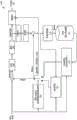
FIG. 1 shows an example of a screen content sharing system.
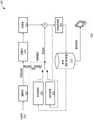
Fig. 2 shows a block diagram of an example of a video encoder.
Fig. 3 shows a block diagram of an example of a video decoder.
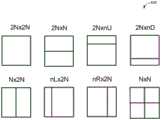
Fig. 4 shows an example of a prediction unit mode.
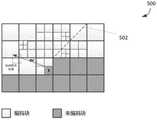
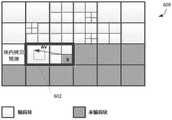
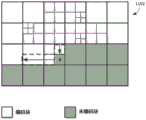
Fig. 5 shows an example of a full frame intra block copy mode.
FIG. 6 shows an example of a copy pattern within a local area block.
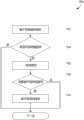
FIG. 7 shows an example of an intra block copy (IntraBC) search.
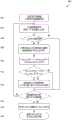
FIG. 8 shows an example of a predictor-based IntraBC search.
Fig. 9 shows an example of a spatial and temporal Motion Vector (MV) predictor for inter-MV prediction.
Fig. 10 shows an example of block vector derivation.
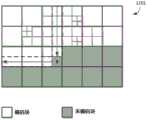
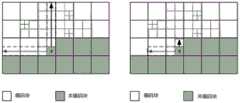
FIG. 11A shows an example of an IntraBC full frame 1-D search.
FIG. 11B shows an example of an IntraBC local 1-D search.
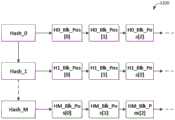
FIG. 12 shows an example of a hash table for a full frame IntraBC search.
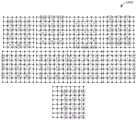
FIG. 13 illustrates an example of hash-generated partitioning for hash-based searching.
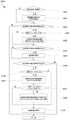
Fig. 14 shows an example of Coding Unit (CU) compression without CU split.
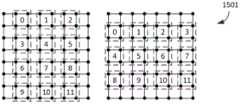
Fig. 15A illustrates an example of uniform partitioning for hash generation for hash-based search.
Fig. 15B illustrates an example of non-uniform partitioning for hash generation for hash-based search.
Fig. 16 shows an example of integral image calculation.
FIG. 17 shows an example of an intra-block 1-D search.
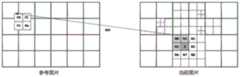
Fig. 18 shows an example of inter-prediction (inter-prediction) based on error concealment.
Fig. 19 shows an example of CU compression without CU splitting.
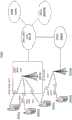
FIG. 20A illustrates a system diagram of an exemplary communication system in which one or more disclosed embodiments may be implemented.
Figure 20B is a system diagram of an exemplary wireless transmit/receive unit (WTRU) that may be used in the communication system shown in figure 20A.
Fig. 20C is a system diagram of an exemplary radio access network and an exemplary core network that may be used in the communication system shown in fig. 20A.
Fig. 20D is a system diagram of another exemplary radio access network and an exemplary core network that may be used in the communication system shown in fig. 20A.
Fig. 20E is a system diagram of another exemplary radio access network and an exemplary core network that may be used in the communication system shown in fig. 20A.
Detailed Description
Exemplary embodiments are described in detail below with reference to a number of figures. While this description provides specific examples of possible implementations, it should be noted that these details are exemplary only and do not limit the scope of the application in any way.
Screen content sharing applications have become increasingly popular with the increase in desktop and mobile computing system capabilities and the corresponding increase in the use of remote desktop, video conferencing, and mobile media presentation applications. FIG. 1 illustrates a general block diagram of an exemplary bi-directional screencontent sharing system 100. Thesystem 100 may include a host subsystem that may include a screen content capturer 102, anencoder 104, and/or a transmitter 106. Thesystem 100 may include a client subsystem, which may include areceiver 108, adecoder 110, and/or a display 114 (also referred to herein as a "renderer"). There may be application constraints that may be used to comply with one or more standards and/or conventions for screen content coding ("SCC"). As used herein, "screen content" may include mixed characteristics from pure screen content (e.g., text, curves, graphics) and/or natural video content (e.g., video and/or images rendered on a screen during playback). There may be multiple blocks in such screen content, a block may contain more than one color and/or sharp edge that may be rendered in an area that contains multiple sharp curves and/or text inside. In such a block, there may be very little noise generated in the screen content. Motion in a computer rendering region may be represented as integer pixel motion.
In red, green, blue ("RGB") spatial encoding can be used for high fidelity image displays. Video compression may be used to encode screen content and/or may be used to transmit the content to a receiver. Video compression may be used for natural video coding and/or may be used for screen content other than natural video. In pure natural video coding, coding distortion may be distributed, for example, into images and/or pictures. One or more large coding errors may be present that may be located around "strong" edges having large gradient values (e.g., edges between regions of an image and/or picture having high contrast, outlines of text), making the products associated with the errors more visible, even when the associated peak signal-to-noise ratio (PSNR) is relatively high for the associated entire image and/or picture.
Screen content compression techniques may compress screen content and/or may provide a relatively high quality of service in the associated screen content sharing related application(s). Efficient screen content compression methods and systems are useful, for example, where a user uses shared device content for a media presentation and/or a remote desktop. Screen resolution of mobile devices has grown to high definition and/or ultra-high definition. Video coding tools (e.g., block-based hybrid coding techniques) may be optimized for natural video coding and/or designed for screen content coding.
Fig. 2 shows a block diagram of a generic block-based single-layer video encoder 200. As shown in fig. 2, to achieve efficient compression, a single-layer encoder may employ techniques such as spatial prediction 202 (also referred to herein as inter-prediction) and one or more different prediction modes and/or practical predictions (also referred to herein as inter-prediction or motion-compensated prediction).
The encoder may have mode decision logic 204, and the mode decision logic 204 may select the manner of prediction. The manner in which the prediction is selected may be based on one or more criteria, such as, for example, in conjunction with rate and distortion considerations. Such an encoder may then transform 206 and/or quantize 208 the prediction residual (e.g., a signal characterizing the difference between the input signal and the prediction signal). Such quantized residuals, along with mode information (e.g., intra-prediction or inter-prediction) and/or prediction information (e.g., block vectors, motion vectors, reference picture indices, intra-prediction modes, etc.) may be compressed at theentropy encoder 210 and/or padded into the output video bitstream 216. As shown in fig. 2, such an encoder may obtain a reconstructed residual by applying inverse quantization 212 and/orinverse transform 214 to the quantized residual to generate a reconstructed video signal, and may add such a reconstructed residual back to the prediction signal. Such reconstructed video signals may be sent through loop filter processing 218 (e.g., deblocking filter, sample adaptive offset, adaptive loop filter) and stored inreference picture memory 220 for use in predicting 222 future video signals.
Fig. 3 shows a block diagram of a block-based single-layer decoder 300, which decoder 300 may receive avideo bitstream 318 generated by an encoder in thesystem 200 shown in fig. 2. Thedecoder 300 may reconstruct such avideo bitstream 318 signal for display on a device. At the video decoder, thebitstream 318 may be parsed by theentropy decoder 302. The residual coefficients may be inverse quantized 314 and/or inverse transformed 316 to obtain a reconstructed residual signal. Coding modes, such as intra prediction information (e.g., partition, block vector (s)) and/or inter prediction information (e.g., partition, motion vector (s)) may be used to obtain a prediction signal by applyingspatial prediction 304 and/ortemporal prediction 306. The prediction signal and the reconstructed residual may be added together to obtain the reconstructed video. Such reconstructed video may be provided to theloop filter 308 and stored in thereference picture store 310 so that the reconstructed video may be displayed 312 and/or used to decode future video signals.
For example, block-based hybrid video coding may be implemented.an encoder and/or decoder may be configured to perform the operations shown at 3 in the system of fig. 2 and fig. a larger video block and quad-tree partitioning may be used to signal (signal) block coding information.slices and/or pictures of a picture may be partitioned into coding tree blocks ("CTBs") having the same size (e.g., 64 × 64). each CTB may be partitioned into coding units ("CUs") having a quad-tree structure, and each CU may be further partitioned into prediction units ("PUs") and conversion units ("TUs") each of which may also have a quad-tree structure.
Temporal prediction, which may also be referred to as motion compensation, may be applied to reconstruct an inter-coded PU. A linear filter may be applied to obtain pixel values at fractional positions (fractional positions). For example, the interpolation filter may have seven (7) or eight (8) taps for luminance and/or four (4) taps for chrominance. The deblocking filter may be content-based, and different deblocking filter operations may be applied at TU and PU boundaries depending on one or more factors (e.g., coding mode differences, motion differences, reference picture differences, pixel value differences, similarity factors, and/or combinations thereof). For entropy coding, context-based adaptive binary arithmetic coding ("CABAC") for block-level semantic elements may be used. For entropy coding, context-based adaptive binary arithmetic coding ("CABAC") may not be used for the advanced parameters. In CABAC coding, one or more bins may be canonical bins for context-based coding, and/or other bin or bins may be bypass-coded bins for no context.
A variety of block coding modes may be used. For example, spatial redundancy may not be used for screen content coding. This may be due to concerns about continuous audiovisual content, for example, in a 4:2:0 format. The mode decision and/or transform coding tools may not be optimized for discrete tone screen content that may be captured in a 4:4:4 format.
The screen content material (e.g., text and/or graphics) may display different characteristics. One or more encoding tools may be used to increase the encoding efficiency of screen content encoding. For example, 1-D string copy, palette coding, intra block copy ("IntraBC"), adaptive color space conversion, and/or adaptive motion vector resolution coding tools may be used.
The screen content (e.g., text and/or graphics) may have a repeating pattern in terms of line segments and/or tiles, and/or may have homogenous small regions (e.g., a single color region or a dual color region). A small amount of color may be present in tiles associated with text and/or graphical screen content. In a tile associated with natural video, there may be many colors.
The color value (e.g., color value for each location) may be repeated from its top or left/right pixels. 1-D string copying strings (e.g., of variable length) may be copied from a previously reconstructed pixel buffer. The location and/or string length may also be signaled. For palette coding, a palette table may be used as a dictionary to record important colors in a coding block. The corresponding palette index map may be used to characterize the color values of each pixel within the coded block and/or may be used to signal to a decoder, e.g., to enable the decoder to reconstruct the pixel values (e.g., using a look-up table with decoded indices). The run value may be used to indicate the length of consecutive pixels, which may have the same palette index in the horizontal and/or vertical direction, e.g., to reduce spatial redundancy of the palette index map. Palette coding may be effective for large blocks that may contain sparse (sparse) colors. The reduction of the local RGB color space may be achieved, for example, by using adaptive color space conversion that may convert and/or encode the signal in another color space, such as a YCgCo color model ("YCgCo").
Intra block copy ("IntraBC") may use reconstructed pixels prior to in-loop filtering, e.g., to predict one or more current prediction units in a current coding block within the same picture. Displacement information, which may also be referred to as block vectors ("BV"), may be encoded. Fig. 5 shows a block diagram 500 of an IntraBC example. The screen content coding extension reference software may have one or more (e.g., two) spatial search windows set for the IntraBC mode. One setting may be for a full frame search window that allows reconstructed pixels to be used for prediction. Such reconstructed pixels (e.g., those shown to the bottom right of dashedline 502 in diagram 500) may not be allowed to serve as reference pixels for IntraBC, for example, to facilitate implementation of parallel decoding (e.g., when wavefront parallel processing ("WPP") is used). The search window setting may be a small local area (e.g., the area shown in fig. 6 as diagram 600), where reconstructed pixels on the left side and/or in the current coding tree unit ("CTU") (e.g., thebold block 602 shown in diagram 600) may be allowed to be used as reference pixels for IBC.
FIG. 7 shows an example of anIntraBC search 700. Variations of the IntraBC search may be used, as may predictor-basedsearch 702. As shown in FIG. 7, if the predictor-based search is not the only IntraBC search used, for example, aspatial search 706 may be used. If a hash-based search is to be used (e.g., if a hash-based search is desired in addition to a predictor-based search), hash-basedsearch 710 may be used. Although fig. 7 illustrates a search that is continuously used, searches (e.g., predictor-basedsearch 702,spatial search 706, hash-basedsearch 710, etc.) may be used alone and/or the search may be combined with one or more other searches. For example, the search may be used alone, and/or the search may be combined with one or more other searches, by taking into account tradeoffs between search accuracy and/or computational complexity. Exemplary conditions (e.g., "predictor-only search" and "hash-based search is required"), such as those used in 700, may be determined using, for example, table 1 (and shown and described herein).
At 802, one or more block vector ("BV") predictors may be generated and/or stored in a predictor list, the BV predictor may include a BV of a parent block, a spatial neighbor BV, and/or a derived BV. BV from an IntraBC search may be stored for a sub-block IntraBC search, e.g., as a parent BV., for example, a BV from an IntraBC search of one 16 × 16 block may be used as a predictor for four (4) 8 × 8 blocks belonging to a 16 × 16 block, the spatial BV predictor may be a block vector of a spatial PU, if IntraBC encoded.
At 804, a BV (e.g., current block vector, "currBV") may be obtained from the predictor list. At 806, the current block vector may be checked to determine whether the current block vector is valid (e.g., can be used for current PU encoding). At 816, if currBV is determined to be invalid, a determination is made as to whether other BVs in the predictor list can be checked. For example, at 816, it may be determined whether all BVs in the predictor list have been checked. If it is determined that not all BVs in the predictor list have been checked, the next BV may be checked. If the BV in the predictor list has already been checked, the most appropriate BV is selected. For example, at 818, the Best block vector, "Best _ BV," may be set equal to the Best BV in the Best BV list (e.g., list "N _ Best _ BV"). The best BV may be set equal to the most suitable (e.g., first) BV found from the cost-ordered list of BVs. At 820, Best _ BV and N _ Best _ BV lists may be identified.
At 806, if currBV is determinedIs valid, then at 808, the predictor error SAD for the luma component with currBV may be calculatedY(currBV). At 810, the cost of the current BV ("cost (currBV)") may be set equal to SADY (currBV) + lambda Bits (currBV). If, at 812, the Cost of currBV is not less than the Cost of the last BV in the existing list of best BVs (Cost (currBV) > -Cost (N _ best _ BV [ N-1)]) 816 may be followed. If the Cost of currBV is less than the Cost of the last BV in the list of existing best BVs (Cost (currBV) < ═ Cost (N _ best _ BV [ N-1)]) Then, at 814, the current BV (currbv) may be inserted into a list (e.g., an N _ best _ BV list). currBV may be inserted into the list in ascending order, based on cost, for example. If at 816, BVs (e.g., all BVs) in the predictor list have been checked, 818 may be followed. If all BVs of the predictor list have not been examined, 804 may be followed.
Fig. 9 shows an example of a spatial and temporal motion vector ("MV") predictor ("TMVP") for inter-MV prediction. For example, spatial neighbor PUs at positions "a 0", "a 1", "B0", "B1", and "B2" may form spatial BV predictor candidates for current PU "X". For spatial predictors, a block vector derivation process may be applied. The juxtaposition shown in FIG. 9 may include a juxtaposition in the TMVP. The prediction unit labeled "C" at the bottom right in FIG. 9 may be first checked. If "C" is determined to be in the same CTU row of the previous picture as the current CTU row and is IntraBC encoded, its BV may be used as a predictor. Otherwise, an alternative collocated prediction unit, such as the centrally located collocated CU labeled "D" in fig. 9, may be checked, e.g., to determine if it is IntraBC coded. If so, its BV may be used as a predictor. If BVs of "C" and "D" in FIG. 9 are both available, then both BVs may be used as predictors in a predictor-based search. If none of the BVs of "C" and "D" are available, no temporal BV may be added. For other encoding configurations, such as a random access configuration in which pictures may be encoded in an encoding order different from the display order, the nearest (e.g., in temporal distance) preceding picture in the decoded picture buffer may be used. BV from a temporal collocated block may be used as a predictor if such a previous picture related to the current picture is close in temporal distance (e.g., less than a threshold) and/or the difference in slice-level quantization parameters is small (e.g., less than a threshold). The temporal BV predictor may be from a compressed or uncompressed BV domain. The decision to compress the BV domain may be determined based on BV precision requirements (e.g., desired BV precision) and/or memory storage capacity at the decoder.
Fig. 10 shows a simple example ofBV derivation 1000, which may be equal to the sum of the BV of the current PU and the BV of its reference PU if the reference PU of the current PU is IntraBC coded. The predictor-basedsearch 800 of FIG. 8 may identify the best BV and an ordered list of N-best BVs, which may be sorted according to cost. The cost may be evaluated as a weighted sum of the predictor error of the luma component or the RGB encoded green (G) component and the coded bits of the identified BV.
The N-best BV list can be used in the IntraBC space search. For example, the N-best BV list may be selected according to a predictor-based search (such as the search shown in FIG. 8). In such a spatial search, BV may be searched within a search window (e.g., a full frame and/or a local area) by comparing prediction errors of the luminance component and/or the RGB-encoded G component. The N-best BV list may be updated (e.g., in the same manner as used in the predictor-based search). The best BV (e.g., the final best BV) may be obtained from an N-best BV list, for example, by comparing the costs of the three RGB color components, where the cost may be evaluated as a weighted sum of the predictor error of such color component and the coding bits of BV. In the spatial search, a 1-D search may be applied, for example, in the order of the arrows shown in diagram 1101 of FIG. 11A for a full frame 1-D search and/or in the order of the arrows shown in diagram 1102 of FIG. 11B for a partial 1-D search. The available block locations, e.g., from the upper boundary of the search window to the current block location, may be checked sequentially and the reference pixels may be reconstructed. The available position from the current block position to the left boundary of the search window may be checked in order.
In a full frame IntraBC search, a hash-based intra block search may be used to reduce the search complexity at the encoder.
BV.x=Blk_Pos[K].x-Curr_Blk_Pos.x (1)
BV.y=Blk_Pos[K].y-Curr_Blk_Pos.y (2)
Where Blk _ Pos [ K ] may be (x, y) coordinates of the upper left corner of the K-th block, and Curr _ Blk _ Pos may be (x, y) coordinates of the upper left corner of the current block.
In SCM-3.0, for example, a 16-bit hash value may be generated based on the original pixel values of an 8 × 8 luminance block, in equation (3), Grad represents the gradient of an 8 × 8 block, DC0, DC1, DC2, and DC3 represent the DC values of four (4) 4 × 4 blocks within an 8 × 8 block, as shown in diagram 1300 of FIG. 13, the 16-bit hash value H may be calculated as follows:
H=(MSB(DC0,3)<<13)+(MSB(DC1,3)<<10)+(MSB(DC2,3<<7)+(MSB(DC3,3)<<4) +MSB(Grad,4) (3)
where MSB (X, n) is a function of the extracted n most significant bits of X.
In hash-based searching, there may be multiple processes used individually and/or in combination. For example, the process may include updating the hash table during the encoding process. The process may include using a hash-based search in CU encoding. In hash table updating, when a Coding Tree Unit (CTU) finishes coding, the upper left position of the reconstructed block (e.g., its lower right corner in the CTU) may be added to the hash table for future IntraBC coding based on the hash value of the reconstructed block. In the hash-based search, a hash value of the current block may be calculated and the hash table may be searched, for example, using the hash value of the current block. If the hash value of the current block is found in the hash table, a corresponding block location list in the hash table may be used for block vector ("BV") search. For block locations in the corresponding block location list, the sum of absolute differences ("SAD") of chrominance components between the original signal and the reference block may be compared to find a list of the first N-best block vectors with the smallest cost. The cost may be determined in the same manner as the cost determination in the spatial search described herein. Preferably the block vector may be determined by comparing the costs of the components. For example, as shown in the Hash table 1200 of FIG. 12, if the Hash value of the current block is equal to Hash _1, a block location list for Hash _1, marked with H1_ blk _ pos [0], H1_ blk _ pos [1], etc., in the Hash table 1200, can be searched.
Table 1 below provides examples of searches and search windows according to the CU size and partition type of the IntraBC search, as may be used in SCM-3.0 to reduce complexity, the predictor-based search is first applied to the 2N × N partition, if there are no non-zero coefficients for the 2N × 2N IntraBC encoding (which may indicate that the 2N × 2N search is sufficient), then a spatial and/or hash search for the 2N × N partition and or an IntraBC search for other partition types (i.e., non-2N × N partitions) may be skipped (e.g., may not be performed), otherwise, a partition utilizing a spatial search and a hash-based search including a 2N × N partition may be applied.

TABLE 1 search for IntraBC search and search window settings
(X ═ search without IntraBC applied √ search, √ search with IntraBC applied)
The IntraBC search may use BV predictors from temporal pictures in a predictor-based search. For example, the IntraBC search may use the BV predictor from a temporal picture. There are regions (e.g., a number of still regions) in the screen content. The block vectors of the current picture and/or the block vectors of the collocated blocks of the previous picture may be correlated (e.g., highly correlated).
Hash generation may affect IntraBC searches. For location sensitive hash codes, distances in the hash space (e.g., Hamming distances) may be correlated with similarity distances in the feature space. If the Hamming distance of two blocks is small, for example, it may be indicated that the two blocks are closer in the feature space measured in Euclidean distances. It may be desirable to cluster (cluster) and/or fast block match these blocks.
For RGB coding, an IntraBC space search may be performed in the YcgCo space to improve the accuracy of the block vector, e.g., since the prediction error may be checked for the luma component r of the G component. More energy may be concentrated in the luminance component than in the G component, which may result in a luminance signal that is stronger than the G signal. The hash generation process based on the hash search may still use the sample values in the G component.
Fig. 14 shows an example of a Coding Unit (CU) compression process, as shown in 1400, check may have a premature termination condition for IntraBC mode check if inter-slice coding may be performed, inter mode (inter mode) may be checked (e.g., inter mode with different partitions may be checked at 1404) if inter-slice coding may be performed, at 1406, 2N 352N IntraBC with predictor-based search and/or intra prediction mode (e.g., intra-slice coding) may be evaluated, e.g., to determine if quantized residuals of best mode (e.g., current best mode) are all 0, remaining IntraBC coding mode(s), including 2N × N using spatial and/or hash-based search and/or other (e.g., N632, N2N, N632N, N2N) partitions may be reconstructed as compared to intra-prediction blocks × N, N ×, which may be better reconstructed as intra-prediction blocks than intra-prediction block prediction, or intra-prediction may be performed, e.g., due to the improved intra prediction from intra-block prediction.
At 1408, if the quantized residuals of the best mode (e.g., the current best mode) are not all 0, whether the coding unit width (e.g., "CU _ width") is less than or equal to 32 may be determined if CU _ width is less than or equal to 32, at 1410, in inter-slice coding (e.g., inter-slice mode), 2N × 2NIntraBC with predictor-based search and/or intra-prediction modes may be checked (e.g., checked first) — at 1412, whether the quantized residuals of the best mode are all 0 may be determined —, if the quantized residuals of the best mode are all 0, the remaining IntraBC coding mode, including 2N × 2N partitioning using spatial and/or hash-based search and/or other partitioning (e.g., N × 2N, 2N × N, N × N) may not be performed, and 1416 may be followed IntraBC coding may not signal prediction directions (e.g., forward single prediction, backward single prediction, bi-directional prediction) and/or reference index blocks 1412, which may be determined using integer vector precision, if the quantized residuals are not all 0, at 1412, the best mode may be determined as an integer vector precision or intra-efficient intra-mode.
At 1416, it may be determined whether the quantization residuals of the best mode are all 0, if the quantization residuals of the best mode are all 0, the remaining steps may be skipped, if the quantization residuals of the best mode are not all 0, it may be determined at 1418 whether CU _ width is less than 32.1418 to reduce the encoding complexity (e.g., to reduce the complexity of N × N and/or 2N × N partitions for large CU sizes (e.g., 32 × and/or 16 ×) at 1418. if CU _ width is greater than or equal to 32, the palette mode may be checked at 1426. N × N and/or 2N × N partitions for large CU sizes (e.g., 32 × and/or 16 ×) may not be evaluated (see table 1 above.) by not evaluating such CU size, the encoding efficiency may be reduced.
As shown in fig. 11, the search order of the 1-D search in the vertical direction may affect the search speed. In 1-D horizontal and vertical searches, the search for the relevant direction may be terminated early if the predictor error is less than a predefined threshold.
One or more BV predictors from previously coded pictures may be used for the IntraBC search. The BV predictor may be generated in one or more ways, including from parent blocks, from spatial neighbor blocks, from reference blocks used for BV derivation, and/or from BV from collocated blocks in previously coded pictures. For intra-coding configurations (e.g., where a picture is coded as an intra-picture), there may be a correlation (e.g., a strong correlation) of BV between the current block and/or its collocated blocks in the most recently coded picture, e.g., because the current picture and its previously coded pictures are close in temporal distance and/or because the current picture and/or its previously coded pictures may be coded at similar quality using similar quantization parameters. The available BV from a temporally collocated block, e.g., in a previously coded picture, may be added to the predictor generation process for a predictor-based IntraBC search. Such a predictor is effective in such intra-coding configurations, e.g., because such pictures may be coded in the same order as the associated display order and/or because such pictures may be quantized using similar quantization parameters. The temporal collocated position of such a picture may be the same as the temporal motion vector prediction ("TMVP").
Hash generation for IntraBC hash-based searches may be used. Hash generation may use more features. Such local features may be computed, for example, based on relatively small sub-blocks, and the possessed features in the relevant block may be used for hash generation. By using the feature, improved block clustering may be obtained. Global features, such as the gradient of such blocks, may also be used for hash generation. The use of such global features may further improve clustering.
As shown in FIG. 15, a block (e.g., an 8 × 8 block) may be partitioned into twelve (12) sub-blocks, as shown in FIG. 15, this partitioning may be performed in a variety of ways, for example, FIG. 15A shows ablock 1501 with an average partition where the sub-blocks are of the same size, while FIG. 15B shows ablock 1502 with an uneven partition where the sub-blocks are of a variety of different sizes.
For the ith sub-block SB of block BiThe associated DC value may be expressed as DC (SB)i). The DC value for block B, denoted DC (B), may then be calculated. As shown in equation (4), one (1) bit flag F (SB)i) Can be compared by DC (SB)i) And DC (B) is calculated:

by merging F (SB)i) The local features of the token and the global features of the block gradient token may generate a 15-bit hash value for block B:

luminance values at location (X, y) may be represented as L (X, y.) for pixel p at location (X, y), the associated gradient grad (p) may be calculated by determining and averaging the gradients in the horizontal and vertical directions:
grad(p)=(|L(x,y)-L(x-1,y)|+|L(x,y)-L(x,y-1)|)/2 (6)
grad (B) can be calculated as the average of the gradient values of the pixels p within the block B.
In a hash-based search, a hash table may be generated for possible locations within a picture. A hash table may be used in such a hash-based search. The computation process using the hash table may be accelerated by computing (e.g., first computing) the integral image and/or gradient of the DC. The integrated image may be a sum of pixel values within one or more points (e.g., within one or more points in the image and/or sub-image). For example, the integral image may be the sum of pixel values found within a rectangle surrounding the current image. The value at a given position (x, y) in the integral image is the sum of the rectangles, the upper left corner of which is the upper left of the current image and the lower right corner is the given position (x, y). The integral image may be the sum of pixel values of a rectangle surrounding the current image. DC integral diagrams can be usedThe image and/or gradient integral image computes a hash value. SI(x, y) may represent an integrated image of the signal I (x, y), which may be luminance and/or gradient. SI(x, y) may be defined as 0, for example, if x and/or y are negative. As shown in equation (7) and further shown in FIG. 16, S may be calculated using I (x, y) and neighbor locationsI(x,y)。
SI(x,y)=SI(x,y-1)+SI(x-1,y)-SI(x-1,y-1)+I(x,y) (7)
The upper left position in block B is represented as (X)TL,YTL) And the lower right position of block B is represented as (X)BR,YBR) In this case, the sum of I (x, y) within block B may be calculated as follows:
Sum(I(x,y)|(x,y)∈B=SI(xBR,yBR)+SI(XTL-1,YTL-1)-SI(XTL-1,YBR)- SI(XB,XTL-1) (8)
equation (8) may be used to efficiently (e.g., more efficiently) calculate the gradient and DC values of the block. The computational complexity of hash value generation can be reduced. Such a fast hash calculation can be equally applied to the hash generation shown in equation (3) above.
Hash generation can be extended to general methods. A segmentation rule may be used to segment a region R (e.g., a block or an ellipse) into a plurality of sub-regions SR. For sub-region SRiLocal feature L (SR)i) Can be calculated, e.g. DC and/or gradient within a sub-region, and/or cutoff value F (SR)i) By comparing local features L (SR)i) Value and global feature G0The (R) value is generated as shown in the following equation (9) or (10). The value of the global feature may be computed in the same manner as computing a computational feature (e.g., DC or gradient). The value of the global feature may be evaluated over the region R. M may be the maximum value of the variable F. If F is characterized by p bits, M can be set equal to 2 for equation (9)p1, however M can be set equal to 2 p-1 for equation (10).


The parameter s (i) may be a scaling factor of the sub-region. The scaling factor may be constant over the region, e.g., so that the sub-regions are treated equally. Such a scaling factor may take into account differences in the border region and/or the central region. For example, the center of the region is reliable (e.g., more reliable) and/or important (e.g., more important) relative to the entire region of interest. Thus, s (i) of the central sub-region is larger and/or s (i) of the border sub-region is smaller. The hash value h (R) of the region R can be calculated as shown in the following equation (11):

wherein p is the bit number of the variable F, and q is the second global feature G1The number of bits of (R). Second global feature G1The use of (R) may depend on the associated application. The second global feature may be omitted and/or a plurality (e.g., a plurality of additional) global features may be included in the hash.
Hash generation may provide improved clustering capabilities due at least in part to the use of local features extracted from the sub-blocks. Such miscellaneous hash generation may be used by a variety of applications, e.g., because the disclosed methods require low (e.g., substantially low) computational complexity due to the fast implementation methods described herein that use one or more integral images.
Lower complexity hash generation may be used to cluster and/or patch (patch)/chunk match related applications. For example, the disclosed systems and/or methods may be used for error concealment. In fig. 18, the block "X" may be damaged due to a transmission error. Error concealment may fill intra prediction and/or inter prediction into a corrupted block "X". Intra prediction may populate a corrupted block with directional predictions, which may be analyzed starting from the left and/or top neighbor pixels of the block. Inter prediction may perform motion estimation using neighboring blocks of the corrupted block as target blocks. For example, in fig. 18, the top neighbor block N1, the top-left neighbor block N0, and the left-side neighbor block N3 may be used as target blocks to find the corresponding blocks P1, P0, P2. Block Px in the reference picture may be used to fill block X. A hash-based search generated using the disclosed hash may be used for quick matching. The hash code may be generated using neighbor blocks (e.g., N0, … …, N8) of the block to be corrected.
Block matching related applications may be used for point matching and/or multi-view processing in 3D, such as view synthesis and/or depth estimation. When a feature point is available in a first view, a corresponding point in another view may be found. Hash-based matching using hash generation may be suitable. For fast face detection, there may be a weak classifier for removing samples (e.g., impossible samples) at a stage of such a process (e.g., an initial stage). Samples that pass a weak classifier can be validated by cascading one or more classifiers. The initial removal weak classifiers can be trained in a hash space, where hash values are generated using the disclosed methods to reduce complexity in an initial stage of processing, e.g., to make face detection faster.
The IntraBC search may be used for RGB coding. In the case where encoding is performed using the RGB format, the color space used in the spatial search and/or the hash-based search may be different. The spatial search may use the YcgCo space, while the hash-based search may use the RGB color space. The YcgCo color space may be used for spatial and/or hash-based searches because the luminance (Y) component may characterize more critical information (e.g., high frequency, edges, texture, etc.) than the G component.
For example, if the quantized residual is 0 (e.g., both 0), IntraBC for 2N × N partitioning for spatial/hash search and/or IntraBC for non-2N × 2N partitioning may be avoided.early termination conditions may be too aggressive and/or may reduce coding efficiency.if the best mode before spatial/hash search and/or before non-2N × 2N partitioning search is IntraBC (with 2N × 2N partitioning using predictor-based search) and/or inter-skip (inter-skip) mode where the residual is equal to 0 (e.g., all 0), then the remaining IntraBC search with partitioning (e.g., different partitioning) may be skipped.A remaining Hash space/search and/or non-2N × N search may be skipped if the best mode before spatial/hash search and/or before non-2N × N partitioning search is intra-prediction mode and/or non-merge inter-prediction mode if the best mode before spatial/hash search is intra-search and/or non-merge prediction mode is improved by 2N 592N 2N before spatial/hash search and/or non-merge prediction mode.
Fig. 19 illustrates an example 1900 in which performing a remaining space/hash search and/or a non-2N × 2N split search may be conducted (e.g., may still be conducted).
As shown in table 1, due to coding complexity considerations, N × N and 2N × N partitions may not be checked for large CU sizes (e.g., 32 × 032, 16 ×) this partitioning may be checked using a predictor-based search for large CU sizes, which may improve coding efficiency without increasing (e.g., significantly increasing) complexity for intra-slice coding, N × N partitions may be checked for 32 × CU, e.g., using a predictor-based search before spatial/hash-based 2N 632N IntraBC checking, for intra-slice coding, 2N × N partitions of CU (e.g., large CU) may not be checked for intra-slice coding, N × N and/or 2N × N may be used for inter-slice coding, N × N and/or 2N × N based partition may be checked, e.g., for predictor-based retrieval, whether the quantization of the best mode is not all 0 or not equal to the intra-bc mode and the best mode (optimal mode) is not equal to the intra-bc mode skip mode and if the residual error rate of the optimal mode is not equal to the intra-bc mode is equal to the nth 2N 632N × N.

TABLE 2 search and search window settings for IntraBC search
(X ═ search without IntraBC applied √ search, √ search with IntraBC applied)
The vertical search order for the 1-D space search may be modified. In FIG. 11, the search order may be from the top boundary to the current block location. In fig. 17, the search order may be reversed. For example, the search order may be modified (e.g., reversed, such as the search order may be from the current block to the top boundary). The search order may be reversed, for example, because the best matching block may be more likely to be near the current block. The search may be performed from the current block location to the picture top boundary, earlier allowing for matching the location of the block and/or earlier potentially terminating vertical IntraBC, which may save encoding time.
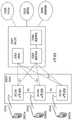
Fig. 20A is an illustration of anexemplary communication system 2000. Thecommunication system 2000 may be a multiple-access system that provides content, such as voice, data, video, messaging, broadcast, etc., to a plurality of wireless users. Thecommunication system 2000 allows multiple wireless users to access such content by sharing system resources, including wireless bandwidth, for example, thecommunication system 2000 may use one or more channel access methods, such as Code Division Multiple Access (CDMA), Time Division Multiple Access (TDMA), Frequency Division Multiple Access (FDMA), orthogonal FDMA (ofdma), single-carrier FDMA (SC-FDMA), and so on.
As shown in fig. 20A, thecommunication system 2000 may include wireless transmit/receive units (WTRUs) 2002a, 2002b, 2002c, and/or 2002d (which may be referred to generally or collectively as WTRUs 2002), a Radio Access Network (RAN)2003/2004/2005, acore network 2006/2007/2009, a Public Switched Telephone Network (PSTN)2008, theinternet 2010, andother networks 2012, although it should be appreciated that any number of WTRUs, base stations, networks, and/or network components are contemplated by the disclosed embodiments. Each WTRU2002a, 2002b, 2002c, 2002d may be any type of device configured to operate and/or communicate in a wireless environment. For example, theWTRUs
Thecommunication system 2000 may also include abase station 2014a and abase station 2014 b. Eachbase station core network 2006/2007/2009, theinternet 2010, and/or anetwork 2012 by wirelessly interfacing with at least one of theWTRUs base stations 2014a, 2014B may be Base Transceiver Stations (BTSs), nodes B, e node bs, home enodeb, site controllers, Access Points (APs), wireless routers, and so forth. Although eachbase station base stations
Thebase stations more WTRUs air interface 2015/2016/2017, whichair interface 2015/2016/2017 may be any suitable wireless communication link (e.g., Radio Frequency (RF), microwave, Infrared (IR), Ultraviolet (UV), visible light, etc.). Theair interface 2015/2016/2017 may be established using any suitable Radio Access Technology (RAT).
More specifically, as described above,communication system 2000 may be a multiple-access system and may use one or more channel access schemes, such as CDMA, TDMA, FDMA, OFDMA, SC-FDMA, and the like. For example, thebase stations 2014a andWTRUs air interface 2015/2016/2017 using wideband cdma (wcdma). WCDMA may include communication protocols such as High Speed Packet Access (HSPA) and/or evolved HSPA (HSPA +). HSPA may include High Speed Downlink Packet Access (HSDPA) and/or High Speed Uplink Packet Access (HSUPA).
Thebase station 2014a and theWTRUs air interface 2015/2016/2017 using long term evolution (L TE) and/or L TE-Advanced (L TE-a).
Thebase station 2014a and theWTRUs
By way of example, the base station 2014B in FIG. 20A may be a wireless router, home node B, home eNodeB, or access point, and may use any suitable RAT to facilitate wireless connectivity in a local area, such as a business, residence, vehicle, campus, etc. base station 2014B andWTRUs WTRUs WTRUs Internet 2010. thus, base station 2014B may not necessarily need to access theInternet 2010 via acore network 2006/2007/2009.
The RAN2003/2004/2005 may communicate with acore network 2006/2007/2009, which may be any type ofnetwork 2006/2007/2009 configured to provide voice, data, applications, and/or voice over internet protocol (VoIP) services to one ormore WTRUs core network 2006/2007/2009 may provide call control, billing services, mobile location-based services, pre-paid calling, internet connectivity, video distribution, etc., and/or perform high-level security functions such as user authentication. Although not shown in fig. 20A, it should be appreciated that the RAN2003/2004/2005 and/or thecore network 2006/2007/2009 may communicate directly or indirectly with other RANs that employ the same RAT as the RAN2003/2004/2005 or a different RAT. For example, in addition to interfacing with the RAN2003/2004/2005 using E-UTRA radio technology, thecore network 2006/2007/2009 may also communicate with another RAN (not shown) using GSM radio technology.
Thecore network 2006/2007/2009 may also act as a gateway for theWTRUs PSTN 2008, theinternet 2010, and/orother networks 2012.PSTN 2008 may include a circuit-switched telephone network that provides Plain Old Telephone Service (POTS). Theinternet 2010 may include a worldwide system of interconnected computer networks and devices that use common communication protocols, which may be the Transmission Control Protocol (TCP), User Datagram Protocol (UDP), and the Internet Protocol (IP) of the TCP/IP internet protocol suite.Network 2012 may include wired or wireless communication networks owned and/or operated by other service providers. For example, thenetwork 2012 may include another core network connected to one or more RANs, which may use the same RAT as the RAN2003/2004/2005 or a different RAT.
Some or all of theWTRUs communication system 2000 may include multi-mode capabilities, i.e., theWTRUs base station 2014a, which may use a cellular-based radio technology, and with thebase station 2014b, which may use an IEEE802 radio technology.
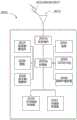
Figure 20B is a system diagram illustrating aWTRU 2002. As shown in fig. 20B, the WTRU2002 may include a processor 2018, a transceiver 2020, transmit/receivecomponents 2022, a speaker/microphone 2024, akeyboard 2026, a display/touchpad 2028,non-removable memory 2030,removable memory 2032, apower supply 2034, a Global Positioning System (GPS)chipset 2036, andother peripherals 2038. It should be appreciated that the WTRU2002 may include any subcombination of the foregoing components. The nodes thatbase stations 2014a and 2014B, and/or thatbase stations 2014a and 2014B may represent, may include, some or all of the elements depicted in fig. 20B and described herein, such as, but not limited to, a transceiver station (BTS), a node B, a site controller, an Access Point (AP), a home node B, an evolved home node B (enodeb), a home evolved node B (henb), a home evolved node B gateway, and a proxy node, among others.
The processor 2018 may be a general-purpose processor, a special-purpose processor, a conventional processor, a Digital Signal Processor (DSP), a plurality of microprocessors, one or more microprocessors in association with a DSP core, a controller, a microcontroller, Application Specific Integrated Circuits (ASICs), Field Programmable Gate Arrays (FPGAs) circuits, any other type of Integrated Circuit (IC), a state machine, or the like. The processor 2018 may perform signal coding, data processing, power control, input/output processing, and/or any other functionality that enables the WTRU2002 to operate in a wireless environment. The processor 2018 may be coupled to a transceiver 2020, and the transceiver 2020 may be coupled to a transmit/receivesection 2022. Although fig. 20B depicts the processor 2018 and the transceiver 2020 as separate components, it is to be appreciated that the processor 2018 and the transceiver 2020 can be integrated into one electronic package or chip.
The transmit/receivecomponent 2022 may be configured to transmit or receive signals to or from a base station (e.g.,base station 2014a) via theair interface 2015/2016/2017. For example, the transmit/receivecomponent 2022 may be an antenna configured to transmit and/or receive RF signals. As an example, the transmit/receivecomponent 2022 may be an emitter/detector configured to emit and/or receive IR, UV, or visible light signals. The transmit/receivecomponent 2022 may be configured to transmit and receive RF and optical signals. It should be appreciated that the transmit/receivecomponent 2022 may be configured to transmit and/or receive any combination of wireless signals.
Furthermore, although transmit/receivesection 2022 is depicted in fig. 20B as a single section, WTRU2002 may include any number of transmit/receivesections 2022. More specifically, the WTRU2002 may use MIMO technology. The WTRU2002 may include two or more transmit/receive components 2022 (e.g., multiple antennas) that transmit and receive radio signals over theair interface 2015/2016/2017.
The transceiver 2020 may be configured to modulate signals to be transmitted by the transmit/receivesection 2022 and to demodulate signals received by the transmit/receivesection 2022. As described above, the WTRU2002 may have multi-mode capabilities. Thus, the transceiver 2020 may include multiple transceivers that allow the WTRU2002 to communicate via multiple RATs, such as UTRA and IEEE 802.11.
The processor 2018 of the WTRU2002 may be coupled to and may receive user input data from the speaker/microphone 2024, thekeyboard 2026, and/or the display/touchpad 2028 (e.g., a liquid crystal display (L CD) display unit or an organic light emitting diode (O L ED) display unit). The processor 2018 may also output user data to the speaker/microphone 2024, thekeyboard 2026, and/or the display/touchpad 2028. additionally, the processor 2018 may access information from and store information in any suitable memory, such as thenon-removable memory 2030 and/or theremovable memory 2032. thenon-removable memory 2030 may include Random Access Memory (RAM), Read Only Memory (ROM), a hard disk, or any other type of memory storage device.
The processor 2018 may receive power from apower supply 2034 and may be configured to distribute and/or control power for other components in theWTRU 2002. thepower supply 2034 may be any suitable device for powering theWTRU 2002. for example, thepower supply 2034 may include one or more dry cell batteries (e.g., nickel-cadmium (Ni-Cd), nickel-zinc (Ni-Zn), nickel-metal hydride (NiMH), lithium ion (L i-ion), etc.), solar cells, fuel cells, and the like.
The processor 2018 may also be coupled to aGPS chipset 2036, which may be configured to provide location information (e.g., longitude and latitude) related to the current location of theWTRU 2002. In addition to, or in lieu of, the information from theGPS chipset 2036, the WTRU2002 may receive location information from base stations (e.g.,base stations air interface 2015/2016/2017 and/or determine its location based on the timing of signals received from two or more nearby base stations. It should be appreciated that the WTRU2002 may obtain location information via any suitable positioning method.
The processor 2018 may also be coupled toother peripherals 2038, which may include one or more software and/or hardware modules that provide additional features, functionality, and/or wired or wireless connectivity. For example, theperipheral devices 2038 may include accelerometers, electronic compasses, satellite transceivers, digital cameras (for photos and video), Universal Serial Bus (USB) ports, vibration devices, television transceivers, hands-free headsets, bluetooth modules, Frequency Modulation (FM) radio units, digital music players, media players, video game player modules, internet browsers, and so forth.
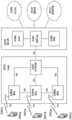
Fig. 20C is a system diagram of the RAN2003 and thecore network 2006. As described above, the RAN2003 may communicate with theWTRUs air interface 2015 using UTRA radio technology. The RAN2003 may also communicate with acore network 2006. As shown in fig. 20C, the RAN2003 may includenode bs 2040a, 2040B, 2040C, each of which may include one or more transceivers communicating with theWTRUs 2002a, 2002B, 2002C via anair interface 2015. Each of thenode bs RAN 2003. The RAN2003 may also include RNCs 2042a, 2042 b. It should be appreciated that the RAN2003 may include any number of node bs and RNCs.
As shown in fig. 20C, thenode bs 2040a, 2040B may communicate with an RNC2042 a. In addition, the node B2040 c may communicate with an RNC 2042B. Thenode bs RNCs
Thecore network 2006 shown in fig. 20C can include a Media Gateway (MGW)2044, a Mobile Switching Center (MSC)2046, a Serving GPRS Support Node (SGSN)2048, and/or a Gateway GPRS Support Node (GGSN) 2050. While each of the foregoing components are described as being part of thecore network 2006, it should be appreciated that any of these components may be owned and/or operated by an entity other than the core network operator.
The RNC2042a in the RAN2003 may be connected to theMSC 2046 in thecore network 2006 via an IuCS interface.MSC 2046 may be connected toMGW 2044. TheMSC 2046 and MGW2044 may provide theWTRUs PSTN 2008, to facilitate communications between theWTRUs
The RNC2042a in the RAN2003 may also be connected to the SGSN2048 in thecore network 2006 via an IuPS interface. The SGSN2048 may be connected to aGGSN 2050. The SGSN2048 andGGSN 2050 may provide theWTRUs internet 2010, to facilitate communications between theWTRUs
As described above, thecore network 2006 may also be connected to anetwork 2012, which may include other wired or wireless networks owned and/or operated by other service providers.
Fig. 20D is a system diagram of aRAN 2004 and acore network 2007, according to one embodiment. As described above, theRAN 2004 may communicate with theWTRUs air interface 2016 using E-UTRA radio technology. TheRAN 2004 may also communicate with acore network 2007.
TheRAN 2004 may include enodebs 2060a, 2060B, 2060c, but it should be appreciated that theRAN 2004 may include any number of enodebs. Each enodeb 2060a, 2060B, 2060c may include one or more transceivers to communicate with theWTRUs air interface 2016. The enodebs 2060a, 2060B, 2060c may implement MIMO techniques. Thus, for example, the enodeb 2060a may use multiple antennas to transmit wireless signals to the WTRU2002a and to receive wireless signals from the WTRU2002 a.
Each enodeb 2060a, 2060B, 2060c may be associated with a particular cell (not shown) and may be configured to handle radio resource management decisions, handover decisions, user scheduling in the uplink and/or downlink, and the like. As shown in fig. 20D, enode bs 2060a, 2060B, 2060c may communicate with each other via an X2 interface.
Thecore network 2007 shown in fig. 20D may include a mobility management gateway (MME)2062, aserving gateway 2064, and a Packet Data Network (PDN)gateway 2066. Although each of the above components are described as being part of thecore network 2007, it should be appreciated that any of the components may be owned and/or operated by an entity other than the core network operator.
TheMME 2062 may be connected to each enodeb 2060a, 2060B, 2060c in theRAN 2004 via an S1 interface and may act as a control node. For example, theMME 2062 may be responsible for authenticating users of theWTRUs WTRUs MME 2062 may also provide a control plane function to perform handovers between theRAN 2004 and other RANs (not shown) that employ other radio technologies such as GSM or WCDMA.
Theserving gateway 2064 may be connected to each enodeb 2060a, 2060B, 2060c in theRAN 104 via an S1 interface. Theserving gateway 2064 may generally route and forward user data packets to/from theWTRUs serving gateway 2064 may perform other functions such as anchoring the user plane during inter-enodeb handovers, triggering paging when downlink data is available to theWTRUs WTRUs
Theserving gateway 2064 may also be connected to aPDN gateway 2066 that may provide theWTRUs internet 2010, to facilitate communications between theWTRUs
Fig. 20E is a system diagram ofRAN 2005 andcore network 2009. TheRAN 2005 may be an Access Service Network (ASN) that communicates with theWTRUs air interface 2017 using IEEE802.16 radio technology. As discussed further below, communication links between the different functional entities of theWTRUs RAN 2004, and thecore network 2009 may be defined as reference points.
As shown in fig. 20E,RAN 2005 can includebase stations RAN 2005 can include any number of base stations and ASN gateways. Eachbase station WTRUs air interface 2017.Base stations base station 2080a may use multiple antennas to transmit wireless signals to WTRU2002a and to receive wireless signals from WTRU 102 a. Thebase stations core network 2009, and so on.
Theair interface 2017 between theWTRUs RAN 2005 may be defined as the R1 reference point implementing the IEEE802.16 specification. In addition, each WTRU2002a, 2002b, 2002c may establish a logical interface (not shown) with thecore network 2009. The logical interface between theWTRUs
The communication link between eachbase station base stations
As shown in fig. 20E, theRAN 2005 may be connected to acore network 2009. The communication link between theRAN 2005 and thecore network 2009 may be defined as an R3 reference point that contains, by way of example, protocols for facilitating data transfer and mobility management capabilities. The core network 109 may include a mobile IP home agent (MIP-HA)2084, an authentication, authorization, accounting (AAA)server 2086, and agateway 2088. Although each of the foregoing components are described as being part of thecore network 2009, it should be appreciated that any of these components may be owned and/or operated by an entity other than the core network operator.
The MIP-HA may be responsible for IP address management and may allow theWTRUs HA 2084 may provide theWTRUs internet 2010, to facilitate communications between theWTRUs AAA server 2086 may be responsible for user authentication as well as supporting user services.Gateway 2088 may facilitate interworking with other networks. For example, thegateway 2088 may provide theWTRUs PSTN 2008, to facilitate communications between theWTRUs gateway 2088 may provide theWTRUs network 2012, which may include other wired or wireless networks owned and/or operated by other service providers.
Although not shown in fig. 20E, it should be appreciated that theRAN 2005 can be connected to other ASNs and thecore network 2009 can be connected to other core networks. The communication link between theRAN 2005 and the other ASNs may be defined as an R4 reference point that may include protocols for coordinating the mobility of theWTRUs RAN 2005 and the other ASNs. The communication links between thecore networks 2009 and the other core networks may be defined as an R5 reference point, which may include protocols for facilitating interworking between the home core network and the visited core network.
Although the features and components described above are described in particular combinations, it will be appreciated by those of ordinary skill in the art that each feature or component can be used alone or in any combination with other features and components. Furthermore, the methods described herein may be implemented in a computer program, software, or firmware embodied in a computer-readable medium for execution by a computer or processor. Examples of computer readable media include electronic signals (transmitted over a wired or wireless connection) and computer readable storage media. Examples of the computer readable storage medium include, but are not limited to, Read Only Memory (ROM), Random Access Memory (RAM), registers, cache memory, semiconductor memory devices, magnetic media (e.g., internal hard disks and removable disks), magneto-optical media, and optical media (e.g., CD-ROM disks), Digital Versatile Disks (DVDs). A processor in association with software may be used to implement a radio frequency transceiver for use in a WTRU, UE, terminal, base station, RNC, or any host.
Claims (20)
1. A method for encoding video data, the method comprising:
identifying a first best mode for encoding a coding unit of the video data;
identifying a first set of quantized residual values associated with the first best mode;
determining whether the first set of quantized residual values includes a non-zero value and whether the first best mode is an intra block copy, IntraBC, mode or a skip mode;
determining whether a width of the coding unit is less than or equal to a coding width threshold based on a determination that the first set of quantized residual values comprises a non-zero value or that the first best mode is neither the IntraBC mode nor the skip mode; and
performing a 2N × 2N IntraBC mode check on the coding unit via a first predictor based search on a condition that the width of the coding unit is less than or equal to the code width threshold.
2. The method of claim 1, further comprising:
identifying a second best mode for encoding the coding unit;
identifying a second set of quantized residual values associated with the second best mode;
determining whether the second set of quantized residual values comprises non-zero values and whether the second best mode is the IntraBC mode or the skip mode;
based on a determination that the second set of quantized residual values comprises a non-zero value or that the second best mode is neither the IntraBC mode nor the skip mode, an N × 2N IntraBC mode check is made via a second predictor-based search on a condition that the width of the coding unit is less than or equal to the coding width threshold.
3. The method of claim 2, wherein the second best mode and the second set of quantized residual values used to encode the coding unit are identified at the time of the first predictor-based search.
4. The method of claim 2, further comprising:
identifying a third best mode for encoding the coding unit;
identifying a third set of quantized residual values associated with the third best mode;
determining whether the third set of quantized residual values includes a non-zero value and whether the third best mode for encoding the coding unit is the IntraBC mode or the skip mode;
based on a determination that the third set of quantized residual values comprises a non-zero value or that the third best mode for encoding the coding unit is neither the IntraBC mode nor the skip mode, performing a 2N × N IntraBC mode check on the coding unit via a third predictor-based search on a condition that the width of the coding unit is less than or equal to the coding width threshold.
5. The method of claim 4, wherein the third best mode and the third set of quantized residual values for encoding the coding unit are identified at the time of the second predictor-based search.
6. The method of claim 4, wherein the 2N × N IntraBC mode check is performed based on inter-slice coding.
7. The method of claim 4, further comprising:
identifying a fourth best mode for encoding the coding unit;
identifying a fourth set of quantized residual values associated with the fourth best mode;
determining whether the fourth set of quantized residual values comprises non-zero values and whether the fourth best mode for encoding the coding unit is the IntraBC mode or the skip mode;
determining a rate-distortion cost associated with the fourth best mode; and
based on a determination that the fourth set of quantized residual values comprises a non-zero value or that the fourth best mode for encoding the coding unit is neither the IntraBC mode nor the skip mode, performing a 2N × 2N IntraBC mode check on the coding unit with at least one of a spatial search or a hash search on a condition that the width of the coding unit is less than or equal to the coding width threshold and the rate-distortion cost value is above a cost threshold.
8. The method of claim 7, wherein the fourth best mode and the fourth set of quantized residual values for encoding the coding unit are identified at least one of the second predictor-based search or the third predictor-based search.
9. The method of claim 1, wherein the code width threshold is 32.
10. The method of claim 1, wherein, based on a determination that the first set of quantized residual values includes all zero values and that the first best mode is the IntraBC mode or the skip mode, the method comprises skipping predictor-based 2N × 2N IntraBC mode checking for the coding unit.
11. A video encoding apparatus for encoding video data, the apparatus comprising:
a processor configured to:
identifying a first best mode for encoding a coding unit of the video data;
identifying a first set of quantized residual values associated with the first best mode;
determining whether the first set of quantized residual values includes a non-zero value and whether the first best mode is an intra block copy, IntraBC, mode or a skip mode;
determining whether a width of the coding unit is less than or equal to a coding width threshold based on a determination that the first set of quantized residual values comprises a non-zero value or that the first best mode is neither the IntraBC mode nor the skip mode; and
performing a 2N × 2N IntraBC mode check on the coding unit via a first predictor based search on a condition that the width of the coding unit is less than or equal to the code width threshold.
12. The video coding device of claim 11, wherein the processor is configured to:
identifying a second best mode for encoding the coding unit;
identifying a second set of quantized residual values associated with the second best mode;
determining whether the second set of quantized residual values comprises non-zero values and whether the second best mode is the IntraBC mode or the skip mode;
based on a determination that the second set of quantized residual values includes a non-zero value or that the second best mode is neither the IntraBC mode nor the skip mode, performing an N × 2N IntraBC mode check on the coding unit via a second predictor-based search on a condition that the width of the coding unit is less than or equal to the coding width threshold.
13. The video coding device of claim 12, wherein the second best mode and the second set of quantized residual values for encoding the coding unit are identified at the time of the first predictor-based search.
14. The video coding device of claim 12, wherein the processor is configured to:
identifying a third best mode for encoding the coding unit;
identifying a third set of quantized residual values associated with the third best mode;
determining whether the third set of quantized residual values includes a non-zero value and whether the third best mode for encoding the coding unit is the IntraBC mode or the skip mode;
based on a determination that the third set of quantized residual values comprises a non-zero value or that the third best mode for encoding the coding unit is neither the IntraBC mode nor the skip mode, performing a 2N × N IntraBC mode check on the coding unit via a third predictor-based search on a condition that the width of the coding unit is less than or equal to the coding width threshold.
15. The video coding device of claim 14, wherein the third best mode and the third set of quantized residual values for encoding the coding unit are identified at the time of the second predictor-based search.
16. The video coding device of claim 14, wherein the 2N × NIntraBC mode check is performed based on inter-slice coding.
17. The video coding device of claim 14, wherein the processor is configured to:
identifying a fourth best mode for encoding the coding unit;
identifying a fourth set of quantized residual values associated with the fourth best mode;
determining whether the fourth set of quantized residual values comprises non-zero values and whether the fourth best mode for encoding the coding unit is the IntraBC mode or the skip mode;
determining a rate-distortion cost associated with the fourth best mode;
based on a determination that the fourth set of quantized residual values comprises a non-zero value or that the fourth best mode for encoding the coding unit is neither the IntraBC mode nor the skip mode, performing a 2N × 2N IntraBC mode check on the coding unit with at least one of a spatial search or a hash search on a condition that the width of the coding unit is less than or equal to the coding width threshold and the rate-distortion cost value is above a cost threshold.
18. The video coding device of claim 17, wherein the fourth best mode and the fourth set of quantized residual values used to code the coding unit are identified at least one of the second predictor-based search or the third predictor-based search.
19. The video coding device of claim 17, wherein, based on a determination that the first set of quantized residual values includes all zero values and that the first best mode is the IntraBC mode or the skip mode, the processor is configured to skip predictor-based 2N × 2N IntraBC mode checking for the coding unit.
20. The video encoding apparatus of claim 11, wherein the encoding width threshold is 32.
Applications Claiming Priority (3)
| Application Number | Priority Date | Filing Date | Title |
|---|---|---|---|
| US201562109548P | 2015-01-29 | 2015-01-29 | |
| US62/109,548 | 2015-01-29 | ||
| PCT/US2016/015457WO2016123398A2 (en) | 2015-01-29 | 2016-01-28 | Intra-block copy searching |
Publications (2)
| Publication Number | Publication Date |
|---|---|
| CN107409220A CN107409220A (en) | 2017-11-28 |
| CN107409220Btrue CN107409220B (en) | 2020-07-24 |
Family
ID=55697441
Family Applications (1)
| Application Number | Title | Priority Date | Filing Date |
|---|---|---|---|
| CN201680007929.4AActiveCN107409220B (en) | 2015-01-29 | 2016-01-28 | Intra-block copy search |
Country Status (7)
| Country | Link |
|---|---|
| US (2) | US10516882B2 (en) |
| EP (1) | EP3251350B1 (en) |
| JP (2) | JP6527949B2 (en) |
| KR (1) | KR102131142B1 (en) |
| CN (1) | CN107409220B (en) |
| TW (1) | TWI678102B (en) |
| WO (1) | WO2016123398A2 (en) |
Families Citing this family (45)
| Publication number | Priority date | Publication date | Assignee | Title |
|---|---|---|---|---|
| GB2531001B (en)* | 2014-10-06 | 2019-06-05 | Canon Kk | Method and apparatus for vector encoding in video coding and decoding |
| US10805637B2 (en)* | 2016-05-16 | 2020-10-13 | Samsung Electronics Co., Ltd. | Video encoding method and apparatus, video decoding method and apparatus |
| US20180184101A1 (en)* | 2016-12-23 | 2018-06-28 | Apple Inc. | Coding Mode Selection For Predictive Video Coder/Decoder Systems In Low-Latency Communication Environments |
| KR101925785B1 (en)* | 2017-03-22 | 2018-12-06 | 국방과학연구소 | Method for encoding image about intra prediction based on hash information |
| CN107396102B (en)* | 2017-08-30 | 2019-10-08 | 中南大学 | A kind of inter-frame mode fast selecting method and device based on Merge technological movement vector |
| GB2571313B (en) | 2018-02-23 | 2022-09-21 | Canon Kk | New sample sets and new down-sampling schemes for linear component sample prediction |
| US10638137B2 (en)* | 2018-03-07 | 2020-04-28 | Tencent America LLC | Method and apparatus for video coding |
| CN110213591B (en)* | 2018-03-07 | 2023-02-28 | 腾讯科技(深圳)有限公司 | Video motion estimation method, device and storage medium |
| US10609403B2 (en)* | 2018-07-09 | 2020-03-31 | Tencent America LLC | Method and apparatus for block partition with non-uniform quad split |
| MX2021004020A (en)* | 2018-10-08 | 2021-06-30 | Huawei Tech Co Ltd | APPARATUS AND METHODS FOR THE INTERPREDICTION OF A GEOMETRIC PARTITION OF A CODING BLOCK. |
| US11509919B2 (en)* | 2018-10-17 | 2022-11-22 | Tencent America | Reference sample memory size restrictions for intra block copy |
| CN112889269B (en)* | 2018-10-23 | 2023-10-27 | 腾讯美国有限责任公司 | Video decoding method and device |
| EP3861744A4 (en) | 2018-11-13 | 2021-12-08 | Beijing Bytedance Network Technology Co. Ltd. | HISTORY-BASED CONSTRUCTION OF MOVEMENT CANDIDATE LISTS FOR INTRA BLOCK COPY |
| WO2020103936A1 (en)* | 2018-11-22 | 2020-05-28 | Beijing Bytedance Network Technology Co., Ltd. | Pruning method for inter prediction with geometry partition |
| WO2020108652A1 (en)* | 2018-11-29 | 2020-06-04 | Beijing Bytedance Network Technology Co., Ltd. | Interaction between intra block copy mode and sub-block based motion vector prediction mode |
| WO2020125798A1 (en) | 2018-12-22 | 2020-06-25 | Beijing Bytedance Network Technology Co., Ltd. | Intra block copy mode with dual tree partition |
| WO2020125755A1 (en) | 2018-12-21 | 2020-06-25 | Beijing Bytedance Network Technology Co., Ltd. | Motion vector range based on motion vector precision |
| WO2020135465A1 (en) | 2018-12-28 | 2020-07-02 | Beijing Bytedance Network Technology Co., Ltd. | Modified history based motion prediction |
| CN113396592B (en) | 2019-02-02 | 2023-11-14 | 北京字节跳动网络技术有限公司 | Buffer management for intra block copying in video codec |
| PH12021551777A1 (en) | 2019-02-02 | 2022-05-23 | Beijing Bytedance Network Tech Co Ltd | Buffer management for intra block copy in video coding |
| US11595662B2 (en) | 2019-02-06 | 2023-02-28 | Tencent America LLC | Method and apparatus for neighboring block availability in video coding |
| WO2020164628A1 (en) | 2019-02-17 | 2020-08-20 | Beijing Bytedance Network Technology Co., Ltd. | Motion candidate list construction for intra block copy (ibc) mode and non-ibc inter mode |
| WO2020177661A1 (en) | 2019-03-01 | 2020-09-10 | Beijing Bytedance Network Technology Co., Ltd. | Order-based updating for intra block copy in video coding |
| JP7405861B2 (en) | 2019-03-01 | 2023-12-26 | 北京字節跳動網絡技術有限公司 | Direction-based prediction for intra block copy in video coding |
| CN117640927A (en) | 2019-03-04 | 2024-03-01 | 北京字节跳动网络技术有限公司 | Implementation Aspects in Intra-Block Replication in Video Codecs |
| KR20210088688A (en) | 2019-03-04 | 2021-07-14 | 후아웨이 테크놀러지 컴퍼니 리미티드 | Encoders, decoders and corresponding methods using the IBC merge list |
| EP3925223A4 (en)* | 2019-03-11 | 2022-12-07 | Beijing Dajia Internet Information Technology Co., Ltd. | Intra block copy for screen content coding |
| JP7583016B2 (en) | 2019-07-06 | 2024-11-13 | 北京字節跳動網絡技術有限公司 | Virtual prediction buffer for intra block copying in video coding |
| CN117395398A (en) | 2019-07-10 | 2024-01-12 | 北京字节跳动网络技术有限公司 | Sample identification for intra block copying in video codecs |
| JP7609842B2 (en) | 2019-07-11 | 2025-01-07 | 北京字節跳動網絡技術有限公司 | Bitstream compatibility constraints for intra block copies in video coding. |
| KR20220036937A (en) | 2019-07-25 | 2022-03-23 | 베이징 바이트댄스 네트워크 테크놀로지 컴퍼니, 리미티드 | Mapping Limits to Intra Block Copy Virtual Buffers |
| JP7670680B2 (en) | 2019-07-25 | 2025-04-30 | 北京字節跳動網絡技術有限公司 | Size limit for intra block copy virtual buffer |
| CN114287134B (en) | 2019-08-24 | 2025-06-27 | 北京字节跳动网络技术有限公司 | Context-Adaptive Coding and Decoding of Block Vectors |
| US11451809B2 (en)* | 2019-08-28 | 2022-09-20 | Tencent America LLC | Method and apparatus for video coding |
| CN117579825A (en) | 2019-09-05 | 2024-02-20 | 北京字节跳动网络技术有限公司 | Range constraints for block vectors in intra block copy mode |
| CN114424560B (en) | 2019-09-20 | 2025-09-16 | 北京字节跳动网络技术有限公司 | Adaptive resolution change and scalable codec for screen content |
| CN117459723A (en) | 2019-09-23 | 2024-01-26 | 北京字节跳动网络技术有限公司 | Set intra-block copy virtual buffer based on virtual pipeline data unit |
| CN115362674A (en) | 2020-03-18 | 2022-11-18 | 抖音视界有限公司 | Intra block copy buffer and palette prediction update |
| US11190774B1 (en)* | 2020-05-29 | 2021-11-30 | Microsoft Technology Licensing, Llc | Screen content encoding mode evaluation including intra-block evaluation of multiple potential encoding modes |
| CN112532989B (en)* | 2020-06-02 | 2022-02-25 | 腾讯科技(深圳)有限公司 | Video coding method, video decoding method and related equipment |
| US11595678B2 (en)* | 2020-06-11 | 2023-02-28 | Tencent America LLC | Spatial displacement vector prediction for intra picture block and string copying |
| CN113452995A (en)* | 2021-03-31 | 2021-09-28 | 同济大学 | Data coding and decoding method and device with different scanning directions of current string and reference string |
| KR20230073418A (en)* | 2021-11-18 | 2023-05-26 | 삼성디스플레이 주식회사 | Display apparatus and method of driving display panel using the same |
| CN115442601A (en)* | 2022-08-23 | 2022-12-06 | 厦门亿联网络技术股份有限公司 | Coding method, device and equipment based on coding unit |
| WO2024262949A1 (en)* | 2023-06-20 | 2024-12-26 | 엘지전자 주식회사 | Intra prediction-based image encoding/decoding method and device, and recording medium for storing bitstream |
Citations (3)
| Publication number | Priority date | Publication date | Assignee | Title |
|---|---|---|---|---|
| CN101185332A (en)* | 2005-05-26 | 2008-05-21 | Lg电子株式会社 | Method for decoding video signal encoded by inter-layer prediction |
| WO2013068564A1 (en)* | 2011-11-11 | 2013-05-16 | Fraunhofer-Gesellschaft zur Förderung der angewandten Forschung e.V. | Effective wedgelet partition coding using spatial prediction |
| GB2531003A (en)* | 2014-10-06 | 2016-04-13 | Canon Kk | Method and apparatus for vector encoding in video coding and decoding |
Family Cites Families (26)
| Publication number | Priority date | Publication date | Assignee | Title |
|---|---|---|---|---|
| TW398131B (en) | 1997-06-20 | 2000-07-11 | Matsushita Electric Industrial Co Ltd | The image process method, the image process device and the data memory medium |
| US8086245B2 (en) | 2002-09-12 | 2011-12-27 | Broadcom Corporation | Advertising and controlling the advertisement of wireless hot spots |
| CN1184795C (en) | 2002-12-30 | 2005-01-12 | 上海交通大学 | Fragile digital water print embedding and extracting method based on address code |
| HUP0301368A3 (en) | 2003-05-20 | 2005-09-28 | Amt Advanced Multimedia Techno | Method and equipment for compressing motion picture data |
| US9148823B2 (en) | 2006-07-05 | 2015-09-29 | Nokia Technologies Oy | Ensuring quality of service for private short-range wireless networks |
| US8978105B2 (en) | 2008-07-25 | 2015-03-10 | Trapeze Networks, Inc. | Affirming network relationships and resource access via related networks |
| US20120122514A1 (en) | 2008-10-23 | 2012-05-17 | Qualcomm Incorporated | Selecting network service providers for multi-mode mobile devices |
| CN104303500B (en) | 2011-12-26 | 2018-04-13 | 谷歌技术控股有限责任公司 | Determined for the implicit of picture arranged side by side of time prediction |
| US9979958B2 (en) | 2012-04-20 | 2018-05-22 | Qualcomm Incorporated | Decoded picture buffer processing for random access point pictures in video sequences |
| US10904551B2 (en) | 2013-04-05 | 2021-01-26 | Texas Instruments Incorporated | Video coding using intra block copy |
| US9503715B2 (en) | 2013-08-30 | 2016-11-22 | Qualcomm Incorporated | Constrained intra prediction in video coding |
| GB2519514A (en) | 2013-10-11 | 2015-04-29 | Canon Kk | Method and apparatus for displacement vector component prediction in video coding and decoding |
| WO2015053594A1 (en)* | 2013-10-12 | 2015-04-16 | 삼성전자 주식회사 | Video encoding method and apparatus and video decoding method and apparatus using intra block copy prediction |
| WO2015058395A1 (en) | 2013-10-25 | 2015-04-30 | Microsoft Technology Licensing, Llc | Hash-based block matching in video and image coding |
| CN105684409B (en) | 2013-10-25 | 2019-08-13 | 微软技术许可有限责任公司 | Hash values are used to represent blocks in video and image encoding and decoding |
| CN105556971B (en) | 2014-03-04 | 2019-07-30 | 微软技术许可有限责任公司 | It stirs for the block in intra block duplication prediction and determines with the coder side of dancing mode |
| CN105393537B (en) | 2014-03-04 | 2019-08-27 | 微软技术许可有限责任公司 | Hash table building and availability inspection for the Block- matching based on hash |
| AU2014201583A1 (en) | 2014-03-14 | 2015-10-01 | Canon Kabushiki Kaisha | Method, apparatus and system for encoding and decoding video data using a block dictionary |
| WO2015139165A1 (en) | 2014-03-17 | 2015-09-24 | Microsoft Technology Licensing, Llc | Encoder-side decisions for screen content encoding |
| US9715559B2 (en) | 2014-03-17 | 2017-07-25 | Qualcomm Incorporated | Hash-based encoder search for intra block copy |
| US9860559B2 (en) | 2014-03-17 | 2018-01-02 | Mediatek Singapore Pte. Ltd. | Method of video coding using symmetric intra block copy |
| US20150264348A1 (en) | 2014-03-17 | 2015-09-17 | Qualcomm Incorporated | Dictionary coding of video content |
| EP3055830B1 (en)* | 2014-03-21 | 2024-08-21 | Huawei Technologies Co., Ltd. | Advanced screen content coding with improved color table and index map coding methods |
| KR101863487B1 (en) | 2014-05-06 | 2018-05-31 | 에이치에프아이 이노베이션 인크. | Method of block vector prediction for intra block copy mode coding |
| KR102402622B1 (en) | 2014-06-19 | 2022-05-27 | 브이아이디 스케일, 인크. | Methods and systems for intra block copy coding with block vector derivation |
| EP3158754B1 (en) | 2014-06-19 | 2021-10-20 | VID SCALE, Inc. | Methods and systems for intra block copy search enhancement |
- 2016
- 2016-01-28CNCN201680007929.4Apatent/CN107409220B/enactiveActive
- 2016-01-28USUS15/546,764patent/US10516882B2/enactiveActive
- 2016-01-28JPJP2017540619Apatent/JP6527949B2/enactiveActive
- 2016-01-28EPEP16715133.1Apatent/EP3251350B1/enactiveActive
- 2016-01-28WOPCT/US2016/015457patent/WO2016123398A2/ennot_activeCeased
- 2016-01-28KRKR1020177023921Apatent/KR102131142B1/enactiveActive
- 2016-01-29TWTW105102851Apatent/TWI678102B/enactive
- 2019
- 2019-05-13JPJP2019090956Apatent/JP2019165486A/ennot_activeCeased
- 2019-11-07USUS16/676,708patent/US20200077087A1/ennot_activeAbandoned
Patent Citations (4)
| Publication number | Priority date | Publication date | Assignee | Title |
|---|---|---|---|---|
| CN101185332A (en)* | 2005-05-26 | 2008-05-21 | Lg电子株式会社 | Method for decoding video signal encoded by inter-layer prediction |
| WO2013068564A1 (en)* | 2011-11-11 | 2013-05-16 | Fraunhofer-Gesellschaft zur Förderung der angewandten Forschung e.V. | Effective wedgelet partition coding using spatial prediction |
| GB2531003A (en)* | 2014-10-06 | 2016-04-13 | Canon Kk | Method and apparatus for vector encoding in video coding and decoding |
| GB2531086A (en)* | 2014-10-06 | 2016-04-13 | Canon Kk | Method and apparatus for vector encoding in video coding and decoding |
Also Published As
| Publication number | Publication date |
|---|---|
| TWI678102B (en) | 2019-11-21 |
| JP2018509059A (en) | 2018-03-29 |
| WO2016123398A3 (en) | 2016-09-22 |
| JP2019165486A (en) | 2019-09-26 |
| KR102131142B1 (en) | 2020-07-07 |
| JP6527949B2 (en) | 2019-06-12 |
| US20180014011A1 (en) | 2018-01-11 |
| EP3251350B1 (en) | 2023-04-19 |
| WO2016123398A2 (en) | 2016-08-04 |
| KR20170108110A (en) | 2017-09-26 |
| TW201637449A (en) | 2016-10-16 |
| US20200077087A1 (en) | 2020-03-05 |
| EP3251350A2 (en) | 2017-12-06 |
| CN107409220A (en) | 2017-11-28 |
| US10516882B2 (en) | 2019-12-24 |
Similar Documents
| Publication | Publication Date | Title |
|---|---|---|
| CN107409220B (en) | Intra-block copy search | |
| US12200253B2 (en) | Palette coding for screen content coding | |
| US11036459B2 (en) | Two-dimensional palette coding for screen content coding | |
| US10484686B2 (en) | Palette coding modes and palette flipping |
Legal Events
| Date | Code | Title | Description |
|---|---|---|---|
| PB01 | Publication | ||
| PB01 | Publication | ||
| SE01 | Entry into force of request for substantive examination | ||
| SE01 | Entry into force of request for substantive examination | ||
| GR01 | Patent grant | ||
| GR01 | Patent grant | ||
| TR01 | Transfer of patent right | ||
| TR01 | Transfer of patent right | Effective date of registration:20240809 Address after:Delaware, USA Patentee after:Interactive Digital VC Holdings Country or region after:U.S.A. Address before:Delaware, USA Patentee before:VID SCALE, Inc. Country or region before:U.S.A. |