CN102930294A - Chaotic characteristic parameter-based motion mode video segmentation and traffic condition identification method - Google Patents
Chaotic characteristic parameter-based motion mode video segmentation and traffic condition identification methodDownload PDFInfo
- Publication number
- CN102930294A CN102930294ACN2012103992512ACN201210399251ACN102930294ACN 102930294 ACN102930294 ACN 102930294ACN 2012103992512 ACN2012103992512 ACN 2012103992512ACN 201210399251 ACN201210399251 ACN 201210399251ACN 102930294 ACN102930294 ACN 102930294A
- Authority
- CN
- China
- Prior art keywords
- video
- matrix
- cluster
- dimension
- segmentation
- Prior art date
- Legal status (The legal status is an assumption and is not a legal conclusion. Google has not performed a legal analysis and makes no representation as to the accuracy of the status listed.)
- Pending
Links
Images


Landscapes
- Image Analysis (AREA)
Abstract
Translated fromChinese
Description
Translated fromChinese技术领域technical field
本发明涉及的是一种计算机模式识别技术领域的分类方法,具体地说,涉及的是一种基于混沌特征量来对视频分割和交通状况识别的算法。 The invention relates to a classification method in the technical field of computer pattern recognition, in particular to an algorithm for video segmentation and traffic condition recognition based on chaotic feature quantities. the
背景技术Background technique
视频分割是计算机视觉与模式识别领域的研究热点。将视频中不同的运动模式准确分类在民用和军用上均具有广泛的应用前景。如通过视频监控,对不同的交通情况(拥塞,中度拥堵,车流较少)进行分类。针对视频分割这个问题,国内外学者提出了很多方法。 Video segmentation is a research hotspot in the field of computer vision and pattern recognition. Accurately classifying different motion patterns in videos has broad application prospects in both civilian and military applications. For example, through video surveillance, different traffic conditions (congestion, moderate congestion, less traffic flow) are classified. Aiming at the problem of video segmentation, scholars at home and abroad have proposed many methods. the
视频分割的主要方法有基于运动信息,基于模型和基于时空信息的方法。基于运动信息的有光流法和变化检测法。光流法是通过计算帧与帧之间像素变化,来得到光流场。但是它受到局部运动约束,因此对于低纹理无纹理物体的运动,物体内部的运动场会丢失,即前后两帧中原来被遮盖的背景由于前景运动显现出来,影响光流计算。变化检测由全局运动估计模块,自适应阈值决策模块,基本分割模块组成。 The main methods of video segmentation are based on motion information, based on models and based on spatio-temporal information. Based on motion information, there are optical flow method and change detection method. The optical flow method obtains the optical flow field by calculating the pixel changes between frames. However, it is constrained by local motion, so for the motion of low-texture and non-textured objects, the motion field inside the object will be lost, that is, the background that was originally covered in the two frames before and after appears due to foreground motion, which affects the optical flow calculation. Change detection consists of a global motion estimation module, an adaptive threshold decision module, and a basic segmentation module. the
基于模型的方法主要有混合高斯法,基于随机场模型模型分割法。混合高斯法假设图片背景的每个像素值是符合高斯分布的,因而可以计算出背景的均值和方差,从而建立起背景的高斯模型。当有运动物体进入图像时,该物体的颜色值与背景有较大的差异,此时物体所在区域就不符合高斯模型,于是物体就可以当做前景分离出来。基于随机场模型模型分割法是将最大后验概率准则-马尔科夫随机场(MAP-MRF)的标记问题转化为图论的最小割问题。 Model-based methods mainly include Gaussian mixture method and model segmentation method based on random field model. The mixed Gaussian method assumes that each pixel value of the background of the picture conforms to the Gaussian distribution, so the mean and variance of the background can be calculated to establish a Gaussian model of the background. When a moving object enters the image, the color value of the object is quite different from the background. At this time, the area where the object is located does not conform to the Gaussian model, so the object can be separated as the foreground. The model segmentation method based on the random field model transforms the marking problem of the maximum a posteriori probability criterion-Markov random field (MAP-MRF) into the minimum cut problem of graph theory. the
传统的识别交通状况的算法是通过对视频里面车辆分割,跟踪,通过得到视频中车的数目以及车的速度来判断交通状况。这种方法的缺点是将车辆从视频中一个个分割出来比较困难,特别是视频低分辨率,气候条件不好如雨天,或者车很多的时候等情况,这些都会影响到分割的结果。而车辆跟踪并计算出车辆的速度这个问题也不容易解决。 The traditional algorithm for identifying traffic conditions is to segment and track the vehicles in the video, and judge the traffic conditions by obtaining the number of vehicles in the video and the speed of the vehicles. The disadvantage of this method is that it is difficult to segment the vehicles from the video one by one, especially in low-resolution videos, bad weather conditions such as rainy days, or when there are many cars, etc., which will affect the segmentation results. The problem of vehicle tracking and calculating the speed of the vehicle is not easy to solve. the
经对现有技术文献的检索发现,B.B.Chaudhuri等在《IEEE Trans.on Pattern Analysis and Machine Intelligence》(pp.72–77,1995)上发表“Texture segmentation using fractal dimension”(基于分形维数的纹理分割,IEEE智能分析和机器智能)和Antoni B.Chan等在《IEEE Trans.on Pattern Analysis and Machine Intelligence》(pp.909-926,2008)上发表“Modeling,clustering,and segmenting video with mixtures of dynamic textures”(基于混合动态纹理对视频建模,分类和分割,IEEE智能分析和机器智能)。第一篇文章指出了可以用分形维数来对图像分割。第二篇文章指出描述纹理的线性动态系统是可以用来对视频分割的。 After searching the existing technical literature, it was found that B.B.Chaudhuri et al. published "Texture segmentation using fractal dimension" (texture segmentation based on fractal dimension) in "IEEE Trans.on Pattern Analysis and Machine Intelligence" (pp.72-77, 1995). Segmentation, IEEE Intelligent Analysis and Machine Intelligence) and Antoni B.Chan et al published "Modeling, clustering, and segmenting video with mixtures of dynamic textures” (Video Modeling, Classification and Segmentation Based on Hybrid Dynamic Textures, IEEE Intelligent Analysis and Machine Intelligence). The first paper shows that fractal dimensions can be used to segment images. The second paper shows that linear dynamical systems describing textures can be used for video segmentation. the
线性系统受制于马尔科夫性质,即当前状态量只由前一时刻的状态量决定。现实生活中很多系统并不是线性系统,这就限制了线性系统的应用。混沌理论能够更好描述现实系统,而且已经应用在动作识别上,使用的混沌特征不变量是最大李雅普诺夫指数。但是最大李雅普诺夫指数不适合用来做视频分割。 The linear system is subject to the Markov property, that is, the current state quantity is only determined by the state quantity at the previous moment. Many systems in real life are not linear systems, which limits the application of linear systems. Chaos theory can better describe the real system, and it has been applied to action recognition. The chaotic characteristic invariant used is the largest Lyapunov exponent. But the maximum Lyapunov index is not suitable for video segmentation. the
发明内容Contents of the invention
本发明的目的在于针对现有方法中存在的不足,提出一种改进的分割视频的运动模式和识别交通状况的算法,主要的创新点包括:1)将视频每个位置随时间变化的像素看作混沌时间序列。应用混沌理论来得到混沌时间序列的相关特征量,并组成一个新的特征向量来描述混沌时间序列。视频就可以用一个特征矩阵来描述;2)通过实验验证,本文提出的特征向量能够很好的用来描述视频中的运动模式并分割视频中的运动模式;3)我们采用isodata算法来对特征矩阵聚类。Iosdata算法是一种软性分类,而传统的聚类划分是硬性的划分。软性分类可以认识到大多数分类对象在初始认知或者初始分类时不太可能显示的最本质属性。这种模糊聚类的过程以一种逐步进化的方式来逼近事物的本质,可以客观的反映人们认识事物的过程,是一种更科学的聚类方式;4)用基于地球移动距离earth mover’s distance(EMD)来对特征向量聚类。EMD算法作为度量概率数据相似性的标准具有抗噪性好,对概率分布间的微小偏移不敏感等优良特性,广泛的用于各种图像分类,视频检索和视频分类中。本发明是通过以下技术方案实现的, The purpose of the present invention is to address the deficiencies in the existing methods, and propose an improved algorithm for segmenting video motion patterns and identifying traffic conditions. as a chaotic time series. Chaos theory is applied to obtain the relevant characteristic quantities of chaotic time series, and a new eigenvector is formed to describe the chaotic time series. The video can be described by a feature matrix; 2) Through experiments, the feature vector proposed in this paper can be used to describe the motion pattern in the video and segment the motion pattern in the video; 3) We use the isodata algorithm to classify the feature Matrix clustering. The Iosdata algorithm is a soft classification, while the traditional clustering division is a hard division. Soft classification can recognize the most essential attributes that most classified objects are unlikely to display during initial cognition or initial classification. This fuzzy clustering process approaches the essence of things in a gradual evolutionary way, which can objectively reflect the process of people's understanding of things, and is a more scientific clustering method; 4) use the earth mover's distance based on the earth moving distance (EMD) to cluster the feature vectors. As a standard for measuring probability data similarity, EMD algorithm has excellent characteristics such as good noise resistance and insensitivity to small deviations between probability distributions. It is widely used in various image classification, video retrieval and video classification. The present invention is achieved through the following technical solutions,
一种基于混沌特征量视频运动模态分割和交通状况的识别方法,其特点在于,该方法包括如下步骤: A kind of identification method based on chaotic feature quantity video movement mode segmentation and traffic situation, it is characterized in that, this method comprises the following steps:
第一步,计算特征向量矩阵:将视频里面每个随时间变化的像素点看作一个混 沌时间序列。计算每个混沌时间序列的嵌入维数,嵌入时间延迟,盒维数,信息维数,关联维数,平均值和方差。将上面计算得到的特征向量组成一个新的特征向量,视频的每个像素点位置就由这个特征向量来表示。这样一个视频就变成了一个特征向量矩阵; The first step is to calculate the eigenvector matrix: each pixel in the video that changes with time is regarded as a chaotic time series. Computes the embedding dimension, embedding time delay, box dimension, information dimension, correlation dimension, mean and variance of each chaotic time series. The eigenvectors calculated above are combined into a new eigenvector, and the position of each pixel of the video is represented by this eigenvector. Such a video becomes a matrix of feature vectors;
第二步,视频分割:根据第一步中得到的特征向量矩阵,利用Isodata算法对这个特征向量矩阵聚类。Isodata算法可以简要概括如下:(a)设置聚类分析控制参数,(b)初始分类,(c)按照控制参数给定的要求,将前一次获得的聚类进行分裂和合并处理,以获得新的聚类中心和分类集,(d)迭代计算各项指标,判别聚类结果是否符合要求,以此反复经过多次迭代计算,直至得到理想的聚类结果。由于每个特征向量矩阵代表一个视频,因此对向量矩阵的聚类结果,即为对视频聚类的结果,即完成了视频分割; The second step, video segmentation: according to the eigenvector matrix obtained in the first step, use the Isodata algorithm to cluster the eigenvector matrix. The Isodata algorithm can be briefly summarized as follows: (a) Set the cluster analysis control parameters, (b) Initial classification, (c) According to the requirements given by the control parameters, split and merge the previously obtained clusters to obtain a new (d) iteratively calculate various indicators to determine whether the clustering results meet the requirements, and then repeat iterative calculations for many times until the ideal clustering results are obtained. Since each eigenvector matrix represents a video, the clustering result of the vector matrix is the result of clustering the video, that is, the video segmentation is completed;
第三步,比较聚类结果:利用第二步得到的聚类结果,用EMD来比较聚类结果。EMD算法是一种比较某个特定区域里面两个概率分布距离的度量。即如果两个分布被看作在某个特定区域上两种不同方式堆积一定数量的山堆,那么EMD就是把一堆变成另一堆所需要移动单位小块最小的距离之和。分别计算每个特征向量矩阵与其它特征向量矩阵的EMD距离,从而得到一个EMD比较结果矩阵。由于每个特征向量矩阵代表一个视频,因此这个EMD比较矩阵中的每个数值即为相应的横向坐标代表的视频和纵向坐标代表的视频之间的距离,距离越小,代表两个视频越接近。每个视频跟自己的EMD距离为零; The third step is to compare the clustering results: using the clustering results obtained in the second step, use EMD to compare the clustering results. The EMD algorithm is a measure that compares the distance between two probability distributions in a certain region. That is, if the two distributions are viewed as stacking a certain number of hill piles in two different ways on a certain area, then EMD is the sum of the minimum distances of moving unit blocks required to turn one pile into another pile. The EMD distances between each eigenvector matrix and other eigenvector matrices are calculated separately, so as to obtain an EMD comparison result matrix. Since each eigenvector matrix represents a video, each value in this EMD comparison matrix is the distance between the video represented by the corresponding horizontal coordinate and the video represented by the vertical coordinate. The smaller the distance, the closer the two videos are. . The EMD distance between each video and itself is zero;
第四步,视频检索:将EMD比较结果矩阵中的每个值作为高斯函数的核,得到一个新的训练矩阵。将训练矩阵每行的数值按照从大到小的顺序排列,则可以找到行数代表的视频跟其它视频的相似度,这样可以达到视频的功能。 The fourth step, video retrieval: use each value in the EMD comparison result matrix as the kernel of the Gaussian function to obtain a new training matrix. Arrange the values of each row of the training matrix in order from large to small, and then you can find the similarity between the video represented by the row number and other videos, so that the function of the video can be achieved. the
第五步,视频分类:将得到的训练矩阵,采取先训练再分类的方法来对交通状况分类。训练方法是,每次我们选出一个视频来作为待分类的视频,其余视频全部用来训练,且已经知道用来训练的视频属于哪一类。然后将训练矩阵按照待分类的视频和其它视频之间的相似度按照从高到低来排序,则待分类的视频和相似度最高的视频分为同一类型。依次将每个视频作为待分类视频,即完成了对待分类视频的分类。 The fifth step, video classification: use the obtained training matrix to classify traffic conditions by training first and then classifying. The training method is that every time we select a video as the video to be classified, all the other videos are used for training, and we already know which category the video used for training belongs to. Then the training matrix is sorted from high to low according to the similarity between the video to be classified and other videos, and then the video to be classified and the video with the highest similarity are classified into the same type. Each video is taken as the video to be classified in turn, that is, the classification of the video to be classified is completed. the
与现有技术相比,本发明的技术效果是用混沌时间序列来模拟随时间变化的像素值。混沌时间序列对数据的描述优于线性系统,能够更好的描述像素值随时间的 变化。Isodata聚类算法在无需聚类个数的情况下能够自动对非高斯数据进行聚类。本发明能够较好的对视频中的运动模式进行分类。本发明中的特征向量能够很好的描述视频中的动态信息,通过EMD算法来比较不同的交通状况,相比以往的通过分割再检测然后跟踪来得到交通状况的算法更加简单,比用线性系统来描述交通视频更加准确稳健。 Compared with the prior art, the technical effect of the present invention is to use chaotic time series to simulate pixel values varying with time. The description of data by chaotic time series is better than that of linear system, and it can better describe the change of pixel value over time. The Isodata clustering algorithm can automatically cluster non-Gaussian data without the number of clusters. The present invention can better classify motion patterns in videos. The eigenvector in the present invention can describe the dynamic information in the video very well, compares different traffic conditions by EMD algorithm, compares the algorithm that obtains traffic condition by segmenting and then detecting and then tracking in the past is simpler, than using linear system It is more accurate and robust to describe the traffic video. the
本发明可应用于视频分割、交通视频检索、交通视频识别系统、军事目标检测分类系统等各类民用系统中,具有广阔的市场前景和应用价值。 The invention can be applied to various civil systems such as video segmentation, traffic video retrieval, traffic video recognition system, military target detection and classification system, etc., and has broad market prospect and application value. the
附图说明Description of drawings
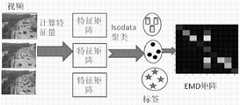
图1为本发明实施例的流程图。 Fig. 1 is a flowchart of an embodiment of the present invention. the
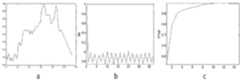
图2为计算嵌入延迟和嵌入维数的示意图。 Fig. 2 is a schematic diagram of calculating embedding delay and embedding dimension. the
图3为计算视频的不同运动特征位置的特征量图。 FIG. 3 is a feature quantity diagram for calculating different motion feature positions of a video. the
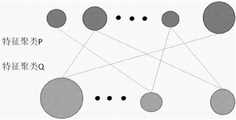
图4为EMD算法的示意图。 Fig. 4 is a schematic diagram of the EMD algorithm. the
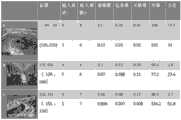
图5视频运动模式分割结果图。 Fig. 5 Segmentation results of video motion patterns. the
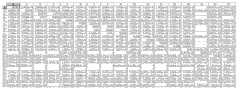
图6为EMD算法计算各个视频之间的距离的部分结果图。 FIG. 6 is a partial result diagram of the distance between each video calculated by the EMD algorithm. the
图7为将EMD矩阵作为高斯核函数得到的训练矩阵的部分结果图。 FIG. 7 is a partial result diagram of the training matrix obtained by using the EMD matrix as a Gaussian kernel function. the
图8为交通视频检索部分结果图。 Figure 8 is a partial result map of traffic video retrieval. the
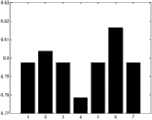
图9为交通视频不同特征组合的识别率的结果图。 Fig. 9 is a graph showing the recognition rate results of different feature combinations of traffic videos. the
具体实施方式Detailed ways
为了更好地理解本发明的技术方案, In order to better understand the technical solution of the present invention,
下面结合附图对本发明的实施例作详细说明:本实施例在以本发明技术方案为前提下进行实施,给出了详细的实施方式和具体的操作过程,但本发明的保护范围不限于下述的实施例。 The embodiments of the present invention are described in detail below in conjunction with the accompanying drawings: this embodiment is implemented on the premise of the technical solution of the present invention, and detailed implementation methods and specific operating procedures are provided, but the protection scope of the present invention is not limited to the following the described embodiment. the
本发明包括下列步骤: The present invention comprises the following steps:
(1)计算得到特征向量矩阵 (1) Calculate the eigenvector matrix
如图1所示,本实施例首先是得到每个随时间变化的像素点的特征量。然后将特征量组成特征向量,视频中的每个像素点就由这个特征向量来表示。从而将整个视频变为特征向量矩阵。下面我们先来介绍混沌理论的基本概念。 As shown in FIG. 1 , in this embodiment, first, the feature value of each pixel point that changes with time is obtained. Then the feature quantity is composed into a feature vector, and each pixel in the video is represented by this feature vector. Thus turning the entire video into a matrix of feature vectors. Let us first introduce the basic concepts of chaos theory. the
(1.1)混沌理论介绍: (1.1) Introduction to Chaos Theory:
混沌系统是看似杂乱无章的随机运动,在文献“Takens F 1981 Detecting Strange Attractor in Turbulence(Lecture Notes in Mathematics vol 898)ed D A Rand and L S Young p 366.”里面指出通过映射可以将一维的混沌时间序列映射到高维空间,需要计算两个参数嵌入延迟和嵌入维数。 A chaotic system is a seemingly chaotic random motion. In the document "Takens F 1981 Detecting Strange Attractor in Turbulence (Lecture Notes in Mathematics vol 898) ed D A Rand and L S Young p 366." It is pointed out that one-dimensional To map chaotic time series to high-dimensional space, two parameters, embedding delay and embedding dimension, need to be calculated. the
嵌入延迟τ可以通过计算时间序列互信息得到(A.M.Fraser et.al.,“Independent Coordinates for Strange Attractors from Mutual Information,”Phys.Rev.,1986.)。首先得到时间序列的最大最小值min(xτ)和max(xτ),将区间[min(xτ),max(xτ)]分成长度相同的小区间。计算: The embedded delay τ can be obtained by calculating the time series mutual information (AM Fraser et.al., "Independent Coordinates for Strange Attractors from Mutual Information," Phys. Rev., 1986.). Firstly, the maximum and minimum values min(xτ ) and max(xτ ) of the time series are obtained, and the interval [min(xτ ), max(xτ )] is divided into small intervals with the same length. calculate:
其中Ps和Pq分别表示变量xτ在第s个区间和在第q个区间的概率,Ps,q表示xτ在第s个区间xτ-τ在第q个区间的联合概率。I(τ)的第一个局部最小值选为嵌入延迟,且τ>1。图3显示的是目标y方向位置的时间序列值。图3画出了计算的互信息得到的可能的嵌入延迟的值。第一个最小值被选为嵌入延迟。 Among them, Ps and Pq represent the probability of the variable xτ in the s-th interval and the q-th interval respectively, and Ps, q represent the joint probability of xτ in the s-th interval and xτ-τ in the q-th interval. The first local minimum of I(τ) is selected as the embedded delay, and τ>1. Figure 3 shows the time series values of the target's y-direction position. Figure 3 plots the values of possible embedding delays obtained from the computed mutual information. The first smallest value was chosen as the embedding delay.
嵌入维数d通过伪最近邻方法得到(M.B.Kennel et.al,“Determining Embedding Dimension for Phase Space Reconstruction using A Geometrical Construction,”Phys.Rev.A,45,1992.)。其思想是在重构空间中,如果两点比较临近,则在下一时刻仍然会很接近。计算嵌入维数方法如下:首先在时间序列X选择一点x(i),在其领域范围ε选择点x(j),计算在d-1维x(i)和x(j)之间的距离: The embedding dimension d is obtained by the pseudo-nearest neighbor method (M.B.Kennel et.al, "Determining Embedding Dimension for Phase Space Reconstruction using A Geometrical Construction," Phys. Rev. A, 45, 1992.). The idea is that in the reconstruction space, if two points are relatively close, they will still be very close at the next moment. The method of calculating the embedding dimension is as follows: first select a point x(i) in the time series X, select a point x(j) in its field range ε, and calculate the distance between x(i) and x(j) in the d-1 dimension :
如果Ri大于阈值RT,则认为p(i)有伪最近邻。利用上述公式计算d=1,2,…,直到Ri<RT为止。 If Ri is greater than the threshold RT , p(i) is considered to have a pseudo-nearest neighbor. Use the above formula to calculate d=1, 2, . . . until Ri <RT .
这样,对一个给定的时间序列x(t)=[x1(t),x2(t),…,xn(t)]∈Rn,通过映射可以表示为: In this way, for a given time series x(t)=[x1 (t), x2 (t), ..., xn (t)]∈Rn , it can be expressed as:
图2为计算嵌入延迟和嵌入维数的示意图。 Fig. 2 is a schematic diagram of calculating embedding delay and embedding dimension. the
(1.2)混沌特征不变量 (1.2) Chaotic characteristic invariant
混沌特征不变量是用来刻画混沌运动的某个方面特征的量。本发明中我们用到的混沌特征不变量有三个:盒维数,信息维数和关联维数。 The chaotic characteristic invariant is the quantity used to characterize a certain aspect of chaotic motion. There are three chaotic characteristic invariants used in the present invention: box dimension, information dimension and correlation dimension. the
盒维数:盒维数是分形维数的一种,它刻画着序列的混沌几何特征。令DF是盒维数,如果一个点集是由一定数量的盒子覆盖,且每个盒子至少含有一个点,则对一个自相似集。 Box dimension: Box dimension is a kind of fractal dimension, which characterizes the chaotic geometric characteristics of the sequence. Let DF be the box dimension, if a point set is covered by a certain number of boxes, and each box contains at least one point, it is a self-similar set.
信息维数:信息维数表示的是信息尺度和轨迹点半径的比。 Information dimension: The information dimension represents the ratio of the information scale to the radius of the track point. the
关联维数:关联维数是状态空间密度的变化在邻域半径的度量。 Correlation Dimension: Correlation dimension is a measure of the state-space density variation in the neighborhood radius. the
我们还用到下面这两个特征: We also use the following two features:
时间序列均值:对像素点的时间序列值求平均得到平均值。 Time series mean: Average the time series values of pixels to get the average value. the
时间序列方差:对像素点的时间序列值求方差。 Time series variance: Calculate the variance of the time series value of the pixel. the
我们将嵌入延迟,嵌入维数,盒维数,信息维数,关联维数,均值,方差组成一个特征向量。 We combine embedding delay, embedding dimension, box dimension, information dimension, correlation dimension, mean, and variance into a feature vector. the
图3为计算视频的不同运动特征位置的特征量图。图中(a)(b)(c)分别为三幅不同的视频,我们选择了视频中不同位置的像素点的时间序列来计算各个特征量。 FIG. 3 is a feature quantity diagram for calculating different motion feature positions of a video. (a), (b) and (c) in the figure are three different videos respectively. We selected the time series of pixels at different positions in the video to calculate each feature quantity. the
(2)视频运动模式分割 (2) Video motion mode segmentation
含有固定运动模式的视频里面,相同的运动模式的特征向量具有相似性,因此可以通过聚类算法来分割视频里面的运动模式。本发明采用Isodata聚类算法来实现。Isodata聚类算法如下: In videos with fixed motion patterns, the feature vectors of the same motion patterns are similar, so the motion patterns in the videos can be segmented by clustering algorithms. The present invention adopts Isodata clustering algorithm to realize. The Isodata clustering algorithm is as follows:
(a)输入N个特征向量样本{xi,i=1,2,...,N}{xi,i=1,2,…,N}。预选Nc个初始聚类中心 
预设参数:K=预期的聚类中心数目;θN=每一聚类域中最少的样本数目,若少于此数即不作为一个独立的聚类;θS=一个聚类域中样本距离分布的标准差; θc=两个聚类中心间的最小距离,若小于此数,两个聚类需进行合并;L=在一次迭代运算中可以合并的聚类中心的最多对数;I=迭代运算的次数。 Preset parameters: K = expected number of cluster centers; θN = minimum number of samples in each cluster domain, if less than this number, it will not be regarded as an independent cluster; θS = samples in a cluster domain The standard deviation of the distance distribution; θc = the minimum distance between two cluster centers, if it is less than this number, the two clusters need to be merged; L = the maximum logarithm of cluster centers that can be merged in one iterative operation; I = the number of iteration operations.
(b)将N个特征向量样本分给最近的聚类Sj,假若 
(c)如果Sj中的样本数目Sj<θN,则取消该样本子集,此时Nc减去1。 (c) If the number of samples Sj < θN in Sj , then cancel the sample subset, and then subtract 1 from Nc .
(d)修正各聚类中心 (d) Correct each cluster center
(e)计算各聚类域Sj中特征向量样本与各聚类中心间的平均距离 (e) Calculate the average distance between the feature vector samples in each cluster domain Sj and each cluster center
(f)计算全部特征向量样本和其对应聚类中心的总平均距离 (f) Calculate the total average distance between all feature vector samples and their corresponding cluster centers
(g)判别分裂、合并及迭代运算 (g) Discriminant splitting, merging and iterative operations
1.若迭代运算次数已达到I次,即最后一次迭代,则置θc=0,转至第k步。 1. If the number of iterative operations has reached I, that is, the last iteration, then set θc =0 and go to the kth step.
2.若 
3.若迭代运算的次数是偶数次,或Nc≥2K,不进行分裂处理,转至第k步;否则(即既不是偶数次迭代,又不满足Nc≥2K),转至第h步,进行分裂处理。 3. If the number of iterative operations is an even number, or Nc ≥ 2K, do not perform split processing, and go to the kth step; otherwise (that is, it is neither an even number of iterations nor satisfy Nc ≥ 2K), go to the hth step Step, split processing.
(h)计算每个聚类中样本距离的标准差向量 (h) Calculate the standard deviation vector of sample distances in each cluster
σj=(σ1j,σ2j,...,σnj)Tσj =(σ1j ,σ2j ,...,σnj )T
其中向量的各个分量为 where each component of the vector is
式中,i=1,2,...,n为样本特征向量的维数,j=1,2,...,Nc,Nc为聚类数,Nj为Sj中的样本个数。 In the formula, i=1,2,...,n is the dimension of sample feature vector, j=1,2,...,Nc , Nc is the number of clusters, Nj is the sample in Sj number.
(i)求每一标准差向量{σj,j=1,2,...,Nc}中的最大分量,以
(j)在任一最大分量集{σjmax,j=1,2,...,Nc}中,若有σjmax>θS,同时又满足如下两个条件之一: (j) In any maximum component set {σjmax , j=1,2,...,Nc }, if σjmax > θS , one of the following two conditions is satisfied at the same time:
(a) 
(b)
则将Zj分裂为两个新的聚类中心 


如果本步骤完成了分裂运算,则转至第b步,否则继续。 If the division operation is completed in this step, go to step b, otherwise continue. the
(k)计算全部聚类中心的距离 (k) Calculate the distance of all cluster centers
Dij=||zi-zj||,i=1,2,...,Nc-1,j=i+1,2,...,NcDij =||zi -zj ||, i=1,2,...,Nc -1, j=i+1,2,...,Nc
(l)比较Dij与θc的值,将Dij<θc的值按最小距离次序递增排列,即 (l) Compare the values of Dij and θc , and arrange the values of Dij < θc in ascending order of the smallest distance, that is
式中,
(m)将距离为 

式中,被合并的两个聚类中心向量分别以其聚类域内的样本数加权,使 
(n)如果是最后一次迭代运算(即第I次),则算法结束;否则,若需要操作者改变输入参数,转至第a步;若输入参数不变,转至第b步。 (n) If it is the last iterative operation (that is, the Ith time), the algorithm ends; otherwise, if the operator needs to change the input parameters, go to step a; if the input parameters remain unchanged, go to step b. the
在本步运算中,迭代运算的次数每次应加1。 In this step of operation, the number of iterative operations should be increased by 1 each time. the
通过上面isodata聚类算法,可以对视频中的不同运动模式分类。 Through the above isodata clustering algorithm, different motion patterns in the video can be classified. the
(3)特征对应 (3) Feature correspondence
我们采用EMD算法(Y.Rubner,C.Tomasi,L.Guibas,The earth mover’s distance as a metric for image retrieval,International Journal of Computer Vision 40(2)(2000)99–121.)来比较特征。 We use the EMD algorithm (Y.Rubner, C.Tomasi, L.Guibas, The earth mover’s distance as a metric for image retrieval, International Journal of Computer Vision 40(2)(2000)99–121.) to compare features. the
令P={((pi,wpi)|1≤i≤Cp)}和Q={((qj,wqj)|1≤j≤Cq)}表示两个特征聚类,其中pi和qi表示特征聚类均值,wpi和wqi是特征聚类的权重,Cp和Cq是特征的个数。则这两个特征之间的距离为: Let P={((pi , wpi )|1≤i≤Cp )} and Q={((qj ,wqj )|1≤j≤Cq )} denote two feature clusters, where pi and qi represent the mean value of feature clustering, wpi and wqi are the weights of feature clustering, and Cp and Cq are the number of features. Then the distance between these two features is:
其中D={dij}是特征聚类mi和mj之间的距离。F=[fij]是pi和pj之间的流量。上面EMD公式受到下面四个公式的约束: where D={dij } is the distance between feature clusters mi and mj . F=[fij ] is the flow between pi and pj . The above EMD formula is constrained by the following four formulas:
fij≥0 1≤i≤m,1≤j≤n, fij ≥0 1≤i≤m, 1≤j≤n,
计算得到的EMD值可以当做高斯核函数的核,用于视频检索和学习。 The calculated EMD value can be used as the kernel of the Gaussian kernel function for video retrieval and learning. the
Kernel(P,Q)=exp(-ρEMD(P,Q)2) Kernel(P, Q)=exp(-ρEMD(P, Q)2 )
其中ρ是核函数参数,在本发明中ρ=1。 Wherein ρ is a kernel function parameter, and ρ=1 in the present invention. the
图4为EMD算法的示意图。 Fig. 4 is a schematic diagram of the EMD algorithm. the
(4)交通视频检索 (4) Traffic video retrieval
将EMD矩阵转化为新的训练矩阵,将训练矩阵每行的数值按照从大到小的顺序排列,则可以找到行数代表的视频跟其它视频的相似度,这样可以达到视频的功能。 Convert the EMD matrix into a new training matrix, and arrange the values of each row of the training matrix in descending order, then you can find the similarity between the video represented by the row number and other videos, so that the function of the video can be achieved. the
(5)交通视频分类 (5) Classification of traffic videos
我们采用1-NN算法,先训练再分类的步骤,即每次选择一个视频,将EMD矩阵按照待分类的视频和其它视频之间的相似度按照从高到低来排序,则待分类的视频和相似度最高的视频被认为属于同一类型,即完成了对待分类视频的分类。 We use the 1-NN algorithm, the step of training first and then classifying, that is, selecting a video each time, and sorting the EMD matrix from high to low according to the similarity between the video to be classified and other videos, then the video to be classified The video with the highest similarity is considered to belong to the same type, that is, the classification of the video to be classified is completed. the
对运动模式分割,我们用(Saad Ali and Mubarak Shah,A Lagrangian Particle Dynamics Approach for Crowd Flow Segmentation and Stability Analysis,IEEE International Conference on Computer Vision and Pattern Recognition,2007.)三个视频来做视频分割。第一个视频是密集人群的旋转移动,一个运动模式是顺时针,另一个运动模式是逆时针。第二个视频也是密集人群的运动,一个运动模式是人群从远处走向视频近端,另一个运动模式是人群从近端走向远端。第三个视频是车流,将马路和其它背景分割开来。 For motion pattern segmentation, we use (Saad Ali and Mubarak Shah, A Lagrangian Particle Dynamics Approach for Crowd Flow Segmentation and Stability Analysis, IEEE International Conference on Computer Vision and Pattern Recognition, 2007.) three videos for video segmentation. The first video is the rotational movement of a dense crowd, one movement pattern is clockwise and the other movement pattern is counterclockwise. The second video is also the movement of dense crowds. One movement mode is that the crowd moves from a distance to the near end of the video, and the other movement mode is that the crowd moves from the near end to the far end. The third video is traffic flow, which separates the road from other backgrounds. the
对于交通视频分类,我们用(A.B.Chan and N.Vasconcelos,"Probabilistic Kernels for the Classification of Auto-Regressive Visual Processes".Proceedings of IEEE Conference on Computer Vision and Pattern Recognition,San Diego,2005.)的158个视频数据。根据交通状况,可以将交通状况分为轻度堵塞(light),中都堵塞(medium),和严重堵塞(heavy)。 For traffic video classification, we use 158 videos from (A.B.Chan and N.Vasconcelos, "Probabilistic Kernels for the Classification of Auto-Regressive Visual Processes". Proceedings of IEEE Conference on Computer Vision and Pattern Recognition, San Diego, 2005.) data. According to the traffic conditions, the traffic conditions can be divided into light congestion (light), medium congestion (medium), and severe congestion (heavy). the
则各部分具体实施细节如下: The specific implementation details of each part are as follows:
1)得到特征矩阵 1) Get the feature matrix
对一个视频的每个像素点,计算出特征量:嵌入延迟,嵌入维数,盒维数,信息维数,关联维数,均值和方差。将这7个特征组成一个特征向量来代表这个像素点的时间序列的特征。每个像素点都用这个特征向量来表示。每个视频则变为一个特征向量矩阵。 For each pixel of a video, feature quantities are calculated: embedding delay, embedding dimension, box dimension, information dimension, correlation dimension, mean and variance. These 7 features are combined into a feature vector to represent the time series features of this pixel. Each pixel is represented by this feature vector. Each video then becomes a matrix of feature vectors. the
2)分割特征矩阵 2) Segment feature matrix
利用isodata分割算法,分割特征矩阵。(给出参数)。六个参数设为K=5,θN=1000,θS=0.01,θc=5,L=100,I=7。 Use the isodata segmentation algorithm to segment the feature matrix. (given the arguments). The six parameters are set as K=5, θN =1000, θS =0.01, θc =5, L=100, I=7.
图5为视频运动模式分割结果图。(a)(b)(c)中左边图片为我们选择视频的原始图片,右边为用本文算法得到的分割结果。从实验结果可以看出本发明的算法可以将视频中不同的运动模式分割开。 Fig. 5 is a diagram of video motion pattern segmentation results. (a) (b) (c) The left picture is the original picture of the video we selected, and the right side is the segmentation result obtained by the algorithm of this paper. It can be seen from the experimental results that the algorithm of the present invention can separate different motion patterns in the video. the
3)计算得到EMD矩阵 3) Calculate the EMD matrix
我们用EMD算法分别来计算每个特征矩阵和其它所有特征矩阵之间的EMD距离。两个视频之间的EMD距离越小,说明两个视频越相似。计算的部分结果显示在图6中。 We use the EMD algorithm to calculate the EMD distance between each feature matrix and all other feature matrices separately. The smaller the EMD distance between two videos, the more similar the two videos are. Partial results of the calculations are shown in Fig. 6. the
4)交通视频检索。 4) Traffic video retrieval. the
用步骤3得到的EMD矩阵作为高斯函数的核,可以得到一个新的训练矩阵。 Using the EMD matrix obtained in
图7为将EMD矩阵作为高斯核函数得到的训练矩阵的部分结果图。 FIG. 7 is a partial result diagram of the training matrix obtained by using the EMD matrix as a Gaussian kernel function. the
图8为交通视频检索部分结果图。 Figure 8 is a partial result map of traffic video retrieval. the
5)交通视频分类。 5) Traffic video classification. the
我们选择用1-NN算法来做识别,即将EMD矩阵按照待分类的视频和其它视频之间的相似度按照从高到低来排序,则待分类的视频和相似度最高的视频被认为属于同一类型,这样就完成了对待分类视频的分类。 We choose to use the 1-NN algorithm for identification, that is, the EMD matrix is sorted from high to low according to the similarity between the video to be classified and other videos, and the video to be classified and the video with the highest similarity are considered to belong to the same type, thus completing the classification of the video to be classified. the
图9为交通视频不同特征组合的识别率的结果图,其中: Fig. 9 is the result graph of the recognition rate of different feature combinations of traffic video, wherein:
1:【嵌入延迟,嵌入维数,盒维数,信息维数,关联维数,像素方差】 1: [embedding delay, embedding dimension, box dimension, information dimension, correlation dimension, pixel variance]
1:【嵌入延迟,嵌入维数,盒维数,像素方差】 1: [embedding delay, embedding dimension, box dimension, pixel variance]
1:【嵌入延迟,嵌入维数,盒维数,信息维数,像素方差】 1: [embedding delay, embedding dimension, box dimension, information dimension, pixel variance]
1:【嵌入延迟,嵌入维数,信息维数,关联维数,像素方差】 1: [embedding delay, embedding dimension, information dimension, correlation dimension, pixel variance]
1:【嵌入延迟,嵌入维数,盒维数,关联维数,像素方差】 1: [embedding delay, embedding dimension, box dimension, correlation dimension, pixel variance]
1:【嵌入延迟,嵌入维数,信息维数,像素方差】 1: [embedding delay, embedding dimension, information dimension, pixel variance]
1:【嵌入延迟,嵌入维数,关联维数,像素方差】。 1: [embedding delay, embedding dimension, correlation dimension, pixel variance]. the
Claims (2)
Priority Applications (1)
| Application Number | Priority Date | Filing Date | Title |
|---|---|---|---|
| CN2012103992512ACN102930294A (en) | 2012-10-18 | 2012-10-18 | Chaotic characteristic parameter-based motion mode video segmentation and traffic condition identification method |
Applications Claiming Priority (1)
| Application Number | Priority Date | Filing Date | Title |
|---|---|---|---|
| CN2012103992512ACN102930294A (en) | 2012-10-18 | 2012-10-18 | Chaotic characteristic parameter-based motion mode video segmentation and traffic condition identification method |
Publications (1)
| Publication Number | Publication Date |
|---|---|
| CN102930294Atrue CN102930294A (en) | 2013-02-13 |
Family
ID=47645091
Family Applications (1)
| Application Number | Title | Priority Date | Filing Date |
|---|---|---|---|
| CN2012103992512APendingCN102930294A (en) | 2012-10-18 | 2012-10-18 | Chaotic characteristic parameter-based motion mode video segmentation and traffic condition identification method |
Country Status (1)
| Country | Link |
|---|---|
| CN (1) | CN102930294A (en) |
Cited By (9)
| Publication number | Priority date | Publication date | Assignee | Title |
|---|---|---|---|---|
| CN103268498A (en)* | 2013-04-21 | 2013-08-28 | 郑州轻工业学院 | A method for semantic understanding of fuzzy images with regions of interest |
| CN104866500A (en)* | 2014-02-25 | 2015-08-26 | 腾讯科技(深圳)有限公司 | Method and device for displaying pictures in classified manner |
| CN107424147A (en)* | 2017-07-03 | 2017-12-01 | 苏州珂锐铁电气科技有限公司 | Graphic defects identification and localization method based on implicit Di Li Crays distributed model |
| CN107423695A (en)* | 2017-07-13 | 2017-12-01 | 苏州珂锐铁电气科技有限公司 | Dynamic texture identification method based on bipartite graph |
| WO2019127940A1 (en)* | 2017-12-25 | 2019-07-04 | 上海七牛信息技术有限公司 | Video classification model training method, device, storage medium, and electronic device |
| CN110046209A (en)* | 2019-03-26 | 2019-07-23 | 太原科技大学 | A kind of track stopping point extracting method based on Gauss model |
| CN111027606A (en)* | 2019-11-29 | 2020-04-17 | 中国科学院空间应用工程与技术中心 | A multi-mode time series anomaly detection method, storage medium and device |
| CN112329663A (en)* | 2020-11-10 | 2021-02-05 | 西南大学 | Micro-expression time detection method and device based on face image sequence |
| CN113688904A (en)* | 2021-08-24 | 2021-11-23 | 大连海事大学 | A method for extracting dynamic characteristic parameters of intelligent ship system equipment |
Citations (1)
| Publication number | Priority date | Publication date | Assignee | Title |
|---|---|---|---|---|
| CN101515328A (en)* | 2008-12-18 | 2009-08-26 | 东华大学 | Local projection preserving method facing identification and having statistical noncorrelation |
- 2012
- 2012-10-18CNCN2012103992512Apatent/CN102930294A/enactivePending
Patent Citations (1)
| Publication number | Priority date | Publication date | Assignee | Title |
|---|---|---|---|---|
| CN101515328A (en)* | 2008-12-18 | 2009-08-26 | 东华大学 | Local projection preserving method facing identification and having statistical noncorrelation |
Non-Patent Citations (3)
| Title |
|---|
| ANTONI B. CHAN等: "Modeling, Clustering, and Segmenting Video with Mixtures of Dynamic Textures", 《IEEE TRANSACTIONS ON PATTERN ANALYSIS AND MACHINE INTELLIGENCE》, vol. 30, no. 5, 31 May 2008 (2008-05-31), pages 909 - 925* |
| B. B. CHAUDHURI等: "Texture Segmentation Using Fractal Dimension", 《IEEE TRANSACTIONS ON PATTERN ANALYSIS AND MACHINE INTELLIGENCE》, vol. 17, no. 1, 31 January 1995 (1995-01-31), pages 72 - 76* |
| SAAD ALI等: "Chaotic Invariants for Human Action Recognition", 《IEEE》, 31 December 2007 (2007-12-31), pages 1 - 8* |
Cited By (13)
| Publication number | Priority date | Publication date | Assignee | Title |
|---|---|---|---|---|
| CN103268498B (en)* | 2013-04-21 | 2016-06-29 | 郑州轻工业学院 | A kind of method of area-of-interest blurred picture semantic understanding |
| CN103268498A (en)* | 2013-04-21 | 2013-08-28 | 郑州轻工业学院 | A method for semantic understanding of fuzzy images with regions of interest |
| CN104866500B (en)* | 2014-02-25 | 2021-10-15 | 腾讯科技(深圳)有限公司 | Picture classification display method and device |
| CN104866500A (en)* | 2014-02-25 | 2015-08-26 | 腾讯科技(深圳)有限公司 | Method and device for displaying pictures in classified manner |
| CN107424147A (en)* | 2017-07-03 | 2017-12-01 | 苏州珂锐铁电气科技有限公司 | Graphic defects identification and localization method based on implicit Di Li Crays distributed model |
| CN107423695A (en)* | 2017-07-13 | 2017-12-01 | 苏州珂锐铁电气科技有限公司 | Dynamic texture identification method based on bipartite graph |
| WO2019127940A1 (en)* | 2017-12-25 | 2019-07-04 | 上海七牛信息技术有限公司 | Video classification model training method, device, storage medium, and electronic device |
| CN110046209A (en)* | 2019-03-26 | 2019-07-23 | 太原科技大学 | A kind of track stopping point extracting method based on Gauss model |
| CN110046209B (en)* | 2019-03-26 | 2022-08-09 | 太原科技大学 | Trajectory stopping point extraction method based on Gaussian model |
| CN111027606A (en)* | 2019-11-29 | 2020-04-17 | 中国科学院空间应用工程与技术中心 | A multi-mode time series anomaly detection method, storage medium and device |
| CN112329663A (en)* | 2020-11-10 | 2021-02-05 | 西南大学 | Micro-expression time detection method and device based on face image sequence |
| CN113688904A (en)* | 2021-08-24 | 2021-11-23 | 大连海事大学 | A method for extracting dynamic characteristic parameters of intelligent ship system equipment |
| CN113688904B (en)* | 2021-08-24 | 2023-08-22 | 大连海事大学 | A method for extracting dynamic characteristic parameters of intelligent ship system equipment |
Similar Documents
| Publication | Publication Date | Title |
|---|---|---|
| Lynen et al. | Placeless place-recognition | |
| CN102930294A (en) | Chaotic characteristic parameter-based motion mode video segmentation and traffic condition identification method | |
| CN107563372B (en) | License plate positioning method based on deep learning SSD frame | |
| Chen et al. | Vehicle detection in high-resolution aerial images via sparse representation and superpixels | |
| CN103310195B (en) | Based on LLC feature the Weakly supervised recognition methods of vehicle high score remote sensing images | |
| CN109446894B (en) | A Multispectral Image Change Detection Method Based on Probabilistic Segmentation and Gaussian Mixture Clustering | |
| Tao et al. | Scene context-driven vehicle detection in high-resolution aerial images | |
| ElMikaty et al. | Detection of cars in high-resolution aerial images of complex urban environments | |
| CN103606164B (en) | SAR Image Segmentation Method Based on High Dimensional Triple Markov Field | |
| CN106611420A (en) | SAR image segmentation method based on deconvolution network and sketch direction constraint | |
| CN108257154A (en) | Polarimetric SAR Image change detecting method based on area information and CNN | |
| CN102799900A (en) | Target tracking method based on supporting online clustering in detection | |
| CN113159215A (en) | Small target detection and identification method based on fast Rcnn | |
| CN102915451A (en) | Dynamic texture identification method based on chaos invariant | |
| Huang et al. | An object detection algorithm combining semantic and geometric information of the 3D point cloud | |
| CN102073873A (en) | Method for selecting SAR (spaceborne synthetic aperture radar) scene matching area on basis of SVM (support vector machine) | |
| Haines et al. | Detecting planes and estimating their orientation from a single image. | |
| CN109284705A (en) | An anomaly detection method for traffic surveillance video | |
| CN105574545B (en) | The semantic cutting method of street environment image various visual angles and device | |
| CN114049541B (en) | Visual scene recognition method based on structured information feature decoupling and knowledge transfer | |
| Wang et al. | Research on vehicle detection based on faster R-CNN for UAV images | |
| CN104778699B (en) | A kind of tracking of self adaptation characteristics of objects | |
| CN110298271A (en) | Seawater method for detecting area based on critical point detection network and space constraint mixed model | |
| Khosravi et al. | Vehicle speed and dimensions estimation using on-road cameras by identifying popular vehicles | |
| CN106203368A (en) | A kind of traffic video frequency vehicle recognition methods based on SRC and SVM assembled classifier |
Legal Events
| Date | Code | Title | Description |
|---|---|---|---|
| C06 | Publication | ||
| PB01 | Publication | ||
| C10 | Entry into substantive examination | ||
| SE01 | Entry into force of request for substantive examination | ||
| C02 | Deemed withdrawal of patent application after publication (patent law 2001) | ||
| WD01 | Invention patent application deemed withdrawn after publication | Application publication date:20130213 |