CN102174519B - Dwarf male-sterile rice cultivation method and DNA (Deoxyribonucleic Acid) used thereby - Google Patents
Dwarf male-sterile rice cultivation method and DNA (Deoxyribonucleic Acid) used therebyDownload PDFInfo
- Publication number
- CN102174519B CN102174519BCN 201110045310CN201110045310ACN102174519BCN 102174519 BCN102174519 BCN 102174519BCN 201110045310CN201110045310CN 201110045310CN 201110045310 ACN201110045310 ACN 201110045310ACN 102174519 BCN102174519 BCN 102174519B
- Authority
- CN
- China
- Prior art keywords
- rice
- dna
- gene
- dwarf
- fragment
- Prior art date
- Legal status (The legal status is an assumption and is not a legal conclusion. Google has not performed a legal analysis and makes no representation as to the accuracy of the status listed.)
- Expired - Fee Related
Links
- 235000007164Oryza sativaNutrition0.000titleclaimsabstractdescription65
- 235000009566riceNutrition0.000titleclaimsabstractdescription64
- 108020004414DNAProteins0.000titleclaimsdescription72
- 240000007594Oryza sativaSpecies0.000titledescription66
- 102000053602DNAHuman genes0.000title2
- 238000012364cultivation methodMethods0.000title1
- 241000196324EmbryophytaSpecies0.000claimsabstractdescription56
- 238000000034methodMethods0.000claimsabstractdescription38
- 101150035447RTS geneProteins0.000claimsabstractdescription11
- 230000000694effectsEffects0.000claimsabstractdescription7
- 108700004756oxidizing) 2-oxoglutarate-oxygen oxidoreductase (20-hydroxylating gibberellinProteins0.000claimsabstractdescription5
- 241000209094OryzaSpecies0.000claimsabstract15
- 239000012634fragmentSubstances0.000claimsdescription90
- 239000013604expression vectorSubstances0.000claimsdescription28
- 241000589158AgrobacteriumSpecies0.000claimsdescription21
- 230000009466transformationEffects0.000claimsdescription11
- 230000007152anther developmentEffects0.000claimsdescription8
- 230000002441reversible effectEffects0.000claimsdescription8
- 125000006850spacer groupChemical group0.000claimsdescription8
- 230000001404mediated effectEffects0.000claimsdescription7
- 240000008467Oryza sativa Japonica GroupSpecies0.000claimsdescription4
- 239000002245particleSubstances0.000claimsdescription2
- 238000013467fragmentationMethods0.000claims1
- 238000006062fragmentation reactionMethods0.000claims1
- 108090000623proteins and genesProteins0.000abstractdescription53
- 108091030071RNAIProteins0.000abstractdescription21
- 230000009368gene silencing by RNAEffects0.000abstractdescription21
- 206010021929Infertility maleDiseases0.000abstractdescription20
- 208000007466Male InfertilityDiseases0.000abstractdescription20
- 230000014509gene expressionEffects0.000abstractdescription14
- 101000860296Oryza sativa subsp. japonica Gibberellin 20 oxidase 2Proteins0.000abstractdescription13
- 238000011161developmentMethods0.000abstractdescription12
- 230000000306recurrent effectEffects0.000abstractdescription10
- 238000005516engineering processMethods0.000abstractdescription9
- 238000010353genetic engineeringMethods0.000abstractdescription3
- 238000004519manufacturing processMethods0.000abstractdescription3
- 229930191978GibberellinNatural products0.000abstractdescription2
- 230000015572biosynthetic processEffects0.000abstractdescription2
- IXORZMNAPKEEDV-UHFFFAOYSA-Ngibberellic acid GA3Natural productsOC(=O)C1C2(C3)CC(=C)C3(O)CCC2C2(C=CC3O)C1C3(C)C(=O)O2IXORZMNAPKEEDV-UHFFFAOYSA-N0.000abstractdescription2
- 239000003448gibberellinSubstances0.000abstractdescription2
- 238000009394selective breedingMethods0.000abstractdescription2
- 230000002950deficientEffects0.000abstract1
- 235000013399edible fruitsNutrition0.000abstract1
- 238000012214genetic breedingMethods0.000abstract1
- 238000003786synthesis reactionMethods0.000abstract1
- 239000013612plasmidSubstances0.000description53
- 239000002609mediumSubstances0.000description34
- 239000000243solutionSubstances0.000description32
- 239000013598vectorSubstances0.000description30
- 108091008146restriction endonucleasesProteins0.000description29
- PEDCQBHIVMGVHV-UHFFFAOYSA-NGlycerineChemical compoundOCC(O)COPEDCQBHIVMGVHV-UHFFFAOYSA-N0.000description28
- XLYOFNOQVPJJNP-UHFFFAOYSA-NwaterSubstancesOXLYOFNOQVPJJNP-UHFFFAOYSA-N0.000description28
- 238000001962electrophoresisMethods0.000description23
- LFQSCWFLJHTTHZ-UHFFFAOYSA-NEthanolChemical compoundCCOLFQSCWFLJHTTHZ-UHFFFAOYSA-N0.000description22
- 239000000047productSubstances0.000description21
- 210000004027cellAnatomy0.000description20
- 238000006243chemical reactionMethods0.000description20
- 238000012408PCR amplificationMethods0.000description19
- 238000012546transferMethods0.000description19
- 239000006228supernatantSubstances0.000description18
- 239000000203mixtureSubstances0.000description16
- 101150116497sacm1l geneProteins0.000description15
- 206010020649HyperkeratosisDiseases0.000description14
- 239000011543agarose gelSubstances0.000description14
- 238000010276constructionMethods0.000description14
- 230000029087digestionEffects0.000description14
- 230000001580bacterial effectEffects0.000description13
- 101100442582Neurospora crassa (strain ATCC 24698 / 74-OR23-1A / CBS 708.71 / DSM 1257 / FGSC 987) spe-1 geneProteins0.000description12
- 239000007788liquidSubstances0.000description11
- 206010000210abortionDiseases0.000description10
- 231100000176abortionToxicity0.000description10
- 230000018109developmental processEffects0.000description10
- 235000011187glycerolNutrition0.000description10
- 230000009261transgenic effectEffects0.000description10
- 241000894006BacteriaSpecies0.000description9
- HEMHJVSKTPXQMS-UHFFFAOYSA-MSodium hydroxideChemical compound[OH-].[Na+]HEMHJVSKTPXQMS-UHFFFAOYSA-M0.000description9
- 229930006000SucroseNatural products0.000description9
- CZMRCDWAGMRECN-UGDNZRGBSA-NSucroseChemical compoundO[C@H]1[C@H](O)[C@@H](CO)O[C@@]1(CO)O[C@@H]1[C@H](O)[C@@H](O)[C@H](O)[C@@H](CO)O1CZMRCDWAGMRECN-UGDNZRGBSA-N0.000description9
- 239000000463materialSubstances0.000description9
- 239000005720sucroseSubstances0.000description9
- 2390000056312,4-Dichlorophenoxyacetic acidSubstances0.000description8
- KFZMGEQAYNKOFK-UHFFFAOYSA-NIsopropanolChemical compoundCC(C)OKFZMGEQAYNKOFK-UHFFFAOYSA-N0.000description8
- 238000000746purificationMethods0.000description8
- 239000005018caseinSubstances0.000description7
- BECPQYXYKAMYBN-UHFFFAOYSA-Ncasein, tech.Chemical compoundNCCCCC(C(O)=O)N=C(O)C(CC(O)=O)N=C(O)C(CCC(O)=N)N=C(O)C(CC(C)C)N=C(O)C(CCC(O)=O)N=C(O)C(CC(O)=O)N=C(O)C(CCC(O)=O)N=C(O)C(C(C)O)N=C(O)C(CCC(O)=N)N=C(O)C(CCC(O)=N)N=C(O)C(CCC(O)=N)N=C(O)C(CCC(O)=O)N=C(O)C(CCC(O)=O)N=C(O)C(COP(O)(O)=O)N=C(O)C(CCC(O)=N)N=C(O)C(N)CC1=CC=CC=C1BECPQYXYKAMYBN-UHFFFAOYSA-N0.000description7
- 235000021240caseinsNutrition0.000description7
- 239000000284extractSubstances0.000description7
- 238000012360testing methodMethods0.000description7
- 108091032973(ribonucleotides)n+mProteins0.000description6
- HEDRZPFGACZZDS-UHFFFAOYSA-NChloroformChemical compoundClC(Cl)ClHEDRZPFGACZZDS-UHFFFAOYSA-N0.000description6
- FAPWRFPIFSIZLT-UHFFFAOYSA-MSodium chlorideChemical compound[Na+].[Cl-]FAPWRFPIFSIZLT-UHFFFAOYSA-M0.000description6
- 238000001976enzyme digestionMethods0.000description6
- 238000002474experimental methodMethods0.000description6
- 230000008569processEffects0.000description6
- 239000007787solidSubstances0.000description6
- QTBSBXVTEAMEQO-UHFFFAOYSA-NAcetic acidChemical compoundCC(O)=OQTBSBXVTEAMEQO-UHFFFAOYSA-N0.000description5
- 238000000246agarose gel electrophoresisMethods0.000description5
- 238000004925denaturationMethods0.000description5
- 230000036425denaturationEffects0.000description5
- 238000001514detection methodMethods0.000description5
- 239000000499gelSubstances0.000description5
- 230000002068genetic effectEffects0.000description5
- 239000012528membraneSubstances0.000description5
- 150000007523nucleic acidsChemical group0.000description5
- 239000002244precipitateSubstances0.000description5
- 239000011347resinSubstances0.000description5
- 229920005989resinPolymers0.000description5
- 238000012163sequencing techniqueMethods0.000description5
- 241000588724Escherichia coliSpecies0.000description4
- VEXZGXHMUGYJMC-UHFFFAOYSA-NHydrochloric acidChemical compoundClVEXZGXHMUGYJMC-UHFFFAOYSA-N0.000description4
- 101000836292Klebsiella pneumoniae Type II restriction enzyme KpnIProteins0.000description4
- 240000008042Zea maysSpecies0.000description4
- 235000002017Zea mays subsp maysNutrition0.000description4
- 230000009286beneficial effectEffects0.000description4
- 239000000872bufferSubstances0.000description4
- 229940041514candida albicans extractDrugs0.000description4
- 238000005119centrifugationMethods0.000description4
- 239000003153chemical reaction reagentSubstances0.000description4
- 238000013461designMethods0.000description4
- 230000004069differentiationEffects0.000description4
- 230000035558fertilityEffects0.000description4
- PHTQWCKDNZKARW-UHFFFAOYSA-NisoamylolChemical compoundCC(C)CCOPHTQWCKDNZKARW-UHFFFAOYSA-N0.000description4
- 108020004707nucleic acidsProteins0.000description4
- 102000039446nucleic acidsHuman genes0.000description4
- 238000011084recoveryMethods0.000description4
- 238000012216screeningMethods0.000description4
- 239000011550stock solutionSubstances0.000description4
- 230000017260vegetative to reproductive phase transition of meristemEffects0.000description4
- 239000012138yeast extractSubstances0.000description4
- OPIFSICVWOWJMJ-AEOCFKNESA-N5-bromo-4-chloro-3-indolyl beta-D-galactosideChemical compoundO[C@@H]1[C@@H](O)[C@@H](O)[C@@H](CO)O[C@H]1OC1=CNC2=CC=C(Br)C(Cl)=C12OPIFSICVWOWJMJ-AEOCFKNESA-N0.000description3
- IAZDPXIOMUYVGZ-UHFFFAOYSA-NDimethylsulphoxideChemical compoundCS(C)=OIAZDPXIOMUYVGZ-UHFFFAOYSA-N0.000description3
- 102000004190EnzymesHuman genes0.000description3
- 108090000790EnzymesProteins0.000description3
- 229920002148Gellan gumPolymers0.000description3
- ZMXDDKWLCZADIW-UHFFFAOYSA-NN,N-DimethylformamideChemical compoundCN(C)C=OZMXDDKWLCZADIW-UHFFFAOYSA-N0.000description3
- 239000007983Tris bufferSubstances0.000description3
- 238000004458analytical methodMethods0.000description3
- 230000008859changeEffects0.000description3
- 239000013611chromosomal DNASubstances0.000description3
- 210000000349chromosomeAnatomy0.000description3
- 238000007796conventional methodMethods0.000description3
- 230000009089cytolysisEffects0.000description3
- 239000008367deionised waterSubstances0.000description3
- 229910021641deionized waterInorganic materials0.000description3
- 238000000605extractionMethods0.000description3
- 239000000706filtrateSubstances0.000description3
- 239000003292glueSubstances0.000description3
- 230000006698inductionEffects0.000description3
- BPHPUYQFMNQIOC-NXRLNHOXSA-Nisopropyl beta-D-thiogalactopyranosideChemical compoundCC(C)S[C@@H]1O[C@H](CO)[C@H](O)[C@H](O)[C@H]1OBPHPUYQFMNQIOC-NXRLNHOXSA-N0.000description3
- 238000002844meltingMethods0.000description3
- 230000008018meltingEffects0.000description3
- 238000002156mixingMethods0.000description3
- 238000009401outcrossingMethods0.000description3
- 239000008188pelletSubstances0.000description3
- 238000002360preparation methodMethods0.000description3
- 102000004169proteins and genesHuman genes0.000description3
- 230000001105regulatory effectEffects0.000description3
- 235000017281sodium acetateNutrition0.000description3
- 239000011780sodium chlorideSubstances0.000description3
- 239000000725suspensionSubstances0.000description3
- 230000009182swimmingEffects0.000description3
- 230000001131transforming effectEffects0.000description3
- LENZDBCJOHFCAS-UHFFFAOYSA-NtrisChemical compoundOCC(N)(CO)COLENZDBCJOHFCAS-UHFFFAOYSA-N0.000description3
- 229910021642ultra pure waterInorganic materials0.000description3
- 239000012498ultrapure waterSubstances0.000description3
- 102000007469ActinsHuman genes0.000description2
- 108010085238ActinsProteins0.000description2
- 229920001817AgarPolymers0.000description2
- 229920000936AgarosePolymers0.000description2
- IJGRMHOSHXDMSA-UHFFFAOYSA-NAtomic nitrogenChemical compoundN#NIJGRMHOSHXDMSA-UHFFFAOYSA-N0.000description2
- LZZYPRNAOMGNLH-UHFFFAOYSA-MCetrimonium bromideChemical compound[Br-].CCCCCCCCCCCCCCCC[N+](C)(C)CLZZYPRNAOMGNLH-UHFFFAOYSA-M0.000description2
- 102000012410DNA LigasesHuman genes0.000description2
- 108010061982DNA LigasesProteins0.000description2
- KCXVZYZYPLLWCC-UHFFFAOYSA-NEDTAChemical compoundOC(=O)CN(CC(O)=O)CCN(CC(O)=O)CC(O)=OKCXVZYZYPLLWCC-UHFFFAOYSA-N0.000description2
- WQZGKKKJIJFFOK-GASJEMHNSA-NGlucoseNatural productsOC[C@H]1OC(O)[C@H](O)[C@@H](O)[C@@H]1OWQZGKKKJIJFFOK-GASJEMHNSA-N0.000description2
- 108091092724Noncoding DNAProteins0.000description2
- VMHLLURERBWHNL-UHFFFAOYSA-MSodium acetateChemical compound[Na+].CC([O-])=OVMHLLURERBWHNL-UHFFFAOYSA-M0.000description2
- 241000209140TriticumSpecies0.000description2
- 235000021307TriticumNutrition0.000description2
- 102000044159UbiquitinHuman genes0.000description2
- 108090000848UbiquitinProteins0.000description2
- 235000005824Zea mays ssp. parviglumisNutrition0.000description2
- 235000016383Zea mays subsp huehuetenangensisNutrition0.000description2
- 229960000583acetic acidDrugs0.000description2
- OJOBTAOGJIWAGB-UHFFFAOYSA-NacetosyringoneChemical compoundCOC1=CC(C(C)=O)=CC(OC)=C1OOJOBTAOGJIWAGB-UHFFFAOYSA-N0.000description2
- 239000008272agarSubstances0.000description2
- 230000009418agronomic effectEffects0.000description2
- 239000003242anti bacterial agentSubstances0.000description2
- 230000000692anti-sense effectEffects0.000description2
- 229940088710antibiotic agentDrugs0.000description2
- 230000003115biocidal effectEffects0.000description2
- 238000009395breedingMethods0.000description2
- 238000011109contaminationMethods0.000description2
- 235000005822cornNutrition0.000description2
- 238000005520cutting processMethods0.000description2
- 238000012217deletionMethods0.000description2
- 230000037430deletionEffects0.000description2
- 238000010586diagramMethods0.000description2
- 238000000502dialysisMethods0.000description2
- 230000003828downregulationEffects0.000description2
- 239000003480eluentSubstances0.000description2
- 230000000408embryogenic effectEffects0.000description2
- 230000005284excitationEffects0.000description2
- 239000012362glacial acetic acidSubstances0.000description2
- 239000011521glassSubstances0.000description2
- 239000008103glucoseSubstances0.000description2
- 239000001963growth mediumSubstances0.000description2
- 238000009396hybridizationMethods0.000description2
- 239000005457ice waterSubstances0.000description2
- 229930027917kanamycinNatural products0.000description2
- 229960000318kanamycinDrugs0.000description2
- SBUJHOSQTJFQJX-NOAMYHISSA-NkanamycinChemical compoundO[C@@H]1[C@@H](O)[C@H](O)[C@@H](CN)O[C@@H]1O[C@H]1[C@H](O)[C@@H](O[C@@H]2[C@@H]([C@@H](N)[C@H](O)[C@@H](CO)O2)O)[C@H](N)C[C@@H]1NSBUJHOSQTJFQJX-NOAMYHISSA-N0.000description2
- 229930182823kanamycin ANatural products0.000description2
- 239000006166lysateSubstances0.000description2
- 235000009973maizeNutrition0.000description2
- 239000003550markerSubstances0.000description2
- 239000011259mixed solutionSubstances0.000description2
- 238000010369molecular cloningMethods0.000description2
- 239000006870ms-mediumSubstances0.000description2
- 239000013642negative controlSubstances0.000description2
- 230000000737periodic effectEffects0.000description2
- 230000010152pollinationEffects0.000description2
- SCVFZCLFOSHCOH-UHFFFAOYSA-Mpotassium acetateChemical compound[K+].CC([O-])=OSCVFZCLFOSHCOH-UHFFFAOYSA-M0.000description2
- 235000018102proteinsNutrition0.000description2
- JQXXHWHPUNPDRT-WLSIYKJHSA-NrifampicinChemical compoundO([C@](C1=O)(C)O/C=C/[C@@H]([C@H]([C@@H](OC(C)=O)[C@H](C)[C@H](O)[C@H](C)[C@@H](O)[C@@H](C)\C=C\C=C(C)/C(=O)NC=2C(O)=C3C([O-])=C4C)C)OC)C4=C1C3=C(O)C=2\C=N\N1CC[NH+](C)CC1JQXXHWHPUNPDRT-WLSIYKJHSA-N0.000description2
- 229960001225rifampicinDrugs0.000description2
- 239000012882rooting mediumSubstances0.000description2
- 238000010187selection methodMethods0.000description2
- 239000001632sodium acetateSubstances0.000description2
- 238000010186stainingMethods0.000description2
- 239000008223sterile waterSubstances0.000description2
- 230000001954sterilising effectEffects0.000description2
- 238000004659sterilization and disinfectionMethods0.000description2
- 230000000638stimulationEffects0.000description2
- 239000012879subculture mediumSubstances0.000description2
- 230000002195synergetic effectEffects0.000description2
- 238000011426transformation methodMethods0.000description2
- PRPINYUDVPFIRX-UHFFFAOYSA-N1-naphthaleneacetic acidChemical compoundC1=CC=C2C(CC(=O)O)=CC=CC2=C1PRPINYUDVPFIRX-UHFFFAOYSA-N0.000description1
- BDKLKNJTMLIAFE-UHFFFAOYSA-N2-(3-fluorophenyl)-1,3-oxazole-4-carbaldehydeChemical compoundFC1=CC=CC(C=2OC=C(C=O)N=2)=C1BDKLKNJTMLIAFE-UHFFFAOYSA-N0.000description1
- OSBLTNPMIGYQGY-UHFFFAOYSA-N2-amino-2-(hydroxymethyl)propane-1,3-diol;2-[2-[bis(carboxymethyl)amino]ethyl-(carboxymethyl)amino]acetic acid;boric acidChemical compoundOB(O)O.OCC(N)(CO)CO.OC(=O)CN(CC(O)=O)CCN(CC(O)=O)CC(O)=OOSBLTNPMIGYQGY-UHFFFAOYSA-N0.000description1
- -120gSubstances0.000description1
- QCVGEOXPDFCNHA-UHFFFAOYSA-N5,5-dimethyl-2,4-dioxo-1,3-oxazolidine-3-carboxamideChemical compoundCC1(C)OC(=O)N(C(N)=O)C1=OQCVGEOXPDFCNHA-UHFFFAOYSA-N0.000description1
- 241000589155Agrobacterium tumefaciensSpecies0.000description1
- 108010016529Bacillus amyloliquefaciens ribonucleaseProteins0.000description1
- VMIYHDSEFNYJSL-UHFFFAOYSA-NBromazepamChemical compoundC12=CC(Br)=CC=C2NC(=O)CN=C1C1=CC=CC=N1VMIYHDSEFNYJSL-UHFFFAOYSA-N0.000description1
- 102000002322Egg ProteinsHuman genes0.000description1
- 108010000912Egg ProteinsProteins0.000description1
- 101001066230Gibberella fujikuroi (strain CBS 195.34 / IMI 58289 / NRRL A-6831) Cytochrome P450 monooygenase 2Proteins0.000description1
- 241000238631HexapodaSpecies0.000description1
- 102000003960LigasesHuman genes0.000description1
- 108090000364LigasesProteins0.000description1
- 108091028043Nucleic acid sequenceProteins0.000description1
- 240000002582Oryza sativa Indica GroupSpecies0.000description1
- 101001025757Oryza sativa subsp. japonica Gibberellin 20 oxidase 1Proteins0.000description1
- 101000860337Oryza sativa subsp. japonica Gibberellin 20 oxidase 3Proteins0.000description1
- 108020002230Pancreatic RibonucleaseProteins0.000description1
- 102000005891Pancreatic ribonucleaseHuman genes0.000description1
- 108020005120Plant DNAProteins0.000description1
- ONIBWKKTOPOVIA-UHFFFAOYSA-NProlineNatural productsOC(=O)C1CCCN1ONIBWKKTOPOVIA-UHFFFAOYSA-N0.000description1
- 101000702488Rattus norvegicus High affinity cationic amino acid transporter 1Proteins0.000description1
- 108010083644RibonucleasesProteins0.000description1
- 238000012300Sequence AnalysisMethods0.000description1
- 239000008049TAE bufferSubstances0.000description1
- 239000008051TBE bufferSubstances0.000description1
- 239000007984Tris EDTA bufferSubstances0.000description1
- 235000002037Triticum compactumNutrition0.000description1
- 240000004176Triticum sphaerococcumSpecies0.000description1
- 241000607479Yersinia pestisSpecies0.000description1
- HGEVZDLYZYVYHD-UHFFFAOYSA-Nacetic acid;2-amino-2-(hydroxymethyl)propane-1,3-diol;2-[2-[bis(carboxymethyl)amino]ethyl-(carboxymethyl)amino]acetic acidChemical compoundCC(O)=O.OCC(N)(CO)CO.OC(=O)CN(CC(O)=O)CCN(CC(O)=O)CC(O)=OHGEVZDLYZYVYHD-UHFFFAOYSA-N0.000description1
- 230000004913activationEffects0.000description1
- 230000002411adverseEffects0.000description1
- XAGFODPZIPBFFR-UHFFFAOYSA-NaluminiumChemical compound[Al]XAGFODPZIPBFFR-UHFFFAOYSA-N0.000description1
- 229910052782aluminiumInorganic materials0.000description1
- 230000003321amplificationEffects0.000description1
- 239000008346aqueous phaseSubstances0.000description1
- 239000007640basal mediumSubstances0.000description1
- 235000015278beefNutrition0.000description1
- 230000001488breeding effectEffects0.000description1
- FPPNZSSZRUTDAP-UWFZAAFLSA-NcarbenicillinChemical compoundN([C@H]1[C@H]2SC([C@@H](N2C1=O)C(O)=O)(C)C)C(=O)C(C(O)=O)C1=CC=CC=C1FPPNZSSZRUTDAP-UWFZAAFLSA-N0.000description1
- 229960003669carbenicillinDrugs0.000description1
- 230000006037cell lysisEffects0.000description1
- 235000013339cerealsNutrition0.000description1
- 239000012881co-culture mediumSubstances0.000description1
- 238000009402cross-breedingMethods0.000description1
- 230000010154cross-pollinationEffects0.000description1
- 230000001086cytosolic effectEffects0.000description1
- 230000003247decreasing effectEffects0.000description1
- 238000007598dipping methodMethods0.000description1
- 201000010099diseaseDiseases0.000description1
- 208000037265diseases, disorders, signs and symptomsDiseases0.000description1
- 235000021186dishesNutrition0.000description1
- 239000012154double-distilled waterSubstances0.000description1
- 210000005069earsAnatomy0.000description1
- 235000014103egg whiteNutrition0.000description1
- 210000000969egg whiteAnatomy0.000description1
- 238000004520electroporationMethods0.000description1
- 238000010828elutionMethods0.000description1
- 238000006911enzymatic reactionMethods0.000description1
- 230000001747exhibiting effectEffects0.000description1
- 239000011888foilSubstances0.000description1
- 230000002538fungal effectEffects0.000description1
- 210000004392genitaliaAnatomy0.000description1
- 238000003306harvestingMethods0.000description1
- 239000008236heating waterSubstances0.000description1
- 238000003384imaging methodMethods0.000description1
- 230000006872improvementEffects0.000description1
- 239000012535impuritySubstances0.000description1
- 238000011081inoculationMethods0.000description1
- 150000002505ironChemical class0.000description1
- 101150044508key geneProteins0.000description1
- 230000007774longtermEffects0.000description1
- 230000021121meiosisEffects0.000description1
- 229960002523mercuric chlorideDrugs0.000description1
- LWJROJCJINYWOX-UHFFFAOYSA-Lmercury dichlorideChemical compoundCl[Hg]ClLWJROJCJINYWOX-UHFFFAOYSA-L0.000description1
- 230000004060metabolic processEffects0.000description1
- 239000004570mortar (masonry)Substances0.000description1
- 239000012452mother liquorSubstances0.000description1
- 239000010413mother solutionSubstances0.000description1
- 230000035772mutationEffects0.000description1
- 230000003472neutralizing effectEffects0.000description1
- 229910052757nitrogenInorganic materials0.000description1
- 238000003199nucleic acid amplification methodMethods0.000description1
- 239000012074organic phaseSubstances0.000description1
- 229930195732phytohormoneNatural products0.000description1
- 239000013641positive controlSubstances0.000description1
- 230000008092positive effectEffects0.000description1
- 235000011056potassium acetateNutrition0.000description1
- 239000000843powderSubstances0.000description1
- 238000001556precipitationMethods0.000description1
- 230000006798recombinationEffects0.000description1
- 238000005215recombinationMethods0.000description1
- 238000011160researchMethods0.000description1
- 150000003839saltsChemical class0.000description1
- 230000010153self-pollinationEffects0.000description1
- 238000000926separation methodMethods0.000description1
- 229940087562sodium acetate trihydrateDrugs0.000description1
- 241000894007speciesSpecies0.000description1
- 239000000126substanceSubstances0.000description1
- 239000012137tryptoneSubstances0.000description1
- 238000011144upstream manufacturingMethods0.000description1
- 239000002699waste materialSubstances0.000description1
Images







Landscapes
- Breeding Of Plants And Reproduction By Means Of Culturing (AREA)
Abstract
Translated fromChineseDescription
Translated fromChinese技术领域technical field
本发明涉及通过基因工程技术培育水稻植株的方法,具体为培育雄性不育与矮秆性状同时表现的水稻植株的方法,更具体的涉及利用RNAi技术对水稻花药发育相关基因和对茎杆有伸长作用的基因的表达进行干扰并实现同时下调或沉默,使水稻植株同时表现出矮秆性状和雄性不育,并呈现完全连锁显性遗传。The present invention relates to a method for cultivating rice plants through genetic engineering technology, in particular to a method for cultivating rice plants with simultaneous expression of male sterility and dwarf traits, and more specifically relates to the use of RNAi technology to control genes related to rice anther development and stem elongation. The expression of long-acting genes is interfered and down-regulated or silenced at the same time, so that the rice plants show dwarf traits and male sterility at the same time, and present complete linkage dominant inheritance.
背景技术Background technique
轮回选择是一种周期性的群体改良方法,以遗传背景丰富的群体为基础,经过周期性地反复异交和选择,集结有益基因,使群体内的优良或增效基因频率逐步增加,不良或减效基因频率不断降低;有利于打破优良基因与不良基因间的连锁,不断提高基因重组体水平;在群体不断改良的同时,保持较高的遗传多样性,为新的优良外缘基因最大表达提供广泛的背景基因型,既可快速有效地改良目标性状,又可提高新种质的利用率和适应性,进一步增加群体的遗传多样性和长期保持对重要农艺性状进行改良的遗传潜力[1,2],最终使群体得到改良的育种方法。轮回选择尤其适合于对呈数量遗传的性状进行改良,如提高产量及其构成因素、改善种子和植株品质、提高抗病虫性和对不良环境的耐受性等[3]。如Sprague从1939年开始用轮回选择方法进行玉米改良,然后从不同轮的改良群体中陆续选出了B14、B37、B73、B84等一大批优良自交系。Illinois大学对玉米子粒成分的选择,从1896年开始,经过103轮对高蛋白(IHP)、高油(IHO)、低蛋白(ILP)、低油(ILO)的长期定向选择,证明选择对改变子粒化学成分的巨大作用[4]。Recurrent selection is a periodic population improvement method. Based on a population with rich genetic background, through periodic repeated outcrossing and selection, beneficial genes are assembled, so that the frequency of good or synergistic genes in the population gradually increases, and the frequency of bad or synergistic genes gradually increases. The frequency of ineffective genes is continuously reduced; it is conducive to breaking the linkage between good genes and bad genes, and continuously improving the level of gene recombination; while the population is constantly improving, it maintains a high genetic diversity and maximizes the expression of new good outer edge genes. Provide a wide range of background genotypes, which can not only improve the target traits quickly and effectively, but also improve the utilization rate and adaptability of new germplasm, further increase the genetic diversity of the population and maintain the genetic potential for improving important agronomic traits for a long time[1 , 2] , and finally make the population get improved breeding methods. Recurrent selection is especially suitable for improving quantitatively inherited traits, such as increasing yield and its components, improving seed and plant quality, improving resistance to diseases and insect pests, and tolerance to adverse environments[3] . For example, Sprague began to use the recurrent selection method to improve maize in 1939, and then selected a large number of excellent inbred lines such as B14, B37, B73, and B84 from different rounds of improved populations. The selection of corn kernel components by the University of Illinois began in 1896, after 103 rounds of long-term directional selection for high protein (IHP), high oil (IHO), low protein (ILP), and low oil (ILO), it was proved that selection has a positive effect on change. The great effect of grain chemical composition[4] .
在轮回选择整个过程中需要不同的植株进行大量的杂交和混合,玉米等异花授粉作物因容易操作,很早就开始大范围的应用并取得了显著的效果。水稻由于是自花授粉作物需要靠人工去雄授粉配制杂交组合,费工费时,杂交组合数量和分离群体规模受到很大限制。尽管目前水稻已经有很多不育系,但是利用雄性不育系时,正常品种需要具有育性恢复能力,有限的细胞质雄性不育系和恢复系资源制约着水稻轮回选择的广泛开展。而光敏核不育材料的利用虽可解决恢复系资源窄的问题,但其本身的育性易受环境影响、异交结实率低等问题又限制着轮回选择育种的快速发展[5]。此外,单独的雄性不育,只有开花时才能辨认,很难在短时间内大规模地标记区分,势必限制规模的扩大。同时,不育株和可育株同高,导致在授粉时较高植株的花粉有更大的授粉几率,经过几轮选择后,群体有增高的趋势影响作物的丰产性[6]。因此选择矮秆性状标记雄性不育,不仅可以提高不育株的异交率,又可同时防止群体的逐渐增高。The whole process of recurrent selection requires a large number of hybridization and mixing of different plants. Because of the ease of operation, cross-pollination crops such as corn have been widely used and achieved remarkable results. Since rice is a self-pollination crop, it needs to rely on artificial castration to prepare hybrid combinations, which is labor-intensive and time-consuming, and the number of hybrid combinations and the size of segregated populations are greatly limited. Although there are many sterile lines in rice, when male sterile lines are used, normal varieties need to have the ability to restore fertility. The limited resources of cytoplasmic male sterile lines and restorer lines restrict the extensive development of rice recurrent selection. Although the use of photosensitive genital sterile materials can solve the problem of limited resources of restorer lines, its own fertility is easily affected by the environment, and the low rate of outcrossing seed setting limits the rapid development of recurrent selective breeding[5] . In addition, individual male sterility can only be identified during flowering, and it is difficult to mark and distinguish on a large scale in a short period of time, which will inevitably limit the expansion of the scale. At the same time, the height of sterile plants and fertile plants is the same, resulting in higher pollen pollination probability of taller plants during pollination. After several rounds of selection, the population tends to increase and affect the high yield of crops[6] . Therefore, selecting the dwarf trait to mark male sterility can not only increase the outcrossing rate of sterile plants, but also prevent the population from gradually increasing.
矮秆性状标记雄性不育性状必须是矮秆性状基因与雄性不育基因完全连锁或紧密连锁,才能达到矮秆性状的植株全是雄性不育,高秆的全是可育植株。但在自然界,矮秆性状基因和雄性不育基因在同一条染色体而且紧密连锁的概率非常低,通过常规的方法先找到显性雄性不育基因和矮秆性状基因再将两个基因聚合,一般很难实现。目前仅在小麦中通过常规杂交育种技术获得了矮败小麦。刘秉华等用太谷核不育小麦作材料,以“矮变一号”为标记供体,从杂交后代群体中筛选到显性不育基因Ms2与显性矮秆基因Rht10在4D染色体短臂呈紧密连锁遗传的材料,其交换率仅为0.18%[7-10]。实践证明,在水稻中通过常规杂交技术,难以获得雄性不育与矮秆性状同时表现的水稻植株。The dwarf trait marker male sterility trait must be completely linked or tightly linked with the dwarf trait gene and the male sterility gene, so that the plants with the dwarf trait are all male sterile, and the tall stalks are all fertile plants. However, in nature, the dwarf trait gene and the male sterility gene are on the same chromosome and the probability of being closely linked is very low. By conventional methods, first find the dominant male sterility gene and the dwarf trait gene and then aggregate the two genes. difficult to realize. Dwarf wheat is currently only obtained through conventional cross breeding techniques in wheat. Liu Binghua et al. used Taigu GMS wheat as material and "Aibian No. 1" as a marker donor to screen the dominant sterile gene Ms2 and the dominant dwarf gene Rht10 in the short arm of chromosome 4D from the hybrid progeny population. For closely linked genetic material, the exchange rate is only 0.18%[7-10] . Practice has proved that it is difficult to obtain rice plants that exhibit both male sterility and dwarf traits through conventional hybridization techniques in rice.
发明内容Contents of the invention
本发明针对现有技术中存在的问题,创新性地通过基因工程技术获得雄性不育与矮秆性状同时表现的水稻材料,即矮败水稻。因此,本发明的目的是通过RNAi干扰技术,针对水稻花药发育相关基因和茎杆伸长相关基因,使得两种基因表达下调或沉默,使水稻植株同时表现矮秆性状和雄性不育性状,并且表现为显现完全连锁。其中,本发明所述基因的概念是指包括基因的5’端非编码区、外显子、内含子和3’端非编码区。Aiming at the problems existing in the prior art, the present invention innovatively obtains the rice material that exhibits both male sterility and dwarf traits, that is, dwarf rice, through genetic engineering technology. Therefore, the object of the present invention is to use RNAi interference technology to target rice anther development-related genes and stem elongation-related genes, so that the expression of the two genes is down-regulated or silenced, so that the rice plants simultaneously exhibit dwarf traits and male sterility traits, and Appears to show complete linkage. Wherein, the concept of gene in the present invention refers to the 5' non-coding region, exon, intron and 3' non-coding region of the gene.
首先,花药发育相关基因可以选择对花药发育有重要作用的基因,只要其表达下调或缺失即能导致花粉败育即可。本发明中,优选花药发育相关基因为RTS基因(Ricetapetum-specific gene)。RTS基因主要在减数分裂过程中花药的绒毡层表达,而在开花之前不再表达。其具有高度的特异性,在其他物种中RTS基因的启动子也能特异地在花药中启动基因表达。RTS对水稻花粉发育起关键作用,反义表达RTS基因影响花药的发育,引起绒毡层发育中断,形成无活力的畸形花粉,导致雄性不育。将RTS的启动子与植物内生菌RNA酶基因barnase或者RTS的反义链进行融合转化到水稻中,导致转基因植株的雄性不育,因此RTS基因及其启动子可以应用于培育水稻雄性不育系[11]。First of all, the genes related to anther development can select genes that play an important role in anther development, as long as their expression down-regulation or deletion can lead to pollen abortion. In the present invention, the anther development-related gene is preferably RTS gene (Ricetapetum-specific gene). RTS genes are mainly expressed in the tapetum of anthers during meiosis, but not before anthesis. It has high specificity, and the promoter of RTS gene in other species can also specifically promote gene expression in anthers. RTS plays a key role in the development of rice pollen. Antisense expression of RTS gene affects the development of anthers, causing the interruption of tapetum development, the formation of deformed pollen with no vigor, and male sterility. The RTS promoter is fused with the plant endophyte RNase gene barnase or the antisense strand of RTS into rice, resulting in male sterility in transgenic plants, so the RTS gene and its promoter can be used to cultivate male sterility in rice Department[11] .
本发明中利用的对茎杆有伸长作用的基因,包括所有其表达下调或缺失就能导致水稻植株矮化的基因。本发明中,优选茎杆伸长相关基因为水稻赤霉素20氧化酶基因(GA20-氧化酶基因,OsGA20ox2)。决定植物株高的因素很多,但植株体内的赤霉素代谢水平是影响株高的最主要因素。其中,水稻OsGA20ox2基因的突变,导致水稻的半矮秆性状,其突变基因sd-1被称为水稻“绿色革命”基因[12]。根据基因组全序列分析,水稻OsGA20ox基因家族有4个成员OsGA20ox1,OsGA20ox2,OsGA20ox3和OsGA20ox4,分别位于第3、1、7和5染色体上,其核酸序列同源性在30%-65%之间。其中,OsGA20ox2主要控制水稻茎秆节间的伸长,适度调矮的转基因水稻的其他农艺性状并不发生明显的改变[12],该基因已由Toyomasu等于1997年克隆[13]。乔枫和赵开军等研究表明,OsGA20ox2-RNAi转基因水稻植株的OsGA20ox2表达水平明显下降,表现为半矮化且育性正常,且能稳定遗传[14]。因此,OsGA20ox2基因非常合适于本发明。The genes used in the present invention to elongate stems include all genes whose expression down-regulation or deletion can lead to dwarfing of rice plants. In the present invention, the stem elongation-related gene is preferably rice gibberellin 20 oxidase gene (GA20-oxidase gene, OsGA20ox2). There are many factors that determine the plant height, but the gibberellin metabolism level in the plant is the most important factor affecting the plant height. Among them, the mutation of the rice OsGA20ox2 gene leads to the semi-dwarf trait of rice, and its mutant gene sd-1 is called the rice "Green Revolution" gene[12] . According to the whole genome sequence analysis, the rice OsGA20ox gene family has four members, OsGA20ox1, OsGA20ox2, OsGA20ox3 and OsGA20ox4, which are located on
因此利用RNAi技术,选择与株高相关的OsGA20ox2基因的特异片段,通过PCR扩增出。同时选择雄性发育相关基因RTS的特异片段,通过PCR扩增出。再通过重叠PCR技术将上述两个基因片段连接成一个大的片段,利用酶切和连接技术将此大片段转移到植物表达载体的质粒中,构建出发夹结构的RNAi表达载体。通过农杆菌介导法将此RNAi表达载体的发夹结构转到受体水稻基因组中,使雄性发育基因和植株高度基因表达下调或缺失,同时表现出雄性不育与矮秆性状,而其它性状正常或变化很小而不影响植株正常发育,接收野生型植株花粉后能正常受精结实,其后代一半为矮秆性状植株全部雄性不育,另一半植株株高正常全部可育。由此构建出的矮败水稻可以广泛应用到水稻的轮回选择中,对水稻的育种和生产具有积极而深远的影响。Therefore, RNAi technology was used to select a specific fragment of the OsGA20ox2 gene related to plant height and amplify it by PCR. At the same time, a specific fragment of the male development-related gene RTS is selected and amplified by PCR. Then, the above two gene fragments were connected into a large fragment by overlapping PCR technology, and the large fragment was transferred to the plasmid of the plant expression vector by enzyme cutting and ligation technology, so as to construct the RNAi expression vector of the hairpin structure. The hairpin structure of this RNAi expression vector was transferred to the recipient rice genome by Agrobacterium-mediated method, so that the expression of male development genes and plant height genes were down-regulated or deleted, and male sterility and dwarf traits were displayed at the same time, while other traits Normal or small changes without affecting the normal development of the plant. After receiving the pollen of the wild-type plant, it can be fertilized and set up normally. Half of the offspring are dwarf and all the plants are male sterile, and the other half of the plants are of normal height and all are fertile. The dwarf rice thus constructed can be widely used in the recurrent selection of rice, and has a positive and far-reaching impact on rice breeding and production.
下面对本发明的具体内容进行描述。The specific content of the present invention is described below.
本发明提供一种DNA,该DNA包括:(a)整体有义编码DNA片段,它由编码对茎杆有伸长作用的基因任一区域的有义RNA的有义编码基因组DNA片段,与编码花药发育相关基因任一区域的有义RNA的有义编码DNA片段正向连接而成;(b)所述整体有义编码DNA片段的反向序列;(c)间隔区,所述整体有义编码DNA片段通过间隔区与所述整体有义编码DNA片段的反向序列连接;(d)启动子序列,它与通过间隔区连接之后的DNA片段可操作地连接。The present invention provides a kind of DNA, and this DNA comprises: (a) integral sense coding DNA segment, it is by the sense coding genome DNA segment of the sense RNA of the sense RNA of the gene arbitrary region of coding that stem elongation is arranged, and coding The sense coding DNA fragment of the sense RNA in any region of the anther development-related gene is forward connected; (b) the reverse sequence of the overall sense coding DNA fragment; (c) spacer, the overall sense The coding DNA segment is linked to the reverse sequence of said overall sense coding DNA segment through a spacer; (d) a promoter sequence, which is operably linked to the DNA segment after being linked through a spacer.
其中,所述对茎杆有伸长作用基因是GA20-氧化酶基因OsGA20ox2,所述花药发育相关基因是RTS基因;OsGA20ox2基因的有义编码DNA片段长度为100bp以上至所述基因的全长序列,优选为300-1200bp,更优选为900--1200bp;RTS基因的有义编码DNA片段长度为100bp以上至所述基因的全长序列,优选为200bp以上至所述基因的全长序列。Wherein, the gene that has elongation effect on the stem is the GA20-oxidase gene OsGA20ox2, and the anther development-related gene is the RTS gene; the length of the sense coding DNA fragment of the OsGA20ox2 gene is more than 100 bp to the full-length sequence of the gene , preferably 300-1200bp, more preferably 900--1200bp; the length of the sense coding DNA fragment of the RTS gene is more than 100bp to the full-length sequence of the gene, preferably more than 200bp to the full-length sequence of the gene.
进一步地,编码GA20-氧化酶基因有义编码DNA片段相应于GenBank登录号AF465255所示序列的第2400位到5182位碱基之间的满足上述长度的任意片段,优选为第2414位到3412位碱基之间上述长度的任意的片段;RTS基因的有义编码DNA片段相应于GenBank登录号U12171.1所示序列的第1225位到1600位碱基之间上述长度的任意的片段,优选为第1272位到1561位碱基之间上述长度的任意的片段。Further, the sense coding DNA fragment of the gene encoding GA20-oxidase corresponds to any fragment satisfying the above-mentioned length between the 2400th and 5182nd bases of the sequence shown in GenBank accession number AF465255, preferably 2414th to 3412th Any fragment of the above length between the bases; the sense coding DNA fragment of the RTS gene corresponds to any fragment of the above length between the 1225th to 1600 bases of the sequence shown in GenBank accession number U12171.1, preferably Any fragment of the above-mentioned length between the 1272nd and 1561st bases.
所述间隔区可基于本领域技术人员的知识可以选择,其只要不影响正向序列和反向序列在表达后形成RNA发夹结构即可,通常而言所述接头长度为1~3000bp,优选为10~1000bp,更优选为400~600bp。The spacer can be selected based on the knowledge of those skilled in the art, as long as it does not affect the forward sequence and the reverse sequence to form an RNA hairpin structure after expression. Generally speaking, the length of the linker is 1-3000bp, preferably It is 10 to 1000 bp, more preferably 400 to 600 bp.
启动子可以采用任何有利于在水稻植株中启动基因表达的启动子,例如水稻肌动蛋白(actin)和玉米泛素(ubiquitin)基因的启动子,优选为水稻源启动子。The promoter can use any promoter that is beneficial to promote gene expression in rice plants, such as the promoters of rice actin (actin) and maize ubiquitin (ubiquitin) genes, preferably rice-derived promoters.
本发明还提供含有上述DNA的表达载体,优选为植物表达载体.相应地,本发明进一步提供含有上述表达载体的细胞系,例如细菌和真菌细胞系。The present invention also provides an expression vector containing the above DNA, preferably a plant expression vector. Correspondingly, the present invention further provides cell lines containing the above expression vector, such as bacterial and fungal cell lines.
本发明提供一种培育雄性不育与矮秆性状同时表现的水稻植株的方法,利用上述表达载体转化水稻,在转化的水稻植株中选择雄性不育与矮秆性状同时表现的水稻植株,优选包括进一步培育植株获得雄性不育与矮秆性状同时表现并能稳定遗传的水稻品种。The present invention provides a method for cultivating rice plants that simultaneously express male sterility and dwarf traits, using the above-mentioned expression vector to transform rice, and selecting rice plants that simultaneously express male sterility and dwarf traits from the transformed rice plants, preferably comprising Further cultivate the plants to obtain a rice variety that exhibits both male sterility and dwarf traits and can be stably inherited.
上述方法具体步骤包括:根据花药绒毡层发育关键基因RTS的序列,设计引物,通过PCR扩增获得相应片段。根据株高相关基因OsGA20ox的序列,设计引物,通过PCR扩增获得相应片段。然后,通过PCR或连接酶将上述两片段连接成一个大片段。通过正向和反向连接到RNAi表达载体中,构建载体称为发夹RNAi表达载体(因为在植物中转录形成的RNA可以形成发夹形状的结构)。接着,将此发夹RNAi表达载体转化到水稻基因组中,达到使矮秆植株为雄性不育并在遗传上呈现出完全连锁。The specific steps of the above method include: designing primers according to the sequence of RTS, a key gene for anther tapetum development, and obtaining corresponding fragments through PCR amplification. According to the sequence of the plant height-related gene OsGA20ox, primers were designed, and the corresponding fragments were obtained by PCR amplification. Then, the above two fragments are connected into one large fragment by PCR or ligase. By connecting forward and reverse to the RNAi expression vector, the constructed vector is called a hairpin RNAi expression vector (because the RNA transcribed in plants can form a hairpin-shaped structure). Then, the hairpin RNAi expression vector is transformed into the rice genome, so that the dwarf plants are male sterile and show complete linkage in genetics.
转化水稻的方法可根据本领域常规知识来选择,例如基因枪法、农杆菌介导法、PEG介导法或花粉管通道法等,本发明中采用的转化方法优选为农杆菌介导法。转化水稻的表达载体可根据选择的转化方法来确定。The method of transforming rice can be selected according to conventional knowledge in the field, such as particle gun method, Agrobacterium-mediated method, PEG-mediated method or pollen tube passage method, etc. The transformation method used in the present invention is preferably Agrobacterium-mediated method. The expression vector for transforming rice can be determined according to the selected transformation method.
转化水稻的原始品种可以是生产中需要的水稻品种,包括粳稻和籼稻,本发明优选的品种是水稻粳稻品种。The original variety of transformed rice can be the rice variety needed in production, including japonica rice and indica rice, and the preferred variety of the present invention is the japonica rice variety.
本发明的有益效果在于,首次利用RNAi技术培育出矮秆和雄性败育同时表现的水稻,而其它性状正常或变化很小而不影响植株正常发育,接收野生型植株花粉后能正常受精结实,其后代一半为矮秆植株全部雄性不育,另一半植株株高正常全部可育。本发明获得的矮败水稻可以广泛应用于水稻的轮回选择,可非常方便地用于培育水稻新品种。The beneficial effect of the present invention is that, for the first time, RNAi technology is used to cultivate rice with dwarf stem and male abortion at the same time, while other traits are normal or have little change without affecting the normal development of the plant, and can be fertilized normally after receiving wild-type plant pollen. Half of the offspring are dwarf plants, all of which are male sterile, and the other half of which are of normal height and all are fertile. The dwarf rice obtained by the invention can be widely used in the recurrent selection of rice, and can be very conveniently used for cultivating new rice varieties.
附图说明Description of drawings
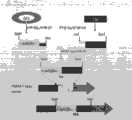
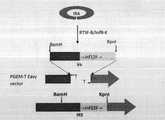
图1反向载体构建流程图。其中,1以水稻品种农院238(简称238)基因组DNA为膜板,利用带有酶切位点的引物扩增出RTS基因片段rtsR,其带有SacⅠ酶切位点和能与inf12R连接的序列inf;2以水稻品种QX1基因组DNA为膜板,利用带有酶切位点的引物扩增出OsGA20ox2基因片段inf12R,其带有SpeⅠ酶切位点和能与rtsR连接的序列Rts;3将rtsR与inf12R按1∶1混合,用引物RTSF-Sa/InfR-SP,通过重叠PCR技术将rtsR与inf12R连接成一个大的片段ira;4将ira与pGEM-T easy载体连接,获得的载体命名为IRA。Figure 1 Flow chart of reverse vector construction. Among them, 1 uses the rice variety Nongyuan 238 (abbreviated as 238) genomic DNA as a membrane plate, and uses primers with restriction sites to amplify the RTS gene fragment rtsR, which has a SacⅠ restriction site and can be connected with inf12R. The sequence inf; 2 uses the rice variety QX1 genomic DNA as a membrane plate, and uses primers with restriction sites to amplify the OsGA20ox2 gene fragment inf12R, which has a SpeI restriction site and a sequence Rts that can be connected to rtsR; 3 will rtsR and inf12R were mixed at a ratio of 1:1, and primers RTSF-Sa/InfR-SP were used to connect rtsR and inf12R into a large fragment ira by overlapping PCR; 4. connect ira to pGEM-T easy vector, and name the vector for the IRA.
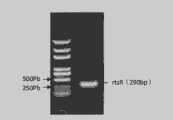
图2用引物RTSF-Sa/RTSR-Inf进行PCR扩增,获得rtsR的电泳图。Figure 2 PCR amplification with primers RTSF-Sa/RTSR-Inf to obtain the electropherogram of rtsR.
图3用引物InfF-Rts/InfR-SP进行PCR扩增,获得inf12R的电泳图。Figure 3 PCR amplification with primers InfF-Rts/InfR-SP to obtain the electropherogram of inf12R.
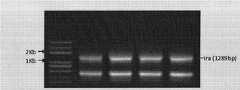
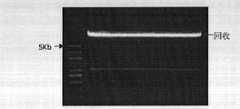
图4用引物RTSF-Sa/InfR-SP通过PCR扩增,将片段rtsR与inf12R连接成片段ira的电泳图。Fig. 4 is the electrophoresis diagram of fragment rtsR and inf12R connected into fragment ira by PCR amplification with primer RTSF-Sa/InfR-SP.
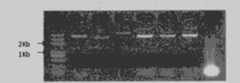
图5将IRA质粒用限制性内切酶SacⅠ和SpeⅠ进行双酶切后的电泳图。Fig. 5 is the electrophoresis image of IRA plasmid after double digestion with restriction endonucleases SacI and SpeI.
图6正向载体构建流程图。以IRA载体为模板,用引物RTSF-B/InfR-K进行PCR扩增,所得DNA片段命名为irs,其含有限制性内切酶酶切位点BamHⅠ和KpnⅠ;将irs与pGEM-T easy载体连接,获得的载体命名为IRS。Fig. 6 Flow chart of forward vector construction. Using the IRA vector as a template, PCR amplification was performed with primers RTSF-B/InfR-K, and the resulting DNA fragment was named irs, which contained restriction endonuclease sites BamHI and KpnⅠ; the irs was combined with the pGEM-T easy vector Connected, the obtained carrier is named IRS.
图7以IRA载体为模板,用引物RTSF-B/InfR-K进行PCR扩增irs的电泳图。Fig. 7 is an electrophoresis diagram of PCR amplification of irs using the IRA vector as a template and primers RTSF-B/InfR-K.
图8IRS质粒用限制性内切酶BamHⅠ和KpnⅠ进行双酶切的电泳图。Fig. 8 Electropherogram of double digestion of IRS plasmid with restriction endonucleases BamHI and KpnI.
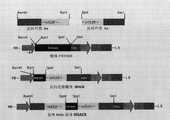
图9载体IRSACK构建流程图。将质粒IRA和质粒PTCK303用限制性内切酶Spe1/Sac1分别进行双酶切,分别回收IRA酶切小片段ira和PTCK303大片段,然后二者进行连接,所获载体命名为IRACK;将质粒IRS和质粒IRACK用限制性内切酶BamHⅠ/KpnⅠ分别进行双酶切,分别回收IRS酶切小片段ira(1289bp)和IRACK大片段,然后二者进行连接,所获发夹RNAi载体命名为IRSACK。Fig. 9 Flowchart of vector IRSACK construction. Plasmid IRA and plasmid PTCK303 were double-digested with restriction endonuclease Spe1/Sac1 respectively, and the small fragment ira digested by IRA and the large fragment of PTCK303 were respectively recovered, and then the two were ligated, and the obtained vector was named IRACK; the plasmid IRS The plasmid IRACK was double-digested with restriction endonucleases BamHI/KpnⅠ, and the IRS digested small fragment ira (1289bp) and the large IRACK fragment were recovered respectively, and then the two were ligated, and the obtained hairpin RNAi vector was named IRSACK.
图10质粒IRA用限制性内切酶Spe1/Sac1进行双酶切后的小片段ira电泳图。Fig. 10 The electrophoresis pattern of the small fragment ira after the plasmid IRA was double-digested with the restriction endonuclease Spe1/Sac1.
图11质粒PTCK303用限制性内切酶Spe1/Sac1进行双酶切的大片段电泳图。Fig. 11 The electrophoresis pattern of large fragments of plasmid PTCK303 double-digested with restriction endonuclease Spe1/Sac1.
图12IRACK质粒用限制性内切酶Spe1/Sac1双酶切的电泳图。Fig. 12 Electropherogram of double digestion of IRACK plasmid with restriction endonuclease Spe1/Sac1.
图13质粒IRS用限制性内切酶BamHⅠ/KpnⅠ进行双酶切后的小片段irs电泳图。Fig. 13 IRS electrophoresis of small fragments of plasmid IRS after double digestion with restriction endonuclease BamHI/KpnI.
图14质粒IRACK用限制性内切酶BamHⅠ/KpnⅠ进行双酶切后的大片段电泳图。Fig. 14 The electrophoresis pattern of large fragments of plasmid IRACK after double digestion with restriction endonucleases BamHI/KpnI.
图15IRSACK质粒用限制性内切酶BamHⅠ/KpnⅠ双酶切后的电泳图。Fig. 15 Electrophoresis of IRSACK plasmid after double digestion with restriction endonuclease BamHI/KpnI.
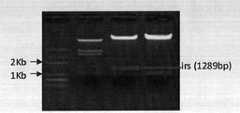
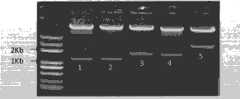
图16IRSACK质粒分别用限制性内切酶组合BamHⅠ/KpnⅠ、Spe1/Sac1、BamHⅠ/Spe1、KpnⅠ/Sac1和BamHⅠ/Sac1进行双酶切后的电泳图。其中,1(BamHⅠ/KpnⅠ)符合ira(1289bp)片段大小;2(Spe1/Sac1)符合irs(1289bp)片段大小;3(BamHⅠ/Spe1)符合ira+intron(1767bp)片段大小;4(KpnⅠ/Sac1)符合irs+intron(1767bp)片段大小;5(BamHⅠ/Sac1)符合ira+irs+intron(3056bp)片段大小。Fig. 16 The electrophoresis of IRSACK plasmid after double digestion with restriction endonuclease combinations BamHI/KpnI, Spe1/Sac1, BamHI/Spe1, KpnI/Sac1 and BamHI/Sac1 respectively. Among them, 1 (BamHI/KpnⅠ) conforms to the fragment size of ira (1289bp); 2 (Spe1/Sac1) conforms to the fragment size of irs (1289bp); 3 (BamHI/Spe1) conforms to the fragment size of ira+intron (1767bp); 4 (KpnⅠ/ Sac1) conforms to the fragment size of irs+intron (1767bp); 5(BamHI/Sac1) conforms to the fragment size of ira+irs+intron (3056bp).
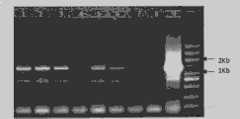
图17转基因植株DNA用引物RTSF-B/In-cla进行PCR扩增后的电泳图。其中,泳道1、2、3、5和6为矮秆不育植株,泳道9为IRSACK质粒(阳性对照),结果都扩增出预期的DNA片段(1371bp)。泳道4为非矮化可育植株,泳道7为农院238(阴性对照),泳道8为吉粳88(阴性对照),没有扩增出DNA片段。Fig. 17 Electropherogram of transgenic plant DNA after PCR amplification with primer RTSF-B/In-cla. Among them,
图18矮秆不育植株。Figure 18 Dwarf sterile plants.
图19矮秆不育植株的花药。Fig. 19 Anthers of dwarf sterile plants.
图20通过I2-KI法对矮秆不育植株的花药染色镜检。Fig. 20 Microscopic examination of anther staining of dwarf sterile plants by I2 -KI method.
具体实施方式Detailed ways
下述实施例中的实验方法和所用的试验材料,如无特殊说明,均为常规方法和自常规生化试剂商店购买得到的。常规分子生物学实验方法可参见分子克隆:实验指南,J.Sambrook,等编著,第二版,冷泉港实验室出版,冷泉港,N.Y.,1989。下述实施方式仅仅是示意性的,并不是意图对本发明保护范围进行限制,例如选择材料仅仅作为例子来使用,本发明并不局限于这些材料本身。The experimental methods and test materials used in the following examples, unless otherwise specified, are conventional methods and purchased from conventional biochemical reagent stores. Conventional molecular biology experimental methods can be found in Molecular Cloning: A Laboratory Guide, edited by J. Sambrook, et al., 2nd edition, published by Cold Spring Harbor Laboratory, Cold Spring Harbor, N.Y., 1989. The following embodiments are only illustrative, and are not intended to limit the protection scope of the present invention. For example, selected materials are only used as examples, and the present invention is not limited to these materials themselves.
实施例一、发夹RNAi表达载体IRSACK的构建
一、材料1. Materials
1、供试水稻品种:水稻粳稻市售品种:QX1、农院238、吉粳88。1. Rice varieties for testing: Japonica rice commercially available varieties: QX1,
2、菌株:大肠杆菌(Escheriehia coli)DH5a和DH10B。2. Strains: Escherichia coli (Escheriehia coli) DH5a and DH10B.
3、载体:pGEM-Teasy载体购自promega公司;RNAi载体pTCK303,其构建方法可参见ZHENWANG et al.A Practical Vector for Efficient Knockdown of Gene Expression in Rice (Oryzasativa L.).Plant Molecular Biology Reporter 22:409-417.December 2004
二、方法2. Method
1、引物设计1. Primer design
(1)根据RTS基因序列(参见GenBank登录号U12171.1)设计出能扩增出rts全部片段(长290bp)的一对引物RTSF和RTSR,序列如表1所示。(1) According to the RTS gene sequence (see GenBank accession number U12171.1), a pair of primers RTSF and RTSR capable of amplifying the entire rts fragment (290 bp in length) were designed, and the sequences are shown in Table 1.
表1参考引物RTSTable 1 Reference Primer RTS
(2)在RTSF引物的基础上,设计出分别含有限制性内切酶酶切位点BamHⅠ和SacⅠ的引物RTSF-B和RTSF-Sa;在RTSR引物的基础上,设计出不带酶切位点能和inf12片段连接的引物RTSR-Inf,其序列如表2所示。(2) On the basis of RTSF primers, design primers RTSF-B and RTSF-Sa containing restriction endonuclease sites BamHI and SacI respectively; on the basis of RTSR primers, design primers without restriction enzyme sites The sequence of the primer RTSR-Inf that can be connected to the inf12 fragment is shown in Table 2.
表2RTS引物Table 2 RTS primers


(3)根据OsGA20ox2基因序列(参见GenBank登录号AF465255),设计出分别含有限制性内切酶酶切位点KpnⅠ和SpeⅠ的引物InfR-K和InfR-Sp;设计出不带酶切位点能和rts片段连接的引物InfF-Rts,其序列如表3所示。(3) According to the OsGA20ox2 gene sequence (see GenBank accession number AF465255), design primers InfR-K and InfR-Sp containing restriction endonuclease sites KpnI and SpeI respectively; The sequence of the primer InfF-Rts connected with the rts fragment is shown in Table 3.
表3OsGA20ox2引物Table 3 OsGA20ox2 primers

2、载体构建2. Carrier construction
A.反向连接载体IRA的构建A. Construction of reverse ligation vector IRA
具体构建流程参见图1。See Figure 1 for the specific construction process.
(1)以水稻品种农院238的基因组DNA为模板,用引物RTSF-Sa/RTSR-Inf进行PCR扩增,PCR扩增产物经1%琼脂糖凝胶电泳分离,结果扩增出的DNA片段与预计大小(290bp)一致(见图2),其序列如SEQ ID NO.9中第12位至第301位所示[对应GenBank登录号为U12171.1中第1272位到第1561位]。此片段含有限制性内切酶酶切位点SacⅠ和能与inf12R连接序列,将此片段回收纯化,命名为rtsR(290bp)。其中,PCR反应参数如下:(1) Using the genomic DNA of
PCR反应体系如下:The PCR reaction system is as follows:
反应参数:94℃变性5分钟,然后进入PCR循环,即94℃1min,55℃50秒、72℃30秒,共进行35个循环,最后72℃延伸10分钟。Reaction parameters: Denaturation at 94°C for 5 minutes, then enter PCR cycle, namely 94°C for 1 min, 55°C for 50 seconds, 72°C for 30 seconds, a total of 35 cycles, and finally 72°C for 10 minutes.
(2)以水稻品种QXl基因组DNA为模板,用引物InfF-Rts/InfR-SP进行PCR扩增(反应体系见下表),PCR扩增产物经1%琼脂糖凝胶电泳分离,结果扩增出的DNA片段与预计大小(999bp)一致(见图3),其序列如SEQ ID NO.10中第14位至第1012位[对应GenBank登录号为AF465255中第2414位到第3412位],其含有限制性内切酶酶切位点SpeⅠ和能与rtsR连接片段,将此片段回收纯化,命名为inf12R。其中,PCR反应参数如下:(2) With rice variety QX1 genomic DNA as template, carry out PCR amplification with primer InfF-Rts/InfR-SP (reaction system sees the table below), PCR amplification product is separated through 1% agarose gel electrophoresis, the result amplification The DNA fragment obtained is consistent with the expected size (999bp) (see Figure 3), and its sequence is as the 14th to the 1012th in SEQ ID NO.10 [the corresponding GenBank accession number is the 2414th to the 3412th in AF465255], It contains a restriction endonuclease site SpeI and a fragment that can be connected with rtsR. This fragment is recovered and purified and named inf12R. Wherein, the PCR reaction parameters are as follows:
PCR反应体系如下:The PCR reaction system is as follows:


反应参数:94℃变性5分钟,然后进入PCR循环,即94℃1min,56℃1min、72℃90秒,共进行39个循环,最后72℃延伸10分钟。Reaction parameters: Denaturation at 94°C for 5 minutes, then enter PCR cycle, namely 94°C for 1 min, 56°C for 1 min, 72°C for 90 seconds, a total of 39 cycles, and finally 72°C for 10 minutes.
(3)将片段rtsR与inf12R按1∶1混合,以此为DNA模板,用引物RTSF-Sa/InfR-SP,通过重叠PCR技术连接成一个大的DNA片段,PCR扩增产物经1%琼脂糖凝胶电泳分离,结果扩增出的DNA片段与预计大小(1289bp)一致(见图4),其含有限制性内切酶酶切位点SacⅠ和SpeⅠ,将此片段回收纯化,并命名为ira。其中,PCR反应参数如下:(3) Mix the fragment rtsR and inf12R at a ratio of 1:1, use this as a DNA template, use primer RTSF-Sa/InfR-SP, and connect it into a large DNA fragment by overlapping PCR technology, and the PCR amplification product is passed through 1% agar Glycogel electrophoresis separation showed that the amplified DNA fragment was consistent with the expected size (1289bp) (see Figure 4), which contained restriction endonuclease sites SacI and SpeI. This fragment was recovered and purified, and named as ira. Wherein, the PCR reaction parameters are as follows:
PCR反应体系如下:The PCR reaction system is as follows:

反应参数:94℃变性5分钟,然后进入PCR循环,即94℃1min,56℃1min、72℃90秒,共进行39个循环,最后72℃延伸10分钟。Reaction parameters: Denaturation at 94°C for 5 minutes, then enter PCR cycle, namely 94°C for 1 min, 56°C for 1 min, 72°C for 90 seconds, a total of 39 cycles, and finally 72°C for 10 minutes.
(4)将以上扩增的DNA片段从琼脂糖凝胶中回收,回收产物连接到pGEM-T easy载体上。将连接产物通过电激转化到DH5α感受态细胞,在含100mg/L Amp的LB培养基上生长14-20个小时,通过蓝白菌落筛选,挑选白色单菌落,培养过夜,提取质粒,用SacⅠ和SpeⅠ进行酶切,酶切产物在1.0%的琼脂糖凝胶中电泳检测,结果编号为4(左数第3泳道)的质粒中含有的DNA片段与预计大小(1289bp)一致(见图5)。对这个克隆进行测序,BLASTN分析结果完全符合目标片段。用引物RTSF-Sa/InfR-SP将rtsR和inf12R链接成的片段与pGEM-T easy载体连接,所得重组载体命名为IRA。(4) The above amplified DNA fragments are recovered from the agarose gel, and the recovered product is connected to the pGEM-T easy vector. Transform the ligation product into DH5α competent cells by electric shock, grow on LB medium containing 100mg/L Amp for 14-20 hours, select white single colonies through blue and white colony screening, culture overnight, extract plasmids, and use SacⅠ Carry out enzyme digestion with SpeI, and the digestion product is detected by electrophoresis in 1.0% agarose gel. As a result, the DNA fragment contained in the plasmid numbered 4 (the third lane from the left) is consistent with the expected size (1289bp) (see Figure 5 ). The clone was sequenced, and the BLASTN analysis result completely matched the target fragment. Use the primer RTSF-Sa/InfR-SP to connect the fragment formed by rtsR and inf12R to the pGEM-T easy vector, and the resulting recombinant vector is named IRA.
B.正向连接载体IRS的构建B. Construction of forward ligation vector IRS
具体构建流程如图6所示。The specific construction process is shown in Figure 6.
(1)以IRA载体为模板,用引物RTSF-B/InfR-K进行PCR扩增,PCR扩增产物经1%琼脂糖凝胶电泳分离,结果扩增出的DNA片段与预计大小(1289bp)一致(见图7),其含有限制性内切酶酶切位点BamHⅠ和KpnⅠ,将此片段回收纯化,命名为irs。其中,PCR反应参数如下:(1) Using the IRA vector as a template, PCR amplification was performed with primers RTSF-B/InfR-K, and the PCR amplification products were separated by 1% agarose gel electrophoresis. Consistent (see Figure 7), it contains restriction endonuclease sites BamHI and KpnI, this fragment was recovered and purified and named as irs. Wherein, the PCR reaction parameters are as follows:
PCR反应体系如下:The PCR reaction system is as follows:

反应参数:94℃变性5min,然后进入PCT循环,即94℃1min,56℃1min、72℃120秒,共进行39个循环,最后72℃延伸10分钟。Reaction parameters: Denaturation at 94°C for 5 minutes, followed by PCT cycle, namely 1 minute at 94°C, 1 minute at 56°C, 120 seconds at 72°C, a total of 39 cycles, and finally extension at 72°C for 10 minutes.
(2)将irs扩增片段电泳检测,回收纯化,连接到PGEM-T easy载体上,经测序验证,重组载体命名为IRS。具体操作如下:(2) The irs amplified fragment was detected by electrophoresis, recovered and purified, connected to the PGEM-T easy carrier, and verified by sequencing, the recombinant carrier was named IRS. The specific operation is as follows:
将图7中扩增的DNA片段从琼脂糖凝胶中回收,回收产物连接到pGEM-T easy载体上。将连接产物通过电激转化到DH5α感受态细胞,在含100mg/L Amp的LB培养基上生长14-20个小时,通过蓝白菌落筛选,挑选白色单菌落,培养过夜,提质粒,用限制性内切酶BamHⅠ和KpnⅠ进行酶切,酶切产物在1.0%的琼脂糖凝胶中电泳检测,结果编号为1、3、4和5的质粒中含有的DNA片段与预计大小(1289bp)一致(见图8)。将编号为1(左数第1泳道)的克隆进行测序,BLASTN分析结果完全符合目标片段。IRA为模板用引物RTSF-B/InfR-K扩增的片段与pGEM-T easy载体连接,所得重组载体命名为IRS。The DNA fragment amplified in Figure 7 is recovered from the agarose gel, and the recovered product is connected to the pGEM-T easy vector. Transform the ligation product into DH5α competent cells by electric shock, grow on LB medium containing 100mg/L Amp for 14-20 hours, pass the screening of blue and white colonies, select white single colonies, cultivate overnight, extract plasmids, and use restriction The restriction endonucleases BamHI and KpnⅠ were used for digestion, and the digested products were detected by electrophoresis in 1.0% agarose gel. The results showed that the DNA fragments contained in the plasmids numbered 1, 3, 4 and 5 were consistent with the expected size (1289bp) (See Figure 8). The clone numbered 1 (the first lane from the left) was sequenced, and the BLASTN analysis result completely matched the target fragment. The fragment amplified by primer RTSF-B/InfR-K as the template was connected with the pGEM-T easy vector, and the resulting recombinant vector was named as IRS.
C.发夹RNAi表达载体IRSACK的构建C. Construction of hairpin RNAi expression vector IRSACK
具体构建流程如图9所示。The specific construction process is shown in Figure 9.
(1)将质粒IRA和质粒pTCK303用限制性内切酶Spe1/Sac1分别进行双酶切,在1%的琼脂糖凝胶中检测,分别回收IRA酶切小片段ira(1289bp)(见图10)和pTCK303大片段(见图11),然后二者进行连接。将连接产物电激转化到DH10B感受态细胞中,在50mg/L Kan的LB平板上筛选阳性克隆。挑取单菌落,抽提质粒,选其中的4个,用限制性内切酶Spe1/Sac1双酶切检测连接效果,结果显示4个克隆连接上目的片段(见图12),且命名其中一个质粒为IRACK。(1) Plasmid IRA and plasmid pTCK303 were double-digested with restriction endonuclease Spe1/Sac1 respectively, detected in 1% agarose gel, and the IRA digested small fragment ira (1289bp) was recovered respectively (see Figure 10 ) and pTCK303 large fragment (see Figure 11), and then the two were connected. The ligation product was transformed into DH10B competent cells by electric shock, and positive clones were screened on 50 mg/L Kan LB plates. Pick a single colony, extract the plasmid, select 4 of them, and check the connection effect with restriction endonuclease Spe1/Sac1 double digestion. The results show that 4 clones are connected to the target fragment (see Figure 12), and name one of them The plasmid is IRACK.
(2)将质粒IRS和质粒IRACK用限制性内切酶BamHⅠ/KpnⅠ分别进行双酶切,在1%的琼脂糖凝胶检测,分别回收IRS酶切小片段irs(1289bp)(见图13)和IRACK大片段(见图14),然后二者进行连接。将连接产物电激转化到DH10B感受态细胞中,在50mg/L Kan的LB平板上筛选阳性克隆。挑取单菌落,抽提质粒,再用限型内切酶BamHⅠ/KpnⅠ双酶切检测连接效果,结果显示其中的1个克隆连接上目的片段(图15,左数第3泳道),将这个质粒命名为IRSACK。(2) Plasmid IRS and plasmid IRACK were double-digested with restriction endonuclease BamHI/KpnI respectively, detected on 1% agarose gel, and the small fragment irs (1289bp) digested by IRS was respectively recovered (see Figure 13) and IRACK large fragments (see Figure 14), and then the two are concatenated. The ligation product was transformed into DH10B competent cells by electric shock, and positive clones were screened on 50 mg/L Kan LB plates. Pick a single colony, extract the plasmid, and check the ligation effect with restriction endonuclease BamHI/KpnI double digestion. The results show that one of the clones is ligated with the target fragment (Figure 15, the third lane from the left). The plasmid was named IRSACK.
(3)对IRSACK质粒,分别用限制性内切酶组合BamHⅠ/KpnⅠ、Spe1/Sac1、BamHⅠ/Spe1、KpnⅠ/Sac1和BamHⅠ/Sac1进行双酶切,酶切产物在1.0%的琼脂糖凝胶中电泳检测,结果显示出的酶切片段与预计大小一致:ira:1289bp、irs:1289bp、ira+intron:1767bp(478+1289)、irs+intron:1767bp(478+1289)、ira+irs+intron:3056(1289+1289+478)(见图16)。最后对IRSACK质粒进行测序验证,经BLASTN分析测序结果完全符合目标片段。(3) For the IRSACK plasmid, carry out double digestion with the restriction endonuclease combination BamHI/KpnⅠ, Spe1/Sac1, BamHI/Spe1, KpnⅠ/Sac1 and BamHI/Sac1 respectively, and digest the products on 1.0% agarose gel In the electrophoresis test, the results showed that the digested fragments were consistent with the expected size: ira: 1289bp, irs: 1289bp, ira+intron: 1767bp (478+1289), irs+intron: 1767bp (478+1289), ira+irs+ intron: 3056 (1289+1289+478) (see Figure 16). Finally, the IRSACK plasmid was sequenced and verified, and the sequencing results were completely consistent with the target fragment by BLASTN analysis.
在上述构建发夹RNAi表达载体过程所用的实验操作方法,基本参考目前已知的常规技术,例如可以参见冷泉港实验室编著的《分子克隆实验指南》中提供的实验操作方法。为了完整披露本发明信息以更好理解本发明,下面描述本发明在上述载体构建过程中所用到的实验方法,但具体实施本发明时并不局限于这些具体的实验方法。The experimental operation methods used in the above process of constructing the hairpin RNAi expression vector basically refer to the currently known conventional techniques, for example, the experimental operation methods provided in the "Molecular Cloning Experiment Guide" compiled by Cold Spring Harbor Laboratory. In order to fully disclose the information of the present invention and better understand the present invention, the following describes the experimental methods used in the above-mentioned vector construction process of the present invention, but the specific implementation of the present invention is not limited to these specific experimental methods.
1、水稻总DNA的提取1. Extraction of rice total DNA
(1)取水稻叶片3-5g,放入预冷的研钵中,加入液氮,将叶片研磨成粉末,倒入50ml离心管中。(1) Take 3-5g of rice leaves, put them into a pre-cooled mortar, add liquid nitrogen, grind the leaves into powder, and pour them into a 50ml centrifuge tube.
(2)加入20ml预热到65℃的CTAB提取液(2%(W/V)CTAB,100m mol/L Tris·cl,PH8.0,20m mol/L EDTA,PH8.0,1.4mol/LnaCI),摇匀。65℃水浴保温30分钟,并时不时摇动几下。(2) Add 20ml of CTAB extract preheated to 65°C (2% (W/V) CTAB, 100mmol/L Tris cl, pH8.0, 20mmol/L EDTA, pH8.0, 1.4mol/LnaCl ), shake well. 65 ℃ water bath for 30 minutes, and shake a few times from time to time.
(3)7500g,离心15分钟;转移上清液至另一离心管中。(3) Centrifuge at 7500g for 15 minutes; transfer the supernatant to another centrifuge tube.
(4)加入等体积的氯仿∶异戊醇(24∶1),在摇床上摇动20分钟;7500g,离心15分钟;转移上清液至另一离心管中。(4) Add an equal volume of chloroform:isoamyl alcohol (24:1), shake on a shaker for 20 minutes; centrifuge at 7500 g for 15 minutes; transfer the supernatant to another centrifuge tube.
(5)加入等体积的氯仿,在摇床上摇动20分钟;7500g,离心15分钟;转移上清液至另一离心管中。(5) Add an equal volume of chloroform, shake on a shaker for 20 minutes; centrifuge at 7500 g for 15 minutes; transfer the supernatant to another centrifuge tube.
(6)加入1/10体积的3M醋酸钠(pH5.2)(用800ml水溶解408.3克三水乙酸钠,用冰乙酸调节pH值至5.2,用水定容至1L,并经高压灭菌),2倍体积的无水乙醇沉淀DNA,混匀后放置-20℃过夜。(6) Add 1/10 volume of 3M sodium acetate (pH5.2) (dissolve 408.3 g of sodium acetate trihydrate in 800 ml of water, adjust the pH value to 5.2 with glacial acetic acid, dilute to 1 L with water, and sterilize by autoclaving) , 2 times the volume of absolute ethanol to precipitate DNA, mix well and place at -20°C overnight.
(7)用毛细管勾起DNA,将DNA转移到1.5ml离心管中,经70%乙醇漂洗2次,超净台上吹干,溶解于0.1-0.2ml 1xTE。(7) Hook up the DNA with a capillary tube, transfer the DNA to a 1.5ml centrifuge tube, rinse twice with 70% ethanol, dry it on an ultra-clean bench, and dissolve it in 0.1-0.2ml 1xTE.
(8)用紫外分光光度计测定A260、A280及其比值。取1μl溶液,稀释10倍,用已知浓度的λDNA通过琼脂糖电泳,检测DNA浓度和质量。(8) Measure A260 , A280 and their ratio with an ultraviolet spectrophotometer. Take 1 μl of the solution, dilute it 10 times, and use a known concentration of λDNA to conduct agarose electrophoresis to detect the DNA concentration and quality.
2、特异片段的回收纯化2. Recovery and purification of specific fragments
采用宝生物工程(大连)有限公司产品(TaKaRa Agarose Gel DNA Purification KitVer.2)将PCR产物回收纯化。具体操作方法如下:The PCR product was recovered and purified by TaKaRa Agarose Gel DNA Purification Kit Ver. The specific operation method is as follows:
(1)使用TAE缓冲液或TBE缓冲液制作1%琼脂糖凝胶,然后对目的DNA进行琼脂糖凝胶电泳。(1) Use TAE buffer or TBE buffer to prepare 1% agarose gel, and then perform agarose gel electrophoresis on the target DNA.
(2)在紫外灯下切出含有目的DNA的琼脂糖凝胶,用纸巾吸尽凝胶表面的液体。(2) Cut out the agarose gel containing the target DNA under the ultraviolet light, and absorb the liquid on the surface of the gel with a paper towel.
(3)碎胶块,胶块切碎后可以加快操作步骤6的胶块融化时间,提高DNA的回收率。(3) Crushed rubber block, after the rubber block is chopped, the melting time of the rubber block in
(4)称量胶块重量,计算胶块体积。计算胶块体积时,以1mg=1μl进行计算。(4) Weigh the weight of the rubber block and calculate the volume of the rubber block. When calculating the volume of the gel block, it is calculated as 1 mg = 1 μl.
(5)向胶块中加入胶块融化液DR-I Buffer。(5) Add DR-I Buffer, the glue block melting solution, to the block.
(6)均匀混合后75℃加热融化胶块(低熔点琼脂糖凝胶只需在45℃加热)。此时应间断震荡混合,使胶块充分融化(约6-10分钟)。(6) After uniform mixing, heat at 75°C to melt the gel block (low melting point agarose gel only needs to be heated at 45°C). At this time, the mixture should be shaken intermittently to fully melt the glue block (about 6-10 minutes).
(7)向上述胶块融化液加入DR-I Buffer量的1/2体积量的DR-II Buffer,均匀混合。当分离小于400bP的DNA片段时,应在此溶液中再加入终浓度为20%的异丙醇。(7) Add DR-II Buffer of 1/2 volume of DR-I Buffer to the above melted glue block, and mix evenly. When separating DNA fragments smaller than 400bP, add isopropanol at a final concentration of 20% to this solution.
(8)将试剂盒中的Spin Column安置于Collection Tube上。(8) Place the Spin Column in the kit on the Collection Tube.
(9)将上述操作7的溶液转移至Spin Colunm中,3600rpm,1分钟(如Spin Column中有液体残留,可适当提高离心速度,再离心1分钟),弃滤液。(9) Transfer the solution of the
(10)将500μl的Rinse A加入Spin Colunm中,3600rpm,30秒,弃滤液。(10) Add 500 μl of Rinse A into Spin Colunm, 3600 rpm, 30 seconds, discard the filtrate.
(11)将700μl的Rinse B加入Column中,3600rpm,30秒,弃滤液。(11) Add 700μl Rinse B to Column, 3600rpm, 30 seconds, discard the filtrate.
(12)重复步骤11,然后12000rpm,1分钟。(12) Repeat step 11, then 12000 rpm for 1 minute.
(13)将Spin Colunm安置于新的1.5ml的离心管上,在Spin Colunm膜的中央处加入25μl的水或洗脱液,室温静置1分钟。其中,把水或洗脱液加热至60℃使用时有利于提高洗脱效率。(13) Place the Spin Colunm on a new 1.5ml centrifuge tube, add 25 μl of water or eluent to the center of the Spin Colunm membrane, and let stand at room temperature for 1 minute. Among them, heating water or eluent to 60°C is beneficial to improve the elution efficiency.
(14)12,000rpm离心1分钟洗脱DNA。(14) Centrifuge at 12,000 rpm for 1 minute to elute DNA.
3、回收产物的连接3. Connection of recovered products
将回收纯化的PCR产物连接到
(1)离心
(2)0.5ml离心管中加入:10×Rapid Ligation Buffer,1.0μl、
(3)将上述混合液放到16℃水浴锅中16h。(3) Put the above mixed solution in a 16°C water bath for 16h.
(4)取5μl连接液至透析膜上对灭菌双蒸水30分钟。吸取透析液加入0.5ml离心管中,冰上进行。(4) Take 5 μl of the connection solution and place it on the dialysis membrane for 30 minutes in sterilized double distilled water. Aspirate the dialysate and add it to a 0.5ml centrifuge tube, and proceed on ice.
(5)从-70℃取出感受态细胞,置于冰浴中,直到融化,约5分钟。轻轻混匀细胞后取20μl细胞转移到步骤4的离心管中,轻轻混合,置于冰上。(5) Take out the competent cells from -70°C and place them in an ice bath until they melt, about 5 minutes. After gently mixing the cells, transfer 20 μl of cells to the centrifuge tube in
(6)采用电激法转化,在2KΩ。,330μF,330-350v进行电激。将转化液转入装有SOC液体培养基的离心管中,37℃,约180rpm,培养40分钟。(6) Conversion by electric excitation method, at 2KΩ. , 330μF, 330-350v for electrical stimulation. Transfer the transformation solution into a centrifuge tube filled with SOC liquid medium, and incubate at 37° C. at about 180 rpm for 40 minutes.
(7)取100μl培养液于LB/Amp/IPTG/X-Gal培养皿,37℃培养16-20小时。(7) Put 100 μl of the culture solution on an LB/Amp/IPTG/X-Gal culture dish and incubate at 37° C. for 16-20 hours.
(8)观察结果,挑选白菌落。(8) Observe the results and select white colonies.
其中用到的试剂如下:The reagents used are as follows:
Amp(50mg/ml):100mg Amp加2ml去离子水500ml,过滤灭菌;IPTG(0.IM):1.2gIPTG加水50ml,过滤,4℃贮存;X-Gal(50mg/ml):100mg 5-溴-4-氯-3吲哚-β-D-半乳糖苷溶于2ml二甲基甲酰胺溶液。用铝箔包裹以防因光照而被破坏,-20℃贮存,须过滤。Amp (50mg/ml): 100mg Amp plus 2ml deionized water 500ml, filter sterilized; IPTG (0.IM): 1.2gIPTG plus 50ml water, filter, store at 4°C; X-Gal (50mg/ml): 100mg 5- Bromo-4-chloro-3 indole-β-D-galactoside was dissolved in 2ml of dimethylformamide solution. Wrap it with aluminum foil to prevent it from being destroyed by light, store at -20°C, and filter it.
LB培养基(IL):10g trypton,5g酵母抽提物,5g NaCl,再用Na0H调pH至7.0(固体时再加15g琼脂);SOC培养基(100ml):2.0g trytone,0.5g酵母抽提物,1.0ml 1MNaCl,0.25ml 1M KCl,1.0ml lM Mg2+母液,1.0ml 2M glucose。LB medium (IL): 10g trypton, 5g yeast extract, 5g NaCl, then use NaOH to adjust the pH to 7.0 (add 15g agar if it is solid); SOC medium (100ml): 2.0g trytone, 0.5g yeast extract Extract, 1.0ml 1M NaCl, 0.25ml 1M KCl, 1.0ml 1M Mg2+ mother solution, 1.0ml 2M glucose.
LB/Amp:终浓度为100μg/ml的Amp浓度,将平板置于4℃保存;LB/Amp/IPTG/X-Gal:在LB/Amp上加100μl的0.1MIPTG和20μl的50mg/m1X-Gal。LB/Amp: Amp concentration with a final concentration of 100 μg/ml, store the plate at 4°C; LB/Amp/IPTG/X-Gal: add 100 μl of 0.1MIPTG and 20 μl of 50 mg/m1X-Gal to LB/Amp .
4、DH5α感受态细胞的制备4. Preparation of DH5α Competent Cells
(1)取菌DH5α于LB固体培养基上划平板,37℃,培养过夜。(1) Take the bacteria DH5α and spread it on the LB solid medium, cultivate it overnight at 37°C.
(2)当天晚上配置SOB培养基(SOB培养基:tryptone,20g、酵母抽提物,5g、5M NaCl,2.0ml、1M KCl,2.5ml,加去离子水1000ml,用NaOH调pH至7.0,灭菌),10%甘油灭菌(10%甘油:639丙三醇(约50ml)加去离子水至500ml,灭菌)。(2) Prepare SOB medium in the evening (SOB medium: tryptone, 20g, yeast extract, 5g, 5M NaCl, 2.0ml, 1M KCl, 2.5ml, add 1000ml of deionized water, adjust the pH to 7.0 with NaOH, Sterilization), 10% glycerin sterilization (10% glycerin: 639 glycerol (about 50ml) adds deionized water to 500ml, sterilizes).
(3)次日上午接种:接单菌落到2mlSOB培养基里,37℃,200-250rpm振荡培养6小时。(3) Inoculation in the morning of the next day: Inoculate a single colony into 2ml of SOB medium, shake and culture at 37°C, 200-250rpm, for 6 hours.
(4)上述菌液加入到400ml SOB的1L大烧瓶内,37℃,250rpm,约3小时后,测OD550值,以后每几分钟测一次。OD550在0.65-0.77时,立即停止摇荡,取出放于冰水中迅速摇动至完全冷却。以下操作必须在冰上进行。(4) Add the above bacterial solution into a 1L large flask with 400ml of SOB, at 37°C, 250rpm, after about 3 hours, measure the OD550 value, and then measure it every few minutes. When the OD550 is 0.65-0.77, stop shaking immediately, take it out, put it in ice water and shake it quickly until completely cooled. The following operations must be performed on ice.
(5)将上述菌液分装于50ml离心管中,2,200g(g=rcf),0℃,离心11分钟。(5) Divide the above bacterial solution into 50ml centrifuge tubes, centrifuge at 2,200g (g=rcf) at 0°C for 11 minutes.
(6)倒出上清,加30ml 10%灭菌甘油,在冰水中摇荡至沉淀完全溶解,2,400g,0℃离心,13分钟。(6) Pour off the supernatant, add 30ml 10% sterilized glycerol, shake in ice water until the precipitate is completely dissolved, centrifuge at 2,400g, 0°C for 13 minutes.
(7)重复第6步,倒去上清,待有絮状菌体出现时停止倾倒,把所有絮状菌体转入同一个50ml离心管中,再次离心。(7)
(8)用枪吸去上清夜,仅留少部分甘油,和沉淀物充分混匀,约800-900μl(400ml SOB约制备800-900μl感受态细胞)。以40μl/管的剂量分装入1.5ml的离心管中,放置-80℃保存即可。(8) Aspirate the supernatant with a gun, leaving only a small part of glycerol, and mix well with the precipitate, about 800-900μl (400ml SOB prepares about 800-900μl competent cells). Put 40 μl/tube into 1.5ml centrifuge tubes and store at -80°C.
5、重组子鉴定5. Identification of recombinants
A.质粒提取及酶切鉴定A. Plasmid extraction and enzyme digestion identification
采用SDS碱裂解法制备质粒DNA,所用试剂如下:Plasmid DNA was prepared by SDS alkaline lysis method, and the reagents used were as follows:
溶液I:50mmol/L葡萄糖,25mmol/L Tris·CI(PH8.0),10mmol/L EDTA(PH8.0);灭菌,4℃贮存。Solution I: 50mmol/L glucose, 25mmol/L Tris CI (PH8.0), 10mmol/L EDTA (PH8.0); sterilized and stored at 4°C.
溶液II:0.2mol/LNaOH(临用前用10mmol/L贮存液现用现稀释),1%SDS;混匀,置于室温。Solution II: 0.2mol/L NaOH (dilute with 10mmol/L stock solution immediately before use), 1% SDS; mix well and place at room temperature.
溶液III:5mol/L乙酸钾60ml,冰乙酸11.5ml,加水28.5ml混匀,置于冰上。Solution III: 60ml of 5mol/L potassium acetate, 11.5ml of glacial acetic acid, mixed with 28.5ml of water, and placed on ice.
无DNA酶的胰RNA酶:将胰RNA酶(RNA酶A)溶于10mmol/L Tris(pH7.5),15mmol/LNaCI中配成10mg/ml浓度,于100℃,加热15分钟,缓慢冷却至室温,分装成小份保存于-20℃。DNase-free trypsinase: dissolve trypsinase (RNase A) in 10mmol/L Tris (pH7.5), 15mmol/LNaCI to a concentration of 10mg/ml, heat at 100°C for 15 minutes, and cool slowly to room temperature, aliquot into small portions and store at -20°C.
B.细胞的制备B. Cell Preparation
(1)2ml含相应抗生素的LB加入到容量为15ml并通气良好(不盖紧)的试管中,然后接入一单菌落,于37℃,250rpm剧烈振摇下培养过夜。(1) Add 2ml of LB containing corresponding antibiotics into a test tube with a capacity of 15ml and a well-ventilated (not tightly capped) tube, then inoculate a single colony, and culture overnight at 37°C with vigorous shaking at 250rpm.
(2)取1.5ml培养物倒入微量离心管中,4℃以12,000g离心30秒(或6.000g,2分钟)。将剩余的培养物加等体积的40%甘油,贮存于-20℃(可用于测序)。(2) Pour 1.5ml of the culture into a microcentrifuge tube and centrifuge at 12,000g for 30 seconds (or 6.000g, 2 minutes) at 4°C. The remainder of the culture was added to an equal volume of 40% glycerol and stored at -20°C (ready for sequencing).
(3)倒去上清夜,后稍离心数秒,用枪头吸去培养液,使细菌沉淀尽可能干燥。(3) Pour off the supernatant, centrifuge for a few seconds, and absorb the culture medium with a pipette tip to make the bacterial pellet as dry as possible.
C.细胞的裂解C. Cell Lysis
(4)将细菌沉淀悬浮于120μl用冰预冷的溶液I中,剧烈振荡。(4) Suspend the bacterial pellet in 120 μl of solution I pre-cooled with ice, and shake vigorously.
(5)170μl新配制的溶液II,快速颠倒离心管5次,以混合内容物,切勿振荡。(将离心管放置于冰上)。(5) 170 μl of newly prepared solution II, quickly invert the
(6)170μl用冰预冷的溶液III,小心颠倒离心管数次,使溶液m在粘稠的细菌裂解物中分散均匀将管置于冰上10分钟以上。(6) 170 μl of solution III pre-cooled with ice, carefully invert the centrifuge tube several times to disperse solution m evenly in the viscous bacterial lysate, and place the tube on ice for more than 10 minutes.
(7)加等体积(460μl)的氯仿∶异戊醇(24∶1),剧烈振荡混合有机相和水相,然后4℃以12,000g离心5分钟。将上清液转移到另一离心管中。(7) Add an equal volume (460 μl) of chloroform:isoamyl alcohol (24:1), shake vigorously to mix the organic phase and the aqueous phase, and then centrifuge at 12,000 g for 5 minutes at 4°C. Transfer the supernatant to another centrifuge tube.
D.质粒DNA的回收D. Recovery of plasmid DNA
(8)加1/10体积的3M醋酸钠(pH5.2),再加2倍体积的无水乙醇沉淀核酸,振荡混合。于-20℃放置30分钟(或-70℃,15分钟)。(8) Add 1/10 volume of 3M sodium acetate (pH 5.2), and then add 2 times volume of absolute ethanol to precipitate nucleic acid, shake and mix. Place at -20°C for 30 minutes (or -70°C, 15 minutes).
(9)用微量离心机于4℃以12,0009离心12分钟,收集沉淀的核酸。(9) Centrifuge at 12,0009° C. for 12 minutes at 4° C. in a microcentrifuge to collect the precipitated nucleic acid.
(10)小心吸去上清液,将离心管置于纸巾上,以使所有液体流出。再将附于管壁的液滴除尽。(10) Carefully suck off the supernatant, and place the centrifuge tube on a paper towel to allow all the liquid to flow out. Then remove the droplets attached to the tube wall.
(11)加1ml 70%乙醇于沉淀中并将盖紧的试管颠倒数次,4℃(放置1小时更好)以12,000g离心2分钟,回收DNA。(11) Add 1ml of 70% ethanol to the precipitate and invert the tightly capped test tube several times, centrifuge at 12,000g for 2 minutes at 4°C (preferably for 1 hour), and recover the DNA.
(12)重复步骤10,11。(12) Repeat steps 10 and 11.
(13)小心吸去上清液,将离心管置于纸巾上,以使所有液体流出。再将附于管壁的液滴除尽。(13) Carefully suck off the supernatant, and place the centrifuge tube on a paper towel to allow all the liquid to flow out. Then remove the droplets attached to the tube wall.
(14)在空气中干燥核酸沉淀(大片段DNA),或热板50℃(小片段DNA)5-10分钟。(14) Dry the nucleic acid pellet in air (large fragment DNA), or hot plate at 50°C (small fragment DNA) for 5-10 minutes.
(15)用30-50μl含无DNA酶的胰RNA酶(20μg/ml)的1xTE重新溶解核酸,振荡,贮存于-20℃。(15) Redissolve the nucleic acid with 30-50 μl of 1×TE containing DNase-free trypsinase (20 μg/ml), shake, and store at -20°C.
E.酶切检测质粒E. Enzyme digestion detection plasmid
在1.5ml离心管中加入:质粒DNA 3.0μl,10×H Buffer 2.0μl,EcoR I(5U/μl)1.0μl,加ddH2O 14.0μl,总计20.0μl,于37℃,酶切l小时。Add to a 1.5ml centrifuge tube: 3.0μl of plasmid DNA, 2.0μl of 10×H Buffer, 1.0μl of EcoR I (5U/μl), 14.0μl of ddH2 O, a total of 20.0μl, and digest at 37°C for 1 hour.
菌液PCR检测和酶切检测质粒符合预期结果后进行测序。Sequencing was carried out after the bacterial liquid PCR detection and enzyme digestion detection plasmid met the expected results.
6、表达载体的构建6. Construction of expression vector
A.提取质粒DNAA. Extraction of plasmid DNA
用于构建载体的质粒采用UltraPureTM质粒DNA小量提取试剂盒提取质粒。具体操作方法如下:Plasmids used to construct vectors were extracted using the UltraPure™ Plasmid DNA Miniprep Kit. The specific operation method is as follows:
(1)将3-5ml菌液13,000rpm离心30秒收集沉淀(菌体)。如果用1.5ml或2ml离心管则需反复离心2-3次。(1) Centrifuge 3-5ml of the bacterial solution at 13,000rpm for 30 seconds to collect the precipitate (cells). If a 1.5ml or 2ml centrifuge tube is used, it needs to be centrifuged repeatedly 2-3 times.
(2)倒掉上清,将沉淀(菌体)完全悬浮于100μl悬浮液(溶液I)中。上清要尽可能去除干净,可用滤纸吸干或短暂离心后吸去上清。(2) Pour off the supernatant, and completely suspend the precipitate (bacteria) in 100 μl of the suspension (Solution I). The supernatant should be removed as clean as possible, which can be blotted dry with filter paper or centrifuged briefly to remove the supernatant.
(3)加入200μl裂解液(溶液II),轻柔地颠倒混匀4-6次,溶液逐渐变得粘稠、清亮。不可用混旋器剧烈振荡,否则会使质粒DNA断裂;裂解时间不宜超过5分钟,否则会造成染色体DNA的污染。(3) Add 200 μl of lysate (solution II), and gently invert and mix 4-6 times until the solution gradually becomes viscous and clear. Do not vibrate vigorously with a mixer, otherwise the plasmid DNA will be broken; the lysis time should not exceed 5 minutes, otherwise it will cause chromosomal DNA contamination.
(4)加入150μl中和液(溶液III),轻柔地颠倒混匀4-6次,此时可见到白色絮状的染色体DNA及细菌碎片。(4) Add 150 μl of neutralizing solution (Solution III), and gently invert and mix 4-6 times. At this time, white flocculent chromosomal DNA and bacterial fragments can be seen.
(5)13,000rpm离心8-10分钟,将上清液小心转移到1.5ml或2ml离心管中,然后加入450μl纯化树脂(使用前充分混匀),混匀3分钟。此步是通过离心去除染色体DNA及细菌碎片,并使处于高盐状态下的质粒DNA与纯化树脂结合。(5) Centrifuge at 13,000rpm for 8-10 minutes, carefully transfer the supernatant to a 1.5ml or 2ml centrifuge tube, then add 450μl of purified resin (mix well before use), and mix for 3 minutes. In this step, chromosomal DNA and bacterial fragments are removed by centrifugation, and the plasmid DNA in a high-salt state is combined with the purification resin.
(6)13,000rpm离心5秒,小心去除上清。用1ml 80%,异丙醇(或80%乙醇)将纯化树脂悬浮起来。13,000rpm离心5秒,小心去除上清。此步是洗涤质粒DNA中混有的杂质及盐类。(6) Centrifuge at 13,000 rpm for 5 seconds, and carefully remove the supernatant. Suspend the purified resin with 1 ml of 80% isopropanol (or 80% ethanol). Centrifuge at 13,000 rpm for 5 seconds and carefully remove the supernatant. This step is to wash the impurities and salts mixed in the plasmid DNA.
(7)用450μl 80%异丙醇(或80%乙醇)将纯化树脂悬浮起来,转移到离心纯化柱中,13,000rpm离心2分钟,倒掉收集管中的废液。如果纯化柱底部残留有异丙醇(或乙醇),可用滤纸吸干,否则将影响以后的酶促反应。(7) Suspend the purified resin with 450 μl of 80% isopropanol (or 80% ethanol), transfer it to a centrifugal purification column, centrifuge at 13,000 rpm for 2 minutes, and discard the waste liquid in the collection tube. If there is isopropanol (or ethanol) remaining at the bottom of the purification column, it can be blotted dry with filter paper, otherwise it will affect the enzymatic reaction in the future.
(8)将纯化柱套入干净的1.5ml或2ml离心管中,加入50μl TE缓冲液或超纯水,静置1-3分钟后,13.000rpm离心1分钟。此步是将纯化树脂上的DNA洗脱下来。如果对质粒DNA的需求较大的话,则重复此步骤1-2次,这样可以获得高产量的质粒DNA。(8) Put the purification column into a clean 1.5ml or 2ml centrifuge tube, add 50μl TE buffer or ultrapure water, let it stand for 1-3 minutes, then centrifuge at 13.000rpm for 1 minute. This step is to elute the DNA on the purification resin. If the demand for plasmid DNA is large, repeat this step 1-2 times, so that a high yield of plasmid DNA can be obtained.
(9)离心管中收集的液体即是洗脱下来的质粒DNA,取1-2μl电泳(0.8%琼脂糖,120V,15-20分钟)检测其纯度并目测定量。若发现有RNA污染,可加入0.5μl RNaseA(10mg/ml),37℃保温30分钟。此操作不影响其后续实验。(9) The liquid collected in the centrifuge tube is the eluted plasmid DNA, take 1-2 μl electrophoresis (0.8% agarose, 120V, 15-20 minutes) to test its purity and measure it visually. If RNA contamination is found, add 0.5μl RNaseA (10mg/ml) and incubate at 37°C for 30 minutes. This operation does not affect its subsequent experiments.
B.质粒DNA的酶切及其产物的纯化B. Digestion of plasmid DNA and purification of its products
(1)取上述质粒DNA 1.0-2.0μg,加入相应酶的10×缓冲液2.0μl,最后加入相应的限制性内切酶,混匀酶切反应体系,37℃酶切2-4小时。(1) Take 1.0-2.0 μg of the above plasmid DNA, add 2.0 μl of 10× buffer of the corresponding enzyme, and finally add the corresponding restriction endonuclease, mix the enzyme digestion reaction system, and digest at 37°C for 2-4 hours.
(2)在1%的琼脂糖凝胶上电泳,分离片段。(2) Electrophoresis on 1% agarose gel to separate the fragments.
(3)凝胶成像照相后,紫外下切割目的片段,采用凝胶回收试剂盒回收目的片段,同上。(3) After gel imaging and photography, cut the target fragment under ultraviolet light, and recover the target fragment with a gel recovery kit, the same as above.
(4)取2μl在1%的琼脂糖凝胶上电泳,检测回收目的片段大小和浓度。(4) 2 μl was electrophoresed on 1% agarose gel to detect the size and concentration of the recovered target fragment.
C.DNA的连接C. DNA connection
(1)按外源片段和载体比为1∶1-10∶1的量,加入相应量的片段。取回收的目的片段20-50ng,进行连接。(1) According to the ratio of exogenous fragment and carrier in the amount of 1:1-10:1, add the corresponding amount of fragment. Take 20-50ng of the recovered target fragments and connect them.
(2)加入10×T4Ligation Buffer 1.0μl,3U T4 DNALigase(Promega),总体积不超过10μl。(2) Add 1.0 μl of 10×T4 Ligation Buffer, 3U T4 DNA Ligase (Promega), the total volume does not exceed 10 μl.
(3)将上述混合液放到16℃水浴锅中16h。(3) Put the above mixed solution in a 16°C water bath for 16h.
(4)结束后将反应液取5μl至透析膜上对超纯水于4℃透析20分钟,取连接产物和20μl感受态细胞混合,进行电激转化。参数2KΩ。,330μF,330-350V。(4) After the end, take 5 μl of the reaction solution onto the dialysis membrane and dialyze against ultrapure water at 4°C for 20 minutes, and mix the ligation product with 20 μl of competent cells for electroporation. Parameter 2KΩ. , 330μF, 330-350V.
(5)电激后将菌体转入1mlSOC中,37℃200rmp培养50分钟。后铺板于含卡那霉素(kan,50mg/L)的LB培养皿上。(5) After the electric shock, transfer the bacterial cells into 1 ml of SOC, and incubate at 37° C. at 200 rpm for 50 minutes. Afterwards, they were plated on LB culture dishes containing kanamycin (kan, 50 mg/L).
D.连接产物的重组子鉴定D. Recombinant Identification of Ligation Products
(1)挑取单菌落于相应的抗生素LB中,摇菌37℃过夜培养。(1) Pick a single colony and put it in the corresponding antibiotic LB, and shake the bacteria overnight at 37°C.
(2)采用碱裂解法提取质粒。(2) The plasmid was extracted by alkaline lysis method.
(3)取上述质粒DNA 1.0-2.0μl,加入相应酶的10×Buffer 2.0μl,最后加入相应的限制性内切酶,混匀酶切反应体系,37℃酶切2-4小时。(3) Take 1.0-2.0 μl of the above plasmid DNA, add 2.0 μl of 10×Buffer of the corresponding enzyme, and finally add the corresponding restriction endonuclease, mix the enzyme digestion reaction system, and digest at 37°C for 2-4 hours.
(4)在1%的琼脂糖凝胶上电泳,检测分离片段大小,是否和预计插入片段相符。如有必要,还可测序分析插入序列。(4) Electrophoresis on 1% agarose gel to detect the size of the isolated fragment and whether it is consistent with the expected insert fragment. Inserts can also be analyzed by sequencing if necessary.
实施例二、发夹RNAi表达载体IRSACK转化水稻Embodiment two, hairpin RNAi expression vector IRSACK transforms rice
一、材料1. Materials
(1)水稻转化受体材料:水稻粳稻品种农院238和吉粳88。(1) Receptor materials for rice transformation:
(2)菌株:大肠杆菌(Escherichia coli)DH5a和DH10B和根癌农杆菌(Agrobacteriumtumefacieus)菌株EHA105。(2) Strains: Escherichia coli DH5a and DH10B and Agrobacterium tumefacieus strain EHA105.
二、方法2. Method
1、农杆菌感受态细胞的制备1. Preparation of Agrobacterium Competent Cells
(1)将根癌农杆菌EHA105划板于LB(含利福平40mg/L形f)固体培养基上,28℃培养2-3天,挑取单菌落。(1) Plate Agrobacterium tumefaciens EHA105 on LB (containing rifampicin 40mg/L form f) solid medium, culture at 28°C for 2-3 days, and pick a single colony.
(2)把EHA105单菌落接种于2ml SOB培养液,12小时后取种子液,接种于400mlSOB培养液中,28℃,180rmp,培养至OD550。=0.5-0.6。以下操作在冰上进行。(2) Inoculate a single colony of EHA105 in 2ml of SOB culture solution, take the seed solution 12 hours later, inoculate it in 400ml of SOB culture solution, and cultivate to OD550 at 28°C and 180rmp. = 0.5-0.6. The following operations were performed on ice.
(3)2200rpm,4℃,离心10分钟收集农杆菌,菌体用10%甘油悬浮。(3) Collect Agrobacterium by centrifugation at 2200 rpm, 4° C. for 10 minutes, and suspend the bacteria with 10% glycerol.
(4)2500rpm,4℃,离心10分钟,收集菌体,去掉上清。再用10%甘油悬浮菌体。(4) 2500rpm, 4°C, centrifuge for 10 minutes, collect the bacteria, and remove the supernatant. Then use 10% glycerol to suspend the bacteria.
(5)2500rpm,4℃,离心10分钟,收集菌体,去掉上清。加少量10%甘油重悬菌体,将农杆菌菌液分装到预冷的1.5ml离心管中,-70℃保存备用。(5) 2500rpm, 4°C, centrifuge for 10 minutes, collect the bacteria, and remove the supernatant. Add a small amount of 10% glycerol to resuspend the bacteria, divide the Agrobacterium bacteria solution into pre-cooled 1.5ml centrifuge tubes, and store them at -70°C for later use.
2、电激转化农杆菌2. Electric shock transformation of Agrobacterium
(1)用实施例一中构建好的发夹RNAi表达载体IRSACK,通过电激转化上述制备的感受态农杆菌细胞EHA105。电激参数为:200Ω,1700V,25μF。电激后将菌体转入1mlSOC中。(1) Using the hairpin RNAi expression vector IRSACK constructed in Example 1, the competent Agrobacterium cell EHA105 prepared above was transformed by electric shock. The electrical excitation parameters are: 200Ω, 1700V, 25μF. After electric stimulation, the cells were transferred into 1ml SOC.
(2)28℃,摇菌2-3小时后,取10μl按梯度涂布于含卡那霉素Kan(50mg/L Kan)和利福平Rif(40mg/L Rif)的固体培养基上。(2) After shaking the bacteria for 2-3 hours at 28°C, take 10 μl and spread it on the solid medium containing kanamycin Kan (50mg/L Kan) and rifampicin Rif (40mg/L Rif) in a gradient manner.
(3)2天后,挑单菌落接种与含相应抗生素LB液体培养基中培养,抽提质粒,并且保存于20%的甘油中。(3) After 2 days, a single colony was inoculated and cultured in LB liquid medium containing the corresponding antibiotic, the plasmid was extracted and stored in 20% glycerol.
3、表达载体IRSACK在农杆菌中的稳定性检测3. Stability detection of expression vector IRSACK in Agrobacterium
用相应限制性内切酶切割用表达载体IRSACK转化的农杆菌和含表达载体IRSACK的大肠杆菌中提取的质粒,观察二者的酶切带型是否一致。如果从农杆菌中所提质粒酶切效果不好,可以将此质粒电激导入大肠杆菌,再用相应的限制性内切酶进行酶切,观察酶切带型是否和预计一致。选择表达载体IRSACK在农杆菌中稳定的农杆菌于-70℃保存,以用于转化水稻。Cut the plasmid extracted from the Agrobacterium transformed with the expression vector IRSACK and the Escherichia coli containing the expression vector IRSACK with the corresponding restriction endonucleases, and observe whether the restriction band patterns of the two are consistent. If the digestion effect of the plasmid extracted from Agrobacterium is not good, the plasmid can be introduced into Escherichia coli by electroshock, and then digested with the corresponding restriction endonuclease to observe whether the restriction band pattern is consistent with the prediction. Agrobacteria in which the expression vector IRSACK is stable in Agrobacterium were selected and stored at -70°C for transformation of rice.
4、农杆菌介导水稻遗传转化4. Agrobacterium-mediated genetic transformation of rice
(1)水稻基本培养基试剂配方(1) Rice basal medium reagent formula


(2)植物激素母液配方(2) Phytohormone mother liquor formula
1)1.0mg/ml 2,4-D母液1) 1.0mg/
①称取100mg 2,4-D,置于小烧杯内;
②加少量无水乙醇使之完全溶解;② Add a small amount of absolute ethanol to dissolve it completely;
③把2,4-D酒精溶液缓缓加入磁力搅拌器上的水中,如果出现沉淀,需要重新配制;③ Slowly add the 2,4-D alcohol solution to the water on the magnetic stirrer, if precipitation occurs, it needs to be re-prepared;
④定容至100ml,4℃保存。④ Dilute to 100ml and store at 4°C.
2)1.0mg/mlα-NAA母液2) 1.0mg/ml α-NAA stock solution
①称取10Omgα-AA置于小烧杯内:①Weigh 100mgα-AA and place it in a small beaker:
②用1N的KOH溶液溶解NAA;②Dissolve NAA with 1N KOH solution;
③用水定容至100ml,4℃保存。③ Dilute to 100ml with water and store at 4°C.
3)1.0mg/ml 6-BA母液3) 1.0mg/ml 6-BA stock solution
①称取100mg6-BA置于小烧杯内:①Weigh 100mg6-BA and place it in a small beaker:
②加少量的浓盐酸,用玻棒研磨成糊状,再加入少量浓盐酸,使之完全溶解;② Add a small amount of concentrated hydrochloric acid, grind it into a paste with a glass rod, then add a small amount of concentrated hydrochloric acid to dissolve it completely;
③用水稀释并定容至100ml,4℃保存。③ Dilute with water and dilute to 100ml, store at 4°C.
4)1mg/ml KT4) 1mg/ml KT
称取100mg Kenetin,用少量1N KOH溶解,用水稀释定容至100ml,过滤灭菌后,分装入无菌小管中,-20℃保存。Weigh 100mg of Kenetin, dissolve it with a small amount of 1N KOH, dilute with water to 100ml, filter and sterilize, divide into sterile small tubes, and store at -20°C.
5)100mM乙酰丁香酮(As)5) 100mM acetosyringone (As)
称取196.2mg As,用5ml DMSO直接溶解,定容至10ml,分装入无菌小管中,-20℃保存。Weigh 196.2mg As, dissolve it directly with 5ml DMSO, dilute to 10ml, divide into sterile vials, and store at -20°C.
(3)水稻培养基(3) Rice medium
诱导及继代培养基:N6培养基十2.0mg/L 2,4-D+500mg/L脯氨酸+300mg/L水解酪蛋白+30g/L蔗糖+3.0mg/L Phytagel;pH5.9Induction and subculture medium: N6 medium + 2.0mg/
预培养培养基:N6培养基+2.0mg/L 2,4-D+600mg/L水解酪蛋白+20g/L蔗糖+7.0g/L Agar+10.0g/L Glueose+100μmol/L As;PH5·6Pre-culture medium: N6 medium+2.0mg/
共培养培养基:N6培养基+2.0mg/L 2,4-D+800mg/L水解酪蛋白+20g/L蔗糖+7.0g/LAgar+10.0g/L Glueose+100μmol/L As;PH5·6Co-cultivation medium: N6 medium+2.0mg/
筛选培养基:N6培养基十2.0mg/L 2,4-D+600mg/L水解酪蛋白+30g/L蔗糖+7.0g/L Agar+50mg/L LHyg+200mg/L Carb:PH6.0Screening medium: N6 medium + 2.0mg/
预分化培养基:MS培养基+2.0mg/L 6-BA+2.0mg/L KT+0.2mg/LNAA+0.2mg/LIAA+600mg/L水解酪蛋白+30g/L蔗糖+7.0g/L Agar+50mg/LHyg+200mg/L Cab;PH5.9Pre-differentiation medium: MS medium+2.0mg/L 6-BA+2.0mg/L KT+0.2mg/LNAA+0.2mg/LIAA+600mg/L hydrolyzed casein+30g/L sucrose+7.0g/L Agar +50mg/LHyg+200mg/L Cab; PH5.9
分化培养基:Ms培养基+2.0mg/L 6-BA+2.O mg/L KT+0.2mg/L NAA+0.2mg/LLAA+1.0g/L 水解酪蛋白+30g/L 蔗糖+3.0g/L;Phytagel:pH6.0Differentiation medium: Ms medium+2.0mg/L 6-BA+2.O mg/L KT+0.2mg/L NAA+0.2mg/LLAA+1.0g/L hydrolyzed casein+30g/L sucrose+3.0g /L; Phytagel: pH6.0
生根培养基:1/2MS大量培养基+1/2MS微量培养基+铁盐+MS有机+20g/L蔗糖+3.0g/L Phytagel;PH5.8Rooting medium: 1/2MS mass medium + 1/2MS micro medium + iron salt + MS organic + 20g/L sucrose + 3.0g/L Phytagel; PH5.8
农杆菌悬浮培养基:1/2N6培养基+2.0mg/L 2,4-D+800mg/L水解酪蛋白+20mg/L蔗糖;PH5.4Agrobacterium suspension medium: 1/2N6 medium + 2.0mg/
YEB培养基:蛋白陈5g,酵母提取液1g,牛肉浸膏5g,蔗糖5g,MgSO4·7H2O 0.4929g,加水溶解,调节pH至7.0,定容至1000ml。若配制固体培养基加Agar15g/L,高压灭菌。YEB medium: 5g egg white, 1g yeast extract, 5g beef extract, 5g sucrose, 0.4929g MgSO4 ·7H2 O, dissolve in water, adjust pH to 7.0, and dilute to 1000ml. If preparing solid medium, add Agar15g/L and sterilize under high pressure.
(4)胚性愈伤组织的诱导和继代培养(4) Induction and subculture of embryogenic callus
1)将农院238和吉粳88号各1000粒成熟种子剥去颖壳,用75%乙醇浸洗1分钟,转入0.1%升汞浸泡15分钟,再用灭菌超纯水冲洗5次后用滤纸吸干。1) Peel off the glumes of 1000 mature seeds of
2)将种子置于愈伤组织诱导培养基上,25℃,暗培养3-4周。2) The seeds are placed on the callus induction medium and cultured in the dark at 25° C. for 3-4 weeks.
3)从种子盾片附近长出的愈伤组织块剥离下来,置愈伤组织继代培养基上继代2-3次(每代15天),25℃,暗培养。3) Peel off the callus mass grown near the seed scutellum, place it on the callus subculture medium for 2-3 times (15 days per generation), and culture in the dark at 25°C.
4)然后转移到预培养基上25℃,暗培养一周,即可获得用于转化的愈伤组织。4) Then transfer to the pre-medium at 25°C and culture in the dark for one week to obtain the callus for transformation.
(5)农杆菌的活化(5) Activation of Agrobacterium
将-70℃保存的发夹RNAi表达载体IRSACK的农杆菌划板于含Kan(50mg/L)和Rif(40mg/L)的LB固体培养基上,28℃暗培养2-3天,取单菌落摇菌于含相应抗生素的液体培养基YEB中,于28℃培养2天。离心收集农杆菌体,用悬浮液调节菌液浓度为D600=0.8-1.0,用于浸染愈伤组织。Plate the Agrobacterium of the hairpin RNAi expression vector IRSACK stored at -70°C on LB solid medium containing Kan (50mg/L) and Rif (40mg/L), culture in the dark at 28°C for 2-3 days, and take a single The colonies were shaken in liquid medium YEB containing corresponding antibiotics, and cultured at 28°C for 2 days. Agrobacterium bodies were collected by centrifugation, and the concentration of the bacterial solution was adjusted to D600 =0.8-1.0 with the suspension, which was used to impregnate the callus.
(6)农杆菌浸染及共培养(6) Agrobacterium dipping and co-cultivation
挑取淡黄色、致密、颗粒状的胚性愈伤组织于小玻璃瓶中,用上述调节好浓度的农杆菌浸泡愈伤组织20分钟,期间摇动几次。取出愈伤组织,用滤纸吸去菌液,置于超净台中,用无菌风吹,然后转移到共培养基上,于25℃暗培养3天。Pick light yellow, dense, granular embryogenic callus in a small glass bottle, soak the callus with the above-mentioned adjusted concentration of Agrobacterium for 20 minutes, and shake it several times during this period. Take out the callus, suck out the bacterial solution with filter paper, place it in a super-clean bench, blow it with sterile wind, then transfer it to a co-culture medium, and culture it in the dark at 25°C for 3 days.
(7)抗性愈伤组织的筛选(7) Screening of resistant callus
将上述共培养后的愈伤组织取出,用无菌水冲洗5-7次后,在400ppm羧苄青霉素的无菌水中浸泡30分钟,取出愈伤组织置于滤纸上,在超净台里吹干(5个小时以上)。干燥后的愈伤组织转移到筛选培养基上,筛选2次,每次2周。Take out the above co-cultured callus, wash it with sterile water for 5-7 times, soak it in 400ppm carbenicillin sterile water for 30 minutes, take out the callus and put it on the filter paper, and blow it in the ultra-clean table. Dry (5+ hours). The dried calli were transferred to the selection medium, and were screened twice for 2 weeks each time.
(8)抗性愈伤组织的预分化和分化(8) Predifferentiation and differentiation of resistant callus
挑选直径为1-2mm生长状态好、结构致密、淡黄色的抗性愈伤组织,转移至预分化培养基上,于25℃暗培养一周,然后转移至分化培养基上,于28℃,光照培养3-4周,愈伤组织开始分化出小苗。Select resistant calli with a diameter of 1-2 mm in good growth state, compact structure, and light yellow, and transfer them to the pre-differentiation medium, culture them in the dark at 25°C for one week, then transfer them to the differentiation medium, and place them on the light at 28°C After 3-4 weeks of culture, the callus began to differentiate into seedlings.
(9)转化植株的生根培养和移苗(9) rooting culture and transplanting of transformed plants
将3-4cm的幼苗转入生根培养基里,于28℃,光照培养,待根系生长良好后,打开瓶口,练苗1周,然后转移到温室或试验基地中生长。Transfer the 3-4cm seedlings into the rooting medium, and cultivate them under light at 28°C. After the root system grows well, open the bottle, train the seedlings for 1 week, and then transfer them to the greenhouse or test base for growth.
实施例三转基因植株的矮化程度和育性Dwarfing degree and fertility of embodiment three transgenic plants
为了验证矮秆和花粉败育性状同时表现的转基因植株确系由本发明采用的RNAi技术导致的,选择转基因植株进行PCR扩增验证是否存在转化的基因序列。上游引物采用RTSF-B,下游引物根据RNAi载体pTCK303中的内含子(Intron)序列设计的引物In-cla(5′->3′GAGGCGGTACAATGATCA ACCATGA),选择实施例二制备的转基因植株进行PCR扩增。其中,PCR扩增参数如下:In order to verify that the transgenic plants exhibiting both dwarf and pollen abortion traits are indeed caused by the RNAi technology adopted in the present invention, the transgenic plants are selected for PCR amplification to verify whether there is a transformed gene sequence. RTSF-B was used as the upstream primer, and the primer In-cla (5'->3'GAGGCGGTACAATGATCA ACCATGA) designed for the downstream primer according to the intron (Intron) sequence in the RNAi vector pTCK303 was used to select the transgenic plants prepared in Example 2 for PCR amplification. increase. Among them, the PCR amplification parameters are as follows:
反应体系为:The reaction system is:

反应参数:94℃变性5分钟,然后进入PCT循环,即94℃ 1min,56℃ 1min、72℃90秒,共进行37个循环,最后72℃延伸10分钟。Reaction parameters: Denaturation at 94°C for 5 minutes, then PCT cycle, namely 94°C for 1 min, 56°C for 1 min, 72°C for 90 seconds, a total of 37 cycles, and finally 72°C for 10 minutes.
PCR扩增产物经1%琼脂糖凝胶电泳分离,结果矮秆不育植株和表达载体IRSACK质粒扩增出有与预计大小(1371bp)一致的DNA片段(见图17),而对照和没有矮化可育的植株没有扩增出此片段。The PCR amplification products were separated by 1% agarose gel electrophoresis. As a result, dwarf sterile plants and the expression vector IRSACK plasmid amplified a DNA fragment consistent with the expected size (1371bp) (see Figure 17), while the control and no dwarf Fertile plants did not amplify this fragment.
检测转化结果表明,农院238号共分化出1895棵转基因植株,完成抽穗开花的有955棵,通过I2-KI法对花药染色镜检,花粉败育率达90%以上共有11棵,其中达99%有3棵,100%有6棵,其平均株高35.7cm,最高50cm,最矮26cm(图18是矮化不育植株照片)。吉粳88号共分化出1904棵转基因植株,完成抽穗开花的有774棵,通过I2-KI法对花药染色镜检,花粉败育率达90%以上的共有39棵,其中败育率达99%有12棵,其平均株高35.5cm,最高50cm,最矮22cm,败育率达100%有17棵,其平均株高29.8cm最高57cm最矮18cm。这些矮秆不育植株的花药都发白,细小,有些呈镰刀状弯曲(如图19)。花粉镜检照片如图20所示,将花粉败育率达到99%以上植株各选一穗在未开花前套袋,在收获时检查结实率,结果所有套袋穗结实率为0%。上述实验结果表明通过将发夹RNAi表达载体IRSACK转化水稻,可以获得矮秆和花粉败育同时表现的水稻植株,进一步可以培育出矮秆和败育同时表现的水稻品(系)种。The detection and transformation results showed that a total of 1895 transgenic plants were differentiated from
参考文献references
[1]Simmonds N W.Introgression and incorporation.Strategies for the use of cropgenetic resources[J].Biol.Rev,1993,68:539-562.[1]Simmonds N W.Introgression and incorporation.Strategies for the use of cropgenetic resources[J].Biol.Rev,1993,68:539-562.
[2]Meredith W R,Jr.Bridge R R.Recurrent selection for lint percent within acultivar of cotton(Gossypium hirsutum L.)[J].CropSci.,1973,13:698-701.[2] Meredith W R, Jr. Bridge R R. Recurrent selection for lint percent within cultivar of cotton (Gossypium hirsutum L.) [J]. CropSci., 1973, 13: 698-701.
[3]Hallauer A R.Compedium of recurrent selection methods and their application[J].Crit.Rev.Plant Sci.1985,3:1-33[3] Hallauer A R. Compedium of recurrent selection methods and their application [J]. Crit. Rev. Plant Sci. 1985, 3: 1-33
[4]Moose S P,Dudley J W,Rocheford T R.Maize selection passes the century mark:a unique resource for 21st century genomics.Trends in PlantScience,2004,9(7):358-364.[4] Moose S P, Dudley J W, Rocheford T R. Maize selection passes the century mark: a unique resource for 21st century genomics. Trends in PlantScience, 2004, 9(7): 358-364.
[5]吴长明,傅秀林.水稻轮回选择育种研究的现状与前景.吉林农业科学,1996,1:36-39[5] Wu Changming, Fu Xiulin. Current status and prospects of rice recurrent selective breeding research. Jilin Agricultural Sciences, 1996, 1: 36-39
[6]刘秉华,杨丽,王山荭.矮败小麦及应用途径分析.华北农学报,1994,9(1):12-17[6] Liu Binghua, Yang Li, Wang Shanhong. Analysis of dwarf wheat and its application. Journal of North China Agricultural Science, 1994, 9(1): 12-17
[7]刘秉华,杨丽.“矮败”小麦的选育及利用前景.科学通报,1991,36(4):306-308.[7] Liu Binghua, Yang Li. Breeding and Utilization Prospects of "Dwarf" Wheat. Science Bulletin, 1991, 36(4): 306-308.
[8]刘秉华,杨丽.小麦Rht 10基因与Ms2基因关系的遗传分析.遗传.1988,10(4):1-3[8] Liu Binghua, Yang Li. Genetic analysis of the relationship between wheat Rht 10 gene and Ms2 gene. Heredity. 1988, 10(4): 1-3
[9]刘秉华,杨丽,王山荭.矮败小麦的遗传研究.作物学报,1994,20(3):306-309[9] Liu Binghua, Yang Li, Wang Shanhong. Genetic research on dwarf wheat. Acta Crops, 1994, 20(3): 306-309
[10]翟虎渠,刘秉华矮败小麦创制与应用.中国农业科学2009,42(12):4127-4131[10] Zhai Huqu, Liu Binghua Creation and Application of Dwarf Wheat. Chinese Agricultural Sciences 2009, 42(12): 4127-4131
[11]Hong Luo,Jang-Yong Lee,Thomas K.Hodges et al.RTS,a rice anther-specificgene is required for male fertility and its promoter sequence directstissue-specific gene expression in different plant species[J].Plant MolBiol 2006,62:397-408.[11]Hong Luo, Jang-Yong Lee, Thomas K.Hodges et al.RTS, a rice anther-specific gene is required for male fertility and its promoter sequence directstissue-specific gene expression in different plant species[J].Plant MolBiol 2006 , 62: 397-408.
[12]Spielmeyer W,Ellis M H,and Chandler P M.Semidwarf(sd-1),‘geen revolution’rice,contains a defective gibberellins 20-oxdase gene[J].PNAS,2002,99(13):9043-9048.[12] Spielmeyer W, Ellis M H, and Chandler P M. Semidwarf (sd-1), 'geen revolution' rice, contains a defective gibberellins 20-oxdase gene[J]. PNAS, 2002, 99(13): 9043 -9048.
[13]Toyomasu T,Kawaide H,and Sekimoto H.Cloning and characterization of acDNA encoding gibberellin20-0xidase from rice(Oryza sativa.L)seedings[J].Physiol.Plant,1997,99:111-118.[13] Toyomasu T, Kawaide H, and Sekimoto H. Cloning and characterization of acDNA encoding gibberellin20-0xidase from rice(Oryza sativa.L) seeds[J]. Physiol. Plant, 1997, 99: 111-118.
[14]Feng Qiao Qing Yang,Chun-Lian Wang,Ying-Lun Fan,Xue-Feng Wu&Kai-Jun Zhao.Modifieation of Plant height via RNAi suppression of OsGA20ox2 gene inrice.EuPhytiea,2007(158):35-45[14] Feng Qiao Qing Yang, Chun-Lian Wang, Ying-Lun Fan, Xue-Feng Wu & Kai-Jun Zhao. Modifieation of Plant height via RNAi suppression of OsGA20ox2 gene inrice. EuPhytiea, 2007(158): 35-45


Claims (7)
Priority Applications (1)
| Application Number | Priority Date | Filing Date | Title |
|---|---|---|---|
| CN 201110045310CN102174519B (en) | 2011-02-25 | 2011-02-25 | Dwarf male-sterile rice cultivation method and DNA (Deoxyribonucleic Acid) used thereby |
Applications Claiming Priority (1)
| Application Number | Priority Date | Filing Date | Title |
|---|---|---|---|
| CN 201110045310CN102174519B (en) | 2011-02-25 | 2011-02-25 | Dwarf male-sterile rice cultivation method and DNA (Deoxyribonucleic Acid) used thereby |
Publications (2)
| Publication Number | Publication Date |
|---|---|
| CN102174519A CN102174519A (en) | 2011-09-07 |
| CN102174519Btrue CN102174519B (en) | 2012-11-21 |
Family
ID=44517773
Family Applications (1)
| Application Number | Title | Priority Date | Filing Date |
|---|---|---|---|
| CN 201110045310Expired - Fee RelatedCN102174519B (en) | 2011-02-25 | 2011-02-25 | Dwarf male-sterile rice cultivation method and DNA (Deoxyribonucleic Acid) used thereby |
Country Status (1)
| Country | Link |
|---|---|
| CN (1) | CN102174519B (en) |
Families Citing this family (10)
| Publication number | Priority date | Publication date | Assignee | Title |
|---|---|---|---|---|
| CN103333868A (en)* | 2013-06-04 | 2013-10-02 | 上海交通大学 | Agapanthus praecox gibberellin synthesis dioxygenase APGA20ox protein and coding gene and probe thereof |
| CN105316334B (en)* | 2014-07-18 | 2019-02-26 | 未名兴旺系统作物设计前沿实验室(北京)有限公司 | The identification and application of plant anther specific expression promoter pTaASG019 |
| CN105483135A (en)* | 2015-11-27 | 2016-04-13 | 深圳市仙湖植物园管理处 | Bougainvillea BgGA20-OX1 gene segment and interference recombinant vector thereof |
| CN107201396B (en)* | 2016-03-18 | 2020-11-27 | 中国科学院分子植物科学卓越创新中心 | CAPS marker for detection of rice semidwarf gene sd-1 allele |
| EP3500666A4 (en) | 2016-08-17 | 2020-04-08 | Monsanto Technology LLC | METHODS AND COMPOSITIONS FOR SMALL-GROWING PLANTS BY MANIPULATING THE GIBBERELLIN METABOLISM TO INCREASE THE HARVESTABLE YIELD |
| CN111727257A (en) | 2018-02-15 | 2020-09-29 | 孟山都技术公司 | Compositions and methods for improving crop yield by trait stacking |
| CN109468322A (en)* | 2018-11-19 | 2019-03-15 | 河南大学 | A method for artificially creating new dwarf watermelon varieties based on transgenic technology |
| US12274205B2 (en) | 2018-12-12 | 2025-04-15 | Monsanto Technology Llc | Delayed harvest of short stature corn plants |
| CN114591976A (en)* | 2022-04-07 | 2022-06-07 | 广西壮族自治区亚热带作物研究所(广西亚热带农产品加工研究所) | Gene for encoding GA2 ox-oxidase and application thereof in judging dwarf mango variety |
| CN114752573B (en)* | 2022-06-14 | 2022-08-12 | 中国农业科学院作物科学研究所 | Application of rice OsGA20ox2 protein and its encoding gene in improving plant resistance to abiotic stress |
- 2011
- 2011-02-25CNCN 201110045310patent/CN102174519B/ennot_activeExpired - Fee Related
Non-Patent Citations (3)
| Title |
|---|
| Abeer Radi et al.Ectopic Expression of Pumpkin Gibberellin oxidases Alter Gibberellin Biosynthesis and Development of Transgenic Arabidopsis Plants.《PLANT Physiology》.2006,第140卷全文.* |
| 李伟等.高等植物GA-20-氧化酶的研究进展.《生命科学》.2003,(第1期),全文.* |
| 隋炯明等.几种作物GA受体的同源性比较.《青岛农业大学学报》.2009,(第四期),全文.* |
Also Published As
| Publication number | Publication date |
|---|---|
| CN102174519A (en) | 2011-09-07 |
Similar Documents
| Publication | Publication Date | Title |
|---|---|---|
| CN102174519B (en) | Dwarf male-sterile rice cultivation method and DNA (Deoxyribonucleic Acid) used thereby | |
| ES2883229T3 (en) | Gene for the induction of parthenogenesis, a component of apomictic reproduction | |
| US20110271405A1 (en) | Compositions and methods for increasing seed size and/or yield by expressing a modified transgene encoding a growth and/or development related protein | |
| CA3047163A1 (en) | Genome editing-based crop engineering and production of brachytic plants | |
| CN105063083A (en) | Method for creating rice engineering maintainer lines preventive against gene flow and application of rice engineering maintainer lines | |
| JP7674266B2 (en) | Genes for parthenogenesis | |
| WO2011127744A1 (en) | Protein ipa1 related to plant architecture, its coding genes and uses | |
| CN111134006A (en) | Transgenic corn nuclear male sterility maintainer line and application thereof | |
| CN104846009B (en) | A kind of construction method of Rice Engineering maintainer and its application | |
| WO2019104346A1 (en) | Synthetic apomixis in a crop plant | |
| EP3752621A1 (en) | Compositions and methods for improving crop yields through trait stacking | |
| CN103409460A (en) | Methods of Transforming Corn | |
| US12385060B2 (en) | Compositions and methods for improving crop yields through trait stacking | |
| CN105219784B (en) | A kind of hybridized Chinese tuliptree LhRGL1 genes and its application | |
| US20050120416A1 (en) | Novel method for the production of hybrid maize seeds | |
| CN105579583B (en) | Reproduction of Female Sterile Lines and Hybrid Seed Production Techniques | |
| US20220275383A1 (en) | Sterile genes and related constructs and applications thereof | |
| CN102796184B (en) | Rice male fertility-related protein, encoding gene and application thereof | |
| CN117659147A (en) | Application of rice qST5 protein in regulation and control of salt tolerance of plant seedling stage | |
| CN105968178B (en) | Application of rice OsRAD1 protein and its encoding gene in regulating pollen fertility | |
| WO2013146171A1 (en) | Gene for shortening stalk of gramineous plant and method for producing short-stalked gramineous plant | |
| CN104650204B (en) | The albumen related to rice ATP transports and Development of Chloroplasts and its encoding gene and application | |
| CN114875062A (en) | Method for improving wheat scab resistance through genome editing | |
| CN104193810B (en) | The application of OsMSH4 albumen and its encoding gene in regulation and control plant pollen fertility | |
| CN102234329B (en) | Plant-type associated and/or yield associated protein, coding gene thereof, and application thereof |
Legal Events
| Date | Code | Title | Description |
|---|---|---|---|
| C06 | Publication | ||
| PB01 | Publication | ||
| C10 | Entry into substantive examination | ||
| SE01 | Entry into force of request for substantive examination | ||
| C14 | Grant of patent or utility model | ||
| GR01 | Patent grant | ||
| CF01 | Termination of patent right due to non-payment of annual fee | Granted publication date:20121121 Termination date:20200225 | |
| CF01 | Termination of patent right due to non-payment of annual fee |