CN100471266C - Method for storing data sources of a streaming system - Google Patents
Method for storing data sources of a streaming systemDownload PDFInfo
- Publication number
- CN100471266C CN100471266CCNB038070499ACN03807049ACN100471266CCN 100471266 CCN100471266 CCN 100471266CCN B038070499 ACNB038070499 ACN B038070499ACN 03807049 ACN03807049 ACN 03807049ACN 100471266 CCN100471266 CCN 100471266C
- Authority
- CN
- China
- Prior art keywords
- data
- stream
- client
- video
- flow
- Prior art date
- Legal status (The legal status is an assumption and is not a legal conclusion. Google has not performed a legal analysis and makes no representation as to the accuracy of the status listed.)
- Expired - Lifetime
Links
Images


Classifications
- H—ELECTRICITY
- H04—ELECTRIC COMMUNICATION TECHNIQUE
- H04N—PICTORIAL COMMUNICATION, e.g. TELEVISION
- H04N21/00—Selective content distribution, e.g. interactive television or video on demand [VOD]
- H04N21/20—Servers specifically adapted for the distribution of content, e.g. VOD servers; Operations thereof
- H04N21/23—Processing of content or additional data; Elementary server operations; Server middleware
- H04N21/24—Monitoring of processes or resources, e.g. monitoring of server load, available bandwidth, upstream requests
- H04N21/2401—Monitoring of the client buffer
- H—ELECTRICITY
- H04—ELECTRIC COMMUNICATION TECHNIQUE
- H04N—PICTORIAL COMMUNICATION, e.g. TELEVISION
- H04N21/00—Selective content distribution, e.g. interactive television or video on demand [VOD]
- H04N21/20—Servers specifically adapted for the distribution of content, e.g. VOD servers; Operations thereof
- H04N21/23—Processing of content or additional data; Elementary server operations; Server middleware
- H04N21/236—Assembling of a multiplex stream, e.g. transport stream, by combining a video stream with other content or additional data, e.g. inserting a URL [Uniform Resource Locator] into a video stream, multiplexing software data into a video stream; Remultiplexing of multiplex streams; Insertion of stuffing bits into the multiplex stream, e.g. to obtain a constant bit-rate; Assembling of a packetised elementary stream
- H—ELECTRICITY
- H04—ELECTRIC COMMUNICATION TECHNIQUE
- H04N—PICTORIAL COMMUNICATION, e.g. TELEVISION
- H04N21/00—Selective content distribution, e.g. interactive television or video on demand [VOD]
- H04N21/20—Servers specifically adapted for the distribution of content, e.g. VOD servers; Operations thereof
- H04N21/23—Processing of content or additional data; Elementary server operations; Server middleware
- H04N21/234—Processing of video elementary streams, e.g. splicing of video streams or manipulating encoded video stream scene graphs
- H04N21/23424—Processing of video elementary streams, e.g. splicing of video streams or manipulating encoded video stream scene graphs involving splicing one content stream with another content stream, e.g. for inserting or substituting an advertisement
- H—ELECTRICITY
- H04—ELECTRIC COMMUNICATION TECHNIQUE
- H04N—PICTORIAL COMMUNICATION, e.g. TELEVISION
- H04N21/00—Selective content distribution, e.g. interactive television or video on demand [VOD]
- H04N21/20—Servers specifically adapted for the distribution of content, e.g. VOD servers; Operations thereof
- H04N21/23—Processing of content or additional data; Elementary server operations; Server middleware
- H04N21/234—Processing of video elementary streams, e.g. splicing of video streams or manipulating encoded video stream scene graphs
- H04N21/2343—Processing of video elementary streams, e.g. splicing of video streams or manipulating encoded video stream scene graphs involving reformatting operations of video signals for distribution or compliance with end-user requests or end-user device requirements
- H04N21/23439—Processing of video elementary streams, e.g. splicing of video streams or manipulating encoded video stream scene graphs involving reformatting operations of video signals for distribution or compliance with end-user requests or end-user device requirements for generating different versions
- H—ELECTRICITY
- H04—ELECTRIC COMMUNICATION TECHNIQUE
- H04N—PICTORIAL COMMUNICATION, e.g. TELEVISION
- H04N21/00—Selective content distribution, e.g. interactive television or video on demand [VOD]
- H04N21/20—Servers specifically adapted for the distribution of content, e.g. VOD servers; Operations thereof
- H04N21/23—Processing of content or additional data; Elementary server operations; Server middleware
- H04N21/24—Monitoring of processes or resources, e.g. monitoring of server load, available bandwidth, upstream requests
- H04N21/2402—Monitoring of the downstream path of the transmission network, e.g. bandwidth available
- H—ELECTRICITY
- H04—ELECTRIC COMMUNICATION TECHNIQUE
- H04N—PICTORIAL COMMUNICATION, e.g. TELEVISION
- H04N21/00—Selective content distribution, e.g. interactive television or video on demand [VOD]
- H04N21/20—Servers specifically adapted for the distribution of content, e.g. VOD servers; Operations thereof
- H04N21/25—Management operations performed by the server for facilitating the content distribution or administrating data related to end-users or client devices, e.g. end-user or client device authentication, learning user preferences for recommending movies
- H04N21/266—Channel or content management, e.g. generation and management of keys and entitlement messages in a conditional access system, merging a VOD unicast channel into a multicast channel
- H04N21/2662—Controlling the complexity of the video stream, e.g. by scaling the resolution or bitrate of the video stream based on the client capabilities
- H—ELECTRICITY
- H04—ELECTRIC COMMUNICATION TECHNIQUE
- H04N—PICTORIAL COMMUNICATION, e.g. TELEVISION
- H04N21/00—Selective content distribution, e.g. interactive television or video on demand [VOD]
- H04N21/40—Client devices specifically adapted for the reception of or interaction with content, e.g. set-top-box [STB]; Operations thereof
- H04N21/43—Processing of content or additional data, e.g. demultiplexing additional data from a digital video stream; Elementary client operations, e.g. monitoring of home network or synchronising decoder's clock; Client middleware
- H04N21/44—Processing of video elementary streams, e.g. splicing a video clip retrieved from local storage with an incoming video stream or rendering scenes according to encoded video stream scene graphs
- H04N21/44016—Processing of video elementary streams, e.g. splicing a video clip retrieved from local storage with an incoming video stream or rendering scenes according to encoded video stream scene graphs involving splicing one content stream with another content stream, e.g. for substituting a video clip
- H—ELECTRICITY
- H04—ELECTRIC COMMUNICATION TECHNIQUE
- H04N—PICTORIAL COMMUNICATION, e.g. TELEVISION
- H04N21/00—Selective content distribution, e.g. interactive television or video on demand [VOD]
- H04N21/80—Generation or processing of content or additional data by content creator independently of the distribution process; Content per se
- H04N21/83—Generation or processing of protective or descriptive data associated with content; Content structuring
- H04N21/845—Structuring of content, e.g. decomposing content into time segments
- H04N21/8455—Structuring of content, e.g. decomposing content into time segments involving pointers to the content, e.g. pointers to the I-frames of the video stream
Landscapes
- Engineering & Computer Science (AREA)
- Multimedia (AREA)
- Signal Processing (AREA)
- Databases & Information Systems (AREA)
- Business, Economics & Management (AREA)
- Marketing (AREA)
- Data Exchanges In Wide-Area Networks (AREA)
- Two-Way Televisions, Distribution Of Moving Picture Or The Like (AREA)
- Communication Control (AREA)
- Reduction Or Emphasis Of Bandwidth Of Signals (AREA)
Abstract
Translated fromChinese
Description
Technical field
The present invention relates to a kind of data structure, this data structure is suitable for being stored in the Voice ﹠ Video content of IP (Internet protocol) network up flow type transmission.The present invention is particularly useful for Available Bit Rate inherently can be because of network physical characteristic and/or the system that changes with other professional contention.For example, the present invention is applicable to the multimedia of transmitting mobile handheld terminal (for example PDA (personal digital assistant)) by GPRS (GPRS) or 3G network as a stream.
Background technology
New data network access technology and the development of compress technique and the growth that free client software has driven video stream transmission on the internet such as cable modem and ADSL (ADSL (Asymmetric Digital Subscriber Line)) modulator-demodulator.The use of this technology increases at a terrific speed, doubled in almost per six months, and be 500,000,000 streams use amount in 2000 according to estimates.Yet, because congested and bigger start delay makes the user still exist for the transmission of internet streaming and misreads.
Present IP network can not be well suited for the stream transmission of video content, because these IP network exist packet loss (packet loss), delay and jitter (postponing to change), and the maximum throughput that changes, all these has destroyed the enjoyment of end user to content of multimedia.
All groupings of real-time video application need in time arrive.If packet loss, then can destroy between the encoder synchronously, and mistake can spread in shown video in a period of time.If the grouping excessive deferral, then for decoder that must real-time working, these meeting in groups become useless, and are taken as and lose.In prediction video coding system (as H.263), packet loss and especially remarkable for the visual impact of the video that is reproduced.By in video flowing, introducing error protection, can reduce but can not eliminate the influence of packet loss.Studies show that this recovery technique is only to minimize rather than to eliminate the influence of packet loss.
Under the situation that continues packet loss (the long-term reduction of its expression throughput), need streaming system can reduce its long-term needs.This often means that the bit rate that must reduce the stream transmission medium.
Can be to such as H.263 managing so that a kind of multimedia sources that can dynamically change its encoding rate to be provided with the standard compression techniques of MPEG-4.The video source that this paper will have this attribute is described as the elasticity source,, can adapt to the video source of the change in long term of network throughput that is.This is normally by providing the continuous adaptive video bitrate to realize.This is possible, because different with audio codec, video compression standard is not specified absolute work bit rate.
Can design the video streaming system so that the encoding stream with bit rate change to be provided, wherein bit rate immediately adapts to available network bandwidth in response to the feedback of user side.By control transmission speed, make its reduce fast under the situation of packet loss and other the time slowly increase, can make this system can accomplish the network close friend.
Yet, have two reasons that this scheme can not be realized.The first, the real-time video coding needs a large amount of disposal abilities usually, so just makes this scheme can not support a lot of users.The second, the end user will be subjected to negative effect because of the quick variation of instantaneous mass to the sensation of total quality.
Use for unidirectional stream transmission, but only perception when starting of the delay between transmitting terminal and the receiving terminal.Therefore general technology is that cost remedies packet loss or shake with the delay.If the average throughput demand of video flowing meets average available bandwidth, the size design in rx-side buffering district can be changed for containing desired delay so.
Leading streaming system on the market has been considered to use effective client buffer to reduce the influence of the shake that may run on the internet.Though this is helpful, when filling buffering area, also can produce bigger start delay, be generally between 5 to 30 seconds.These systems also comprise the technology that makes client adapt to the variation of available bandwidth.Although the details of these technology is not disclosed, but can guess that these technology have all used multidata rate coding (SNR scalability) in single file, and adopt intelligent transmission technology (for example the server side of video image speed reduces) to keep the quality of audio frequency.These a large amount of bufferings can allow most packet retransmissions convincingly, though re-transmission itself can run into identical network characteristic.This factor and other Several Factors are depended in the decision of retransmits lost data.These technology generally only are applied to unicast transmission.Generally by forward error correction or optimize the performance of multicast transmission system based on the scalability of receiving terminal, for example can be referring to RLM and RLC.S.McCanne, " Receiver driven layered multicast ", Proceedings of SIGCOMM 96, Stanford.CA.August 1996 and L.Vicisano, L.rizzo and J.Crowcroft, ' TCP-like congestion control for layered multicastdata transfer ', Infocom ' 98.
The use of above-mentioned buffering area makes system can overcome packet loss and shake.Yet it can not overcome the problem of no enough Available Bit Rates on the network.If the long-term mean bit rate demand of video data has surpassed the available mean bit rate on the network, the client buffer district will finally exhaust so, and the broadcast of video will stop to be filled up again up to buffering area.The degree of not matching between network Available Bit Rate and the speed that content is encoded has determined to suspend to refill the frequency of buffering area.
As mentioned above, H.263 most of video compression algorithm comprises and MPEG-4, and continuous adaptive bitrate can be provided.Yet in case video and sound are compressed, they just become does not have elasticity, and need transmit under coding bit rate.
Though the short term variations of network jitter and network throughput can absorb by operation rx-side buffering district, only in the time can absorbing the change in long term of network throughput, can realize elasticity.
Hierarchical coding is a kind of known technology that is used to create the resilient video source.The level encoding scheme is used in layered video compression, wherein sequentially is added on a plurality of higher levels in the basic representation (representation) and decodes by receiving, and improves the quality of receiving terminal with this.No matter when, each client can receive any amount of these video layers according to the current network connectivity of itself and video source.In the simplest implementation, provide coarseness self adaptation favourable under the multicast situation for network condition.Layered video compression and user side having been cushioned has combined strengthens fine granulation self adaptation for network condition.Yet the efficient of hierarchical coding technology is lower, and it generally need carry out more multiprocessing in client, and this will cause some problems for mobile device (its processing capacity may be lower).
Code conversion (transcoding) is another known technology that is used to create the resilient video source.Shown to be to have the computation complexity more much lower with the video code conversion designs than video coding.Yet, can not ignore computation complexity thus, so can not produce telescopic video streaming transmission structure.
Summary of the invention
According to one aspect of the present invention, a kind of method that is used to store the data source of streaming system is provided, this data source comprises a plurality of encoded data streams, it is characterized in that, some encoded data stream at least in these a plurality of encoded data streams is the independent expression of the data in the described data source, and being different from the resolution encoding of other encoded data stream in described a plurality of encoded data stream, described method comprises the step of the flow data that the step of storing header and storage are used for each encoded data stream.The step of described storage header comprises storage and the linking of a described flow data, and wherein, the step of storing each flow data may further comprise the steps: the storage flow header; And one or more grouping of storing this flow data; Wherein, the step of described storage flow header comprises: storage links with next flow data; And the linking of first grouping of storage and described flow data.
The complexity of data structure depends on the grouping in a lot of a plurality of streams that are interweaved of possibility, and supports switching and the needs that recover.Need come from another grouping of a direct packets by pointer, because continuous grouping is not storage continuously usually hereof in stream.The fine detail of the source and destination grouping that the write operation of switching and recovering to divide into groups need be recorded.Switching in the replayed section between stream at first needs to discern next available switching grouping, is the playback of the packets remaining in " from " stream subsequently, switches the playback of grouping, is then to begin grouping playback " to " stream from suitable point.In addition, preferably, significantly do not postpone when between flowing, switching.
Preferably, described a plurality of encoded data stream is a video data stream.Can be data flow also with audio data coding.
The flow data structure that is used for video and audio data stream can comprise the bit rate coding data of each data flow.
Described data source can also comprise that the switching stream of a plurality of switching points that has been used for the definition of switching between a video data stream and another video data stream, the data flow architecture of switch data stream comprise the data about switching and can switch to which video flowing and grouping from which video flowing and grouping.
The header of described data structure can comprise and the linking of last flow data structure.The header of flow data structure can comprise and the linking of last grouping of encoded data stream.
The present invention allows according to the stretch transmission bit rate of compressed video of the variation of network condition.
In said system, the audio and video streams that needn't be produced with the transmission of fixed bit rate, described thus data structure must network enabled transmission under moment any speed of supporting.
Shown this system and data structure operational excellence on GPRS network, it has utilized available network bandwidth admirably, and gratifying multimedia quality is provided.
This system and data structure are designed to overcome the characteristic of IP network (especially mobile IP network), so that the multimedia of the uniform quality with minimum initial delay to be provided to the user.
Description of drawings
Describe example of the present invention in detail below with reference to accompanying drawing, among the figure:
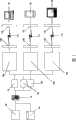
Fig. 1 is to use the schematic diagram of audio-video data stream type transmission system of the present invention;
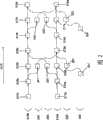
Fig. 2 is the schematic diagram of employed video coding level in the system of Fig. 1;
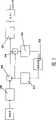
Fig. 3 is the schematic diagram that can realize the coding structure of the no mismatch switching between the video flowing;
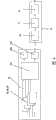
Fig. 4 is the schematic diagram of client-server structure that is applicable to the system of Fig. 1;
Fig. 5 a and Fig. 5 b show standard TKPT respectively and transmit packet configuration and the modification structures that system carried out of this structure for Fig. 1; With
Fig. 6 a-6c shows the schematic diagram of the various aspects of the data structure that comprises the audio-video data flow according to an embodiment of the invention.
Embodiment
Fig. 1 is to use the schematic diagram of the audio-video data stream type transmission system of one embodiment of the present of invention.
On the principle,server 10 is operated in an identical manner from the real-time stream ofencoder 20 with from the precoded stream of file 30.In this specific embodiment, the stream transmission of real-time media has been described.The different of stream transmission medium and pre-encoded file are discussed in embodiment subsequently.
Need set up halfreliable network connection 110 fromserver 10 to each client 40-60 and guarantee that nearly all grouping that is sent out can both receive, and makes the interference minimum for user's perceptual quality thus.Therefore in connecting each terminal of 110, network uses buffering area (120,130) so that grouping that can retransmission of lost.Wish that also it is network close friends that network connects 110, that is, when not taking place to improve employed bit rate when congested, and when generation is congested, reduce employed bit rate significantly.
Though with the system component example and be illustrated as integrated and combination stand-alone assembly, should recognize also and can use different structures.For example, can useexternal encoder 20 and/or file memory 30.Similarly,buffering area 130 can be integrated among the client device 40-60.
Fig. 2 is the schematic diagram of the video coding hierarchical structure that uses in the system of Fig. 1.Encoder 20 is encoded into resilient coding with content of multimedia real-time or storage and represents.Under low bit rate, audio coding become single encoded bit stream, so this audio frequency itself is stiff.Yet, because the required bit rate of audio frequency is generally lower than the video, if thereby with elastic type video is encoded, the hybrid coding of Voice ﹠ Video can be considered as flexible so.
Under 4.8kbit/s, use AMR (adaptive multi-rate) encoder that audio frequency is encoded.Encoding video into elasticity represents.Encoder 20 is created the hierarchical structure of independent video streams to be similar to layer mode.This hierarchical structure is not to create by making each stream depend in the hierarchical structure all lower streams, but each stream is carried out absolute coding.This hierarchical structure is known, is called as " radio hookup (simulcast) ".
Come coding audio data though use low bit rate AMR scheme only has been described, also support other AMR code rate and other coding standard, such as MP3.Can be the coded audio under the different rates is organized into the independent hierarchical structure that flows, still because each audio frame generally is an absolute coding, so the switching between the coded representation is more simple with the following similar mode of description that is used for video.
The video layer level structure that uses the expansion H.263 of ITU-T standard to create comprises: stream (intra stream) 200 in the frame is used for the random access video flowing; Play stream (playstream) 210a, 210b with one or more, be used for normally watching of content.With different bit rates each is playstream stream 210a fromstream 200 in the frame to minimum speed limit and plays switching the stream.
Because encryption algorithm adopts motion compensated prediction, even if thereby place, the arbitrfary point in playing stream carry out switching between bit stream possible, also will be owing to not matching between the reconstructed frame in identical moment of different bit streams causes the video defective.These video defectives also will spread in a period of time.
In current video encoding standard, only the perfection (no mismatch) that frame/zone does not use the position of current switching position (that is, locating at incoming image (access picture)) any information before just can carry out between the bit stream in future is switched.In addition,, can obtain the VCR function, for example be used for random access or " F.F. " and " rewind down " (bigger playback rate) of stream-type video content by placing incoming image at interval with fixing (as 1 second).The user can skip a part of video and restart to play in any incoming image position.Similarly, can obtain bigger playback rate, i.e. F.F. by only transmitting incoming image.
Yet, known ground, the needed bit of incoming image is more than motion-compensated predicted frames.Therefore, usestream 200 and switching stream 220,230,240 in the frame.Even the main attribute that switches stream is for to use different reference frames also can obtain identical image.
The main purpose of hierarchical structure is to makeserver 10 will playstream
Stream 200 is series of frames intra-coded picture (201,202) in the frame, and it is used to provide the recovery of random access and serious error condition.Playstream stream incoming image
For each stream type is specified buffer circle 70-92, be stream (70), broadcast stream (80,85) and (90,91,92) each addign a buffer of switching stream in each frame of each bar content.
Whenclient 40 at first is connected withserver 10, finds out suitable I picture (for example, I picture 201) thebuffer circle 70 thatserver 10 flows in storage frame, and this image is sent to client 40.Server 10 is selected concatenated image (221) to switch to minimum coding bit rate withstream 220 in frame and is playstream 210a then, begins to provide service (213a begins) from this broadcast stream subsequently.
Transmitted in packets is one toclient 40 independently handles that its transmission rate depends on network state and employed host-host protocol.Yet, wish that transmission rate is play the coding bit rate that flows 210a greater than minimum coding bit rate the most at the beginning.This will makeclient 40 begin decoding immediately and to give the user with media presentation in the moment that receives data and decode, and makeclient 40 can accumulate more compressed media data simultaneously in its decoding buffer zone.
Locate at incoming image (example as in the example above incomingimage 217a),client 40 and/orserver 10 can determine that more suitable difference plays stream (for example because network capacity increase or reduce).In the above example, finish the switching of flowing 210b from thebroadcast stream 210a of low rate to the broadcast of higher rate byserver 10transmissions links images 232 rather than incoming image 217a.Concatenatedimage 232 is linked to thebroadcast stream picture 215b that higher rate is playstream 210b, plays stream so thatclient 40 receives this.Finish in a similar fashion to the more switching of the broadcast stream of low bit rate.
Worked out three kinds concatenated image carried out Methods for Coding.The whole bag of tricks provides compromise between the following three: owing to switch the cost that causes skew accumulation, the actual bit rate aspect of switching and because to the encode influence of the quality that flows for single broadcast that produces of the general type image that allows not have the switching of skew low bit rate.
1. predictive coding linked, diagram picture
In first method, generate concatenated image as predicted picture.As follows these images are encoded: during reconstruct, it is similar to the reconstruct that purpose is play the synchronous incoming image in the stream, for example, has very little mean square deviation.Can encode to incoming image as the coded prediction image.Be used for the bit number that concatenated image is encoded has been determined matching degree between the incoming image of the concatenated image of reconstruct and reconstruct, and determined the side-play amount that produces owing to switching thus.Yet each skew of switching generation all will be accumulated.
2. intraframe coding concatenated image
In the second approach, produce concatenated image as producing I picture.As follows these images are encoded: during reconstruct, it is similar to the reconstruct that purpose is play the synchronous incoming image in the stream, for example, has very little mean square deviation.Can encode to incoming image as the coded prediction image.Be used for the bit number that concatenated image is encoded has been determined matching degree between the incoming image of the concatenated image of reconstruct and reconstruct, and determined the side-play amount that produces owing to switching thus.Yet for the given amount of not matching, the bit number that the intraframe coding concatenated image needs is usually greater than predictive coding linked, diagram picture.Use intraframe coding to prevent the accumulation of skew for concatenated image.
3. quantize the source code concatenated image
In the third method, by based on can " ftp: //" VCEG-L27 that obtains among the standard.pictel.com/video-site/, A proposal for SP-frames, submitted by Marta, Karczewicz and Ragip Kurceren at the ITU-TelecommunicationsStandardization Sector Video Coding Experts Group ' s Twelfth Meeting:Eibsee, Gernany, 9-12January, 2001 " technology of the notion of explanation is encoded to concatenated image in, and this paper is called the quantification source images.
Figure 3 illustrates the coding structure that is used to quantize source images.With identical quantification index source images and motion compensated prediction are quantized instep 300 respectively, change before instep 320, subtracting each other, and instep 330, carry out variable length code with 310.By instep 340 with the output ofsubtracter 320 and the output addition in quantification and theconversion 310, and will instep 350, carry out inverse transformation and inverse quantization forms reconstructed image to this result.Reconstructed image is stored in the video memory 360.As a result, reconstructed image quantizes source images exactly, and this reconstructed image does not rely on motion compensated prediction.Therefore, when predicting according to different reference pictures, the source images that reconstruct similarly is given, and can realize not having the skew switching thus.Motion compensated prediction is not irrelevant, and it has reduced the entropy of the signal of pending variable length code, and has reduced the bit number that produces by image is encoded thus.
Incoming image also is encoded into the coded quantization source images, and selection coding mode (intraframe coding or interframe encode) and the quantizer identical with concatenated image selected.This has guaranteed to play in the stream at destination, and the reconstruct of this concatenated image is the same with the reconstruct of synchronous incoming image.
The concatenated image required bit number of encoding is determined by the coding of corresponding incoming image.The bit number that is used for incoming image is encoded according to how to quantize is determined, still usually greater than the bit number that is used for predicted picture is encoded and less than the bit number that I picture is encoded.This is that this encoding ratio intraframe coding is more efficient because used prediction, but the quantification of predicated error makes it not have general forecast effective.Thus, the use that quantizes source images makes it possible to not have skew switches, but cost is the reduction of playing the code efficiency of stream.
The same with predicted picture, quantize source images by identical H.263 grammatical tagging, but being set to retention " 110 ", the front three by MPPTYPE distinguishes mutually with predicted picture.
The periodicity coding that quantizes source images can cause the effect of beating (beating effect) in the static region of image.Be described below.In general predictive coding, the image static region of the reasonable representation that is encoded to source images is not made amendment.These whens zone at the coded quantization source images must quantize prediction, and if the quantification index of the non-static region by being used for image quantize, then this quantification will produce localized variation, may make it even worse, but no matter when, all can change.This variation is the effect of beating.
Overcome this effect of beating by following mode: when the prediction for a zone of image provides enough good source-representation, do not need transmission information, and can not change this zone thus.So when incoming image is encoded into the coded quantization source images, test to determine:, whether will transmit about this regional information if image has been encoded into predicted picture rather than has quantized source images.If do not transmit information, then the quantification ofstep step 350 are set at less value, the output (being commonly referred to predicated error) ofsubtracter 320 is set at zero, and this zone of this new reconstructed image equals to have been undertaken by thin quantizer the respective regions of the previous reconstructed image of quantification thus.H.263 with other standard in, the scope of quantification index from 1 (the thin quantification) to 31 (thick quantifications).Less index generally is meant and is less than or equal to 8 value.This makes the inessential variation of reconstructed image minimum, and also making simultaneously must information transmitted amount minimum.Yet, need be cost with the bit rate in the respective links image, wherein predicated error can not be zero, and must use identical fine quantization device.
Fig. 4 is the schematic diagram that is suitable for the client-server structure used in the system of Fig. 1.
Similarly, when the data volume that is accumulated in itsencoding buffer 41 byclient 40 during less than threshold value,server 10 can be at next concatenated image place switch to thepacket sender 100 of client next lower broadcast stream.
General effect is, according to the congestion state of network, transmission rate changes in network close friend's mode, but because the data of accumulation in the clientdecoding buffer zone 41, and the user discovers less than the short-term because of transmission rate and changes the mass change that causes.Deal with the change in long term of transmission rate by switching to stream, thereby when network is allowed, improve the quality, and when network throughput descends, reduce quality, and needn't stop to show or giving the user the media presentation of destroying with different coding speed.
Thedecoding buffer zone 41 of client is used to reduce network performance and changes the influence of projection being given user's media quality.The handled network characteristic of buffering area is divided three classes: packet jitter, packet loss and variable throughput.These three kinds of network characteristics are not independently in the reality, and are all relevant with network congestion, and under mobile network's situation, reduce relevant with the performance of physical layer.
By transmission rate and media coding rate are separated, when network condition is better, can fill thedecoding buffer zone 41 of client, thereby recovery time is provided when network condition is not so good.
The packet jitter (postponing to change) of identical magnitude has been covered in the accumulation of tens of seconds data in thedecoding buffer zone 41 to the user.In the reality, because being categorized as temporary transient connection, bigger shake interrupts (recover to handle by following mistake and deal with), so this data accumulation will mask all packet jitter.
By accumulation data in decodingbuffer zone 41, for retransmission of lost packets before need decoding to the grouping of losing provides the time.Similarly, the data that the size bydesign decoder buffer 41 can be transmitted its data that comprise more than a plurality of round-trip delay are for a small amount of the re-transmission provides the time to recover from the packet loss state.This makes it possible to recover from most of packet drop, and does not influence decoded media quality, and makes connection have half reliability.
At last, same by accumulation data in decoding buffer zone 44, when receiving bit rate or when receiving velocity, to reduce to when zero less than coding bit rate,client 40 can make media quality be consistent in a period of time.
Because data stream type is transferred toclient 40 and is stored in thedecoding buffer zone 41 with the speed that is independent of code rate, thus be necessary that correct timing is carried out in decoding to data, rather than decoding and projection simply as early as possible.Stab service time for this purpose, this timestamp also can be used for the synchronous of Voice ﹠ Video.
Because network change, be that the data volume in thedecoding buffer zone 41 of the client measured of unit may change in time with the byte.In addition, also can change in time according to the data volume in the measureddecoding buffer zone 41 of the length of represented media presentation time of data volume.Flow transmission for real time content this means: if first data are sent toclient 40 with the minimum delay (from catching these first data and the moment of its coding being started at), then data can not be filled decoding buffer zone 41.Therefore, first data that send toclient 40 are necessary for legacy data, that is, and and the event of institute sometime before this data representedclient 40 links to each other with server 10.Along with the filling of decodingbuffer zone 41, the latest data in this buffering area becomes more and more newer then, and projection simultaneously is maintained fixed delay according to the real time that incident takes place for user's medium.
After coding, server cushions one period regular time with coded data in itsbuffer circle client 40 links to each other withserver 10, can giveclient 40 with ' old ' transfer of data.Along with the filling of clientdecoding buffer zone 41, the point of sense data is more and more near the latest data in these buffering areas frombuffer circle
Preferably, the best size ofbuffer circle decoding buffer zone 41 is for making each buffering area can comprise identical data volume (measuring with the media presentation time that these data are represented).
Realize that the host-host protocol that half authentic data connects uses the meshwork buffering district inserver 10 andclient 40 120,130 respectively.Usually, data are retained in themeshwork buffering district 120 of server, up to confirming thatclient 40 has received these data and all data before.Similarly, when data and all data before have been received and have been sent to decodingbuffer zone 41, from the meshwork buffering 130 of client, remove these data.Therebyserver 10 is known the data that are retained in its oneself themeshwork buffering district 120 in the time that one-way transmission postpone to limit, thereby knows which data is successfully received byclient 40.
This means does not need can know how many data areclient 40 received, thereby can determine to play the switching between the stream forserver 10 provides 10 the feedback fromclient 40 to server that exceeds host-host protocol needs itself.
Data accumulation in thedecoding buffer zone 41 of client can recover some network failures, for example shake, packet loss and variable throughput.Obviously, can not from the all-network fault, recover, unless just decodingbuffer zone 41 is designed to comprise whole media content and when having received all data, begins projection.Because this situation is not a flow transmission, but download, so need a kind of strategy that from serious network failure, is restored.
When network throughput descends, and when being lower than minimum speed limit playing the code rate of stream in considerable time, the data volume in thedecoding buffering 41 will reduce, and finally vanishing.At this moment, will stop projection to the user.Yet, inserver 10, will continue to fill buffer circle.As a result, when network recovery to broadcast when stream that can transmit minimum speed limit again, the required next data ofclient 40 are not probably in theloop buffer
In order from this situation, to recover,server 10 must restart flow transmission, just as set up a new connection from client:server 10 must find a bit flowing in the frame, and from this some beginning flow transmission, switches to the minimum speed limit broadcast by link stream then and flow.For user's influence is to have missed from decodingbuffer zone 41 to become empty medium to begin to transmit when flowing in this frame during this period of time when server in.
Becauseserver 10 is known client and when begins decoding and successfully received how many data it will know whether the decoding buffer zone of client becomes empty.Therefore, can in frame, restart at the stream picture place, and not need to obtain special message from client.Yet, in order to carry out system reset, for example from server and client side's clock rates, recover, transmit control message toserver 10 fromclient 40 in this case.
On the principle, the flow transmission of file is with flow transmission is identical in real time.In fact, the former is more simple.Since can be from file when needs reading of data, so do not need to set uploop buffer server 10 uses identical technology to fill thedecoding buffer zone 41 ofclient 40 and is playing switching between the stream.Become under the situation of sky at decodingbuffer zone 41, not need with the content that has stream picture in the frame in point subsequently restart because when network throughput becomes abundant again, can continue the projection: the user only can perceive in a period of time does not have media presentation.
Use the interior stream of frame can realize multiple technique mode, as F.F., rewind down and random access.
Before it is write file by ' legacy data ' in coveringbuffer circle buffer circle decoding buffer zone 41 to become the problem that empty, user's leakage utilizes the content before stream picture is recovered in the frame.
This function also makes client can suspend one uncertain period of institute's show media, and continues flow transmission subsequently.This also makes the user can carry out F.F. to catch up with real-time stream after this time-out.
The realization of the host-host protocol of being tested in the above-mentioned client-server structure is based on ISO TCP host-host protocol TPKT's, and this agreement has detailed description in by the RFC-2126 " ISOTransport Service on top of TCP (ITOT) " that Y.Pouffary showed.
Standard TPKT protocol definition the header shown in Fig. 5 a, follow by payload.Block length represents with the eight bit byte to be the header of unit and the pattern length of payload.
Being used for the realization of said system, having expanded the header (example of this header has been shown) of TPKT in Fig. 5 b, is payload subsequently.Block length represents with the eight bit byte to be the header, timestamp (if existence) of unit and the pattern length of payload.T is the position of representing whether life period is stabbed, and whether M comprises the position of audio or video information for the expression payload.
As mentioned above, need timestamp to carry out the correct timing of data decode.The information that embeds packet header comprises the timestamp and the number of failing to be sold at auction of data in block length, the grouping.
The setting number of failing to be sold at auction is so that be multiplexed into Voice ﹠ Video in the single TCP connection.This has guaranteed that Voice ﹠ Video is synchronous.If use a plurality of TCP separately to connect, then may these connect for the response of network characteristic slightly differently, and will produce different throughputs, this will finally cause the very big difference of the data volume (measuring with the projection time) in the client decoding buffer zone.Though can manage these differences, by using single TCP to connect and in adjacent packets, can avoiding this problem fully with the Voice ﹠ Video of same projection time is multiplexing.In fact, in the system that has only video, add audio frequency and only need send audio packet simultaneously: do not need other control with relevant video.
When arriving a threshold value (for example 30 seconds), the data volume that is stored in client also can limit transmission speed.When thedecoding buffer zone 41 of client had this data volume,server 10 restriction transmission rates were to keep this full level.
Size by the byte that sends to meshwork bufferingdistrict 120 being counted, from this counting, deducted the meshwork buffering district and divided by estimating network throughput from beginning the transmission elapsed time.Use institute transmit twice counting of byte and send these byte required times twice measurement, according to a pair of data computation throughput, periodically will not re-use then to being reset to zero, and switching comes the short-term of computing network throughput to estimate betwixt.For example, if once reset in per 200 seconds, the throughput of estimation network on a time period that changed within 40 seconds these scopes before the last reset again in 200 seconds after reseting then.
Ifserver 10 wants to transmit as a stream as soon as possible then the effect of this technology is gratifying.But when the data volume in thedecoding buffer zone 41 surpassed threshold value,server 10 limited the buffering area full state of its transmission rate to be maintained fixed as mentioned above.In this case, network throughput is estimated as the coding bit rate of current broadcast stream.When in this state, network can the current higher broadcast stream of broadcast flow rate that carries out flow transmission of transfer ratio, but becauseserver 10 since the rate limit of himself can not truly estimate network throughput, soserver 10 can not switch.In order to avoid this state, server is ignored the threshold value that is full of of client decoding buffer zone termly, and in the given time period or for given data volume at full speed rate carry out flow transmission.120 become when expiring from the meshwork buffering district, and server record sends to the byte number inmeshwork buffering district 120 and used time, and this time is called by the obstruction that sends function anddetects.Server 10 is estimated attainable throughput then, and uses this throughput to determine whether to switch to the broadcast stream of higher rate.
As previously mentioned, by knowing the data that are kept in themeshwork buffering district 120,server 10 can know indirectly which data isclient 40 received, and which data is sent in its decoding buffer zone 41.Use this information to determine when between broadcast stream then and switch, and when activate error recovery procedure (ERP).Yet, the not content in themeshwork buffering district 120 of back-level server and the observability of full level in most of sockets are realized.Content formonitor network buffering 120 has adopted mirror image (mirror) buffering area 120a.Mirrorimage buffering area 120a does not store the real data that sends to meshwork bufferingdistrict 120, but the only byte number that sent of storage and the timestamp of data.The size of knownnetwork buffering area 120, and suppose that it is always full, thenserver 10 visits the timestamp of the legacy data in themeshwork buffering district 120 by mirrorimage buffering area 120a, and the timestamp of the latest data in thedecoding buffer zone 41 of this timestamp and client is identical.
In test, found that this hypothesis that themeshwork buffering district 120 ofserver 10 always is full of is correct in the time of major part.This is because transmission process is controlled to send to meshwork bufferingdistrict 120 as early as possible.Ifmeshwork buffering district 120 becomes no longer be full of, then influence is for underestimating the data volume ofclient 40, and this influences under most of situation is safe, and this is because subject matter is the data ofclient 40 to be used up, rather than overflows.In fact, decodingbuffer zone 41 can be designed also greatlyyer than the highest-traffic that needs storage.No matter when, if decodingbuffer zone 41 becomes full, thenclient 40 stops 130 reading of data from the meshwork buffering district, and this will stop servernetwork buffering area 120 to become empty conversely, and stop transmission.
In order to determine the definite data volume in the clientdecoding buffer zone 41, server also needs to know the timestamp of the current packet of decoding and showing ofclient.Server 10 calculates definite data volume based on two hypothesis: the first, andclient 40 begins decoding immediately afterserver 10 sends first grouping; The second, the clock of the clock of client and server does not have gross differences during flow transmission.
In fact two hypothesis all are effective.Begin decoding incase client 40 is designed to receive data instant, thereby any mistake of the projection time of estimating about server will cause to the underestimating of the data volume in thedecoding buffer zone 41, this is not a problem as mentioned above.Compare with the data volume that is cushioned, the skew between the client and server clock in general flow transmission conversation procedure is negligible.For example, if deviation is 100/1000000ths, then to spends 10000 seconds or skew in one second take place near three hours ability.Under the rare occasion that has accumulated a large amount of skews,client 40 can be by using control messages, and the message that is used for the decoding buffer zone underflow that is sent is as described above come toserver 10 alarms.
The broadcast stream that has a variety of possible strategies to can be used for determining when to switch to higher rate.Preferably, enough data should be arranged to continue decoding and show media in (for example 15 seconds) at the fixed time in thedecoding buffer zone 41 of client 40.Preferably, the network throughput of for example measuring in nearest 60 seconds that reaches recently should enough be kept the stream transmission of the broadcast stream that will switch to; That is the network throughput speed that, reaches recently should be more than or equal to the bit rate of playing stream.Purpose is the frequent switching between avoiding flowing, because this switching may be more more horrible than the low rate quality than what continue for the user.
In order to realize this purpose, preferably, switching (switching down) downwards determines to comprise and upwards switches (switching up) and determines proportional hysteresis.For example, whenclient 40 no longer has enough data will decode and media presentation when continuing for some time (for example 8 seconds) in itsdecoding buffer zone 41, may trigger to the more downward switching of the broadcast stream of low rate of the next one.In structure with three or a plurality of broadcast stream, and the broadcast stream of current flow transmission be the 3rd or even higher speed play stream, this strategy can not cause dropping to immediately the level bottom, because incoming image just regularly takes place, and wish after switching for the first time, to return to the full state of decoding buffer zone downwards, thereby needn't carry out switching the second time.
Fig. 6 a-6c shows the schematic diagram of the various aspects of the data structure that is used for storing audio-video data source according to an embodiment of the invention.
Master data structure shown in Fig. 6 a makes can store video flowing and a plurality of video playback and switching stream in a plurality of voice playing streams, the frame in single file.
Because the audio-visual data source of creating and using among the present invention has and will once be transferred to a plurality of encoding streams of client, so can not store in traditional sequential file.For example, under the video situation, can play in the stream at each concrete source images is encoded, and can also in frame, flow with some or all switch in the stream and encode.
This document comprises a kind of data structure, and the example of this data structure has been shown in Fig. 6 a, follows by flow data.This data structure comprisesheader 600, and it comprises about the number of stream (audio frequency, video, switching etc.) and the information of type.For first and last example of various types of streams, this stream also comprises the pointer 610-680 (to represent with respect to the side-play amount of file original position) of the header that points to each stream.
Each pointer 620-680 points to and to comprise that the flow data structure that flowheader 700, thisstream header 700 comprise thepointer 710 of the following first-class header that points to same type, the pointer 720,730 of sensing first and last grouping of flowing respectively.Each stream type uses specific stream header type, yet is identical for all some assemblies of stream header type: the number of failing to be sold atauction 705, thepointer 710 of following first-class header that points to same type and the pointer 720,730 that points to first and last grouping of this stream respectively.The example stream header that only comprises these common elements has been shown in Fig. 6 b.In addition, broadcast and audio stream header comprise the coding bit rate of this stream.Switch the number of failing to be sold at auction that the stream header comprises the number of failing to be sold at auction of the broadcast stream that this switchings stream can switch and the broadcast that can switch to is flowed.
Each stream comprises a packet sequence, and each grouping is represented that by packet data structure the example of this packet data structure is shown in Fig. 6 c.Each packet data structure comprisespacket header 800 and payload 810.The data that header comprisescomprise pointer 801,timestamp 802, groupingserial number 803,grouping size 804 and the frame number 805 (that is this grouping, (may divide into groups together with other) video image of expression or the sequence number of audio frame) of the next one grouping in the sensing stream.The switching grouping also comprises the grouping serial number in " from " broadcast stream and " to " broadcast stream (switching is grouped in and carries out the bit rate switching between the two) in addition.Switch the stream packets header define switching point effectively and comprise switch before will from " from " spread last grouping of putting sequence number and switch afterwards first grouping that will play from " to " stream.Sequence number is since 0, and for negative.When switching, can use the guiding of pointer support between flowing, but not adopt the method in the present embodiment.
When adding in file, the pointer that points to last flow data structure and last grouping is of great use, because utilize these pointers access file point that will expand rapidly, and does not need to search for whole file.
The complexity of data structure depends on the grouping in a lot of a plurality of streams that are interweaved of possibility, and supports switching and the needs that recover.Need come from another grouping of a direct packets by pointer, because continuous grouping is not storage continuously usually hereof in stream.The fine detail of the source and destination grouping that the write operation of switching and recovering to divide into groups need be recorded.Switching in the replayed section between stream at first needs to discern next available switching grouping, is the playback of the packets remaining in " from " stream subsequently, switches the playback of grouping, is then to begin grouping playback " to " stream from suitable point.Must there be appreciable delay when between flowing, switching in addition.
In test, use BTCellnetTMGPRS network is to studying based on the stream of file and situation about flowing in real time.Use desk-top Pentium (Pentium) PC to move decoder and server.Client is by infrared ray and Motorola TimeportTMThe Compaq iPaq that the GPRS mobile phone links to each otherTM
In having only the structure of video, use two kinds to switch stream, its bit rate is respectively 6kbit/s and 12kbit/s.
This system moves as expected.Stream begins transmission in the frame, switches to 6kbit/s then and plays stream, stay for some time at this broadcast stream, because of actual transfer rate greater than 6kbit/s, thereby accumulated data in client.Then when having accumulated enough data, and the short-term averaging receiving velocity switches to the broadcast stream of higher rate during greater than 12kbit/s.
In long session, sometimes because the decline of network throughput is switched back than the broadcast of low rate flows.And in few, can interrupt owing to thereby network in the quite a while can not send the data media presentation to client.
All have this whole structure for most of session, the user can watch continuous media presentation, and mass change is arranged sometimes, but does not have the distortion relevant with error code and packet loss usually.Have only under few situation just and can media presentation be suspended fully owing to serious network failure and throughput reduce.
Claims (6)
1. method that is used to store the data source of streaming system, this data source comprises a plurality of encoded data streams, it is characterized in that, some encoded data stream at least in these a plurality of encoded data streams is the independent expression of the data in the described data source, and, said method comprising the steps of to be different from the resolution encoding of other encoded data stream in described a plurality of encoded data stream:
Storage header (600-680); And
Storage is used for the flow data (700) of each encoded data stream,
Wherein, the step of described storage header (600-680) comprises storage and the linking of a described flow data (700),
Wherein, the step of storing each flow data (700) may further comprise the steps:
Storage flow header (705,740,750); And
Store one or more grouping (800) of this flow data;
Wherein, the step of described storage flow header comprises:
Store link (710) with next flow data; And
Link (720) of storage and first grouping of described flow data,
Described method also comprises the step that sends grouping storage, corresponding with selected data flow.
2. method according to claim 1, wherein said method comprise with audio data coding being the step of encoded data stream.
3. method according to claim 1 and 2, wherein, described a plurality of encoded data streams are video data stream.
4. method according to claim 3, wherein said method also comprises the step of bank switching stream, described switching stream is defined in the transfer point that switches between a video data stream and another video data stream, and this switching stream comprises about switching and the data that can switch to which video flowing and grouping from which video flowing and grouping.
5. method according to claim 1 and 2, the step of wherein said storage header also comprise storage and the linking of last flow data.
6. method according to claim 1 and 2, the step of wherein said storage flow header also comprise link (730) of storage and last grouping of this flow data.
Applications Claiming Priority (2)
| Application Number | Priority Date | Filing Date | Title |
|---|---|---|---|
| EP02252214 | 2002-03-27 | ||
| EP02252214.8 | 2002-03-27 |
Publications (2)
| Publication Number | Publication Date |
|---|---|
| CN1643932A CN1643932A (en) | 2005-07-20 |
| CN100471266Ctrue CN100471266C (en) | 2009-03-18 |
Family
ID=28459565
Family Applications (1)
| Application Number | Title | Priority Date | Filing Date |
|---|---|---|---|
| CNB038070499AExpired - LifetimeCN100471266C (en) | 2002-03-27 | 2003-03-14 | Method for storing data sources of a streaming system |
Country Status (10)
| Country | Link |
|---|---|
| US (1) | US20050120038A1 (en) |
| EP (1) | EP1488644B1 (en) |
| JP (1) | JP4440651B2 (en) |
| KR (1) | KR100917743B1 (en) |
| CN (1) | CN100471266C (en) |
| AT (1) | ATE363809T1 (en) |
| AU (1) | AU2003216817A1 (en) |
| CA (1) | CA2479585A1 (en) |
| DE (1) | DE60314106T2 (en) |
| WO (1) | WO2003084233A1 (en) |
Families Citing this family (24)
| Publication number | Priority date | Publication date | Assignee | Title |
|---|---|---|---|---|
| ES2331111T3 (en)* | 2000-11-29 | 2009-12-22 | British Telecommunications Public Limited Company | TRANSMISSION AND RECEIPT OF DATA IN REAL TIME. |
| CA2457051A1 (en)* | 2001-09-21 | 2003-03-27 | British Telecommunications Public Limited Company | Data communications method and system using buffer size to calculate transmission rate for congestion control |
| EP1449331B1 (en)* | 2001-11-30 | 2007-09-19 | British Telecommunications Public Limited Company | Data transmission |
| EP1488645B1 (en)* | 2002-03-27 | 2010-12-01 | BRITISH TELECOMMUNICATIONS public limited company | Video coding and transmission |
| EP1359722A1 (en)* | 2002-03-27 | 2003-11-05 | BRITISH TELECOMMUNICATIONS public limited company | Data streaming system and method |
| GB0306296D0 (en)* | 2003-03-19 | 2003-04-23 | British Telecomm | Data transmission |
| EP1499131A1 (en)* | 2003-07-14 | 2005-01-19 | Deutsche Thomson-Brandt Gmbh | Method and apparatus for decoding a data stream in audio video streaming systems |
| US7657672B2 (en)* | 2004-01-30 | 2010-02-02 | Telefonaktiebolaget L M Ericsson (Publ) | Packet scheduling for data stream transmission |
| US8018945B2 (en)* | 2004-04-29 | 2011-09-13 | Interdigital Technology Corporation | Method and apparatus for forwarding non-consecutive data blocks in enhanced uplink transmissions |
| EP1810110A1 (en)* | 2004-09-29 | 2007-07-25 | Nokia Corporation | Data file including encrypted content |
| JP4819873B2 (en)* | 2005-04-11 | 2011-11-24 | テレフオンアクチーボラゲット エル エム エリクソン(パブル) | Technology to control data packet transmission of variable bit rate data |
| KR100724899B1 (en) | 2005-11-22 | 2007-06-04 | 삼성전자주식회사 | Compatible (compatible) progressive download method and system |
| US8966002B2 (en) | 2007-04-25 | 2015-02-24 | Lg Electronics Inc. | Providing of link information between various application information and using the link information |
| US8395990B2 (en)* | 2007-11-01 | 2013-03-12 | Thomson Licensing | Method and apparatus for streaming scalable multimedia data streams |
| WO2009131359A2 (en)* | 2008-04-21 | 2009-10-29 | Samsung Electronics Co., Ltd. | Apparatus and method for composing scenes using rich media contents |
| WO2010049440A1 (en) | 2008-10-29 | 2010-05-06 | Edgeware Ab | A method and an apparatus for data recording and streaming |
| EP2204965B1 (en)* | 2008-12-31 | 2016-07-27 | Google Technology Holdings LLC | Device and method for receiving scalable content from multiple sources having different content quality |
| KR101744977B1 (en) | 2010-10-08 | 2017-06-08 | 삼성전자주식회사 | Method for guranteeing quality of service in a multimedia streaming service |
| US20120096180A1 (en)* | 2010-10-14 | 2012-04-19 | Invensys Systems Inc. | Achieving Lossless Data Streaming in a Scan Based Industrial Process Control System |
| WO2015003302A1 (en)* | 2013-07-08 | 2015-01-15 | 华为技术有限公司 | Control method, device and system for video playing |
| JP7312022B2 (en)* | 2019-06-04 | 2023-07-20 | アルプスアルパイン株式会社 | Communication device and communication method |
| US11588876B2 (en)* | 2020-06-16 | 2023-02-21 | T-Mobile Usa, Inc. | Device-side playback restrictions on high throughput networks |
| GB202015327D0 (en)* | 2020-09-28 | 2020-11-11 | British Telecomm | Adaptive bit rate streaming |
| US12101528B2 (en)* | 2022-12-08 | 2024-09-24 | Synamedia Limited | Client device switching to low latency content |
Citations (3)
| Publication number | Priority date | Publication date | Assignee | Title |
|---|---|---|---|---|
| CN1231476A (en)* | 1998-04-01 | 1999-10-13 | 索尼株式会社 | Image signal processing, recording method and equipment and recording medium |
| US6014694A (en)* | 1997-06-26 | 2000-01-11 | Citrix Systems, Inc. | System for adaptive video/audio transport over a network |
| US20020002708A1 (en)* | 2000-06-27 | 2002-01-03 | Bamboo Mediacasting, Inc | Multicasting transmission of multimedia information |
Family Cites Families (97)
| Publication number | Priority date | Publication date | Assignee | Title |
|---|---|---|---|---|
| US4813044A (en)* | 1987-01-30 | 1989-03-14 | International Business Machines Corporation | Method and apparatus for detecting transient errors |
| USRE34824E (en)* | 1987-09-23 | 1995-01-10 | British Telecommunications Public Limited Company | Video coder |
| US5150417A (en)* | 1991-02-25 | 1992-09-22 | Socon Ab | Bass reflex type speaker system |
| US5159447A (en)* | 1991-05-23 | 1992-10-27 | At&T Bell Laboratories | Buffer control for variable bit-rate channel |
| US5506983A (en)* | 1992-07-06 | 1996-04-09 | Microsoft Corporation | Method and system for transactioning of modifications to a tree structured file |
| US5675696A (en)* | 1992-07-14 | 1997-10-07 | Mitsubishi Denki Kabsuhiki Kaisha | Digital video signal recording and reproducing apparatus |
| US5511054A (en)* | 1993-03-31 | 1996-04-23 | Sony Corporation | Apparatus and method for multiplexing encoded data signals and recording medium having multiplexed signals recorded thereon |
| US5561466A (en)* | 1993-06-23 | 1996-10-01 | Nec Corporation | Video and audio data multiplexing into ATM cells with no dummy cell used and ATM cell demultiplexing |
| AU699823B2 (en)* | 1993-12-20 | 1998-12-17 | Rodney John Smith | Data compression system |
| US5566208A (en)* | 1994-03-17 | 1996-10-15 | Philips Electronics North America Corp. | Encoder buffer having an effective size which varies automatically with the channel bit-rate |
| US5874997A (en)* | 1994-08-29 | 1999-02-23 | Futuretel, Inc. | Measuring and regulating synchronization of merged video and audio data |
| US5956321A (en)* | 1995-03-16 | 1999-09-21 | Kabushiki Kaisha Toshiba | Stream scheduling system for real time stream server |
| US5535209A (en)* | 1995-04-10 | 1996-07-09 | Digital Equipment Corporation | Method and apparatus for transporting timed program data using single transport schedule |
| US5822524A (en)* | 1995-07-21 | 1998-10-13 | Infovalue Computing, Inc. | System for just-in-time retrieval of multimedia files over computer networks by transmitting data packets at transmission rate determined by frame size |
| WO1997010656A1 (en)* | 1995-09-14 | 1997-03-20 | Fujitsu Network Communications, Inc. | Transmitter controlled flow control for buffer allocation in wide area atm networks |
| JP3545110B2 (en)* | 1995-09-26 | 2004-07-21 | 富士通株式会社 | Communication service quality control method |
| US6122668A (en)* | 1995-11-02 | 2000-09-19 | Starlight Networks | Synchronization of audio and video signals in a live multicast in a LAN |
| US5754849A (en)* | 1996-01-30 | 1998-05-19 | Wayfarer Communications, Inc. | Self-describing object providing dynamic manipulation of heterogeneous data values and semantic identity between memory and transmission representations |
| US5864678A (en)* | 1996-05-08 | 1999-01-26 | Apple Computer, Inc. | System for detecting and reporting data flow imbalance between computers using grab rate outflow rate arrival rate and play rate |
| US6678311B2 (en)* | 1996-05-28 | 2004-01-13 | Qualcomm Incorporated | High data CDMA wireless communication system using variable sized channel codes |
| US6396804B2 (en)* | 1996-05-28 | 2002-05-28 | Qualcomm Incorporated | High data rate CDMA wireless communication system |
| US5909434A (en)* | 1996-05-31 | 1999-06-01 | Qualcomm Incorporated | Bright and burst mode signaling data transmission in an adjustable rate wireless communication system |
| JP3668556B2 (en)* | 1996-06-13 | 2005-07-06 | ソニー株式会社 | Digital signal encoding method |
| KR0169248B1 (en)* | 1996-07-24 | 1999-02-01 | 양승택 | Message transmission device and message transmission control method in packet interconnection network |
| KR0178766B1 (en)* | 1996-09-02 | 1999-05-15 | 삼성전자주식회사 | Apparatus for digital interface with transmission function of a non-compression digital data |
| US5928330A (en)* | 1996-09-06 | 1999-07-27 | Motorola, Inc. | System, device, and method for streaming a multimedia file |
| US5751741A (en)* | 1996-11-20 | 1998-05-12 | Motorola, Inc. | Rate-adapted communication system and method for efficient buffer utilization thereof |
| US6480541B1 (en)* | 1996-11-27 | 2002-11-12 | Realnetworks, Inc. | Method and apparatus for providing scalable pre-compressed digital video with reduced quantization based artifacts |
| US6124878A (en)* | 1996-12-20 | 2000-09-26 | Time Warner Cable, A Division Of Time Warner Enterainment Company, L.P. | Optimum bandwidth utilization in a shared cable system data channel |
| US5960452A (en)* | 1996-12-23 | 1999-09-28 | Symantec Corporation | Optimizing access to multiplexed data streams on a computer system with limited memory |
| US6011779A (en)* | 1996-12-30 | 2000-01-04 | Hyundai Electronics America | ATM switch queuing system |
| US6014706A (en)* | 1997-01-30 | 2000-01-11 | Microsoft Corporation | Methods and apparatus for implementing control functions in a streamed video display system |
| US6092115A (en)* | 1997-02-07 | 2000-07-18 | Lucent Technologies Inc. | Method for supporting per-connection queuing for feedback-controlled traffic |
| US5918020A (en)* | 1997-02-28 | 1999-06-29 | International Business Machines Corporation | Data processing system and method for pacing information transfers in a communications network |
| JP3003618B2 (en)* | 1997-03-19 | 2000-01-31 | 日本電気株式会社 | Video transmission / reception device |
| US6081843A (en)* | 1997-03-20 | 2000-06-27 | Nokia Telecommunications | System using simulation cell and simulation buffer for regulating cell transfer rate according to occupancy level of the simulation buffer |
| US6240103B1 (en)* | 1997-03-21 | 2001-05-29 | Scientific-Atlanta, Inc. | Method and apparatus for detecting and preventing bandwidth overflow in a statistical multiplexer |
| KR100302263B1 (en)* | 1997-03-25 | 2001-09-22 | 모리시타 요이찌 | Stream data transmission method and system |
| US6269078B1 (en)* | 1997-04-04 | 2001-07-31 | T. V. Lakshman | Method and apparatus for supporting compressed video with explicit rate congestion control |
| US6181821B1 (en)* | 1997-04-30 | 2001-01-30 | Massachusetts Institute Of Technology | Predictive source encoding and multiplexing |
| EP0916118B1 (en)* | 1997-05-26 | 2002-12-18 | Koninklijke Philips Electronics N.V. | System for retrieving data in a stream server |
| US6310857B1 (en)* | 1997-06-16 | 2001-10-30 | At&T Corp. | Method and apparatus for smoothing and multiplexing video data flows |
| JP3547944B2 (en)* | 1997-07-17 | 2004-07-28 | Kddi株式会社 | Dubbing data transmission device for digital VTR |
| US6065104A (en)* | 1997-07-23 | 2000-05-16 | S3 Incorporated | Method of embedding page address translation entries within a sequentially accessed digital audio data stream |
| US6701372B2 (en)* | 1997-08-22 | 2004-03-02 | Canon Kabushiki Kaisha | Data communication apparatus and method |
| JP3478100B2 (en)* | 1997-12-09 | 2003-12-10 | 三菱電機株式会社 | Radio channel allocation apparatus and radio channel allocation method |
| US6285661B1 (en)* | 1998-01-28 | 2001-09-04 | Picturetel Corporation | Low delay real time digital video mixing for multipoint video conferencing |
| US6216173B1 (en)* | 1998-02-03 | 2001-04-10 | Redbox Technologies Limited | Method and apparatus for content processing and routing |
| US6373855B1 (en)* | 1998-03-05 | 2002-04-16 | Intel Corporation | System and method for using audio performance to control video bandwidth |
| JPH11261589A (en)* | 1998-03-13 | 1999-09-24 | Fujitsu Ltd | ATM network equipment |
| IL123906A0 (en)* | 1998-03-31 | 1998-10-30 | Optibase Ltd | Method for synchronizing audio and video streams |
| US6104441A (en)* | 1998-04-29 | 2000-08-15 | Hewlett Packard Company | System for editing compressed image sequences |
| JPH11341477A (en)* | 1998-05-25 | 1999-12-10 | Niles Parts Co Ltd | Image storage processing unit |
| EP0966164B1 (en)* | 1998-06-18 | 2005-08-17 | Sony Corporation | Information transmitting apparatus and method, information receiving apparatus and method, apparatus for providing a computer readable program, and broadcasting system |
| US6584509B2 (en)* | 1998-06-23 | 2003-06-24 | Intel Corporation | Recognizing audio and video streams over PPP links in the absence of an announcement protocol |
| US6850564B1 (en)* | 1998-06-26 | 2005-02-01 | Sarnoff Corporation | Apparatus and method for dynamically controlling the frame rate of video streams |
| EP1095520A2 (en)* | 1998-06-29 | 2001-05-02 | Limt Technology AB | Method and apparatus for splicing data streams |
| US6097697A (en)* | 1998-07-17 | 2000-08-01 | Sitara Networks, Inc. | Congestion control |
| GB9821792D0 (en)* | 1998-10-06 | 1998-12-02 | Sgs Thomson Microelectronics | Data transfer |
| US6618363B1 (en)* | 1998-10-09 | 2003-09-09 | Microsoft Corporation | Method for adapting video packet generation and transmission rates to available resources in a communications network |
| US6445701B1 (en)* | 1998-10-09 | 2002-09-03 | Microsoft Corporation | Channel access scheme for use in network communications |
| FR2784844B1 (en)* | 1998-10-14 | 2002-03-29 | France Telecom | METHOD FOR SWITCHING OVER THE VIDEO COMPONENT (S) OF A FIRST DIGITAL AUDIOVISUAL PROGRAM ONTO THE COMPONENT (S) OF A SECOND DIGITAL AUDIOVISUAL PROGRAM |
| KR100310055B1 (en)* | 1998-10-28 | 2001-12-17 | 구자홍 | Device and method for changing recording speed of optical disc recorder / player |
| US6637031B1 (en)* | 1998-12-04 | 2003-10-21 | Microsoft Corporation | Multimedia presentation latency minimization |
| US6625119B1 (en)* | 1999-03-17 | 2003-09-23 | 3Com Corporation | Method and system for facilitating increased call traffic by switching to a low bandwidth encoder in a public emergency mode |
| WO2000055854A1 (en)* | 1999-03-17 | 2000-09-21 | Kabushiki Kaisha Toshiba | Method for recording stream data and its data structure |
| US6754189B1 (en)* | 1999-04-08 | 2004-06-22 | Lucent Technologies Inc. | Method of queue length based burst management in wireless communication systems |
| JP4503858B2 (en)* | 1999-04-14 | 2010-07-14 | ライト チャンス インコーポレイテッド | Transition stream generation / processing method |
| US6614843B1 (en)* | 1999-04-15 | 2003-09-02 | Diva Systems Corporation | Stream indexing for delivery of interactive program guide |
| US6697369B1 (en)* | 1999-09-28 | 2004-02-24 | Lucent Technologies Inc | Admission control adjustment in data networks using maximum cell count |
| US7522631B1 (en)* | 1999-10-26 | 2009-04-21 | Qualcomm, Incorporated | Method and apparatus for efficient data transmission control in a wireless voice-over-data communication system |
| US7206580B2 (en)* | 1999-11-04 | 2007-04-17 | Qualcomm Incorporated | Method and apparatus for performing handoff in a high speed communication system |
| US7203732B2 (en)* | 1999-11-11 | 2007-04-10 | Miralink Corporation | Flexible remote data mirroring |
| US6700893B1 (en)* | 1999-11-15 | 2004-03-02 | Koninklijke Philips Electronics N.V. | System and method for controlling the delay budget of a decoder buffer in a streaming data receiver |
| US6593930B1 (en)* | 1999-12-16 | 2003-07-15 | Intel Corporation | Method and apparatus to execute a memory maintenance operation during a screen blanking interval |
| US7106906B2 (en)* | 2000-03-06 | 2006-09-12 | Canon Kabushiki Kaisha | Moving image generation apparatus, moving image playback apparatus, their control method, and storage medium |
| US7058723B2 (en)* | 2000-03-14 | 2006-06-06 | Adaptec, Inc. | Congestion control for internet protocol storage |
| US6738386B1 (en)* | 2000-05-11 | 2004-05-18 | Agere Systems Inc. | Controlled latency with dynamically limited queue depth based on history and latency estimation |
| US7260826B2 (en)* | 2000-05-31 | 2007-08-21 | Microsoft Corporation | Resource allocation in multi-stream IP network for optimized quality of service |
| US6909693B1 (en)* | 2000-08-21 | 2005-06-21 | Nortel Networks Limited | Performance evaluation and traffic engineering in IP networks |
| US6993604B2 (en)* | 2000-11-15 | 2006-01-31 | Seagate Technology Llc | Dynamic buffer size allocation for multiplexed streaming |
| ES2331111T3 (en)* | 2000-11-29 | 2009-12-22 | British Telecommunications Public Limited Company | TRANSMISSION AND RECEIPT OF DATA IN REAL TIME. |
| US7277955B2 (en)* | 2000-12-22 | 2007-10-02 | Verizon Corporate Services Group Inc. | Streaming content |
| US20020122491A1 (en)* | 2001-01-03 | 2002-09-05 | Marta Karczewicz | Video decoder architecture and method for using same |
| WO2002071736A2 (en)* | 2001-03-05 | 2002-09-12 | Intervideo, Inc. | Systems and methods of error resilience in a video decoder |
| US7626999B2 (en)* | 2001-03-16 | 2009-12-01 | Tellabs San Jose, Inc. | Apparatus and methods for circuit emulation of a point-to-point protocol operating over a multi-packet label switching network |
| TW511365B (en)* | 2001-05-15 | 2002-11-21 | Corbett Wall | Method allowing individual user to record song and forward to others for listening by connecting to a service provider with telecommunication device signal |
| US7191246B2 (en)* | 2001-07-18 | 2007-03-13 | Sharp Laboratories Of America, Inc. | Transmission rate selection for a network of receivers having heterogenous reception bandwidth |
| US7106758B2 (en)* | 2001-08-03 | 2006-09-12 | Adc Telecommunications, Inc. | Circuit and method for service clock recovery |
| CA2457051A1 (en)* | 2001-09-21 | 2003-03-27 | British Telecommunications Public Limited Company | Data communications method and system using buffer size to calculate transmission rate for congestion control |
| US20030076858A1 (en)* | 2001-10-19 | 2003-04-24 | Sharp Laboratories Of America, Inc. | Multi-layer data transmission system |
| US6898313B2 (en)* | 2002-03-06 | 2005-05-24 | Sharp Laboratories Of America, Inc. | Scalable layered coding in a multi-layer, compound-image data transmission system |
| EP1488645B1 (en)* | 2002-03-27 | 2010-12-01 | BRITISH TELECOMMUNICATIONS public limited company | Video coding and transmission |
| EP1359722A1 (en)* | 2002-03-27 | 2003-11-05 | BRITISH TELECOMMUNICATIONS public limited company | Data streaming system and method |
| US20040181817A1 (en)* | 2003-03-12 | 2004-09-16 | Larner Joel B. | Media control system and method |
| GB0306296D0 (en)* | 2003-03-19 | 2003-04-23 | British Telecomm | Data transmission |
| KR20060088303A (en)* | 2005-02-01 | 2006-08-04 | 엘지전자 주식회사 | Apparatus and method for storing / playing video in a digital broadcasting receiver |
- 2003
- 2003-03-14CNCNB038070499Apatent/CN100471266C/ennot_activeExpired - Lifetime
- 2003-03-14KRKR1020047015313Apatent/KR100917743B1/ennot_activeExpired - Lifetime
- 2003-03-14DEDE60314106Tpatent/DE60314106T2/ennot_activeExpired - Lifetime
- 2003-03-14ATAT03712352Tpatent/ATE363809T1/ennot_activeIP Right Cessation
- 2003-03-14JPJP2003581500Apatent/JP4440651B2/ennot_activeExpired - Lifetime
- 2003-03-14EPEP03712352Apatent/EP1488644B1/ennot_activeExpired - Lifetime
- 2003-03-14CACA002479585Apatent/CA2479585A1/ennot_activeAbandoned
- 2003-03-14USUS10/508,122patent/US20050120038A1/ennot_activeAbandoned
- 2003-03-14WOPCT/GB2003/001090patent/WO2003084233A1/enactiveIP Right Grant
- 2003-03-14AUAU2003216817Apatent/AU2003216817A1/ennot_activeAbandoned
Patent Citations (3)
| Publication number | Priority date | Publication date | Assignee | Title |
|---|---|---|---|---|
| US6014694A (en)* | 1997-06-26 | 2000-01-11 | Citrix Systems, Inc. | System for adaptive video/audio transport over a network |
| CN1231476A (en)* | 1998-04-01 | 1999-10-13 | 索尼株式会社 | Image signal processing, recording method and equipment and recording medium |
| US20020002708A1 (en)* | 2000-06-27 | 2002-01-03 | Bamboo Mediacasting, Inc | Multicasting transmission of multimedia information |
Also Published As
| Publication number | Publication date |
|---|---|
| DE60314106T2 (en) | 2008-01-24 |
| CA2479585A1 (en) | 2003-10-09 |
| JP4440651B2 (en) | 2010-03-24 |
| ATE363809T1 (en) | 2007-06-15 |
| EP1488644A1 (en) | 2004-12-22 |
| KR100917743B1 (en) | 2009-09-15 |
| CN1643932A (en) | 2005-07-20 |
| KR20040093483A (en) | 2004-11-05 |
| WO2003084233A1 (en) | 2003-10-09 |
| EP1488644B1 (en) | 2007-05-30 |
| DE60314106D1 (en) | 2007-07-12 |
| AU2003216817A1 (en) | 2003-10-13 |
| US20050120038A1 (en) | 2005-06-02 |
| JP2005522115A (en) | 2005-07-21 |
Similar Documents
| Publication | Publication Date | Title |
|---|---|---|
| CN100581158C (en) | Data streaming system and method | |
| CN100471266C (en) | Method for storing data sources of a streaming system | |
| JP4949591B2 (en) | Video error recovery method | |
| RU2385541C2 (en) | Variation of buffer size in coder and decoder | |
| US7539187B2 (en) | System and method for low-latency content-sensitive forward error correction | |
| CN1478349A (en) | Send and receive real-time data | |
| CN102130886B (en) | Network video streaming media system, transmission processing method, transmitting end | |
| KR20010020498A (en) | system for adaptive video/audio transport over a network | |
| CN1812587A (en) | Video coding | |
| CN103795996B (en) | 3D delivery of video method and apparatus | |
| CN101855855A (en) | FEC codec method and device | |
| Parthasarathy et al. | Design of a transport coding scheme for high-quality video over ATM networks | |
| CN102404572B (en) | Video encoding and decoding system and method based on systematic RS code under delay constraints | |
| JP2005033556A (en) | Data transmitting apparatus, data transmitting method, data receiving apparatus, and data receiving method | |
| KR100690710B1 (en) | How to send a video | |
| Xu et al. | Delay-aware loss-concealment strategies for real-time video conferencing | |
| KR101148072B1 (en) | Multimedia supporting system and method thereof | |
| KR100713363B1 (en) | MPEG transmission device and method in mobile communication system | |
| Liu et al. | Expected run-time distortion based media streaming with server diversity |
Legal Events
| Date | Code | Title | Description |
|---|---|---|---|
| C06 | Publication | ||
| PB01 | Publication | ||
| C10 | Entry into substantive examination | ||
| SE01 | Entry into force of request for substantive examination | ||
| C14 | Grant of patent or utility model | ||
| GR01 | Patent grant | ||
| CX01 | Expiry of patent term | Granted publication date:20090318 | |
| CX01 | Expiry of patent term |