 TOPICS
Malfatti's Problem

In 1803, Malfatti posed the problem of determining the three circular columns of marble of possibly different sizes which, when carved out of a right triangular prism, would have the largest possible totalcross section. This is equivalent to finding the maximum totalarea of threecircles which can be packed inside aright triangle of any shape without overlapping. This problem is now known as themarble problem (Martin 1998, p. 92). Malfatti gave the solution as threecircles (theMalfatti circles) tangent to each other and to two sides of thetriangle. In 1930, it was shown that theMalfatti circles were not always the best solution. Then Goldberg (1967) showed that, even worse, they arenever the best solution (Ogilvy 1990, pp. 145-147). Ogilvy (1990, pp. 146-147) and Wells (1991) illustrate specific cases where alternative solutions are clearly optimal.

The general Malfatti problem on an arbitrary triangle was actually formulated and solved earlier by the Japanese geometer Chokuen Ajima (1732-1798) (Fukagawa and Pedoe 1989, p. 28; Kimberling). It asks to draw within a giventriangle threecircles, each of which istangent to the other two and to two sides of thetriangle. The resultingcircles so constructed (tangent to
 and
and ),
), (
( and
and ), and
 (tangent to
 and
and ) are known as theMalfatti circles. The problem was solved using an algebraic-geometric solution by Malfatti (1803; Ostwald; Dörrie 1965, p. 147), and a purely geometric solution was given without proof by Steiner (1826; Ostwald; Dörrie 1965, p. 147).
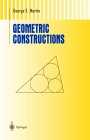
The Malfatti configuration appears on the cover of Martin (1998).
See also
Ajima-Malfatti Points,Circle Packing,Malfatti Circles,Marble Problem,Tangent CirclesExplore with Wolfram|Alpha

References
Casey, J.A Sequel to the First Six Books of the Elements of Euclid, Containing an Easy Introduction to Modern Geometry with Numerous Examples, 5th ed., rev. enl. Dublin: Hodges, Figgis, & Co., pp. 154-155, 1888.Dörrie, H. "Malfatti's Problem." §30 in100 Great Problems of Elementary Mathematics: Their History and Solutions. New York: Dover, pp. 147-151, 1965.Eves, H.A Survey of Geometry, rev. ed. Boston, MA: Allyn & Bacon, p. 245, 1965.F. Gabriel-Marie.Exercices de géométrie. Tours, France: Maison Mame, pp. 710-712, 1912.Forder, H. G.Higher Course Geometry. Cambridge, England: Cambridge University Press, pp. 244-245, 1931.Fukagawa, H. and Pedoe, D. "The Malfatti Problem."Japanese Temple Geometry Problems (San Gaku). Winnipeg: The Charles Babbage Research Centre, pp. 28 and 103-106, 1989.Gardner, M.Fractal Music, Hypercards, and More Mathematical Recreations from Scientific American Magazine. New York: W. H. Freeman, pp. 163-165, 1992.Goldberg, M. "On the Original Malfatti Problem."Math. Mag.40, 241-247, 1967.Hart.Quart. J.1, p. 219.Kimberling, C. "1st and 2nd Ajima-Malfatti Points."http://faculty.evansville.edu/ck6/tcenters/recent/ajmalf.html.Malfatti, G. "Memoria sopra un problema stereotomico."Memorie di matematica e fisica della Societé Italiana delle Scienze10-1, 235-244, 1803.Martin, G. E.Geometric Constructions. New York: Springer-Verlag, pp. 92-95, 1998.Lob, H. and Richmond, H. W. "On the Solution of Malfatti's Problem for a Triangle."Proc. London Math. Soc.2, 287-304, 1930.Ogilvy, C. S.Excursions in Geometry. New York: Dover, 1990.Oswald.Klassiker de exakten Wissenschaften, Vol. 23. Suppl.Rouché, E. and de Comberousse, C.Traité de géométrie plane. Paris: Gauthier-Villars, pp. 311-314, 1900.Rothman, T. "Japanese Temple Geometry."Sci. Amer.278, 85-91, May 1998.Schellbach.J. reine angew. Math.45.Wells, D.The Penguin Dictionary of Curious and Interesting Geometry. London: Penguin, 1991.Woods, F. S.Higher Geometry: An Introduction to Advanced Methods in Analytic Geometry. New York: Dover, pp. 206-209, 1961.Referenced on Wolfram|Alpha
Malfatti's ProblemCite this as:
Weisstein, Eric W. "Malfatti's Problem."FromMathWorld--A Wolfram Resource.https://mathworld.wolfram.com/MalfattisProblem.html