
A Brief History of UH Mānoa
The Early Years
The University ofHawaiʻi at Mānoa was founded in 1907 under the Morrill Act as a land-grant college of agriculture and mechanic arts. Regular classes began the following year with President John Gilmore at the helm and five freshmen, five preparatory students, and 13 faculty in temporary quarters near Honolulu’s Thomas Square. In 1912 the newly-named College ofHawaiʻi relocated to Mānoa Valley and the first permanent building—known today asHawaiʻi Hall—was erected amid pig farms and kiawe groves.
Growth and Expansion
The college became the University ofHawaiʻi in 1920 with the addition of a College of Arts and Sciences. The Territorial Normal and Training School (now the College of Education) joined the University in 1931.
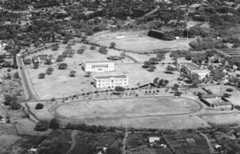
The university continued to grow throughout the 1930s. The Oriental Institute, forerunner of the East-West Center, was founded in 1935, bolstering the university’s mounting prominence in Asia-Pacific studies. In 1939, the first student union building was erected through financial contributions from the community.
World War II
UH Mānoa Emerges
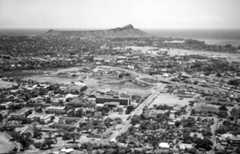
The university continued to expand throughout the second half of the century and in 1972 was renamed the University ofHawaiʻi at Mānoa to distinguish it from the other campuses in the growing University ofHawaiʻi System.
Into the 21st Century
In 2019, theUH Board of Regents approved the creation of a new position, theUH Mānoa provost, to replace theUH Mānoa chancellor. The provost serves as a full chief academic officer for the campus and deputy to theUH System president in leadingUH Mānoa as the flagship campus of the flourishing 10-campusUH System.
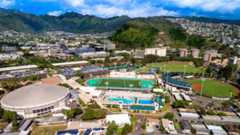
TodayUH Mānoa is a research university of international standing offering a comprehensive array ofundergraduate, graduate, and professional degrees.