


The first environmental law was passed in 1306.
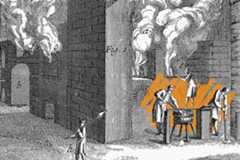
- Coal-burning bottle works
Author Sarah Anne Lloyd
November 7, 2024
Love it?9
Unhealthy air can feel like a modern problem — or at least a postindustrial one — but humans have been breathing dirty air for a long time, and protesting it just as long. In ancient Rome, courtsconsidered civil claims against people and businesses that released too much smoke in the air, and Byzantine Emperor Justinian declared clean air to be a human right. Then in 1306, King Edward I of England passed what’s often considered the first environmental law, when he made a proclamation banning coal burning.
Until the mid-13th century, British people burned wood to stay warm. But as cities such as London expanded and populations boomed,wood became scarce — demand for firewood and timber increased, and forestland was cleared for agricultural uses. So those who couldn’t afford the rising price of firewood turned to something readily available: sea-coal, now simply known as coal. (At the time, “coal” referred to charcoal.) It’s unclear exactly why it was called sea-coal, but it may have had something to do with how Brits could gather it from beaches along the North Sea.
Not only did sea-coal produce thick smoke and an awful smell, but it also was woefully inefficient, so furnaces needed more coal to produce the same amount of heat as wood, leading to even more smoke. In Britain’s notoriously foggy weather, all that smokecreated smog that could hang in the air for days at a time. The pollution was so bad in London that in 1285, commissions were appointed to figure out a way to be rid of it. Still, the air got even worse, and in 1306, Edward I banned the burning of sea-coal. Although the king threatened steep fines and smashed furnaces as a punishment, the ban didn’t have a lasting effect on the use of coal in Britain.
By the Numbers
Days the Great Smog of London lasted in 1952
5
Year the U.S. Environmental Protection Agency was founded
1970
Years Edward I reigned (1272 to 1307)
20
Percentage of U.S. energy generated by coal in 2023
16%
Did you know?
The first major smog in L.A. was mistaken for an enemy attack.
If there’s one city besides London that’s notorious for smog, it’s Los Angeles — but when L.A. saw its first major case of smog, it was mistaken for something else entirely. It wasJuly 26, 1943, right at the height of World War II, so when a thick cloud descendedsmelling like bleach, making eyes burn, and cutting visibility down to just a couple of blocks, some peoplethought it was chemical warfare. In reality, the major drivers of that smog were factories,personal automobiles, and a bowl-like topography that trapped the fumes inside.


