Movatterモバイル変換


[0]ホーム

URL:


Skip to main content
Academia.eduAcademia.edu
Eric H. Cline is Professor of Classics and Anthropology, the former Chair of the Department of Classical and Near Eastern Languages and Civilizations, and the current Director of the Capitol Archaeological Institute at The George Washington University. A Fulbright scholar, National Geographic Explorer, Getty Scholar, and NEH Public Scholar with degrees from Dartmouth, Yale, and the University of Pennsylvania, he is an active field archaeologist with more than 30 seasons of excavation and survey experience in Israel, Egypt, Jordan, Cyprus, Greece, Crete, and the United States, including ten seasons at the site of Megiddo (biblical Armageddon) in Israel, from which he retired after serving as Co-Director with Israel Finkelstein of TAU, and ten seasons at Tel Kabri, where he is currently Co-Director with Assaf Yasur-Landau of the University of Haifa. A two-time winner (2014 and 2018) of the "Nancy Lapp Best Popular Book" Award from the American Schools of Oriental Research (ASOR) and three-time winner of the Biblical Archaeology Society's "Best Popular Book on Archaeology" Award (2001, 2009, and 2011), he and his two co-editors were recently (2019) awarded the G. Ernest Wright Book Award for best edited volume from the American Schools of Oriental Research (ASOR). He is the author, co-author, editor, or co-editor of 22 books, including "The Battles of Armageddon: Megiddo and the Jezreel Valley from the Bronze Age to the Nuclear Age" (2000), "Jerusalem Besieged: From Ancient Canaan to Modern Israel" (2004), "From Eden to Exile: Unraveling Mysteries of the Bible" (2007), "Biblical Archaeology: A Very Short Introduction" (2009),  "The Trojan War: A Very Short Introduction" (2013), "1177 BC: The Year Civilization Collapsed" (2014; revised and updated 2021), "Three Stones Make a Wall: The Story of Archaeology" (2017), and "Digging Up Armageddon: The Search for the Lost City of Solomon" (2020), all written for the general public, and "Sailing the Wine-Dark Sea: International Trade and the Late Bronze Age Aegean (1994; 2009), "Amenhotep III: New Perspectives on His Reign" (1998), "Thutmose III: A New Biography" (2006), "Oxford Handbook of the Bronze Age Aegean" (2010), "Ancient Empires" (2011), "The Ahhiyawa Texts" (2011), "Ramesses III: The Life and Times of Egypt's Last Hero" (2012), and "The Social Archaeology of the Levant" (2019), all intended for scholarly audiences. He has also published more than 100 articles and reviews in scholarly journals, books, and festschriften, and recently served for six years as the co-editor, with Christopher Rollston, of the Bulletin of the American Society of Overseas Research (BASOR). One of his lectures based on "1177 BC" has been viewed more than six million times on YouTube; see https://www.youtube.com/watch?v=bRcu-ysocX4&t=3084s.
Phone: (202) 994-0316
Address: 335 Phillips Hall
801 22nd St. NW
Washington, D.C. 20052
less

Related Authors

InterestsView All (31)

Uploads

Newest by Eric H Cline

Research paper thumbnail of Are civilizations destined to collapse? Lessons from the Mediterranean Bronze Age
Global Environmental Change, 2024
As the world faces multiple crises, lessons from humanity’s past can potentially suggest ways to ... moreAs the world faces multiple crises, lessons from humanity’s past can potentially suggest ways to decrease dis-ruptions and increase societal resilience. From 1200 to 1100 BCE, several advanced societies in the Eastern Mediterranean suffered dramatic collapse. Though the causes of the Late Bronze Age Collapse are still debated, contributing factors may include a “perfect storm” of multiple stressors: social and economic upheaval, earth-quake clusters, climate change, and others. We examined how collapse might have propagated through the societies’ connections by modeling the Eastern Mediterranean Late Bronze Age trade and socio-political net-works. Our model shows that the Late Bronze Age societies made a robust network, where any single node’s collapse was insufficient to catalyze the regional collapse that historically transpired. However, modeled sce-narios indicate that some paired node disruptions could cause cascading failure within the network. Subse-quently, a holistic understanding of the region’s network incentive structures and feedback loops can help societies anticipate compounding risk conditions that might lead to widespread collapse and allow them to take appropriate actions to mitigate or adapt societal dependencies. Such network analyses may be able to provide insight as to how we can prevent a collapse of socio-political, economic and trade networks similar to what occurred at the end of the Late Bronze Age. Though such data-intensive analytics were unavailable to these Bronze Age regions, modern society may be able to leverage historical lessons in order to foster improved robustness and resilience to compounding threats. Our work shows that civilization collapses are preventable; we are not necessarily destined to collapse.
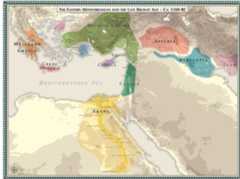
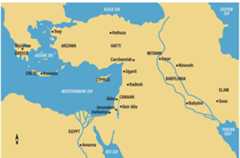
Fig. 1. The Late Bronze Age world. Here we have combined modern place names (Mainland Greece, Cyprus) with the contemporary names of regions that nc longer exist (Ugarit, Canaan, Hittite Empire). The node “Western Anatolia” is a conglomerate of several polities on the western coast of modern-day Turkey, includin; some that were occasionally subsumed in the Hittite Empire, as shown.
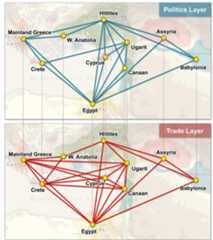
Fig. 2. Late Bronze Age network. The network consists of interdependent political (top, blue) and commercial (bottom, red) layers. The vertical dashed line: between the two layers display interdependencies between the layers. (For interpretation of the references to colour in this figure legend, the reader is referred to the web version of this article.)  The network model tests the hypothesis that node failures cause link failures that can affect the node at the link’s other end. We assume that a
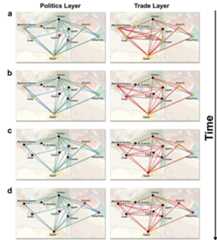
Fig. 4. Simulation of the Aegean and Eastern Mediterranean Late Bronze Age Collapse. Reviewing the regional network (political layer on the left in blue, commercial layer on the right in red), we simulated outcomes when Ugarit and the Hittite Empire were ‘destroyed’ (decoupled from the broader regional network). Panel 4a displays the collapse of the Hittites and Ugarit, causing W. Anatolia, Cyprus, and Canaan regions to lose a substantial number of links in the politics layer. 4b, the subsequent destruction of W. Anatolia, Cyprus, and Canaan leads to the weakening of Mainland Greece and Crete in the commercial layer. 4c, the destruction of Mainland Greece and Crete causes Egypt to lose 6 of the 8 original commercial ties. 4d, the destruction of Egypt weakens Assyria and Babylonia as well, leading to the complete disintegration of the Late Bronze Age network. (For interpretation of the references to colour in this figure legend, the reader is referred to the web version of this article.)
Research paper thumbnail of Cline 2023 "The Curious Case of Albright at Megiddo (aka "A Mysterious Affair at Armageddon")" for Levy Fs (proofs)
Essays on Archaeology in the 21st Century in Honor of Thomas E. Levy, 2023
Even after extensive research in the archives of the Oriental Institute (OI), the Israel Antiquit... moreEven after extensive research in the archives of the Oriental Institute (OI), the Israel Antiquities Authority (IAA), and the Rockefeller Foundation for my book Digging Up Armageddon (2020), a number of minor mysteries remained unresolved. Among them is the question of exactly what happened at Megiddo in mid-October 1925, when William F. Albright visited the site. Now, as a result of further research in two additional archives, the mystery has been partially solved, although questions still remain.
Research paper thumbnail of Cline 2023 "Mind the Gap" chapter on LBA Collapse and Aftermath in How Worlds Collapse (Proofs with EHC edits)
How Worlds Collapse: What History, Systems, and Complexity Can Teach Us About Our Modern World and Fragile Future, 2023
Research paper thumbnail of Cline 2022 PEQ article "Invisible Excavators: The Quftis of Megiddo, 1925-1939" (proofs)
Palestine Exploration Quarterly, 2022
The staff members from the Oriental Institute at the University of Chicago who oversaw the excava... moreThe staff members from the Oriental Institute at the University of Chicago who oversaw the excavations at Megiddo relied upon skilled Egyptian workmen (Quftis) as well as local labourers during their excavations from 1925-1939. However, although there were more than fifty of these Egyptian workmen in all, only a few are mentioned in the preliminary and final publications produced by the project. They are what Stephen Quirke has called 'hidden hands' on excavations; an example of 'invisible labor', as discussed by anthropologists and sociologists. In any effort to reconstruct the lives and labours of these men, we are now at the mercy of what can be found in various archival sources. Data must be gleaned from, for example, requests for half-price railway vouchers for travel between Kantara and Haifa for specific workmen each season; field diary entries; black and white photographs; and occasional mentions in budgets or in passing within letters sent back and forth between Megiddo and Chicago. Still, from this fragmentary information, we can piece together a picture of these unsung members of the expedition, some of whom were present at Megiddo for more seasons than the ever-rotating members of the Chicago staff themselves.
Research paper thumbnail of Cline 2022 JEMAHS 10 2 "Revisiting 1177 BC and the Late Bronze Age Collapse" (Second Proof with EHC minor edits; responses not included)
Journal of Eastern Mediterranean Archaeology and Heritage Studies, 2022
In 2021, a revised and updated version of 1177 BC: The Year Civilization Collapsed was published,... moreIn 2021, a revised and updated version of 1177 BC: The Year Civilization Collapsed was published, in order to include all the new data that had appeared in the intervening seven years. As noted there, we now have additional evidence for drought and climate change around 1200 BCE, in regions stretching from Italy and Greece to Egypt, Turkey, Syria, Lebanon, Israel, and Iran. There is also new textual evidence for both famine and invaders in Ugarit immediately prior to its destruction. As outlined in this essay, taken from arguments in the revised edition, I continue to believe that there was no single "smoking gun" that can explain the upheaval that ended the Bronze Age and that it took a "perfect storm" of catastrophes to bring the era to an end in these regions.
(Note that the responses to the article are not included here; they are by Guy Middleton, Raphael Greenberg, Norman Yoffee, Aren Maeir, and Louise Hitchcock, followed by my brief rejoinder.)
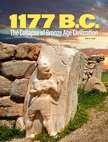
Research paper thumbnail of Cline 2022 1177 BC: The Collapse of Bronze Age Civilization article for BAR Summer 2022 issue (Proof)
Biblical Archaeology Review, 2022
recent survey of leading scientists highlighted the range of interrelated emergencies that we fac... morerecent survey of leading scientists highlighted the range of interrelated emergencies that we face today: climate change with weather extremes, species loss, water scarcity, and a food production crisis, to name but a few. The scientists noted how these crises are weakening societal governance and infrastructure, further exacerbating food and water shortages that, in turn, are fueling large-scale immigration and global inequity. If such crises continue to occur in parallel, the scientists conclude, "It would cause catastrophic outcomes all over the world. " 1 As someone who has spent a career studying the ancient world, I believe the situation we face today has many similarities to 1177 B.C. That was a time more than 3,000 years ago, when the Bronze Age Mediterranean civilizations collapsed one after the other, changing the course of history. 2 I believe that taking a closer look at the events, peoples, and places of that era is more than merely an academic exercise. History has a lot to teach us-if we are willing to listen and learn. 1177 B.C. was a pivotal moment in the history of civilization-a turning point for the ancient world. By that time, the Bronze Age in the Aegean, Egypt, and Near East had lasted nearly 2,000 years, from approximately 3000 B.C. to just after 1200 B.C. When the end came, as it did after centuries of cultural and technological evolution, most of the civilized and international world of the Mediterranean regions came to a dramatic halt in a vast area stretching from what is now Italy to Afghanistan and from Turkey down to Egypt. Large empires and small kingdoms, which had taken centuries to evolve, collapsed rapidly. These included the Mycenaeans on
tHershel Shanks, “The Trowel vs. the Text: How the Amarna Letters Chal- lenge Archaeology; BAR, January/February 2009; Edward L. Greenstein, “Texts from Ugarit Solve Biblical Puzzles, BAR, November/December 2010.  *For more on the Late Bronze Age powers, see Gernot Wilhelm, “When a Mittani Princess Joined Pharaoh's Harem,’ Archaeology Odyssey, May/June 2001; Marian Feldman, “The Iconography of Power: Reading Late Bronze Age Symbols,’ Archaeology Odyssey, May/June 2002; Barry Unsworth, “Imagining the Minoans;’' Archaeology Odyssey, March/April 2004; Hershel Shanks, “The Hittites: Between Tradition and History,’ BAR, March/April 2016.
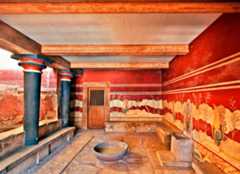
KINGLY KNossos. Knossos was the center of Minoan civilization on Crete, and its palace is legendary. According to Greek mythol- ogy, it was the home of King Minos and the Minotaur—housed within a labyrinth. Large and richly decorated, the palace complex spanned 5 acres. At its center was a throne room (see recon- structed room, above), built in the 15th century B.C. as an addition to the palace. Lined with benches, its walls were covered with bright frescoes of griffins and leafy palms and water plants. On its north wall sat a stone throne, the oldest in the Mediterranean, in front of a stone bowl. The palace’s rich decoration demonstrates the power, wealth, and grandeur of the Bronze Age kingdoms of the Aegean and Near Eastern worlds.  Bronze Age, we know of several factors that created stress on one or more parts of the system.
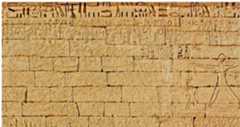
In our global economy, the fortunes and investments  of the United States and Europe are inextricably inter- twined within an international system that also involves East Asia and the oil-producing nations of the Middle  MOVING ACROSS THE MED. Stretched across a wall of Ramesses III’ temple at Medinet Habu near Luxor, a 12th-century relief documents the Sea Peoples’ dramatic arrival in Egypt. The “Sea Peoples,’ a confederation of people from the “islands” whose homeland had been disturbed, traveled in ships, wreaked havoc across the eastern Mediterranean, and attacked Egypt. But the Egyptian forces, led  by Ramesses III (the large figure on the right), defeated them. The Egyptians later settled the Sea Peoples—including the Peleset, or biblical Philistines—in the Levant.
Research paper thumbnail of Who Are You? Preliminary Results of the Academic Genealogies of Near Eastern Scholars (AGNES) Project
ANE Today, 2022
Where do archaeologists and other scholars of the ancient Near East come from? Who were the intel... moreWhere do archaeologists and other scholars of the ancient Near East come from? Who were the intellectual fathers and mothers and who are their children and grandchildren, some of whom lead the field today? The Academic Genealogies of Near Eastern Scholars (AGNES) project comes out of years of conversations about the history and development of the discipline of archaeology of the southern Levant. Our field has lost many senior scholars in recent years, including some who knew a tremendous amount of history about previous generations. We decided to act before we lose any more. We wanted to examine several questions about our discipline, specifically, whether certain preconceived notions are accurate. For instance, we wanted to know whether W. F. Albright was really the main "father" of the discipline, as is often asserted. We also wanted to know whether certain well-known "big digs" were as influential as they are sometimes thought to be. The AGNES project is twofold. One part involves an oral history based on information gathered from a survey of current scholars, and the other involves research into scholars of previous generations.
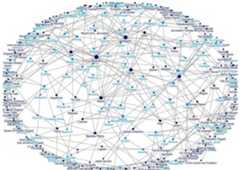
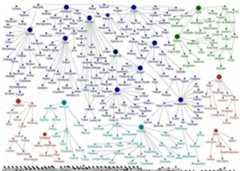
Figure 2 is a sociogram that compiles all the data relating to participants in excavations, and visually connects participants to all the excavations in which they have participated while Figure 3 demonstrates the same connections but in a sine curve.  Figure 2: Excavations and Excavators: Survey respondents in relation to excavations on which they have worked. Excavations are shown in dark blue and excavators in light blue.
Figure 6: Full results of academic family trees, showing those with four or more scholars. Those with fewer than four people in their trees are collected at the bottom of the image
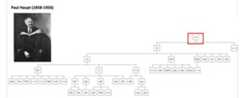
Figure 14: Paul Haupt’s academic genealogy  Haupt’s views on biblical history and historiography were clearly influenced by Delitzsch. He was a skeptic about the historicity and value of the Bible and forced his students to approach it in the same way. In fact, his insistence on intellectual conformity stopped Albright from publishing some of his own more conservative ideas until after Haupt’s death.
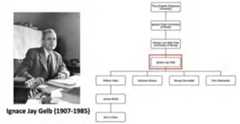
Figure 16: Ignace Gelb’s academic genealogy  There is also a separate strand of American archaeologists and Assyriologists who did not originate with Delitzsch, or even in Germany. The name most familiar within this branch is Ignace Gelb of the University of Chicago (Figures 9 and 16), who taught quite a number of influential scholars. Gelb himself was educated in Rome, in a line that we’ve traced back three generations in Italian universities. Similarly, there is also a third large academic family (see again Figure 9) whose members can trace themselves back to Edith Porada of Columbia University, who studied in Vienna.
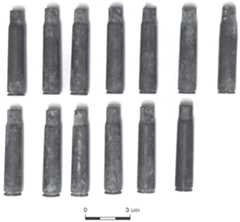
Research paper thumbnail of BATTLEFIELD ARCHAEOLOGY AT ARMAGEDDON ONCE AGAIN: CARTRIDGE CASES AND THE 1948 BATTLE FOR MEGIDDO
In: Finkelstein, I. and Martin, M.A.S. (eds.). Megiddo VI: The 2010-2014 Seasons, vol III. Tel Aviv., 2022
Fig. 38.6: 8 mm (7.92 mm) Mauser cartridges after cleaning (photograph by Anthony Sutter).
Fig. 38.7: Examples of firing pin impressions from 8 mm (7.92 mm) Mauser cartridges found in 2014 (photographs by Henry Pelgrift): (a) deep rectangular firing pin impression — SB Star | 47. (b) deep oval firing pin impression — Z Star 10 47. (c) shallow round firing pin impressions.
Fig. 38.8: Examples of the 9 mm Parabellum cartridge headstamps (photographs by Anthony Sutter).
Fig. 38.10: Examples of two .303 British headstamps (photographs by Anthony Sutter).  unusual looking cartridge case; it appears to be a dummy (or tracer) round, which may be related to the fact that it has a different type of firing pin impression than the other cartridges, meaning that it may have been fired from a different gun.
Research paper thumbnail of Systemic Risk and Resilience: The Bronze Age Collapse and Recovery
Perspectives on Public Policy in Societal-Environmental Crises: What the Future Needs from History, 2022
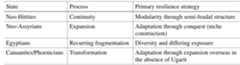
In this chapter we apply the concepts of resilience theory and systemic risk to the Bronze Age Co... moreIn this chapter we apply the concepts of resilience theory and systemic risk to the Bronze Age Collapse. We contend that this was a case of synchronous failures driven by both long-term trends in interconnectedness and inequality, as well as external shocks such as climate change, warfare (including from hostile migration), rebellion, and earthquakes. This set off a chain reaction as the loss of key cities destabilised the trade-network and undermined state revenue, leading to further rebellion, migration, and warfare. Eventually, enough cities were destroyed to undermine the economic, cultural, and political fabric that held the Bronze Age together. Many states recovered and displayed resilience through the Bronze Age systems collapse. No two states were alike in their resilience. The Neo-Assyrians persisted by moving from a strategy of trade to conquest. The surviving Hittites in northern Syria, in contrast, relied on the modularity of their semi-feudal structure. Systemic risk and resilience are helpful lens for viewing the Bronze Age collapse and recovery, as well as taking lessons for the modern globalised world. It at least provides historical grounds for believing that synchronous failures can happen and can be lethal to states.
Table 3. Examples of different strategies of resilience in the iron age recovery  Conclusions: Parallels to the Modern Globalised World System
Research paper thumbnail of Panarchy and the Adaptive Cycle: A Case Study from Mycenaean Greece
Perspectives on Public Policy in Societal-Environmental Crises: What the Future Needs from History, 2022
In this brief paper, we consider and apply the concept of Panarchy and the Adaptive Cycle to a ca... moreIn this brief paper, we consider and apply the concept of Panarchy and the Adaptive Cycle to a case study from the ancient world, specifically the Mycenaeans at the end of the second millennium BCE. We suggest that the collapse of elite Mycenaean society can be conceptualized as a result of its over-reliance on a hypernetworked international system, whose disintegration brought about a cascading event upon the Aegean World. It may be useful to view the events in this area in terms of regional adaptive cycles and their engagement within and upon broader interconnected systems (Panarchy).
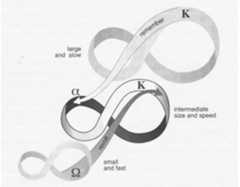
Fig. 2 In this example, a smaller system, as part of its Q phase, foments revolution, which impacts a larger system undergoing a hyper-extended phase (K), thereby contributing to an ensuing Q phase in the larger system. Alternatively, a larger system in a K phase contributes previously forgotten constructs of organization to a smaller system, facilitating restructuring (a phase) , Fig. 2) (following Holling and Gunderson 2002. Reproduced by permission of Island Press, Washington, DC.)  ~ headin ALAM EE NE OES: cad Na | alu vattasommies’ “janie WW ECEitIt A adh Oirlil,  Complex systems operate at a series of scales, whether this be a leaf on a tree thin a forest, or a household in a village of a larger state system. Each of these its holds the capacity for operating within an Adaptive Cycle, yet the processes thin each will be affected by actions taken by other systemic cycles with which »y are associated—either at larger or smaller scales (hierarchical, Fig. 2) or at nilar scales (heterarchical). This interdependent, networked system of adaptation termed ‘Panarchy’ (Holling 2001; Holling, Gunderson, and Peterson 2002) and ‘ves as a means by which one can conceptualize complex adaptive systems and their pact upon other associated systems of organization—both vertically in terms of srarchical systems of organization, and horizontally in relation to other similarly- iled systems that are operating at the same time in close proximity or association. Furthermore, as Holling, Gunderson, Redman, and others have pointed out, it is ssible—and potentially very relevant in this case—to discuss “collapse” within > construct of “Panarchy.” As Redman and Kinzig (2003) have stated: “many torical studies see the collapse of a civilization as the end of the discussion, because > period, dynasty, or even society appears to be at an end. Happily, resilience sory recognizes that collapse, release, and reorganization are just as integral as > exploitation/growth phase. ... Sometimes the shell of the old system, e.g., the vernment or social organization, survives the collapse and is reused. At other
Research paper thumbnail of Earthquake damage as a catalyst to abandonment of a Middle Bronze Age settlement: Tel Kabri, Israel
PLOS ONE, 2020
For years there has been much speculation surrounding the abandonment of the Middle Bronze Age II... moreFor years there has been much speculation surrounding the abandonment of the Middle Bronze Age IIB palace of Tel Kabri, ca. 1700 BCE. There are no weapons, hoards of money and jewelry, or visible evidence for fire, which rules out hostile attack or conquest. There are also no indications of drought or environmental degradation that might have forced the inhabitants to vacate the site, nor mass graveyards to indicate a pandemic. The current study uses micro-geoarchaeological methods to show that the demise of the palace was rapid, with walls and ceilings collapsing at once prior to abandonment. Macroscopic data (stratigraphic and structural) from five excavation seasons were reexamined, showing that at least nine Potential Earthquake Archaeological Effects (PEAEs) are found and associated with the last occupation phase of the site's palace. All lines of evidence point to the possibility that an earthquake damaged the palace, possibly to a point where it was no longer economically viable to repair. This conclusion is compounded by the discovery of a 1-3 m wide trench that cuts through the palace for 30 m, which may be the result of ground shaking or liquefaction caused by an earthquake. This study shows the importance of combining macro-and micro-archaeological methods for the identification of ancient earthquakes, together with the need to evaluate alternative scenarios of climatic, environmental, and economic collapse, as well as human-induced destruction before a seismic event scenario can be proposed.
Research paper thumbnail of Digging Up Armageddon abstract
Digging Up Armageddon, 2020
In 1925, James Henry Breasted, famed Egyptologist and director of the Oriental Institute at the U... moreIn 1925, James Henry Breasted, famed Egyptologist and director of the Oriental Institute at the University of Chicago, sent a team of archaeologists to the Holy Land to excavate the ancient site of Megiddo-Armageddon in the New Testament-which the Bible says was fortified by King Solomon. Their excavations made headlines around the world and shed light on one of the most legendary cities of biblical times, yet little has been written about what happened behind the scenes. Digging Up Armageddon brings to life one of the most important archaeological expeditions ever undertaken, describing the site and what was found there, including discoveries of gold and ivory, and providing an up-close look at the internal workings of a dig in the early years of biblical archaeology. The Chicago team left behind a trove of writings and correspondence spanning more than three decades, from letters and cablegrams to cards, notes, and diaries. Eric Cline draws on these materials to paint a compelling portrait of a bygone age of archaeology. He masterfully sets the expedition against the backdrop of the Great Depression in America and the growing troubles and tensions in British Mandate Palestine. He gives readers an insider's perspective on the debates over what was uncovered at Megiddo, the infighting that roiled the expedition, and the stunning discoveries that transformed our understanding of the ancient world. Digging Up Armageddon is the enthralling story of an archaeological site in the interwar years and its remarkable place at the crossroads of history.
Research paper thumbnail of Excerpt from Digging Up Armageddon
Jewish Book Council, 2020
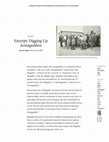
Excerpt: Dig ging Up Armageddon Cour tesy of the Ori en tal Insti tute of the Uni ver si ty of Ch... moreExcerpt: Dig ging Up Armageddon Cour tesy of the Ori en tal Insti tute of the Uni ver si ty of Chicago. Few peo ple today real ize that Armaged don is a real place, but it cer tain ly is. The very word "Armaged don" comes from "Har Megid do"-Hebrew for the "mound" or "moun tain" (har) of Megid do. [1] By the Mid dle Ages, mul ti ple nation al i ties, languages , and cen turies had added an "n" and dropped the "h," trans form ing "Har Megid do" to "Har maged don" and thence to "Armaged don." The ancient site of Megid do, locat ed now in the Jezreel Val ley of mod ern Israel, is actu al ly men tioned a dozen times in the Hebrew Bible, and in a mul ti tude of oth er ancient texts, but it is espe cial ly well-known as the set ting in the New Tes ta ment for the penul ti mate bat tle between the forces of good and the forces of evil. We are told in Rev e la tion 16:16 that the two oppos ing armies will assem ble "at the place that in Hebrew is called Armageddon." Megid do has been at the cen ter of bib li cal archae ol o gy for more than a cen tu ry. It is par tic u lar famous for dis cov er ies such as "Solomon's Sta bles" (which are prob a bly not Solomon's and might not be sta bles), as well as the water tun nel, the Megid do ivories, the Sheshonq frag ment, and so on. Categories
Research paper thumbnail of "Dirt, Digging, Dreams, and Drama: Why Presenting Proper Archaeology to the Public is Crucial for the Future of our Field" ASOR 2019 Plenary Address
This is the transcript of my Plenary Address given at the ASOR annual meetings in San Diego on 20... moreThis is the transcript of my Plenary Address given at the ASOR annual meetings in San Diego on 20 November 2019. The video is posted on YouTube and can be viewed athttps://youtu.be/LvfU1YNf0L4 .
Research paper thumbnail of "Dirt, Digging, Dreams, and Drama: Why Presenting Proper Archaeology to the Public is Crucial for the Future of our Field" ASOR 2019 Plenary Address
This is the transcript of my Plenary Address given at the ASOR annual meetings in San Diego on 20... moreThis is the transcript of my Plenary Address given at the ASOR annual meetings in San Diego on 20 November 2019. The video is posted on YouTube and can be viewed athttps://youtu.be/LvfU1YNf0L4 .

Log In


or


orreset password

Enter the email address you signed up with and we'll email you a reset link.

Need an account? Click here to sign up

[8]ページ先頭

©2009-2026 Movatter.jp