Have a question? Need assistance? Use ouronline form to ask a librarian for help.
Chat with a librarian, Monday through Friday, 12-4pm Eastern Time (except Federal Holidays).
Author:
Andrew Gaudio,Reference Specialist, Researcher and Reference Services Division
Created: April 1, 2021
Last Updated: June 15, 2021
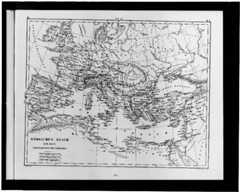
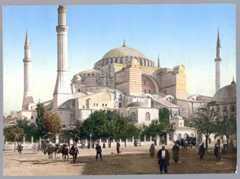
Late antiquity is a period roughly corresponding to the late third century up to the sixth or seventh century depending on location. This span of several centuries ushered in the end of classical civilization and the onset of the early middle ages. A such, it is a period of rapid change and transformation. During this time, Germanic invaders historically referred to as barbarians infiltrated every corner of the Roman Empire and established their own kingdoms in Roman provinces. In 476 Romulus Augustulus, the last Roman emperor in the west was deposed and with him the Roman Empire in the west ceased to exist. However, Roman culture and Latin as a spoken language continued for some time after the fall of Rome. The Eastern Roman (Byzantine) Empire with its capital at Constantinople lived on until it was conquered by the Ottoman Turks in 1453. During the sixth century, Eastern Roman emperor Justinian I spearheaded a campaign to reconquer the provinces of the former western empire which had been lost in the previous century. His forces retook the Roman provinces in North Africa, parts of Hispania (Roman Spain), and the Italian peninsula. However, Byzantine control over much of this recently acquired territory would be short lived. By 624, the Visigothic Kingdom in Spain had ousted the Byzantines and by 698, the Muslim expansion which had begun with the Rashidun Caliphate in 632 succeeded in capturing all of the former Roman African provinces now held by the Byzantines. Shortly after, Arab Muslims had made their way to Spain and conquered the Visigothic Kingdom in 711. The decline and fall of Rome in western Europe up to the the Muslim conquests of North Africa and Iberia in the late seventh and early eighth centuries form the temporal boundaries of late antiquity. It should be noted that in northern Europe and other places where the Romans had a limited cultural impact, the latter part of this period is considered to be the early medieval period, rather than late antiquity.
The purpose of this research guide is to highlight ancient and modern sources on this era held by the Library of Congress. These include modern editions of Latin and Greek texts, secondary source materials, and electronic databases.