Uh oh!
There was an error while loading.Please reload this page.
- Notifications
You must be signed in to change notification settings - Fork56.4k
CVPR2014
The third major release of OpenCV is aimed at building solid ground for computer vision development. C++ and Python will be covered here. OpenCV 3.0 enables:
- more algorithms to be integrated (of which we will showcase the latest)
- more supported languages (Matlab, Ruby, Haskell)
- more optimizations (NEON, OpenVX)
- a new and modular way of participating to the core development
While showcasing the aforementioned features, we will focus building end-to-end vision pipelines through several application walk-throughs. Code, instructions, and mobile applications will be available online before the tutorial.
Video from last summer of code
8:30-9:00
- Introduction (Gary Bradski)
- Welcome
- New book out soon from O’Reilly Learning OpenCV
- Announcing theOpenCV Vision Challenge
9:00-9:30
- source:OpenCVOverviewCVPR2014.pptx
- Library Overview (Gary Bradski)
- History, License (BSD)
- Content Overview
- Documentation
- Interfaces: C++, Matlab, Java, Python
- Platforms:
- Windows
- Mac
- Linux
- iOS
- Android
- Acceleration: Cuda, OpenCL,IPP
9:30-10:00
OpenCV3_0_CVPR_2014.pptx
- OpenCV 3.0 … OpenCV grows up and further opens up (Vincent Rabaud, Gary Bradski)
- Modules
- User Contrib, how to submit
- How to develop for OpenCV
- Development Cycle
- Pull requests
- Class factories
10:00-10:30
- COFFEEBREAK
10:30-11:00
- Past and Current OpenCV Google Summer of Code (Vincent Rabaud)
- Projects
- Videos
11:00-12:00
- Open Question/Brainstorm /Feature Request Session (Vincent Rabaud, Grace Vesom)
- we had a discussion atCVPR 2011 with great exchanges and lasting impact on OpenCV
12:00-1:30
- LUNCH
1:30-2:15
RGBD_CVPR_2014.pdf
- TheRGBD Module in OpenCV 3.0 (Vincent Rabaud)
- Basics
- Normals
- Planes
- Odometry
- 3d Visualization
- Future
2:15-3:00
Code at https://github.com/pokeefe/RGBDTutorial-CVPR2014
- RGBD Tutorial (Patrick O’Keefe)
- Acquire 3D data, options. Occipital Sensor
- Process for normals/planes
- Register depth data to external, high-resolutionRGB camera
- Track motion withRGBD odometry
3:00-3:30
- COFFEEBREAK
3:30-4:15
- The art of stereo camera calibration (Grace Vesom)
- Utilizing new fisheye calibration model in OpenCV 3.0
- Best practices
- Partial capture / using aruco boards as calibration boards
- Calibrating wide angle stereo systems
4:15-5:00
CompPhoto_CVPR_2014.pdf
- Computational photography (Vincent Rabaud)
- HDR
- Cloning
- Non-photorealistic rendering
- Visualization
5:00-5:45
- Appearance BasedSLAM: OpenFABMap (Gary Bradski)
- Overview of FABMap
- Walk through how to use OpenFABMap in OpenCV
- Demo
5:45-6:15
- Concluding panel/Q&A (All)
- CVPR 2014 Tutorials
- OpenCV Documentation
- OpenCV Developer Site
- OpenCV User Site
- OpenCV Library Downloads
- How to contribute to OpenCV
Dr. Gary Rost Bradski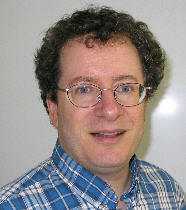
is VP of Perception and Core Software at Magic Leap. Gary founded OpenCV at Intel Research in 2000 and is currentlyCEO of non-profit OpenCV.org. He ran the vision team for Stanley, the autonomous vehicle that completed and won the $2MDARPA Grand Challenge robot race across the desert. Dr. Bradski helped start up NeuroScan (sold to Marmon), Video Surf (sold to Microsoft), and Willow Garage (absorbed into Suitable Tech). Most recently, he founded Industrial Perception (sold August 2013). Gary has more than 100 publications and more than 30 patents and is co-author of a best seller in its category Learning OpenCV: Computer Vision with the OpenCV Library, O’Reilly Press.
Patrick O’Keef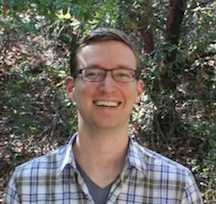
is a computer vision engineer at Occipital. He loves and works on everything related toRGBD and the Structure Sensor (from firmware toSLAM), and holds anMSEE from the University of Michigan in Signal Processing."
Vincent Rabaud
is the perception team manager at Aldebaran Robotics. He co-founded the non-profit OpenCV.org with Gary Bradski in 2012 while a research engineer at Willow Garage. His research interests include 3D processing, object recognition and anything that involves underusing CPUs by feeding them fast algorithms. Dr. Rabaud completed his PhD atUCSD, advised by Serge Belongie. He also holds a MS in space mechanics and space imagery fromSUPAERO and a MS in optimization from the Ecole Polytechnique.
Grace Vesom
is a computer vision engineer at Magic Leap. Previously, she was a research scientist at Lawrence Livermore National Laboratory working on computer vision and machine learning algorithms for global security applications. She completed her DPhil at the University of Oxford with Alison Noble and Mike Brady in 2010.
© Copyright 2019-2025, OpenCV team