Uh oh!
There was an error while loading.Please reload this page.
- Notifications
You must be signed in to change notification settings - Fork8
clustimage is a python package for unsupervised clustering of images.
License
erdogant/clustimage
Folders and files
| Name | Name | Last commit message | Last commit date | |
|---|---|---|---|---|
Repository files navigation


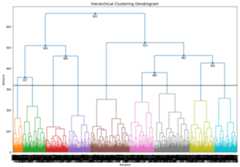
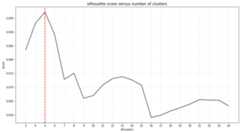
 clustimage is a Python library to detect natural groups or clusters of images. Multiple steps are pipelined where images are processed, features extracted, and the clusters evaluated across the feature space.The optimal number of clusters is determined using methods such as *silhouette, dbindex, and derivatives* in combination with clustering methods, such as *agglomerative, kmeans, dbscan and hdbscan*.clustimage allows you to determine the most robust clustering by efficiently searching across the parameters and by evaluating the clusters.Besides clustering of images, the ``clustimage`` library can also find the most similar images for a new, unseen sample. ⭐️Star it if you like it⭐️
clustimage overcomes the following challenges:
* 1. Robustly groups similar images.* 2. Returns the unique images.* 3. Finds highly similar images for a given input image.* 4. Cluster on datetime or latlon coordinates when using photos.clustimage is fun because:
* It does not require a learning process.* It can group any set of images.* It can return only the unique() images.* It can find highly similar images given an input image.* It can map photos on an interactive map with thumbnails and cluster labels so that you can easily structure your photos.* It provided many plots to improve the understanding of the feature-space and sample-sample relationships* It is built on core statistics, such as PCA, HOG, EXIF data, and many more, and therefore it does not have a dependency block.* It works out of the box.⭐️ Star this repo if you like it ⭐️
- Read theblog to get a structured overview how to cluster images.
On thedocumentation pages you can find detailed information about the working of theclustimage with many examples.
conda create -n env_clustimage python=3.8conda activate env_clustimage
pip install clustimage# new installpip install -U clustimage# update to latest version
pip install git+https://github.com/erdogant/clustimage
fromclustimageimportclustimage
The results obtained from the clustimgage library is a dictionary containing the following keys:
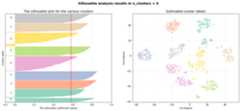
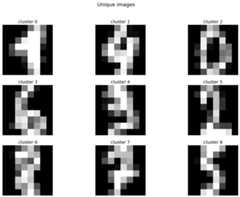
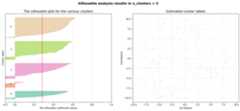
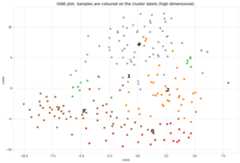
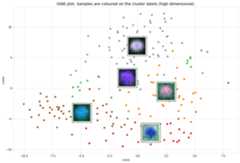
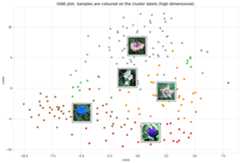
* img : image vector of the preprocessed images* feat : Features extracted for the images* xycoord : X and Y coordinates from the embedding* pathnames : Absolute path location to the image file* filenames : File names of the image file* labels : Cluster labelsIn this example we will be using a flattened grayscale image array loaded from sklearn. The unique detected clusters are the following:
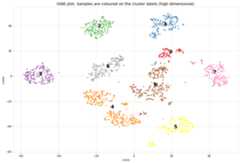
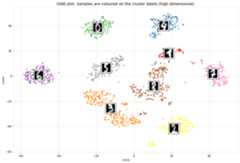
Click on the underneath scatterplot to zoom-in and see ALL the images in the scatterplot

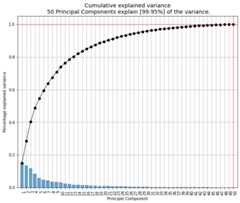
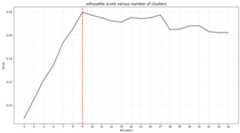
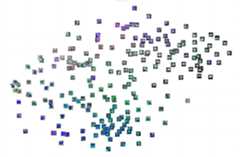


This project needs some love! ❤️ You can help in various ways.* Become a Sponsor!* Star this repo at the github page.* Other contributions can be in the form of feature requests, idea discussions, reporting bugs, opening pull requests.* Read more why becoming an sponsor is important on the Sponsor Github Page.Cheers Mate.About
clustimage is a python package for unsupervised clustering of images.
Topics
Resources
License
Uh oh!
There was an error while loading.Please reload this page.
Stars
Watchers
Forks
Sponsor this project
Uh oh!
There was an error while loading.Please reload this page.


Packages0
Uh oh!
There was an error while loading.Please reload this page.