

Photo added byThaddeus Stevens Society
Adding photos to this memorial is not allowed.
Photo requests are not allowed for this cemetery.
Thaddeus StevensFamous memorial
- Birth
- Danville, Caledonia County, Vermont, USA
- Death
- 11 Aug 1868 (aged 76)Washington, District of Columbia, USA
- Burial
- Lancaster,Lancaster County,Pennsylvania,USAShow MapGPS-Latitude: 40.0399183, Longitude: -76.3105867
- Plot
- Lot 33
- Memorial ID
- 982View Source
Adding photos to this memorial is not allowed.
Photo requests are not allowed for this cemetery.
US Congressman. A member of the US House of Representatives from Pennsylvania's 9th District and one of the most powerful Congressmen in the history of the US, he is best remembered as one of the leaders of the Radical Republican faction of the Republican Party during the 1860s. A fierce opponent of slavery and discrimination against African-Americans, he pressured PresidentAbraham Lincoln to free the slaves during the Civil War and then pushed through the 13th Amendment, abolishing slavery, and the 14th Amendment, protecting the freed slaves. He was born in Danville, Vermont, the second of four children. His parents were Baptists who had emigrated from Massachusetts around 1786. Both he and his older brother were born with a clubfoot condition (his older brother had it in both feet), at the time seen as a judgment from God for secret parental sin. His father was a farmer and cobbler who struggled to make a living and abandoned his family soon after his 4th child was born. The circumstances of his departure, and his subsequent fate, are uncertain. In 1807 his mother moved the family to Peacham, Vermont where she enrolled him in the Caledonia Grammar School. After graduation in 1811, he enrolled in the sophomore class at Dartmouth College in Hanover, New Hampshire. He spent his second year at Burlington College (now the University of Vermont) in Burlington, Vermont but had to return to Dartmouth when the Vermont school's campus was taken over by the federal government during the War of 1812. After graduating from Dartmouth in 1814, he returned to Peacham and briefly taught there, while also studying law. In early 1815 he moved to York, Pennsylvania, where he taught school at the York Academy and continued his studies for the bar. After receiving his law certificate (through unusual means), he moved to Gettysburg, Pennsylvania in 1816 and opened a law office. With no friends and little success initially, he gained notoriety when he defended a farmer, who was jailed for debt, on the charge of murdering one of the constables who had arrested him. While he lost the case, his defense impressed the local populace and his law business soon escalated. During his legal career, he demonstrated the propensity for sarcasm that would later mark him as a politician. In 1822 he began his involvement in politics, serving six one-year terms on the borough council between 1822 and 1831 and became its president. He took the profits from his law practice and invested them in real estate, becoming the largest landowner in the Gettysburg community by 1825, and also had an interest in several iron furnaces outside the town. His first political cause was Anti-Masonry, which became widespread in 1826 after the disappearance and death of William Morgan, a Mason in Upstate New York. By 1829, Anti-Masonry had evolved into a political party that proved popular in rural central Pennsylvania. He soon became prominent in the movement, attending the party's first two national conventions in 1830 and 1831. In September 1833 he was elected to a one-year term in the Pennsylvania House of Representatives as an Anti-Mason, and sought to have the Legislature establish a committee to investigate Masonry. His relentless pursuit of Anti-Masonry cost him reelection in 1836, and the issue of Anti-Masonry soon died in Pennsylvania. Nevertheless, he would remain an opponent of the order for the rest of his life. In 1838 he ran again for the legislature, hoping that if the remaining Anti-Masons and the emerging Whig Party gained a majority, he could be elected to the United States Senate, whose members until 1913 were chosen by state legislatures. He won his legislative seat and sought to have the disputed Philadelphia Democrats excluded, which would create a Whig majority that could elect a Speaker and himself as senator. Amid rioting in Harrisburg, later known as the "Buckshot War", his ploy backfired, with the Democrats taking control of the House. He remained in the legislature most years through 1842, but the episode cost him much of his political influence, as the Whigs blamed him for the debacle and were increasingly unwilling to give leadership to someone who had not yet joined their party. Nevertheless, he continued to support the pro-business and pro-development Whig stances. In 1842 he moved his law practice to Lancaster, Pennsylvania, in order to attract a larger clientele, so he could pay off debts that he had accumulated in Gettysburg from his business interests. It was in Lancaster that he engaged the services of Lydia Hamilton Smith, a widowed quadroon (one-fourth African-American) housekeeper and companion who remained with him the rest of his life. He became active in the Underground Railroad, not only defending people believed to be fugitive slaves, but coordinating the movements of those who sought freedom. In 1848 he became a Whig candidate for Congress from Pennsylvania's 8th congressional district and won. He was opposed to the Compromise of 1850, particularly the Fugitive Slave Act, which he found offensive. Re-elected in 1850, he left the Whig party the following year when his colleagues would not join him in seeking the repeal of the offensive elements of the Compromise and he did not seek re-election in 1852. He then concentrated on his law practice, remaining one of the leading attorneys in the state. He stayed active in politics, and in 1854, to gain more votes for the anti-slavery movement, he joined the nativist Know Nothing Party. The following year he joined the newly formed Republican Party, along with other anti-slavery former Whigs, including William H. Seward of New York, Charles E. Sumner of Massachusetts, and Abraham Lincoln of Illinois. He became a delegate to the 1856 Republican National Convention, who nominated John C. Fremont as their presidential candidate, whom he actively supported in the race against his fellow Lancastrian, the Democratic candidate James Buchanan. Buchanan was elected President, but by 1858, with the President and his party unpopular and the nation torn by such controversies as the Dred Scott decision, he saw an opportunity to return to Congress and was easily elected as the Republican candidate. He won his seat again in 1860 when the Republican candidate Abraham Lincoln won the Presidency, resulting in the Southern states seceding from the Union. He was chosen as Chairman of the House Ways and Means Committee. In July 1861 he secured the passage of an act to confiscate the property, including slaves, of certain rebels and in November 1861 he introduced a resolution to emancipate all slaves, which was defeated, except for the District of Columbia and in the territories. By March 1862, to his exasperation, the most Lincoln had publicly supported was gradual emancipation in the Border States, with the masters compensated by the federal government. Although Lincoln composed his proclamation in June and July of 1862, the secret was held within his Cabinet, and the President turned aside radical pleadings to issue one until after the Union victory at the Battle of Antietam in September of that year. He pushed Congress to pass a constitutional amendment abolishing slavery. The Emancipation Proclamation was a wartime measure, did not apply to all slaves, and might be reversed by peacetime courts. The 13th Amendment, which outlawed slavery and involuntary servitude except as punishment for crime, easily passed the Senate, but failed in the House in June and fears that it might not pass delayed a renewed attempt there. Lincoln campaigned aggressively for the amendment after his re-election in 1864, and it narrowly passed after heavy pressure exerted by Lincoln himself, along with offers of political appointments from the "Seward lobby." He played a major part in other important legislation during the Civil War, including the Legal Tender Act of 1862, when for the first time the United States issued currency backed only by its own credit, not by gold or silver, and the National Banking Act of 1863, requiring banks limit their currency issues to the amount of federal bonds that they were required to hold. After Lincoln's assassination in April 1865, Vice-President, Andrew Johnson, became President and was tasked with the problem of Southern reconstruction. Stevens was outraged about Johnson's policy of amnesty and pardons for Southerners and the fact that the Southern state were not pushed to protect the rights of freed slaves. In December 1865 he started drafting the 14th Amendment that, among other things, gave equal protection to the freed slaves. The resolution providing for what would become the Fourteenth Amendment was ultimately watered down in Congress and it was finally adopted on July 9, 1868. The amendment was bitterly contested, particularly by Southern states, which were forced to ratify it in order for them to regain representation in the Congress. In 1867 his last great battle was to secure articles of impeachment in the House of Representatives against Johnson, which was carried out in February 1868. By this time he was in extremely poor health and had to be carried everywhere in a chair. In May 1868 the Senate voted against impeachment and Johnson was acquitted. In the final months of his life, he continued to propose impeachment articles against Johnson which were rejected by the House.
US Congressman. A member of the US House of Representatives from Pennsylvania's 9th District and one of the most powerful Congressmen in the history of the US, he is best remembered as one of the leaders of the Radical Republican faction of the Republican Party during the 1860s. A fierce opponent of slavery and discrimination against African-Americans, he pressured PresidentAbraham Lincoln to free the slaves during the Civil War and then pushed through the 13th Amendment, abolishing slavery, and the 14th Amendment, protecting the freed slaves. He was born in Danville, Vermont, the second of four children. His parents were Baptists who had emigrated from Massachusetts around 1786. Both he and his older brother were born with a clubfoot condition (his older brother had it in both feet), at the time seen as a judgment from God for secret parental sin. His father was a farmer and cobbler who struggled to make a living and abandoned his family soon after his 4th child was born. The circumstances of his departure, and his subsequent fate, are uncertain. In 1807 his mother moved the family to Peacham, Vermont where she enrolled him in the Caledonia Grammar School. After graduation in 1811, he enrolled in the sophomore class at Dartmouth College in Hanover, New Hampshire. He spent his second year at Burlington College (now the University of Vermont) in Burlington, Vermont but had to return to Dartmouth when the Vermont school's campus was taken over by the federal government during the War of 1812. After graduating from Dartmouth in 1814, he returned to Peacham and briefly taught there, while also studying law. In early 1815 he moved to York, Pennsylvania, where he taught school at the York Academy and continued his studies for the bar. After receiving his law certificate (through unusual means), he moved to Gettysburg, Pennsylvania in 1816 and opened a law office. With no friends and little success initially, he gained notoriety when he defended a farmer, who was jailed for debt, on the charge of murdering one of the constables who had arrested him. While he lost the case, his defense impressed the local populace and his law business soon escalated. During his legal career, he demonstrated the propensity for sarcasm that would later mark him as a politician. In 1822 he began his involvement in politics, serving six one-year terms on the borough council between 1822 and 1831 and became its president. He took the profits from his law practice and invested them in real estate, becoming the largest landowner in the Gettysburg community by 1825, and also had an interest in several iron furnaces outside the town. His first political cause was Anti-Masonry, which became widespread in 1826 after the disappearance and death of William Morgan, a Mason in Upstate New York. By 1829, Anti-Masonry had evolved into a political party that proved popular in rural central Pennsylvania. He soon became prominent in the movement, attending the party's first two national conventions in 1830 and 1831. In September 1833 he was elected to a one-year term in the Pennsylvania House of Representatives as an Anti-Mason, and sought to have the Legislature establish a committee to investigate Masonry. His relentless pursuit of Anti-Masonry cost him reelection in 1836, and the issue of Anti-Masonry soon died in Pennsylvania. Nevertheless, he would remain an opponent of the order for the rest of his life. In 1838 he ran again for the legislature, hoping that if the remaining Anti-Masons and the emerging Whig Party gained a majority, he could be elected to the United States Senate, whose members until 1913 were chosen by state legislatures. He won his legislative seat and sought to have the disputed Philadelphia Democrats excluded, which would create a Whig majority that could elect a Speaker and himself as senator. Amid rioting in Harrisburg, later known as the "Buckshot War", his ploy backfired, with the Democrats taking control of the House. He remained in the legislature most years through 1842, but the episode cost him much of his political influence, as the Whigs blamed him for the debacle and were increasingly unwilling to give leadership to someone who had not yet joined their party. Nevertheless, he continued to support the pro-business and pro-development Whig stances. In 1842 he moved his law practice to Lancaster, Pennsylvania, in order to attract a larger clientele, so he could pay off debts that he had accumulated in Gettysburg from his business interests. It was in Lancaster that he engaged the services of Lydia Hamilton Smith, a widowed quadroon (one-fourth African-American) housekeeper and companion who remained with him the rest of his life. He became active in the Underground Railroad, not only defending people believed to be fugitive slaves, but coordinating the movements of those who sought freedom. In 1848 he became a Whig candidate for Congress from Pennsylvania's 8th congressional district and won. He was opposed to the Compromise of 1850, particularly the Fugitive Slave Act, which he found offensive. Re-elected in 1850, he left the Whig party the following year when his colleagues would not join him in seeking the repeal of the offensive elements of the Compromise and he did not seek re-election in 1852. He then concentrated on his law practice, remaining one of the leading attorneys in the state. He stayed active in politics, and in 1854, to gain more votes for the anti-slavery movement, he joined the nativist Know Nothing Party. The following year he joined the newly formed Republican Party, along with other anti-slavery former Whigs, including William H. Seward of New York, Charles E. Sumner of Massachusetts, and Abraham Lincoln of Illinois. He became a delegate to the 1856 Republican National Convention, who nominated John C. Fremont as their presidential candidate, whom he actively supported in the race against his fellow Lancastrian, the Democratic candidate James Buchanan. Buchanan was elected President, but by 1858, with the President and his party unpopular and the nation torn by such controversies as the Dred Scott decision, he saw an opportunity to return to Congress and was easily elected as the Republican candidate. He won his seat again in 1860 when the Republican candidate Abraham Lincoln won the Presidency, resulting in the Southern states seceding from the Union. He was chosen as Chairman of the House Ways and Means Committee. In July 1861 he secured the passage of an act to confiscate the property, including slaves, of certain rebels and in November 1861 he introduced a resolution to emancipate all slaves, which was defeated, except for the District of Columbia and in the territories. By March 1862, to his exasperation, the most Lincoln had publicly supported was gradual emancipation in the Border States, with the masters compensated by the federal government. Although Lincoln composed his proclamation in June and July of 1862, the secret was held within his Cabinet, and the President turned aside radical pleadings to issue one until after the Union victory at the Battle of Antietam in September of that year. He pushed Congress to pass a constitutional amendment abolishing slavery. The Emancipation Proclamation was a wartime measure, did not apply to all slaves, and might be reversed by peacetime courts. The 13th Amendment, which outlawed slavery and involuntary servitude except as punishment for crime, easily passed the Senate, but failed in the House in June and fears that it might not pass delayed a renewed attempt there. Lincoln campaigned aggressively for the amendment after his re-election in 1864, and it narrowly passed after heavy pressure exerted by Lincoln himself, along with offers of political appointments from the "Seward lobby." He played a major part in other important legislation during the Civil War, including the Legal Tender Act of 1862, when for the first time the United States issued currency backed only by its own credit, not by gold or silver, and the National Banking Act of 1863, requiring banks limit their currency issues to the amount of federal bonds that they were required to hold. After Lincoln's assassination in April 1865, Vice-President, Andrew Johnson, became President and was tasked with the problem of Southern reconstruction. Stevens was outraged about Johnson's policy of amnesty and pardons for Southerners and the fact that the Southern state were not pushed to protect the rights of freed slaves. In December 1865 he started drafting the 14th Amendment that, among other things, gave equal protection to the freed slaves. The resolution providing for what would become the Fourteenth Amendment was ultimately watered down in Congress and it was finally adopted on July 9, 1868. The amendment was bitterly contested, particularly by Southern states, which were forced to ratify it in order for them to regain representation in the Congress. In 1867 his last great battle was to secure articles of impeachment in the House of Representatives against Johnson, which was carried out in February 1868. By this time he was in extremely poor health and had to be carried everywhere in a chair. In May 1868 the Senate voted against impeachment and Johnson was acquitted. In the final months of his life, he continued to propose impeachment articles against Johnson which were rejected by the House.
Bio by:William Bjornstad
Inscription
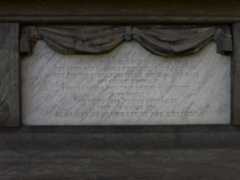
I repose in this quiet and secluded spot,
Not from any natural preference for solitude
But, finding other Cemeteries limited as to Race
by Charter Rules,
I have chosen this that I might illustrate in my death
The Principles which I advocated through a long life:
EQUALITY OF MAN BEFORE HIS CREATOR.
Family Members


See moreStevens memorials in:
How famous was Thaddeus Stevens?
What was Thaddeus famous for?
- Current rating:4.10204 out of 5 stars
98 votes
Sign-in to cast your vote.
- Maintained by: Find a Grave
- Added: Apr 25, 1998
- Find a Grave Memorial ID:
- Find a Grave, database and images (https://www.findagrave.com/memorial/982/thaddeus-stevens: accessed), memorial page for Thaddeus Stevens (4 Apr 1792–11 Aug 1868), Find a Grave Memorial ID982, citing Shreiner's Cemetery, Lancaster,Lancaster County,Pennsylvania,USA;Maintained by Find a Grave.
Add Photos for Thaddeus Stevens
Fulfill Photo Request for Thaddeus Stevens
Photo Request Fulfilled
Thank you for fulfilling this photo request. An email has been sent to the person who requested the photo informing them that you have fulfilled their request
There is an open photo request for this memorial
Are you adding a grave photo that will fulfill this request?
- Oops, something didn't work. Close this window, and upload the photo(s) again.
- Make sure that the file is a photo. Photos larger than 8 MB will be reduced. Photos larger than 20 MB will not be accepted.
- Photos larger than8.0 MB will be optimized and reduced.
- Photos larger than20 MB will not be accepted.
- Each contributor can upload a maximum of5 photos for a memorial.
- A memorial can have a maximum of20 photos from all contributors.
- The sponsor of a memorial may add an additional10 photos (for a total of30 on the memorial).
- Include gps location with grave photos where possible.
- No animated GIFs, photos with additional graphics (borders, embellishments.)
- No post-mortem photos.

File Name
Request Grave Photo
Photo request failed. Try again later.
The note field is required.
Leave a Flower
You are only allowed to leave one flower per day for any given memorial.
Memorial Photos
This is a carousel with slides. Use Next and Previous buttons to navigate, or jump to a slide with the slide dots. Use Escape keyboard button or the Close button to close the carousel.


Added by: Thaddeus Stevens Society on 19 Dec 2007
Photo type: Person


Added by: Linda Stienstra on 19 Apr 2009
Photo type: Grave


Added by: Paul Herbert on 13 Aug 2025
Photo type: Grave
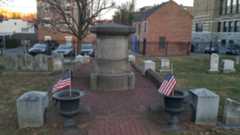

Added by: Zach Anderson on 10 Jul 2017
Photo type: Grave


Added by: Linda Stienstra on 19 Apr 2009
Photo type: Grave
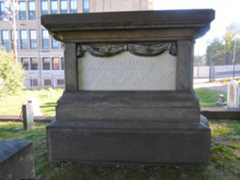

Added by: Thomas Fisher on 28 Mar 2017
Photo type: Grave

Added by: Thomas Fisher on 28 Mar 2017
Photo type: Grave
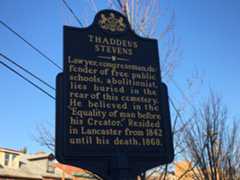

Added by: Jasphil on 02 Feb 2017
Photo type: Person


Added by: zapcomix on 09 May 2024
Photo type: Person
Save To
Your Virtual Cemeteries
Report Abuse
Are you sure that you want to report this flower to administrators as offensive or abusive?
This flower has been reported and will not be visible while under review.
Failed to report flower. Try again later.
Delete Flower
Failed to delete flower. Try again later.
Delete Memorial
Failed to delete memorial. Try again later.
This memorial cannot be deleted. You cancontact support with questions.
Reported Problems
- Problem #index#:
- Details:
- Reported By:
- Reported On:
There was an error deleting this problem. Try again later.
Report a problem
Recently Deceased
Report a Duplicate Memorial
Which memorial do you think is a duplicate ofThaddeus Stevens(982)?
We will review the memorials and decide if they should be merged.Learn more about merges.
Invalid memorial
Please enter a valid Memorial ID
You cannot merge a memorial into itself
Memorial has already been merged
Memorial has already been removed
Delete Photo
Are you sure that you want to delete this photo?
Failed to delete photo. Try again later.
Welcome to a Find a Grave Memorial Page
Learn about how to make the most of a memorial.
or don't show this again—I am good at figuring things out
Cover photo and vital information
Quickly see who the memorial is for and when they lived and died and where they are buried.
Show Map
If the memorial includes GPS coordinates, simply click 'Show Map' to view the gravesite location within the cemetery. If no GPS coordinates are available, you can contribute by adding them if you know the precise location.
Photos
For memorials with more than one photo, additional photos will appear here or on the photos tab.
Photos Tab
All photos appear on this tab and here you can update the sort order of photos on memorials you manage. To view a photo in more detail or edit captions for photos you added, click the photo to open the photo viewer.
Flowers
Flowers added to the memorial appear on the bottom of the memorial or here on the Flowers tab. To add a flower, click theLeave a Flower button.
Family Members
Family members linked to this person will appear here.
Related searches
Use the links underSee more… to quickly search for other people with the same last name in the same cemetery, city, county, etc.
Sponsor This Memorial
Remove advertising from a memorial by sponsoring it for <strong>just $10</strong>. Previously sponsored memorials or famous memorials will not have this option.
Share
Share this memorial using social media sites or email.
Save to
Save to an Ancestry Tree, a virtual cemetery, your clipboard for pasting or Print.
Edit or Suggest Edit
Edit a memorial you manage or suggest changes to the memorial manager.
Have Feedback
Thanks for using Find a Grave, if you have any feedback we would love to hear from you.