

Photo added bykatzizkidz
Adding photos to this memorial is not allowed.
Photo requests are not allowed for this cemetery.
Roy AcuffFamous memorial
- Original Name
- Roy Claxton Acuff
- Birth
- Maynardville, Union County, Tennessee, USA
- Death
- 23 Nov 1992 (aged 89)Nashville, Davidson County, Tennessee, USA
- Burial
- Nashville,Davidson County,Tennessee,USAShow MapGPS-Latitude: 36.2413889, Longitude: -86.7226417
- Plot
- Hill Crest Garden
- Memorial ID
- 1435View Source
Adding photos to this memorial is not allowed.
Photo requests are not allowed for this cemetery.
Country Music Singer, Songwriter. Acuff is best remembered as the King of Country Music and is often credited with moving the genre from its early string band and "hoedown" format to the star singer-based format that helped make it internationally renowned. He was born Roy Claxton Acuff, the third of five children, into a musical family. His father was a Baptist preacher and an accomplished fiddle player, and his mother played the piano. During his early years, the Acuff house was a popular place for local gatherings and at these events, Roy would often amuse people by balancing farm tools on his chin. He also learned to play harmonica and jaw harp at a young age. In 1919, his family relocated to Fountain City (now a suburb of Knoxville), Tennessee, where he attended Central High School and sang in the school's chapel choir, as well as, performing in school plays. His primary passion was athletics and he was a three-sport standout at Central. After graduating in 1925, he was offered a scholarship to Carson-Newman University in Jefferson City, Tennessee, but turned it down. He played with several small baseball clubs around Knoxville, worked at odd jobs, and occasionally boxed. In 1929, he tried out for the Knoxville Smokies, a minor-league baseball team then affiliated with the New York (now San Francisco) Giants. After a series of collapses in spring training following a sunstroke, his baseball career ended prematurely, and the effects left him ill for several years to the point where he suffered a nervous breakdown in 1930. While recovering, he took up the fiddle, often playing on the family's front porch in late afternoons after the sun went down. His father gave him several records of regionally-renowned fiddlers, such asFiddlin' John Carson andGid Tanner, which were important influences on his early style. In 1932, he hired on with Dr. Hauer's Medicine Show as one of its entertainers where he met legendary Appalachian banjoist Clarence Ashley, from whom he learned The House of the Rising Sun and Greenback Dollar, both of which he later recorded. In 1934, he left the medicine show circuit and began playing at local shows with various musicians in the Knoxville area. That year, guitarist, Jess Yesterday, and Hawaiian guitarist, Clell Summey, joined Acuff to form the Tennessee Crackerjacks, which performed regularly on Knoxville radio stations WROL and WNOX. Within a year, the group had added bassist, Red Jones, and changed its name to the Crazy Tennesseans. The popularity of his rendering of the song The Great Speckled Bird helped the group land a contract with the American Record Company, for whom they recorded several dozen tracks including the band's best-known track, Wabash Cannonball in 1936 and 1937 before leaving over a contract dispute. In 1938, the Crazy Tennesseans relocated to Nashville, Tennessee, to audition for the Grand Ole Opry and they were offered a contract. He changed the group's name to the Smoky Mountain Boys, referring to the mountains near where he and his bandmates were raised. Shortly after the band joined the Opry, Clell Summey left the group, and was replaced by dobro player Beecher (Pete) Kirby, or "Bashful Brother Oswald." His powerful lead vocals and Kirby's dobro playing and high-pitched backing vocals gave the band its distinctive sound. By 1939, Jess Easterday had switched to bass to replace Red Jones, and Acuff had added guitarist, Lonnie "Pap" Wilson, and banjoist, Rachel Veach, to fill out the band's line-up. Within a year, Roy Acuff and the Smoky Mountain Boys rivaled long-time Opry banjoistUncle Dave Macon as the troupe's most popular act. In 1940, he and his band traveled to Hollywood, California, where they appeared in the motion picture Grand Ole Opry. He also appeared in several subsequent B-movies, including O, My Darling Clementine (1943), in which he played a singing sheriff, and Night Train to Memphis (1946), the title of which comes from a song he recorded in 1940. In 1942, Acuff and songwriterFred Rose formed the Acuff-Rose Publishing Company. He originally sought the company in order to publish his own music, but soon realized there was a high demand from other country artists, many of whom had been exploited by larger publishing firms. Due in large part to Rose's ASCAP connections and gifted ability as a talent scout, Acuff-Rose quickly became the most important publishing company in country music. In 1946, the company signed country singerHank Williams, and in 1950 published their first major hit,Patti Page's rendition of Tennessee Waltz. Later that year, he left theGrand Ole Opry after a management dispute. In 1948, Acuff made an unsuccessful run for the governor of Tennessee on the Republican ballot. He then spent several years touring the Western United States, although demand for his appearances dwindled with the lack of national exposure and the rise of musicians such as Ernest Tubb and Eddy Arnold, who were more popular with younger audiences. He eventually, however, returned to the Opry. By the 1960s, his record sales had dropped off considerably. After nearly losing his life in an automobile accident outside of Sparta, Tennessee, in 1965, he contemplated retiring, making only token appearances on the Opry stage and similar shows, and occasionally performing duos with long-time bandmate Bashful Brother Oswald.
In 1972, his career received a brief resurgence in the folk revival movement after he appeared on the Nitty Gritty Dirt Band album, Will the Circle Be Unbroken, paving the way for one of the defining moments of his career, which came on the night of March 16, 1974, when the Opry officially moved from the Ryman Auditorium to the Grand Ole Opry House at Opryland, Tennessee. The first show at the new venue opened with a huge projection of a late-1930s image of Roy Acuff and the Smoky Mountain Boys onto a large screen above the stage. A recording from one of the band's 1939 appearances was played over the sound system, with the iconic voice of Opry founder George Hay introducing the band, followed by the band's performance of Wabash Cannonball. In the 1980s, after the death of his wife, Mildred, he moved into a house on the Opryland grounds and continued performing. He arrived early most days at the Opry, performing odd jobs, such as stocking soda in backstage refrigerators. In 1991, he was awarded the National Medal of Arts and given a lifetime achievement award by the John F. Kennedy Center for the Performing Arts, the first Country music artist to receive the esteemed honor. Additionally, in 1962, he became the first living inductee into the Country Music Hall of Fame. Two museums have been named in his honor, the Roy Acuff Museum at Opryland and the Roy Acuff Union Museum and Library in his hometown of Maynardville. Acuff has a star on the Hollywood Walk of Fame located at 1541 Vine Street. Acuff died of congestive heart failure in Nashville, Tennessee, at the age of 89. During his musical career, he recorded a total of 43 albums (from 1949 to 1987) and 20 singles (from 1936 to 1989).
Country Music Singer, Songwriter. Acuff is best remembered as the King of Country Music and is often credited with moving the genre from its early string band and "hoedown" format to the star singer-based format that helped make it internationally renowned. He was born Roy Claxton Acuff, the third of five children, into a musical family. His father was a Baptist preacher and an accomplished fiddle player, and his mother played the piano. During his early years, the Acuff house was a popular place for local gatherings and at these events, Roy would often amuse people by balancing farm tools on his chin. He also learned to play harmonica and jaw harp at a young age. In 1919, his family relocated to Fountain City (now a suburb of Knoxville), Tennessee, where he attended Central High School and sang in the school's chapel choir, as well as, performing in school plays. His primary passion was athletics and he was a three-sport standout at Central. After graduating in 1925, he was offered a scholarship to Carson-Newman University in Jefferson City, Tennessee, but turned it down. He played with several small baseball clubs around Knoxville, worked at odd jobs, and occasionally boxed. In 1929, he tried out for the Knoxville Smokies, a minor-league baseball team then affiliated with the New York (now San Francisco) Giants. After a series of collapses in spring training following a sunstroke, his baseball career ended prematurely, and the effects left him ill for several years to the point where he suffered a nervous breakdown in 1930. While recovering, he took up the fiddle, often playing on the family's front porch in late afternoons after the sun went down. His father gave him several records of regionally-renowned fiddlers, such asFiddlin' John Carson andGid Tanner, which were important influences on his early style. In 1932, he hired on with Dr. Hauer's Medicine Show as one of its entertainers where he met legendary Appalachian banjoist Clarence Ashley, from whom he learned The House of the Rising Sun and Greenback Dollar, both of which he later recorded. In 1934, he left the medicine show circuit and began playing at local shows with various musicians in the Knoxville area. That year, guitarist, Jess Yesterday, and Hawaiian guitarist, Clell Summey, joined Acuff to form the Tennessee Crackerjacks, which performed regularly on Knoxville radio stations WROL and WNOX. Within a year, the group had added bassist, Red Jones, and changed its name to the Crazy Tennesseans. The popularity of his rendering of the song The Great Speckled Bird helped the group land a contract with the American Record Company, for whom they recorded several dozen tracks including the band's best-known track, Wabash Cannonball in 1936 and 1937 before leaving over a contract dispute. In 1938, the Crazy Tennesseans relocated to Nashville, Tennessee, to audition for the Grand Ole Opry and they were offered a contract. He changed the group's name to the Smoky Mountain Boys, referring to the mountains near where he and his bandmates were raised. Shortly after the band joined the Opry, Clell Summey left the group, and was replaced by dobro player Beecher (Pete) Kirby, or "Bashful Brother Oswald." His powerful lead vocals and Kirby's dobro playing and high-pitched backing vocals gave the band its distinctive sound. By 1939, Jess Easterday had switched to bass to replace Red Jones, and Acuff had added guitarist, Lonnie "Pap" Wilson, and banjoist, Rachel Veach, to fill out the band's line-up. Within a year, Roy Acuff and the Smoky Mountain Boys rivaled long-time Opry banjoistUncle Dave Macon as the troupe's most popular act. In 1940, he and his band traveled to Hollywood, California, where they appeared in the motion picture Grand Ole Opry. He also appeared in several subsequent B-movies, including O, My Darling Clementine (1943), in which he played a singing sheriff, and Night Train to Memphis (1946), the title of which comes from a song he recorded in 1940. In 1942, Acuff and songwriterFred Rose formed the Acuff-Rose Publishing Company. He originally sought the company in order to publish his own music, but soon realized there was a high demand from other country artists, many of whom had been exploited by larger publishing firms. Due in large part to Rose's ASCAP connections and gifted ability as a talent scout, Acuff-Rose quickly became the most important publishing company in country music. In 1946, the company signed country singerHank Williams, and in 1950 published their first major hit,Patti Page's rendition of Tennessee Waltz. Later that year, he left theGrand Ole Opry after a management dispute. In 1948, Acuff made an unsuccessful run for the governor of Tennessee on the Republican ballot. He then spent several years touring the Western United States, although demand for his appearances dwindled with the lack of national exposure and the rise of musicians such as Ernest Tubb and Eddy Arnold, who were more popular with younger audiences. He eventually, however, returned to the Opry. By the 1960s, his record sales had dropped off considerably. After nearly losing his life in an automobile accident outside of Sparta, Tennessee, in 1965, he contemplated retiring, making only token appearances on the Opry stage and similar shows, and occasionally performing duos with long-time bandmate Bashful Brother Oswald.
In 1972, his career received a brief resurgence in the folk revival movement after he appeared on the Nitty Gritty Dirt Band album, Will the Circle Be Unbroken, paving the way for one of the defining moments of his career, which came on the night of March 16, 1974, when the Opry officially moved from the Ryman Auditorium to the Grand Ole Opry House at Opryland, Tennessee. The first show at the new venue opened with a huge projection of a late-1930s image of Roy Acuff and the Smoky Mountain Boys onto a large screen above the stage. A recording from one of the band's 1939 appearances was played over the sound system, with the iconic voice of Opry founder George Hay introducing the band, followed by the band's performance of Wabash Cannonball. In the 1980s, after the death of his wife, Mildred, he moved into a house on the Opryland grounds and continued performing. He arrived early most days at the Opry, performing odd jobs, such as stocking soda in backstage refrigerators. In 1991, he was awarded the National Medal of Arts and given a lifetime achievement award by the John F. Kennedy Center for the Performing Arts, the first Country music artist to receive the esteemed honor. Additionally, in 1962, he became the first living inductee into the Country Music Hall of Fame. Two museums have been named in his honor, the Roy Acuff Museum at Opryland and the Roy Acuff Union Museum and Library in his hometown of Maynardville. Acuff has a star on the Hollywood Walk of Fame located at 1541 Vine Street. Acuff died of congestive heart failure in Nashville, Tennessee, at the age of 89. During his musical career, he recorded a total of 43 albums (from 1949 to 1987) and 20 singles (from 1936 to 1989).
Bio by:William Bjornstad
Family Members


See moreAcuff memorials in:
How famous was Roy Acuff?
What was Roy famous for?
- Current rating:4.5692 out of 5 stars
578 votes
Sign-in to cast your vote.
- Maintained by: Find a Grave
- Added: Apr 25, 1998
- Find a Grave Memorial ID:
- Find a Grave, database and images (https://www.findagrave.com/memorial/1435/roy-acuff: accessed), memorial page for Roy Acuff (15 Sep 1903–23 Nov 1992), Find a Grave Memorial ID1435, citing Spring Hill Cemetery, Nashville,Davidson County,Tennessee,USA;Maintained by Find a Grave.
Add Photos for Roy Acuff
Fulfill Photo Request for Roy Acuff
Photo Request Fulfilled
Thank you for fulfilling this photo request. An email has been sent to the person who requested the photo informing them that you have fulfilled their request
There is an open photo request for this memorial
Are you adding a grave photo that will fulfill this request?
- Oops, something didn't work. Close this window, and upload the photo(s) again.
- Make sure that the file is a photo. Photos larger than 8 MB will be reduced. Photos larger than 20 MB will not be accepted.
- Photos larger than8.0 MB will be optimized and reduced.
- Photos larger than20 MB will not be accepted.
- Each contributor can upload a maximum of5 photos for a memorial.
- A memorial can have a maximum of20 photos from all contributors.
- The sponsor of a memorial may add an additional10 photos (for a total of30 on the memorial).
- Include gps location with grave photos where possible.
- No animated GIFs, photos with additional graphics (borders, embellishments.)
- No post-mortem photos.

File Name
Request Grave Photo
Photo request failed. Try again later.
The note field is required.
Leave a Flower
You are only allowed to leave one flower per day for any given memorial.
Memorial Photos
This is a carousel with slides. Use Next and Previous buttons to navigate, or jump to a slide with the slide dots. Use Escape keyboard button or the Close button to close the carousel.


Added by: katzizkidz on 14 Aug 2009
Photo type: Person
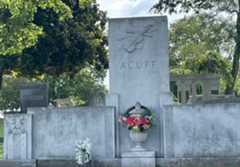

Added by: kimberly rymer on 26 Jun 2025
Photo type: Grave
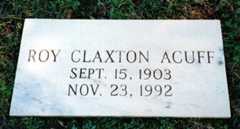

Added by: Arthur Koykka on 10 Aug 2001
Photo type: Grave
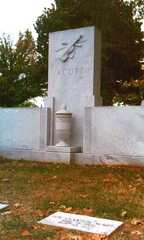

Added by: Sue Wilden on 09 Nov 1999
Photo type: Grave


Added by: Sue Wilden on 09 Nov 1999
Photo type: Grave
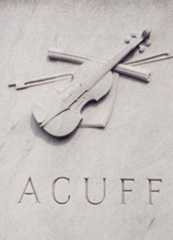

Added by: Randy McCoy on 08 Aug 2000
Photo type: Grave


Added by: Paul Pierce on 14 Dec 2003
Photo type: Person
Save To
Your Virtual Cemeteries
Report Abuse
Are you sure that you want to report this flower to administrators as offensive or abusive?
This flower has been reported and will not be visible while under review.
Failed to report flower. Try again later.
Delete Flower
Failed to delete flower. Try again later.
Delete Memorial
Failed to delete memorial. Try again later.
This memorial cannot be deleted. You cancontact support with questions.
Reported Problems
- Problem #index#:
- Details:
- Reported By:
- Reported On:
There was an error deleting this problem. Try again later.
Report a problem
Recently Deceased
Report a Duplicate Memorial
Which memorial do you think is a duplicate ofRoy Acuff(1435)?
We will review the memorials and decide if they should be merged.Learn more about merges.
Invalid memorial
Please enter a valid Memorial ID
You cannot merge a memorial into itself
Memorial has already been merged
Memorial has already been removed
Delete Photo
Are you sure that you want to delete this photo?
Failed to delete photo. Try again later.
Welcome to a Find a Grave Memorial Page
Learn about how to make the most of a memorial.
or don't show this again—I am good at figuring things out
Cover photo and vital information
Quickly see who the memorial is for and when they lived and died and where they are buried.
Show Map
If the memorial includes GPS coordinates, simply click 'Show Map' to view the gravesite location within the cemetery. If no GPS coordinates are available, you can contribute by adding them if you know the precise location.
Photos
For memorials with more than one photo, additional photos will appear here or on the photos tab.
Photos Tab
All photos appear on this tab and here you can update the sort order of photos on memorials you manage. To view a photo in more detail or edit captions for photos you added, click the photo to open the photo viewer.
Flowers
Flowers added to the memorial appear on the bottom of the memorial or here on the Flowers tab. To add a flower, click theLeave a Flower button.
Family Members
Family members linked to this person will appear here.
Related searches
Use the links underSee more… to quickly search for other people with the same last name in the same cemetery, city, county, etc.
Sponsor This Memorial
Remove advertising from a memorial by sponsoring it for <strong>just $10</strong>. Previously sponsored memorials or famous memorials will not have this option.
Share
Share this memorial using social media sites or email.
Save to
Save to an Ancestry Tree, a virtual cemetery, your clipboard for pasting or Print.
Edit or Suggest Edit
Edit a memorial you manage or suggest changes to the memorial manager.
Have Feedback
Thanks for using Find a Grave, if you have any feedback we would love to hear from you.