

Photo added byPeter Doane
Adding photos to this memorial is not allowed.
Photo requests are not allowed for this cemetery.
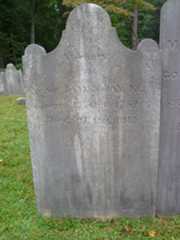
James Jay
- Birth
- New York, New York County, New York, USA
- Death
- 20 Oct 1815 (aged 82)
- Burial
- Rye,Westchester County,New York,USAAdd to Map
- Memorial ID
- 124168262View Source
Adding photos to this memorial is not allowed.
Photo requests are not allowed for this cemetery.
Sir James Jay (1732–1815) was an American physician and politician. He was brother of John Jay, one of the Founding Fathers of the United States. While initially a supporter of American independence, he later changed his views becoming a Loyalist and went into exile in London after the Treaty of Paris recognized independence.
Medicine and Education
He was born in New York City, studied medicine, and became a practicing physician.
He was instrumental in obtaining the endowments for Benjamin Franklin's projected college (now the University of Pennsylvania) in Philadelphia (with William Smith, 1755) and King's (now Columbia) College, New York. For the purpose of soliciting contributions for the latter college, he visited England in 1762, where he was knighted by the king, George III, in 1763.
His writings include two pamphlets relating to the collections made for the colleges in America (1771 and 1774) and Reflections and Observations on the Gout (1772).
During the Revolutionary War, founding father John Jay's brother, Sir James Jay, invented a method for the Patriots to communicate with each other that could not be intercepted by the British. Washington called Jay's invention "sympathetic stain" or "white ink." We would call it invisible ink invented November 29, 1775.
Politics
Jay sat as a member of the New York legislature during the early years of the American War of Independence where he was a supporter of independence. He actively promoted the Bill of Attainder and Confiscation which the legislature
passed on 22 October 1779 directed at 59 loyalists. This bill was an anathema to Jay's brother John who saw it as persecuting people for their opinions.
In 1782, James connived to get himself arrested by the British so he could present a plan of reconciliation with Great Britain, as he was very suspicious of the French. He was treated as a spy, and imprisoned. Guy Carleton released
him and allowed him to go to England. This led to suspicions about his loyalties among the revolutionaries.
In a letter to Peter Van Schaak of 17 September 1782, John stated that "If after making so much bustle in and for America, he has, as it is surmised, improperly made his peace with Britain, I shall endeavor to forget that my father has such a son." In 1813, James presented a "Narrative" to Congress which insisted that in Europe he worked to implement plans to attack British commerce and ports.
After the Revolution, the brothers had little contact with one another.
Sir James Jay (1732–1815) was an American physician and politician. He was brother of John Jay, one of the Founding Fathers of the United States. While initially a supporter of American independence, he later changed his views becoming a Loyalist and went into exile in London after the Treaty of Paris recognized independence.
Medicine and Education
He was born in New York City, studied medicine, and became a practicing physician.
He was instrumental in obtaining the endowments for Benjamin Franklin's projected college (now the University of Pennsylvania) in Philadelphia (with William Smith, 1755) and King's (now Columbia) College, New York. For the purpose of soliciting contributions for the latter college, he visited England in 1762, where he was knighted by the king, George III, in 1763.
His writings include two pamphlets relating to the collections made for the colleges in America (1771 and 1774) and Reflections and Observations on the Gout (1772).
During the Revolutionary War, founding father John Jay's brother, Sir James Jay, invented a method for the Patriots to communicate with each other that could not be intercepted by the British. Washington called Jay's invention "sympathetic stain" or "white ink." We would call it invisible ink invented November 29, 1775.
Politics
Jay sat as a member of the New York legislature during the early years of the American War of Independence where he was a supporter of independence. He actively promoted the Bill of Attainder and Confiscation which the legislature
passed on 22 October 1779 directed at 59 loyalists. This bill was an anathema to Jay's brother John who saw it as persecuting people for their opinions.
In 1782, James connived to get himself arrested by the British so he could present a plan of reconciliation with Great Britain, as he was very suspicious of the French. He was treated as a spy, and imprisoned. Guy Carleton released
him and allowed him to go to England. This led to suspicions about his loyalties among the revolutionaries.
In a letter to Peter Van Schaak of 17 September 1782, John stated that "If after making so much bustle in and for America, he has, as it is surmised, improperly made his peace with Britain, I shall endeavor to forget that my father has such a son." In 1813, James presented a "Narrative" to Congress which insisted that in Europe he worked to implement plans to attack British commerce and ports.
After the Revolution, the brothers had little contact with one another.
Family Members


- Created by:NotYourTime
- Added: Jan 26, 2014
- Find a Grave Memorial ID:
- Find a Grave, database and images (https://www.findagrave.com/memorial/124168262/james-jay: accessed), memorial page for James Jay (27 Oct 1732–20 Oct 1815), Find a Grave Memorial ID124168262, citing Jay Cemetery, Rye,Westchester County,New York,USA;Maintained by NotYourTime (contributor47318863).
Add Photos for James Jay
Fulfill Photo Request for James Jay
Photo Request Fulfilled
Thank you for fulfilling this photo request. An email has been sent to the person who requested the photo informing them that you have fulfilled their request
There is an open photo request for this memorial
Are you adding a grave photo that will fulfill this request?
- Oops, something didn't work. Close this window, and upload the photo(s) again.
- Make sure that the file is a photo. Photos larger than 8 MB will be reduced. Photos larger than 20 MB will not be accepted.
- Photos larger than8.0 MB will be optimized and reduced.
- Photos larger than20 MB will not be accepted.
- Each contributor can upload a maximum of5 photos for a memorial.
- A memorial can have a maximum of20 photos from all contributors.
- The sponsor of a memorial may add an additional10 photos (for a total of30 on the memorial).
- Include gps location with grave photos where possible.
- No animated GIFs, photos with additional graphics (borders, embellishments.)
- No post-mortem photos.

File Name
Request Grave Photo
Photo request failed. Try again later.
The note field is required.
Leave a Flower
You are only allowed to leave one flower per day for any given memorial.
Memorial Photos
This is a carousel with slides. Use Next and Previous buttons to navigate, or jump to a slide with the slide dots. Use Escape keyboard button or the Close button to close the carousel.

Added by: Peter Doane on 30 Dec 2018
Photo type: Grave
Save To
Your Virtual Cemeteries
Report Abuse
Are you sure that you want to report this flower to administrators as offensive or abusive?
This flower has been reported and will not be visible while under review.
Failed to report flower. Try again later.
Delete Flower
Failed to delete flower. Try again later.
Delete Memorial
Failed to delete memorial. Try again later.
This memorial cannot be deleted. You cancontact support with questions.
Reported Problems
- Problem #index#:
- Details:
- Reported By:
- Reported On:
There was an error deleting this problem. Try again later.
Report a problem
Recently Deceased
Report a Duplicate Memorial
Which memorial do you think is a duplicate ofJames Jay(124168262)?
We will review the memorials and decide if they should be merged.Learn more about merges.
Invalid memorial
Please enter a valid Memorial ID
You cannot merge a memorial into itself
Memorial has already been merged
Memorial has already been removed
Delete Photo
Are you sure that you want to delete this photo?
Failed to delete photo. Try again later.
Welcome to a Find a Grave Memorial Page
Learn about how to make the most of a memorial.
or don't show this again—I am good at figuring things out
Cover photo and vital information
Quickly see who the memorial is for and when they lived and died and where they are buried.
Show Map
If the memorial includes GPS coordinates, simply click 'Show Map' to view the gravesite location within the cemetery. If no GPS coordinates are available, you can contribute by adding them if you know the precise location.
Photos
For memorials with more than one photo, additional photos will appear here or on the photos tab.
Photos Tab
All photos appear on this tab and here you can update the sort order of photos on memorials you manage. To view a photo in more detail or edit captions for photos you added, click the photo to open the photo viewer.
Flowers
Flowers added to the memorial appear on the bottom of the memorial or here on the Flowers tab. To add a flower, click theLeave a Flower button.
Family Members
Family members linked to this person will appear here.
Related searches
Use the links underSee more… to quickly search for other people with the same last name in the same cemetery, city, county, etc.
Sponsor This Memorial
Remove advertising from a memorial by sponsoring it for <strong>just $10</strong>. Previously sponsored memorials or famous memorials will not have this option.
Share
Share this memorial using social media sites or email.
Save to
Save to an Ancestry Tree, a virtual cemetery, your clipboard for pasting or Print.
Edit or Suggest Edit
Edit a memorial you manage or suggest changes to the memorial manager.
Have Feedback
Thanks for using Find a Grave, if you have any feedback we would love to hear from you.