
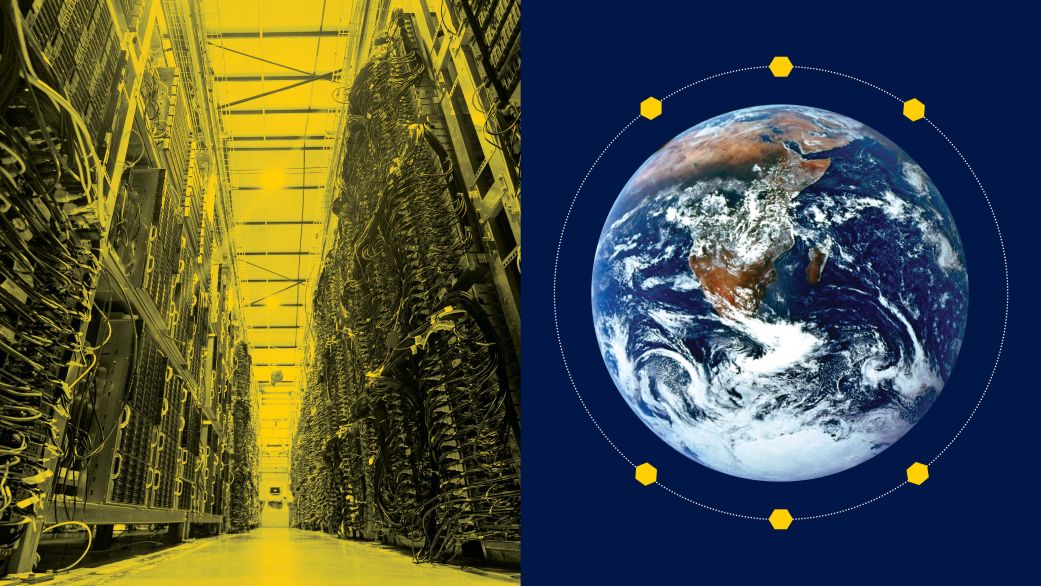
Advances in artificial intelligence are drivingsurging demand for data centers. But these warehouse-like facilities, containing computers that process and store data, require a lot of land and huge amounts of energy, generating significant carbon dioxide (CO2) emissions.
Data center power demand will increase 165% by 2030, according toGoldman Sachs. Some data centers use renewables, and others are being constructed withrenewable energy generation on-site, but clean energy sources like solar and wind farms require physical space, as does data center infrastructure.
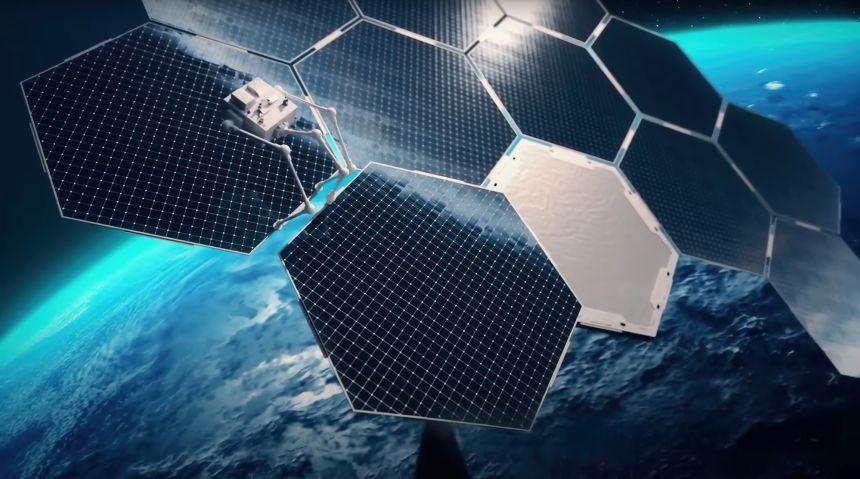
Now, some are looking to put data centers into space, bypassing the problem of finding available land. Space also offersbetter access to solar energy, without the cloud cover, the darkness of nighttime or the seasonality of Earth.
In Europe, the ASCEND project aims to demonstrate the feasibility of space-based data centers for reducing CO2 emissions.
Last year, France-basedThales Alenia Space, which led a European Commission-fundedstudy into the feasibility of ASCEND, found that sending data centers to space to take advantage of continuous solar energy could offer “a more eco-friendly and sovereign solution for hosting and processing data.” But that would be contingent on technological advancements in several areas, said Xavier Roser of Thales Alenia Space.
While the total emissions from rocket launches are currently only a fraction of those from the aviation industry, rockets release pollutants at higher altitudes, where they last longer.
The ASCEND study estimated that for space data centers to effectively reduce carbon emissions compared to their terrestrial counterparts would require the development of a launcher that emits 10 times less carbon over its lifecycle than current ones. It’s not clear when or if such a rocket may be in development. SpaceX, which has revolutionized the cost of rockets with its fleet of Falcon launch vehicles, has not revealed any plans to debut a more environmentally friendly rocket design.
Small steps
Abu Dhabi-based startupMadari Space has collaborated with an industrial accelerator program run by Thales Alenia Space, and is one of a handful of companies that are launching small computing components into orbit as technical demonstrations.
Madari founder and CEO Shareef Al Romaithi, who is also a pilot for Etihad Airways, said space-based data centers could benefit a variety of customers, including those with Earth observation satellites. He said storing and processing their raw observation data in space can reduce lag time in anlayzing their findings, and “allow them to make informed decisions in a timely manner,”
He hopes to eventually deploy a constellation of data satellites into orbit. While that goal is a way off, Madari’s first mission, scheduled for 2026, will send a payload about the size of a toaster oven — consisting of data storage and data processing components — into orbit aboard an Emirati satellite, part of the UN Office for Outer Space Affairs (UNOOSA)’s Access to Space for All Initiative.
Others have already carried out launches. In May, China launched12 satellites for a space-based computing constellation — the first of a proposed 2,800-satellite fleet to process data in space.
Al Romaithi says that should be a wakeup call to consider space a viable location for data centers. “It is a reality that’s happening,” he said.

Lonestar Data Holdings, a Florida-based firm, said in March that itsuccessfully tested a small data center on the moon, despite the systemlanding on its side and powering down early.
In November, Starcloud — a Washington state-based startup — will launch a satellite equipped with a Nvidia H100 graphics processing unit (GPU). The company told CNN via email that it will set a record for the most powerful in-orbit compute power.
“My view is that in 10 years’ time, almost all new data centers will be being built in space, purely because of the constraints we are facing on building new energy projects terrestrially,” Philip Johnston, its CEO, said in the email. The main challenges to overcome first are dissipating large amounts of heat in a vacuum and making the chips work in a high radiation environment, he added.
Still, it’s very early days for the sector — and a giant leap to launch data centers big enough to offer an alternative to those on Earth. Cost will be key, with launch costs dependent on the weight of the payload.

Lonestar has signed a$120 million deal with spacecraft provider Sidus to build and provide on-orbit support for six data-storage satellites. It plans to launch the first in 2027 — a 15-petabyte system operating from the Earth-moon Lagrange point L1, some 60,000 kilometers from the moon. The next five satellites will each double in storage capacity, while keeping the same weight and energy requirements, the company says.
Each will share a ride with larger satellites aboard a SpaceX Falcon, making up around 15% of the payload mass. That could cost in the region of $10 million per launch, for a fraction of the storage of many terrestrial data centers.
Overcoming astronomical challenges
But some experts are skeptical about the economics of data centers in space. “To do a cost effective, true, objective analysis of it, it doesn’t really stand up to scrutiny,” saidQuentin A. Parker, the director of the Laboratory for Space Research at the University of Hong Kong (HKU). “The terrestrial solutions are still there, and they’re still probably a lot cheaper than trying to put anything into space,” he added. “Putting them into space has all sorts of problems associated with it.”
While advocates claim that storing data in space could provide protection from data centers being attacked, or damaged due to natural disasters,Parker points out that space brings its own risks, including radiation,space debris, and also the consequences of sending more human-made objects into space without a solution for cleaning them up.
Experts have been raising alarm bells about the increasing amount of human-made junk left in space; they warn that a collision could take down space-based technologies that power our everyday lives.
Others have pointed out that maintaining and repairing data centers in space couldpose a major challenge, while space weather, such as solar flares, could disrupt services. And a number of nations arereportedly developing “counterspace technologies,” such as jamming systems that can be targeted at satellites.
Proponents of space-based data centers may be “overselling the advantages and significantly underselling the major drawbacks,” said Parker.
But for Al Romaithi, looking off-planet is a necessity. “It is worth overcoming these challenges because the alternative is technological stagnation,” he said. “We will reach a point where we are exhausting our resources just to run data centers.”