
Understanding Backends and Delegates#
Audience: Vendors, Backend Delegate developers, who are interested in integrating their own compilers and hardware as part of ExecuTorch
Backend delegation is an entry point for backends to process and execute PyTorchprograms to leverage performance and efficiency benefits of specializedbackends and hardware, while still providing PyTorch users with an experienceclose to that of the PyTorch runtime.
Backend Interfaces: Overview#
At a high level, the entry point for backends is defined by 2 components:
An IR to represent the program:Edge Dialect (which is produced throughthe
to_edgeAPI)A couple of interfaces for backends to implement:
Ahead-of-Time (AOT)
Program preprocessing (e.g. ahead of time compilation, transformation, optimization…).
Runtime
Program initialization (e.g. runtime compilation).
Program execution.
(optional) Program destroy (e.g. release backend owned resource).
A delegate backend implementation is composed of:
An ahead-of-time preprocessing interface
A runtime initialization and execution interface
The diagram looks like following
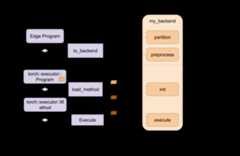
Figure 1. A high level of entry points for backend interfaces, including both ahead-of-time and runtime.
Backend Interfaces: Ahead-of-Time Preprocessing#
There are mainly two Ahead-of-Time entry point for backend to implement:partition andpreprocess.
partitioner is an algorithm implemented by the backend to tag the nodes to be lowered to the backend.to_backend API will apply the partition algorithm and lower each subgraph, which consists of connected tagged nodes, to the targeted backend. Every subgraphwill be sent to thepreprocess part provided by the backend to be compiled as a binary blob.
During partition, theexported_program is not allowed to mutate the program, and it’s supposed to apply tag to each node. ThePartitionResult includes both tagged exported program and the partition tags dictionary forto_backend to look up the tag andlink to thebackend_id andcompile_spec
defpartition(exported_program:ExportedProgram,)->PartitionResult:
During preprocessing, backends are given an edge dialect program,a list of compile specs specifying the values needed for compilation, and areexpected to return a compiled blob, or binary containing the desired program to berun in the backend. During serialization, thecompiled blob will be serialized as part of the.pte file, and directly loaded to the device. TheAPI for this process is:
defpreprocess(edge_program:ExportedProgram,compile_specs:List[CompileSpec],)->PreprocessResult:
A demo of the preprocess function is implementedhere.The demo loops through the nodes in the graph module of theedge_program andserializes theadd,mul, andsin instructions into a string, which is laterparsed and executed at runtime.
The diagram looks like following

Figure 2. The graph goes through partition and each subgraph will be sent to the preprocess part.
Backend Interfaces: Runtime Initialization and Execution#
During the runtime, the compiled blob from thepreprocess function will beloaded and passed directly to the backend’s custominit function. Thisfunction is responsible for further processing the compiled unit, as well asperform any backend initialization. The backend’s customexecute function willthen be called to execute the handle produced byinit. And finally, ifdestroying is required for some backend, backends can implement adestroyfunction which will be called when the program is out of its lifespan.
// Runtime checkET_NODISCARDboolis_available();// Runtime initializationET_NODISCARDvirtualResult<DelegateHandle*>init(BackendInitContext&context,FreeableBuffer*processed,ArrayRef<CompileSpec>compile_specs);// Runtime executionET_NODISCARDvirtualErrorexecute(BackendExecutionContext&context,DelegateHandle*handle,Span<EValue*>args);// [optional] Runtime destroy. Destroy the resource held by the backendvirtualvoiddestroy(ET_UNUSEDDelegateHandle*handle);
The diagram looks like following
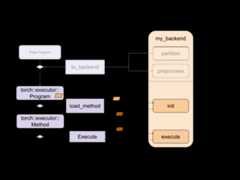
Figure 3. The relationship between standard ExecuTorch Runtime and backend entry point.
In order to make backend available to ExecuTorch runtime, it must be registered via theregister_backend API:
ET_NODISCARDErrorregister_backend(constBackend&backend);
Static registeration, i.e., at libraray init or load time, of a backend can be achieved as follows:
namespace{autocls=BackendWithCompiler();Backendbackend{"BackendWithCompilerDemo",&cls};staticautosuccess_with_compiler=register_backend(backend);}// namespace
Developer Tools Integration: Debuggability#
Providing consistent debugging experience, be it for runtime failures or performance profiling, is important. ExecuTorch employs native Developer Tools for this purpose, which enables correlating program instructions to original PyTorch code, via debug handles. You can read more about ithere.
Delegated program or subgraphs are opaque to ExecuTorch runtime and appear as a specialcall_delegate instruction, which asks corresponding backend to handle the execution of the subgraph or program. Due to the opaque nature of backend delegates, native Developer Tools does not have visibility into delegated program. Thus the debugging, functional or performance, experiences of delegated execution suffers significantly as compared to it’s non-delegated counterpart.
In order to provide consistent debugging experience to users, regardless of the use of delegation for a model, Developer Tools provide an interface to correlate delegated (sub)graph to original (sub)graph. The Developer Tools do so via debug handles map which allows delegates to generate internal handles that can be associated with the original (sub)graph consumed by the delegate. Then at runtime, backend developer can report error or profiling information using the internal handle, which will be mapped to original (sub)graph using the debug handle map. For more information, please refer toDelegate Debugging.
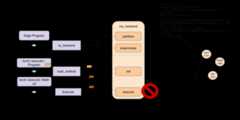
By leveraging the debug identifier, backend developer can embed the debug as part of the delegated blob

In this way, during execute stage, with the debug identifier, backend developer can associate the failed instruction inside the delegateback to the exact line of PyThon code.
Common Questions#
1. How can we get data in backend.preprocess?
The graph module being preprocessed is a lifted graph, this means that staticdata like weights and biases are supplied as inputs to the graph. However, wecan access the weights and biases ahead-of-time through the exported program. Toaccess these parameters from a given node, we can use the functionget_paramsprovided intorch/_export/utils.py
2. How can we embed the data (like weight/bias) to the backend?
It’s common that backends have some ways to optimize the const data. In this case,we’d need to tag the placeholder nodes which are also the state in thepartitioner, and during backend.preprocess, we can follow the description in thefirst question to get the weight.
3. How can we run the lowered module in Python with the specific backend?
We haven’t added the support yet but that’s the plan!
4. Should we expect to seeget_attr nodes in the edge dialect program?
get_attr nodes will only show up for submodules used for control flow ordelegation. It won’t hold any data.
5. Can we delegate to multiple backends?
Yes! There are two ways to do this:
Option 1: Run to_backend multiple times for different backends
If we have two backends, backend_1 and backend_2, and they have their ownparititioners: backend_1_parititioner and backend_2_partitioner, we can run itlike:
# Will first lower nodes to backend_1 depending on the backend_1_parititioner depending on partitioner algorithmexported_program_backend_1=to_backend(exported_program,backend_1_parititioner())# For the rest of nodes, they will be lowered to backend_2 depending on backend_2_parititionerexported_program_backend_1_and_2=to_backend(exported_program_backend_1,backend_2_parititioner())
A more concrete example be foundhere.In this example,qnnpack is one backend and xnnpack is another backend. We haven’t open-sourcedthese two backends delegates yet, and this example won’t run out of box. It canbe used as a reference to see how it can be done.
This option is easy to try because usually all backends will implement their ownpartitioner. However this option may get different results if we change theorder of to_backend call. If we want to have a better control on the nodes, likewhich backend they should go, option 2 is better.
Option 2: Have a partitioner which partitions for different backends
Another option is to create a customized partitioner, say partitionerbackend_1_2_partitioner, and inside the partitioner logic,
classBackend_1_2_Partitioner(Partitioner):""" Partitions all add/mul nodes regardless of order for Backend2 """def__init__(self)->None:self.delegation_spec_1=DelegationSpec("Backend1",[])self.delegation_spec_2=DelegationSpec("Backend2",[])self.partition_tags={}defpartition(self,exported_program:ExportedProgram)->ExportedProgram:# Tag all nodes in the first partiton to backend 1node_to_backend_1=...# some logic to select the nodes from the graphdelegation_tag=f"backend2_tag{partitioner_1.id}"node.meta["delegation_tag"]=delegation_tagself.partition_tags[delegation_tag]=self.delegation_spec_1# Tag all nodes in the first partiton to backend 2node_to_backend_2=...# some logic to select the nodes from the graphdelegation_tag=f"backend2_tag{partitioner_2.id}"node.meta["delegation_tag"]=delegation_tagself.partition_tags[delegation_tag]=self.delegation_spec_2returnexported_program
6. Is there an easy way to write a partitioner?
We provide some helper partitionershere to make it easy to findnodes from decomposed operators.
7. How do we link the node back to the source code?We provide an helper function
fromexecutorch.exir.print_programimportinspect_nodeprint(inspect_node(graph,node))
And it will highlight the node in the graph as well as point to the source code, example output will be like following:
_param_constant1error_msg:Hereisthenodeinthegraphmodule:graph():%arg0_1:[num_users=1]=placeholder[target=arg0_1]%_param_constant0:[num_users=1]=get_attr[target=_param_constant0]-->%_param_constant1:[num_users=1]=get_attr[target=_param_constant1]%aten_convolution_default:[num_users=2]=call_function[target=executorch.exir.dialects.edge._ops.aten.convolution.default](args=(%arg0_1,%_param_constant0,%_param_constant1,[1,1],[0,0],[1,1],False,[0,0],1),kwargs={})%_param_constant2:[num_users=1]=get_attr[target=_param_constant2]%_param_constant3:[num_users=1]=get_attr[target=_param_constant3]%aten_convolution_default_1:[num_users=1]=call_function[target=executorch.exir.dialects.edge._ops.aten.convolution.default](args=(%aten_convolution_default,%_param_constant2,%_param_constant3,[1,1],[0,0],[1,1],False,[0,0],1),kwargs={})%aten_add_tensor:[num_users=1]=call_function[target=executorch.exir.dialects.edge._ops.aten.add.Tensor](args=(%aten_convolution_default,%aten_convolution_default_1),kwargs={})%_param_constant4:[num_users=1]=get_attr[target=_param_constant4]%_param_constant5:[num_users=1]=get_attr[target=_param_constant5]%aten_convolution_default_2:[num_users=1]=call_function[target=executorch.exir.dialects.edge._ops.aten.convolution.default](args=(%aten_add_tensor,%_param_constant4,%_param_constant5,[1,1],[0,0],[1,1],False,[0,0],1),kwargs={})%aten_gelu_default:[num_users=1]=call_function[target=executorch.exir.dialects.edge._ops.aten.gelu.default](args=(%aten_convolution_default_2,),kwargs={})return[aten_gelu_default]Thisnode_param_constant1hasmetadataof:Thenodestacktrace:Traceback(mostrecentcalllast):File"/tmp/ipykernel_1204253/3382880687.py",line7,inforwardreturnself.test_model(x)File"/mnt/xarfuse/uid-25337/7b86ad0c-seed-nspid4026532987_cgpid2707357-ns-4026532984/torch/nn/modules/module.py",line1528,in_call_implreturnforward_call(*args,**kwargs)File"/tmp/ipykernel_1204253/712280972.py",line10,inforwarda=self.conv1(x)
