

Obfuscate user data for analytics
This feature allows you to obscure data before sending it as part of the analytics payload. With this feature, Apigee uses SHA512 to hash the original value before communicating from the runtime plane to the control plane.
This feature is for Apigee hybrid 1.2 and newer only.Procedure
Enable this feature by settingfeatures.analytics.data.obfuscation.enabled to true.
PUT, be careful to include the entire set of properties for your environment. PUT overwrites the entire property set each time you issue it.curl -v -X PUT \ https://apigee.googleapis.com/v1/organizations/your_org_name/environments/your_env_name \ -H "Content-Type: application/json" \ -H "Authorization: Bearer $TOKEN" \ -d '{ "name" : "your_env_name", "properties" : { "property" : [ { "name" : "features.analytics.data.obfuscation.enabled", "value" : "true" },] }}'With obfuscation enabled, Apigee hybrid will hash the following fields with SHA512 at the runtime plane before sending the information to analytics backend:
- client_id
- client_ip
- developer_email
- proxy_client_ip
- proxy_pathsuffix
- request_uri
- request_path
- target_basepath
- target_url
- x_forwarded_for_ip
- x-apigee.edge.true_client_ip
- x-apigee.intelligence.client_ip_header
Apigee hybrid will hash the following dimension values in custom analytics reports:
- Client ID
- Client IP Address
- Developer Email
- Proxy Client IP
- Proxy Path Suffix
- Referred Client IP
- Request Path
- Request URI
- Resolved Client IP
- Target Base Path
- Target URL
- X Forwarded For
See Analytics metrics, dimensions, and filters reference for detailed descriptions of analytics dimensions.
Viewing obfuscated results
The obfuscated results display in the Apigee hybrid analytics dashboard. It may take several minutes before you see the hashed results in the UI.
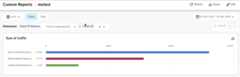

Example
The following example shows the data before and after obfuscating:
// JSON data sent to AX before obfuscating{"proxy_basepath":"/APP_NAME","x-apigee.edge.execution.stats.request_flow_endtimestamp":1582770652814,"apiproxy":"APP_NAME","x-apigee.edge.is_policy_error":0,"client_sent_start_timestamp":1582770652817,"x-apigee.edge.is_target_error":0,"client_received_start_timestamp":1582770652813,"client_ip":"10.10.0.99","is_error":false,"x-apigee.edge.stats.steps":"{\"JS1.0\":1}","request_size":0,"x-apigee.intelligence.client_ip_header":"10.10.0.99","virtual_host":"default","x-apigee.edge.mp_host":"mp","sla":false,"x-apigee.intelligence.service":"{}","client_sent_end_timestamp":1582770652817,"request_uri":"/APP_NAME","proxy":"default","proxy_client_ip":"10.10.0.99","x-apigee.edge.dn.region":"dc-1","apigee.edge.execution.is_apigee_fault":0,"x-apigee.edge.target.latency.stats":"{\"targetList\":[]}","useragent":"Apache-HttpClient/4.3.6 (java 1.6)","proxy_pathsuffix":"","x-apigee.edge.execution.stats.request_flow_start_timestamp":1582770652814,"x_forwarded_for_ip":"10.10.0.99","x_forwarded_proto":"http","response_status_code":200,"request_verb":"GET","x-apigee.edge.execution.stats.response_flow_end_timestamp":1582770652816,"gateway_source":"message_processor","environment":"env_82hw","client_received_end_timestamp":1582770652814,"organization":"Org_1582769880344","x-apigee.edge.execution.stats.response_flow_start_timestamp":1582770652814,"request_path":"/APP_NAME","gateway_flow_id":"rt-8644-188-1","apiproxy_revision":"1"}
// JSON data sent to AX after obfuscating{"proxy_basepath":"/APP_NAME","x-apigee.edge.execution.stats.request_flow_endtimestamp":1582749361836,"apiproxy":"APP_NAME","x-apigee.edge.is_policy_error":0,"client_sent_start_timestamp":1582749361884,"x-apigee.edge.is_target_error":0,"client_received_start_timestamp":1582749361790,"client_ip":"090cdae81ea6e58e55093f702661cf2325cef6a68aa801f1209e73bb0649c2b931bcad468911da887a42ce1d1daee07b24933e3dbbde6eb7438cfc9020a25445","is_error":false,"x-apigee.edge.stats.steps":"{\"JS1.0\":30}","request_size":0,"x-apigee.intelligence.client_ip_header":"090cdae81ea6e58e55093f702661cf2325cef6a68aa801f1209e73bb0649c2b931bcad468911da887a42ce1d1daee07b24933e3dbbde6eb7438cfc9020a25445","virtual_host":"default","x-apigee.edge.mp_host":"mp","sla":false,"x-apigee.intelligence.service":"{}","client_sent_end_timestamp":1582749361886,"request_uri":"0176937d9c4a33094d3c3f38ac8b15fa05dd6380a6bb544e4002c98de9f27bdbfea754901b0acb487f4980b09f7d312ad1e7027b96b2c8bfd8b9c24e833fbb5a","proxy":"default","proxy_client_ip":"090cdae81ea6e58e55093f702661cf2325cef6a68aa801f1209e73bb0649c2b931bcad468911da887a42ce1d1daee07b24933e3dbbde6eb7438cfc9020a25445","x-apigee.edge.dn.region":"dc-1","apigee.edge.execution.is_apigee_fault":0,"x-apigee.edge.target.latency.stats":"{\"targetList\":[]}","useragent":"Apache-HttpClient/4.3.6 (java 1.6)","proxy_pathsuffix":"cf83e1.67eefb8bdf1542850d66d8007d620e4050b5715dc83f4a921d36ce9ce47d0d13c5d85f2b0ff8318d2877eec2f63b931bd47417a81.638327af927da3e","x-apigee.edge.execution.stats.request_flow_start_timestamp":1582749361833,"x_forwarded_for_ip":"090cdae81ea6e58e55093f702661cf2325cef6a68aa801f1209e73bb0649c2b931bcad468911da887a42ce1d1daee07b24933e3dbbde6eb7438cfc9020a25445","x_forwarded_proto":"http","response_status_code":200,"request_verb":"GET","x-apigee.edge.execution.stats.response_flow_end_timestamp":1582749361874,"gateway_source":"message_processor","environment":"env_xj25","client_received_end_timestamp":1582749361821,"organization":"Org_1582749068984","x-apigee.edge.execution.stats.response_flow_start_timestamp":1582749361836,"request_path":"0176937d9c4a33094d3c3f38ac8b15fa05dd6380a6bb544e4002c98de9f27bdbfea754901b0acb487f4980b09f7d312ad1e7027b96b2c8bfd8b9c24e833fbb5a","gateway_flow_id":"rt-6290-57-1","apiproxy_revision":"1"}
Except as otherwise noted, the content of this page is licensed under theCreative Commons Attribution 4.0 License, and code samples are licensed under theApache 2.0 License. For details, see theGoogle Developers Site Policies. Java is a registered trademark of Oracle and/or its affiliates.
Last updated 2026-02-19 UTC.