Movatterモバイル変換


[0]ホーム

URL:


Skip to main content
Academia.eduAcademia.edu
I am currently a PhD candidate at DMU, researching into the history of Disability Sport for people with intellectual disabilities from 1960 to the present day. This was made possible with the support of the AHRC Midlands 3 cities funding scheme. See more at: https://vpp.midlands3cities.ac.uk/display/P14171122/Sporting+Participation+and+People+with+Learning+Disabilities:+A+History,+c.1960-2012

In September 2015 I completed studying for an MA at the International Centre for Sports History and Culture, De Montfort. My dissertation was a biography of James Peters, England's first Black player, focusing especially on the issue of if he was boycotted by the 1906 Springbok Team.

Alongside this I am also researching into the history of Saracens Rugby Club and its players involvement in The Great War, working alongside Colin Veitch.  www.saracensrugbyww1.com
Supervisors: Dr Neil Carter and Professor Matthew Taylor
Address: United Kingdom
less

Related Authors

InterestsView All (9)

Uploads

Papers by Tom Weir

Research paper thumbnail of Thematic review- Sport and British Imperialism
Thematic review, linked with my MA dissertation on James Peters
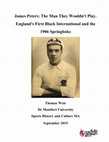
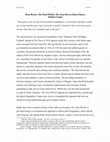
Research paper thumbnail of James Peters: The man they wouldn't play
My final MA dissertation on James Peters, England's first black Rugby player and International sp... moreMy final MA dissertation on James Peters, England's first black Rugby player and International sportsman.
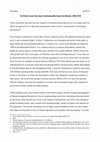
Research paper thumbnail of Why And To What Extent Did Sport Become A Vehicle For Ethnic Identity?
The role of sport within the British Empire was to be one of the great mechanisms for exerting so... moreThe role of sport within the British Empire was to be one of the great mechanisms for exerting soft power. Its proliferation, although for the most part not a deliberate governmental policy, helped spread British culture wider and more effectively than almost any other medium. 'Sport became a channel for the imposition of British values on colonial society,' whether helping 'educate' natives in perceived British values of 'fair play' or allowing émigrés to maintain a sense of Britishness. 2 Richard Holt covers this comprehensively in Sport and the British, displaying the use of sport as a conduit of Britain's unique cultural sensibilities. 3 Rather than challenge his conclusions on the initial spread of sport and its impact, to advance the debate it is important to look at the reaction to this spread of British sporting culture by those affected by it. Some sportsmen sought to assimilate and gain acceptance through their sporting prowess, whilst others saw British sport as a challenge to their own nation's sense of ethnic identity. Whilst it did indeed serve as 'cultural cement' in cases such as Prince Ranjitsinhji, for organisations such as the Gaelic Athletic Association sport acted as the most effective remedy for removal of unwanted British influence. By focusing primarily on the years 1880-1914, it is possible to study the most effective examples of both this wish for assimilation, and the development of ethnic identities by those countries within the Empire.

Talks by Tom Weir

Research paper thumbnail of Should Rugby ban tackling in under 18's? A player responds
Rugby may not be the safest sport, but for many of us its the only one where we felt valued. We w... moreRugby may not be the safest sport, but for many of us its the only one where we felt valued. We weren’t just human detritis floating on the pitch or players making up the numbers, but a crucial component in a team. The children that often cant find a place in other sports are vital to ‘prop up’ rugby. Remove tackling from the game and you deny that chance to feel valued to those children most at risk from inactivity.

Log In


or


orreset password

Enter the email address you signed up with and we'll email you a reset link.

Need an account? Click here to sign up

[8]ページ先頭

©2009-2026 Movatter.jp