
Mobile-friendly web pages using app banners
Tuesday, September 01, 2015
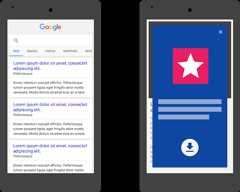
When it comes to search on mobile devices, users should get the most relevant answers, no matter if the answer lives in an app or a web page. We've recently made it easier for users tofind and discover apps andmobile-friendly web pages. However, sometimes a user may tap on a search result on a mobile device and see an app install interstitial that hides a significant amount of content and prompts the user to install an app. Our analysis shows that it is not a good search experience and can be frustrating for users because they are expecting to see the content of the web page.
Starting today, we'll be updating theMobile-Friendly Test to indicate that sites should avoid showing app install interstitials that hide a significant amount of content on the transition from the search result page. TheMobile Usability report in Search Console will show webmasters the number of pages across their site that have this issue.
After November 1, mobile web pages that show an app install interstitial that hides a significant amount of content on the transition from the search result page will no longer be considered mobile-friendly. This does not affect other types of interstitials. As an alternative to app install interstitials, browsers provide ways to promote an app that are more user-friendly.
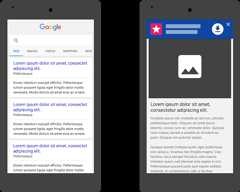
App install banners are supported by Safari (asSmart Banners) and Chrome (asNative App Install Banners). Banners provide a consistent user interface for promoting an app and provide the user with the ability to control their browsing experience. Webmasters can also use their own implementations of app install banners as long as they don't block searchers from viewing the page's content.
If you have any questions, we're always happy to chat in theWebmaster Central Forum.
Posted by Daniel Bathgate, Software Engineer, Google Search.
Except as otherwise noted, the content of this page is licensed under theCreative Commons Attribution 4.0 License, and code samples are licensed under theApache 2.0 License. For details, see theGoogle Developers Site Policies. Java is a registered trademark of Oracle and/or its affiliates.