Movatterモバイル変換


[0]ホーム

URL:


  • SearchSearch
Join us

Natural Capital at Risk: The Top 100 Externalities of Business

April 01, 2013

Screen Shot 2016-08-18 at 13.44.23This report covers a high level perspective on the world’s biggest natural capital risks for business, investors and governments.

To provide a business perspective, it presents natural capital risk in financial terms. In doing so, it finds that the world’s 100 biggest risks are costing the economy around $4.7 trillion per year in terms of the environmental and social costs of lost ecosystem services and pollution.

Many of these natural capital costs are found in the developing world, but the resulting goods and services are being consumed by resource intensive supply chains around the planet – thus it is a global challenge for a globalized world.

Although internalization on of natural capital costs has only occurred at the margin, 3 billion new middle class consumers by 2030 will cause demand to continue to grow rapidly, while supply will continue to shrink. The consequences in the form of health impacts and water scarcity will create tipping points for action by governments and societies. The cost to companies and investors will be significant.

This research provides a high-level insight into how companies and their investors can measure and manage natural capital impacts. While it has limitations, it should act as a catalyst for further research into high risk areas, and mitigation action. For governments it should spark further debate around the risks their countries face, and whether natural capital is being consumed in an economically efficient manner. The scale of the risks identified suggests that all actors have the opportunity to benefit.


Download the reporthere.

Benefit from the Coalition’s unique overview of the capitals approach and community, gain insights into the latest thinking and developments and receive newsletters and project updates.

Sign up for Capitals Coalition updates

*Required fields are marked with an asterisk

Introduction from Carl Obst (2017)

Victor Hugo once wrote that “Nothing is so powerful as an idea whose time has come”. Recognising the true value of natural capital, is one such idea. Across private and public sectors, across disciplines, and around the world, initiatives to advance and develop natural capital thinking have emerged rapidly over the past 10 years.

In a blizzard of acronyms, we have the NCC, SEEA, WAVES, IIRC, KIP-INCA, A4S, GRI, EO4EA – among many others. Are they the same, are they competing, are they useful? To both insiders and outsiders this range of initiatives is confusing at best. At worst, it leads to a lack of engagement, avoidance and misunderstanding.

The reality is that, while differences among these various initiatives do exist, they have all been motivated by a common understanding of the reality that we are losing our stocks of natural capital – and that this matters.

While each initiative may have different origins, some differing objectives, and may reflect variations in technique and method, there is much common ground. Indeed, to engage the broader community in tackling the natural capital challenges we collectively face, we cannot afford to focus on distinctions. Instead, we must look to build on the overlaps and seek to build a common language that will enable the exchange of ideas and ongoing innovation.

It is in this spirit of collaboration that the Natural Capital Coalition, together with the IDEEA Group and supported by over 20 organisations, launches this statement on Combining Forces on Natural Capital.

It is especially relevant that this statement of collaboration is launched at the World Forum on Natural Capital, where leading voices in the movement gather every two years, to share best practice, enduring challenges and build further collaborations.

While progress to date has largely taken place in small pockets, in order to move forward we need to ramp up our efforts and move beyond talking with supporters and “the converted”.

For this, we need leaders who can establish spaces for dialogue and development, and who can ensure that technical debates do not form a barrier to progress, that we take full advantage of the diversity of skills and experience already engaged, and that the big picture is always kept in mind.

I encourage you to take the opportunity to read the statement, to share it within your organisations, to sign on, and to join us as we move towards a better understanding and appreciation of the complex and beautiful world in which we live.

Carl Obst is Director of the Institute for the Development of Environmental-Economic Accounting (IDEEA Group), and Lead Author of the United Nation’s System of Environmental-Economic Accounting (UN SEEA).

Join the Coalition

You can join the Coalition as an individual or as an organization

Natural Capital Protocol Translations

The Biodiversity Navigation Tool

Developed  by the Capitals Coalition andUNEP-WCMC, theNavigation Tool compliments theBiodiversity Guidance by steering practitioners through a series of interactive questions to help them undertake a biodiversity-inclusive natural capital assessment. The tool also offers supporting resources, tools, methodologies and advice to assist an assessment based on user responses.

Biodiversity constitutes the living component of natural capital and underpins the success of businesses around the world. But the benefit that biodiversity provides to organizations can be hard to fully understand, and even harder to effectively measure and value.

TheCambridge Conservation Initiative and Capitals Coalition developed theBiodiversity Guidance to accompany theNatural Capital Protocol. It is designed to help businesses and financial institutions to better understand the value they receive from biodiversity, and to apply this knowledge as they make decisions, through a biodiversity-inclusive natural capital assessment.

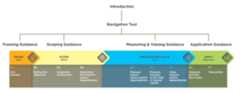
The Navigation Tool questions are tied to the stages and steps in the Natural Capital Protocol and guide users through the Frame, Scope, Measure & Value and Apply stages that constitute a natural capital assessment.

Two primers accompany the Biodiversity Guidance and Navigation Tool. They set out thevalue that organizations will receive from carrying out an assessment, and an overview ofhow to conduct the assessment.

We use cookies on our website to give you the most relevant experience by remembering your preferences and repeat visits. By clicking close, you consent to the use of ALL the cookies.

[8]ページ先頭

©2009-2026 Movatter.jp