Tuning in to College Radio Materials on World Radio Day 2026
On February 13,World Radio Day acknowledges the importance of radio around the globe. The annual event has been taking place for a little over a decade, dating back to a 2011 proclamation by UNESCO (United Nations Educational, Scientific and Cultural Organization) Member States and adoption by the United Nations General Assembly in 2012. The theme for World Radio Day 2026 is “radio and artificial intelligence.” UNESCO encourages radio stations to participate in the day and offers suggestions that align with the theme. One of the highlighted topic areas is memory and AI.
“Radio stations have thousands of hours of archives, often underutilized because they are difficult to index, browse or restore. AI can transform this dormant memory into an active resource, harnessing transcription, keyword searching, automatic summary and thematic upgrading. When direct reporting is impossible, coverage can be enhanced by historical archives.” – UNESCO
The Internet Archive’sDigital Library of Amateur Radio and Communications (DLARC) serves as this type of active resource, allowing visitors to dig into radio history. In recognition of World Radio Day and the second anniversary of the launch of thecollege radio sub-collection within DLARC, here are some recent additions and highlights from the DLARCcollege radio andcommunity radio collections.

Radio Station Playlists
For much of college radio’s existence, the record of what was played was logged on paper playlists. Handwritten DJ playlists don’t always get saved, with station summaries of airplay or featured music more commonly found. These tops lists, radio surveys, adds lists, and airplay reports are compiled by radio stations and sent to record labels, musicians, trade publications, local newspapers, and zines. Results of the combined reports can be found in charts and lists published inCMJ New Music Report,Gavin Report,Rockpool, and similar publications.
DLARC College Radio recently received a largecollection of digitized paper radio station playlists from the bandGet Smart! Band members meticulously saved communication from college, community, high school and public radio stations that played their records in the 1980s. Representing stations from all over the United States and Canada, the playlists in this collection are mainly monthly summaries of the albums and artists that a radio station was playing. Sometimes they includecommentary from station music directors or handwritten notes to the band. One thing that I love about these lists is that they are often printed on colorful paper, from a very 1985-feelinghot pink WHRB list from Harvard to anautumnal orange list from high school station KRVM-FM.

Additionally, a representative of the now-defunctCleveland College Radio Coalition donated a collection of digitized copies of playlists, program guides and more. The group was formed in 1982 in order to help increase awareness for the college radio stations in Cleveland, Ohio and also produced a joint program guide.

Other newly added playlists include abatch from Bowling Green State University’s college radio station WBGU-FM in Bowling Green, Ohio. They form the bulk of a newWBGU-FM collection, which currently features flyers, program guides, correspondence, and training materials from 1995-1997.
You can peruse theentire collection of college radio playlists in DLARC College Radio.
Radio Station Stickers
Other new additions to DLARC College Radio includepromotional stickers produced by college radio stations.

KVRX-FM collection from UT Austin
One of DLARC College Radio’snewest collections is from KVRX-FM, the student-run college radio station at University of Texas, Austin. The Internet Archive digitized a wide variety of KVRX materials, including ‘zines, DJ notebooks, record reviews, organization documents, posters, and newsletters, spanning the years 1986 to 2025.

Audio Transcriptions
Finally, in keeping with this year’s World Radio Day theme related to AI, the college radio collection has been enhanced by an AI-generated transcription tool within the media player of select audio items. This means that not only can one listen to recordings from college radio stations, but one can also read transcripts from radio shows, interviews, oral histories, and more. Audio with AI-generated transcripts in the DLARC College Radio collection includes:
- 1981 WUSBRamones interview from 1981 (SUNY Stonybrook)
- 1955 WHRCinterview with William F. Buckley, Jr. (Haverford College)
- WKDUoral histories (Drexel University)
- CKUToral history Interviews (McGill University)
The Digital Library of Amateur Radio & Communications is funded by a grant from Amateur Radio Digital Communications (ARDC) to create a free digital library for the radio community, researchers, educators, and students. DLARC invites radio clubs, radio stations, archives and individuals to submit material in any format. To contribute or ask questions about the project, contact: Kay Savetz at kay@archive.org. Questions about the college radio sub-collection can be directed to Jennifer Waits at jenniferwaits@archive.org.
Internet Archive and Partners Select Local Newsrooms from Across the US to Participate in the Today’s News for Tomorrow Program

Internet Archive, Poynter Institute, and Investigative Reporters and Editors (IRE) are pleased to announce the first cohort of newsrooms to join the Today’s News for Tomorrow program. With support from Press Forward, Today’s News for Tomorrow will bring together news organizations and memory institutions to address the urgent challenge of local news preservation and perpetual access. The project will create a national framework for digital preservation that serves newsrooms’ “immediate internal needs and communities’ future information needs,” according to Press Forward.
“Journalism is the first draft of history, and we’re at risk of losing that history due to changes in a newsroom’s technology, ownership, and even outside pressure to erase it,” said Kristen Hare, program instructor and Poynter’s director for craft and local news. “Today’s News for Tomorrow will help local journalists and newsrooms learn what we’re up against and make sure the first draft of news is still around for future generations.”
Participating newsrooms will receive access to Internet Archive’s services, tools, and infrastructure, share public local news resources through a unified local news access portal, and participate in knowledge-sharing opportunities centered around local news archiving.
The first cohort will be made up of digital local news publications. Future cohorts in 2026 will be tailored to meet the preservation needs of print newspapers, public media organizations, and independent journalists. Members of the initial cohort were selected through a competitive application process and include:
The Berkeley Scanner (Berkeley, CA)
The Jefferson County Beacon (Port Townsend, WA)
Cityside (Berkeley, CA)
Athens County Independent (Athens, OH)
Hoy en Delaware (Wilmington, DE)
Bucks County Beacon (Warminster, PA)
Golden Today (Golden, CO)
The 51st (Washington, DC)
15 West (Chicago, IL)
The Rapidian (Grand Rapids, MI)
My Tarboro Today (Tarboro, NC)
Outlier Media (Detroit, MI)
Hmong Daily News (Sacramento, CA)
Front Range Focus (Denver, CO)
Lake County News (Lucerne, CA)
The Providence Eye (Providence, RI)
Grandview Independent (Richmond, CA)
The Well News (Washington, DC)
Prism Reports (Oakland, CA)
El Paso Matters (El Paso, TX)
The Oaklandside (Oakland, CA)
The Current GA (Savannah, GA)
Germantown Info Hub (Philadelphia, PA)
Evanston Now (Evanston, IL)
Conecta Arizona (Phoenix, AZ)
Charlottesville Tomorrow (Charlottesville, VA)
Wisconsin Watch (Madison, WI)
BK Reader (Brooklyn, NY)
Black Girl Nerds (Virginia Beach, VA)
Lede New Orleans (New Orleans, LA)
U.S. Press Freedom Tracker (Brooklyn, NY)
Wired (New York City, NY)
El Central Hispanic News (Detroit, MI)
Newsrooms are encouraged to apply to join future cohorts. Newsrooms publishing print newspapers should apply to join the next cohort by April 1. All other organizations may apply at any time to join additional cohorts. Questions about the program can be directed to the program team attnt@archive.org.
‘Depths of Wikipedia’ Creator Annie Rauwerda on ‘Fragile’ Internet Citations

Annie Rauwerda can’t remember a world without Wikipedia. Born in 1999, just two years before the platform launched, she says it has been omnipresent in her life and a source of endless fascination.
In the early days of the COVID-19 pandemic when she was a neuroscience student at the University of Michigan, Rauwerda said she spent a lot of time on Wikipedia and started posting quirky stories she found.
“As I clicked around, there were so many things with goofy titles,” said the now 26-year-old. “I thought to myself: ‘This could be big.’”
Making as many as five videos a day, Rauwerda indeed gained an audience with her off-beat discoveries — from stolen and missing moon rocks to the back story of people demonstrating “high fives.” She createdDepths of Wikipedia, a group of social media accounts and has more than 1.5 million followers onInstagram, 200,000 onTikTok, and 130,000 onBlueSky.
In 2022, Rauwerda was named theMedia Contributor of the Year by theWikimedia Foundation, the nonprofit that hosts Wikipedia.
In October, Rauwerda was invited to present at the Internet Archive event in San Francisco celebrating the milestone of 1 trillion webpages saved. She brought a burst of energy and humor to the stage as she shared screenshots of some of her favorite Wikipedia articles.
Watch Annie at Internet Archive’s 1 Trillion Web Page Celebration:
Rauwerda calls herself an Internet Archive “super fan” and acknowledges its value in providing links to original sources.
“If Wikipedia is worth anything at all, it’s because of the citations, and those citations are increasingly hard to access,” she said, noting that more than half of the community articles contain a dead link. “That’s not a concern, though, for us, because we have partnerships with the Internet Archive to make sure that those links are archived and can be clicked by anyone.”
Professionally and personally, Rauwerda said she uses the Archive constantly as she looks for material, seeks out old blogs or edits Wikipedia pages.
“It’s really hard for me to think of an organization that I’m more enthusiastic about,” Rauwerda said of the Internet Archive. “I just love everything about it.”
What will matter most to future generations is hard to predict, Rauwerda said, so it’s crucial to save as much of the digital landscape as possible. “I’m thankful the Internet Archive exists,” she said, “especially given how fragile everything is online.”
Rauwerda said she’s had a “simultaneous love affair with the Internet Archive and Wikipedia” — often toggling back and forth as she dives into topics. She said she embraces the spirit of the open web and the community of people who support this work.
Beyond her social media presence, Rauwerda is writing a book about Wikipedia for Little Brown. The series of light-hearted essays about the off-beat people behind Wikipedia is slated for publication in the fall of 2026.
Rauwerda also turned her discoveries into a comedy show, which she first performed at small clubs in New York. After landing an agent, she went on a multi-city tour of the U.S., customizing the material for each region. She has another round of shows booked for 2026.
“It’s been so fun,” she said. “I’m gonna ride this while it lasts.”
Preserving the Open Web: Inside the New Wayback Machine Plugin for WordPress

Link rot. There’s nothing quite as frustrating as clicking on a link that leads to nowhere.
WordPress, which powers more than 40% of websites online, recently partnered with the Internet Archive to address this problem. Engineers from the Internet Archive and Automattic worked together to create a plugin that can be added to a WordPress website to improve the user experience and check the Wayback Machine for an archived version of any webpage that has been moved, changed or taken down.
The freeInternet Archive Wayback Machine Link Fixer,publicly launched last fall, combats link rot by seamlessly redirecting the user to a reliable backup page when it encounters a missing page. When the plugin is added to a website, it will do a scan, see what pages exist, and then automatically save those pages to a queue to be archived. If it doesn’t exist, then it will be sent for capture.
Once the software is installed on a WordPress website, the plugin will auto redirect users to the Wayback Machine version of a missing page.
Broken links are one of the web’s most relentless problems.Pew Research found that 38% of the web has disappeared over the past decade and for web admins, “It’s a never-ending game of whack-a-mole to keep links working,” said Matt Blumberg, Product Manager with the Wayback Machine. “Thisnew tool prevents those inevitable 404s by automatically updating links to a preserved copy and it proactively archives pages in the Wayback Machine, where they’re kept accessible for free, long-term, so your site stays usable without manual fixes.”
“It’s very important that websites have a memory and that the web overall as has a memory. We are increasingly using [the web] as our only source of truth. When links go dead, in effect, the truth goes dead. This has become even more important in the world of AI.”
Alexander Rose, Director of Long-term Futures for Automattic Inc.
Many WordPress websites are homespun and are most susceptible to having links go dead. Remedying this problem is not only valuable to individuals, but also to the overall culture, said Alexander Rose, Director of Long-term Futures for Automattic Inc., the technology company behind WordPress.com.
“We need to have an accurate memory of the things that get said, posted, and the ways that we have communicated over time,” Rose said. “Otherwise we’re either doomed to repeat errors or we’re going to make choices that are uninformed by the past.”
The link fixer is expanding the “heroic effort” made by the Internet Archive over the years to preserve everything from small websites to NASA.gov and WhiteHouse.gov, he said.
“It’s very important that websites have a memory and that the web overall as has a memory,” Rose said. “We are increasingly using [the web] as our only source of truth. When links go dead, in effect, the truth goes dead. This has become even more important in the world of AI.”
As the plugin rolls out, Rose and Blumberg said they are open to feedback. The goal is to make the software as easy as possible to use. Next, they will fine tune the features and promote its broad use.
“As it becomes a solid piece of software that people know and like, then I think it has a path to being integrated much more deeply,” Rose said. “It’s early days, but every person I’ve talked to about it is excited to see the potential end of the dreaded 404 error.”
Recording Now Available from “Protect Our Future Memory” Webinar
Last week, Internet Archive welcomed more than 150 attendees to the webinar,“Protect Our Future Memory: Join the Call for Library Digital Rights.” Held on January 27, the event brought together legal experts, library leaders, and advocates to talk aboutOur Future Memory and the global coalition working to secure the protections that memory institutions need in our increasingly digital and networked world.
Watch the session recording:
The webinar opened with a stark reality check: For generations, libraries, archives, museums, and other memory institutions have relied on social and legal norms that allow them to collect, preserve, and lend materials. But nowadays, digital content is increasingly being controlled by restrictive licenses on gated, paywalled platforms. This new distribution stream prohibits memory institutions from doing what they’ve historically been able to do in the physical world, curtailing their essential functions of preserving and providing long-term access to knowledge.
Webinar attendees heard fromrecentsignatoriesCharlie Barlow, Executive Director of the Boston Library Consortium, andJohn Chrastka, Executive Director of the EveryLibrary Institute. Their participation highlighted the crisis facing memory institutions—and the demands necessary to overcome it.
“When we have publishers or vendors coming in and saying that we can’t do something that we perceive as foundational and essential,” said Barlow, “we’re in real trouble.”
Chrastka added, “We’ve got gases, solids, liquids, plasma, and ebooks! Seriously, when you think about it, I can’t own it unless the IP owner wants to distribute that right to us. It’s a violation, in some ways, of a natural order.”
To combat this dire situation, Our Future Memory is building consensus around theStatement on Digital Rights for Protecting Memory Institutions Online. Originating from discussions at the Library Leaders Forum and first endorsed by the National Library of Aruba in 2024, the Statement proposes the simple solution of letting memory institutions do what they were always able to do before the digital age. Specifically, they need the legal rights and practical ability to:
- Collectdigital materials
- Preservedigital collections
- Providecontrolled digital access
- Cooperateacross institutions
The Statement’s focus on foundational norms is what compelled the Boston Library Consortium to join the coalition, and Barlow emphasized its value as a tool for asserting that traditional library functions must not be treated as negotiable.
“We chose to sign this one because for us, it really established a clear, public baseline that we can point to when long-standing library rights are being treated as optional or the exception,” he explained. “It really is about making those foundational rights visible and shared and harder to dismiss.”
For Chrastka and the EveryLibrary Institute, endorsing the Statement was a necessary step toward building the political momentum required to change the status quo.
“We haven’t been necessarily talking as a sector out loud together as frequently and as vociferously as we need to about what this should all look like,” Chrastka said. “We want to lean into this conversation.”
How can organizations participate?
It is because memory institutions speak louder when they stand together that Our Future Memory is actively accepting signatures from institutions, organizations, and government entities. If you are ready to stand with a global community committed to protecting the past to power the future, here is how you can join:
- Download the Statement from ourfuturememory.org (or emailcampaigns@internetarchive.eu for a copy).
- Sign the document (either by hand or using an electronic signature tool).
- Send the signed document back to campaigns@internetarchive.eu.
Once received, your organization will be added to the list of signatories.
Want to learn more? If you missed the live event, you can watchthe full recording or visit the Our Future Memory website for resources to help you advocate for these rights in your own community.
Follow the Changes: 9 Ways Web Archives are Used in Digital Investigations
Guest post fromThais Lobo,Liliana Bounegru &Jonathan W. Y. Gray,King’s College London.
This work was supported by theCentre for Digital Culture andDepartment of Digital Humanities at King’s College London and developed further through collaborations with researchers and students at theUniversity of Amsterdam.

Digital journalists increasingly turn to web archives like the Wayback Machine to follow how things on the Internet break, change or disappear – from deleted posts to quietly edited pages.
The web has become not only asource of information but also thesubject of media investigations, prompting journalists, researchers and activists to use digital archives to reconstruct timelines, verify claims, uncover hidden connections and hold powerful actors to account.
As online materials grow morefragile and prone to disappearance, the Internet Archive’s Wayback Machine has been critical in making “lost” web pages available – recently celebrating archiving over atrillion pages.
As we’vepreviously written about on this blog, the Wayback Machine is an important resource for our work as media researchers, helping us to trace histories of digital media objects (for example, changes inad tracker signatures of viral “fake news” sites over time).
We are also interested in how others use web archivesacross fields, and what we can learn from each other.
In this piece we draw on theInternet Archive’s News Stories collection to surface practices and use cultures of the Wayback Machine amongst journalists and media organisations. We analysed a dataset of about 8,600 news articles, assembled by the IA via daily Google News keyword searches since 2018.
Drawing on a combination of digital methods, machine learning and lots of reading – we surfaced nine ways that journalists use the Wayback Machine in their reporting.
***
1. following what is deleted
Shifting political alliances are a common driver of online footprint erasure. Deleted tweets have revealed past critics in current allies (here andhere), and current career aspirations were juxtaposed with earlier conflicting stances in personal blogs and websites (here,here,here andhere).
Unannounced takedowns of collections or site sections on government websites often prompt investigations using archival snapshots. Examples include removed editions ofpresidential newsletters anddeleted staff contact lists for services supporting vulnerable groups, signaling access-to-information breaches.

The removal of official publications also enticed further contextualisation, revealing cases in which information was deleted due to beingincomplete,inaccurate orinconveniently timed.
Beyond politics, erasing on corporate websites highlights commercial and reputational pressures, such as deleted statements onforced labour,product safety andclimate deception.

2. following what has been altered
Subtle alterations on webpages can also reveal a plain-to-see effort to reshape narratives.
Reporting based on archived pages shows how wording edits can move in opposite directions: fromhardening language on migration ahead of a policy announcement tosoftening controversial statements in view of a political nomination, orerasing customer protection promises prior to a bankruptcy filing.

In other cases, small additions to online content have proved just as revealing. A before and after snapshot of a blog post showed how a supposed early warning about a virus threat wasadded only after the pandemic began. Similarly, changes to a social media platform’sAPI rules appeared shortly after third-party apps were banned, subtly reframing the policy to align with new restrictions.
3. following what is banned
Sometimes removals are deliberate, often at the request of companies seeking to enforce copyright, control branding, or limit liability.
Reports from media investigations highlight how such bans can affect games (here,here,here andhere),apps andtechnical reviews.

In some cases, the bans intersect with political pressures, such as Hong Kongnews outlets being shuttered under pro‑Beijing pressure, anddisinformation networks being taken down due to links to state actors.
4. following what is broken
Archived snapshots are also often the only way to reconstruct what preceded a link break, when it happened, and what information was effectively cut off.
For example, an investigation into aset of broken URLs on a government website revealed that the pages themselves had not been removed, but the links pointed to outdated servers, creating a false impression of secrecy that sparked a conspiracy theory.
In another case, a majortechnical glitch took multiple Nigerian government websites offline, cutting off access to official information and showing how even unintentional failures can undermine transparency.
5. following what is hacked
Compromised versions of hacked websites and social media accounts present another form of using archived snapshots as traceable historical record.

For example, past screenshots of Twitter’s bio page revealed inconsistencies in claims about analleged takeover of the US president’s social media account. In other cases, such snapshots helped surface a forensic trail and distinguish unauthorised activity carried out by activists (here andhere) from the ones linked to cybercriminal groups (here).
6. following what is connected
Archived web data often uncovers unexpected linkages between domains’ ownership that appear unrelated on the surface.

For example, journalists used analytics codes of copies of sites maintained by the Wayback Machine to uncoverdisinformation networks. In another investigation, archived records verified that awebsite redirect to Joe Biden’s presidential campaign was unrelated to him, debunking conspiracy theories about the domain’s ownership.

Snapshots of afake Black Lives Matter Facebook page and its associated websites allowed reporters to trace the individuals behind the operation. Similarly, archived versions ofAmazon storefronts exposed networks of accounts generating affiliate revenue from coordinated product listings.
7. following what is reported
Archived web pages have proven vital for tracing how stories are presented across media outlets and platforms.
Investigations have examined archived versions of individual pages, such asheadline coverage relying heavily on unverified claims, a news agency editorial premature assessment, or theunflagging of a branded content.

In another case, snapshots of the Google homepage captured during the 2018 State of the Union speech disproved aviral claim that Google ignored Donald Trump’s address in favour of Barack Obama.
8. following what is unchanged
In other investigations, the most revealing detail is what did not change.
For example, during a bushfire crisis in Australia, archived pages showed that a key policy statement by the Greens party wasleft untouched, despite a disinformation campaign claiming to the contrary.
Similarly, a social media account circulated as having been reactivated under a new wave of laissez-faire moderation was, in fact,never suspended.
9. following what is saved
When forums, platforms and websites vanish, it’s the work of crowdsourced archivists that capture their traces before they vanish for good.
In several reported cases, users raced to preserve spaces such as a long-running forum for sex workers, a16-year-old Q&A site, ameme-sharing platform, and afree music library.
Archiving web pages can become part of the story.
***
These are some of the ways we’ve noticed journalists using web archives – and there are many more! If you know of other interesting examples, we’dlove to hear from you.
We hope that these nine ways may help to inspire critical and creative uses of web archives to “follow the changes” – exploring what they can tell us about digital culture and society, and the times we live in.
This work was supported by theCentre for Digital Culture andDepartment of Digital Humanities at King’s College London and developed further through collaborations with researchers and students at theUniversity of Amsterdam.
About the authors
Thais Lobo is research associate at the Department of Digital Humanities, King’s College London, with a previous career in journalism.
Jonathan W. Y. Gray is Co-director of the Centre for Digital Culture and Reader in Critical Infrastructure Studies at the Department of Digital Humanities, King’s College London. He is also co-founder of the Public Data Lab; research associate at the Digital Methods Initiative (University of Amsterdam) and the médialab (Sciences Po, Paris). More about his work atjonathangray.org.
Liliana Bounegru is Senior Lecturer (Associate Professor) in Digital Media, Culture and Society at the Department of Digital Humanities, King’s College London. She is also co-founder of thePublic Data Lab, member of the Digital Methods Initiative at the University of Amsterdam and associate of the Sciences Po Paris médialab. More about her work can be found atlilianabounegru.org.
Timeless Songs, Fresh Lyrics: Musician Stephanie Woodford Reinterprets the Public Domain
When songs enter the public domain, they don’t just get older, they get new lives. For this year’svirtualPublic Domain Day celebration, musicianStephanie Woodford gave three newly public-domain classics a fresh voice by writing new lyrics, reimagined for today.
Partygoers were treated to live performances ofGeorgia on My Mind andDream a Little Dream of Me, while a third reinterpretation,On the Sunny Side of the Street, lives on as a special recording. Together, these performances show what the public domain makes possible: creativity that’s playful, personal, and very much alive.
Dream a Little Dream of Me
Music composed by Fabian Andre and Wilbur Schwandt, with lyrics by Gus Kahn. (1930)
Georgia on My Mind
Music composed by Hoagy Carmichael, with lyrics by Stuart Gorrell. (1930)
On the Sunny Side of the Street
Music composed by Jimmy McHugh, with lyrics by Dorothy Fields. (1930)
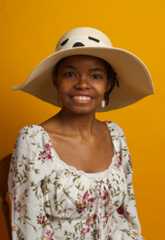
Stephanie Woodford is a pop, soul, and RnB singer/songwriter and performer. She is a graduate of both the San Francisco Conservatory of Music Preparatory Division and also St. Ignatius College Preparatory High School. She has a degree in music from City College of San Francisco.
Recordings From Our Public Domain Day Celebrations are Now Available
This week, Internet Archive celebrated Public Domain Day with a lively mix of ideas, art, and community. Session recordings are now available to revisit or discover the highlights.
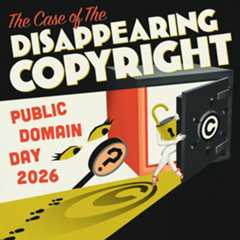
In ourdaytime virtual session, we invited audiences to step intoThe Case of the Disappearing Copyright, a playful, thought-provoking celebration of the works newly freed into the public domain.Watch the recording.
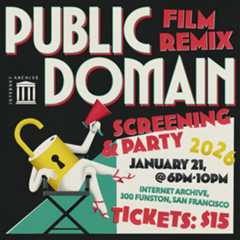
Ourin-person party turned Public Domain Day into a lively celebration ofart, film, and the public domain. Artist in residenceCindy Rehm sharedThe Seers, her public-domain–inspired work, followed by a screening of the winning films and honorable mentions from thePublic Domain Film Remix Contest.Watch the livestream.
SPARC and Curationist Join Widening Effort to Protect Our Future Memory

Two more organizations—SPARC and Curationist—have decided to sign theStatement on Four Digital Rights for Memory Institutions Online, demonstrating its broad appeal to memory institutions of different stripes.
SPARC and Curationist represent key collaborative institutions from library world and the museum space, respectively. SPARC is an umbrella advocacy group with more than 250 North American research libraries and academic organizations as its members; Curationist, a digital platform helping museums and archives open their collections to each other and to the world.
Notwithstanding their distinct areas of focus, SPARC and Curationist are dedicated memory institutions, specializing to meet the needs of their patrons, members, and users, but never forgetting their shared goal of preserving culture and providing equal access to knowledge. That is why both are concerned about the effect that outdated laws are having on cultural heritage organizations in the digital age—and why they’ve joined Our Future Memory’s fight to protect memory institutions’ absolutely vital operations, in a media environment where affordable access to trustworthy information is at a premium.
“Curationist is signing this statement because the future of cultural memory depends on the ability of museums, libraries, and archives to operate fully and responsibly in the digital world,” said Executive DirectorChristian Dawson. “These rights are not abstract ideals. They are the practical foundations that allow institutions to preserve knowledge, provide access, and collaborate across borders. Our work exists to help make these rights real in practice, and we are proud to stand with a global community committed to protecting the past to power the future.”
To be sure, these “practical foundations” should not be controversial. They reflect the historical operations that have made libraries, archives, museums, and other memory institutions such an essential part of our information ecosystem. The Statement calls for legal assurances of memory institutions’ right and ability to:
- Collect digital materials
- Preserve digital collections
- Provide controlled digital access
- Cooperate across institutions
Thanks to SPARC and Curationist, the coalition to protect our future memory just got a bit bigger.
Ready to Join?
Your organization can join the movement and sign the Statement by going to the Our Future Memorywebsite.
Want to learn more?
Register and join our informational webinar this Tuesday, January 27: “Protect Our Future Memory: Join the Call for Library Digital Rights.”
Announcing the 2026 Public Domain Film Remix Contest Winners, Honorable Mentions & Finalists
We’re thrilled to unveil the creativity of our top three winners and four honorable mentions in this year’s Public Domain Day Film Remix Contest. These remarkable films not only reimagined and transformed public domain works but also demonstrated the boundless potential of remixing creative works to create something new.
This year’s contest received more than 270 submissions from creators across35 U.S. states, as well asPuerto Rico andWashington, DC, and28 countries worldwide. All of the submissions can be viewed in a new collection at the Internet Archive:2026 Public Domain Day Film Remix Contest collection.
Our judging panel was led byCatherine Kavanaugh ofScreen360.tv with jurorsPeter Stein,Rick Prelinger,Amber McKinney, andBrewster Kahle.
Watch the winning entries & honorable mentions below.View thefull list of finalists.
FIRST PLACE: “Rhapsody, Reimagined” by Andrea Hale
About the film:Rhapsody, Reimagined reconfigures imagery fromKing of Jazz (1930) through collage, digital animation, and repetition set to areimagined version of George Gershwin’sRhapsody in Blue.

Judge’s Comment:Andrea Hale’s sharp description: “Treating image as modular rather than linear, the film foregrounds systems of synchronization, reproduction, and spectacle,” signaled to the judges that we were in for a surprise. The stripped down remix of Gershwin’s Rhapsody in Blue lifted us gently into a 1930s office scene in deco sherbert colors that deconstructed and rebuilt through a mind-blowing kaleidoscope of dancers, musicians, and other images from John Murray Anderson’s “ The King of Jazz”….finally landing us back on a moon…A fabulously fun use of archival footage – we all agreed, it was an aesthetic triumph! Congratulations to Andrea Hale
Andrea Hale is an artist working in animation and video editing. Her work emphasizes rhythm, repetition, and texture, using collage to recontextualize culturally established works by treating them as raw material rather than finished objects.
SECOND PLACE: “Battle Lines” by Jen Zhao and Aaron Sharp
About the film:The friendship and rivalry between two painters: Piet Mondrian and Theo van Doesburg.
Selected Judge’s Comment:This is a neatly made little film that used 22 archival works and doesn’t quite escape the burden of telling the story of the feud between Mondrian and van Doesburg. It’s a perfectly pitched, tongue-in-cheek short doc(mock)umentary tracking their feud over the diagonal line. Masterful editing of inspired sources including Composition II in Red, Blue And Yellow by Mondrian (1930) and Jean Cocteau’s “Le Sang Un Poet” with costumes by Coco Chanel. It’s deft narration winks at parody yet unfolds the story in a memorable cadence to its tender end and sends viewers to research further. Congratulations to Jen Zhao and Aaron Sharp

Jen Zhao is a Canadian filmmaker, producer, and actor who is interested in autofictional works that explore reality, genre, and the experience of making art itself. She works with an ethos of “scrappiness”, creating films with whatever resources are on hand or easily accessible, which is exemplified in her short film Finding Nathan Fielder (With Jen Zhao). Jen has released work with Penguin Random House, Spotify, and Cosmic Soup Productions, and received her MFA in Screenwriting from UCLA.

Aaron Sharp is a screenwriter and actor from Los Angeles. He has an MFA from UCLA TFT and loves acronyms. He is currently working on 8 Votes, a true-crime podcast that investigates how his best friend received only eight votes in his high school presidential election, and whether foul play was involved.
THIRD PLACE: “Farina & The Perpetual Shine Machine” by Ralphie Wilson
About the film:Allen “Farina” Hoskins hosts an interrogative look into the depiction of black life during the year 1930 in this short film, unease follows.

Selected Judge’s Comment:This film highlights terrific sourcing and intercutting of both uplifting and disturbing depictions of African and African American film imagery from 1930. Not at all gratuitous in its presentation of images from governmental, industrial and educational archives, the familiar comic expression of Our Gang’s Farina, Allen Hoskins, softens the disquieting impact and prompts further inquiry. The Hall-Johnson Choir’s spiritual directed by Broadway performer Juanita Hall (later known for “South Pacific”) elevated imagery and soundscore, further highlighting the conundrum in our fraught history. As director Ralphie Wilson stated in his description, “Unease follows.” Thank you and congratulations, Ralphie Wilson
Ralphie Wilson is a street photographer, editor and independent filmmaker from St. Louis, MO. He has a love for archive work and capturing The Black Experience throughout all mediums.
HONORABLE MENTION: “The Boots on the Western Front” by Thomas Biamonte

About the film:An anti-war short film that showcases the horror of modern warfare and its toll on the human psyche as seen in the 1930 Best Picture winner at the 3rd annual Academy AwardsAll Quiet on the Western Front. The film is paired with a1915 reading of Rudyard Kipling’s 1903 Anti-War poemBoots.
Thomas Biamonte is currently an undergraduate student at the University of Hartford studying acting. He is a huge fan of the public domain and the internet archive and he is honored to be chosen as an Honorable Mention.
HONORABLE MENTION: “How’s the Play Going?” by Noel David Taylor

About the film:An absurd comedy with the main character lost in time, disjointed in settings and confused by their surroundings. Sort of like that thing that happens when you realize you haven’t been paying attention to the film you’re watching.
Noel David Taylor is a filmmaker known for their alchemy of homemade nightmare comedy and an absurdist sense of tragedy.
HONORABLE MENTION: “Dream A Little Dream Of Me Reimagined” by Talissa Mehringer
About the film:A new short music-film remix celebrating the dynamism of 30s film choreography, the opulence of the sets, and the versatile talent of the featured stars.
Talissa Mehringer is a German/Mexican multimedia artist and filmmaker residing in Berlin. Her work springs from a desire to bring to life dreams and experiences filtered through the subconscious.
HONORABLE MENTION: “The Reality Engineer” by Konstantin
About the film:A comedy film that tells the story of a scientist who wants to help humanity live better by correcting reality itself. However, every good intention only makes the situation worse.
ALL FINALISTS (ALPHABETICAL BY TITLE)
- All quiet on the western front because everyone has deserted and they’re doing something else instead. (Finalist) – Bea Bordanove
- Battle Lines (2nd place) – Jen Zhao & Aaron Sharp
- Dream A Little Dream Of Me Reimagined (Honorable Mention) – Talissa Mehringer
- Dream A Little Dream… (Finalist) – Harry Goodwin
- Elpis (Finalist) – Heather Tahl
- Farina & The Perpetual Shine Machine (3rd place) – Ralphie Wilson
- Flip the Frog – “The Dame Who Croaked” (Finalist) – Adam Gaulke & Ben Haynes
- GEORGIA(Finalist) – Javier Estella
- Heavy Meddle (Finalist) – Spencer Hopkins
- How’s the Play Going? (Honorable Mention) – Noel David Taylor
- Life of a Man (Finalist) – Salma Garcia
- Nobody Knows (Finalist) – Mohamed Wane
- Rhapsody, Reimagined (1st place) – Andrea Hale
- Save The Homeland (Finalist) – Todd Tokashiki
- Seeing You in Dreams (Finalist) – grace mural
- The Boots on the Western Front (Honorable Mention) – Thomas Biamonte
- The Gorilla (Finalist) – Quinn Youngs
- The King in Yellow (Finalist) – Caleb Hernandez
- The Reality Engineer (Honorable Mention) – Konstantin
- The Whiteness of Magnesium (Finalist) – Jackson Stern
- THE WRITER (Finalist) – Matthew Cutchen
- Tom From Colorado (Finalist) – Nicola Eddy
- Un Montage of the Sunday Scaries (Finalist) – Antonio Mendez
.jpg)