

United States municipal elections, 2017

2018→ ←2016 |
 |
2017 Elections By Date |
Elections were held in 59 of the100 largest cities by population in 2017. This included elections for 36 mayoral offices and 367 city council seats, as well as special district offices and municipal officesother than mayor. Four states—Florida,North Carolina,Ohio, andTexas—accounted for half of the mayoral elections. Ohio, Texas, andNew York hosted more than a third of the city council races.
The 36 mayoral elections resulted in changes in partisan control in the following three cities:Albuquerque,El Paso, andSan Antonio. These three changes resulted in no net gain for Republicans and a net loss of one seat for Democrats, since an independent won the San Antonio mayor's office formerly held by a Democrat.Click here to read more about changes in partisan control in 2017 and the role of partisanship in municipal elections.
In 2017, Ballotpedia launched comprehensive election coverage for the nation's 100 largest cities. Our coverage was previously limited to the mayors and councils of these cities. Our comprehensive coverage contains every election on the ballot in these cities, including special districts and ballot measures. In 2017, this included elections in 23 counties encompassing 42 county commissioners, 21 county officials, and 45 county special district board members.
These elections were impacted by some common public policy issues. In 2017, Ballotpedia covered the following policy storylines:
- Partisanship in municipal elections
- Preemption conflicts between state and local governments
- Local government responses to the sharing economy (ridesharing/homesharing)
- Sanctuary policy conflicts between the federal and local governments
Click on the tabs in the section below for links to Ballotpedia's 2017 municipal election coverage. These tabs organize this coverage by state, date, and type. There are also tabs with more information about 2017's battleground elections, election statistics, and issues.
Overview
Eighteen of the 36 mayoral elections in the 100 largest cities in 2017 took place in four states:Florida,North Carolina,Ohio, andTexas. The map below shows the geographic distribution of mayoral races in 2017 in thelargest U.S. cities by population.
Fifty-two of thelargest 100 U.S. cities by population held city council elections in 2017. More than a third of those contests took place in just three states.New York held a special election for city council in February, and all 51 seats on theNew York City Council were up for regular election in November. Another 50 seats across eight cities in Texas and 35 seats across four cities in Ohio were also up for election in 2017. The map below notes the geographic distribution of these city council seats.
By state
Alabama
- Birmingham, Alabama -Mayor & City Council
Alaska
- Anchorage, Alaska - City Council
Arizona
- Phoenix, Arizona - City Council
- Note: In addition to the regularly scheduled city council election on August 29, 2017, therunoff election for the 2016 special election in District 3 was held on March 14, 2017.
- Tucson, Arizona - City Council
California
- Bakersfield, California - City Council(special election)
- Los Angeles, California - Mayor, City Council, City Attorney, City Controller & Community College Board
- Riverside, California - City Council
Colorado
- Aurora, Colorado - City Council
- Colorado Springs, Colorado - City Council
Florida
- Hialeah, Florida -Mayor & City Council
- Miami, Florida -Mayor & City Commission
- Orlando, Florida - City Council
- St. Petersburg, Florida -Mayor & City Council
Georgia
- Atlanta, Georgia -Mayor, City Council, & Municipal Judges
- Fulton County, Georgia - County Commission(special election)
Idaho
- Boise, Idaho - City Council
- Note: In addition to the regularly scheduled municipal elections on November 7, 2017, there was an election for two of five seats on the Board of Directors of the Greater Boise Auditorium District on May 16, 2017.
Illinois
- Chicago, Illinois - City Council
Kansas
- Wichita, Kansas - City Council
Louisiana
- New Orleans, Louisiana -Mayor & City Council
- Orleans Parish, Louisiana - Sheriff, Civil District Court Clerk, Criminal District Court Clerk, Coroner
Massachusetts
- Boston, Massachusetts -Mayor & City Council
Michigan
- Detroit, Michigan -Mayor, City Council, & City Clerk
Minnesota
- Minneapolis, Minnesota -Mayor, City Council, Board of Estimate and Taxation & Park and Recreation Board
- St. Paul, Minnesota -Mayor
Missouri
- Kansas City, Missouri - Ballot Measures
- St. Louis, Missouri - Mayor, City Council, Community College Board of Trustees & Comptroller
- Note: In addition to the regular elections, a special election for the Ward 28 seat on the St. Louis Board of Aldermen was held on July 11, 2017.
Nebraska
- Lincoln, Nebraska - City Council & Airport Authority
- Omaha, Nebraska - Mayor & City Council
Nevada
- Henderson, Nevada - Mayor & City Council
- Las Vegas, Nevada - City Council
- North Las Vegas, Nevada - Mayor & City Council
New Jersey
- Jersey City, New Jersey -Mayor & City Council
- Essex County, New Jersey - County Board of Freeholders
- Hudson County, New Jersey - County Board of Freeholders & County Clerk
New Mexico
- Albuquerque, New Mexico -Mayor & City Council
- Bernalillo County, New Mexico - Community College Governing Board
New York
- Bronx County, New York - Borough President
- Buffalo, New York -Mayor & City Judges
- Erie County, New York - County Legislators, County Clerk, Sheriff, & County Comptroller
- Kings County, New York - Borough President & District Attorney
- New York City, New York -Mayor, City Council, Public Advocate & Comptroller
- New York County, New York - Borough President & District Attorney
- Queens County, New York - Borough President
- Richmond County, New York - Borough President
North Carolina
- Charlotte, North Carolina -Mayor & City Council
- Durham, North Carolina -Mayor & City Council
- Greensboro, North Carolina -Mayor & City Council
- Guilford County, North Carolina - Sanitation District Board
- Raleigh, North Carolina -Mayor & City Council
Ohio
- Cincinnati, Ohio -Mayor & City Council
- Cleveland, Ohio -Mayor, City Council, & Clerk of Court
- Columbus, Ohio - City Council, City Attorney, City Auditor, & Education Service Center of Central Ohio
- Toledo, Ohio -Mayor & City Council
Oklahoma
- Oklahoma City, Oklahoma - City Council & Ballot Measures
- Oklahoma County, Oklahoma - Sheriff
Pennsylvania
- Allegheny County, Pennsylvania - County Council & County Sheriff
- Philadelphia, Pennsylvania - District Attorney & City Controller
- Pittsburgh, Pennsylvania -Mayor & City Council
Tennessee
- Nashville, Tennessee - City Council(special election)
Texas
- Arlington, Texas - Mayor & City Council
- Collin County, Texas - County College Board of Trustees & Bond Measure
- Corpus Christi, Texas - Mayor
- Dallas, Texas - City Council
- El Paso, Texas - Mayor & City Council
- Note: In addition to the regular election, there was a special election for the District 8 seat on the El Paso City Council in 2017. A runoff for that election was held on July 15, 2017.
- El Paso County, Texas - Community College Board of Trustees
- Fort Worth, Texas - Mayor & City Council
- Garland, Texas - Mayor & City Council
- Harris County, Texas - Community College Board of Trustees
- Irving, Texas - Mayor & City Council
- Plano, Texas - Mayor & City Council
- San Antonio, Texas - Mayor & City Council
- Tarrant County, Texas - County College Board of Trustees & Regional Water District Board of Directors
- Travis County, Texas - Municipal Utility District Directors & Ballot Measures
- Williamson County, Texas - Municipal Utility District Directors & Ballot Measures
Virginia
- Chesapeake, Virginia - Clerk of Court, Commissioner of Revenue, Commonwealth Attorney, Sheriff, & Treasurer
- Norfolk, Virginia - Commonwealth Attorney, Commissioner of Revenue, Sheriff, & Treasurer
- Virginia Beach, Virginia - Commonwealth Attorney, Commissioner of Revenue, Sheriff, & Treasurer
Washington
- King County, Washington - County Council, County Executive, County Sheriff & positions in certain county special districts
- Seattle, Washington -Mayor, City Council, & City Attorney
Wisconsin
- Dane County, Wisconsin - County Executive
- Madison, Wisconsin - City Council
By date
February 7
General election
February 14
Special election | Primary election |
February 28
Special election
March 7
Primary election
March 14
Special runoff election
April 4
Special election | Primary election | General election |
May 2
Primary election | General election |
May 6
Special election | General election |
May 9
General election
May 16
Primary election | General election |
June 6
Primary election | General election | Special election |
June 10
Special election | Runoff election |
June 13
Primary election | General election |
July 11
Special election
July 15
Special runoff election
August 1
Primary election
August 8
Special election | Primary election |
August 15
Special election
August 22
General election
August 29
Primary election | General election |
September 12
Special election | Primary election |
September 19
Special runoff election
September 26
Primary election
October 3
General election | Runoff election |
October 10
Primary election | General electionPrimary runoff election |
October 14
Primary election
November 7
November 14
Runoff election
November 18
General election
November 21
Runoff election
December 5
Runoff election
December 7
Runoff election
By type
Cities
|
|
Counties
Battleground elections
Ballotpedia identified six of the 2017 mayoral races as battleground elections:Charlotte,El Paso,Minneapolis,Omaha,San Antonio, andSeattle. The following capsules summarize the issues in these elections.
Seattle
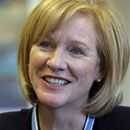

After former Seattle MayorEd Murray (D) announced that he would not seek re-election on May 9, 2017, the competition to replace him swelled to a 21-candidate field. Former U.S. AttorneyJenny Durkan and community activistCary Moon emerged from that primary to advance to the general election. Both women identify as Democrats although the election and office are both nonpartisan. Durkan received notable endorsements from Murray,The Seattle Times, and the Washington State Council of County and City Employees, while Moon's notable endorsements included Democracy for America, King County Democrats, and the Seattle Education Association. The main issues during the campaign were housing costs, homelessness, the city budget, and a recently-passed income tax ordinance on high-wage earners. Durkan defeated Moon to become Seattle's first lesbian mayor and its first female mayor since Bertha Knight Landes served from 1926 to 1928.[1]
Charlotte

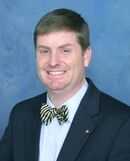
After Democratic City CouncilwomanVi Lyles defeated incumbentJennifer Roberts (D) in the Democratic primary on September 12 by nearly 10 percentage points, the general election matched Lyles against CouncilmanKenny Smith (R). Each vied to become Charlotte’s seventh different mayor since 2009. A Smith win would have made Charlotte the third-largest city in the U.S. with a Republican mayor afterSan Diego (Kevin Faulconer) andJacksonville (Lenny Curry). Instead, Lyles became the city's first black female mayor. The two candidates debated the city's 2016 non-discrimination ordinance, public transportation, housing, and taxation at candidate forums in the lead-up to the general election. Polling in October had pointed to a close general election contest, with a survey by Spectrum News and SurveyUSA showing Lyles favored by 41 percent of residents, Smith by 40 percent, and 19 percent undecided. The 2015 mayoral election had also been tight;Jennifer Roberts (D) defeatedEdwin Peacock (R) with 52.3 percent of the vote. However, the 2017 election did not turn out to be close. Lyles won by over 16 percentage points and received more than 58 percent of the vote.
Minneapolis
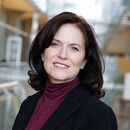
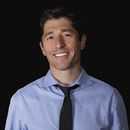
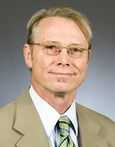
Members of theDemocratic-Farmer-Labor Party (DFL) have held the mayor's office inMinneapolis since 1978, including MayorBetsy Hodges, who was seeking a second term in office. However, Hodges lost her bid for a second term to CouncilmanJacob Frey (DFL). The outcome of the election was not determined until the day after the election, since the city usesranked choice voting (RCV) and no candidate received a majority of first-preference votes. A high-profile shooting of an Australian citizen by a Minneapolis police officer in July 2017, as well as other police-involved shootings, caused the issues of police culture and administration of the city's police department to become central topics in this campaign. This debate extended to broader racial equity and race relations problems in the city, including daily police-community relations, housing accessibility, and employment and income gaps. Hodges also failed to secure the DFL's endorsement for her re-election bid after she failed to win the 60 percent support needed at the party's convention in July. She came in third with 24 percent support, trailing state Rep.Raymond Dehn (32 percent) and Frey (28 percent).
Omaha

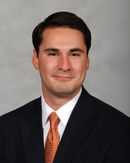
The mayoral race between incumbentJean Stothert (R) and challengerHeath Mello (D) attracted national attention with visits by Wisconsin Gov.Scott Walker (R) and U.S. Sen.Bernie Sanders (I) prior to the general election. Sanders campaigned with Mello on April 20, 2017, while Walker campaigned with Stothert on April 24, 2017. During the campaign, Stothert and Mello disagreed over approaches to public safety, a proposed streetcar project, tax policy, the 2016 annexation of several subdivisions into the city boundaries, and the Stothert administration’s handling of a rare snowstorm in February 2017. Five candidates ran in the primary election on April 4, 2017, with Stothert finishing first ahead of Mello by 1,400 votes out of over 58,000 cast. In the general election on May 9, 2017, Stothert won re-election with 53 percent of the vote.[2][3]
In Omaha, the general election functions as a runoff since all candidates appear on the primary ballot, regardless of party, and if no one receives a majority of the votes, the top two candidates meet in the general election.
San Antonio
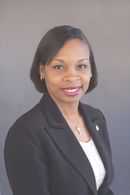
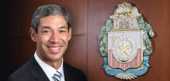
MayorIvy R. Taylor’s (D) re-election bid attracted a field of 14 candidates, including District 8 CouncilmanRon Nirenberg (I) and Bexar County Democratic Party ChairJuan Manuel Medina. Prominent issues that impacted this race were legislation considered by theTexas State Legislature regarding immigration enforcement and how best to meet the city's increasing water needs. Taylor finished first with 42 percent of the vote in the general election on May 6, 2017, while Nirenberg was second with 37 percent. However, in the runoff election on June 10, 2017, Nirenberg was elected mayor with almost 55 percent of the vote.
El Paso
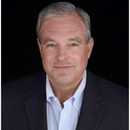
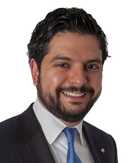
Ethics and government transparency were central issues in the 2017 municipal elections inEl Paso. MayorOscar Leeser (D) was one of five city officials alleged to have violated the state's Open Meetings Act by attending closed-door meetings about proposed locations for a city arena. Leeser decided not to run for re-election to a second term in 2017.Dee Margo (R) andDavid Saucedo (R) were the top two vote recipients in the general election on May 6, 2017, with Margo taking 45 percent of the vote in an eight-candidate field. During the runoff campaign, Saucedo alleged that corruption and preferential treatment existed in El Paso's city government. Subsequently, Margo was endorsed by Leeser and five city council members, and Margo refused to participate in further debates and candidate forums with Saucedo. In the runoff election, Margo was elected with 57 percent of the vote.[4][5]
Statistics
Fifty-nine of America'slargest 100 cities by population and 23large counties held elections in 2017. A total of587 positions were up for election in those 82 jurisdictions. Incumbents ran in428 (72.9 percent) races, and55 of them (12.9 percent) were defeated in their re-election bids. There were130 elections (22.1 percent) in which a single candidate filed to run.
Cities
Fifty-nine of the100 largest U.S. cities by population held elections for mayor, city council, and special district officials in 2017. A total of479 positions were up for election, and incumbents ran in354 (73.9 percent) of those races.Forty-six incumbents (13.0 percent) lost their re-election bids, and83 elections (17.3 percent) featured only one candidate.
Fifty-four of the 59 large cities with elections in 2017 elected a mayor and/or members of the city council. A total of36 mayoral seats and367 city council seats were up for election. In the previous odd-numbered year, 2015, 58 large cities held elections for33 mayoral seats and467 city council seats. Forty-five large cities held elections for25 mayoral seats and216 city council seats in 2016, and 43 large cities held elections for24 mayoral seats and198 city council seats in 2014.
In 2017, incumbents ran for re-election in24 mayoral races (66.7 percent) and274 city council races (74.7 percent).Five mayors (20.8 percent) and37 city councilmembers (13.5 percent) were defeated in their re-election bids. In the previous odd-numbered year, 2015,four (16.0 percent) of the25 mayoral incumbents (75.8 percent) who ran for re-election were defeated and30 (9.7 percent) of the309 city council incumbents (66.2 percent) who ran were defeated.Fifteen mayors (60.0 percent) and156 city councilmembers (72.2 percent) ran for re-election in 2016, andfour mayors (26.7 percent) and22 councilmembers (14.1 percent) were defeated. In 2014,14 mayors (58.3 percent) and130 city councilmembers (65.7 percent) ran for re-election, andtwo mayors (14.3 percent) and21 councilmembers (16.2 percent) were defeated.
None (0.0 percent) of the 2017 mayoral races and47 (12.8 percent) of the 2017 city council races featured only one candidate. In the previous odd-numbered year, 2015,three mayoral races (9.1 percent) and97 city council races (20.8 percent) featured only one candidate. A single candidate ran infour mayoral elections (16.0 percent) and48 city council elections (22.2 percent) in 2016 andtwo mayoral elections (8.3 percent) and31 city council elections (15.7 percent) in 2014.
Counties
Twenty-threelarge counties held elections for county and special district officials in 2017. A total of108 positions were up for election, and incumbents ran in74 (68.5 percent) of those races.Nine incumbents (12.2 percent) lost their re-election bids, and47 elections (43.5 percent) featured only one candidate.
Issues
While mayoral and city council campaigns often focus on local issues, certain national topics emerged as focal points in multiple jurisdictions. With the Trump administration’s focus on immigration in 2017, election campaigns in many cities included discussions about sanctuary policy conflicts between the federal and local governments.Click here to read more of Ballotpedia’s discussion of sanctuary policy conflicts. Some other common issues in 2017 included:
Taxes
Taxes were a prominent issue in several municipal elections in 2017. In 2011, the city ofOmaha began to assess a 2.5 percent tax on the total value of all food and beverages purchased at restaurants in the city, in addition to local and state sales taxes. Democratic challengerHeath Mello criticized Republican incumbentJean Stothert for not cutting this tax despite her promises to cut taxes during her 2013 election campaign. Stothert countered that although she supported a cut to the restaurant tax, she focused instead on lowering property taxes. She also contended that the city was able to enact two property tax rate cuts in her first term.[6]
On July 10, 2017, theSeattle City Council unanimously approved an income tax of 2.25 percent on all single residents with annual incomes over $250,000 and married residents with annual incomes over $500,000. This ordinance met the deadline set by a unanimous May 1 vote by the council requiring adoption of a "progressive income tax targeting high-income households." On August 9, 2017, The Freedom Foundation and 19 other plaintiffs filed a complaint inKing County Superior Court against the city's income tax ordinance arguing that Washington cities are only capable of levying taxes as granted by the state legislature. The complaint also contends that a 1984 state prohibition on net income taxes and the lack of an income tax power in the city's charter should invalidate the ordinance.Click here for more about Seattle's income tax, including statements by municipal candidates on the issue.[7][8][9][10][11]
Crime and policing
Crime and policing was also an issue in municipal elections in 2017. Mayoral candidates inSt. Louis addressed the city’s crime rate in the Democratic primaries. Democratic primary winnerLyda Krewson proposed hiring 200 additional police officers. She also called for a pay raise for law enforcement as well as more training, technology, and equipment for the force. The St. Louis Police Officers Association endorsed her in the primary. Second-place finisher and former state RepresentativeTishaura Jones (D) supported increases to police pay but not to the overall size of the force. Jones' crime plan included a focus on mental health and substance abuse by both training the police force to be better able to respond to those cases and by decriminalizing some drug-related crimes. Krewson went on to win the general election on April 4, 2017.[12][13][14]
On May 16, 2017, voters inLos Angeles approvedCharter Amendment C allowing Los Angeles Police Department officers to have their disciplinary hearings overseen by a panel of three civilians instead of a panel of one civilian and two officers ranking captain or higher. These disciplinary panels, called boards of rights, have the power to penalize officers up to and including termination of employment. Proponents of the change emphasized the importance of citizen involvement and civilian oversight in the city's policing. They also asserted that the removal of police hierarchy from the process improves the fairness and transparency of the rulings. Critics responded with concerns over the tendencies of civilian panelists to give more lenient rulings in favor of officers and worries over how to ensure that civilian panelists have the necessary expertise to rule in these cases. This amendment was approved by a 55-45 margin.Click here andhere for more information and background about this measure.[15][16]
InOmaha, the two general election mayoral candidates had different policy prescriptions to reduce the city's crime rate.Jean Stothert said that during her first term, she contributed to a number of changes in the city: the addition of 56 full-time officers to the city's police department, funding for community programs for at-risk youth, and plans for a fifth police precinct.Heath Mello argued for strengthening the city's citizen review board for police, employing an independent group to review police staffing needs, and creating a council to help people find work after leaving prison. Stothert won re-election on May 9, 2017, with 53 percent of the vote.[17]
Water
Eight cities in Texas among the100 largest cities in the U.S. by population held municipal elections on May 6, 2017, and runoff elections on June 10, 2017. Two of these campaigns saw discussions among candidates about how best to provide sufficient and high-quality water to city residents.
InSan Antonio, the city council voted unanimously in 2014 to approve the construction of a $3 billion water pipeline to transport water approximately 140 miles to the city. Supporters said the pipeline was necessary to meet the needs of the growing population of the area, while critics argued that the city had other options—such as desalination and conservation—to address water needs that would reduce risks to the long-term water security of the area.Click here for a more thorough discussion of the policy implications of this pipeline project.
InCorpus Christi, concerns about water quality had impacted city residents in the years before the 2017 elections. In July 2015, E. coli contamination was found in water samples, and the city issued a water boil notice. Low levels of chlorine used to disinfect the water supply prompted a second water advisory in some parts of the city in September 2015, and positive tests for non-harmful bacteria led to a third in May 2016. A fourth water advisory was issued in December 2016, after city officials found an unidentified chemical in the water supply. Former councilmanJoe McComb, who received 52 percent of the vote in an eight-candidate field to become Corpus Christi’s new mayor, stated that not enough city funds had gone toward repair and maintenance of streets, water, and sewer lines.[18][19]
See also
| Local Politics | 2017 Election Analysis | |
|---|---|---|
 |  | |
Poll Closing Times | Municipal elections, 2017 | Municipal:Partisanship in United States municipal elections |
Footnotes
- ↑Seattle Times, "Jenny Durkan defeats Cary Moon to become Seattle’s first woman mayor since the 1920s," November 8, 2017
- ↑KETV, "Bernie Sanders to campaign for Omaha mayoral candidate Heath Mello at April 20 rally," April 7, 2017
- ↑Omaha World-Herald, "Scott Walker coming to Omaha to rally voters for Jean Stothert," April 19, 2017
- ↑KVIA, "Saucedo Fires Back: 'Birds of a Feather Flock Together," May 11, 2017
- ↑KVIA, "Margo Declines to Participate in Forums with Saucedo Headed Towards Runoff Election," May 16, 2017
- ↑Omaha World-Herald, "Stothert and Mello both talk tax cuts, but any changes would likely be small," March 6, 2017
- ↑Bloomberg, "Seattle Approves New Income Tax for Wealthy Residents," July 10, 2017
- ↑City of Seattle, "LEG Progressive Income Tax SUM," May 1, 2017
- ↑Washington State Department of Revenue, "City-county assistance," accessed May 3, 2017
- ↑Washington State Legislature, "RCW 36.65.030," accessed May 3, 2017
- ↑The Freedom Foundation, "Complaint for Declaratory and Injunctive Relief," August 9, 2017
- ↑Lyda Krewson for Mayor, "My Commitment to Safe Neighborhoods," accessed January 20, 2017
- ↑St. Louis Post-Dispatch, "What to do about crime? St. Louis mayoral candidates weigh in," January 29, 2017
- ↑Tishaura O. Jones for Mayor, "Criminal Justice Reform and Public Safety," accessed March 13, 2017
- ↑89.3 KPCC, "Plan for LAPD civilian discipline panels moves forward," January 12, 2017
- ↑Los Angeles Times, "Union-backed changes to LAPD disciplinary system could go to voters," November 23, 2016
- ↑Omaha World-Herald, "On public safety, Stothert and Mello take different approaches," April 11, 2017
- ↑Corpus Christi Caller-Times, "Timeline: Corpus Christi Water Issues Since 2015," December 22, 2016
- ↑Corpus Christi Caller-Times, "Mayoral Candidates Talk Water Future, Water Past," March 24, 2017
| |||||||||||||


Municipal:2026 •2025 •2024 •2023 •2022 •2021 •2020 •2019 •2018 •2017 •2016 •2015 •2014
Judicial:2026 •2025 •2024 •2023 •2022 •2021 •2020 •2019 •2018 •2017 •2016 •2015 •2014 •2013 •2012 •2011 •2010 •2009


