Everything you need to know about ranked-choice voting in one spot.Click to learn more!

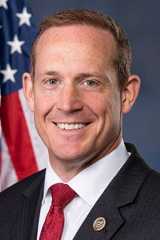
Ted Budd

From Ballotpedia
Ted Budd
U.S. Senate North Carolina
Tenure
2023 - Present
Term ends
2029
Years in position
3
Predecessor:Richard Burr (R)
Prior offices:
U.S. House North Carolina District 13
Years in office: 2017 - 2023
Successor:Wiley Nickel (D)
Compensation
Base salary
$174,000
Elections and appointments
Last election
November 8, 2022
Education
Bachelor's
Appalachian State University, 1994
Graduate
Dallas Theological Seminary, 1998
Graduate
Wake Forest University, 2007
Personal
Profession
Business owner
Contact

Ted Budd (Republican Party) is a member of theU.S. Senate from North Carolina. He assumed office on January 3, 2023. His current term ends on January 3, 2029.

Budd (Republican Party) ran for election to theU.S. Senate to represent North Carolina. He won in the general election onNovember 8, 2022.

Biography

Ted Budd was born in Davie County, North Carolina. Budd graduated from Davie County High School in 1990. He earned a B.S. from Appalachian State University in 1994, an M.A. from Dallas Theological Seminary in 1998, and an M.B.A. from Wake Forest University in 2007.[1] Budd's career experience includes owning a gun range and store.[1][2]

Committee assignments

2023-2024

Budd was assigned to the following committees:[Source]

U.S. Senate

2025-2026

Budd was assigned to the following committees:[Source]

2021-2022

Budd was assigned to the following committees:[Source]

2017-2018

At the beginning of the115th Congress, Budd was assigned to the following committees:[3]

Elections

2022

See also: United States Senate election in North Carolina, 2022

General election

General election for U.S. Senate North Carolina

Ted Budd defeatedCheri Beasley,Shannon Bray,Matthew Hoh, andMichelle Lewis in the general election for U.S. Senate North Carolina on November 8, 2022.

Candidate
%
Votes
Image of Ted Budd
Ted Budd (R)
 
50.5
 
1,905,786
Image of Cheri Beasley
Cheri Beasley (D)
 
47.3
 
1,784,049
Image of Shannon Bray
Shannon Bray (L) Candidate Connection
 
1.4
 
51,640
Image of Matthew Hoh
Matthew Hoh (G) Candidate Connection
 
0.8
 
29,934
Image of Michelle Lewis
Michelle Lewis (Independent) (Write-in) Candidate Connection
 
0.0
 
137
 Other/Write-in votes
 
0.1
 
2,378

Ballotpedia Logo

There were noincumbents in this race. The results have been certified. Source

Total votes: 3,773,924
Candidate Connection = candidate completed theBallotpedia Candidate Connection survey.
If you are a candidate and would like to tell readers and voters more about why they should vote for you,complete the Ballotpedia Candidate Connection Survey.

Do you want a spreadsheet of this type of data?Contact our sales team.

Withdrawn or disqualified candidates

Democratic primary election

Democratic primary for U.S. Senate North Carolina

The following candidates ran in the Democratic primary for U.S. Senate North Carolina on May 17, 2022.

Candidate
%
Votes
Image of Cheri Beasley
Cheri Beasley
 
81.1
 
501,766
Image of James Carr Jr.
James Carr Jr. Candidate Connection
 
3.5
 
21,903
Image of Alyssia Hammond
Alyssia Hammond
 
3.4
 
21,005
Image of Marcus Williams
Marcus Williams
 
2.8
 
17,446
Image of Constance Johnson
Constance Johnson Candidate Connection
 
2.0
 
12,500
Image of Everette Newton
Everette Newton
 
1.6
 
10,043
Image of Chrelle Booker
Chrelle Booker
 
1.6
 
9,937
Image of Brendan K. Maginnis
Brendan K. Maginnis Candidate Connection
 
1.1
 
7,044
Image of Robert Colon
Robert Colon
 
1.1
 
6,904
Image of Greg Antoine
Greg Antoine
 
0.8
 
5,179
Image of Tobias LaGrone
Tobias LaGrone
 
0.8
 
5,048

Ballotpedia Logo

There were noincumbents in this race. The results have been certified. Source

Total votes: 618,775
Candidate Connection = candidate completed theBallotpedia Candidate Connection survey.
If you are a candidate and would like to tell readers and voters more about why they should vote for you,complete the Ballotpedia Candidate Connection Survey.

Do you want a spreadsheet of this type of data?Contact our sales team.

Withdrawn or disqualified candidates

Republican primary election

Republican primary for U.S. Senate North Carolina

The following candidates ran in the Republican primary for U.S. Senate North Carolina on May 17, 2022.

Candidate
%
Votes
Image of Ted Budd
Ted Budd
 
58.6
 
448,128
Image of Pat McCrory
Pat McCrory
 
24.6
 
188,135
Image of Mark Walker
Mark Walker
 
9.2
 
70,486
Image of Marjorie K. Eastman
Marjorie K. Eastman Candidate Connection
 
2.9
 
22,535
David Flaherty
 
1.0
 
7,265
Image of Kenneth Harper Jr.
Kenneth Harper Jr.
 
0.9
 
7,129
Image of Jennifer Banwart
Jennifer Banwart
 
0.4
 
3,088
Charles Moss
 
0.4
 
2,920
Image of Leonard L. Bryant
Leonard L. Bryant Candidate Connection
 
0.4
 
2,906
Image of Benjamin Griffiths
Benjamin Griffiths Candidate Connection
 
0.4
 
2,870
Image of Debora Tshiovo
Debora Tshiovo
 
0.4
 
2,741
Image of Lee Brian
Lee Brian
 
0.3
 
2,232
Image of Lichia Sibhatu
Lichia Sibhatu Candidate Connection
 
0.3
 
2,191
Drew Bulecza
 
0.3
 
2,022

Ballotpedia Logo

There were noincumbents in this race. The results have been certified. Source

Total votes: 764,648
Candidate Connection = candidate completed theBallotpedia Candidate Connection survey.
If you are a candidate and would like to tell readers and voters more about why they should vote for you,complete the Ballotpedia Candidate Connection Survey.

Do you want a spreadsheet of this type of data?Contact our sales team.

Withdrawn or disqualified candidates

Libertarian primary election

The Libertarian primary election was canceled.Shannon Bray advanced from the Libertarian primary for U.S. Senate North Carolina.

2020

See also: North Carolina's 13th Congressional District election, 2020

North Carolina's 13th Congressional District election, 2020 (March 3 Democratic primary)

North Carolina's 13th Congressional District election, 2020 (March 3 Republican primary)

General election

General election for U.S. House North Carolina District 13

IncumbentTed Budd defeatedScott Huffman in the general election for U.S. House North Carolina District 13 on November 3, 2020.

Candidate
%
Votes
Image of Ted Budd
Ted Budd (R)
 
68.2
 
267,181
Image of Scott Huffman
Scott Huffman (D)
 
31.8
 
124,684

Ballotpedia Logo

Incumbents arebolded and underlined. The results have been certified. Source

Total votes: 391,865
Candidate Connection = candidate completed theBallotpedia Candidate Connection survey.
If you are a candidate and would like to tell readers and voters more about why they should vote for you,complete the Ballotpedia Candidate Connection Survey.

Do you want a spreadsheet of this type of data?Contact our sales team.

Democratic primary election

The Democratic primary election was canceled.Scott Huffman advanced from the Democratic primary for U.S. House North Carolina District 13.

Republican primary election

The Republican primary election was canceled. IncumbentTed Budd advanced from the Republican primary for U.S. House North Carolina District 13.

2018

See also:North Carolina's 13th Congressional District election, 2018
See also:North Carolina's 13th Congressional District election (May 8, 2018 Democratic primary)

General election

General election for U.S. House North Carolina District 13

IncumbentTed Budd defeatedKathy Manning,Tom Bailey, andRobert Corriher in the general election for U.S. House North Carolina District 13 on November 6, 2018.

Candidate
%
Votes
Image of Ted Budd
Ted Budd (R)
 
51.5
 
147,570
Image of Kathy Manning
Kathy Manning (D)
 
45.5
 
130,402
Image of Tom Bailey
Tom Bailey (L)
 
1.9
 
5,513
Image of Robert Corriher
Robert Corriher (G)
 
1.0
 
2,831

Ballotpedia Logo

Incumbents arebolded and underlined. The results have been certified. Source

Total votes: 286,316
(100.00% precincts reporting)
Candidate Connection = candidate completed theBallotpedia Candidate Connection survey.
If you are a candidate and would like to tell readers and voters more about why they should vote for you,complete the Ballotpedia Candidate Connection Survey.

Do you want a spreadsheet of this type of data?Contact our sales team.

Democratic primary election

Democratic primary for U.S. House North Carolina District 13

Kathy Manning defeatedAdam Coker in the Democratic primary for U.S. House North Carolina District 13 on May 8, 2018.

Candidate
%
Votes
Image of Kathy Manning
Kathy Manning
 
70.1
 
19,554
Image of Adam Coker
Adam Coker
 
29.9
 
8,324

Ballotpedia Logo

There were noincumbents in this race. The results have been certified.

Total votes: 27,878
Candidate Connection = candidate completed theBallotpedia Candidate Connection survey.
If you are a candidate and would like to tell readers and voters more about why they should vote for you,complete the Ballotpedia Candidate Connection Survey.

Do you want a spreadsheet of this type of data?Contact our sales team.

Withdrawn or disqualified candidates

Republican primary election

Republican primary for U.S. House North Carolina District 13

IncumbentTed Budd advanced from the Republican primary for U.S. House North Carolina District 13 on May 8, 2018.

Candidate
Image of Ted Budd
Ted Budd

Ballotpedia Logo

Incumbents arebolded and underlined. The results have been certified.

Candidate Connection = candidate completed theBallotpedia Candidate Connection survey.
If you are a candidate and would like to tell readers and voters more about why they should vote for you,complete the Ballotpedia Candidate Connection Survey.

Do you want a spreadsheet of this type of data?Contact our sales team.

Libertarian primary election

The Libertarian primary election was canceled.Tom Bailey advanced from the Libertarian primary for U.S. House North Carolina District 13.

2016

See also:North Carolina's 13th Congressional District election, 2016

Heading into the election, Ballotpediarated this race as safely Republican.Ted Budd (R) defeatedBruce Davis (D) in the general election on November 8, 2016. In the Democratic primary,Bruce Davis defeatedAdam Coker,Bob Isner,Kevin Griffin, andMazie Ferguson. Budd defeated 16 other Republican candidates to win the Republican nomination.

IncumbentGeorge Holding (R) ofDistrict 13 sought re-election for theDistrict 2 seat in 2016. He defeated fellow Republican incumbentRenee Ellmers andGreg Brannon in the primary.[4] Holding's change of plans came afterredistricting in North Carolina in February 2016 substantially changed the constituency of both districts. Holding's decision to run in District 2 essentially made District 13 an open seat, and as a result, 22 candidates filed to run for the seat.[5][6][7][8][9][4]

U.S. House, North Carolina District 13 General Election, 2016
PartyCandidateVote %Votes
    RepublicanGreen check mark transparent.pngTed Budd56.1%199,443
    Democratic Bruce Davis43.9%156,049
Total Votes355,492
Source:North Carolina State Board of Elections


U.S. House, North Carolina District 13 Republican Primary, 2016
CandidateVote %Votes
Green check mark transparent.pngTed Budd20%6,340
John Blust10.4%3,308
Hank Henning10.4%3,289
Julia Howard10.3%3,254
Matthew McCall9.1%2,872
Andrew Brock8.8%2,803
Jason Walser7.3%2,319
Dan Barrett7.2%2,296
Harry Warren4%1,266
Vernon Robinson3.1%970
Kay Daly2.8%889
George Rouco2.4%773
Jim Snyder1.4%436
Farren Shoaf1.3%404
Chad Gant0.6%198
David Thompson0.5%147
Kathy Feather0.4%142
Total Votes31,706
Source:North Carolina State Board of Elections


U.S. House, North Carolina District 13 Democratic Primary, 2016
CandidateVote %Votes
Green check mark transparent.pngBruce Davis25.7%4,709
Bob Isner25.1%4,597
Adam Coker22.5%4,125
Mazie Ferguson16.2%2,963
Kevin Griffin10.6%1,946
Total Votes18,340
Source:North Carolina State Board of Elections

Campaign themes

2022

Ballotpedia survey responses

See also:Ballotpedia's Candidate Connection

Ted Budd did not completeBallotpedia's 2022 Candidate Connection survey.

Campaign website

Budd’s campaign website stated the following:

Eliminating Big Tech Corruption

Political censorship by Big Tech companies is out of control. Facebook, Twitter, and Google enjoy broad legal protections because they are considered platforms under Section 230 of the Communications Decency Act of 1996. That legal carveout presumed they would remain neutral and avoid censoring content, but they are no longer neutral.

While pretending to be neutral, Silicon Valley liberals are using their corporate power to unfairly sway elections. That’s why Ted sponsored legislation to allow Americans to sue Big Tech companies who censor political speech. Those companies must be held accountable and should not receive special Section 230 protections if they silence conservative voices.


Protecting Sanctity of Life

Ted believes every life is precious and every person is made in God’s image. Science tells us that each of us is unique from conception, and we all have an unalienable constitutional right to life and protection under the law. He’s proud of his 100% rating from National Right to Life and Susan B. Anthony List, because he is a conscience-driven advocate for the unborn.

Right now, America is tragically one of only seven countries in the world where elective, late-term abortion is legal after 5 months. To change that, Ted sponsored legislation that bans the gruesome procedure used in born-alive abortions and voted for the Pain-Capable Unborn Child Protection Act, which restricts late-term abortion for unborn children who can feel excruciating pain.

He’s fought to preserve the bipartisan Hyde Amendment, which prevented taxpayer funding for abortion since 1973. In the Senate, Ted will:

  • Oppose activist judges and any court-packing attempt to expand the Supreme Court.
  • Prohibit dangerous mail-order, do-it-yourself abortions.
  • Defund Planned Parenthood.


Defending the Second Amendment

As the owner of ProShots gun store and range, Ted is tired of politicians treating law-abiding gun owners like criminals. He will never waver in defense of the Second Amendment and our hunting heritage.

Ted believes:

  • Law-abiding citizens’ have a constitutional right to carry across state lines, and is an original cosponsor of the Concealed Carry Reciprocity Act.
  • Any encroachment of the 2nd Amendment won’t stop criminals—it will only undermine the ability to defend yourself and protect your family.
  • Firearm confiscation is an unconstitutional infringement on the rights of hunters and sportsmen.
  • Joe Biden’s radical ATF should focus less on enacting gun confiscation schemes and must focus more on catching criminals.


Safeguarding Elections

Ted believes it should be easy to vote, but hard to cheat. He raised his voice in opposition to unelected bureaucrats changing election procedures, which violated the Constitutional requirements for state legislatures to determine election law. He supports a voter ID requirement, which activist judges and liberal Democrats have opposed and delayed in North Carolina despite voters overwhelmingly approving an amendment to the state constitution that requires voter ID.

Ted will continue to fight for legislation that protects the sanctity of one person, one vote, such as:

  • Requiring verified reporting of certified numbers of mail-in ballots sent and received.
  • Prohibiting billionaires like Mark Zuckerberg and George Soros from privately funding local election offices.
  • Allowing state election officials to verify a voter’s citizenship.
  • Requiring states to purge deceased individuals from voter rolls.


Creating Jobs and Stopping Socialism

From the Green New Deal to Build Back Better, radical progressives are committed to implementing a costly socialist agenda that would break the free market system and eliminate the American Dream. Ted knows government is not the solution to every problem because everyday, hard-working people get stuck with the bill for big-spending, debt-creating socialist ideas.

Ted is leading the charge against wasteful spending in Congress. He is one of the loudest voices against pork barrel earmarks which led to extravagant waste of taxpayer dollars like the Alaskan Bridge to Nowhere. He believes earmarks are the gateway drug for overspending.

Ted agrees with President Ronald Reagan, “The most terrifying words in the English language are: I’m from the government and I’m here to help.” For his efforts to fight for free enterprise, limited government, and economic freedom, Ted was awarded the Abraham Lincoln Leadership for America award by the U.S. Chamber of Commerce and the Club for Growth’s Defender of Economic Freedom Award.

As a small business owner who knows how hard it is to make payroll and provide for your own family, Ted has the back of every job creator in the state. High taxes and debilitating, unnecessary red tape kill jobs.

That’s why job creators have singled out Ted for his dedication and success in Congress. Ted was honored to earn the Job Creators Network’s Defender of Small Business Award and the most prestigious honor given to Members of Congress by the National Federation of Independent Business, the Guardian of Small Business Award.


Empowering Parents in Education

As a homeschool dad, Ted believes every parent in our country should have as many educational options for their children as possible. Democrats want the government — not parents — in charge of every child’s education and no oversight of the taxpayer-funded curriculum. That’s led to children being taught radical, anti-American ideologies like Critical Race Theory and the 1619 Project.

To fight back against woke indoctrination, Ted wrote the Preserve American History Act, which would codify President Trump’s 1776 Commission to teach the greatness and exceptionalism of the United States in our schools. He is a chief sponsor of the CRT CHOICE Act, which gives parents the power to remove their child from school systems that teach anti-American curriculum.

While Ted believes education decisions are best made at the local level, he supports school choice and opportunity scholarships to give all students a chance to match their skills and interests with an education that best prepares them for the job market — whether that’s college or not.


Securing the Border

America is a generous country, allowing over one million people into our country every year—the right way. Ted has visited the Southern border multiple times and seen the devastating effects of the Biden administration’s open borders policies. From human trafficking to opioid abuse, the cost of unchecked illegal immigration goes further than Americans’ wallets, too often causing tragedies that could have been prevented.

Ted is the only candidate endorsed by the National Border Patrol Council in the race for North Carolina’s U.S. Senate seat. He is honored to stand with our nation’s border security and will continue to fight for the resources they need to protect our national boundaries.

In Congress, he supported President Trump’s efforts to build a wall and increase the resources available to border agents on the frontlines. Ted also wrote legislation to crack down on sanctuary cities.

Ted will continue to fight for:

  • Kate’s Law, which increases criminal penalties for illegal aliens who re-enter the U.S.
  • Funding to finish building the wall and increase resources for border agents.
  • Justice for Victims of Sanctuary Cities Act, which allows victims of any felony committed by illegal immigrants and their relatives (Angel Families) to sue the state or local government for their failure to comply with federal law.


Standing with Law Enforcement

The radical left is trying to abolish police departments across the country. They are moving from socialism to complete anarchy. It’s dangerous, and Ted will fight against any effort to weaken the Thin Blue Line. Ted stands shoulder to shoulder with our brave men and women in law enforcement and knows they need more resources and training, not less.

Ted wrote the Community Policing Act to help local police departments train officers in de-escalation tactics and active community engagement. At the same time, he wrote the No Tolerance for Rioters Act, which doubled the federal penalties for rioting. Stronger relationships between police officers and citizens will help to establish safer neighborhoods. In 2021, when Washington Democrats proposed a multi-billion dollar Capitol security bill, Ted proposed redirecting over $90 million to better equip the Capitol Police and help reopen the Capitol.


Cutting Taxes, Waste, and Red Tape

Ted believes hardworking taxpayers deserve to keep their hard-earned money. That’s why he fought for the Trump tax cuts which cut taxes for 90% of Americans. As one of the few members of Congress to receive the Taxpayers’ Friend Award from the National Taxpayers Union and the Taxpayer Super Hero Award from the Council for Citizens Against Government Waste, Ted evaluates every tax proposal by three questions:

  • Will it cut taxes for the middle class?
  • Will it make America’s business climate more competitive in the global economy?
  • Will it simplify the tax filing process for people at home?

Ted also fought for regulatory reform which revitalized the U.S. economy before the Biden agenda destroyed it. The founding fathers wrote the Constitution to limit government because small government unleashes private enterprise to innovate and create. But Washington politicians of both parties have an addiction to overspending, which leads to “the hidden tax” of inflation which is crippling family budgets across the state.

Ted is fighting hard to restrain overspending and cut the national debt. His strong stand is one of the reasons he received the Freedom Fighter Award from FreedomWorks. He believes it’s time for the federal government to live within its means, just like North Carolina families and small businesses do.[10]

—Ted Budd’s campaign website (2022)[11]

2020

Ted Budd did not completeBallotpedia's 2020 Candidate Connection survey.

2018

Campaign website

Budd’s campaign website stated the following:

Taking On Political Insiders
I’m running for re-election because we need someone in Congress who is unafraid of political insiders, someone who will fight for solutions that make a difference. With so much riding on this election, we cannot send another political insider to Washington.

We need men and women in Congress who are willing to make the tough decisions it will take to solve problems – no matter how the liberal media and the politically correct Establishment react. Now is the time to take a stand and get things done.

I am committed to serving my community and defending our conservative values. Freedom, the family, and fiscal responsibility are under attack all day, every day. Washington DC and the radical left-wing are counting on people like us to give in. To preserve the freedoms we’ve experienced for generations, we can’t let them win.

Protecting Freedom
America is the “shining city on a hill” because of its freedom, yet today liberals are waging an unrelenting assault on our founding principles. I will continue to stand up to their assault and protect our constitutional freedoms. I have done as your voice in Congress for the last two years, and it is now more critical than ever that we continue this positive change.

We deserve freedom from oppression, both foreign and domestic. We must continue to support President Trump and his effective policies. He has gone to great lengths to return America to a strong and safe country and we must continue the progress. We should build a wall along our Southern border and prosecute illegal immigrants for breaking the law. I’ve led the fight in Congress to cripple terrorist organizations by attacking their funding.

Our federal government is too big, plain and simple. Excessive debt, red tape, and high taxes stifle job growth. While in Congress, I am working tirelessly for the 13th District by supporting comprehensive tax reform which is fueling our economic growth and letting hard working families keep more money in their pockets. I fought to eliminate wasteful earmark spending, like the Gateway Project, which would give North Carolina tax dollars to build a New York/New Jersey tunnel, and I will continue to do so. We made some good progress this year, but the political establishment is hungry for a return to their days of wasteful spending. We must stay vigilant!

Our Second Amendment is under more pressure and scrutiny than ever before. As the owner of a gun store and range, I understand how important the Second Amendment is to our nation. Law-abiding citizens are not the problem, and I will stand strong for the rights guaranteed to each of us by the 2nd Amendment. I will continue the fight for school safety and protecting our children, without compromising your right to bear arms.

Helping Families Thrive
My faith compels me to serve others, to love as Christ loved us, and to obey God rather than man. Politics doesn’t have to be nasty and cruel. We should treat each other with respect, kindness, and love. But our faith doesn’t ignore the crumbling walls around us. Our faith asks us to step forward and advocate for policies that help families to thrive.

I will evaluate each vote by its effect on families. I am 100% pro-life and pro-family. I will fight for the right to life of the unborn and defend marriage as an institution of one man and one woman. I also will protect religious freedom for individuals, businesses, nonprofits, and churches, because our country is as strong as our families and faiths are strong.

I’m leading a bipartisan package that helps families address the opioid crisis. Our plan helps medical providers acquire reliable, evidence-based resources to encourage safer use of prescription opioids and gives hospitals more tools to prevent unnecessary prescriptions. Medicare recipients deserve more transparency on pain medication guidelines, so we are increasing the information available at the Center for Medicare & Medicaid Services website.

Every child deserves an education that makes the most of their God-given talent. Parents should have an opportunity to educate their child in the best public, private, or homeschool environment that they choose. Programs like Common Core illustrate the absurdity of putting Washington DC bureaucrats in charge of classrooms, instead of parents, teachers, and principals. Local control is best, especially for our schools.

Insisting on Fiscal Responsibility
We deserve better from our federal government. With an alarming debt and broken entitlement programs, we cannot keep kicking the can down the road. We must embrace policies which reduce the spirit of entitlement while rewarding hard work.

Taxes are too high and costs are rising, because politicians won’t make the tough decisions to root out corruption and waste from government. I am outraged by the many families suffering because of bureaucratic incompetence in the VA. Many of my team members at ProShots are veterans and wounded warriors, so I will not tolerate excuses or look the other way when it affects those who have dedicated their lives to protecting our homeland.

Fiscal responsibility is not just a good idea for Washington DC. For our country to lead the world, we must encourage personal and household financial responsibility and embrace policies that lead to superior long-term global competitiveness. The economy, and every American consumer, benefits when we do.

[10]

—Ted Budd’s campaign website (2018)[12]

Campaign finance summary


Ballotpedia LogoNote: The finance data shown here comes from the disclosures required of candidates and parties. Depending on the election or state, this may represent only a portion of all the funds spent on their behalf.Satellite spending groups may or may not have expended funds related to the candidate or politician on whose page you are reading this disclaimer. Campaign finance data from elections may be incomplete. For elections to federal offices, complete data can be found at theFEC website. Clickhere for more on federal campaign finance law andhere for more on state campaign finance law.


Ted Budd campaign contribution history
YearOfficeStatusContributionsExpenditures
2022U.S. Senate North CarolinaWon general$14,904,163 $15,702,973
2020U.S. House North Carolina District 13Won general$2,325,419 $1,324,659
2018U.S. House North Carolina District 13Won general$2,432,467 $2,381,821
2016U.S. House, North Carolina District 13Won$573,797 N/A**
Grand total$20,235,845 $19,409,453
Sources:OpenSecretsFederal Elections Commission ***This product uses the openFEC API but is not endorsed or certified by the Federal Election Commission (FEC).
** Data on expenditures is not available for this election cycle
Note: Totals above reflect only available data.

Notable endorsements

See also:Ballotpedia: Our approach to covering endorsements

This section displays endorsements this individual made in elections within Ballotpedia'scoverage scope.

Personal finance disclosures

Members of the Senate are required to file financial disclosure reports. You can search disclosure reports on the Senate’s official websitehere.

Analysis

Below are links to scores and rankings Ballotpedia compiled for members of Congress. We chose analyses that help readers understand how each individual legislator fit into the context of the chamber as a whole in terms of ideology, bill advancement, bipartisanship, and more.

If you would like to suggest an analysis for inclusion in this section, please emaileditor@ballotpedia.org.

119th Congress (2025-2027)

Rankings and scores for the 119th Congress

118th Congress (2023-2025)

Rankings and scores for the 118th Congress

117th Congress (2021-2023)

Rankings and scores for the 117th Congress

116th Congress (2019-2021)

Rankings and scores for the 116th Congress

115th Congress (2017-2019)

Rankings and scores for the 115th Congress


Noteworthy events

Electoral vote certification on January 6-7, 2021

See also:Counting of electoral votes (January 6-7, 2021)

Congress convened a joint session on January 6-7, 2021, to count electoral votes by state and confirm the results of the2020 presidential election. Budd voted against certifying the electoral votes from Arizona and Pennsylvania. The House rejected both objections by a vote of 121-303 for Arizona and 138-282 for Pennsylvania.

Tested positive for coronavirus on December 1, 2020

See also:Politicians, candidates, and government officials diagnosed with or quarantined due to the coronavirus (COVID-19) pandemic, 2020
Covid vnt.png
Coronavirus pandemic
Select a topic from the dropdown below to learn more.


On December 1, 2020, Budd announced that he had tested positive for coronavirus.[13]

Key votes

See also:Key votes

Ballotpedia monitors legislation that receives a vote and highlights the ones that we consider to be key to understanding where elected officials stand on the issues. To read more about how we identify key votes, clickhere.

Key votes: 118th Congress, 2023-2025

The118th United States Congress began on January 3, 2023, and ended on January 3, 2025. At the start of the session, Republicans held the majority in theU.S. House of Representatives (222-212), and Democrats held the majority in theU.S. Senate (51-49).Joe Biden (D) was the president andKamala Harris (D) was the vice president. We identified the key votes below usingCongress' top-viewed bills list and through marquee coverage of certain votes on Ballotpedia.

Key votes: 118th Congress, 2023-2025
VoteBill and descriptionStatus
Yes check.svg Yea
National Defense Authorization Act for Fiscal Year 2024
 
The National Defense Authorization Act for Fiscal Year 2024 (H.R. 2670) was a bill passed by the118th Congress and signed into law by PresidentJoe Biden (D) on December 22, 2023, authorizingDepartment of Defense activities and programs for fiscal year 2024. The bill required a simple majority vote in the Senate to pass the bill as amended by a Senate and House conference report.[14]
Yes check.svg Passed (87-13)[15]
Yes check.svg Yea
Further Continuing Appropriations and Other Extensions Act, 2024
 
The Further Continuing Appropriations and Other Extensions Act, 2024 (H.R. 6363) was a bill passed by the118th Congress and signed into law by PresidentJoe Biden (D) on November 17, 2023, providing for the funding of federal agencies through January 19, 2024. The bill prevented a government shutdown that would have taken place if funding was not approved by November 17, 2023. The bill required a three-fifths majority vote in the Senate.[16]
Yes check.svg Passed (87-11)[17]
Yes check.svg Yea
Continuing Appropriations Act, 2024 and Other Extensions Act
 
The Continuing Appropriations Act, 2024 and Other Extensions Act (H.R. 5860) was a bill approved by the118th Congress and signed into law by PresidentJoe Biden (D) on September 30, 2023, providing for the funding of federal agencies through November 17, 2023. The bill prevented a government shutdown that would have taken place if funding was not approved by October 1, 2023. The bill required a three-fifths majority vote in the Senate.[18]
Yes check.svg Passed (88-9)[19]
Red x.svg Nay
Fiscal Responsibility Act of 2023
 
TheFiscal Responsibility Act of 2023 (H.R. 3746) was a bill passed by the118th Congress and signed into law by PresidentJoe Biden (D) on June 3, 2023. The bill raised the federal debt limit until January 2025. The bill also capped non-defense spending in fiscal year 2024, rescinded unspent coronavirus relief funding, rescinded some Internal Revenue Service (IRS) funding, enhanced work requirements for the Supplemental Nutrition Assistance Program (SNAP) and the Temporary Assistance to Needy Families program (TANF), simplified environmental reviews for energy projects, and ended the student loan debt repayment pause in August 2023. The bill required a three-fifths majority vote in the Senate.[20]Click here to read more.
Yes check.svg Passed (63-36)[21]
Yes check.svg Yea
Relating to a national emergency declared by the President on March 13, 2020.
 
H.J.Res. 7 (Relating to a national emergency declared by the President on March 13, 2020.) was a joint resolution of disapproval under the terms of theCongressional Review Act (CRA) passed by the118th Congress and signed into law by PresidentJoe Biden (D) on April 10, 2023. The resolution ended thenational coronavirus state of emergency, which began on March 13, 2020. The resolution required a simple majority vote in the Senate.[22]Click here to read more.
Yes check.svg Passed (68-23)[23]
Yes check.svg Yea
Providing for congressional disapproval under chapter 8 of title 5, United States Code, of the rule submitted by the Bureau of Alcohol, Tobacco, Firearms, and Explosives relating to "Factoring Criteria for Firearms with Attached 'Stabilizing Braces'".
 
H.J.Res. 44 (Providing for congressional disapproval under chapter 8 of title 5, United States Code, of the rule submitted by the Bureau of Alcohol, Tobacco, Firearms, and Explosives relating to "Factoring Criteria for Firearms with Attached 'Stabilizing Braces'".) was a joint resolution of disapproval under the terms of theCongressional Review Act (CRA) passed by theHouse of Representatives and voted down by theSenate. The bill sought to nullify aBureau of Alcohol, Tobacco, Firearms, and Explosives (ATF) rule establishing criteria to determine whether firearms equipped with stabilizing braces that facilitate shoulder fire were subject to regulation under the National Firearms Act. The resolution required a simple majority vote in the Senate.[24]
Red x.svg Failed (50-49)[25]
Yes check.svg Yea
Providing for congressional disapproval under chapter 8 of title 5, United States Code, of the rule submitted by the Department of Labor relating to "Prudence and Loyalty in Selecting Plan Investments and Exercising Shareholder Rights".
 
H.J.Res. 30 (Providing for congressional disapproval under chapter 8 of title 5, United States Code, of the rule submitted by the Department of Labor relating to "Prudence and Loyalty in Selecting Plan Investments and Exercising Shareholder Rights".) was a joint resolution of disapproval under the terms of theCongressional Review Act (CRA) passed by the118th Congress andvetoed by PresidentJoe Biden (D) on March 20, 2023. This was Biden's first veto of his presidency. The resolution sought to nullify aDepartment of Labor rule that amended the Employee Retirement Income Security Act of 1974 (ERISA) to allow retirement plans to consider certainenvironmental, social, and corporate governance (ESG) factors in investment-related decisions. The resolution required a simple majority vote in the Senate.[26]Click here to read more.
Yes check.svg Passed (50-46)[27]
Yes check.svg Yea
The Social Security Fairness Act of 2023
 
The Social Security Fairness Act of 2023 (H.R. 82) was a bill passed by the118th Congress and signed into law by PresidentJoe Biden (D) on January 5, 2025, that reduced Social Security benefits for individuals who received other pensions from state or local governments. It also eliminated an offset that would reduce benefits for spouses and widows of individuals with government pensions. It also eliminated a provision that reduced benefits for an individual who received a pension or disability benefit from an employer that did not withhold Social Security taxes. This bill required a 2/3rds majority vote to pass.[28]
Yes check.svg Passed (76-20)[29]
Red x.svg Nay
Consolidated Appropriations Act 2024
 
The Consolidated Appropriations Act 2024 (H.R. 4366) was a bill passed by the118th Congress and signed into law by PresidentJoe Biden (D) on March 9, 2024, authorizing appropriations for various government departments for the fiscal year 2024. The bill required a two-thirds majority vote in the House to pass the bill as amended by a Senate and House conference report.[30]
Yes check.svg Passed (75-22)[31]
Yes check.svg Yea
FAA Reauthorization Act of 2024
 
The FAA Reauthorization Act of 2024 (H.R. 3935) was a bill passed by the118th Congress and signed into law by PresidentJoe Biden (D) on May 16, 2024, that reauthorized Federal Aviation Administration funding until fiscal year 2028. The bill also made other modifications to address various department-related issues. The bill required a two-thirds majority vote in the House to pass the bill as amended by a Senate and House conference report.[32]
Yes check.svg Passed (88-4)[33]
Red x.svg Nay
Impeaching Alejandro Nicholas Mayorkas, Secretary of Homeland Security, for high crimes and misdemeanors (dismissal of first article)
 
H.Res.863 Impeaching Alejandro Nicholas Mayorkas, Secretary of Homeland Security, for high crimes and misdemeanors, passed the U.S. House on February 13, 2024. The resolution impeached U.S. Secretary of Homeland Security Alejandro Mayorkas for high crimes and misdemeanors. The motion to impeach required a majority in the House and a 2/3rds vote in the Senate.[34]
Yes check.svg Passed (51-48)[35]
Red x.svg Nay
Impeaching Alejandro Nicholas Mayorkas, Secretary of Homeland Security, for high crimes and misdemeanors (dismissal of second article)
 
H.Res.863 Impeaching Alejandro Nicholas Mayorkas, Secretary of Homeland Security, for high crimes and misdemeanors, passed the U.S. House on February 13, 2024. The resolution impeached U.S. Secretary of Homeland Security Alejandro Mayorkas for high crimes and misdemeanors. The motion to impeach required a majority in the House and a 2/3rds vote in the Senate.[36]
Yes check.svg Passed (51-49)[37]
Red x.svg Nay
Making emergency supplemental appropriations for the fiscal year ending September 30, 2024, and for other purposes.
 
H.R. 815, Making emergency supplemental appropriations for the fiscal year ending September 30, 2024, and for other purposes, was passed by the118th Congress and signed into law by PresidentJoe Biden (D) on April 24, 2024, appropriating foreign aid to Israel, Taiwan, and Ukraine. The bill also mandated the company ByteDance divested from TikTok or the app would be removed from the U.S. This bill required a majority vote.[38]
Yes check.svg Passed (79-18)[39]
Red x.svg Nay
Border Act of 2024
 
The Border Act of 2024 (S.4361) was voted down in theU.S. Senate on April 23, 2024. The bill would have expanded the Department of Homeland Security's capabilities of handling individuals entering/residing in the country without permission. It would have expanded the Department's capabilities at the border. It required 3/5ths of the vote to pass cloture.[40]
Red x.svg Failed (43-50)[41]
Red x.svg Nay
Right to IVF Act
 
S.4445, the Right to IVF Act, was voted down in theU.S. Senate on September 17, 2024. The bill would have codified access to in vitro fertilization (IVF) into law. This bill required a 3/5ths majority vote to pass cloture.[42]
Red x.svg Failed (51-44)[43]
Red x.svg Nay
Continuing Appropriations and Extensions Act, 2025
 
H.R.9747, the Continuing Appropriations and Extensions Act, 2025, was passed by the118th Congress and signed into law by PresidentJoe Biden (D) on September 26, 2024, providing funding to federal agencies, including the Secret Service, and federal programs for the 2025 fiscal year. The bill required a two-thirds majority vote in the House to pass the bill as amended by a Senate and House conference report.[44]
Yes check.svg Passed (78-18)[45]
Red x.svg Nay
Tax Relief for American Families and Workers Act of 2024
 
The Tax Relief for American Families and Workers Act of 2024 (H.R.7024) was a bill passed by theU.S. House on January 31, 2024, that would have modified the U.S. tax code, increasing how much money can be given back in credits and what is exempt. This bill required a 2/3rds majority vote to pass.[46]
Red x.svg Failed (48-44)[47]


Key votes: Previous sessions of Congress

Key votes

Key votes: 117th Congress, 2021-2023

The117th United States Congress began on January 3, 2021 and ended on January 3, 2023. At the start of the session, Democrats held the majority in theU.S. House of Representatives (222-213), and theU.S. Senate had a 50-50 makeup. Democrats assumed control of the Senate on January 20, 2021, when PresidentJoe Biden (D) and Vice PresidentKamala Harris (D), who acted as a tie-breaking vote in the chamber, assumed office. We identified the key votes below usingCongress' top-viewed bills list and through marquee coverage of certain votes on Ballotpedia.

Key votes: 117th Congress, 2021-2023
VoteBill and descriptionStatus
Red x.svg Nay
Infrastructure Investment and Jobs Act
 
TheInfrastructure Investment and Jobs Act (H.R. 3684) was a federal infrastructure bill passed by the 117th Congress and signed into law by President Joe Biden (D) on November 15, 2021. Among other provisions, the bill provided funding for new infrastructure projects and reauthorizations, Amtrak maintenance and development, bridge repair, replacement, and rehabilitation, clean drinking water, high-speed internet, and clean energy transmission and power infrastructure upgrades. The bill required a simple majority vote in the House.[48]Click here to read more.
Yes check.svg Passed (228-206)
Red x.svg Nay
American Rescue Plan Act of 2021
 
TheAmerican Rescue Plan Act of 2021 (H.R. 1319) was a bill passed by the 117th Congress and signed into law by President Joe Biden (D) on March 11, 2021, to provide economic relief in response to the COVID-19 pandemic. Key features of the bill included funding for a national vaccination program and response, funding to safely reopen schools, distribution of $1,400 per person in relief payments, and extended unemployment benefits. The bill required a simple majority vote in the House.[49]Click here to read more.
Yes check.svg Passed (220-210)
Red x.svg Nay
Inflation Reduction Act of 2022
 
TheInflation Reduction Act of 2022 (H.R. 5376) was a bill passed by the 117th Congress and signed into law by President Joe Biden (D) on August 16, 2022, to address climate change, healthcare costs, and tax enforcement. Key features of the bill included a $369 billion investment to address energy security and climate change, an extension of Affordable Care Act subsidies, allowing Medicare to negotiate certain drug prices, a 15% corporate minimum tax, a 1% stock buyback fee, and enhanced Internal Revenue Service (IRS) enforcement, and an estimated $300 billion deficit reduction from 2022-2031. The bill required a simple majority vote in the House.[50]Click here to read more.
Yes check.svg Passed (220-207)
Not Voting
Marijuana Opportunity Reinvestment and Expungement Act
 
The Marijuana Opportunity Reinvestment and Expungement Act (H.R. 3617) was a bill approved by the House of Representatives that sought to decriminalize marijuana, establish studies of legal marijuana sales, tax marijuana imports and production, and establish a process to expunge and review federal marijuana offenses. The bill required a simple majority vote in the House.[51]
Yes check.svg Passed (220-204)
Red x.svg Nay
For the People Act of 2021
 
TheFor the People Act of 2021 (H.R. 1) was a federal election law and government ethics bill approved by the House of Representatives. The Congressional Research Service said the bill would "expand voter registration (e.g., automatic and same-day registration) and voting access (e.g., vote-by-mail and early voting). It [would also limit] removing voters from voter rolls. ... Further, the bill [would address] campaign finance, including by expanding the prohibition on campaign spending by foreign nationals, requiring additional disclosure of campaign-related fundraising and spending, requiring additional disclaimers regarding certain political advertising, and establishing an alternative campaign funding system for certain federal offices." The bill required a simple majority vote in the House.[52]Click here to read more.
Yes check.svg Passed (220-210)
Red x.svg Nay
Assault Weapons Ban of 2022
 
The Assault Weapons Ban of 2022 (H.R. 1808) was a bill passed by the House of Representatives that sought to criminalize the knowing import, sale, manufacture, transfer, or possession of semiautomatic assault weapons (SAW) or large capacity ammunition feeding devices (LCAFD). The bill made exemptions for grandfathered SAWs and LCAFDs. It required a simple majority vote in the House.[53]
Yes check.svg Passed (217-213)
Yes check.svg Yea
National Defense Authorization Act for Fiscal Year 2022
 
The National Defense Authorization Act for Fiscal Year 2022 (S. 1605) was a bill passed by the 117th Congress and signed into law by President Joe Biden (D) on December 27, 2021, authorizingDepartment of Defense acitivities and programs for fiscal year 2022. The bill required a simple majority vote in the House.[54]
Yes check.svg Passed (363-70)
Yes check.svg Yea
James M. Inhofe National Defense Authorization Act for Fiscal Year 2023
 
The James M. Inhofe National Defense Authorization Act for Fiscal Year 2023 (H.R. 7776) was a bill passed by the 117th Congress and signed into law by President Joe Biden (D) on December 23, 2022, authorizing Department of Defense activities and programs for fiscal year 2023. The bill required a 2/3 majority in the House to suspend rules and pass the bill as amended.[55]
Yes check.svg Passed (350-80)
Red x.svg Nay
American Dream and Promise Act of 2021
 
The American Dream and Promise Act of 2021 (H.R. 6) was an immigration bill approved by the House of Representatives that proposed a path to permanent residence status for unauthorized immigrants eligible for Temporary Protected Status or Deferred Enforced Departure, among other immigration-related proposals. The bill required a simple majority vote in the House.[56]
Yes check.svg Passed (228-197)
Yes check.svg Yea
Sergeant First Class Heath Robinson Honoring our Promise to Address Comprehensive Toxics Act of 2022
 
The Sergeant First Class Heath Robinson Honoring our Promise to Address Comprehensive Toxics Act of 2022 (S. 3373) was a bill passed by the 117th Congress and signed into law by President Joe Biden (D) on August 10, 2022, that sought to address healthcare access, the presumption of service-connection, and research, resources, and other matters related to veterans who were exposed to toxic substances during military service. The bill required a simple majority vote in the House.[57]
Yes check.svg Passed (342-88)
Red x.svg Nay
Chips and Science Act
 
The Chips and Science Act (H.R. 4346) was a bill approved by the 117th Congress and signed into law by President Joe Biden (D) on August 9, 2022, which sought to fund domestic production of semiconductors and authorized various federal science agency programs and activities. The bill required a simple majority vote in the House.[58]
Yes check.svg Passed (243-187)
Red x.svg Nay
Women’s Health Protection Act of 2021
 
The Women's Health Protection Act of 2021 (H.R. 3755) was a bill passed by the House of Representatives. The bill proposed prohibiting governmental restrictions on the provision of and access to abortion services and prohibiting governments from issuing some other abortion-related restrictions. The bill required a simple majority vote in the House.[59]
Yes check.svg Passed (218-211)
Red x.svg Nay
SAFE Banking Act of 2021
 
The SAFE Banking Act of 2021 (H.R. 1996) was a bill passed by the House of Representatives that proposed prohibiting federal regulators from penalizing banks for providing services to legitimate cannabis-related businesses and defining proceeds from such transactions as not being proceeds from unlawful activity, among other related proposals. Since the House moved to suspend the rules and pass the bill in an expedited process, it required a two-thirds majority vote in the House.[60]
Yes check.svg Passed (321-101)
Red x.svg Nay
Consolidated Appropriations Act, 2022
 
The Consolidated Appropriations Act, 2022 (H.R. 2471) was a bill passed by the 117th Congress and signed into law by President Joe Biden (D) on March 15, 2022, providing for the funding of federal agencies for the remainder of 2022, providing funding for activities related to Ukraine, and modifying or establishing various programs. The bill required a simple majority vote in the House.[61]
Yes check.svg Passed (260-171)
Red x.svg Nay
Equality Act
 
The Equality Act (H.R. 5) was a bill approved by the House of Representatives that proposed prohibiting discrimination on the basis of sex, sexual orientation, and gender identity in areas including public accommodations and facilities, education, federal funding, employment, housing, credit, and the jury system, among other related proposals. The bill required a simple majority vote in the House.[62]
Yes check.svg Passed (224-206)
Red x.svg Nay
Respect for Marriage Act
 
TheRespect for Marriage Act (H.R. 8404) was a bill passed by the 117th Congress and signed into law by President Joe Biden (D) on December 13, 2022. The bill codified the recognition of marriages between individuals of the same sex and of different races, ethnicities, or national origins, and provided that the law would not impact religious liberty or conscience protections, or provide grounds to compel nonprofit religious organizations to recognize same-sex marriages. The bill required a simple majority vote in the House.[63]Click here to read more.
Yes check.svg Passed (258-169)
Red x.svg Nay
Continuing Appropriations and Ukraine Supplemental Appropriations Act, 2023
 
The Continuing Appropriations and Ukraine Supplemental Appropriations Act, 2023 (H.R. 6833) was a bill approved by the 117th Congress and signed into law by President Joe Biden (D) on September 30, 2022. It provided for some fiscal year 2023 appropriations, supplemental funds for Ukraine, and extended several other programs and authorities. The bill required a simple majority vote in the House.[64]
Yes check.svg Passed (230-201)
Red x.svg Nay
Consumer Fuel Price Gouging Prevention Act
 
The Consumer Fuel Price Gouging Prevention Act (H.R. 7688) was a bill approved by the House of Representatives that sought to prohibit individuals from selling consumer fuels at excessive prices during a proclaimed energy emergency. It would have also required the Federal Trade Commission to investigate whether the price of gasoline was being manipulated. The bill required a simple majority vote in the House.[65]
Yes check.svg Passed (217-207)
Red x.svg Nay
Bipartisan Background Checks Act of 2021
 
The Bipartisan Background Checks Act of 2021 (H.R. 8) was a bill approved by the House of Representatives that sought to prohibit the transfer of firearms between private parties unless a licensed firearm vendor conducted a background check on the recipient. The bill also provided for certain exceptions to this requirement. The bill required a simple majority vote in the House.[66]
Yes check.svg Passed (227-203)
Red x.svg Nay
Freedom to Vote: John R. Lewis Act
 
TheFreedom to Vote: John R. Lewis Act was a federal elections bill approved by the House of Representatives and voted down by the Senate in a failed cloture vote that sought to, among other provisions, make Election Day a public holiday, allow for same-day voter registration, establish minimum early voting periods, and allow absentee voting for any reason, restrict the removal of local election administrators in federal elections, regulate congressional redistricting, expand campaign finance disclosure rules for some organizations, and amend the Voting Rights Act to require some states to obtain clearance from the U.S. Department of Justice before implementing new election laws. The bill required a simple majority vote in the House.[67]Click here to read more.
Yes check.svg Passed (220-203)
Red x.svg Nay
Bipartisan Safer Communities Act
 
TheBipartisan Safer Communities Act (S. 2938) was a firearm regulation and mental health bill passed by the 117th Congress and signed into law by President Joe Biden (D) on June 25, 2022. Provisions of the bill included expanding background checks for individuals under the age of 21, providing funding for mental health services, preventing individuals who had been convicted of a domestic violence misdemeanor or felony in dating relationships from purchasing firearms for five years, providing funding for state grants to implement crisis intervention order programs, and providing funding for community-based violence prevention initiatives. The bill required a simple majority vote in the House.[68]Click here to read more.
Yes check.svg Passed (234-193)
Red x.svg Nay
Impeaching Donald John Trump, President of the United States, for high crimes and misdemeanors.
 
This was a resolution before the 117th Congress setting forth anarticle of impeachment saying thatDonald Trump (R) incited an insurrection against the government of the United States on January 6, 2021. The House of Representatives approved the article of impeachment, and the Senate adjudged that Trump was not guilty of the charges. The article of impeachment required a simple majority vote in the House.[69]Click here to read more.
Yes check.svg Passed (232-197)
Red x.svg Nay
Electoral Count Reform and Presidential Transition Improvement Act of 2022
 
TheElectoral Count Reform and Presidential Transition Improvement Act was a bill passed by the 117th Congress in the form of an amendment to a year-end omnibus funding bill that was signed into law by President Joe Biden (D) on December 23, 2022. The bill changed the procedure for counting electoral votes outlined in the Electoral Count Act of 1887. Elements of the bill included specifying that the vice president's role at the joint session of congress to count electoral votes is ministerial, raising the objection threshold at the joint session of congress to count electoral votes to one-fifth of the members of both the House of Representatives and the Senate, identifying governors as the single official responsible for submitting the certificate of ascertainment identifying that state’s electors, and providing for expedited judicial review of certain claims about states' certificates identifying their electors. The bill required a simple majority vote in the House.[70]Click here to read more.
Yes check.svg Passed (225-201)


Key votes: 116th Congress, 2019-2021

The116th United States Congress began on January 9, 2019, and ended on January 3, 2021. At the start of the session, Democrats held the majority in theU.S. House of Representatives (235-200), and Republicans held the majority in theU.S. Senate (53-47).Donald Trump (R) was the president andMike Pence (R) was the vice president. We identified the key votes below usingCongress' top-viewed bills list and through marquee coverage of certain votes on Ballotpedia.

Key votes: 116th Congress, 2019-2021
VoteBill and descriptionStatus
Yes check.svg Yea
Fairness for High-Skilled Immigrants Act of 2020
 
The Fairness for High-Skilled Immigrants Act of 2020 (H.R. 1044) was a bill passed by the House of Representatives seeking to increase the cap on employment-based visas, establish certain rules governing such visas, and impose some additional requirements on employers hiring holders of such visas. The bill required a two-thirds majority vote in the House to suspend the rules and pass the bill as amended.[71]
Yes check.svg Passed (365-65)
Red x.svg Nay
The Heroes Act
 
The HEROES Act (H.R. 6800) was a bill approved by the House of Representatives that sought to address the COVID-19 outbreak by providing $1,200 payments to individuals, extending and expanding the moratorium on some evictions and foreclosures, outlining requirements and establishing finding for contact tracing and COVID-19 testing, providing emergency supplemental appropriations to federal agencies for fiscal year 2020, and eliminating cost-sharing for COVID-19 treatments. This bill required a simple majority vote in the House.[72]
Yes check.svg Passed (208-199)
Red x.svg Nay
For the People Act of 2019
 
The For the People Act of 2019 (H.R.1) was a bill approved by the House of Representatives that sought to protect election security, revise rules on campaign funding, introduce new provisions related to ethics, establish independent, nonpartisan redistricting commissions, and establish new rules on the release of tax returns for presidential and vice presidential candidates. This bill required a simple majority vote in the House.[73]
Yes check.svg Passed (234-193)
Yes check.svg Yea
CARES Act
 
The Coronavirus Aid, Relief, and Economic Security (CARES) Act (H.R. 748) was a bill passed by the 116th Congress and signed into law by President Donald Trump (R) on March 27, 2020, that expanded benefits through the joint federal-state unemployment insurance program during the coronavirus pandemic. The legislation also included $1,200 payments to certain individuals, funding for Supplemental Nutrition Assistance Program (SNAP) benefits, and funds for businesses, hospitals, and state and local governments. This bill required a two-thirds majority vote in the House.[74]
Yes check.svg Passed (419-6)
Red x.svg Nay
Equality Act
 
The Equality Act (H.R. 5) was a bill approved by the House Representatives that sought to ban discrimination based on sex, sexual orientation, and gender identity by expanding the definition of establishments that fall under public accomodation and prohibiting the denial of access to a shared facility that is in agreement with an indiviual's gender indenitity. This bill required a simple majority vote in the House.[75]
Yes check.svg Passed (236-173)
Red x.svg Nay
Bipartisan Background Checks Act of 2019
 
The Bipartisan Background Checks Act of 2019 (H.R. 8) was a bill approved by the House that sought to ban firearm transfers between private parties unless a licensed gun dealer, manufacturer, or importer first takes possession of the firearm to conduct a background check. This bill required a simple majority vote in the House.[76]
Yes check.svg Passed (240-190)
Red x.svg Nay
American Dream and Promise Act of 2019
 
The American Dream and Promise Act of 2019 (H.R.6) was a bill approved by the House Representatives that sought to protect certain immigrants from removal proceedings and provide a path to permanent resident status by establishing streamlined procedures for permanant residency and canceling removal proceedings against certain qualifed individuals. This bill required a simple majority vote in the House.[77]
Yes check.svg Passed (237-187)
Yes check.svg Yea
National Defense Authorization Act for Fiscal Year 2020
 
The National Defense Authorization Act for Fiscal Year 2020 (S. 1790) was a bill passed by the 116th Congress and signed into law by President Donald Trump (R) on December 20, 2019, setting policies and appropriations for the Department of Defense. Key features of this bill include appropriations for research/development, procurement, military construction, and operation/maintenence, as well as policies for paid family leave, North Korea nuclear sanctions, limiting the use of criminal history in federal hiring and contracting, military housing privatization, and paid family leave for federal personnel. This bill required a simple majority vote in the House.[78]
Yes check.svg Passed (377-48)
Red x.svg Nay
Families First Coronavirus Response Act
 
The Families First Coronavirus Response Act (H.R. 6201) was a bill passed by the 116th Congress and signed into law by President Donald Trump (R) on March 18, 2020, addressing the COVID-19 pandemic by increasing access to unemployment benefits and food assistance, increasing funding for Medicaid, providing free testing for COVID-19, and requiring employers to provide paid sick time to employees who cannot work due to COVID-19. The bill required a two-thirds majority vote in the House.[79]
Yes check.svg Passed (363-40)
Yes check.svg Yea
Setting Every Community Up for Retirement Enhancement Act of 2019
 
The Setting Every Community Up for Retirement Enhancement Act (H.R. 1994) was a bill passed by the House Representatives that sought to change the requirements for employer provided retirement plans, IRAs, and other tax-favored savings accounts by modfying the requirements for things such as loans, lifetime income options, required minimum distributions, the eligibility rules for certain long-term, part-time employees, and nondiscrimination rules. The bill also sought to treat taxable non-tuition fellowship and stipend payments as compensation for the purpose of an IRA, repeal the maximum age for traditional IRA contributions, increase penalties for failing to file tax returns, allow penalty-free withdrawals from retirement plans if a child is born or adopted, and expand the purposes for which qualified tuition programs may be used. This bill required a simple majority vote in the House.[80]
Yes check.svg Passed (417-3)
Red x.svg Nay
Elijah E. Cummings Lower Drug Costs Now Act
 
The Elijah E. Cummings Lower Drug Costs Now Act (H.R. 3) was a bill approved by the House Representatives that sought to address the price of healthcare by requiring the Department of Health and Human Services (HHS) to negotiate prices for certain drugs, requiring drug manufactures to issue rebates for certain drugs covered under Medicare, requiring drug price transparency from drug manufacturers, expanding Medicare coverage, and providing funds for certain public health programs. This bill required a simple majority vote in the House.[81]
Yes check.svg Passed (230-192)
Red x.svg Nay
Further Consolidated Appropriations Act, 2020
 
The Further Consolidated Appropriations Act, 2020 (H.R. 1865) was a bill passed by the 116th Congress and signed into law by President Donald Trump (R) on December 20, 2019, providing appropriations for federal agencies in fiscal year 2020. This bill required a simple majority vote in the House.[82]
Yes check.svg Passed (297-120)
Yes check.svg Yea
Hong Kong Human Rights and Democracy Act of 2019
 
The Hong Kong Human Rights and Democracy Act of 2019 (S. 1838) was a bill passed by the 116th Congress and signed into law by President Donald Trump (R) on November 27, 2019, directing several federal departments to assess Hong Kong's unique treatment under U.S. law. Key features of the bill include directing the Department of State to report and certify annually to Congress as to whether Hong Kong is sufficiently autonomous from China to justify its unique treatment, and directing the Department of Commerce to report annually to Congress on China's efforts to use Hong Kong to evade U.S. export controls and sanctions. This bill required a two-thirds majority vote in the House.[83]
Yes check.svg Passed (417-1)
Not Voting
MORE Act of 2020
 
The MORE Act of 2020 (H.R. 3884) was a bill approved by the House of Representatives that sought to decriminalize marijuana by removing marijuana as a scheduled controlled substance and eliminating criminal penalties for an individual who manufactures, distributes, or possesses marijuana. This bill required a simple majority vote from the House.[84]
Yes check.svg Passed (228-164)
Yes check.svg Yea
Coronavirus Preparedness and Response Supplemental Appropriations Act, 2020
 
The Coronavirus Preparedness and Response Supplemental Appropriations Act, 2020 (H.R. 6074) was a bill passed by the 116th Congress and signed into law by President Donald Trump on March 6, 2020, providing emergency funding to federal agencies in response to the COVID-19 outbreak. Key features of the bill include funding for vaccine research, small business loans, humanitarian assistance to affected foreign countries, emergency preparedness, and grants for public health agencies and organizations. This bill required a two-thirds majority vote in the House to suspend the rules and pass the bill.[85]
Yes check.svg Passed (415-2)
Red x.svg Nay
Consolidated Appropriations Act, 2019
 
The Consolidated Appropriations Act, 2019 (H.J.Res. 31) was a bill passed by the 116th Congress and signed into law by President Donald Trump on February 15, 2019, providing approrations for Fiscal Year 2019. This bill required a simple majority vote in the House.[86]
Yes check.svg Passed (300 -128)
Red x.svg Nay
John D. Dingell, Jr. Conservation, Management, and Recreation Act
 
The John D. Dingell, Jr. Conservation, Management, and Recreation Act (S. 47) was a bill passed by the 116th Congress and signed into law by President Doanld Trump on March 12, 2019. This bill sought to set provisions for federal land management and conservation by doing things such as conducting land exchanges and conveyances, establishing programs to respond to wildfires, and extending and reauthorizing wildlife conservation programs. This bill required a two-thirds majority vote in the House.[87]
Yes check.svg Passed (363-62)
Red x.svg Nay
William M. (Mac) Thornberry National Defense Authorization Act for Fiscal Year 2021 (On passage)
 
The William M. (Mac) Thornberry National Defense Authorization Act for Fiscal Year 2021 (H.R. 6395) was a bill passed by the 116th Congress and vetoed by President Donald Trump on December 23, 2020. Congress voted to override Trump's veto, and the bill became law on January 1, 2021. The bill set Department of Defense policies and appropriations for Fiscal Year 2021. Trump vetoed the bill due to disagreement with provisions related to Section 230 of the Communications Decency Act, the renaming of certain military installations, limits on emergency military construction fund usage, and limits on troop withdrawals. This bill required a simple majority vote in the House on passage, and a two-thirds majority vote in the House to override Trump's veto.[88]
Yes check.svg Passed (335-78)
Red x.svg Nay
William M. (Mac) Thornberry National Defense Authorization Act for Fiscal Year 2021 (Overcoming veto)
 
The William M. (Mac) Thornberry National Defense Authorization Act for Fiscal Year 2021 (H.R. 6395) was a bill passed by the 116th Congress and vetoed by President Donald Trump on December 23, 2020. Congress voted to override Trump's veto, and the bill became law on January 1, 2021. The bill set Department of Defense policies and appropriations for Fiscal Year 2021. Trump vetoed the bill due to disagreement with provisions related to Section 230 of the Communications Decency Act, the renaming of certain military installations, limits on emergency military construction fund usage, and limits on troop withdrawals. This bill required a simple majority vote in the House on passage, and a two-thirds majority vote in the House to override Trump's veto.[89]
Yes check.svg Passed (322-87)
Yes check.svg Yea
Government Employee Fair Treatment Act of 2019
 
The Government Employee Fair Treatment Act of 2019 (S.24) was a bill passed by the 116th Congress and signed into law by President Donald Trump on January 16, 2019, that requires federal employees who were furloughed or compelled to work during a lapse in government funding to be compensated for that time. The bill also required those employees to be compensated as soon as the lapse in funding ends, irregardless of official pay date. This bill required a two-thirds majority vote in the House to suspend the rules and pass the bill.[90]
Yes check.svg Passed (411-7)
Red x.svg Nay
Impeaching Donald John Trump, President of the United States, for high crimes and misdemeanors. (Article 1)
 
The 2020 impeachment of Donald Trump (R) was a resolution before the 116th Congress to set forth two articles of impeachment saying that Trump abused his power and obstructed congress. The first article was related to allegations that Trump requested the Ukrainian government investigate former Vice President Joe Biden (D) and his son, Hunter Biden, in exchange for aid, and the second was related to Trump's response to the impeachment inquiry. The House of Representatives approved both articles of impeachment, and the Senate adjudged that Trump was not guilty of either charge. The articles of impeachment required a simple majority vote in the House.[91]
Yes check.svg Guilty (230-197)
Red x.svg Nay
Impeaching Donald John Trump, President of the United States, for high crimes and misdemeanors. (Article 2)
 
The 2020 impeachment of Donald Trump (R) was a resolution before the 116th Congress to set forth two articles of impeachment saying that Trump abused his power and obstructed congress. The first article was related to allegations that Trump requested the Ukrainian government investigate former Vice President Joe Biden (D) and his son, Hunter Biden, in exchange for aid, and the second was related to Trump's response to the impeachment inquiry. The House of Representatives approved both articles of impeachment, and the Senate adjudged that Trump was not guilty of either charge. The articles of impeachment required a simple majority vote in the House.[92]
Yes check.svg Guilty (229-198)


Key votes: 115th Congress, 2017-2018

For detailed information about each vote, clickhere.

  • Votes on domestic policy (click to expand)

    VotedNay on: Agriculture and Nutrition Act of 2018 (Conference report) (HR 2)

    Yes check.svg Bill Passed (369-47) on December 12, 2018
    Proposed providing funding for commodity support, conservation, trade and international food aid, nutrition assistance, farm credit, rural development, research and extension activities, forestry, horticulture, and crop insurance through fiscal year 2023.[93]

    VotedYea on: Agriculture and Nutrition Act of 2018 (HR 2 (second vote))

    Yes check.svg Bill Passed (213-211) on June 21, 2018
    Proposed providing funding for commodity support, conservation, trade and international food aid, nutrition assistance, farm credit, rural development, research and extension activities, forestry, horticulture, and crop insurance. It also proposed modifying the Supplemental Nutrition Assistance Program, previously known as the food stamp program.[94]

    VotedYea on: Securing America’s Future Act of 2018 (HR 4760)

    Red x.svg Bill Failed (193-231) on June 21, 2018
    Proposed funding a border wall, limiting legal immigration, a mandatory worker verification program, allowing DACA recipients to apply for legal status, and preventing separation of families at the border.[95]

    VotedNay on: Agriculture and Nutrition Act of 2018 (HR 2)

    Yes check.svg Bill Passed (369-47) on December 12, 2018
    Reauthorizes through FY2023 and modifies some Department of Agriculture (USDA) programs.[96]

    VotedYea on: Pain-Capable Unborn Child Protection Act (HR 36)

    Yes check.svg Bill Passed (237-189) on October 3, 2017
    Proposed amending the federal criminal code to make it a crime for any person to perform or attempt to perform an abortion if the probable post-fertilization age of the fetus was 20 weeks or more. The bill provided exceptions for an abortion: (1) that was necessary to save the life of the pregnant woman, or (2) when the pregnancy was the result of rape or incest.[97]

    VotedYea on: Kate's Law (HR 3004)

    Yes check.svg Bill Passed (257-167) on June 29, 2017
    Proposed increasing criminal penalties for individuals in the country illegally who were convicted of certain crimes, deported, and then re-entered the U.S. illegally.[98]

    VotedYea on: No Sanctuary for Criminals Act (HR 3003)

    Yes check.svg Bill Passed (228-195) on June 29, 2017
    Proposed withholding federal funds from states and localities that chose not to follow federal immigration laws.[99]

    VotedYea on: American Health Care Act of 2017 (HR 1628)

    Yes check.svg Bill passed (217-213) on May 4, 2017
    Proposed modifying the budgetary and fiscal provisions of the Patient Protection and Affordable Care Act (ACA), also known as Obamacare.[100]

  • Votes on economic affairs and regulations (click to expand)

    VotedNay on: Department of Defense and Labor, Health and Human Services, and Education Appropriations Act, 2019 (Conference report) (HR 6157)

    Yes check.svg Bill Passed (361-61) on September 26, 2018Signed by President
    Proposed authorizing FY2019 appropriations and policies for the Departments of Defense, Health and Human Services (HHS), Labor, and Education.[101]

    VotedYea on: Energy and Water, Legislative Branch, and Military Construction and Veterans Affairs Appropriations Act, 2019 (Conference report) (HR 5895)

    Yes check.svg Bill Passed (377-20) on September 13, 2018Signed by President
    Proposed authorizing FY2019 appropriations and policies for the Department of Energy, water resources, the legislative branch, military construction, and the Department of Veterans Affairs, among other programs.[102]

    VotedYea on: Department of Defense and Labor, Health and Human Services, and Education Appropriations Act, 2019 (HR 6157)

    Yes check.svg Bill Passed (359-49) on June 28, 2018
    Proposed authorizing FY2019 appropriations and policies for the Departments of Defense, Health and Human Services (HHS), Labor, and Education.[103]

    VotedYea on: Energy and Water Development and Related Agencies Appropriations Act, 2019 (HR 5895)

    Yes check.svg Bill Passed (235-179) on June 8, 2018
    Proposed authorizing FY2019 appropriations and policies for the Department of Energy, water resources, the legislative branch, military construction, and the Department of Veterans Affairs, among other programs.[104]

    VotedYea on: Economic Growth, Regulatory Relief, and Consumer Protection Act (S 2155)

    Yes check.svg Bill Passed (258-159) on May 22, 2018Signed by President
    Proposed exempting some banks from the Dodd–Frank Wall Street Reform and Consumer Protection Act[105]

    VotedNay on: Consolidated Appropriations Act, 2018 (HR 1625)

    Yes check.svg Bill Passed (256-167) on March 22, 2018Signed by President
    Proposed providing appropriations for fiscal year 2018, and for other purposes.[106]

    VotedNay on: The Bipartisan Budget Act of 2018 (HR 1892)

    Yes check.svg Bill Passed (240-186) on February 9, 2018Signed by President
    Proposed providing appropriations through March 23, 2018.[107]

    VotedYea on: Further Extension Of Continuing Appropriations Act, 2018 (HR 1892)

    Yes check.svg Bill Passed (245-182) on February 6, 2018
    Proposed providing appropriations through March 23, 2018.[108]

    VotedYea on: Making further continuing appropriations for the fiscal year ending September 30, 2018, and for other purposes. (HR 195)

    Yes check.svg Bill Passed (266-150) on January 22, 2018Signed by President
    Proposed providing further continuing appropriations through February 8, 2018.[109]

    VotedYea on: Making further continuing appropriations for the fiscal year ending September 30, 2018, and for other purposes. (HR 195)

    Yes check.svg Bill Passed (230-197) on January 18, 2018
    Proposed providing further continuing appropriations through February 16, 2018.[110]

    VotedYea on: Further Additional Continuing Appropriations Act, 2018 (HR 1370)

    Yes check.svg Bill Passed (231-188) on December 21, 2017Signed by President
    Proposed providing further continuing appropriations through January 19, 2018.[111]

    VotedYea on: Tax Cuts and Jobs Act (HR 1)

    Yes check.svg Bill Passed (227-203) on December 19, 2017Signed by President
    Proposed providing for reconciliation pursuant to titles II and V of the concurrent resolution on the budget for fiscal year 2018.[112]

    VotedYea on: Making further continuing appropriations for fiscal year 2018, and for other purposes (HJ Res 123)

    Yes check.svg Bill Passed (235-193) on December 7, 2017Signed by President
    Proposed funding the government until December 22, 2017.[113]

    VotedYea on: Tax Cuts and Jobs Act (HR 1)

    Yes check.svg Bill Passed (227-205) on November 16, 2017
    Proposed amending the Internal Revenue Code to reduce tax rates and modify policies, credits, and deductions for individuals and businesses.[114]

    VotedYea on: Establishing the congressional budget for the United States Government for fiscal year 2018 and setting forth the appropriate budgetary levels for fiscal years 2019 through 2027. (H Con Res 71)

    Yes check.svg Bill Passed (216-212) on October 26, 2017
    Proposed establishing the congressional budget for the federal government for FY2018 and setting forth budgetary levels for FY2019-FY2027. (This bill proposed adopting the Senate's budget resolution.)[115]

    VotedYea on: Establishing the congressional budget for the United States Government for fiscal year 2018 and setting forth the appropriate budgetary levels for fiscal years 2019 through 2027. (H Con Res 71)

    Yes check.svg Bill Passed (219-206) on October 5, 2017
    Proposed establishing the congressional budget for the federal government for FY2018 and setting forth budgetary levels for FY2019-FY2027.[116]


    VotedYea on: Make America Secure and Prosperous Appropriations Act, 2018 (HR 3354)

    Yes check.svg Bill Passed (211-198) on September 14, 2017
    Proposed providing FY2018 appropriations for the federal government. It combined 12 appropriations bills.[117]

    VotedNay on: Disaster Relief Appropriations Act, 2017 (Included amendments to suspend the debt ceiling and fund the government) (HR 601)

    Yes check.svg Bill Passed (316-90) on September 8, 2017Signed by President
    Proposed suspending the debt ceiling and funding the government until December 8, 2017, and providing funding for Hurricanes Harvey and Irma relief efforts.[118]

    VotedYea on: Disaster Relief Appropriations Act, 2017 (HR 601)

    Yes check.svg Bill Passed (419-3) on September 6, 2017
    Proposed providing $7.85 billion for disaster relief requirements, including response and recovery efforts from Hurricane Harvey.[119]

    VotedYea on: Financial CHOICE Act of 2017 (HR 10)

    Yes check.svg Bill passed (233-186) on June 8, 2017
    Proposed amending the Dodd-Frank Wall Street Reform and Consumer Protection Act, among other acts.[120]

    VotedNay on: Consolidated Appropriations Act of 2017 (HR 244)

    Yes check.svg Bill passed (309-118) on May 3, 2017Signed by President
    Proposed a $1.2 trillion budget to fund the government through the end of the fiscal year on September 30, 2017.[121]

  • Votes on foreign policy and national security issues (click to expand)

    VotedYea on: National Defense Authorization Act for Fiscal Year 2019 (HR 5515)

    Yes check.svg Bill Passed (351-66) on May 24, 2018
    Proposed authorizing FY2019 appropriations and policies for Department of Defense (DOD) programs and activities[122]

    VotedYea on: Department of Defense Appropriations Act, 2018 (HR 695)

    Yes check.svg Bill Passed (250-166) on January 30, 2018
    Proposed providing appropriations for military functions administered by the Department of Defense and for other purposes, for the fiscal year ending September 30, 2018.[123]


    VotedYea on: National Defense Authorization Act for Fiscal Year 2018—Conference report (HR 2810)

    Yes check.svg Bill Passed (356-70) on November 14, 2017Signed by President
    Proposed authorizing FY2018 appropriations and setting forth policies for Department of Defense (DOD) programs and activities, including military personnel strengths.[124]

    VotedYea on: Make America Secure Appropriations Act, 2018 (HR 3219)

    Yes check.svg Bill Passed (235-192) on July 27, 2017
    Proposed making appropriations for defense, military construction, Veterans Affairs, the Legislative Branch, energy and water development, and for other purposes for the fiscal year ending on September 30, 2018.[125]

    Did not vote on: Countering America's Adversaries Through Sanctions Act (HR 3364)

    Yes check.svg Bill Passed (419-3) on July 25, 2017Signed by President
    Proposed providing congressional review and measures to counter aggression by the governments of Iran, the Russian Federation, and North Korea, and for other purposes.[126]

    VotedYea on: Intelligence Authorization Act for Fiscal Year 2018 (HR 3180, second vote)

    Yes check.svg Bill Passed (380-35) on July 28, 2017
    Proposed authorizing appropriations for fiscal year 2018 for intelligence and intelligence-related activities of the United States Government, the Community Management Account, and the Central Intelligence Agency Retirement and Disability System, and for other purposes.[127]

    VotedYea on: Intelligence Authorization Act for Fiscal Year 2018 (HR 3180)

    Red x.svg Bill Failed (241-163) on July 24, 2017
    Proposed authorizing appropriations for fiscal year 2018 for intelligence and intelligence-related activities of the United States Government, the Community Management Account, and the Central Intelligence Agency Retirement and Disability System, and for other purposes.[128]

    VotedYea on: National Defense Authorization Act for Fiscal Year 2018 (HR 2810)

    Yes check.svg Bill Passed (344-81) on July 14, 2017
    Proposed authorizing fiscal year 2018 appropriations and setting forth policies for Department of Defense (DOD) programs and activities, including military personnel strengths. It did not provide budget authority.[129]

    VotedYea on: Department of Defense Appropriations Act, 2017 (HR 1301)

    Yes check.svg Bill passed (371-48) on March 8, 2017
    The $577.9 billion fiscal year 2017 defense spending bill proposed $516.1 billion in base budget funding and $61.8 billion for Overseas Contingency Operations/ Global War on Terrorism funding.[130]

See also


External links

Candidate

U.S. Senate North Carolina

  • Facebook
  • X
  • Instagram
  • YouTube
  • Website
  • Officeholder

    U.S. Senate North Carolina

  • Website
  • Facebook
  • X
  • Instagram
  • YouTube
  • Footnotes

    1. 1.01.1Biographical Directory of the United States Congress, "Budd, Theodore Paul," accessed November 27, 2022
    2. Tedd Budd for Congress, "About Ted," accessed February 1, 2019
    3. U.S. House Clerk, ""Official Alphabetical List of the House of Representatives of the United States One Hundred Fifteenth Congress,"" accessed February 2, 2017
    4. 4.04.1North Carolina State Board of Elections, "June Primary Candidates," accessed March 27, 2016
    5. North Carolina State Board of Elections, "Candidate_Listing_20160315," December 21, 2015
    6. Twitter, "Colin Campbell," accessed February 22, 2016
    7. News Observer, "NC Sen. Andrew Brock to run for Congress under new map," February 22, 2016
    8. Statesville Record and Landmark, "As primary nears, candidates meet Thursday in Mooresville," February 23, 2016
    9. Rhino Times, "Greensboro State Rep. Blust announces run for Congress," March 2, 2016
    10. 10.010.1Note: This text is quoted verbatim from the original source. Any inconsistencies are attributable to the original source.
    11. Ted Budd’s campaign website,Issues, accessed April 17, 2022
    12. Ted Budd for Congress, “Issues,” accessed October 1, 2018
    13. Elon News Network, "Rep. Ted Budd tests positive for COVID-19," December 1, 2020
    14. Congress.gov, "H.R.2670 - National Defense Authorization Act for Fiscal Year 2024," accessed February 27, 2024
    15. Senate.gov, "On the Conference Report (Conference Report to Accompany H.R. 2670 )," accessed May 15, 2025
    16. Congress.gov, "H.R.6363 - Further Continuing Appropriations and Other Extensions Act, 2024," accessed February 27, 2024
    17. Senate.gov, "On Passage of the Bill (H.R. 6363)," accessed May 15, 2025
    18. Congress.gov, "H.R.5860 - Continuing Appropriations Act, 2024 and Other Extensions Act," accessed February 27, 2024
    19. Senate.gov, "On Passage of the Bill (H.R. 5860)," accessed May 15, 2025
    20. Congress.gov, "H.R.3746 - Fiscal Responsibility Act of 2023," accessed February 27, 2024
    21. Senate.gov, "On Passage of the Bill (H.R. 3746)," accessed May 15, 2025
    22. Congress.gov, "H.J.Res.7 - Relating to a national emergency declared by the President on March 13, 2020." accessed February 23, 2024
    23. Senate.gov, "On the Joint Resolution (H.J. Res. 7)," accessed May 15, 2025
    24. Congress.gov, "H.J.Res.44 - Providing for congressional disapproval under chapter 8 of title 5, United States Code, of the rule submitted by the Bureau of Alcohol, Tobacco, Firearms, and Explosives relating to "Factoring Criteria for Firearms with Attached 'Stabilizing Braces'"" accessed February 28, 2024
    25. Senate.gov, "On the Joint Resolution (H.J. Res. 44)," accessed May 15, 2025
    26. Congress.gov, "H.J.Res.30 - Providing for congressional disapproval under chapter 8 of title 5, United States Code, of the rule submitted by the Department of Labor relating to 'Prudence and Loyalty in Selecting Plan Investments and Exercising Shareholder Rights'." accessed February 23, 2024
    27. Senate.gov, "On the Joint Resolution (H.J. Res. 30)," accessed May 15, 2025
    28. Congress.gov, "Social Security Fairness Act of 2023." accessed February 13, 2025
    29. Senate.gov, "On Passage of the Bill (H.R. 82)," accessed May 15, 2025
    30. Congress.gov, "H.R.4366 - Consolidated Appropriations Act, 2024," accessed February 13, 2025
    31. Senate.gov, "On the Motion (Schumer Motion to Concur in the House Amendment to the Senate Amendment to H.R. 4366)," accessed May 15, 2025
    32. Congress.gov, "FAA Reauthorization Act of 2024," accessed February 13, 2025
    33. Senate.gov, "On Passage of the Bill (H.R. 3935, As Amended)," accessed May 15, 2025
    34. Congress.gov, "H.R.863- Impeaching Alejandro Nicholas Mayorkas, Secretary of Homeland Security, for high crimes and misdemeanors." accessed February 13, 2025
    35. Senate.gov, "On the Point of Order (Is the Schumer Constitutional Point of Order Against Article I Well Taken)," accessed May 15, 2025
    36. Congress.gov, "H.R.863- Impeaching Alejandro Nicholas Mayorkas, Secretary of Homeland Security, for high crimes and misdemeanors." accessed February 13, 2025
    37. Senate.gov, "On the Point of Order (Is the Schumer Constitutional Point of Order Against Article II Well Taken)," accessed May 15, 2025
    38. Congress.gov, "H.R.815 - Making emergency supplemental appropriations for the fiscal year ending September 30, 2024, and for other purposes." accessed February 13, 2025
    39. Senate.gov, "On the Motion (Motion to Concur in the House Amendment to the Senate Amendment to H.R. 815)," accessed May 15, 2025
    40. Congress.gov, "S.4361 - Border Act of 2024" accessed February 13, 2025
    41. Senate.gov, "On Cloture on the Motion to Proceed (Motion to Invoke Cloture: Motion to Proceed to S. 4361)," accessed May 15, 2025
    42. Congress.gov, "S.4445 - Right to IVF Act," accessed February 13, 2025
    43. Senate.gov, "On the Cloture Motion (Motion to Invoke Cloture: Motion to Proceed to S. 4445, Upon Reconsideration)," accessed May 15, 2025
    44. Congress.gov, "H.R.9747 - Continuing Appropriations and Extensions Act, 2025" accessed February 13, 2025
    45. Senate.gov, "On Passage of the Bill (H.R. 9747)," accessed May 15, 2025
    46. Congress.gov, "H.R.7024 - Tax Relief for American Families and Workers Act of 2024," accessed February 13, 2025
    47. Senate.gov, "On Cloture on the Motion to Proceed (Motion to Invoke Cloture on the Motion to Proceed to H.R. 7024)," accessed May 15, 2025
    48. Congress.gov, "H.R.3684 - Infrastructure Investment and Jobs Act," accessed April 15, 2022
    49. Congress.gov, "H.R.1319 - American Rescue Plan Act of 2021," accessed April 15, 2022
    50. Congress.gov, "H.R.5376 - Inflation Reduction Act of 2022," accessed January 20, 2023
    51. Congress.gov, "H.R.3617 - Marijuana Opportunity Reinvestment and Expungement Act," accessed January 20, 2023
    52. Congress.gov, "H.R.1 - For the People Act of 2021," accessed April 15, 2022
    53. Congress.gov, "H.R.1808 - Assault Weapons Ban of 2022," accessed January 20, 2023
    54. Congress.gov, "S.1605 - National Defense Authorization Act for Fiscal Year 2022," accessed April 15, 2022
    55. Congress.gov, "H.R.7776 - James M. Inhofe National Defense Authorization Act for Fiscal Year 2023," accessed January 20, 2023
    56. Congress.gov, "H.R.6 - American Dream and Promise Act of 2021," accessed April 15, 2022
    57. Congress.gov, "S.3373 - Sergeant First Class Heath Robinson Honoring our Promise to Address Comprehensive Toxics Act of 2022," accessed January 20, 2023
    58. Congress.gov, "H.R.4346 - Chips and Science Act," accessed January 20, 2023
    59. Congress.gov, "H.R.3755 - Women's Health Protection Act of 2021," accessed April 15, 2022
    60. Congress.gov, "H.R.1996 - SAFE Banking Act of 2021," accessed April 15, 2022
    61. Congress.gov, "H.R.2471 - Consolidated Appropriations Act, 2022," accessed January 20, 2023
    62. Congress.gov, "H.R.5 - Equality Act," accessed April 15, 2022
    63. Congress.gov, "H.R.8404 - Respect for Marriage Act," accessed January 20, 2023
    64. Congress.gov, "H.R.6833 - Continuing Appropriations and Ukraine Supplemental Appropriations Act, 2023," accessed January 20, 2023
    65. Congress.gov, "H.R.7688 - Consumer Fuel Price Gouging Prevention Act," accessed January 20, 2023
    66. Congress.gov, "H.R.8 - Bipartisan Background Checks Act of 2021," accessed January 20, 2023
    67. Congress.gov, "H.R.5746 - Freedom to Vote: John R. Lewis Act," accessed January 20, 2023
    68. Congress.gov, "S.2938 - Bipartisan Safer Communities Act," accessed January 20, 2023
    69. Congress.gov, "H.Res.24 - Impeaching Donald John Trump, President of the United States, for high crimes and misdemeanors.," accessed April 15, 2022
    70. Congress.gov, "H.R.2617 - Consolidated Appropriations Act, 2023," accessed January 20, 2023
    71. Congress.gov, "H.R.1044 - Fairness for High-Skilled Immigrants Act of 2020," accessed March 22, 2024
    72. Congress.gov, "H.R.6800 - The Heroes Act," accessed April 23, 2024
    73. Congress.gov, "H.R.1 - For the People Act of 2019," accessed April 23, 2024
    74. Congress.gov, "H.R.748 - CARES Act," accessed April 23, 2024
    75. Congress.gov, "H.R.5 - Equality Act," accessed April 23, 2024
    76. Congress.gov, "H.R.8 - Bipartisan Background Checks Act of 2019," accessed April 23, 2024
    77. Congress.gov, "H.R.6 - American Dream and Promise Act of 2019," accessed April 27, 2024
    78. Congress.gov, "S.1790 - National Defense Authorization Act for Fiscal Year 2020," accessed April 27, 2024
    79. Congress.gov, "H.R.6201 - Families First Coronavirus Response Act," accessed April 24, 2024
    80. Congress.gov, "H.R.1994 - Setting Every Community Up for Retirement Enhancement Act of 2019," accessed April 27, 2024
    81. Congress.gov, "H.R.3 - Elijah E. Cummings Lower Drug Costs Now Act," accessed March 22, 2024
    82. Congress.gov, "H.R.1865 - Further Consolidated Appropriations Act, 2020," accessed April 27, 2024
    83. Congress.gov, "S.1838 - Hong Kong Human Rights and Democracy Act of 2019," accessed April 27, 2024
    84. Congress.gov, "H.R.3884 - MORE Act of 2020," accessed April 27, 2024
    85. Congress.gov, "H.R.6074 - Coronavirus Preparedness and Response Supplemental Appropriations Act, 2020," accessed April 27, 2024
    86. Congress.gov, "H.J.Res.31 - Consolidated Appropriations Act, 2019," accessed April 27, 2024
    87. Congress.gov, "S.47 - John D. Dingell, Jr. Conservation, Management, and Recreation Act," accessed April 27, 2024
    88. Congress.gov, "H.R.6395 - William M. (Mac) Thornberry National Defense Authorization Act for Fiscal Year 2021," accessed April 27, 2024
    89. Congress.gov, "H.R.6395 - William M. (Mac) Thornberry National Defense Authorization Act for Fiscal Year 2021," accessed April 27, 2024
    90. Congress.gov, "S.24 - Government Employee Fair Treatment Act of 2019," accessed April 27, 2024
    91. Congress.gov, "H.Res.755 - Impeaching Donald John Trump, President of the United States, for high crimes and misdemeanors," accessed April 27, 2024
    92. Congress.gov, "H.Res.755 - Impeaching Donald John Trump, President of the United States, for high crimes and misdemeanors," accessed April 27, 2024
    93. Clerk.House.gov, "Final Vote Results for Roll Call 434," accessed December 13, 2018
    94. Clerk.House.gov, "Final Vote Results For Roll Call 284," June 21, 2018
    95. Clerk.House.gov, "Final Vote Results For Roll Call 282," June 21, 2018
    96. Clerk.House.gov, "Final Vote Results for Roll Call 434," accessed March 12, 2019
    97. Clerk.House.gov, "Final Vote Results For Roll Call 549," October 3, 2017
    98. Clerk.House.gov, "Final Vote Results For Roll Call 344," June 29, 2017
    99. Clerk.House.gov, "Final Vote Results For Roll Call 342," June 29, 2017
    100. Clerk.House.gov, "Final Vote Results For Roll Call 256," May 4, 2017
    101. Clerk.House.gov, "Final Vote Results For Roll Call 405," September 26, 2018
    102. Clerk.House.gov, "Final Vote Results For Roll Call 399," September 13, 2018
    103. Clerk.House.gov, "Final Vote Results For Roll Call 313," June 28, 2018
    104. Clerk.House.gov, "Final Vote Results For Roll Call 257," June 8, 2018
    105. Clerk.House.gov, "Final Vote Results For Roll Call 216," May 22, 2018
    106. Clerk.House.gov, "Final Vote Results For Roll Call 127," March 22, 2018
    107. Clerk.House.gov, "Final Vote Results For Roll Call 69," February 9, 2018
    108. Clerk.House.gov, "Final Vote Results For Roll Call 60," February 6, 2018
    109. Clerk.House.gov, "Final Vote Results For Roll Call 44," January 22, 2018
    110. Clerk.House.gov, "Final Vote Results For Roll Call 33," January 18, 2018
    111. Clerk.House.gov, "Final Vote Results For Roll Call 708," December 21, 2017
    112. Clerk.House.gov, "Final Vote Results For Roll Call 692," December 19, 2017
    113. Clerk.House.gov, "Final Vote Results For Roll Call 670," December 7, 2017
    114. Clerk.House.gov, "Final Vote Results For Roll Call 637," November 16, 2017
    115. Clerk.House.gov, "Final Vote Results For Roll Call 589," October 26, 2017
    116. Clerk.House.gov, "Final Vote Results For Roll Call 557," October 5, 2017
    117. Clerk.House.gov, "Final Vote Results For Roll Call 528," September 14, 2017
    118. Clerk.House.gov, "Final Vote Results For Roll Call 480," September 8, 2017
    119. Clerk.House.gov, "Final Vote Results For Roll Call 441," September 6, 2017
    120. Clerk.House.gov, "Final Vote Results For Roll Call 299," June 8, 2017
    121. Clerk.House.gov, "Final Vote Results For Roll Call 249," May 3, 2017
    122. Clerk.House.gov, "Final Vote Results For Roll Call 230," May 24, 2018
    123. Clerk.House.gov, "Final Vote Results For Roll Call 49," January 30, 2018
    124. Clerk.House.gov, "Final Vote Results For Roll Call 631," November 14, 2017
    125. Clerk.House.gov, "Final Vote Results For Roll Call 435," July 27, 2017
    126. Clerk.House.gov, "Final Vote Results For Roll Call 413," July 25, 2017
    127. Clerk.House.gov, "Final Vote Results For Roll Call 437," July 28, 2017
    128. Clerk.House.gov, "Final Vote Results For Roll Call 407," July 24, 2017
    129. Clerk.House.gov, "Final Vote Results For Roll Call 378," July 14, 2017
    130. Clerk.House.gov, "Final Vote Results for Roll Call 136," March 8, 2017

    Political offices
    Preceded by
    Richard Burr (R)
    U.S. Senate North Carolina
    2023-Present
    Succeeded by
    -
    Preceded by
    -
    U.S. House North Carolina District 13
    2017-2023
    Succeeded by
    Wiley Nickel (D)


    Senators
    Representatives
    District 1
    District 2
    District 3
    District 4
    District 5
    District 6
    District 7
    District 8
    District 9
    District 10
    District 11
    District 12
    District 13
    District 14
    Republican Party (12)
    Democratic Party (4)


    Flag of North Carolina
    v  e
    State ofNorth Carolina
    Raleigh (capital)
    Elections

    What's on my ballot? |Elections in 2026 |How to vote |How to run for office |Ballot measures

    Government

    Who represents me? |U.S. President |U.S. Congress |Federal courts |State executives |State legislature |State and local courts |Counties |Cities |School districts |Public policy


    Categories: